Japanese Oribe Ware
Go directly to the artworksIn brief
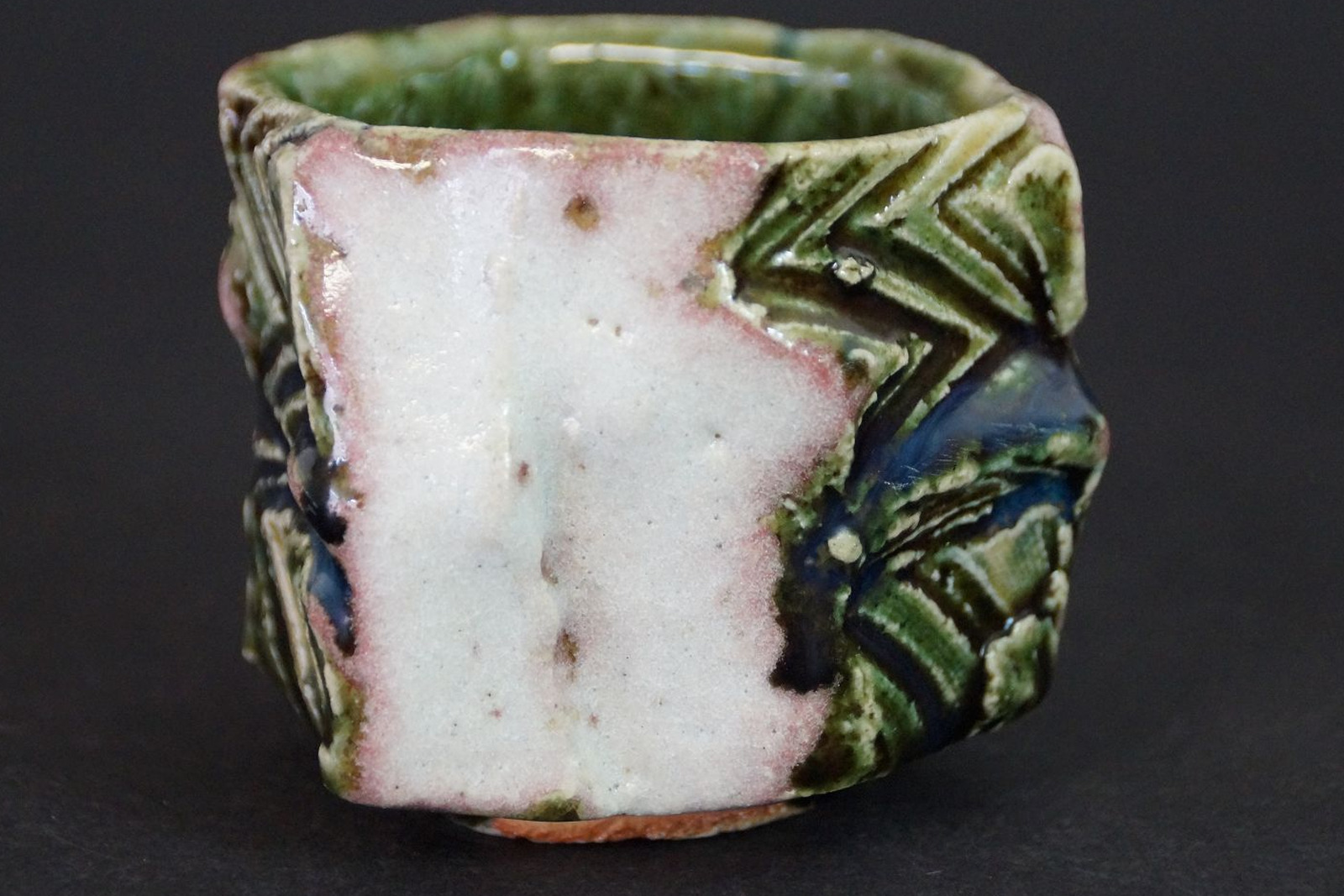
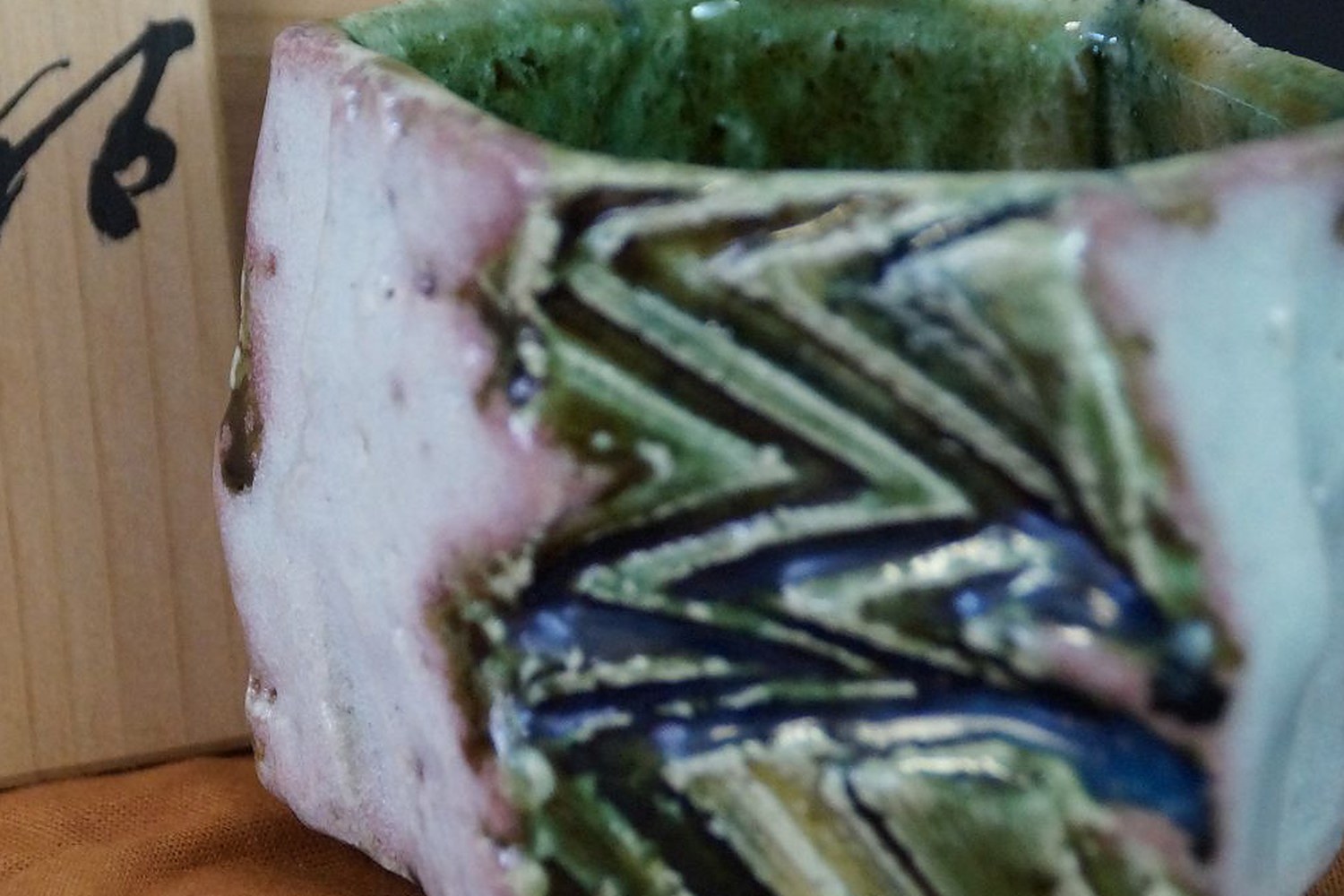
Oribe ware (織部焼, Oribe-yaki) is a Japanese stoneware from the Mino region in present-day Gifu Prefecture that emerged around 1600 in the world of the tea ceremony. The style is named after the tea master Furuta Oribe, who deliberately broke with the austere restraint of his teacher Sen no Rikyū. Its hallmarks are a copper-green glaze that runs down the vessel in streaks, geometric iron-oxide painting on light areas, and intentionally distorted, angular shapes. At Densho you will find handmade Oribe chawan, yunomi and guinomi as one-of-a-kind pieces direct from Japan.
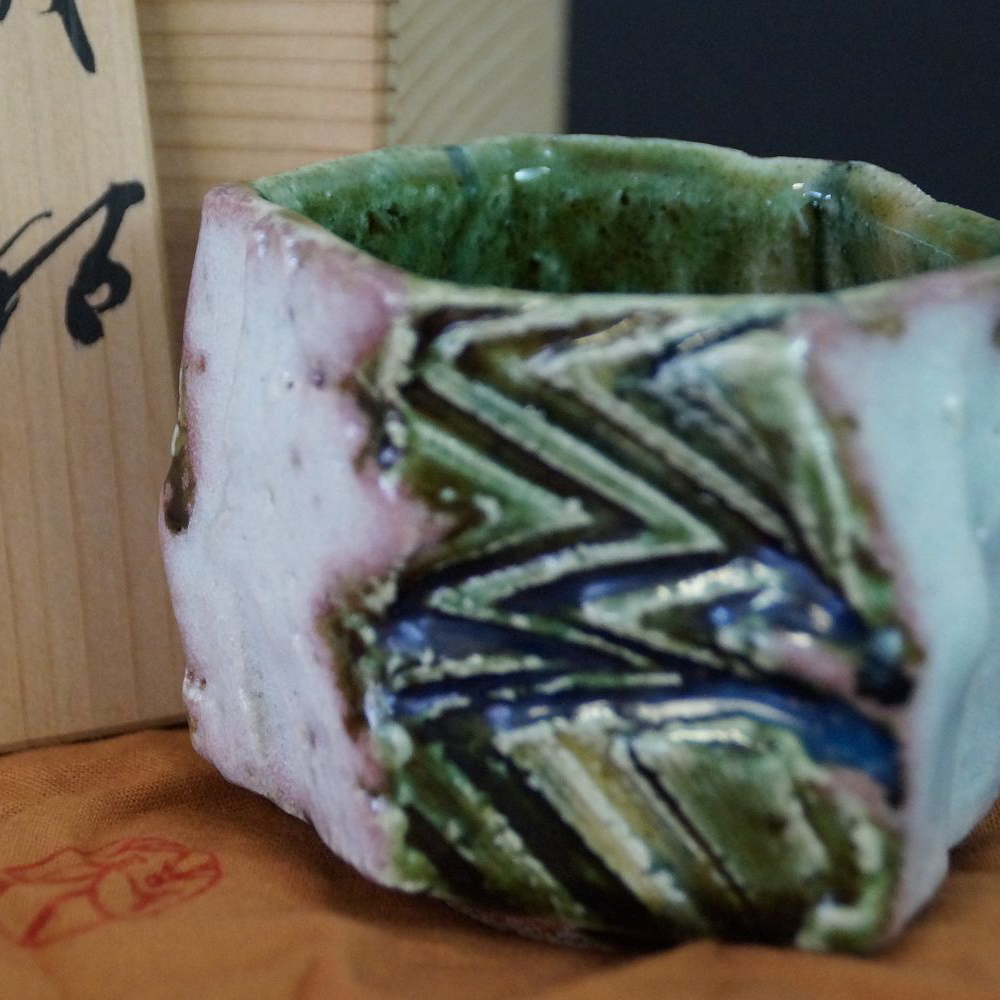

Kawachi Hidetoshi
Guinomi Made of Oribe Ware by Kawachi Hidetoshi with Blue
Guinomi, unique work, with box, 7,5 x 7 cm
€310.00
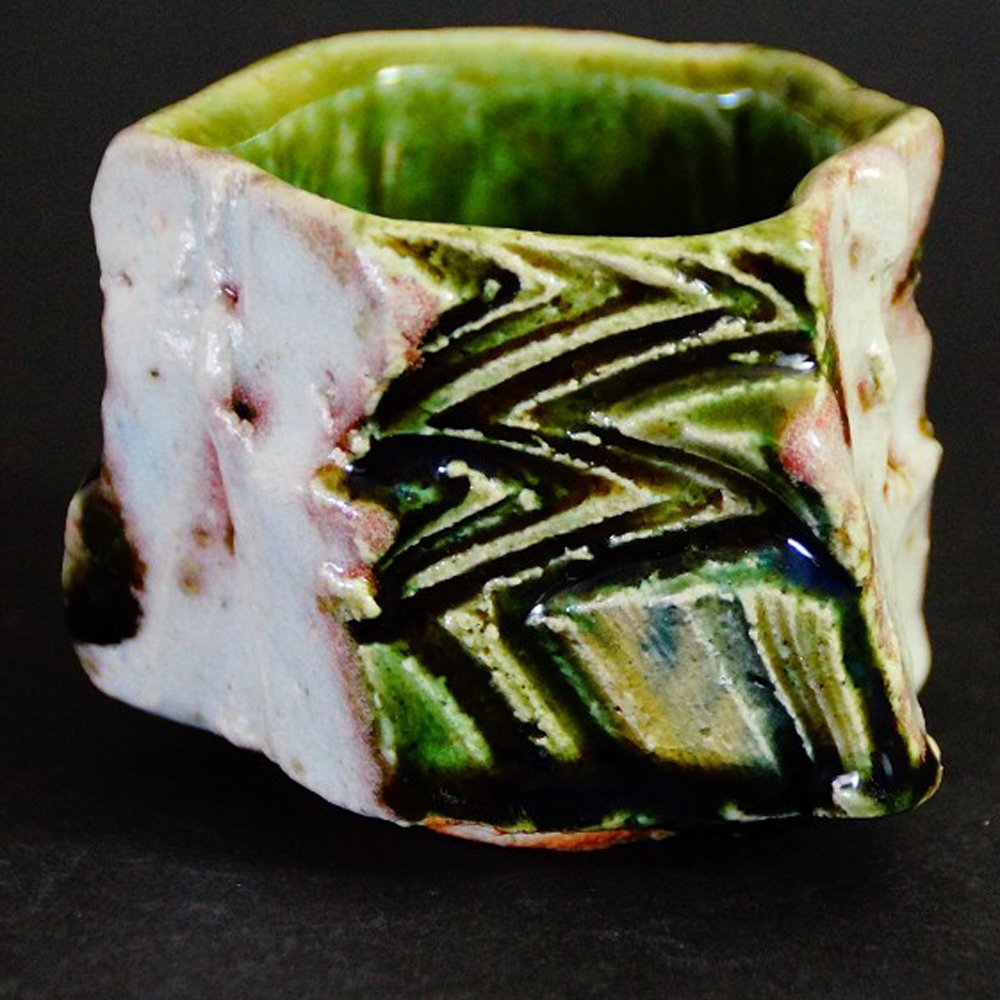

Kawachi Hidetoshi
Guinomi Made of Oribe Ware by Kawachi Hidetoshi, Angular
Guinomi, unique work, with box, 8 x 6,5 cm
€330.00
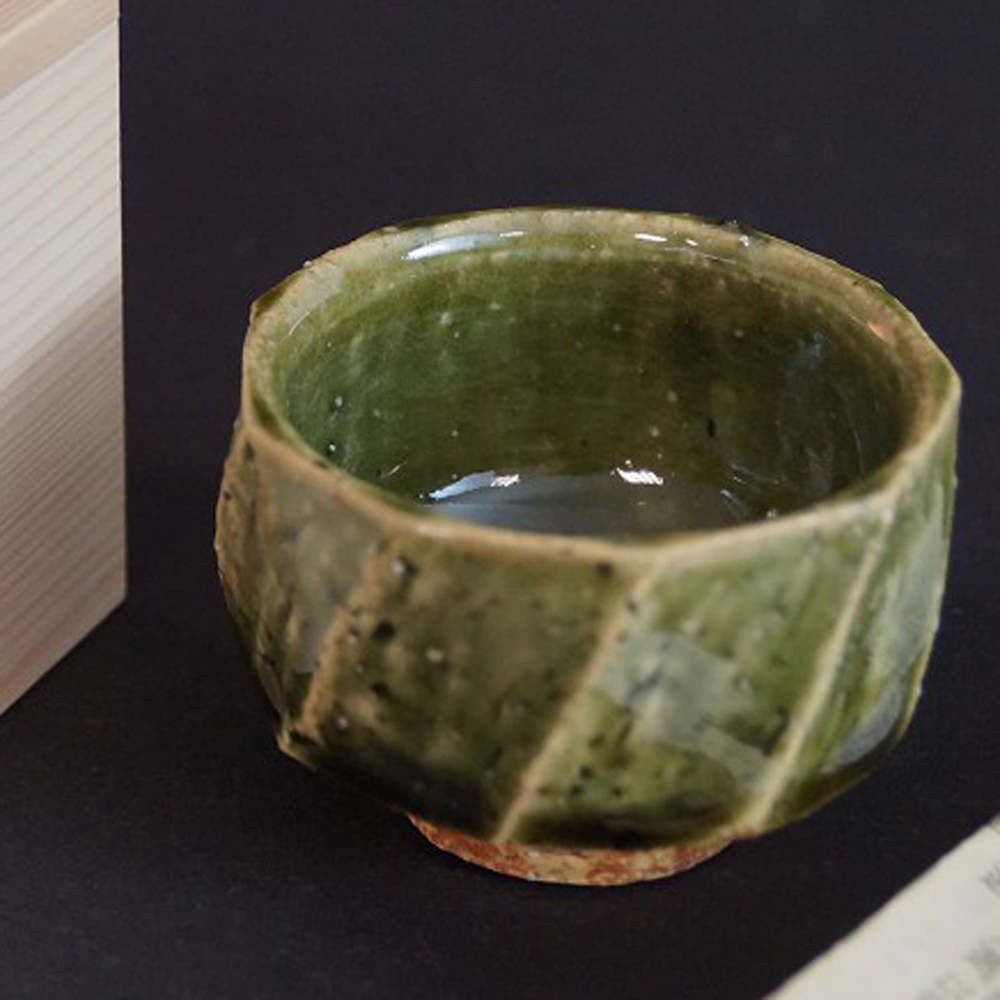

Kimura Yoshimasa
Guinomi Made of Oribe Ware by Yoshimasa Kimura
Guinomi, unique work, with box, 5 x 7 cm
€290.00
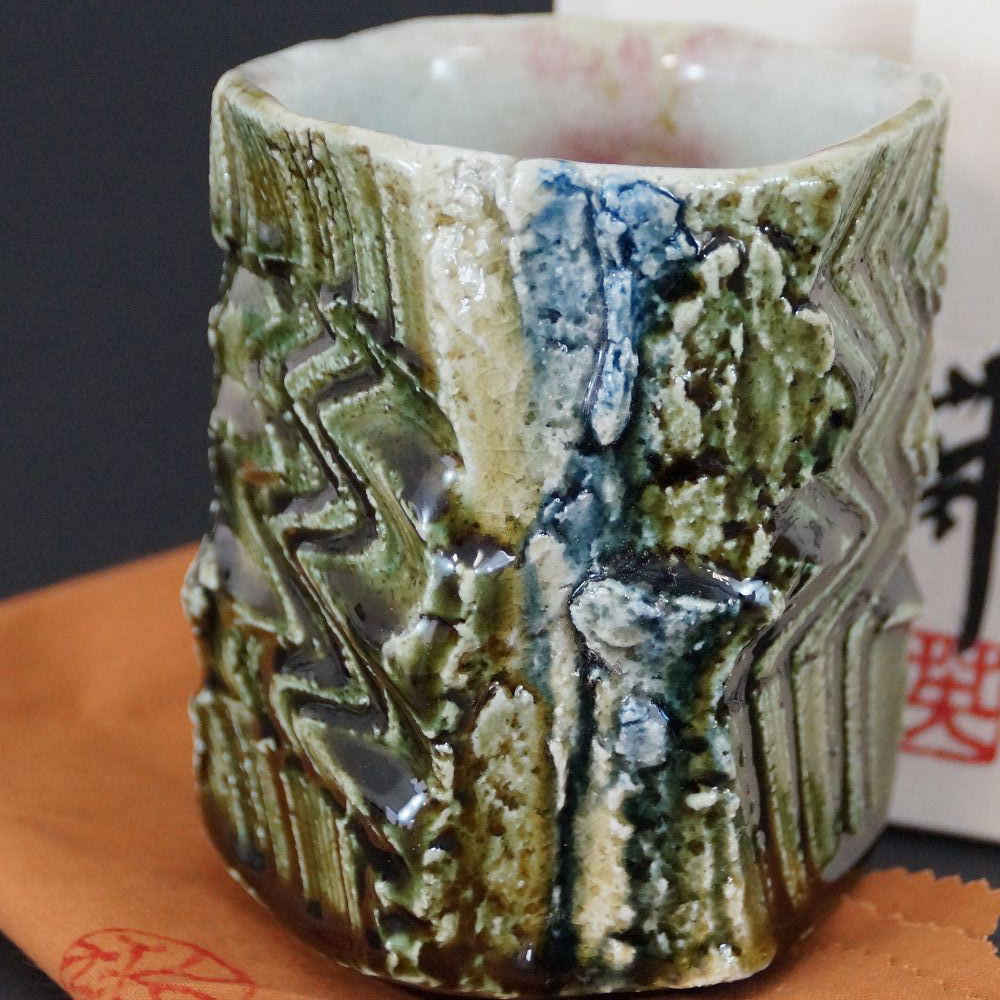
Kawachi Hidetoshi
Yunomi Made of Oribe Ware by Kawachi Hidetoshi, Blue-Green
Yunomi, unique work, with box, 11 x 10 cm
Sold
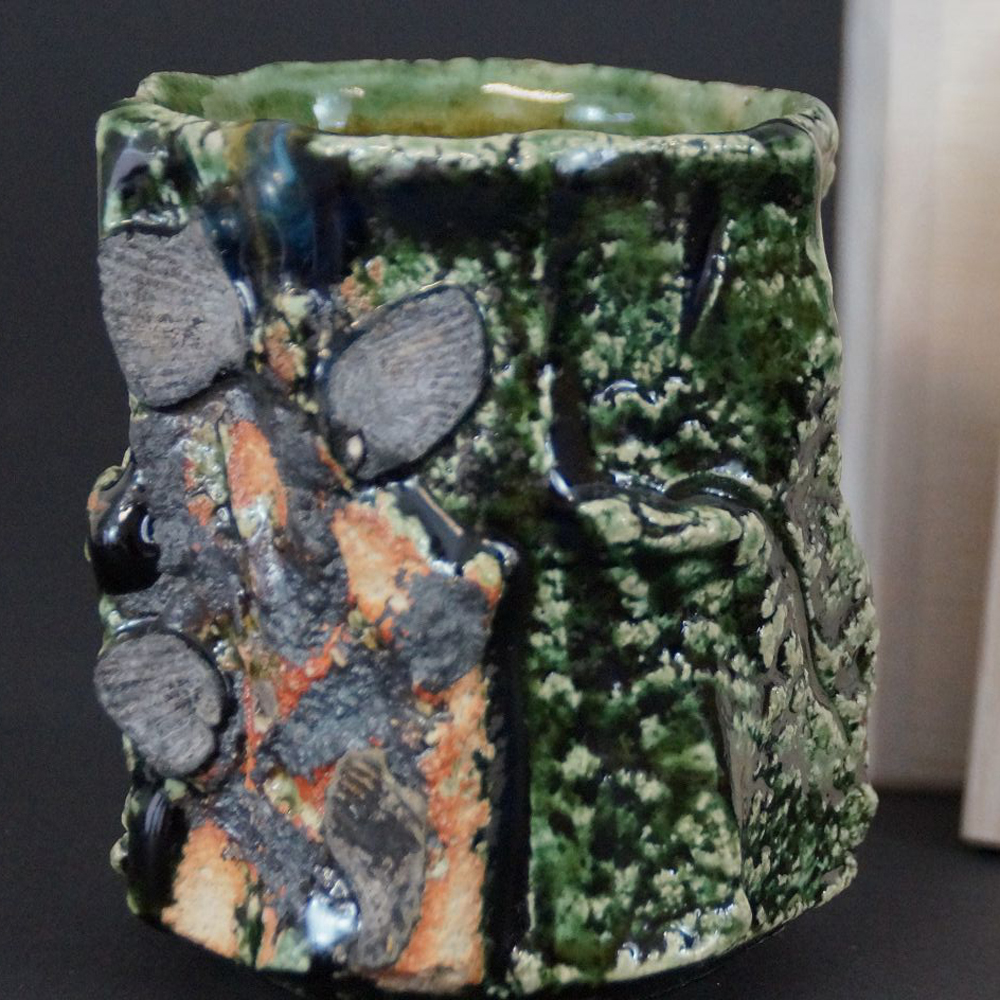
Kawachi Hidetoshi
Yunomi Made of Oribe Ware by Kawachi Hidetoshi with Appliqués
Yunomi, unique work, with box, 11 x 9 cm
Sold
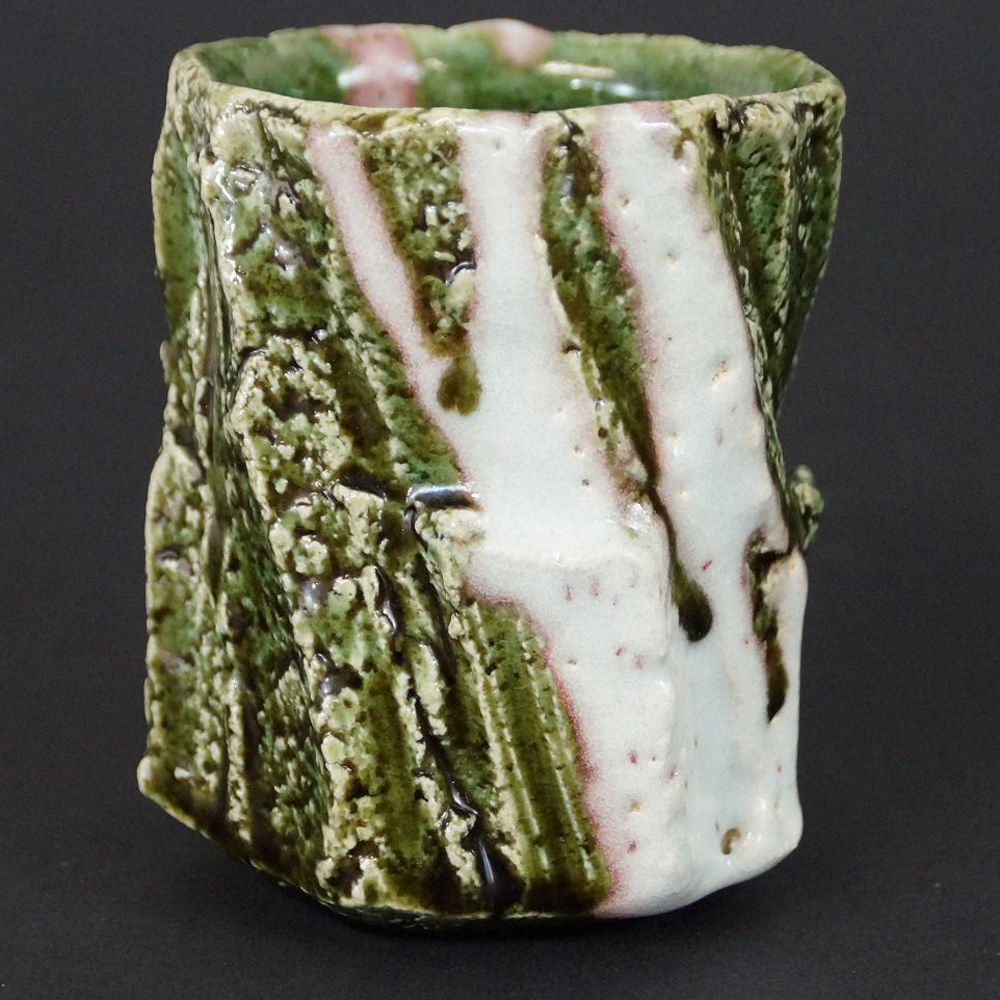
Kawachi Hidetoshi
Yunomi Made of Oribe Ware by Kawachi Hidetoshi, White-Green
Yunomi, unique work, with box, 12 x 9 cm
Sold
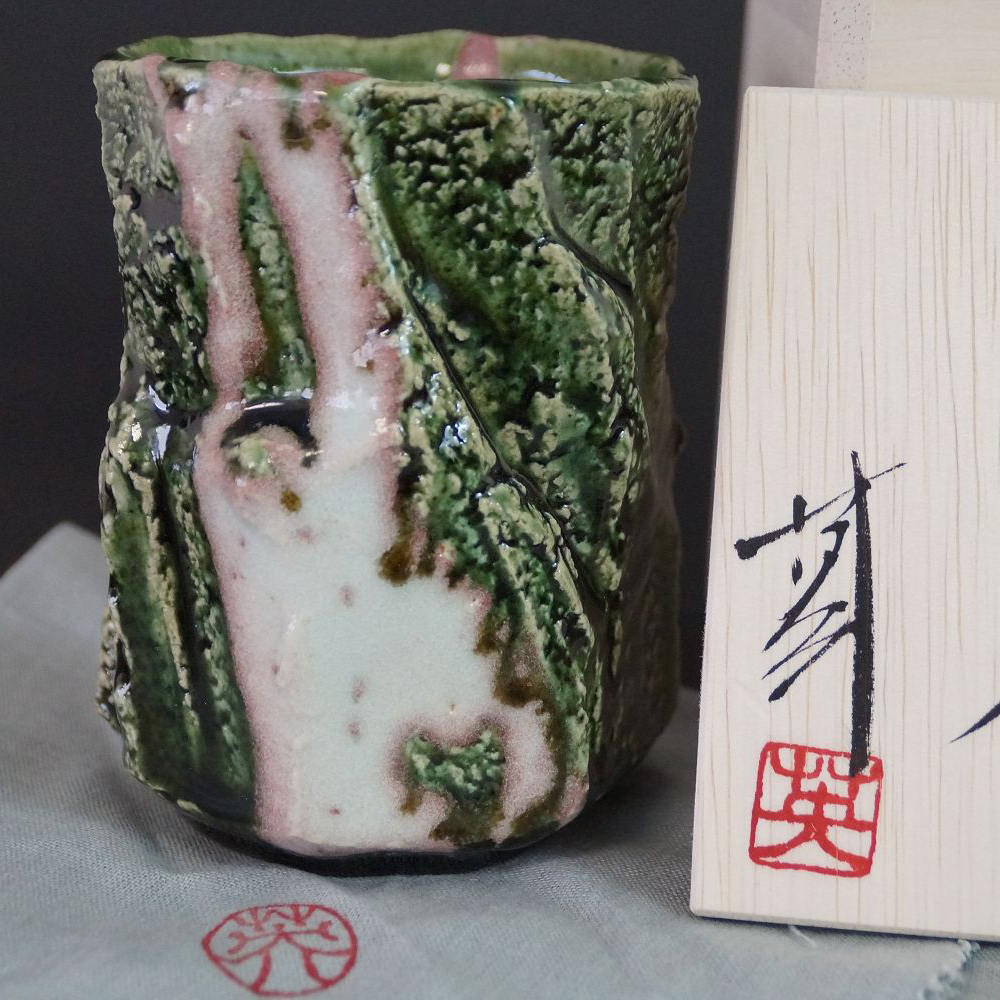
Kawachi Hidetoshi
Yunomi Made of Oribe Ware by Kawachi Hidetoshi, Striped
Yunomi, unique work, with box, 12 x 9 cm
Sold
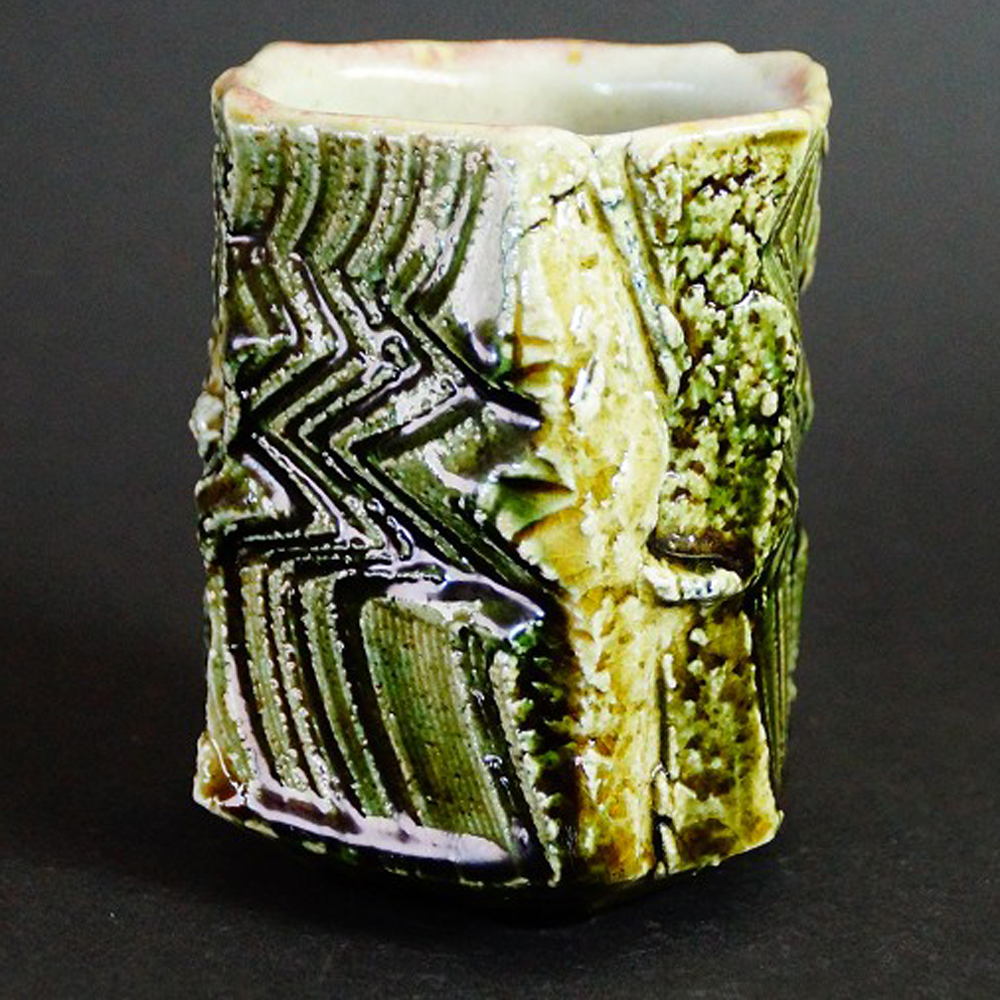
Kawachi Hidetoshi
Yunomi Made of Oribe Ware by Kawachi Hidetoshi, Zigzag Relief
Yunomi, unique work, 11 x 8,5 cm
Sold
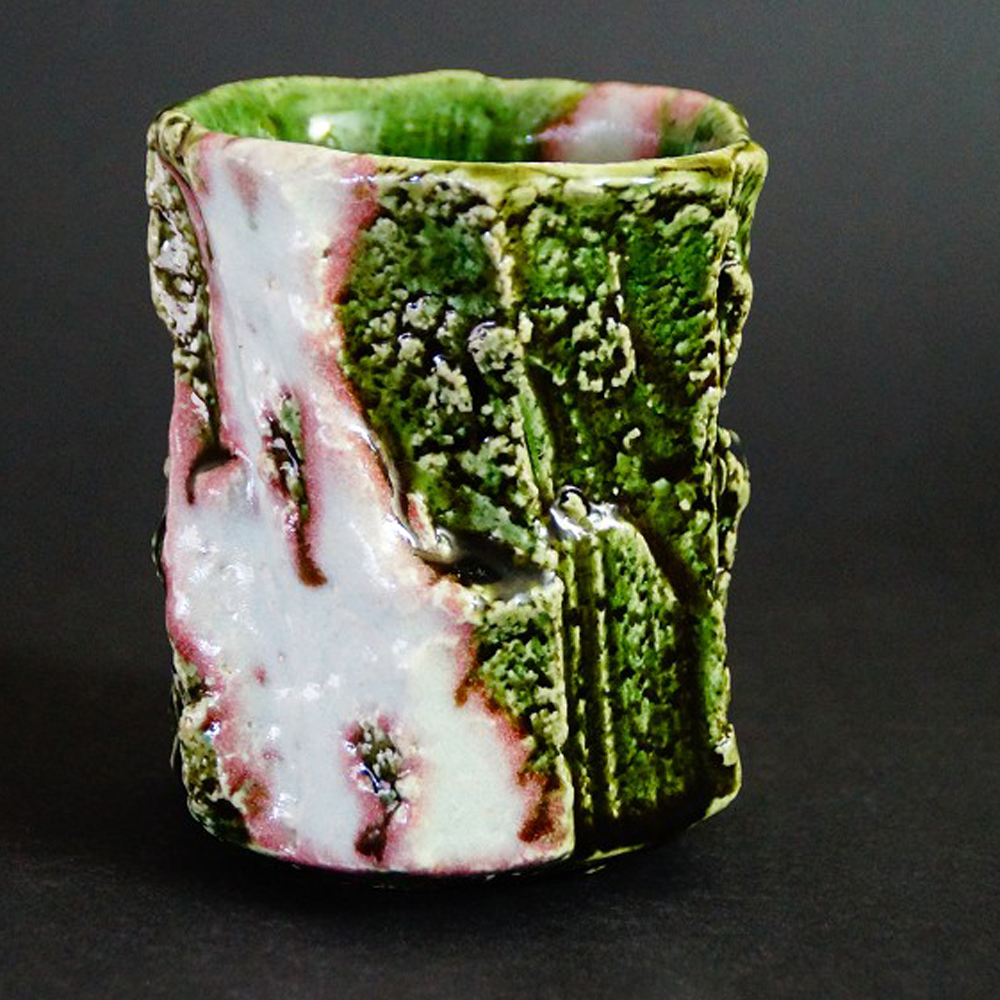
Kawachi Hidetoshi
Yunomi Made of Oribe Ware by Kawachi Hidetoshi, White-Pink
Yunomi, unique work, with box, 11 x 8,5 cm
Sold
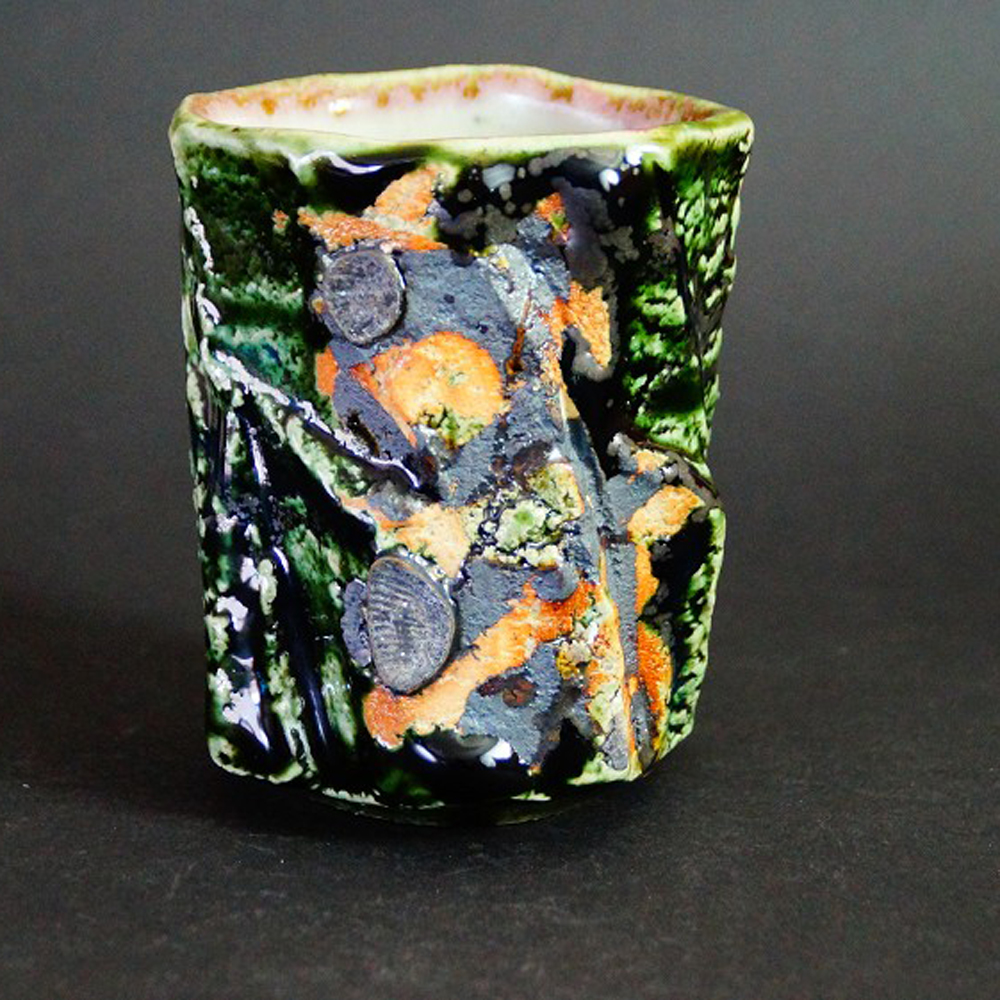
Kawachi Hidetoshi
Yunomi Made of Oribe Ware by Kawachi Hidetoshi, Green-Orange
Yunomi, unique work, with box, 11 x 8 cm
Sold
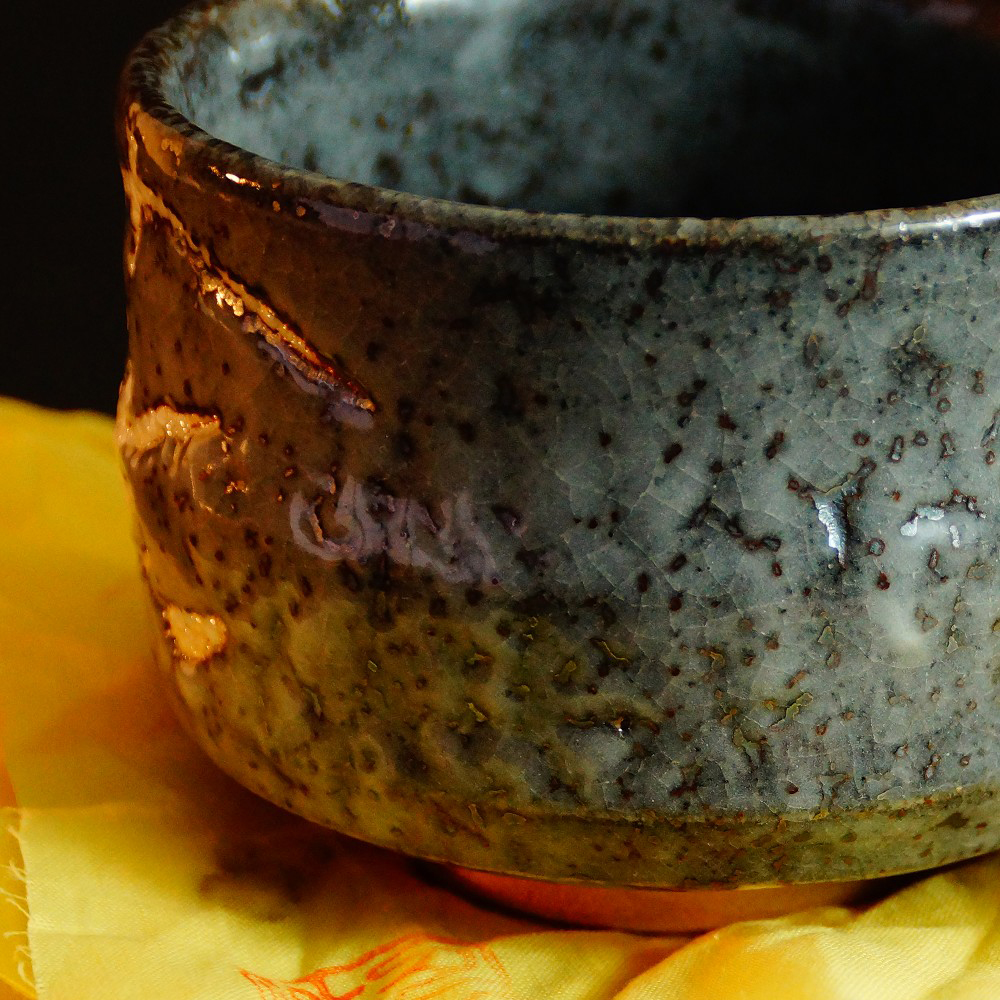
Itō Shinzan
Chawan Tea Bowl Made of Oribe Ware by Ito Shinzan
Chawan, unique work, with box, 8,5 x 11 cm
Sold
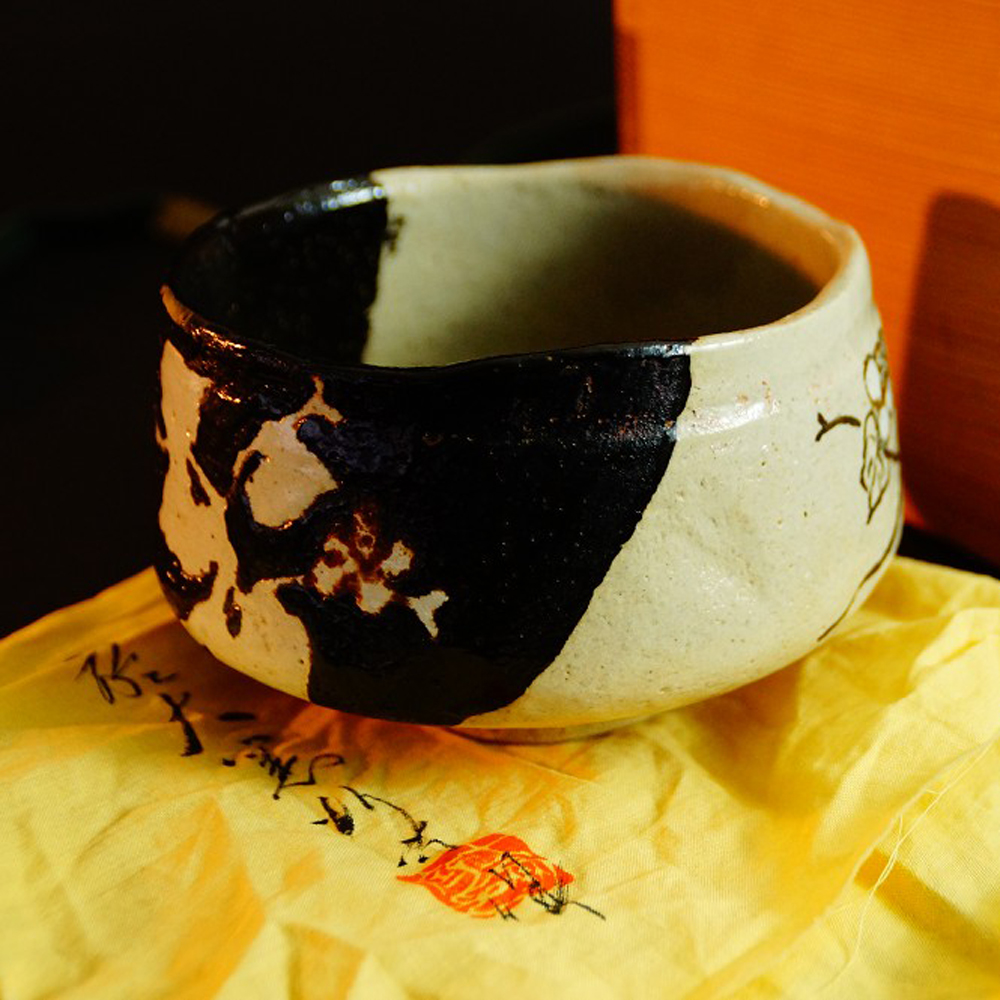
Chawan Tea Bowl with Floral Motif Made of Oribe Ware
Chawan, unique work, with box, 8 x 12 cm
Sold
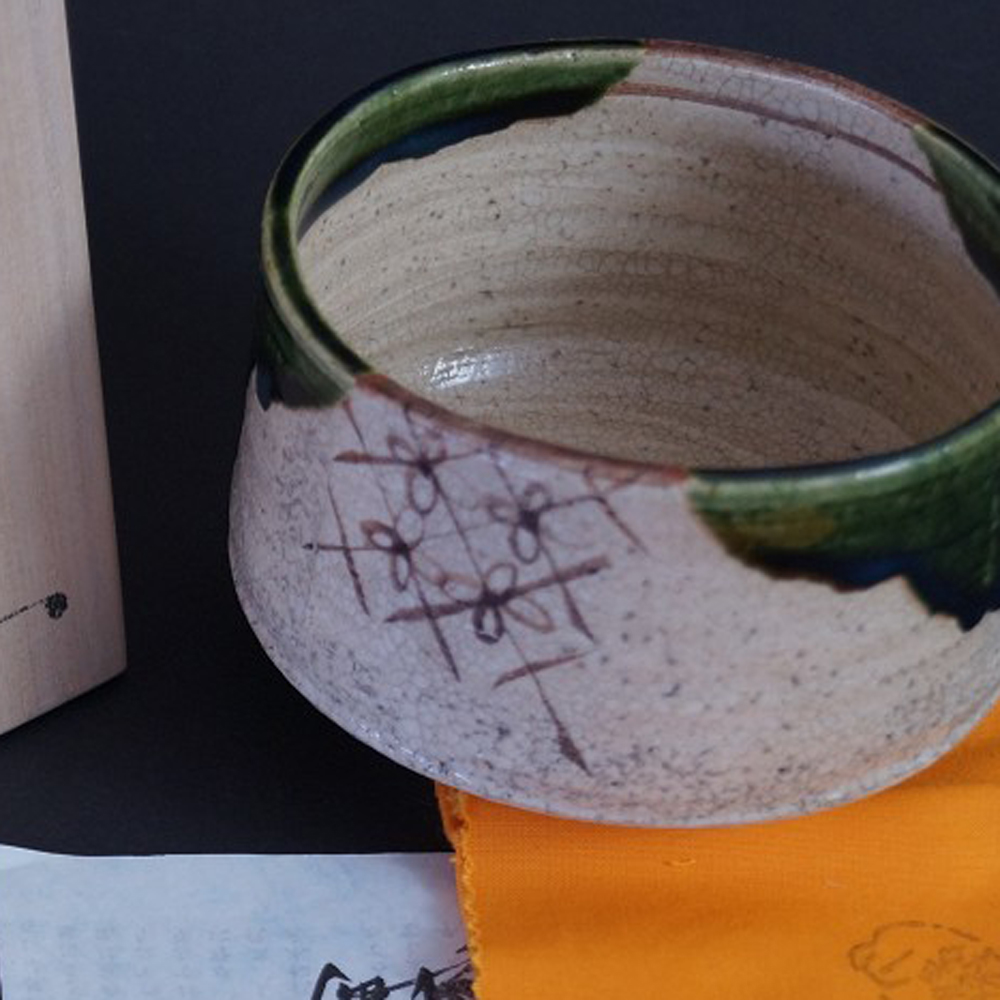
Tetsuzan Matsumoto
Chawan Made of Oribe Ware by Tetsuzan Matsumoto
Chawan, unique work, with box, 8 x 11,5 cm
Sold
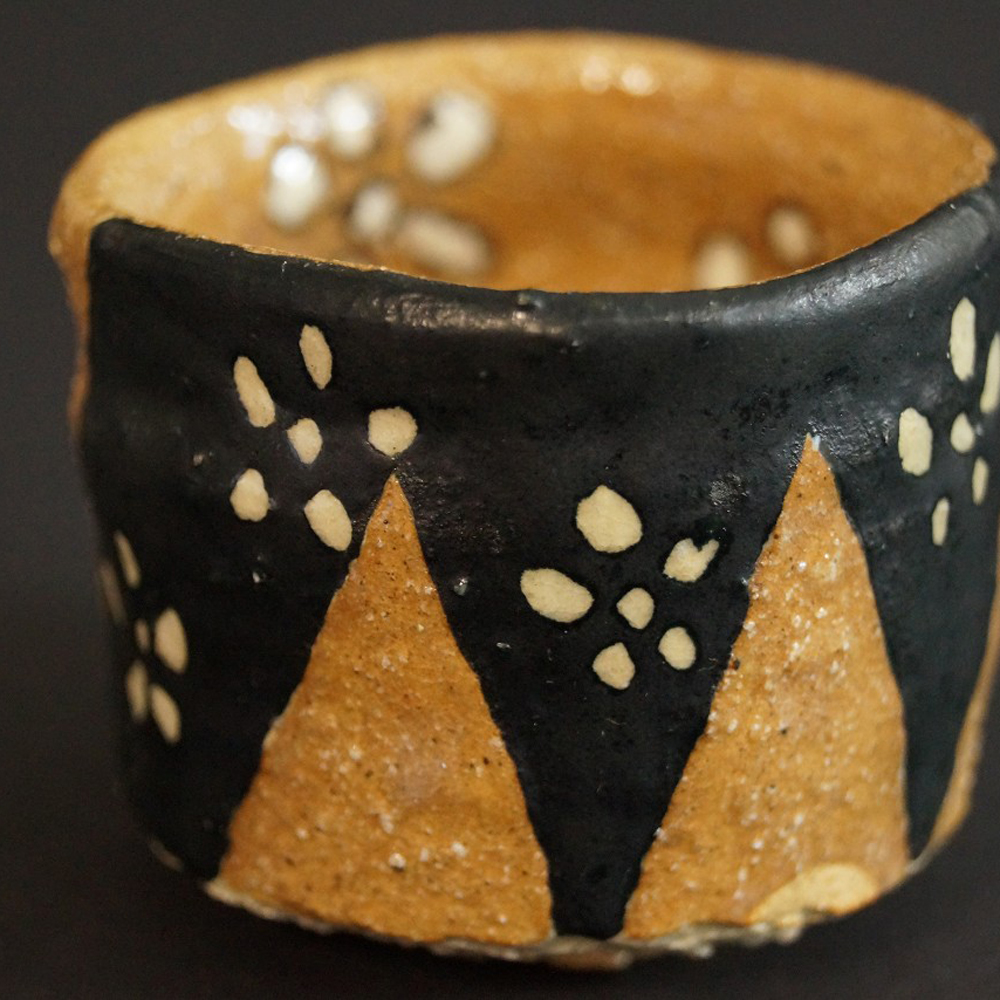
Handcrafted Japanese Sake Cup (Guinomi), Oribe Ware
Guinomi, unique work, 4,5 x 5,5 cm
Sold
14 of 14 items shown
Origins: Mino and a brief flowering around 1600
Oribe-yaki was made in the Mino region in the south of today’s Gifu Prefecture, mainly between about 1600 and the 1630s. A new kiln type made the style possible: around 1605 the multi-chambered climbing kiln (renbōshiki noborigama) reached Mino from the Karatsu area. It allowed higher and more even temperatures, and with them reliable color in the delicate copper glaze. The Motoyashiki kiln in Toki is considered the birthplace of Oribe; its remains are protected as a national historic site. Together with Shino, Ki-Seto and Setoguro, Oribe is one of the four great styles of Mino ware.
Furuta Oribe and the delight in the distorted
The ware takes its name from the tea master Furuta Oribe (1544–1615), a pupil of Sen no Rikyū who was regarded as Japan’s leading tea master after Rikyū’s death. Where Rikyū sought reduction and dark, quiet bowls, Oribe favored movement: pinched rims, skewed walls, glaze fields breaking off mid-pattern. In 1599 the merchant Kamiya Sōtan described such a bowl as hyōge – quirky, playful. How directly Oribe guided the potters is debated; what is certain is that his taste shaped the style. After his forced suicide in 1615 the fashion quickly faded.
Copper green, iron painting and warped forms
The green glaze owes its color to copper in an ash-feldspar glaze. It is poured or ladled rather than brushed, so it runs in streaks and pools at the edges into dark, almost black margins. Firing is oxidizing at about 1,220 °C; fired in reduction, the same glaze would turn red. On the bare areas or those covered with white slip sits painting in iron oxide that fires to a warm brownish black: grids, lozenges, zigzag bands, checkerboards and boldly simplified grasses. Many forms were shaped over molds, which made angular and lobed vessels practical in the first place.
Ao, Sō, Narumi, Kuro: the variants
The names of the subtypes are still used in the trade today. Ao-Oribe, “green Oribe,” is the best known: part of the vessel carries the green glaze, the rest stays light and is painted. Sō-Oribe covers the whole piece in green except for the foot. Narumi-Oribe joins a light and a reddish clay, Aka-Oribe works with reddish clay, and E-Oribe puts the iron drawing in the foreground. Kuro-Oribe and Oribe-guro rely on black: the pieces are pulled glowing from the kiln and cooled rapidly, so that the iron-bearing glaze sets black.
How to recognize Oribe
The most reliable sign is the unevenly running copper glaze with its dark pooled edges. Add to that the clash of two orders: precisely drawn geometry beneath the glaze and a glaze that ignores any pattern. The unglazed foot reveals the warm-toned, slightly rough clay body. The form is rarely round and regular; it is angular, pressed or folded – often so that the vessel acquires a front and a back. On handmade pieces, glaze and form never run quite the same way twice; industrially glazed ware looks uniform by comparison.
Oribe today: Mino and Seto
For centuries the technique was largely forgotten. Only after 1930, when the potter Arakawa Toyozō proved that the famous old tea ceramics had been fired in Mino rather than Seto, did attention return to the old kilns. Today Oribe is made in the Mino towns of Toki, Tajimi, Mizunami and Kani, and also in neighboring Seto in Aichi Prefecture. Contemporary potters combine the classic green with their own approaches, for example feldspathic Shino passages that bring pinkish and white tones into the glaze.
In use: tea bowl, cup and sake cup
From the start, Oribe was tableware meant to be used: tea bowls, including the famous shoe-shaped kutsu-gata chawan, small side dishes (mukōzuke) for the kaiseki meal, water jars and vases. A chawan is for whisking matcha, a yunomi is the taller cup for leaf tea such as sencha, and a guinomi is the small cup for sake. In a living space, Oribe’s strong color and almost modern geometry also make it work as a single object on a shelf or in the tokonoma.
Care and what collectors look for
Clean Oribe vessels with hot water and a soft sponge, without dish soap and never in the dishwasher or microwave. The unglazed foot absorbs moisture, so let the piece air-dry completely before it goes back into its cloth or wooden box. Collectors look at the flow of the glaze, the tension between painting and green, and the tomobako: the signed wooden box attests to the artist and provenance and should stay with the piece.