
Japanese Ceramic Figures
Go directly to the artworksIn brief
Japanese ceramic figures are sculptures shaped from clay and fired in a kiln – as opposed to figures made of porcelain, wood or metal. In Japanese terms they belong to tōki, the earthenware and stoneware made of clay, as distinct from fine porcelain (jiki). Their character depends on clay, firing and surface: unglazed, as with Bizen ware, where flame and ash create the color, or under a matte, earthy glaze. At Densho you will find Japanese ceramic figures of Daruma, Kannon and the lucky gods as handmade one-of-a-kind pieces direct from Japan.
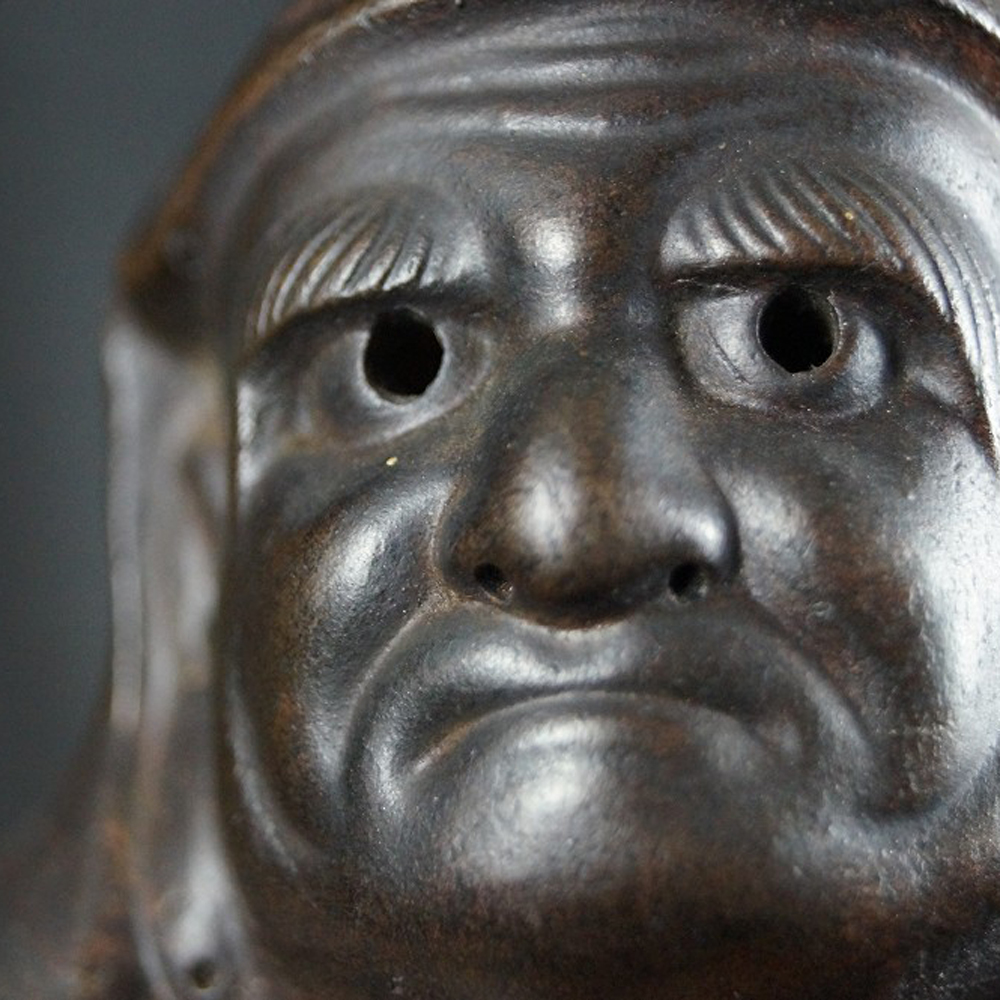
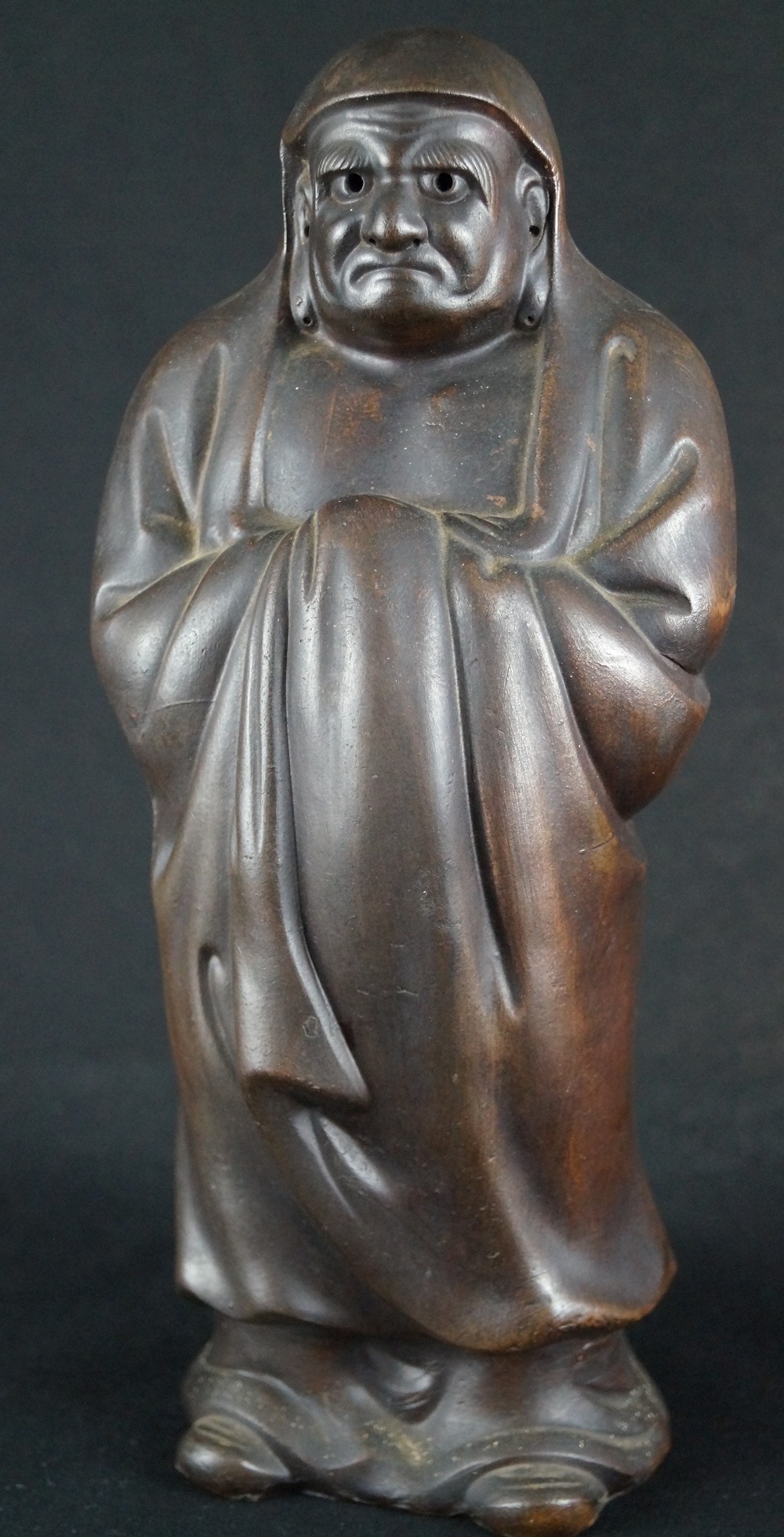
Daruma Figure Made of Bizen Ware with Pensive Expression
Figure, unique work, 29 x 11 cm
€280.00
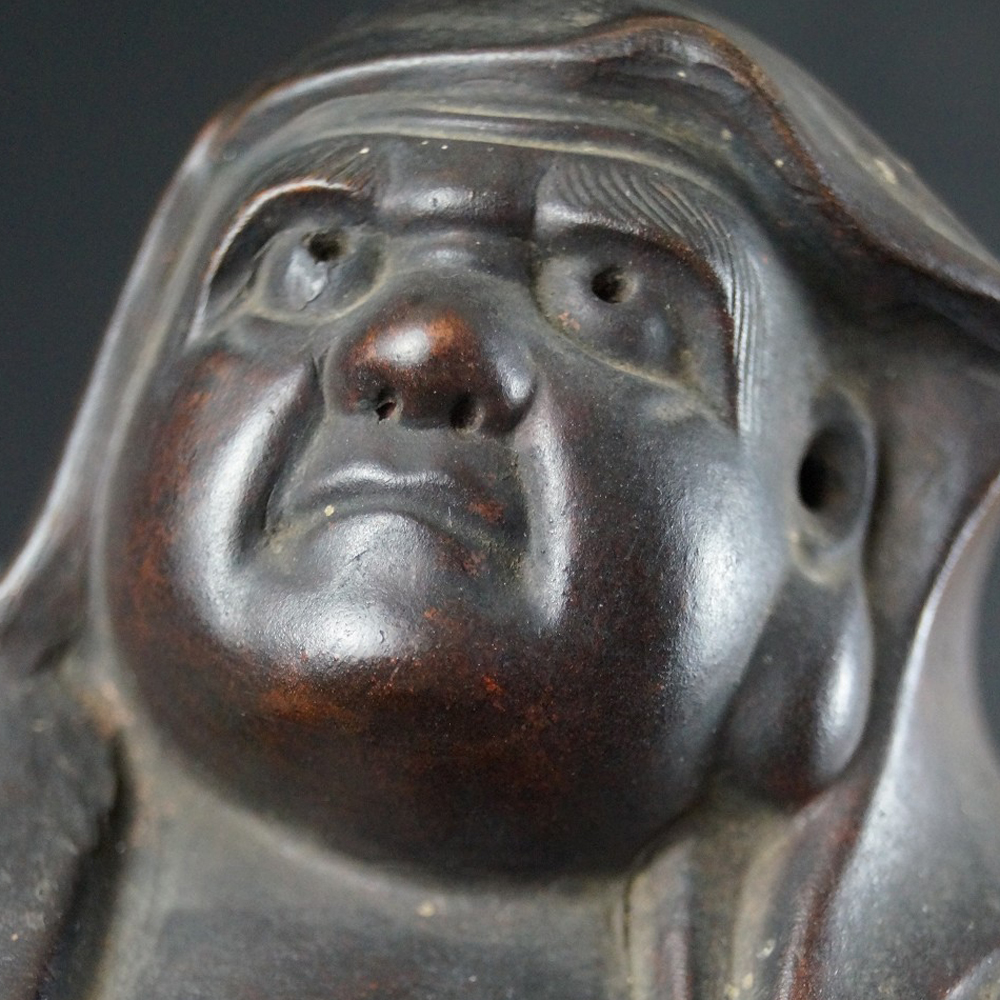
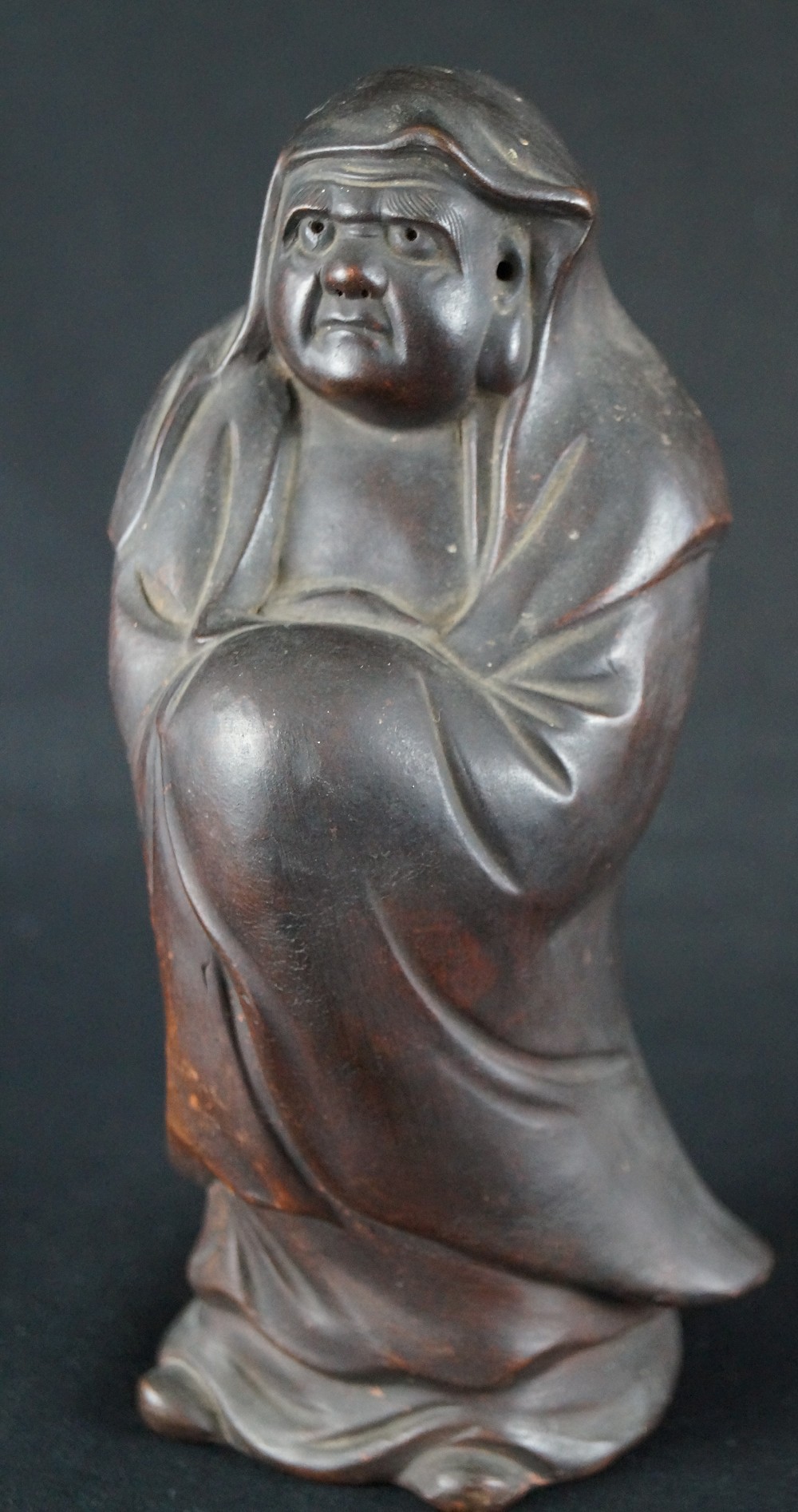
Bodhidharma (Daruma) Figure with Fierce Gaze Made of Bizen Ware
Figure, unique work, 20 x 8 cm
€180.00
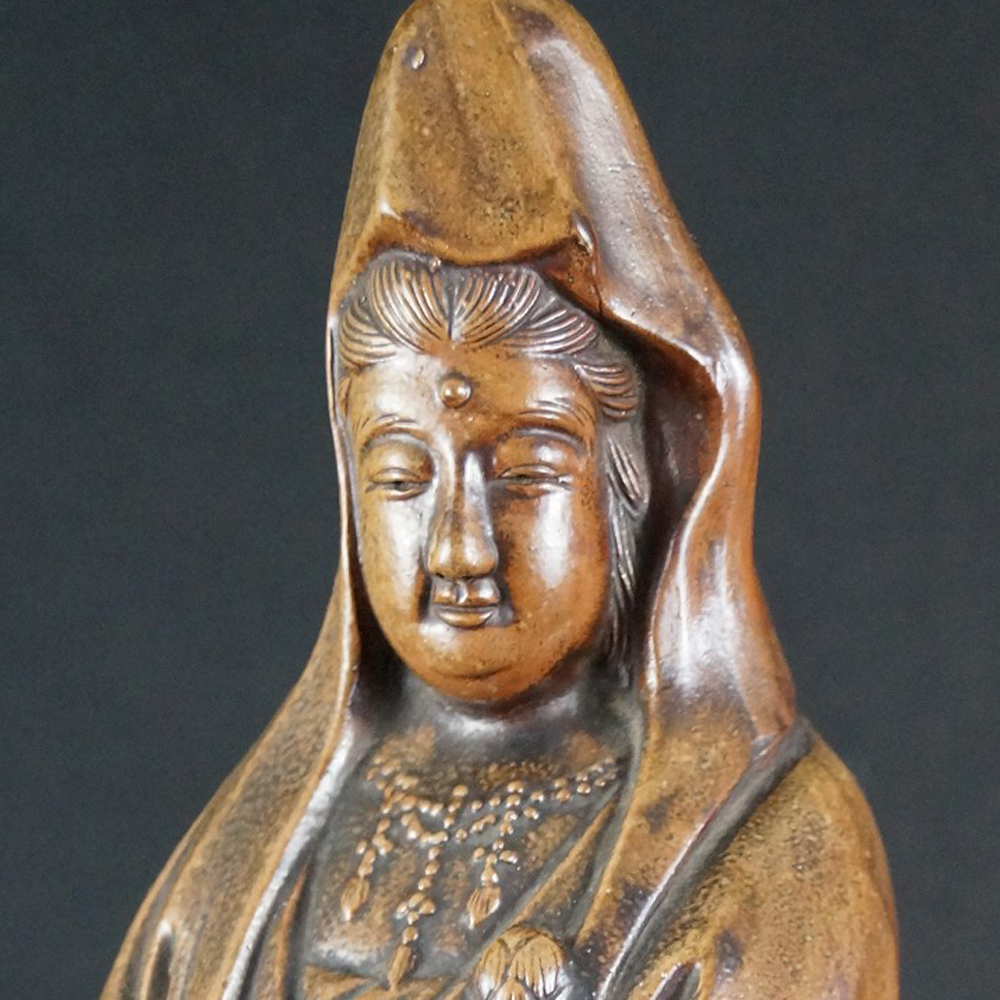
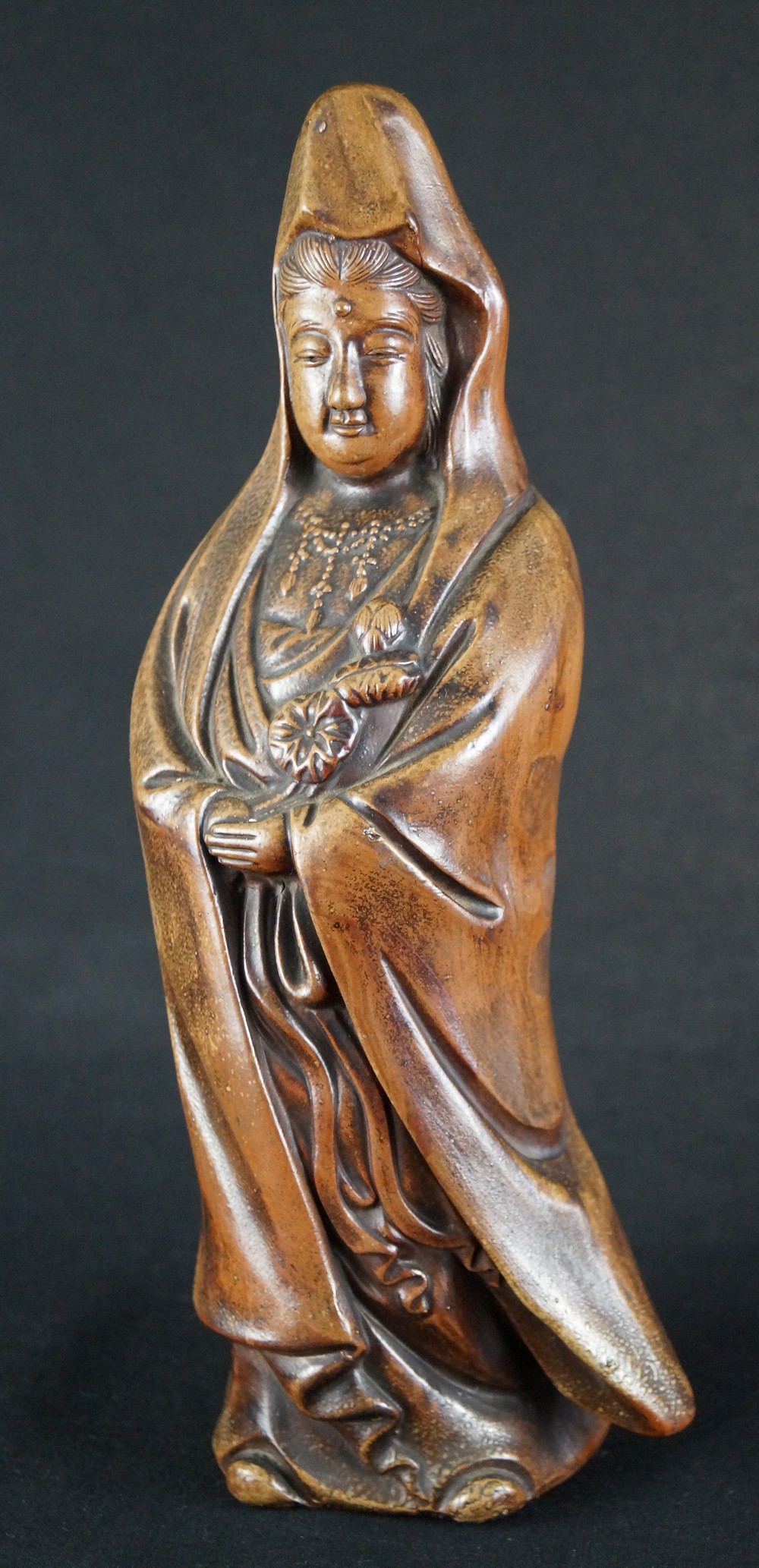
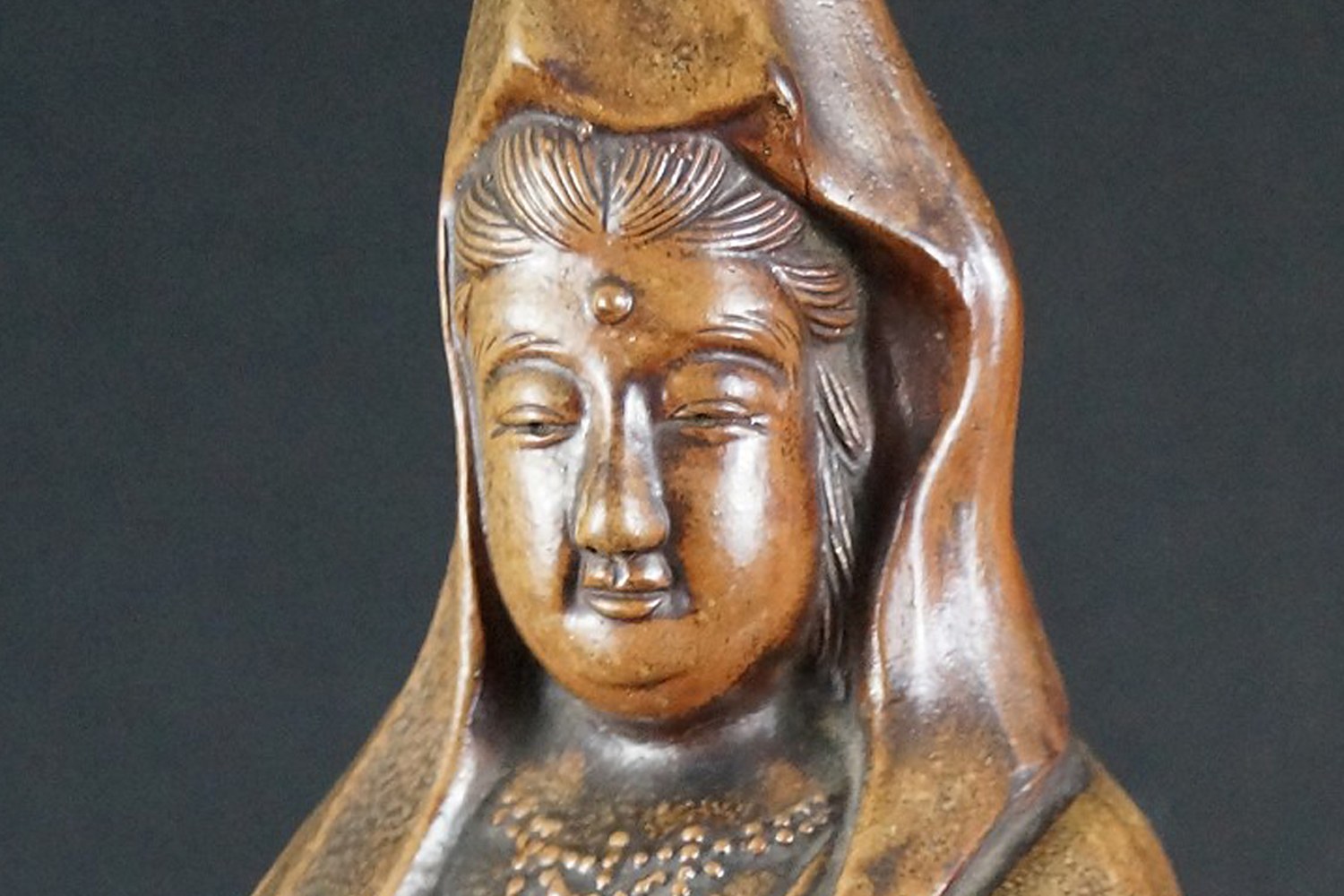
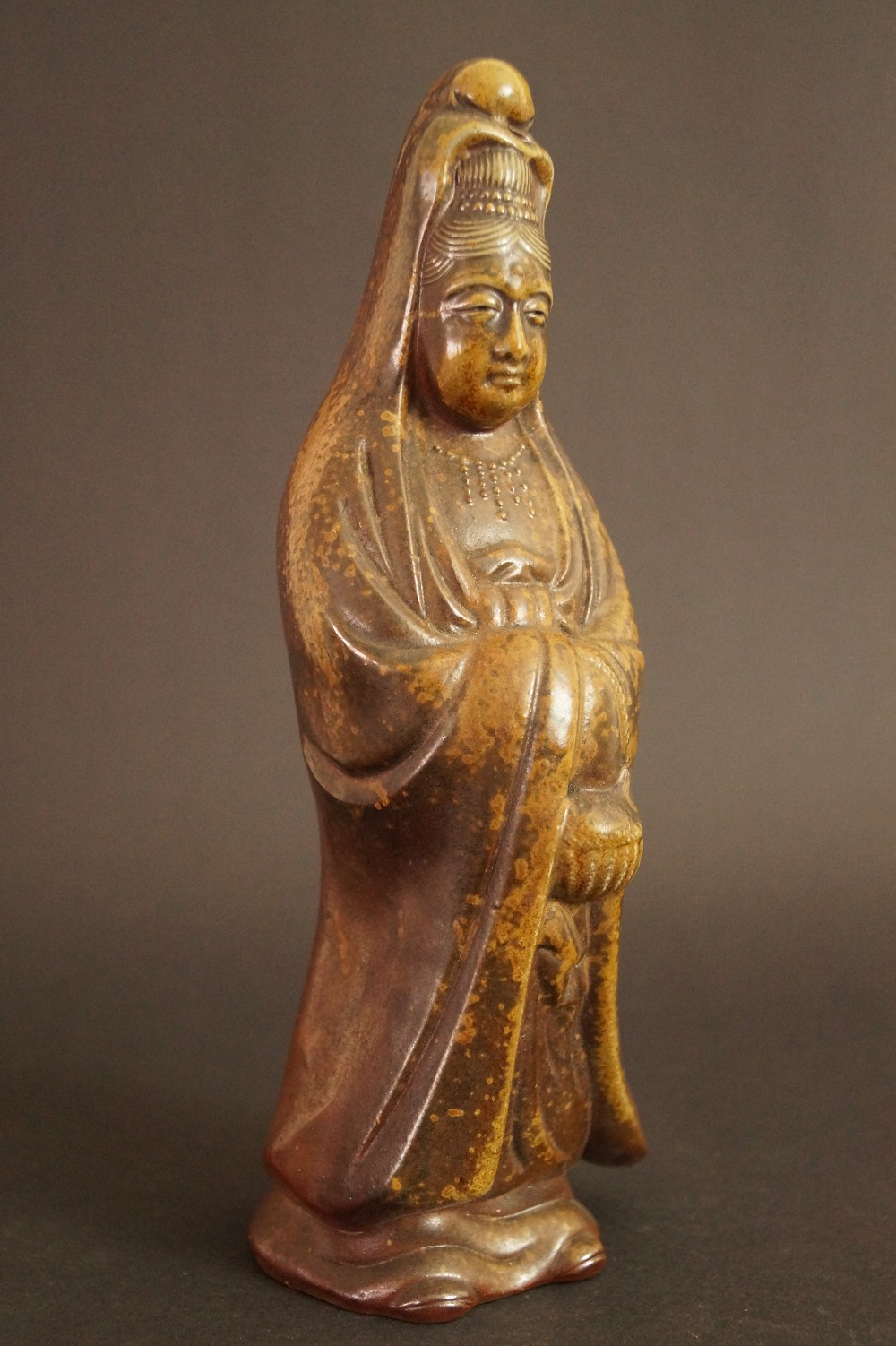
Kannon Figure Made of Bizen Ware
Figure, unique work, 25 x 8 cm
€330.00
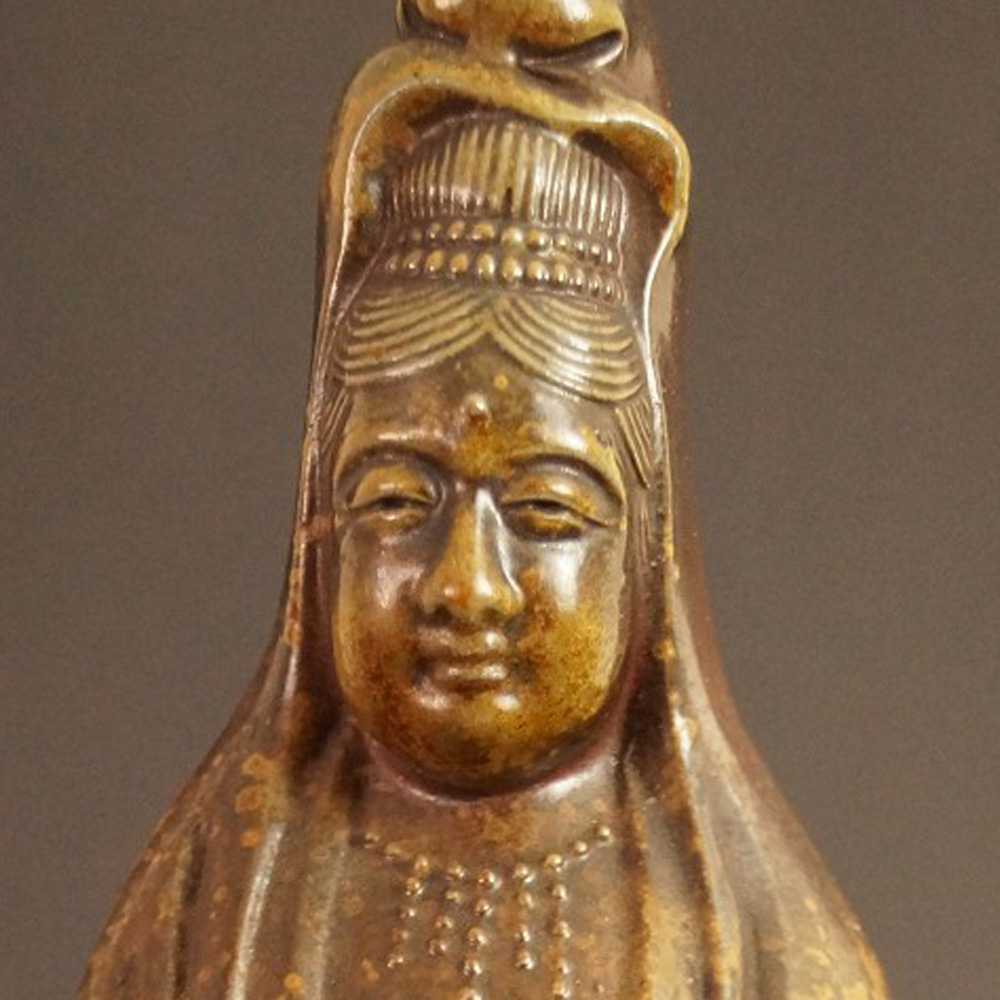
Shibaoka Tsukuru
Kannon Figure Made of Bizen Ware by Shibaoka Tsukuru
Figure, unique work, 23 x 8 cm
€300.00
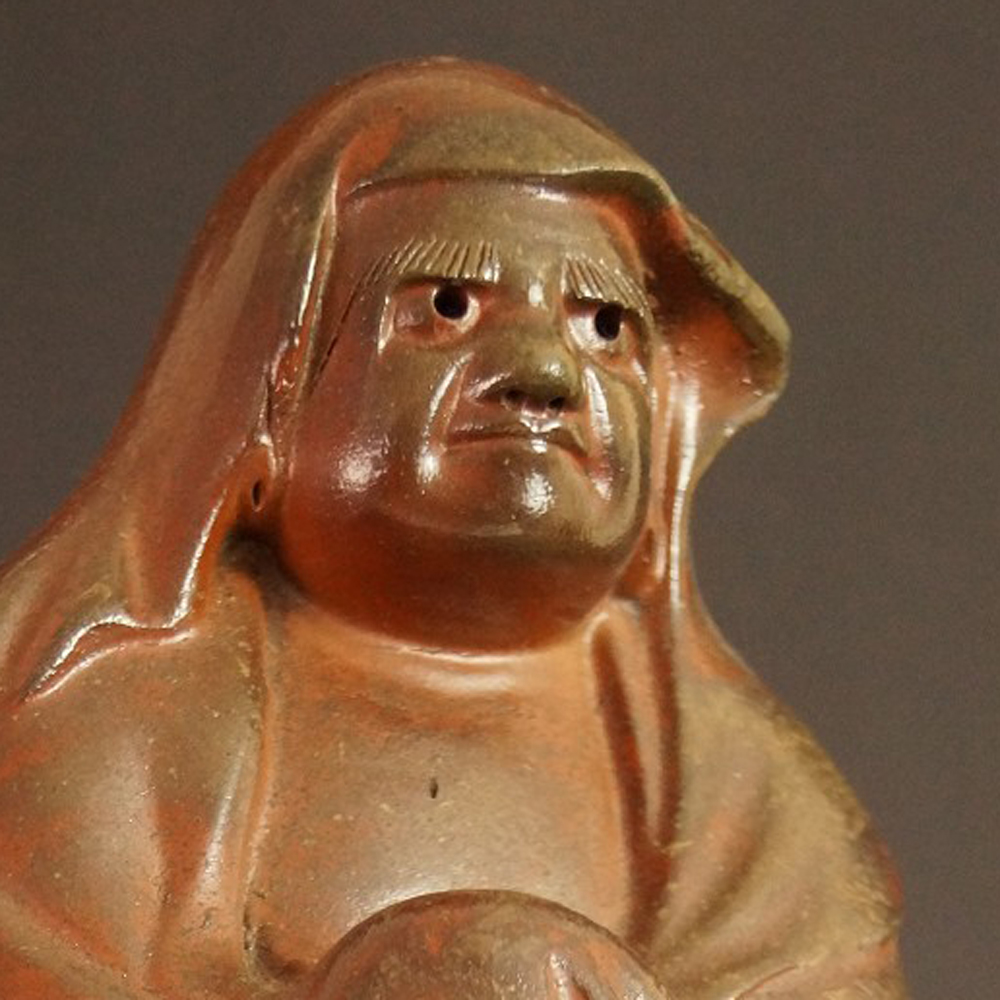
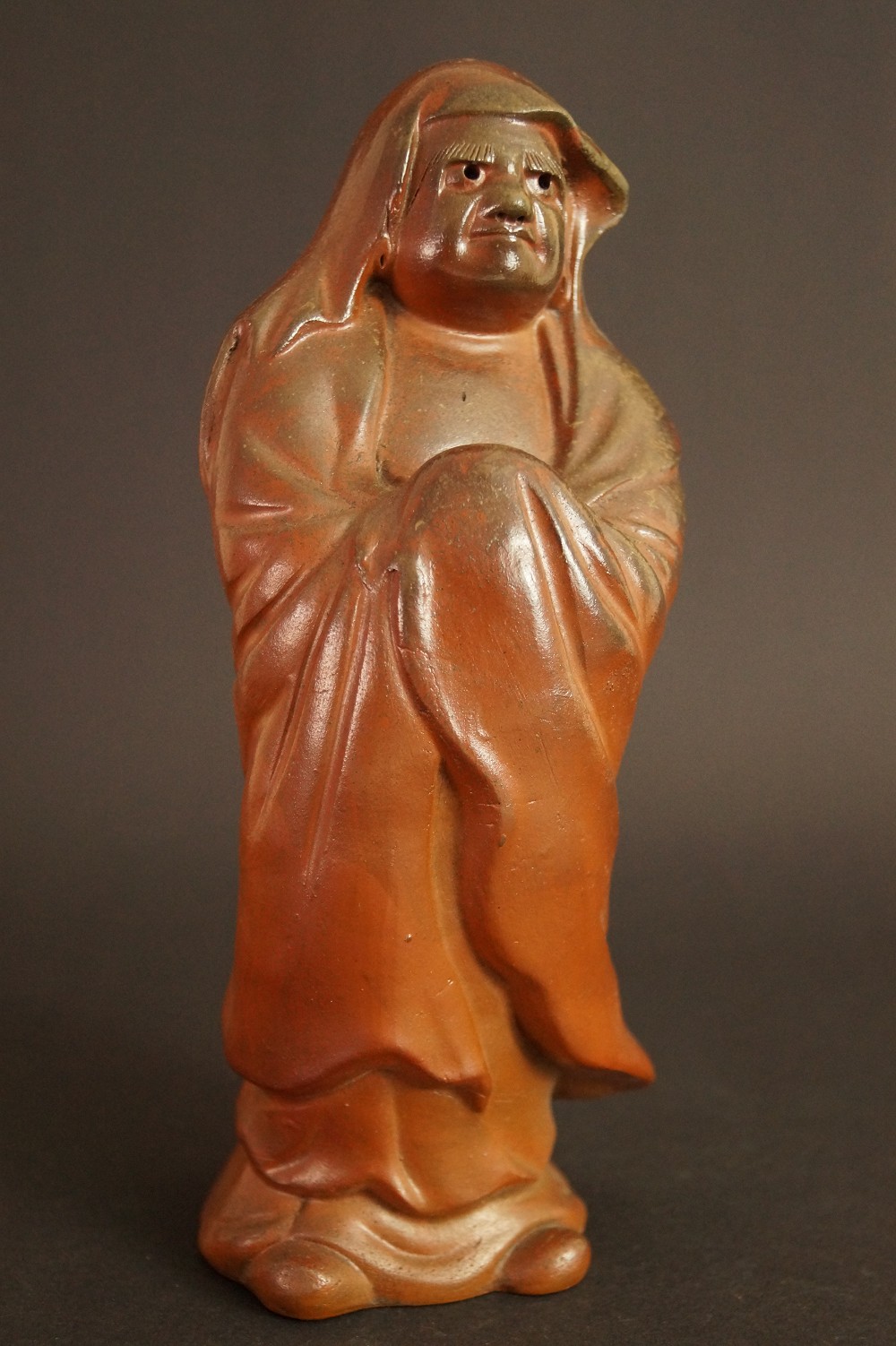
Bodhidharma (Daruma) Figure with Worried Expression Made of Bizen Ware
Figure, unique work, 22 x 10 cm
€180.00
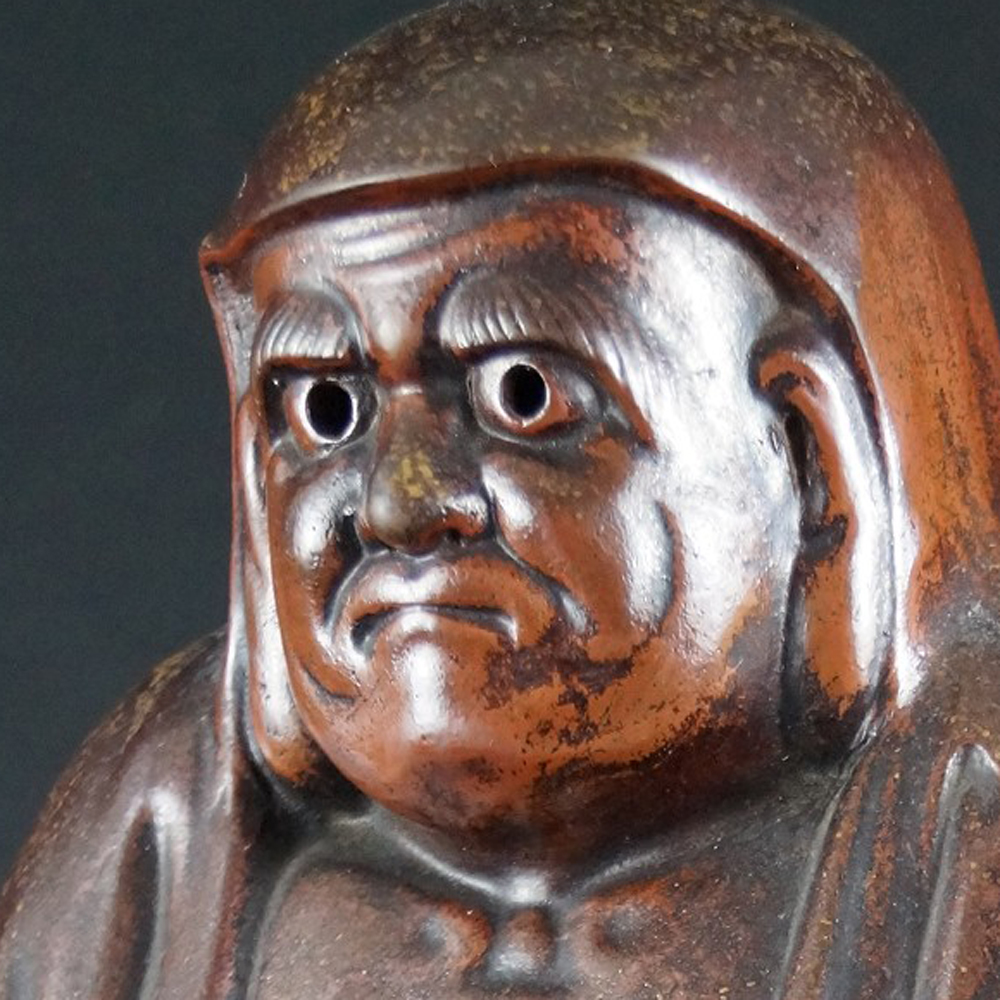
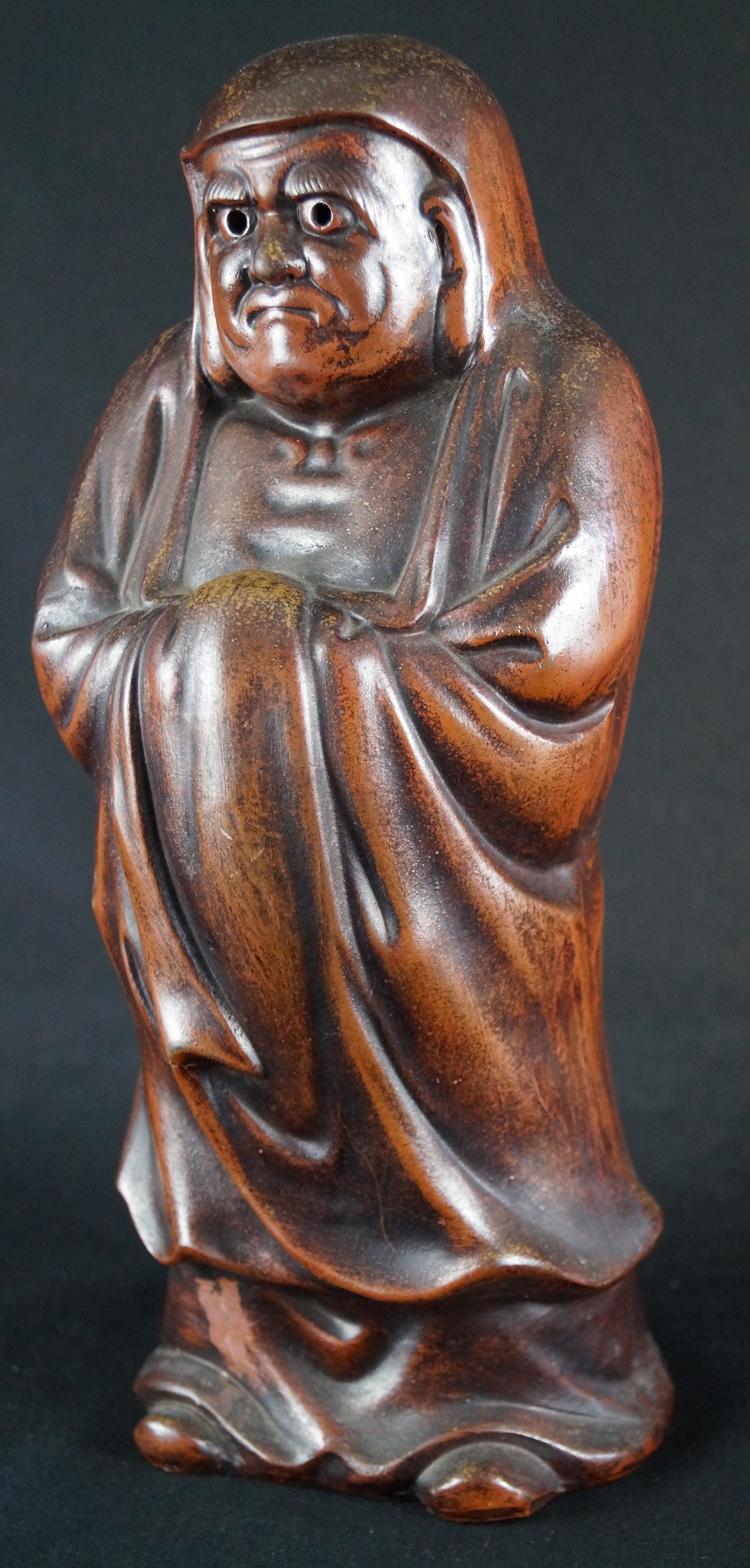
Daruma Figure Made of Bizen Ware with Wide Open Eyes
Figure, unique work, 30 x 12 cm
€280.00
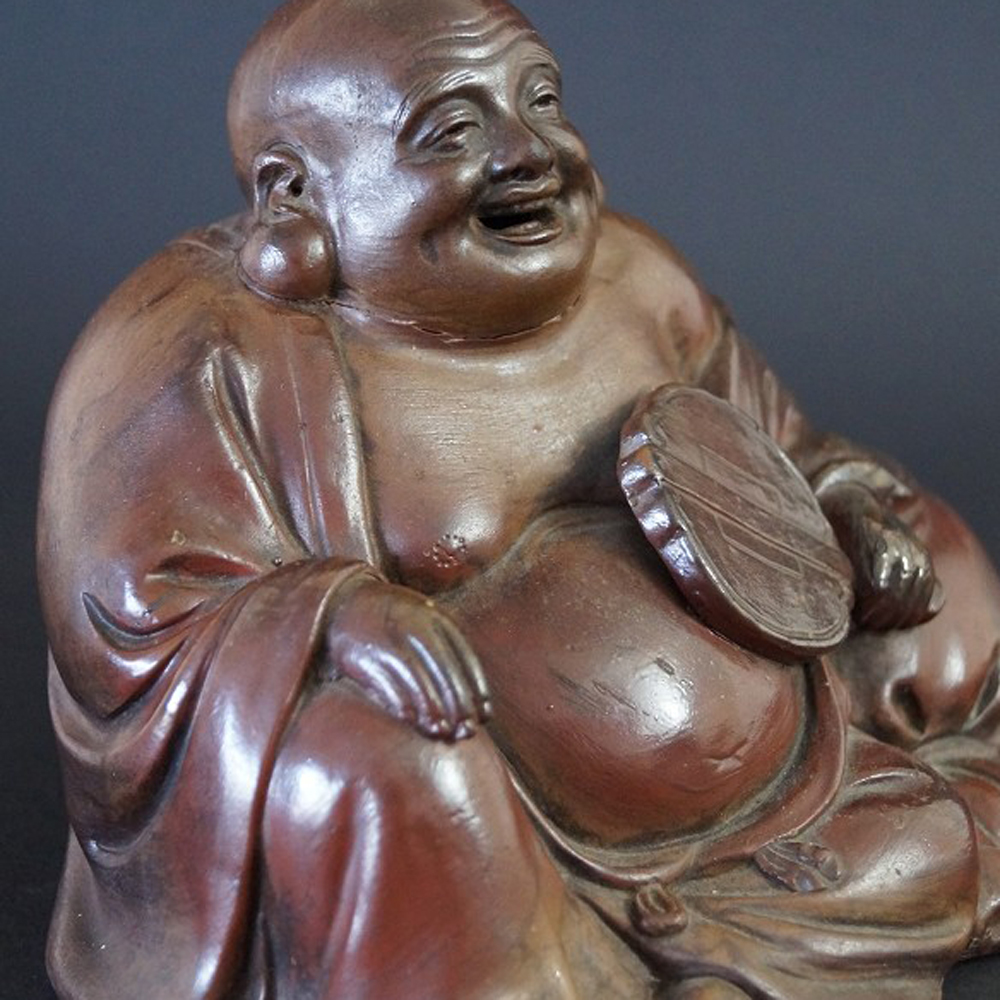
Seated Hotei Figure Made of Bizen Ware with Fan
Figure, unique work, 12,5 x 16 cm
Sold
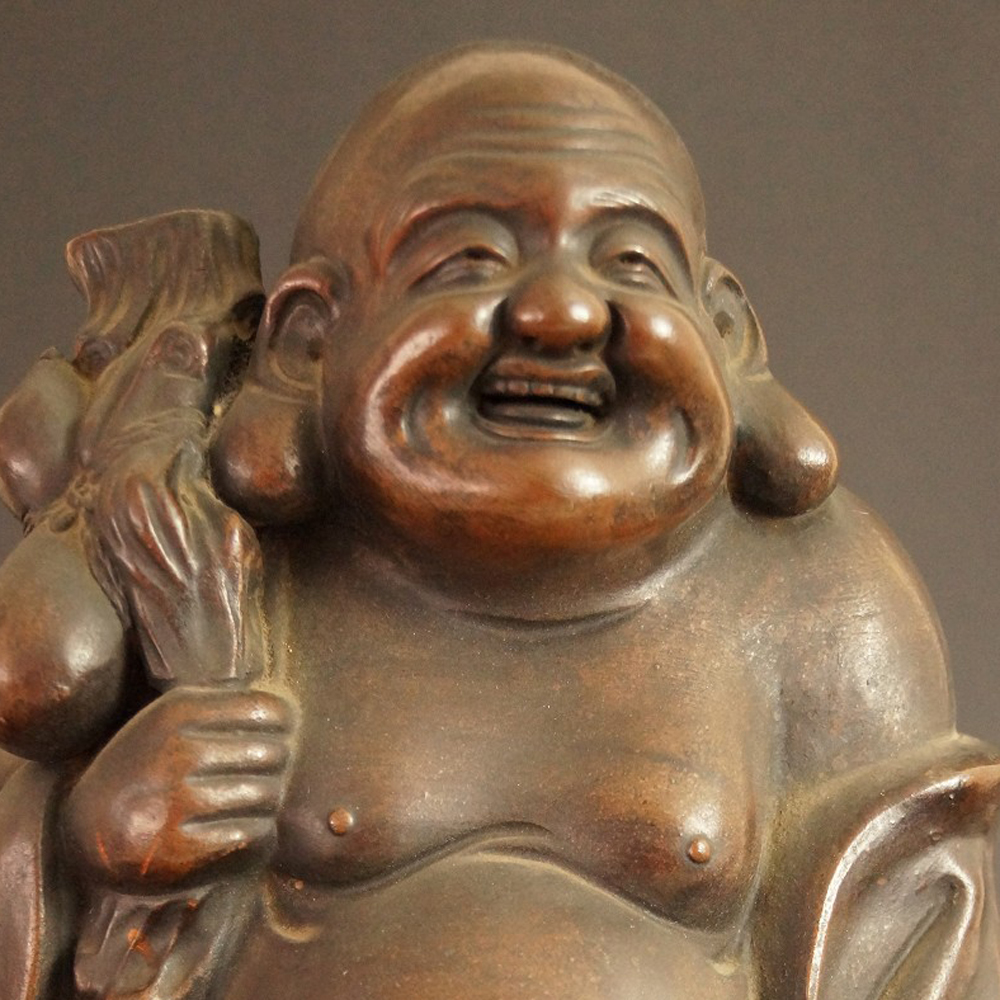
Hotei Figure Made of Bizen Ware
Figure, unique work, 25 x 16 cm
Sold
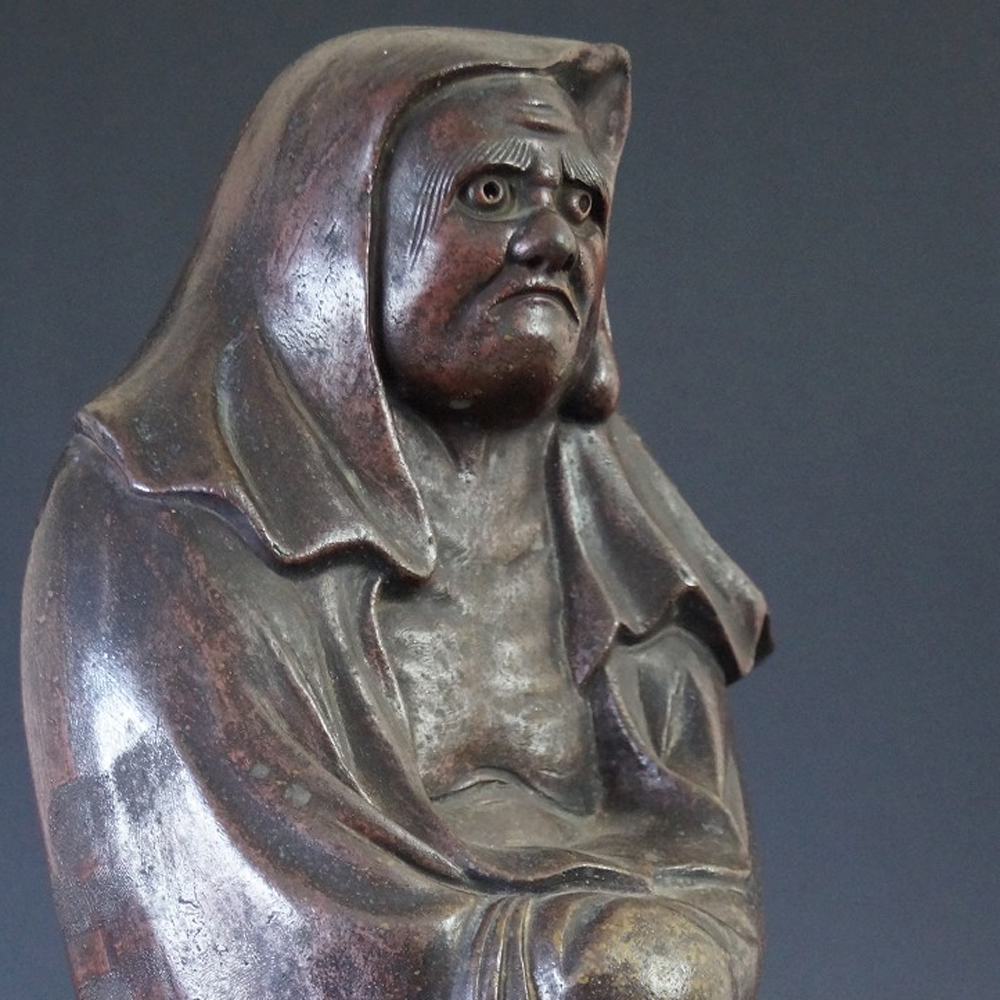
Daruma Figure Made of Bizen Ware with Averted Gaze
Figure, unique work, 32 x 14 cm
Sold
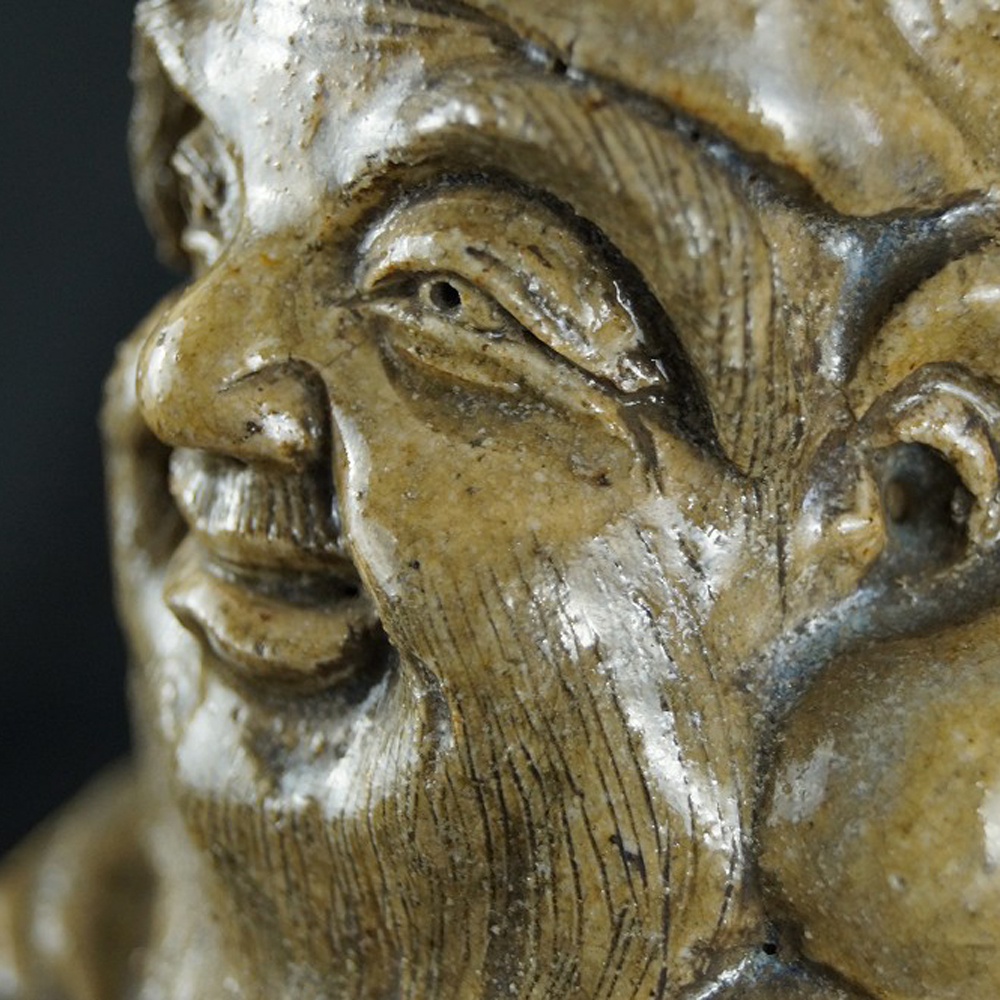
Japanese Jurojin Figure Made of Ceramics
Figure, unique work, 23 x 10 cm
Sold
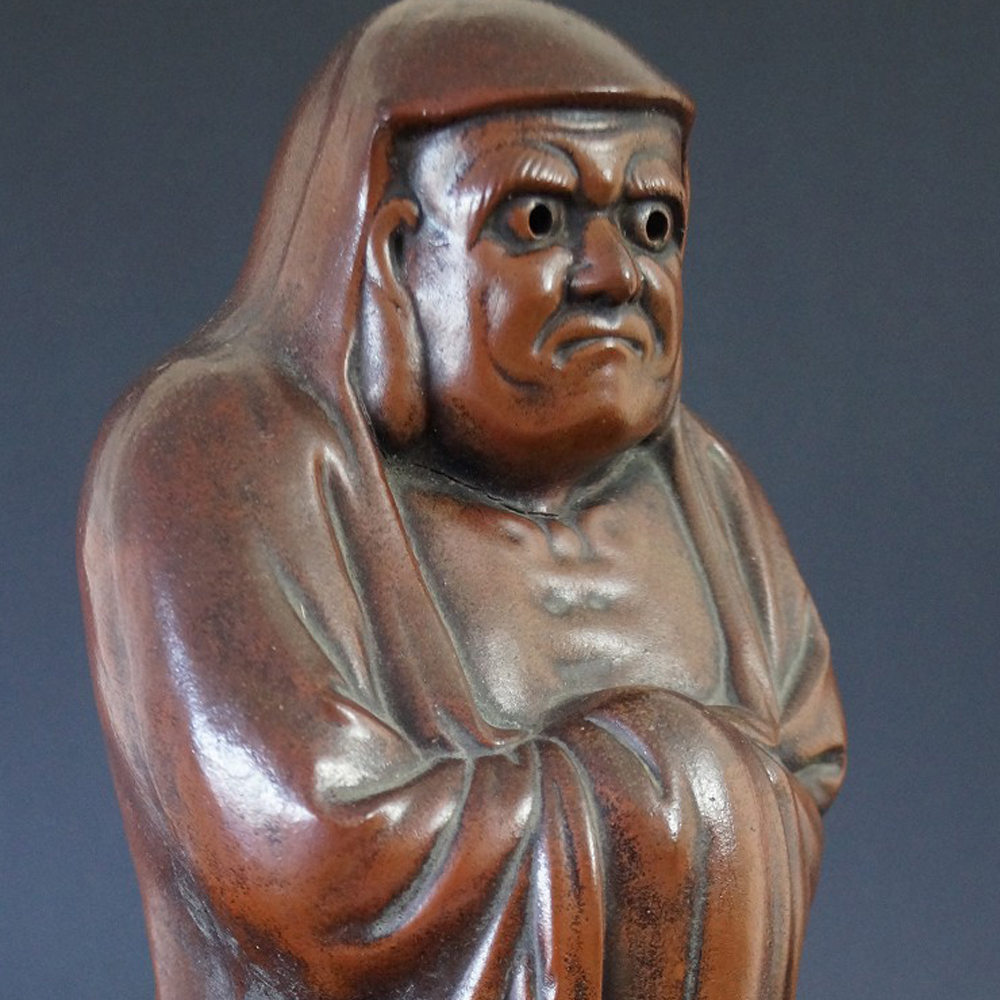
Daruma Figure Made of Bizen Ware with Crossed Arms
Figure, unique work, 30 x 12 cm
Sold
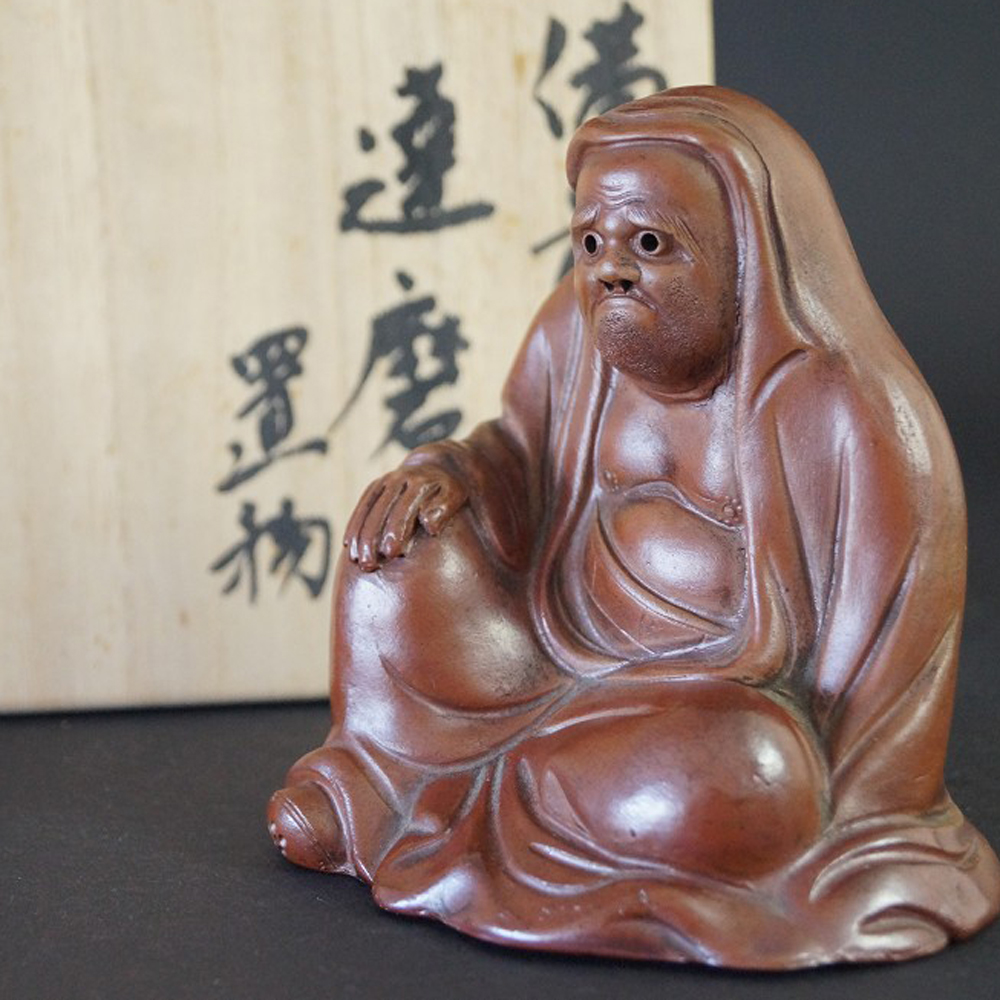
Japanese Bodhidharma Figure Made of Bizen Ware
Figure, unique work, with box, 11 x 10 cm
Sold
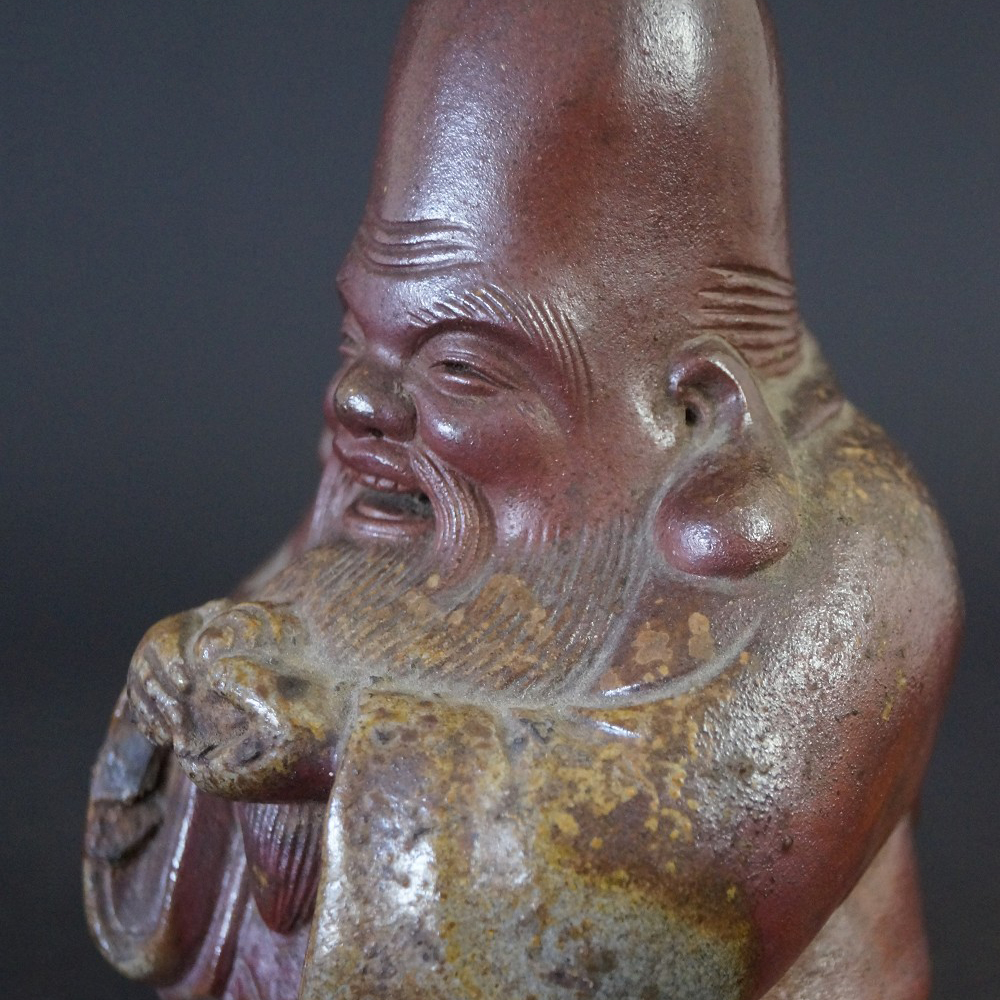
Japanese Fukurokuju Figure Made of Bizen Ware
Figure, unique work, with box, 12,5 x 8 cm
Sold
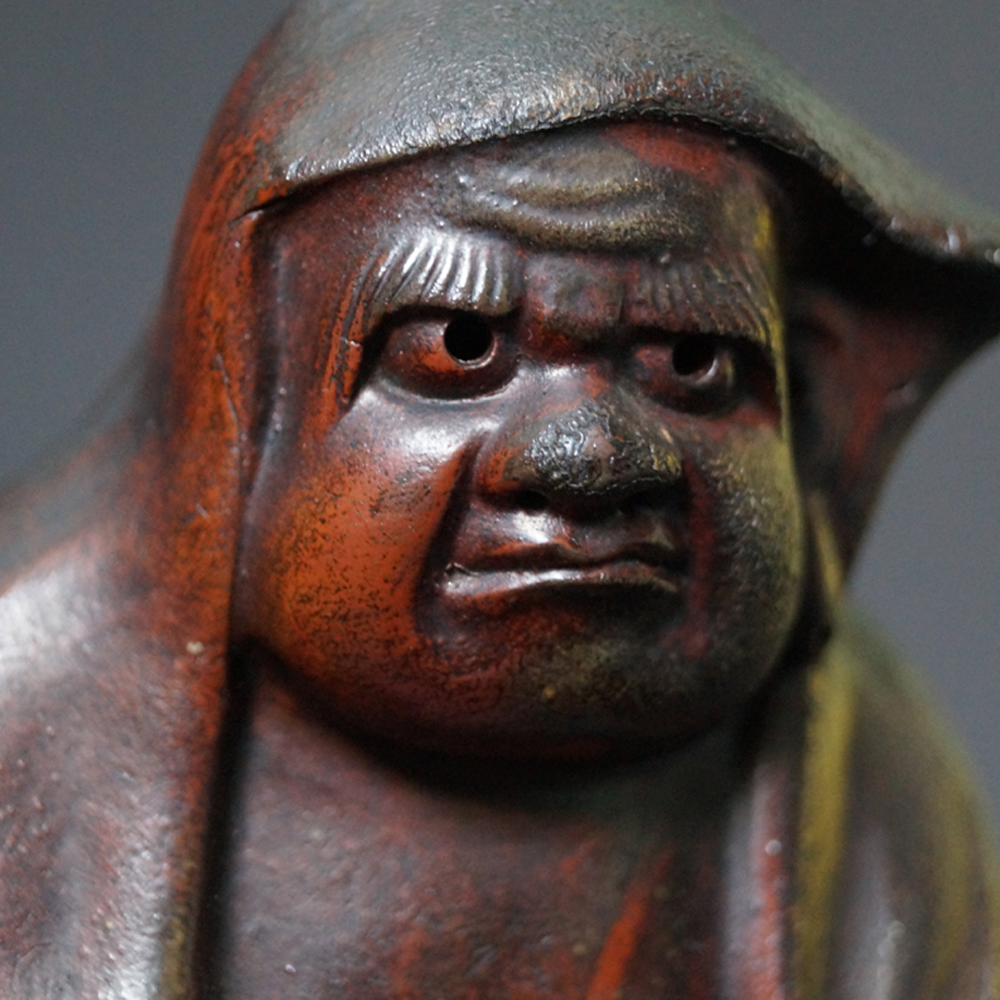
Japanese Bodhidharma (Daruma) Figure Made of Bizen Ware
Figure, unique work, 18 x 8 cm
Sold
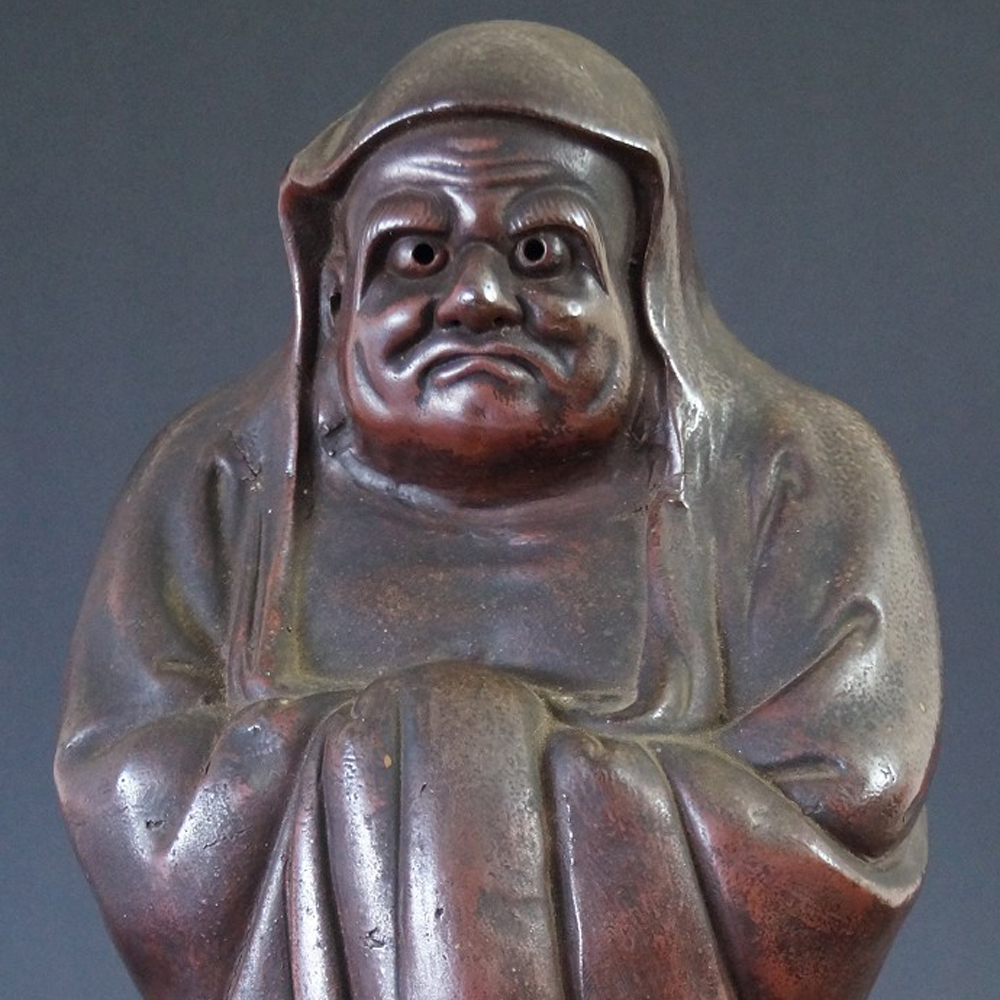
Daruma Figure Made of Bizen Ware from the 1930s
Figure, unique work, 30 x 12 cm
Sold
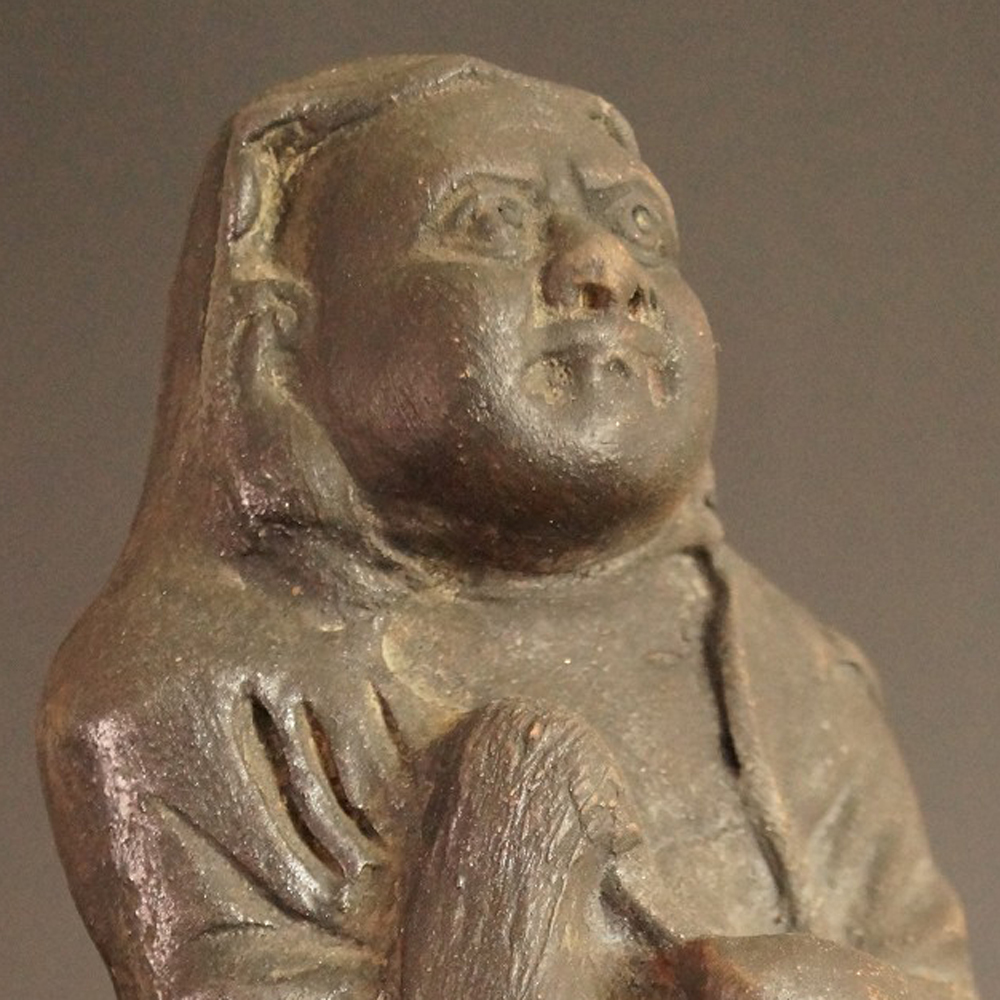
Japanese Bodhidharma (Daruma) Figure Made of Ceramics
Figure, unique work, 21 x 10 cm
Sold
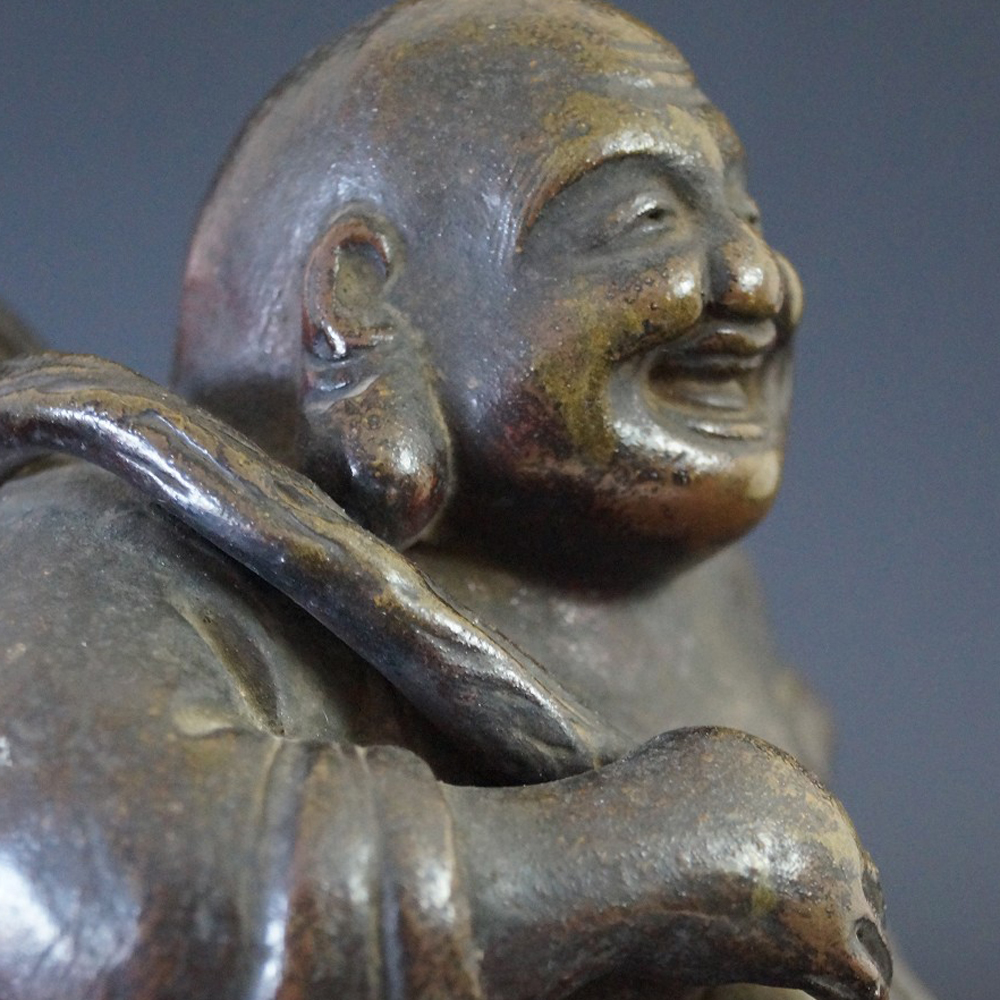
Standing Hotei Figure Made of Bizen Ware with Sack
Figure, unique work, 19 x 12 cm
Sold
17 of 17 items shown
Ceramics or porcelain: what makes a ceramic figure
The Japanese umbrella term for ceramics is yakimono, literally “fired thing”. It covers two large families: tōki, earthenware and stoneware made of clay, and jiki, fine white hard-paste porcelain made from kaolin. Ceramic figures belong to the first family. Instead of the smooth, white and often brightly painted surface of porcelain, they show the color and texture of the clay itself – sometimes rough and untreated, sometimes under an earthy glaze. Figures in porcelain, for example from the Kutani tradition, as well as figures in wood or bronze, each form their own group in the shop.
The clay determines the character
The wide range of Japanese ceramics begins in the ground: every region has its own clay deposits, which shape color, texture and firing behavior. The iron-rich hiyose clay from Bizen in Okayama Prefecture yields rich red and brown tones in the unglazed high-temperature firing; it is often stored for months and elaborately levigated before it is supple enough to work. For figures this is crucial, because only a fine, pliable clay allows the precise modeling of brows, strands of beard, hands and folds of a robe that give a figure its expression.
Unglazed: yakishime and the trace of the fire
Most of the Japanese ceramic figures at Densho come from the Bizen tradition and are unglazed. In the yakishime firing the clay becomes so dense at around 1,200 to 1,300 degrees that it turns hard and impermeable without glaze. In the wood kiln, fired for days, fly ash settles on the side facing the fire and melts there into fine, glossy speckles, while sheltered areas remain darker or grayish. The result is a fire side and a calmer back – the figure changes as you turn it.
Glazed: when the glaze accentuates the form
Glazed ceramic figures are less common. On these, a matte glaze in olive green, ocher or gray lies over the clay body, sometimes with silvery reflections. Glaze applied by hand never spreads evenly: it pools in recesses into rich, darker zones and thins out at edges so that the color of the clay shows through. For figures this is a real gain in design, because deep folds in the robe and sculpted facial features stand out particularly clearly under the glaze.
Subjects: Zen, compassion and good fortune
The subjects of Japanese ceramic figures come mainly from Buddhism and folk religion. The most common is Bodhidharma, Daruma in Japanese, the founder of Zen, with a piercing gaze and a robe drawn over his head. Kannon, the bodhisattva of compassion, appears with a tall headdress and folded hands. From the circle of the Seven Lucky Gods come the laughing Hotei with his sack, Fukurokuju with his towering forehead, and Jurōjin, the god of long life, often with a scroll or a vessel.
Recognizing handwork
A handmade ceramic figure reveals itself through traces that are never repeated. On unglazed ware these are the firing marks of the kiln position; on glazed ware, runs, small craters or pinholes in the glaze. Industrial ware, by contrast, looks uniform: sprayed glaze lies equally thick everywhere like lacquer, and a brown imitation glaze looks the same from every side. Weight also offers clues, since in handwork the mass is rarely distributed perfectly evenly.
Caring for glazed and unglazed ceramics
For both surfaces a soft brush or a dry cloth is usually enough. Unglazed ceramics are robust thanks to the high-temperature firing but remain slightly porous and react more sensitively to cleaning agents and prolonged soaking than glazed ware; over time they develop a fine patina. Glazed figures can be wiped with a slightly damp cloth if necessary. A stable position, away from table edges, protects both from knocks.
What collectors look for
With ceramic figures, collectors pay attention to the expression, the quality of the modeling and the effect of the surface – whether lively firing marks or a beautifully flowing glaze. The ceramic figures at Densho date from the Meiji and Shōwa periods. Some bear an artist's signature, others a workshop stamp that names the context rather than the individual maker. An inscribed wooden box (tomobako) is a valuable indication of provenance, but on its own not proof of age; chips and losses should be mentioned in the description.