Japanese Landscape Painting
Go directly to the artworksIn brief
Japanese Landscape Painting, called sansui-ga ("mountain-water pictures") in Japanese, typically depicts mountains, waterfalls, pines, and misty atmospheres in reduced ink painting. The art form was significantly shaped by Chinese models, but developed its own distinct style in Japan, often quieter and with an emphasis on empty space. Central principles are ma (the deliberately composed empty space) and a reduced color palette that conveys mood rather than exact fidelity to detail. At densho.art you will find hand-painted landscape kakemono as one-of-a-kind pieces direct from Japan.
Kanō Tanyū
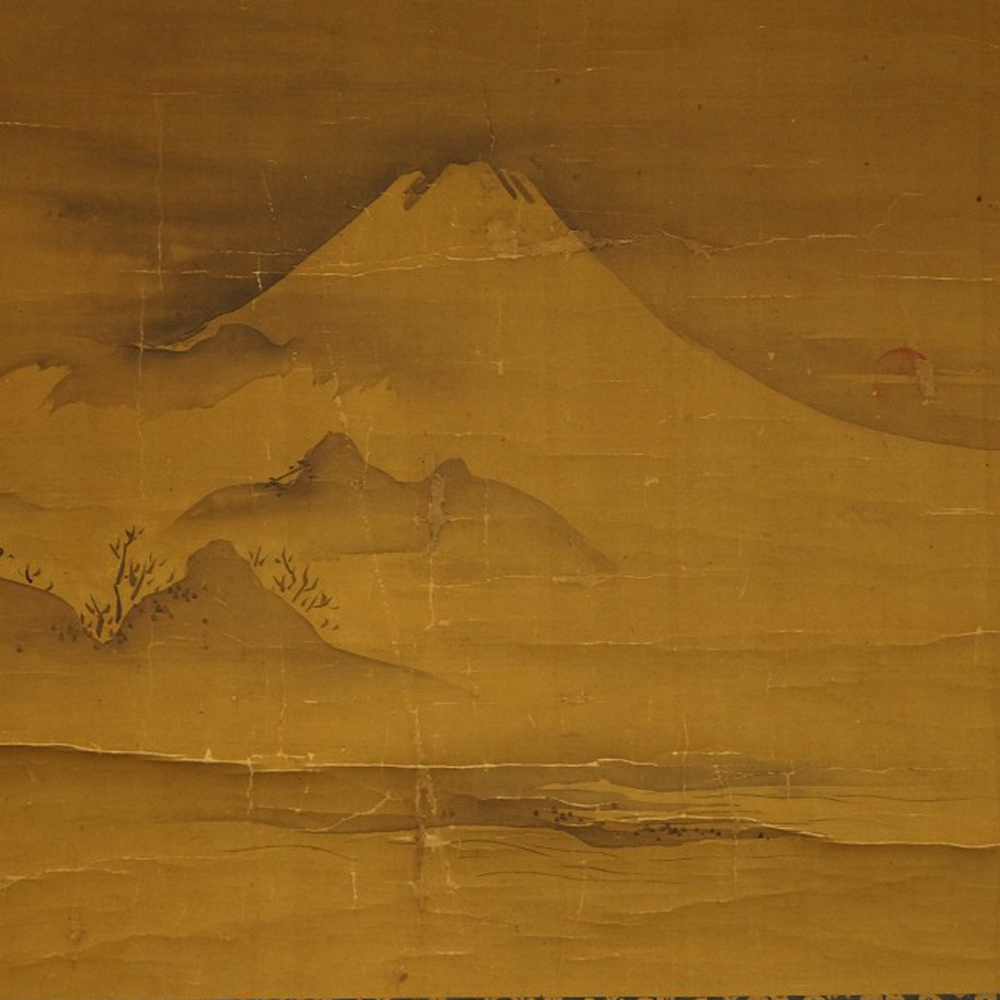
Fuji Above a Cloud Band and Misty Hills
Kakemono, unique work, with box, 103 x 52 cm
€660.00
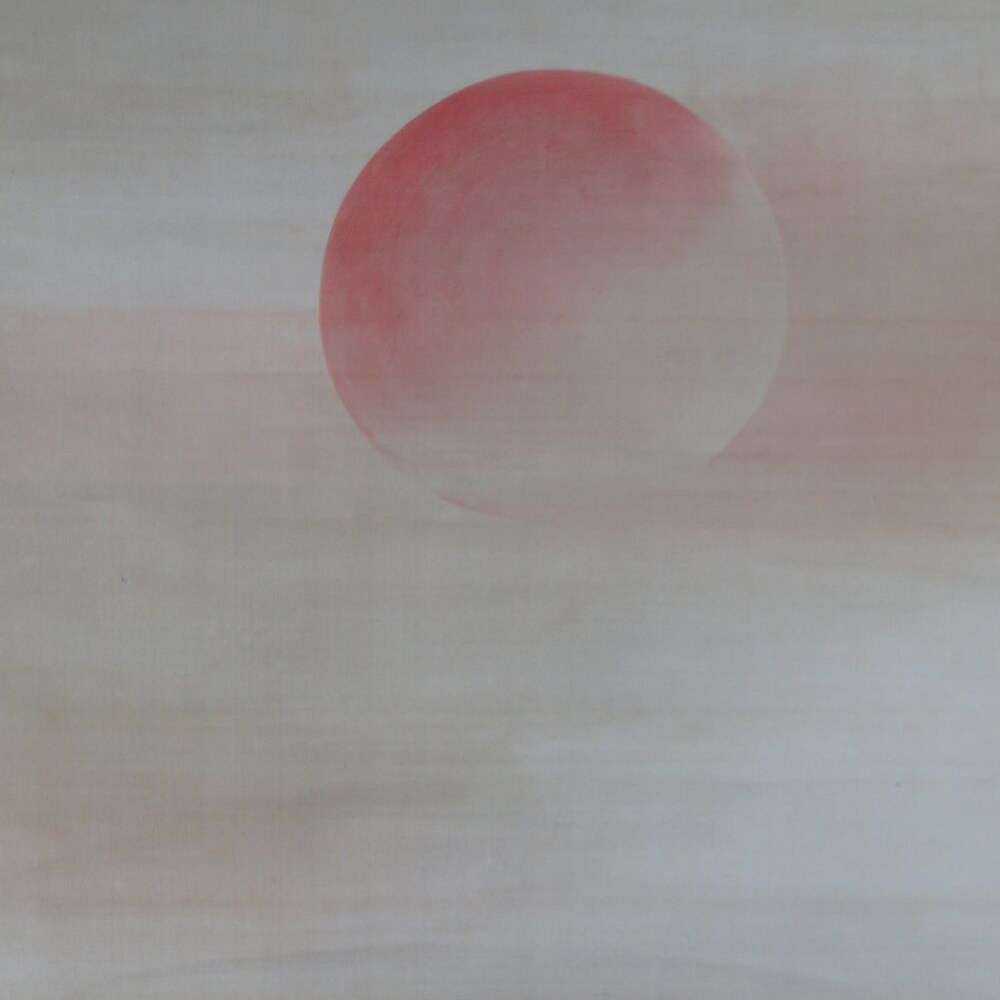
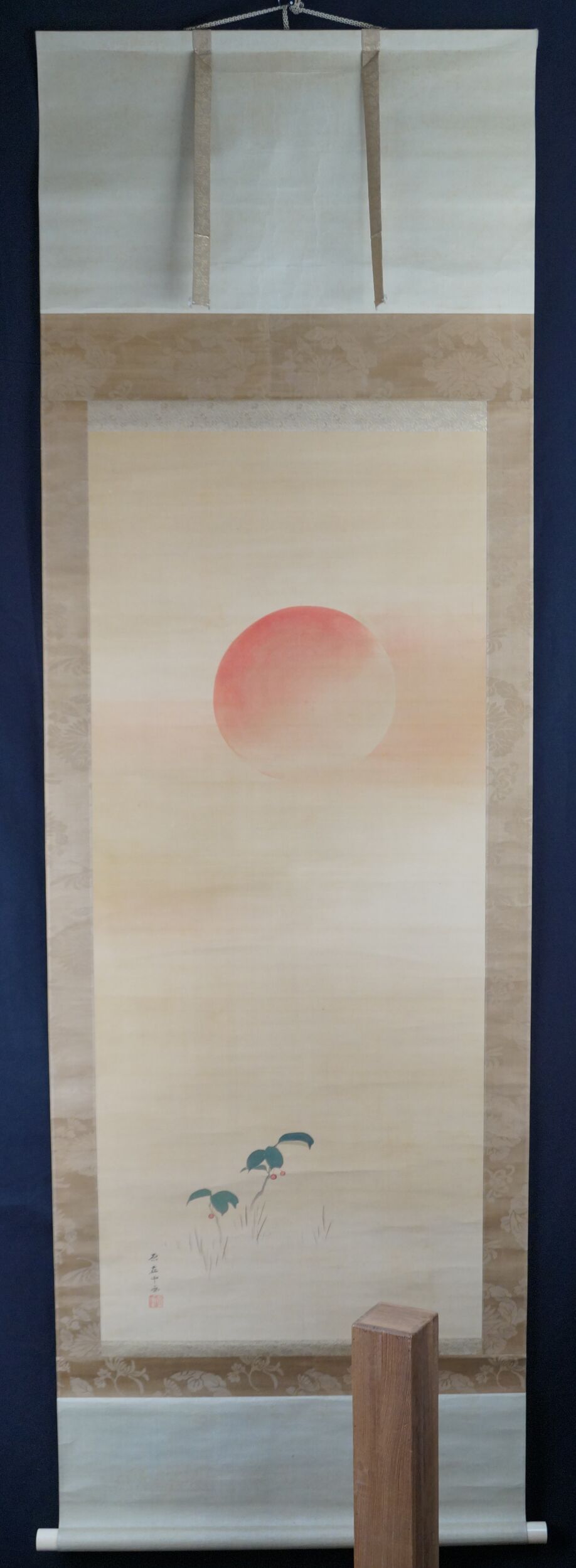
Hara Zaichu
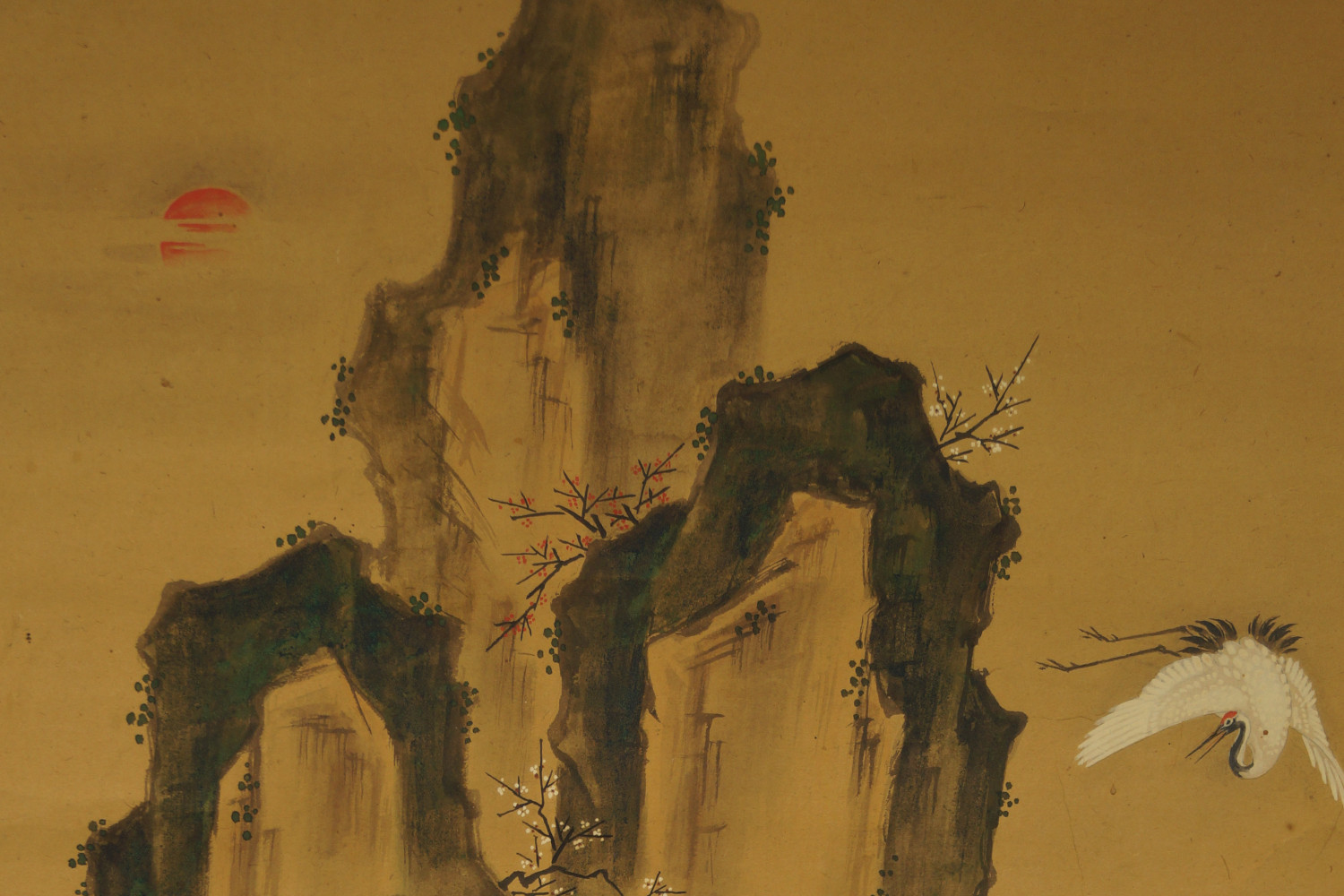
Rising Sun over Misty Landscape
Kakemono, unique work, with box, 200 x 70 cm
€230.00
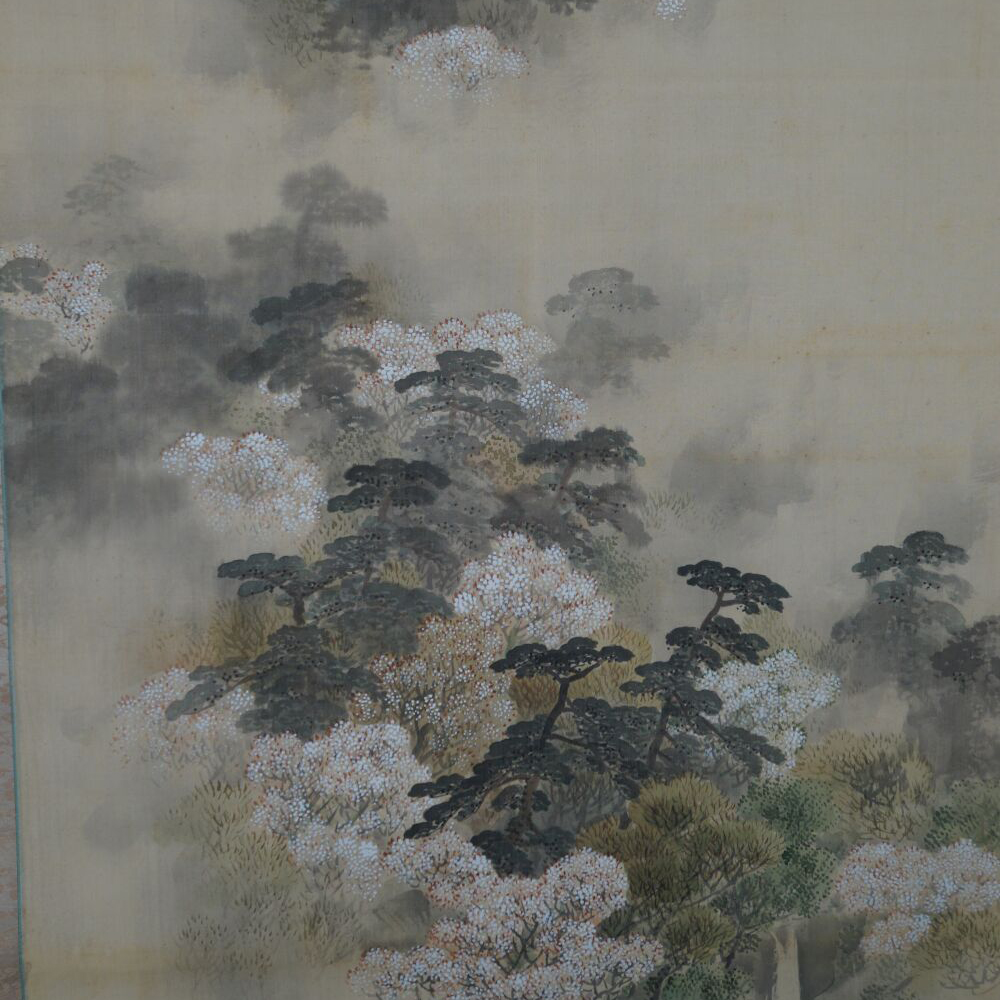
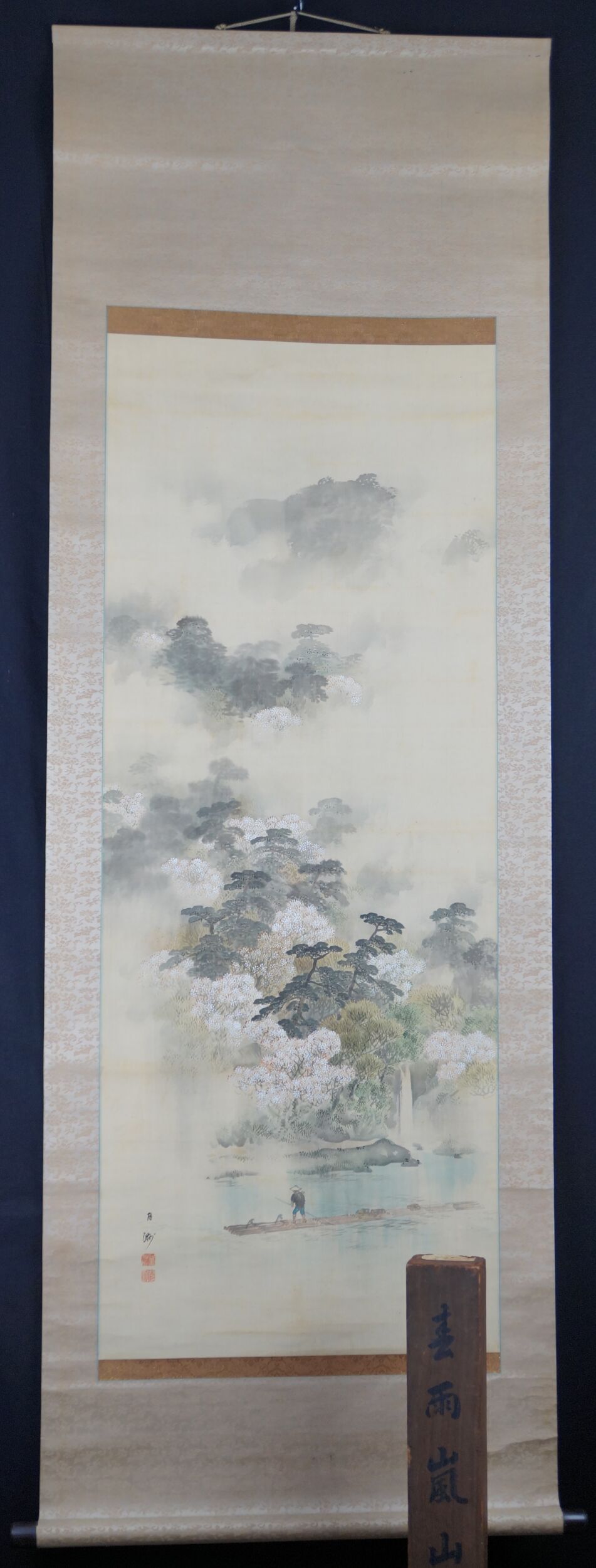
Haneda Getsushu
River in a Blooming Valley
Kakemono, unique work, with box, 192 x 72 cm
€250.00
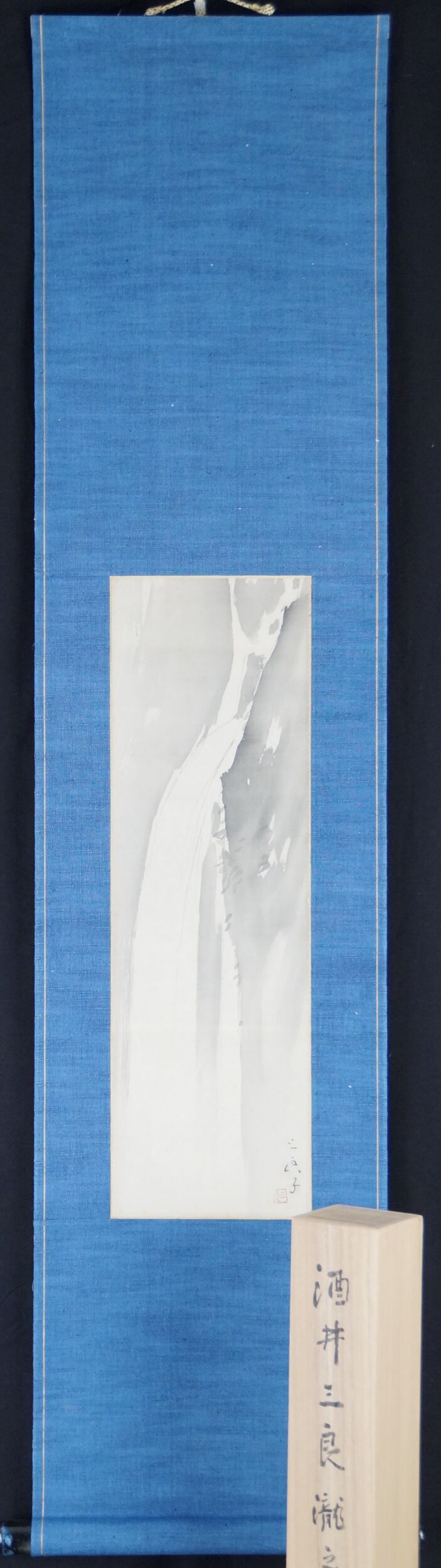
Sakai Sanryo
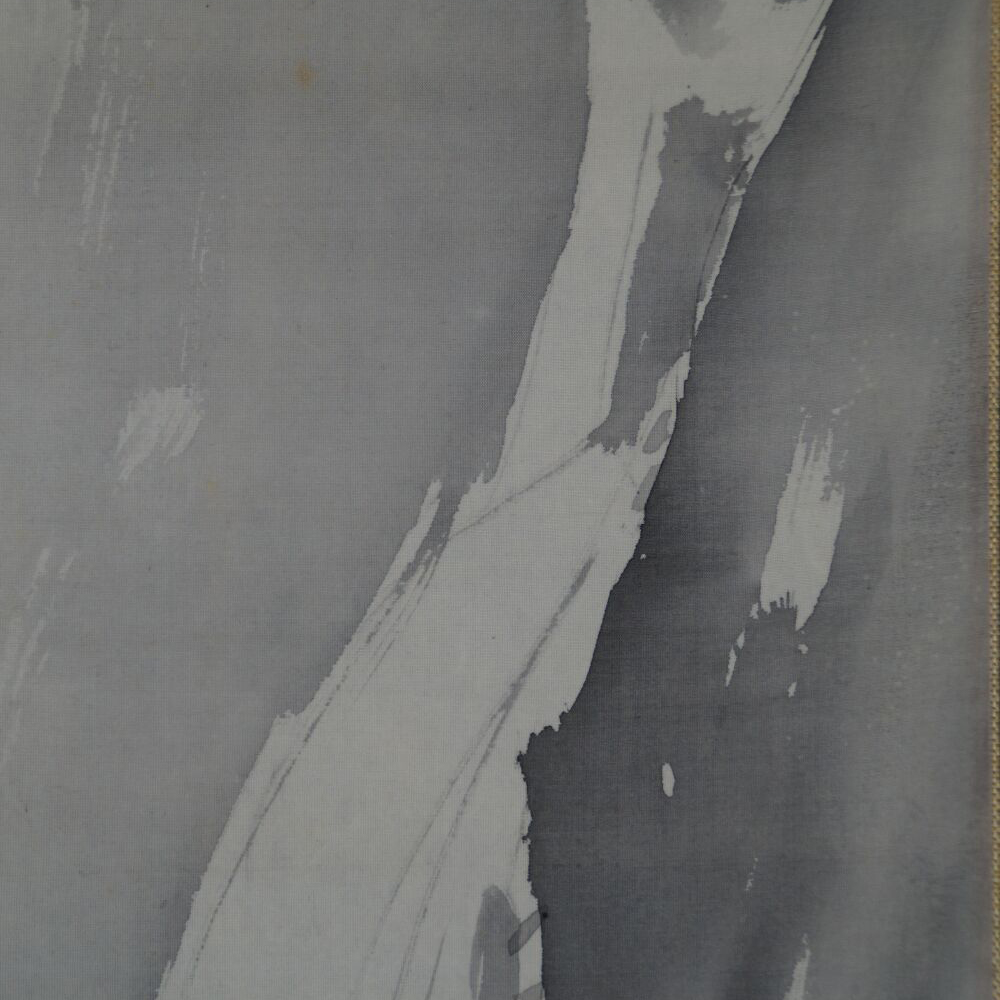
Waterfall in the Mist
Kakemono, unique work, with box, 129 x 36 cm
€570.00
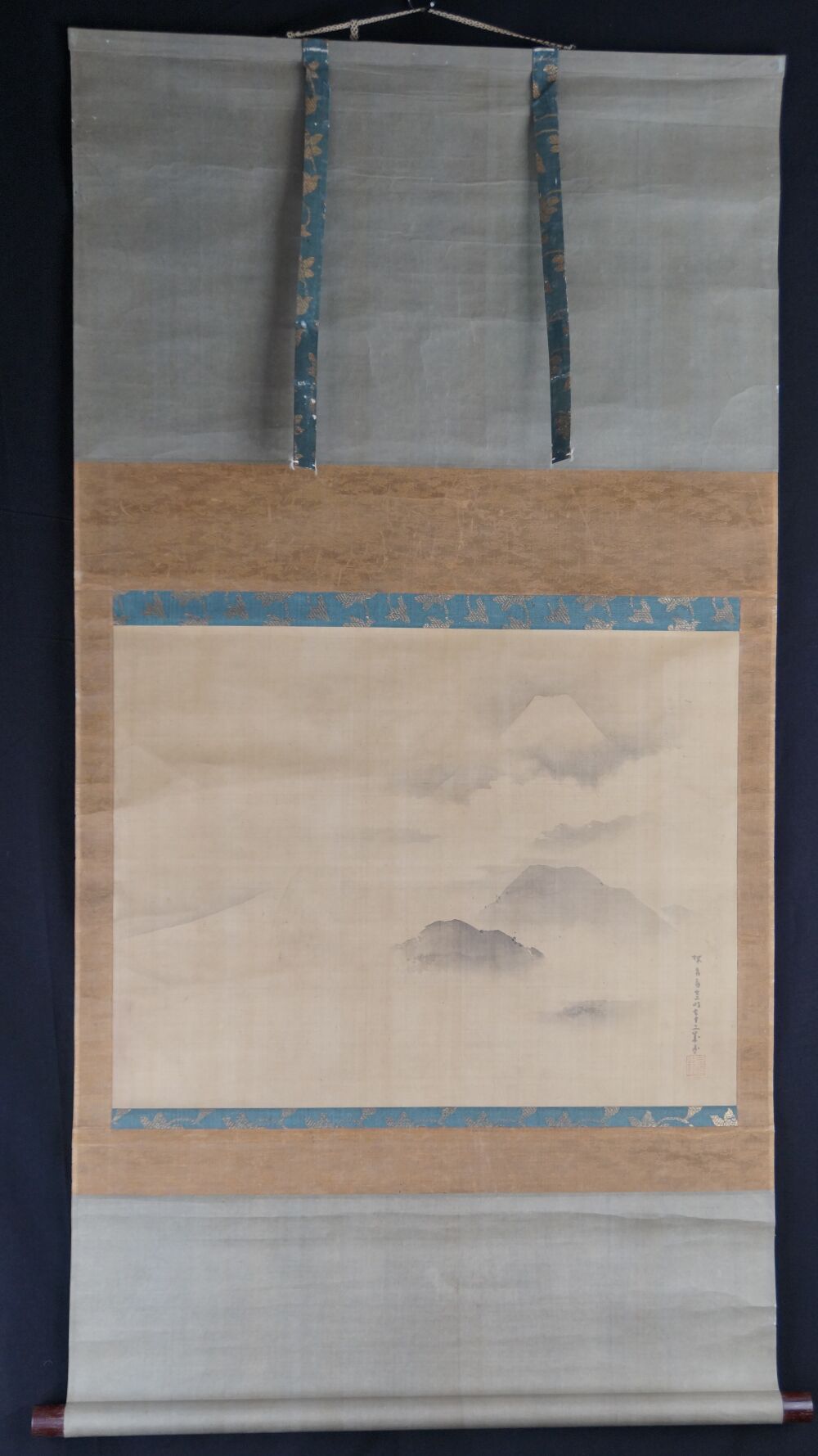
Tansenzai Keimei
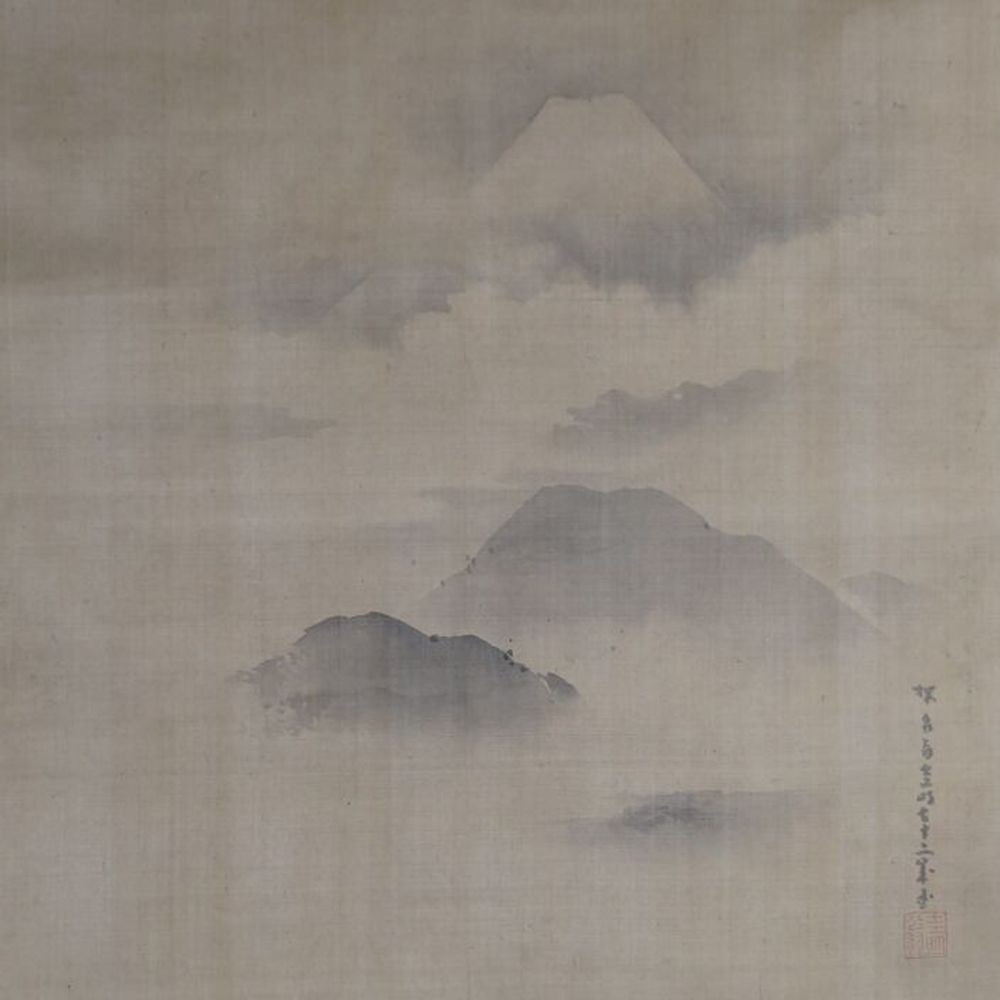
Fuji in Cloud-Covered Heights
Kakemono, unique work, 123 x 63 cm
€440.00
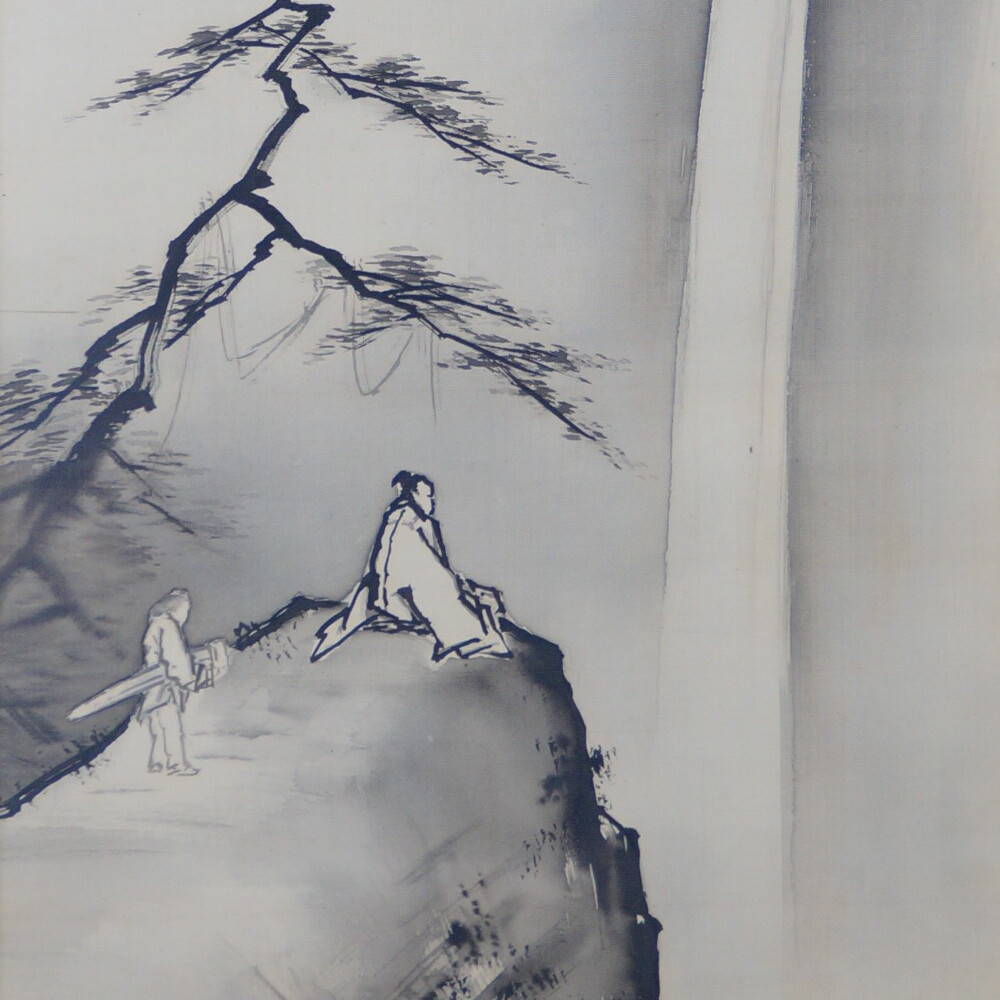
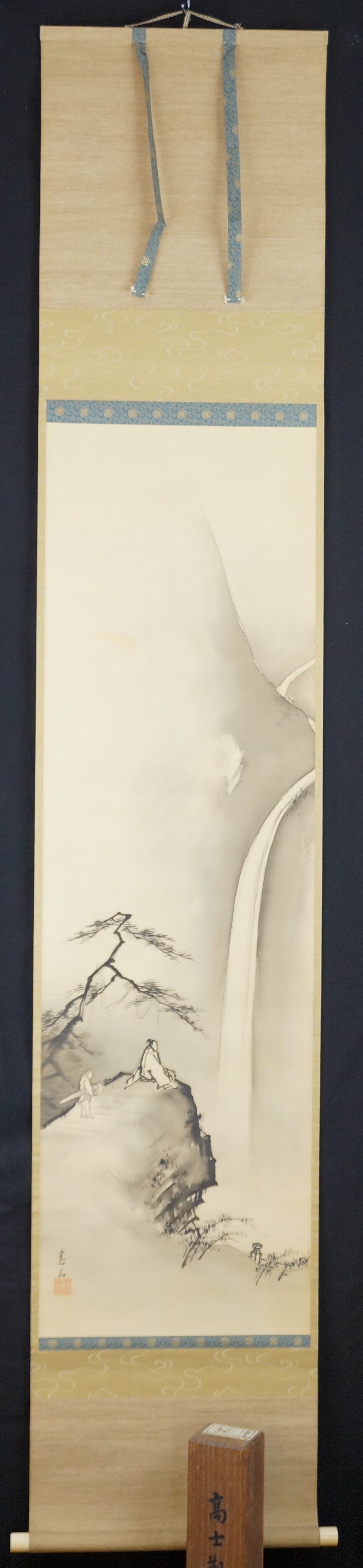
Yagioka Shunzan
Encounter at the Edge of the Waterfall
Kakemono, unique work, with box, 200 x 44 cm
€880.00
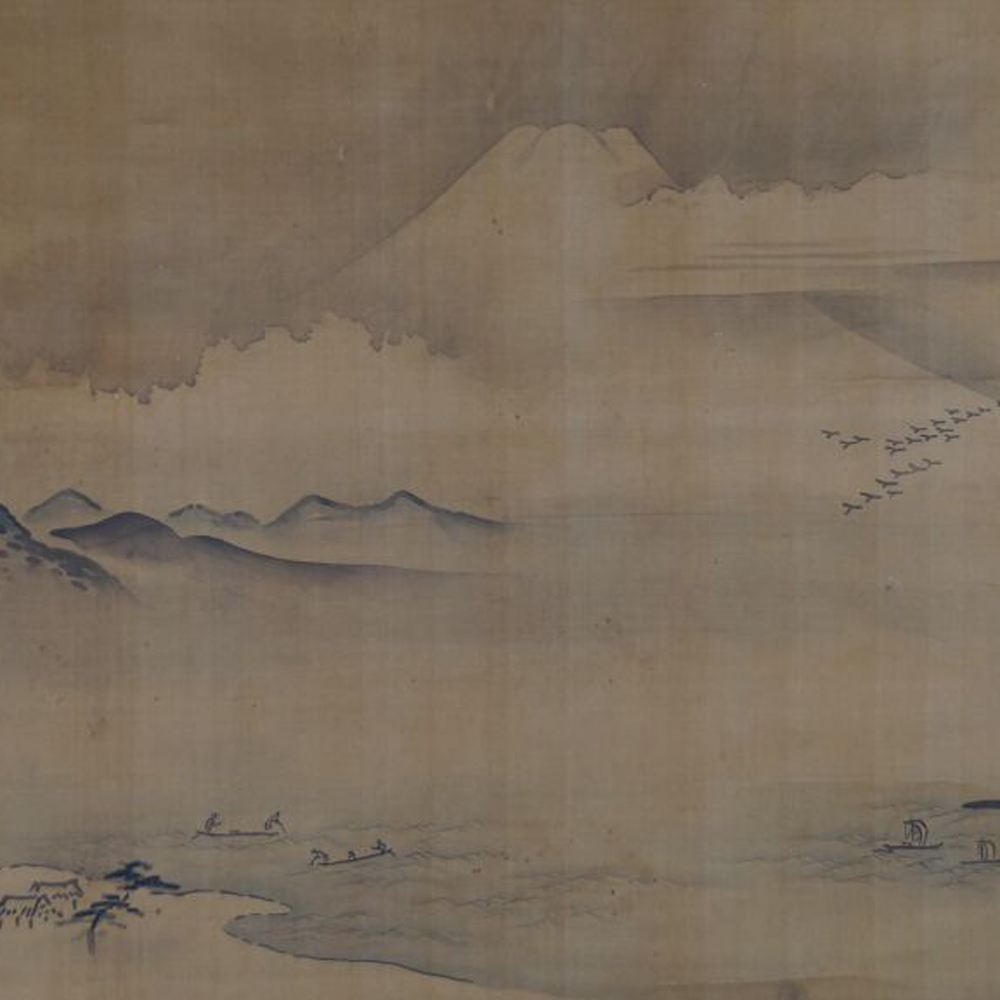
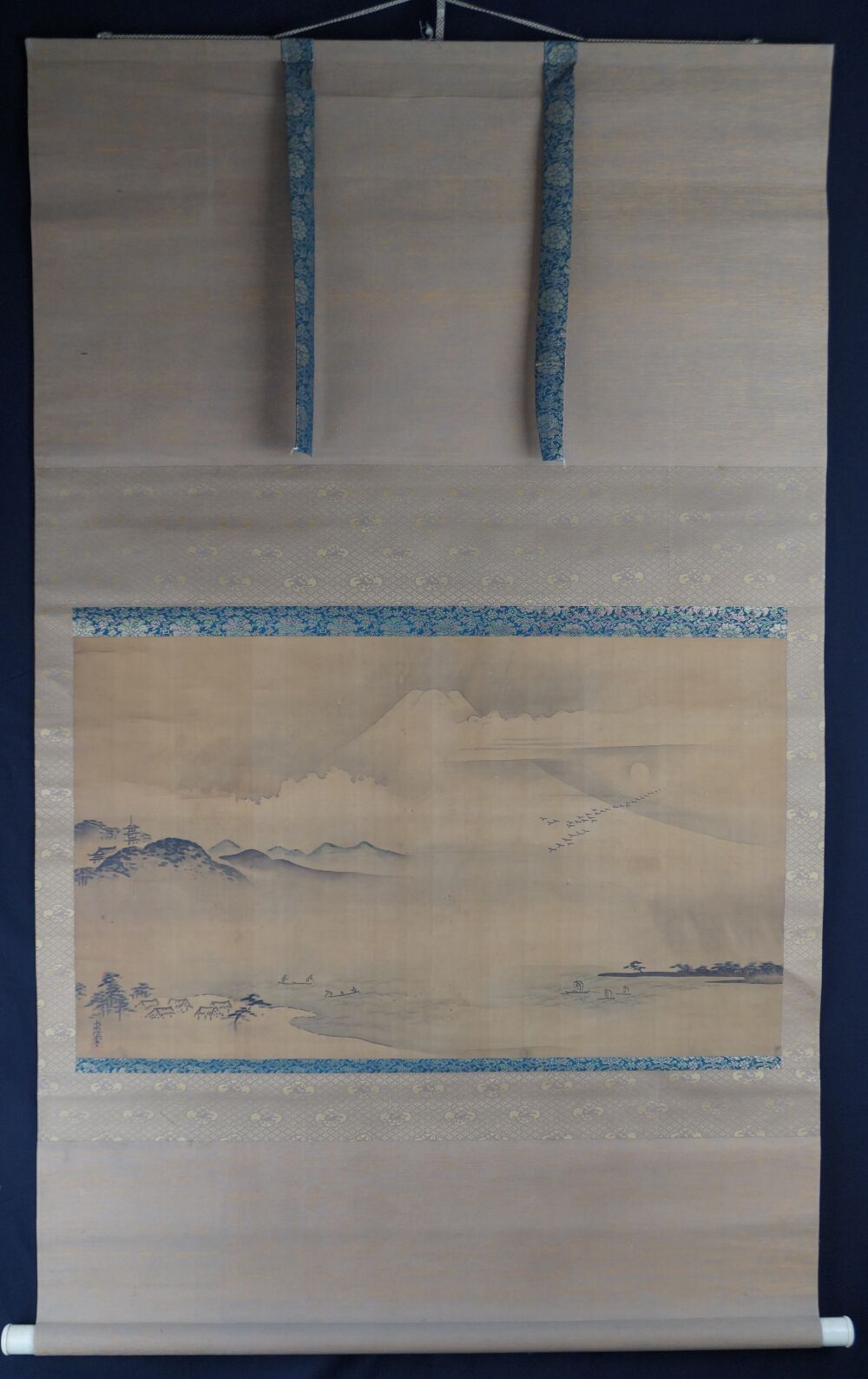
Kanō Zuizen
Fuji in Morning Mist
Kakemono, unique work, 140 x 91 cm
€1,170.00
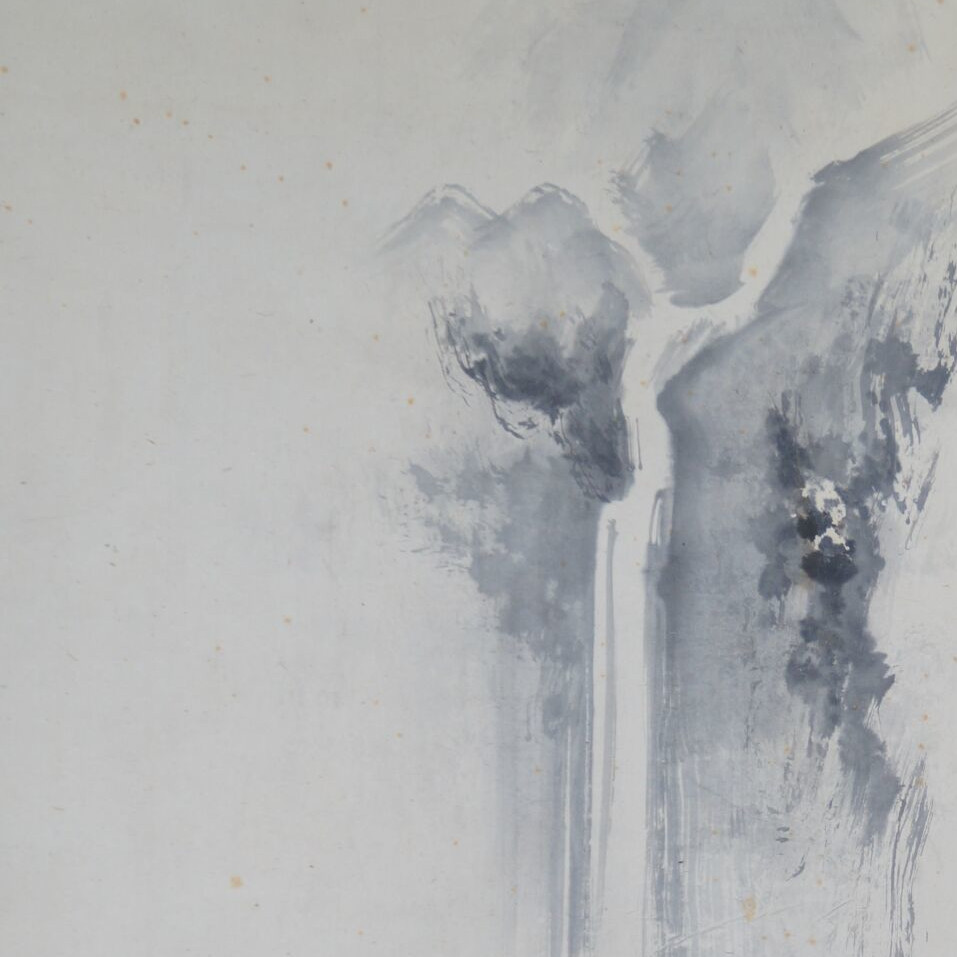
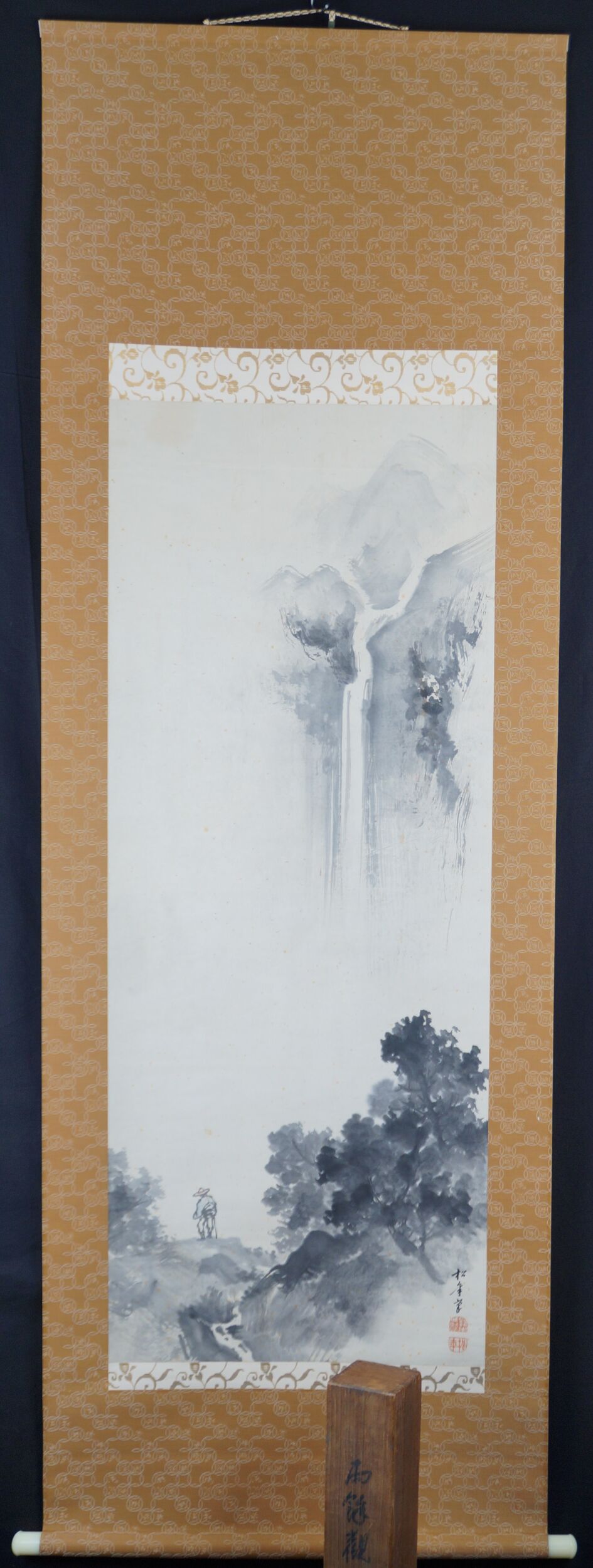
Suzuki Shonen
Wanderer Before the Waterfall - Suzuku Shonen
Kakemono, unique work, with box, 190 x 71 cm
€380.00
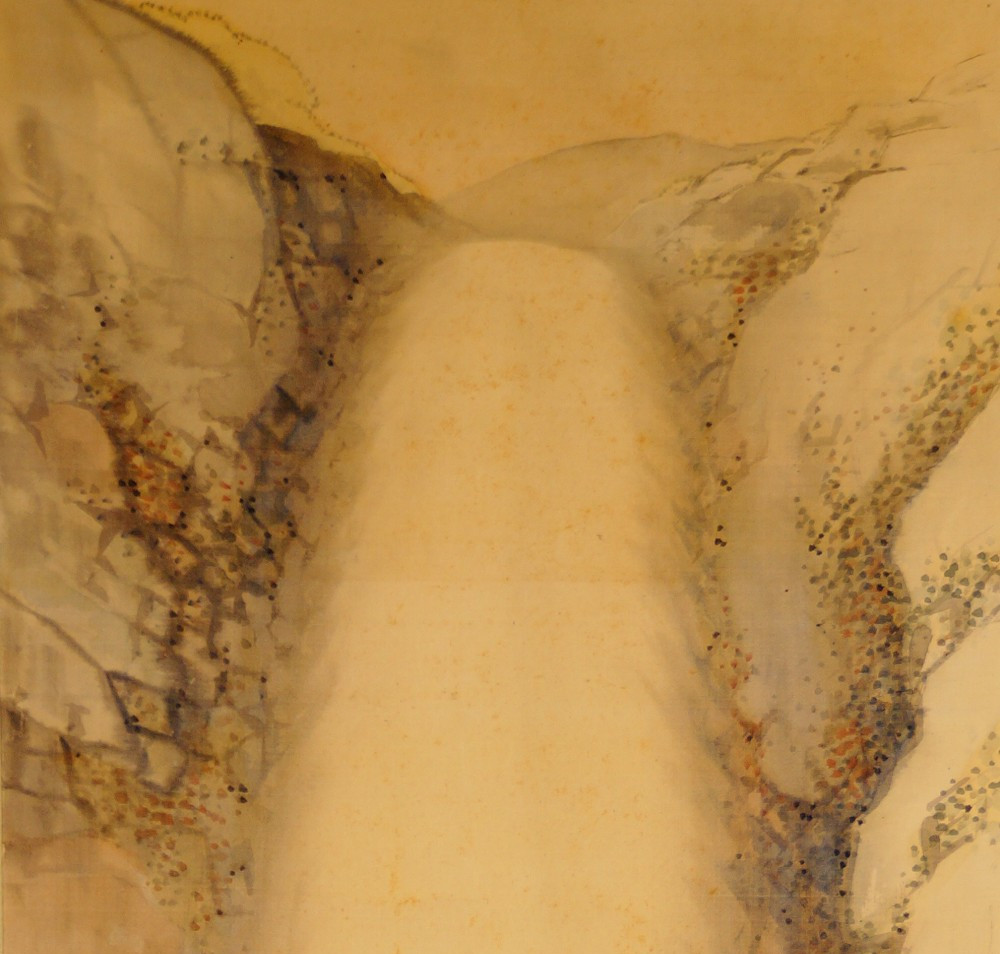

Nakagawa Wado
Waterfall in the Mountains
Kakemono, unique work, 195 x 59 cm
€380.00
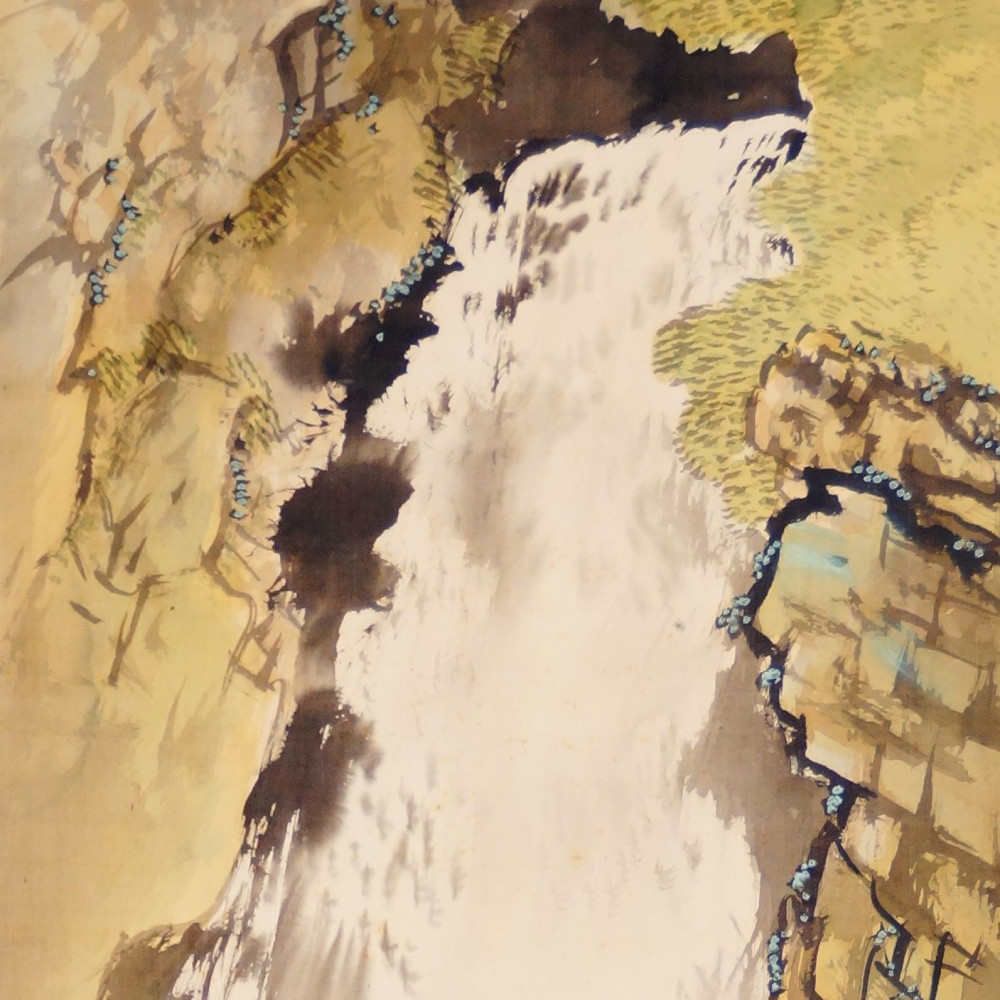

Yamamoto Shunkyo
Roaring Waterfall
Kakemono, unique work, 201 x 51 cm
€610.00
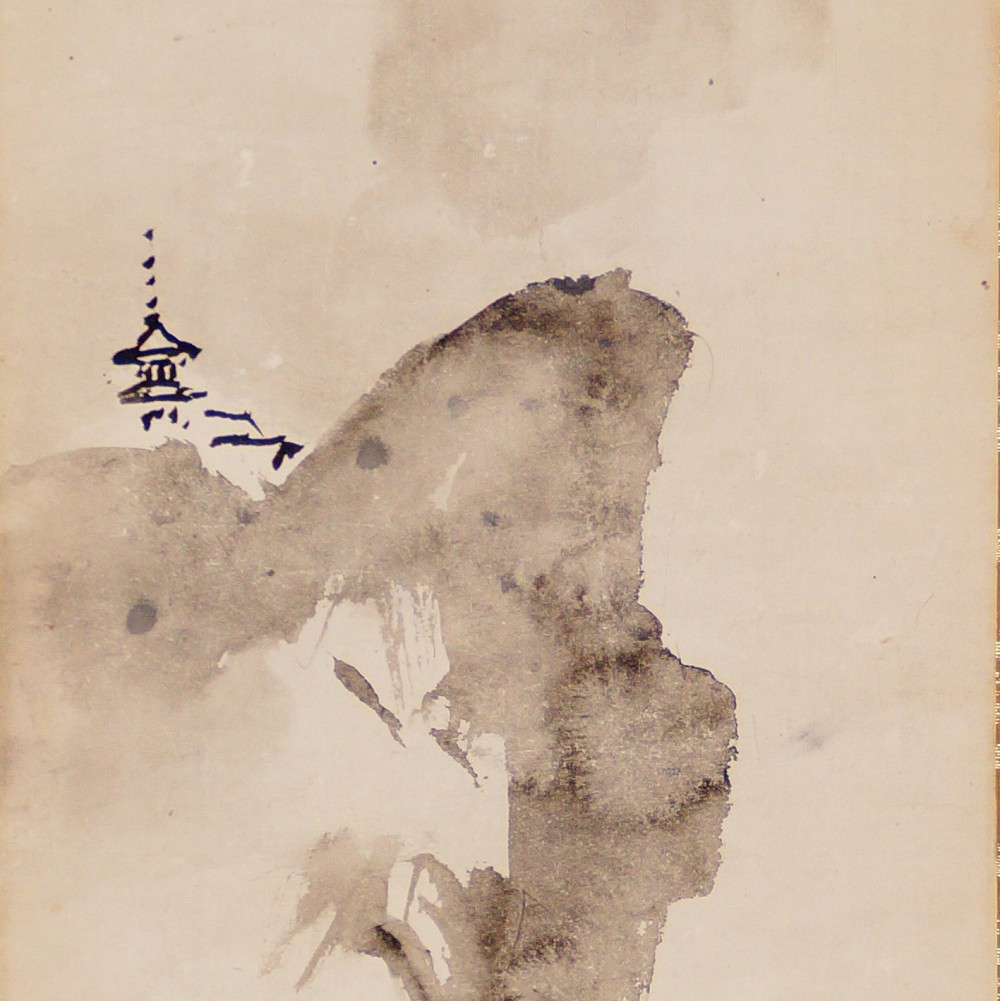

Kano Shūshin
Pagoda on the Cliff
Kakemono, unique work, 190 x 37 cm
€290.00
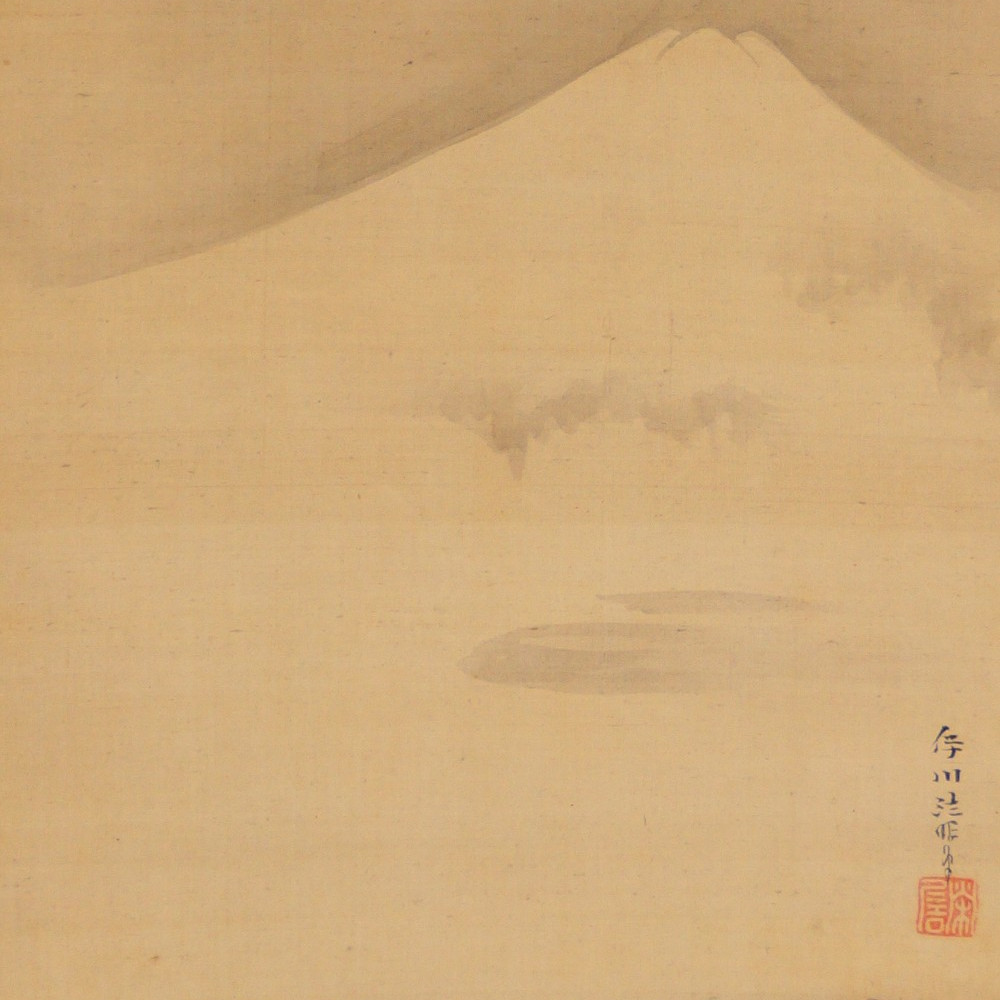

Kano Eishin und Kano Yoshinobu
Cranes Before Mount Fuji (in the Tradition of the Kano School)
Kakemono, unique work, with box, 162 x 41 cm
€450.00
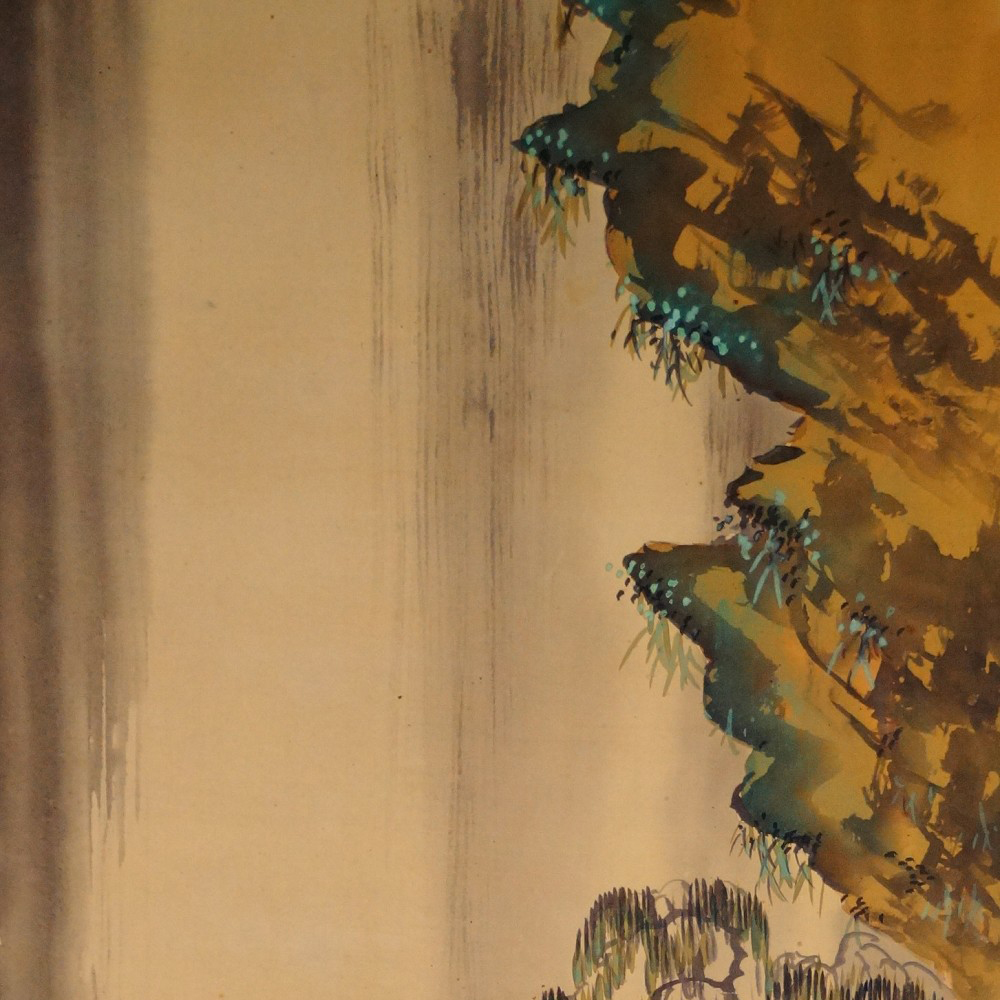

Jōdō
Bees Against a Waterfall Backdrop by Jodo
Kakemono, unique work, 188 x 62 cm
€375.00
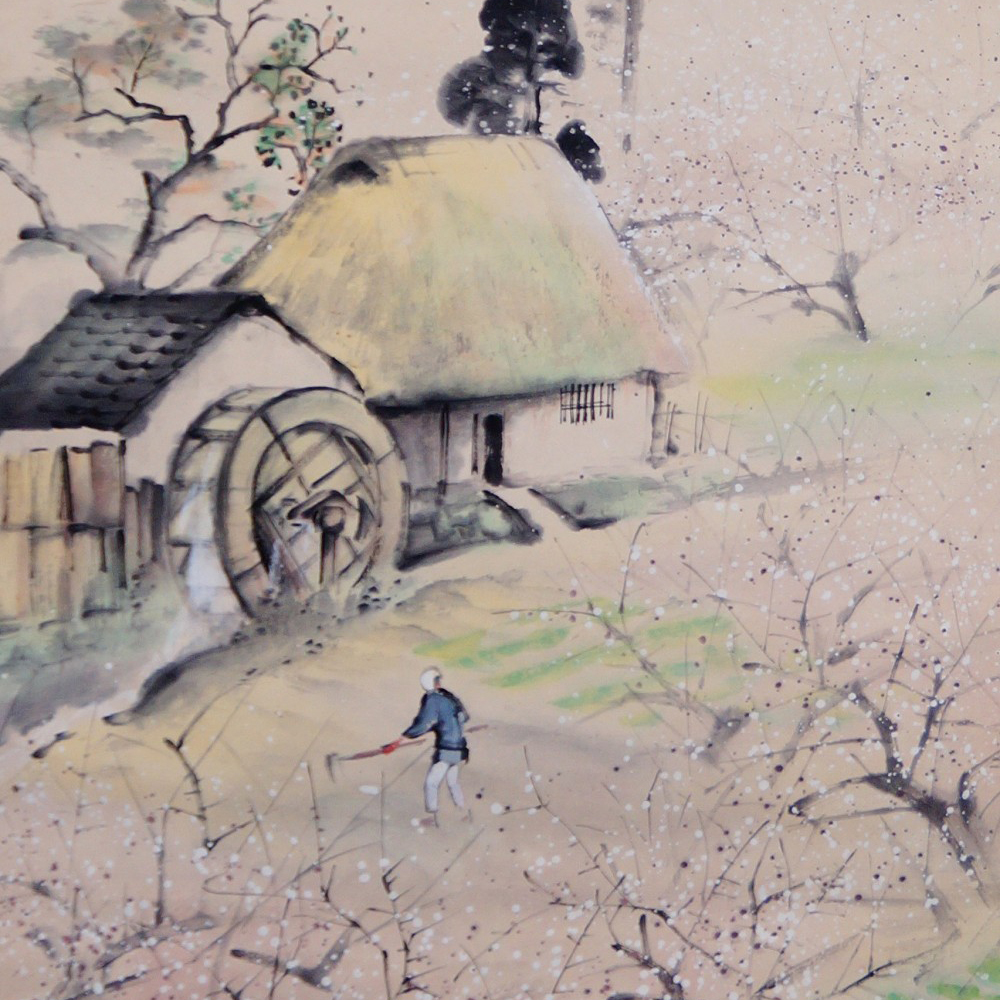

Nakamura Shunyō
Village in Plum Blossom
Kakemono, unique work, 194 x 57 cm
€240.00
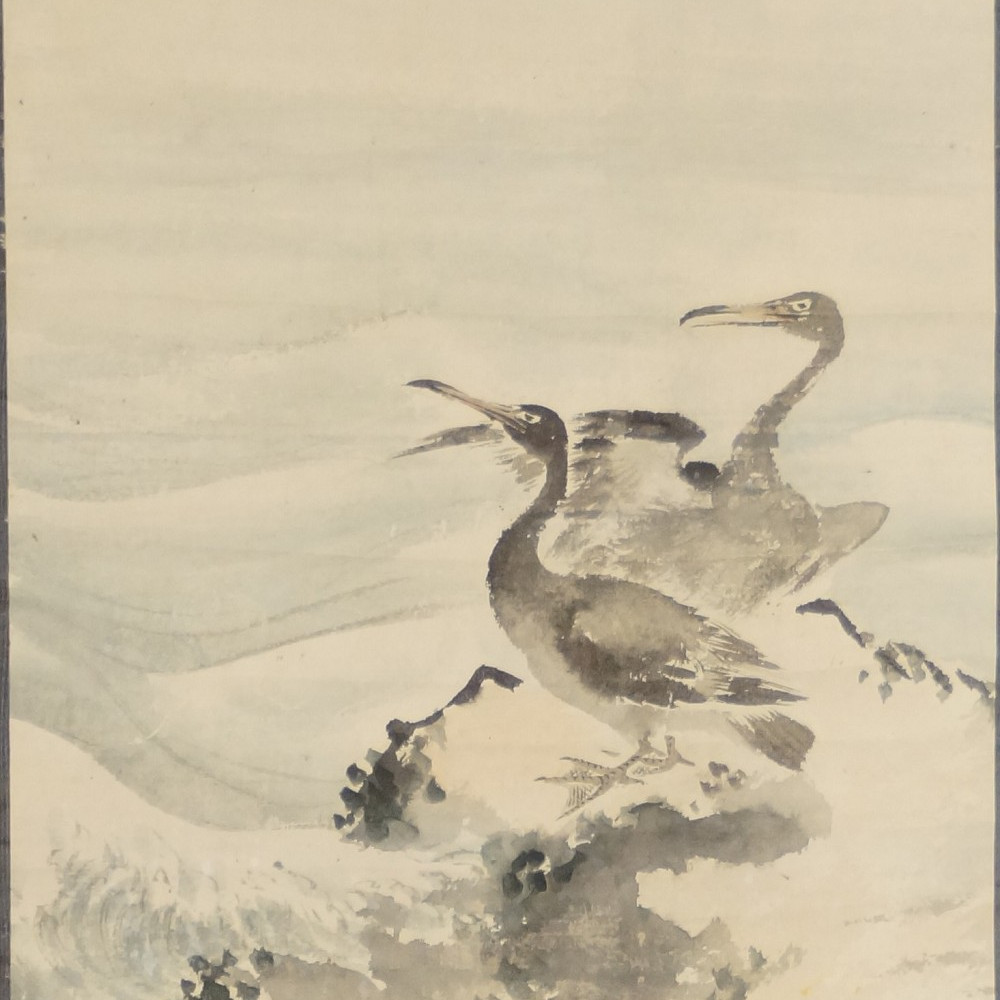

Kida Kado
Cormorants in the Sea
Kakemono, unique work, 190 x 52 cm
€450.00
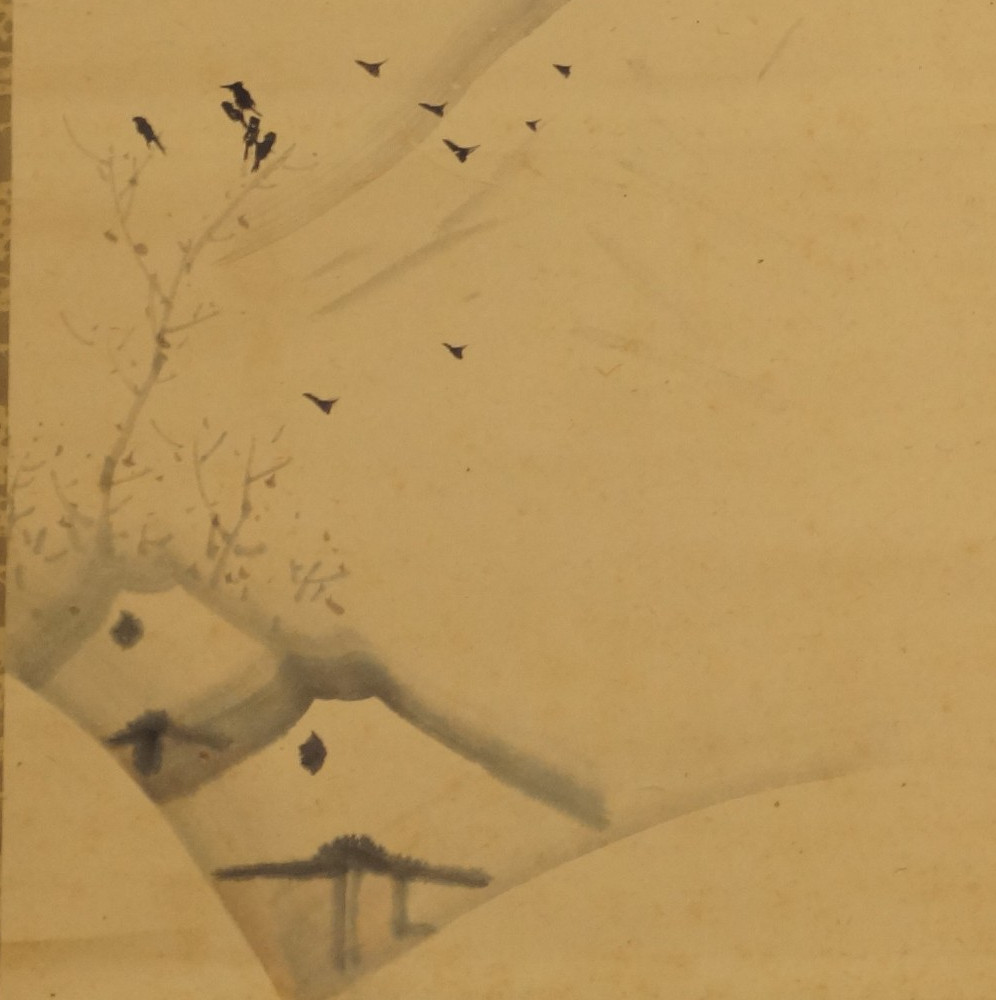

Crows on Snow Landscape
Kakemono, unique work, 194 x 48 cm
€370.00
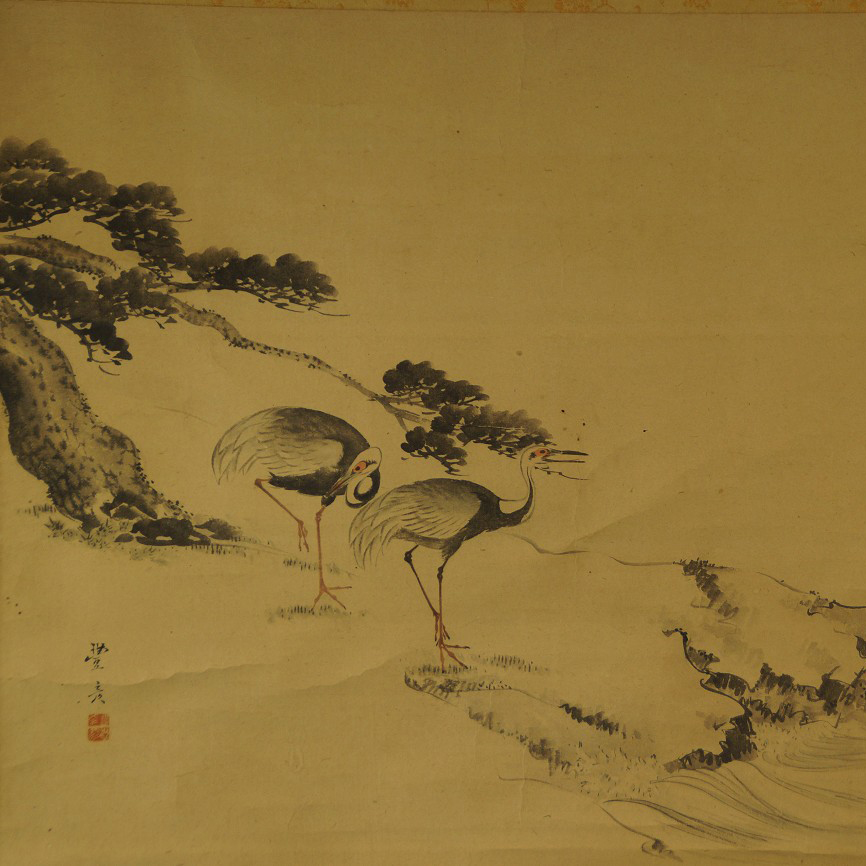

Okamoto Tohiyoko
Two Cranes Under Pines by the Shore
Kakemono, unique work, 139 x 65 cm
€330.00
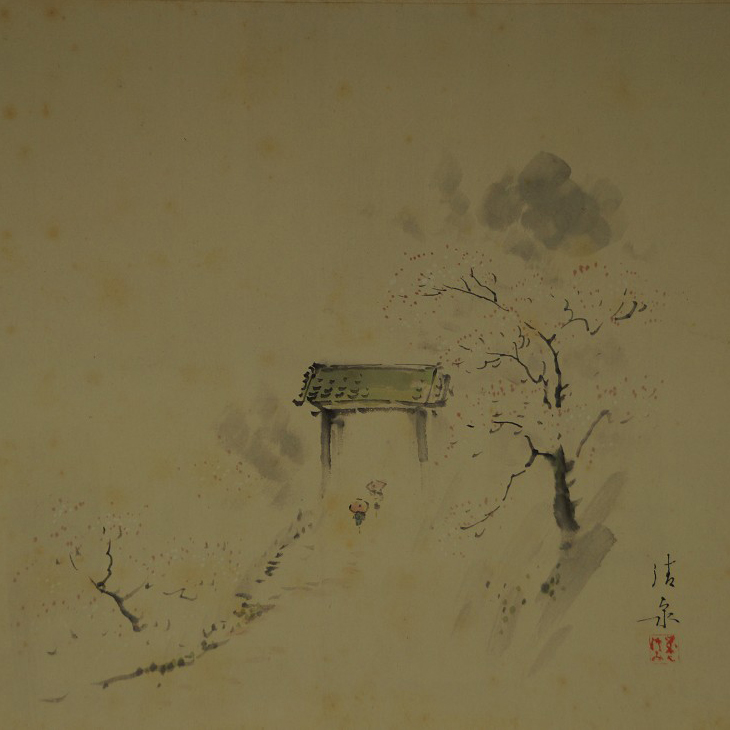

Seizumi
Small Wanderer Beneath Blossoming Trees at the Torii
Kakemono, unique work, 128 x 57 cm
€220.00
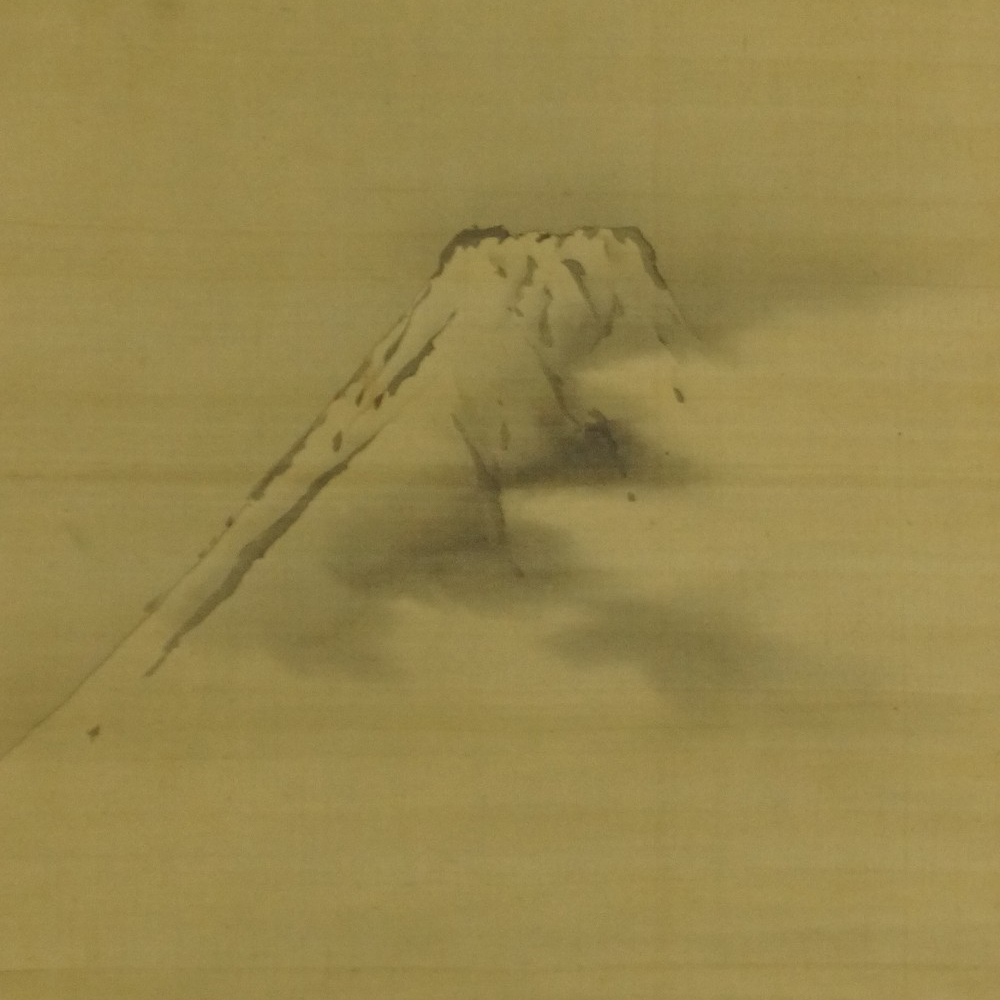

Saeki Kishiyoshi
Mount Fuji in the Mist
Kakemono, unique work, with box, 192 x 55 cm
€320.00
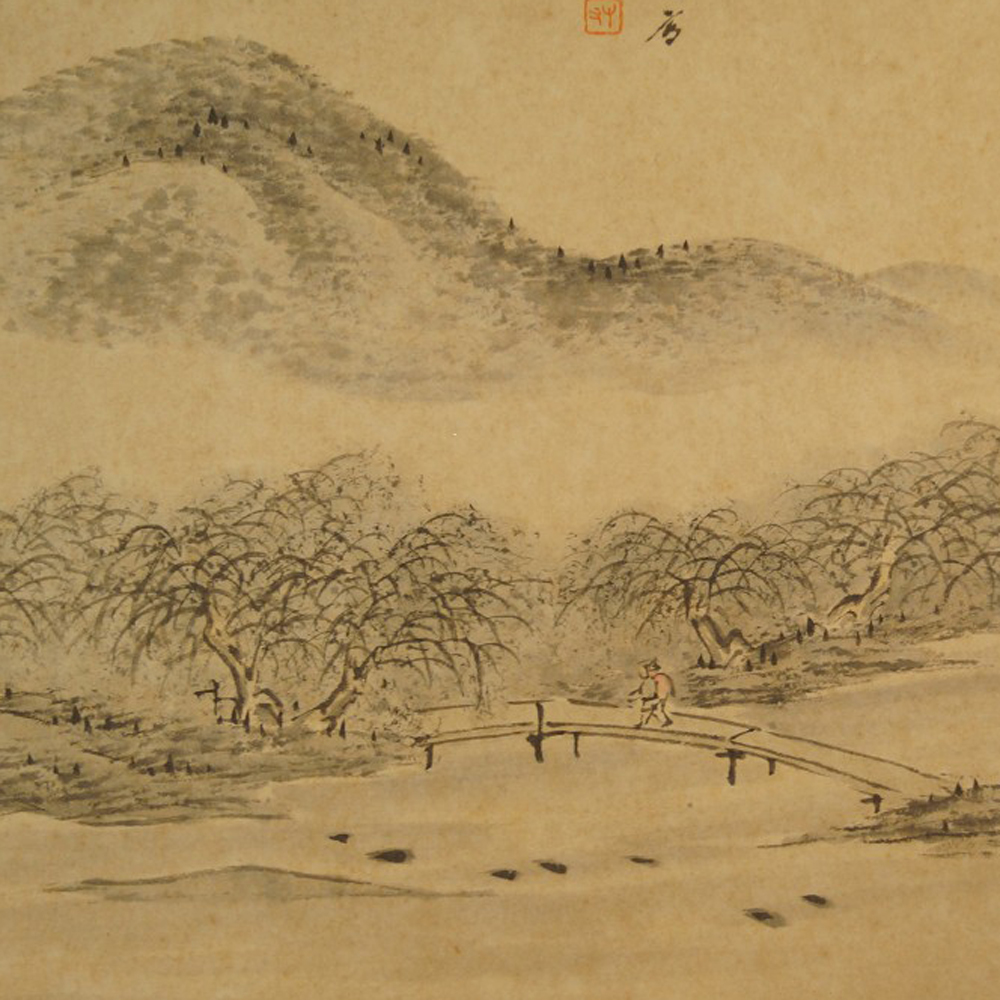
Landscape with Bridge
Shikishi, unique work, 27 x 24 cm
Sold
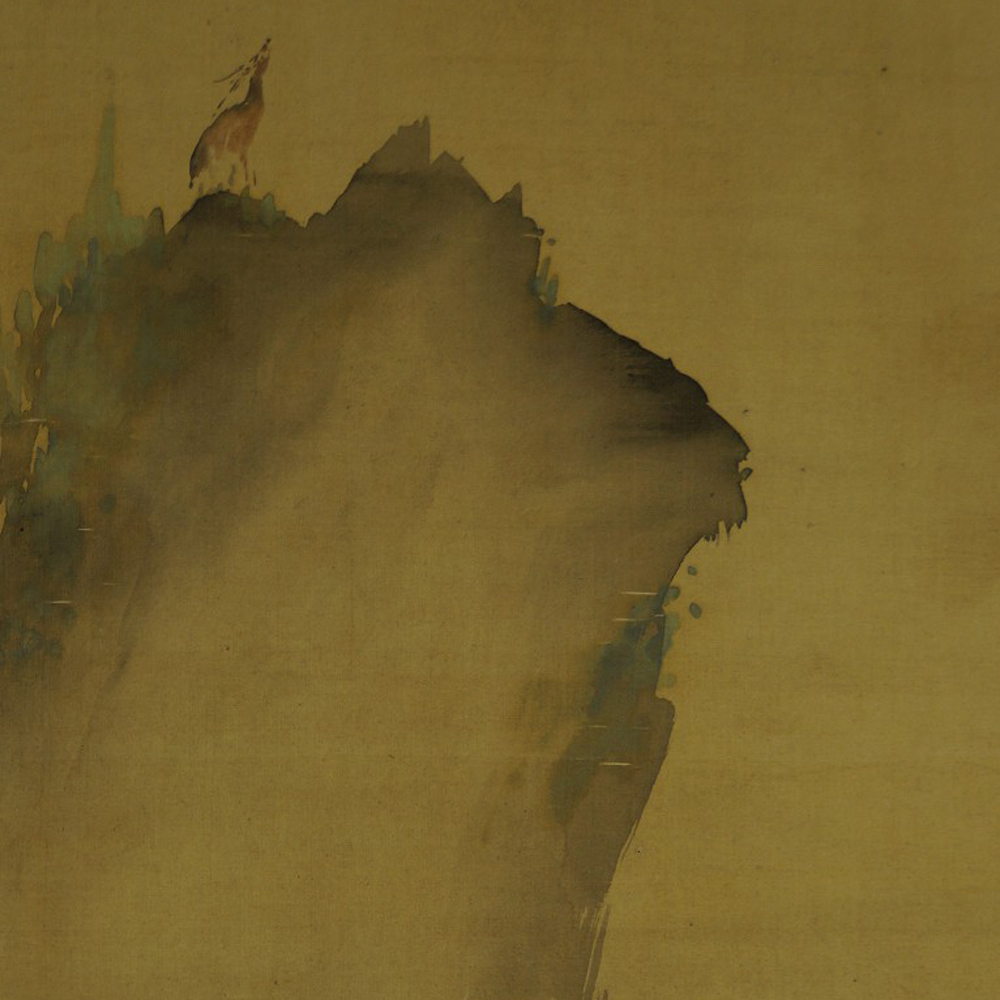

Tanaka Totsugen
Lone Deer in Moonlight
Kakemono, unique work, with box, 180 x 53 cm
€1,230.00
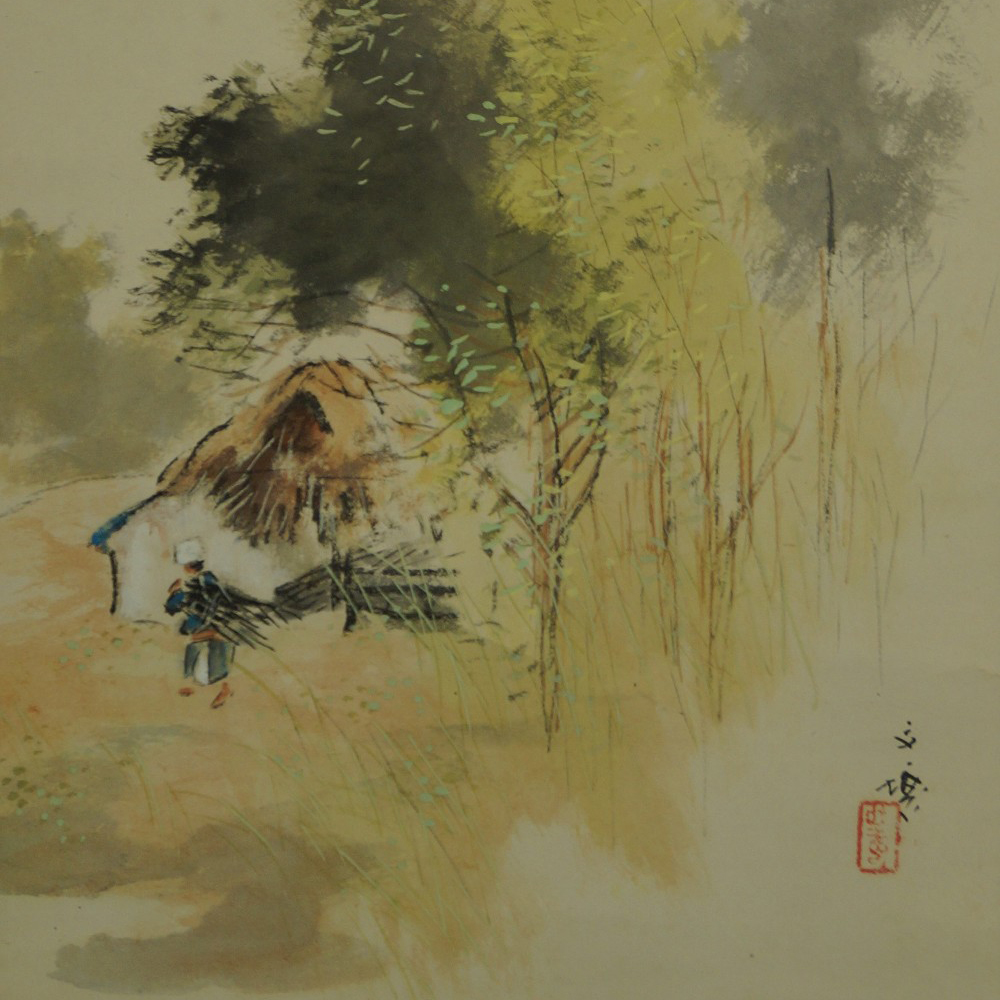

Hayashi Fumito
Thatched Farmhouse in Summer Green
Kakemono, unique work, with box, 140 x 34 cm
€280.00
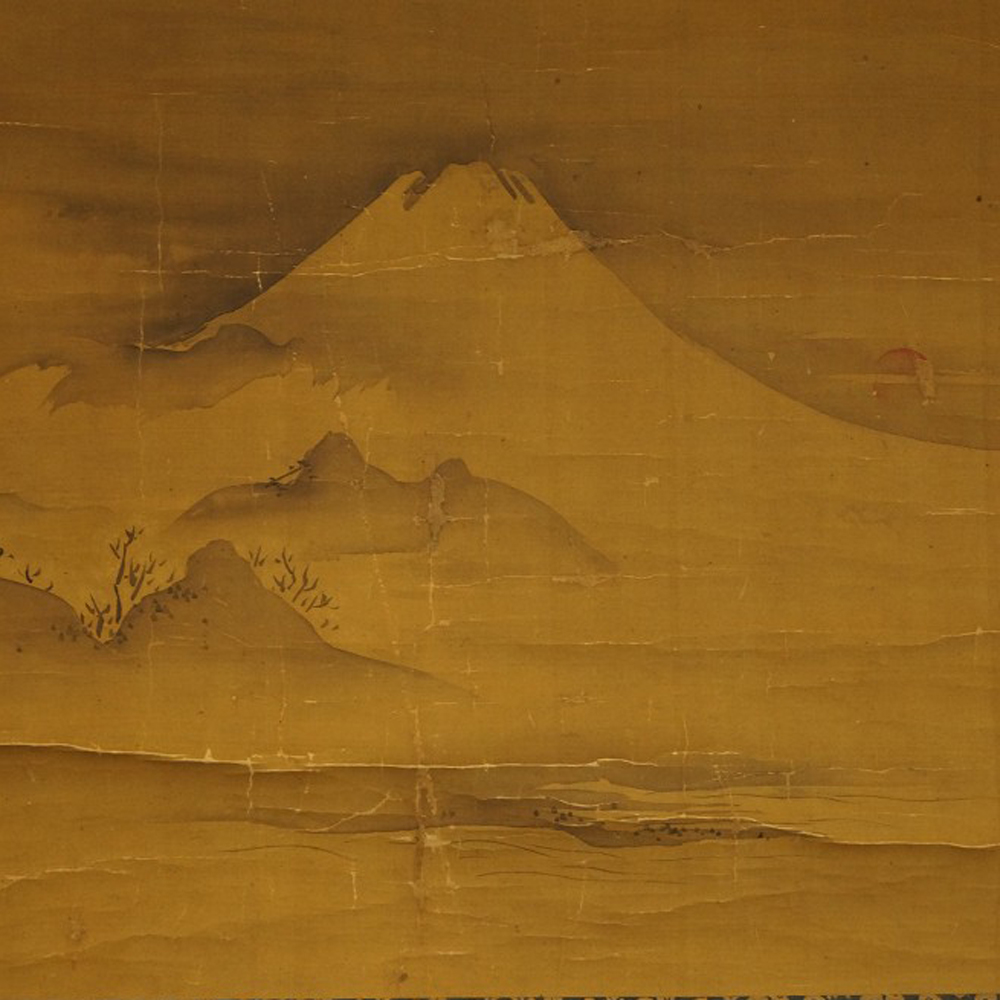

Kano Toun
Fuji-San in Morning Glow
Kakemono, unique work, 112 x 61 cm
€1,190.00
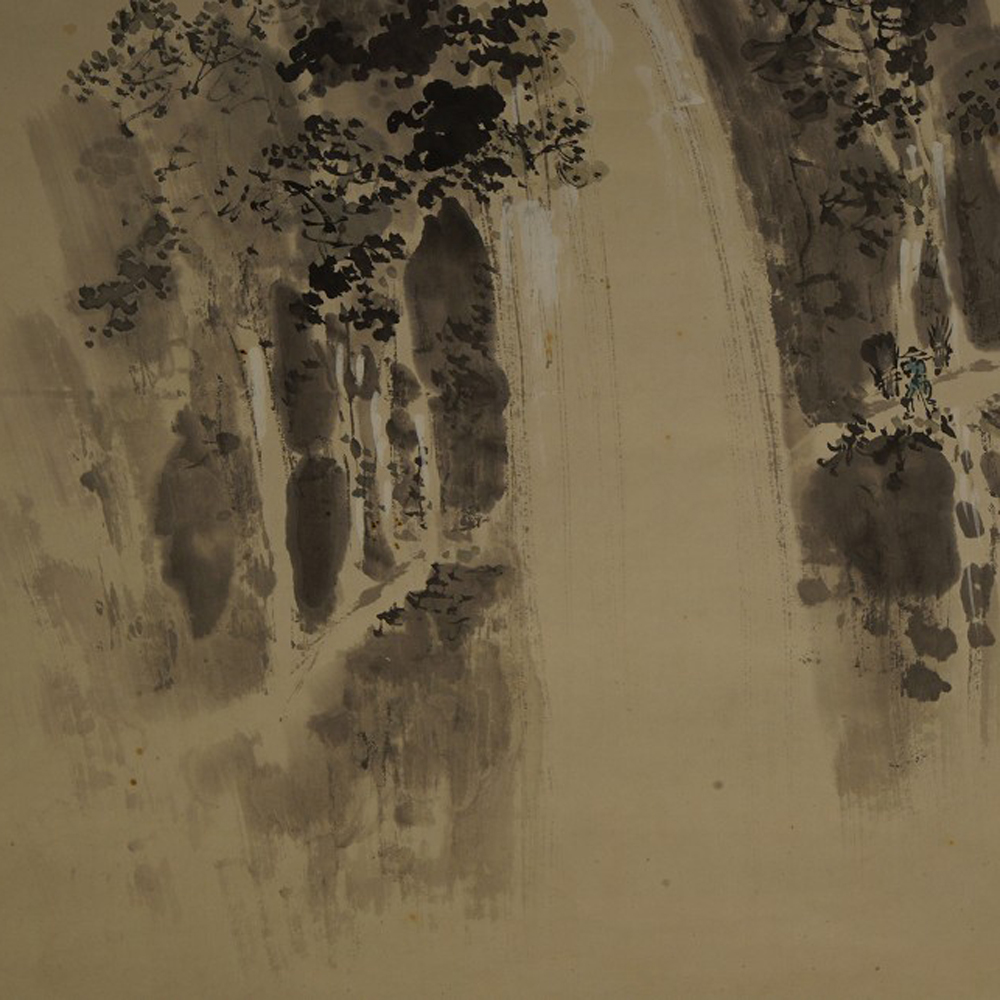

Waterfall in Dense Mountain Forest
Kakemono, unique work, with box, 127 x 60 cm
€160.00
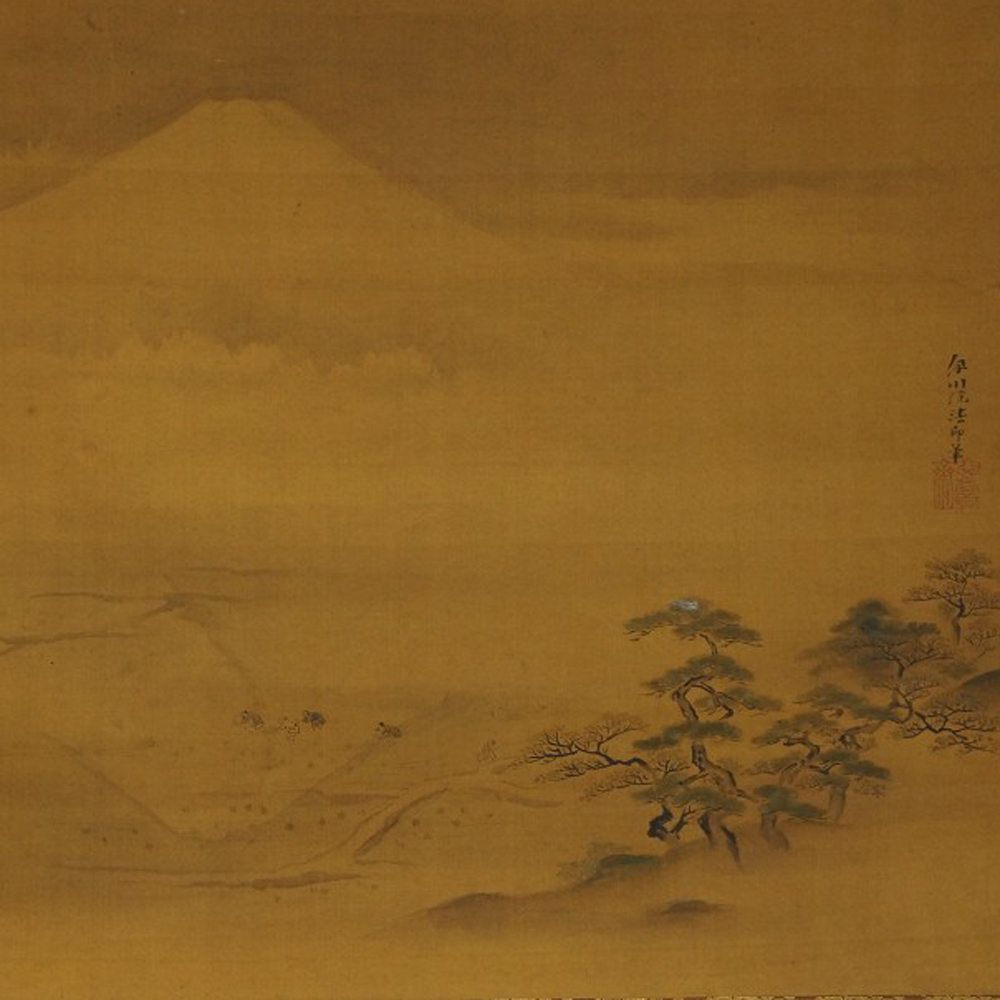

Kano Naganobu
Fuji-San Behind Pine Hill
Kakemono, unique work, 131 x 78 cm
€890.00
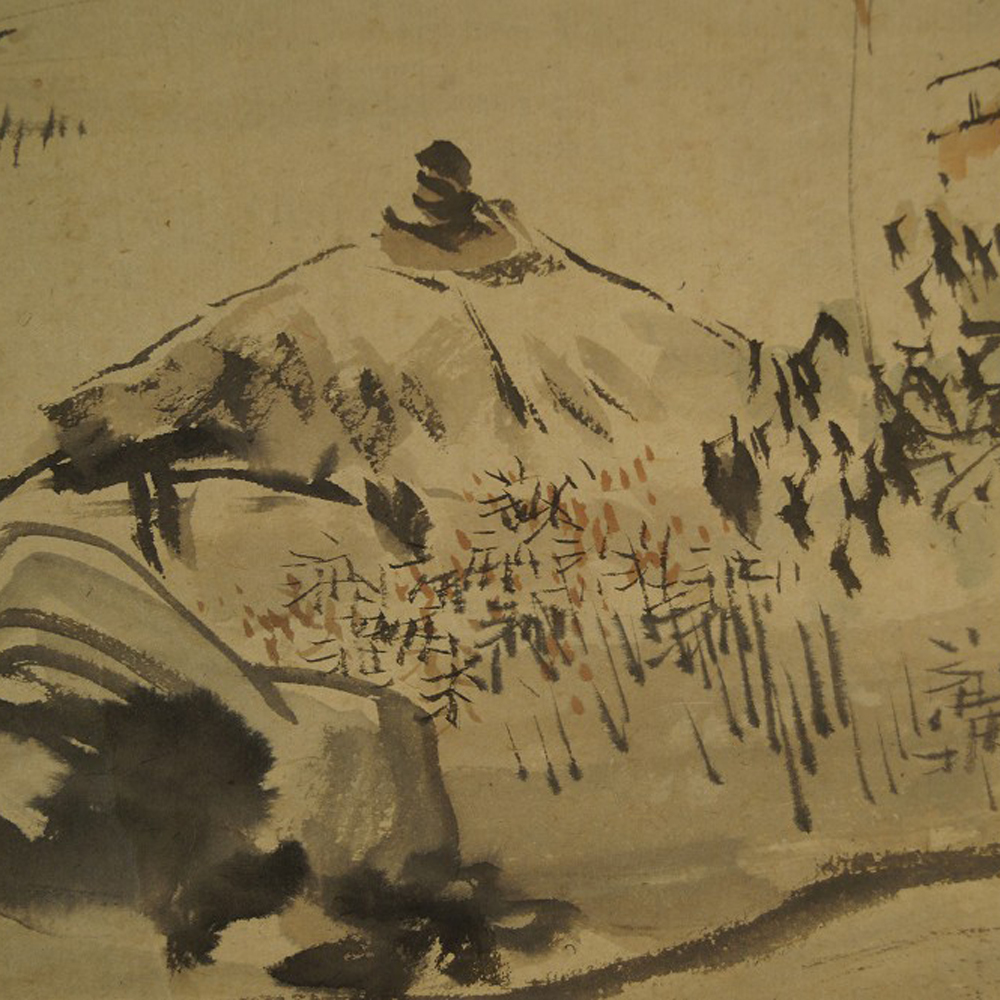

Kubota Beisen
Mountain Landscape in Mist by Kubota Beisen
Kakemono, unique work, with box, 117 x 66 cm
€410.00
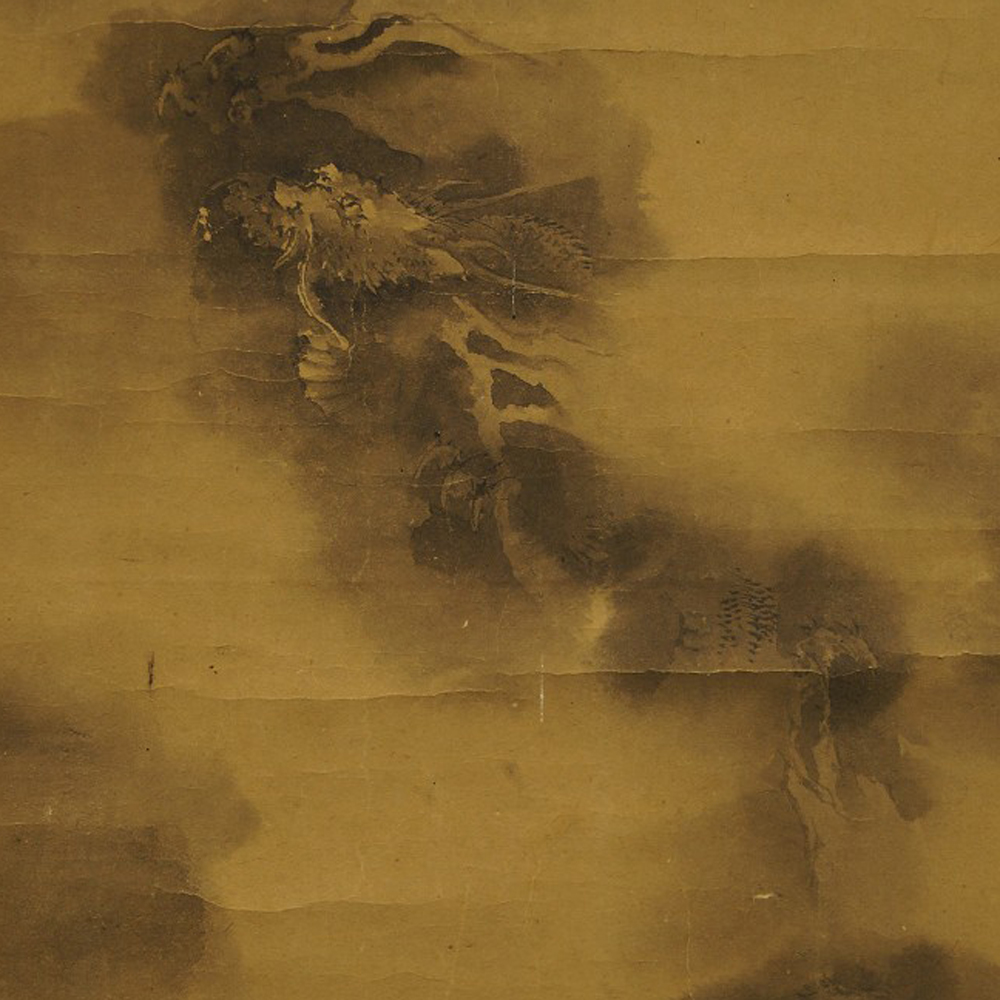

Kishi Ganku
Dragon over Fuji
Kakemono, unique work, 175 x 65 cm
€380.00
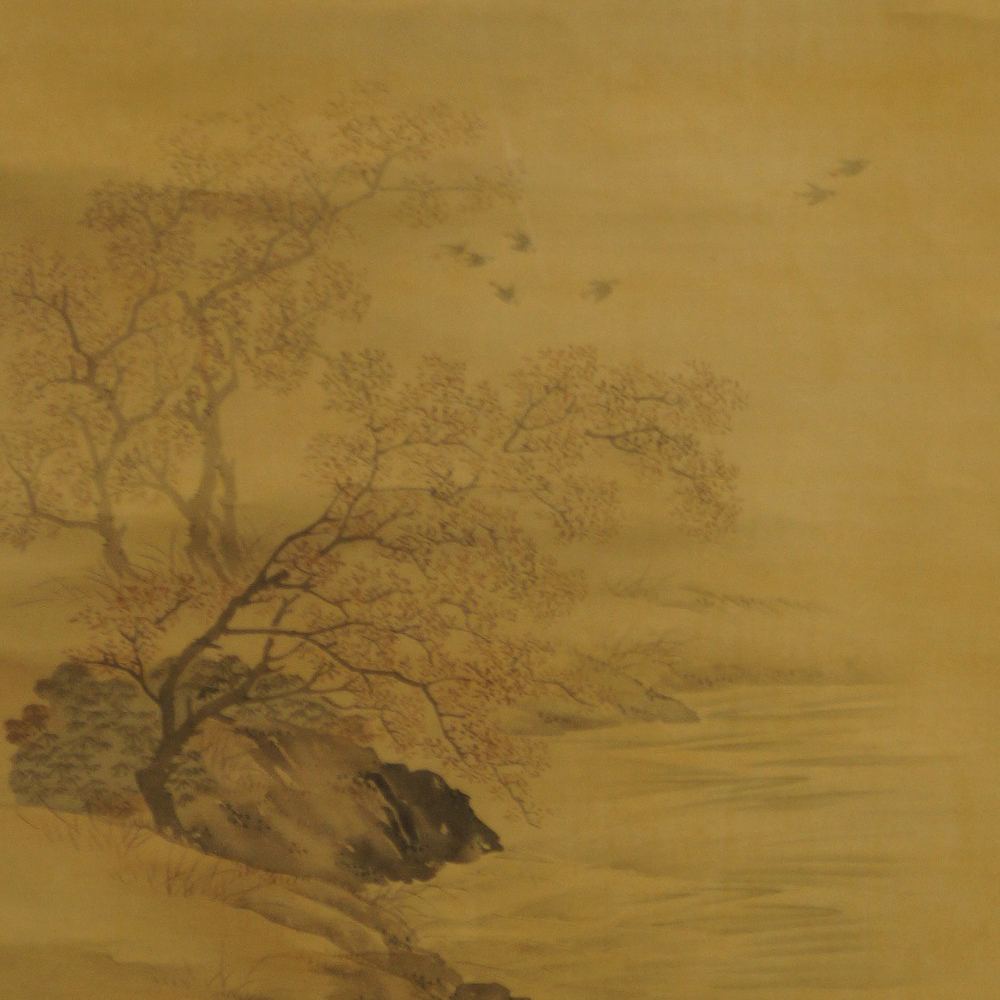

Mori Ippo
Autumn Tree by the Riverbank
Kakemono, unique work, 180 x 53 cm
€360.00
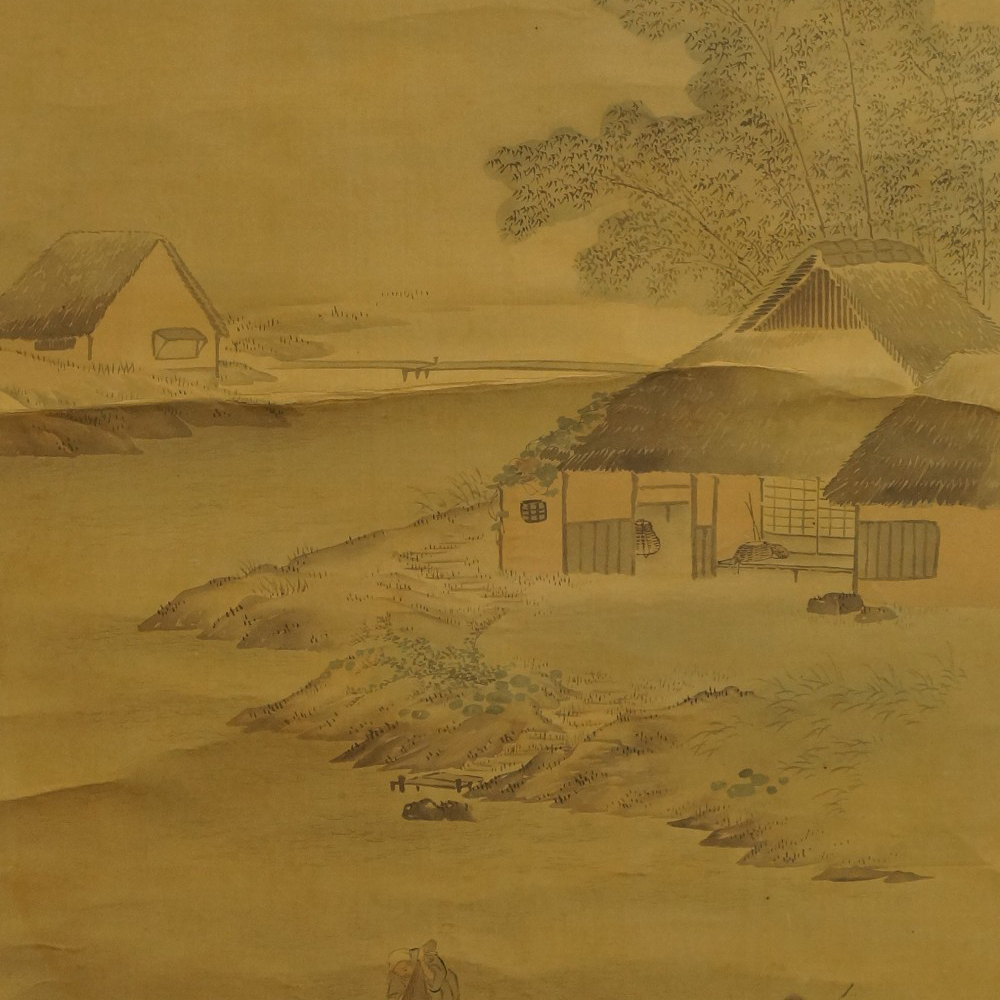

Mori Ippo
Fisherman's Huts in Moonlight
Kakemono, unique work, 180 x 53 cm
€290.00
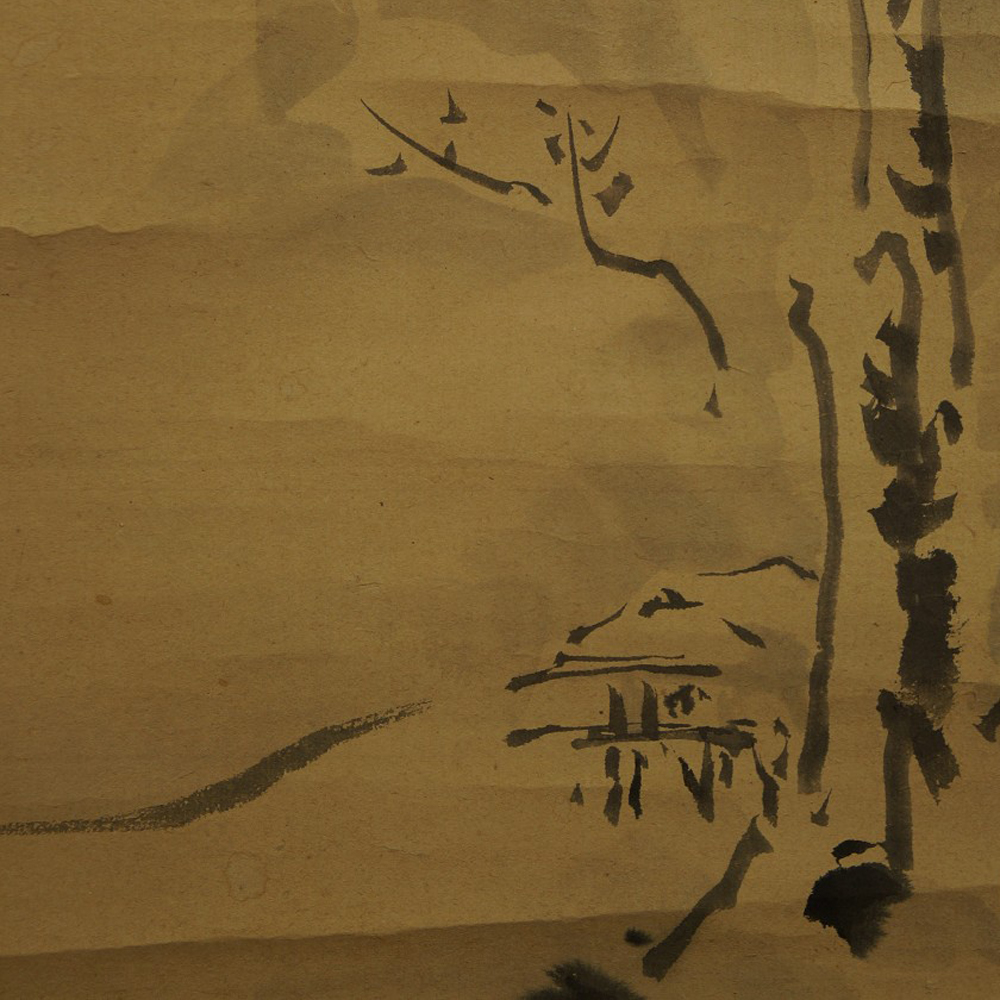

Sakai Hōitsu
Winter Landscape with Birds by the River
Kakemono, unique work, with box, 180 x 42 cm
€430.00
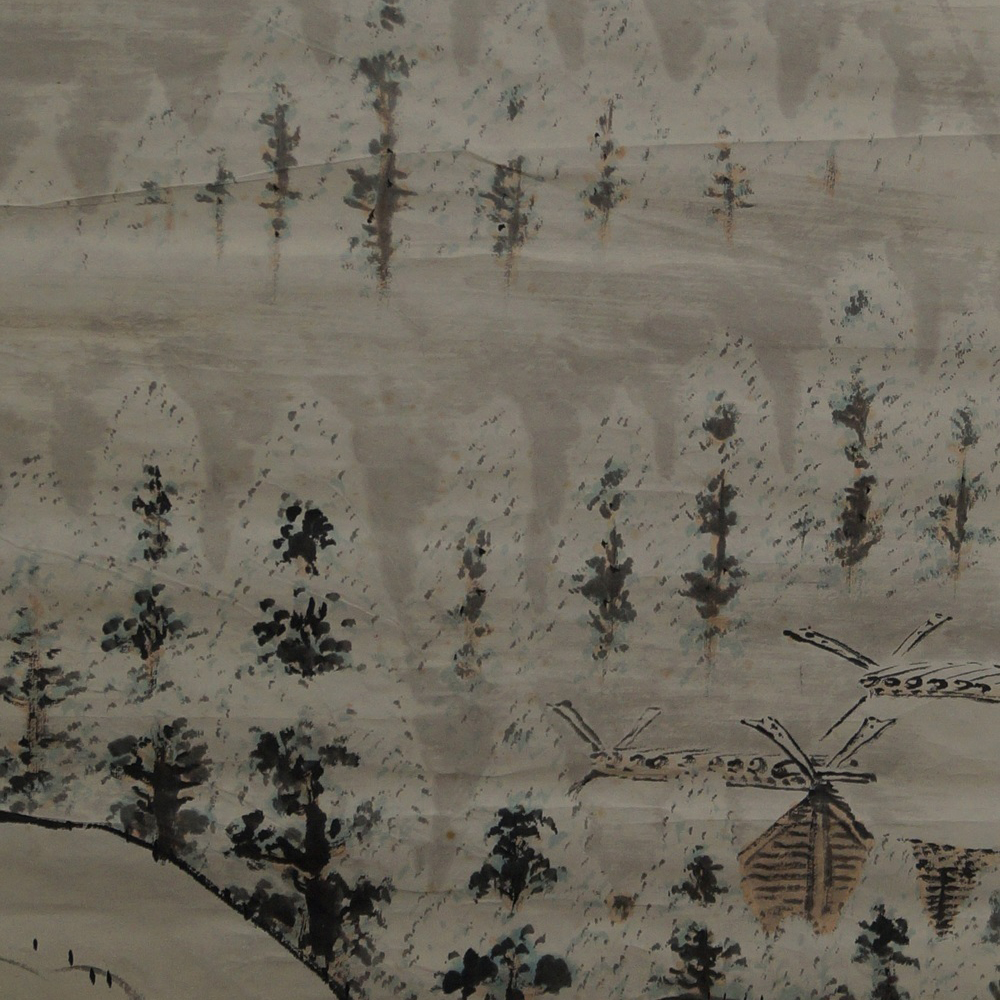
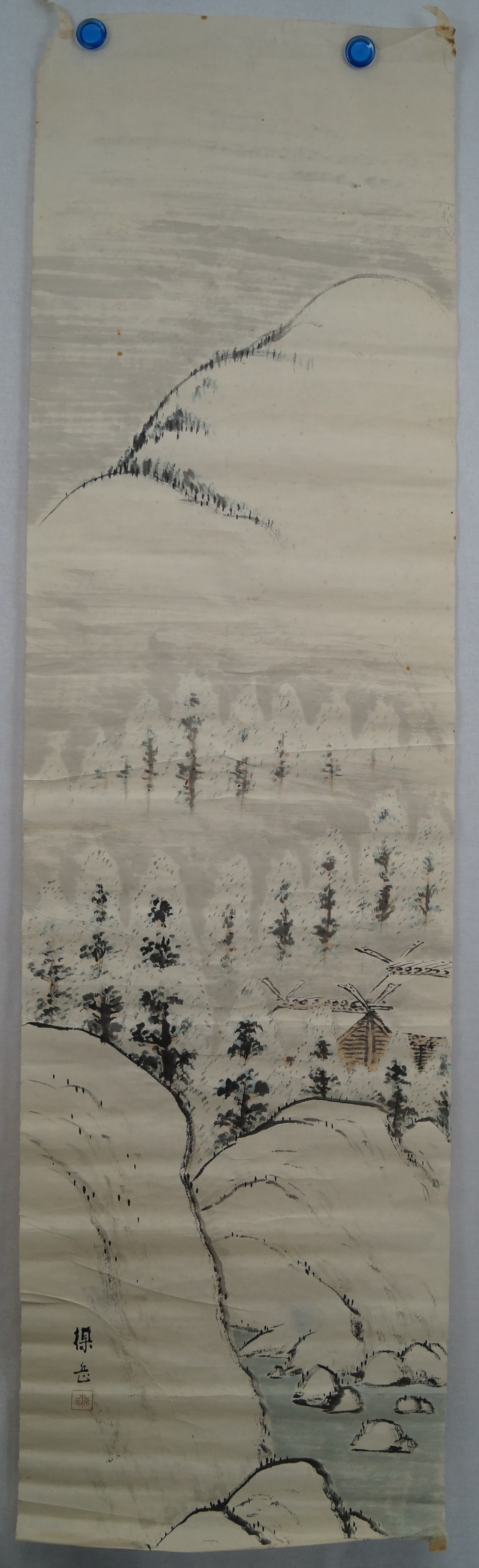
Winter Landscape with Mountain Huts
Makuri, unique work, 140 x 40 cm
€70.00
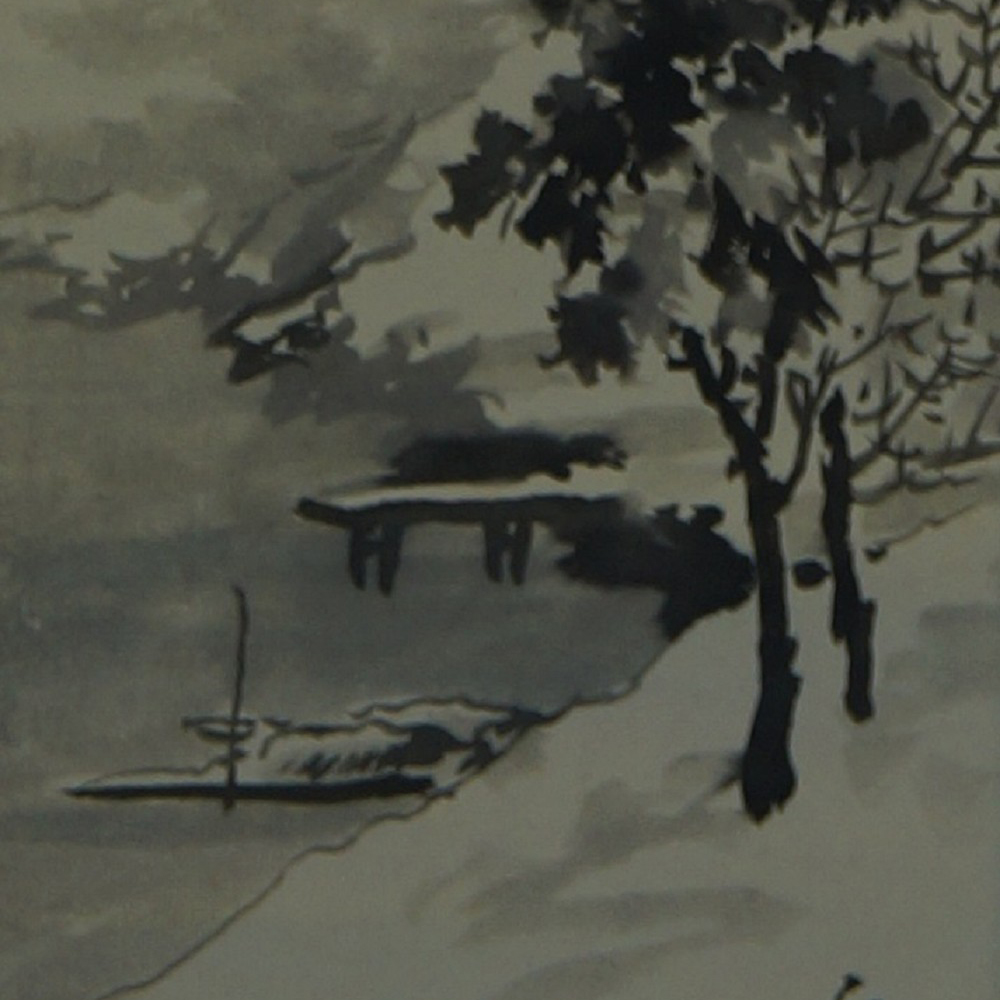

Landscape with Pavilion and Boat on the Shore
Kakemono, unique work, 194 x 34 cm
€150.00
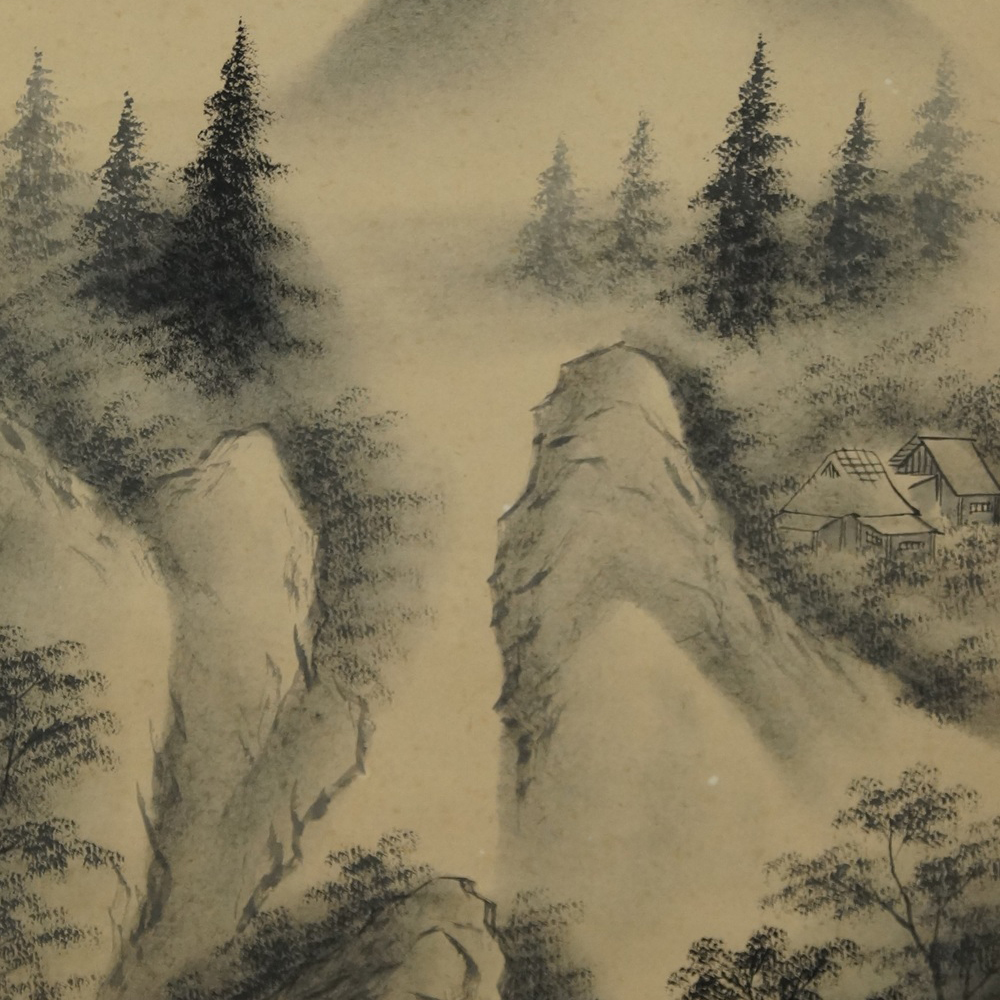
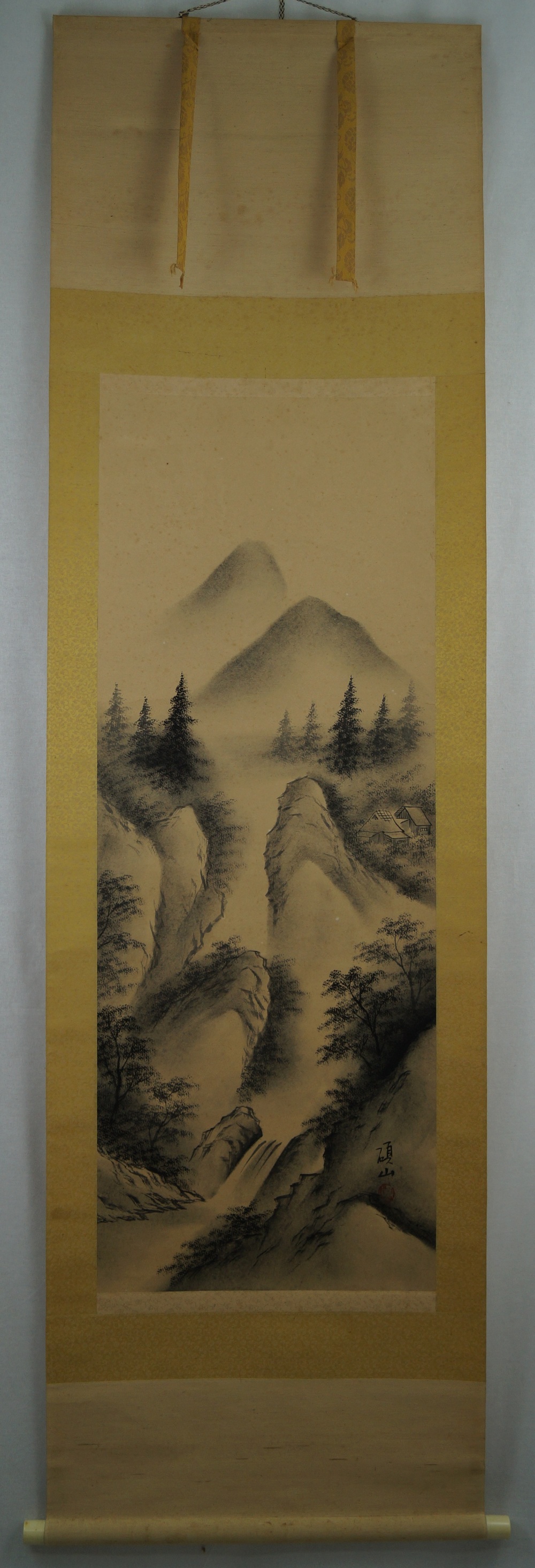
Landscape with Mountain Huts in the Fog
Kakemono, Silkscreen, 180 x 60 cm
€110.00
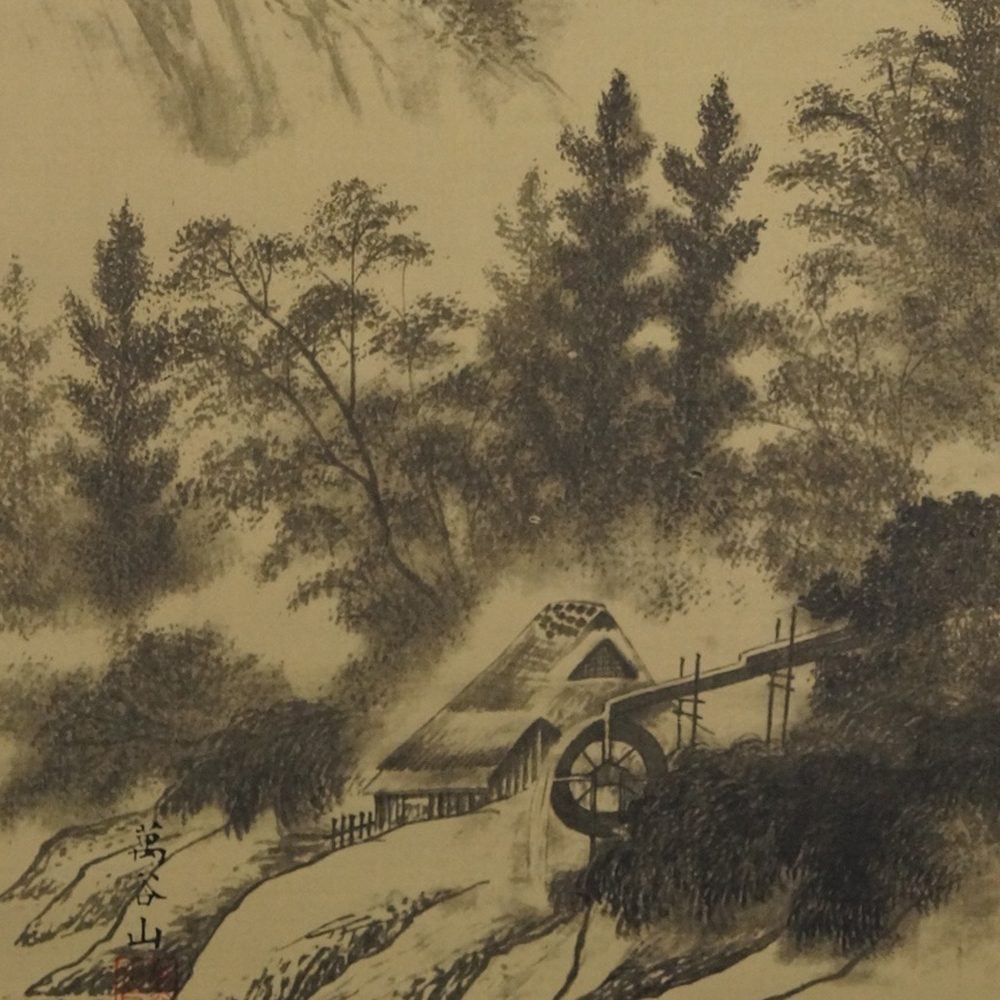
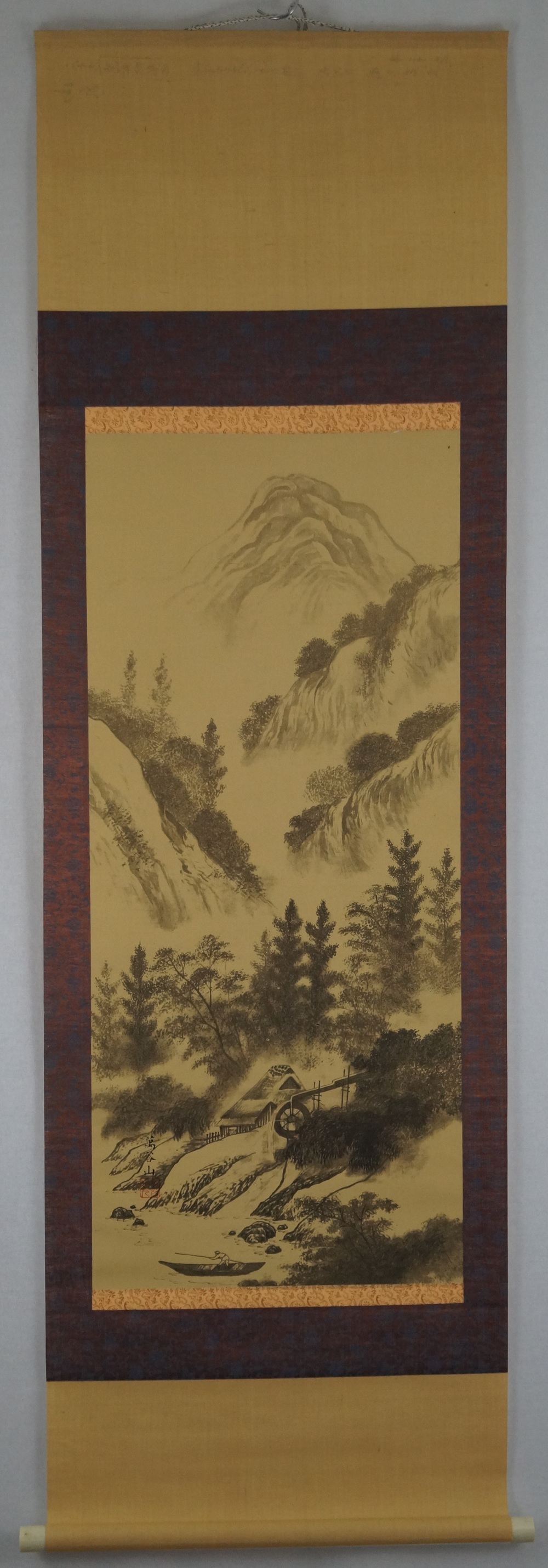
Landscape with Water Mill and Waterfalls
Kakemono, Silkscreen, 157 x 53 cm
€130.00
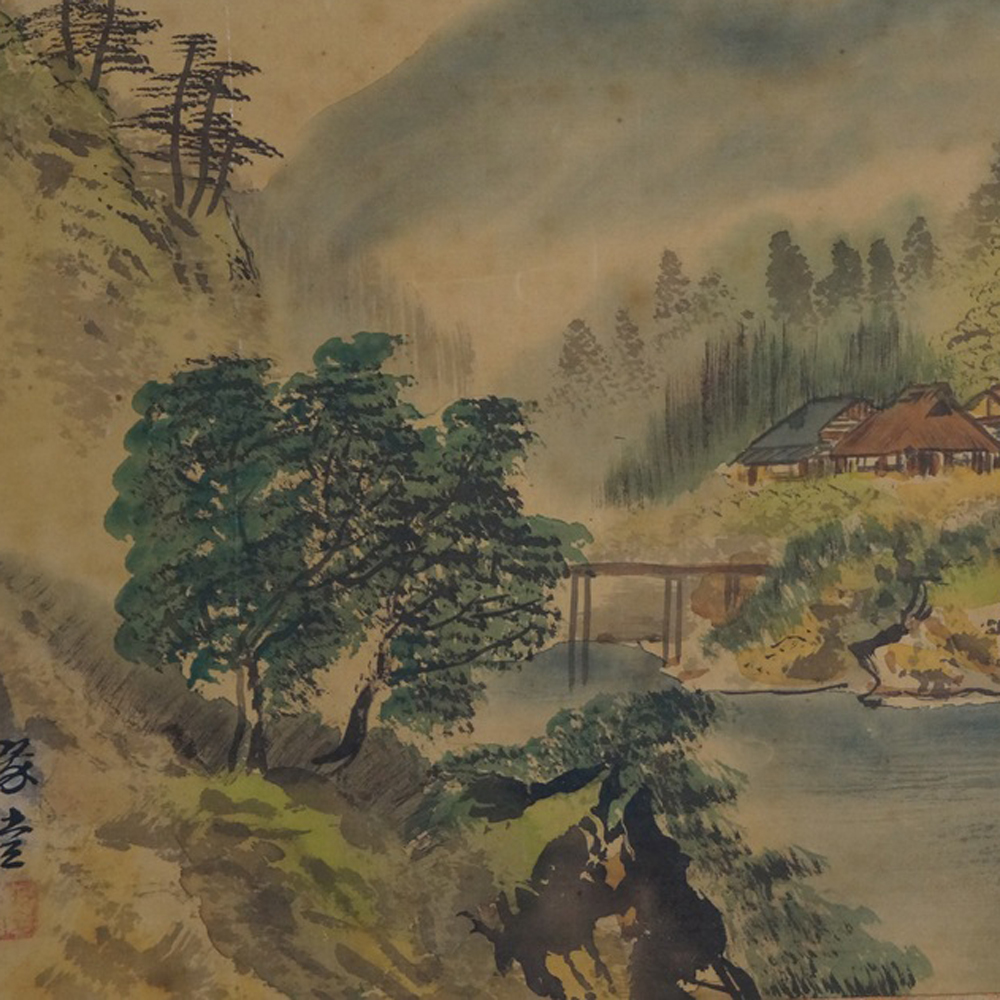
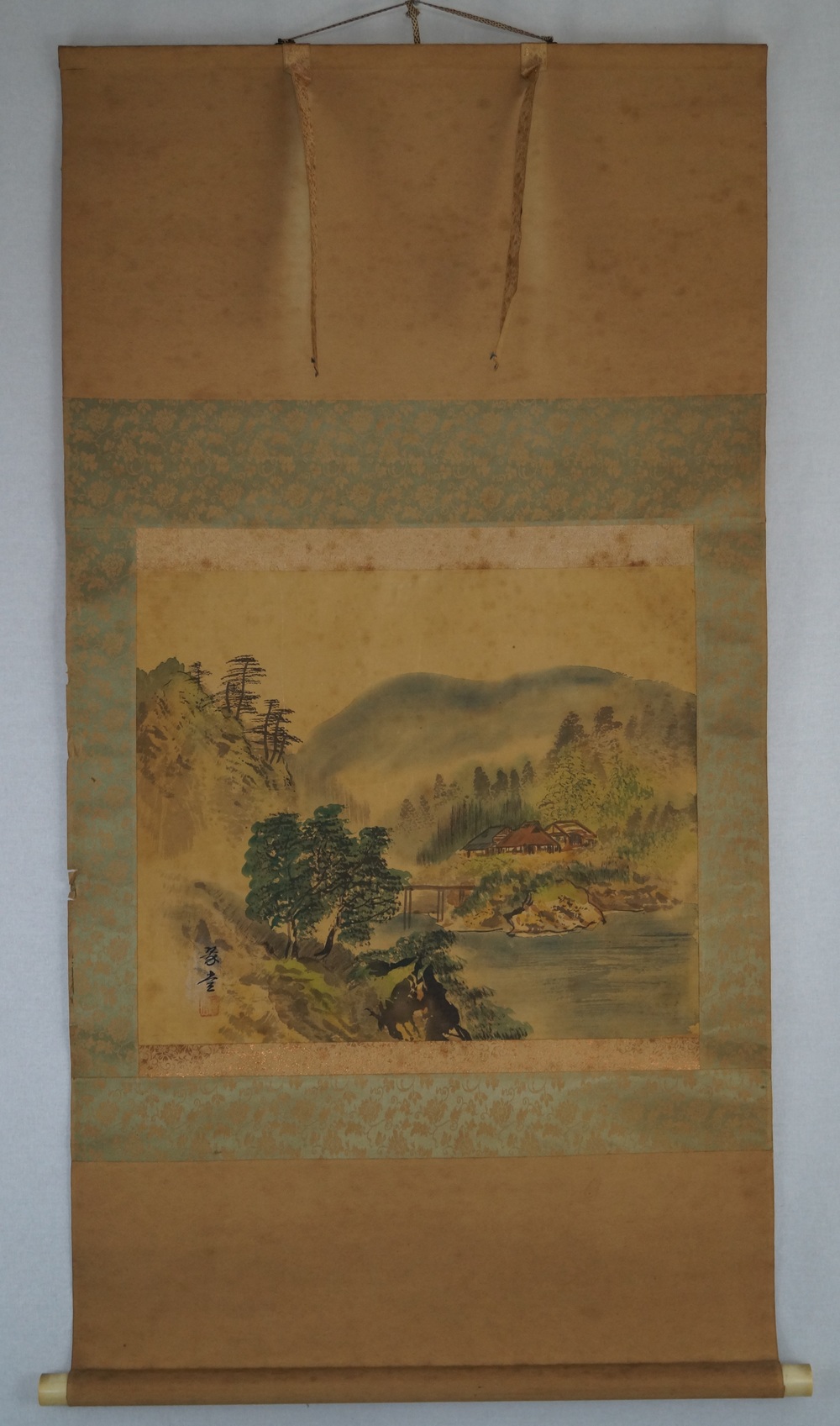
Landscape with Bridge and Mountain Village
Kakemono, Silkscreen, 115 x 65 cm
€90.00
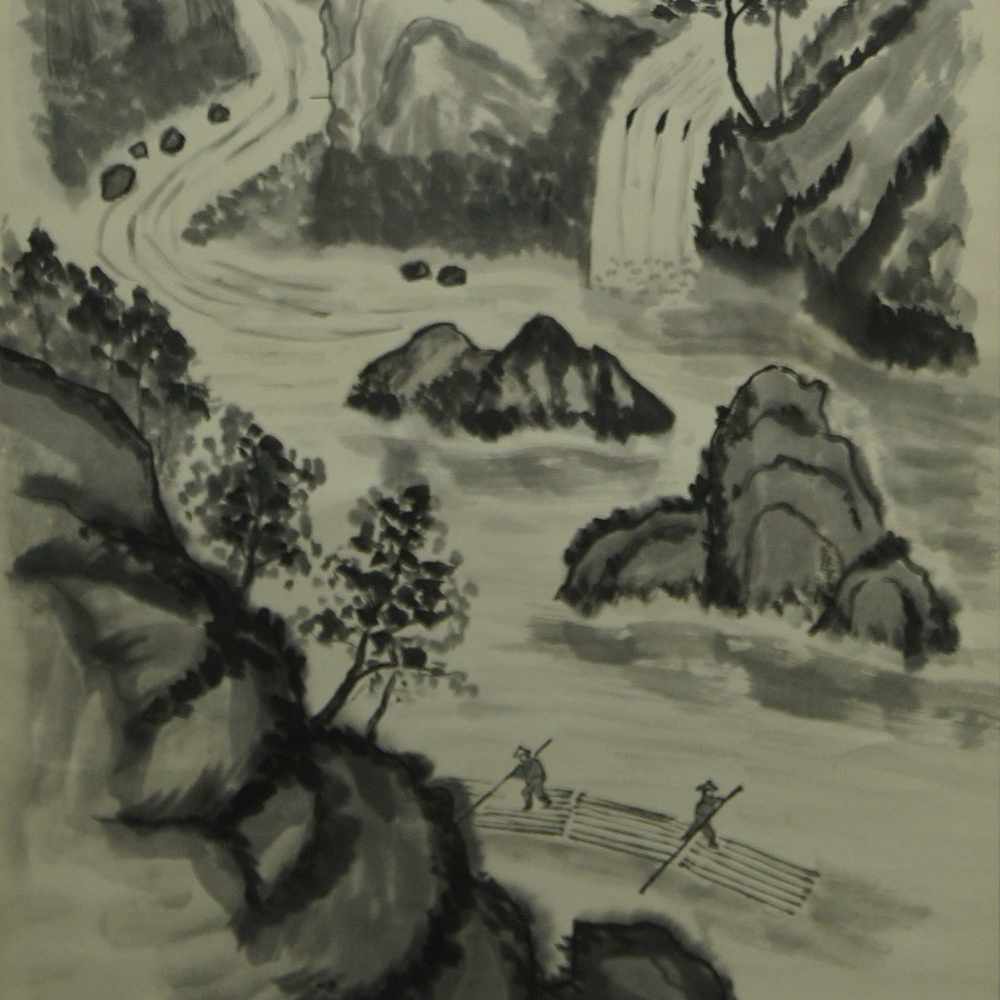
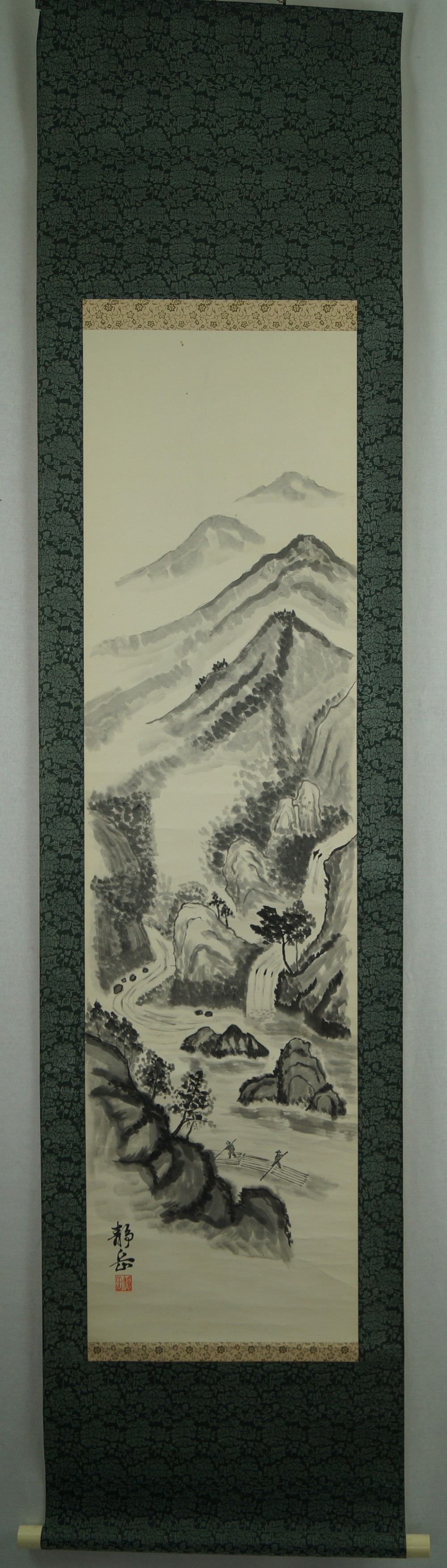
Landscape with Waterfall and Raftsmen
Kakemono, unique work, 190 x 51 cm
€175.00
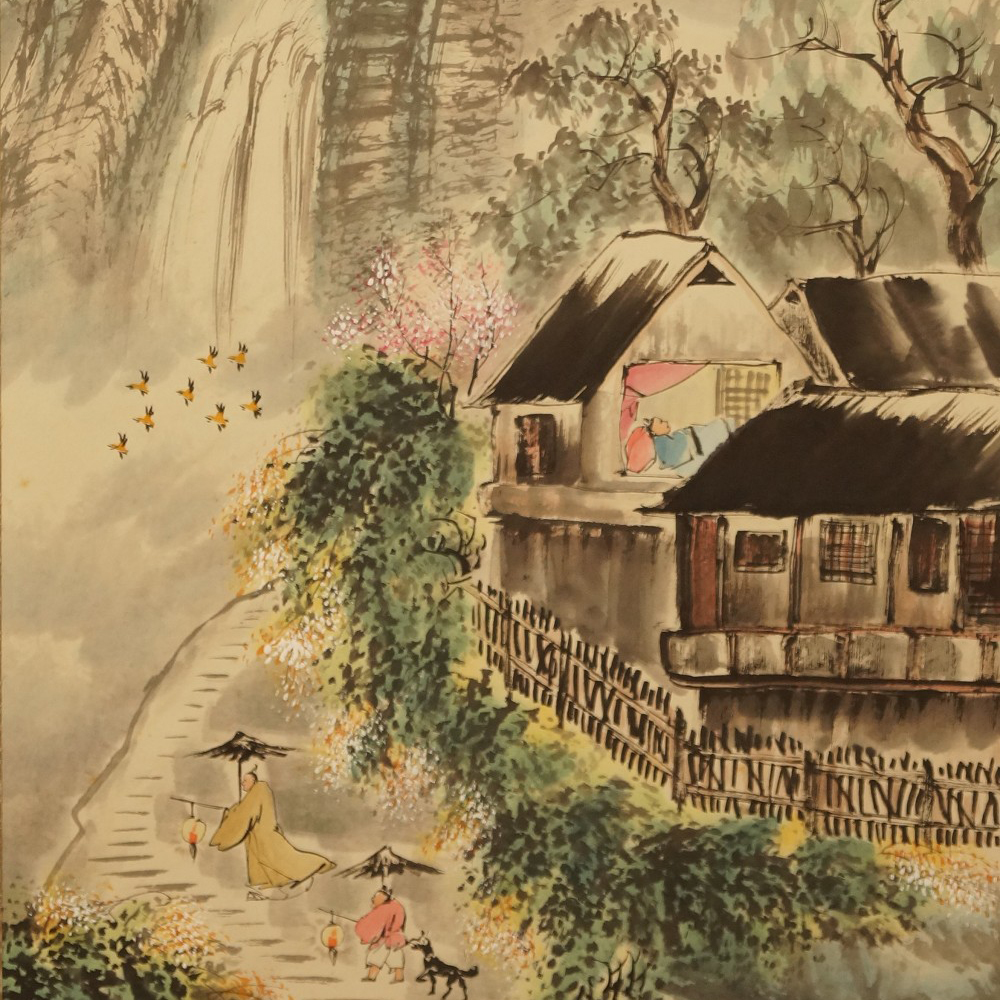
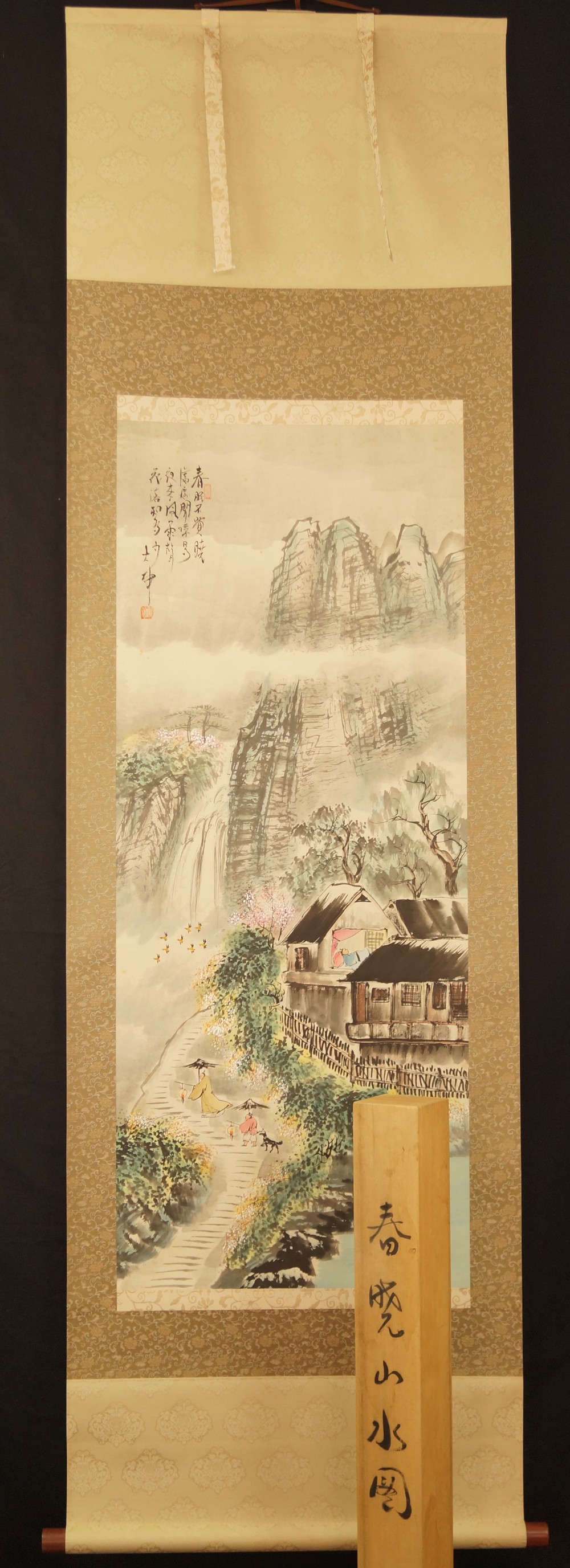
Two Scholars in the Mountains
Kakemono, unique work, with box, 180 x 60 cm
€220.00
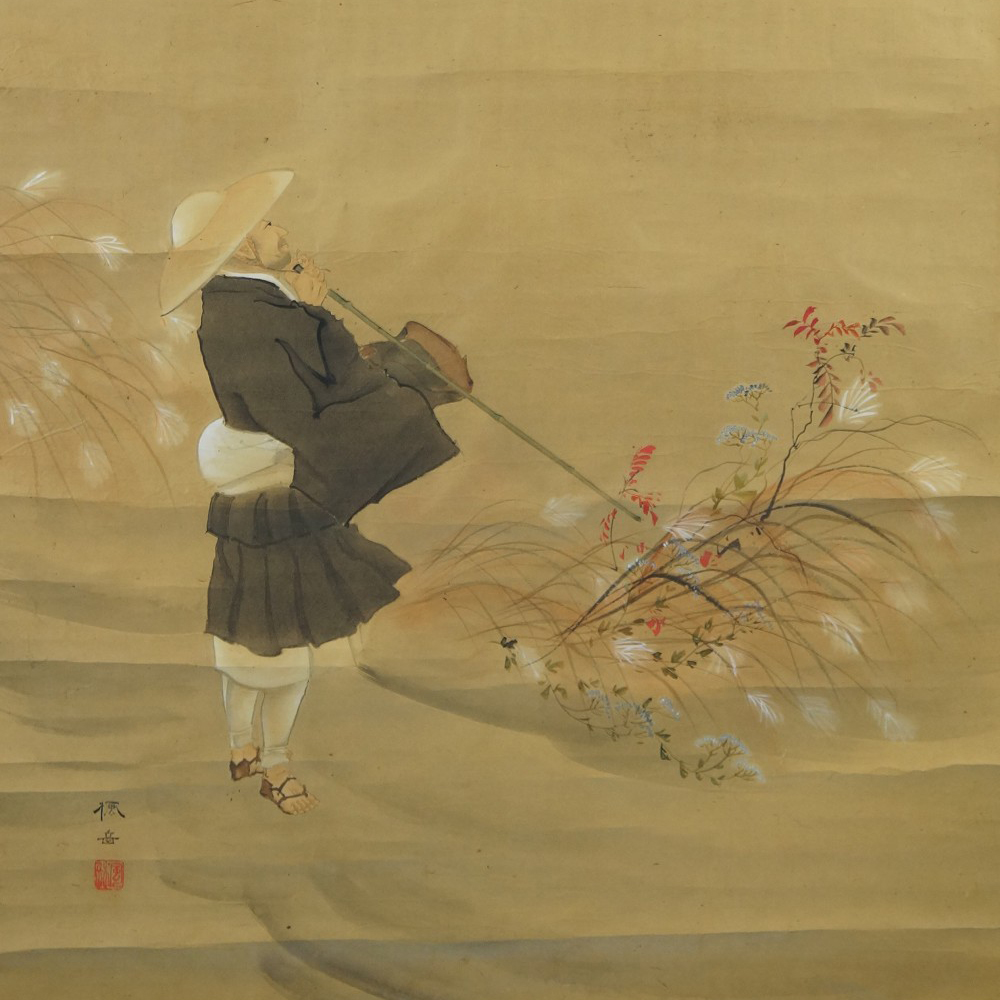
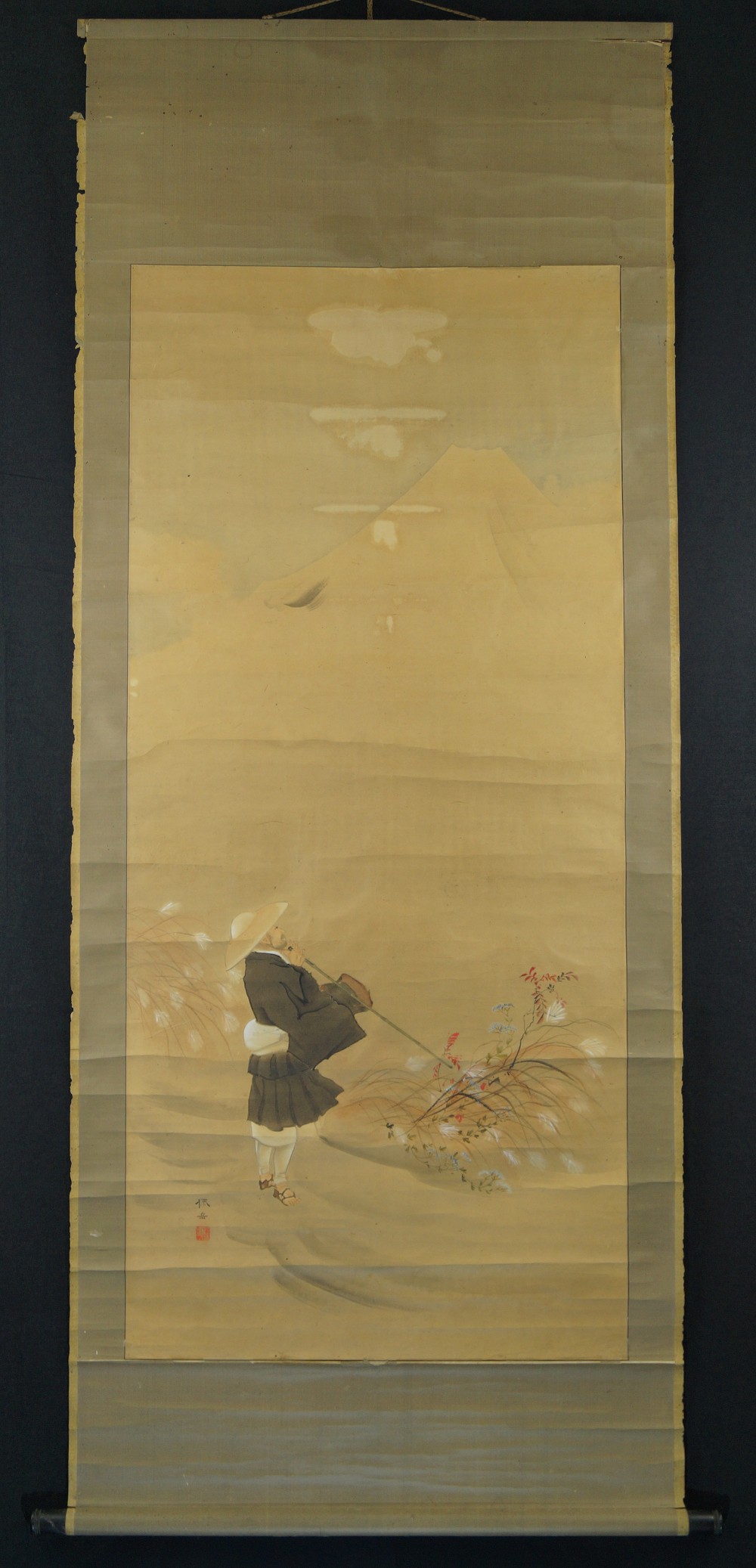
Monk and Mount Fuji
Kakemono, unique work, 188 x 81 cm
€200.00
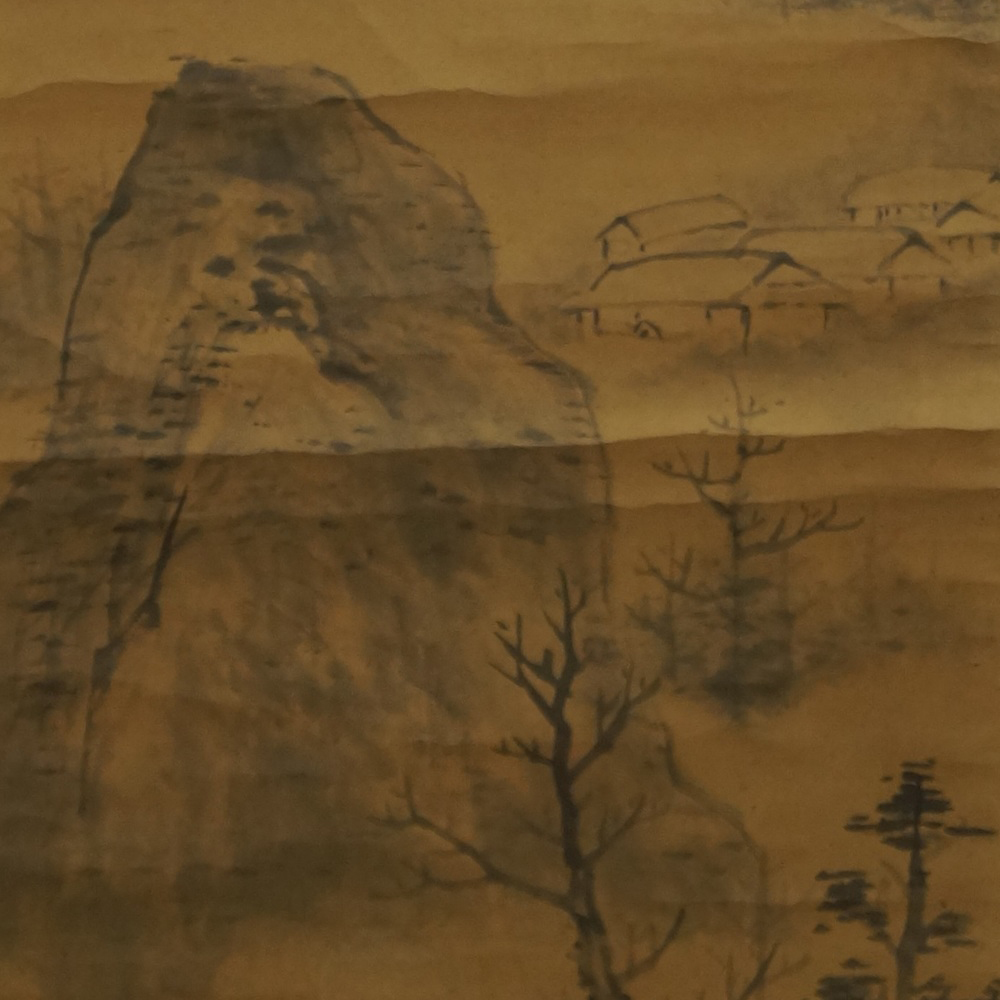
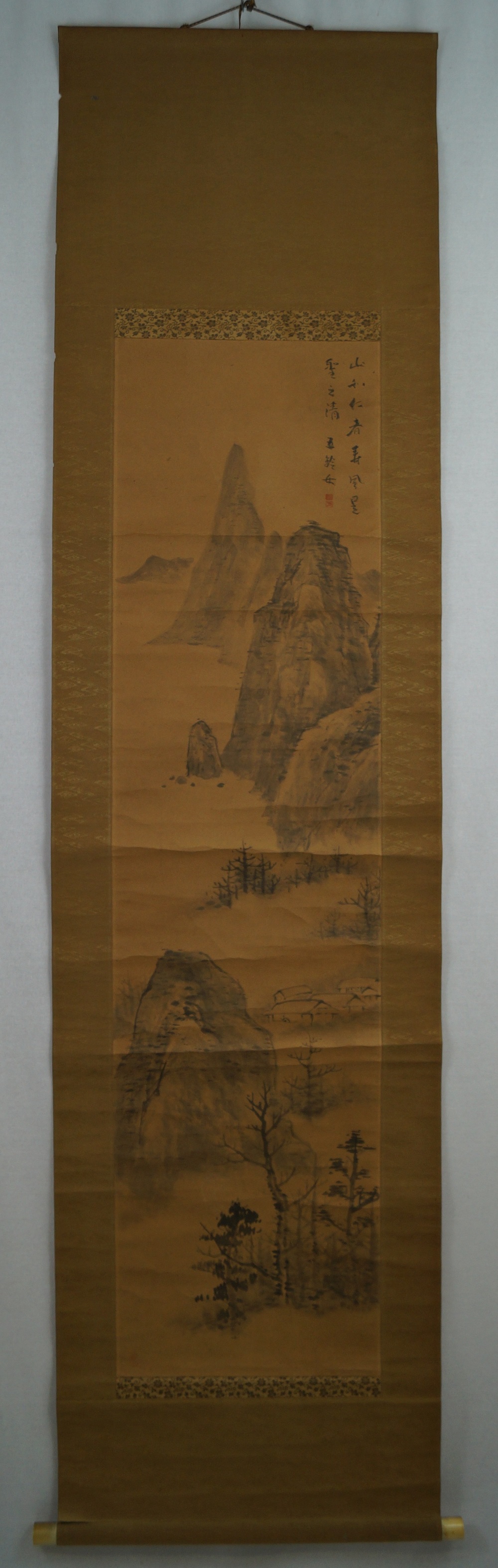
Mountain Village at the Foot of the Cliff
Kakemono, unique work, 195 x 56 cm
€150.00
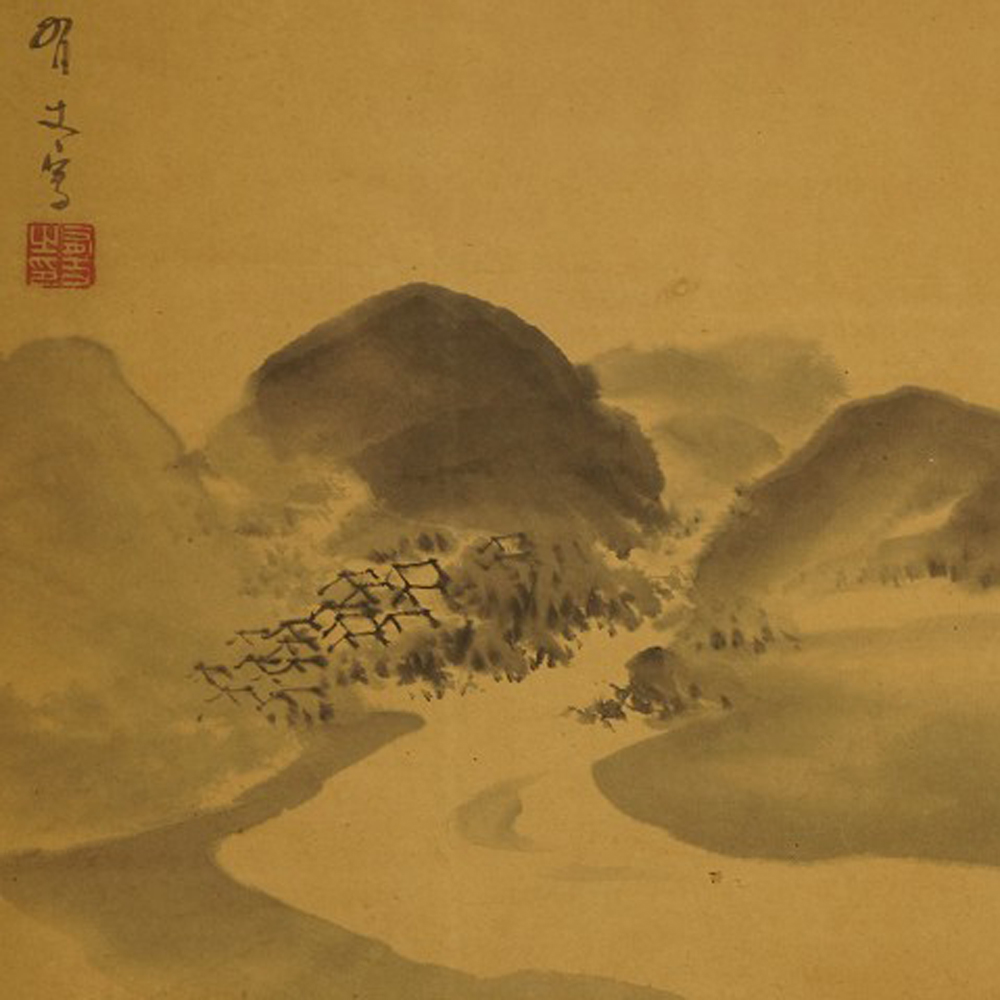
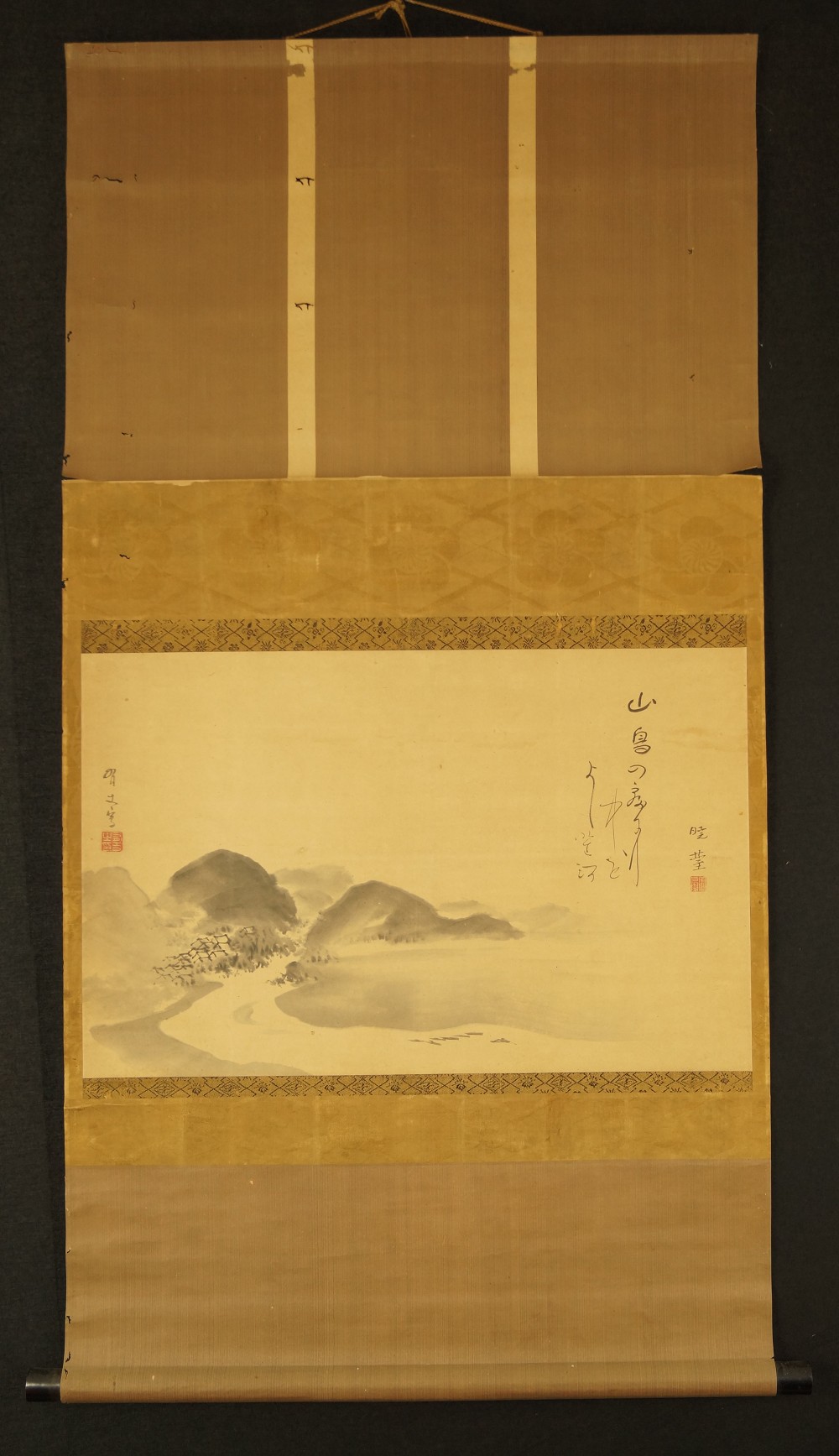
Mountain Landscape by the River
Kakemono, unique work, 112 x 65 cm
€260.00
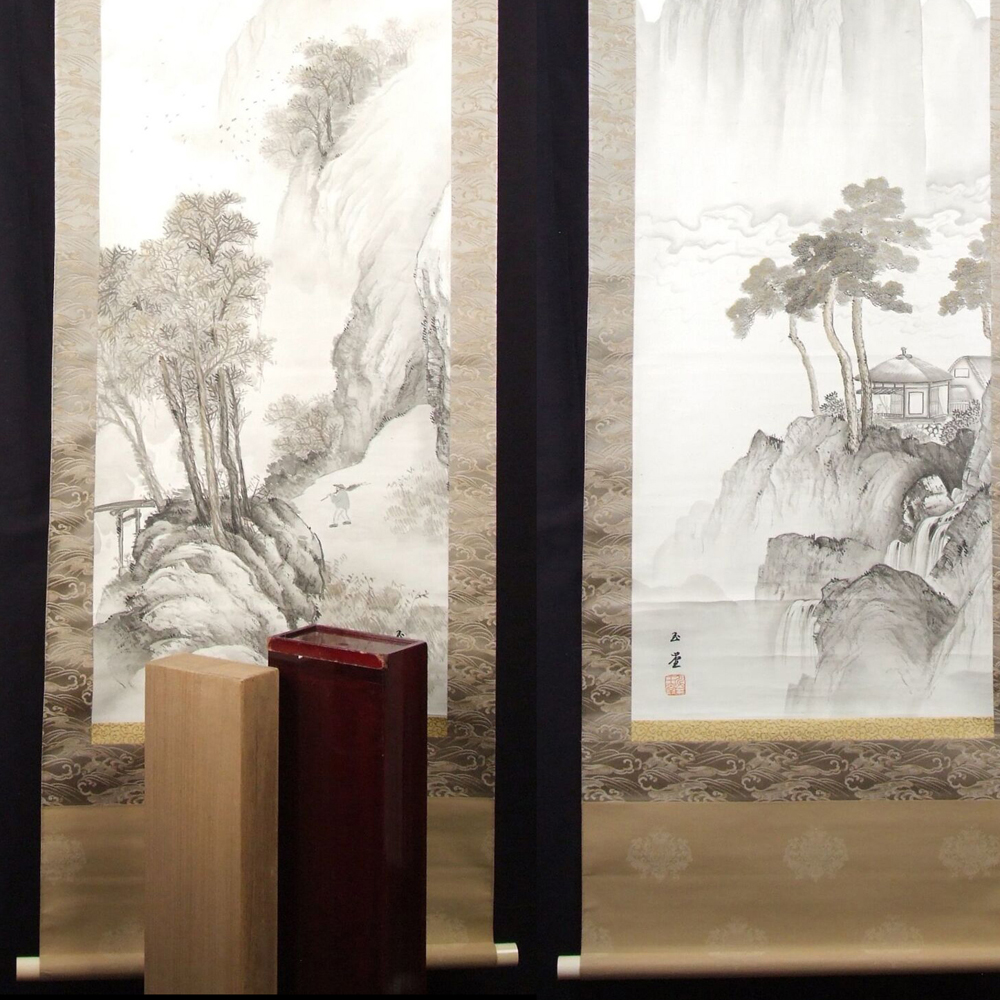
Kawai Gyokudō
Set of Two Paintings – Landscapes in Ink
Kakemono, unique work, 203 x 61 cm
Sold
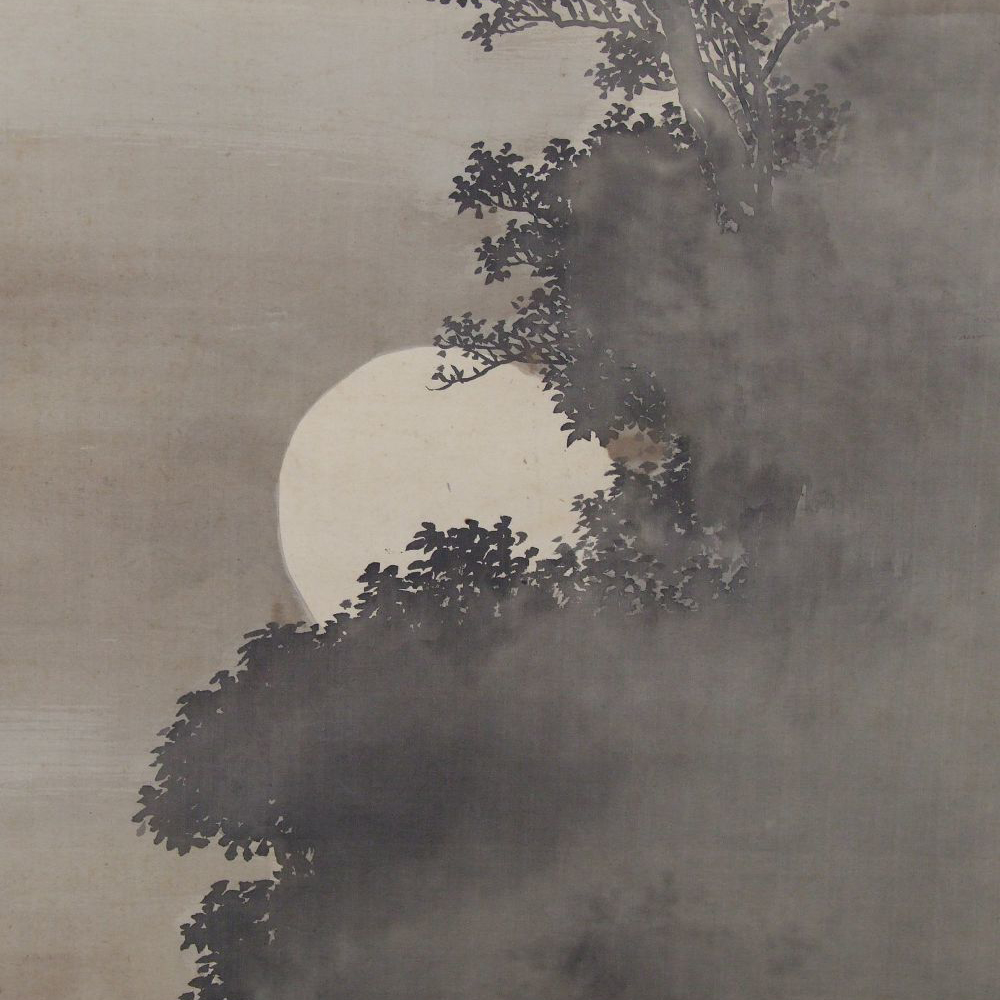
Mori Yūzan
Full Moon Over Misty Landscape
Kakemono, unique work, with box, 199 x 61 cm
Sold
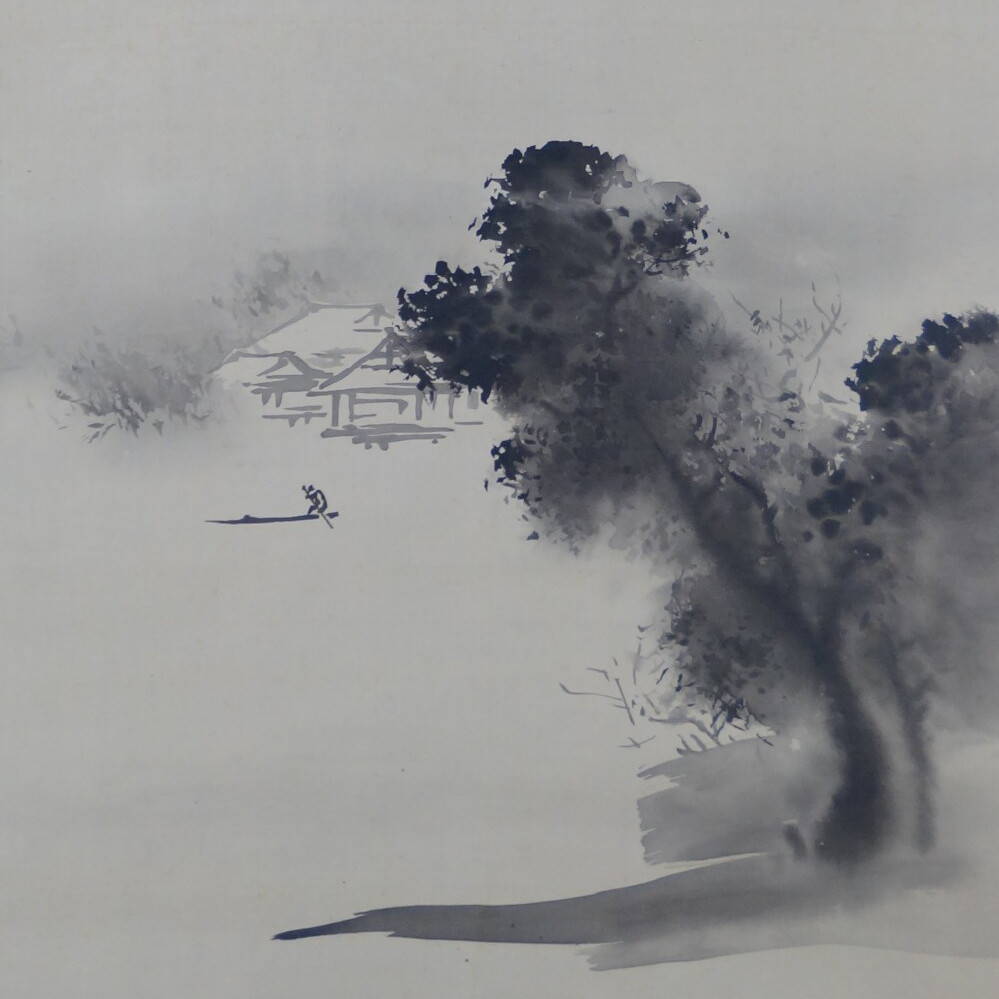
Hashimoto Gaho
House in the Fog on a Mountain Slope
Kakemono, unique work, 190 x 43 cm
Sold
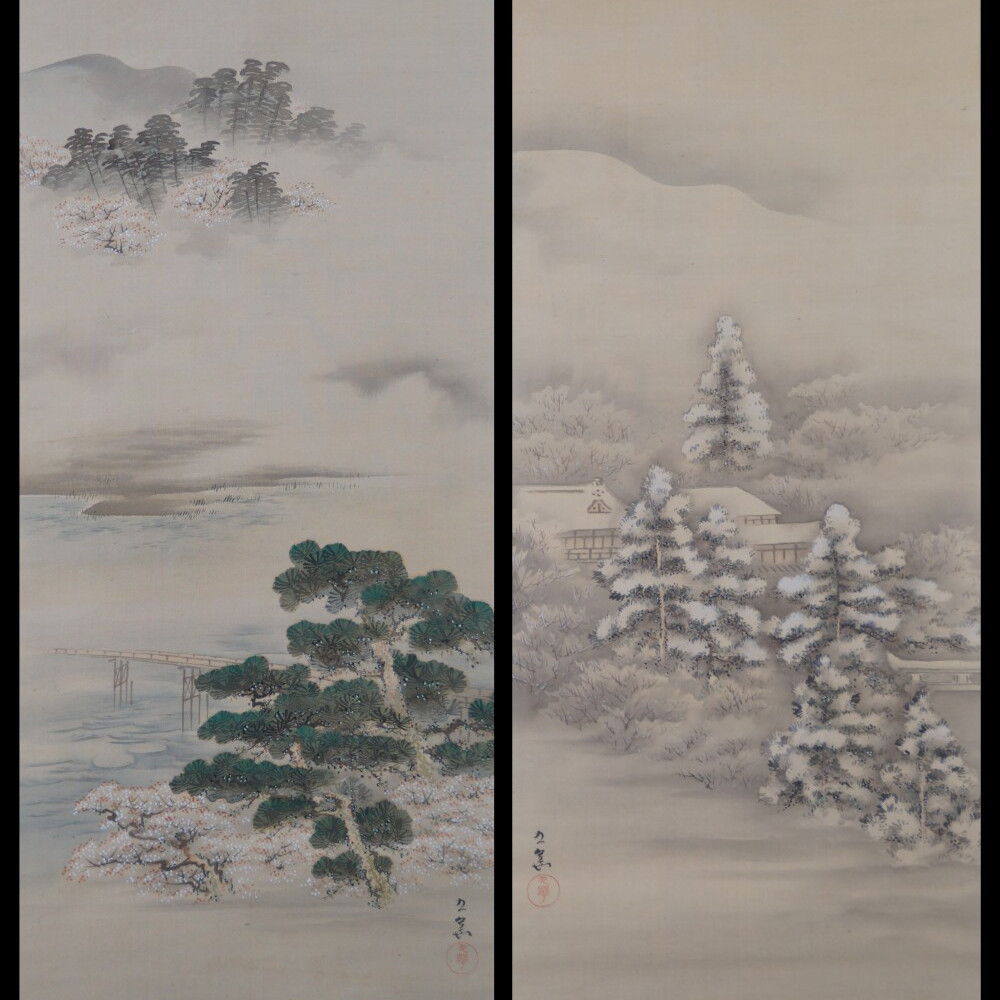
Ikeda Kyuka
Winter and Spring - Set of 2
Kakemono, unique work, 189 x 52 cm
Sold
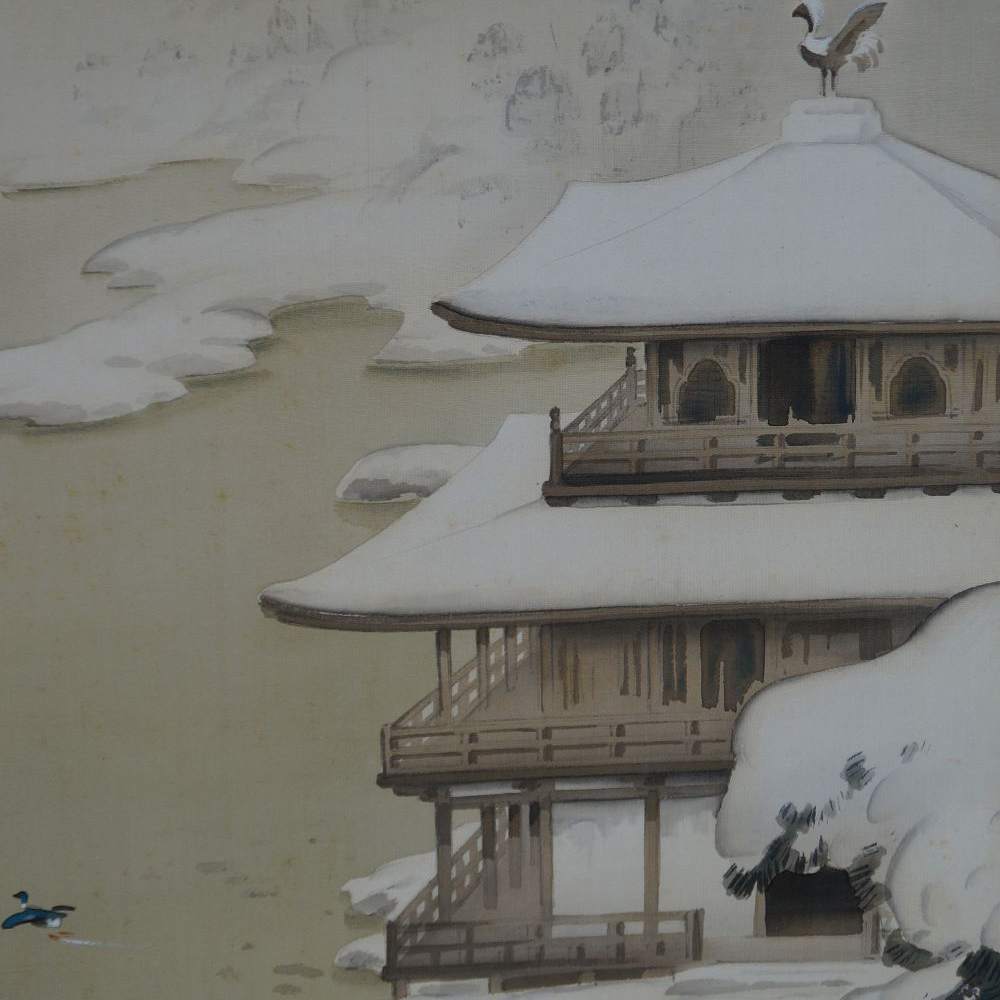
Nakamura Shunyō
Snow-Covered Monastery by a Quiet Lake
Kakemono, unique work, 157 x 37 cm
Sold
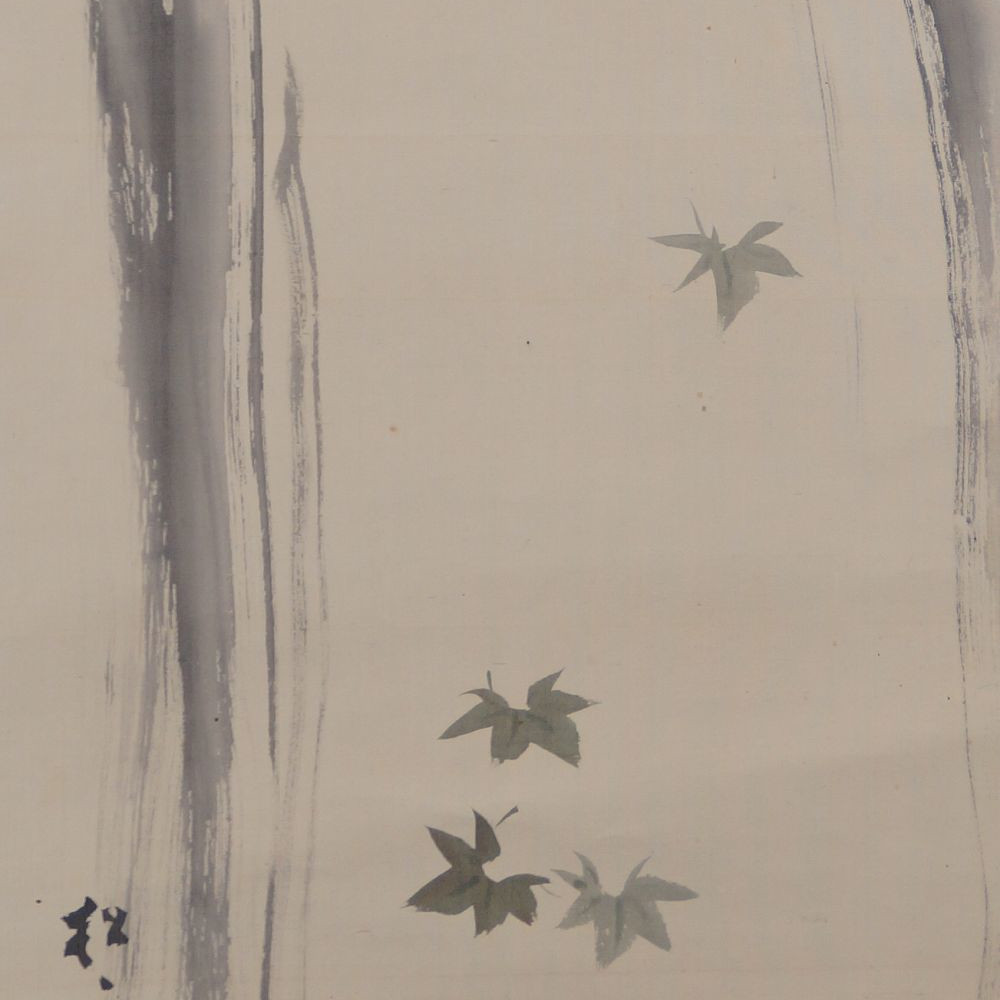
Matsukumo Gayama
Maple Leaves at the Waterfall
Kakemono, unique work, with box, 188 x 50 cm
Sold
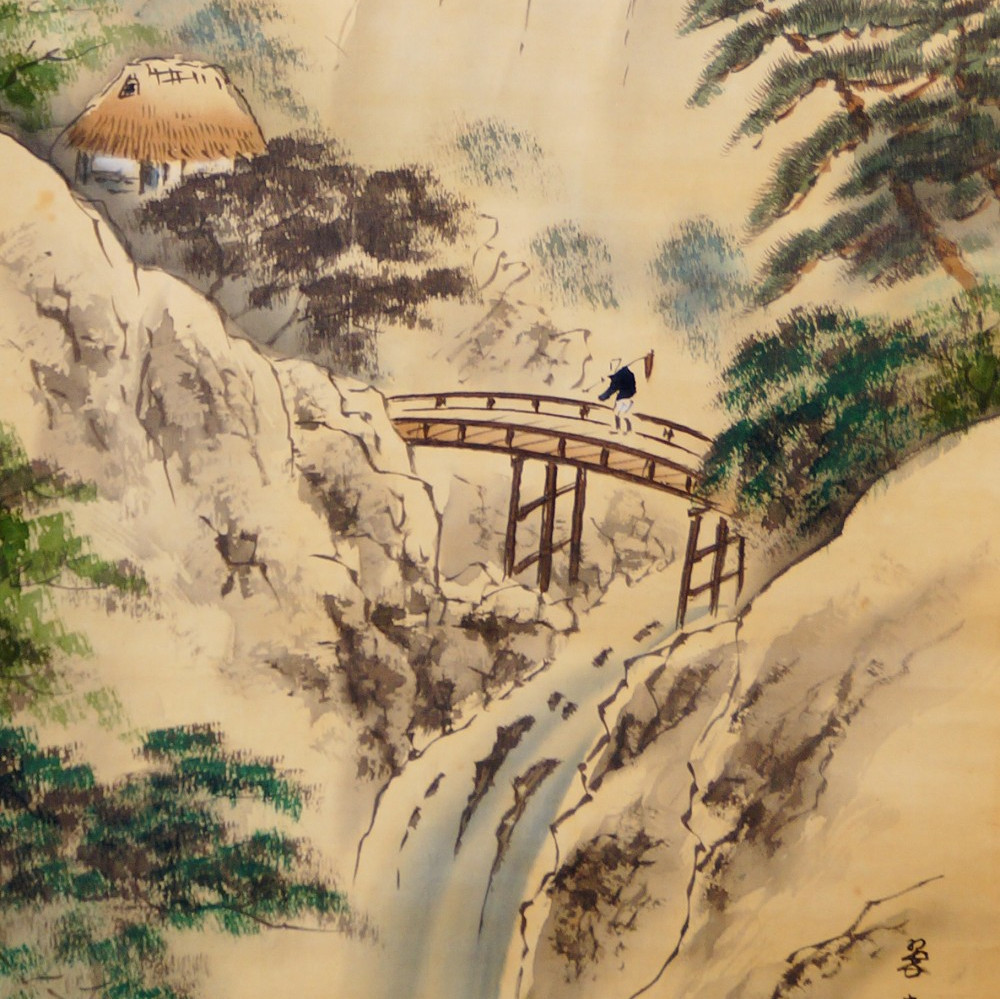
Suidō
Landscape with Fuji
Kakemono, unique work, 187 x 58 cm
Sold
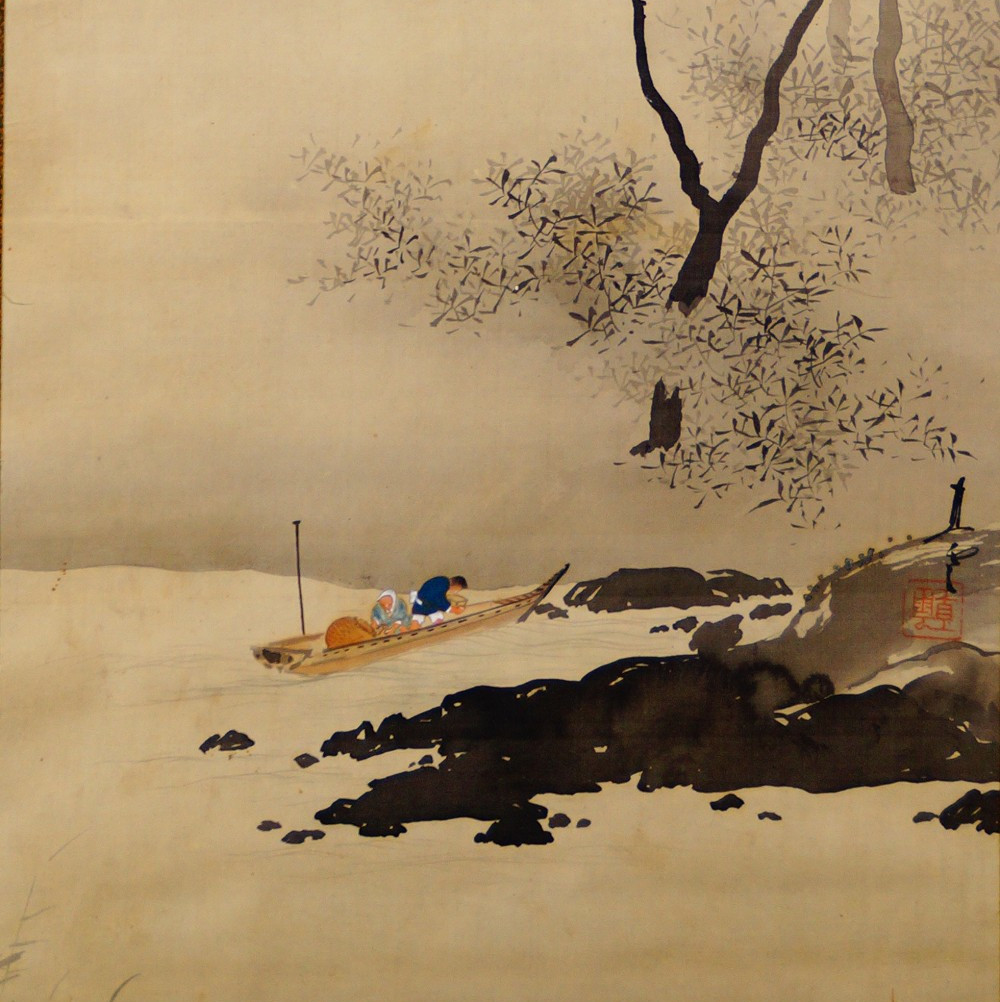
Naoun
Boat Ride in the Moonlight
Kakemono, unique work, 185 x 58 cm
Sold
48 of 246 items shown
Sansui-ga: The Art of "Mountain-Water Pictures"
The Japanese term for landscape painting, Sansui-ga, is composed of the characters for "mountain" and "water" – a clear indication of how central these two elements are to the entire pictorial language. Mountains often stand for permanence, stillness, and the sublime, water for change, movement, and the constant flow of life. This juxtaposition of the solid and the flowing has formed the compositional foundation of East Asian landscape painting for over a thousand years and was developed in Japan into an independent, unmistakable art form.
Empty Space as a Formative Element
A central principle of Japanese landscape painting is Ma, the deliberately left empty, unpainted space. Unlike in many Western landscape depictions, the entire pictorial surface is not filled – the empty space itself becomes an independent pictorial element, making mist, vastness, or stillness palpable. This reduction demands an active role from the viewer: the eye mentally completes what the painter has deliberately omitted, and it is precisely in this interplay that the special, meditative effect of a landscape Kakemono arises.
Recurring Motifs of Japanese Landscape Painting
Typical pictorial elements include rugged mountain peaks in haze, cascading waterfalls, gnarled pines at the edge of cliffs, small huts or boats as a human scale amid overwhelming nature, as well as flocks of birds suggesting vastness and movement. Such motifs often follow traditional compositional schemes that were developed further over generations of painters and systematically taught in painting schools. Seasonally bound variants are also frequently found: mist-shrouded autumn mountains, snow-covered winter landscapes, or dewy fresh spring valleys with the first blossoms along the wayside.
Technique: Ink, Water, and Brushwork
Sumi-e, ink painting, works with varying degrees of ink dilution to create an enormous range of tonal values, from deep black to delicate, barely perceptible gray, with which depth, mist, and lighting atmosphere can be depicted. The speed and confidence of the brushstroke decisively determine the quality of a work – corrections are hardly possible on the absorbent Washi paper, which lends each picture a spontaneous, lively, and immediate quality. Experienced painters often mentally plan out the entire composition before the first brushstroke touches the paper.
Landscape as a Place of Retreat and Philosophical Motif
For many collectors, a landscape Kakemono is less a decorative element than a visual place of retreat – a window into a still, untouched natural world amid often hectic everyday life. This function has historical roots: as early as Chinese and later Japanese scholars, landscape paintings were used as objects of meditation, allowing one to withdraw mentally into the depicted natural world without having to leave one's own living space.
Landscape Painting in Today's Living Spaces
A landscape Kakemono is particularly well suited to rooms that are deliberately meant to invite calm: reading corners, bedrooms, meditation rooms, or also studies, where a calm visual anchor point is desired. The reduced color palette and the clear, often monochrome pictorial language also blend harmoniously into almost any interior style, from traditional Japanese to Scandinavian minimalist.
Regional Influences and Painting Schools
Over the centuries, various painting schools developed in Japan, each with its own conception of landscape painting, such as the Kanō school with its close ties to courtly patrons, or the more freely working Nanga painters, who oriented themselves more strongly toward Chinese scholarly ideals. These different traditions shaped composition, brush technique, and the choice of preferred landscape elements in quite distinct ways, which opens up a fascinating additional layer of depth for collectors with a growing interest in art history.
How a Landscape Kakemono Is Created
Before the first brushstroke touches the paper, an experienced landscape painter thinks through the entire composition mentally, often over an extended period of time. The actual execution then usually takes place in a comparatively short time, but with the utmost concentration, since corrections are hardly possible. This discrepancy between lengthy mental preparation and brief, highly concentrated execution is characteristic of the entire Sumi-e tradition and clearly distinguishes it from Western painting techniques, which are often built up gradually over weeks or months.
Landscape Motifs and Personal Memory
Many collectors choose their landscape Kakemono not only for its abstract aesthetic effect, but also because a particular motif recalls their own travel experience or a personally significant natural landscape. A misty mountain can thus become a quiet reminder of a stay in Japan, a waterfall motif of a special hiking excursion. This personal connection lends the chosen work an additional, individual layer of meaning that goes far beyond its purely decorative value.
Bring a piece of that stillness into your home with a Japanese landscape painting – the stillness that Japanese painting has so masterfully captured for centuries.