Kakemono – Japanese Hanging Scrolls
Go directly to the artworksIn brief
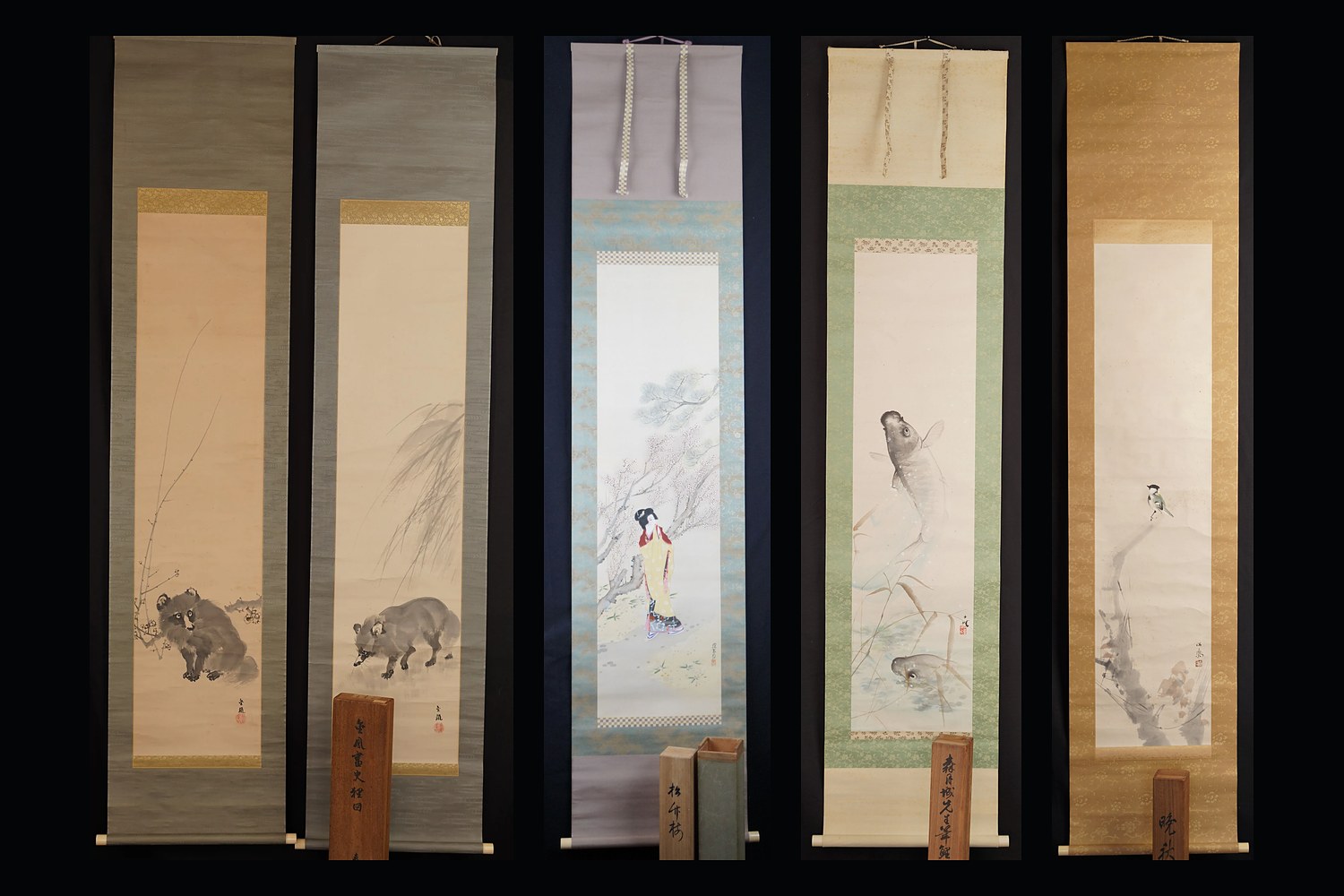
A kakemono (掛物), also called kakejiku, is the Japanese hanging scroll: a painting or calligraphy on paper or silk that a mounter backs with washi, frames in silk brocade and stretches between a slim batten at the top and a roller at the bottom. Unlike a framed picture, it is made to be changed – shown in the tokonoma or on a quiet wall, then rolled up and stored in its wooden box. At Densho you will find hand-painted kakemono as one-of-a-kind pieces from Japan, each with details on painting support, jikusaki and period.
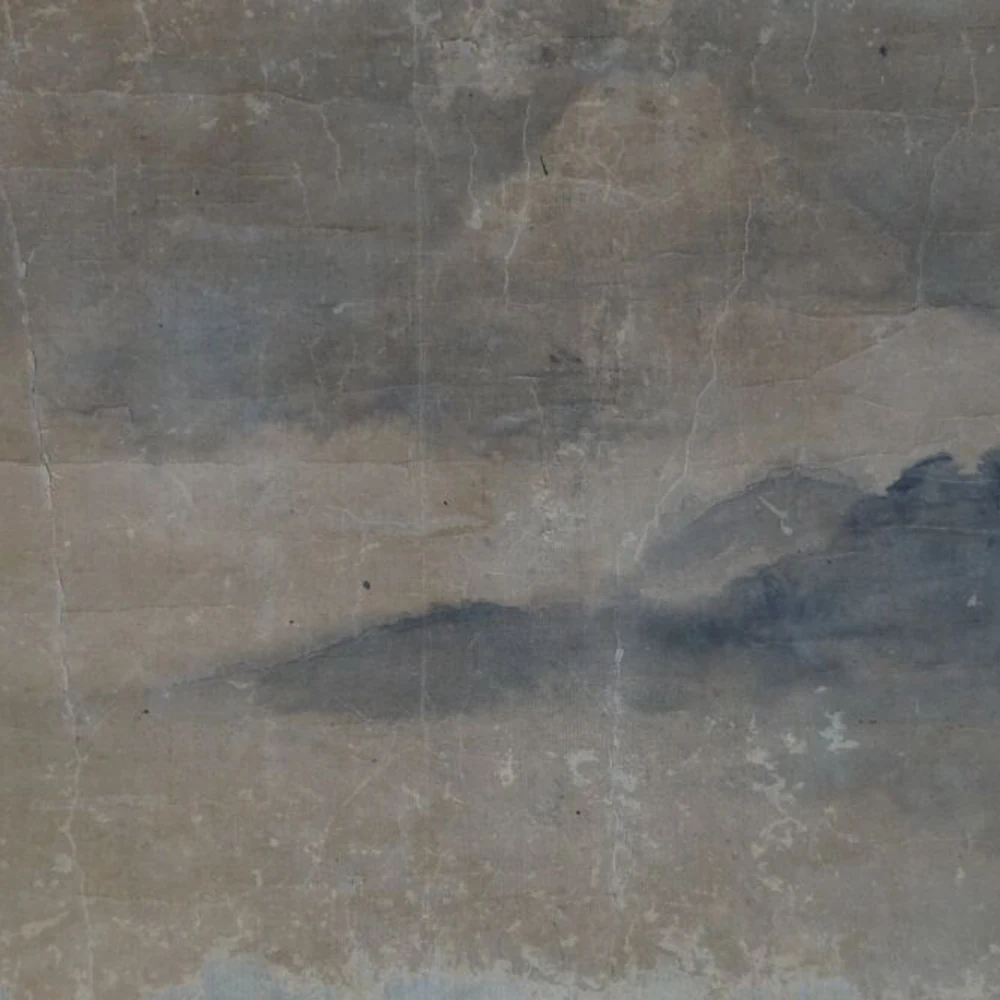
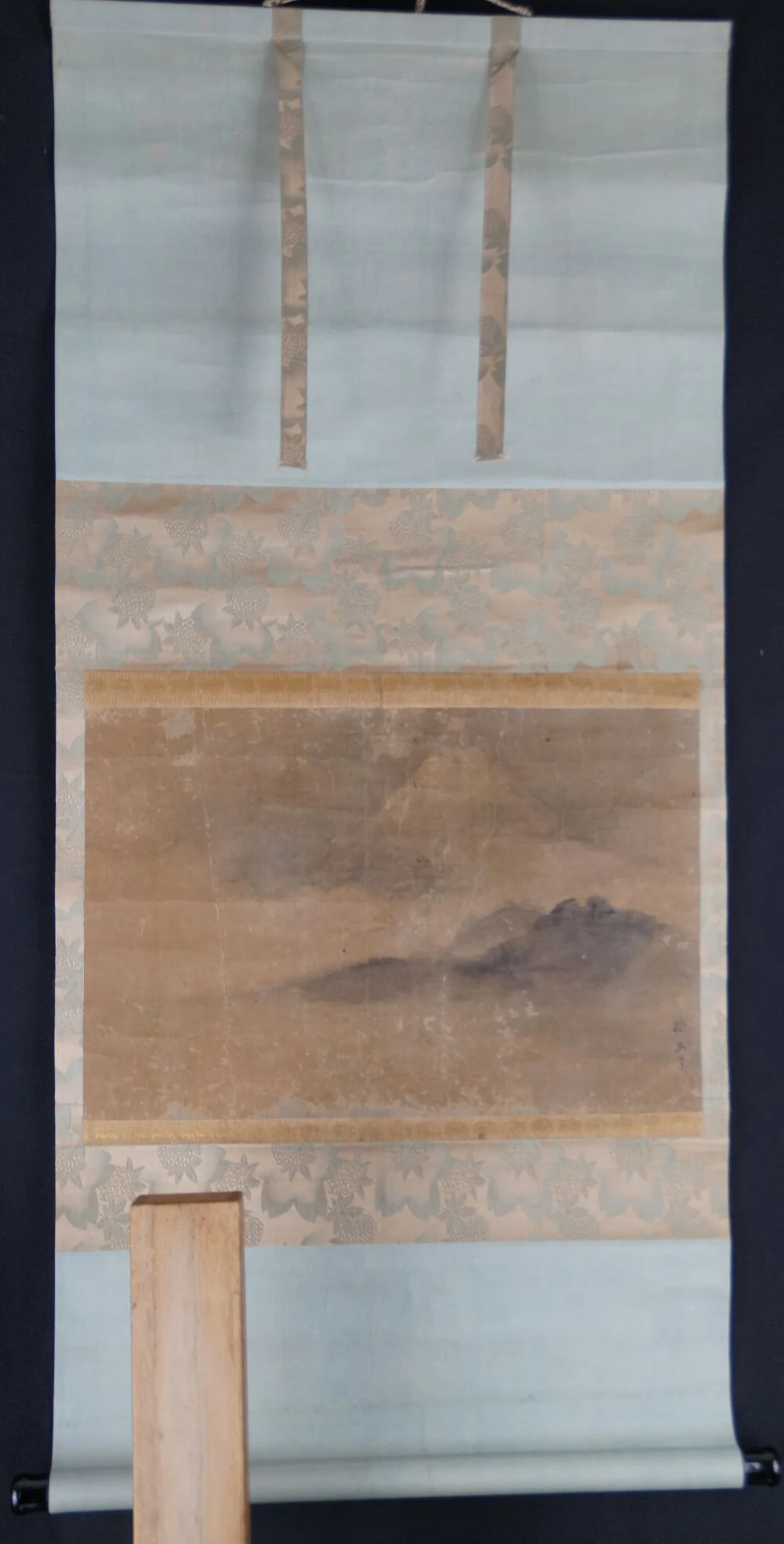
Kanō Tanyū
Fuji Above a Cloud Band and Misty Hills
Kakemono, unique work, with box, 103 x 52 cm
€660.00
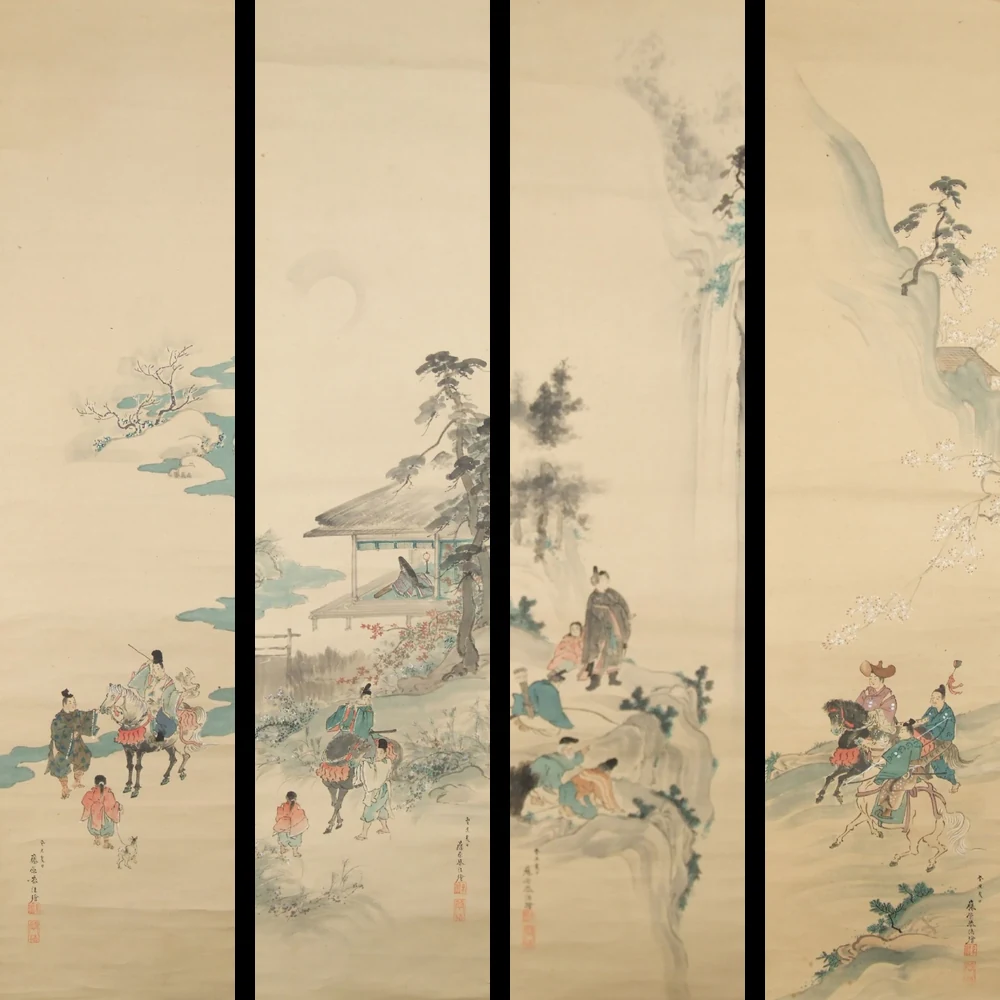
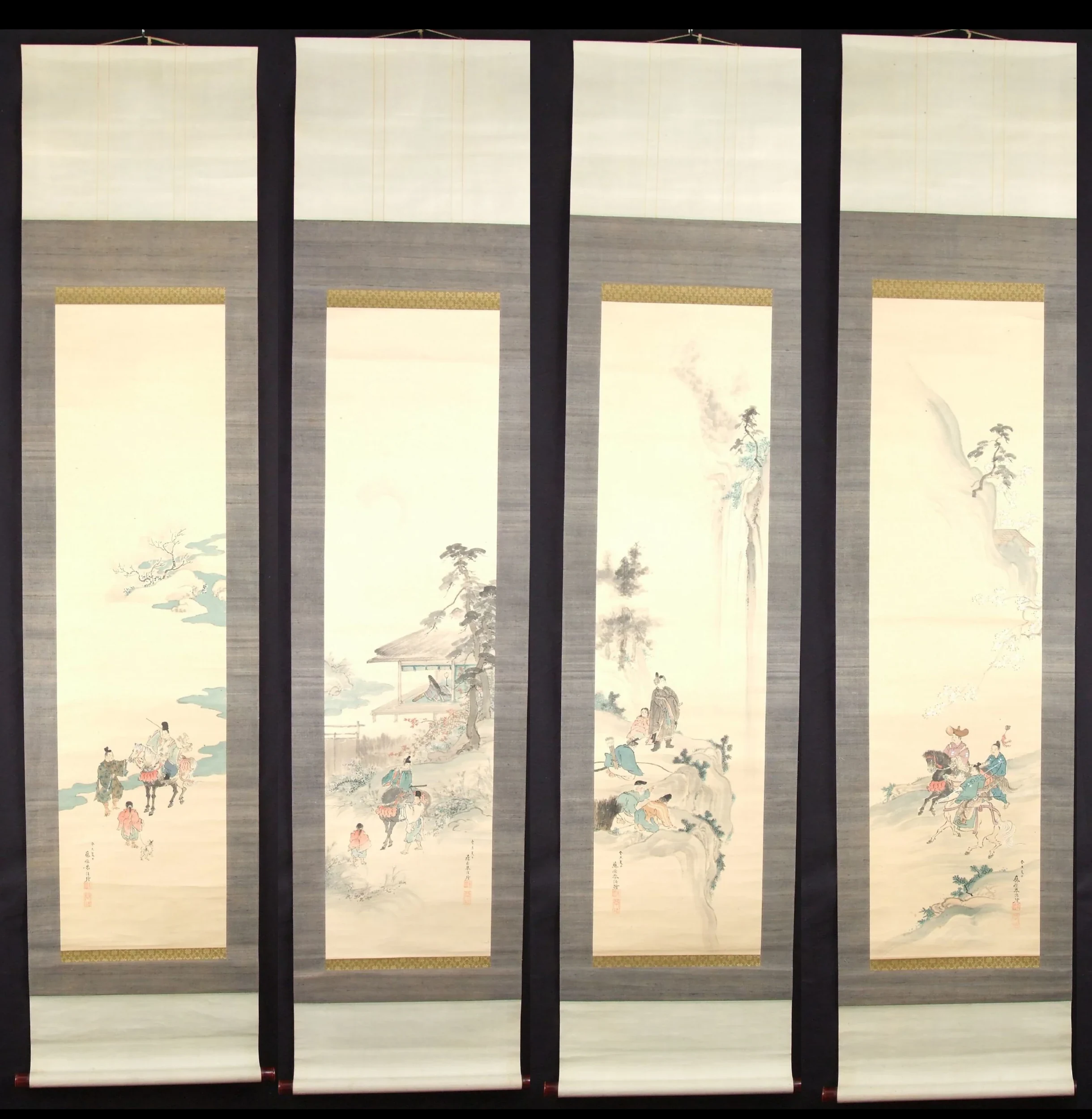
Okumura Kyōhō
Set of Four Paintings – Legends of the Four Seasons
Kakemono, unique work, with box, 192 x 48 cm
€1,210.00
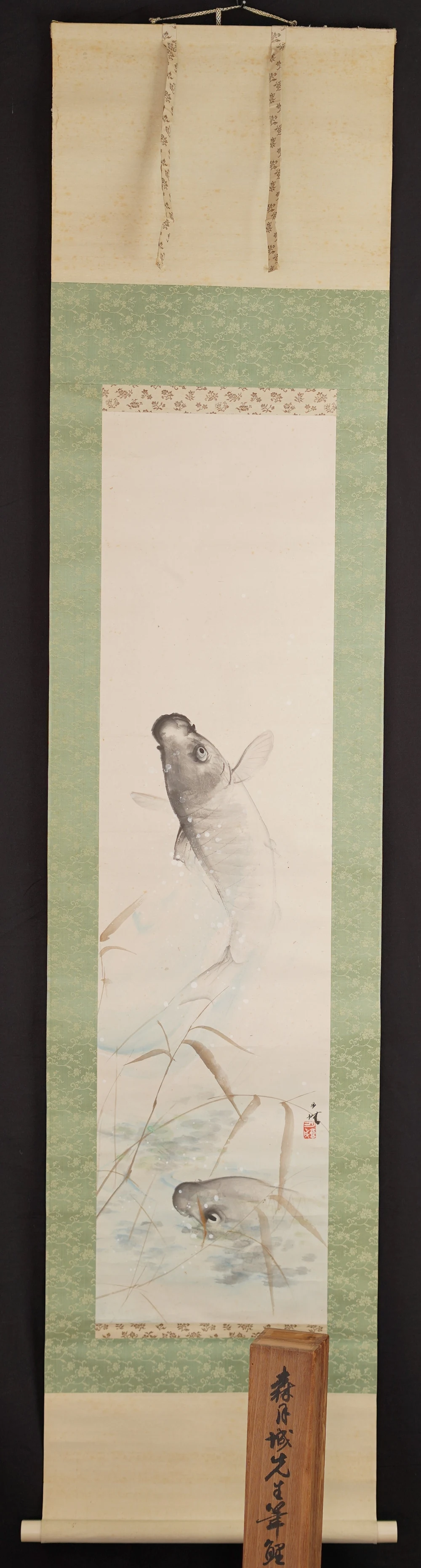
Mori Getsujō
Two Carp Among Reeds
Kakemono, unique work, with box, 190 x 48 cm
€320.00
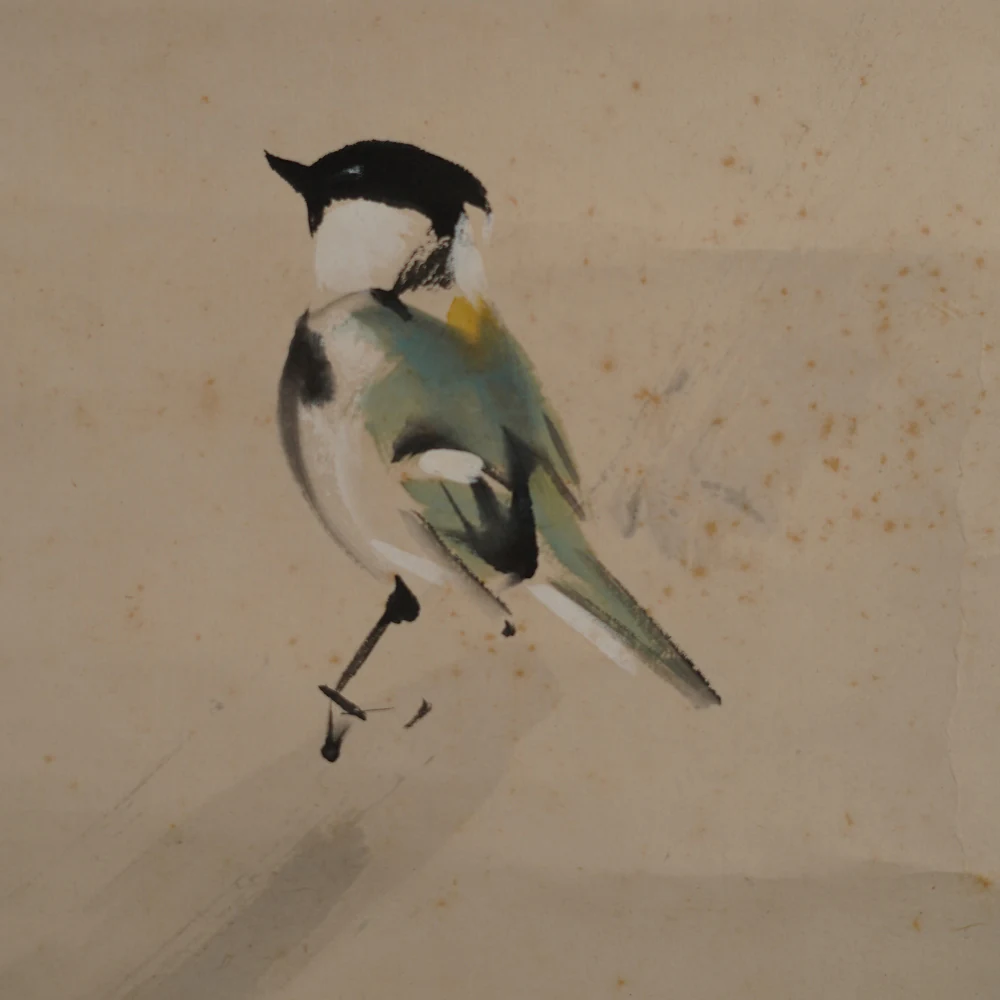
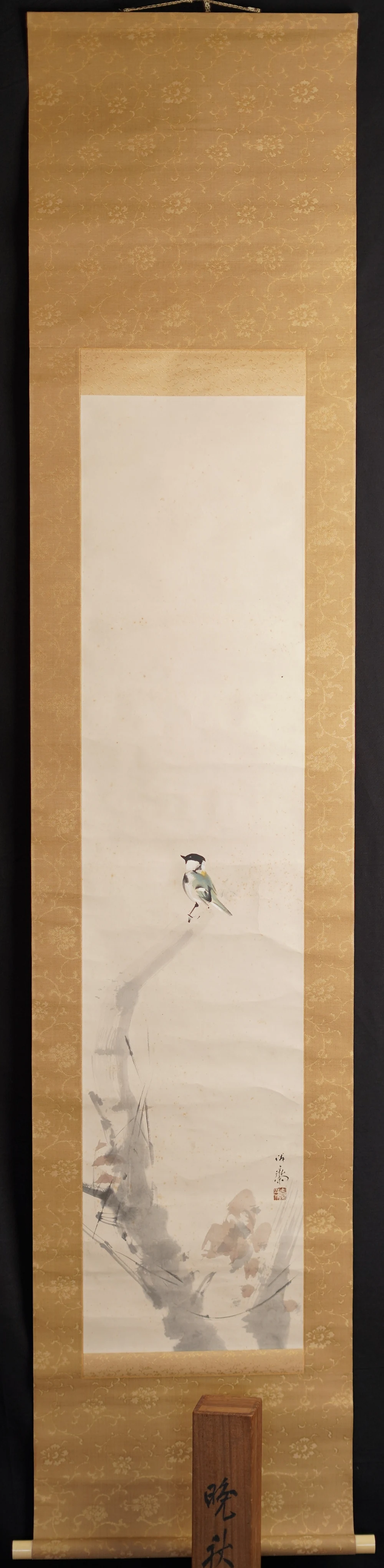
Tokuda Rinsai
Great Tit on a Late-Autumn Tree Trunk
Kakemono, unique work, with box, 205 x 49 cm
€270.00
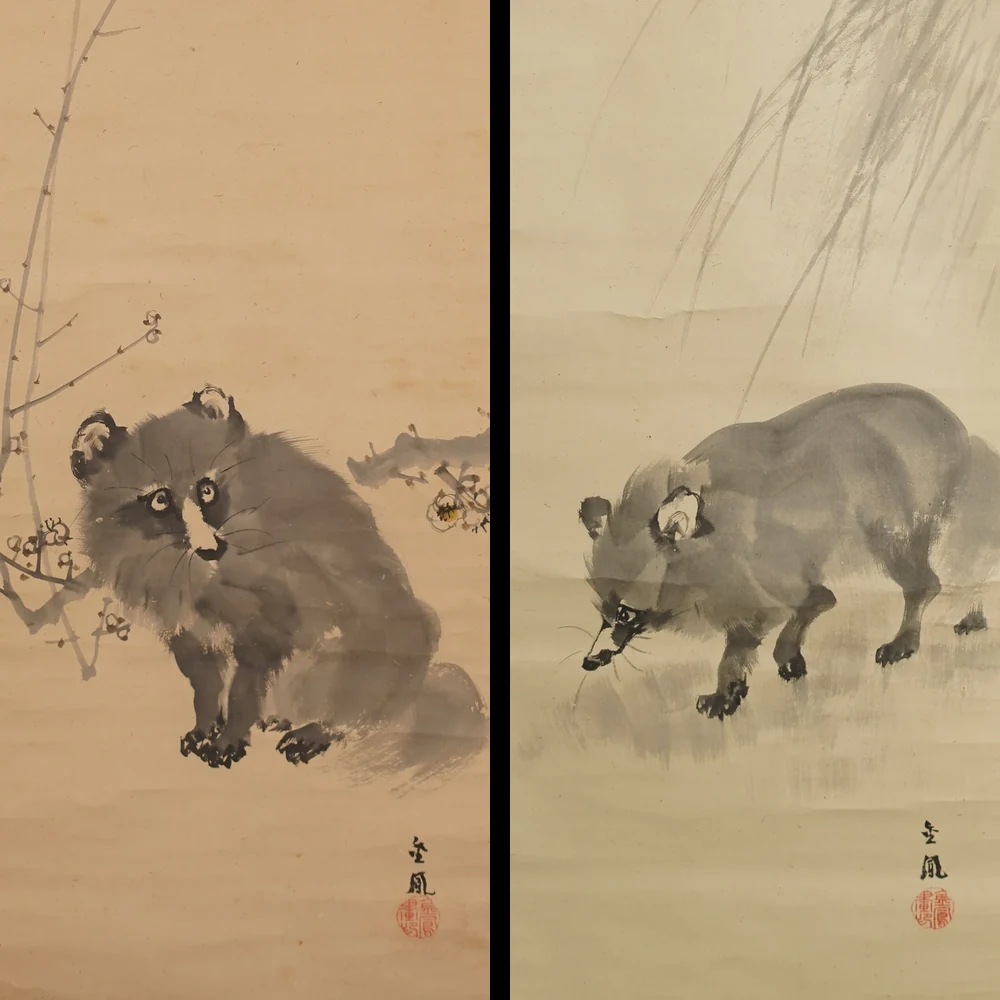
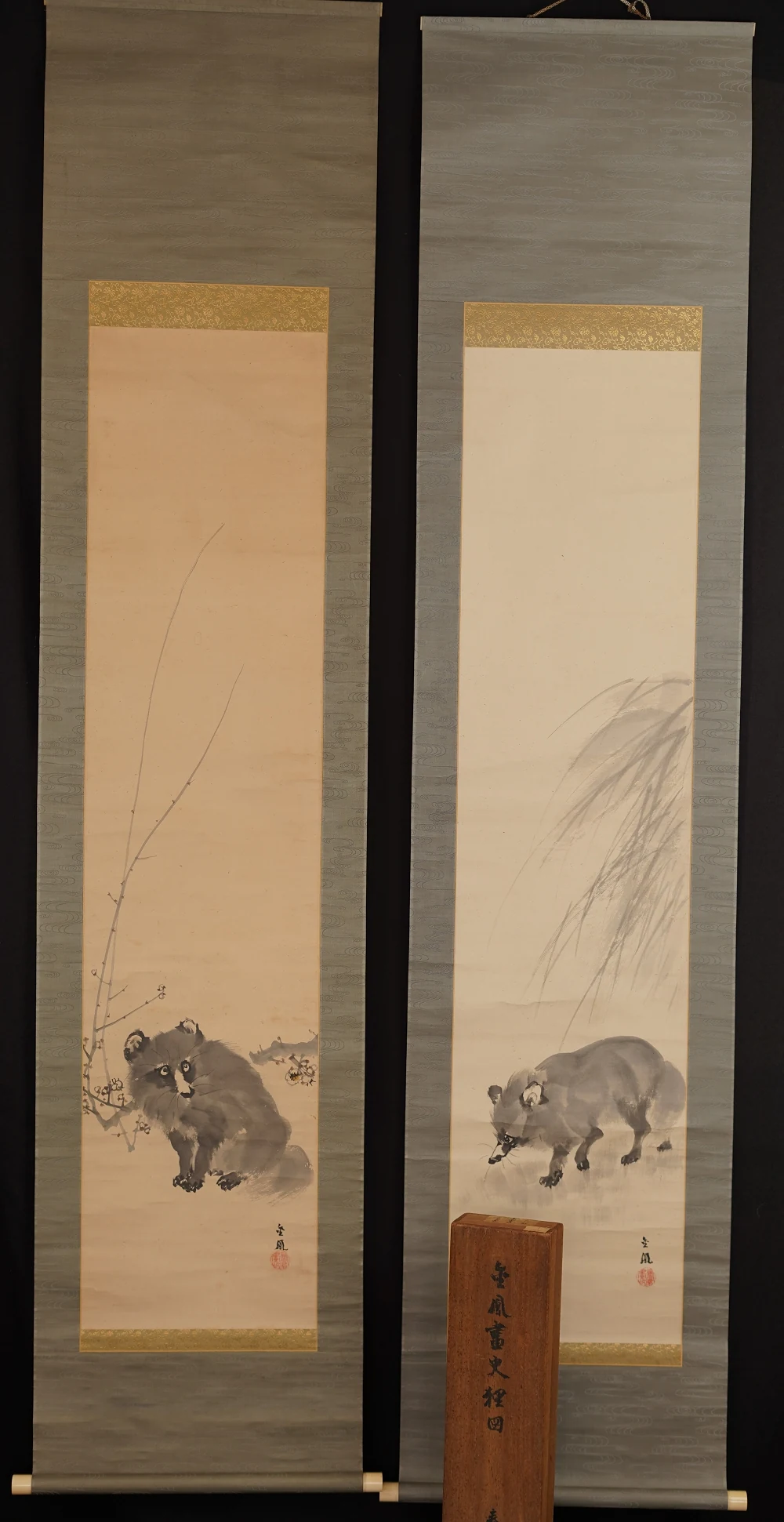
Mochizuki Kinpō
Set of Two Paintings – Tanuki Under Plum and Willow
Kakemono, unique work, with box, 195 x 48 cm
€3,590.00
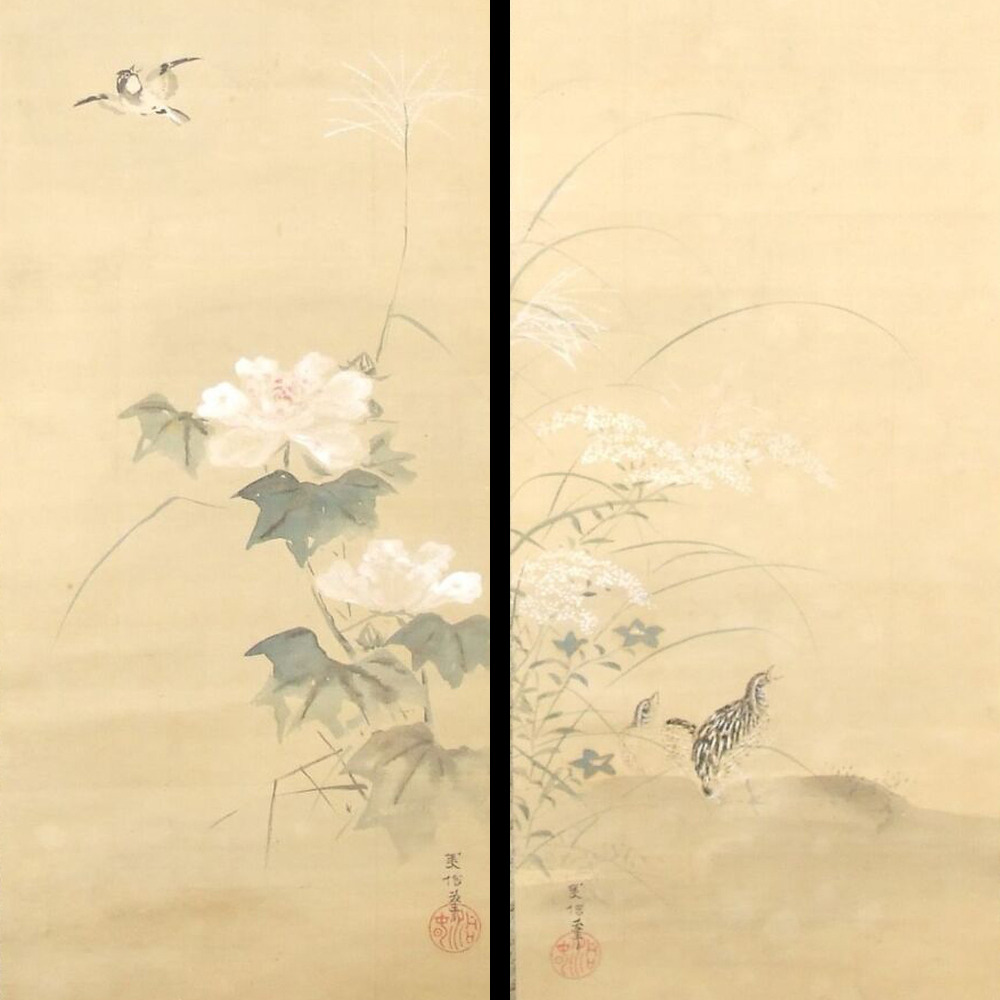
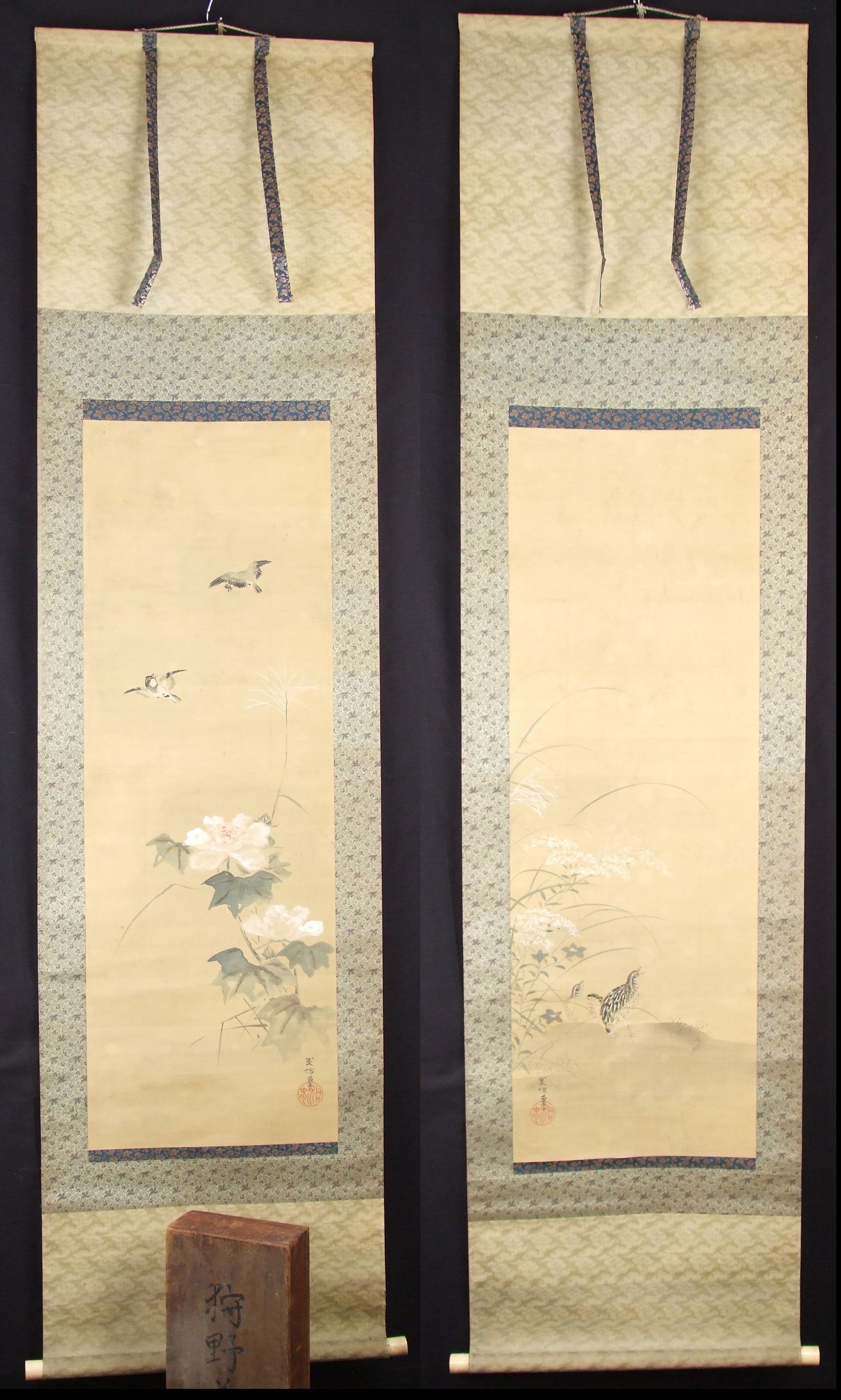
Kanō Tōshun Yoshinobu
Set of Two Paintings – Birds and Autumn Flowers
Kakemono, unique work, with box, 200 x 56 cm
€770.00
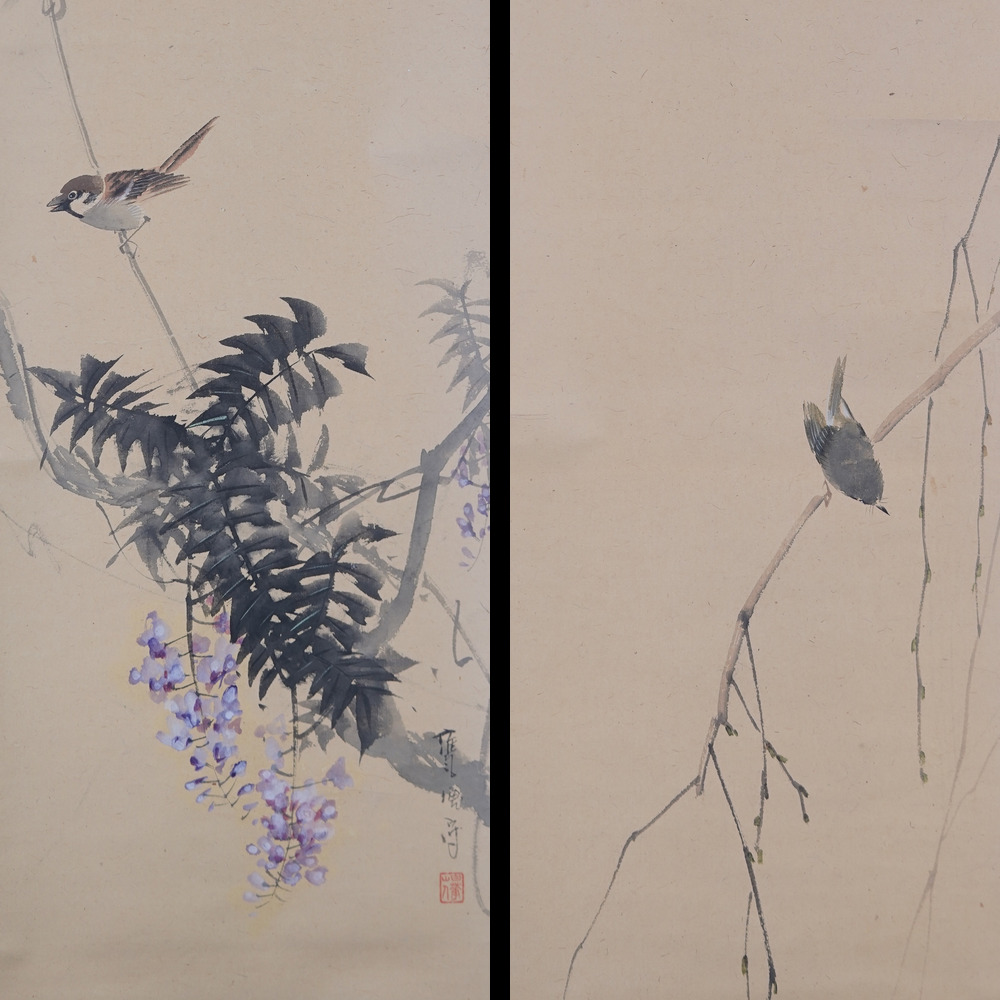
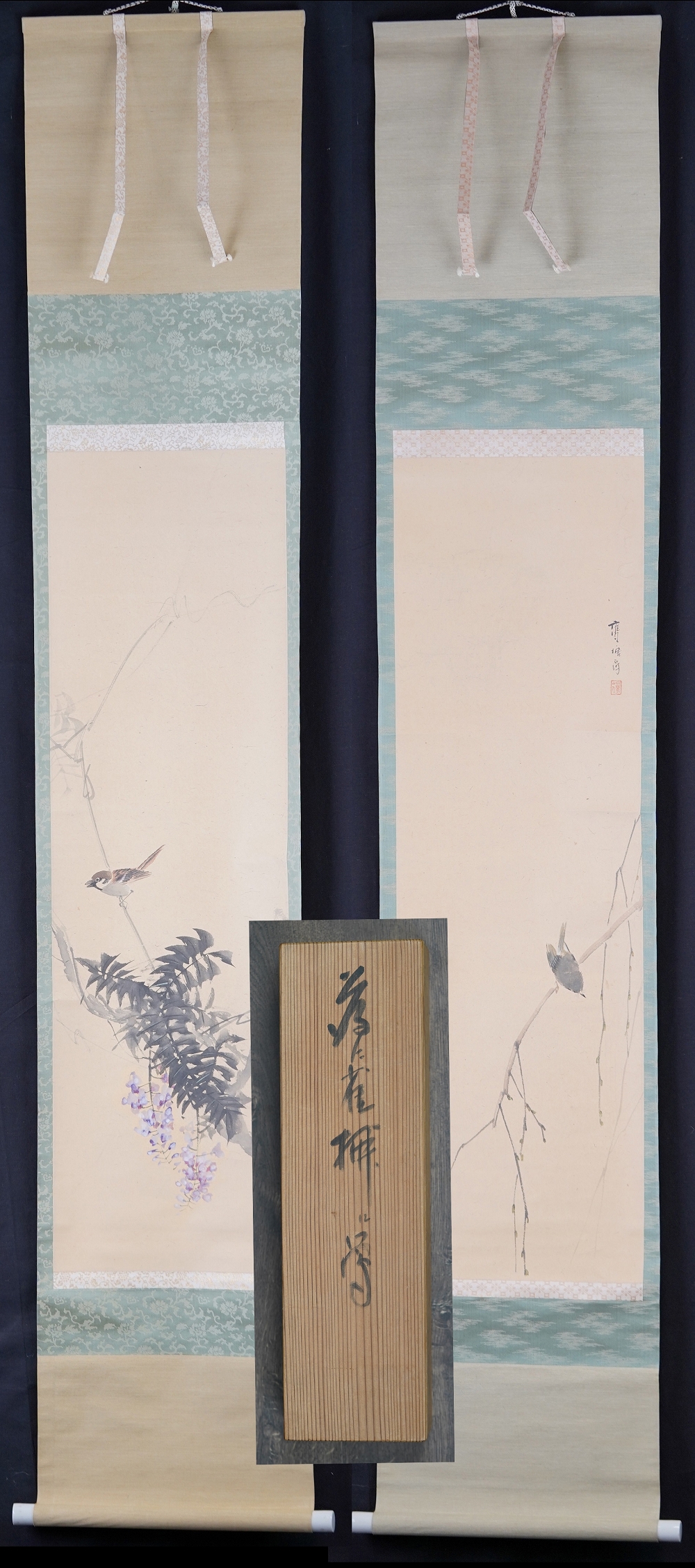
Nakahara Yōtō
Set of Two Paintings – Sparrows on Wisteria and Willow Branch
Kakemono, unique work, with box, 175 x 38 cm
€690.00
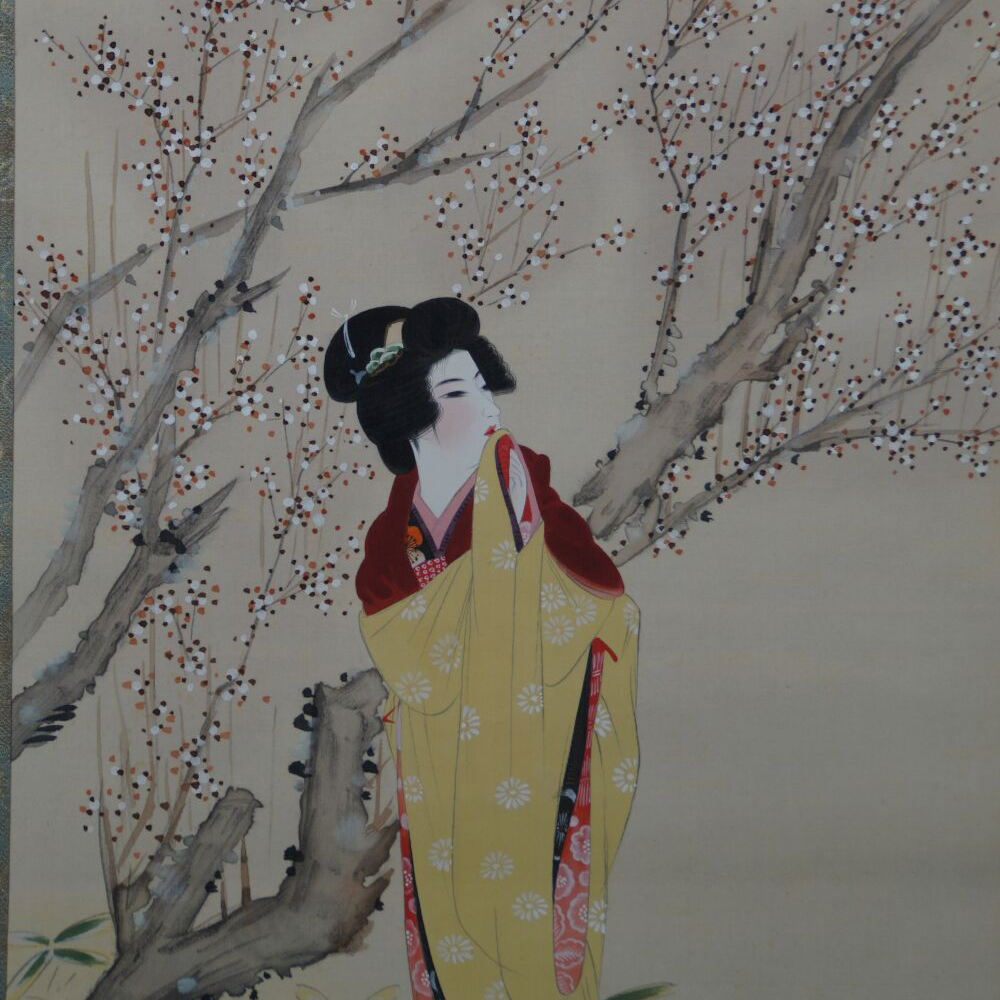
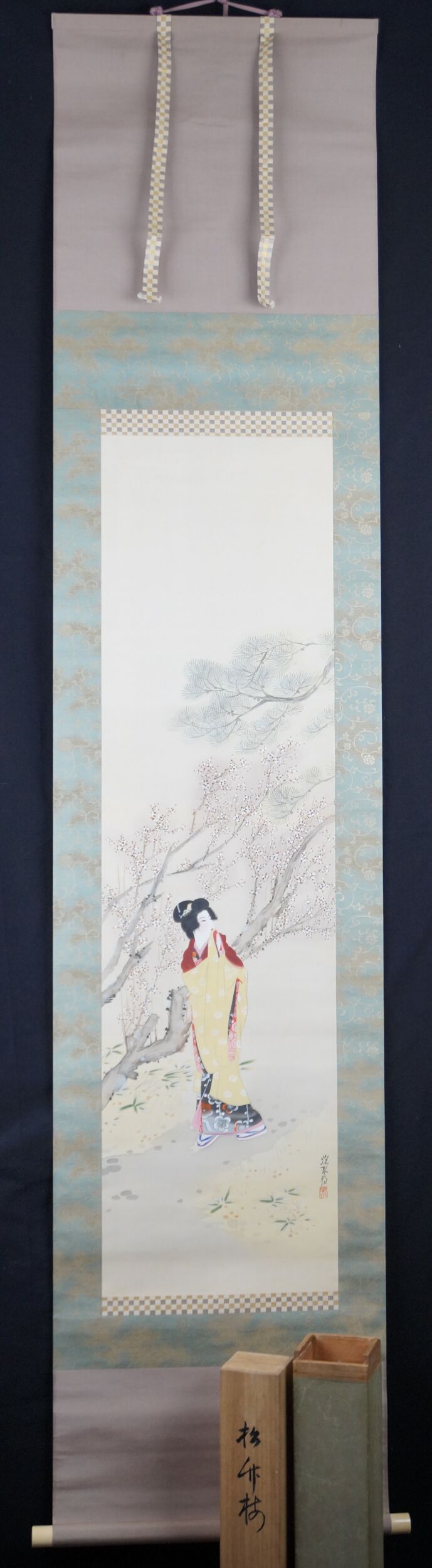
Itō Shinsui
Lady in Kimono Under Blossoming Plum Tree
Kakemono, unique work, with box, 205 x 50 cm
€1,680.00
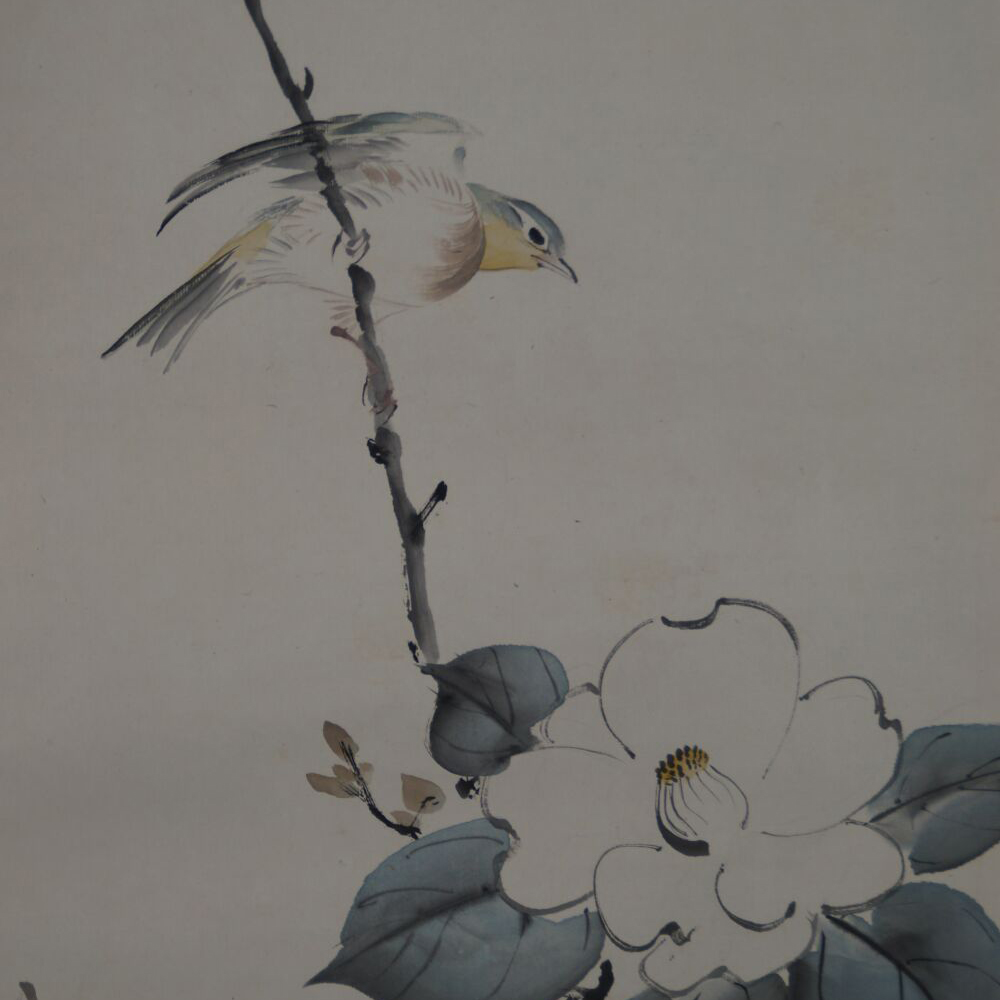
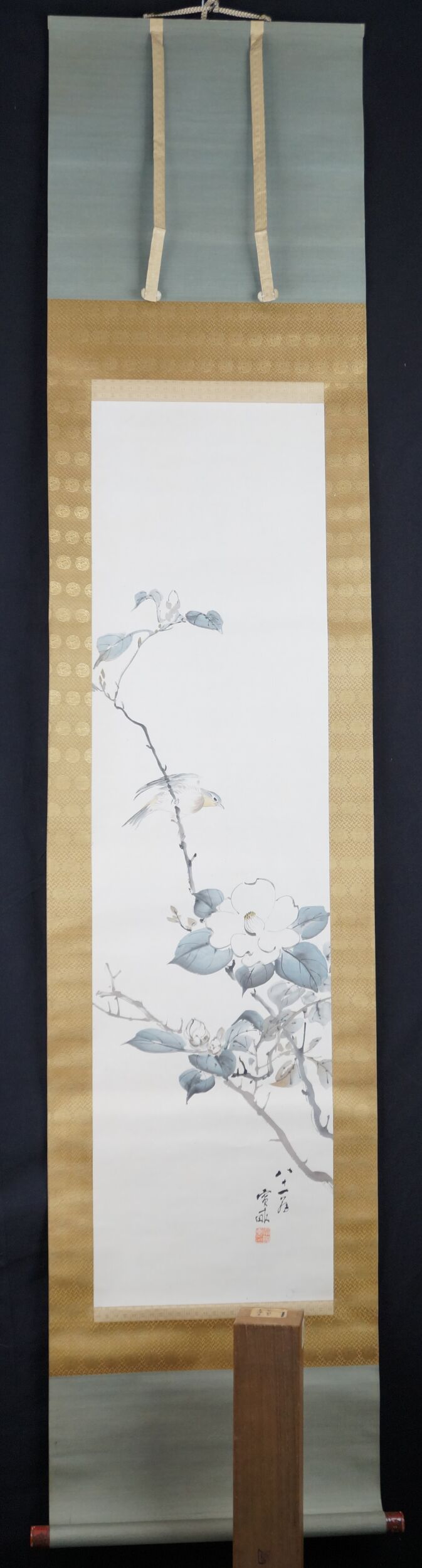
Araki Kanpo
Songbird on Blooming Camellia Branch
Kakemono, unique work, with box, 192 x 46 cm
€1,210.00
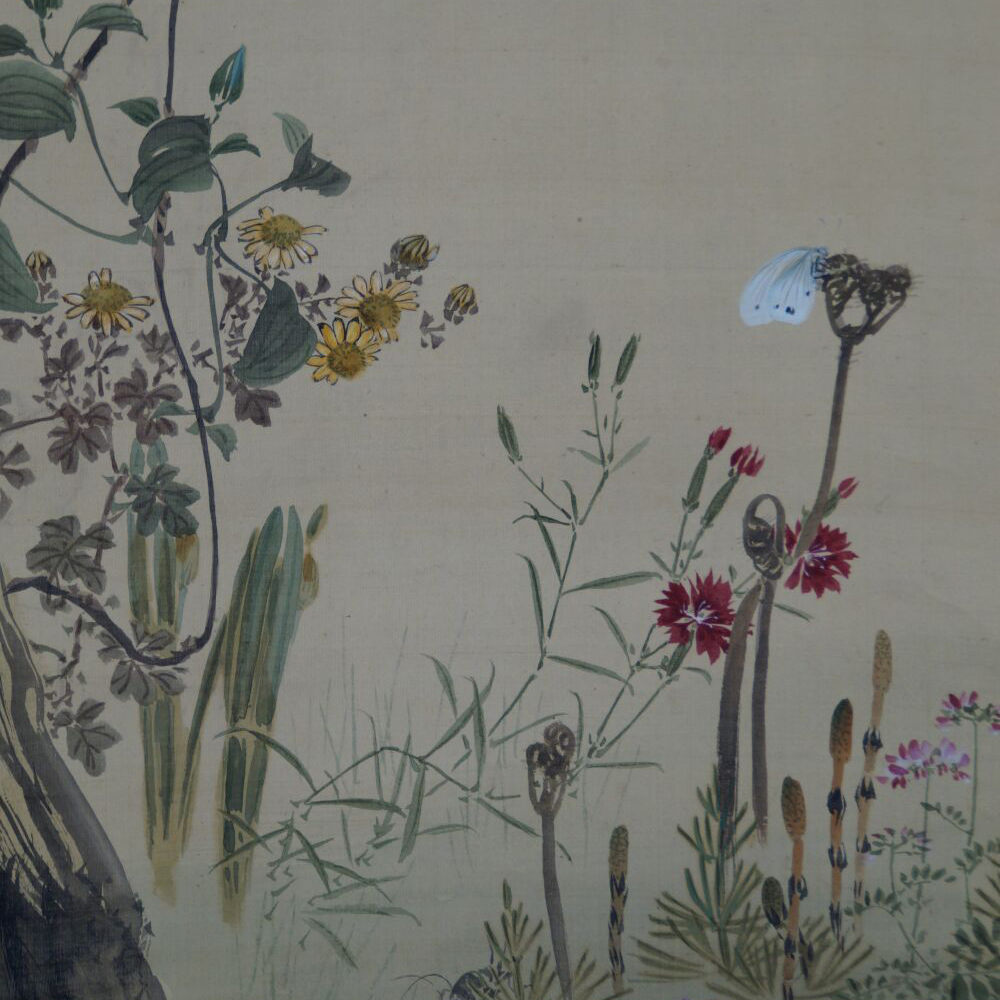
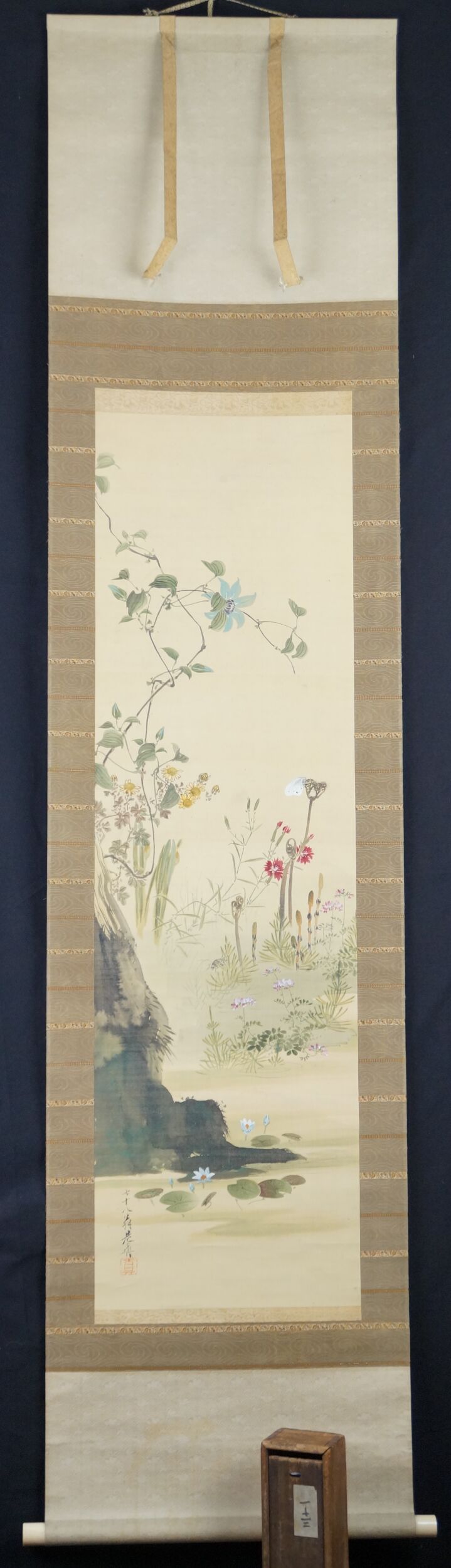
Shibata Zeshin
Autumn Riverside Vegetation with Butterfly
Kakemono, unique work, with box, 192 x 46 cm
€880.00
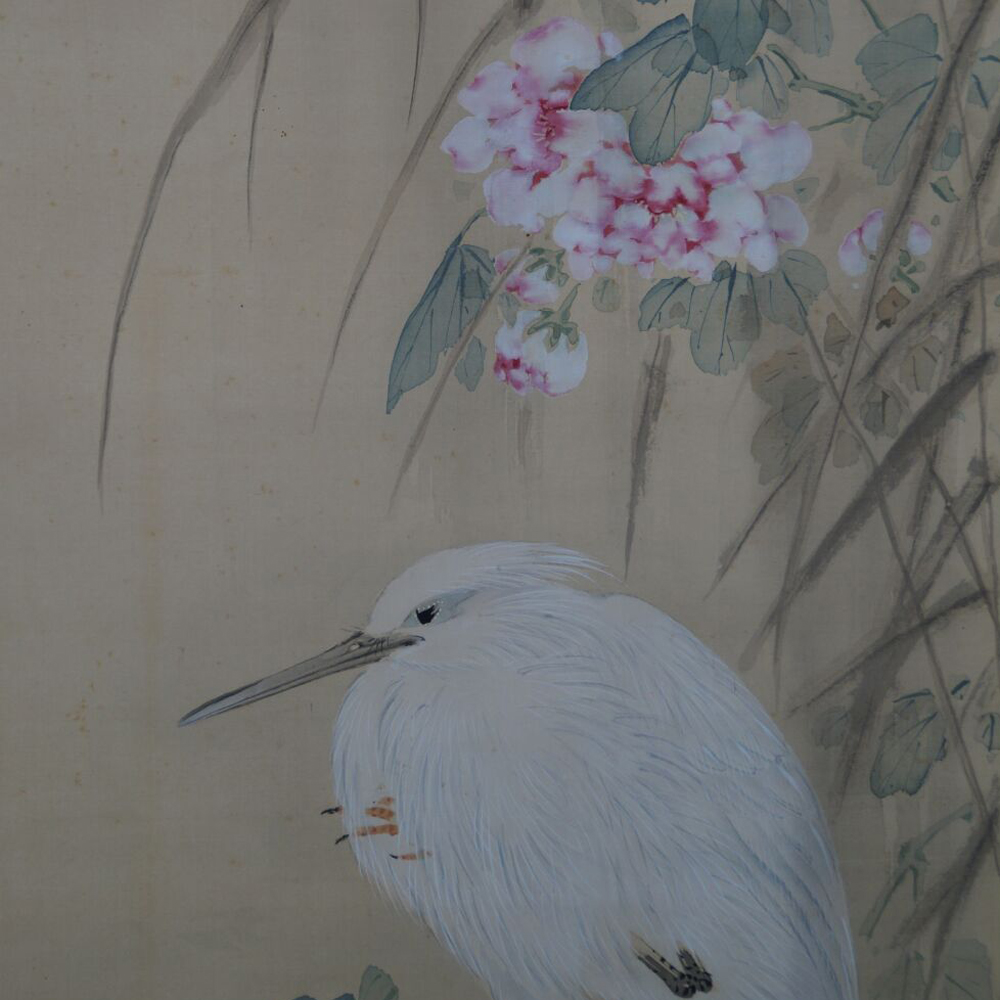
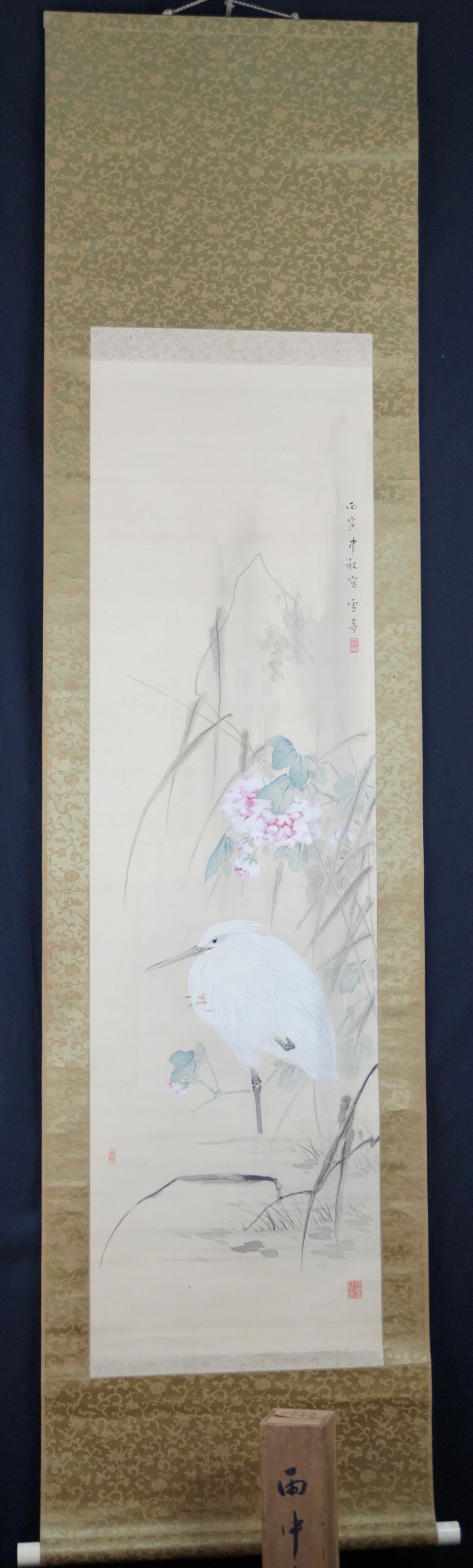
Koyama Setsurei
White Heron Among Blossoms and Reeds
Kakemono, unique work, with box, 195 x 54 cm
€720.00
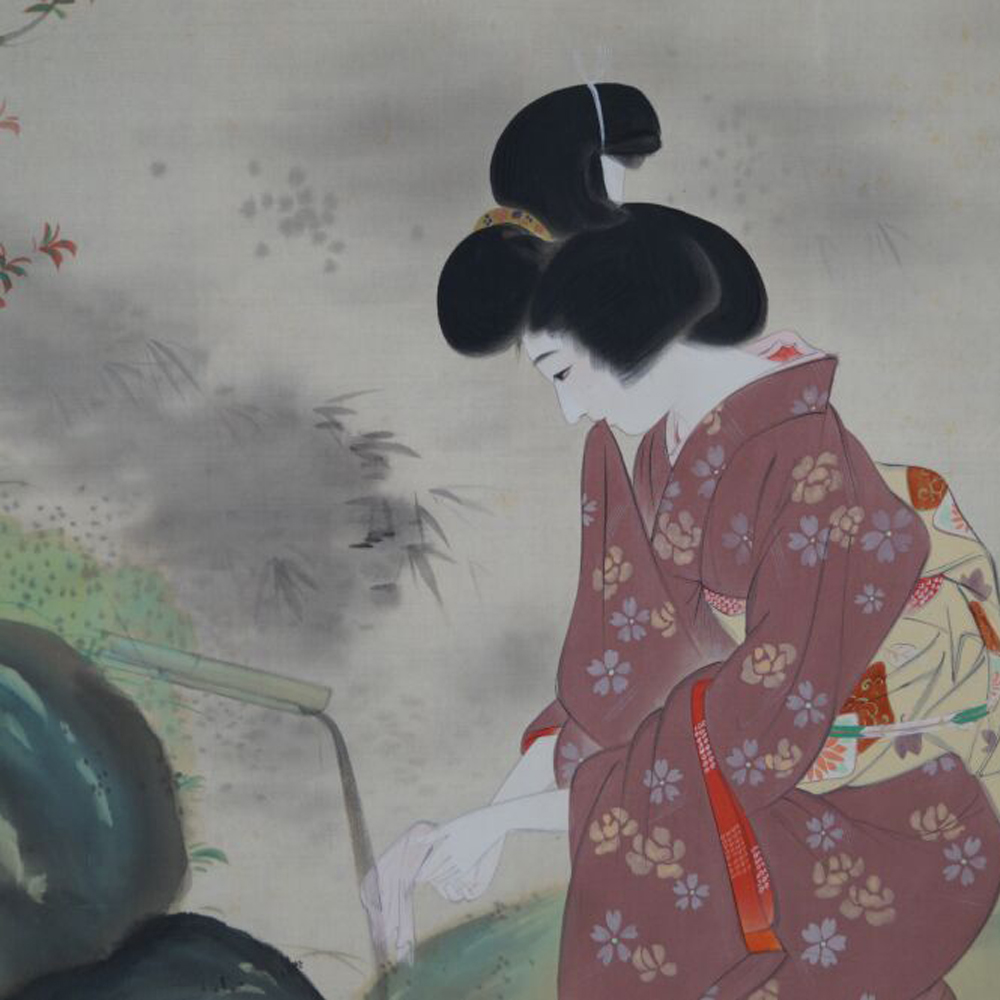
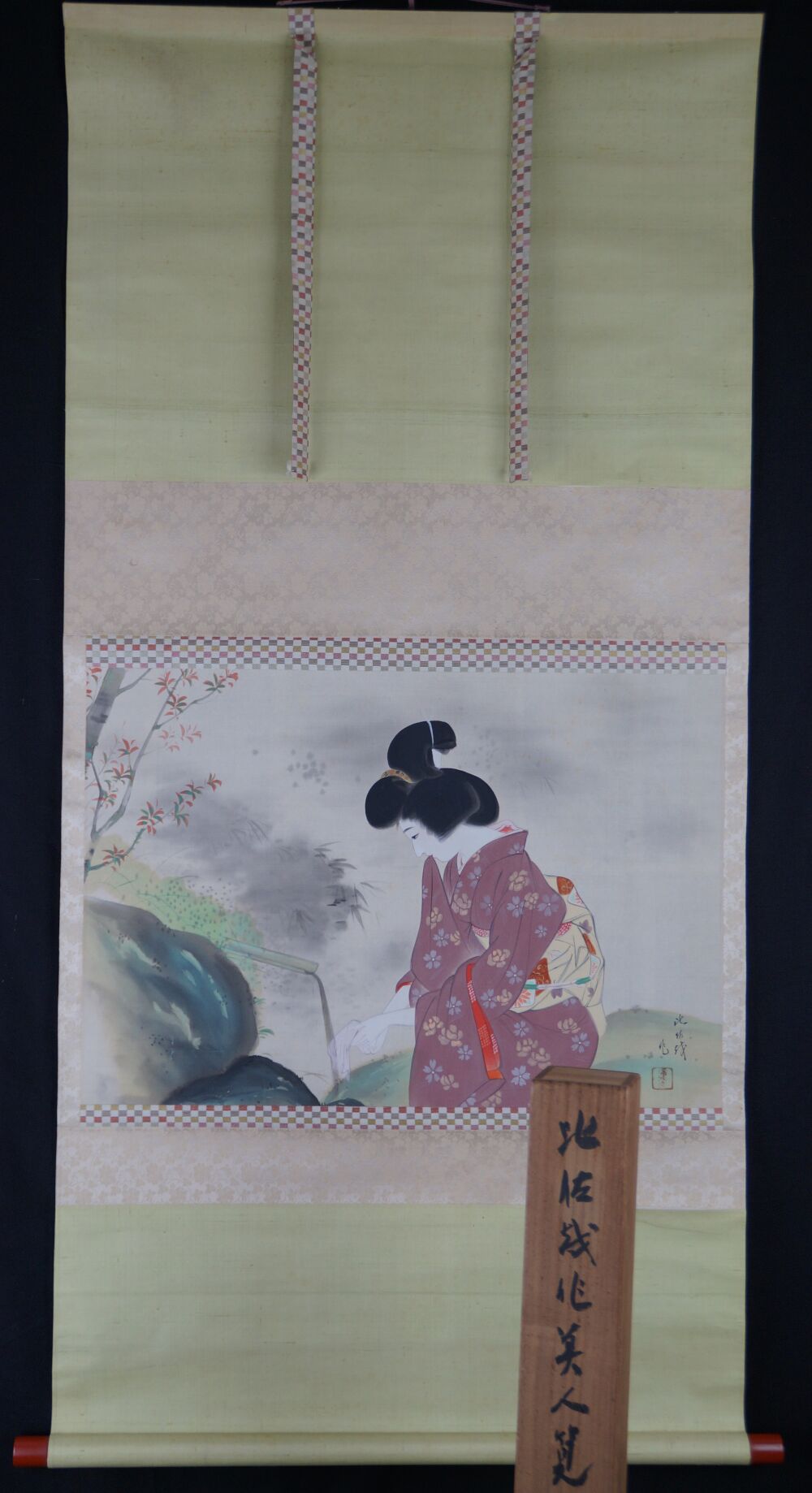
Lady in Kimono by the Garden Pond
Kakemono, unique work, with box, 136 x 71 cm
€480.00
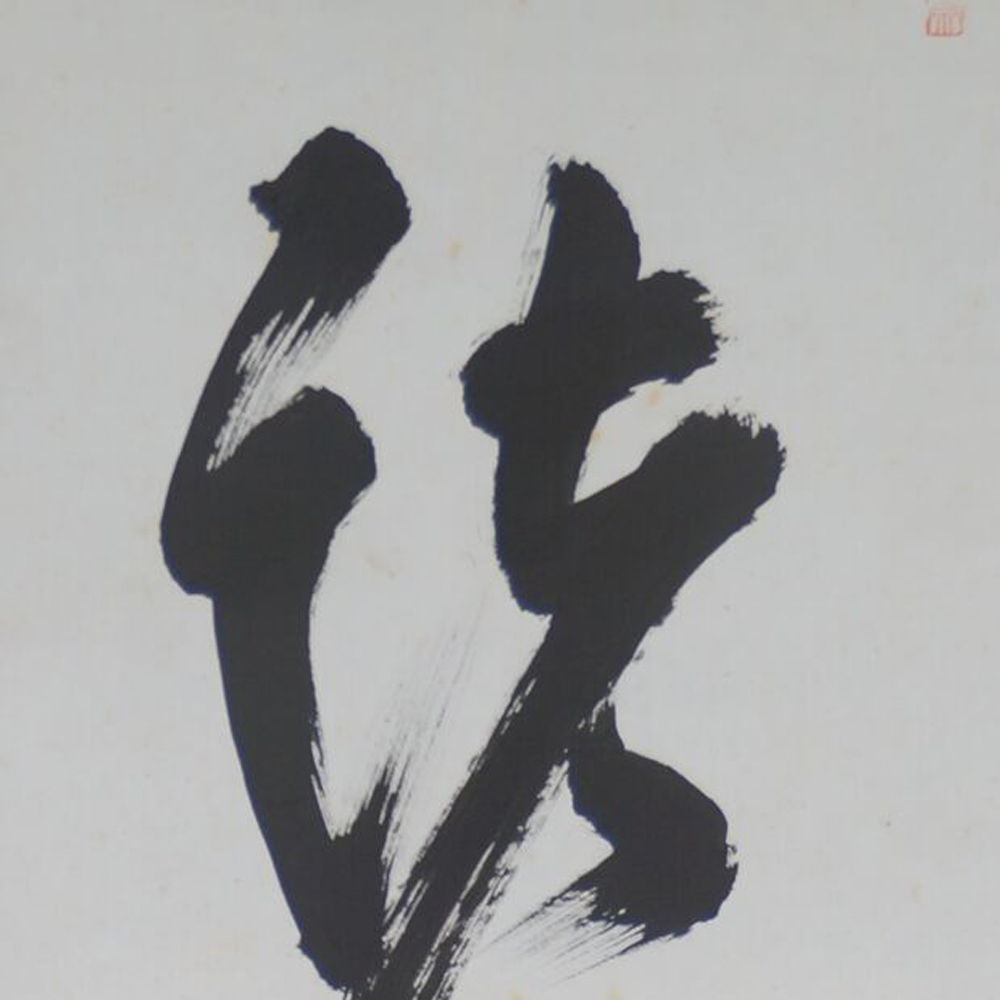
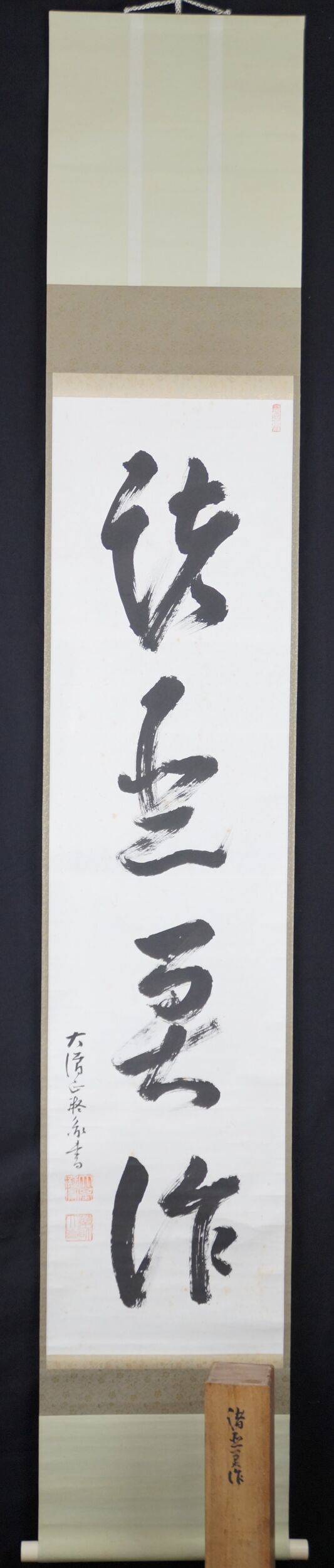
Hashimoto Gyōin
Calligraphy "Shoaku Makusa"
Kakemono, unique work, with box, 200 x 38 cm
€350.00
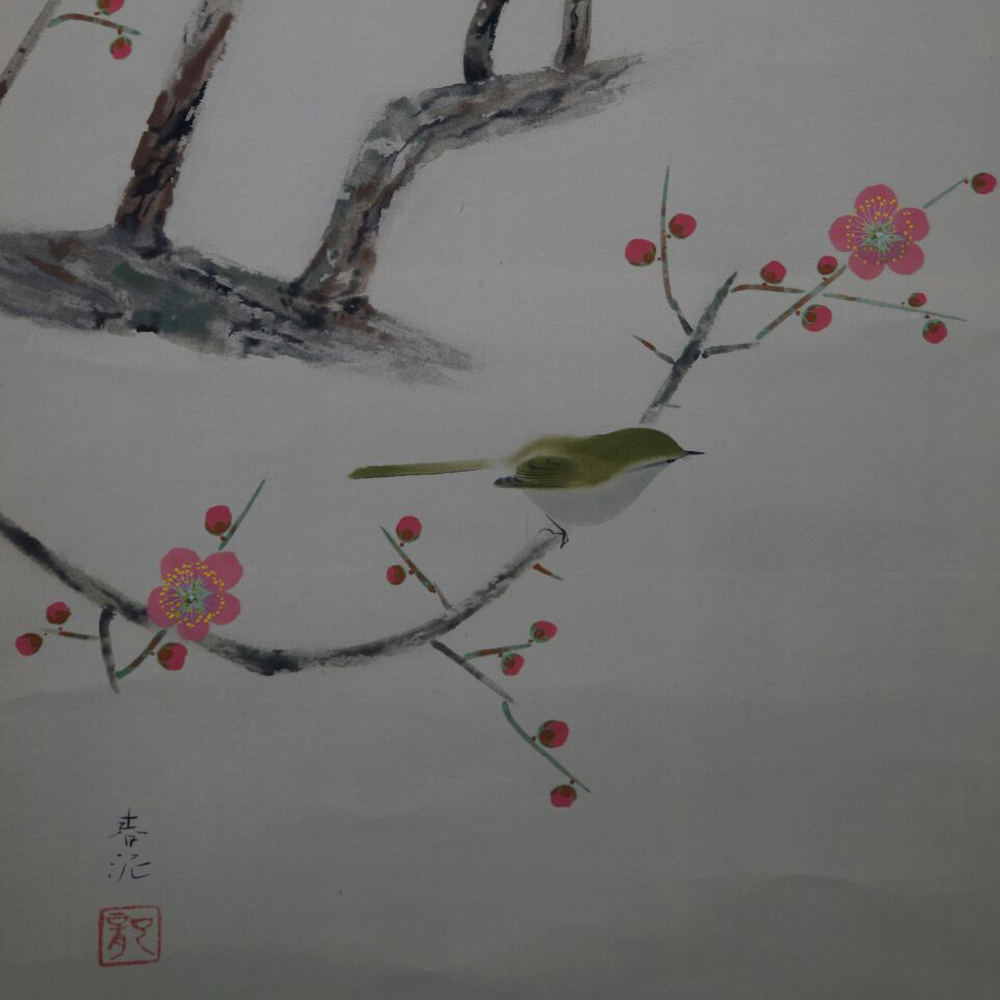
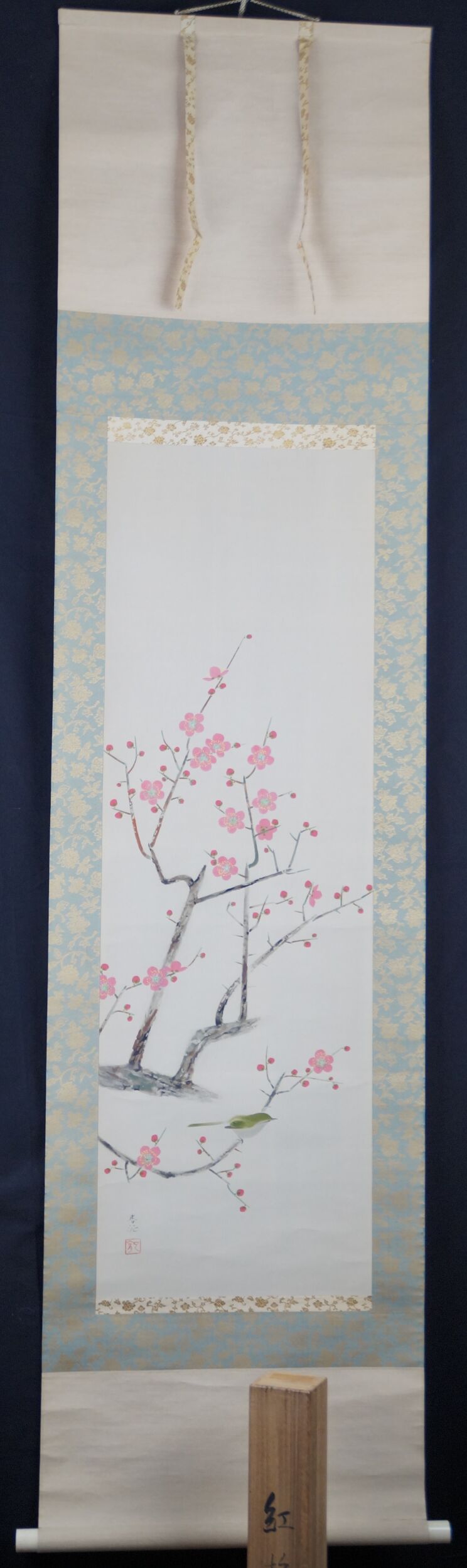
Nakamura Shunden
Uguisu on Blossoming Plum Tree
Kakemono, unique work, with box, 198 x 55 cm
€320.00
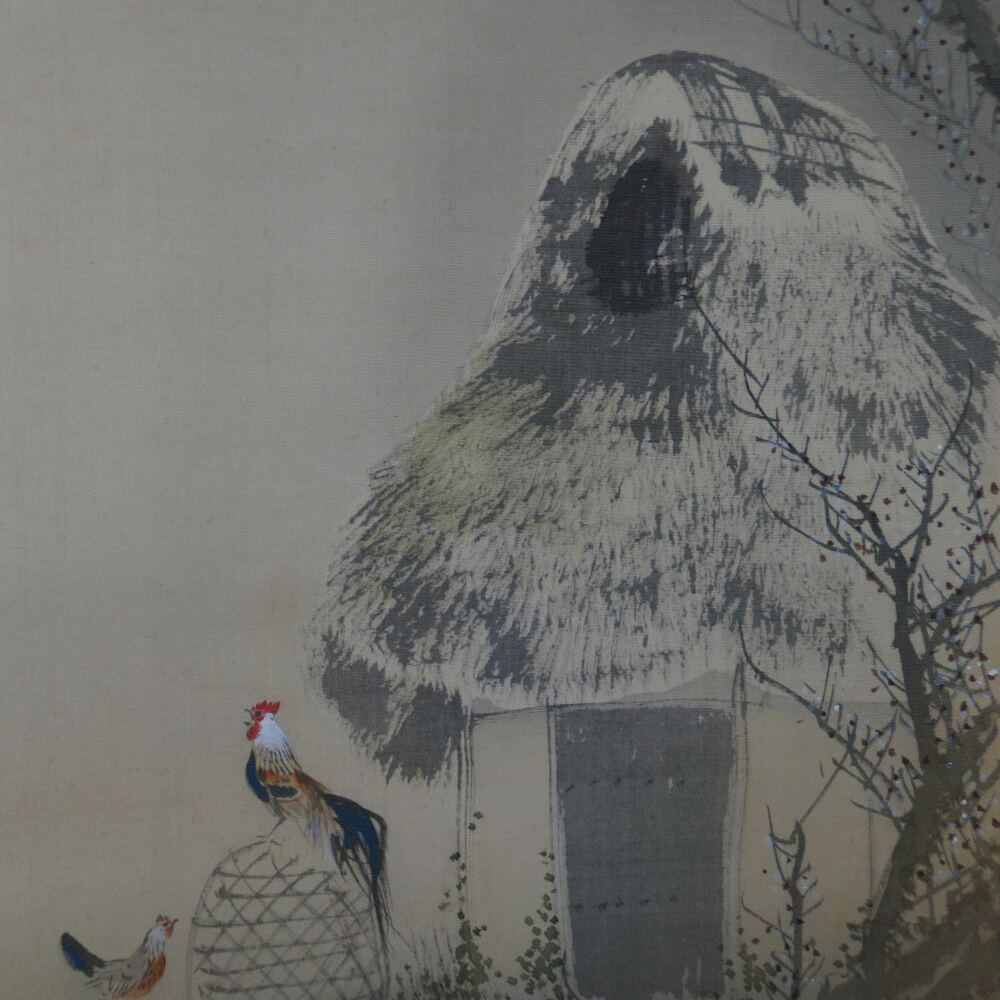
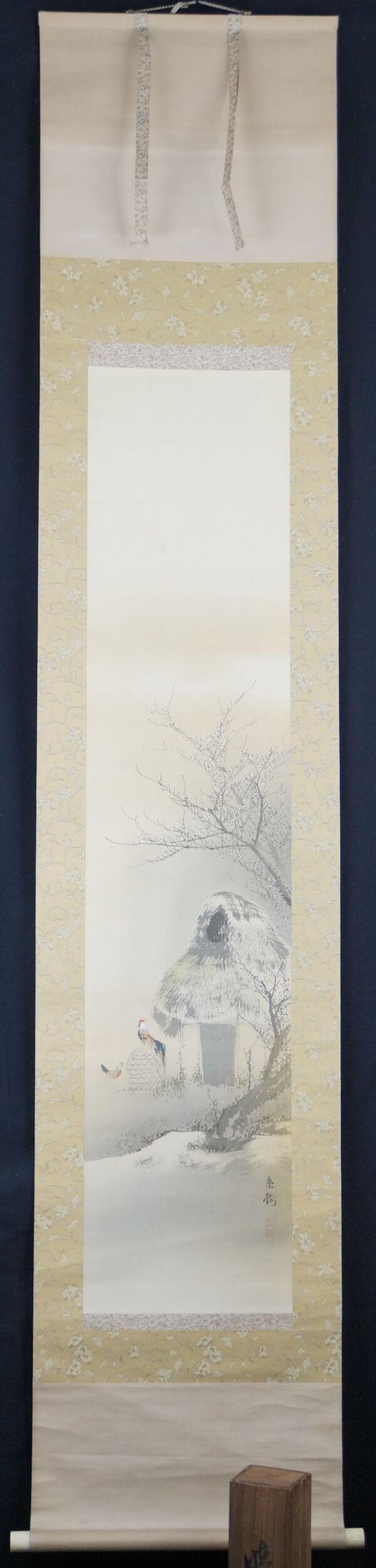
Imai Keiki
Rooster and Plum Blossoms
Kakemono, unique work, with box, 196 x 45 cm
€240.00
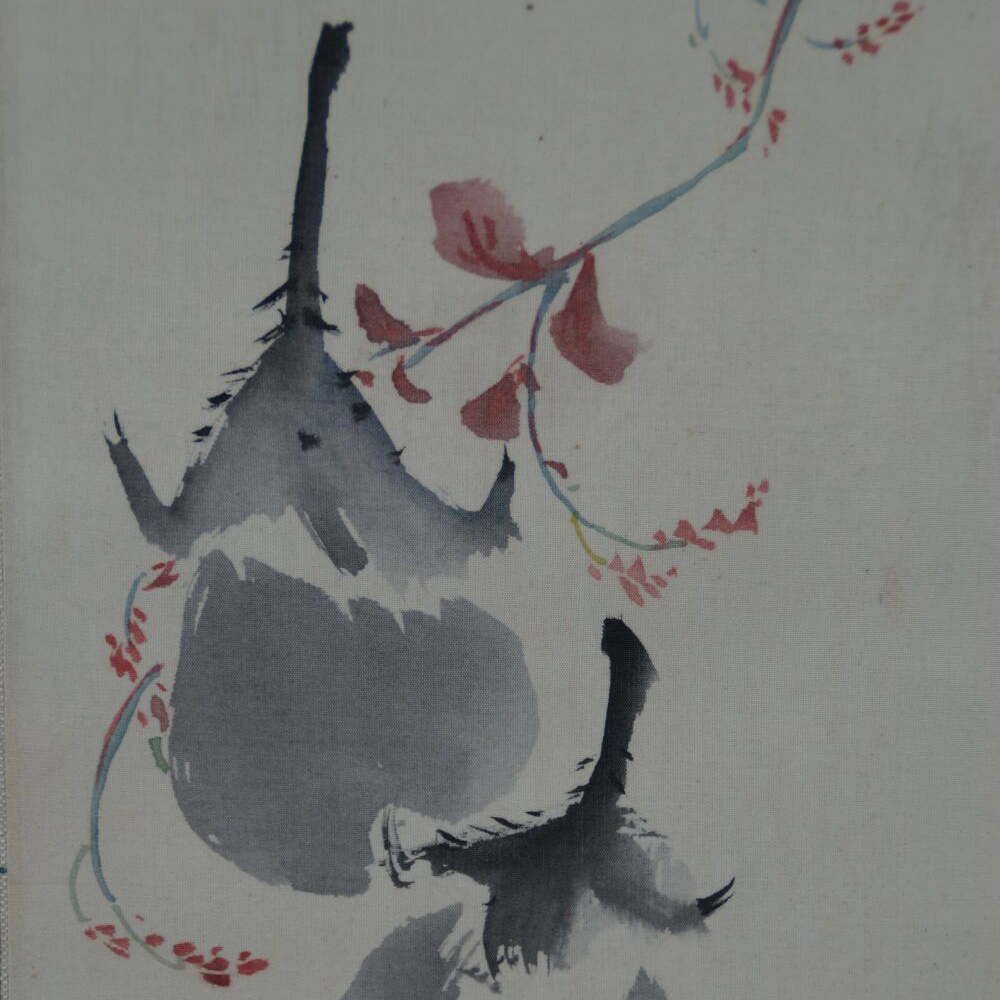
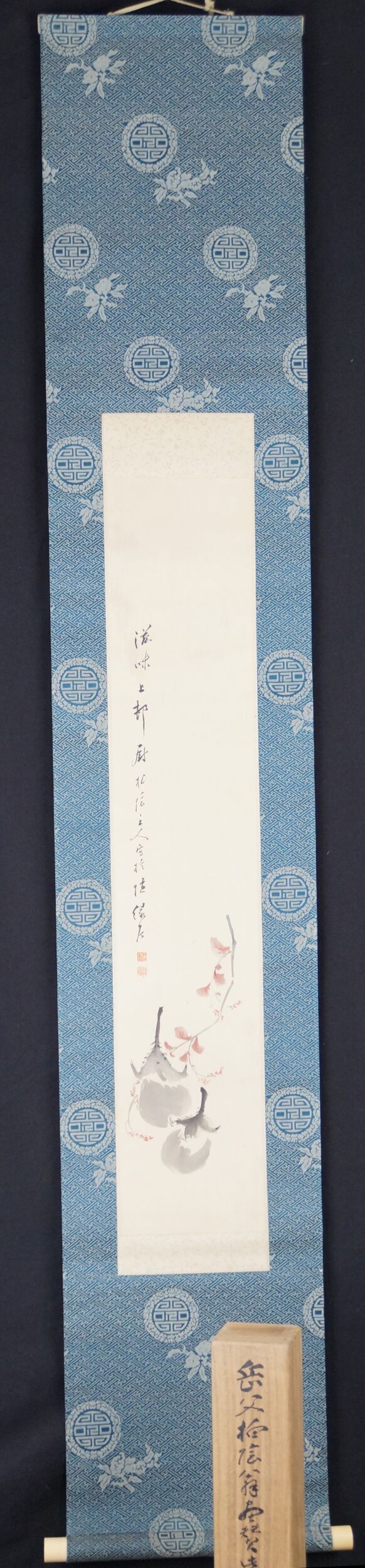
Tanaka Hakuin
Japanese Eggplant
Kakemono, unique work, with box, 164 x 33 cm
€340.00
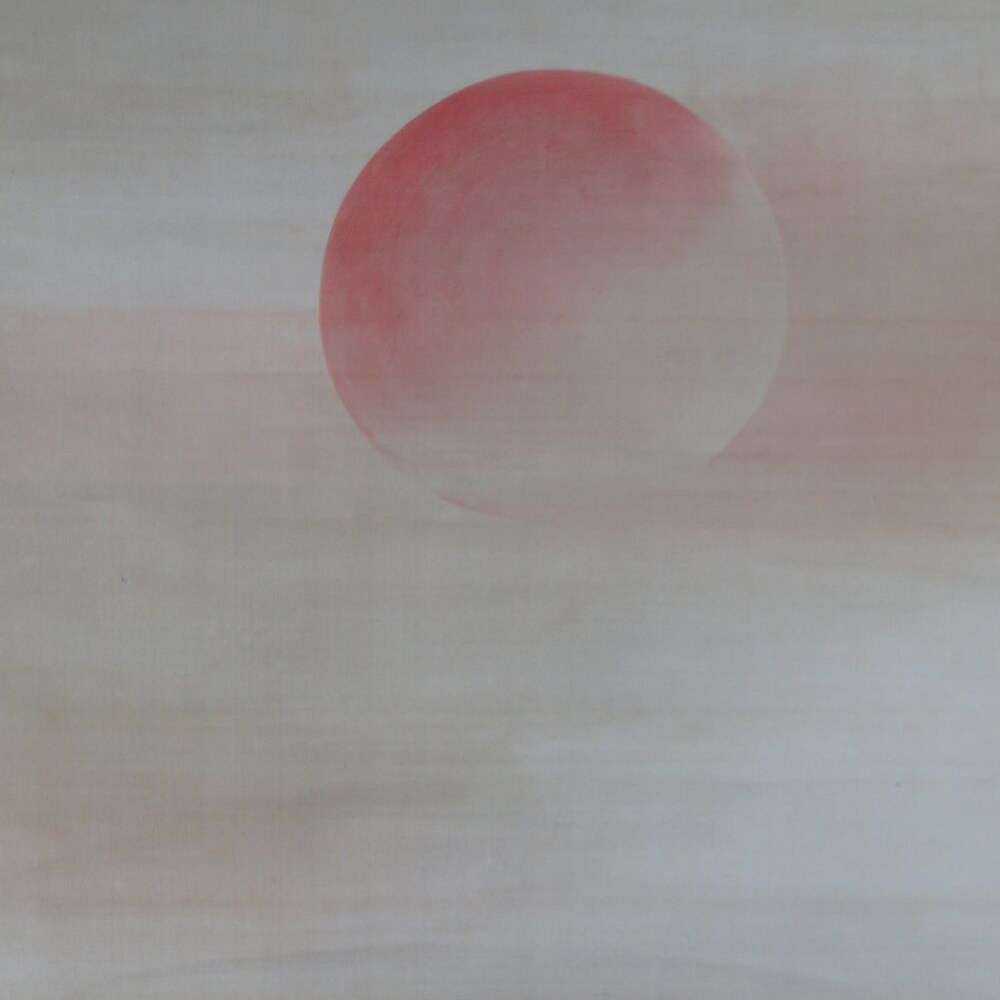
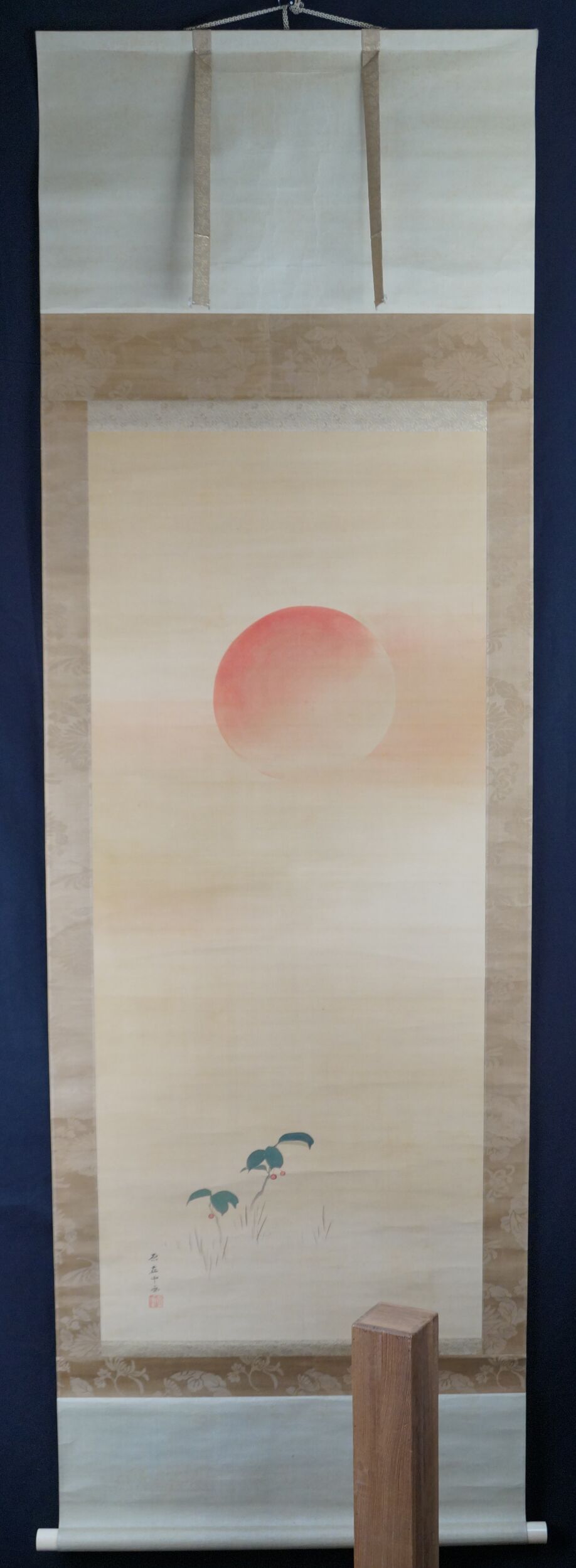
Hara Zaichu
Rising Sun over Misty Landscape
Kakemono, unique work, with box, 200 x 70 cm
€230.00
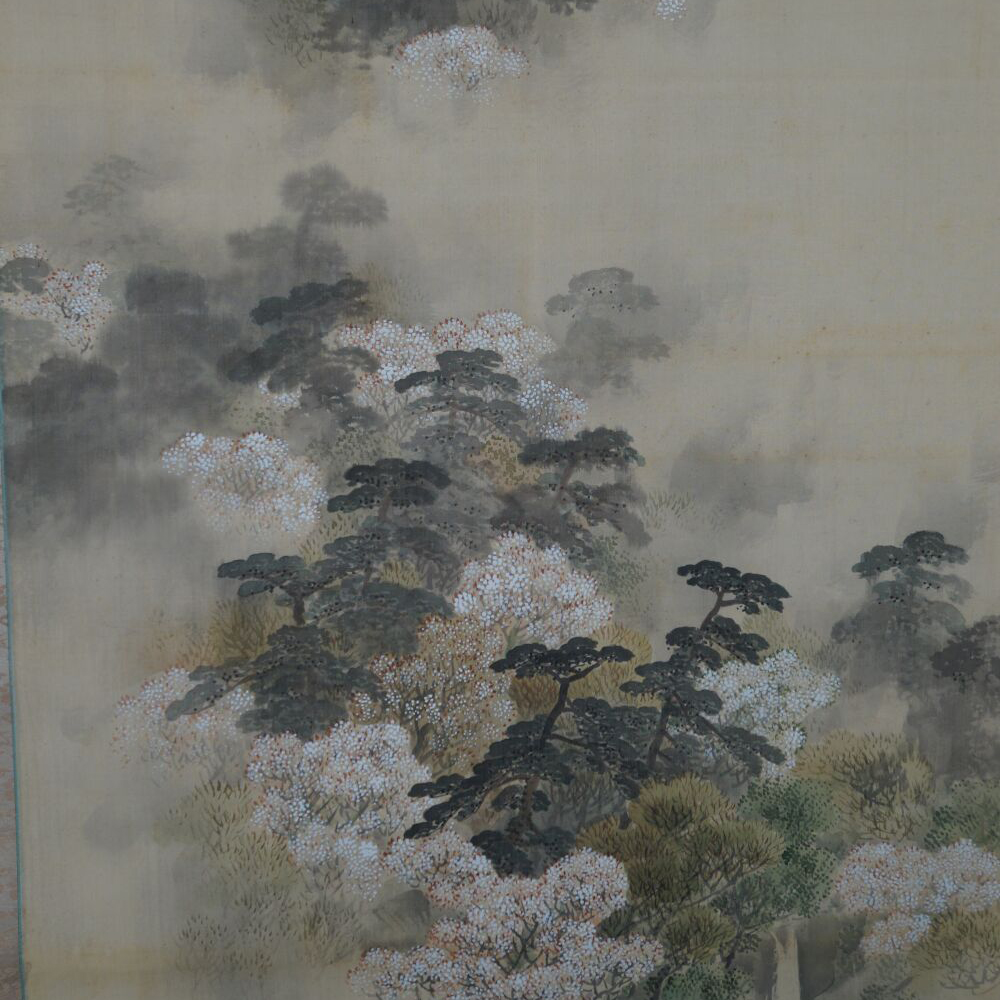
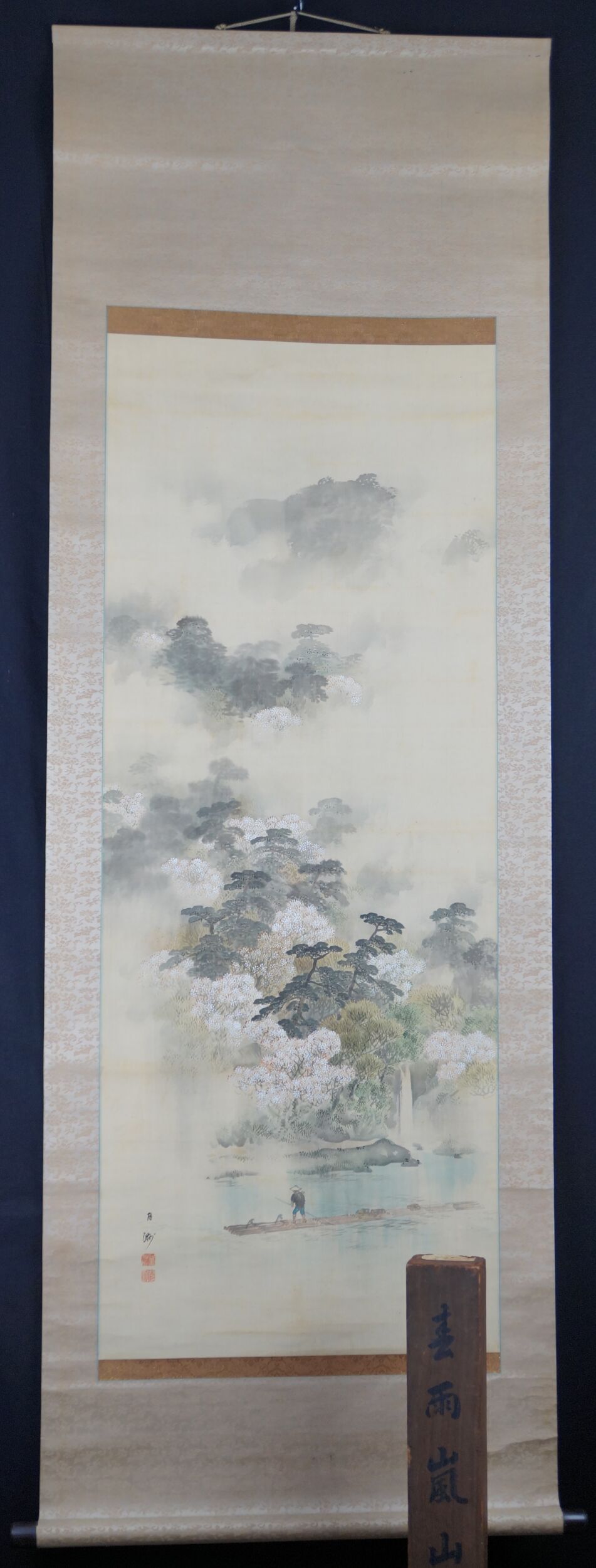
Haneda Getsushu
River in a Blooming Valley
Kakemono, unique work, with box, 192 x 72 cm
€250.00
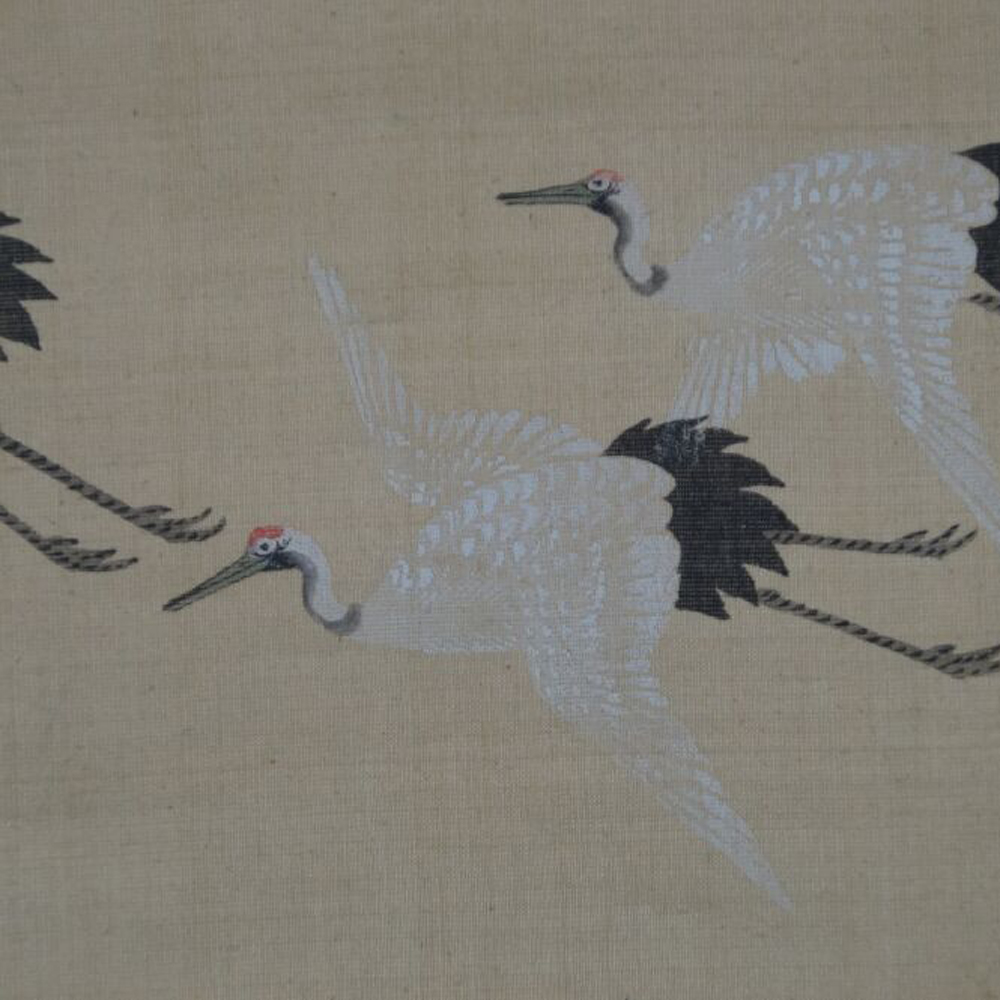
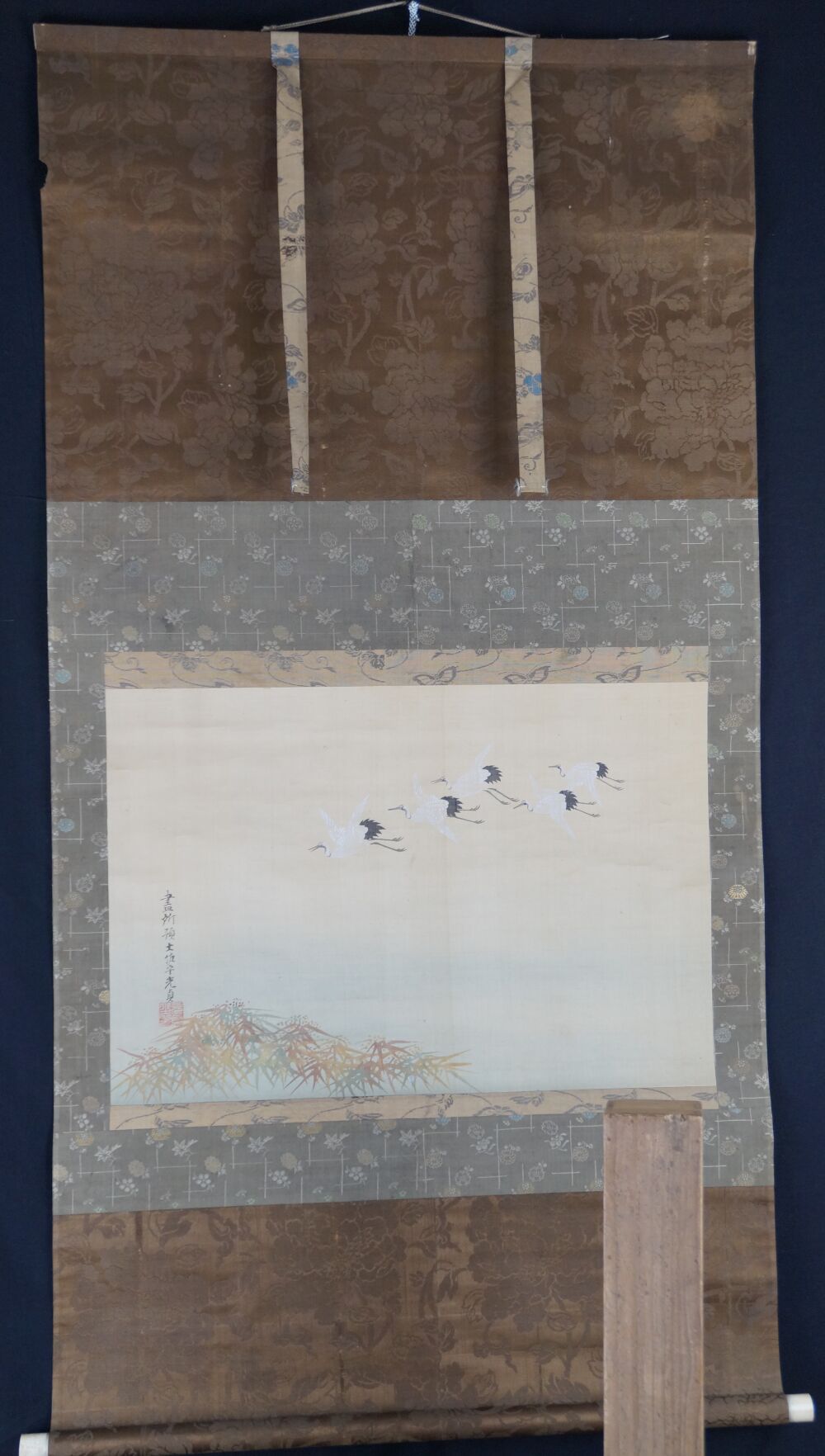
Tosa Mitsusada
Cranes in Flight over Bamboo
Kakemono, unique work, with box, 126 x 69 cm
€360.00
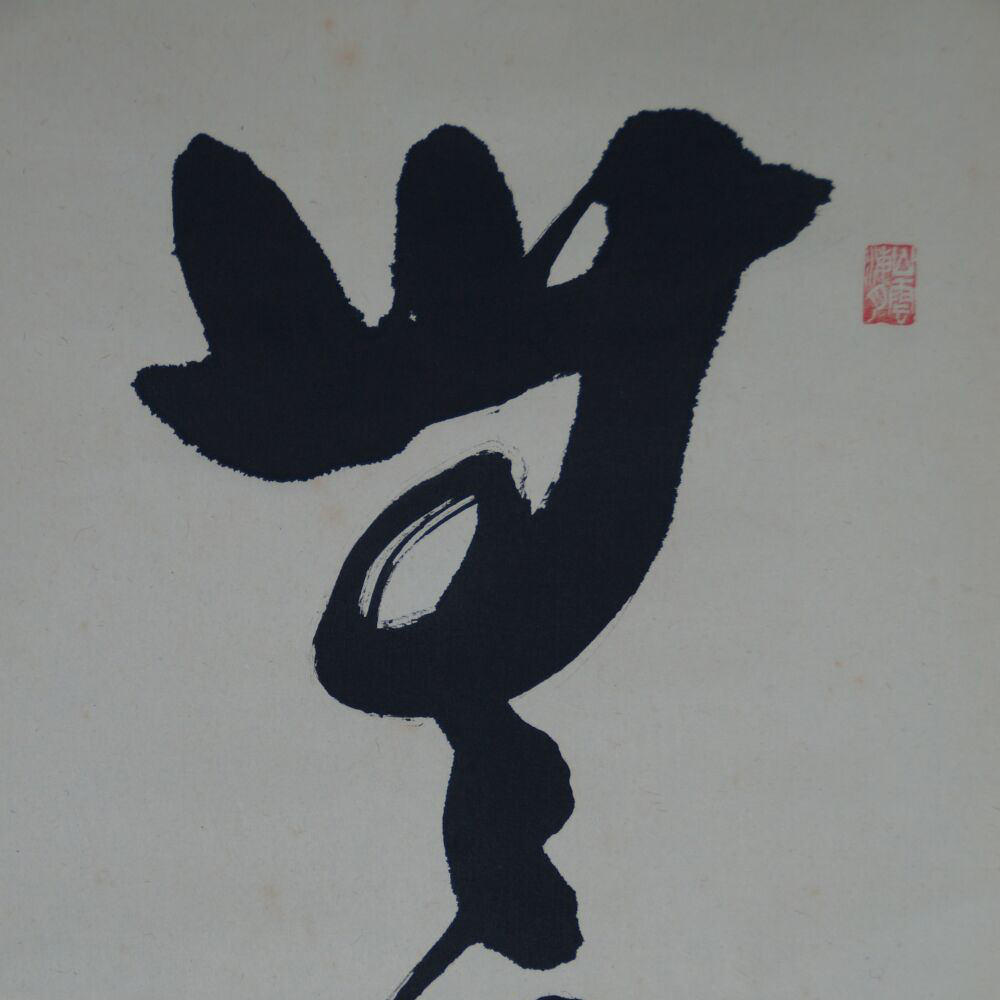
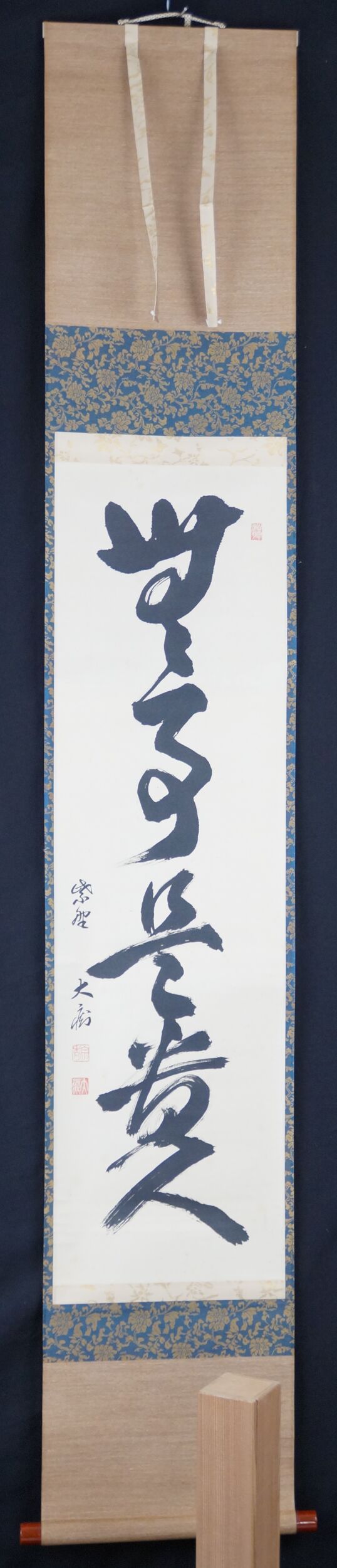
Yamaguchi Daichi
Calligraphy "No Business"
Kakemono, unique work, with box, 176 x 34 cm
€540.00
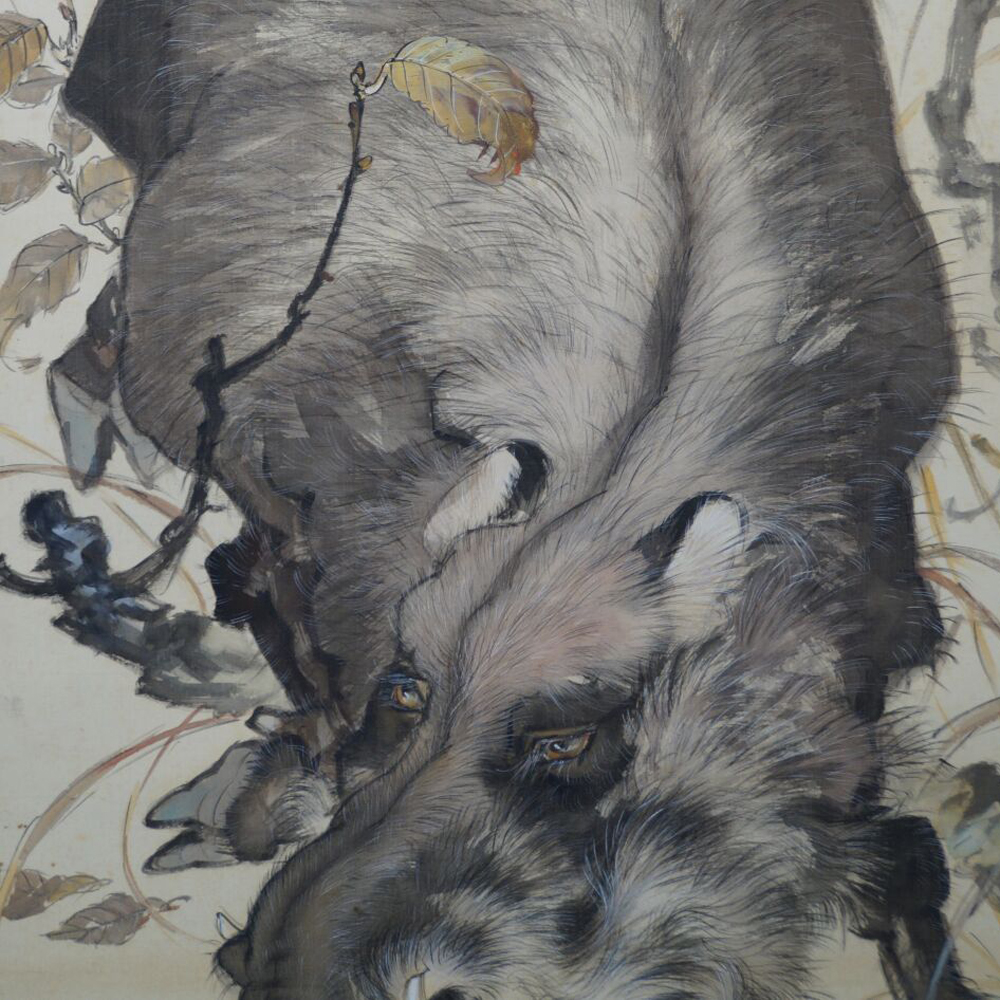
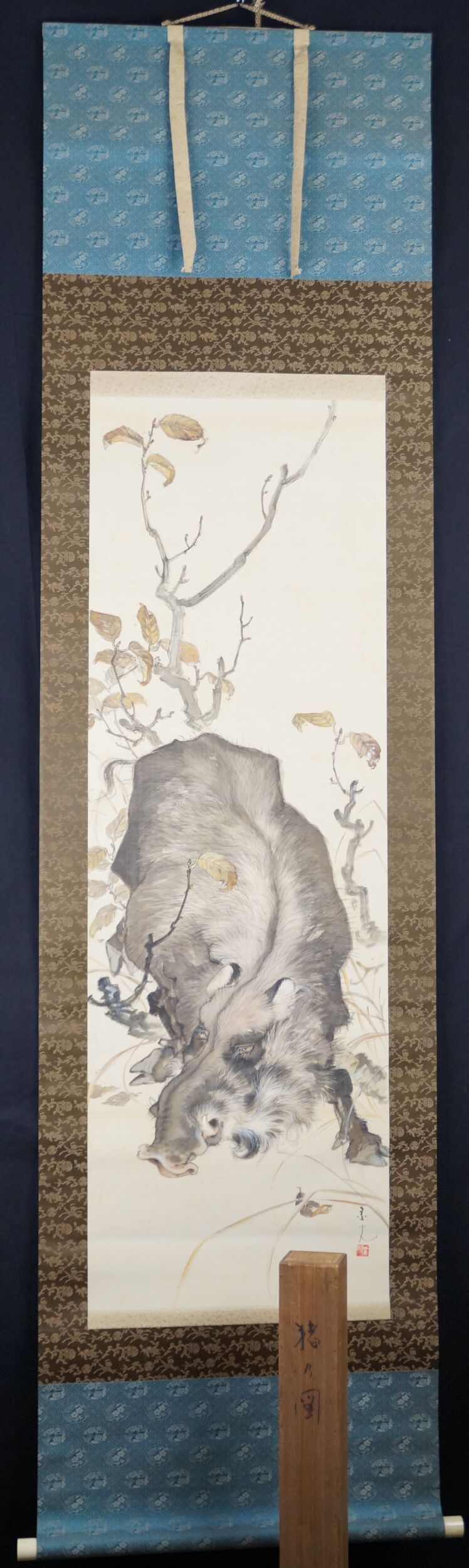
Saegusa Soko
Wild Boar in Autumn Foliage
Kakemono, unique work, with box, 210 x 60 cm
€950.00
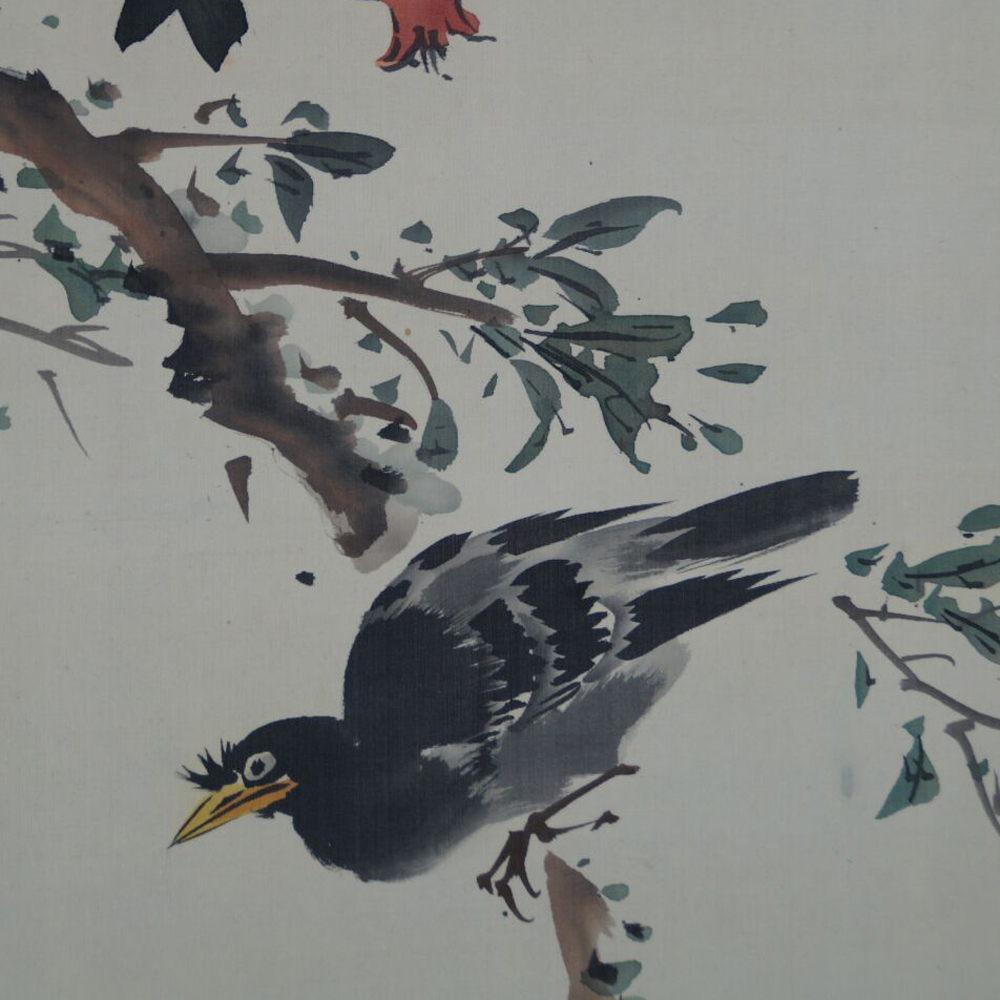
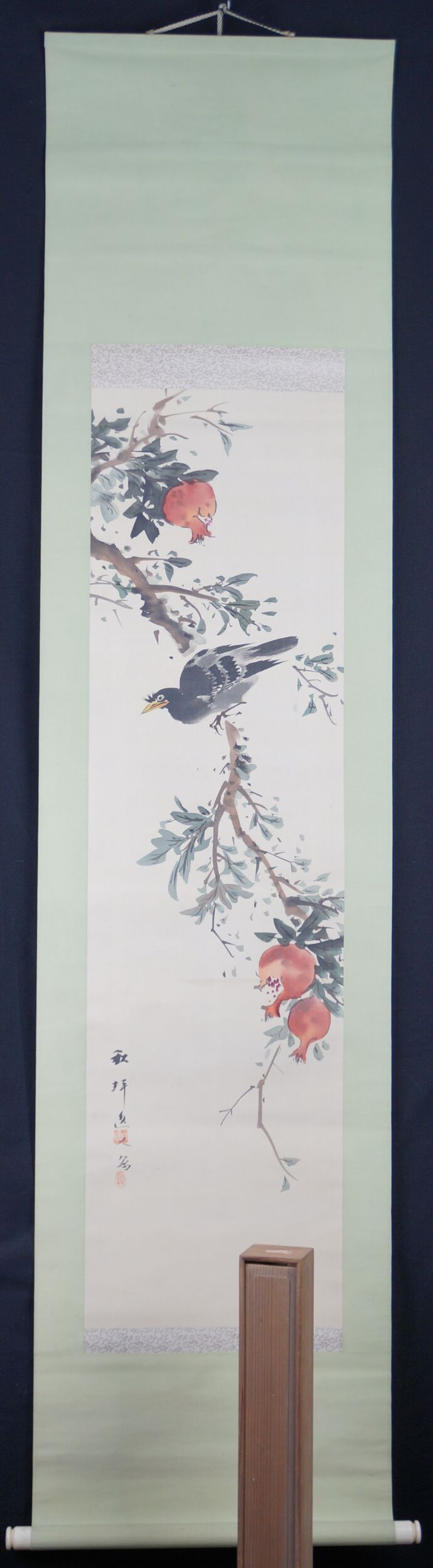
Yamada Shuhei
Pomegranate Branch and Star
Kakemono, unique work, with box, 187 x 51 cm
€530.00
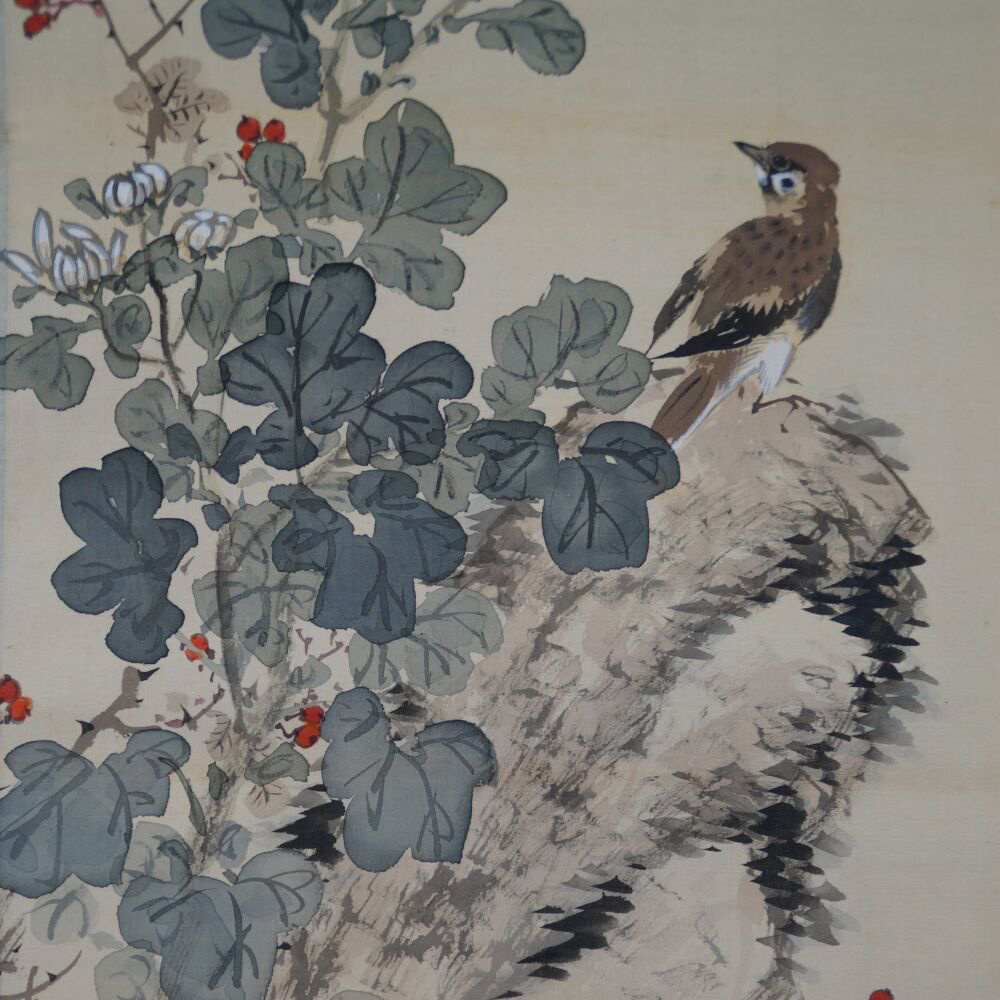
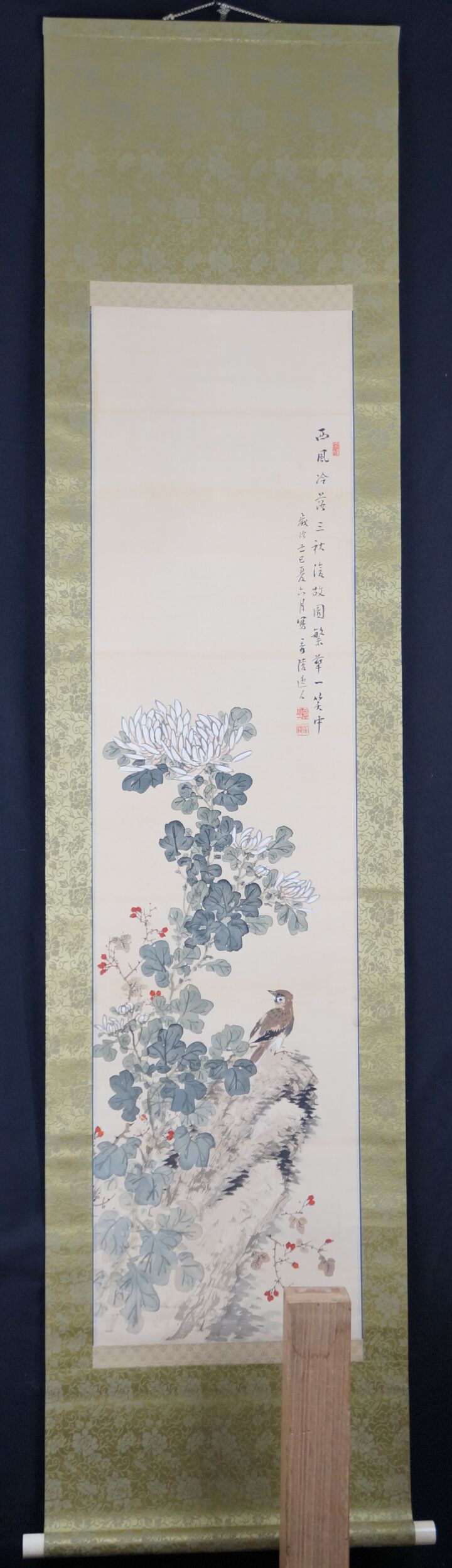
Amano Shuryo
Autumn Chrysanthemums
Kakemono, unique work, with box, 190 x 51 cm
€480.00
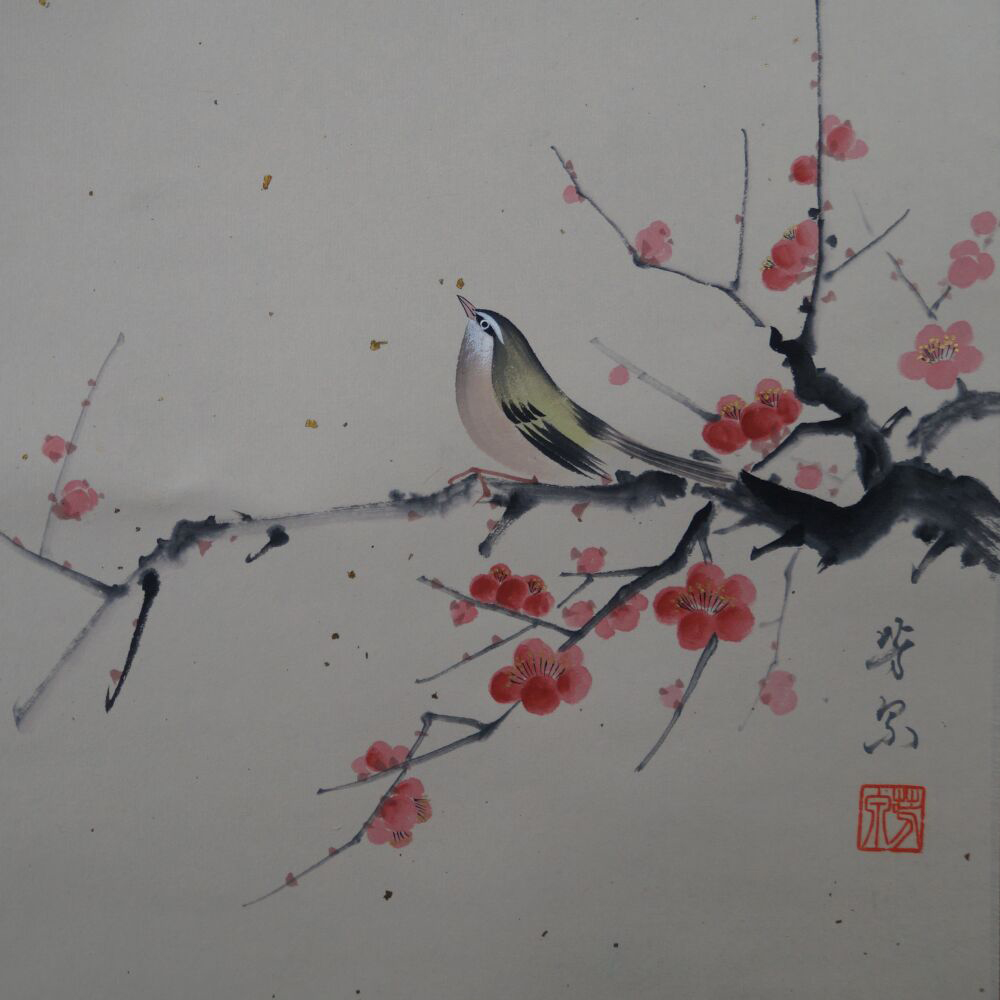
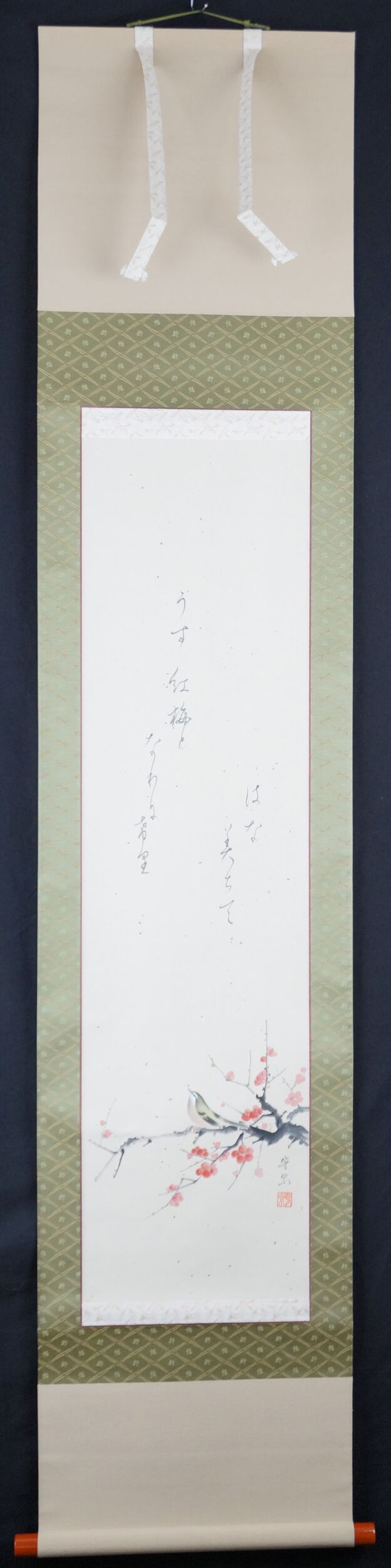
Sugaya Hosen
Pale Pink Plum Blossoms in Spring Light
Kakemono, unique work, with box, 193 x 46 cm
€490.00
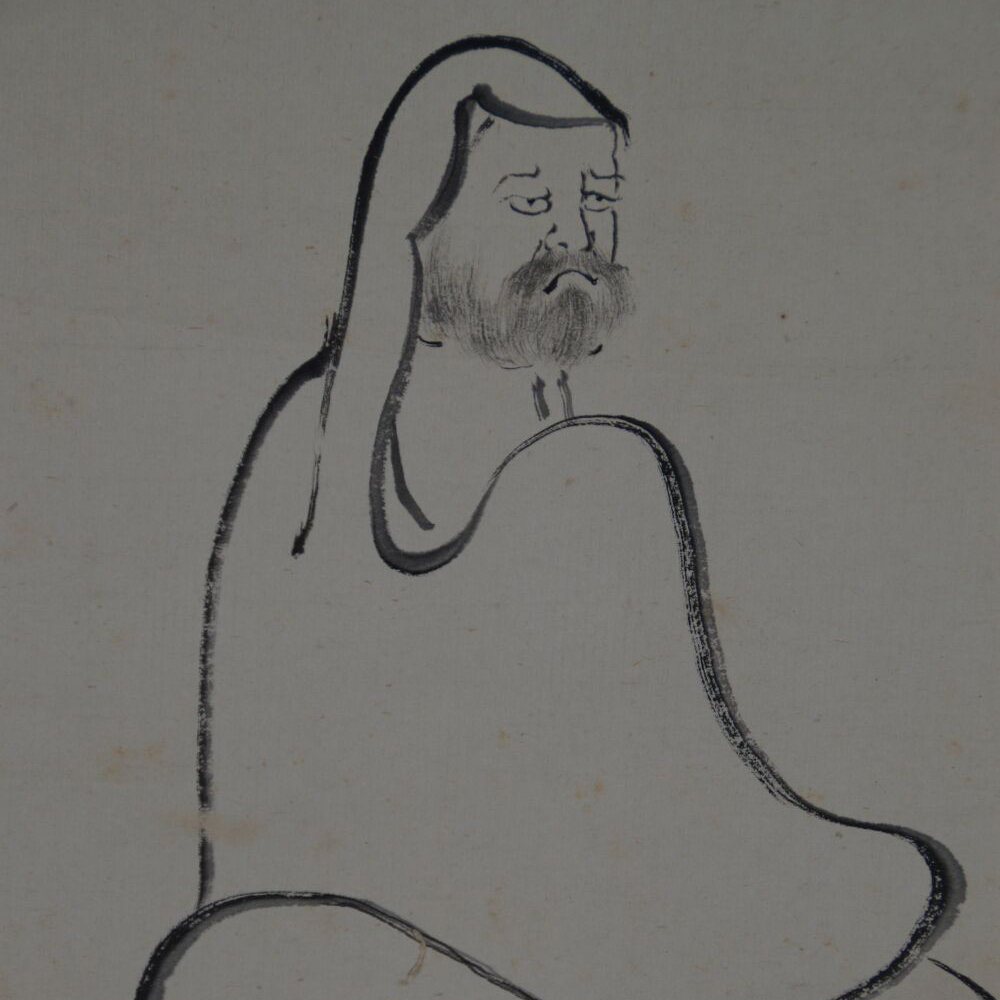
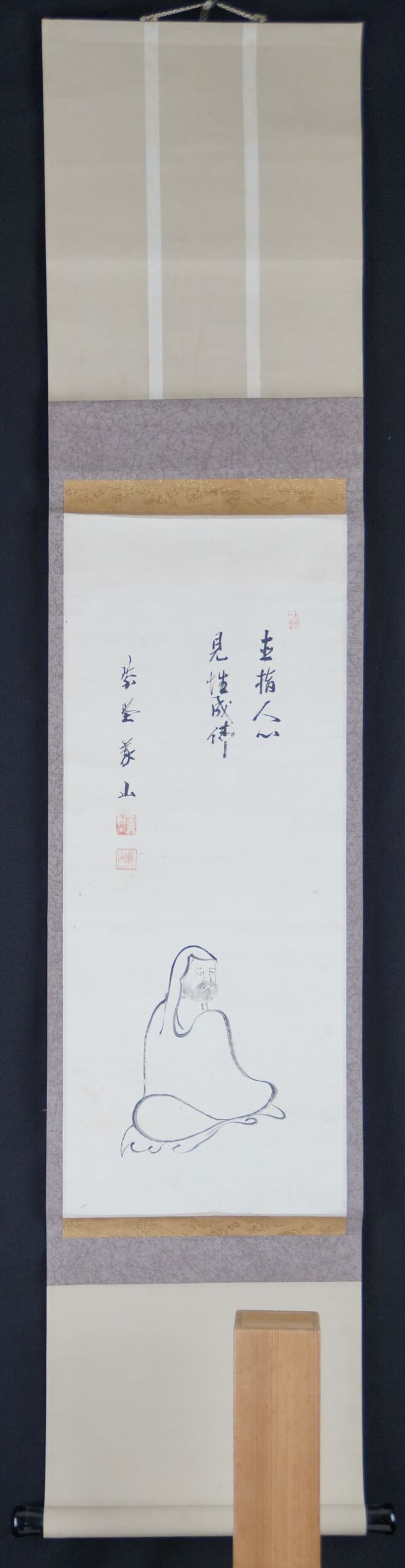
Ueda Gizan
Bodhidharma - Straight to the Heart
Kakemono, unique work, with box, 135 x 34 cm
€450.00
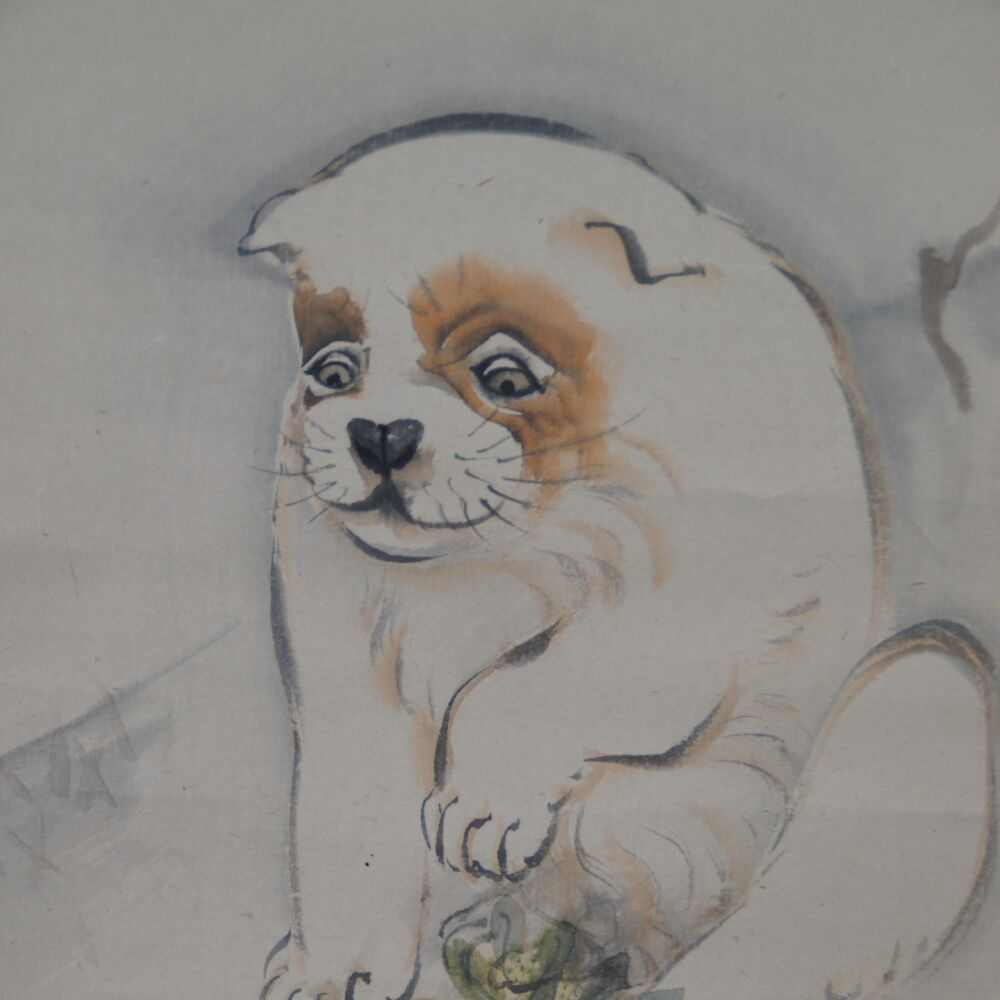
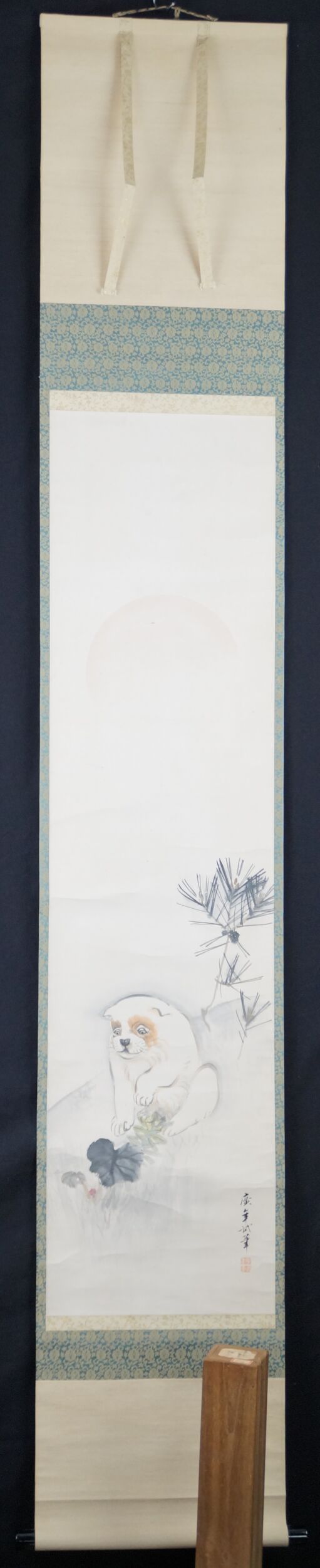
Puppy at Sunset Under Pine Trees
Kakemono, unique work, with box, 200 x 39 cm
€210.00
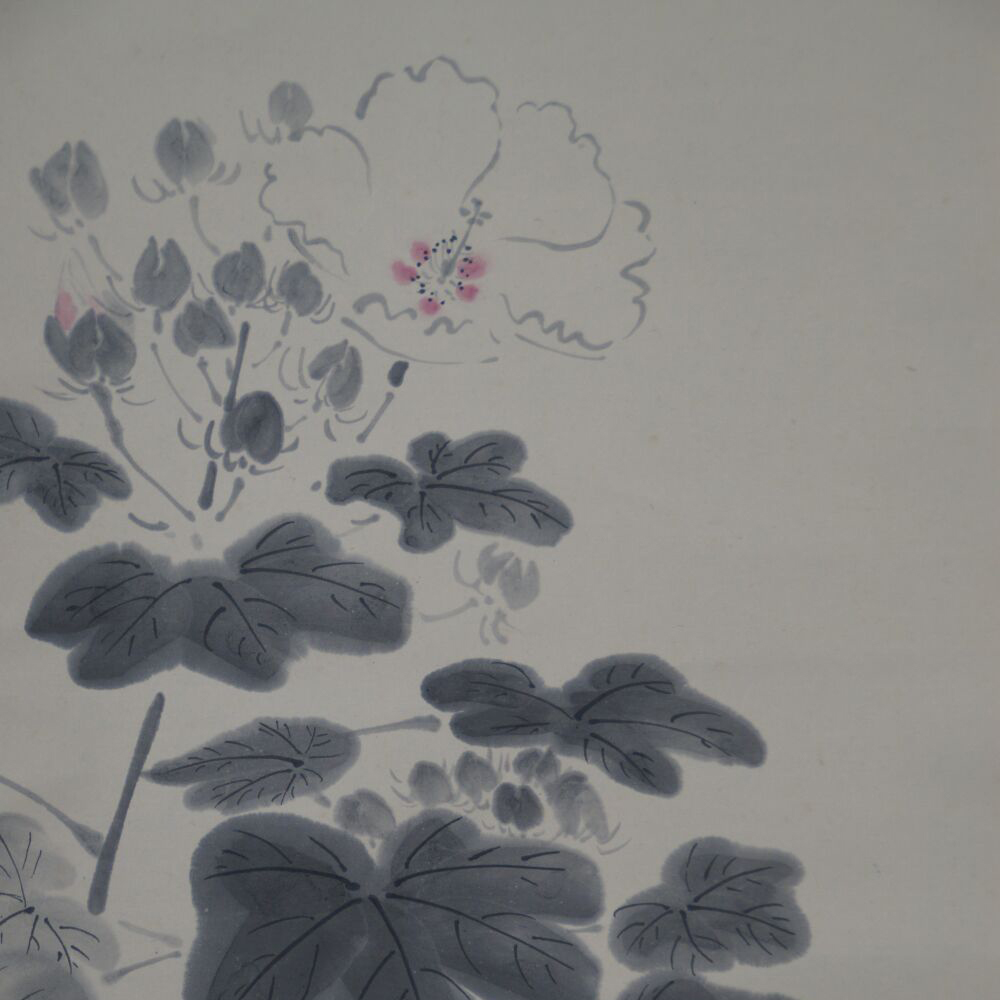
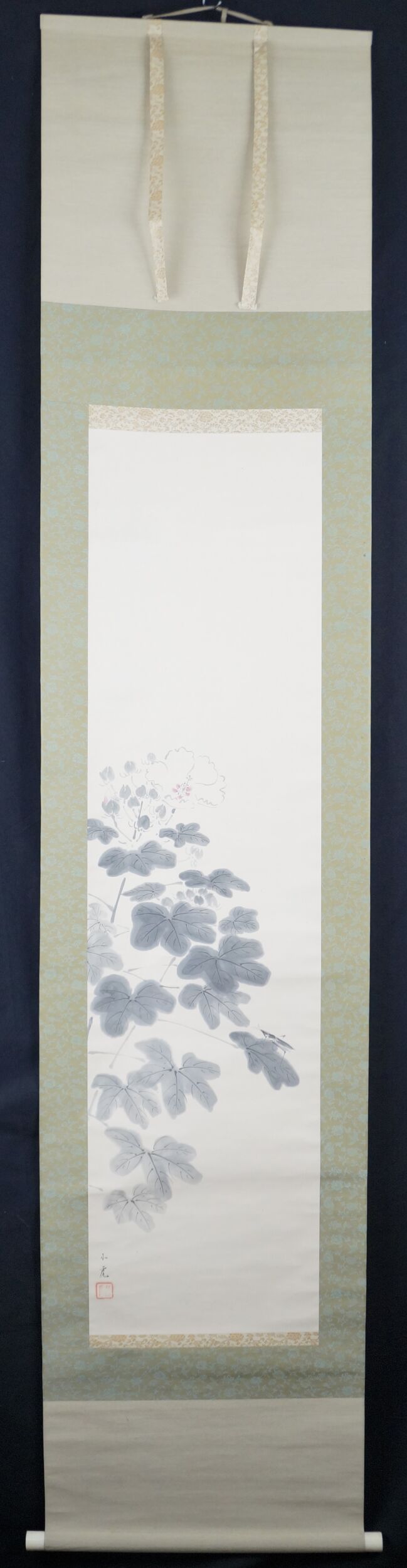
Kawasaki Shoko
Hibiscus Flowers and Grasshopper
Kakemono, unique work, with box, 215 x 53 cm
€380.00
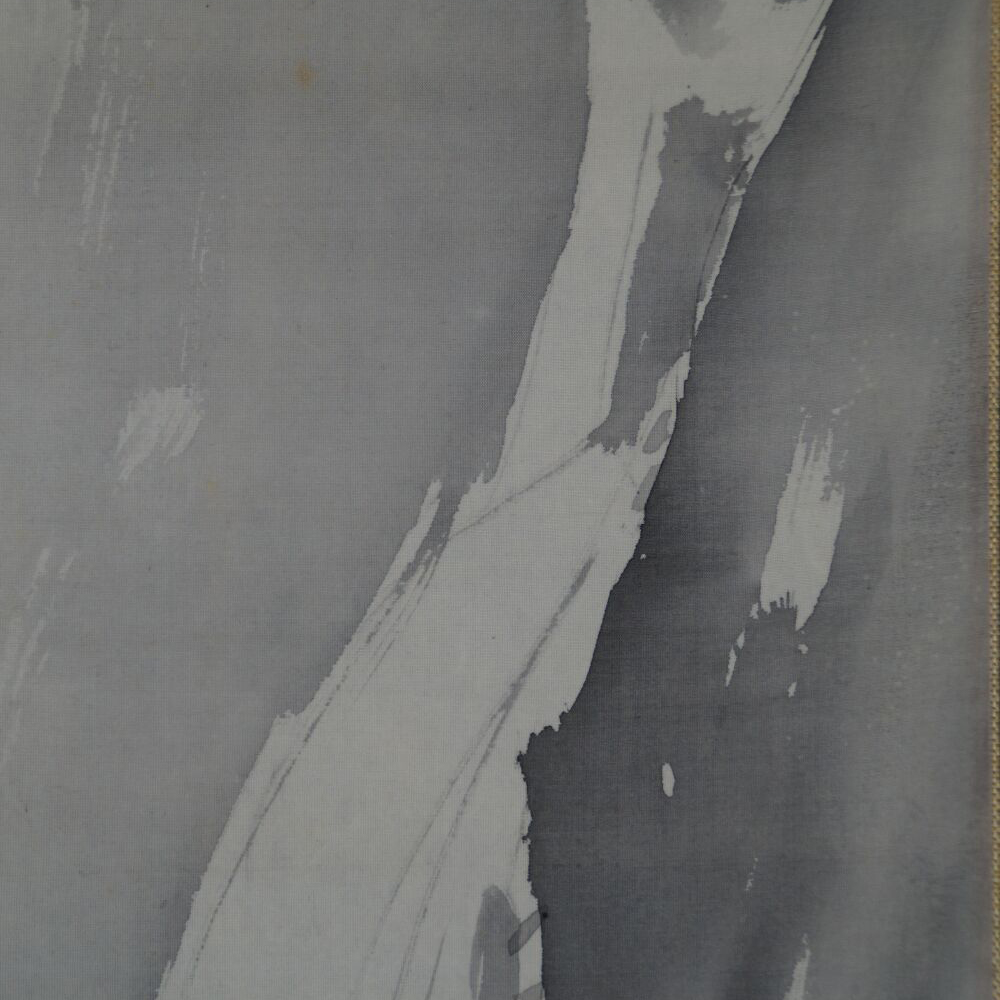
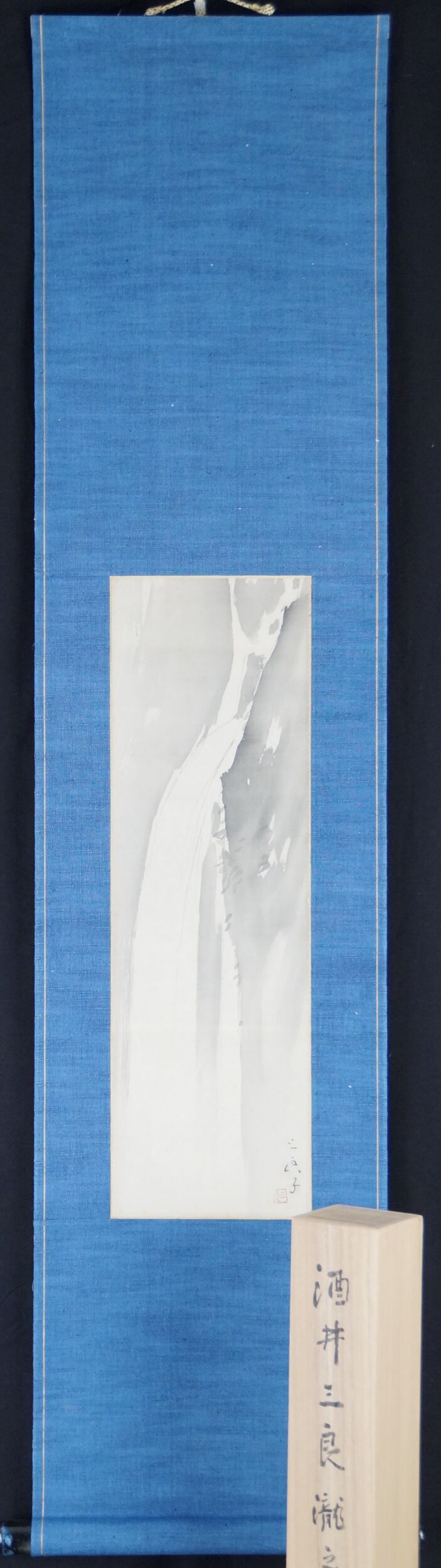
Sakai Sanryo
Waterfall in the Mist
Kakemono, unique work, with box, 129 x 36 cm
€570.00
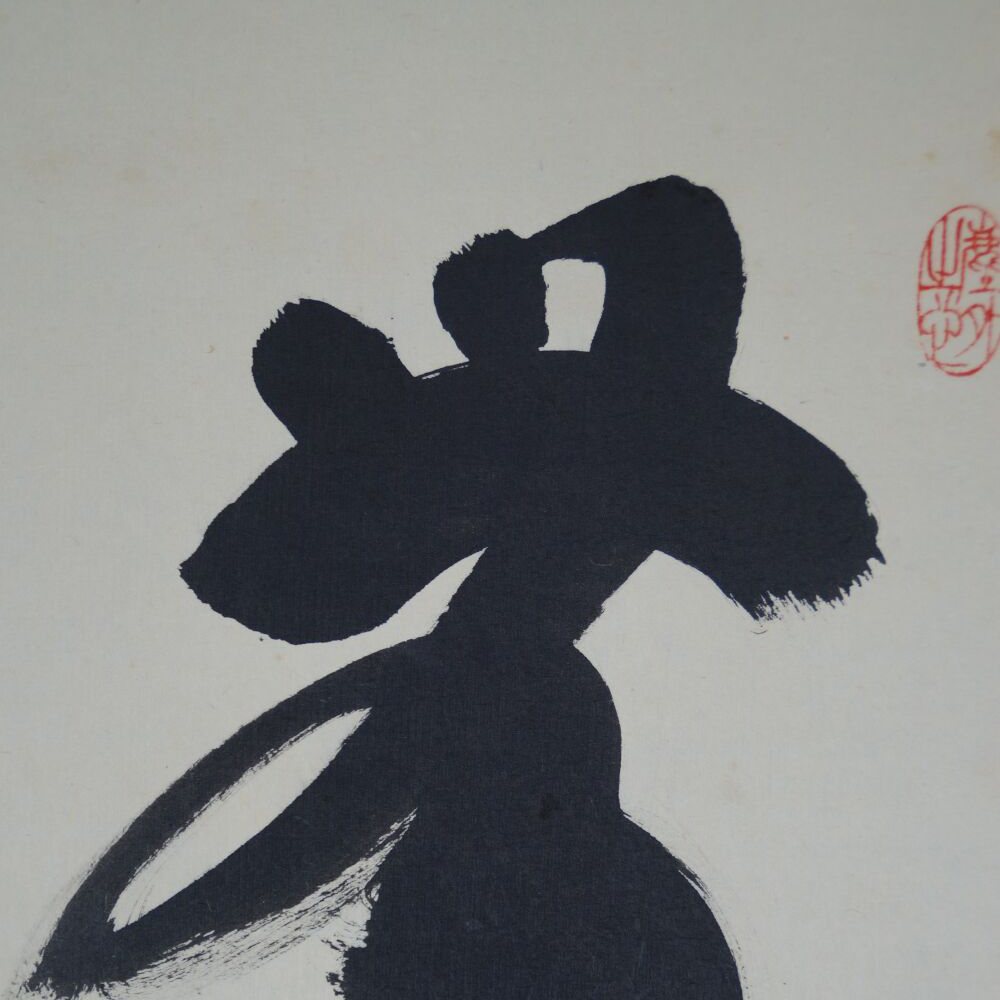
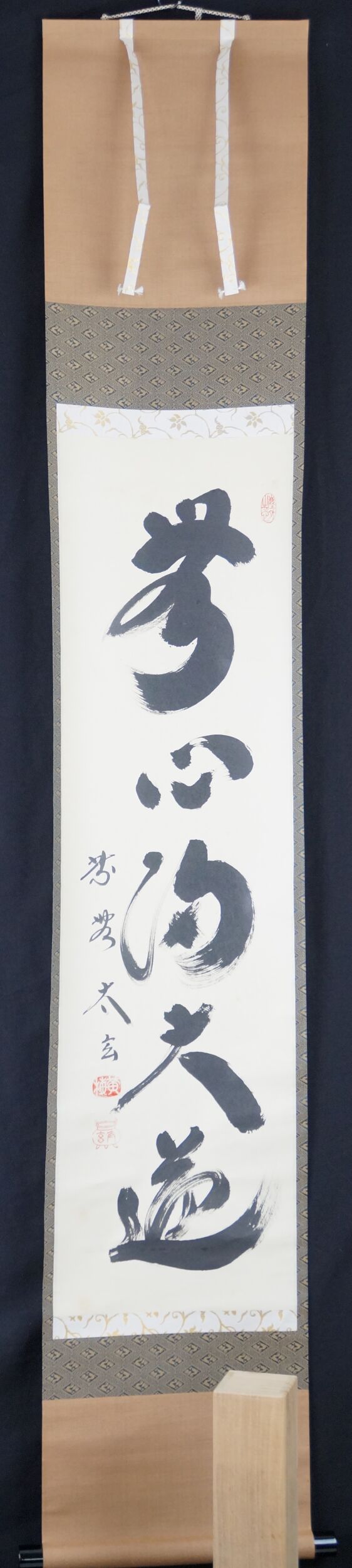
Kobayashi Taigen
No-Mind on the Great Way – Zen Calligraphy, Olive Mounting
Kakemono, unique work, with box, 176 x 36 cm
€690.00
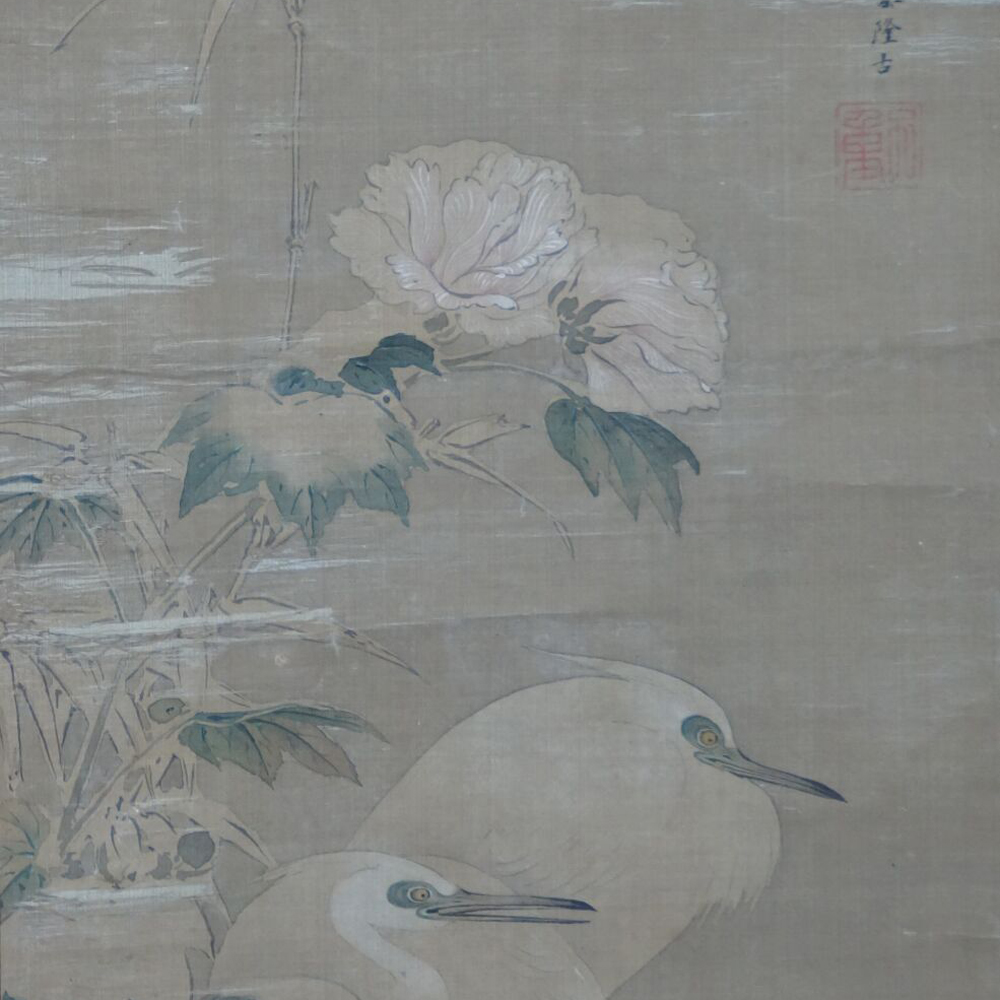
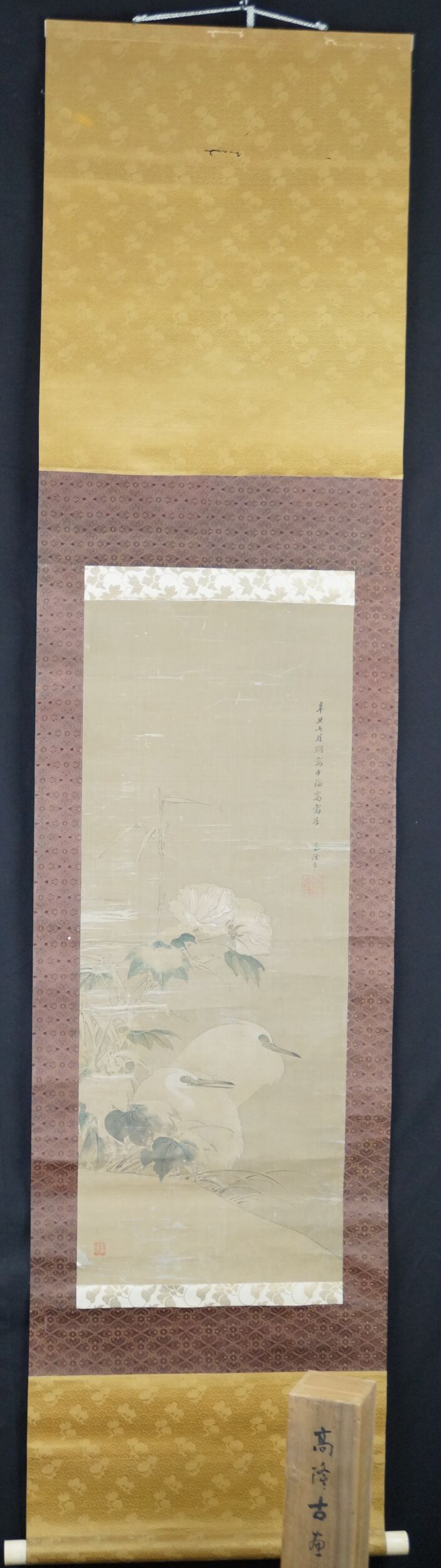
Takaku Ryūko
Heron in Silent Peony Splendor
Kakemono, unique work, with box, 186 x 50 cm
€1,300.00
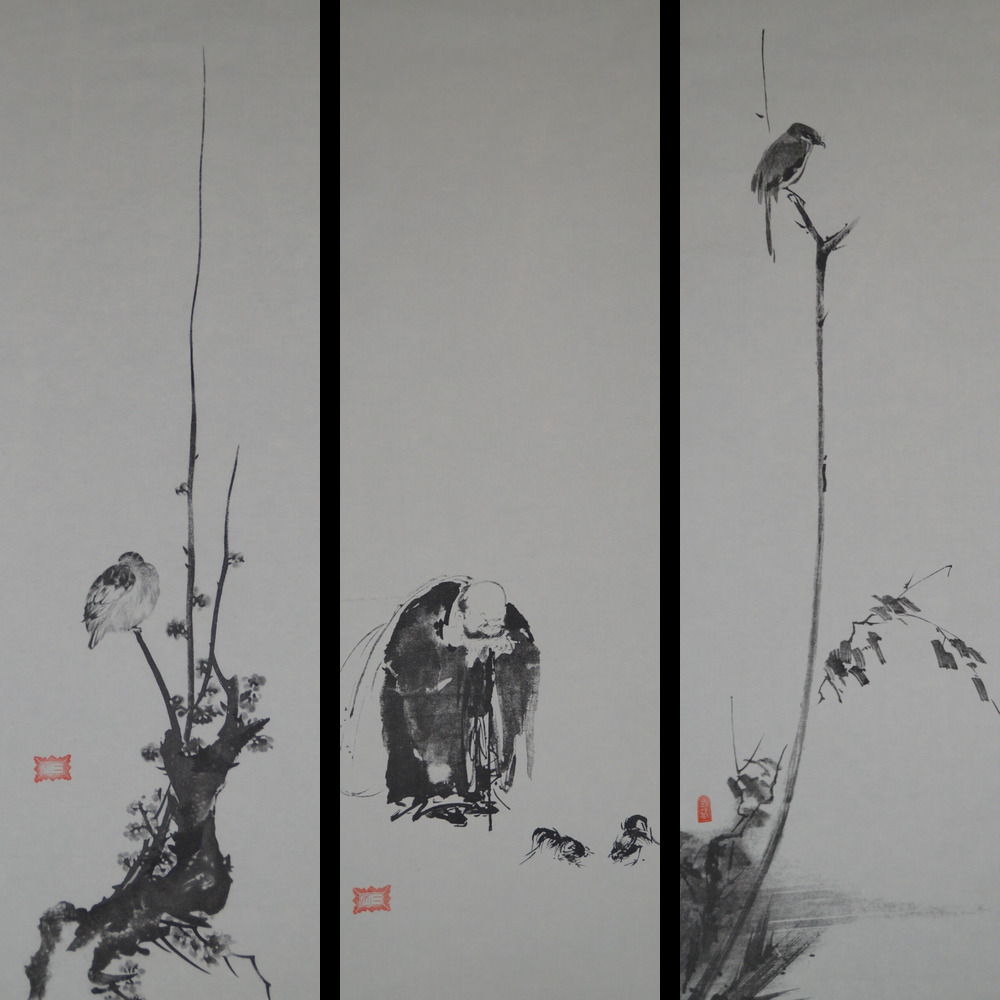
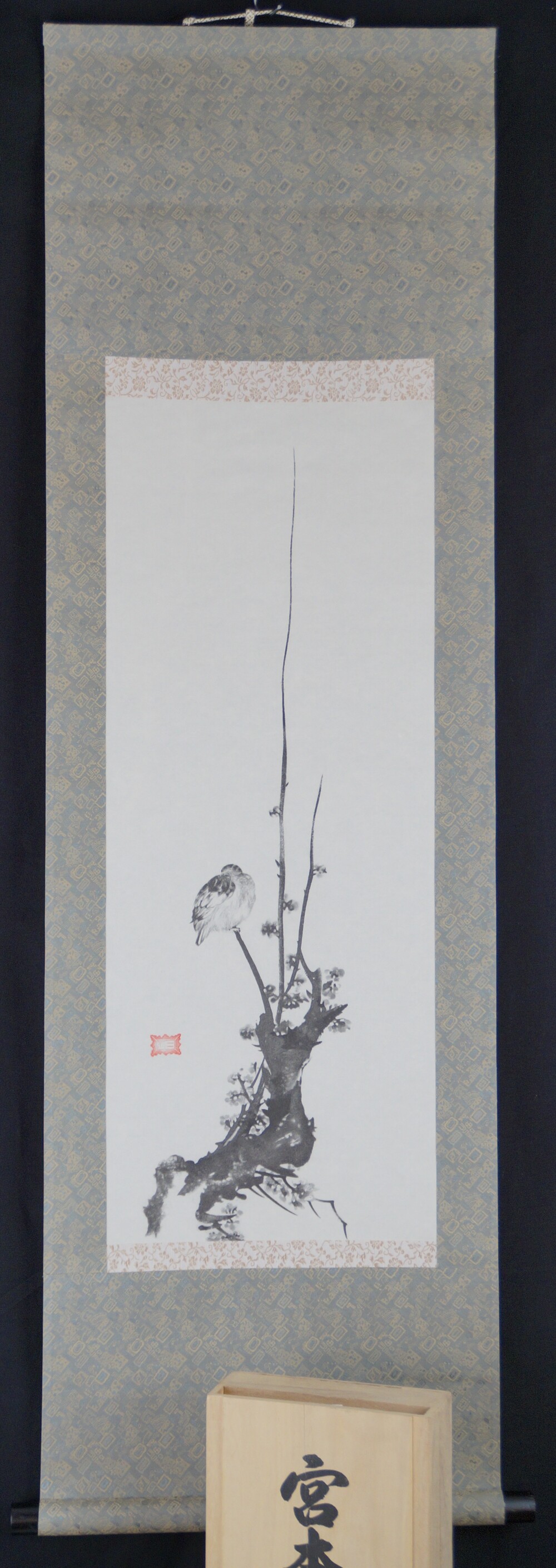
Miyamoto Musashi
Triptych Prints After Miyamoto Musashi
Kakemono, Print, with box, 135 x 47 cm
€270.00
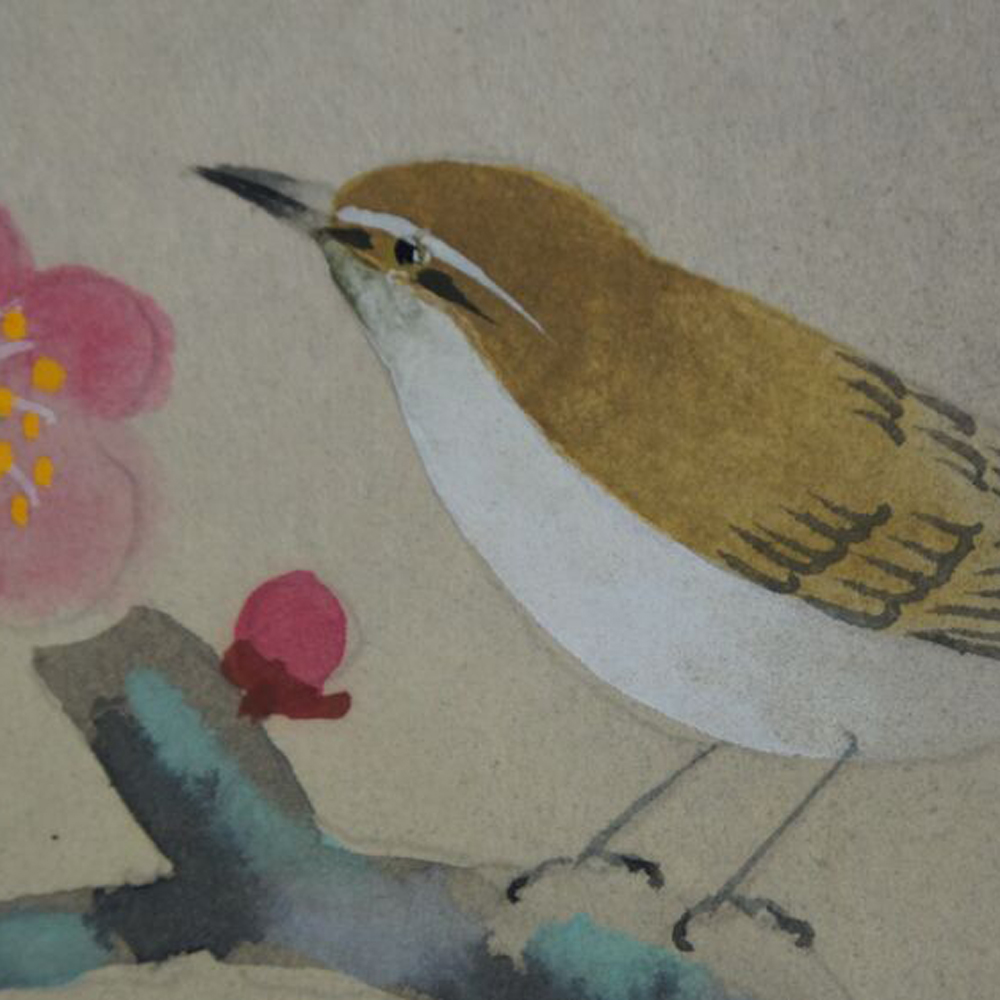
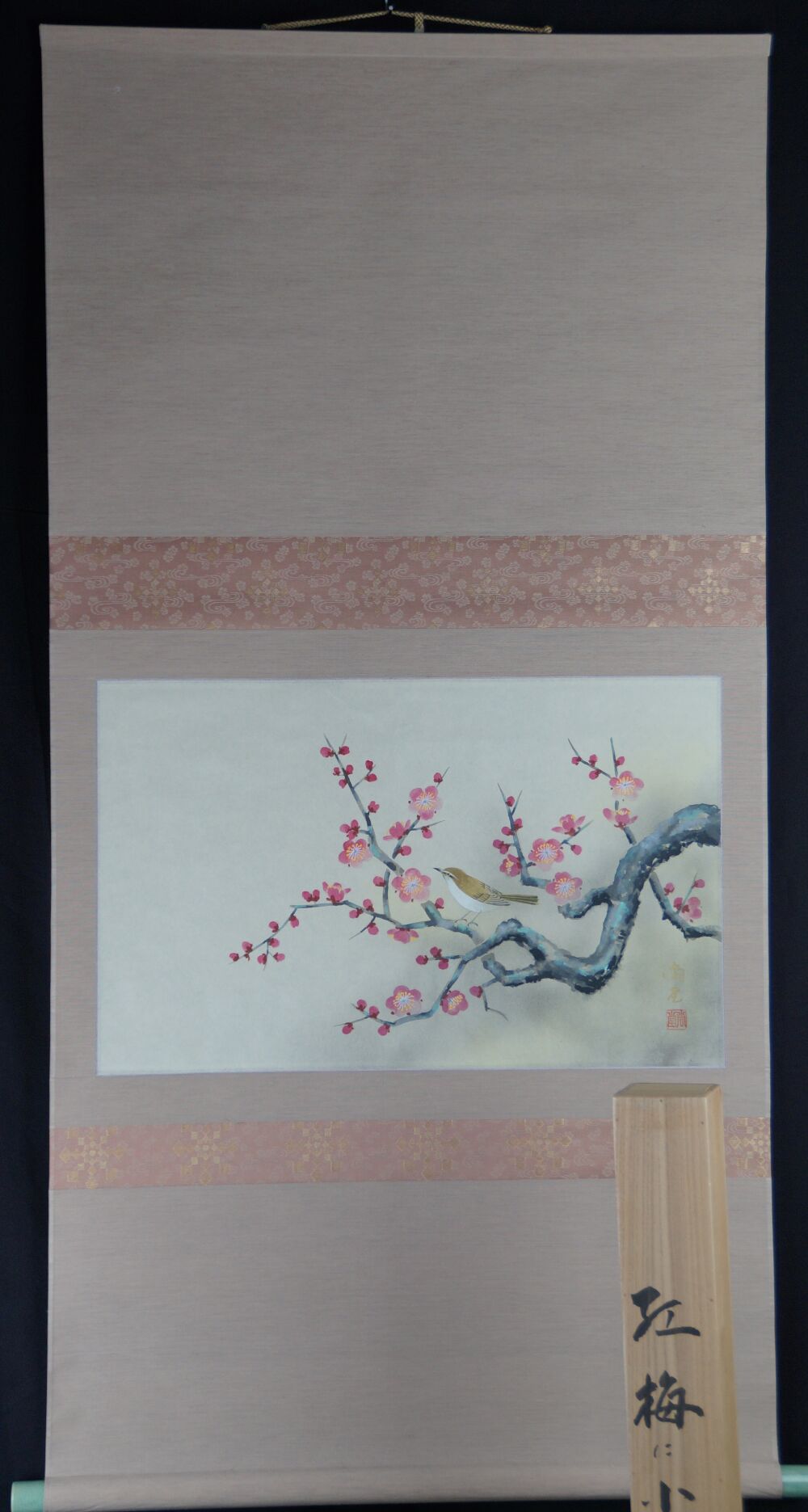
Ogawa Shodo
Songbird on Blooming Plum Tree
Kakemono, unique work, with box, 133 x 66 cm
€410.00
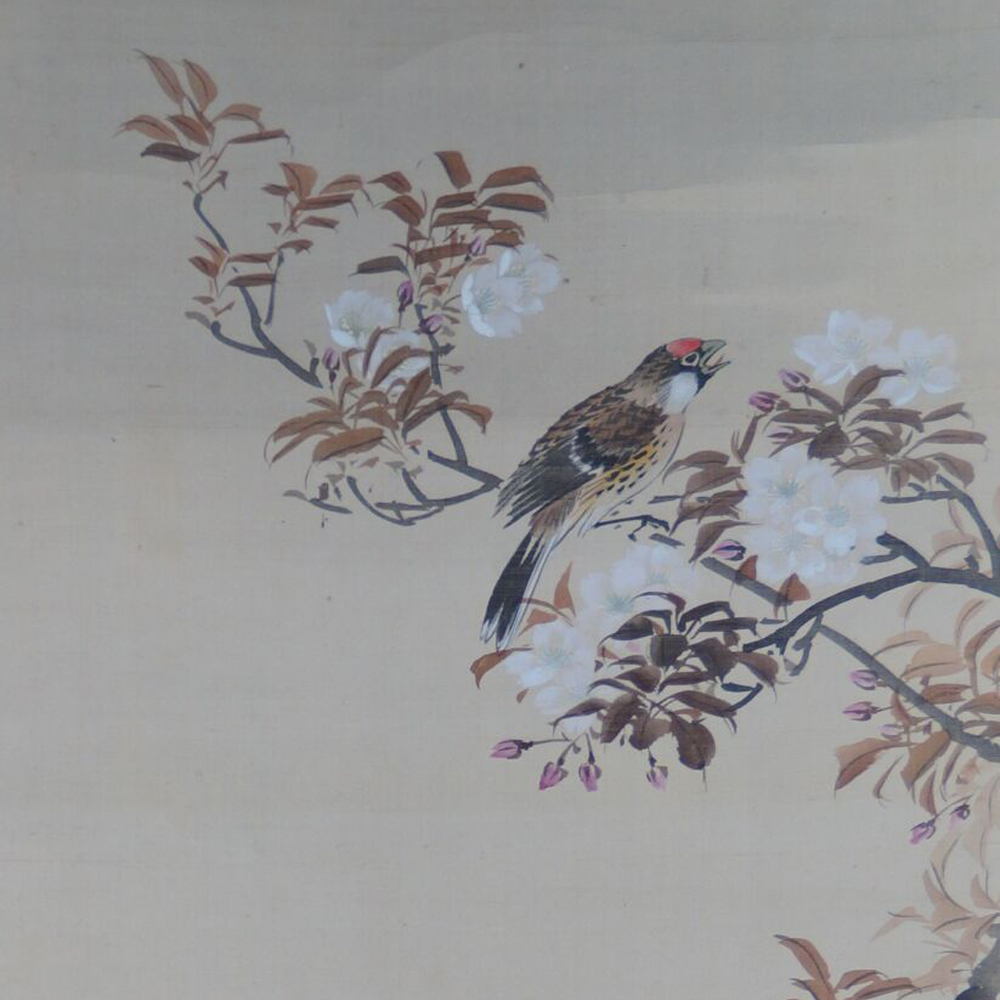
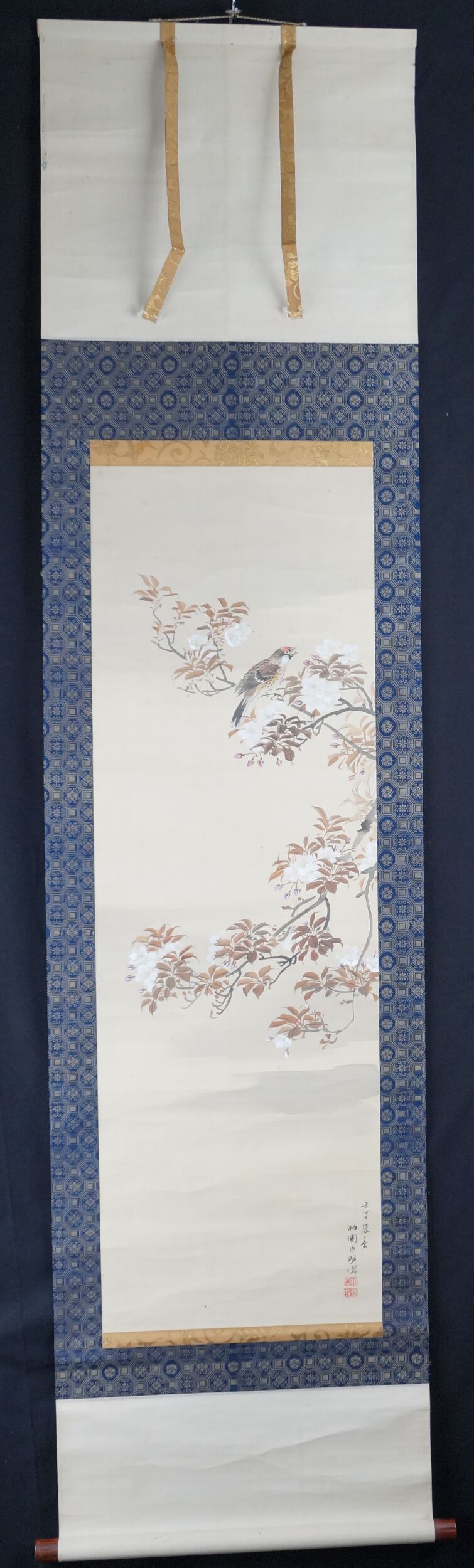
Hirose Hakuen
Singing Bird in Cherry Blossom Branch
Kakemono, unique work, 182 x 51 cm
€370.00
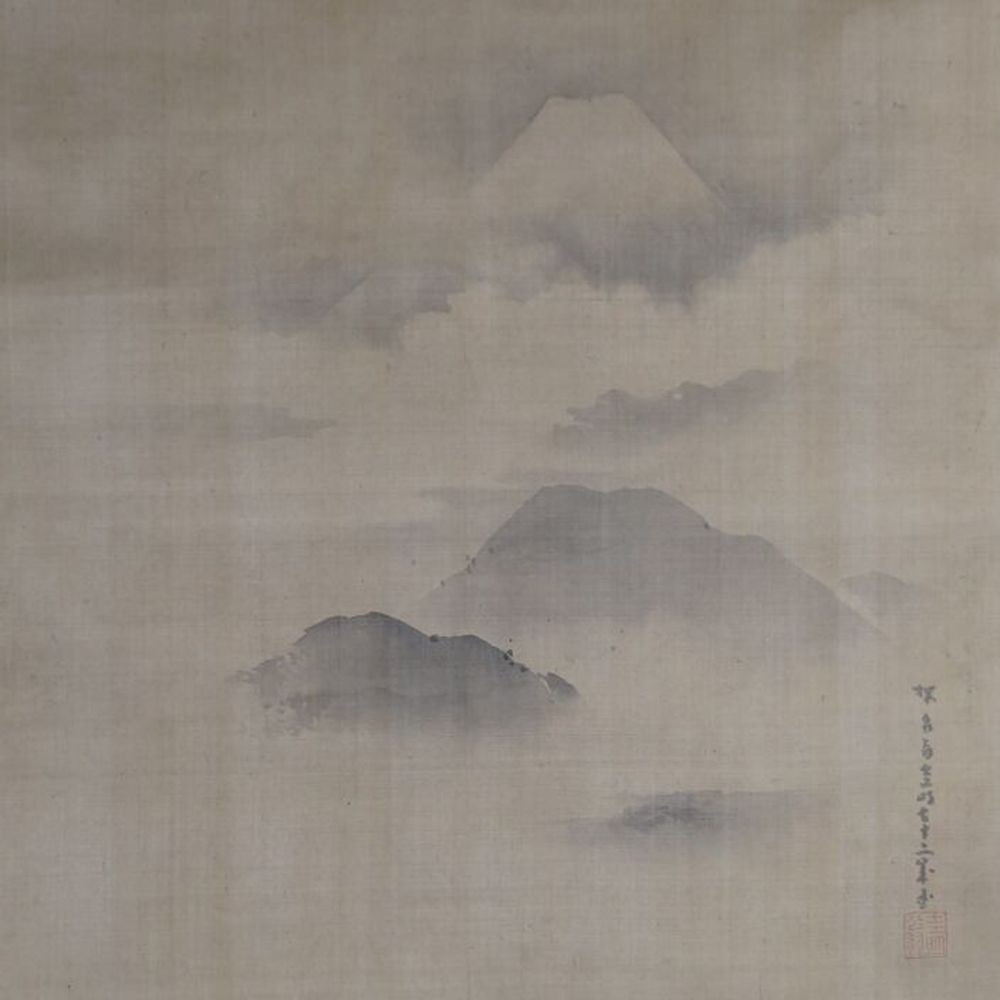
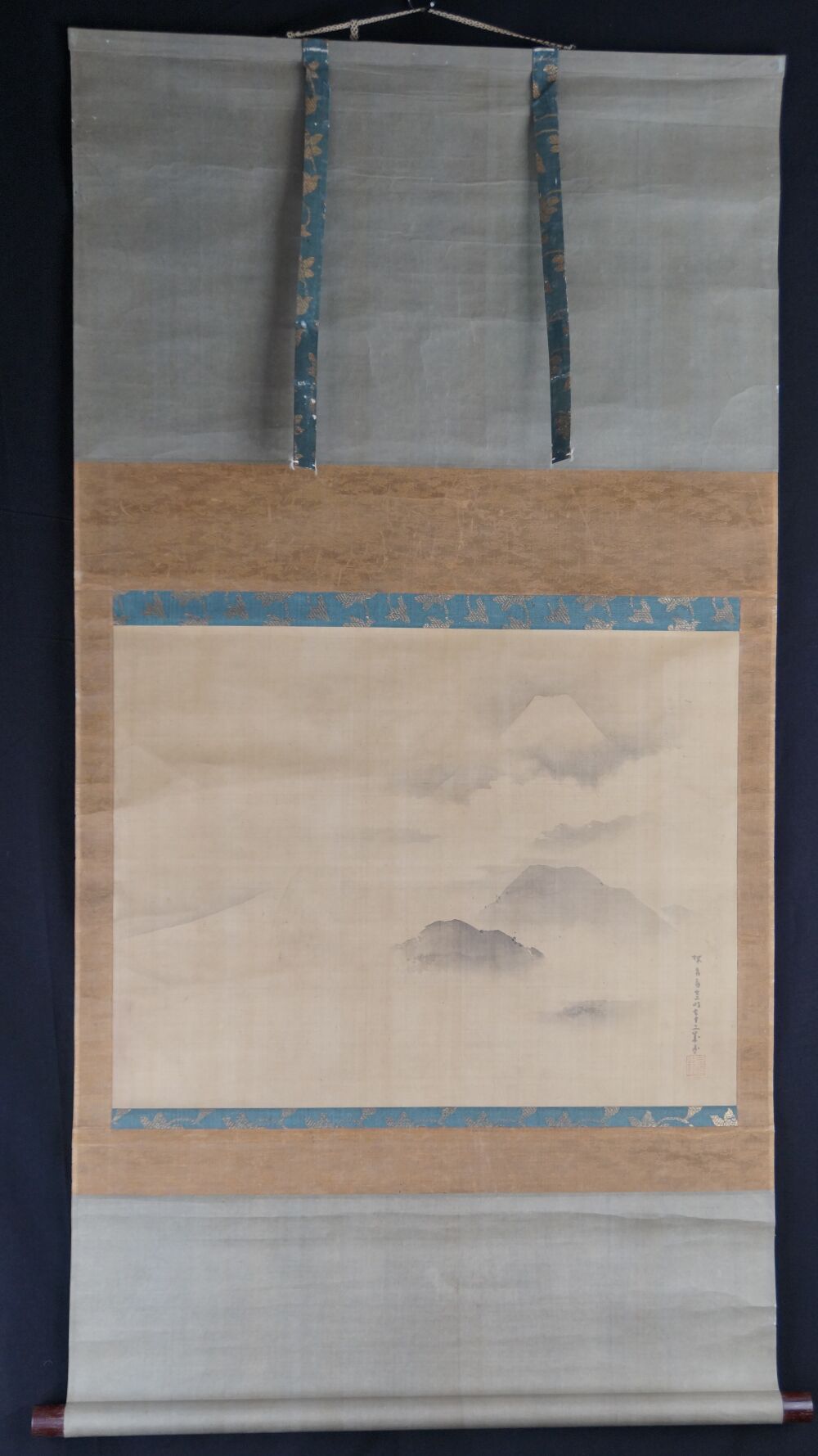
Tansenzai Keimei
Fuji in Cloud-Covered Heights
Kakemono, unique work, 123 x 63 cm
€440.00
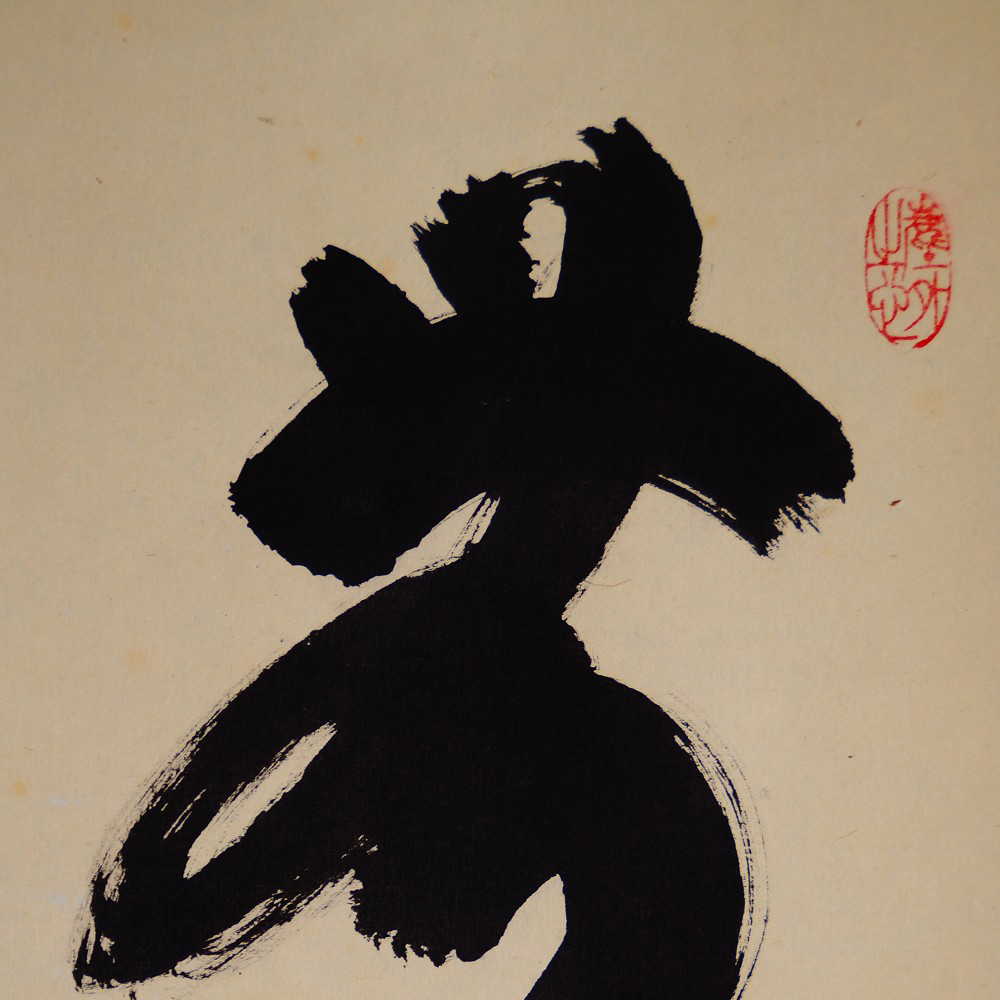

Kobayashi Taigen
No Mind, the Great Way – Zen Calligraphy, Gold-Mounted
Kakemono, unique work, with box, 173 x 37 cm
€720.00
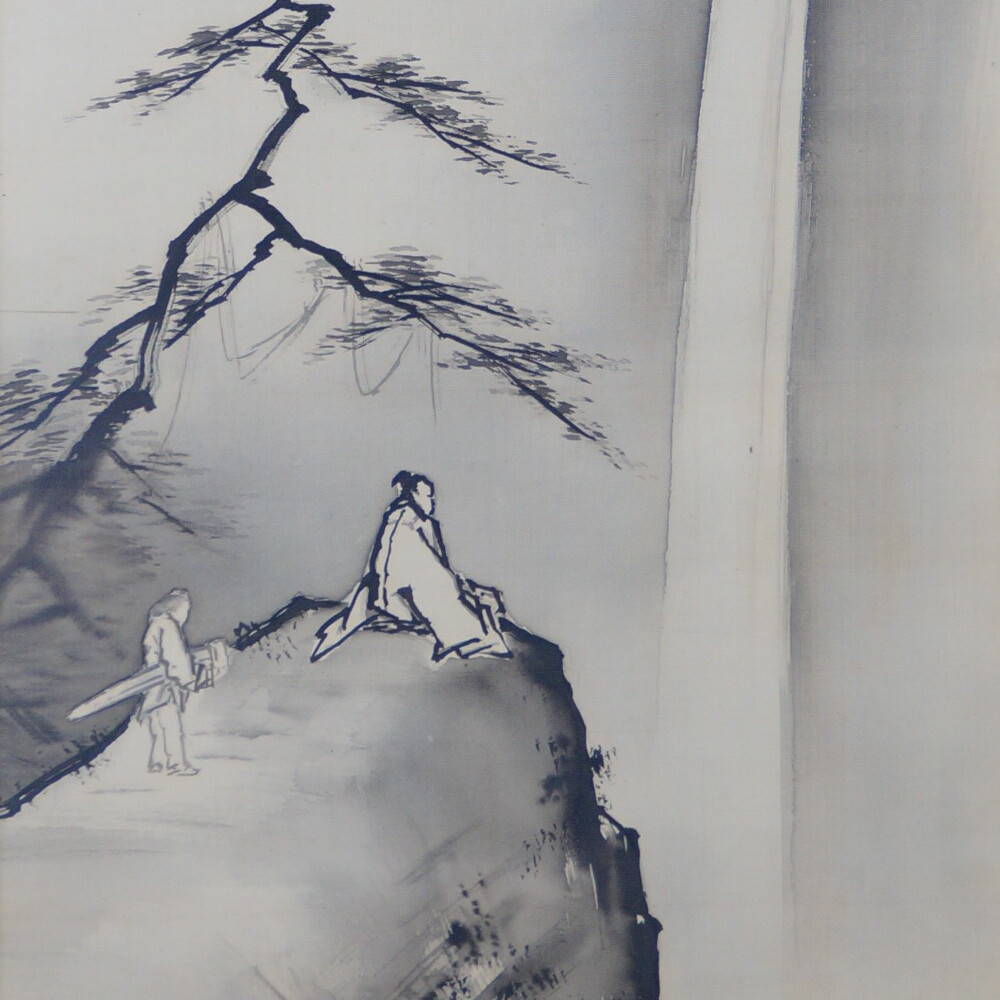
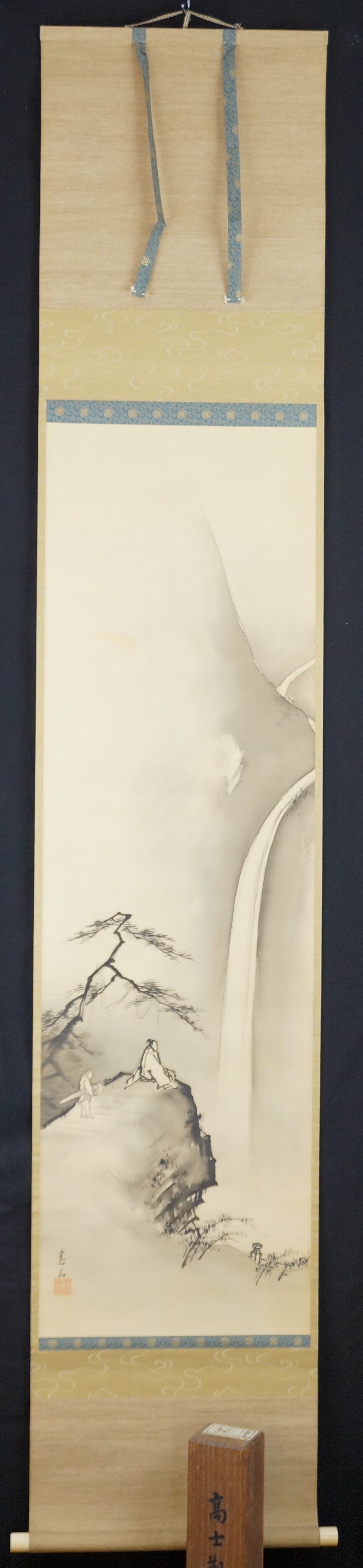
Yagioka Shunzan
Encounter at the Edge of the Waterfall
Kakemono, unique work, with box, 200 x 44 cm
€880.00
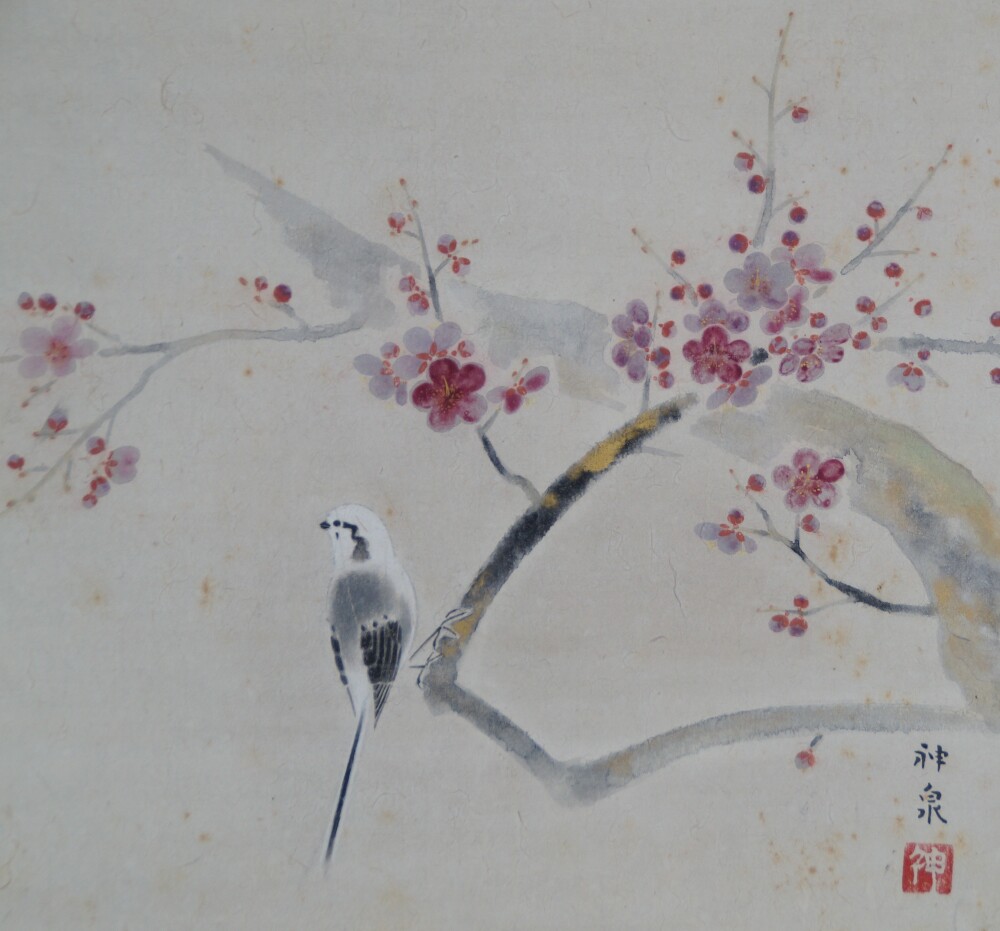
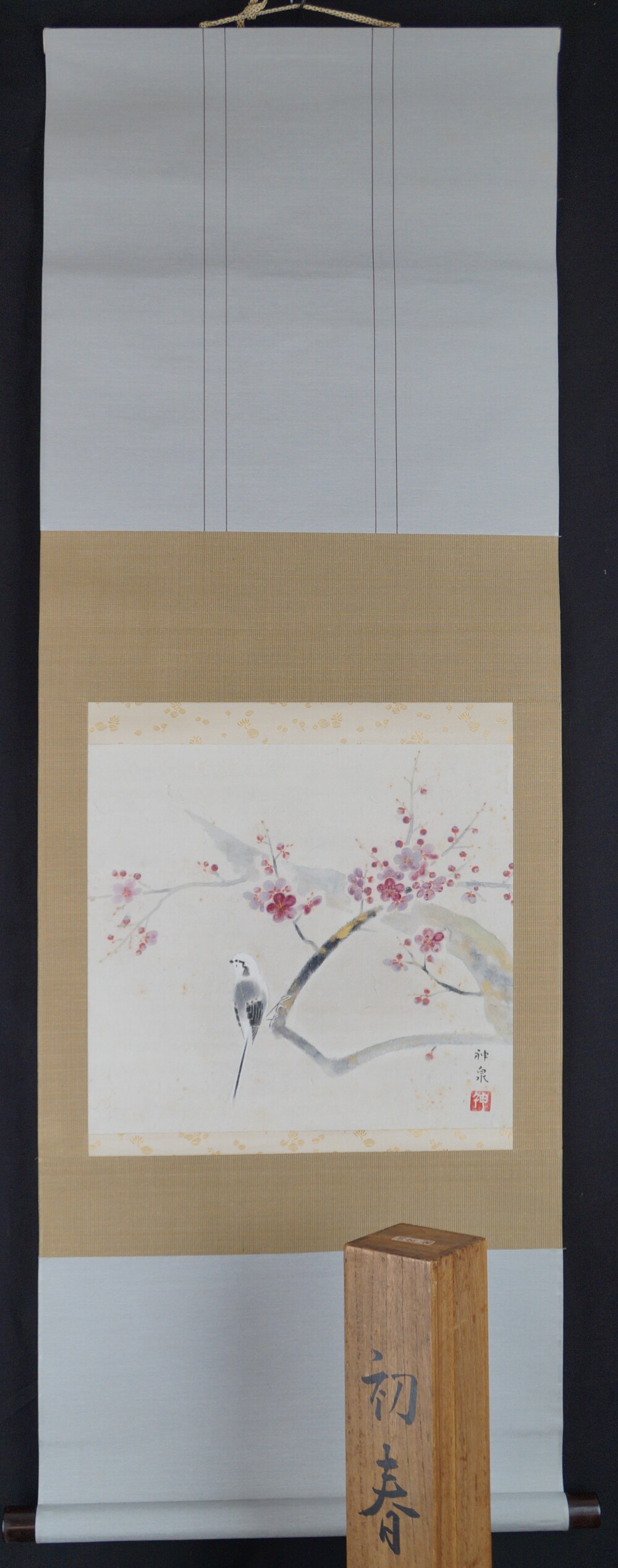
Tokuoka Shinsen
Plum Blossoms in Quiet Morning Light
Kakemono, unique work, with box, 124 x 49 cm
€280.00
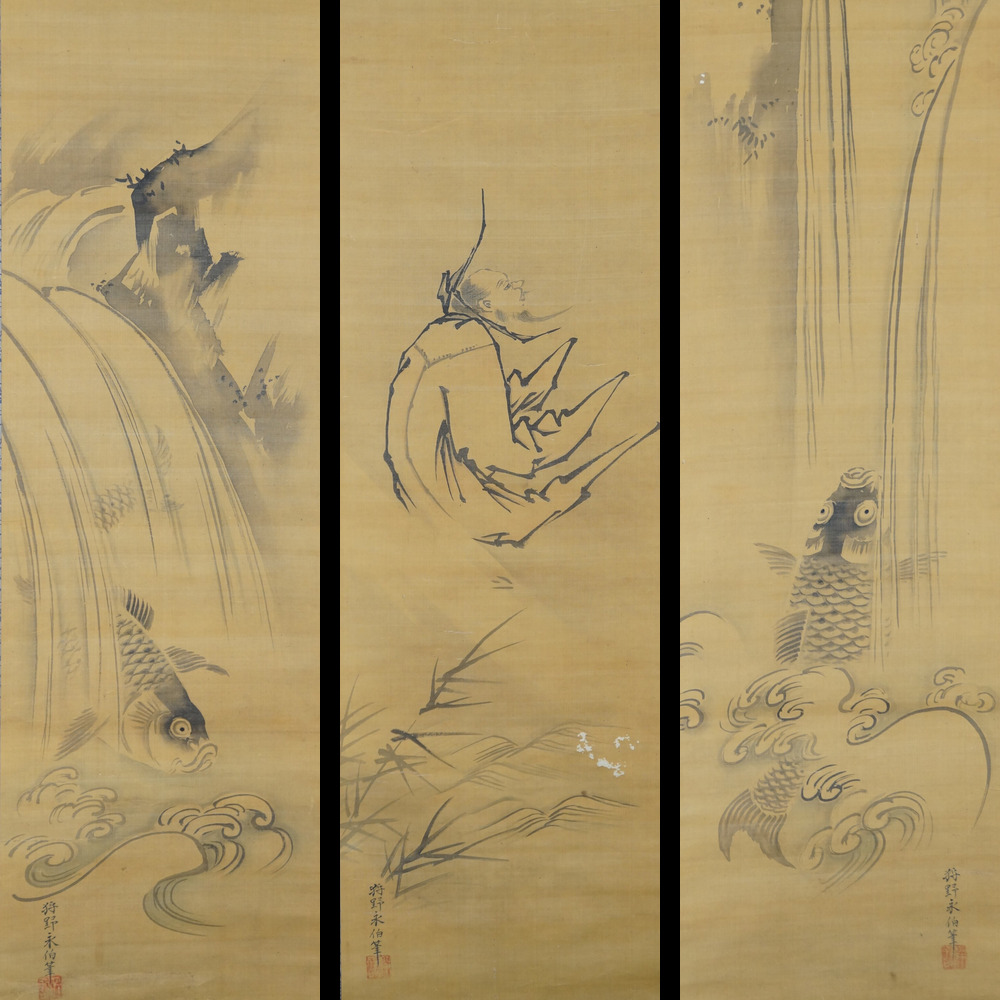
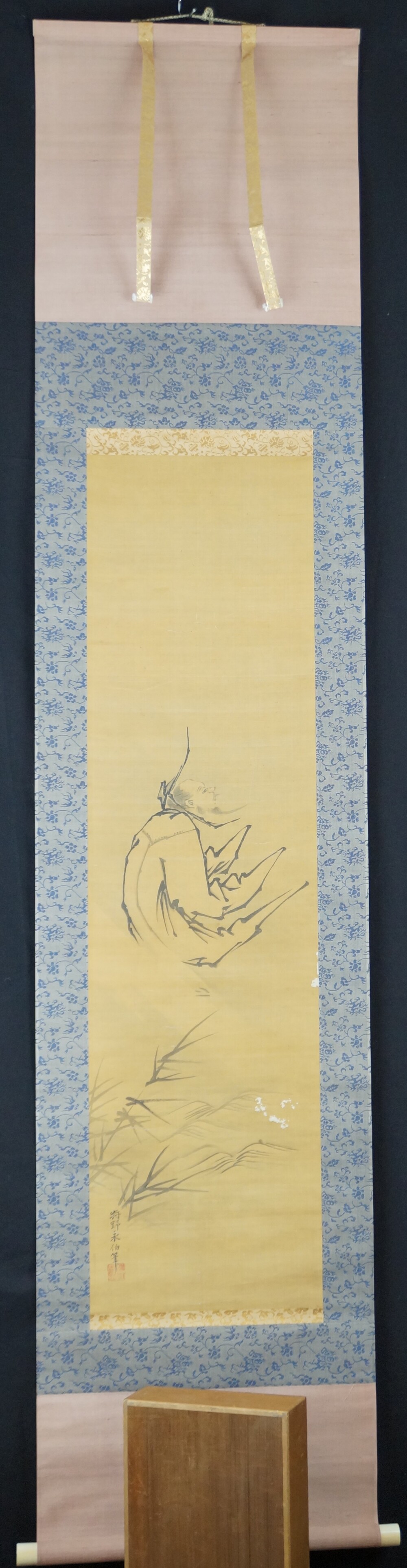
Kano Eihaku
Water, Retreat and Ascent - Set of 3
Kakemono, unique work, with box, 188 x 45 cm
€630.00
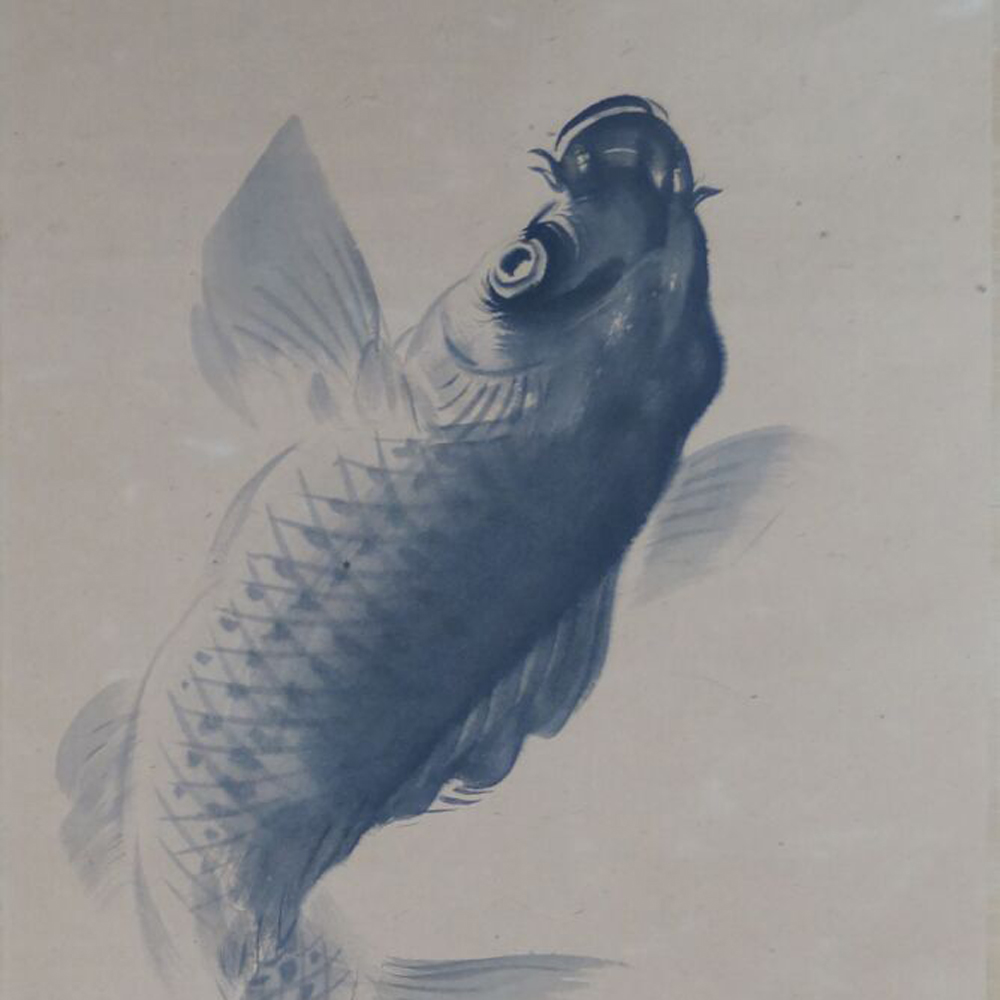
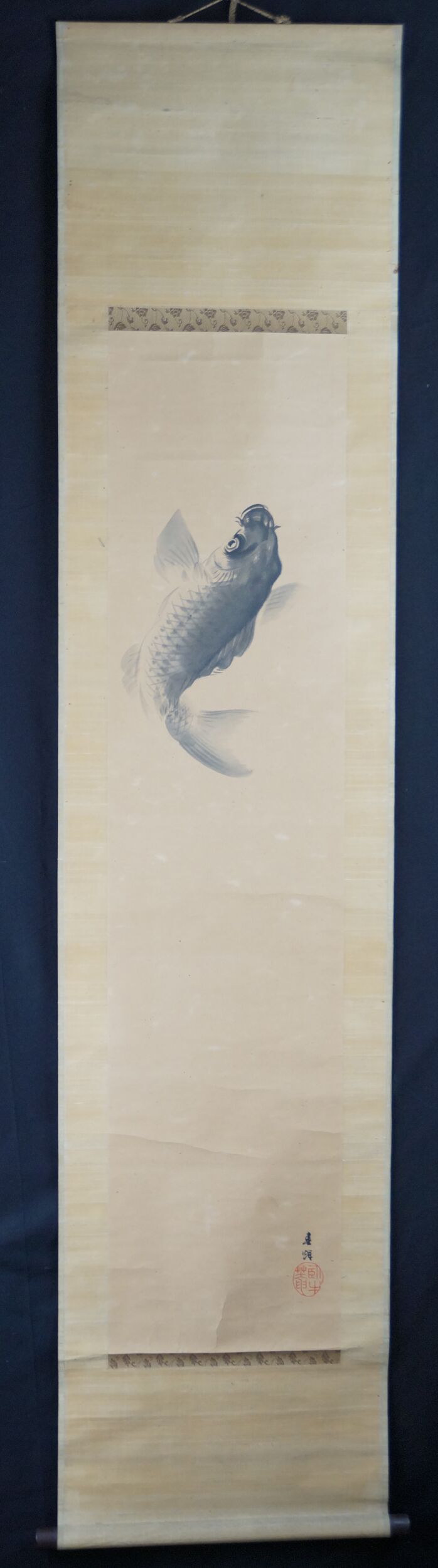
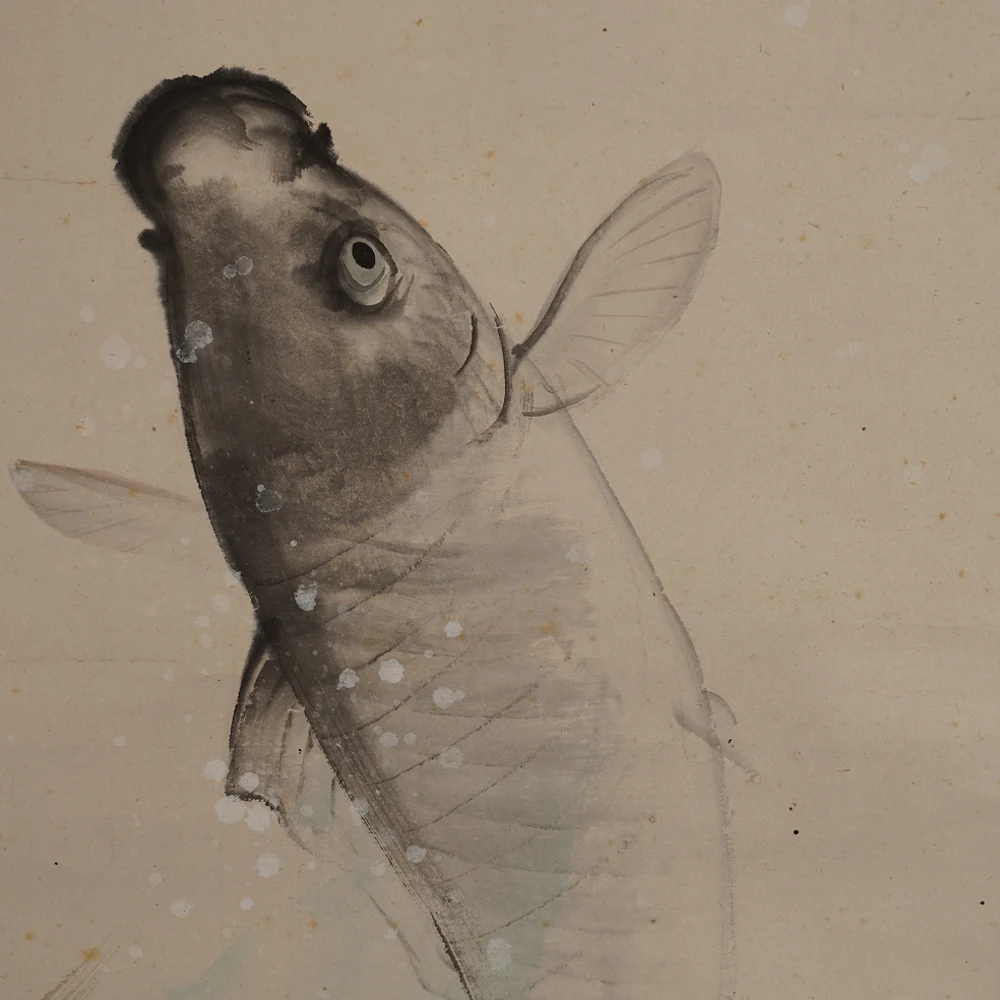
Gyokusha Shunki
Leaping Carp - Kakemono Gyokusha Shunki
Kakemono, unique work, 194 x 50 cm
€540.00
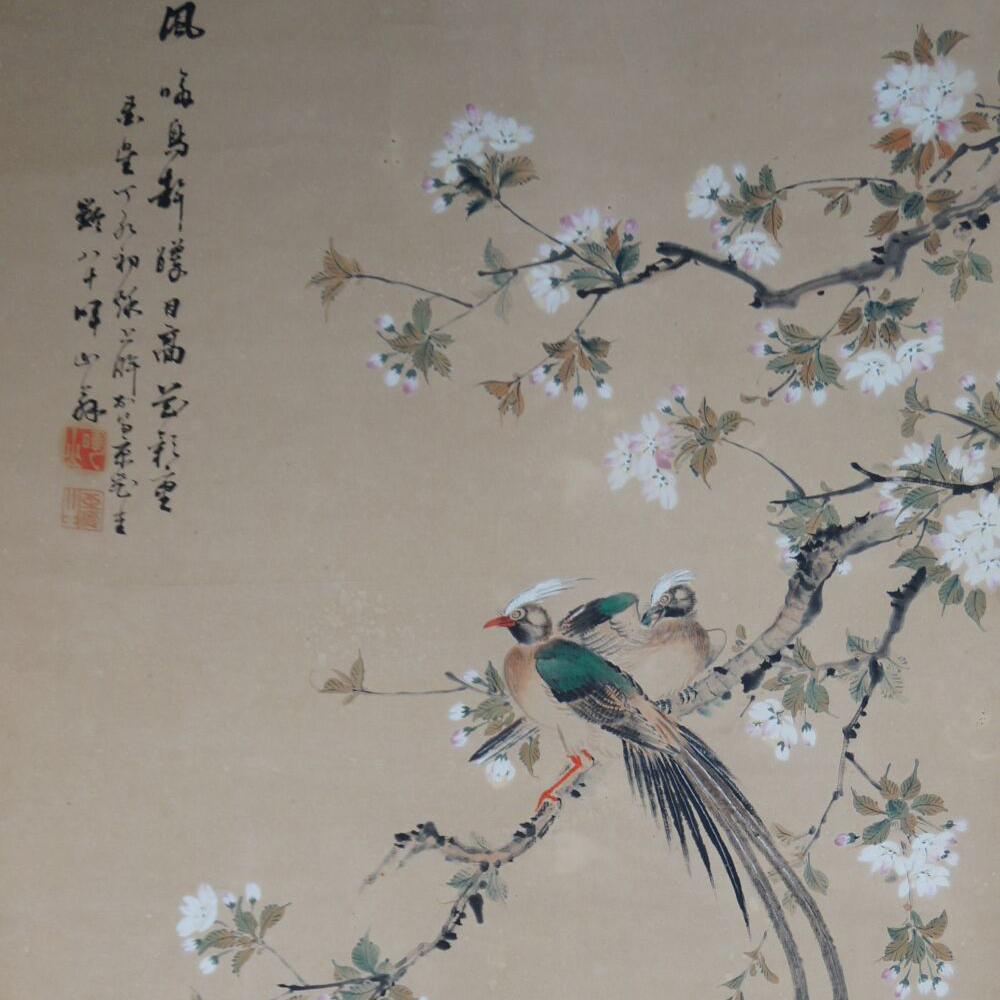
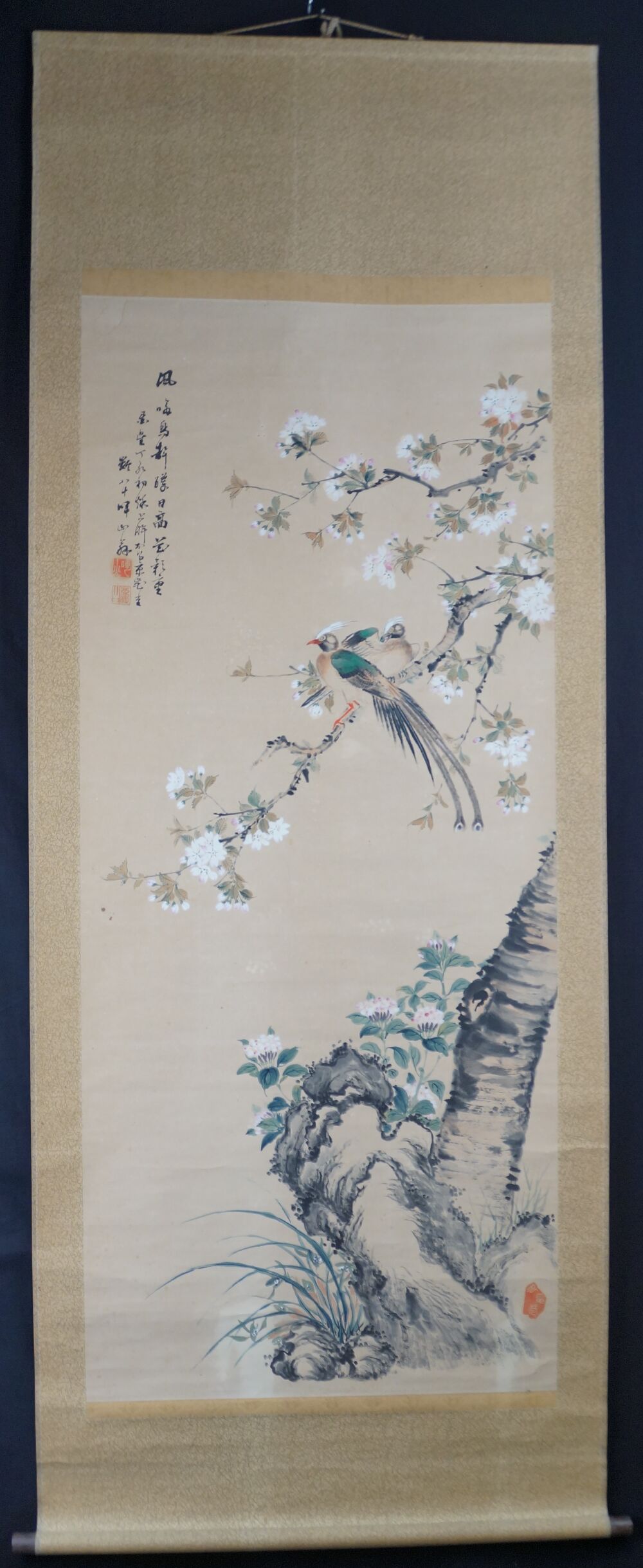
Takahashi Keizan
Spring Duet on Blooming Branch
Kakemono, unique work, 182 x 80 cm
€630.00
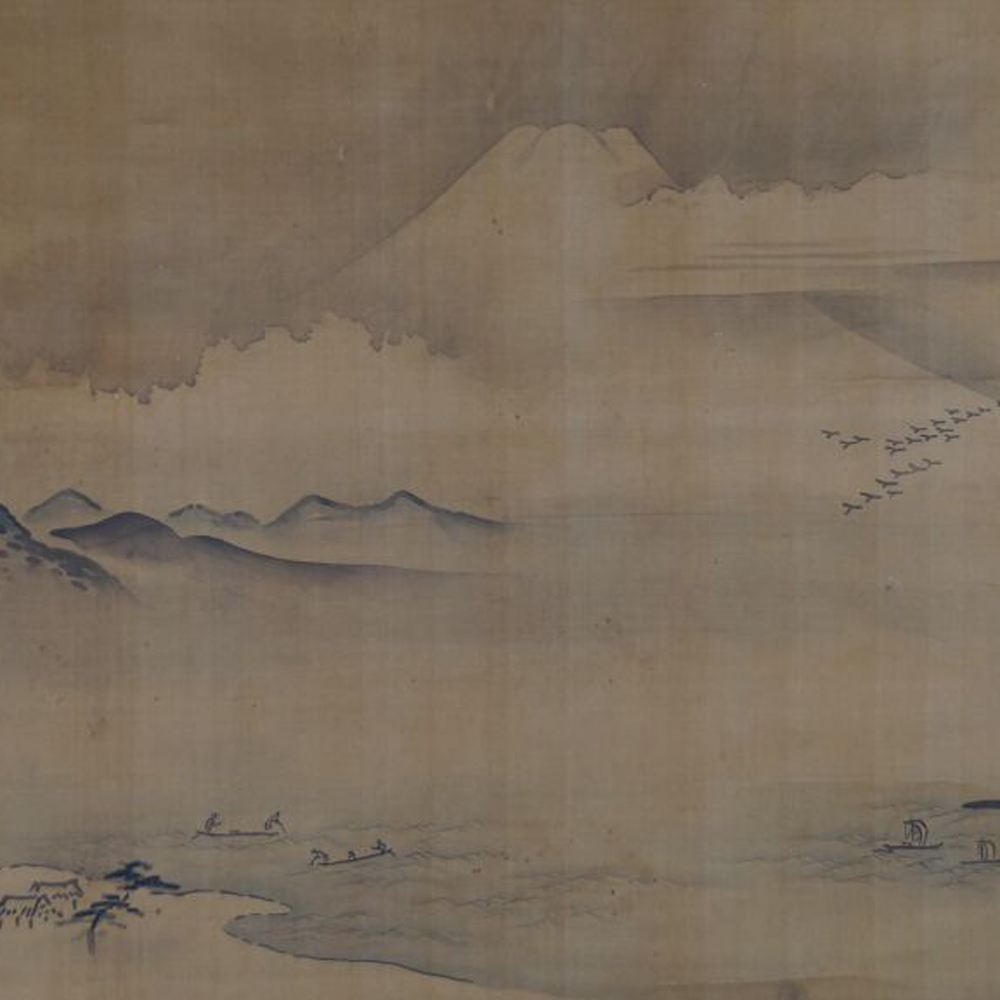
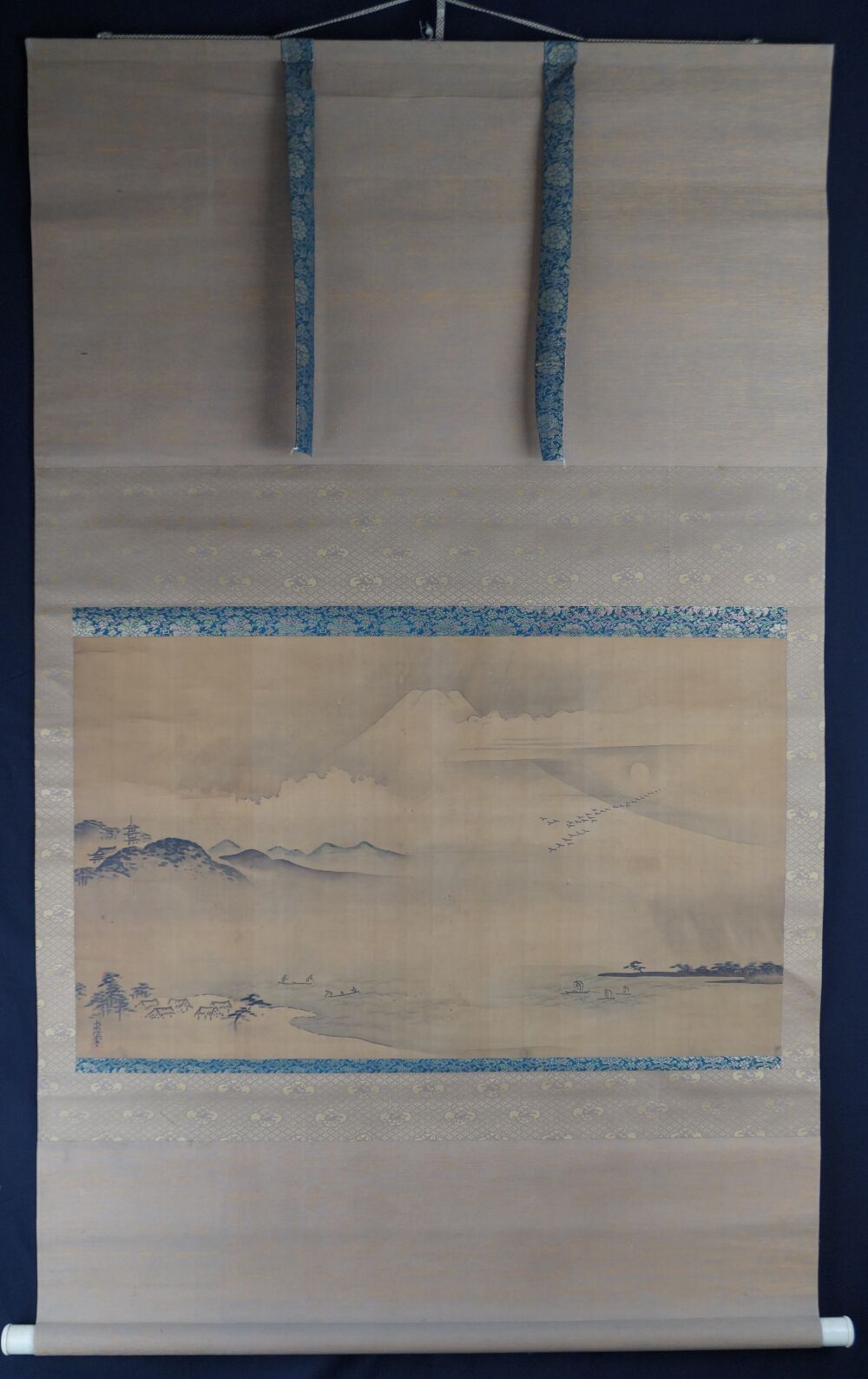
Kanō Zuizen
Fuji in Morning Mist
Kakemono, unique work, 140 x 91 cm
€1,170.00
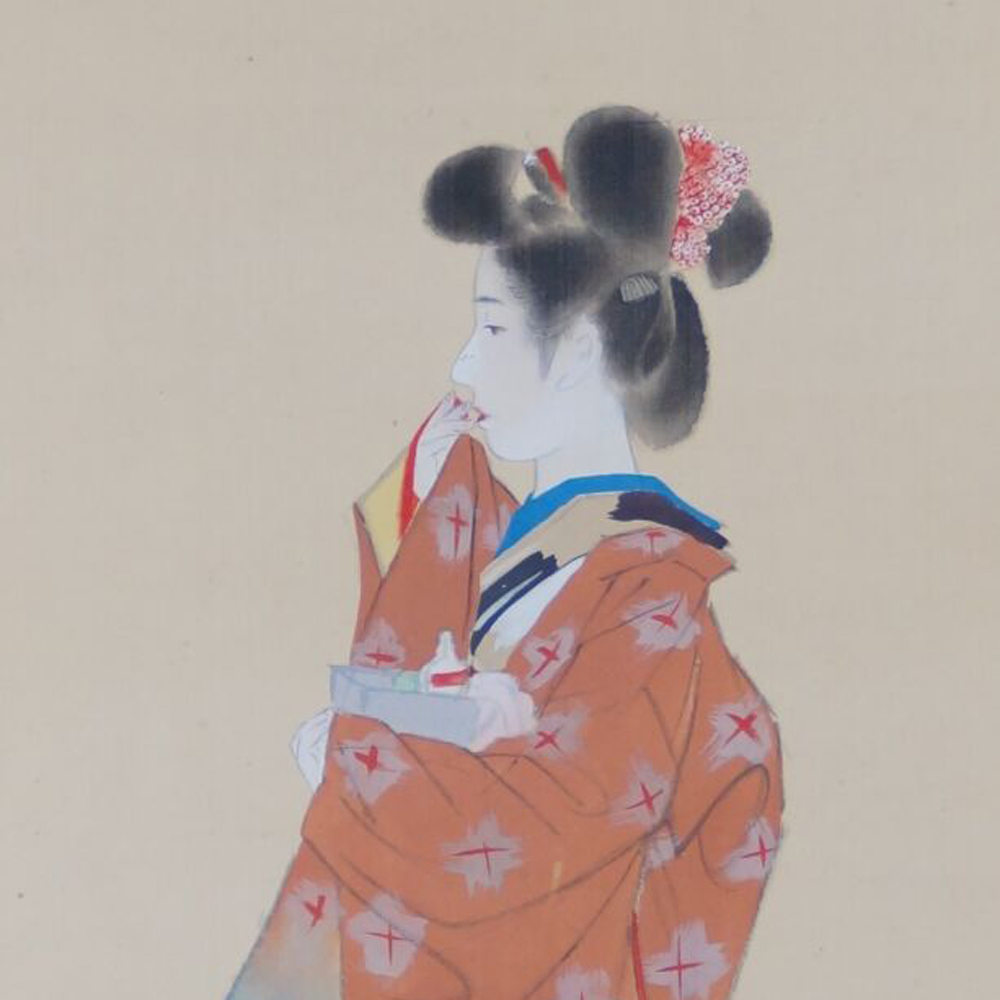
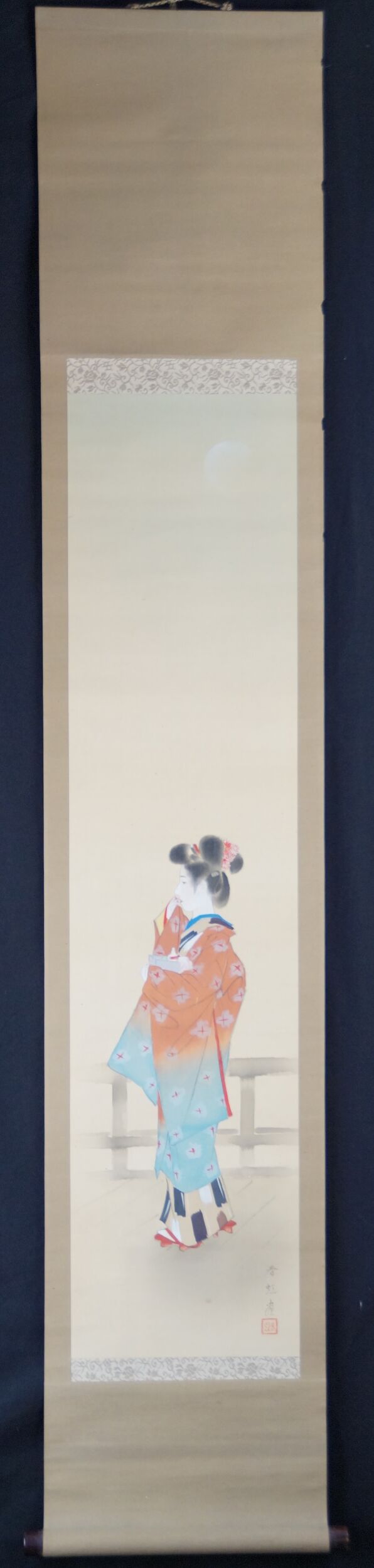
Saeki Shunkō
Beauty in Profile with Orange Kimono
Kakemono, unique work, 167 x 36 cm
€360.00
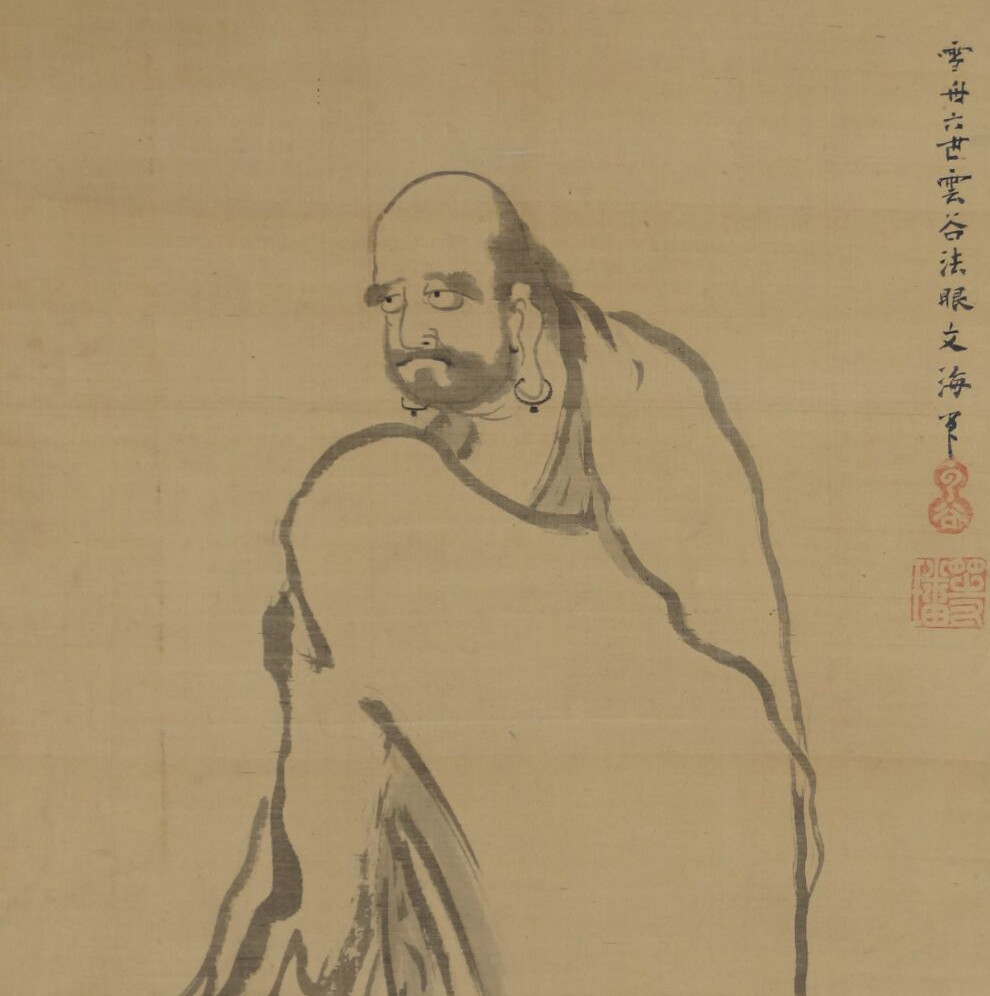
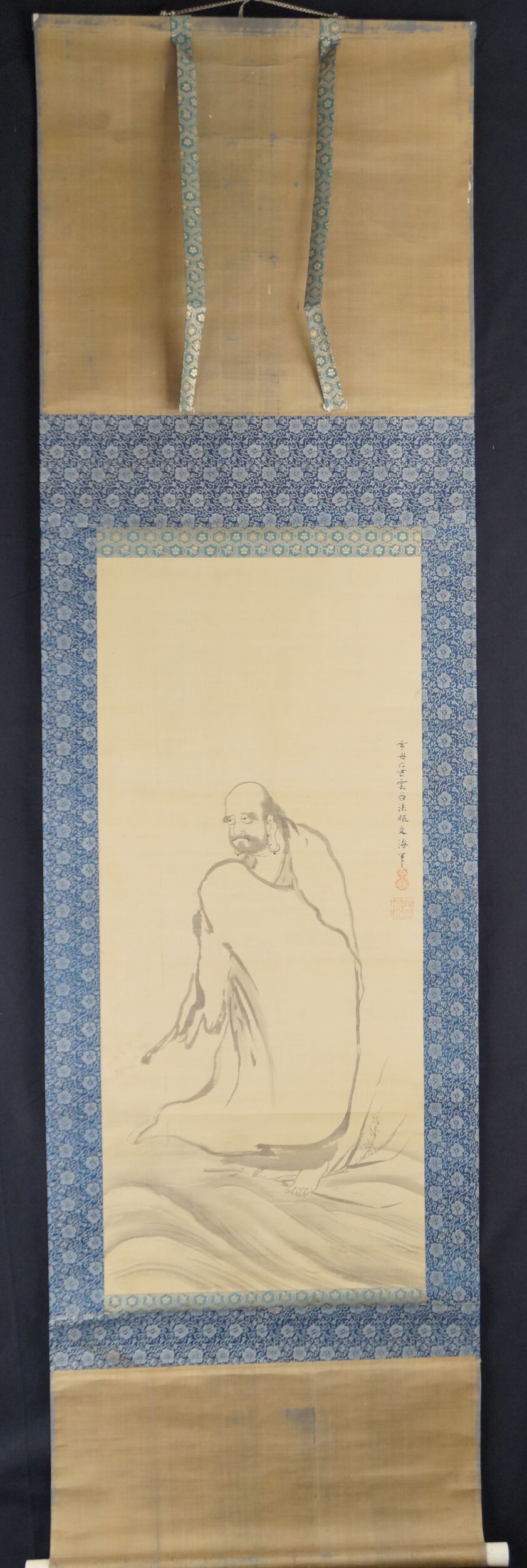
Unkoku Tōban
Bodhidharma on the Way
Kakemono, unique work, 168 x 52 cm
€550.00
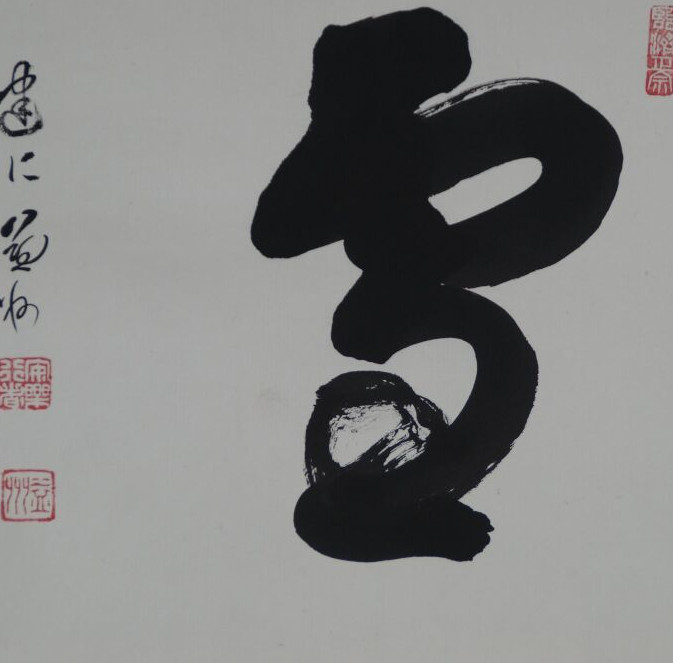
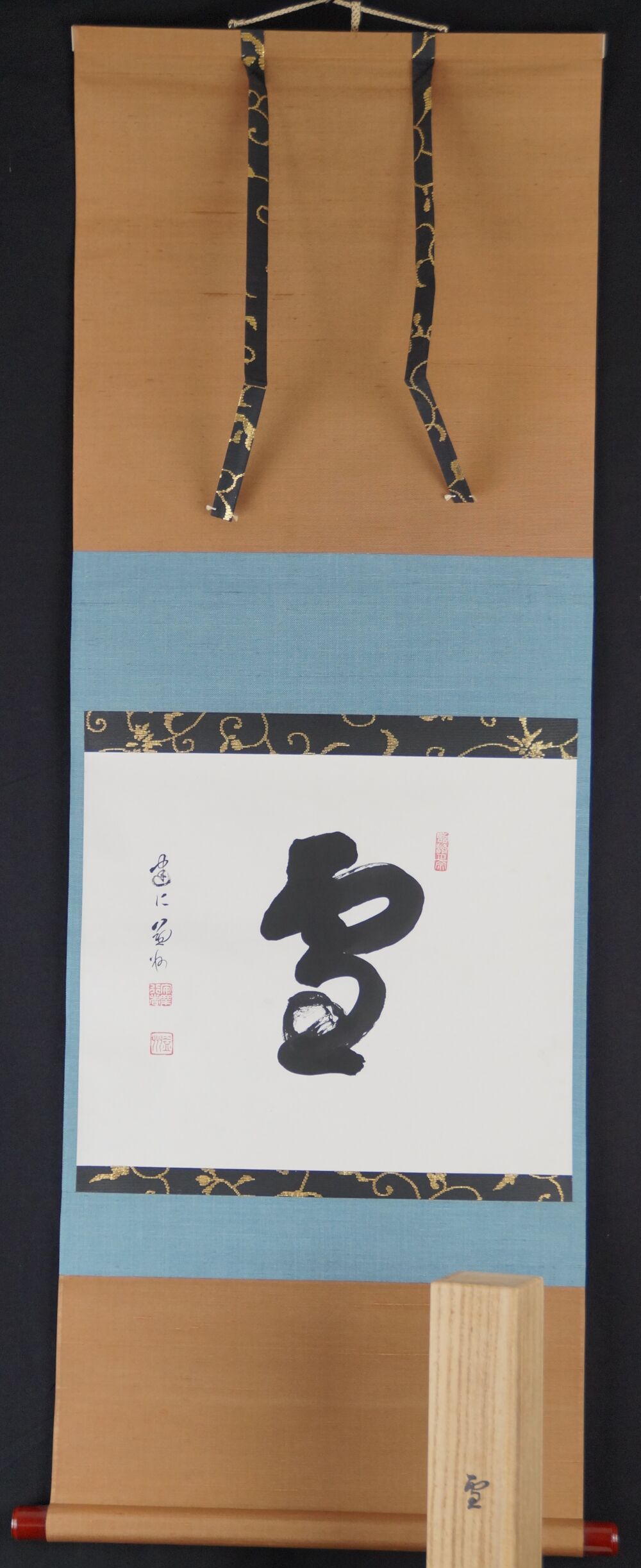
Takeda Masuyoshi
Calligraphy "Snow"
Kakemono, unique work, with box, 118 x 48 cm
€470.00
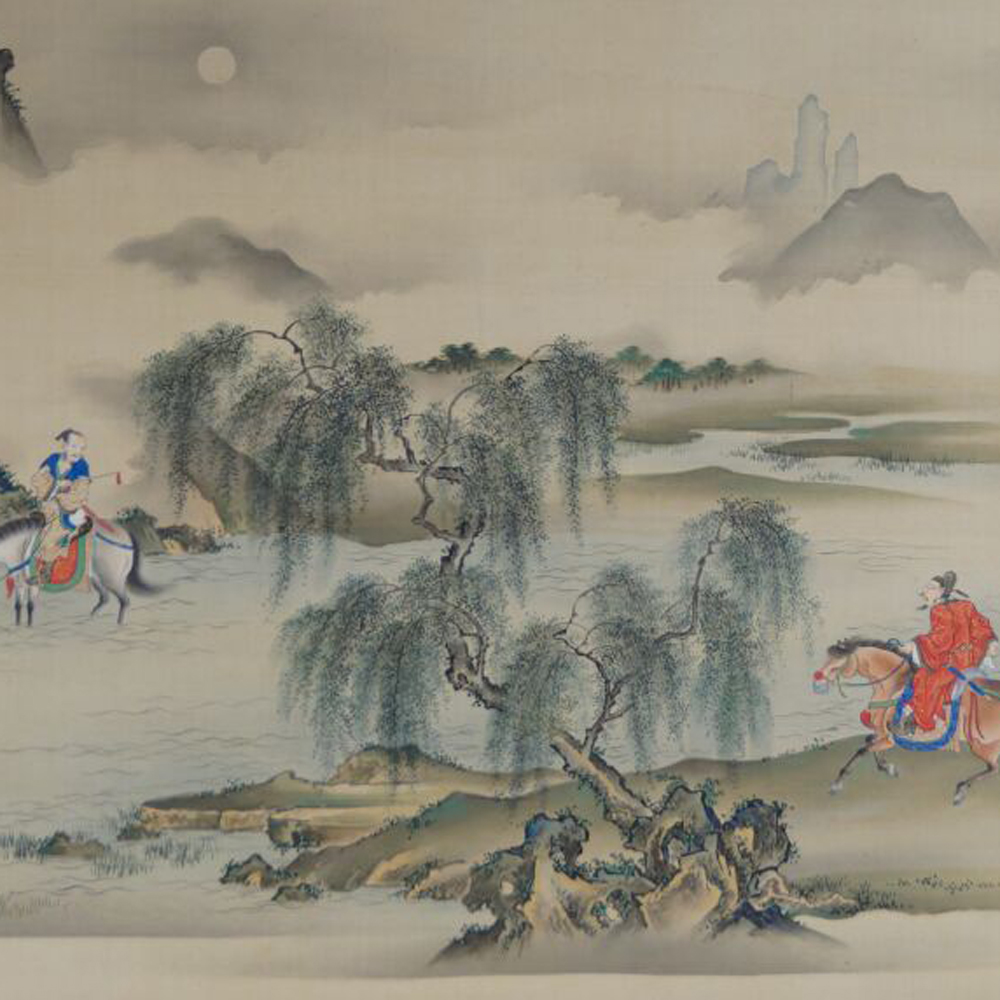
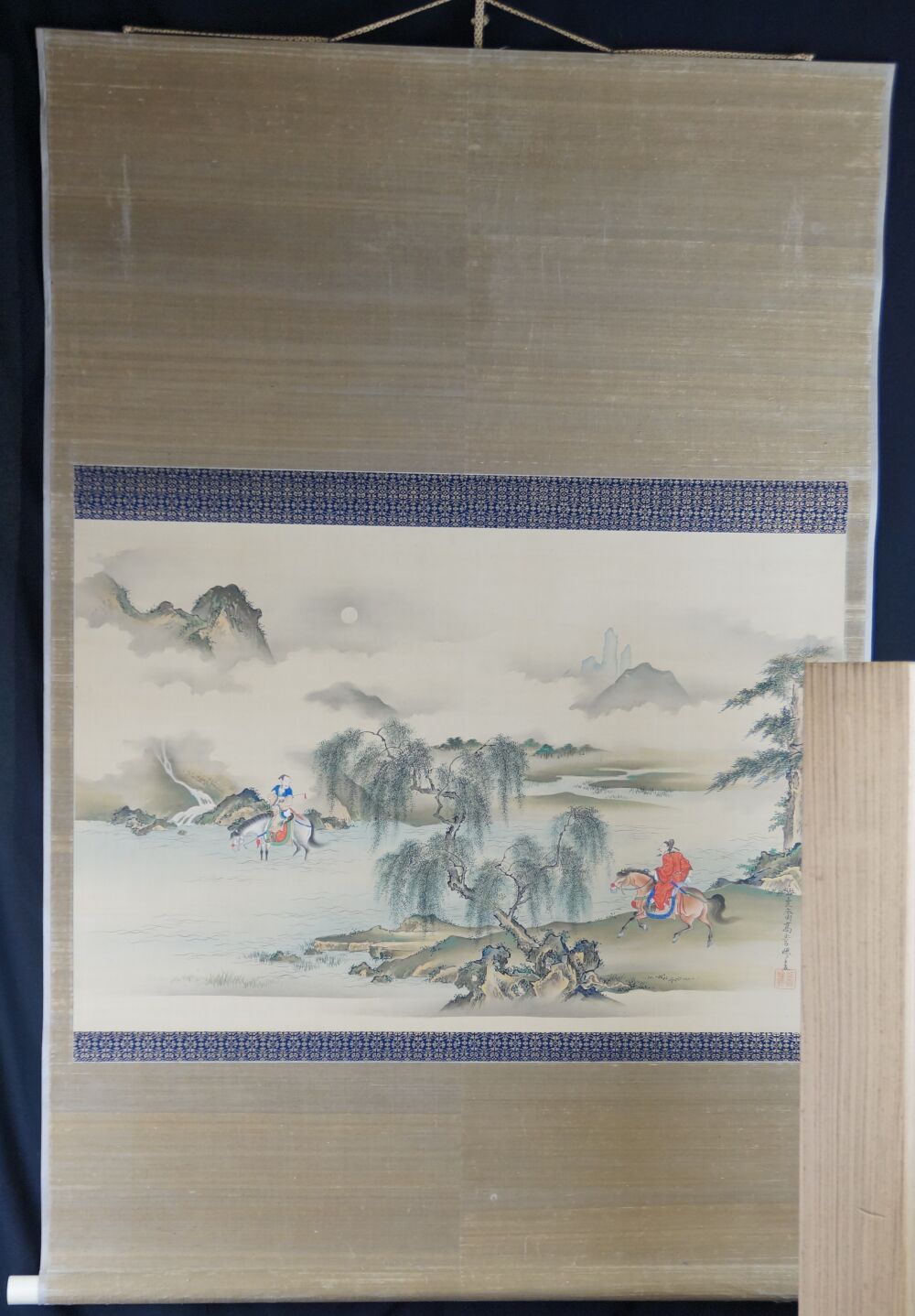
Kōsūkoku
Encounter by the River
Kakemono, unique work, with box, 136 x 97 cm
€1,290.00
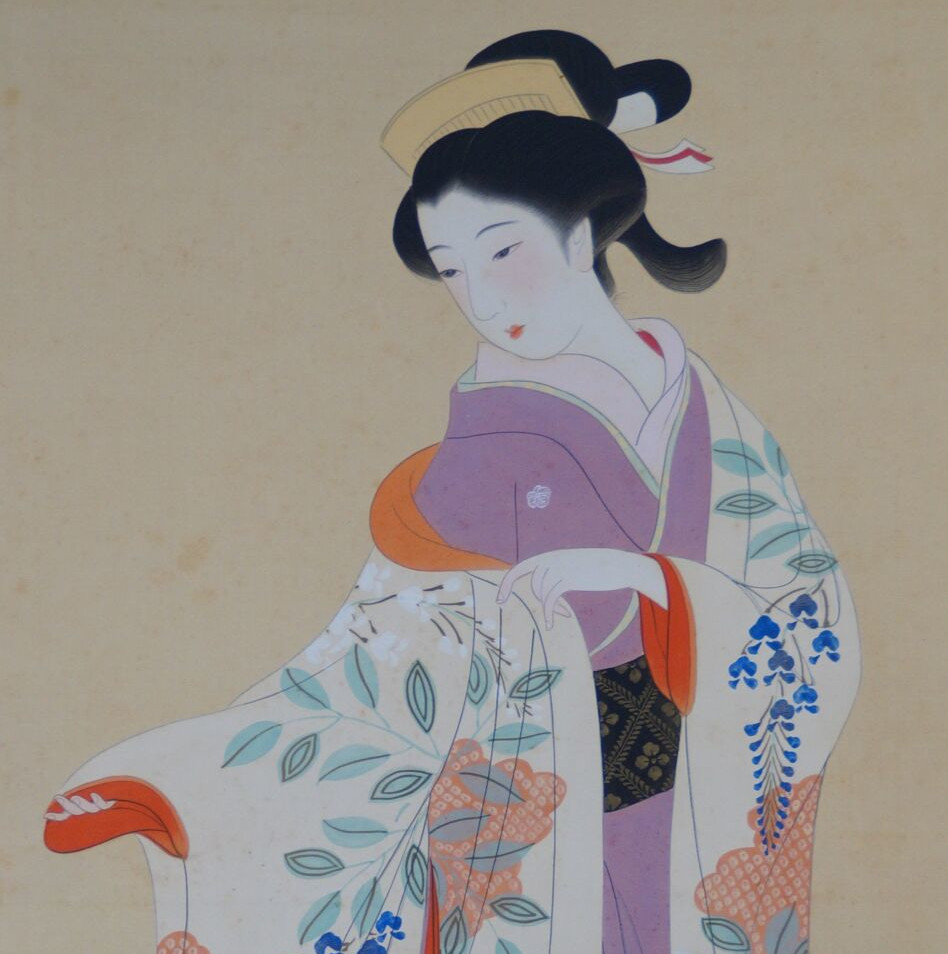
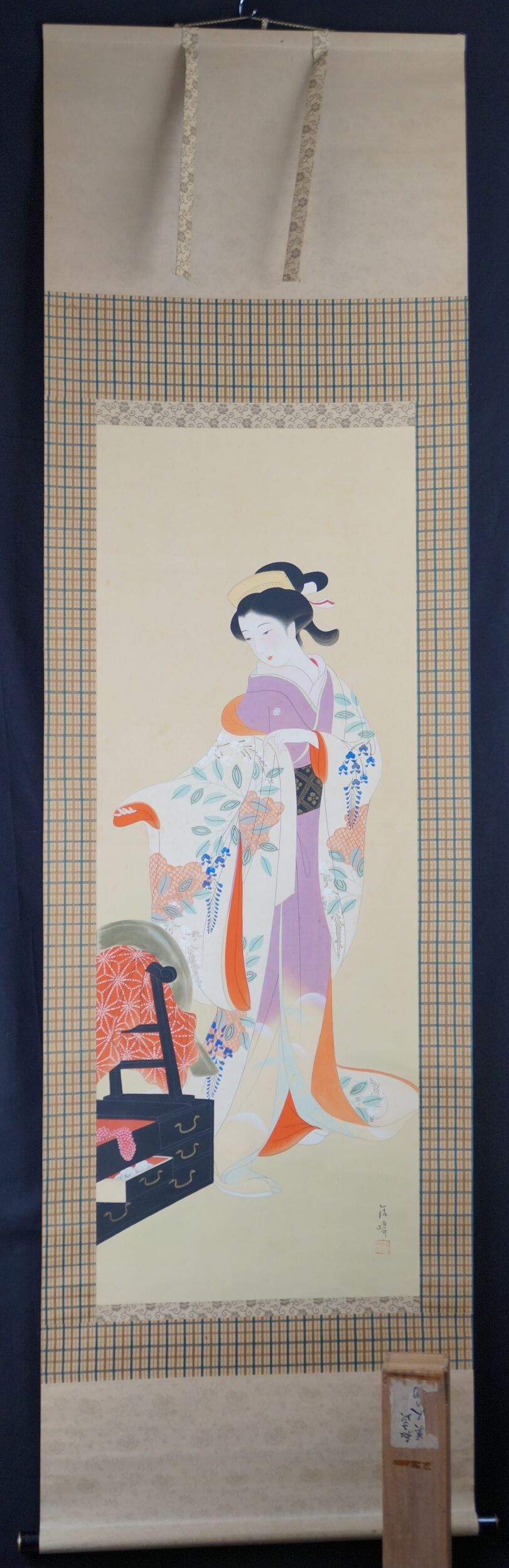
Seifune
Young Woman in Front of Her Kimono Cabinet
Kakemono, unique work, with box, 195 x 65 cm
€520.00
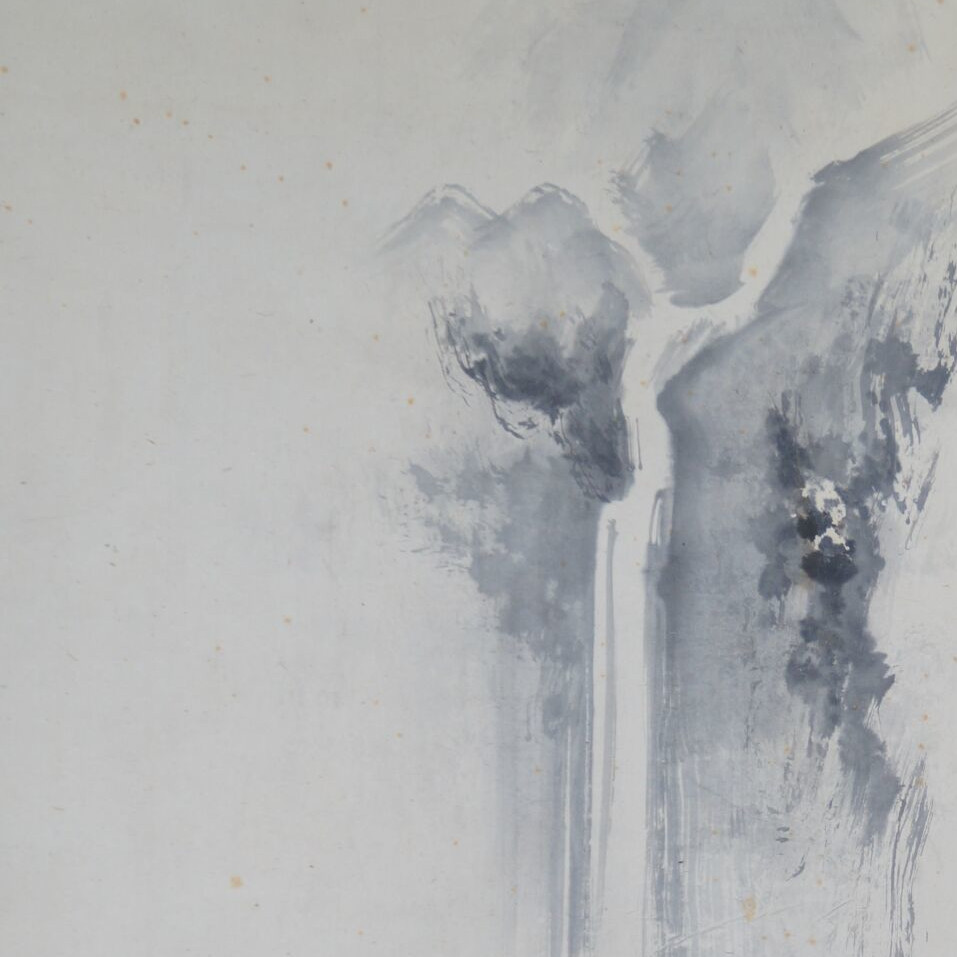
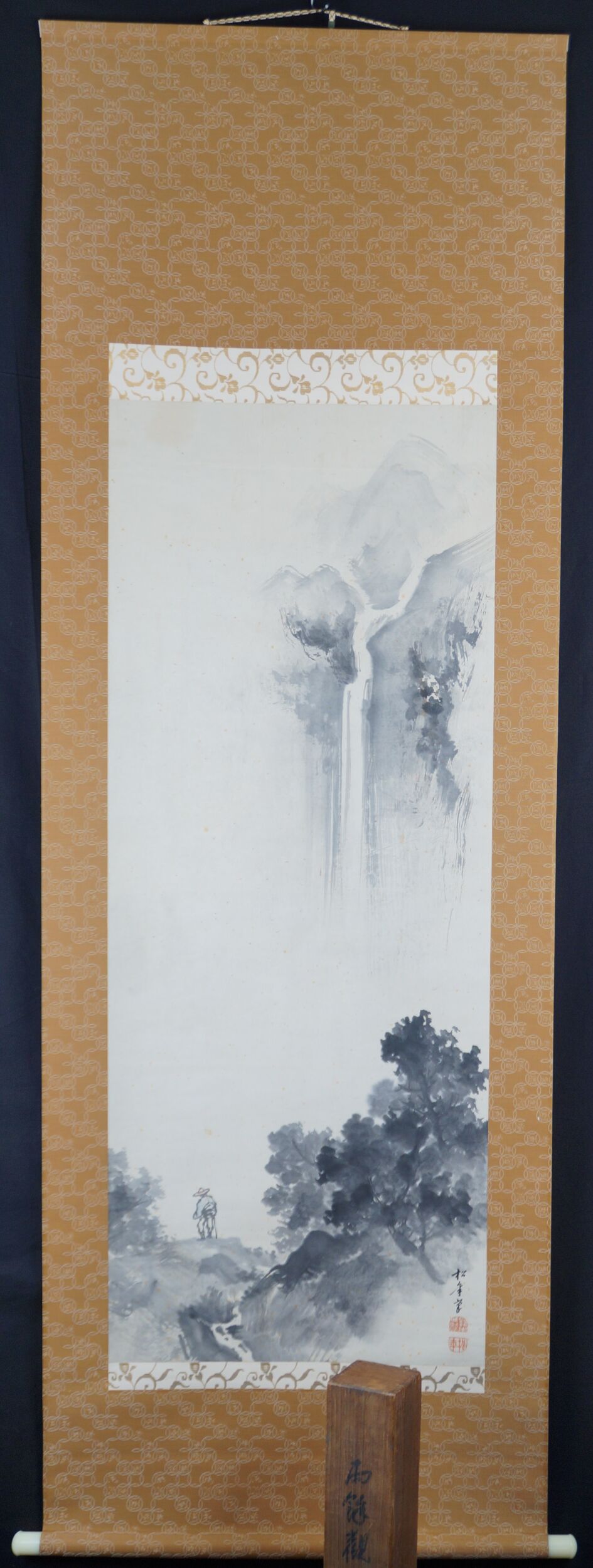
Suzuki Shonen
Wanderer Before the Waterfall - Suzuku Shonen
Kakemono, unique work, with box, 190 x 71 cm
€380.00
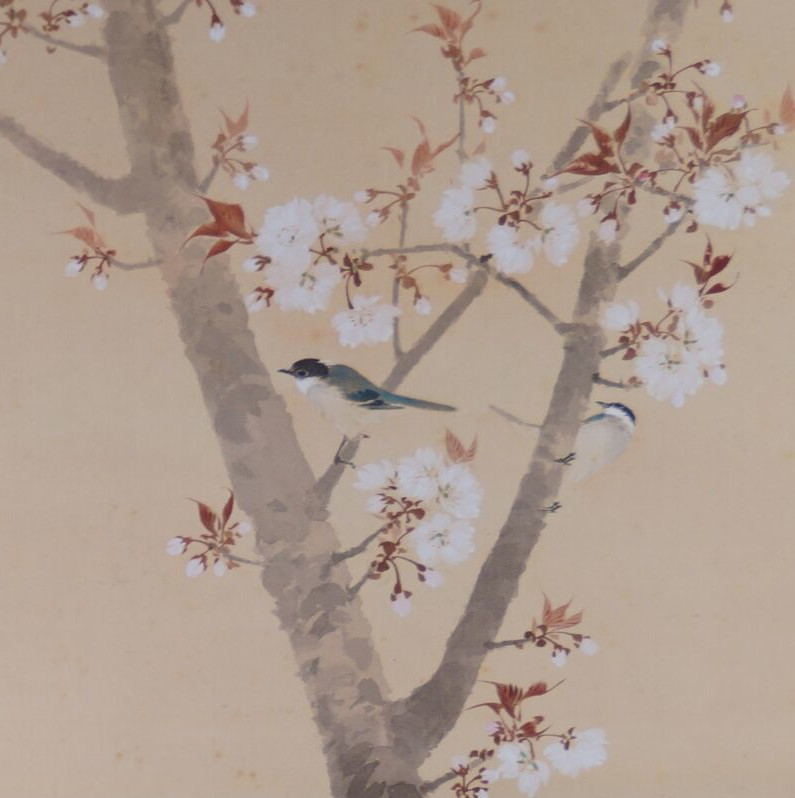
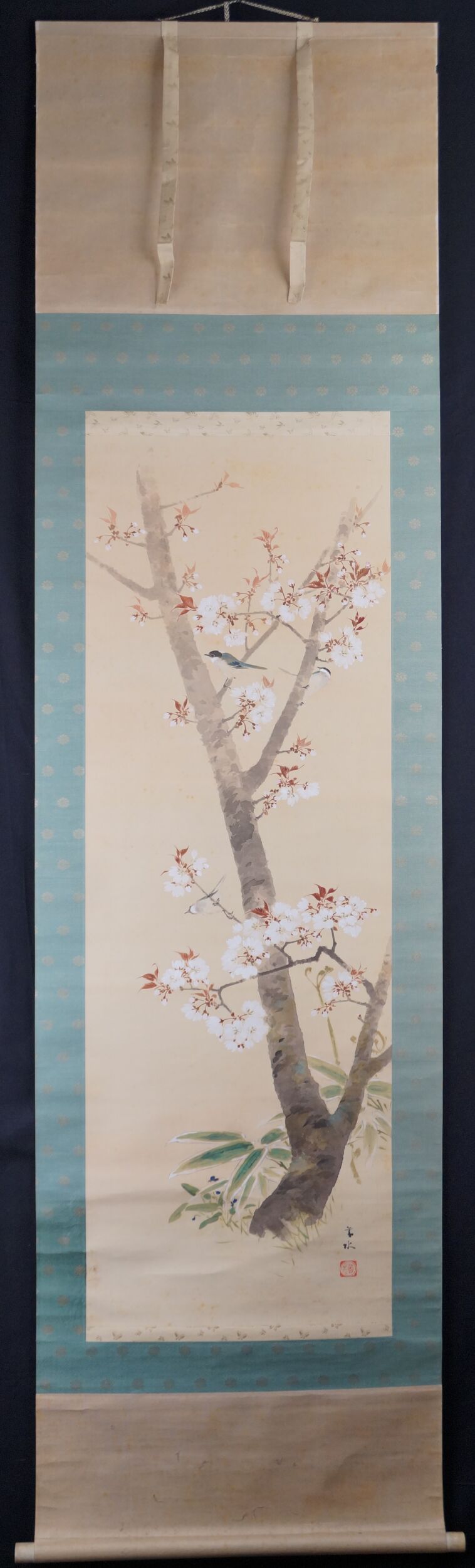
Suma Taisui
Spring at the Old Cherry Blossom
Kakemono, unique work, with box, 208 x 61 cm
€470.00
48 of 885 items shown
Kakemono: The Japanese Hanging Scroll
Kakemono (掛物), also called kakejiku (掛軸), is Japan's vertical hanging scroll and still the best-known form in which Japanese painting and calligraphy are displayed. It is almost always a portrait format: the mounting leads the eye from the top batten down the fabric panels into the picture and on to the roller at the bottom. As a rule of thumb, fully mounted scrolls measure about 170 to 200 centimeters in height and 40 to 60 centimeters in width, with the painting itself often taking up only half of that. A kakemono hangs freely, without frame or glass.
From Sutra Scroll to Tokonoma
The art of mounting came to Japan from China together with Buddhism. It began with the preparation of sutra scrolls, and the hanging scroll developed from images of Buddhist deities that were hung up for devotion. In the Muromachi period (1333–1573) it became customary to mount Chinese and Zen Buddhist painting and calligraphy in brocades. At the same time, the shoin style of architecture gave rise to the tokonoma, the display alcove of the reception room, which gave the scroll a fixed place. When the tea ceremony flourished later, the taste of the tea masters shaped mounting as well.
Anatomy: From Honshi to Jikusaki
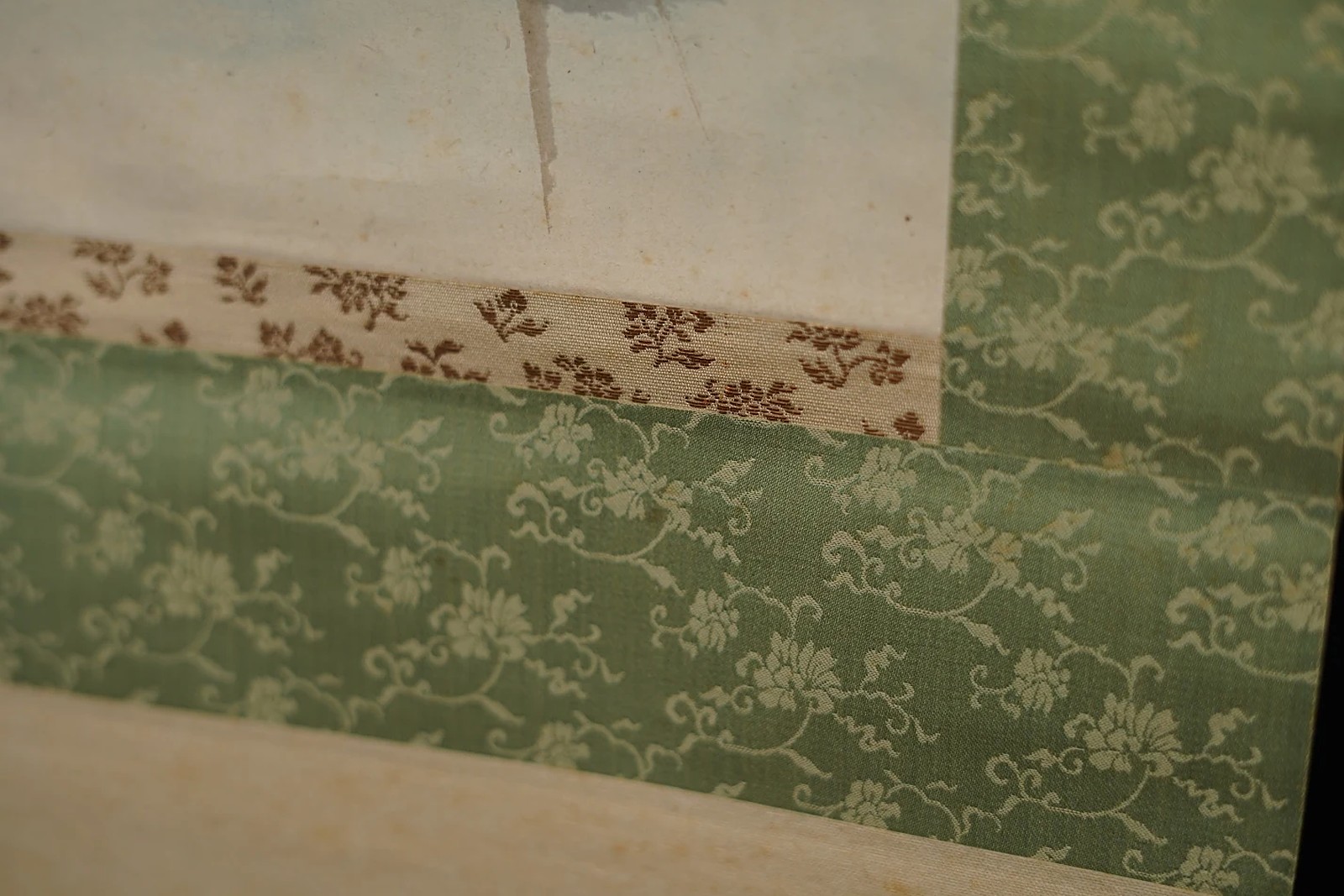
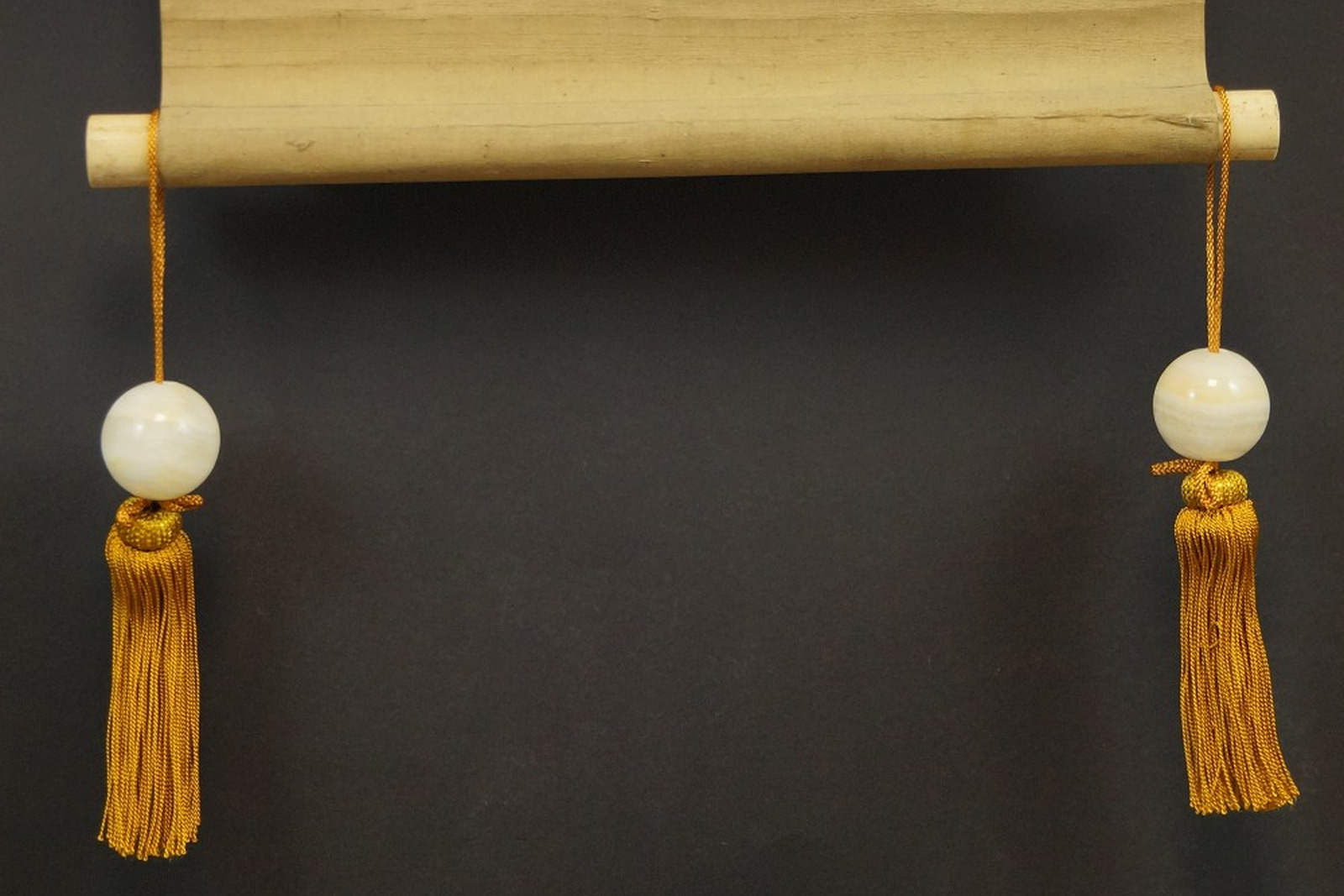
At the center sits the honshi, the actual work on paper or silk. Above and below it run the ichimonji, two narrow horizontal strips traditionally cut from the most precious fabric of the mounting. Around both lies the chūmawashi, the inner border, and above and below follow the calm fields of ten (heaven) and chi (earth). On many mountings two fabric bands, the fūtai, hang down from the top batten. The batten carries the hanging cord, while the roller at the bottom keeps the scroll smooth. Its visible end pieces, the jikusaki, are made of wood, bone, horn, lacquer, ceramic or, on more recent mountings, plastic.
Hyōgu: The Second Hand in Every Scroll
Turning a painted sheet into a scroll is the work of the mounter, the hyōgu-shi. He backs the picture and fabrics with several layers of washi and wheat starch paste and chooses the fabrics so that they harmonize with one another and set off the motif – a cool blue-gray for an ink landscape, a warm golden ochre for peonies. Mountings follow fixed types: the widespread yamato-hyōgu family distinguishes three degrees of formality, shin, gyō and sō, while the bunjin-hyōgu of the literati surrounds the picture with a single fabric on all sides. Because the paste remains water-soluble, a mounting can be removed and renewed after generations. The mounting of an old painting is therefore often younger than the painting itself.
Hand-Painted, Copy or Print
Three very different things are offered side by side on the market for scrolls. The hand-painted original exists exactly once. A workshop or school copy is also painted by hand but follows a famous model – in Japan, copying was part of an artist's training for centuries and is no flaw as long as it is described as a copy. Then there are reproductions such as woodblock prints, collotypes, screen prints and digital prints. Hand-painted ink sits on the ground in varying thickness, bleeds slightly into the fibers at the edges and shows where the brush was lifted at the end of a stroke; a print stays even and often breaks up into a dot pattern under a magnifier. At Densho the technique of every scroll is stated, and screen prints are labeled as such.
Tokonoma, Living Space and the Change of Seasons
Traditionally, a kakemono hangs in the tokonoma, the place of honor in the room, often accompanied by a flower in a vessel. It was never displayed permanently but changed according to season or occasion: a flowering plum branch in spring, a waterfall landscape in high summer, ink on an empty ground in winter. Three to four weeks at a stretch are considered appropriate; afterwards the scroll rests rolled up in its box. In a Western home a scroll needs no alcove, but it does need calm wall space around it – a narrow wall between two doors is often a better place than a living room wall that is already full.
Hanging and Care
A kakemono is hung while it is still rolled up: the cord goes over the hook first, then the scroll is slowly unrolled while both hands guide the roller. Fuchin, paired weights at the ends of the roller, keep the scroll steady in a draft. Direct sunlight, air from radiators and cold outside walls cause damage; as a rule of thumb, a relative humidity of about 50 to 60 percent is ideal. Clean only dry with a soft brush, because moisture dissolves the paste. Roll the scroll loosely and without tension and store it in a box made of kiri (paulownia) wood.
What Collectors Look For
Slight yellowing, a darkened silk ground and small foxing spots at the edge of the mounting are normal in pieces from the Meiji, Taishō or Shōwa period. A closer look is needed for stains in the middle of the picture, brittle silk along the rolling edges and a mounting that is coming loose over a large area. Care in mounting shows in straight seams, a centered picture field and the jikusaki: bone, turned wood, ceramic or lacquer suggest an elaborate mounting, plastic rather a simpler one. If a wooden box inscribed by the artist, a tomobako, comes with the scroll, it is part of the object and should never be separated from it.