
Figure Daruma Figure Made of Kutani Ware with Whisk
One of a kind — this work exists only once.
- Period:
- Meiji (1868–1912)
- Dimensions (height x width):
- 35 x 13 cm
- Weight:
- 2g
- Item number:
- 5311
This piece has been sold.
Sold – no longer available
This piece was a handmade one-of-a-kind work. It cannot be reordered and will never exist in this form again. The page stays online as part of our archive.
See new one-of-a-kind pieces first
We feature every delivery from Japan in the newsletter first – before the pieces show up in search results.
You might like these pieces
Daruma Figure Made of Bizen Ware with Pensive Expression
Figure, unique work, 29 x 11 cm
€280.00
Bodhidharma (Daruma) Figure with Worried Expression Made of Bizen Ware
Figure, unique work, 22 x 10 cm
€180.00
Daruma Figure Made of Kutani Porcelain in White Robe
Figure, unique work, 24 x 9 cm
€290.00
Daruma Figure Made of Bizen Ware with Wide Open Eyes
Figure, unique work, 30 x 12 cm
€280.00
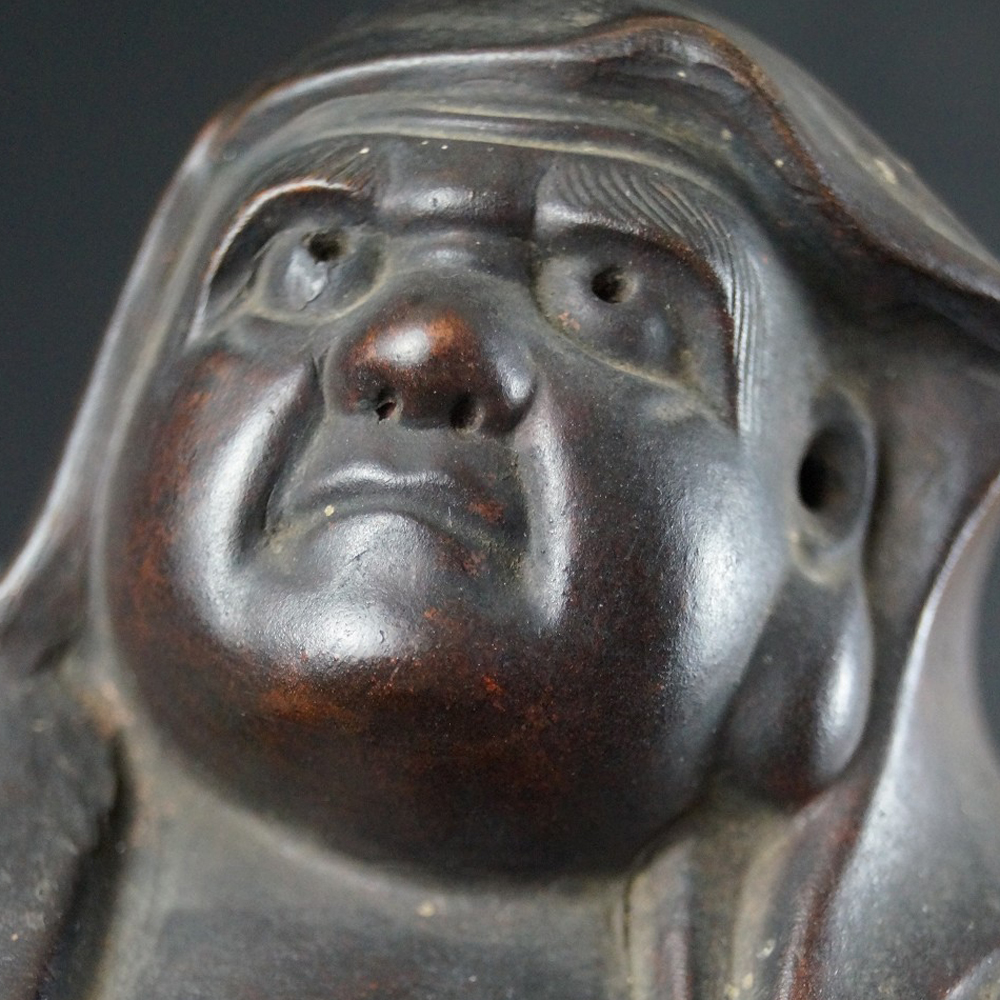
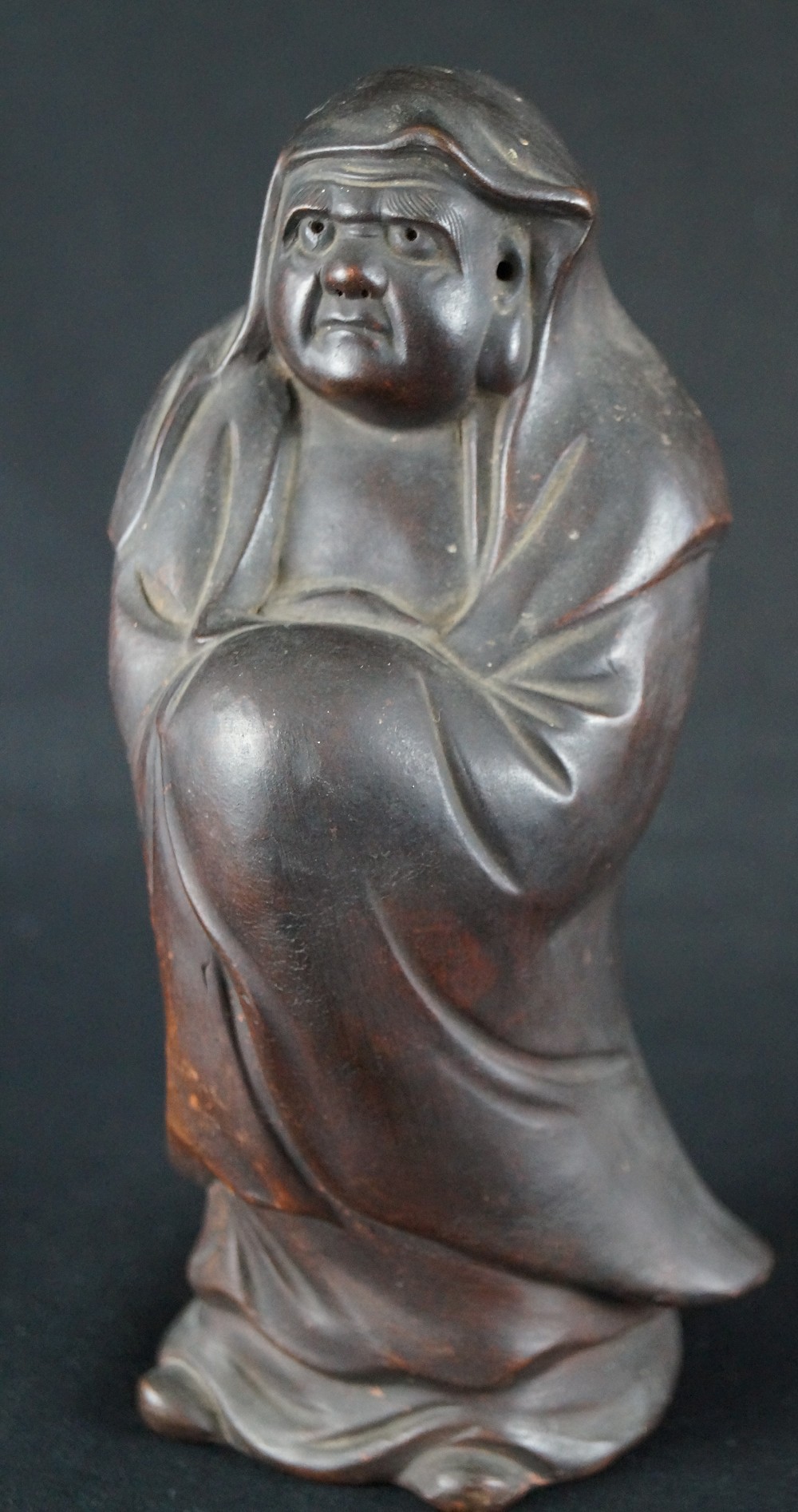
Bodhidharma (Daruma) Figure with Fierce Gaze Made of Bizen Ware
Figure, unique work, 20 x 8 cm
€180.00
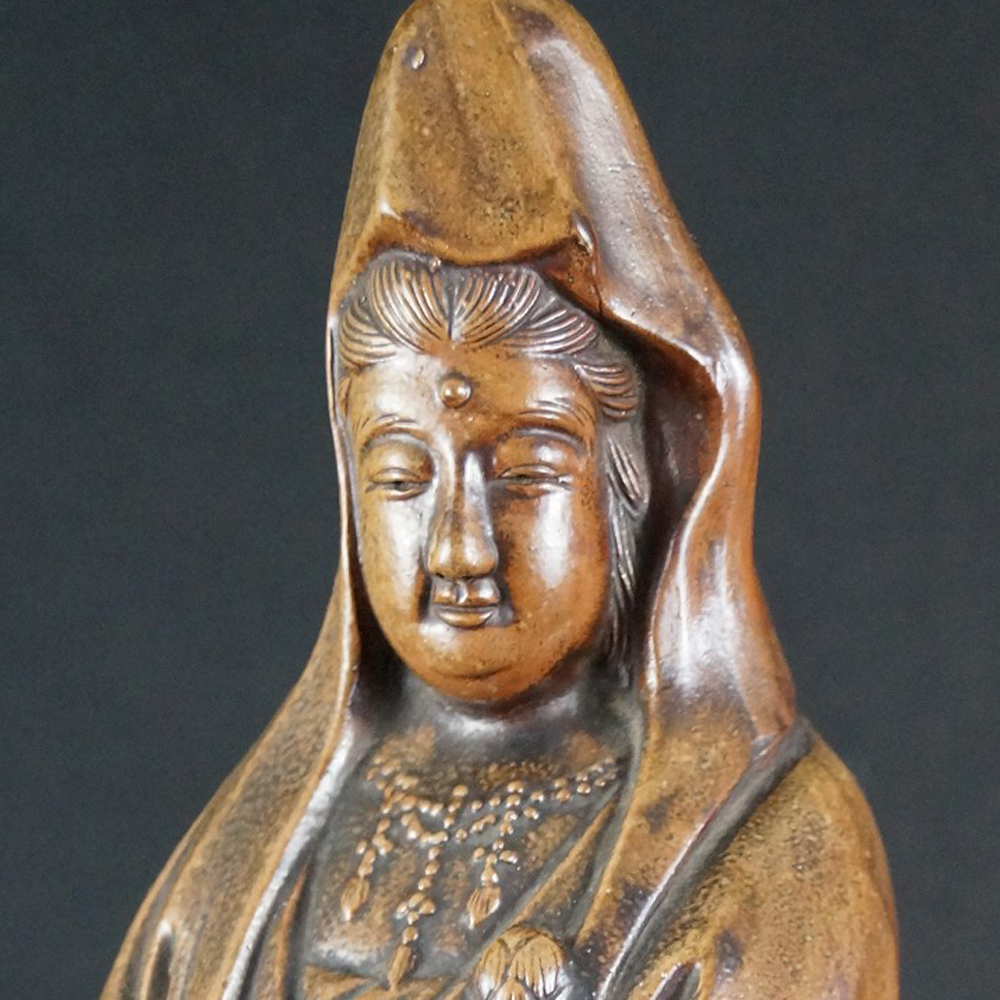
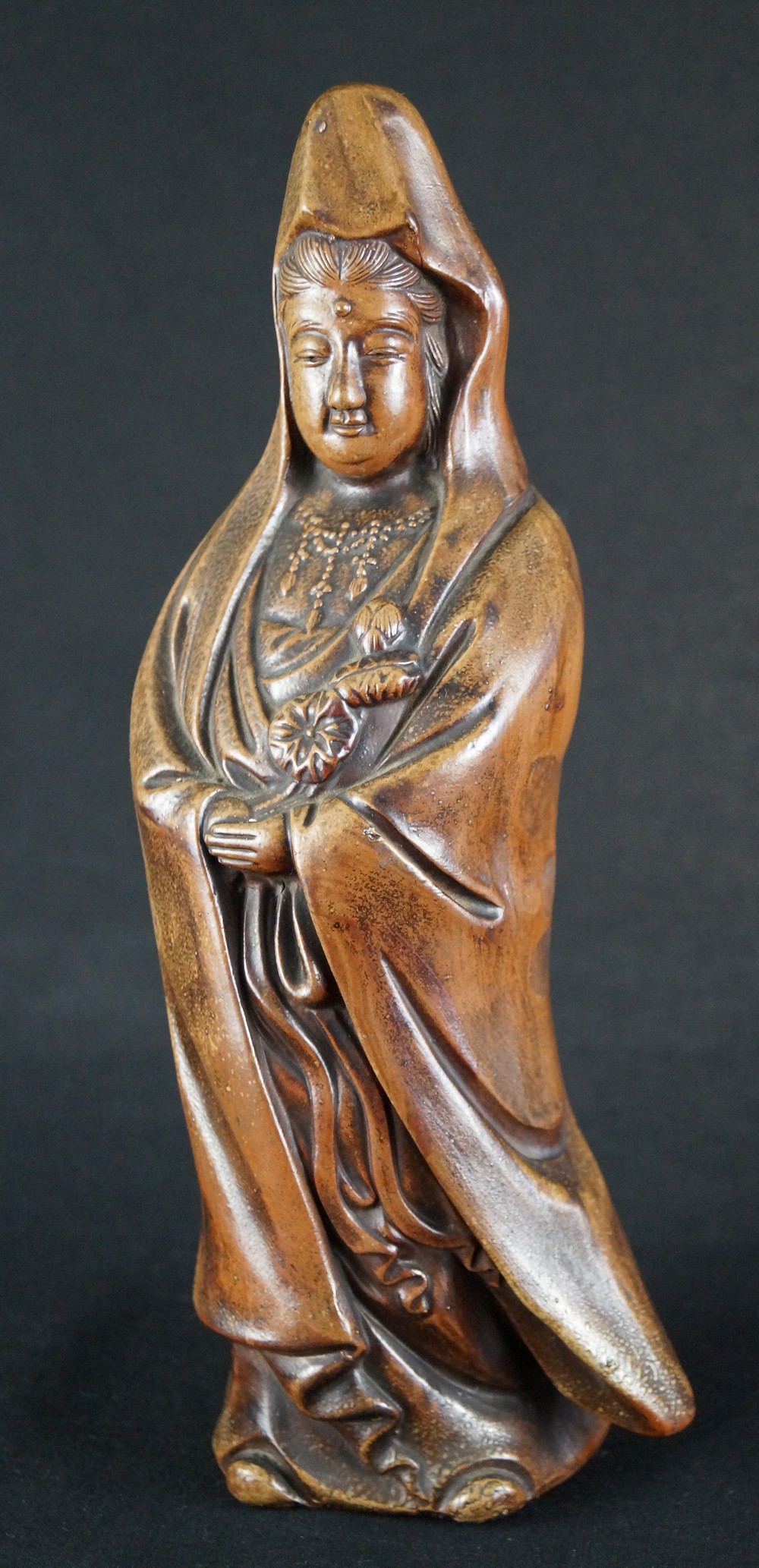
Kannon Figure Made of Bizen Ware
Figure, unique work, 25 x 8 cm
€330.00
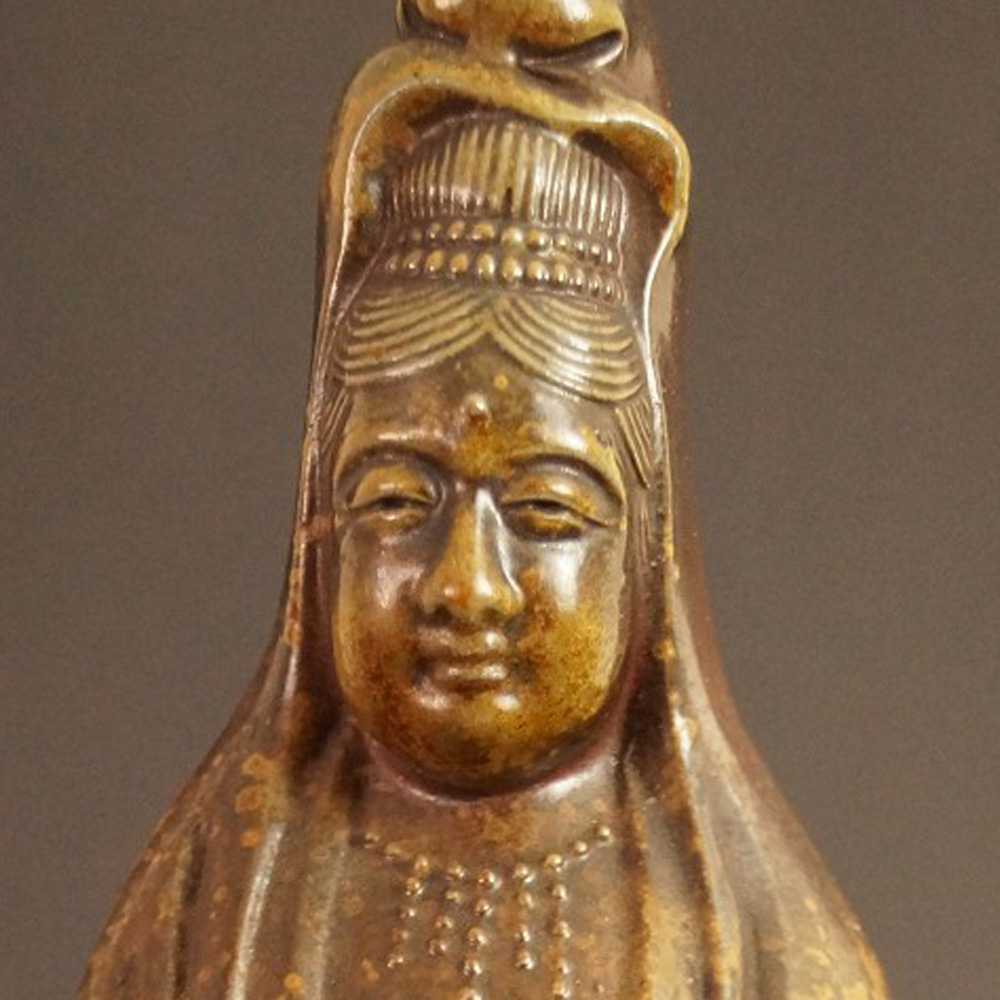
Shibaoka Tsukuru
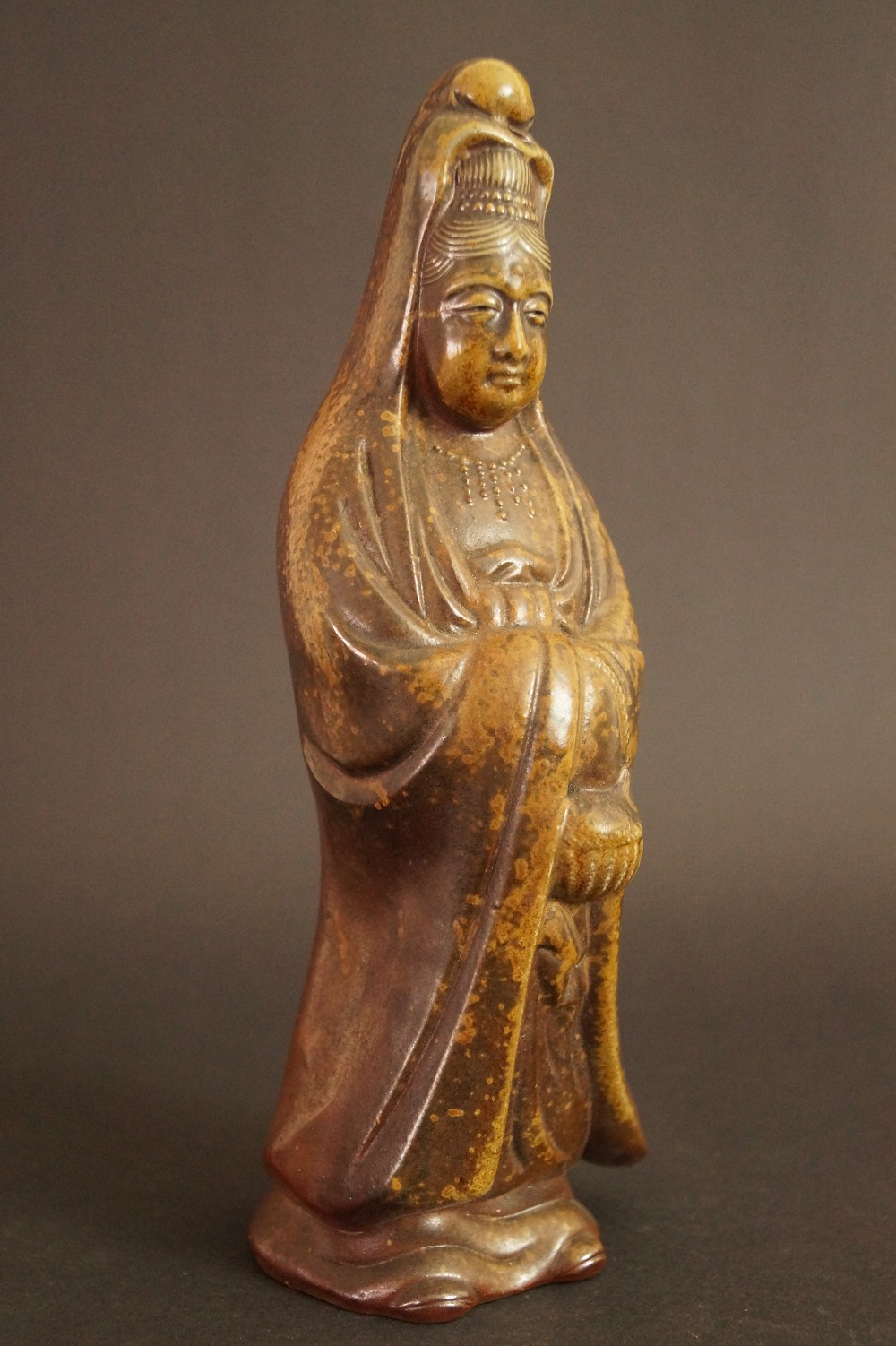
Kannon Figure Made of Bizen Ware by Shibaoka Tsukuru
Figure, unique work, 23 x 8 cm
€300.00
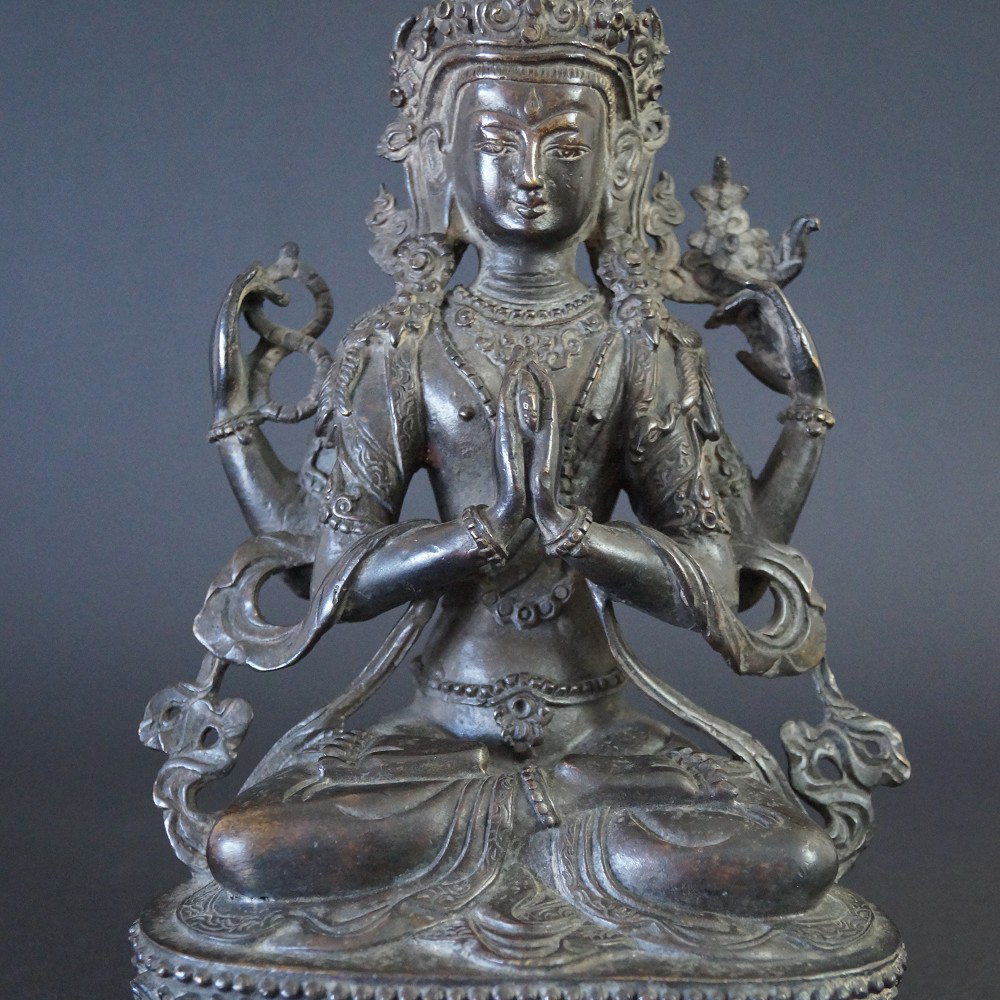
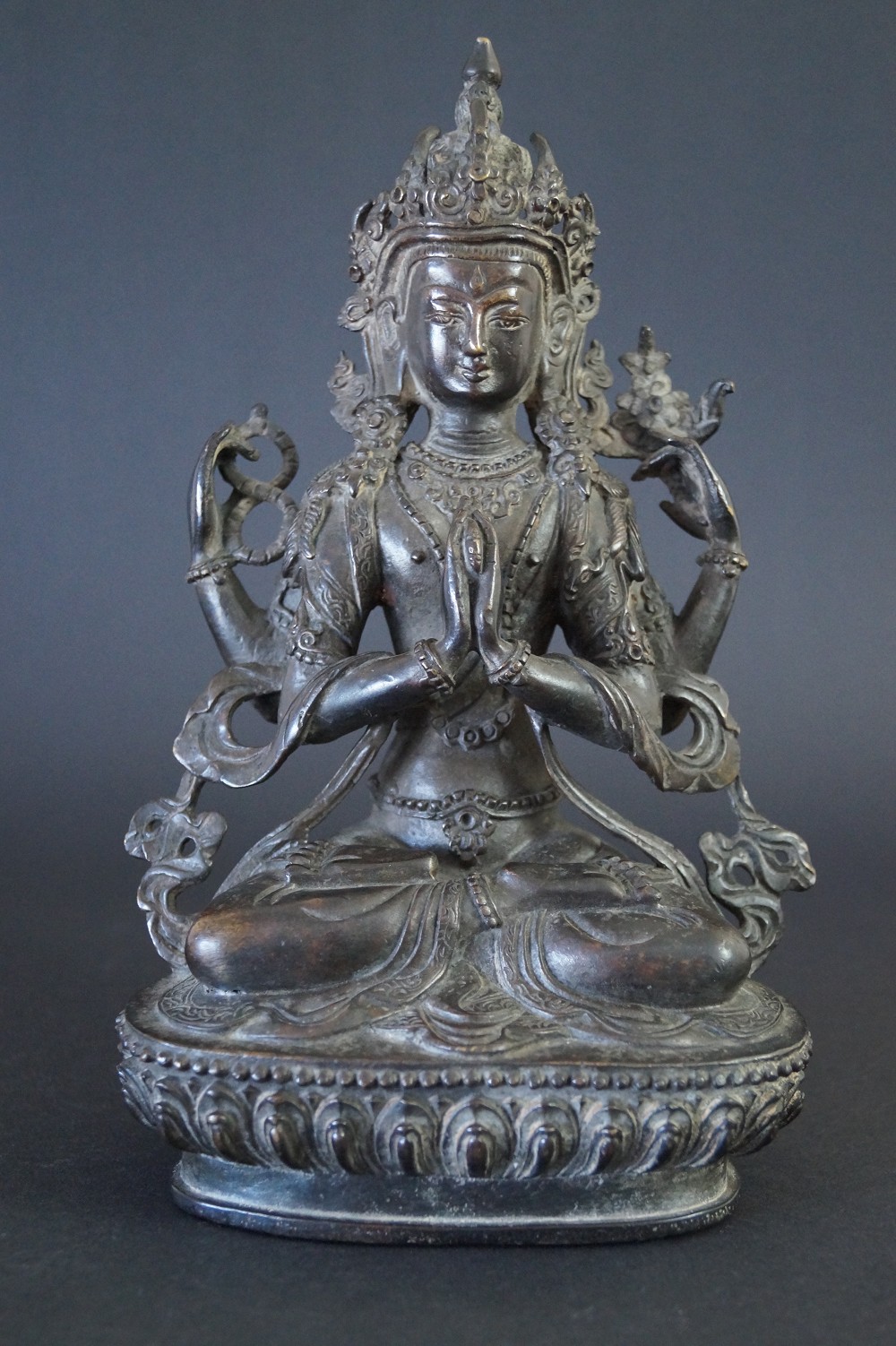
Nepalese Buddha Figure Made of Bronze
Figure, unique work, 21 x 12 cm
€430.00
Details about the sold piece
- ColorBlack, Red
- MaterialPorcelain
- MotifBuddhism and Zen, Daruma
- Style / TraditionKutani-yaki
Description
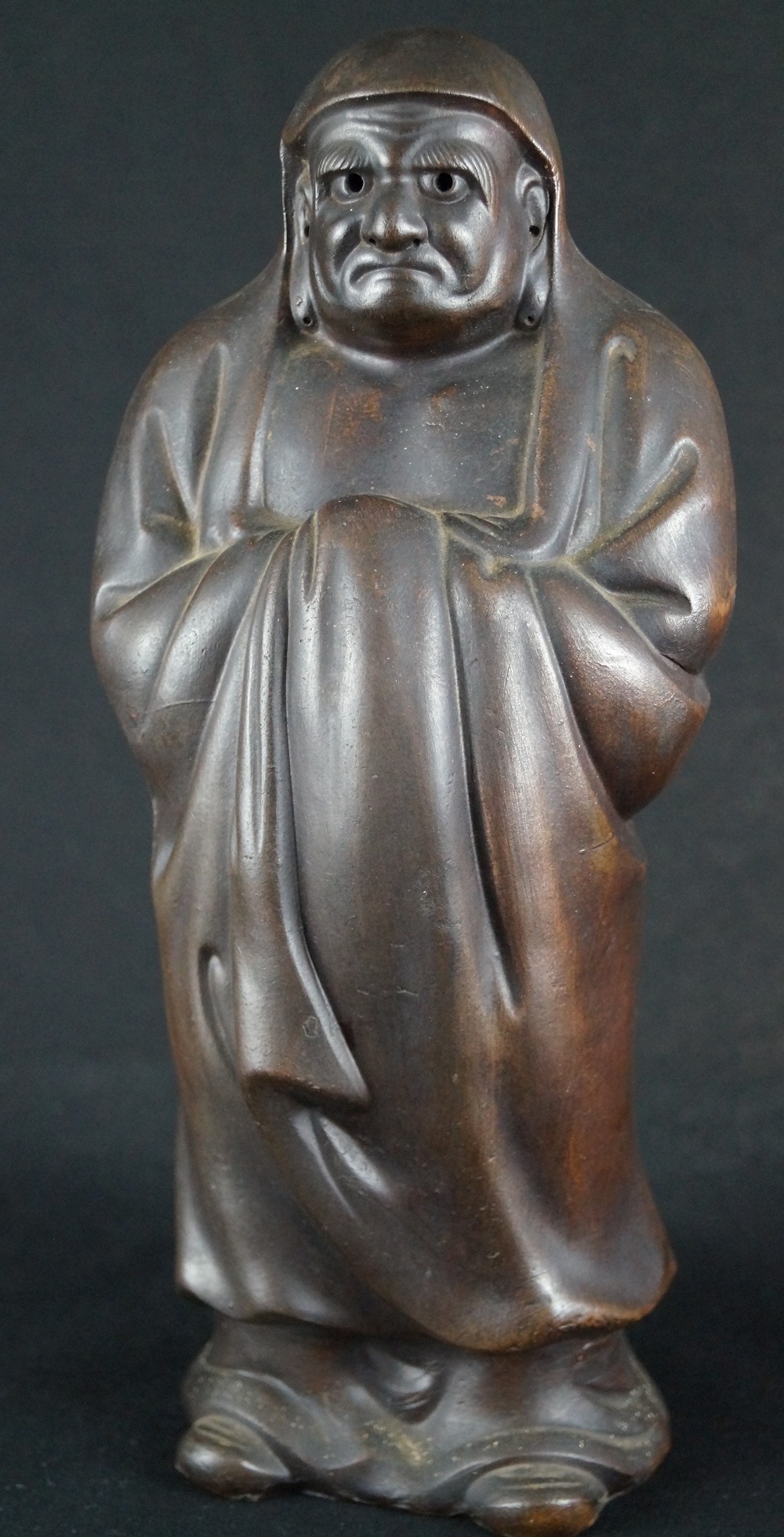
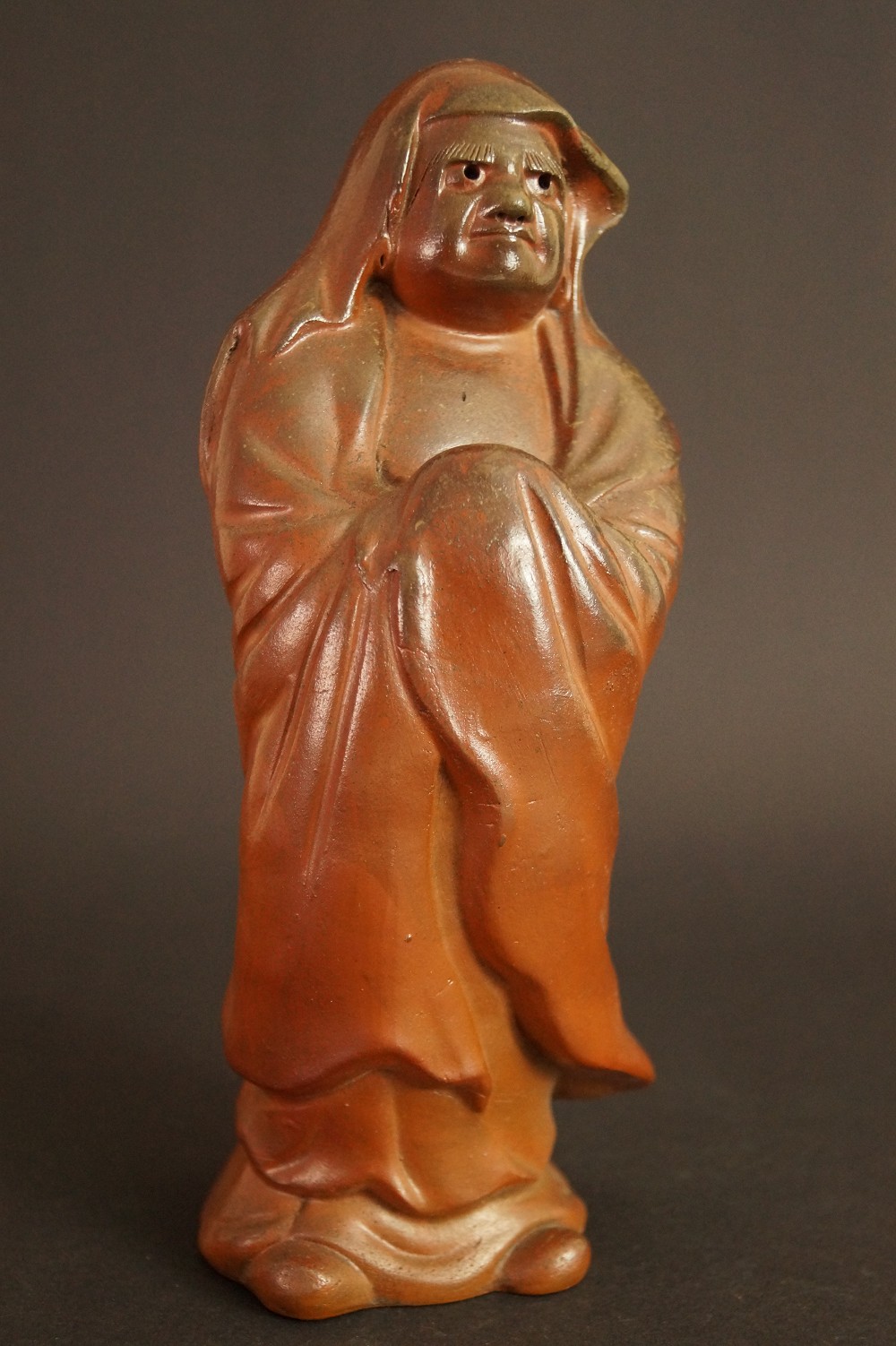
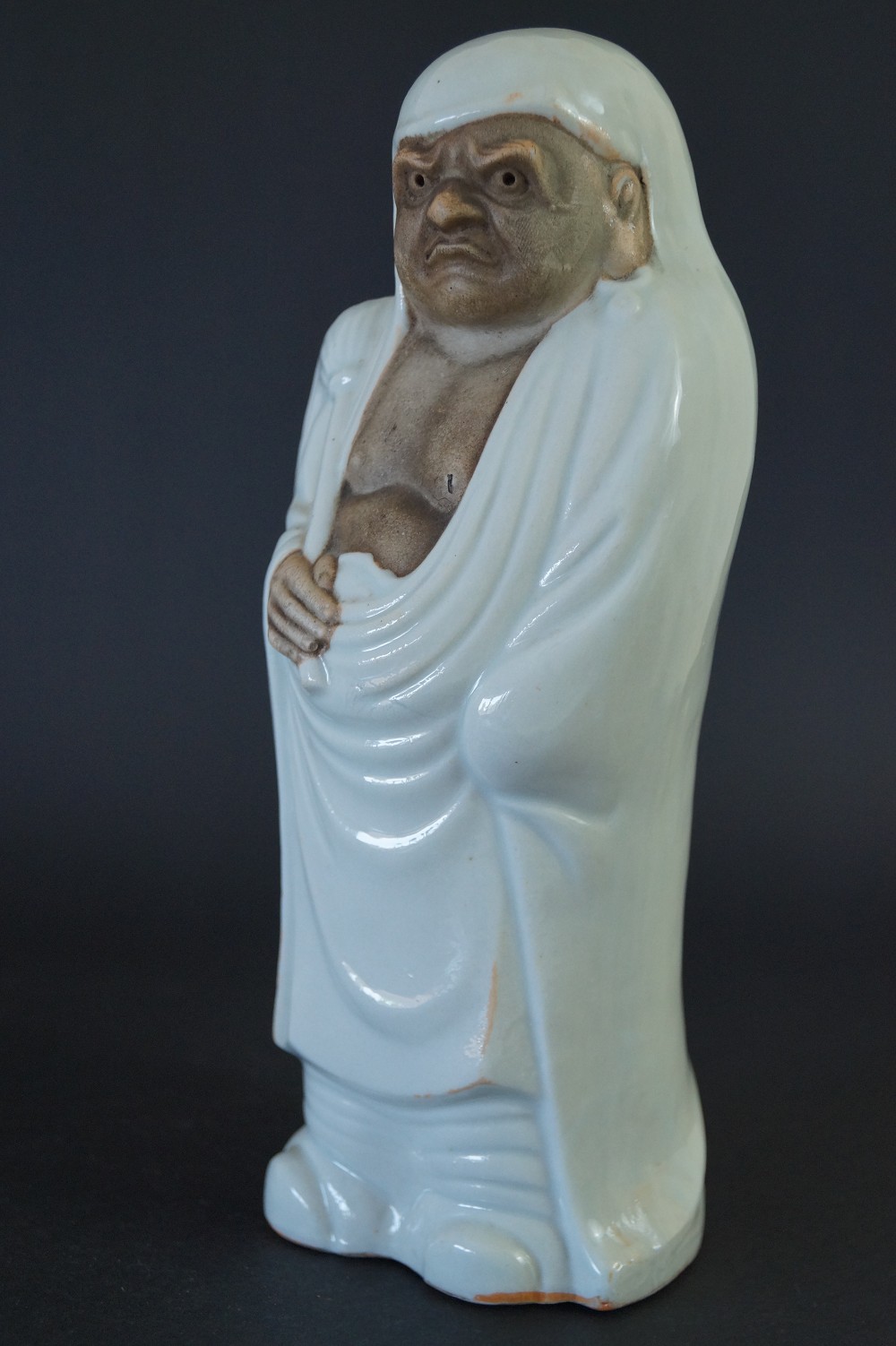
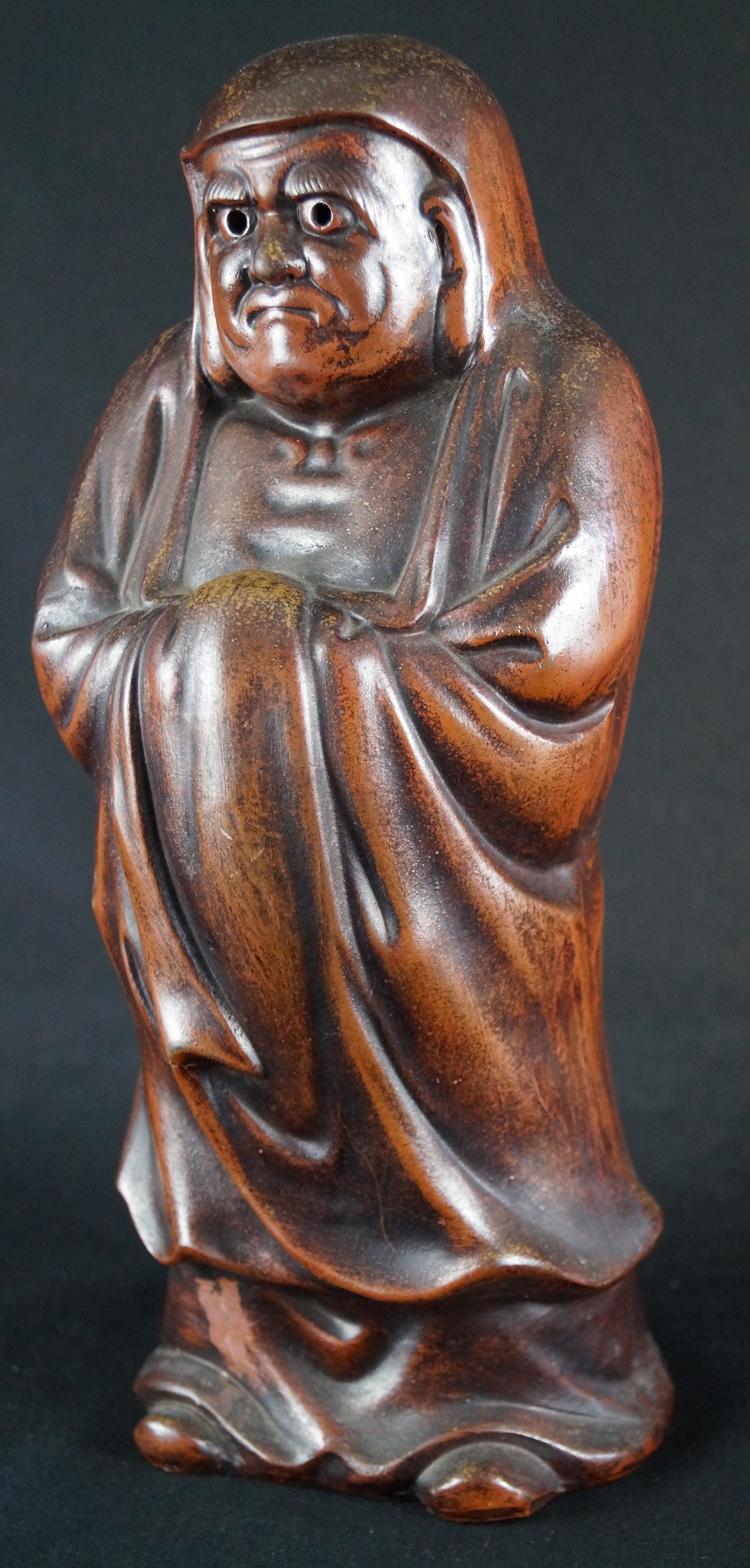
Wrapped in brilliant vermilion, its gaze directed upward and holding a whisk in hand, this depiction of Bodhidharma, venerated in Japan as Daruma, presents itself in a striking coloration characteristic of the Kutani ware tradition. The bold red and gold tones, complemented by dark, almost black accents in the face and the folds of the robe, create a strong, immediate expression.
Kutani-yaki from Ishikawa Prefecture is known for its dense, richly colored overglaze painting, which has here been translated onto the sculptural form of the figure to clearly render the folds of the robe, the facial expression, and details such as the hossu whisk held in the hand. The penetrating, slightly melancholic eyes and the contemplative facial expression recall the legend of Daruma, who meditated for nine years before a rock wall and thereby became the central symbolic figure of perseverance and mental concentration in Zen Buddhism.
This figure from the Meiji period is a richly colored example of Japanese porcelain art, impressively combining religious symbolism with craftsmanly finesse.


