
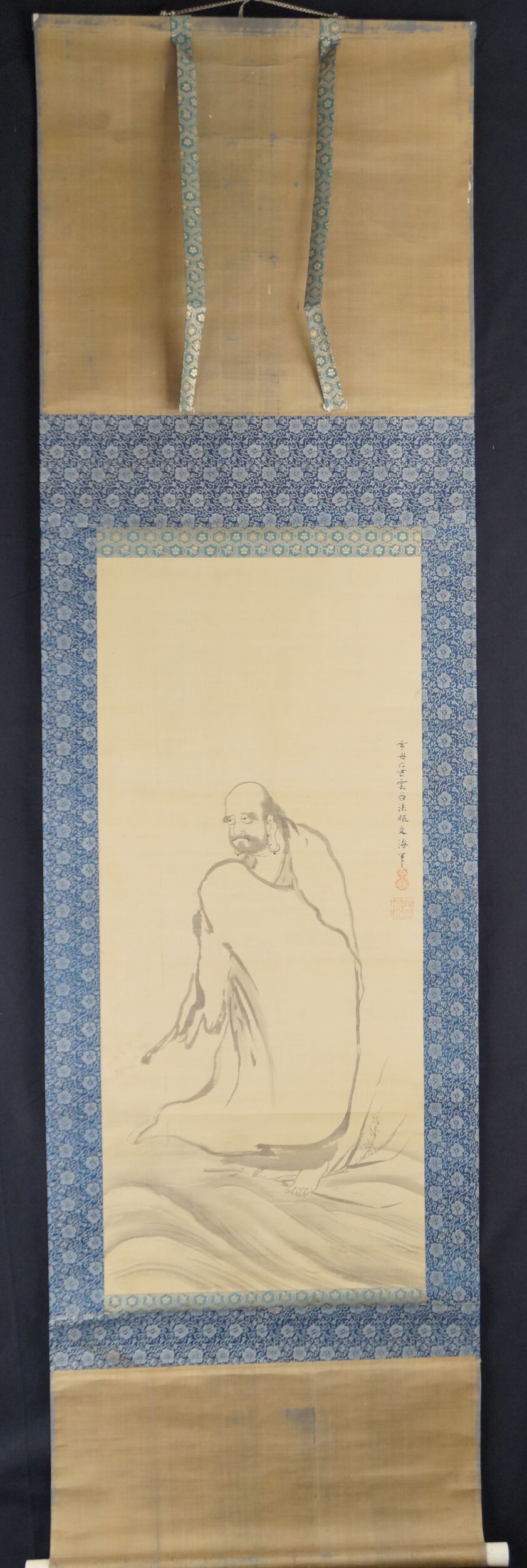
Kakemono Standing Bodhidharma in Orange Robe
One of a kind — this work exists only once.
- Period:
- Shôwa (1926–1989)
- Dimensions (height x width):
- 190 x 60 cm
- Item number:
- 3548
This piece has been sold.
Sold – no longer available
This piece was a handmade one-of-a-kind work. It cannot be reordered and will never exist in this form again. The page stays online as part of our archive.
More items in category Buddhism and ZenAll one-of-a-kind Japanese Painting pieces
See new one-of-a-kind pieces first
We feature every delivery from Japan in the newsletter first – before the pieces show up in search results.
You might like these pieces
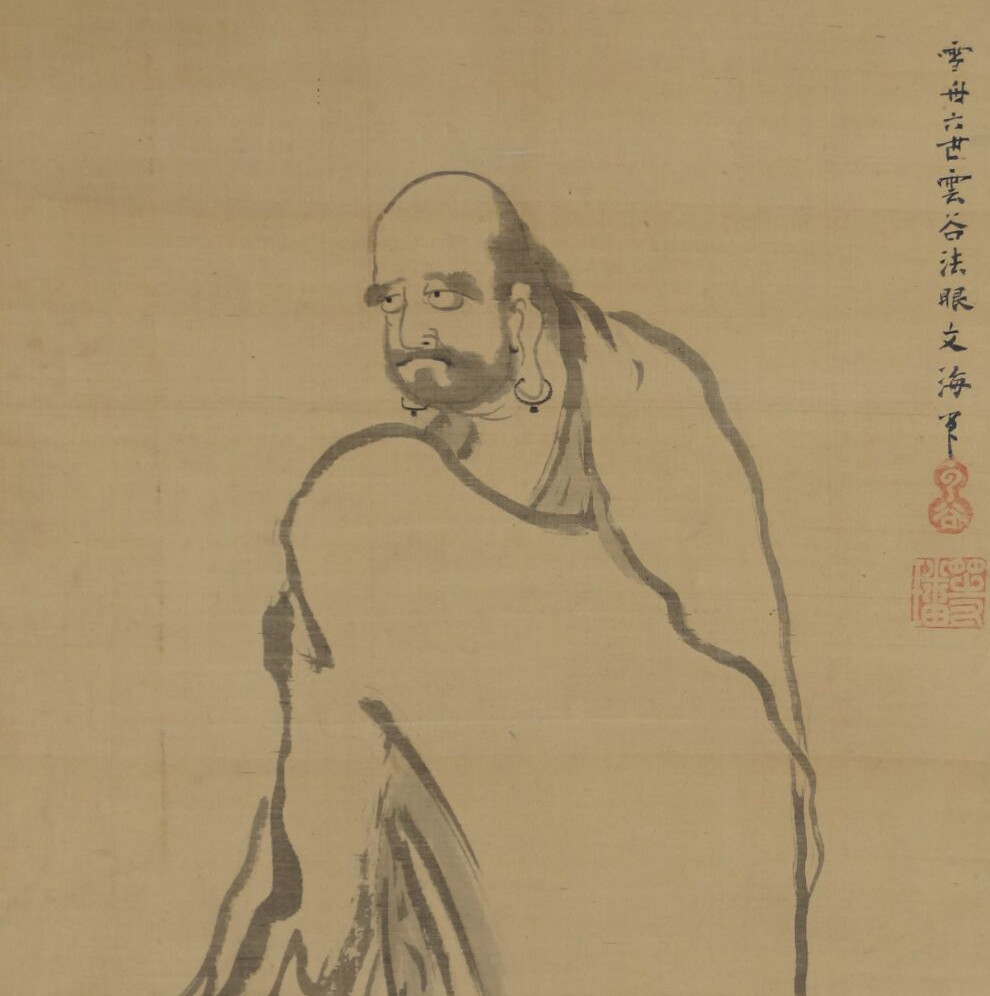
Unkoku Tōban
Bodhidharma on the Way
Kakemono, unique work, 168 x 52 cm
€550.00

Bodhidharma with Piercing Gaze
Kakemono, unique work, 200 x 51 cm
€340.00
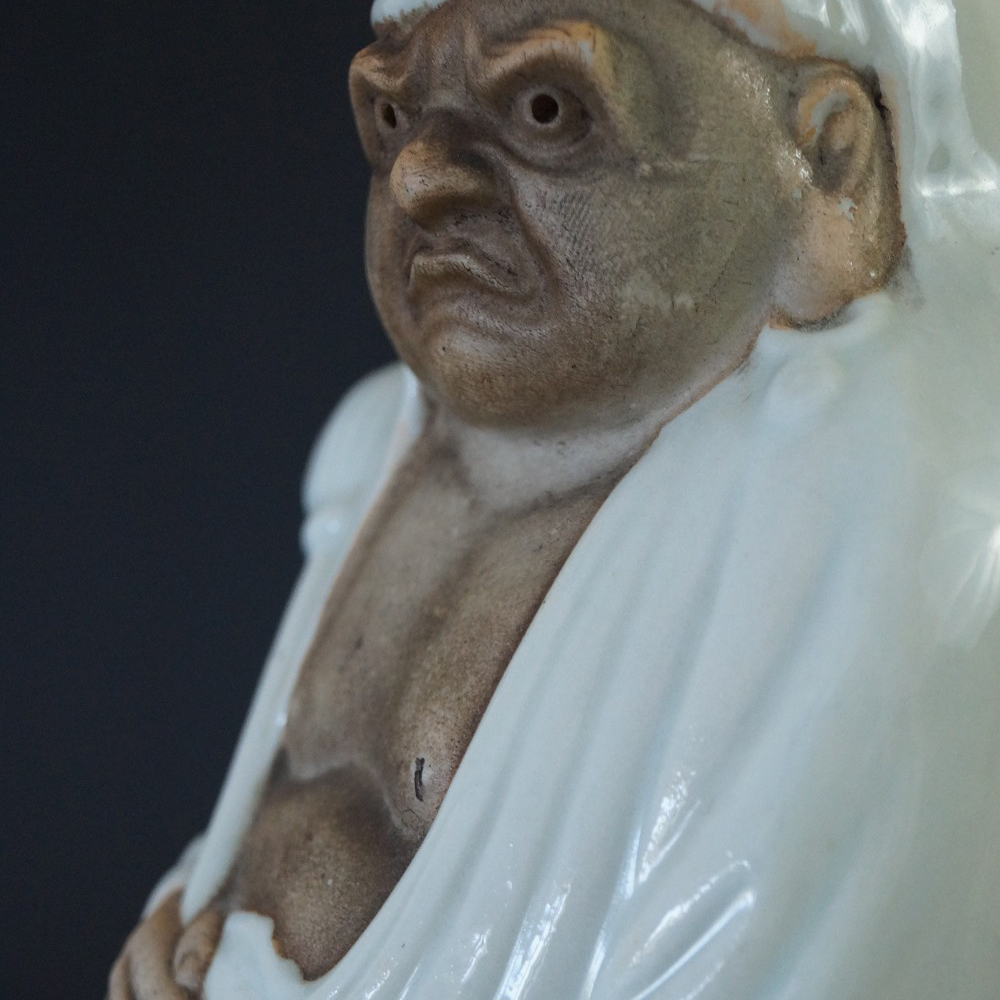
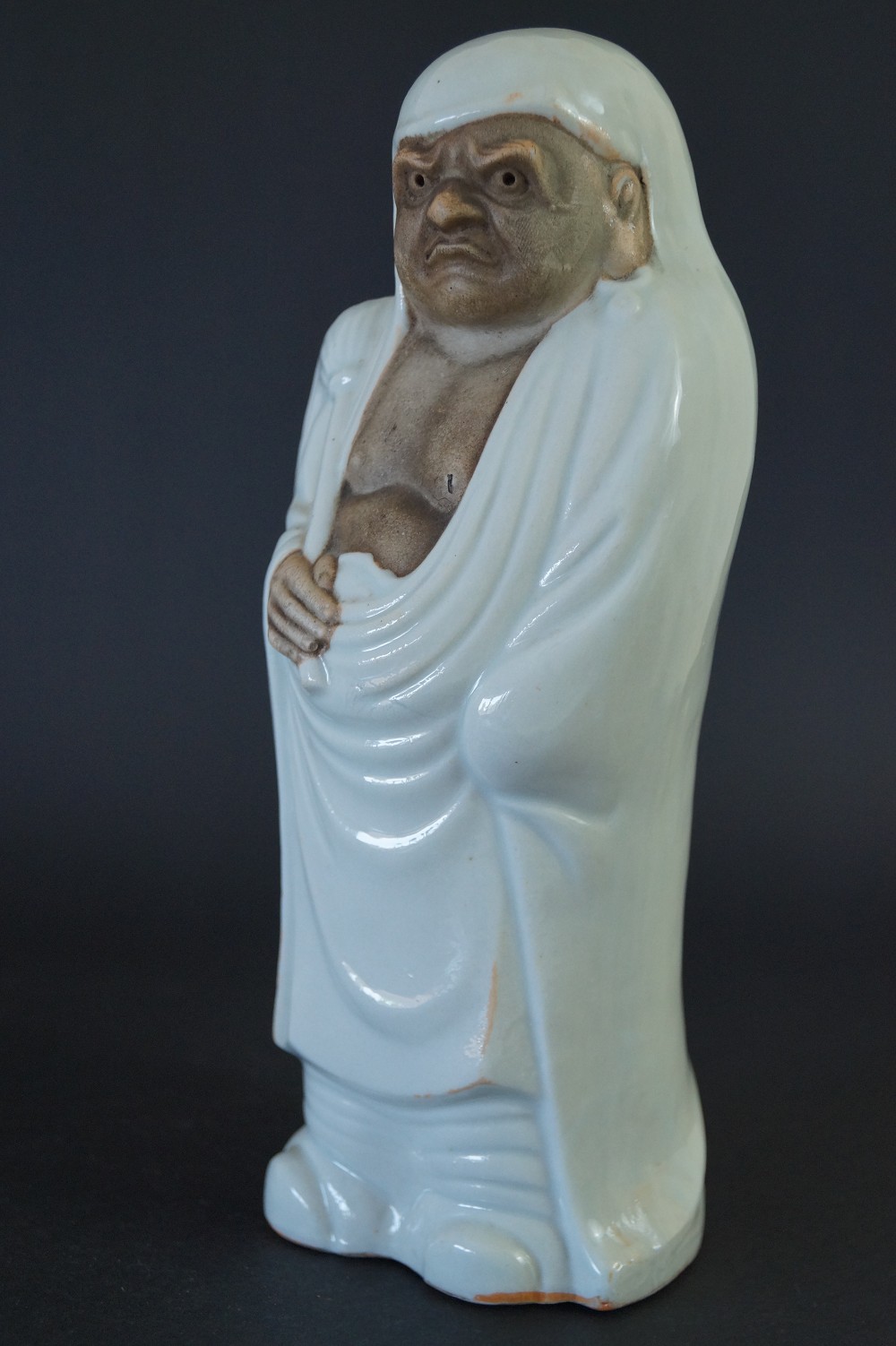
Daruma Figure Made of Kutani Porcelain in White Robe
Figure, unique work, 24 x 9 cm
€290.00
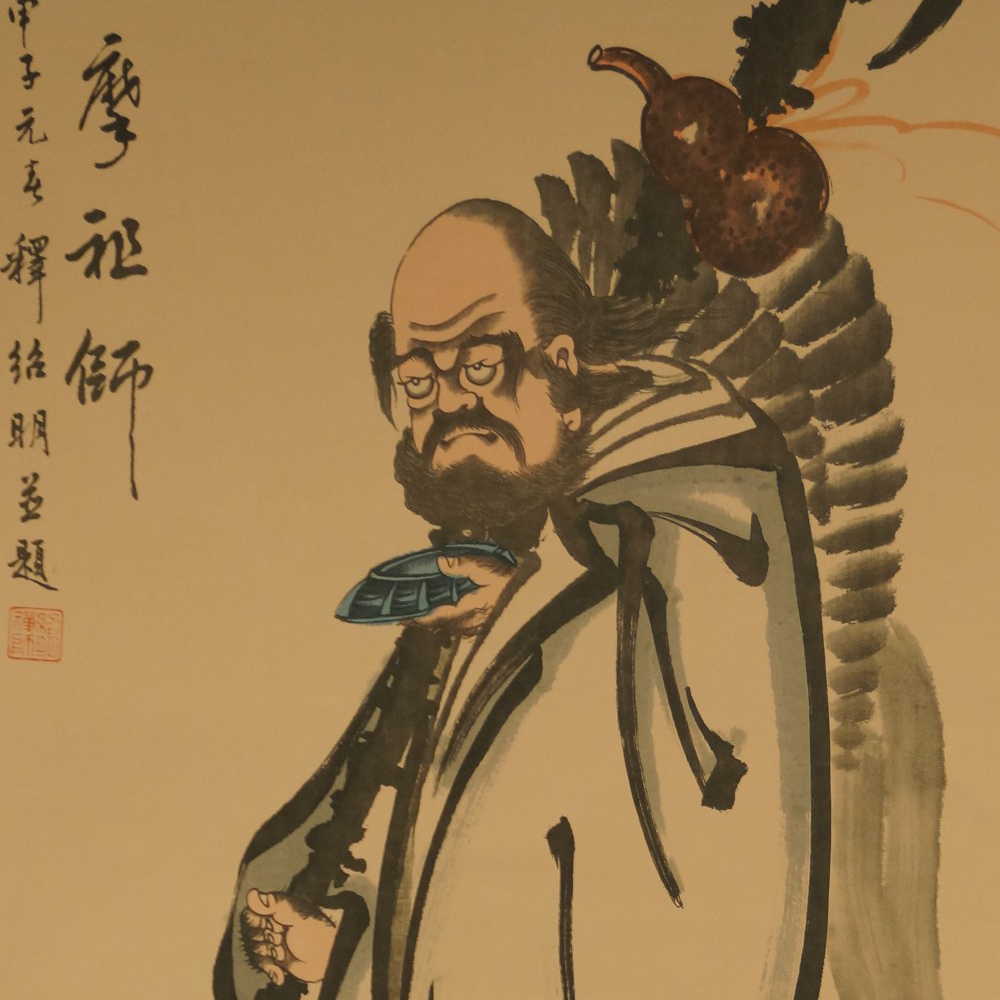
Bodhidharma with Fan and Gourd Bottle
Kakemono, unique work, 173 x 60 cm
€180.00
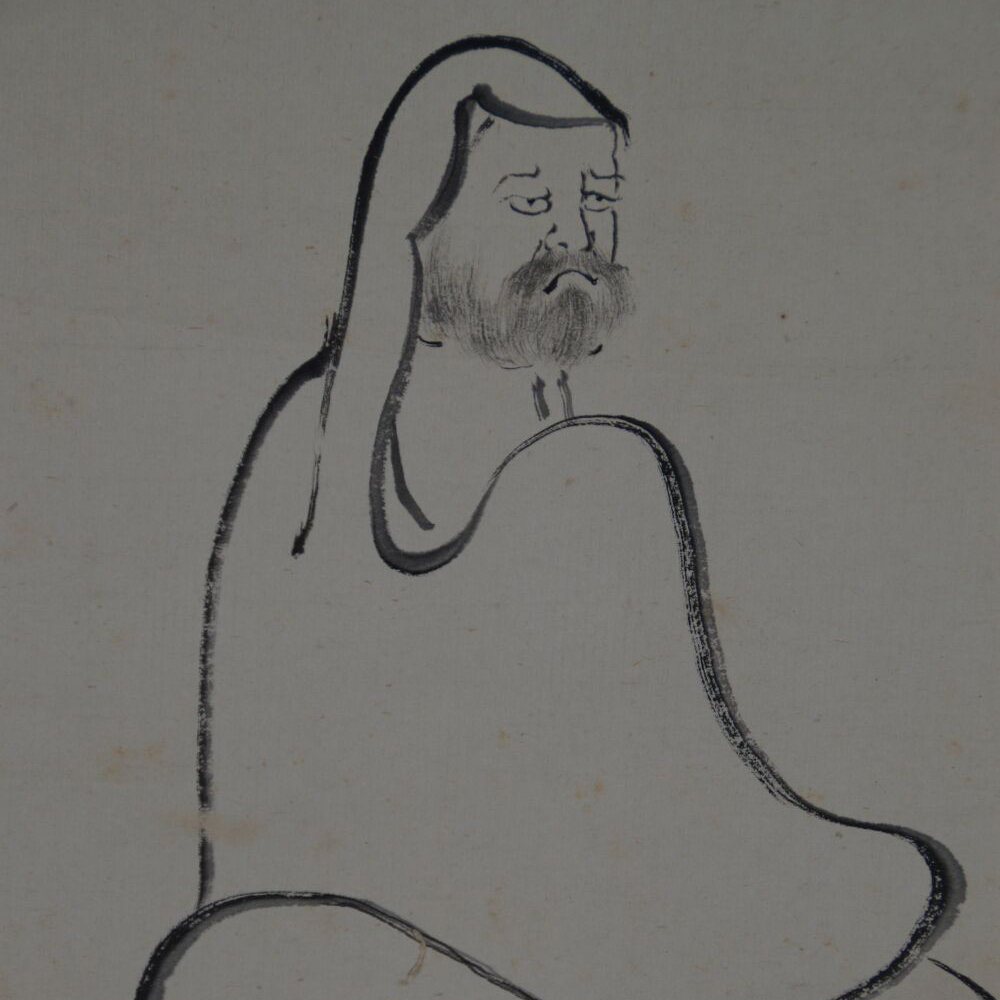
Ueda Gizan
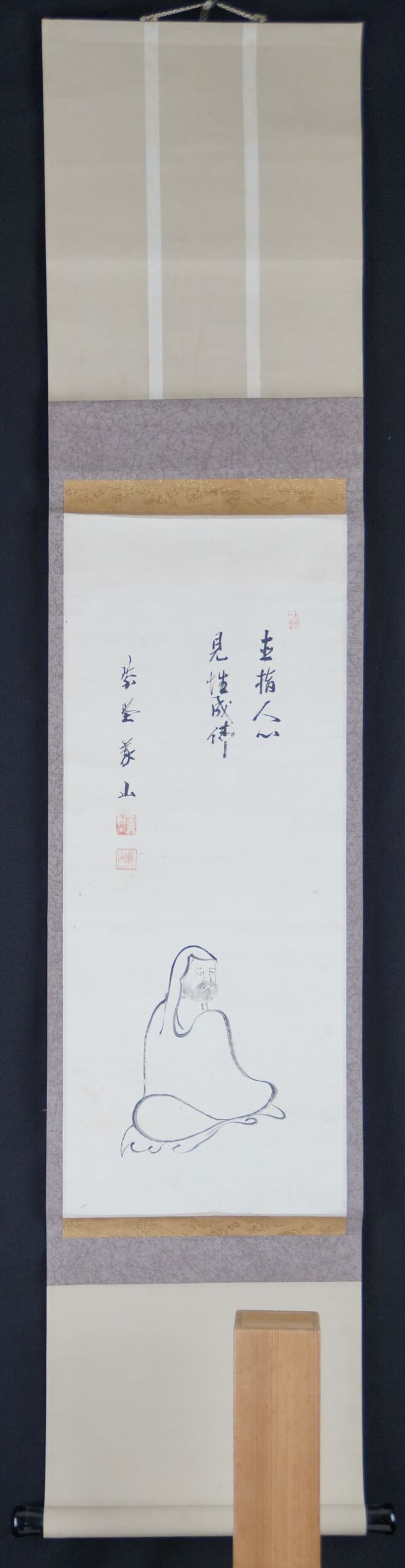
Bodhidharma - Straight to the Heart
Kakemono, unique work, with box, 135 x 34 cm
€450.00
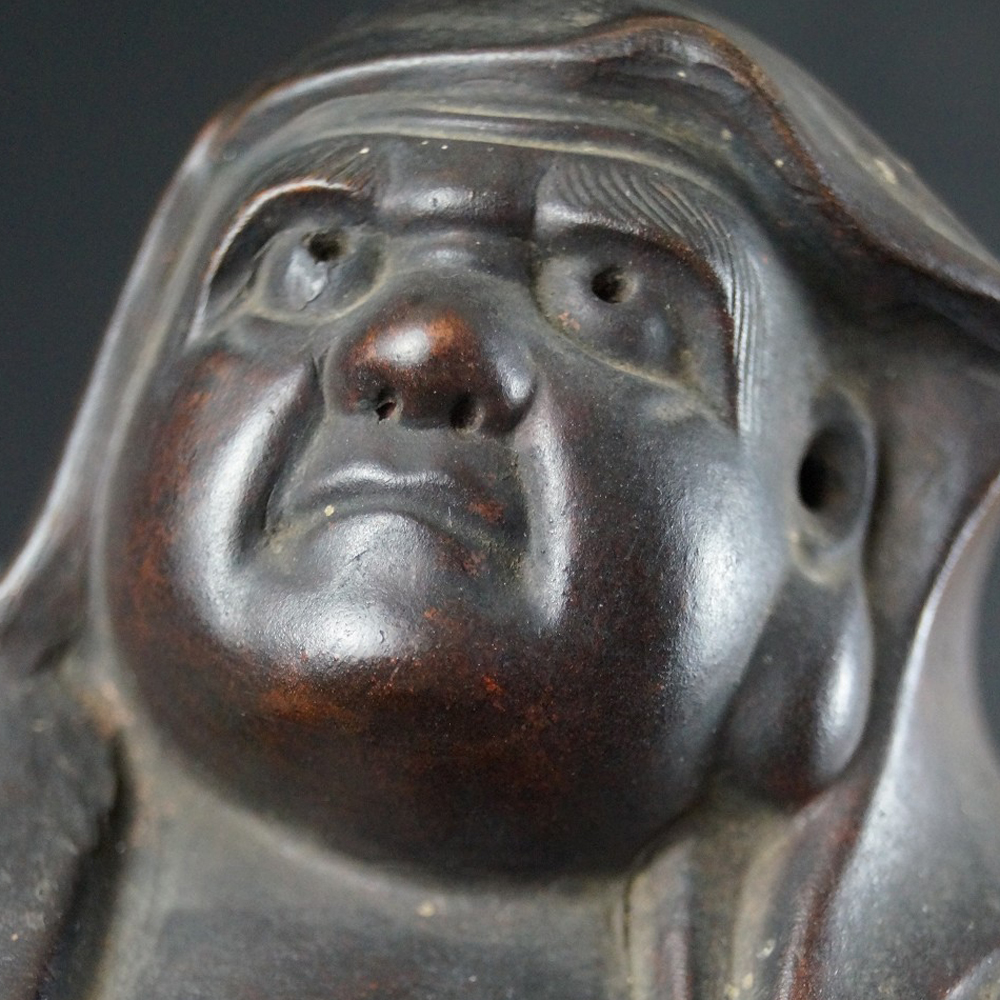
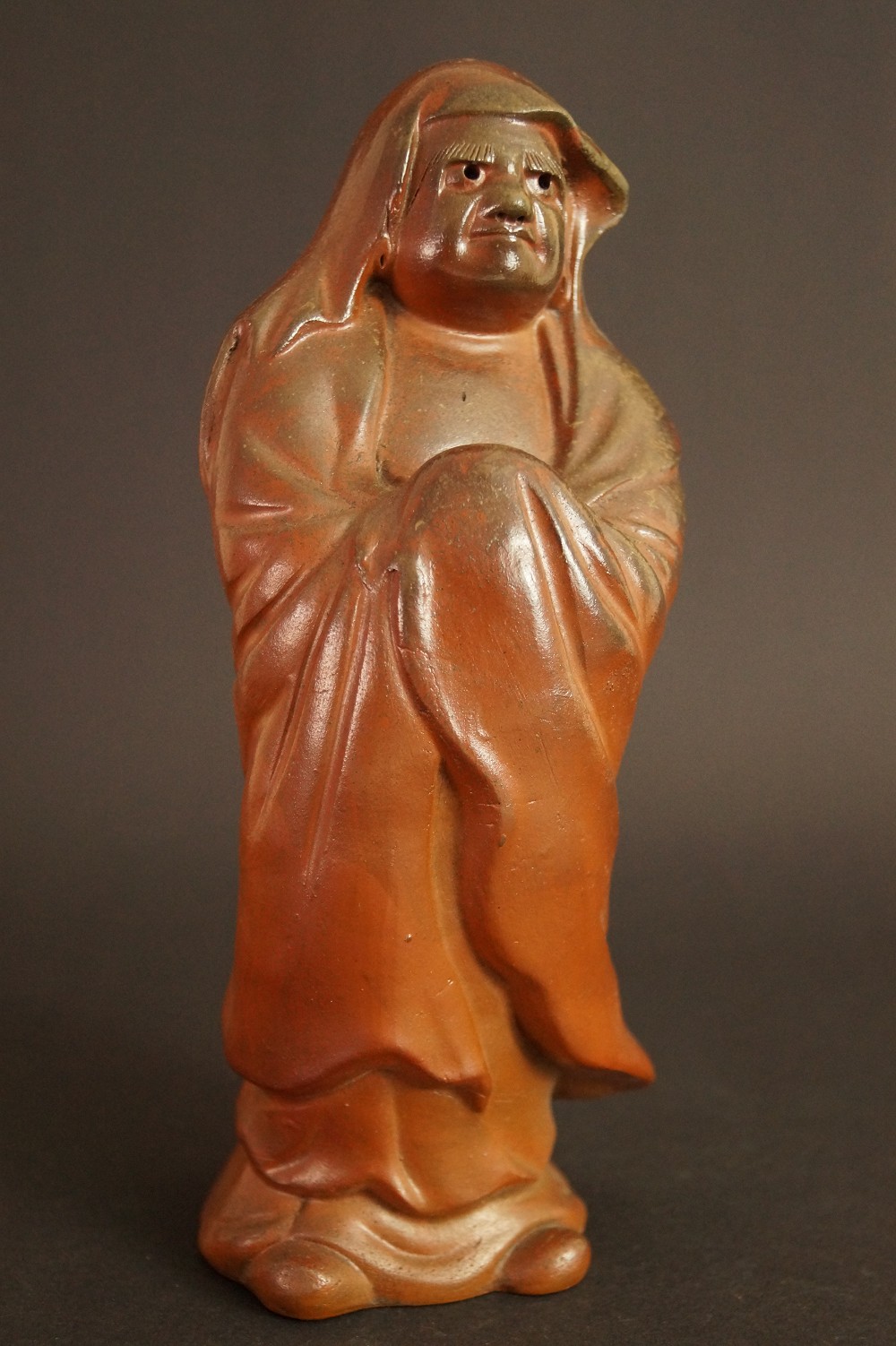
Bodhidharma (Daruma) Figure with Fierce Gaze Made of Bizen Ware
Figure, unique work, 20 x 8 cm
€180.00
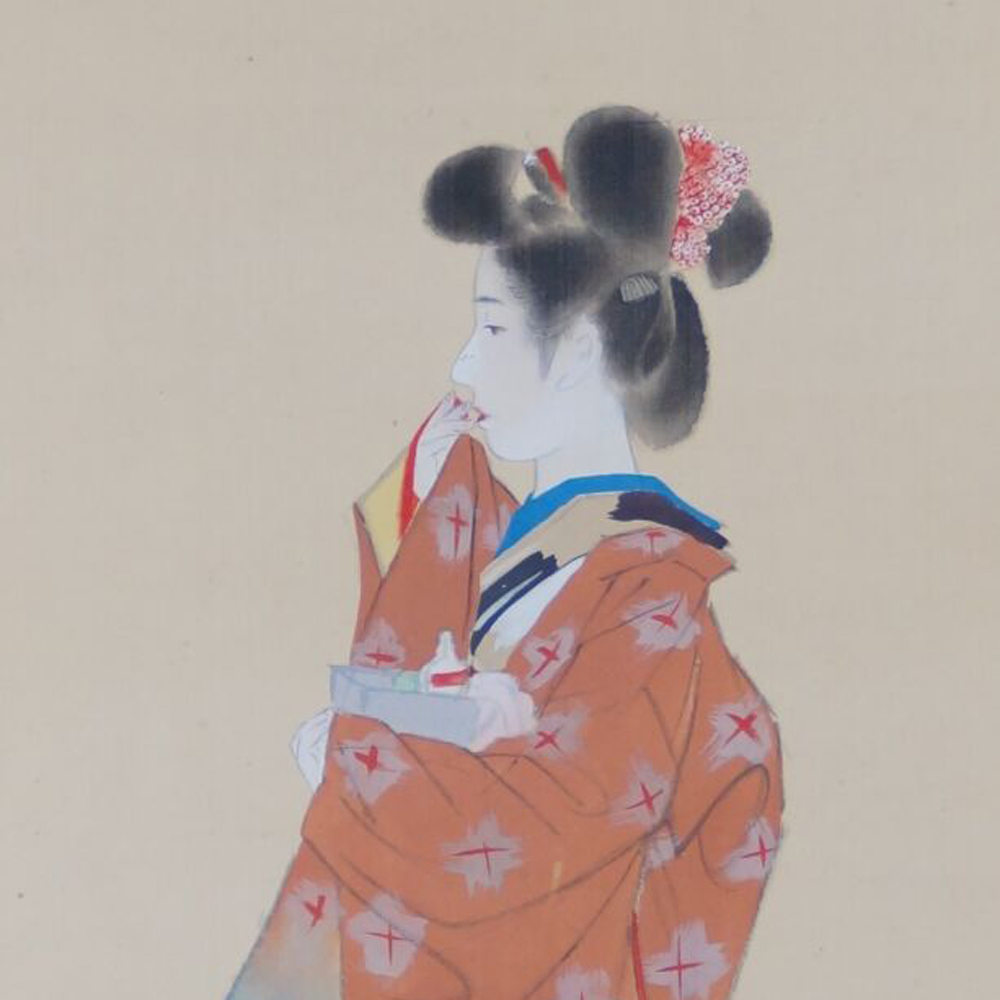
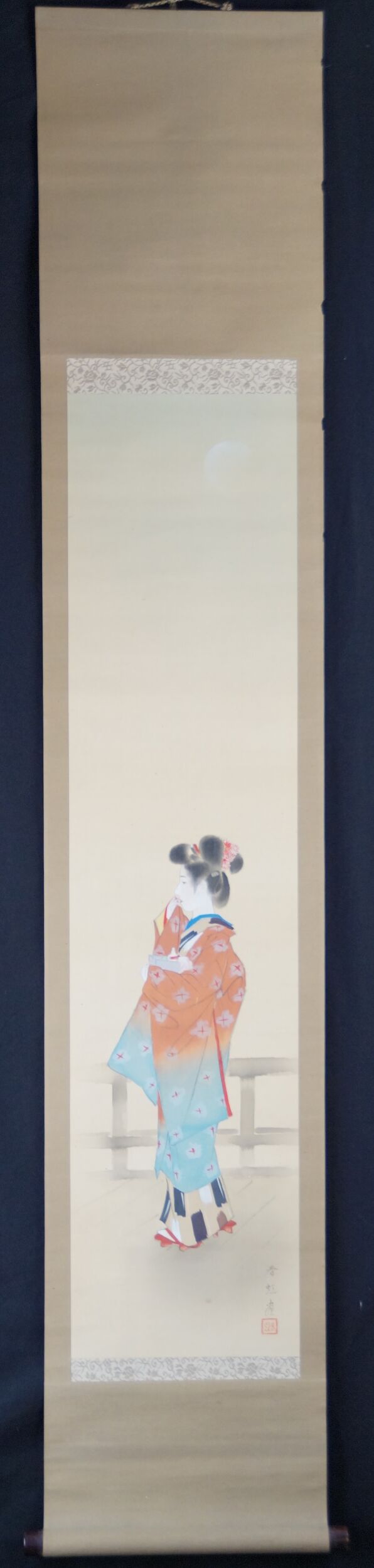
Saeki Shunkō
Beauty in Profile with Orange Kimono
Kakemono, unique work, 167 x 36 cm
€360.00
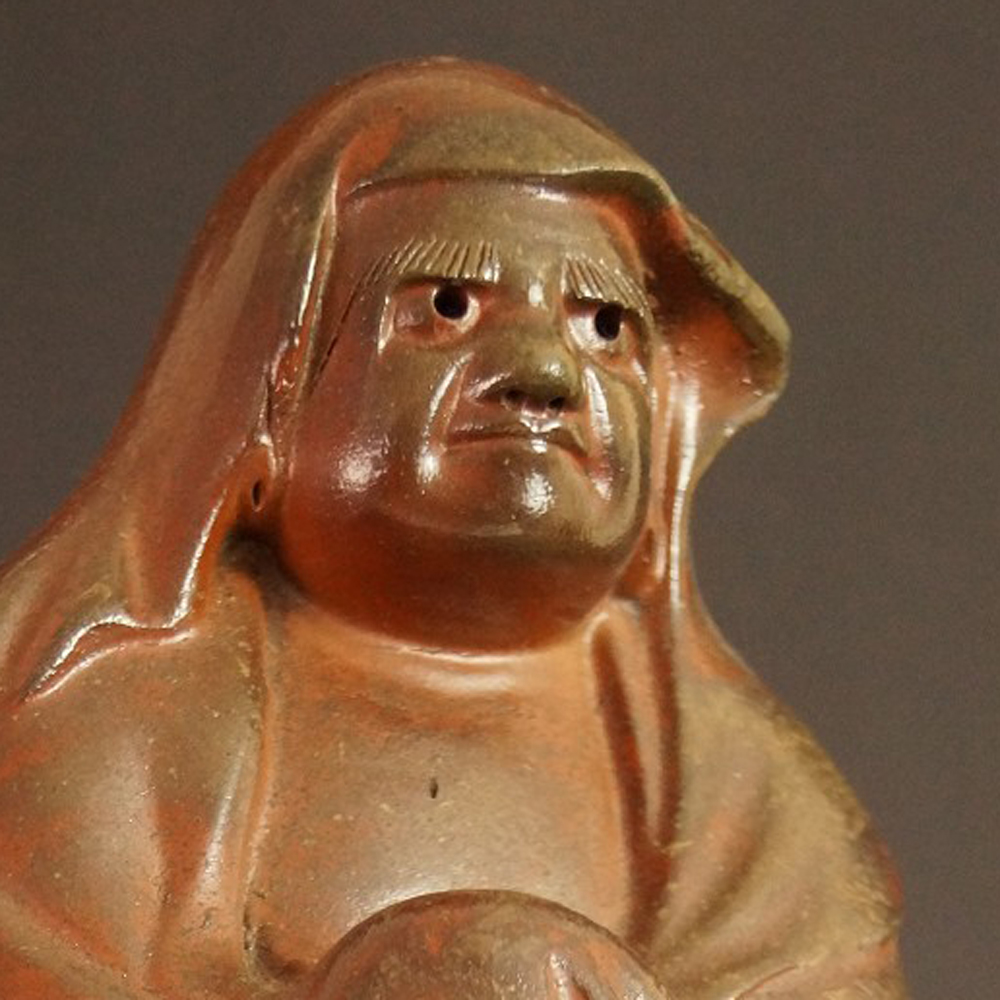
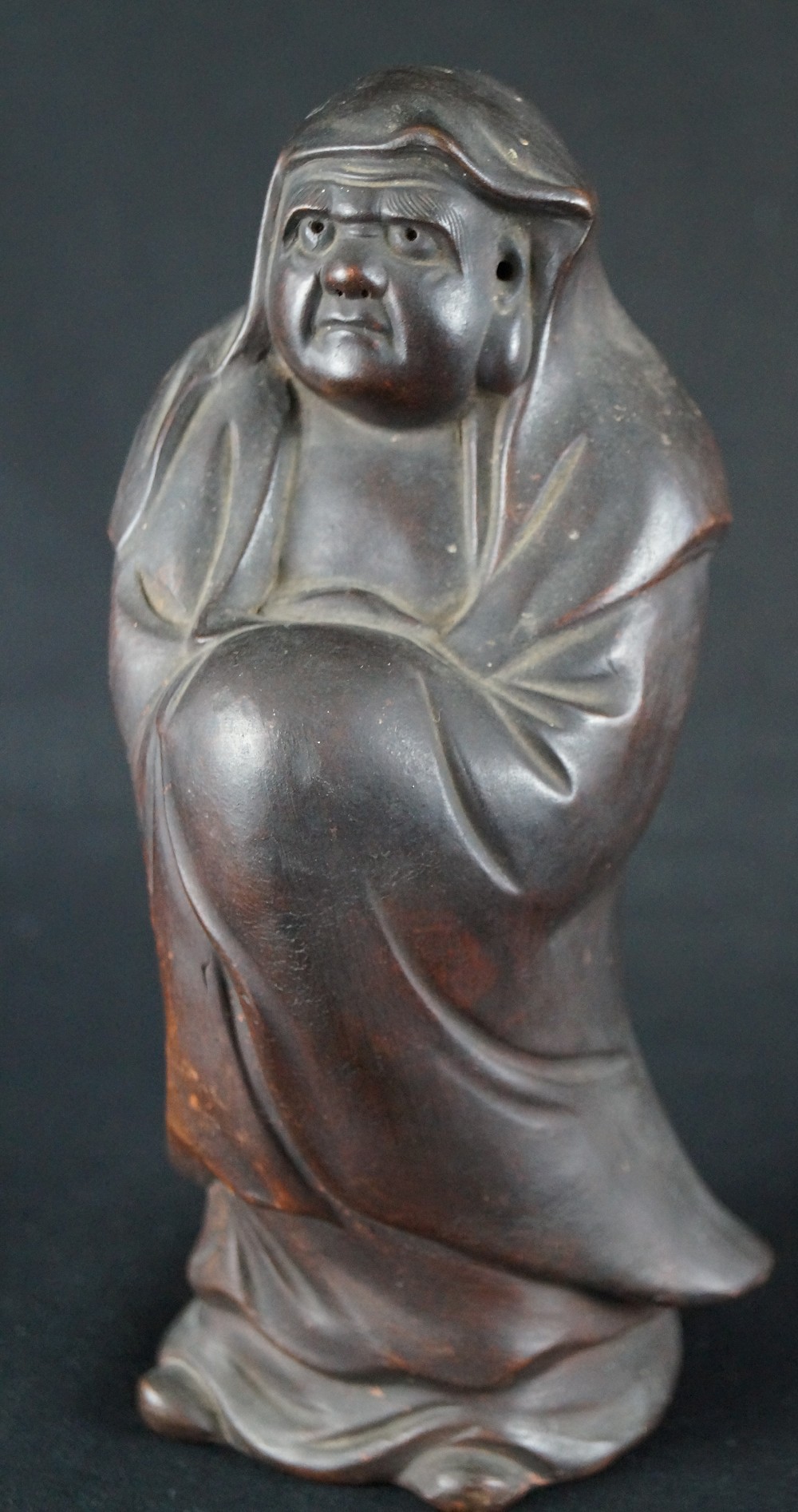
Bodhidharma (Daruma) Figure with Worried Expression Made of Bizen Ware
Figure, unique work, 22 x 10 cm
€180.00


Details about the sold piece
- JikusakiBone
- Material HonshiSilk
- MotifBuddhism and Zen, Daruma
- TechniqueHand-Painted
Description
With a penetrating gaze and a flowing orange robe, Bodhidharma is depicted here, also known as Bodai-Daruma. According to legend, he is regarded as the first patriarch of Zen, or Chan Buddhism, who brought the teaching from India to China toward the end of the 5th century, thereby founding one of the most influential spiritual traditions of East Asia.
The distinctive earring, the strong contour lines, and the alert, almost stern facial expression follow the classical iconographic depiction of this figure, which in Japanese painting often serves as a symbol of willpower and meditation. Painted on silk, the work was created in the Shôwa period (1926–1989).
The jikusaki made of bone lends the classical mounting a refined touch. A meaningful kakemono for anyone interested in Buddhist iconography and the spiritual dimension of Japanese painting.


