
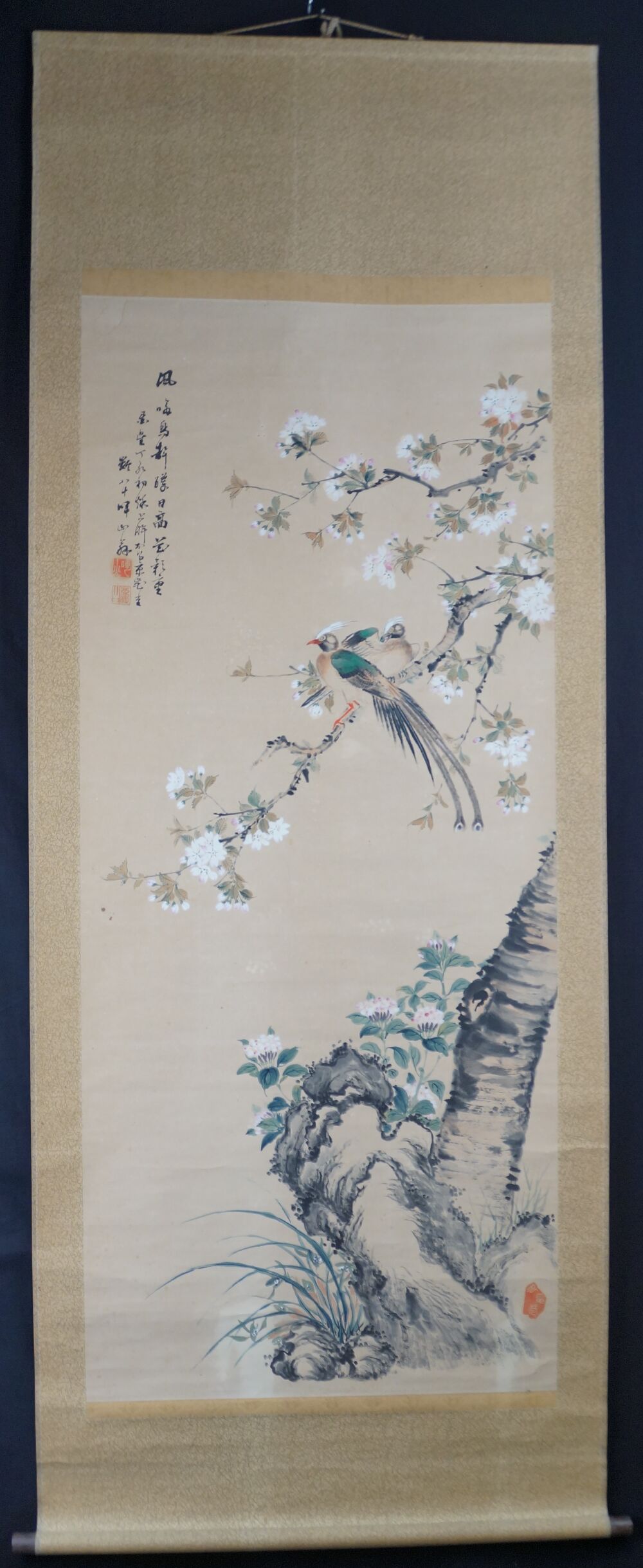
Kakemono Woodpecker on Cherry Tree
One of a kind — this work exists only once.
- Period:
- Meiji (1868–1912)
- Dimensions (height x width):
- 190 x 60 cm
- Item number:
- 5871
This piece has been sold.
Sold – no longer available
This piece was a handmade one-of-a-kind work. It cannot be reordered and will never exist in this form again. The page stays online as part of our archive.
More items in category Flowers and PlantsAll one-of-a-kind Japanese Painting pieces
See new one-of-a-kind pieces first
We feature every delivery from Japan in the newsletter first – before the pieces show up in search results.
You might like these pieces
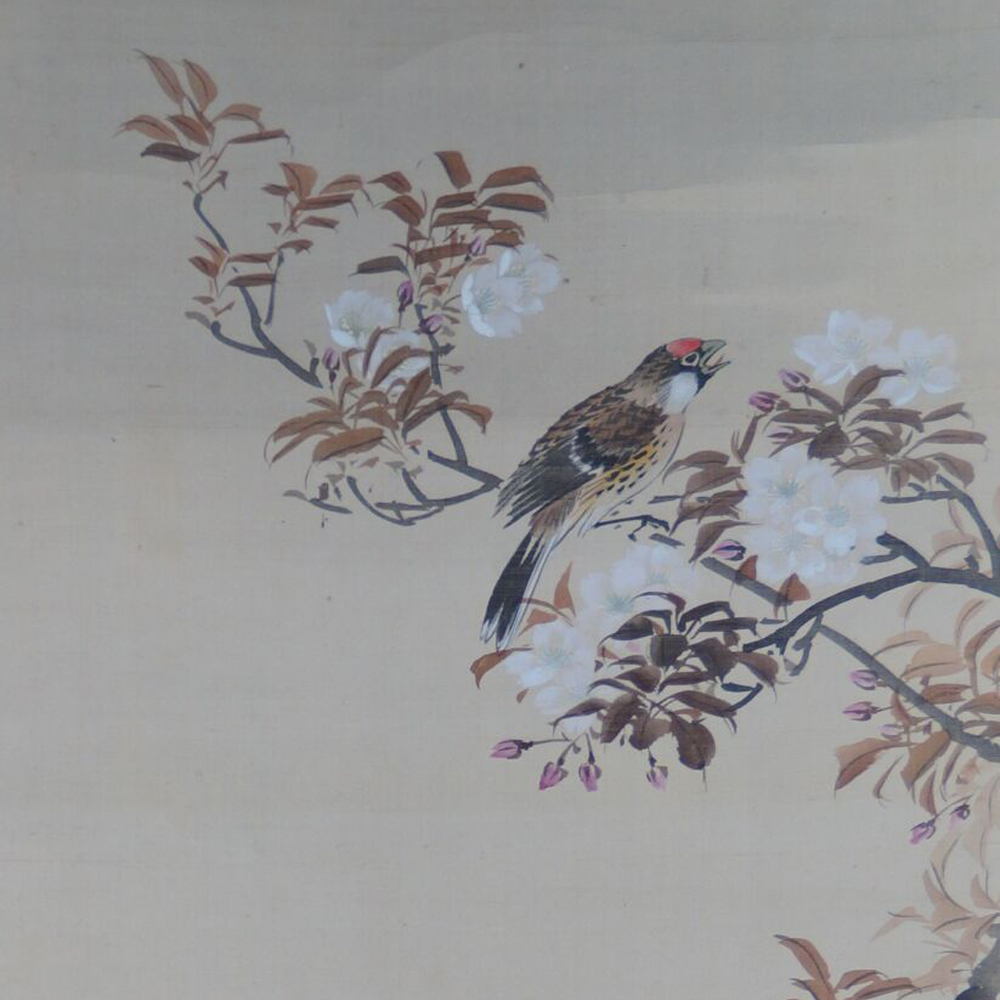
Hirose Hakuen
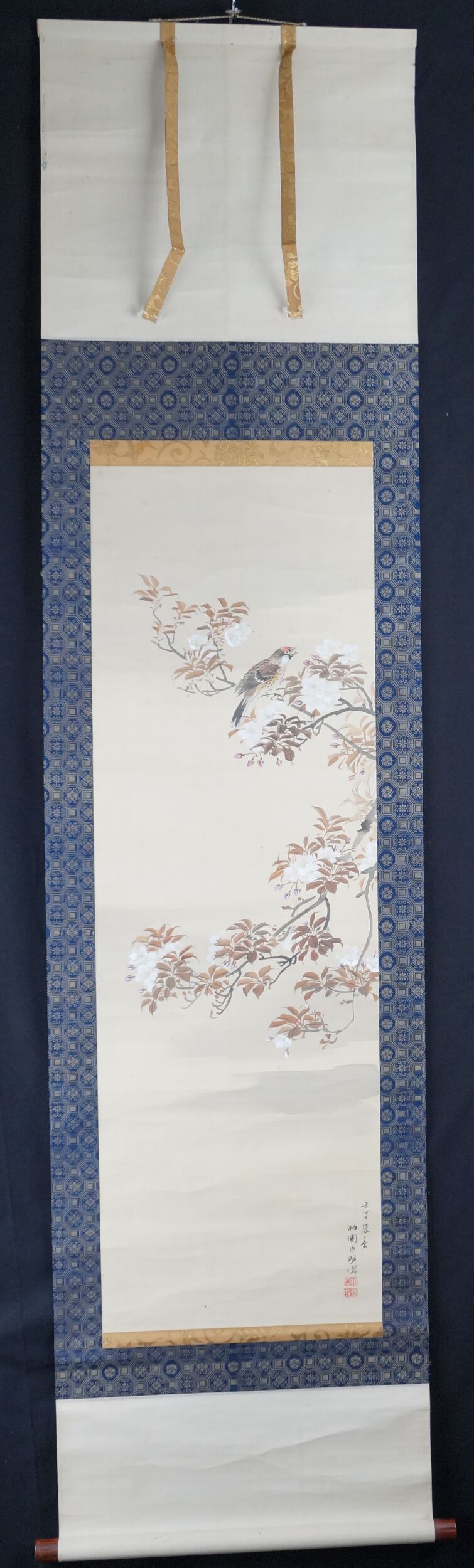
Singing Bird in Cherry Blossom Branch
Kakemono, unique work, 182 x 51 cm
€370.00
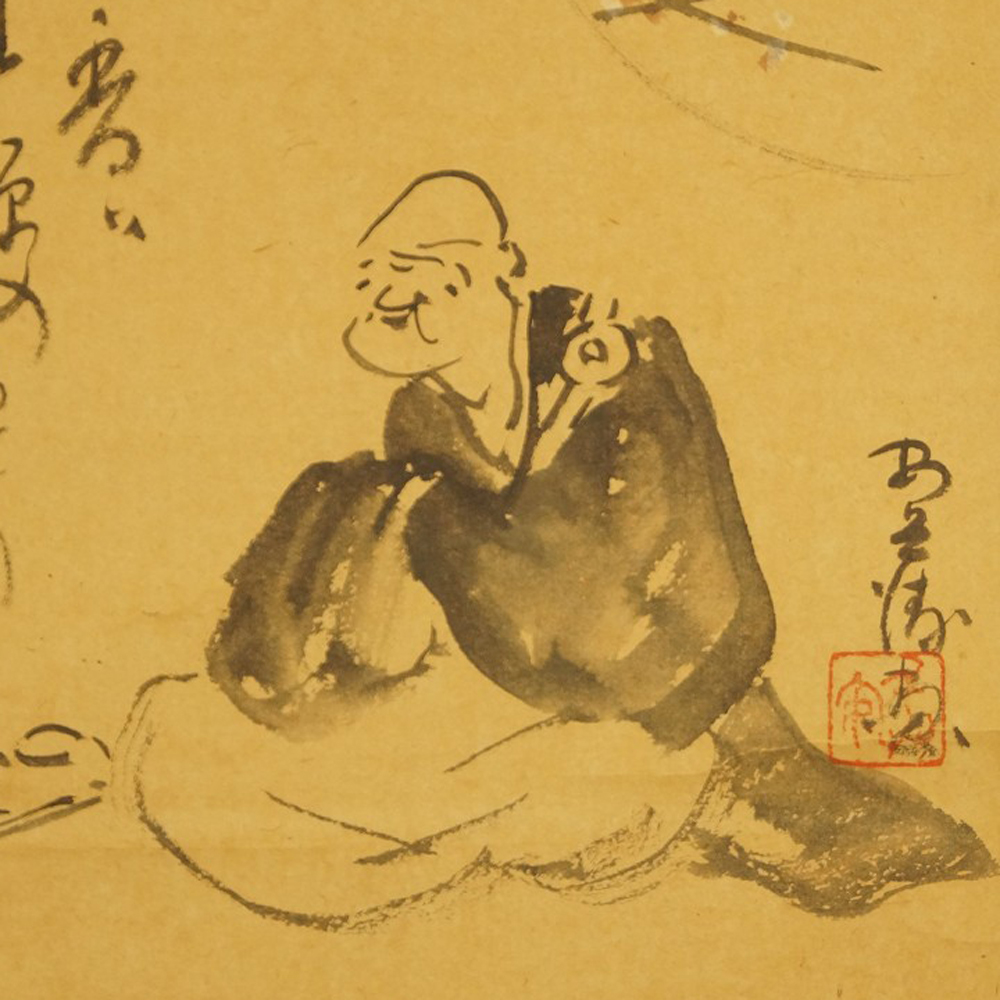
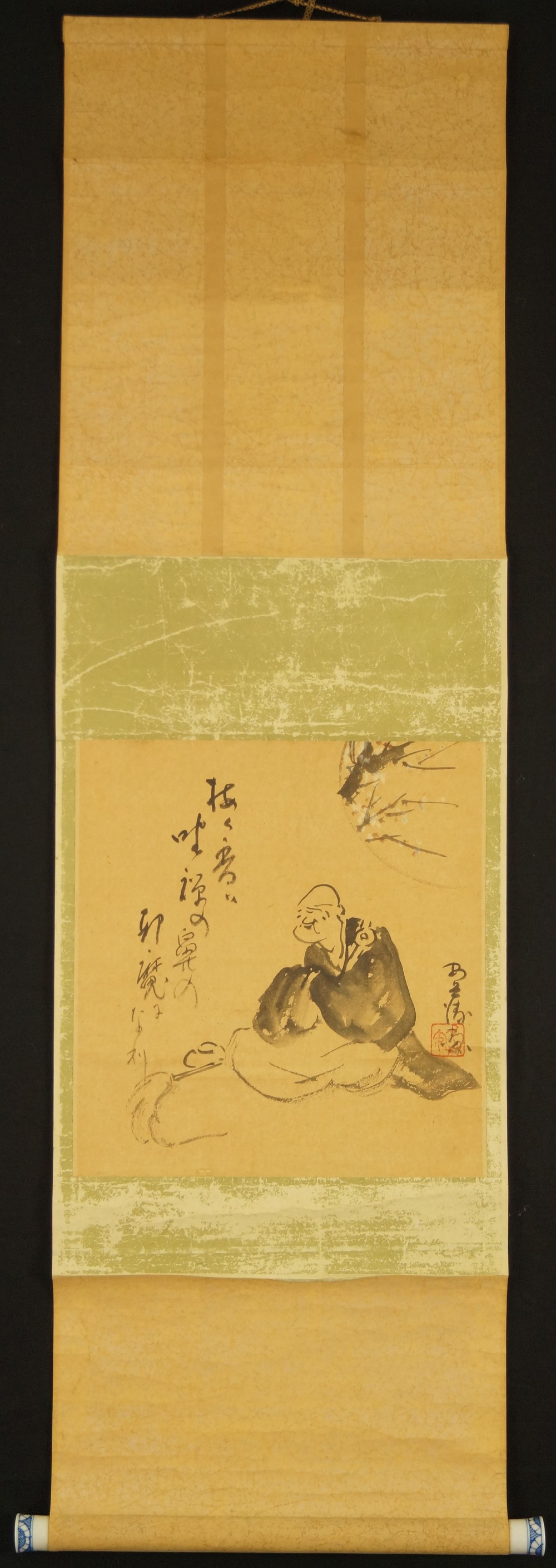
Old Zen Monk Under Cherry Blossoms
Kakemono, unique work, 115 x 40 cm
€980.00
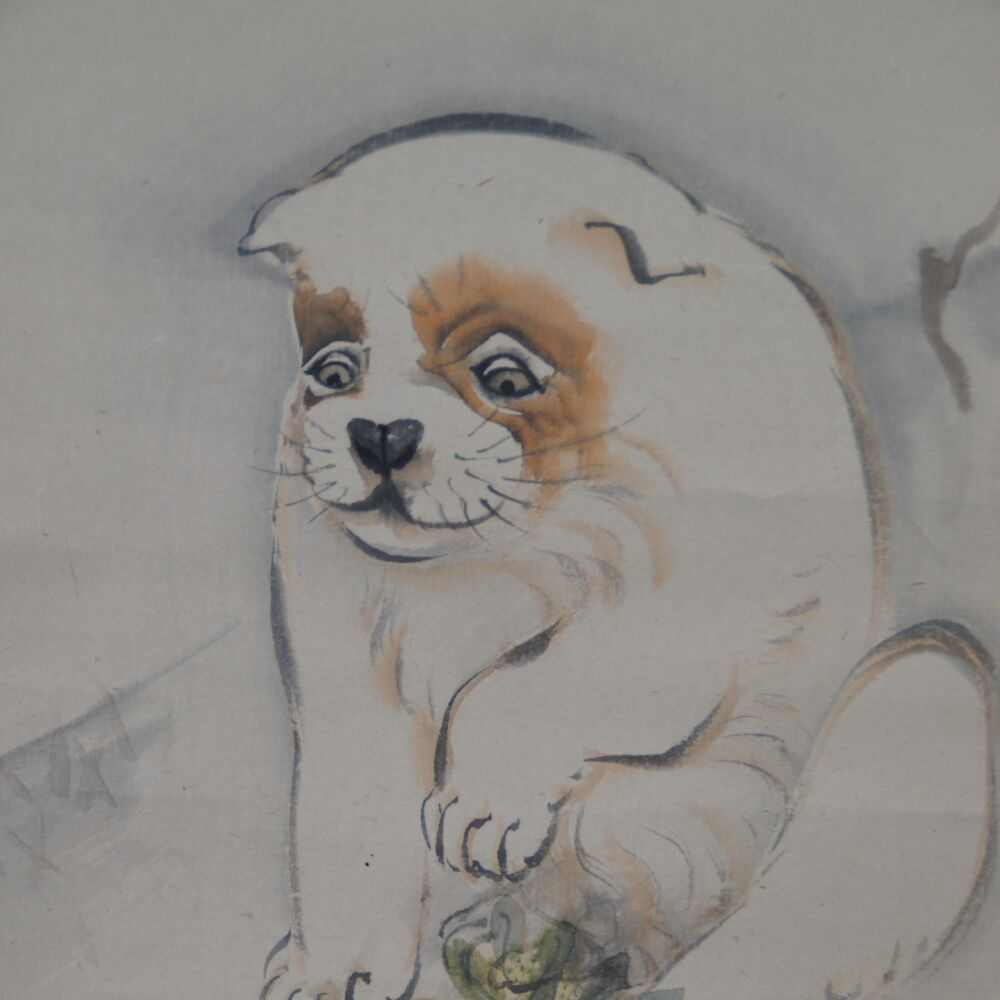
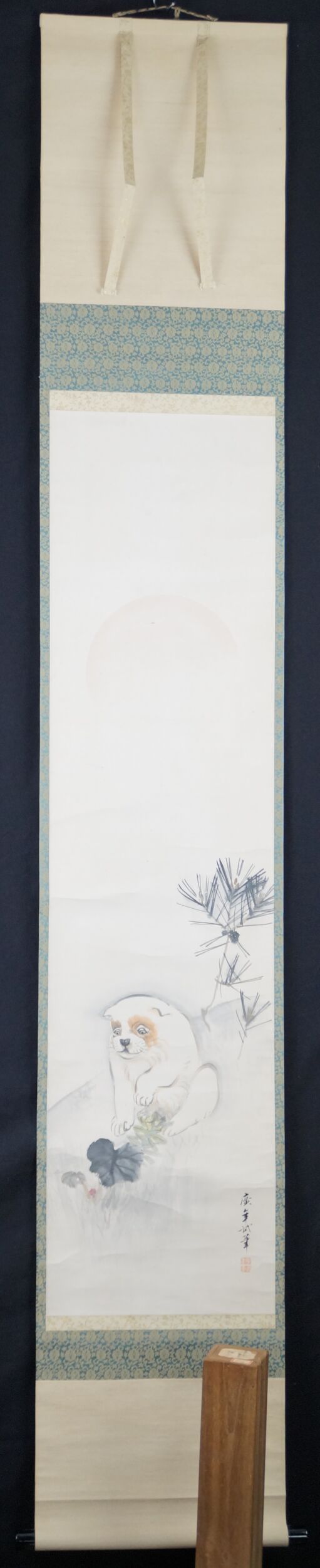
Puppy at Sunset Under Pine Trees
Kakemono, unique work, with box, 200 x 39 cm
€210.00
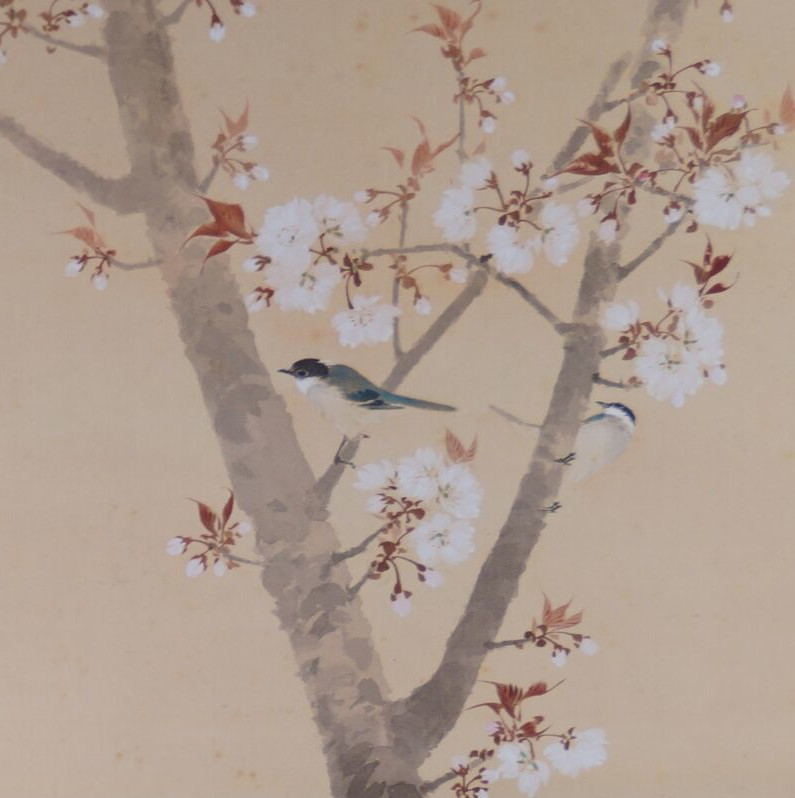
Suma Taisui
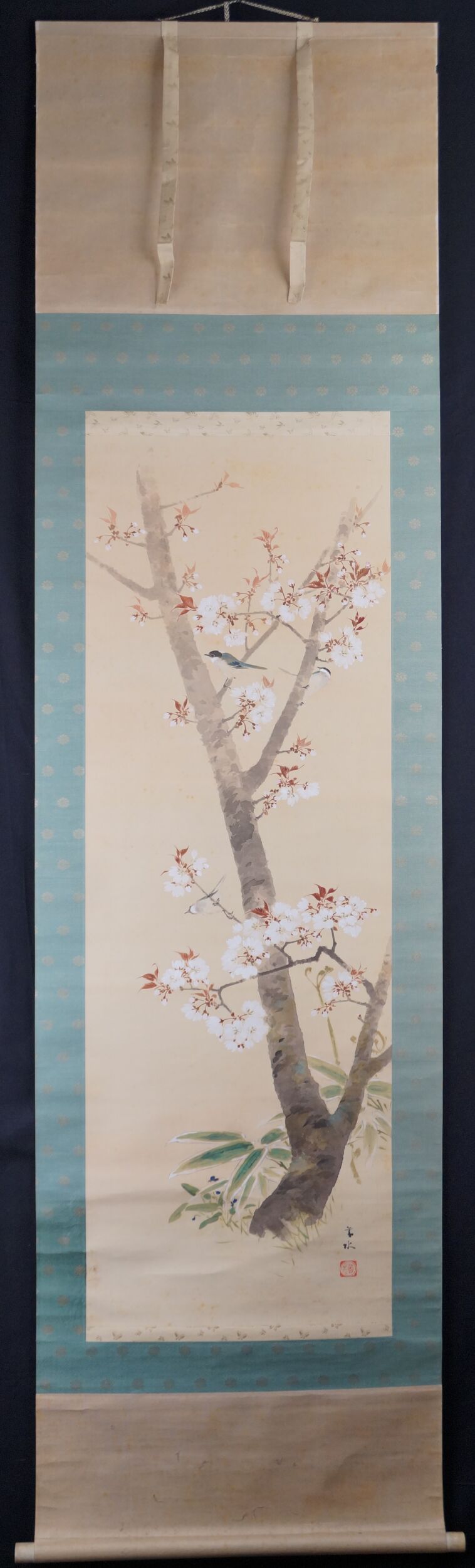
Spring at the Old Cherry Blossom
Kakemono, unique work, with box, 208 x 61 cm
€470.00
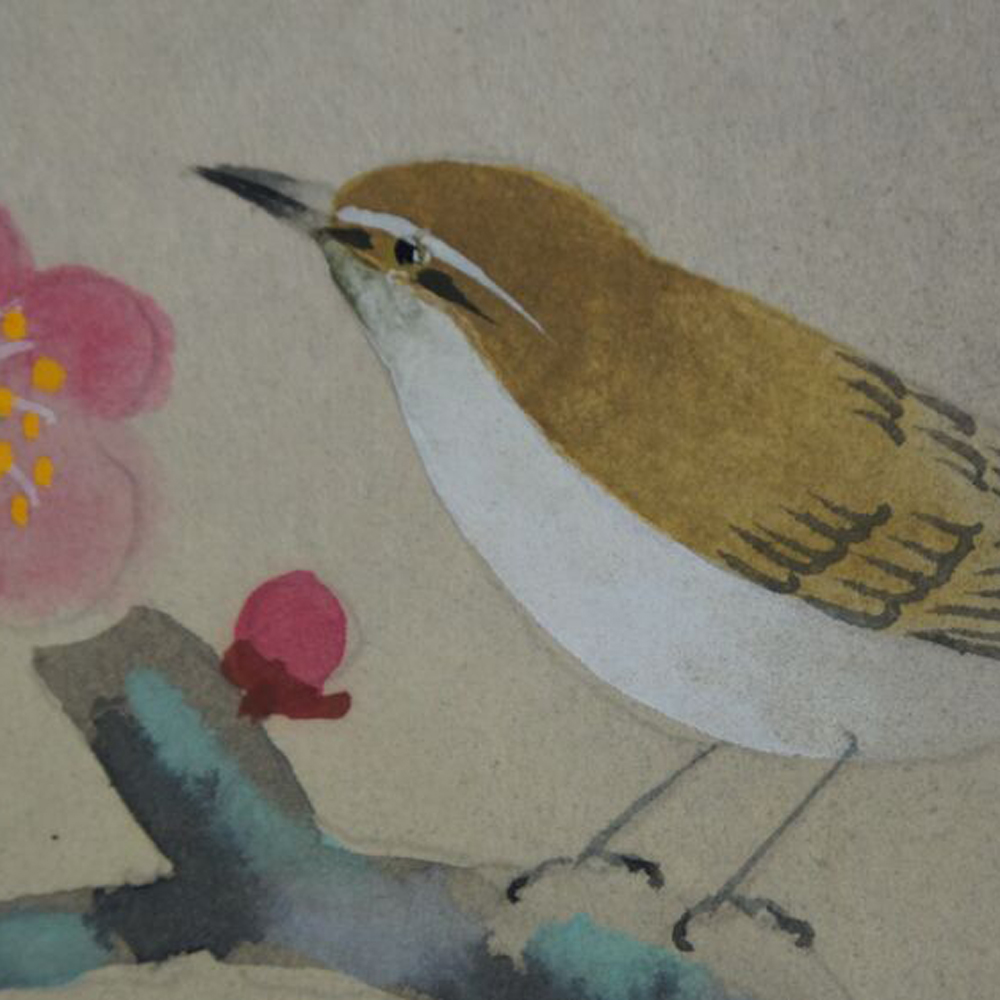
Ogawa Shodo
Songbird on Blooming Plum Tree
Kakemono, unique work, with box, 133 x 66 cm
€410.00
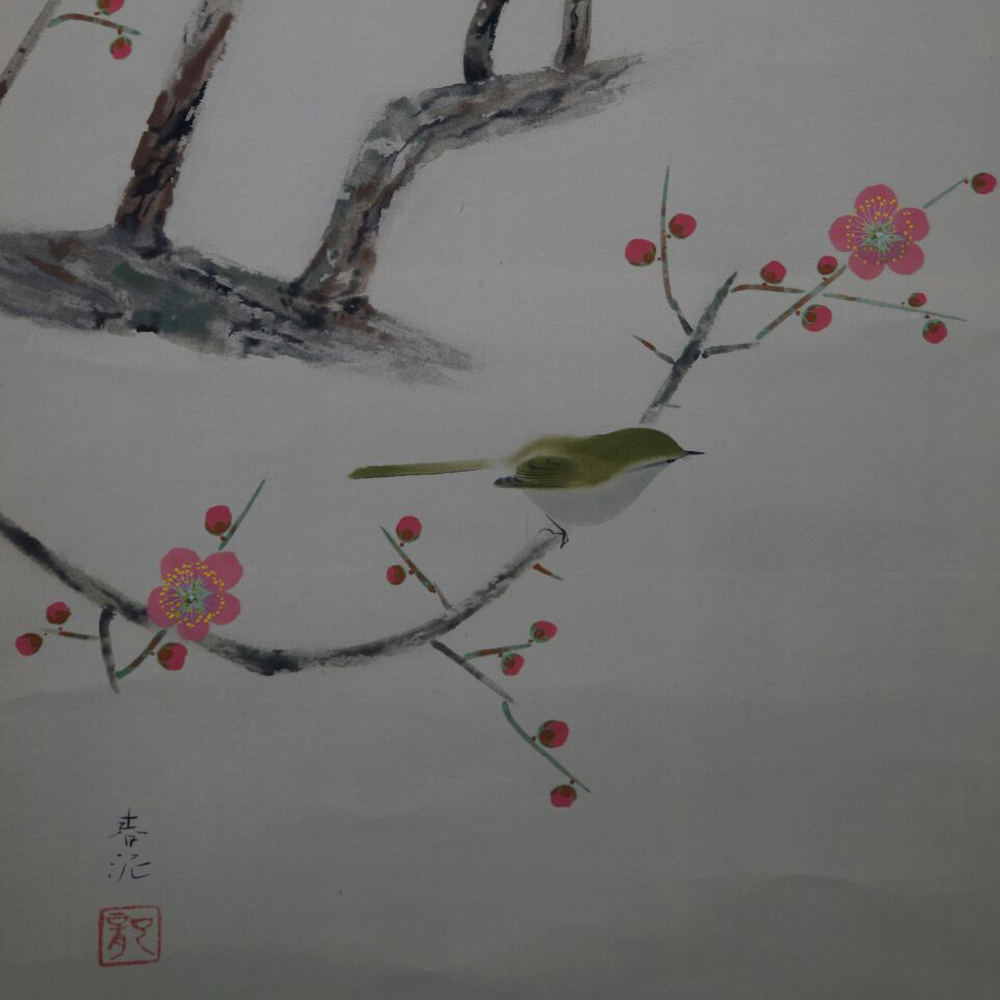
Nakamura Shunden
Uguisu on Blossoming Plum Tree
Kakemono, unique work, with box, 198 x 55 cm
€320.00
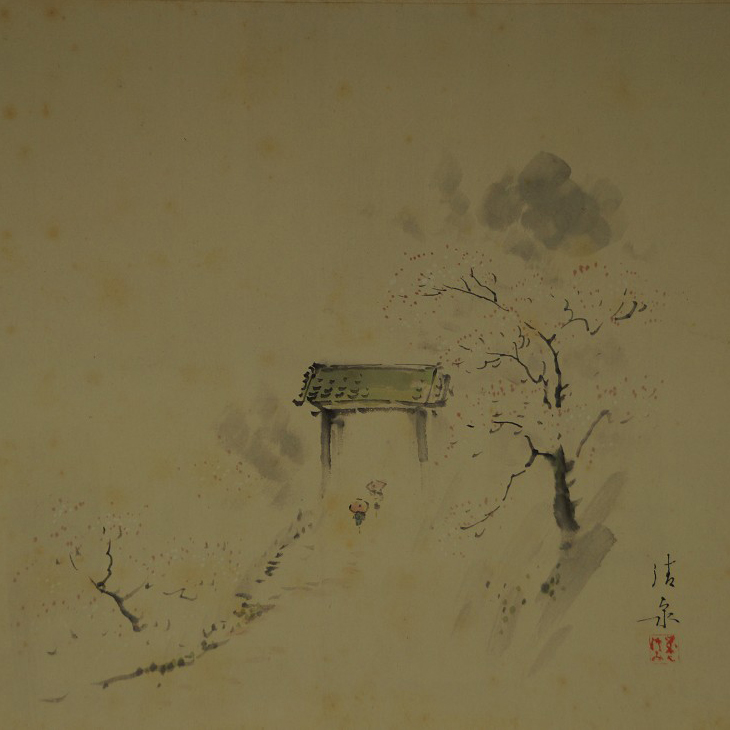
Seizumi
Small Wanderer Beneath Blossoming Trees at the Torii
Kakemono, unique work, 128 x 57 cm
€220.00
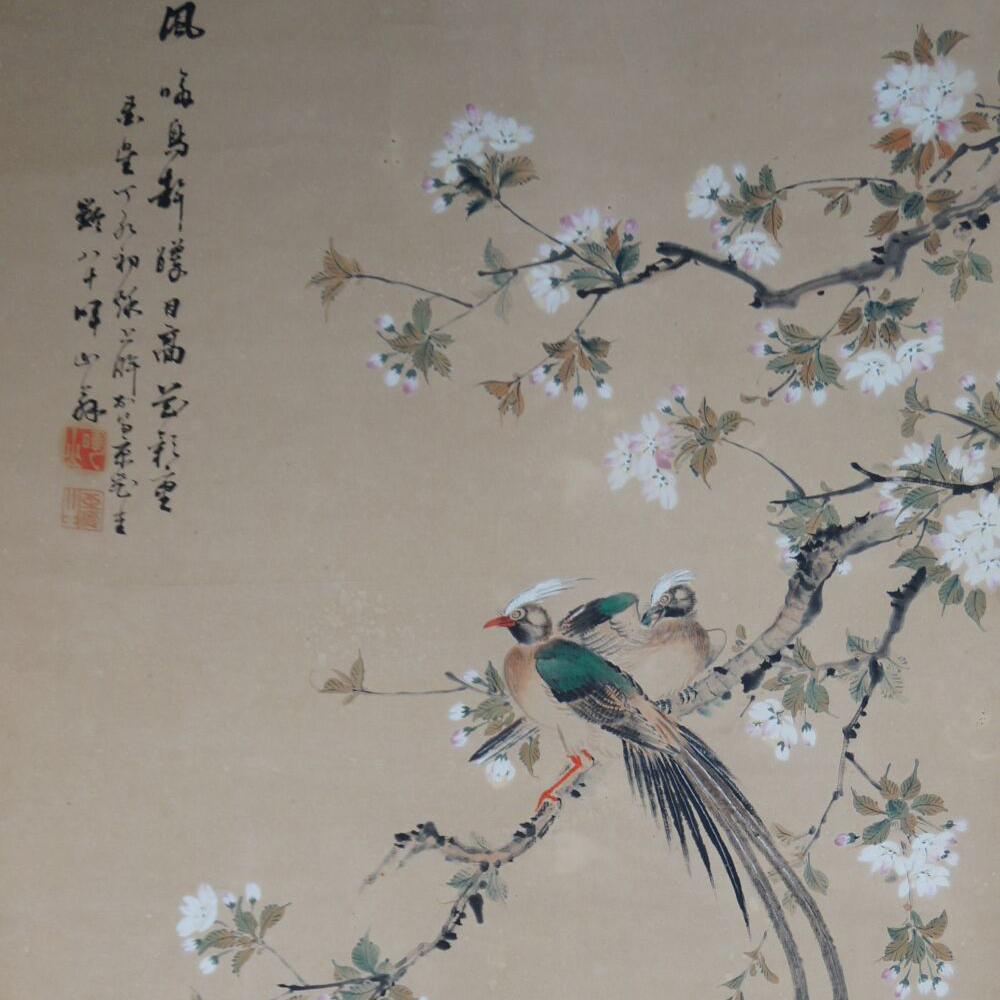
Takahashi Keizan
Spring Duet on Blooming Branch
Kakemono, unique work, 182 x 80 cm
€630.00

Details about the sold piece
- JikusakiBone
- Material HonshiSilk
- MotifAnimals, Flowers and Plants
- TechniqueHand-Painted
- Wooden BoxYes
Description
A small woodpecker sits attentively on a gnarled cherry tree branch, surrounded by delicate pink and white blossoms as well as young reddish leaves – a classic motif of Japanese bird-and-flower painting (Kachōga), finely executed on silk. The warm, golden-brown tone of the silk lets the colors of the plumage and blossoms emerge especially softly.
The composition, with its diagonally rising branches and the lower-hanging, more densely leaved branch in the lower part of the image, lends the work a natural depth and balance. The fine signature at the lower edge of the image points to a skilled painter of the Meiji period (1868–1912), from which this kakemono dates.
This kakemono comes in a signed wooden box (tomobako), which lends the work additional authenticity.

