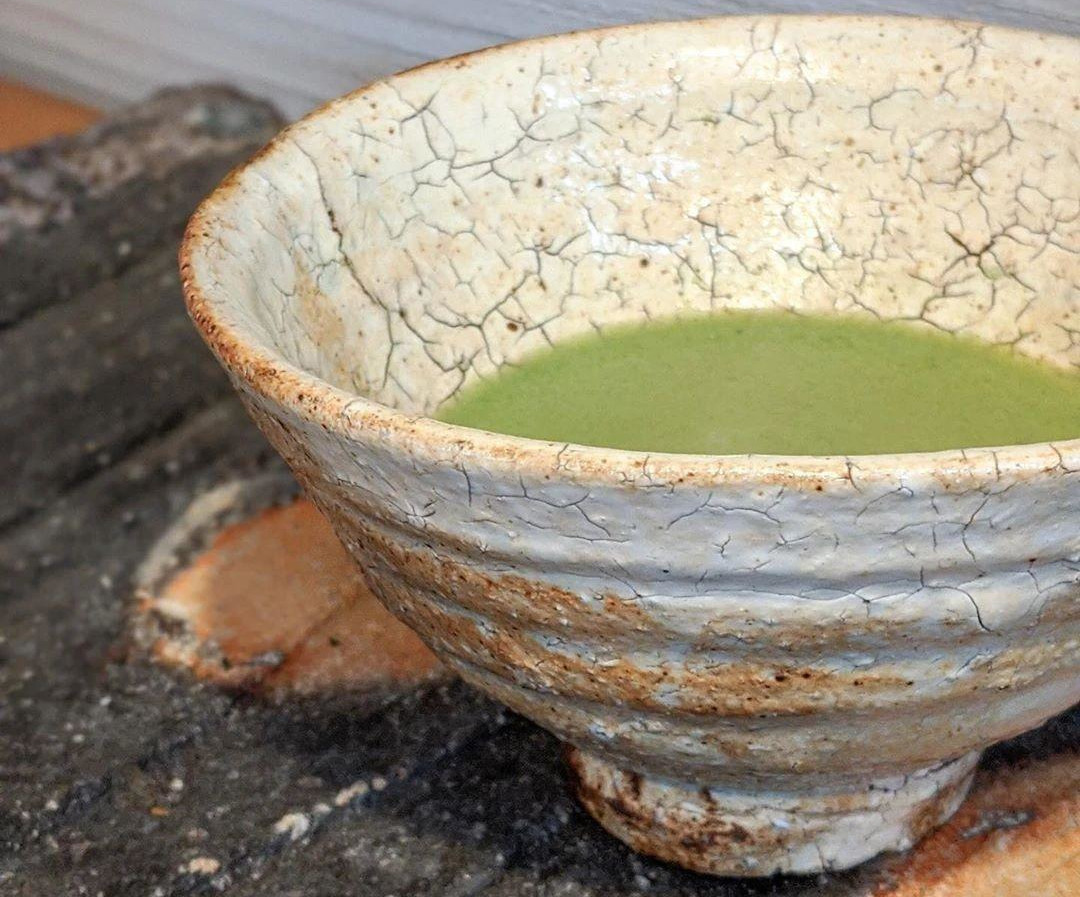
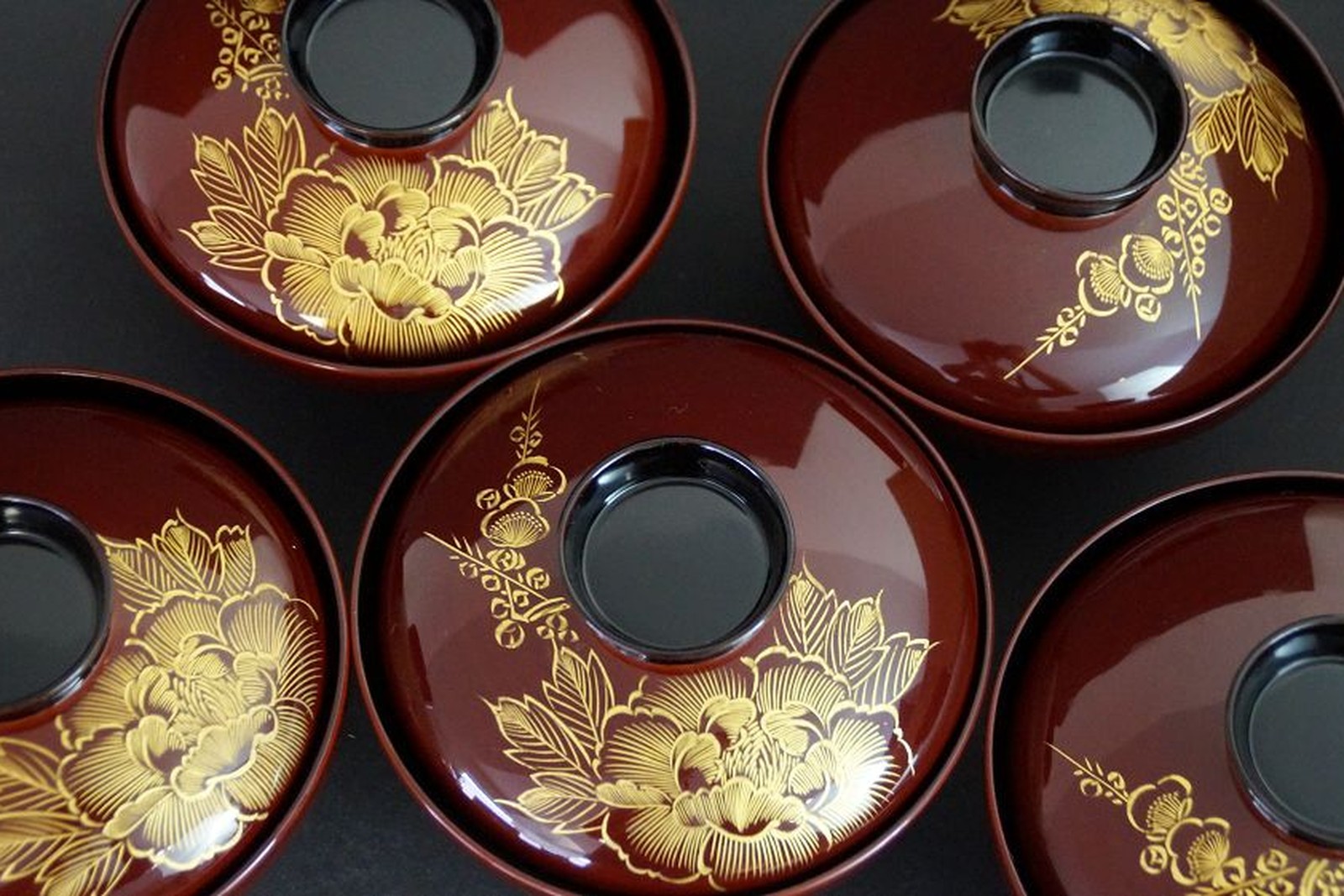
You recognize Japanese lacquer first with your fingertips. A well-made lacquer box does not feel cold like porcelain or dull like wood, but warm and soft, almost like skin. The black seems to have no bottom, and the gold on it lies not on the surface but somewhere within it. Behind this impression stand a tree sap that attacks the skin when it is worked, dozens of steps between which the piece rests for days in humid air, and a tradition that in Japan is older than writing.
What is Japanese lacquerware?
Japanese lacquerware is called shikki (漆器), "lacquer vessels," or nurimono, "coated things." The term refers to objects whose body is covered in many thin layers of urushi (漆), the natural lacquer made from the sap of the lacquer tree. The body, called kiji in Japanese, is usually made of wood, occasionally of bamboo, paper, leather, or basketwork. From this interplay come bowls and tableware, writing boxes and trays, furniture, pieces of armor, and the small caddies of the tea ceremony.
How famous the material became outside Japan is shown by a single word: just as English "china" stands for porcelain, "japan" long denoted lacquer. Yet lacquer is not a Japanese invention – the lacquer tree grows across large parts of East Asia, and many techniques came from China. What is Japanese is the consistency with which the craft was refined over centuries, until the work of the lacquer master had itself become an object of admiration.
Urushi: a lacquer that hardens in humid air
Urushi is an unusual material. The freshly tapped sap of the lacquer tree irritates the skin and causes severe rashes, which is why working it has always been reserved for specialized craftsmen. Its most important property is described by the art dictionary JAANUS as follows: urushi does not dry, it cures – and only in humid air at a moderate temperature. Lacquer workshops therefore do not dry their pieces in a draft but in humidified cabinets, in which the lacquer cures through over hours and days.
Once cured, the lacquer barely changes; only its color grows deeper and clearer over the years. It protects the wood against moisture and heat, withstands acids, and is food-safe, which has made it the material of soup bowls and chopsticks for centuries. The range of colors was long limited: until the Edo period, lacquer masters essentially had five tones from natural pigments at their disposal – red, black, yellow, green, and a light brown. White lacquer could only be produced in the 19th century.
From Jōmon pot to tea caddy: a brief history
Lacquer has accompanied Japanese culture since its beginnings. Red-lacquered pottery shards from the Torihama shell mound in Fukui Prefecture show that urushi already served as paint and protective coating in the early Jōmon period. With Buddhism, new methods came from China in the 7th and 8th centuries: in the Nara period, Buddha figures were made in the dry-lacquer technique, kanshitsu, in which hemp cloth soaked in lacquer was layered over a core many times over. The first mother-of-pearl inlays date from the same period.
Japanese lacquer found its own language in the Heian period with maki-e, the sprinkled gold picture, which was brought to perfection in Kyōto. In the Muromachi period, tea culture shaped taste, and the lacquer caddies for matcha came into being. In the Edo period, finally, lacquer tableware became part of everyday life: durable lacquerware from places such as Wajima now also found its way into the homes of farmers and merchants throughout the country. In the 19th century, Shibata Zeshin (1807–1891) joined lacquer art and painting so closely that he painted with lacquer on paper; for his lacquer painting he received an award at the Vienna World's Fair in 1873.
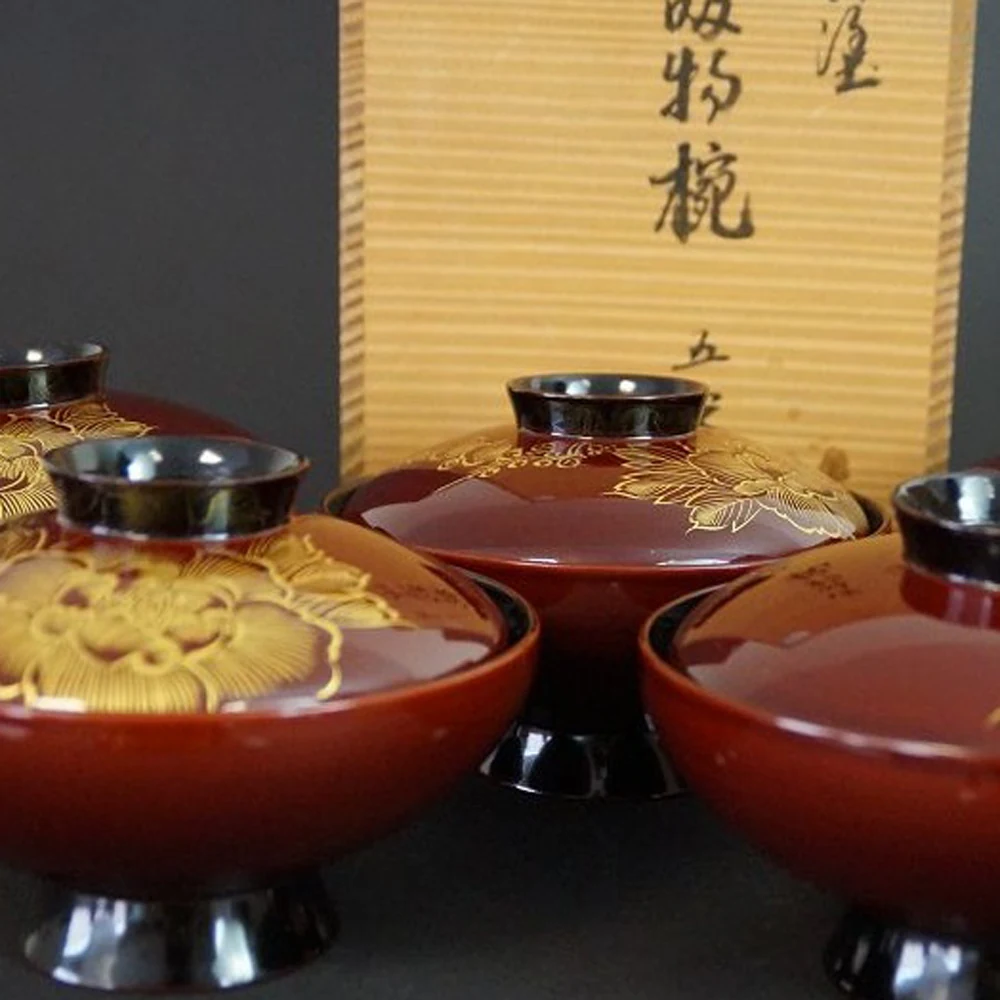
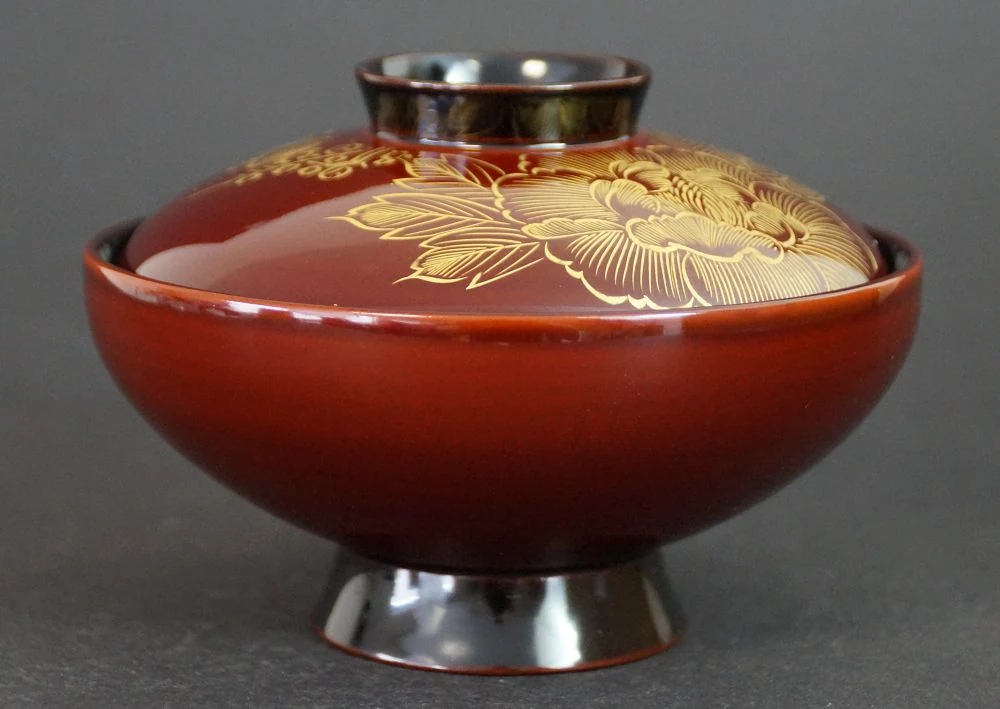
Set of Five Wajima Owan with Peony Chinkin
Owan, Handcrafted, unique work, with box, 8 x 12 cm
€280.00
Heian Koshun
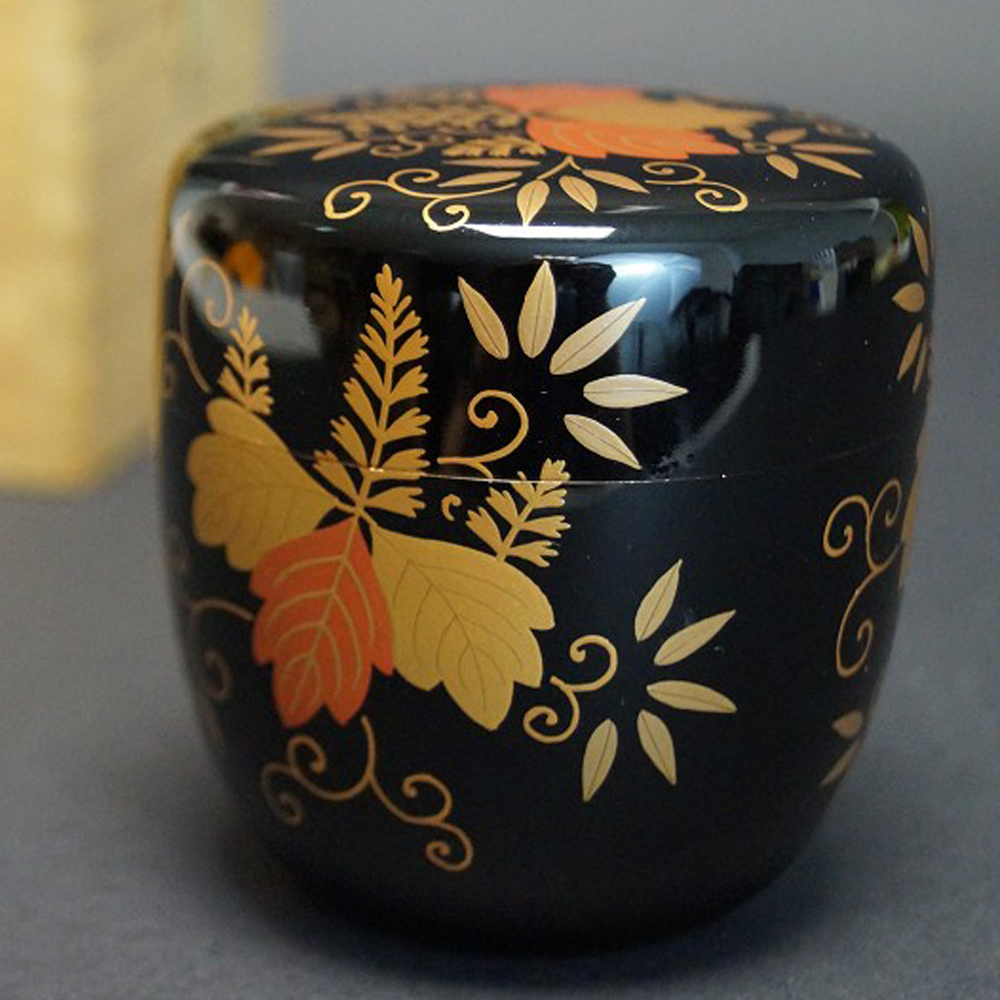
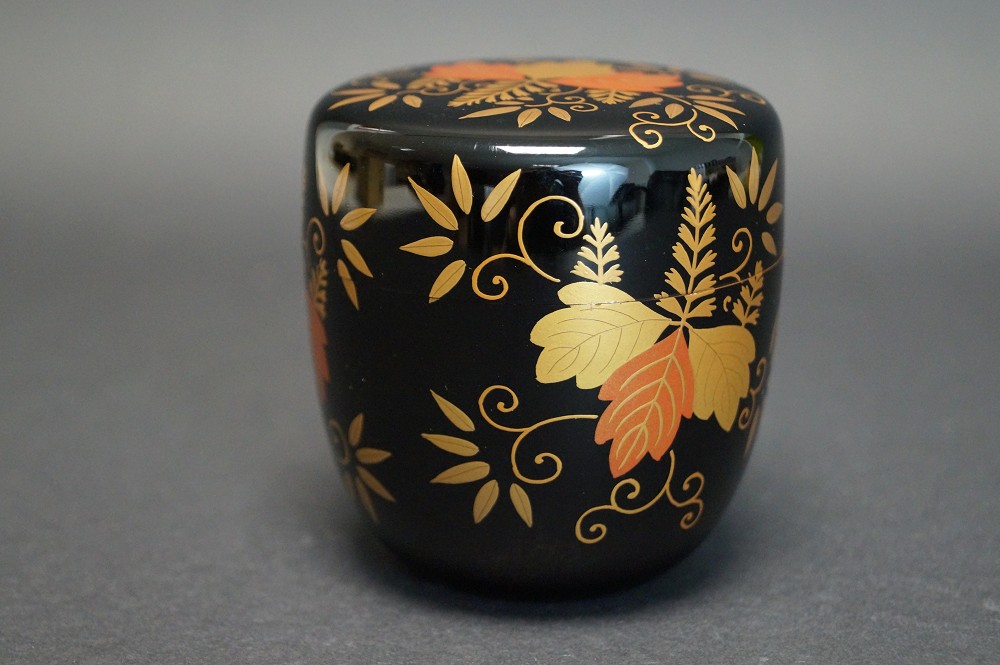
Makie Chu Natsume with Autumn Leaves Motif by Heian Koshun
Natsume, unique work, with box, 6,5 x 7 cm
€290.00
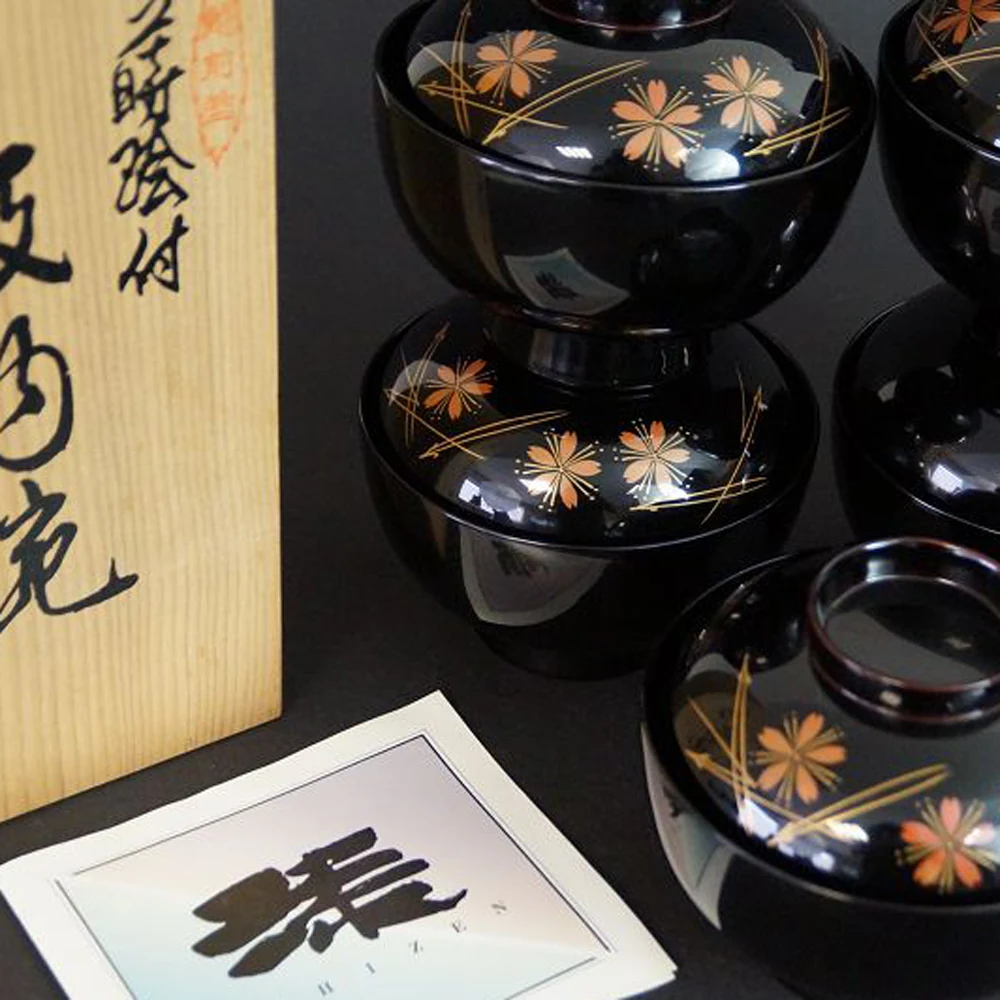
Genshindō
Set of Five Owan with Cherry Blossom Maki-e by Genshindō
Owan, Handcrafted, unique work, with box, 8 x 15 cm
€210.00
Kiji, shitaji, uwa-nuri: how a piece of lacquerware is made
Every piece of lacquerwork passes through three stages: the body (kiji), the priming with under- and middle coats (shitaji, naka-nuri), and the final top coat (uwa-nuri), on which decoration can sit. Even the body demands patience. In Kyōto, according to the Japanese register of traditional crafts, the wood for lacquerware is left to dry for four to five years and longer so that it will no longer warp later. Bowls are turned, boxes joined from boards, round containers formed from thin, bent shavings of wood.
Then follow the invisible layers that decide durability. Fragile areas such as rims and edges are covered with lacquer-soaked cloth, on top of which come layers of lacquer mixed with finely ground mineral powders, each sanded smooth again after curing. Only then come the middle and top coats. For the top coat, the urushi is filtered several times through thin Yoshino paper, and every speck of dust that falls on the wet surface during application is lifted out individually with the tip of a bird's feather quill.
If the surface is to be mirror-like, rōiro is added: the cured top coat is sanded with charcoal, then repeatedly rubbed with lacquer and polished, finally with the bare palm and fingers. Only after this step does that black arise which seems to have no bottom.
Maki-e: gold, sprinkled rather than painted
Maki-e (蒔絵) literally means "sprinkled picture," and that is exactly what happens: the lacquer master draws the motif on the surface with wet lacquer and sprinkles gold, silver, or other metal powders onto it, which remain fixed in the curing lacquer. Depending on the grain of the powder – from fine dust to flat flakes – matte surfaces, sparkling passages, or soft transitions arise. As JAANUS explains, three basic methods developed one after another.
In togidashi-maki-e, already widespread in the Heian period, the motif is completely lacquered over after sprinkling and then sanded free again with charcoal until it lies flush with the surface; the gold then seems to float in the depth of the lacquer. The hira-maki-e of the Kamakura period leaves the motif lying flat on the ground, covered only by a thin protective coat. In taka-maki-e, added in the Muromachi period, the motif is raised with a mixture of lacquer and charcoal or clay powder, so that rocks, clouds, or leaves stand out in relief. These methods are complemented by nashiji, a ground of sprinkled gold flakes reminiscent of the skin of a pear, and by kirikane, tiny pieces of gold leaf.
Raden, chinkin, and colored lacquer
Other means join the gold. Raden (螺鈿) is the inlay of mother-of-pearl: shells of abalone, turban snails, or pearl oysters are ground thin, cut, and set into the lacquer. In Kyōto, one distinguishes raden made of thick mother-of-pearl of 1.5 to 3 millimeters from aogai made of wafer-thin pieces of about 0.3 millimeters, which shimmer blue, green, or pink depending on the light. In chinkin (沈金), by contrast, the motif is incised into the finished lacquer with fine chisels; lacquer is rubbed into the lines and gold leaf or gold powder is pressed in, creating a picture of golden lines.
There is also lacquerware that manages entirely without metal. In negoro-nuri, red lacquer lies over black; with use, the black gradually shows through at the places where it is handled, an effect so prized that it was later deliberately imitated. Tsugaru-nuri from northern Japan layers colored lacquers on top of one another and sands them into a marbled pattern, while in shunkei-nuri transparent lacquer lets the grain of the wood shine through. Anyone who wants to buy Japanese lacquerware will find in this variety more than just the familiar combination of black and gold.
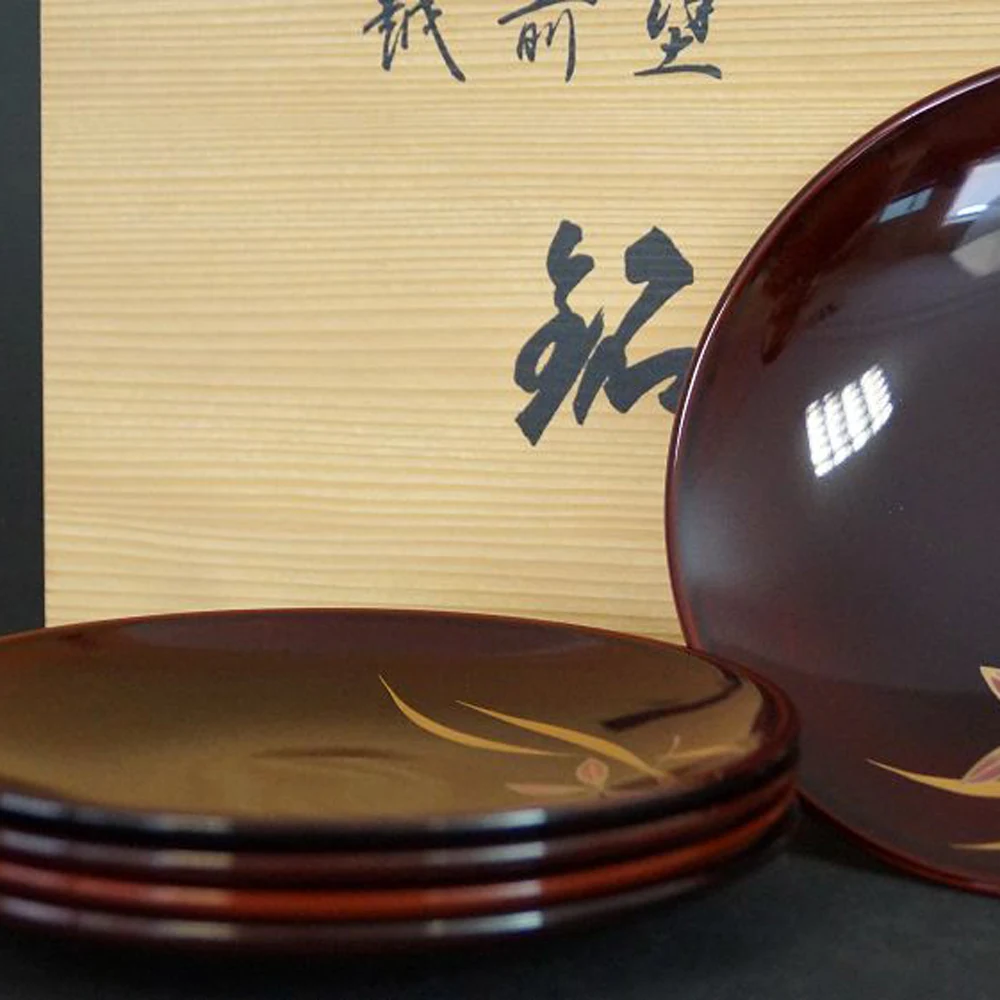
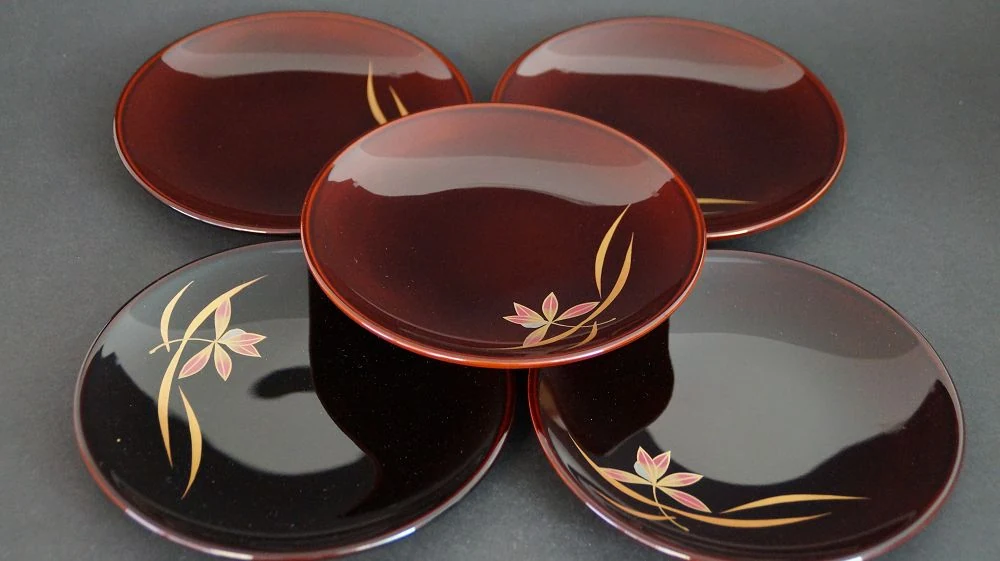
Set of Five Echizen Lacquer Plates with Gold Maki-e
Plate, Handcrafted, unique work, with box, 1,5 x 12 cm
€125.00
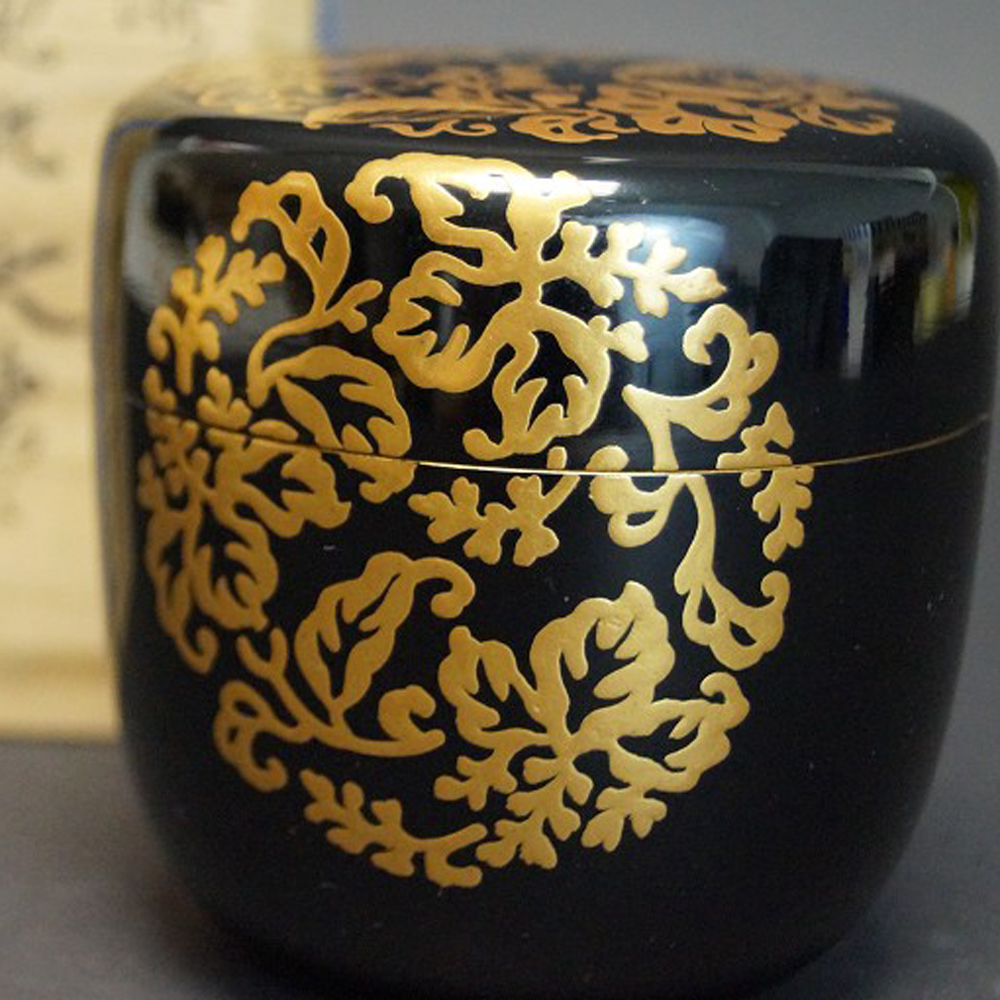
Issai Saijo
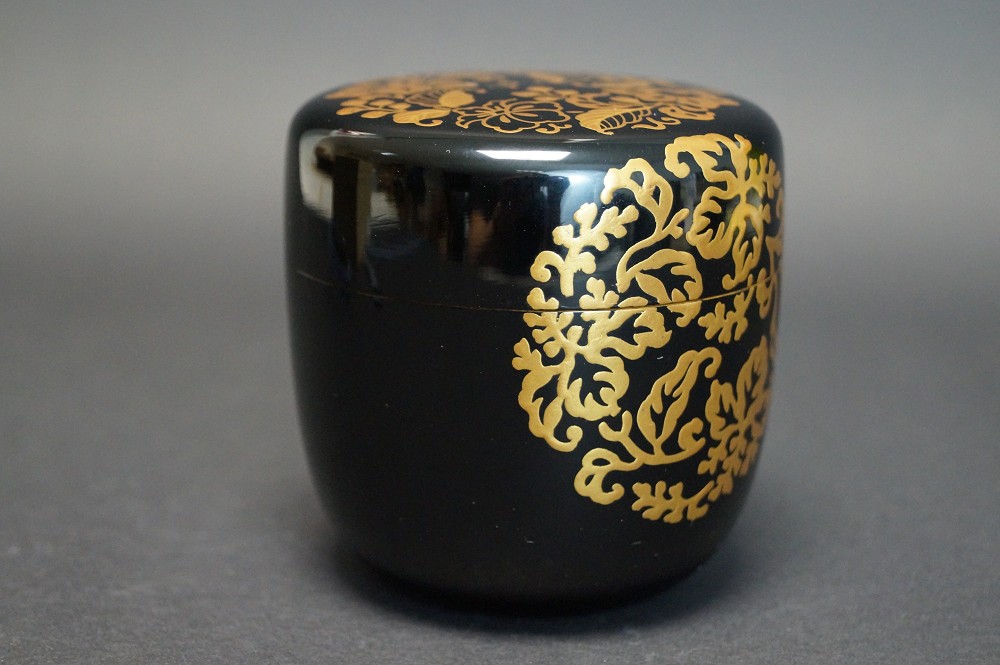
Makie O Natsume with Flowering Vine Motif by Issai Saijo
Natsume, unique work, with box, 7 x 7,5 cm
€420.00
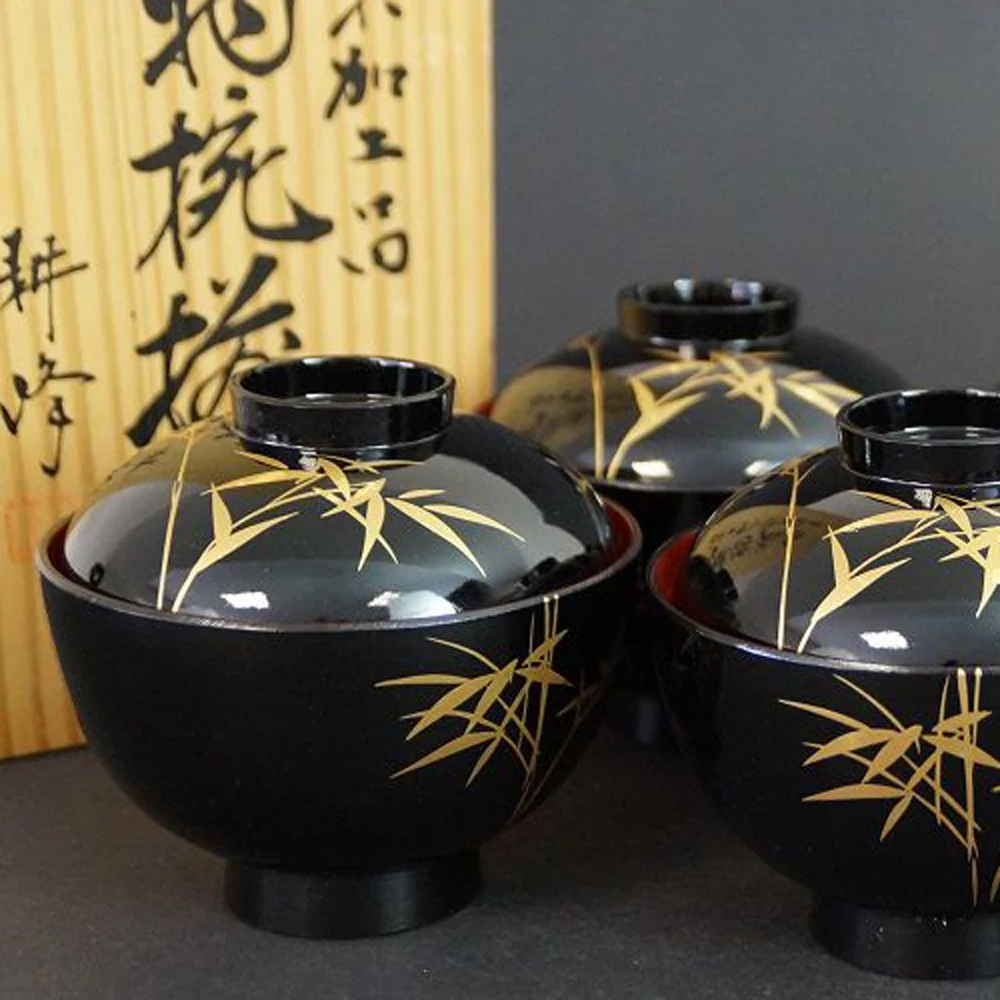
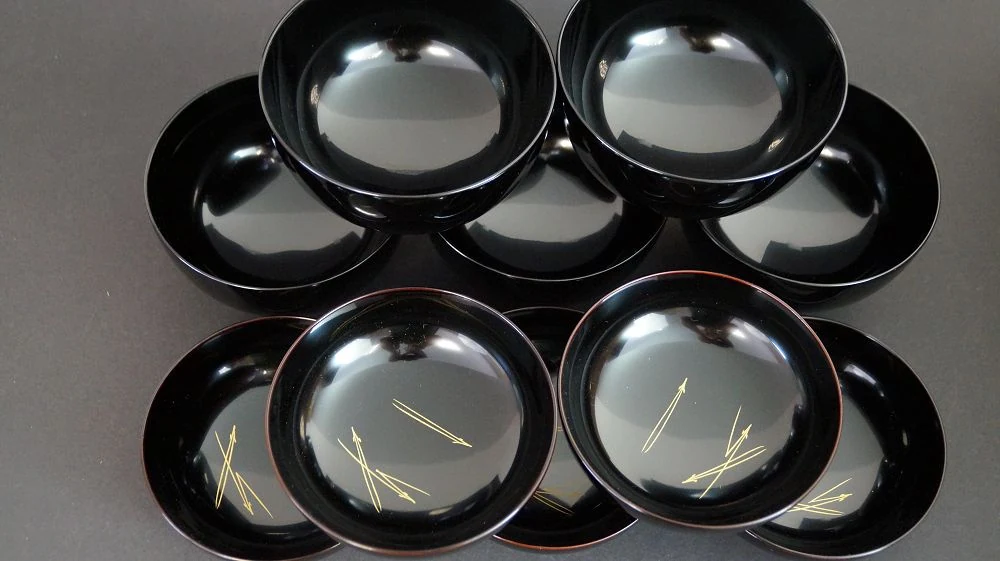
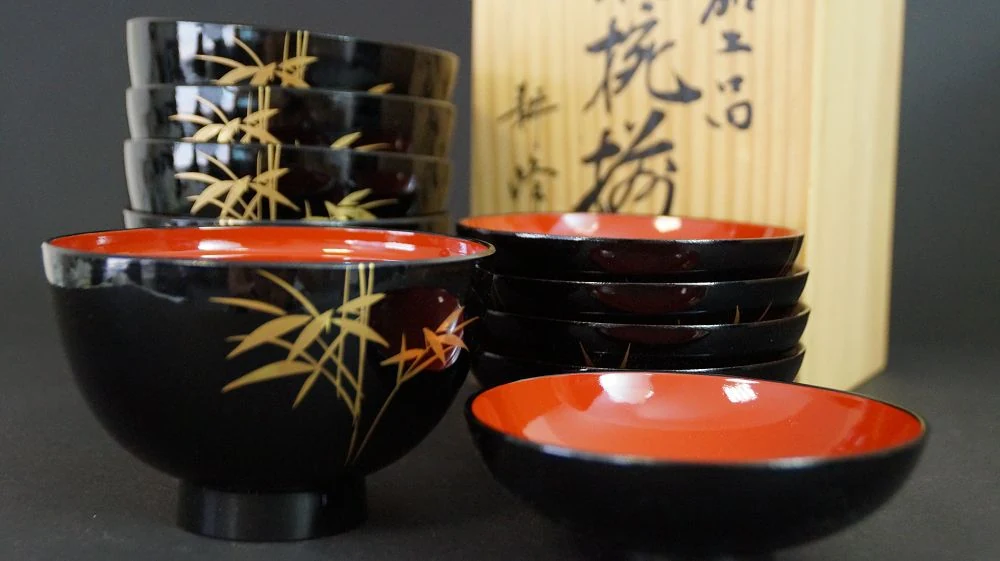
Set of Five Owan with Gold Bamboo Decoration
Owan, Handcrafted, unique work, with box, 7 x 14 cm
€185.00
Wajima, Kyōto, and Japan's lacquer centers
The Japanese register of traditional crafts lists more than twenty lacquer crafts as traditions of their own, from Tsugaru in the north to Ryūkyū in the south. The reputation for the greatest durability belongs to Wajima on the Noto Peninsula, recognized as a traditional craft since 1975. Its secret is jinoko, a powder of calcined diatomaceous earth from Mount Komine that is mixed into the priming; according to tradition, a divine sign is said to have led the lacquer masters to this earth. Wajima lacquer is considered so robust that damaged pieces can be repaired and used further.
Lacquerware was always expensive, and in Wajima a purchasing method of its own was devised for it, the wankō: about ten buyers each paid in part of the price every year, and each year a lottery decided who received the finished piece. This secured the lacquer master's work for years. Kyōto, by contrast, recognized since 1976 for its Kyō-shikki, stands for elegance and for closeness to tea culture. Its lacquerware is regarded as restrained, refined, and possessed of that inner depth that in Japan is associated with wabi and sabi.
The natsume: lacquer in the tea room
No lacquer object is as closely tied to the tea ceremony as the natsume (棗), the caddy for thin matcha. It owes its name to the jujube, whose fruit resembles its squat shape with the gently domed lid. The origin of the caddy is attributed to a craftsman named Haneda Gorō, who is said to have lived in Kyōto in the Muromachi period, when the tea ceremony was only just taking shape. Sen no Rikyū favored certain shapes that are named after him.
Natsume come in several sizes, as the large ō-natsume, the medium chū-natsume, and the small ko-natsume, plain black, in deep red, or richly decorated with maki-e: autumn leaves for October, cherry blossoms for spring, auspicious signs for the new year. For thick tea, by contrast, one uses the chaire, the small ceramic caddy. Anyone looking for accessories for the Japanese tea ceremony often begins with a chawan and a natsume – two pieces in which the interplay of ceramics and lacquer, of earth and gloss, shows itself particularly beautifully.
Lacquer that ages with its owner
Lacquerware is more durable than its gloss suggests, but it wants to be treated by hand. Dishwasher, microwave, and oven are off-limits, as are abrasive cleaners; lukewarm water, a soft sponge, and a soft cloth are enough. Direct sun and very dry heating air should be spared it in the long run. In return, it rewards use: regular drying polishes the surface, and the lacquer gains depth over the years.
Thus a piece of lacquer becomes more personal over time. A bowl from which soup has been drunk for decades bears a different gloss from one that stood in the cupboard, and a natsume that has passed through many hands tells of all the teas scooped from it. At Densho you will find handmade lacquerwork by Japanese lacquer masters that we purchase individually in Japan, often in the master's signed wooden box, together with tea bowls that keep a natsume company. Take such a caddy in your hand – the lacquer reveals its patience at the very first touch.
Sources and Literature
JAANUS – Japanese Architecture and Art Net Users System: urushi 漆, aisf.or.jp.
JAANUS – Japanese Architecture and Art Net Users System: makie 蒔絵, aisf.or.jp.
JAANUS – Japanese Architecture and Art Net Users System: natsume 棗, aisf.or.jp.
Traditional Crafts Aoyama Square (Japanese register of traditional crafts): WAJIMA Nuri (Lacquerware), kougeihin.jp.
Traditional Crafts Aoyama Square (Japanese register of traditional crafts): KYO Shikki (Lacquerware), kougeihin.jp.
Beatrix von Ragué: Geschichte der japanischen Lackkunst. de Gruyter, Berlin 1967.