
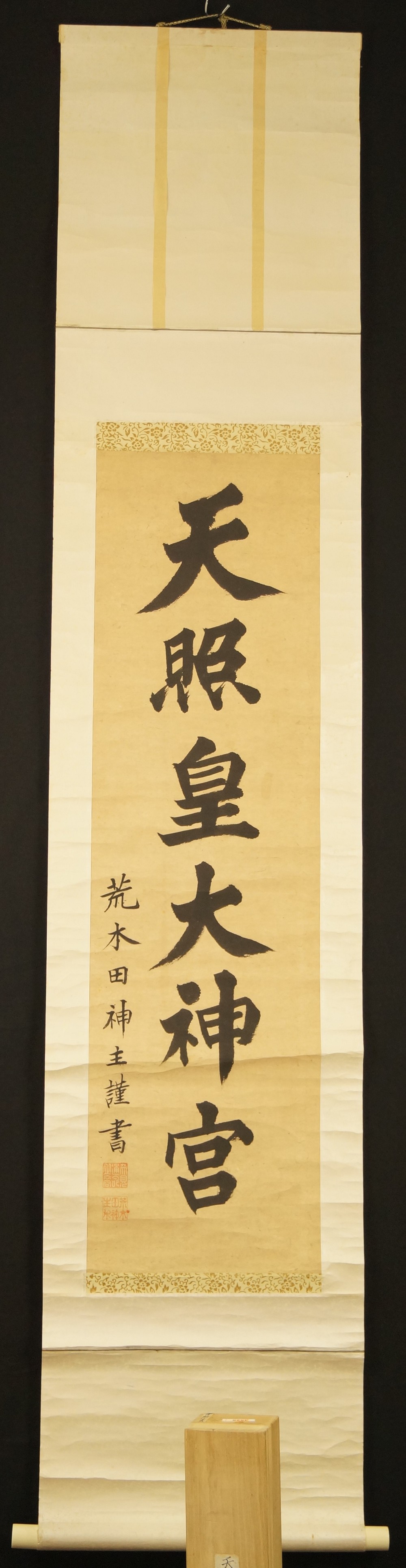
Kakemono Calligraphy: Amaterasu
One of a kind — this work exists only once.
- Period:
- Shôwa (1926–1989)
- Dimensions (height x width):
- 172 x 46 cm
- Item number:
- 4529
This piece has been sold.
Sold – no longer available
This piece was a handmade one-of-a-kind work. It cannot be reordered and will never exist in this form again. The page stays online as part of our archive.
More items in category CalligraphyAll one-of-a-kind Japanese Painting pieces
See new one-of-a-kind pieces first
We feature every delivery from Japan in the newsletter first – before the pieces show up in search results.
You might like these pieces
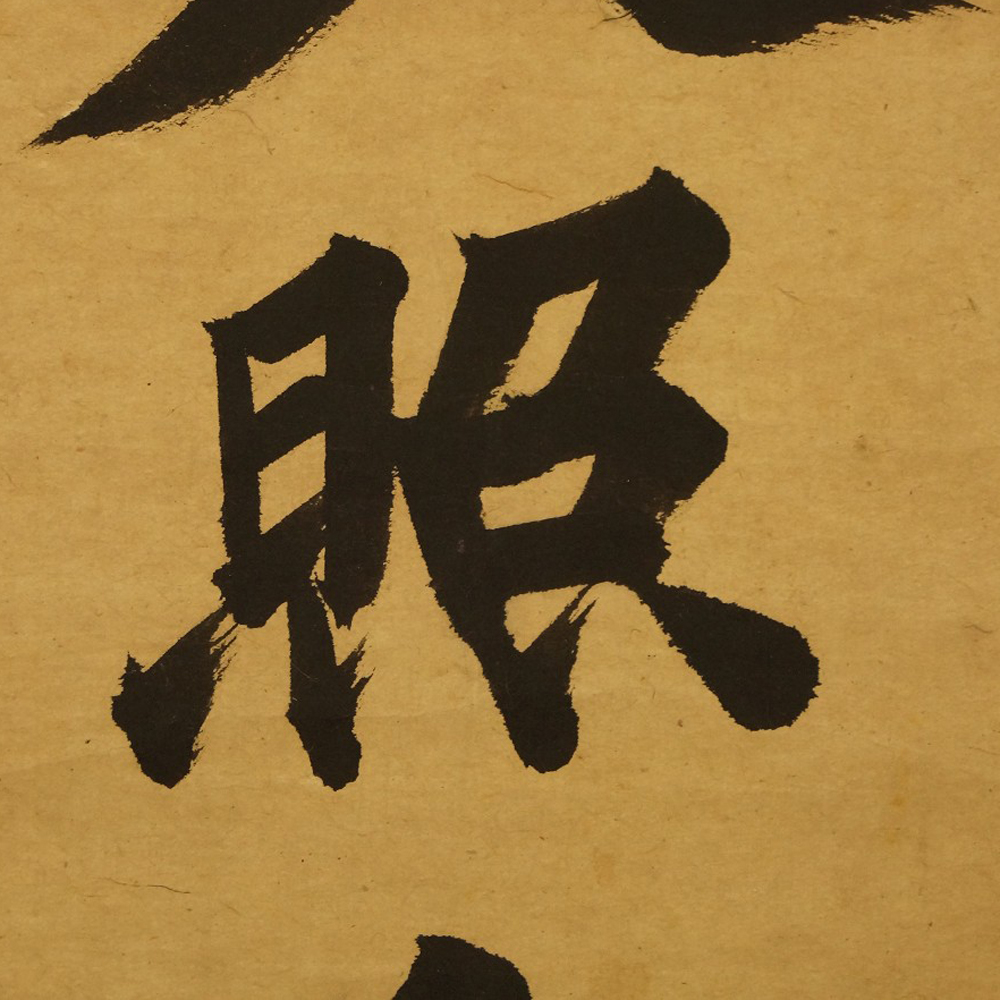
Calligraphy "Amaterasu"
Kakemono, unique work, with box, 165 x 39 cm
€140.00
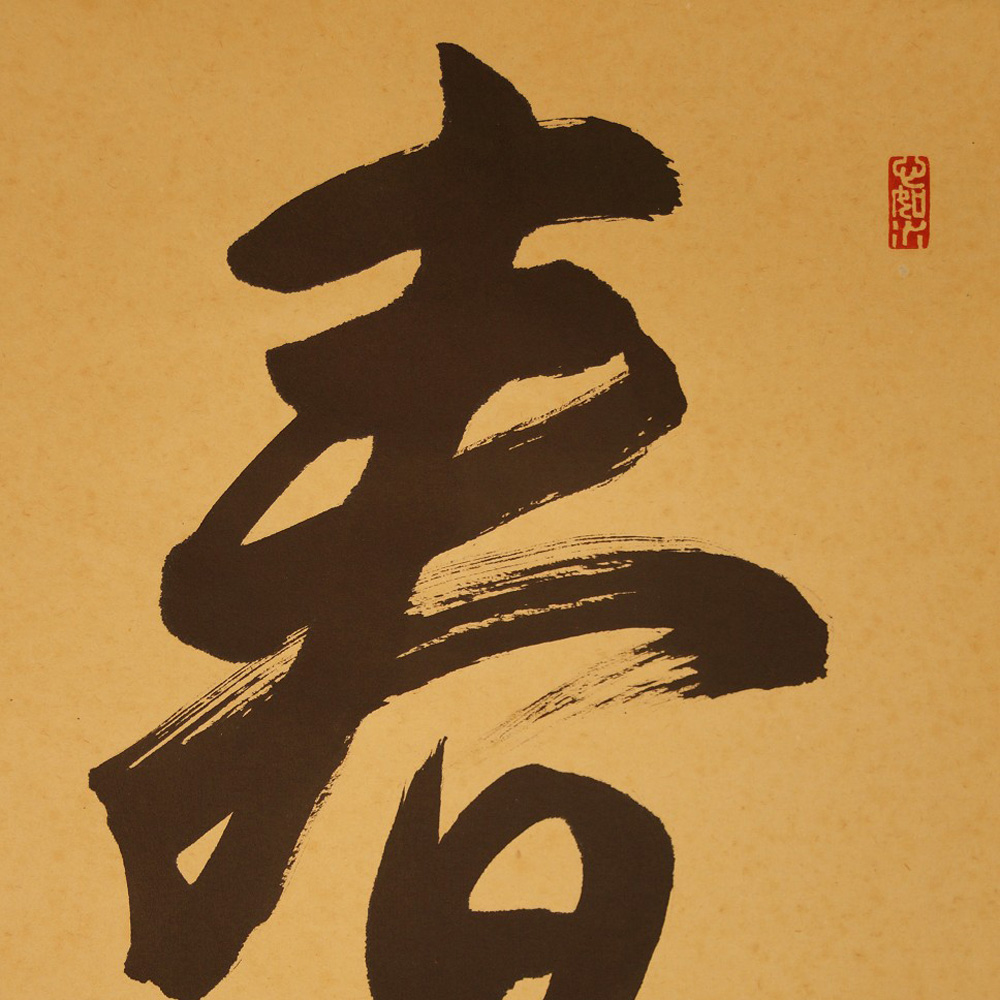
Calligraphy "Spring Wind"
Kakemono, unique work, 200 x 52 cm
€220.00

Calligraphy "The Power of the Emperor Illuminates the World"
Kakemono, unique work, with box, 169 x 52 cm
€260.00
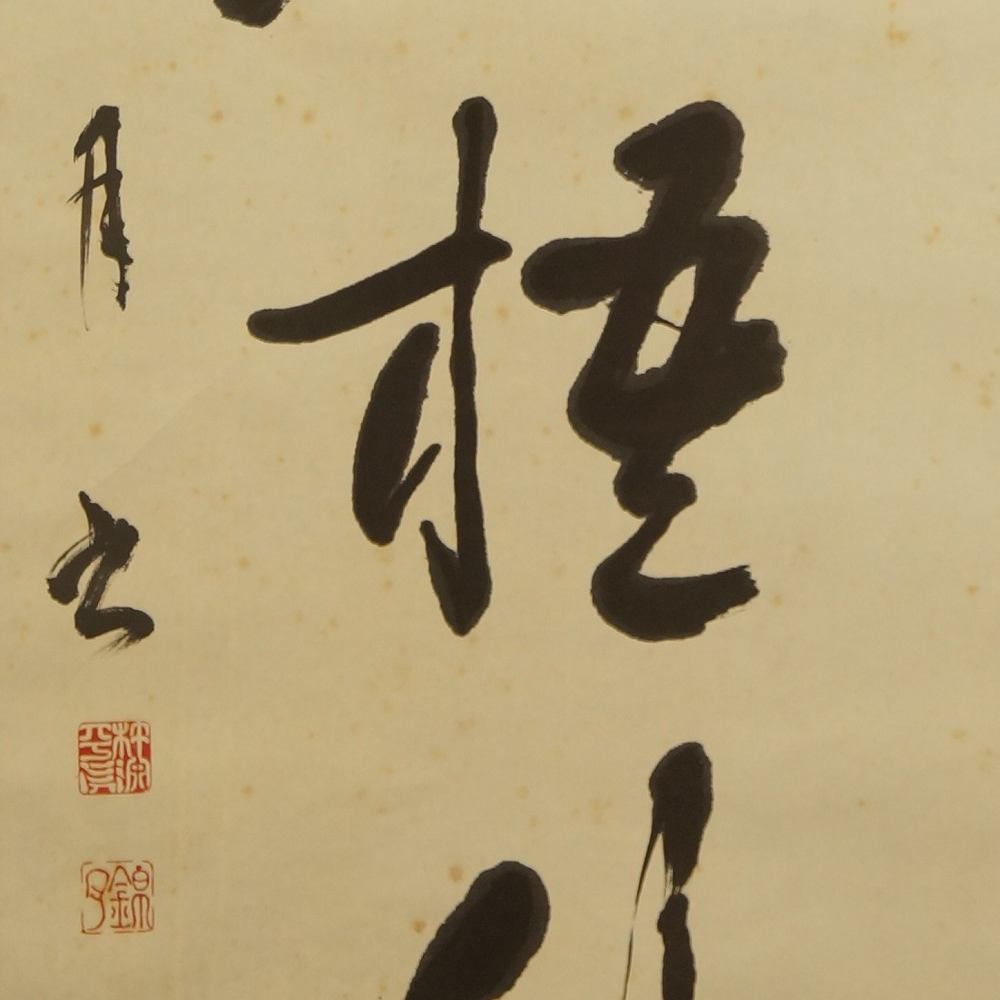
Calligraphy: Wind in the Bamboo
Kakemono, unique work, 193 x 53 cm
€210.00

Calligraphy: Purple Light on the Mountains
Kakemono, unique work, 203 x 53 cm
€170.00
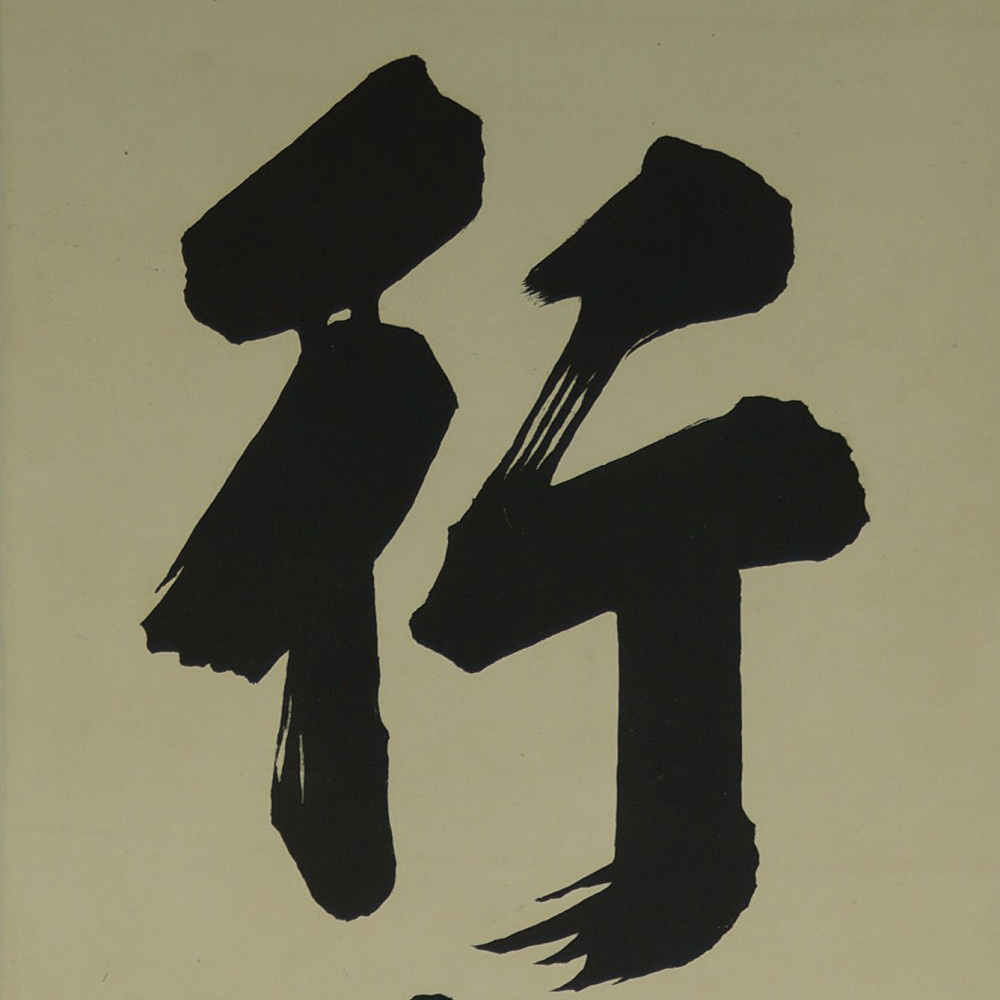
Calligraphy Print "Do Justice"
Kakemono, Print, 202 x 52 cm
€60.00
Calligraphy: True Sustenance
Kakemono, unique work, 205 x 58 cm
€260.00
Calligraphy: The Key to Happiness
Kakemono, unique work, 180 x 50 cm
€240.00


Details about the sold piece
- JikusakiWood
- Material HonshiPaper
- MotifCalligraphy
- TechniqueHand-Painted
- Wooden BoxYes
Description
A single, powerfully rendered character meaning 'to illuminate' or 'to shine' refers to Amaterasu, the sun goddess of Shinto and one of the central deities of Japanese mythology. The broad, confident brushwork with its flowing transitions between thick and thin lines attests to both artisanal skill and religious earnestness.
Created in the Shôwa period (1926–1989), this calligraphy was written by hand on paper. In Shinto mythology, Amaterasu is regarded as the origin of the Japanese imperial house and as a symbol of light, order, and renewal, which lends her name a particularly solemn meaning when rendered in calligraphic form.
The kakemono is delivered in a signed wooden box, which further attests to the piece's provenance and careful preservation. The roller ends are made of wood. For collectors of religious and mythological calligraphy, this work is a meaningful, well-documented unique work.

