
Kakemono Calligraphy: Big Fish Do Not Live in Shallow Waters
One of a kind — this work exists only once.
- Period:
- Meiji (1868–1912)
- Dimensions (height x width):
- 175 x 60 cm
- Item number:
- 4498
This piece has been sold.
Sold – no longer available
This piece was a handmade one-of-a-kind work. It cannot be reordered and will never exist in this form again. The page stays online as part of our archive.
More items in category CalligraphyAll one-of-a-kind Japanese Painting pieces
See new one-of-a-kind pieces first
We feature every delivery from Japan in the newsletter first – before the pieces show up in search results.
You might like these pieces
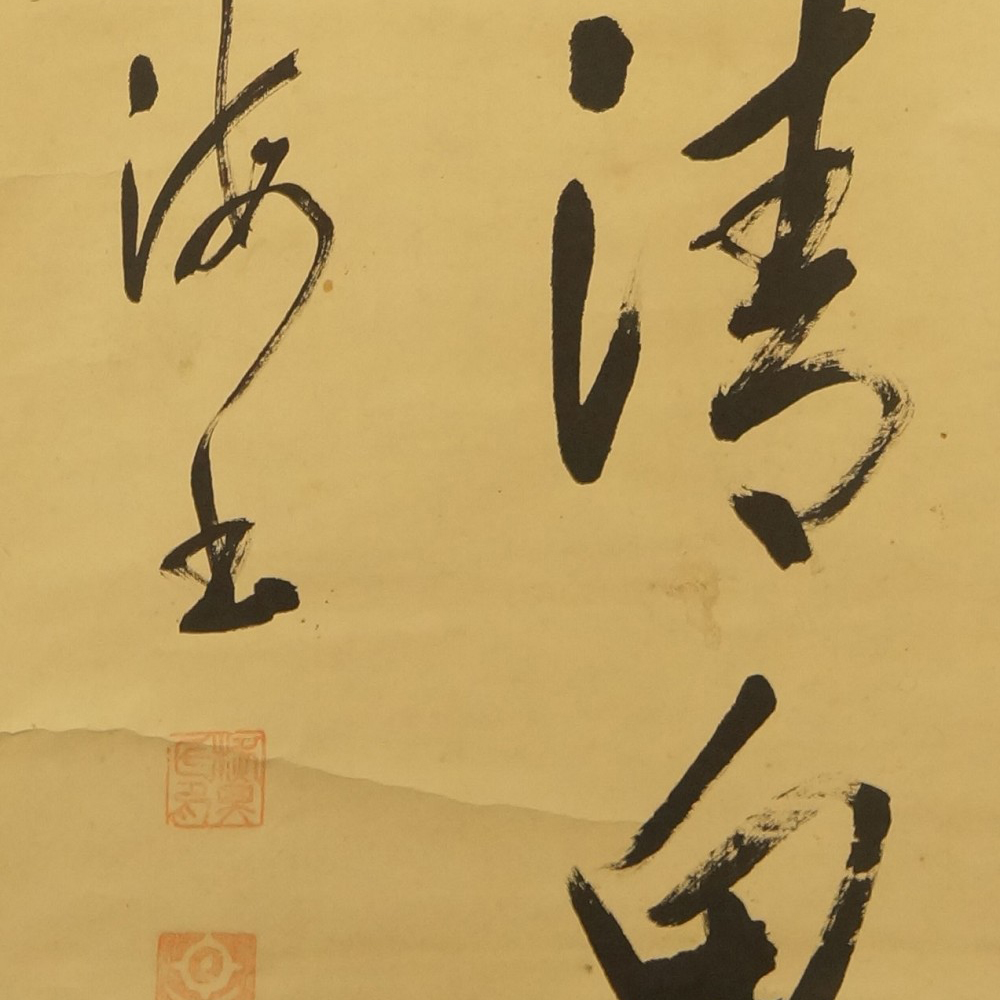
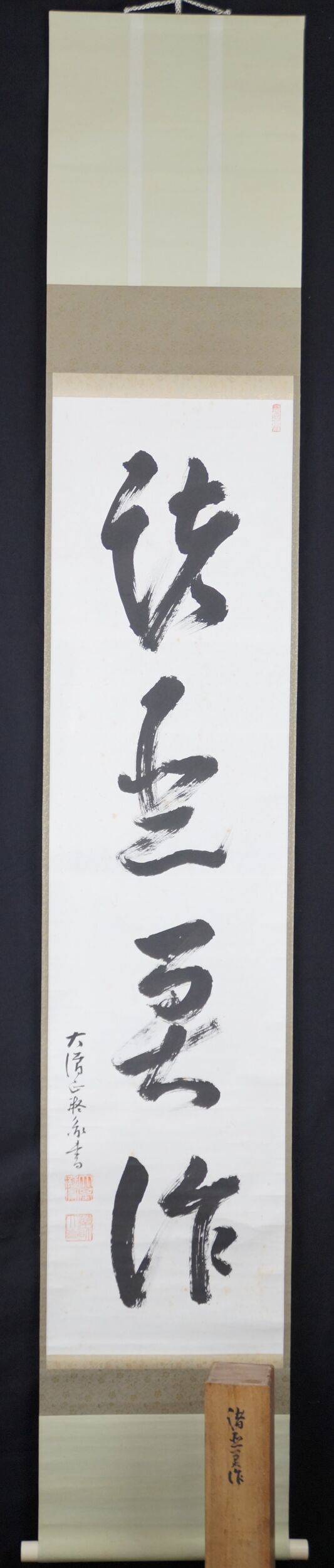
Calligraphy: Wind in the Bamboo Grove, Fish in Clear Water
Kakemono, unique work, 165 x 51 cm
€115.00
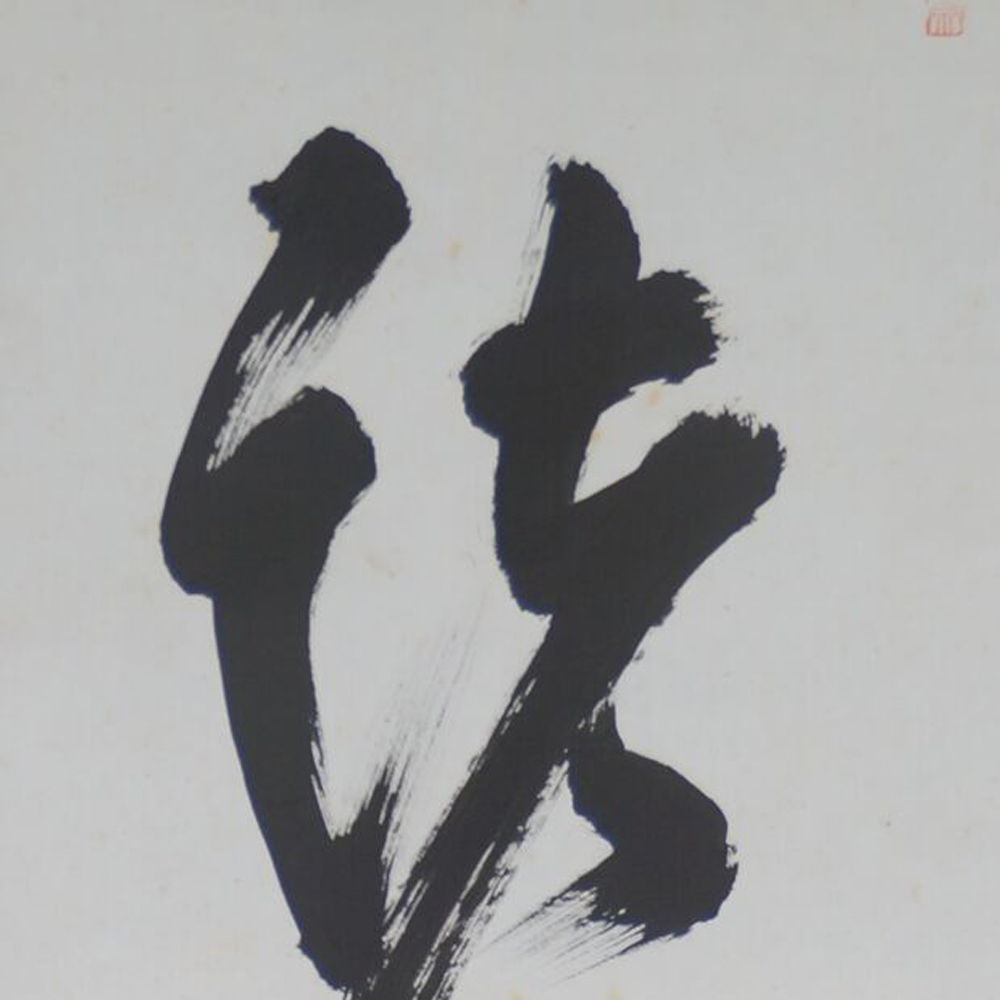
Hashimoto Gyōin
Calligraphy "Shoaku Makusa"
Kakemono, unique work, with box, 200 x 38 cm
€350.00
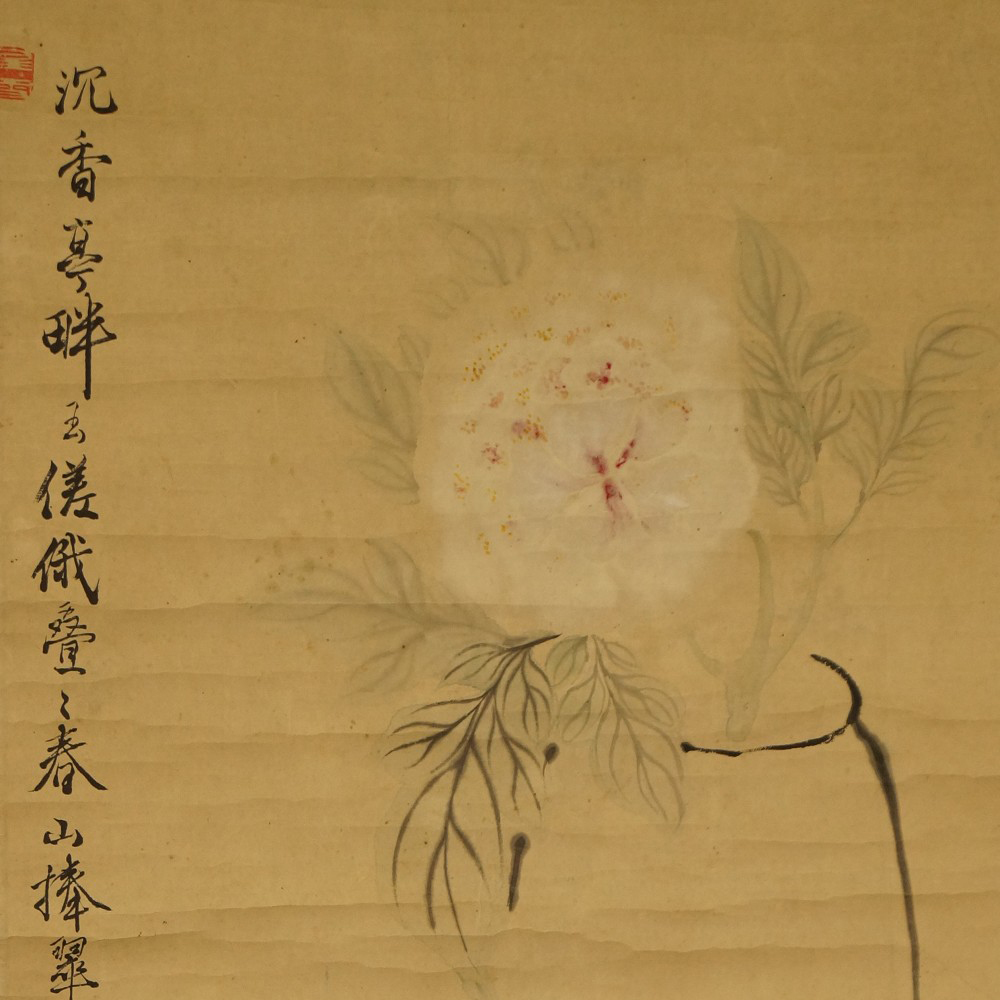
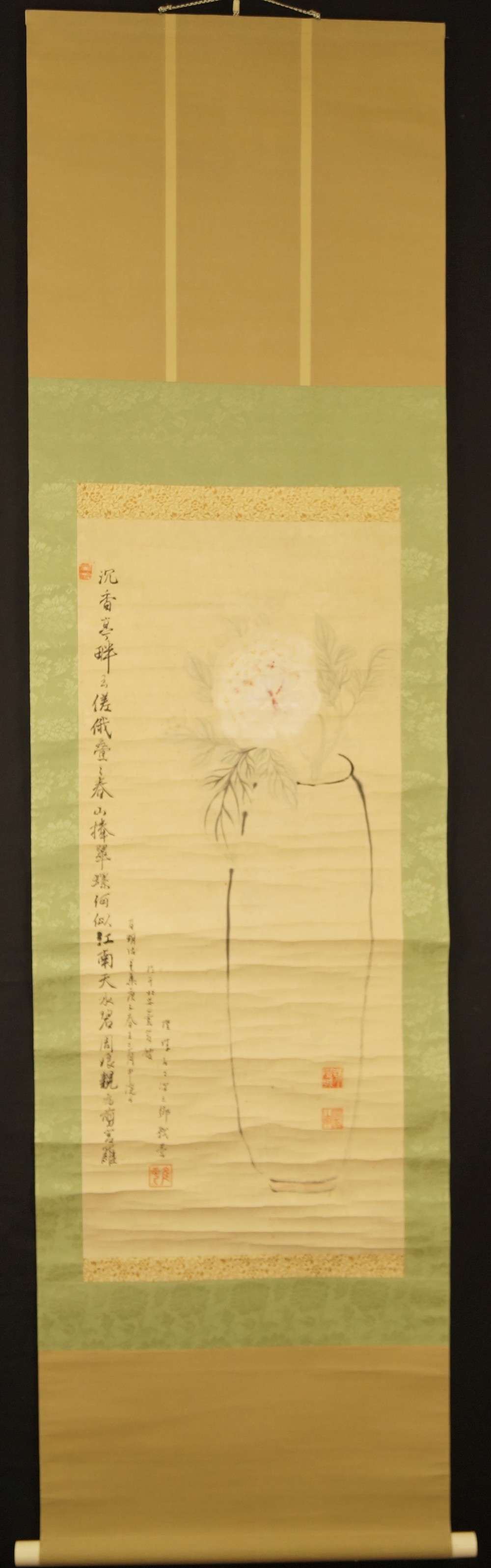
Peony with Calligraphy
Kakemono, unique work, 176 x 54 cm
€210.00
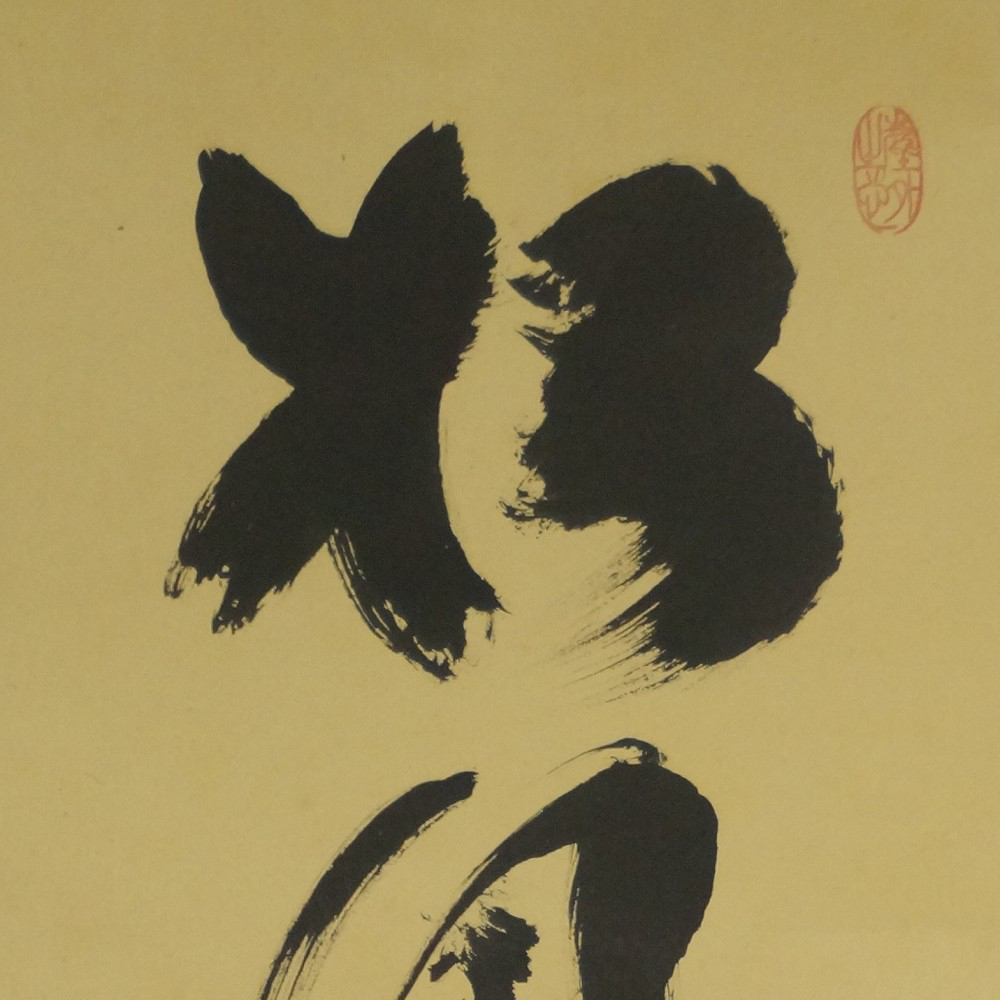
Kobayashi Taigen
Zen Calligraphy "Wind in the Pines, Wisdom of the Ages"
Kakemono, unique work, with box, 167 x 38 cm
€860.00
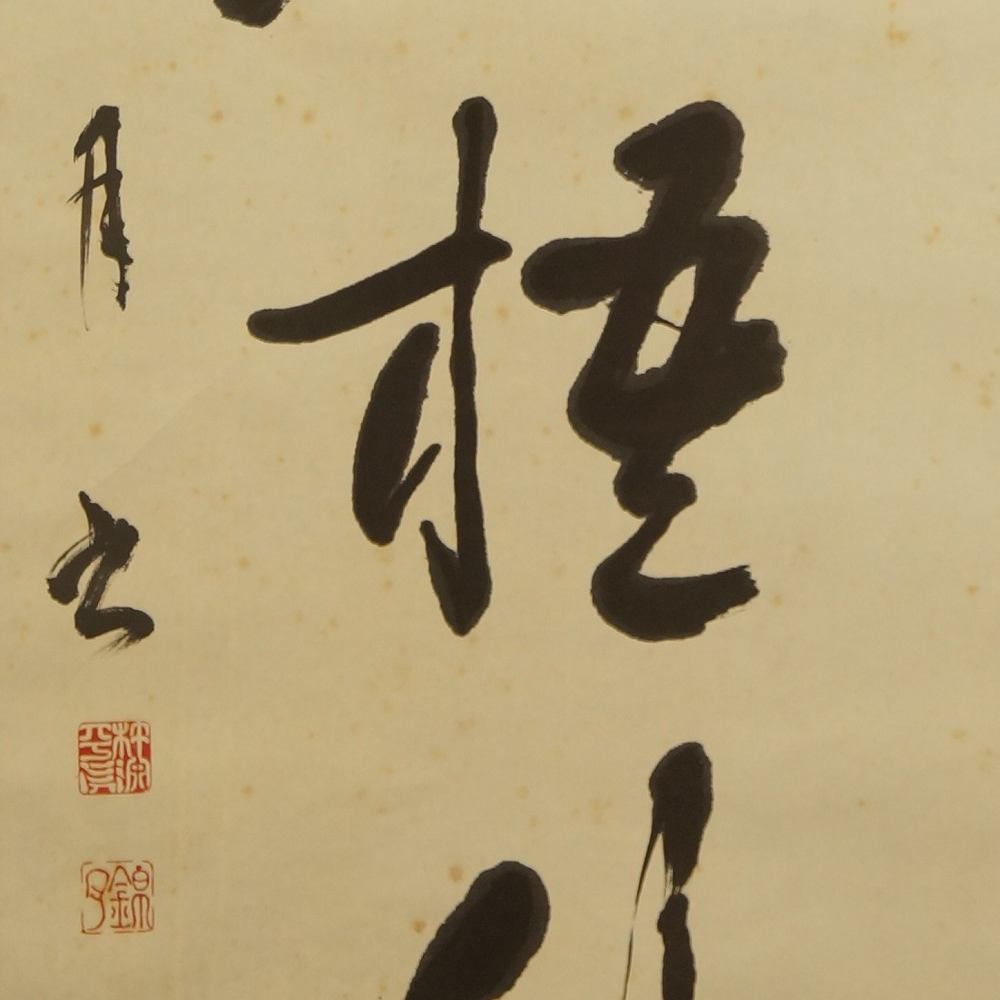
Calligraphy: Wind in the Bamboo
Kakemono, unique work, 193 x 53 cm
€210.00
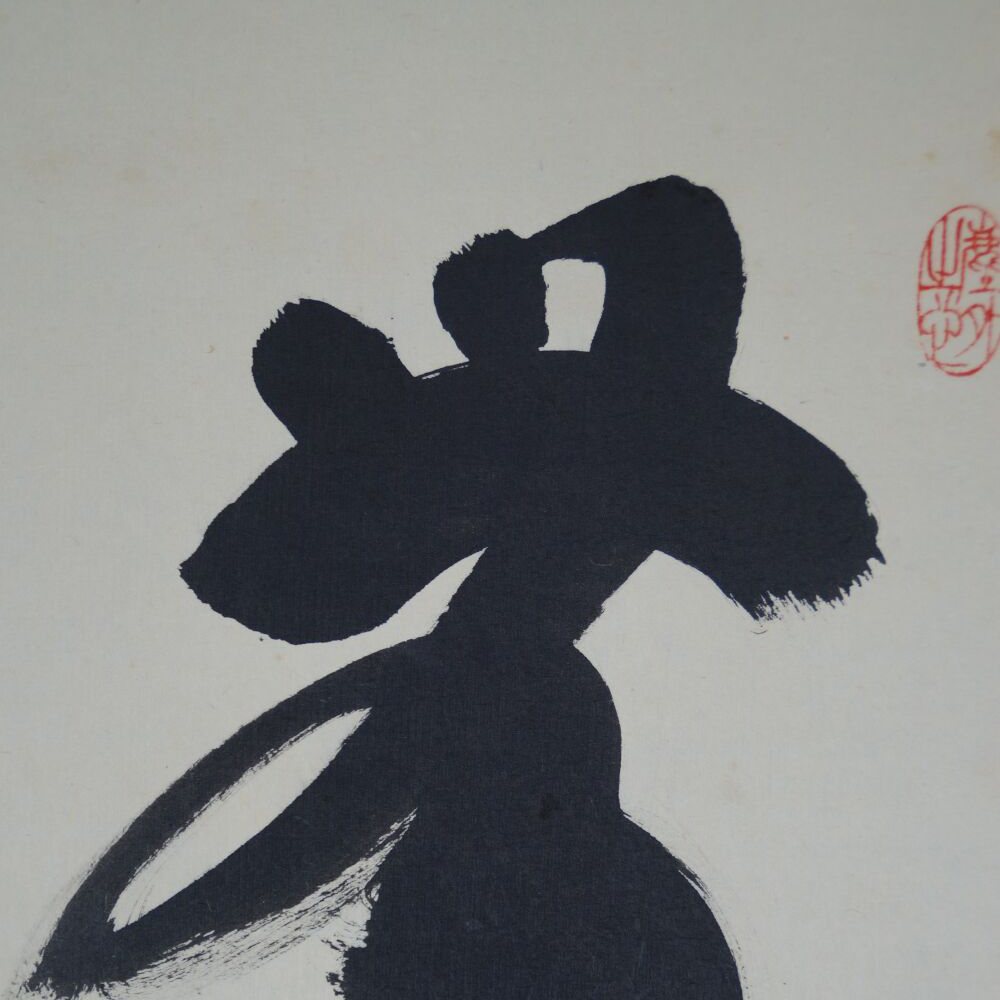
Kobayashi Taigen
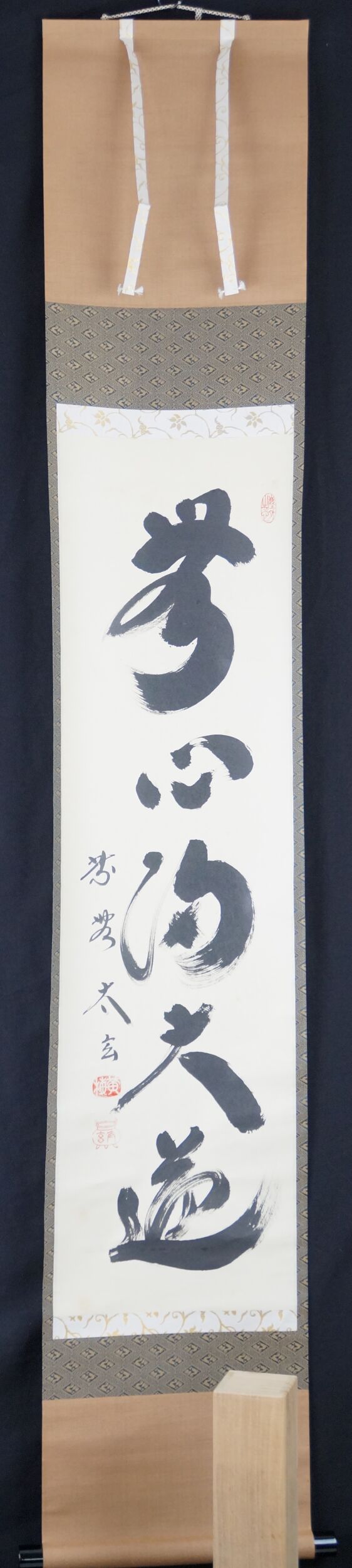
No-Mind on the Great Way – Zen Calligraphy, Olive Mounting
Kakemono, unique work, with box, 176 x 36 cm
€690.00
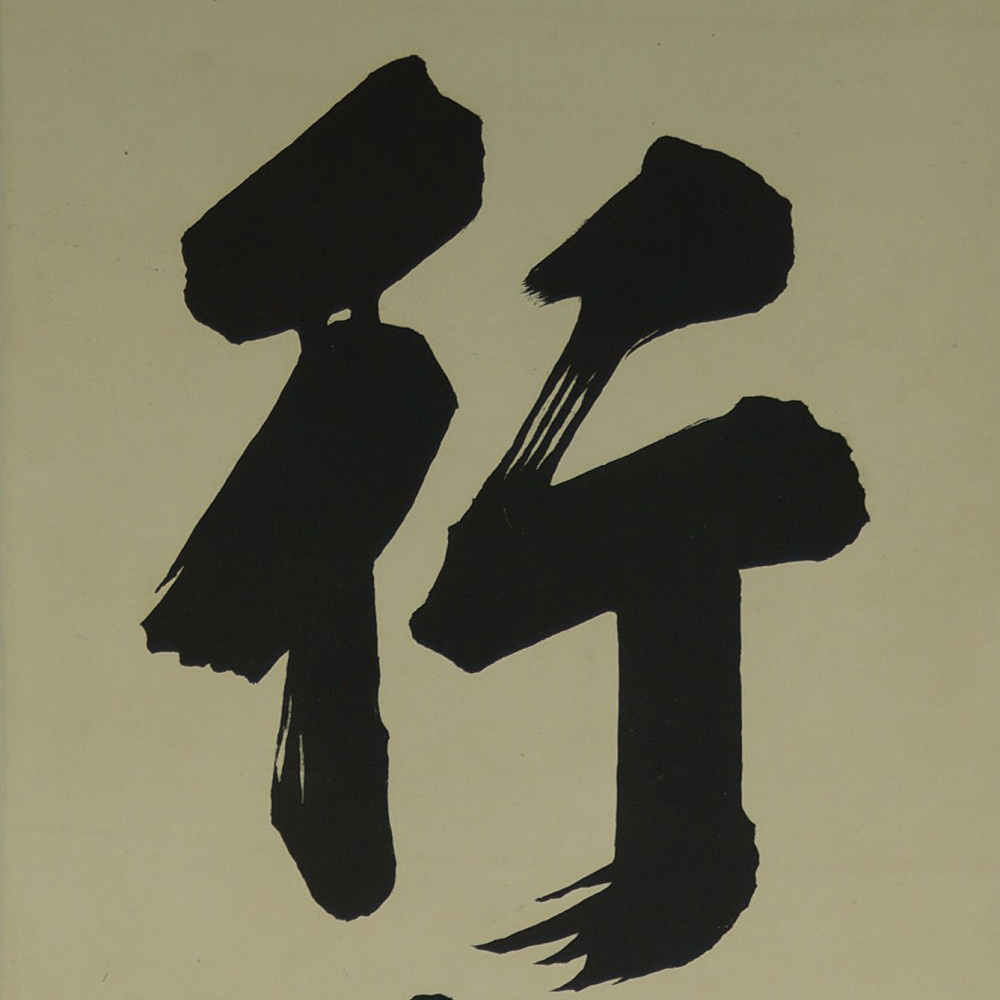
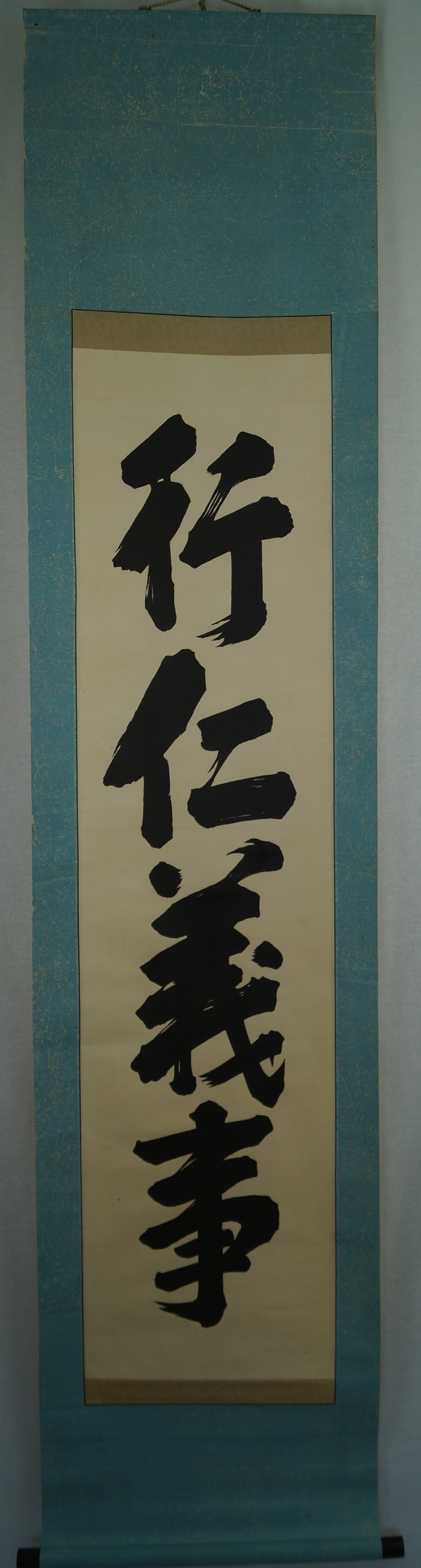
Calligraphy Print "Do Justice"
Kakemono, Print, 202 x 52 cm
€60.00

Calligraphy: Purple Light on the Mountains
Kakemono, unique work, 203 x 53 cm
€170.00



Details about the sold piece
- JikusakiCeramics
- Material HonshiPaper
- MotifCalligraphy
- TechniqueHand-Painted
Description
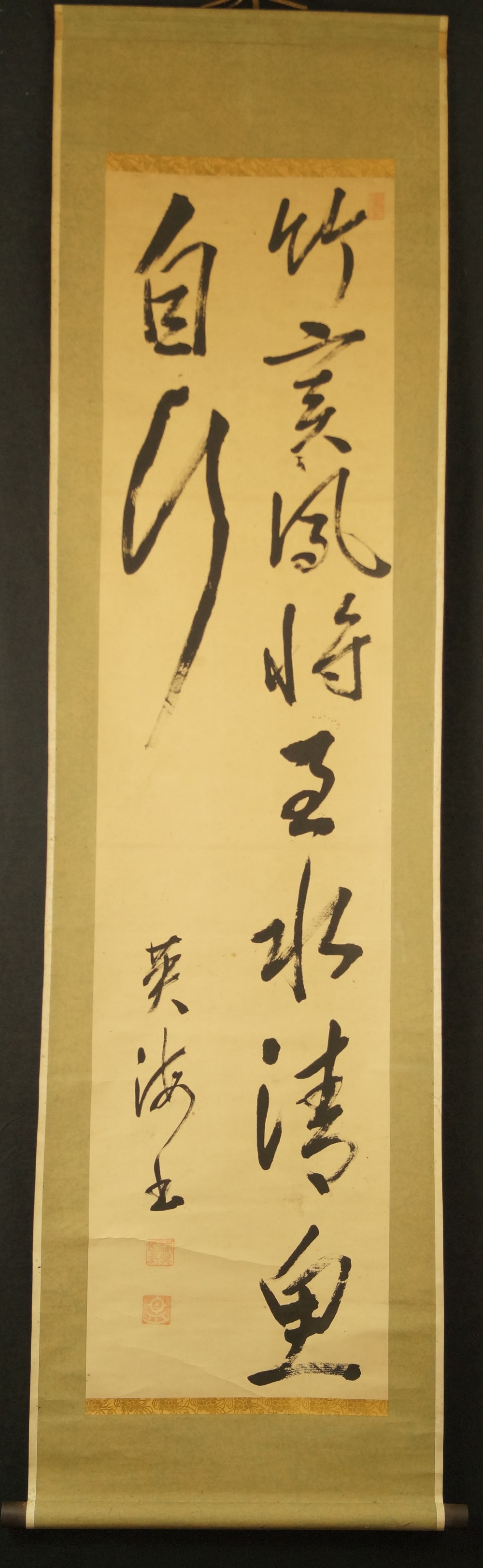
Four powerfully sweeping characters fill the picture surface of this calligraphy in two lines, whose meaning translates roughly as: big fish do not live in shallow waters. The proverb alludes to the idea that significant people or talents need room and depth to unfold, and has accordingly often been used as encouragement or warning.
The work was created in the Meiji period (1868–1912) and was entirely handwritten on paper. The clear, disciplined brushwork with distinctly defined strokes suggests an experienced calligrapher who was assured in balancing legibility and artistic expression.
The roller rods are fitted with ends made of ceramics. For collectors interested in classical Chinese-Japanese proverbs and their calligraphic rendering, this kakemono represents a vivid and at the same time meaningful example of Japanese calligraphy.

