
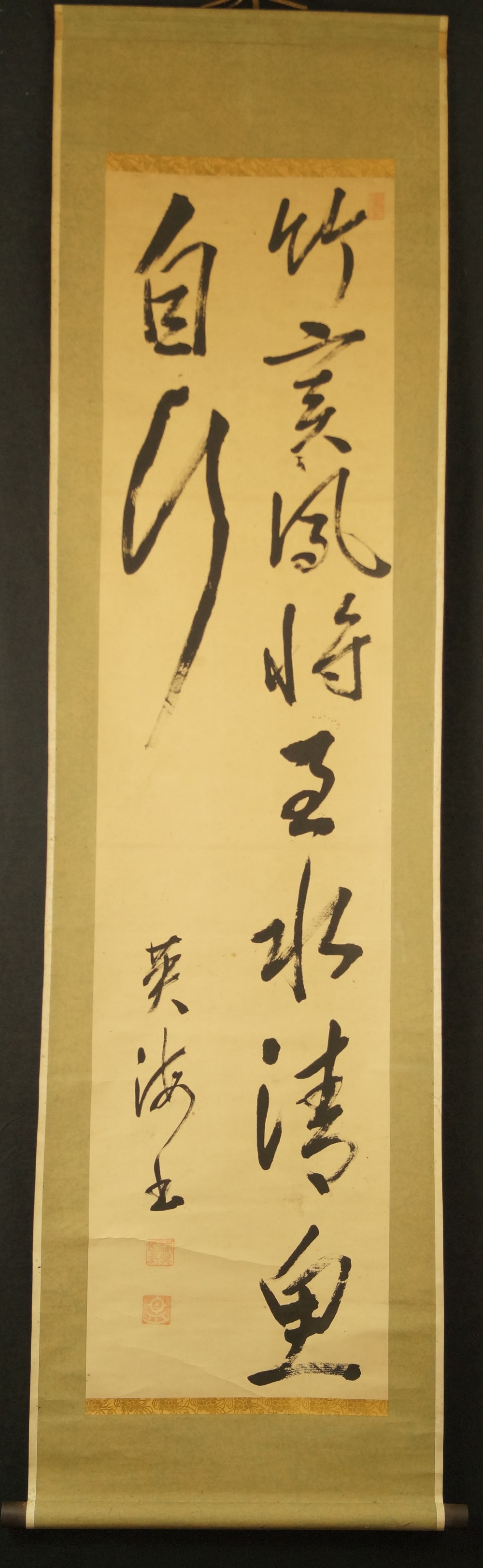
Kakemono Calligraphy "New Bamboo Calls for a Clear Wind"
One of a kind — this work exists only once.
- Period:
- Shôwa (1926–1989)
- Dimensions (height x width):
- 196 x 52 cm
- Item number:
- 4093
This piece has been sold.
Sold – no longer available
This piece was a handmade one-of-a-kind work. It cannot be reordered and will never exist in this form again. The page stays online as part of our archive.
More items in category CalligraphyAll one-of-a-kind Japanese Painting pieces
See new one-of-a-kind pieces first
We feature every delivery from Japan in the newsletter first – before the pieces show up in search results.
You might like these pieces
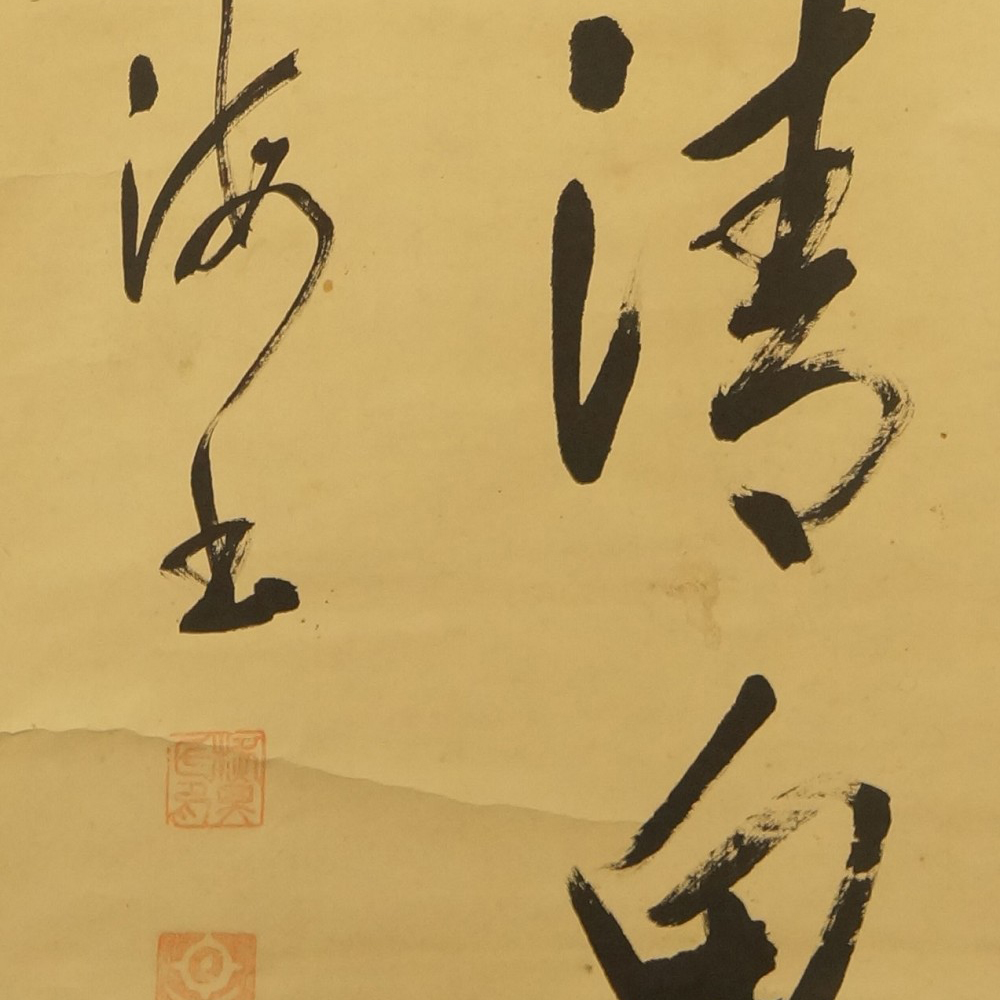
Calligraphy: Wind in the Bamboo Grove, Fish in Clear Water
Kakemono, unique work, 165 x 51 cm
€115.00
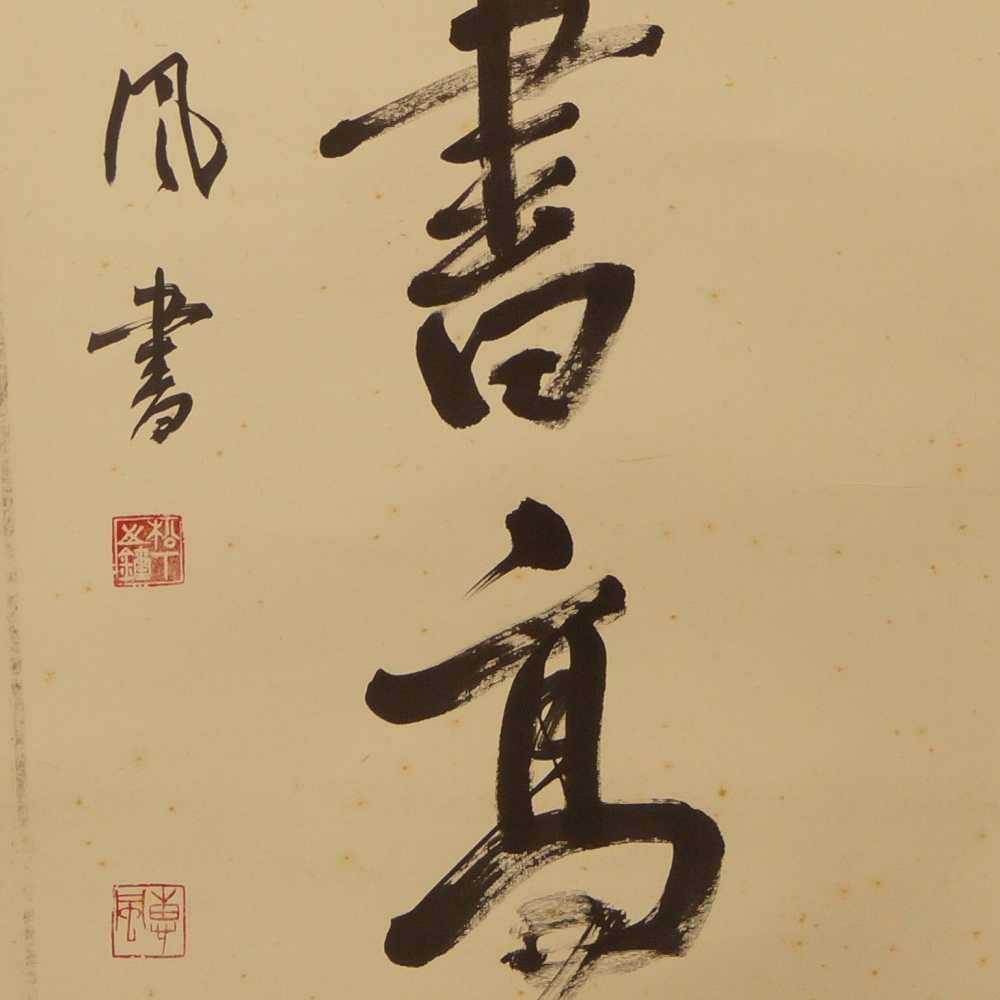
Calligraphy Poem: Bamboo by the Window
Kakemono, unique work, 195 x 50 cm
€180.00
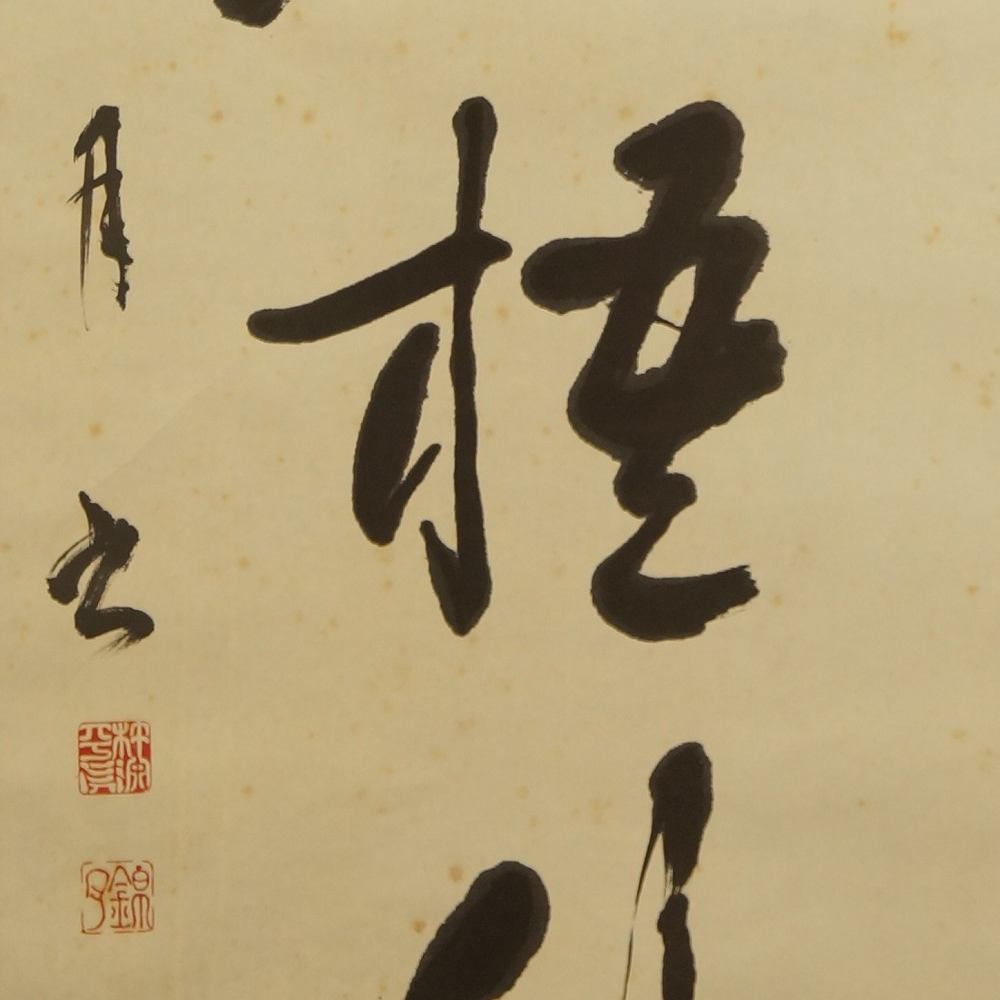
Calligraphy: Wind in the Bamboo
Kakemono, unique work, 193 x 53 cm
€210.00
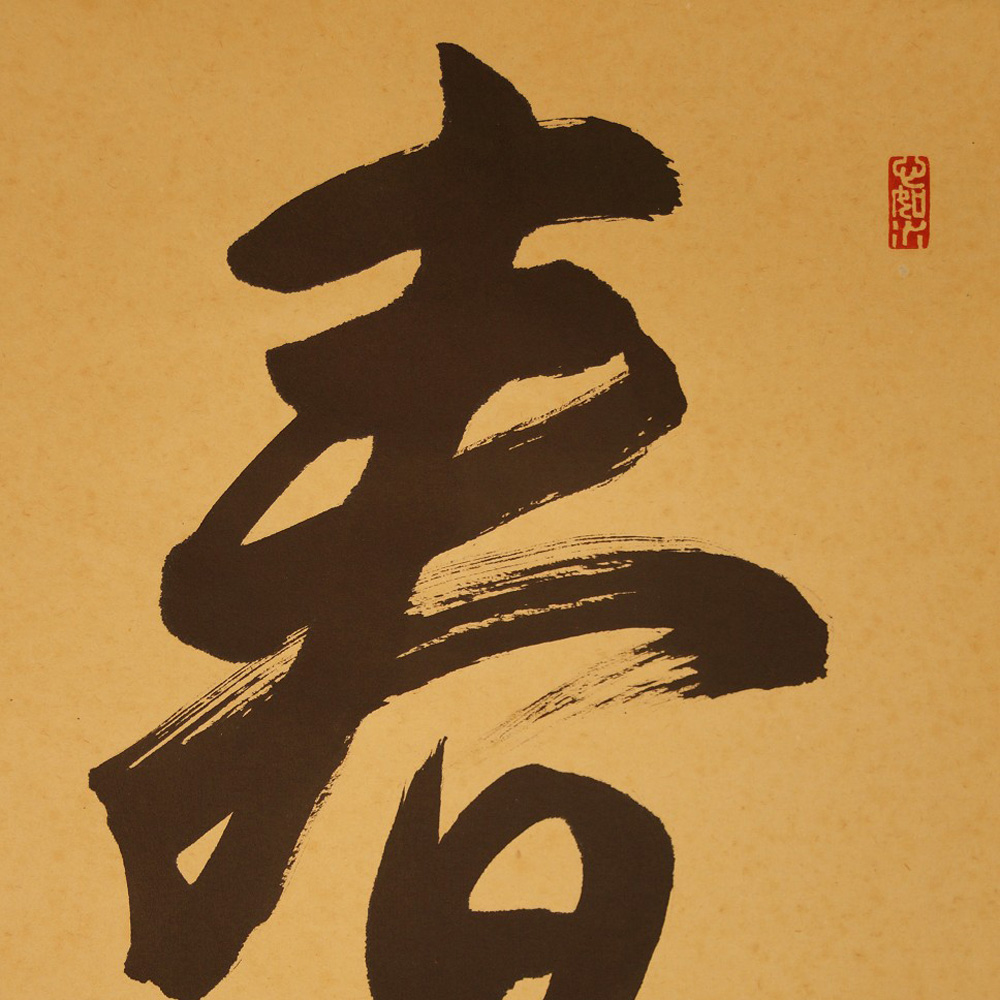
Calligraphy "Spring Wind"
Kakemono, unique work, 200 x 52 cm
€220.00
Calligraphy: Wind and Clouds
Kakemono, unique work, 190 x 50 cm
€220.00
Calligraphy: Pine and Bamboo
Kakemono, unique work, 200 x 48 cm
€140.00
Kobayashi Taigen
Zen Calligraphy "Wind in the Pines, Wisdom of the Ages"
Kakemono, unique work, with box, 167 x 38 cm
€860.00

Calligraphy: Purple Light on the Mountains
Kakemono, unique work, 203 x 53 cm
€170.00




Details about the sold piece
- JikusakiWood
- Material HonshiPaper
- MotifCalligraphy
- TechniqueHand-Painted
- Wooden BoxYes
Description
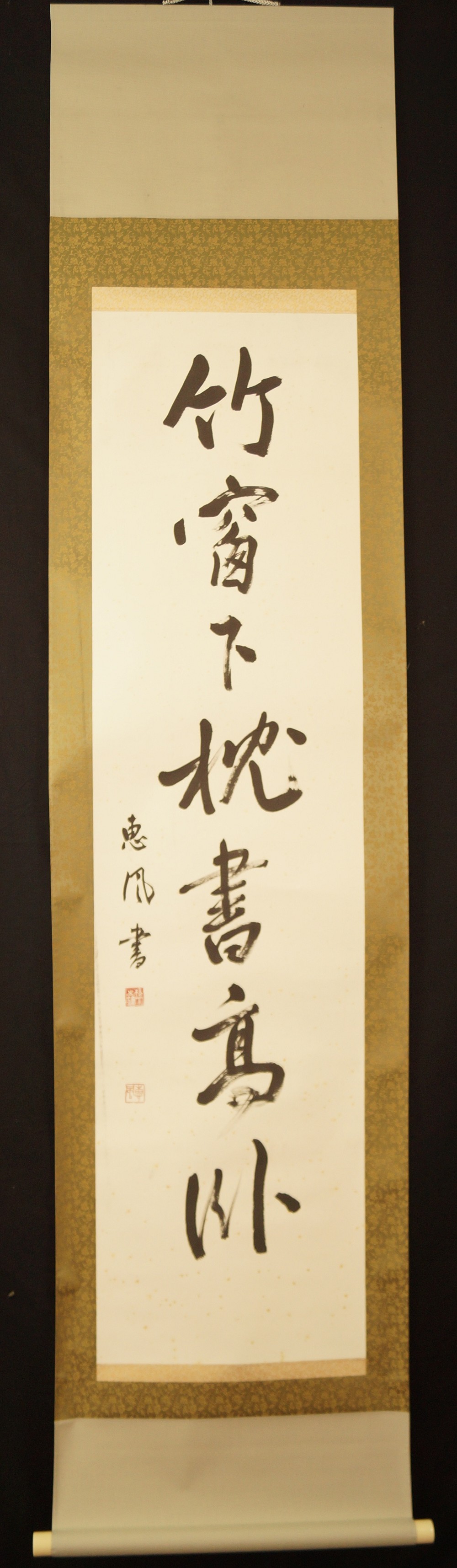
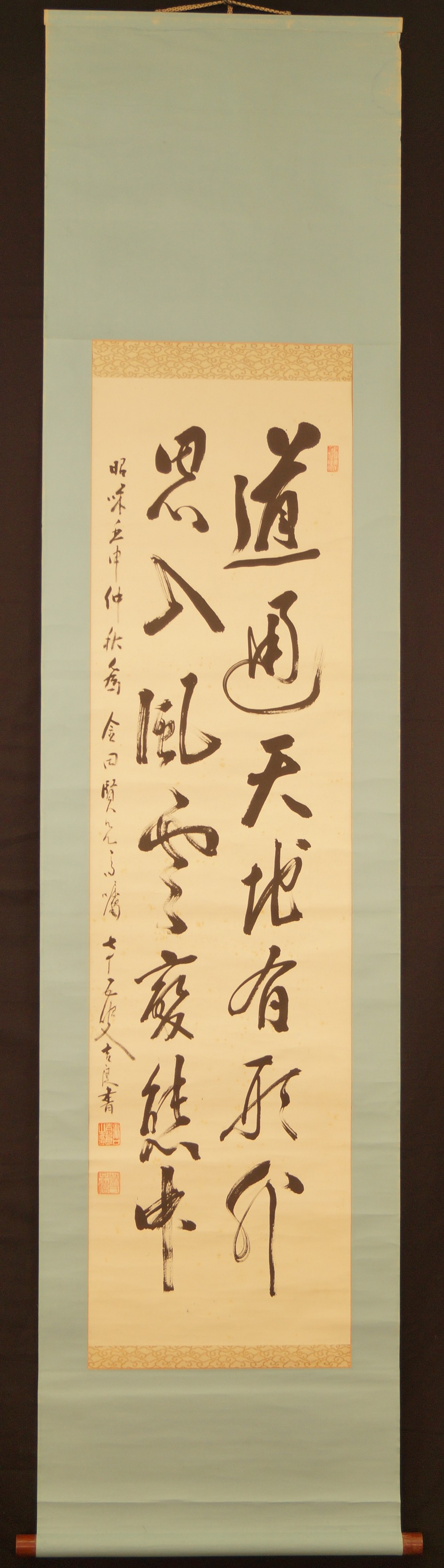
Powerful, flowing brushwork characterizes this hanging scroll, its individual characters drawn across the pale paper like stalks moving in the wind. A red seal at the upper edge sets a calm counterpoint to the dynamism of the black ink.
The calligraphy carries the meaning "The newly planted bamboo calls forth clean wind" – an image that has long stood for renewal, purity, and a clear spirit, and is often used in Japanese calligraphy as a New Year's greeting or expression of good wishes. The characters themselves were executed in cursive style, which makes the movement of the hand almost visible to the viewer.
The work is mounted in the traditional manner with wooden rods and dates from the Shôwa period. It is delivered in a wooden box made specifically for it, as was customary for finer hanging scrolls, to protect the paper from light and moisture. For lovers of Japanese calligraphy, this hanging scroll is an evocative example of lived calligraphic art.

