
Kakemono Calligraphy of a Zen Koan
One of a kind — this work exists only once.
- Period:
- Shôwa (1926–1989)
- Dimensions (height x width):
- 200 x 50 cm
- Item number:
- 4991
This piece has been sold.
Sold – no longer available
This piece was a handmade one-of-a-kind work. It cannot be reordered and will never exist in this form again. The page stays online as part of our archive.
More items in category Buddhism and ZenAll one-of-a-kind Japanese Painting pieces
See new one-of-a-kind pieces first
We feature every delivery from Japan in the newsletter first – before the pieces show up in search results.
You might like these pieces
Calligraphy Print "Create Justice" in Large Script
Kakemono, Print, 200 x 50 cm
€60.00
Kobayashi Taigen
Zen Calligraphy "Wind in the Pines, Wisdom of the Ages"
Kakemono, unique work, with box, 167 x 38 cm
€860.00
Calligraphy: Wind in the Bamboo
Kakemono, unique work, 193 x 53 cm
€210.00
Satō Bokudō
"Zui-un" (like clouds and water) - Zen Calligraphy
Kakemono, unique work, with box, 114 x 58 cm
€490.00
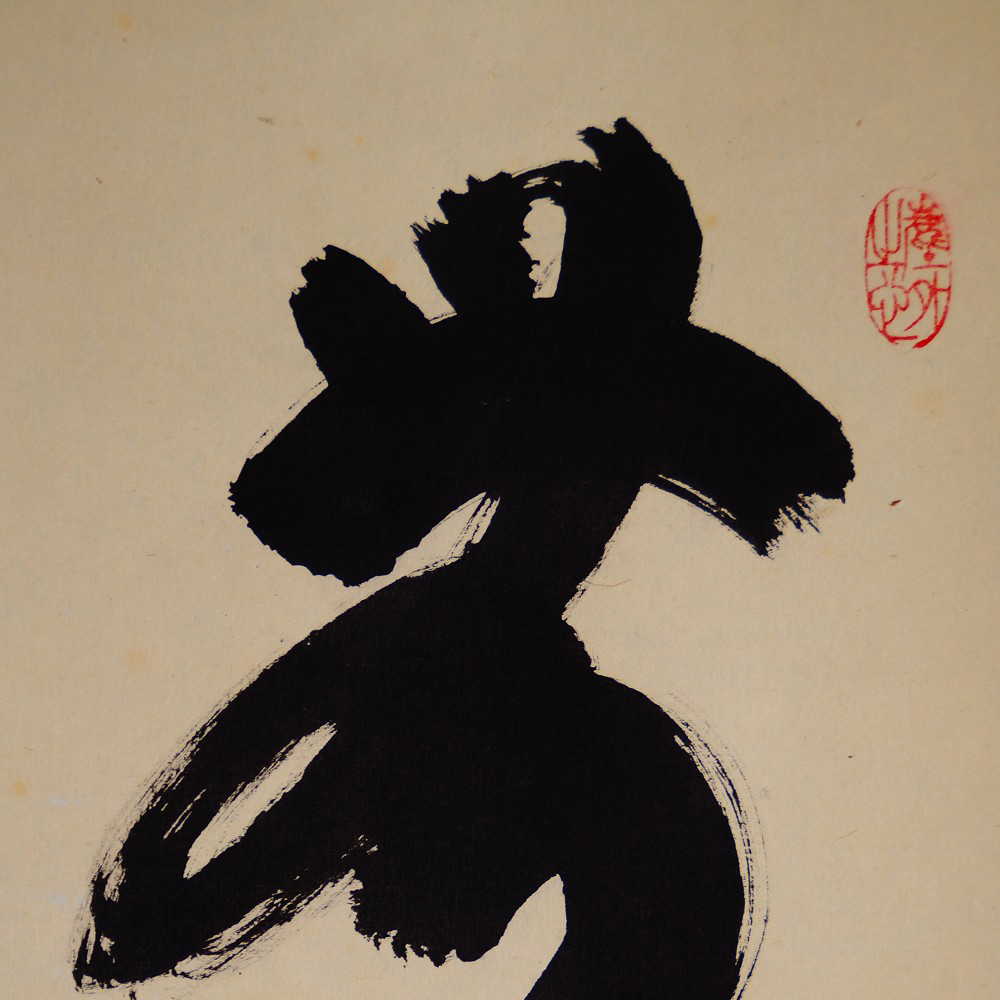
Kobayashi Taigen
No Mind, the Great Way – Zen Calligraphy, Gold-Mounted
Kakemono, unique work, with box, 173 x 37 cm
€720.00
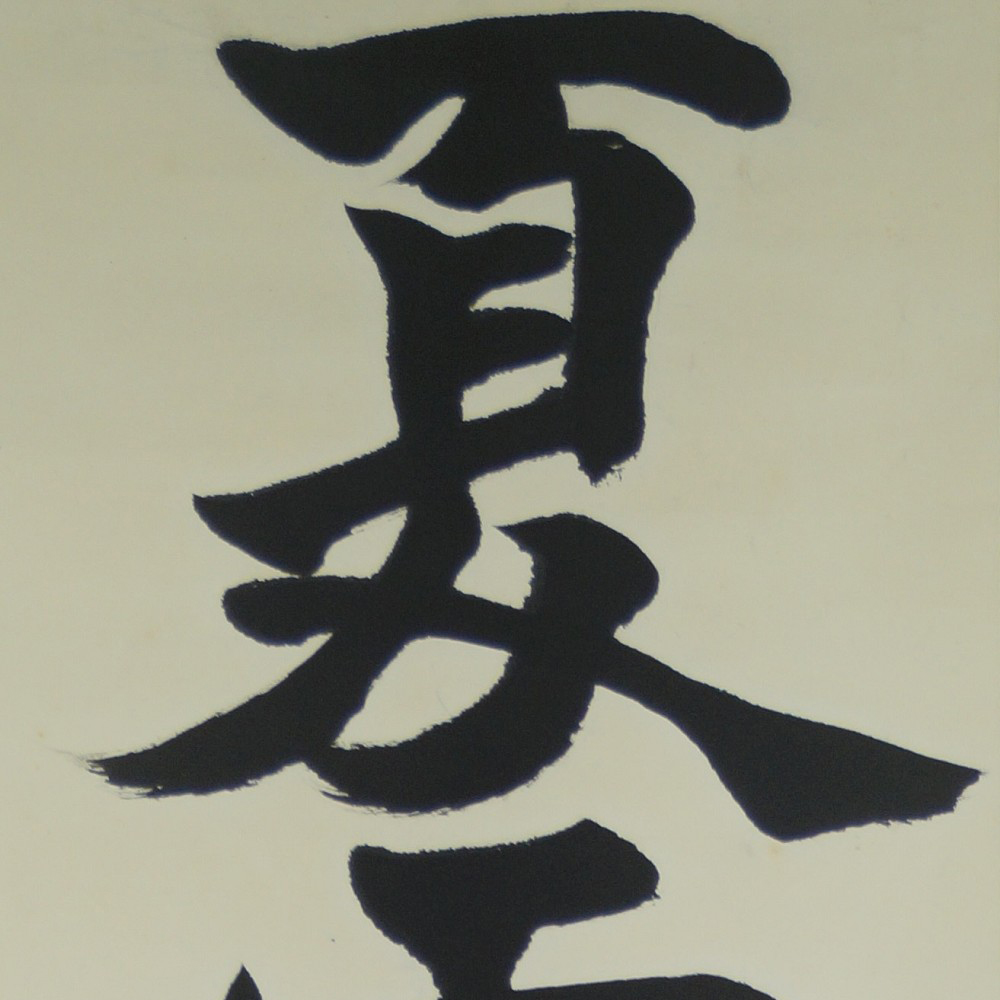
Calligraphy "Clouds in Summer, Hidden Mountain Peaks"
Kakemono, unique work, with box, 192 x 51 cm
€180.00
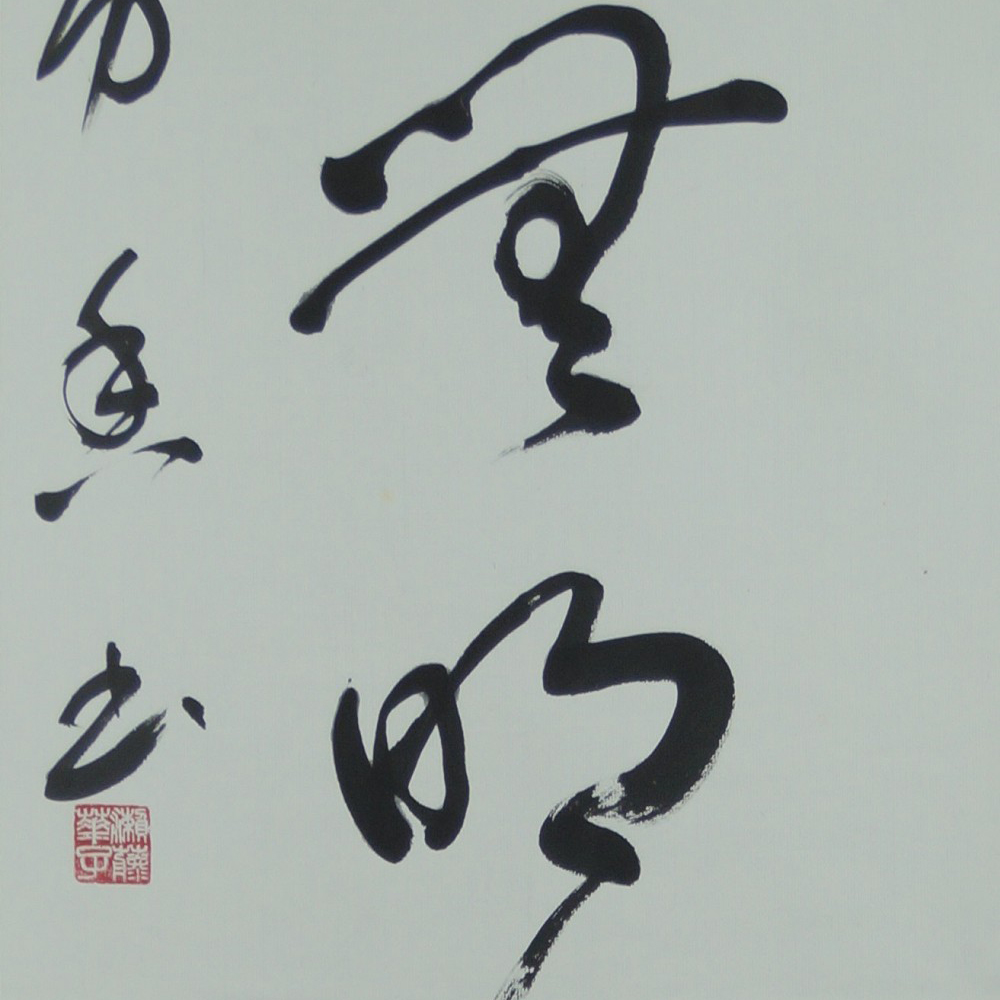
Calligraphy "Breeze in Moonlight"
Kakemono, unique work, 190 x 53 cm
€180.00
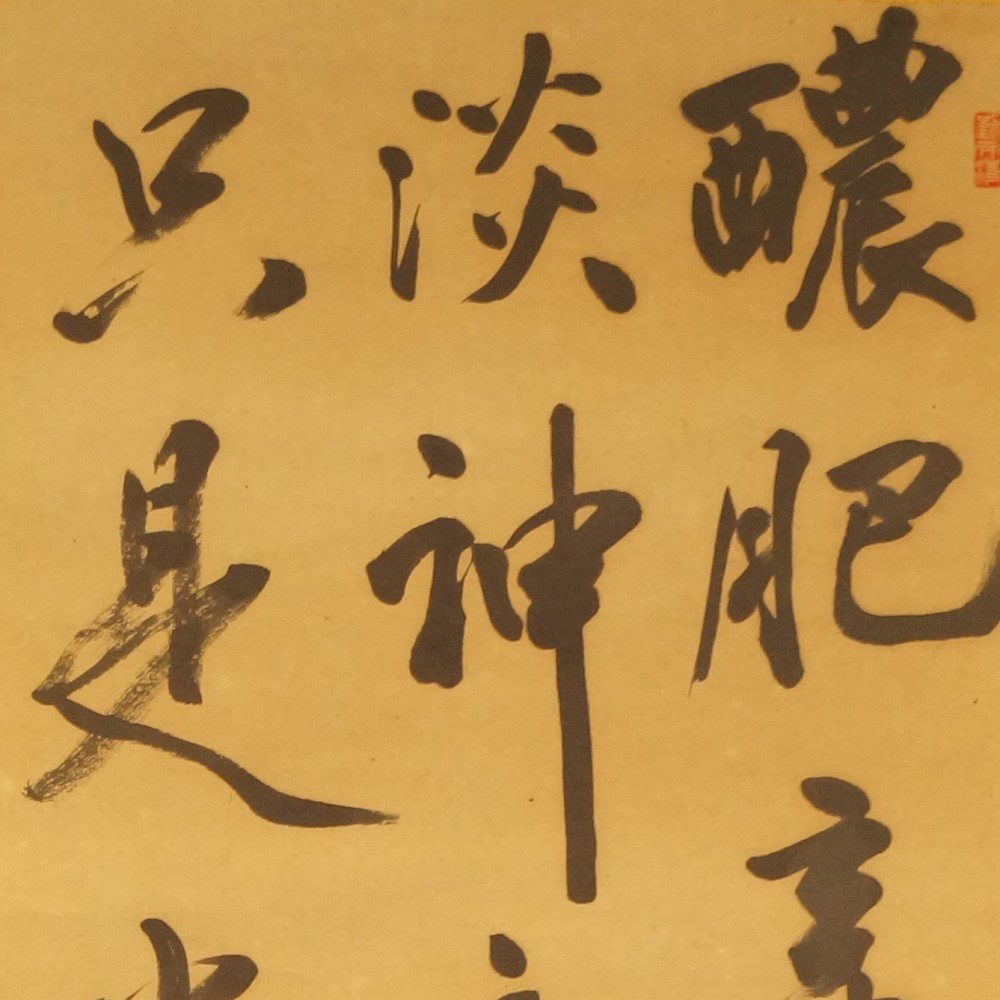
Calligraphy: True Sustenance
Kakemono, unique work, 205 x 58 cm
€260.00


Details about the sold piece
- JikusakiWood
- Material HonshiPaper
- MotifBuddhism and Zen, Calligraphy
- TechniqueHand-Painted
Description
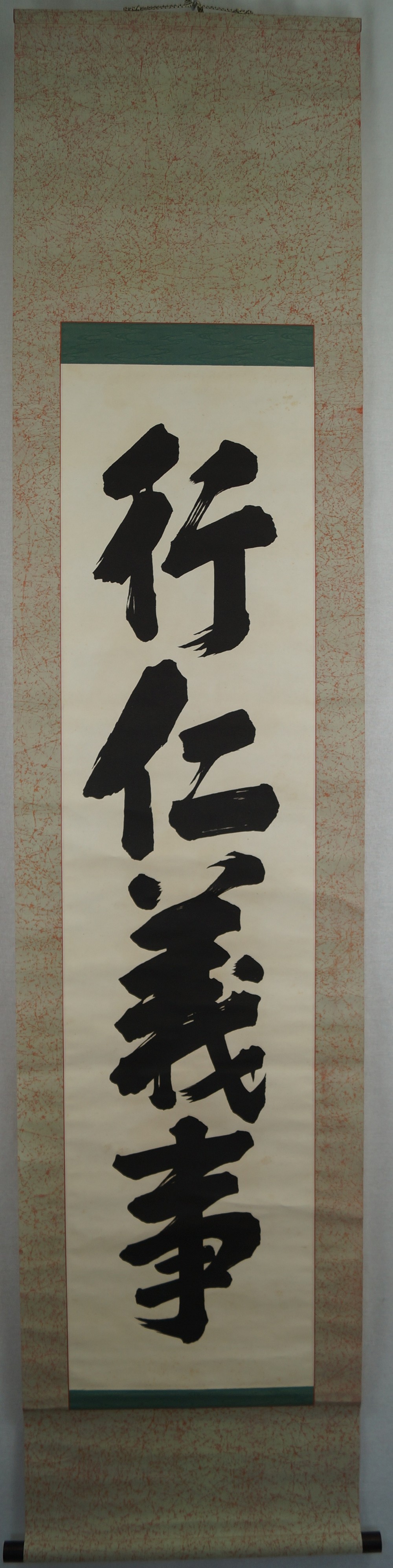
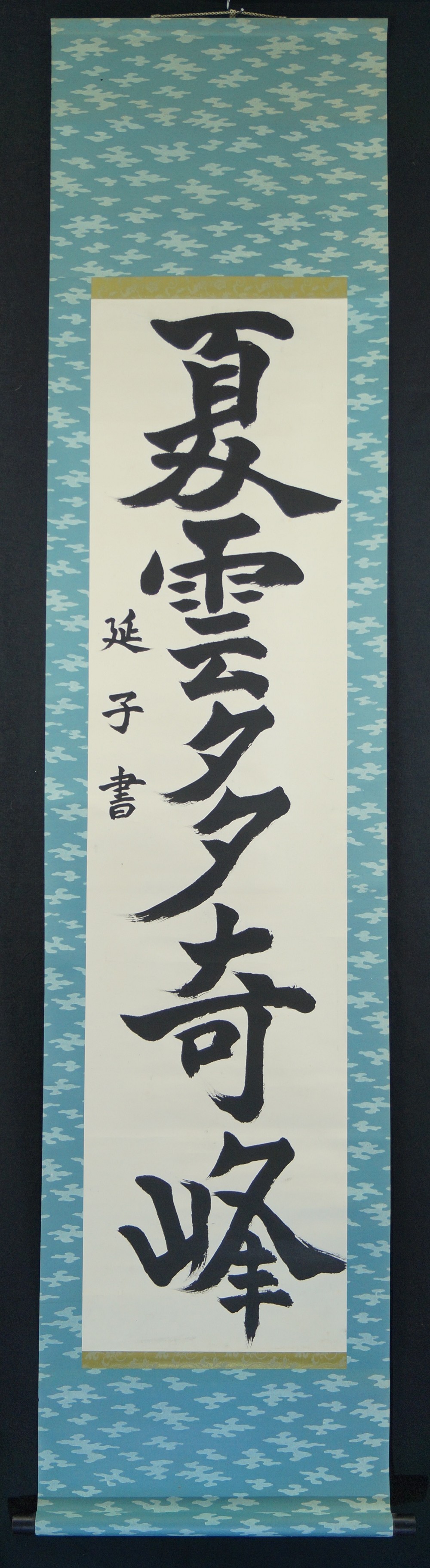
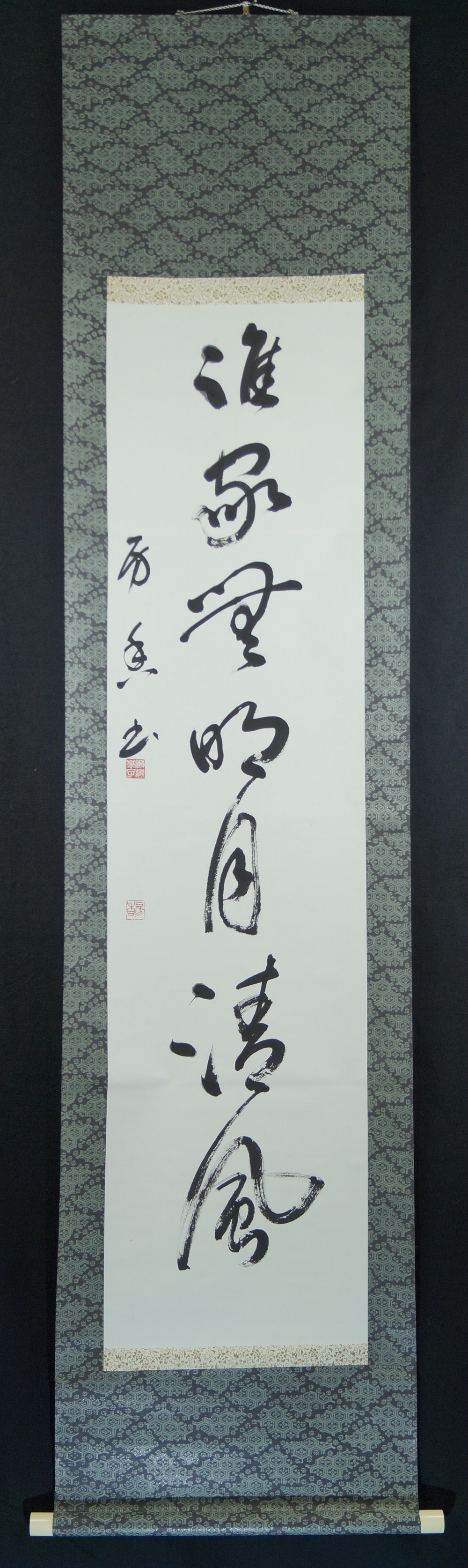
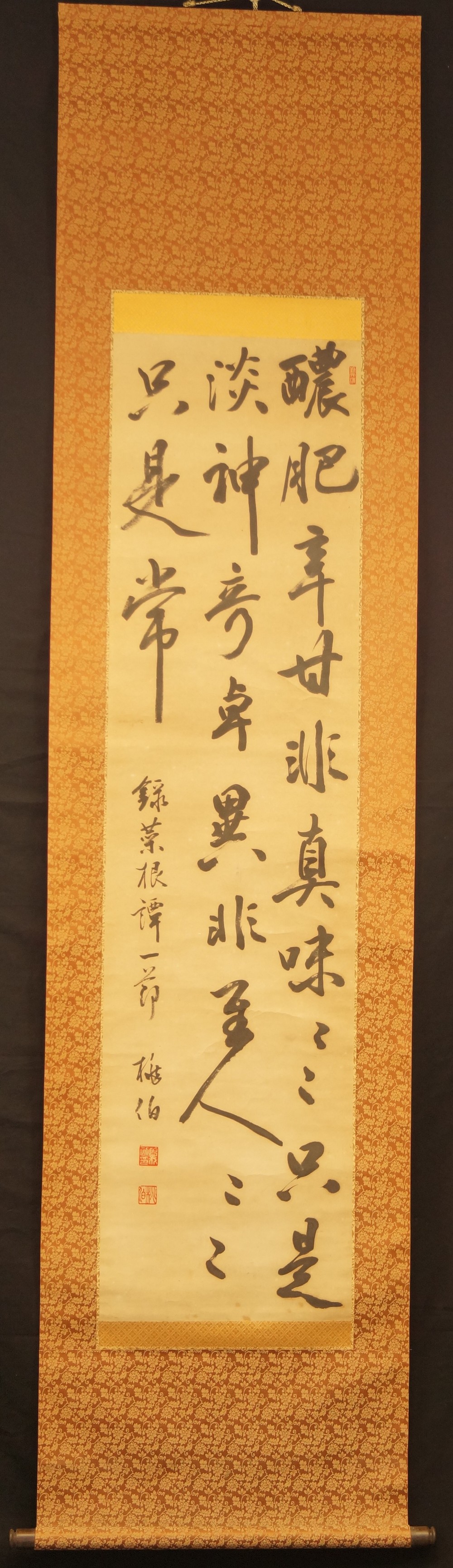
With just a few powerfully applied brushstrokes, several large characters fill almost the entire pictorial surface of this kakemono. The flowing, slightly cursive style of the calligraphy reveals a practiced hand and lets the individual characters merge into one another, as though they had been written down in a single, unbroken breath.
In terms of content, this is a koan from Zen Buddhism which essentially states: "To name it is to miss the truth." This paradoxical wisdom serves as a reminder that ultimate reality eludes any linguistic fixation – a thought that, in Zen practice, is meant to encourage meditation and the letting go of rigid concepts, lending the calligraphy a deeper meaning that goes beyond pure aesthetics.
The work was written by hand on paper and dates from the Shôwa period. The hanging scroll has jikusaki made of wood and is an evocative object for anyone with an enthusiasm for Zen philosophy and the art of Japanese calligraphy.

