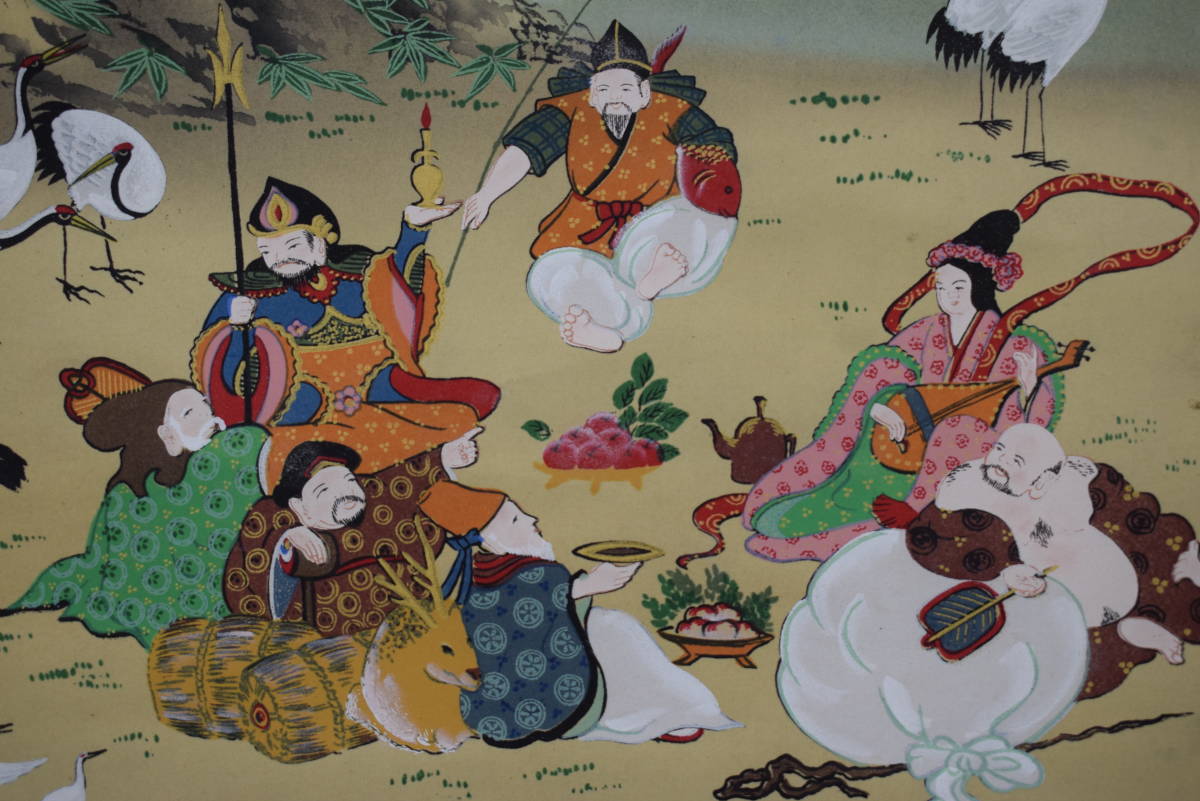
Kakemono Pine in the Rising Sun
One of a kind — this work exists only once.
- Signature / Stamp:
- Kano Shunobu
- Period:
- Meiji (1868–1912)
- Dimensions (height x width):
- 183 x 52 cm
- Item number:
- 6207
This piece has been sold.
Sold – no longer available
This piece was handmade by Kano Shunobu and was a one-of-a-kind work. It cannot be reordered and will never exist in this form again. The page stays online as part of our archive.
More items in category Flowers and PlantsAll one-of-a-kind Japanese Painting pieces
See new one-of-a-kind pieces first
We feature every delivery from Japan in the newsletter first – before the pieces show up in search results.
You might like these pieces
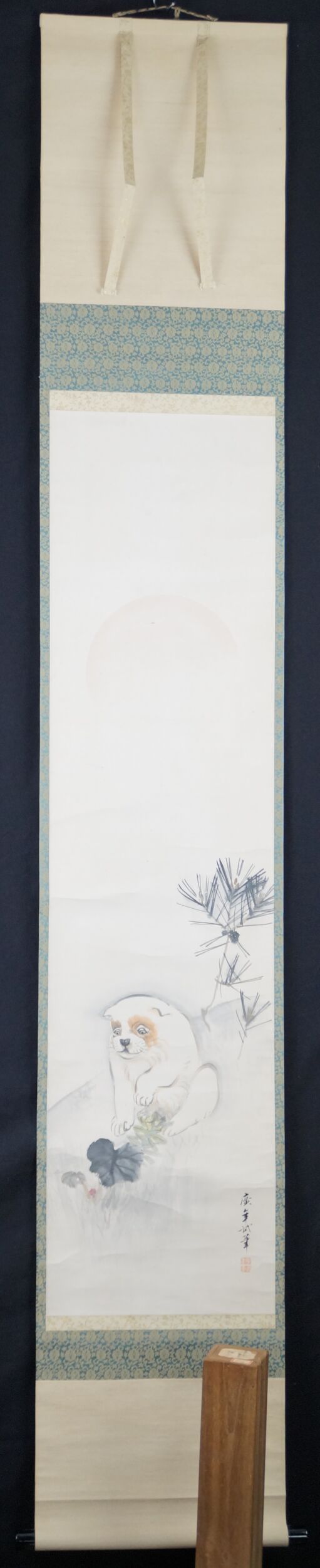
Puppy at Sunset Under Pine Trees
Kakemono, unique work, with box, 200 x 39 cm
€210.00
Hara Zaichu
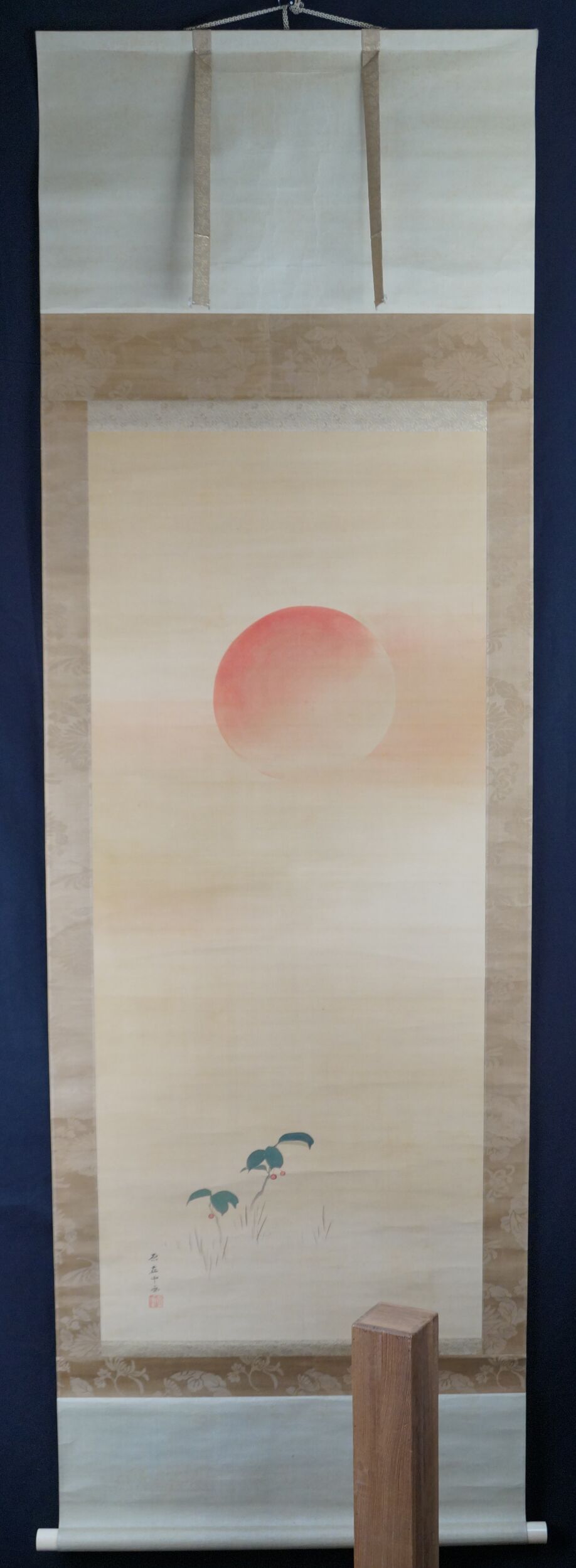
Rising Sun over Misty Landscape
Kakemono, unique work, with box, 200 x 70 cm
€230.00
Okamoto Tohiyoko
Two Cranes Under Pines by the Shore
Kakemono, unique work, 139 x 65 cm
€330.00
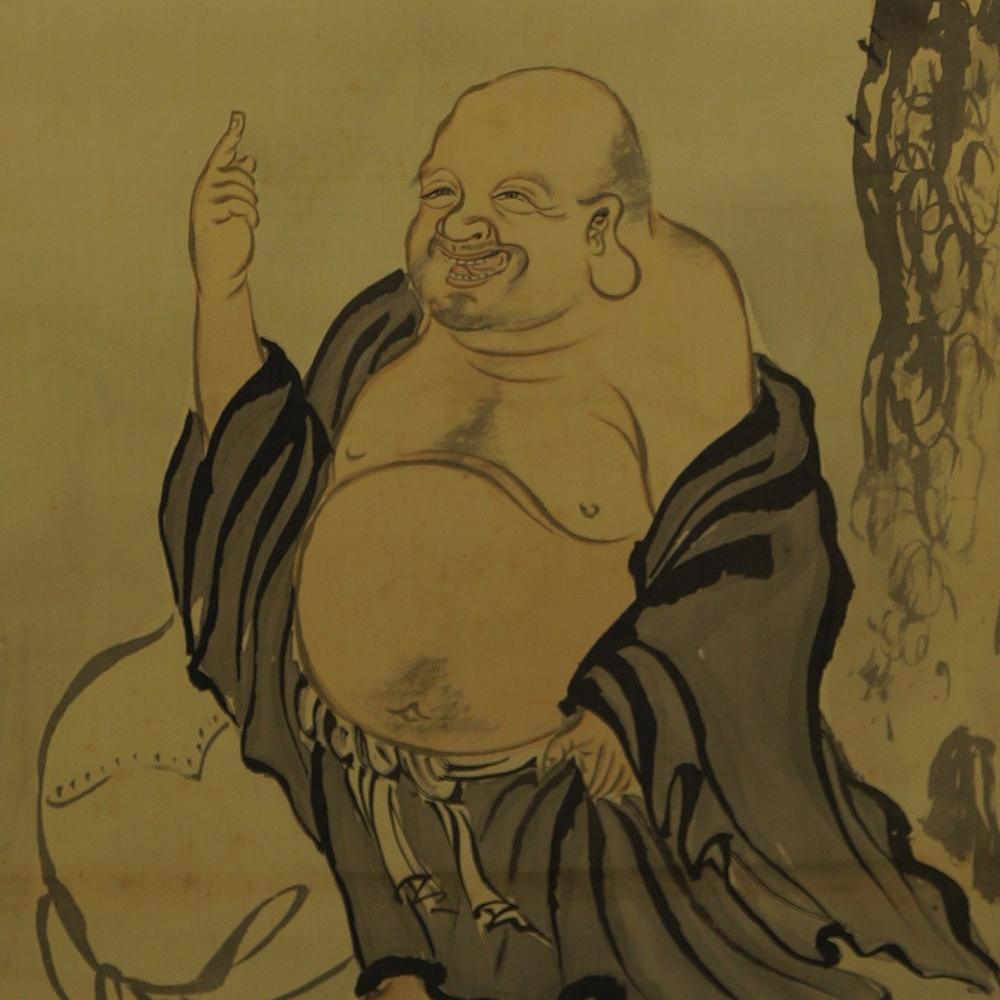
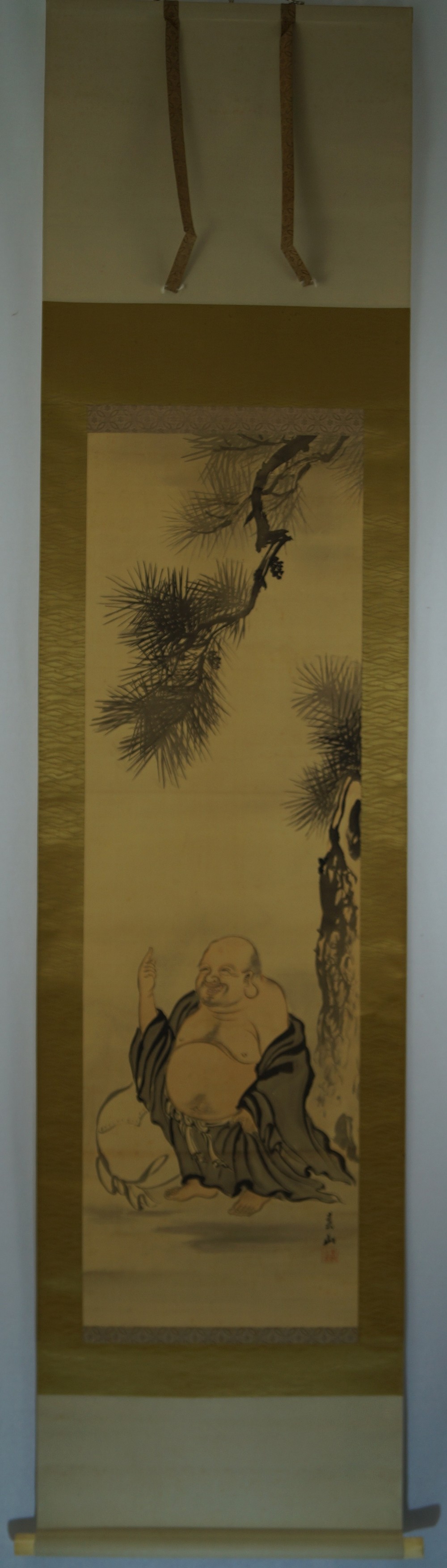
Hotei Under the Pine
Kakemono, unique work, 200 x 53 cm
€160.00
Murata Tōho
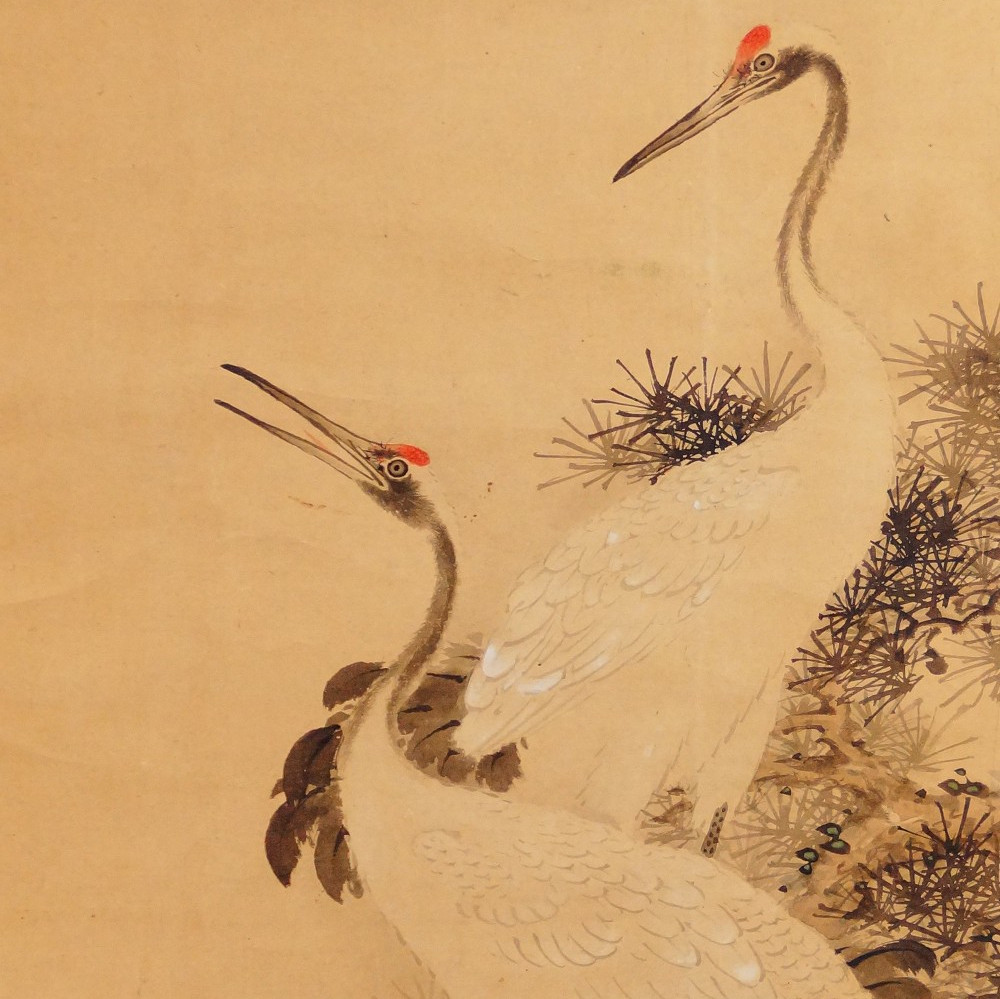
Pair of Cranes Between Pine Branches in Sepia Tones
Kakemono, unique work, 195 x 62 cm
€390.00
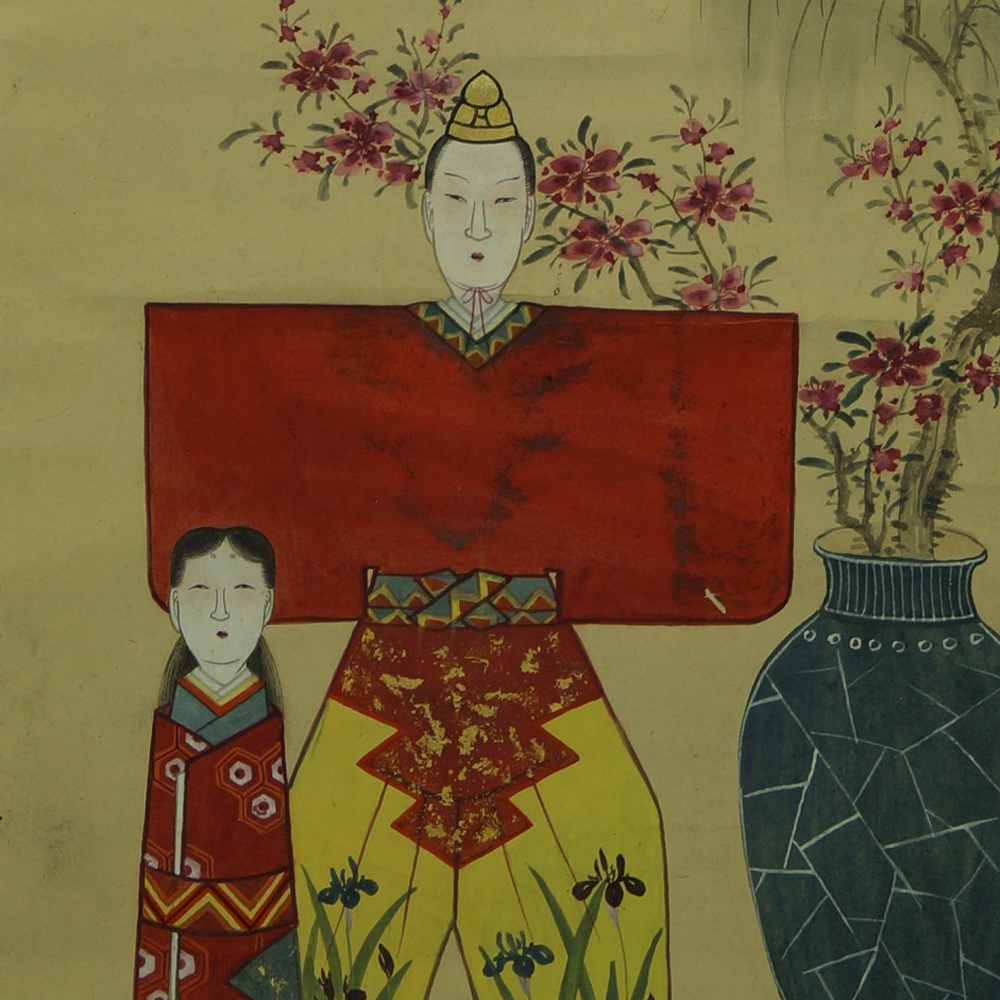
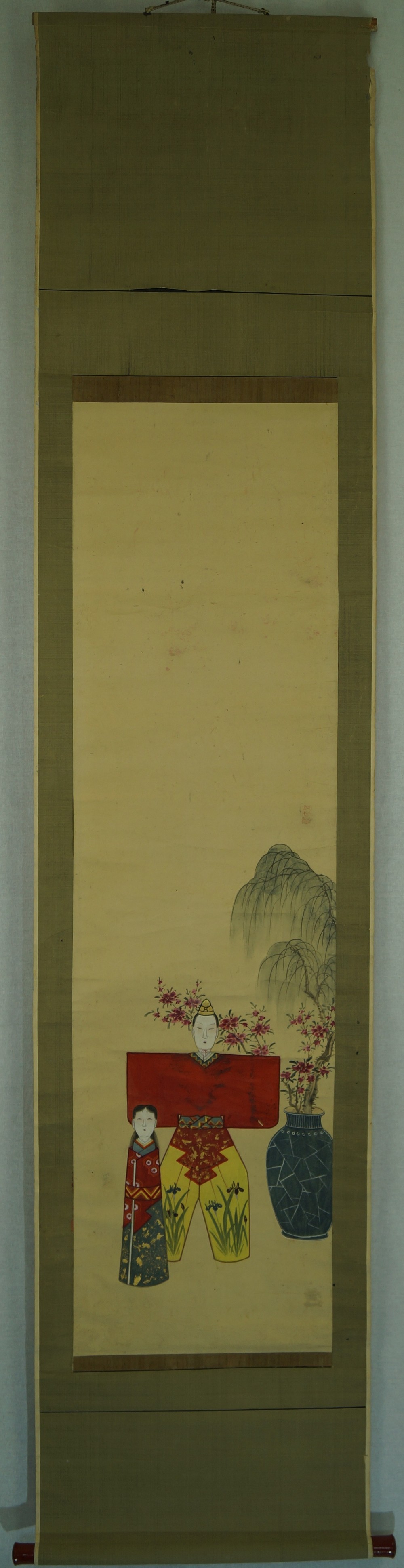
Hina Dolls with Plum Blossoms and Vase
Kakemono, unique work, 171 x 43 cm
€80.00
Tanaka Koga
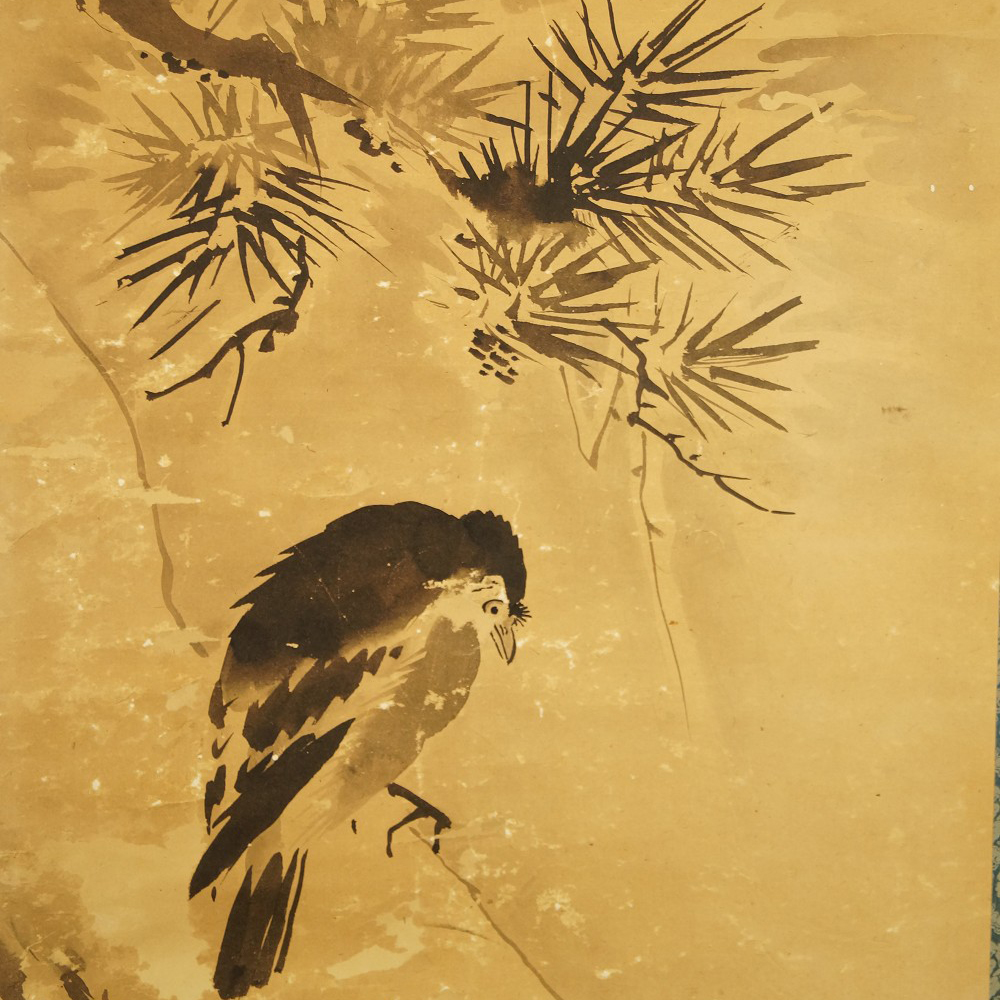
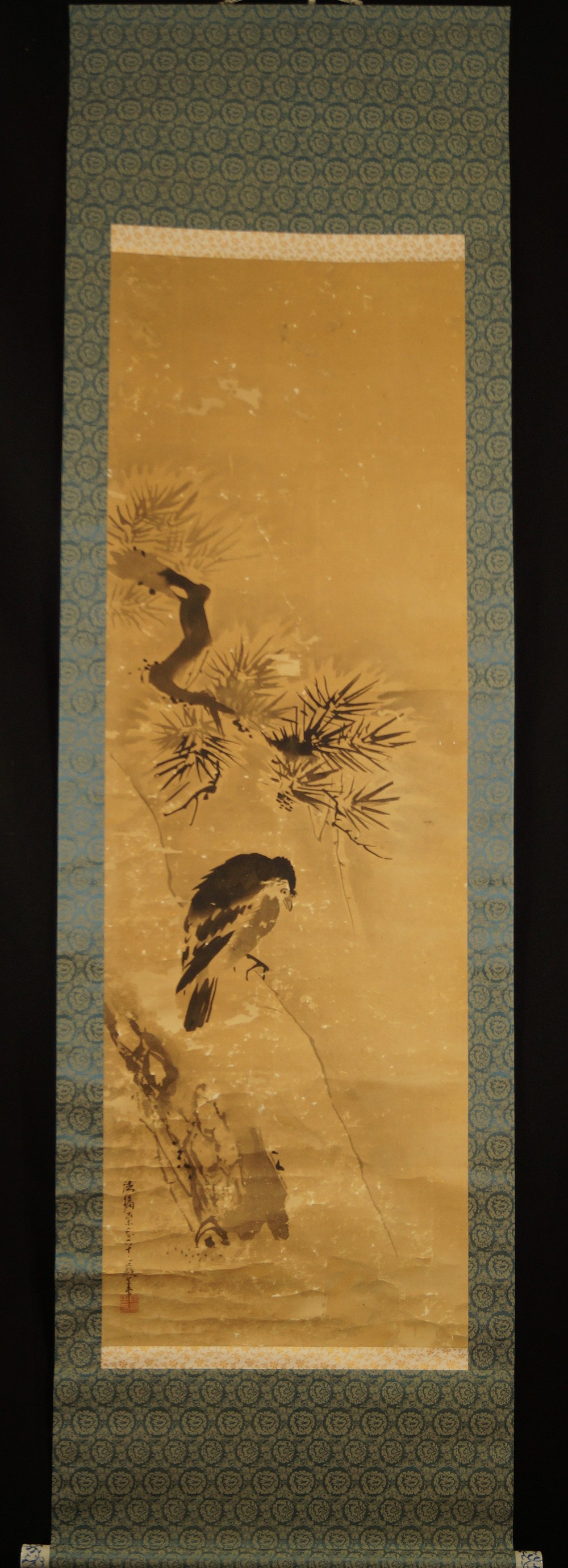
Bird on a Pine Tree
Kakemono, unique work, 185 x 60 cm
€290.00
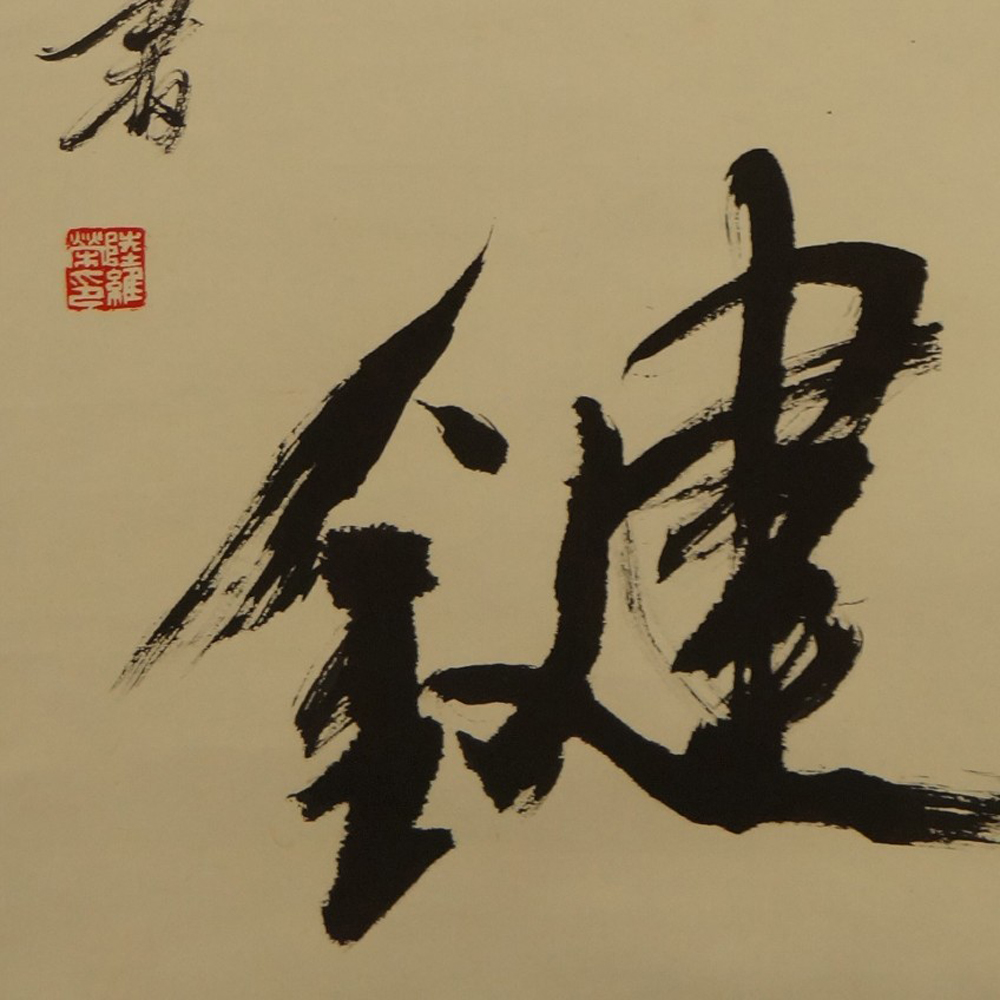
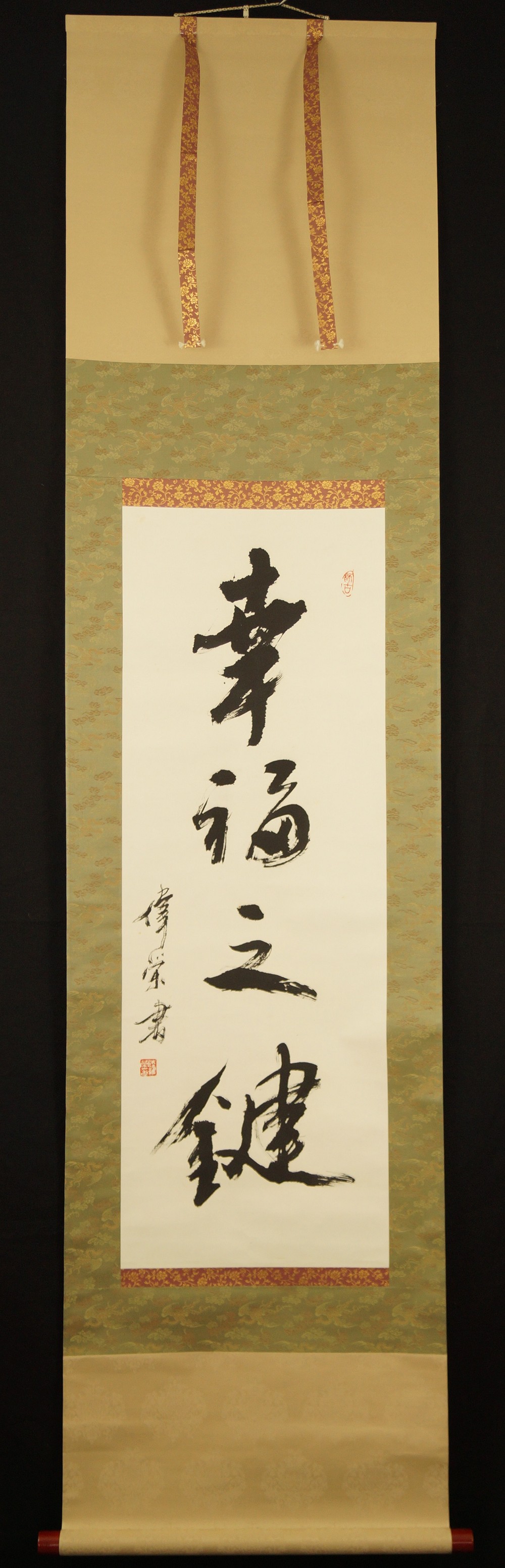
Calligraphy: The Key to Happiness
Kakemono, unique work, 180 x 50 cm
€240.00


Details about the sold piece
- JikusakiWood
- Material HonshiSilk
- MotifFlowers and Plants
- TechniqueHand-Painted
Description
Pine and the rising sun are among the most popular auspicious symbols in Japanese art: the evergreen pine stands for longevity and steadfastness, the rising sun for new beginnings and hope. This kakemono depicts exactly this interplay in a reduced yet expressive pictorial language.
Against a delicately washed sky with a sun disk rendered in warm orange, gnarled pine branches rise, their needles applied with a loose, confident brushstroke. The painting bears the signature and seal of the painter Kano Shunobu, was created in the Meiji period, and was painted on silk; a wooden jikusaki completes the traditional mounting.
Since the secondary fabric of the border is very fragile due to its age, particularly careful handling is recommended when rolling and hanging the piece in order to avoid damage. As an expression of permanence and new beginnings, this hanging scroll is wonderfully suited to lend a room a calm, hopeful note.