
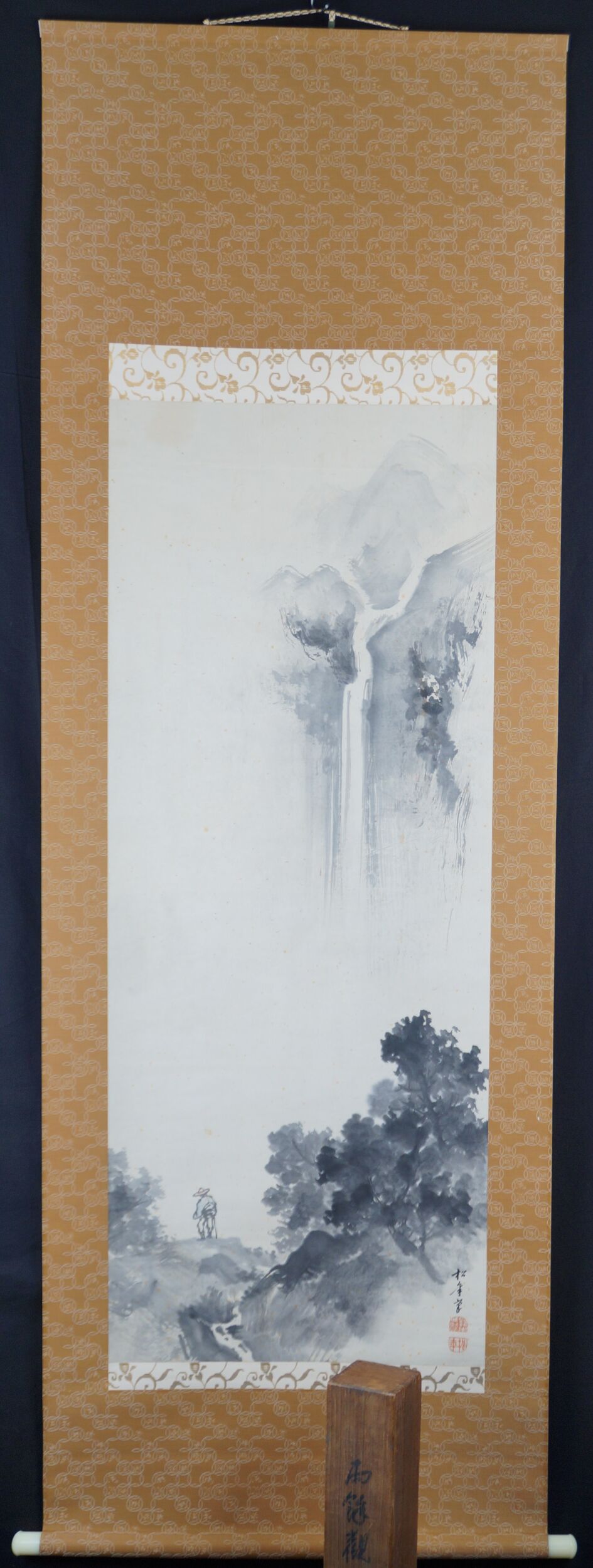
Kakemono Waterfall Between Mist and Branches
One of a kind — this work exists only once.
- Period:
- Meiji (1868–1912)
- Dimensions (height x width):
- 120 x 60 cm
- Item number:
- 3464
This piece has been sold.
Sold – no longer available
This piece was a handmade one-of-a-kind work. It cannot be reordered and will never exist in this form again. The page stays online as part of our archive.
More items in category LandscapesAll one-of-a-kind Japanese Painting pieces
See new one-of-a-kind pieces first
We feature every delivery from Japan in the newsletter first – before the pieces show up in search results.
You might like these pieces
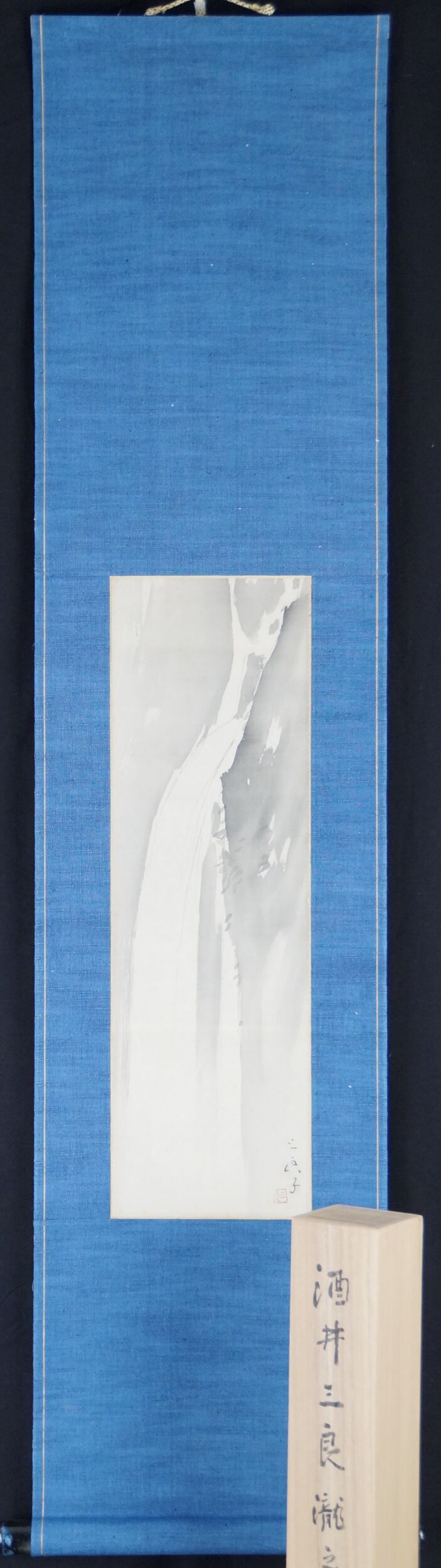
Sakai Sanryo
Waterfall in the Mist
Kakemono, unique work, with box, 129 x 36 cm
€570.00
Murata Tōho
Pair of Cranes Between Pine Branches in Sepia Tones
Kakemono, unique work, 195 x 62 cm
€390.00
Suzuki Shonen
Wanderer Before the Waterfall - Suzuku Shonen
Kakemono, unique work, with box, 190 x 71 cm
€380.00

Crow in Autumn Branches
Kakemono, unique work, 200 x 52 cm
€440.00
Landscape with Water Mill and Waterfalls
Kakemono, Silkscreen, 157 x 53 cm
€130.00
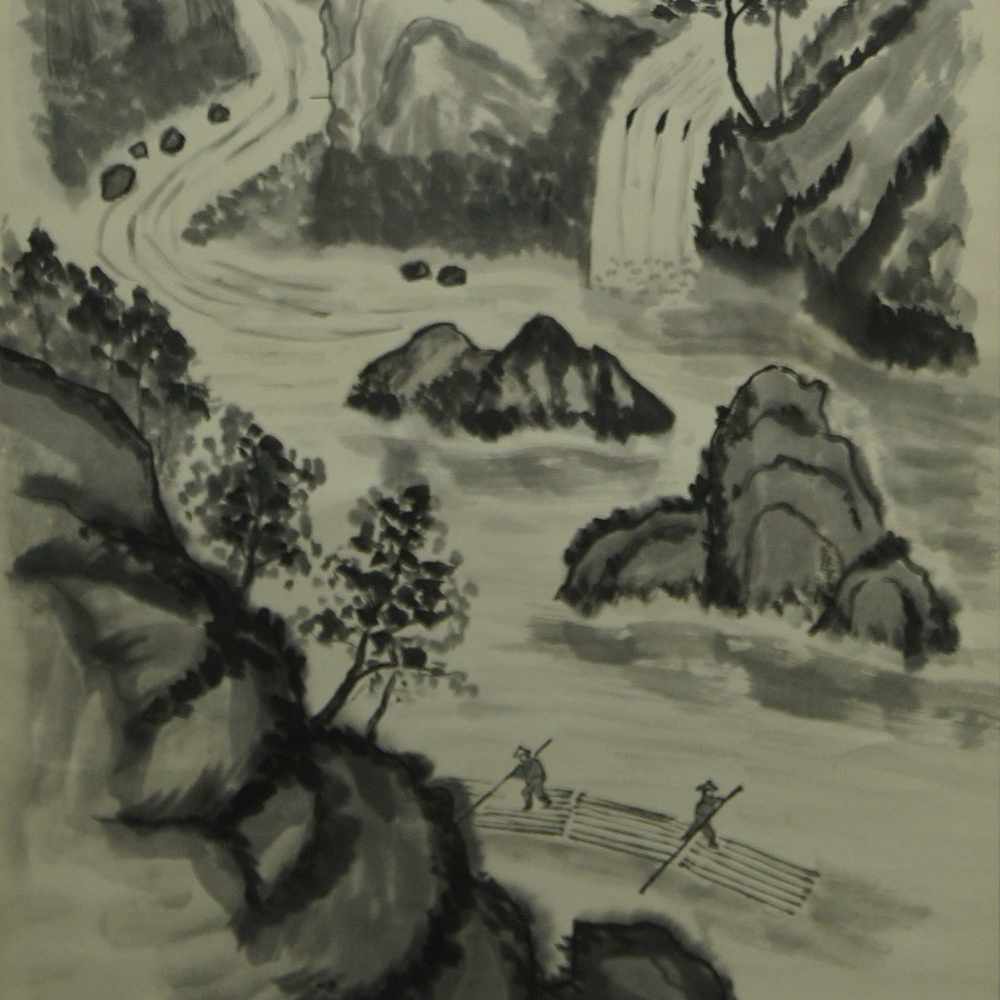
Landscape with Waterfall and Raftsmen
Kakemono, unique work, 190 x 51 cm
€175.00
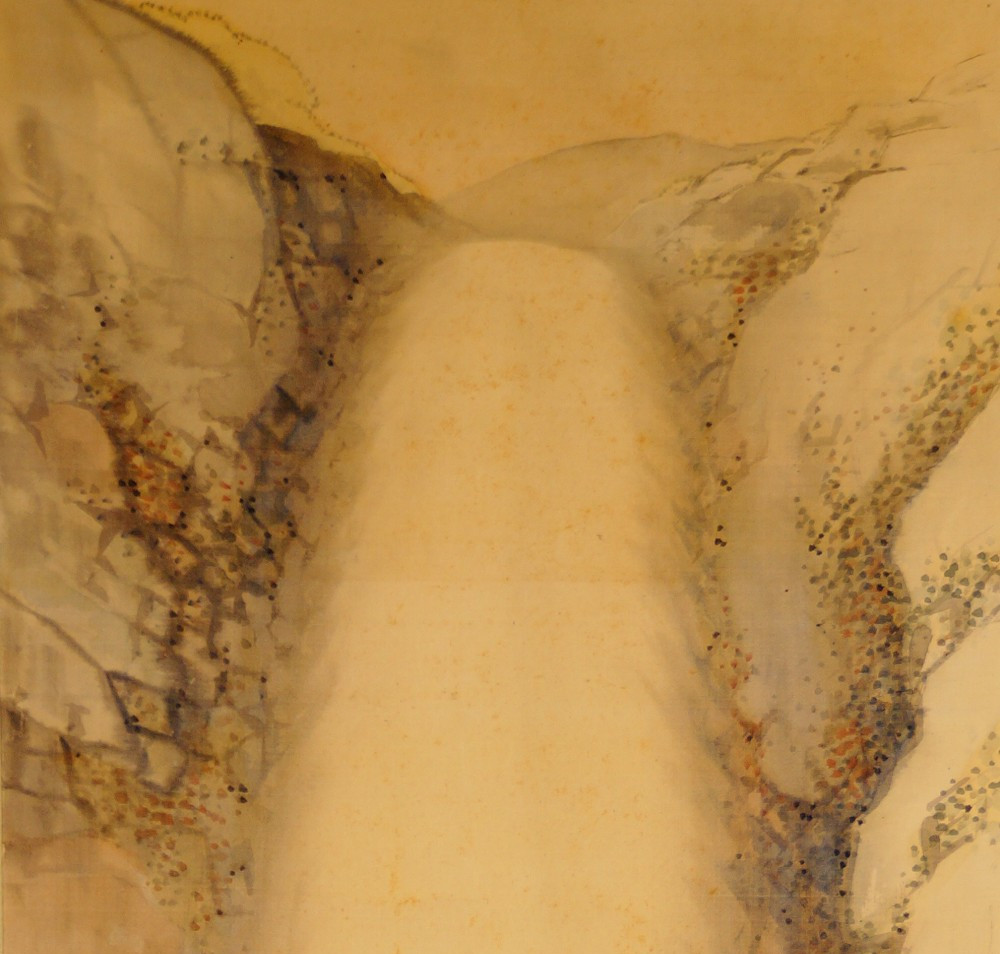
Nakagawa Wado
Waterfall in the Mountains
Kakemono, unique work, 195 x 59 cm
€380.00
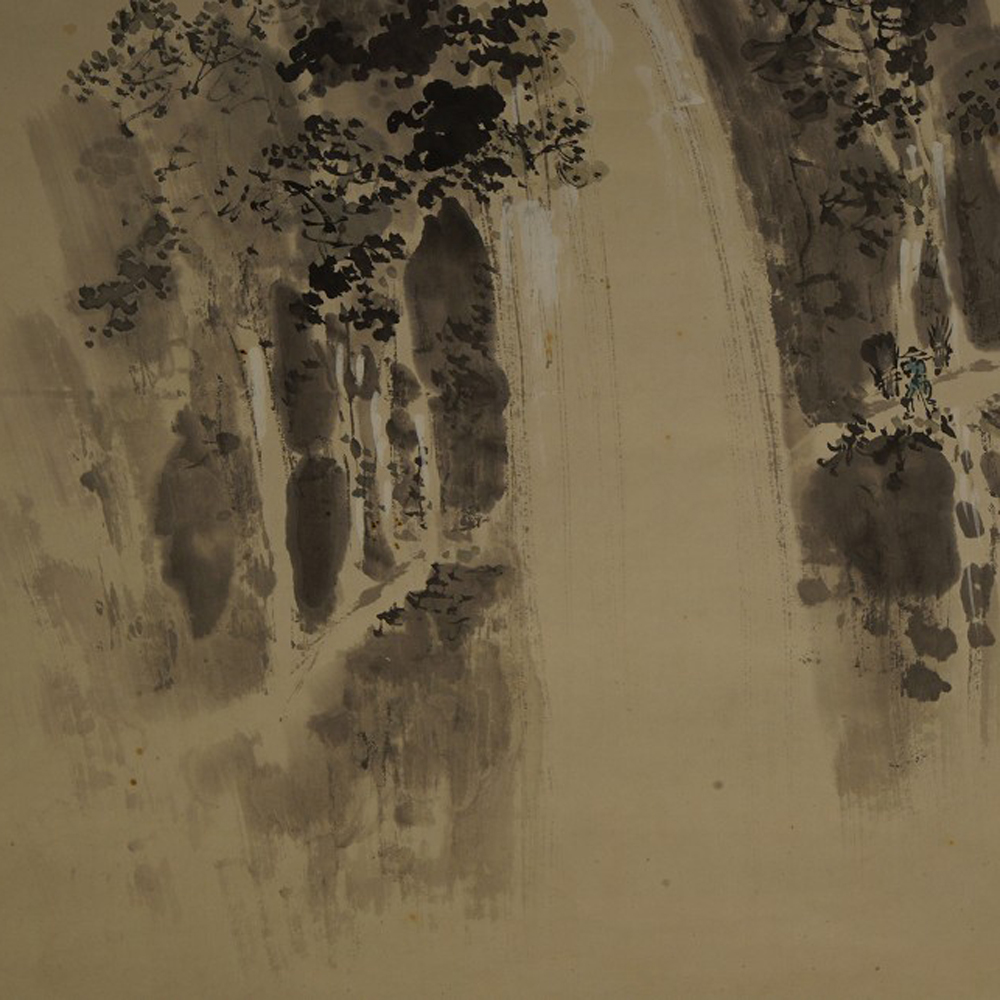
Waterfall in Dense Mountain Forest
Kakemono, unique work, with box, 127 x 60 cm
€160.00




Details about the sold piece
- JikusakiWood
- Material HonshiPaper
- MotifLandscape
- TechniqueHand-Painted
Description
A narrow waterfall plunges from dense branches dissolved in ink, surrounded by loosely placed wisps of mist and scattered splashes of color that make the movement of the water almost audible. The highly reduced, nearly abstract visual language creates a powerful, immediate effect that stands out clearly from more detailed landscape depictions.
Waterfalls are among the classic motifs in Japanese painting, used to express power, purity, and the unstoppable dynamism of nature. The spontaneous brushwork, reminiscent of sumi-e, suggests a painter who worked with a few deliberate strokes and gradations of ink rather than rendering every detail.
The painting dates from the Meiji period, was executed by hand on paper, and is fitted with wooden jikusaki. The textile mounting shows clear signs of wear and slight damage, while the painting itself is well preserved. As a unique work with noticeable age patina, this kakemono is especially suited to admirers of expressive, free ink painting.
