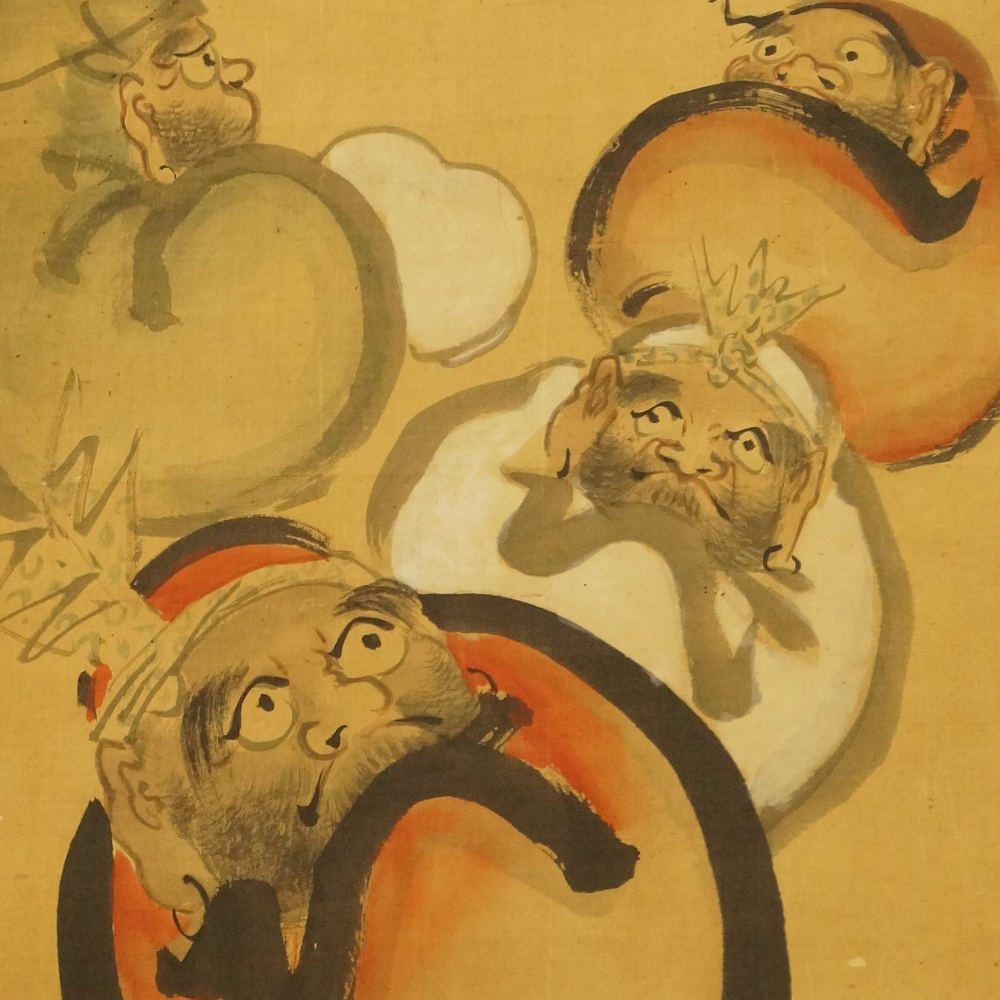
Kakemono Calligraphy Character Dragon
One of a kind — this work exists only once.
- Period:
- Taishô (1912–1926)
- Dimensions (height x width):
- 115 x 36 cm
- Item number:
- 5095
This piece has been sold.
Sold – no longer available
This piece was a handmade one-of-a-kind work. It cannot be reordered and will never exist in this form again. The page stays online as part of our archive.
More items in category CalligraphyAll one-of-a-kind Japanese Painting pieces
See new one-of-a-kind pieces first
We feature every delivery from Japan in the newsletter first – before the pieces show up in search results.
You might like these pieces
Kobayashi Taigen
No Mind, the Great Way – Zen Calligraphy, Gold-Mounted
Kakemono, unique work, with box, 173 x 37 cm
€720.00
Calligraphy "Kalavinka"
Kakemono, unique work, with box, 195 x 53 cm
€130.00
Hashimoto Gyōin
Calligraphy "Shoaku Makusa"
Kakemono, unique work, with box, 200 x 38 cm
€350.00
Calligraphy Print "Create Justice" in Large Script
Kakemono, Print, 200 x 50 cm
€60.00
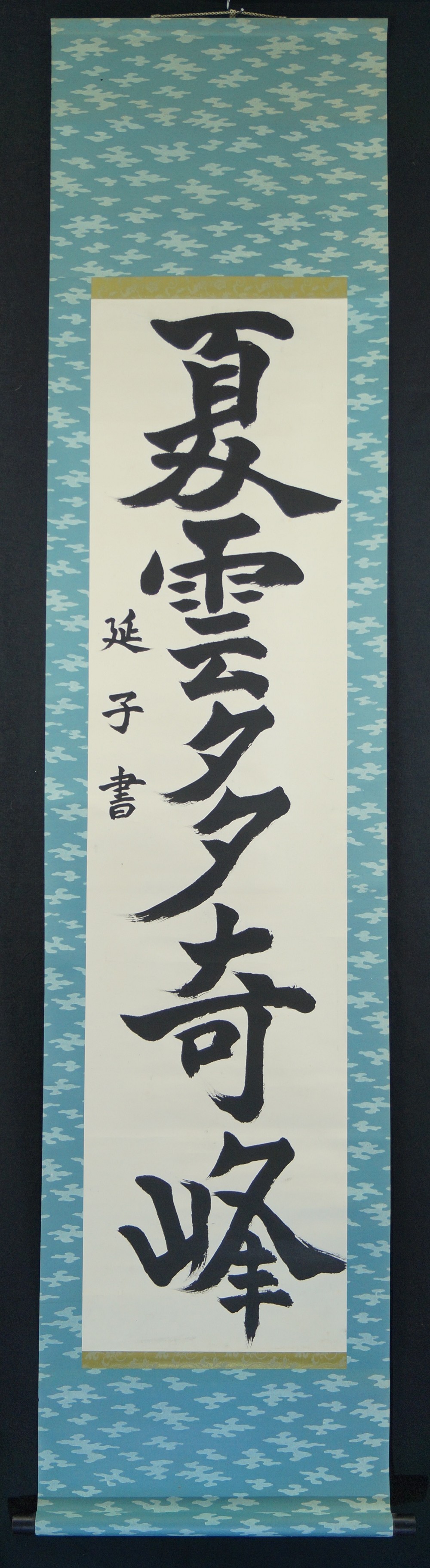
Calligraphy "Clouds in Summer, Hidden Mountain Peaks"
Kakemono, unique work, with box, 192 x 51 cm
€180.00
Calligraphy "Long Life"
Kakemono, unique work, 105 x 54 cm
€120.00
Calligraphy "Cloud"
Kakemono, unique work, 184 x 49 cm
€160.00
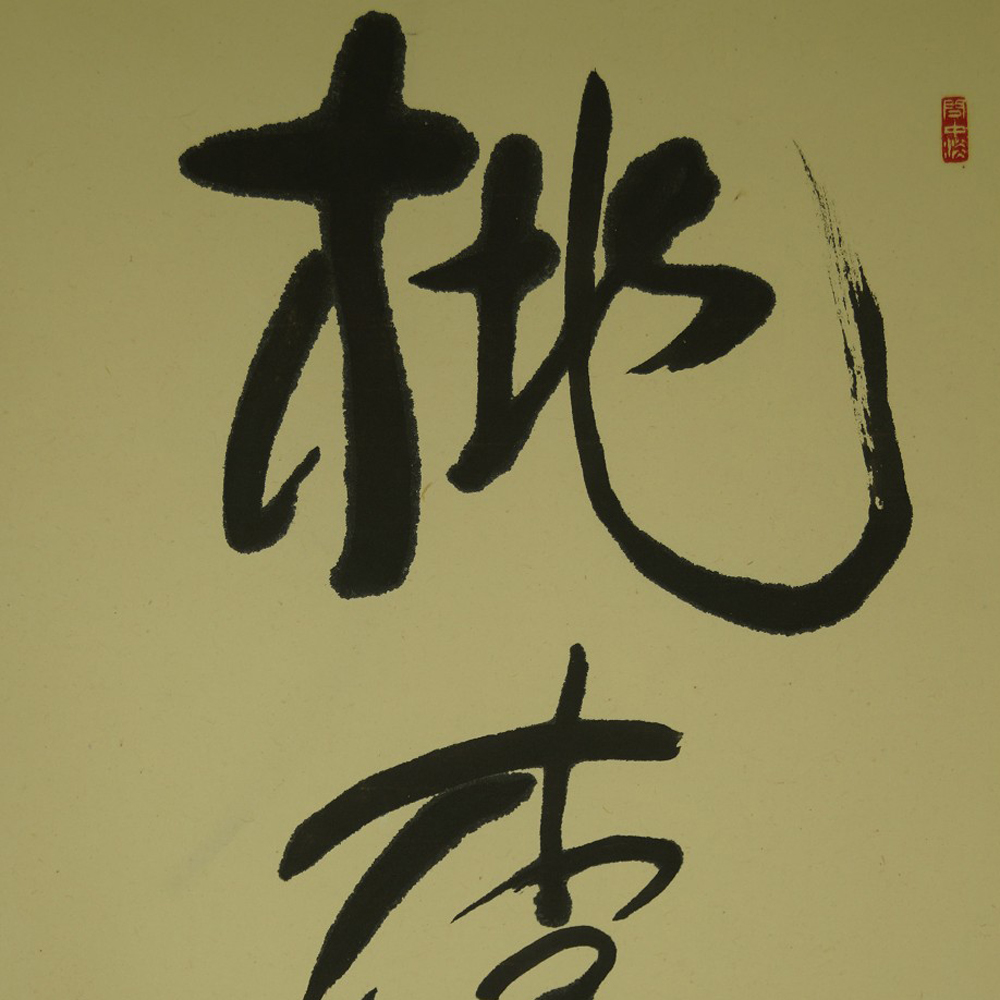
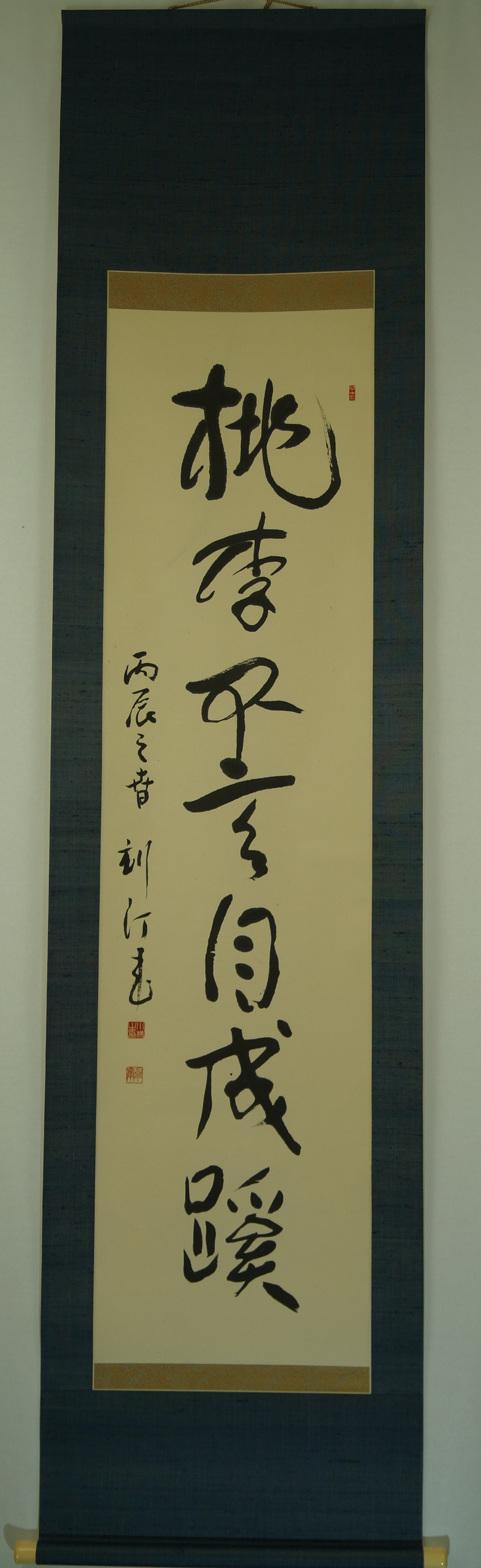
Calligraphy "Peaches and Plums"
Kakemono, unique work, 196 x 54 cm
€140.00



Details about the sold piece
- JikusakiWood
- Material HonshiPaper
- MotifCalligraphy
- TechniqueHand-Painted
Description
With a single, sweeping character and an explosive splash of ink placed above it, this kakemono commands the entire picture surface. The broad, almost painterly brushstrokes make the character appear less like written script than like an abstract, powerful composition, clearly revealing the influence of free Zenga calligraphy.
Translated, the character means "dragon" – a mythical creature that in East Asian culture stands for power, wisdom, and cosmic energy. The wild, almost untamed ductus of the brushwork seems to capture directly this unruly power of the dragon and lends the sheet a particular dynamic tension that clearly sets it apart from calmer, more formal calligraphy styles.
The work was written by hand on paper in the Taishô period. The hanging scroll has jikusaki made of wood and, through its expressive visual language, is a particularly striking example of Japanese calligraphy art.