
Kakemono Calligraphy "Dark Water Between Blossoming Paths"
One of a kind — this work exists only once.
- Period:
- Shôwa (1926–1989)
- Dimensions (height x width):
- 175 x 25 cm
- Item number:
- 3633
This piece has been sold.
Sold – no longer available
This piece was a handmade one-of-a-kind work. It cannot be reordered and will never exist in this form again. The page stays online as part of our archive.
More items in category CalligraphyAll one-of-a-kind Japanese Painting pieces
See new one-of-a-kind pieces first
We feature every delivery from Japan in the newsletter first – before the pieces show up in search results.
You might like these pieces
Calligraphy: Wind in the Bamboo Grove, Fish in Clear Water
Kakemono, unique work, 165 x 51 cm
€115.00
Calligraphy: Wind in the Bamboo
Kakemono, unique work, 193 x 53 cm
€210.00
Calligraphy Poem: Bamboo by the Window
Kakemono, unique work, 195 x 50 cm
€180.00
Calligraphy "Breeze in Moonlight"
Kakemono, unique work, 190 x 53 cm
€180.00
Satō Bokudō
"Zui-un" (like clouds and water) - Zen Calligraphy
Kakemono, unique work, with box, 114 x 58 cm
€490.00

Calligraphy: Purple Light on the Mountains
Kakemono, unique work, 203 x 53 cm
€170.00
Calligraphy: Monkey's Cry and Wild Geese
Kakemono, unique work, 145 x 34 cm
€180.00
Calligraphy "Clouds in Summer, Hidden Mountain Peaks"
Kakemono, unique work, with box, 192 x 51 cm
€180.00



Details about the sold piece
- Material HonshiPaper
- MotifCalligraphy
- TechniqueHand-Painted
Description
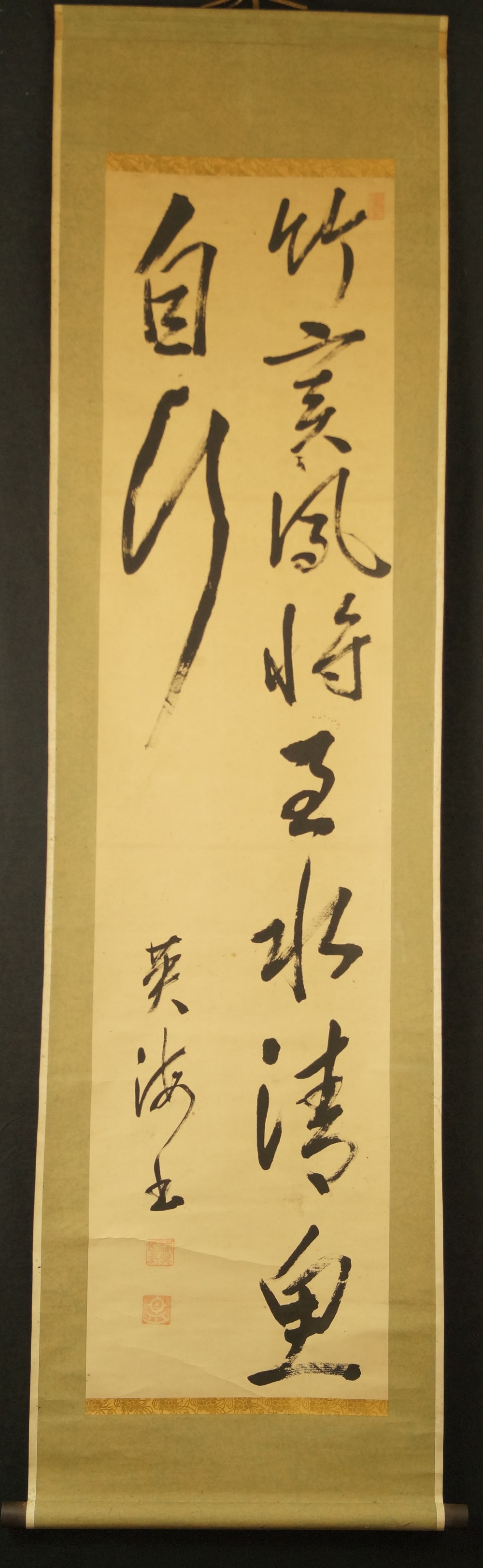
With just a few but expressive characters, this calligraphy captures a line from a poem by the famous Chinese poet Du Fu (712–770): "Dark water flows between blossoming streets" is the poetic statement that speaks of quiet, almost melancholic contemplation of nature and has inspired calligraphers to artistic engagement for centuries.
The brushwork is powerful and generous, individual strokes flow into one another and create an almost dance-like movement on the paper. A red seal in the upper right completes the composition, while the characters themselves, through their dynamism, visually evoke the flowing water of the poem and vividly bring the movement before the viewer's eyes.
The calligraphy is written on paper and framed by a mounting of silk brocade in muted shades of green; however, both roller ends (jikusaki) are missing. For collectors of classical Chinese poetry in Japanese calligraphy, this kakemono is a piece full of literary depth and powerful brushwork.

