
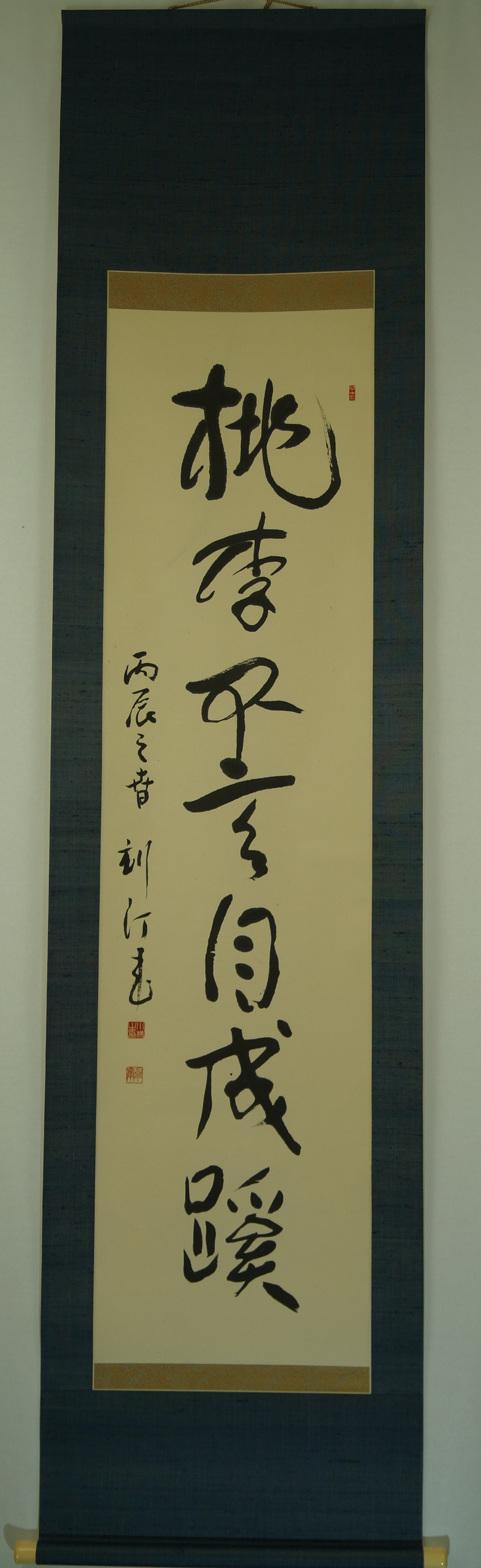
Kakemono Calligraphy: Homage to Kannon Bodhisattva
One of a kind — this work exists only once.
- Period:
- Meiji (1868–1912)
- Dimensions (height x width):
- 216 x 60 cm
- Item number:
- 4459
This piece has been sold.
Sold – no longer available
This piece was a handmade one-of-a-kind work. It cannot be reordered and will never exist in this form again. The page stays online as part of our archive.
More items in category Buddhism and ZenAll one-of-a-kind Japanese Painting pieces
See new one-of-a-kind pieces first
We feature every delivery from Japan in the newsletter first – before the pieces show up in search results.
You might like these pieces
Calligraphy "Amaterasu"
Kakemono, unique work, with box, 165 x 39 cm
€140.00
Calligraphy in Sōsho Style
Kakemono, unique work, 184 x 35 cm
€230.00
Calligraphy "Breeze in Moonlight"
Kakemono, unique work, 190 x 53 cm
€180.00
Calligraphy: Wind in the Bamboo
Kakemono, unique work, 193 x 53 cm
€210.00
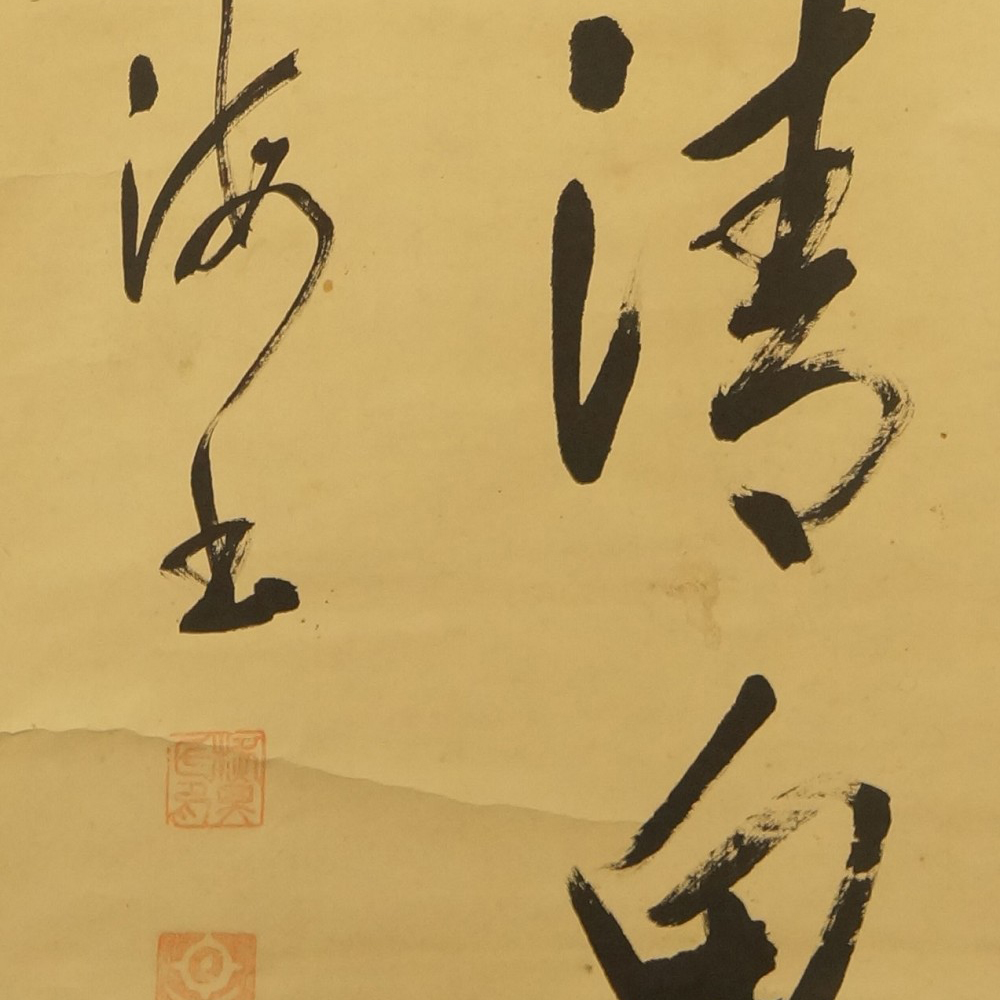
Calligraphy: Wind in the Bamboo Grove, Fish in Clear Water
Kakemono, unique work, 165 x 51 cm
€115.00
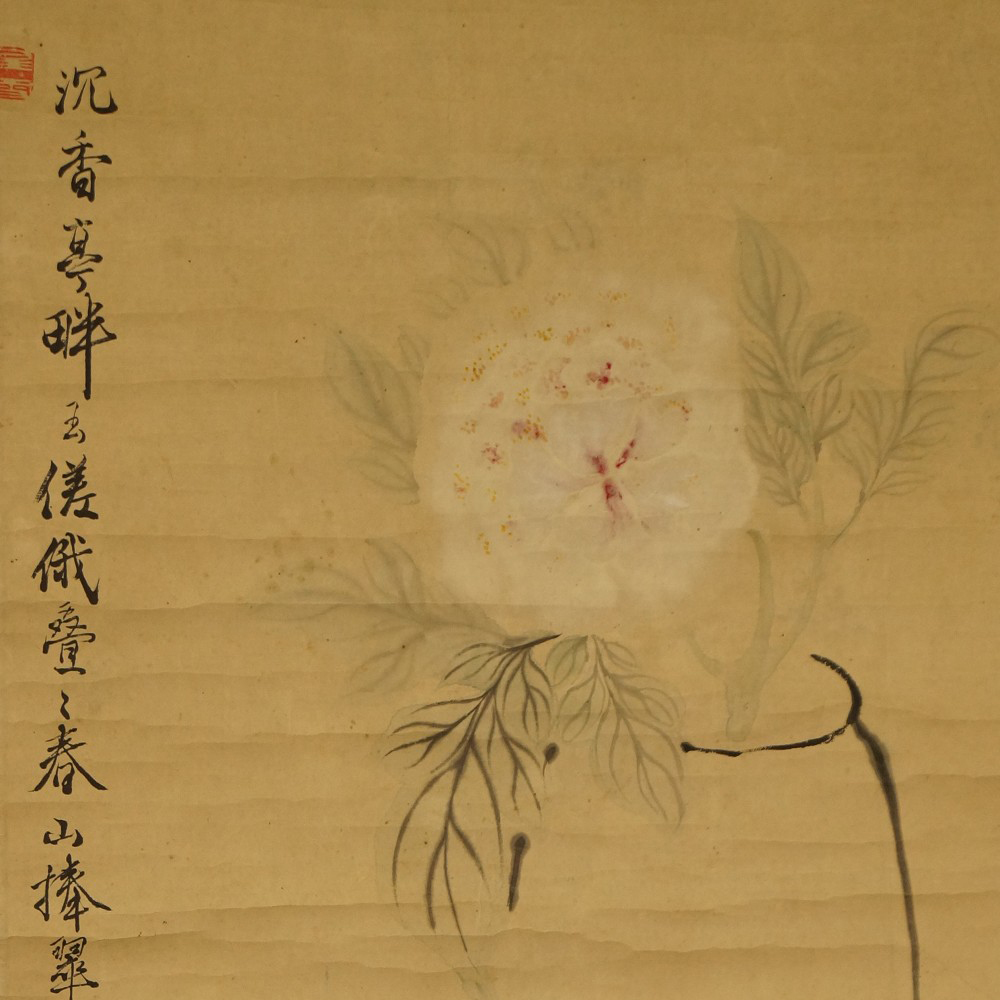
Peony with Calligraphy
Kakemono, unique work, 176 x 54 cm
€210.00

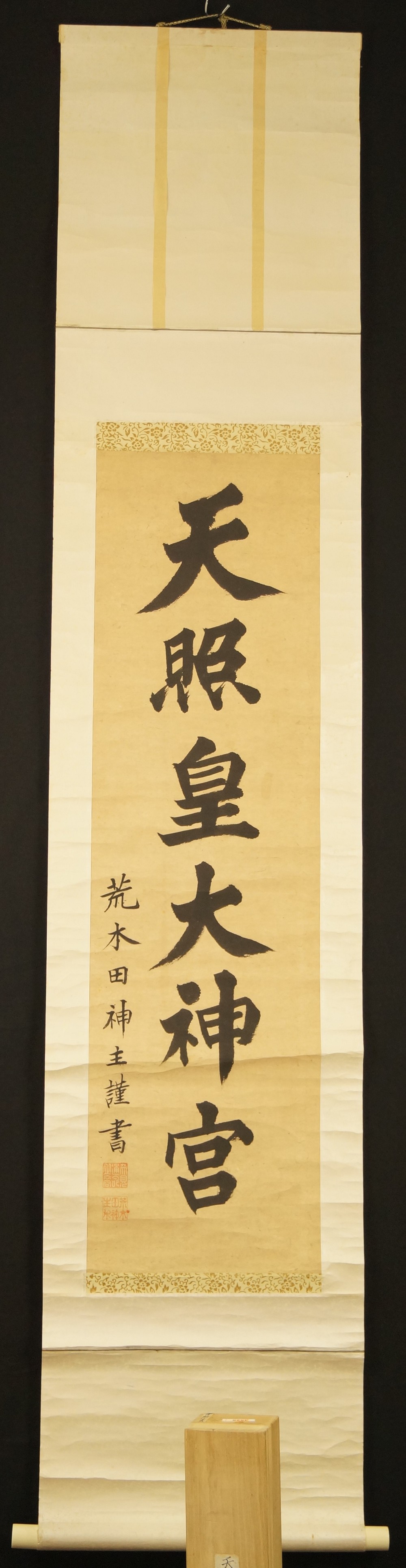
Calligraphy "The Power of the Emperor Illuminates the World"
Kakemono, unique work, with box, 169 x 52 cm
€260.00
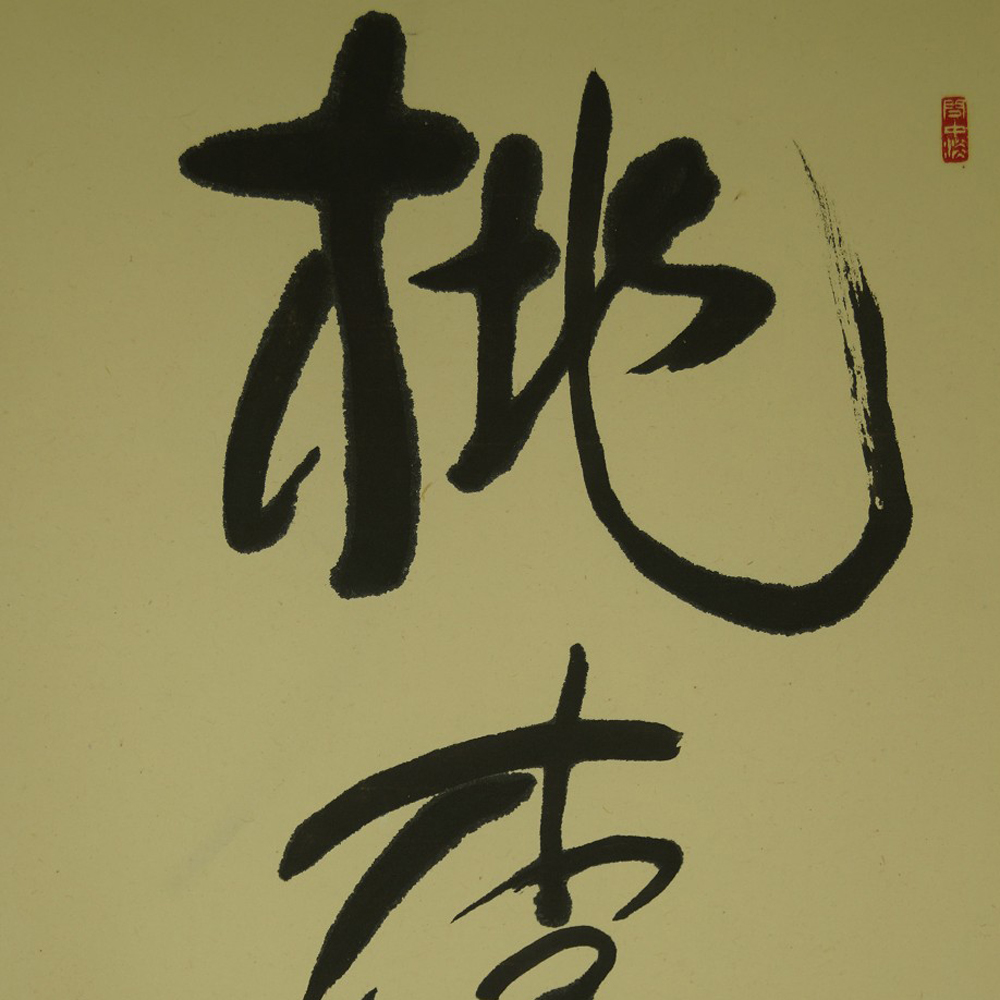
Calligraphy "Peaches and Plums"
Kakemono, unique work, 196 x 54 cm
€140.00


Details about the sold piece
- JikusakiMetal
- Material HonshiPaper
- MotifBuddhism and Zen, Calligraphy
- TechniqueHand-Painted
Description
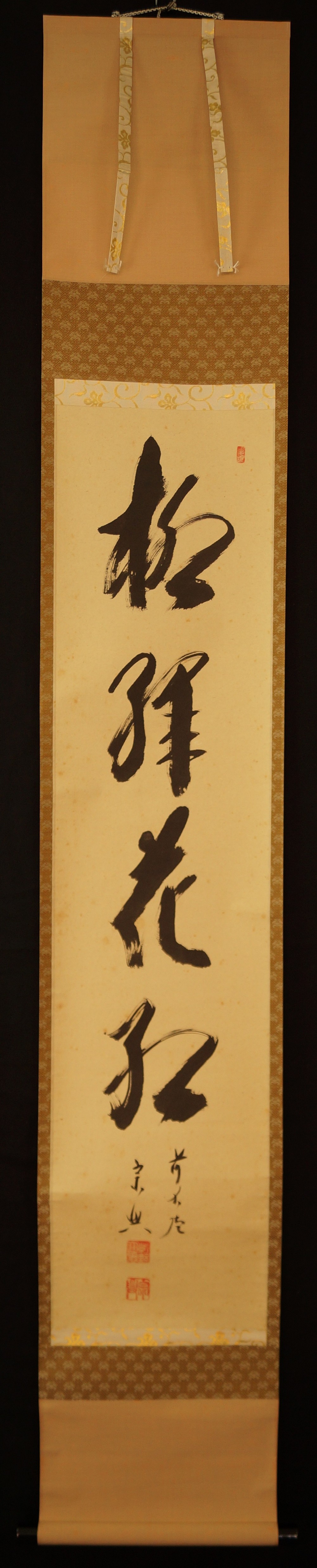
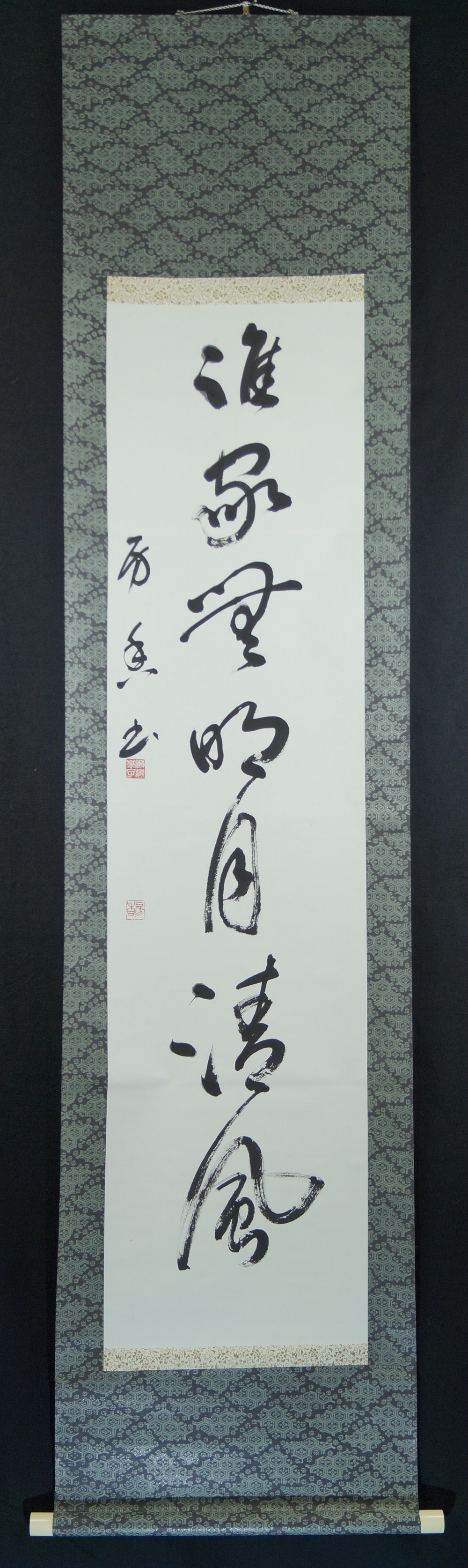
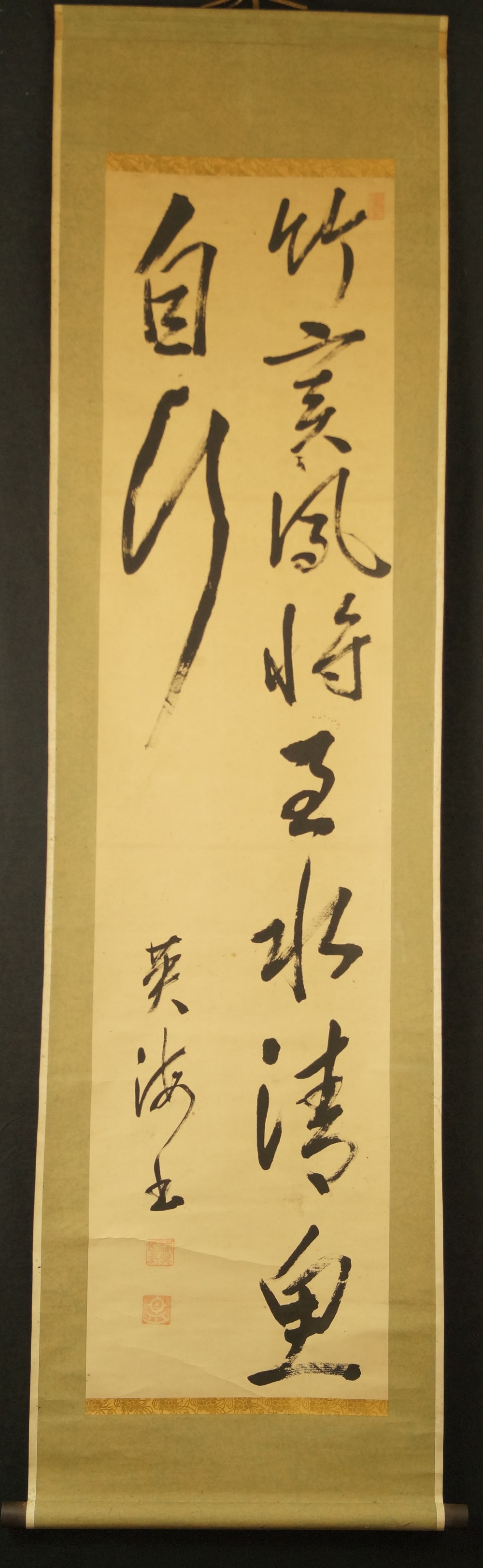
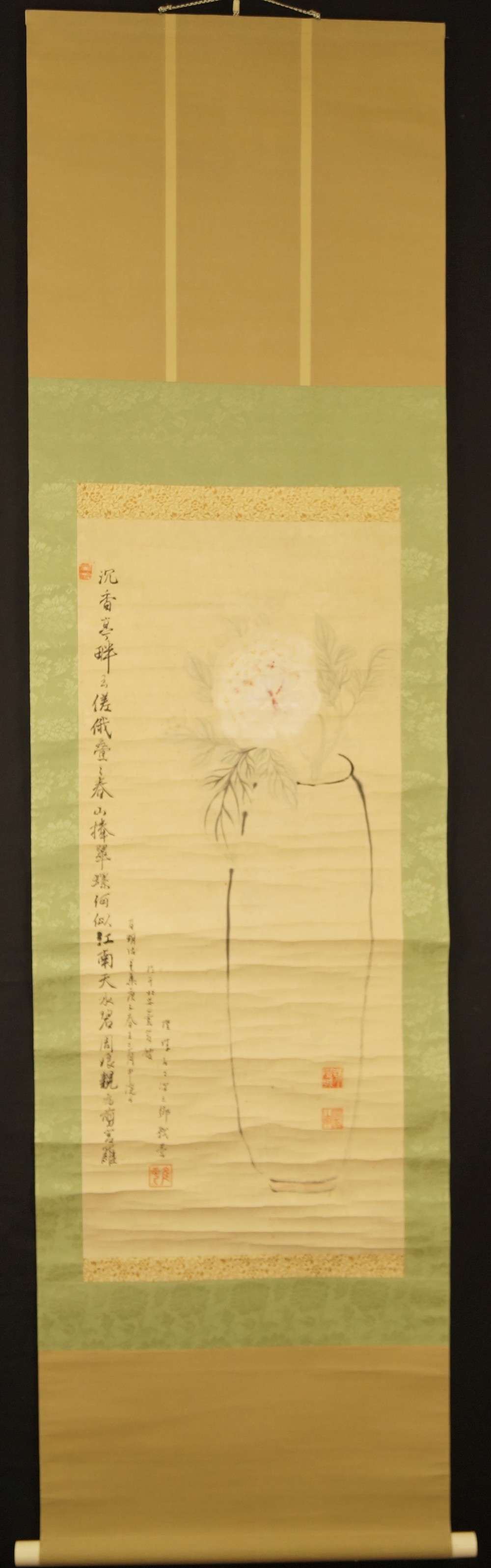
With a few powerfully placed brushstrokes in the cursive Sōsho style, this calligraphy pays homage to the Bodhisattva Kannon, who is also known as Kanzeon in Japanese Buddhism and called Avalokiteshvara in India. The flowing, merging strokes convey a particular dynamism and make the spiritual veneration underlying the text immediately palpable.
The work was created in the Meiji period (1868–1912); it was entirely hand-painted on paper. Formulas of veneration for Kannon, the Bodhisattva of compassion, are among the common themes of religious calligraphy in Japan and were often created by Buddhist monks or educated laypeople as an expression of personal piety.
The roller rods are fitted with metal ends. This kakemono is suited to collectors interested not only in pictorial art but also in the spiritual and calligraphic tradition of Japan, and its energetic brushwork lends a particular presence to any room.

