Kakemono Calligraphy – Shinnyo
One of a kind — this work exists only once.
- Period:
- Shôwa (1926–1989)
- Dimensions (height x width):
- 106 x 63 cm
- Item number:
- 3308
This piece has been sold.
Sold – no longer available
This piece was a handmade one-of-a-kind work. It cannot be reordered and will never exist in this form again. The page stays online as part of our archive.
More items in category CalligraphyAll one-of-a-kind Japanese Painting pieces
See new one-of-a-kind pieces first
We feature every delivery from Japan in the newsletter first – before the pieces show up in search results.
You might like these pieces
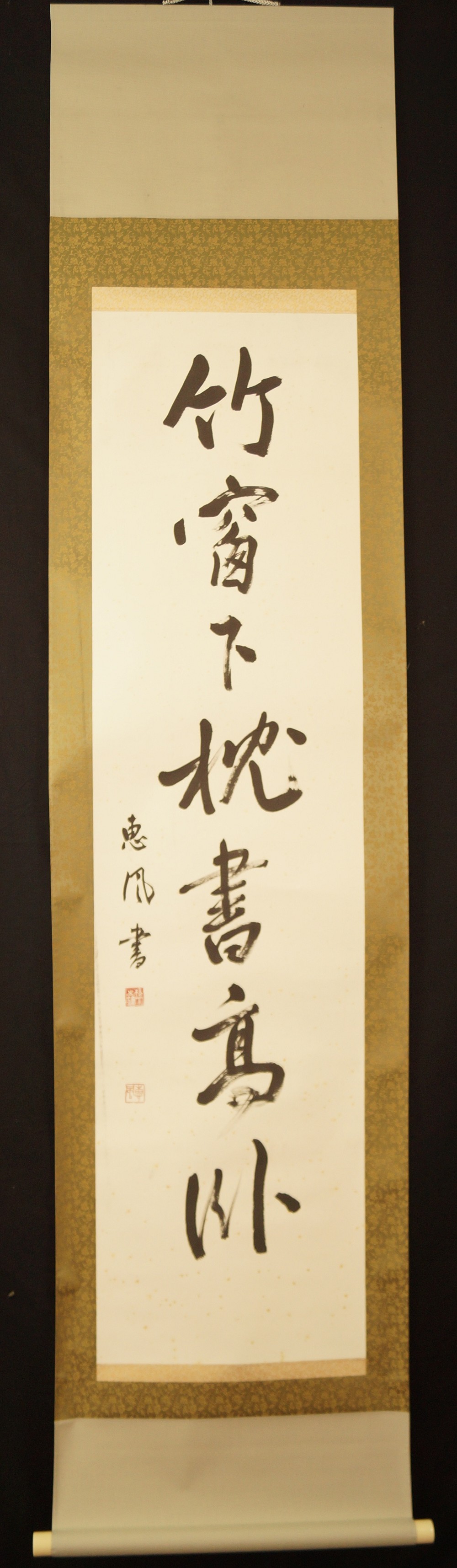
Calligraphy Poem: Bamboo by the Window
Kakemono, unique work, 195 x 50 cm
€180.00
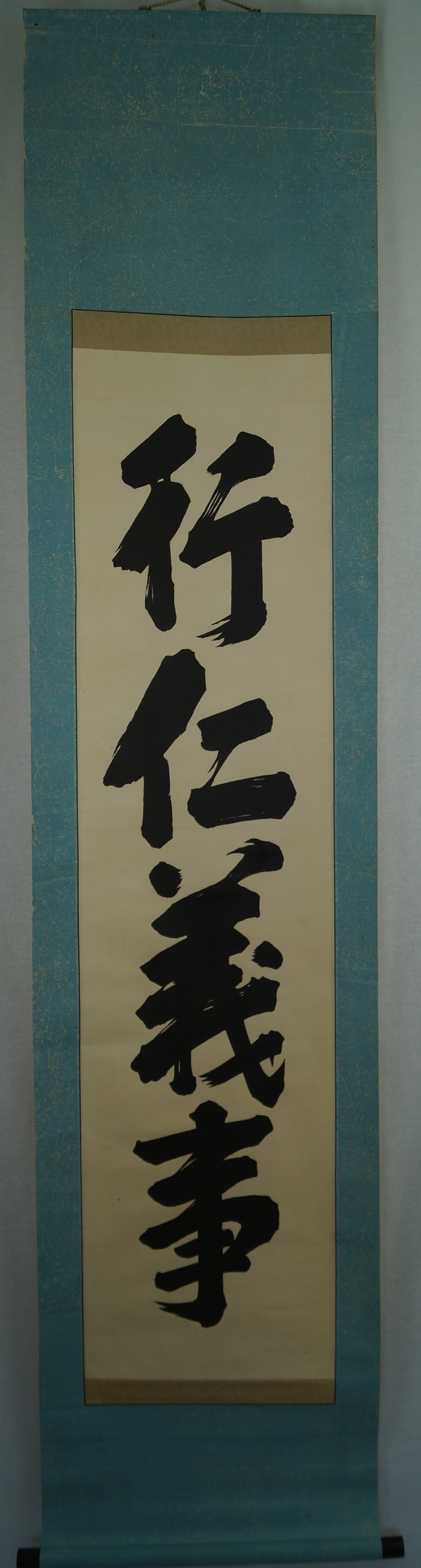
Calligraphy Print "Do Justice"
Kakemono, Print, 202 x 52 cm
€60.00
Satō Bokudō
"Zui-un" (like clouds and water) - Zen Calligraphy
Kakemono, unique work, with box, 114 x 58 cm
€490.00
Calligraphy "Peaches and Plums"
Kakemono, unique work, 196 x 54 cm
€140.00
Takeda Masuyoshi
Calligraphy "Snow"
Kakemono, unique work, with box, 118 x 48 cm
€470.00
Kobayashi Taigen
No Mind, the Great Way – Zen Calligraphy, Gold-Mounted
Kakemono, unique work, with box, 173 x 37 cm
€720.00
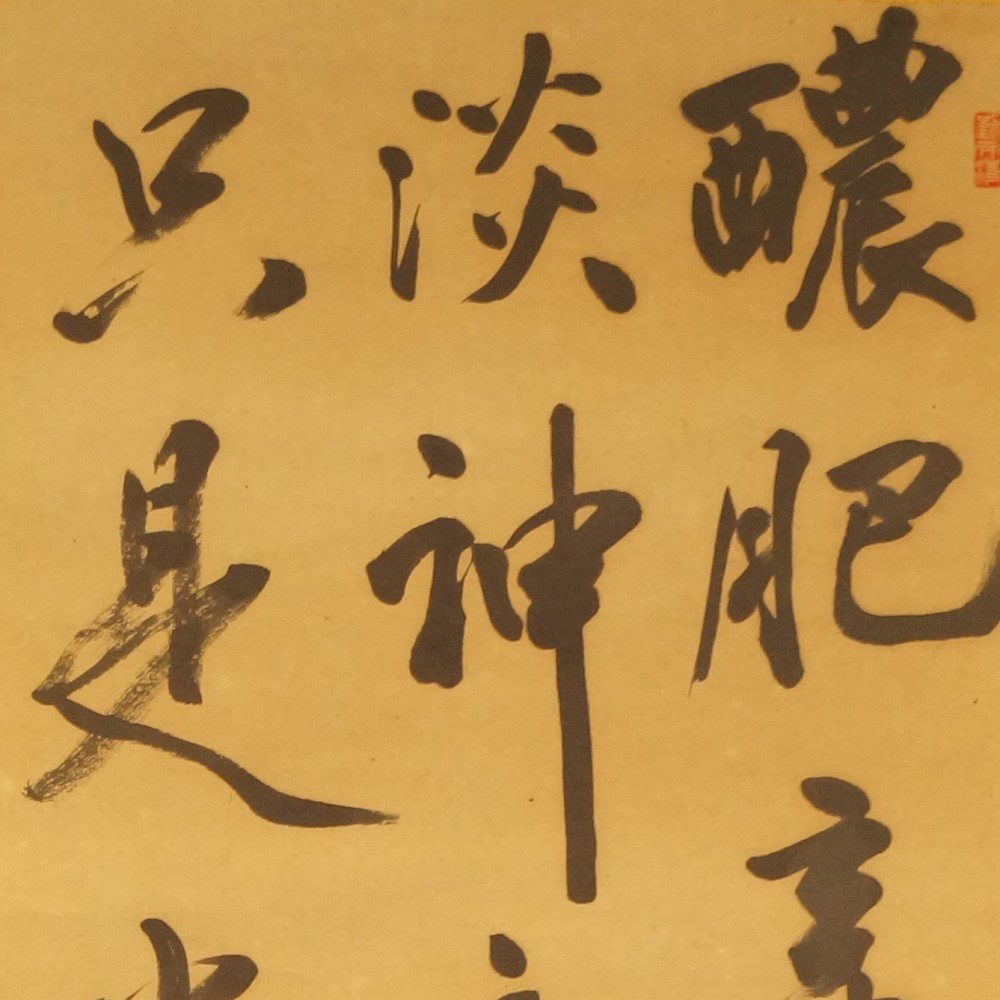
Calligraphy: True Sustenance
Kakemono, unique work, 205 x 58 cm
€260.00
Kobayashi Taigen
No-Mind on the Great Way – Zen Calligraphy, Olive Mounting
Kakemono, unique work, with box, 176 x 36 cm
€690.00


Details about the sold piece
- JikusakiWood
- Material HonshiPaper
- MotifCalligraphy
- TechniqueHand-Painted
Description
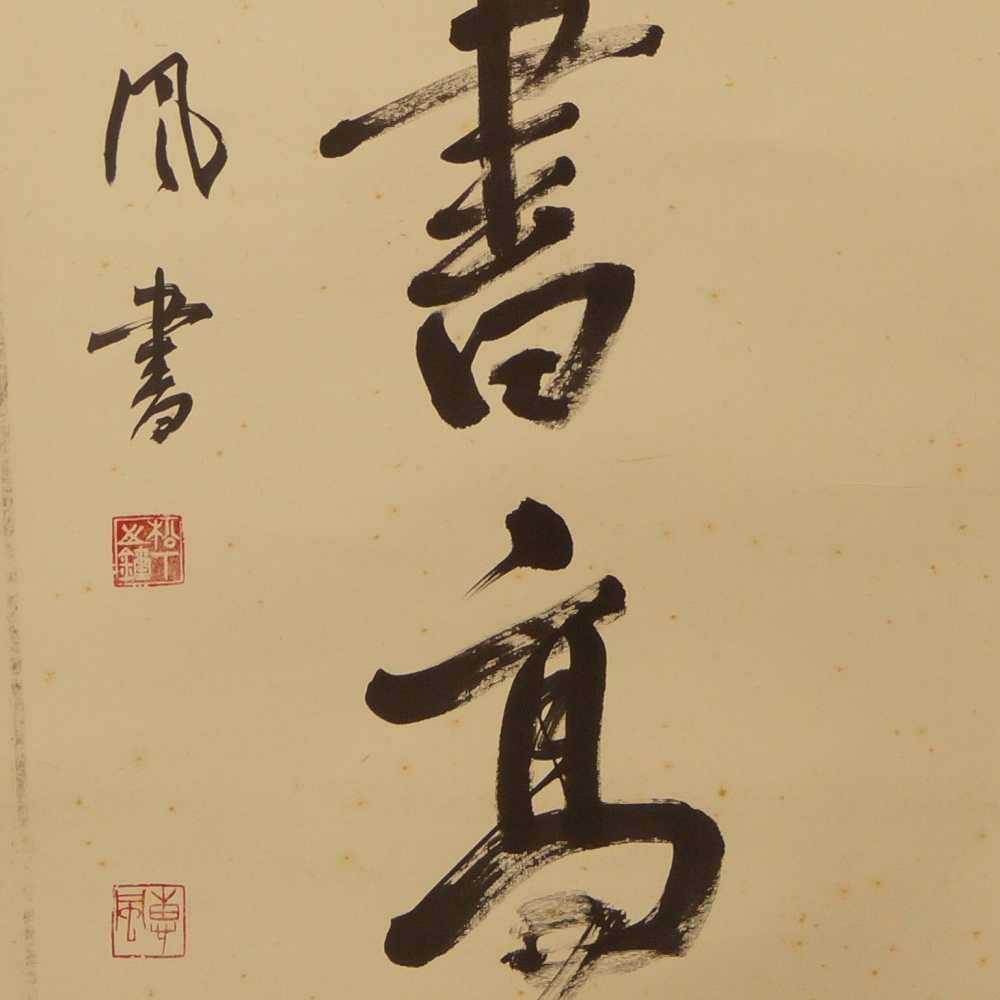
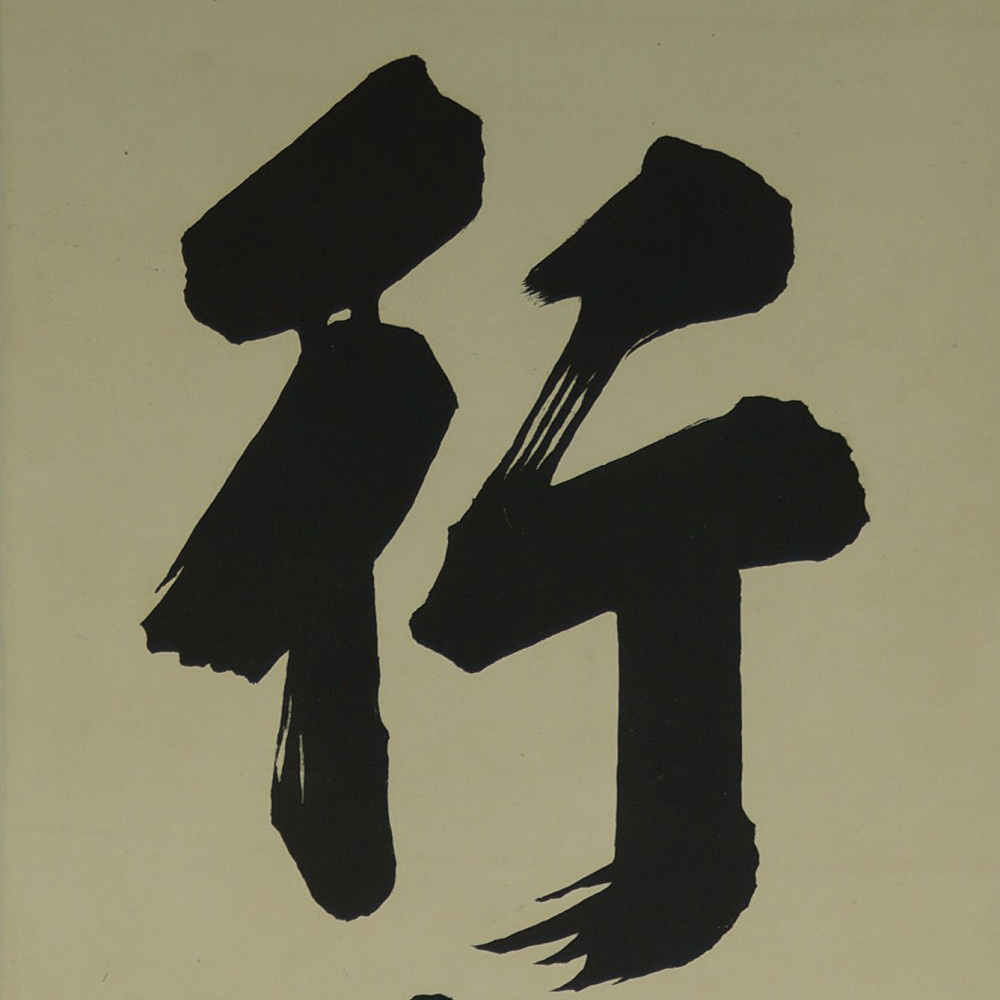
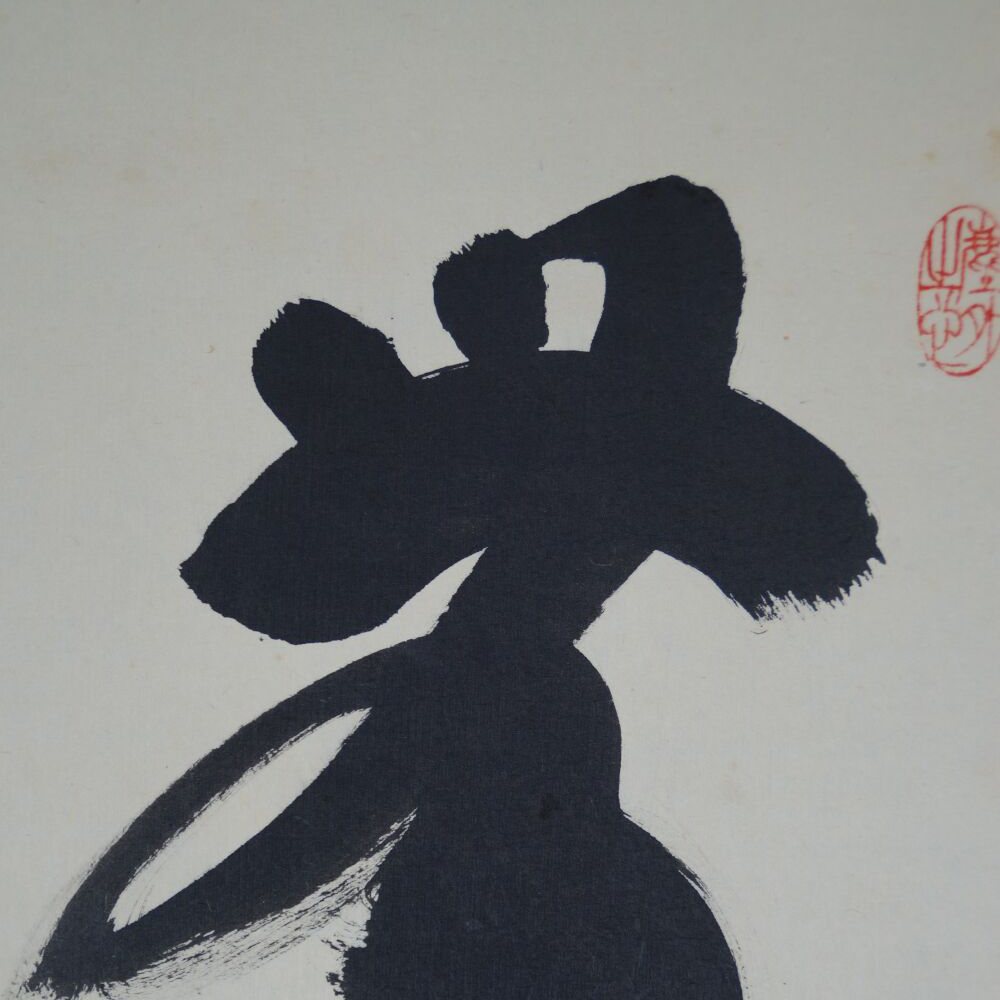
In a powerful, flowing stroke, the two characters for "Shinnyo" are set here on fine paper, framed by an elegant border with gold-colored floral patterns that lend the work a festive setting.
Shinnyo, known in Sanskrit as Tathata, denotes in Buddhist philosophy the "suchness" of things, that state beyond change and illusion which is understood as the true reality behind all appearance. The broad, powerful brushstroke of the two characters underscores the clarity and calm that this term expresses.
Calligraphies with such dense philosophical concepts often originated in the environment of Buddhist temples and were gladly used as devotional images or as an occasion for meditation. The kakemono has wooden jikusaki and probably dates from the Shôwa period.