
Kakemono Calligraphy Wa-Kei-Sei-Jaku
One of a kind — this work exists only once.
- Period:
- Shôwa (1926–1989)
- Dimensions (height x width):
- 190 x 50 cm
- Item number:
- 3731
This piece has been sold.
Sold – no longer available
This piece was a handmade one-of-a-kind work. It cannot be reordered and will never exist in this form again. The page stays online as part of our archive.
More items in category CalligraphyAll one-of-a-kind Japanese Painting pieces
See new one-of-a-kind pieces first
We feature every delivery from Japan in the newsletter first – before the pieces show up in search results.
You might like these pieces
Calligraphy: The Four Virtues of Chado
Kakemono, unique work, 128 x 98 cm
€640.00
Calligraphy Print "Do Justice"
Kakemono, Print, 202 x 52 cm
€60.00
Calligraphy: In Search of the Plum Blossom
Kakemono, unique work, 195 x 51 cm
€180.00
Takeda Masuyoshi
Calligraphy "Snow"
Kakemono, unique work, with box, 118 x 48 cm
€470.00
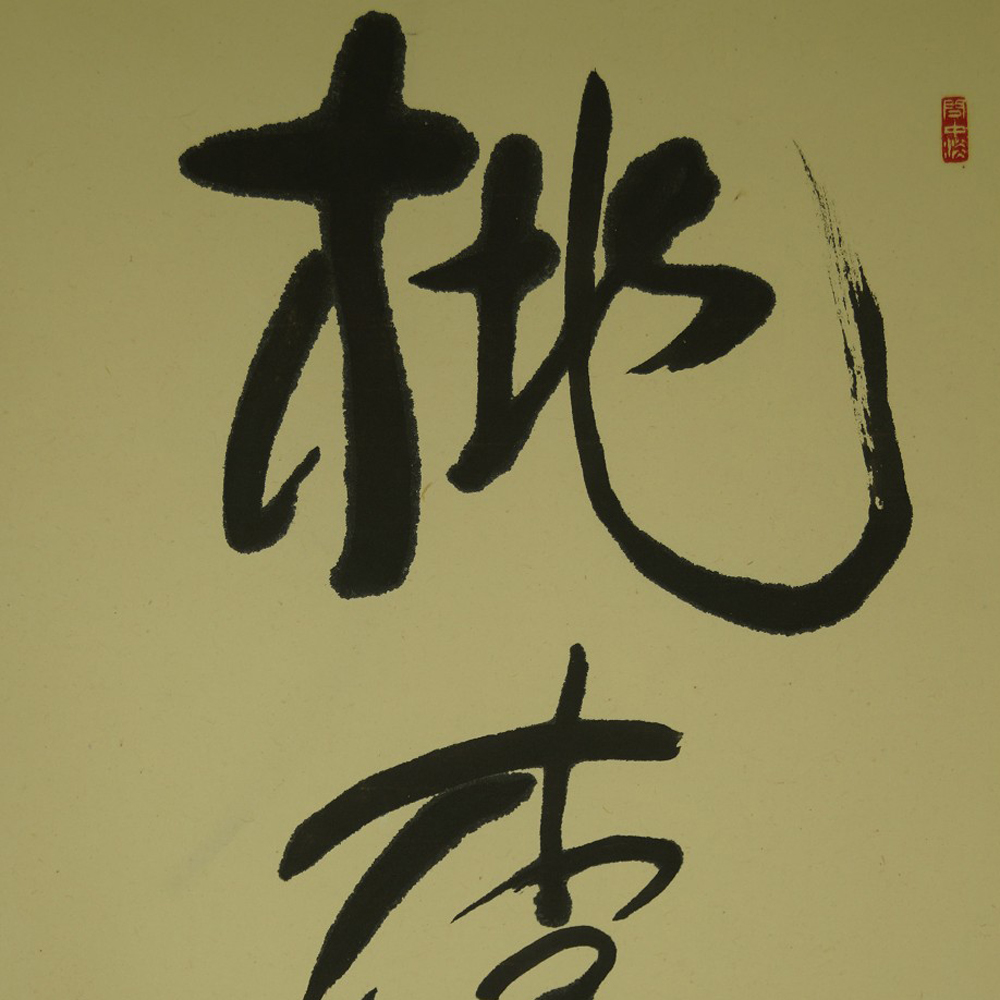
Calligraphy "Peaches and Plums"
Kakemono, unique work, 196 x 54 cm
€140.00
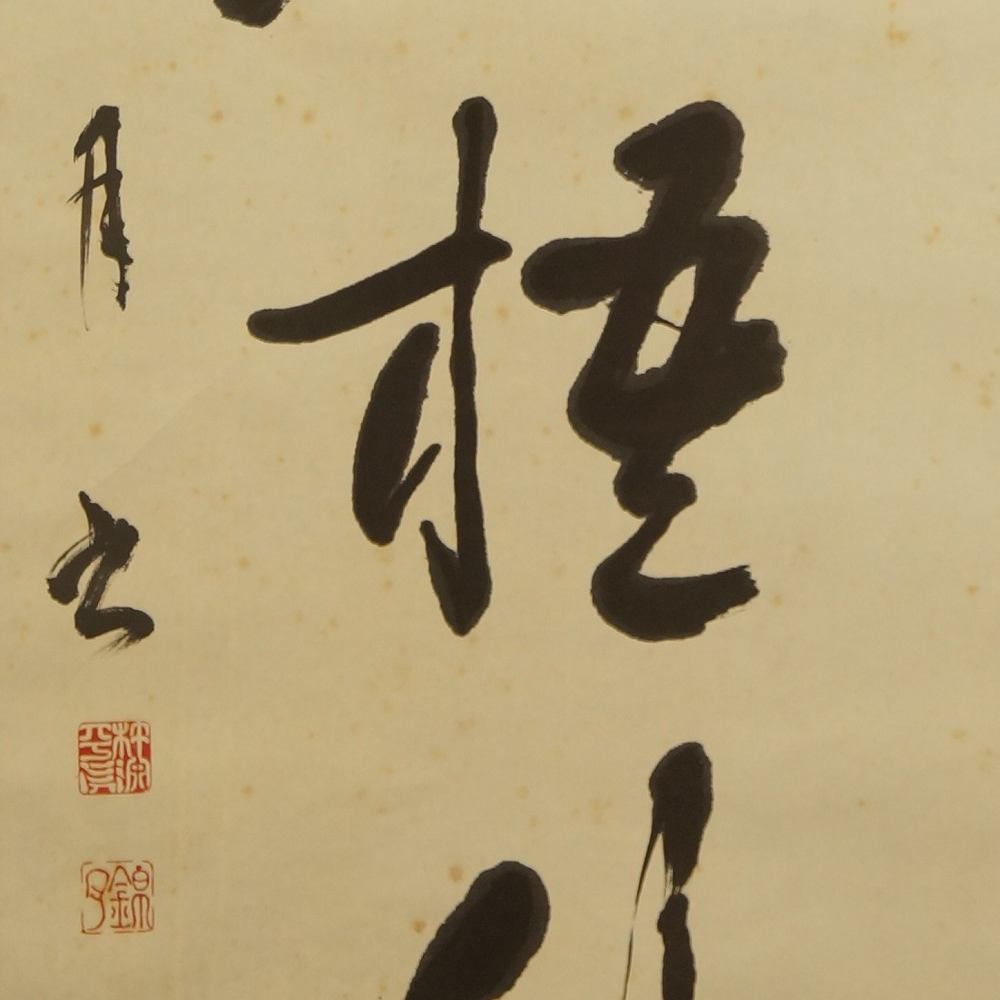
Calligraphy: Wind in the Bamboo
Kakemono, unique work, 193 x 53 cm
€210.00
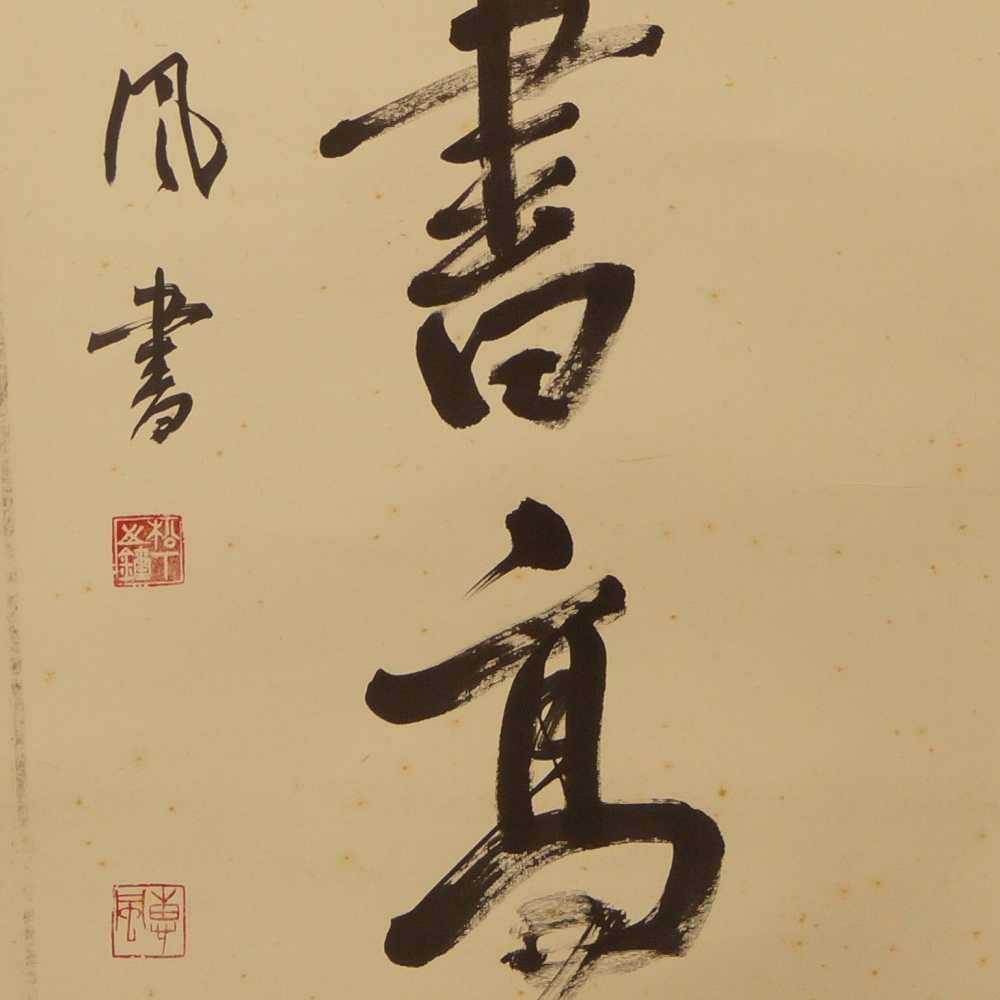
Calligraphy Poem: Bamboo by the Window
Kakemono, unique work, 195 x 50 cm
€180.00
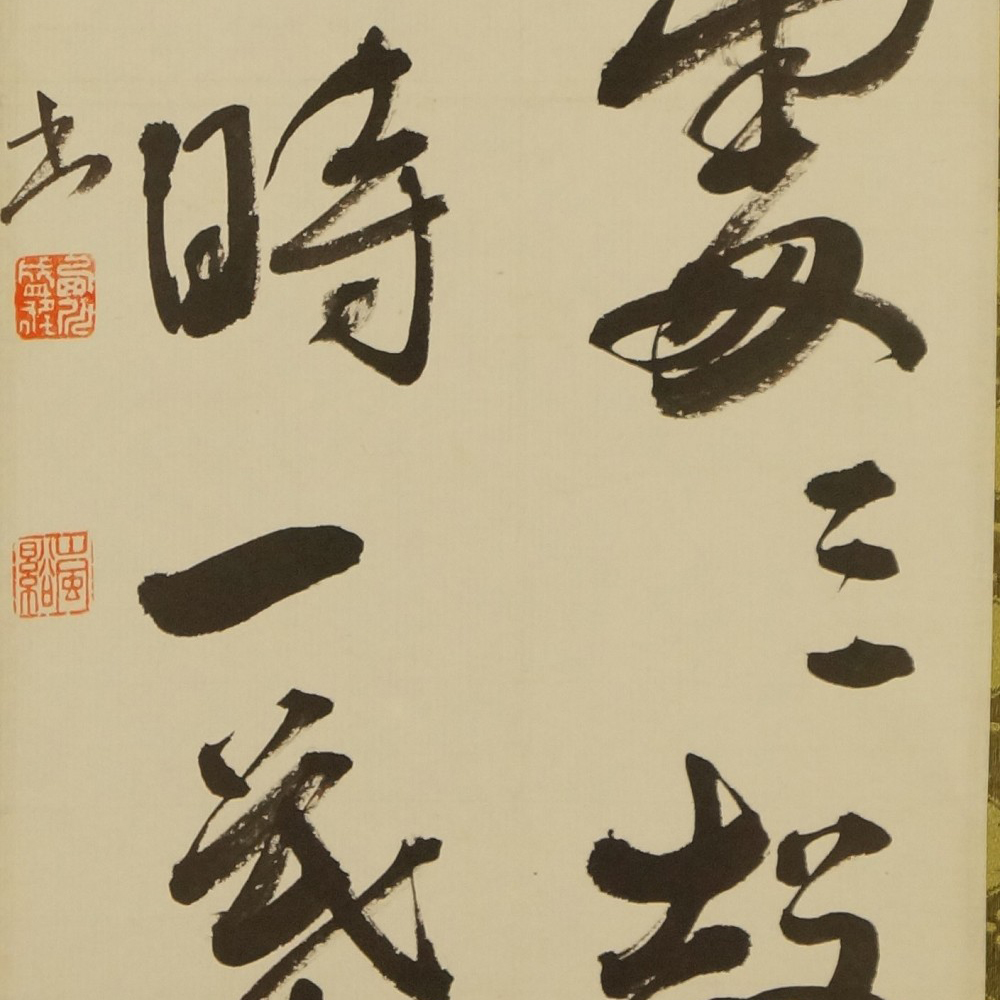
Calligraphy: Monkey's Cry and Wild Geese
Kakemono, unique work, 145 x 34 cm
€180.00


Details about the sold piece
- JikusakiSculpture
- Material HonshiPaper
- MotifCalligraphy
- TechniqueHand-Painted
Description
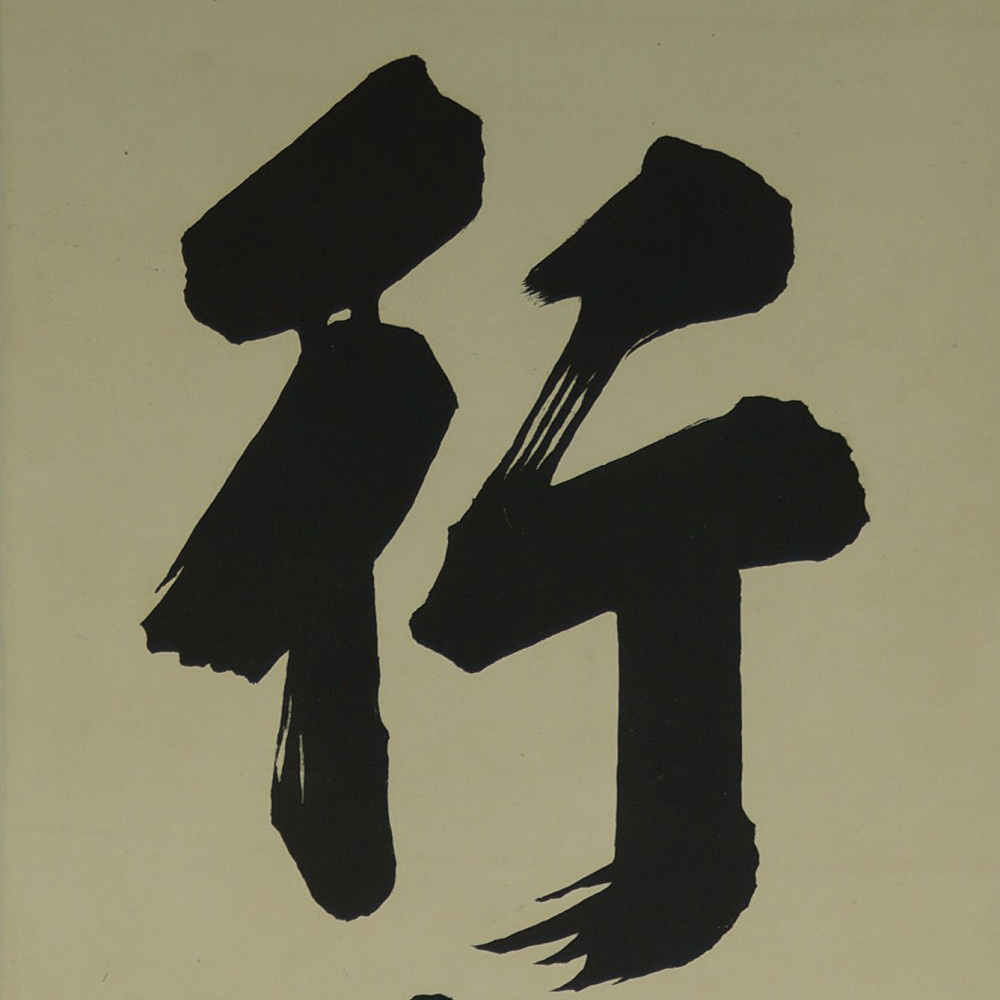
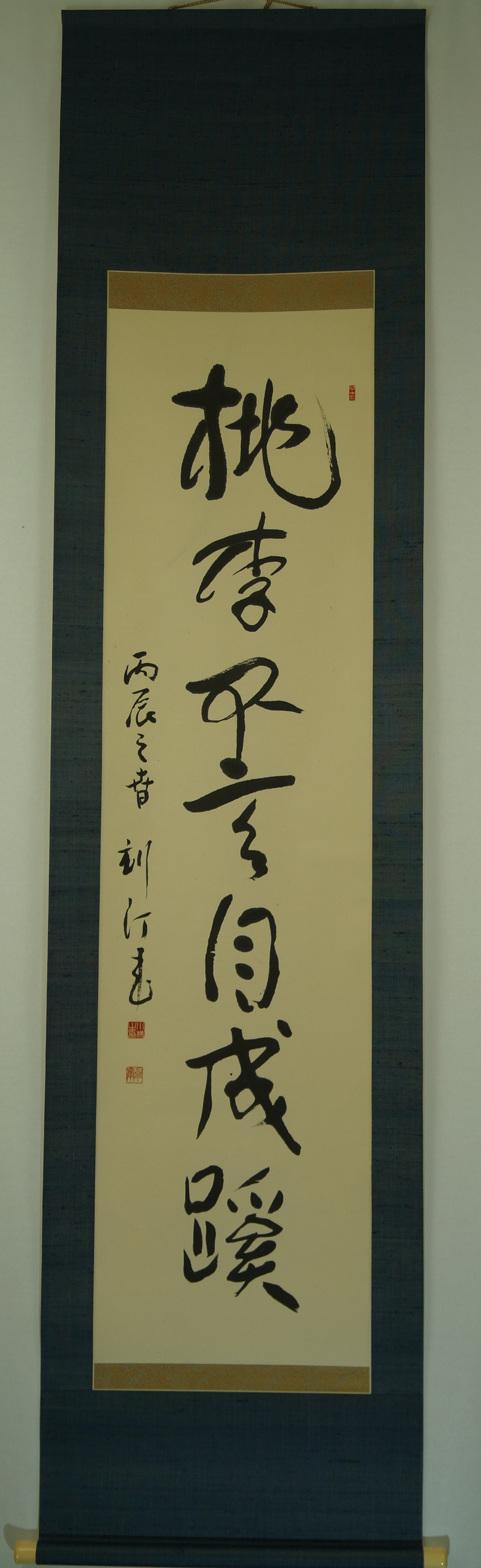
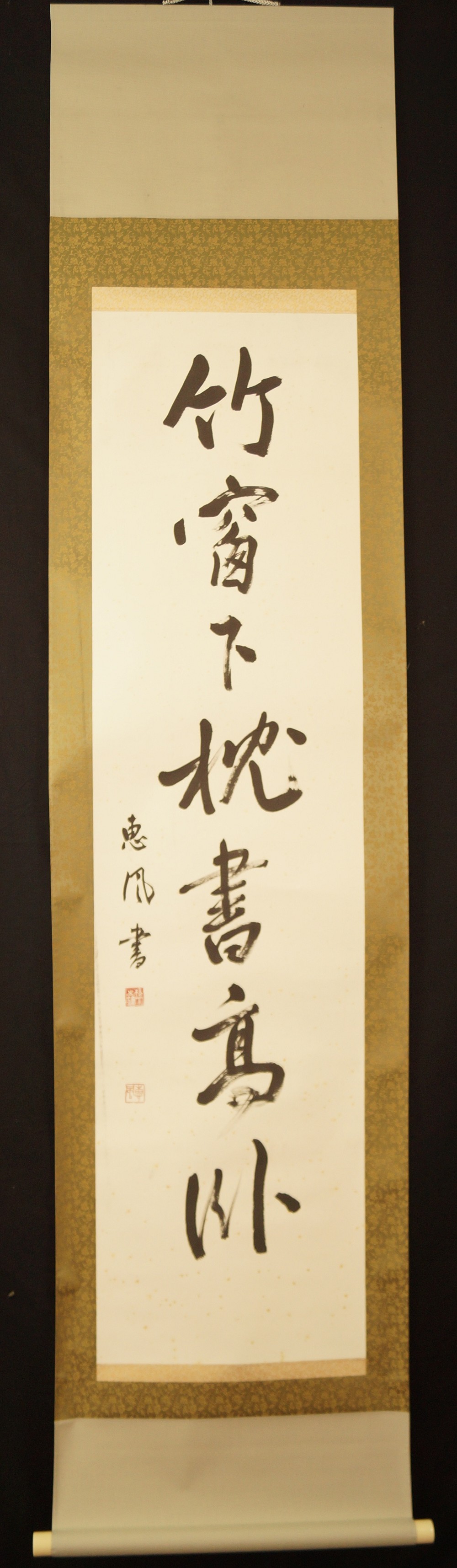
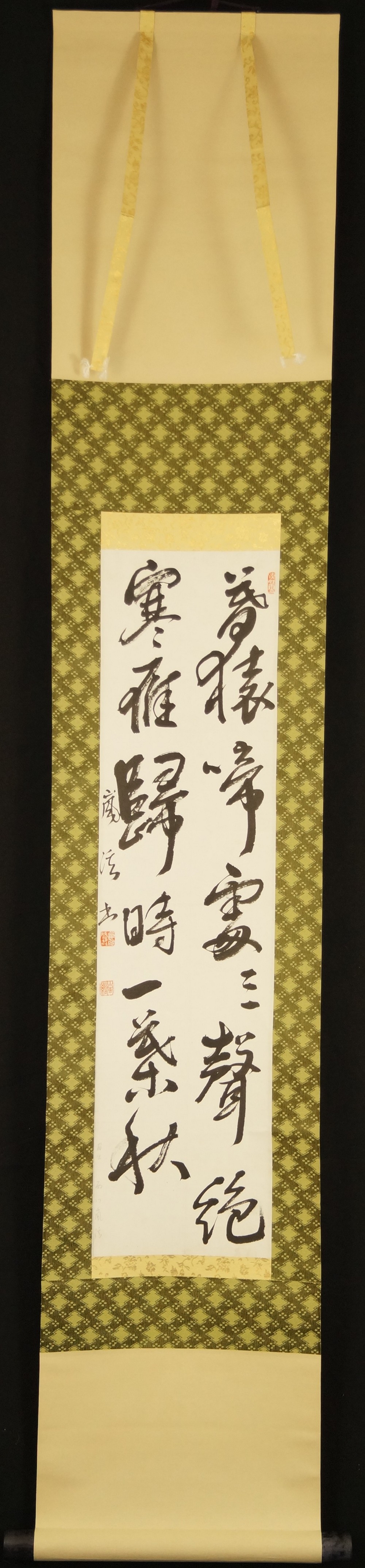
On a dark, speckled, earth-toned silk ground, a second, independent approach to the four virtues Wa, Kei, Sei, and Jaku – harmony, respect, purity, and tranquility – unfolds here. Unlike calmer renderings of this maxim, the script here is strikingly broad and powerful in execution, the strokes appear almost sculptural and leave the ink lying thick in places.
A small red seal at the upper right, along with a signature and two further seals at the lower left, document the authorship of an evidently skilled calligrapher. The four characters stand in a single, clearly structured column on cream-colored paper, which is bordered by a plain, light-colored frame strip before the dark, iridescent border further draws the eye to the script.
This maxim, which originally stems from tea culture, came over time to be valued as a general life maxim far beyond the tea ceremony as well. The work on paper was created in the Shôwa period and impressively shows how differently one and the same text can be interpreted by different calligraphers – an appealing contrast for collectors who wish to assemble several versions of the same motif.

