
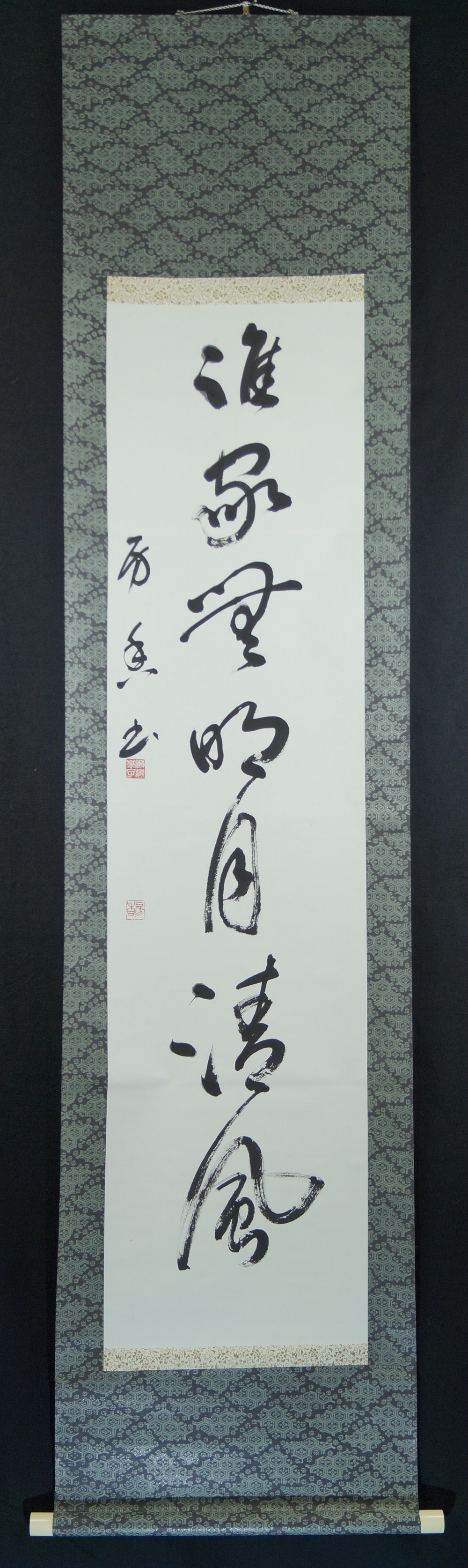
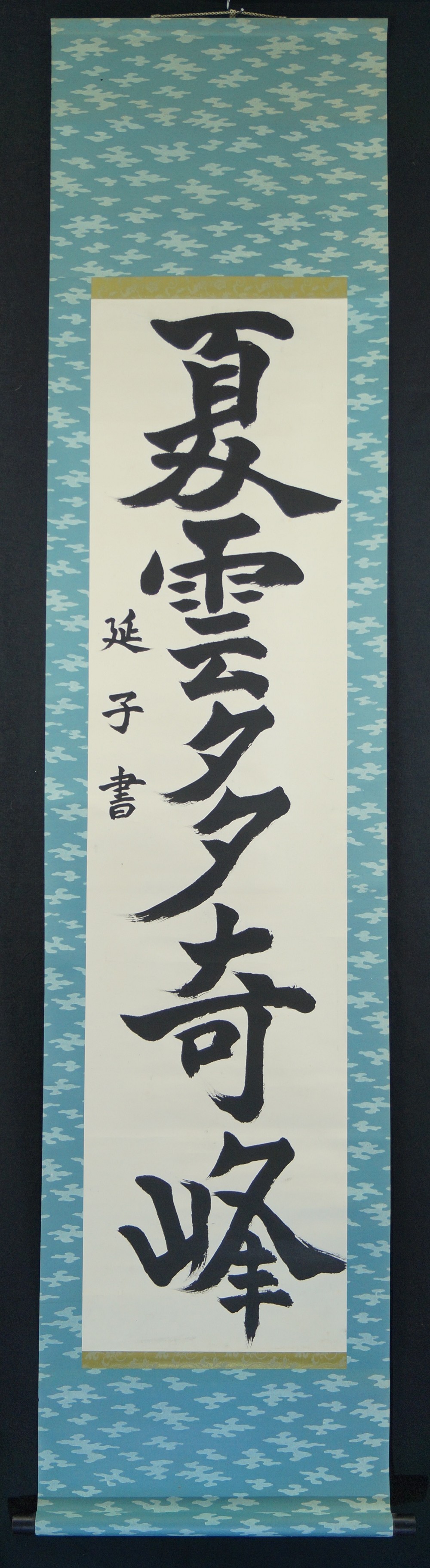
Kakemono Calligraphy of a Deity's Name
One of a kind — this work exists only once.
- Period:
- Shôwa (1926–1989)
- Dimensions (height x width):
- 180 x 44 cm
- Item number:
- 3875
This piece has been sold.
Sold – no longer available
This piece was a handmade one-of-a-kind work. It cannot be reordered and will never exist in this form again. The page stays online as part of our archive.
More items in category CalligraphyAll one-of-a-kind Japanese Painting pieces
See new one-of-a-kind pieces first
We feature every delivery from Japan in the newsletter first – before the pieces show up in search results.
You might like these pieces

Calligraphy "The Power of the Emperor Illuminates the World"
Kakemono, unique work, with box, 169 x 52 cm
€260.00
Calligraphy "Breeze in Moonlight"
Kakemono, unique work, 190 x 53 cm
€180.00
Calligraphy: True Sustenance
Kakemono, unique work, 205 x 58 cm
€260.00
Calligraphy: Wind in the Bamboo
Kakemono, unique work, 193 x 53 cm
€210.00
Calligraphy "Peaches and Plums"
Kakemono, unique work, 196 x 54 cm
€140.00
Calligraphy: Monkey's Cry and Wild Geese
Kakemono, unique work, 145 x 34 cm
€180.00
Calligraphy Poem: Bamboo by the Window
Kakemono, unique work, 195 x 50 cm
€180.00
Calligraphy "Clouds in Summer, Hidden Mountain Peaks"
Kakemono, unique work, with box, 192 x 51 cm
€180.00


Details about the sold piece
- JikusakiWood
- Material HonshiPaper
- MotifCalligraphy
- TechniqueHand-Painted
Description
In even, confidently rendered characters, this calligraphy extends over the entire length of the paper, conveying a solemn, almost ritual effect through its disciplined, calm arrangement alone, which invites quiet contemplation and lends the room a distinctive presence.
In terms of content, this is the name of a deity, as venerated in the religious and spiritual contexts of Japan and used in calligraphic form as a devotional image. Such scrolls often served as decoration for a household altar or as a visible expression of personal piety and were written with great care and inner concentration, often over many hours of practice.
Written on paper, fitted with roller ends made of wood, and dating from the Shôwa period, this hand-painted unique work is a quiet, dignified testament to Japanese calligraphy and spiritual tradition, suitable as a contemplative focal point for a quiet place in the home. Such devotional scrolls usually found their place in a quiet corner of the house, far from loud activity.

