Kakemono Hotei with Two Roosters and Inscription
One of a kind — this work exists only once.
- Period:
- Meiji (1868–1912)
- Dimensions (height x width):
- 186 x 53 cm
- Item number:
- 5423
This piece has been sold.
Sold – no longer available
This piece was a handmade one-of-a-kind work. It cannot be reordered and will never exist in this form again. The page stays online as part of our archive.
More items in category Buddhism and ZenAll one-of-a-kind Japanese Painting pieces
See new one-of-a-kind pieces first
We feature every delivery from Japan in the newsletter first – before the pieces show up in search results.
You might like these pieces
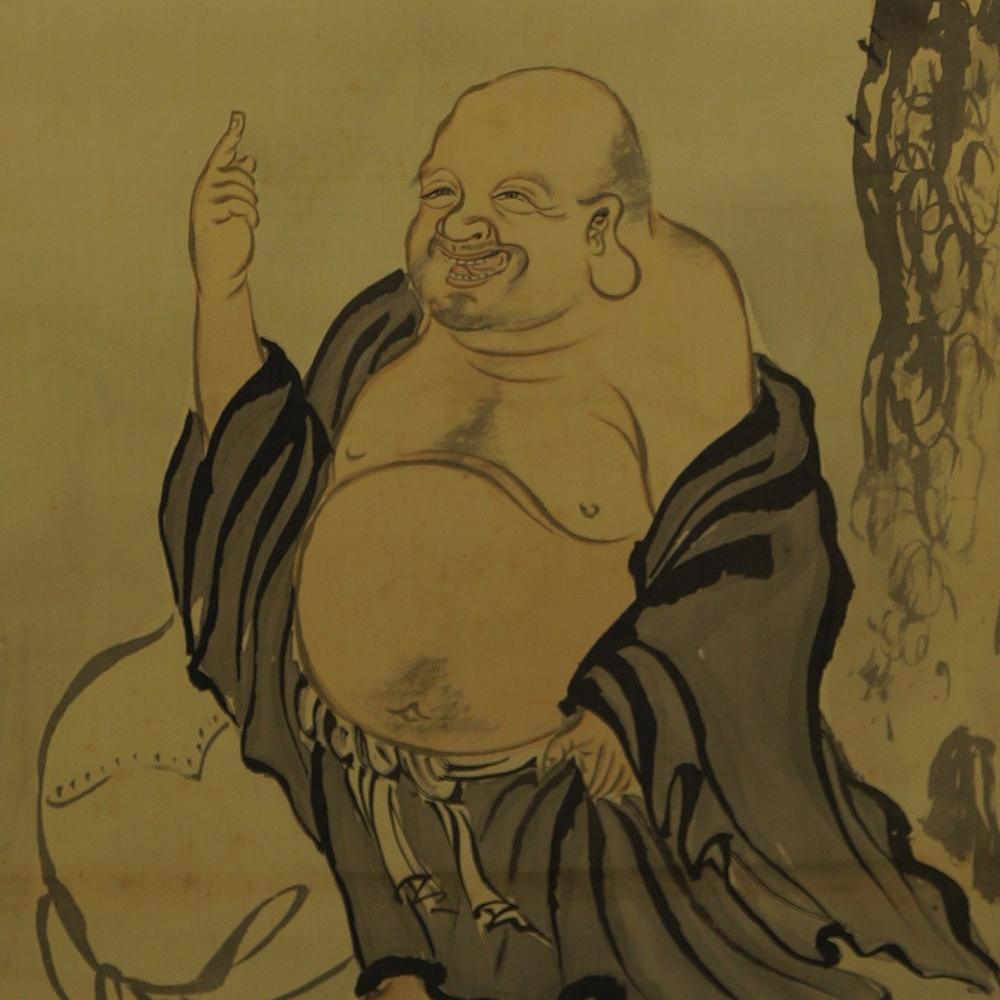
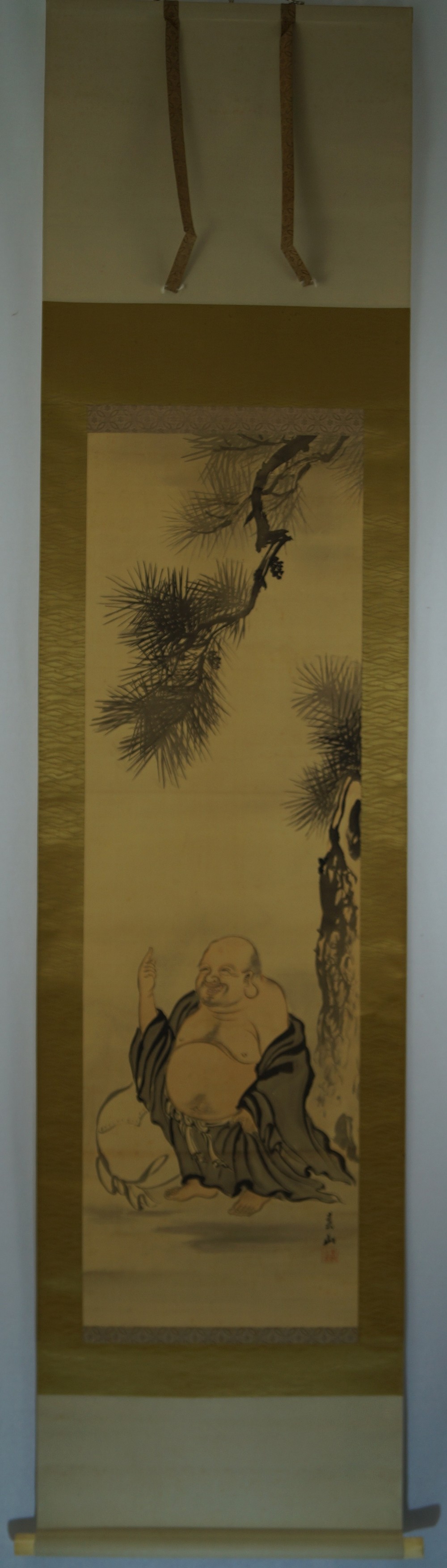
Hotei Under the Pine
Kakemono, unique work, 200 x 53 cm
€160.00
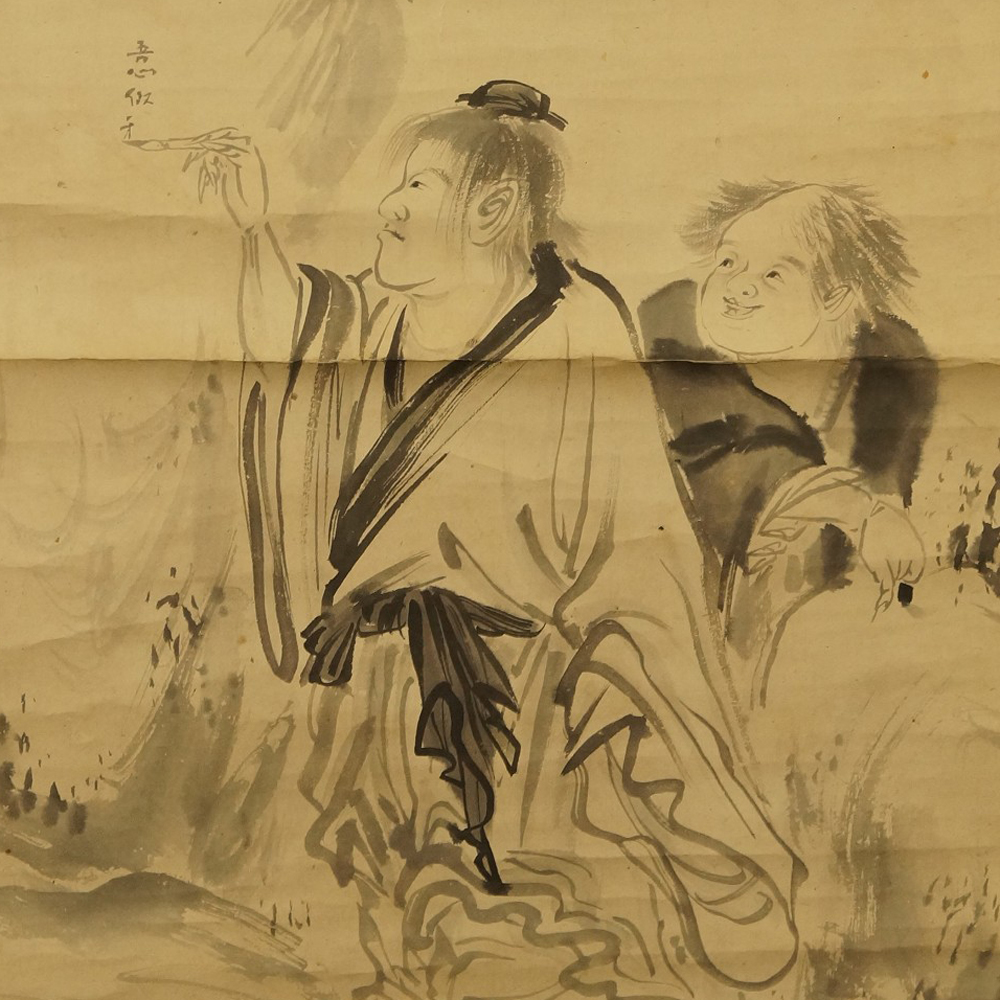
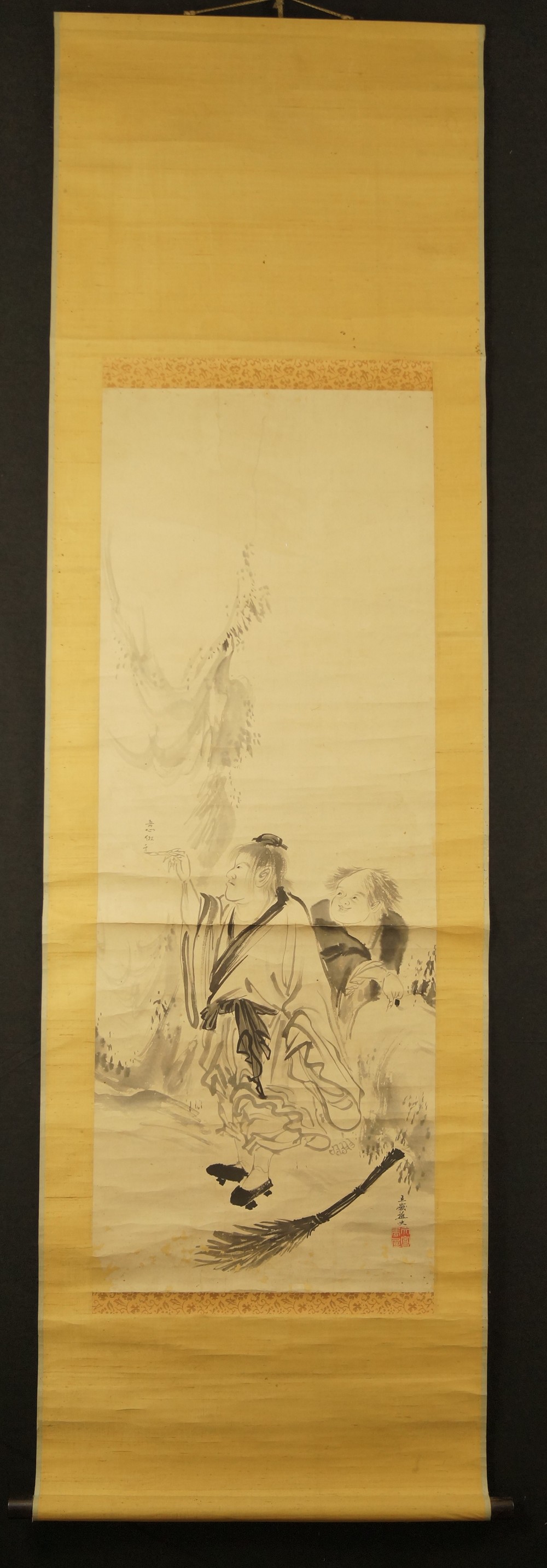
The Calligrapher and His Companion
Kakemono, unique work, with box, 184 x 60 cm
€210.00
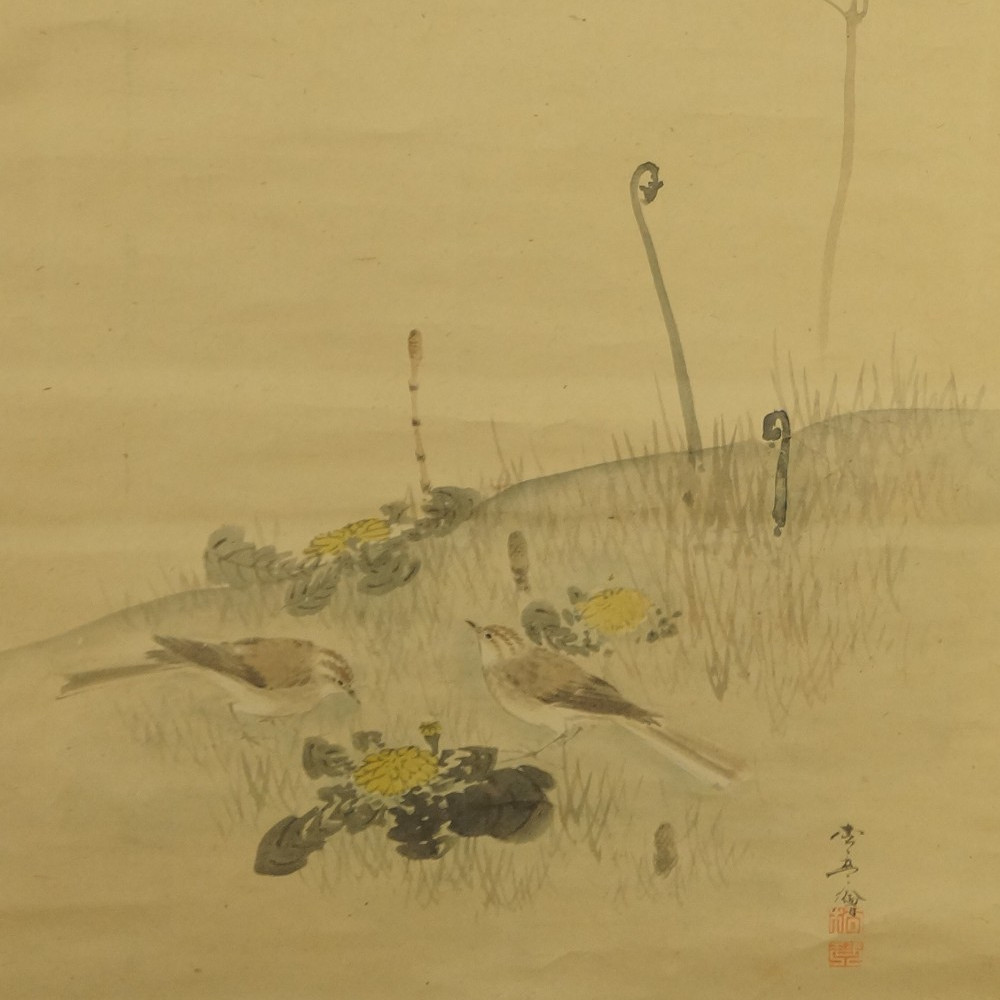
Birds on a Meadow
Kakemono, unique work, 180 x 60 cm
€280.00
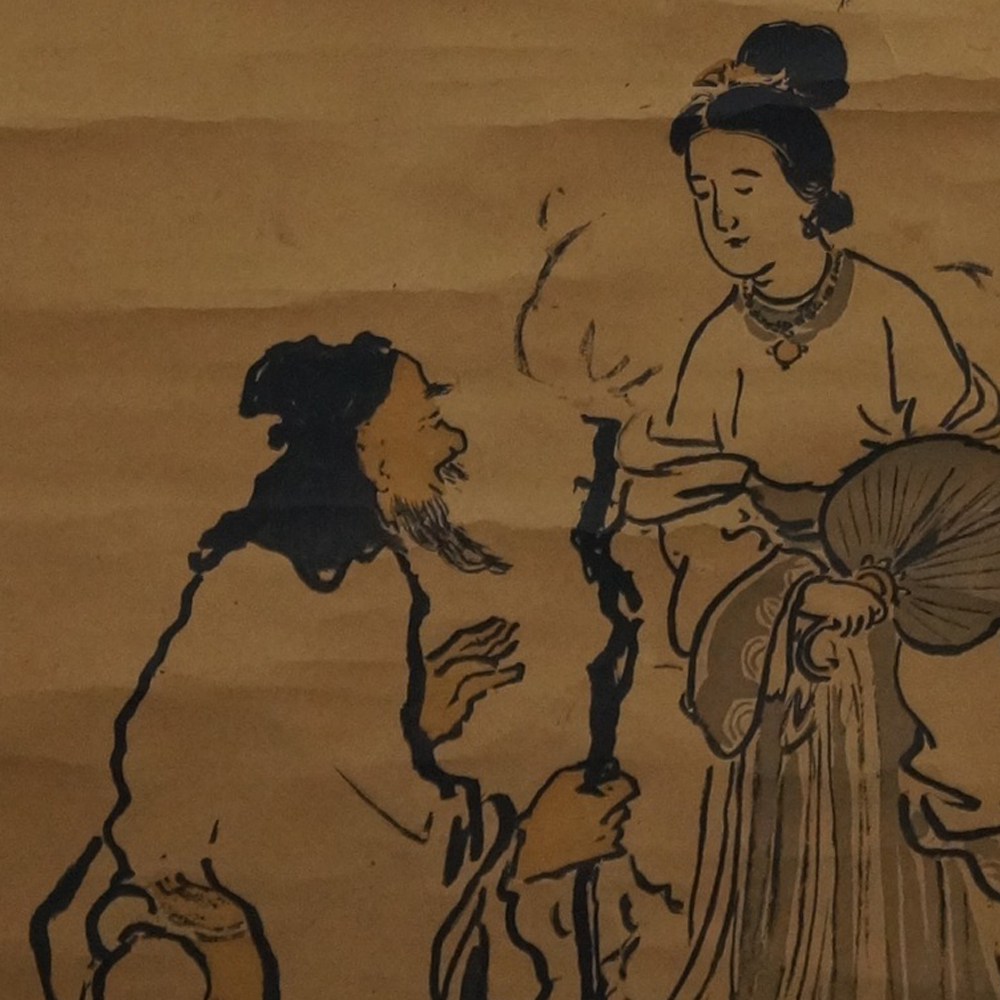
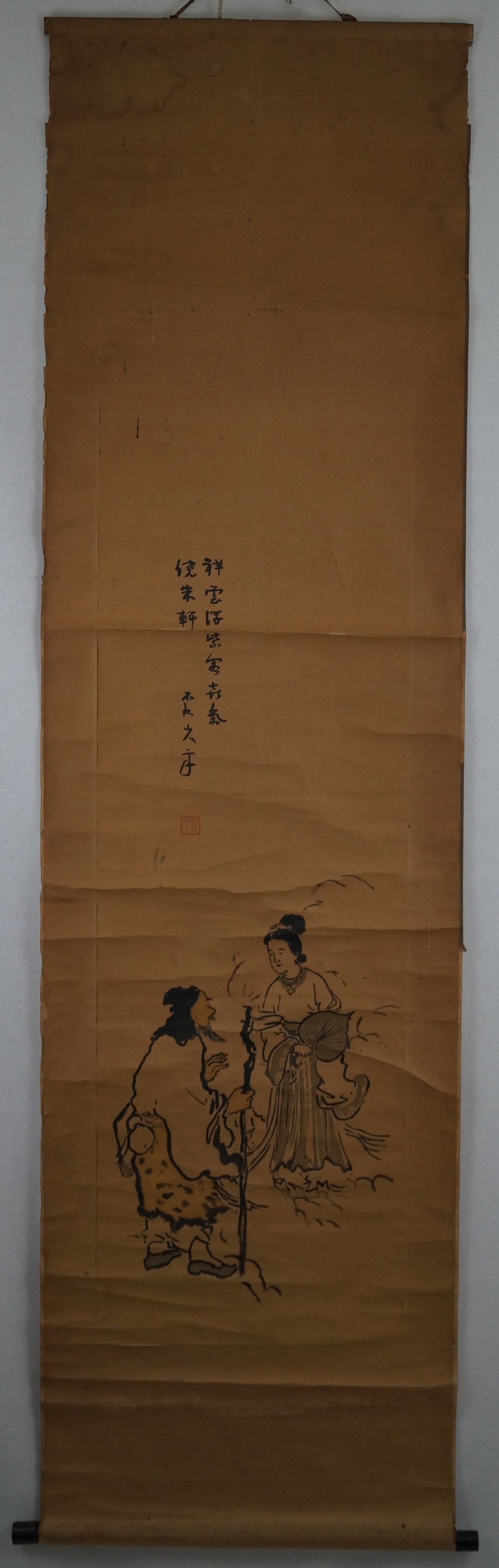
The Wanderer and the Beauty
Kakemono, unique work, 195 x 60 cm
€150.00
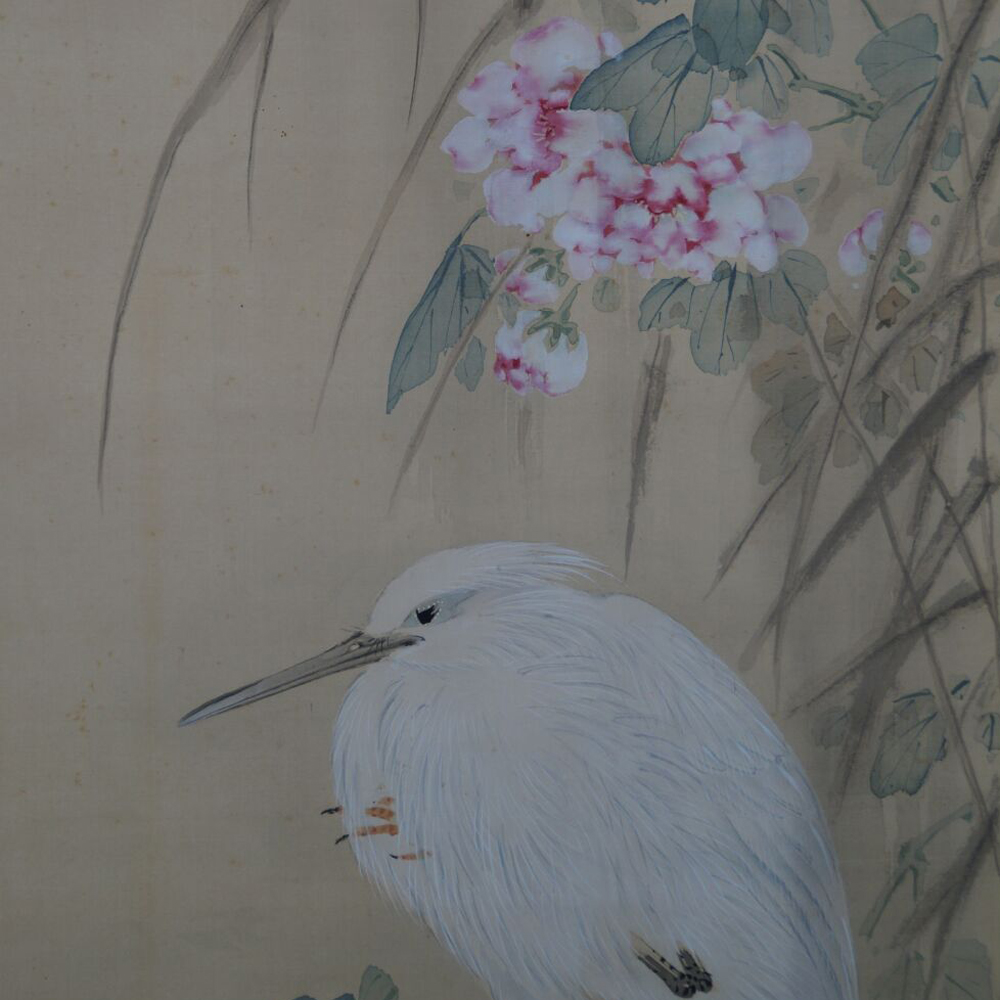
Koyama Setsurei
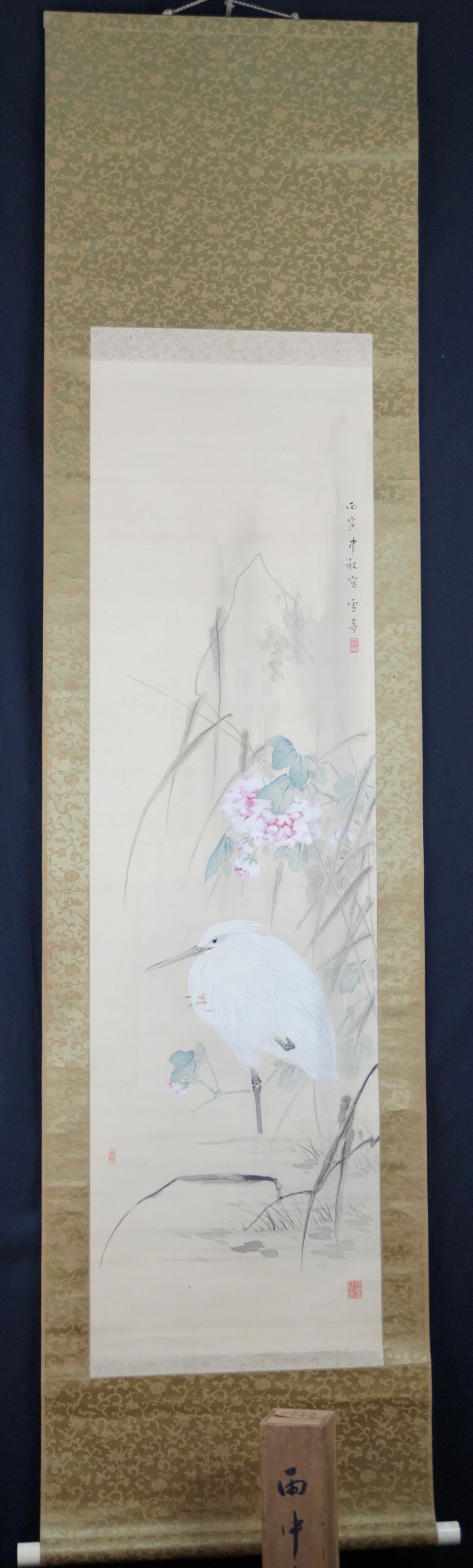
White Heron Among Blossoms and Reeds
Kakemono, unique work, with box, 195 x 54 cm
€720.00
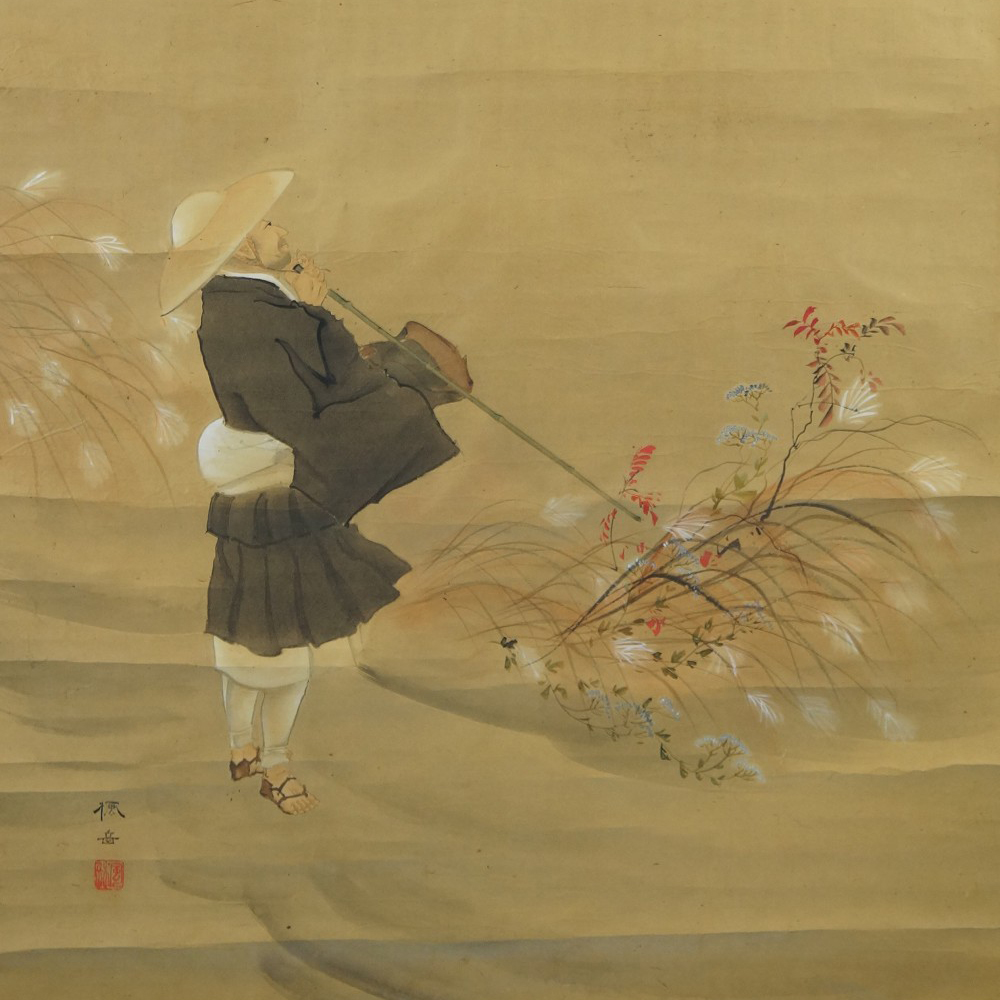
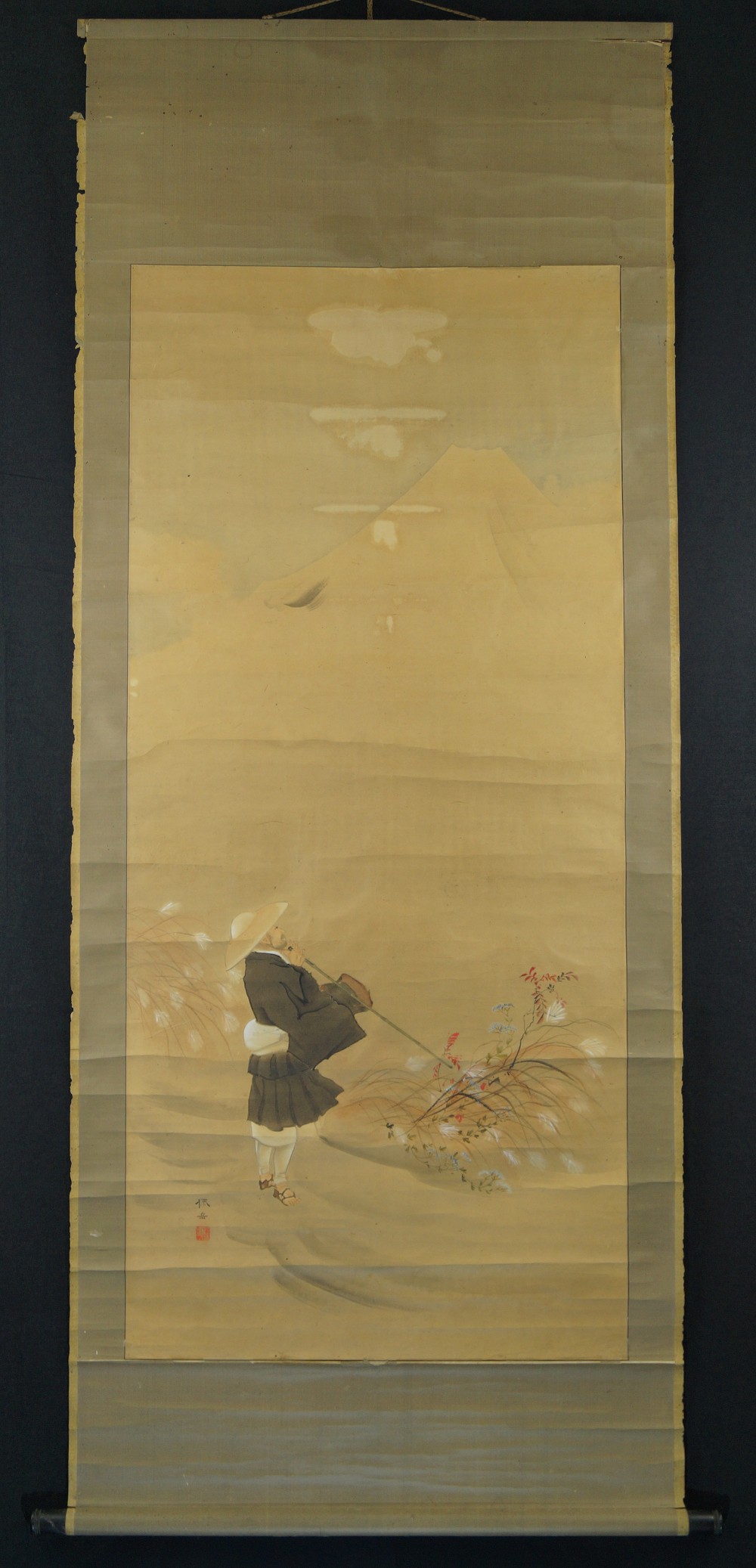
Monk and Mount Fuji
Kakemono, unique work, 188 x 81 cm
€200.00
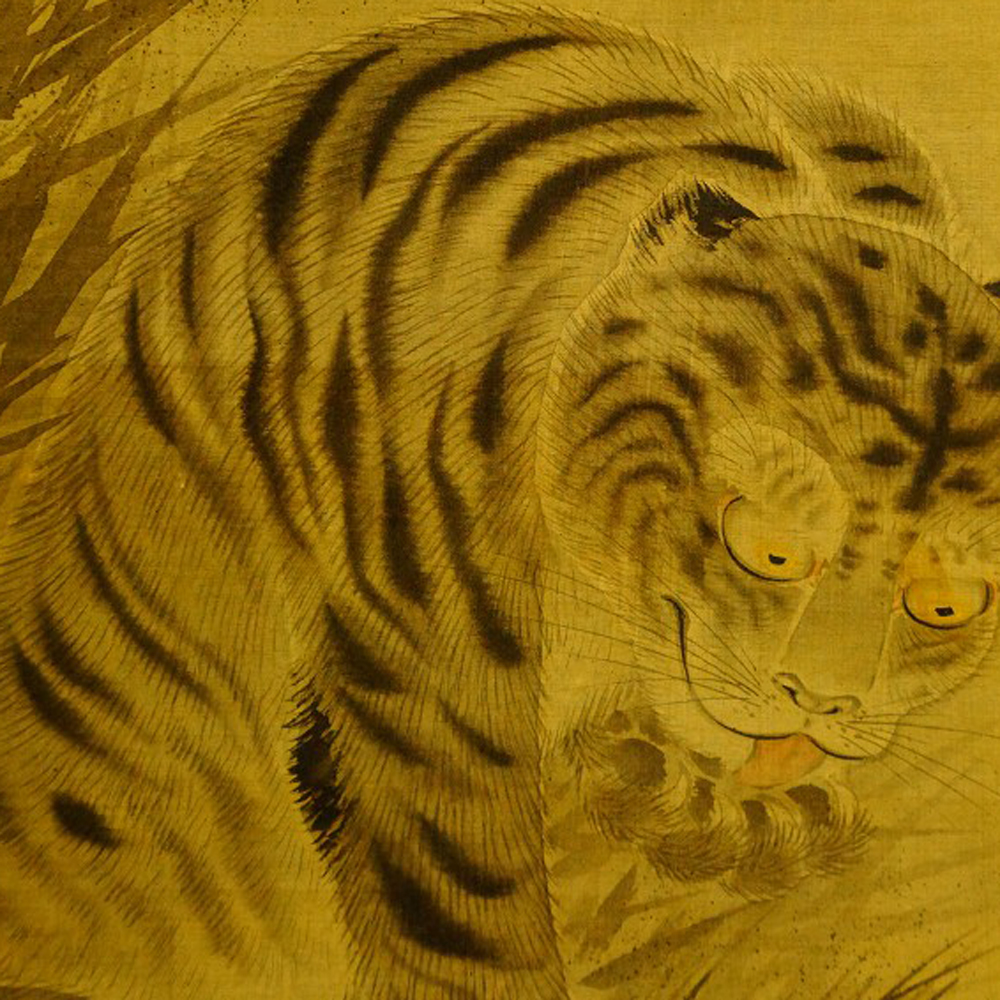
Kokyo
Gentle Elegance of the Tiger - Makuri without Mounting
Makuri, unique work, 94 x 32 cm
€890.00
Shibata Zeshin
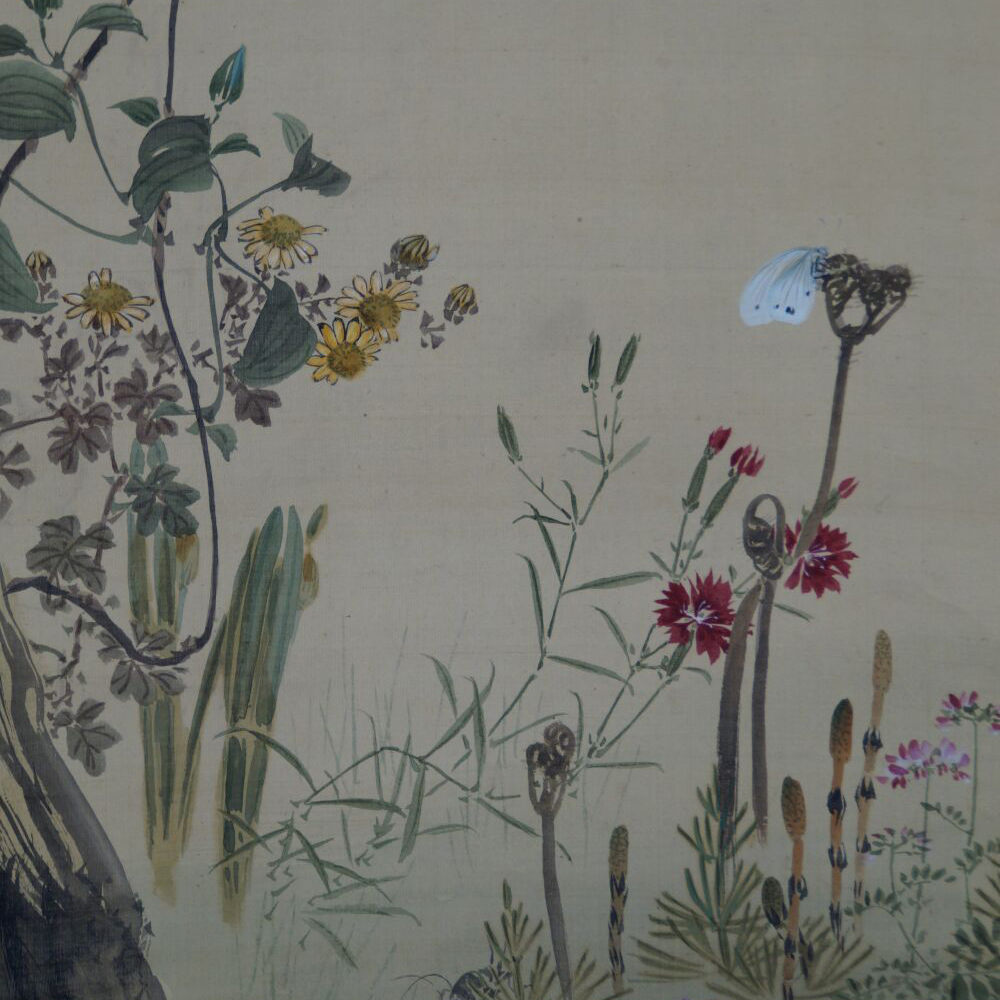
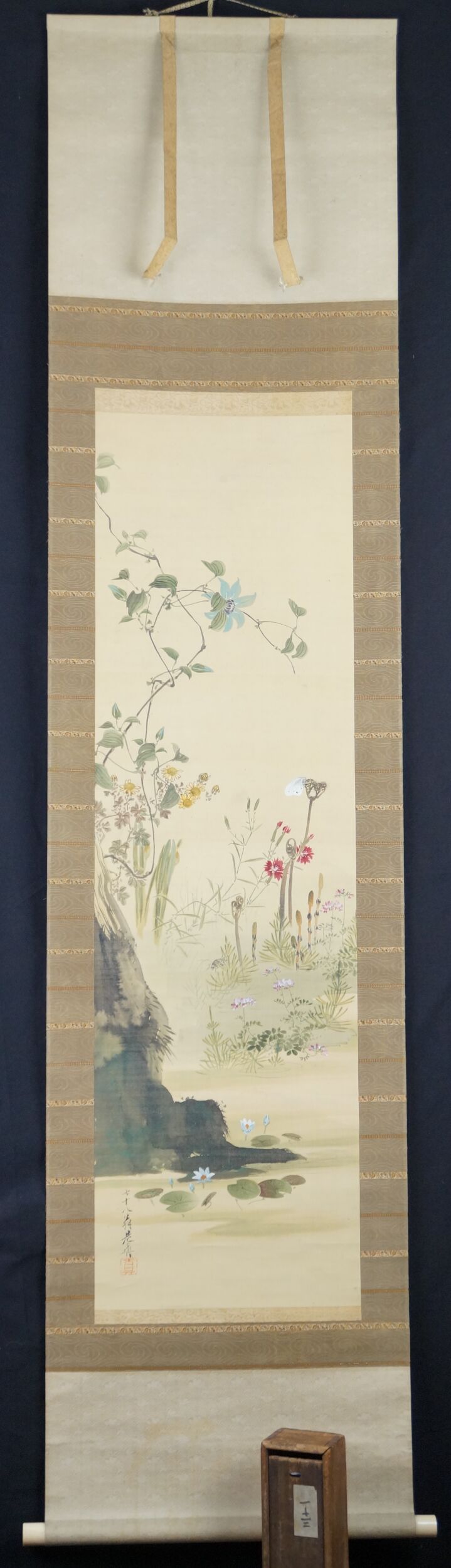
Autumn Riverside Vegetation with Butterfly
Kakemono, unique work, with box, 192 x 46 cm
€880.00


Details about the sold piece
- JikusakiWood
- Material HonshiSilk
- MotifBuddhism and Zen, Lucky Gods, Mythology
- TechniqueHand-Painted
- Wooden BoxYes
Description
With a round belly, a broad smile, and his characteristic sack slung over his shoulder, Hotei appears, one of the Seven Lucky Gods and a symbol of contentment, abundance, and generosity. At his feet, two roosters peck at the ground, while a calligraphic inscription above the scene tells of his legend, according to which he bestows his bundle full of luck upon the whole earth.
The figure is painted in warm, earthy tones on silk, with soft contours that emphasize Hotei's good-natured character and lend his face an almost mischievous expression. The inscription and seal in the upper left add further depth to the work; it dates from the Meiji period and is thus among the older pieces of its kind.
The kakemono is delivered in a wooden box (tomobako) signed by the artist, mounted with wooden rollers. A cheerful, auspicious motif, ideally suited for the living space or as a special gift, bringing good spirits into any room.