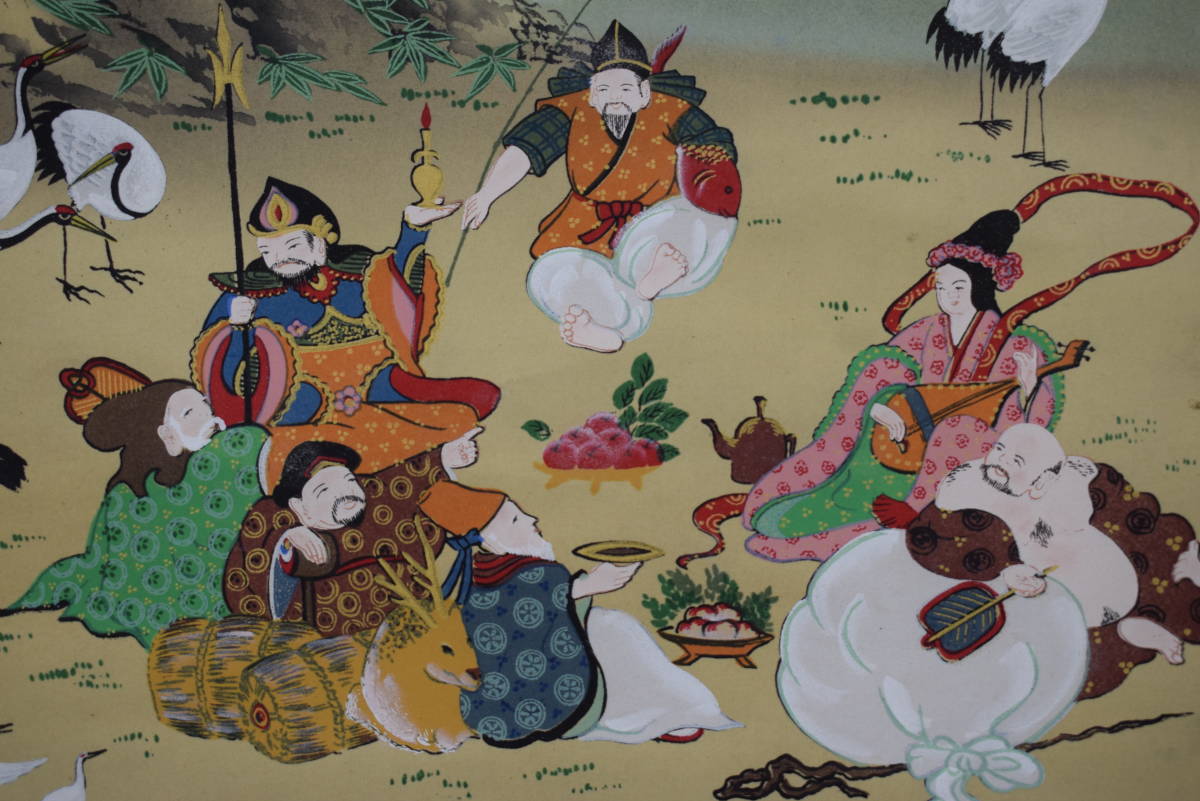
Kakemono Jurojin
One of a kind — this work exists only once.
- Period:
- Meiji (1868–1912)
- Dimensions (height x width):
- 180 x 50 cm
- Item number:
- 4312
This piece has been sold.
Sold – no longer available
This piece was a handmade one-of-a-kind work. It cannot be reordered and will never exist in this form again. The page stays online as part of our archive.
More items in category MythologyAll one-of-a-kind Japanese Painting pieces
See new one-of-a-kind pieces first
We feature every delivery from Japan in the newsletter first – before the pieces show up in search results.
You might like these pieces
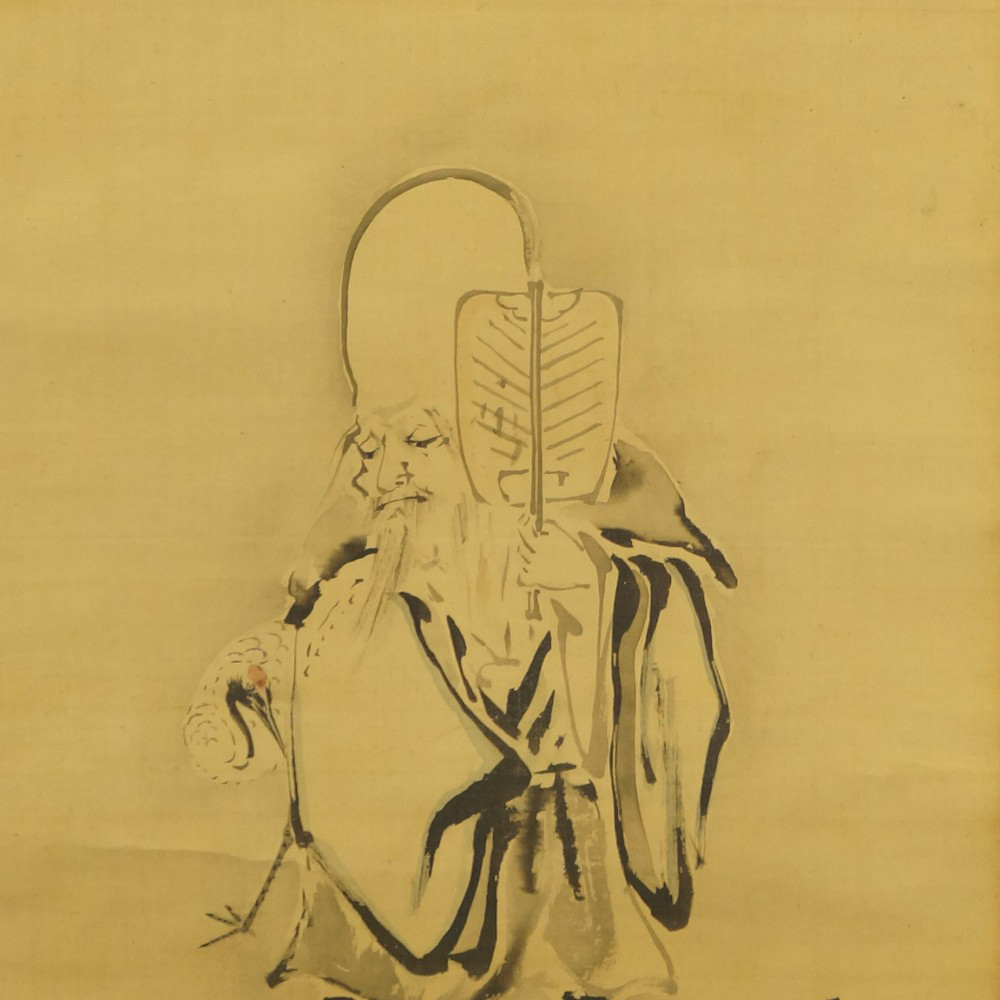
Kano Shunobu
Jurojin with Crane of Longevity
Kakemono, unique work, 183 x 52 cm
€330.00
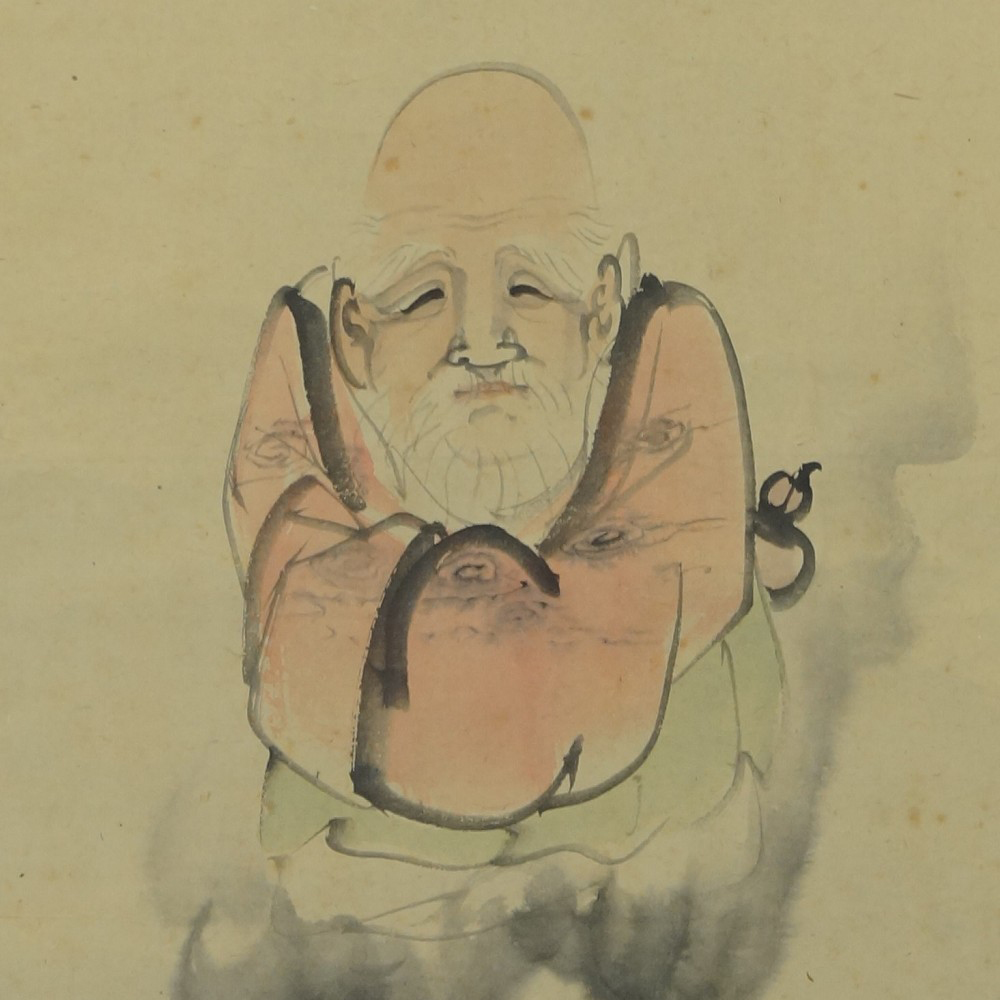
Jurojin on Clouds
Kakemono, unique work, 197 x 47 cm
€140.00
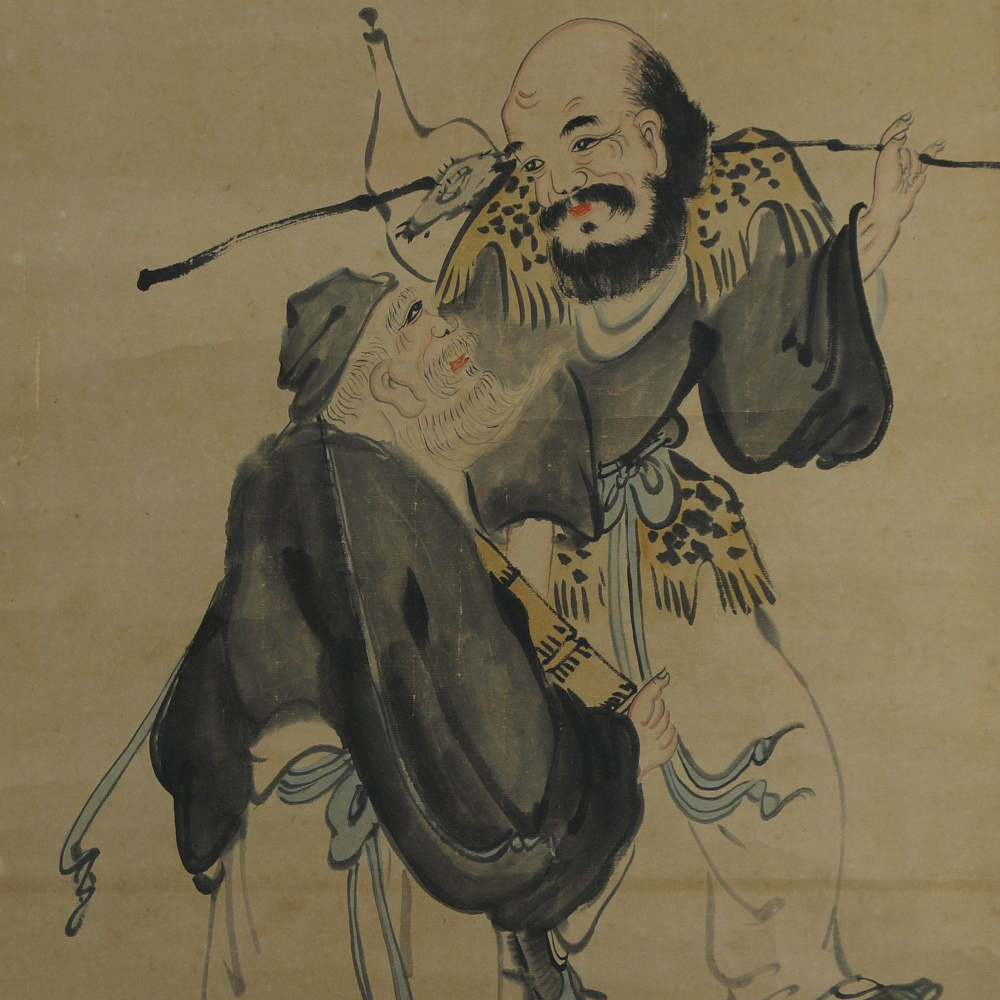
Kanzan and Jittoku
Kakemono, unique work, 159 x 60 cm
€160.00
Nap at Work
Kakemono, unique work, 160 x 47 cm
€160.00
The Drinker
Kakemono, unique work, 178 x 61 cm
€180.00
Kōsūkoku
Encounter by the River
Kakemono, unique work, with box, 136 x 97 cm
€1,290.00
Sōbun
Harmony by the Water
Kakemono, unique work, 193 x 38 cm
€330.00
The Wanderer and the Beauty
Kakemono, unique work, 195 x 60 cm
€150.00


Details about the sold piece
- Material HonshiPaper
- MotifLucky Gods, Mythology
- TechniqueHand-Painted
Description
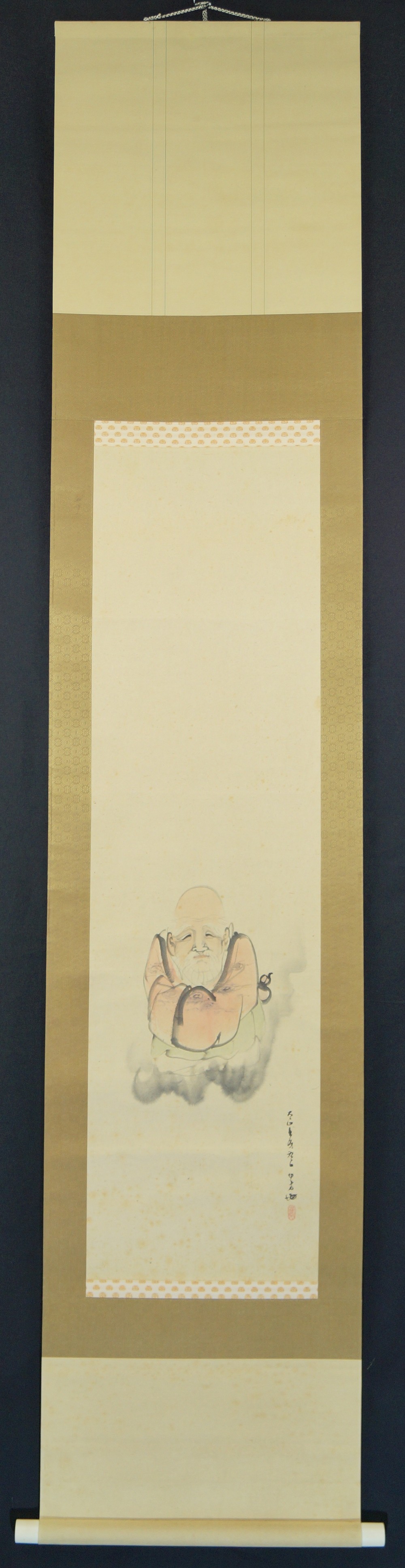
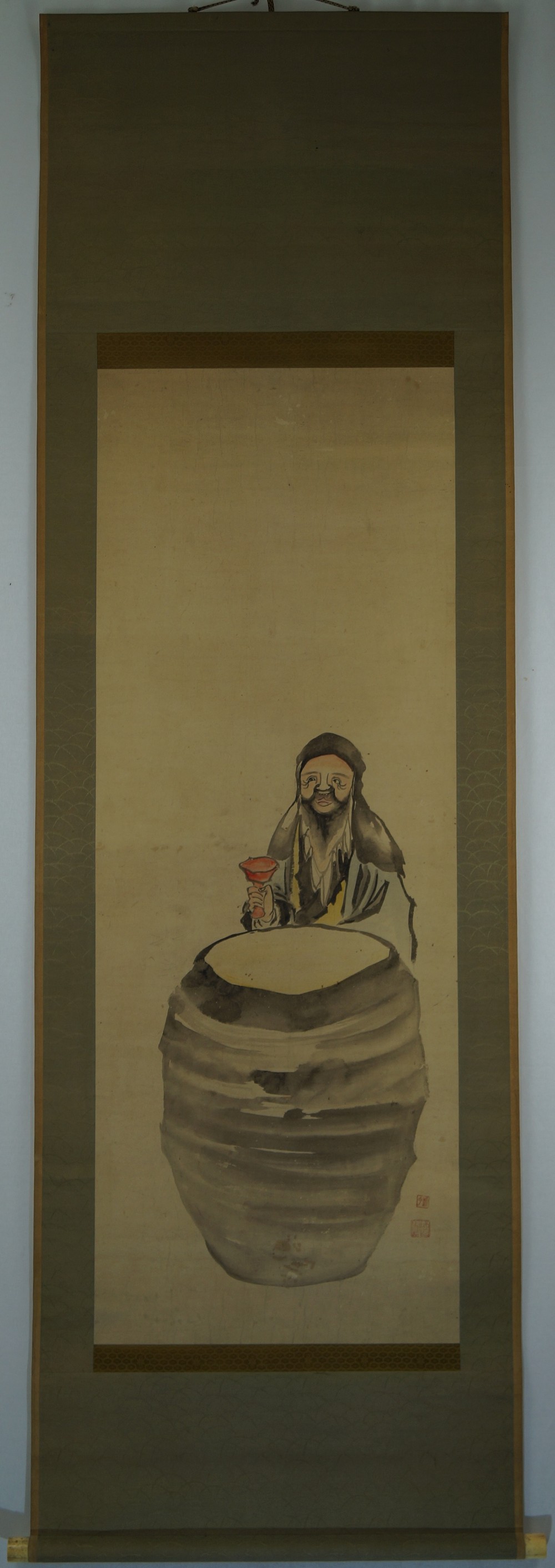
With an unusually high, elongated forehead and flowing white beard, the figure in this kakemono is unmistakably Jurojin, the god of longevity among the seven Japanese gods of fortune, who is traditionally accompanied by a deer or crane.
In loose, sketch-like ink lines, the painter has captured the robe and facial features of the sage, while a dark animal at his feet completes the composition. The restrained use of color draws the eye entirely to the characterful figure and its calm, introspective bearing. Created in the Meiji period, the picture is painted on paper.
Depictions of Jurojin were traditionally given as gifts at New Year or on milestone birthdays, to express wishes for health and a long life. This kakemono is an evocative example of classical Japanese figure painting with deeply rooted symbolism.