
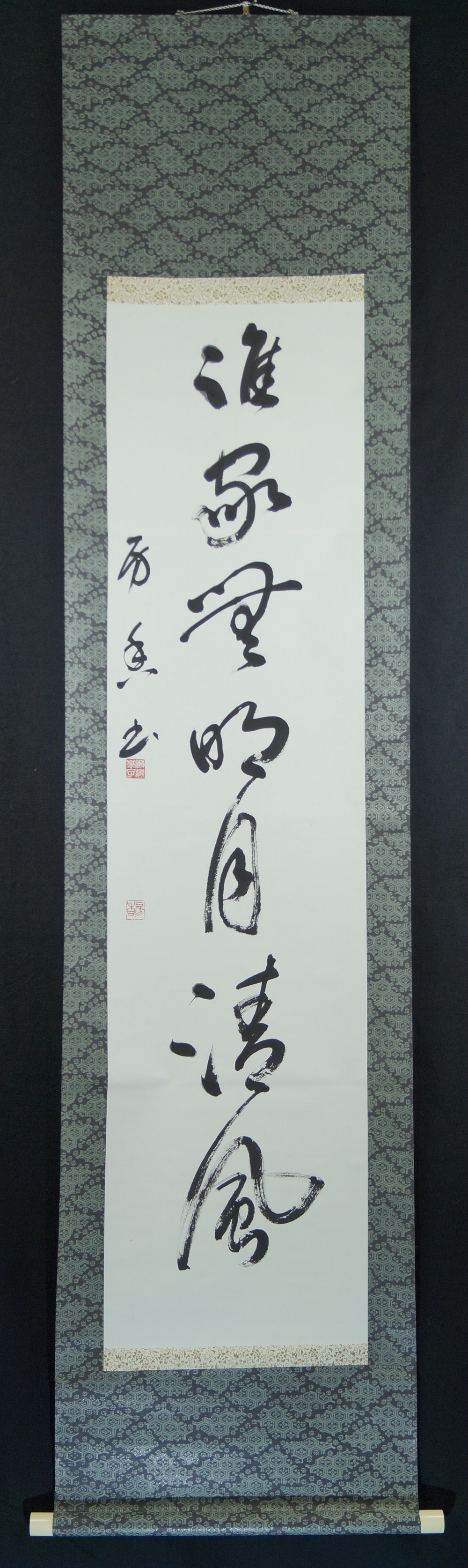
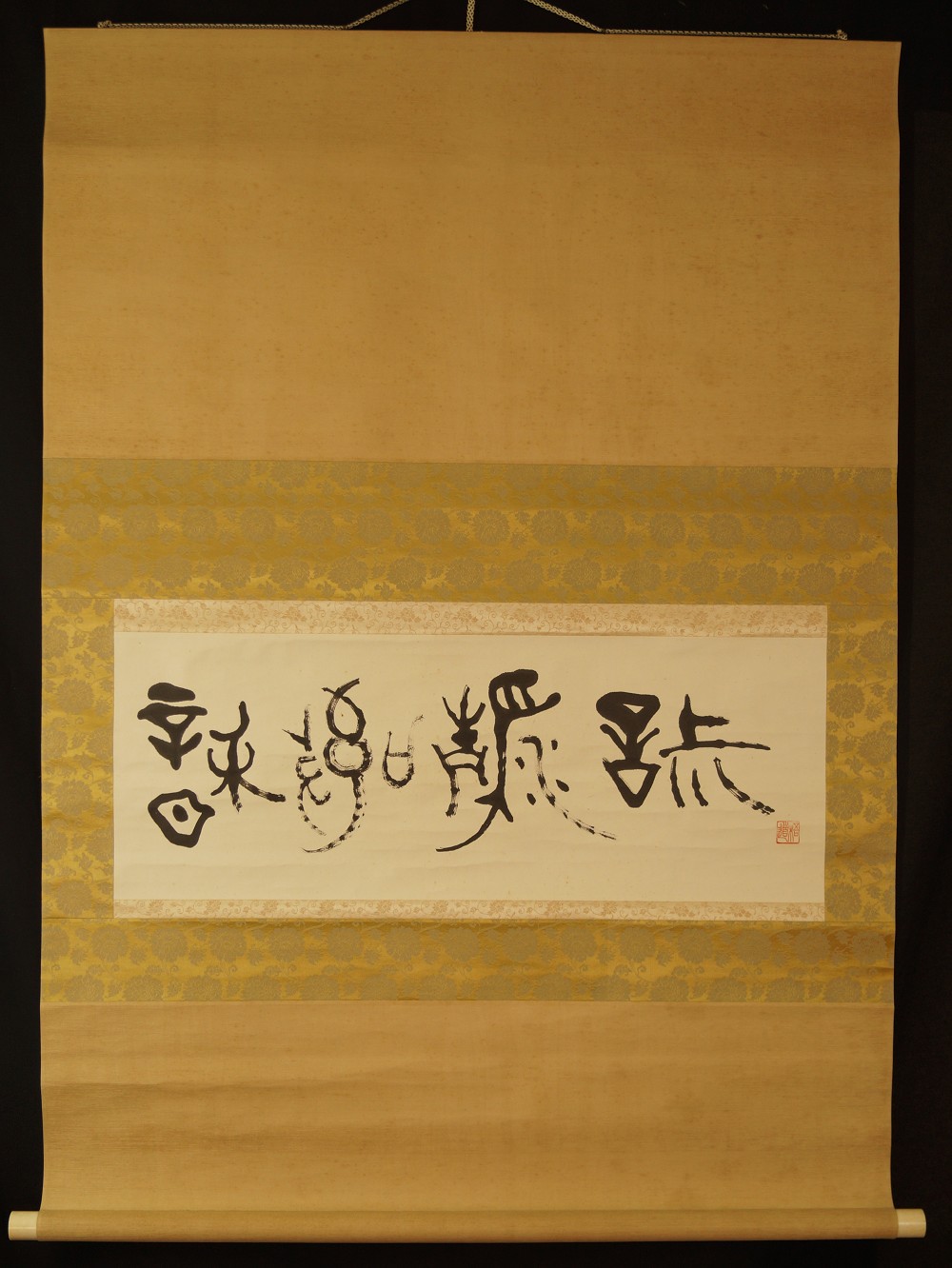
Kakemono Calligraphy "Snow, Moon, Flowers"
One of a kind — this work exists only once.
- Period:
- Meiji (1868–1912)
- Dimensions (height x width):
- 180 x 45 cm
- Item number:
- 5388
This piece has been sold.
Sold – no longer available
This piece was a handmade one-of-a-kind work. It cannot be reordered and will never exist in this form again. The page stays online as part of our archive.
More items in category CalligraphyAll one-of-a-kind Japanese Painting pieces
See new one-of-a-kind pieces first
We feature every delivery from Japan in the newsletter first – before the pieces show up in search results.
You might like these pieces
Calligraphy "Breeze in Moonlight"
Kakemono, unique work, 190 x 53 cm
€180.00
Takeda Masuyoshi
Calligraphy "Snow"
Kakemono, unique work, with box, 118 x 48 cm
€470.00
Calligraphy: Moon Over the Bay
Kakemono, unique work, 160 x 38 cm
€270.00

Calligraphy: Snowflakes in a Basket
Kakemono, unique work, 200 x 48 cm
€180.00
Kanō Tōshun Yoshinobu
Set of Two Paintings – Birds and Autumn Flowers
Kakemono, unique work, with box, 200 x 56 cm
€770.00
Kawasaki Shoko
Hibiscus Flowers and Grasshopper
Kakemono, unique work, with box, 215 x 53 cm
€380.00
Calligraphy: The Four Virtues of Chado
Kakemono, unique work, 128 x 98 cm
€640.00
Crows on Snow Landscape
Kakemono, unique work, 194 x 48 cm
€370.00


Details about the sold piece
- JikusakiWood
- Material HonshiPaper
- MotifCalligraphy
- TechniqueHand-Painted
Description
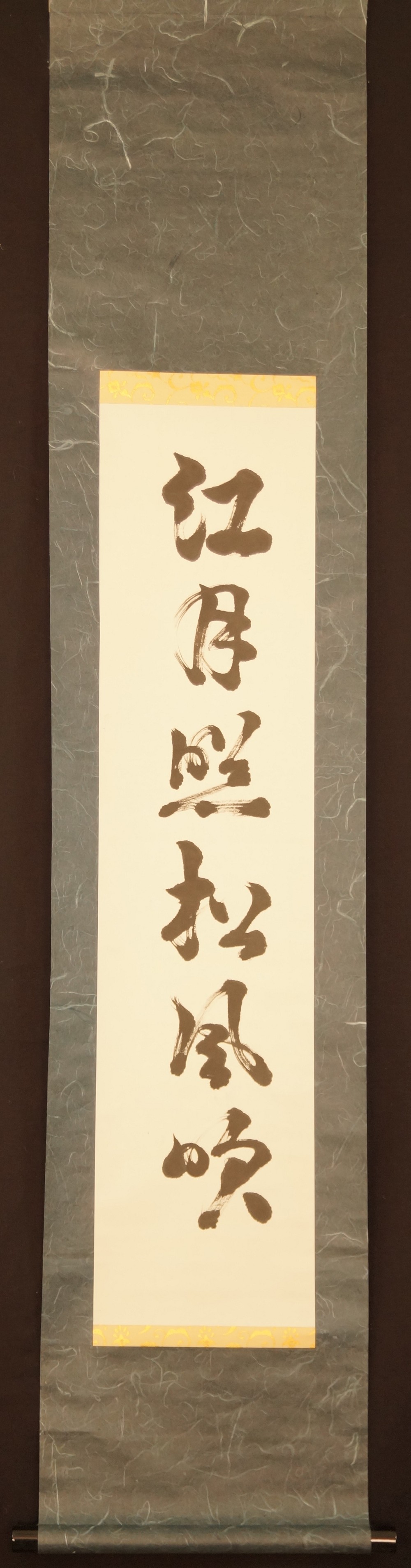
"Setsugekka" – snow, moon, and flowers: for centuries, these three words have captured the Japanese ideal of natural beauty across all seasons, and rank among the most beloved motifs of classical calligraphy. In three powerful characters, this work distills the appreciation for the changing manifestations of nature to its essence, without depicting them in detail – entirely in keeping with the tradition of calligraphy, which trusts in the power of the written word.
Painted with a sweeping, dynamic brushstroke in dark ink on paper, the calligraphy reveals the confident hand of a practiced writer, whose strokes are set now broad and forceful, now finely tapering. Signature and red seals beneath the characters attest to the authorship; the work dates from the Meiji period and thus already carries over a century of history.
Mounted on a shimmering silk border with a floral pattern and fitted with wooden rollers, the hanging scroll appears both refined and understated. An expressive addition to the tokonoma or tea room, keeping alive the appreciation of snow, moon, and blossoms throughout the year.

