
Kakemono Calligraphy for the Tea Ceremony
One of a kind — this work exists only once.
- Period:
- Shôwa (1926–1989)
- Dimensions (height x width):
- 186 x 40 cm
- Item number:
- 3706
This piece has been sold.
Sold – no longer available
This piece was a handmade one-of-a-kind work. It cannot be reordered and will never exist in this form again. The page stays online as part of our archive.
More items in category CalligraphyAll one-of-a-kind Japanese Painting pieces
See new one-of-a-kind pieces first
We feature every delivery from Japan in the newsletter first – before the pieces show up in search results.
You might like these pieces
Calligraphy: The Four Virtues of Chado
Kakemono, unique work, 128 x 98 cm
€640.00
Calligraphy "Long Life"
Kakemono, unique work, 105 x 54 cm
€120.00
Calligraphy Print "Do Justice"
Kakemono, Print, 202 x 52 cm
€60.00
Calligraphy "Clouds in Summer, Hidden Mountain Peaks"
Kakemono, unique work, with box, 192 x 51 cm
€180.00
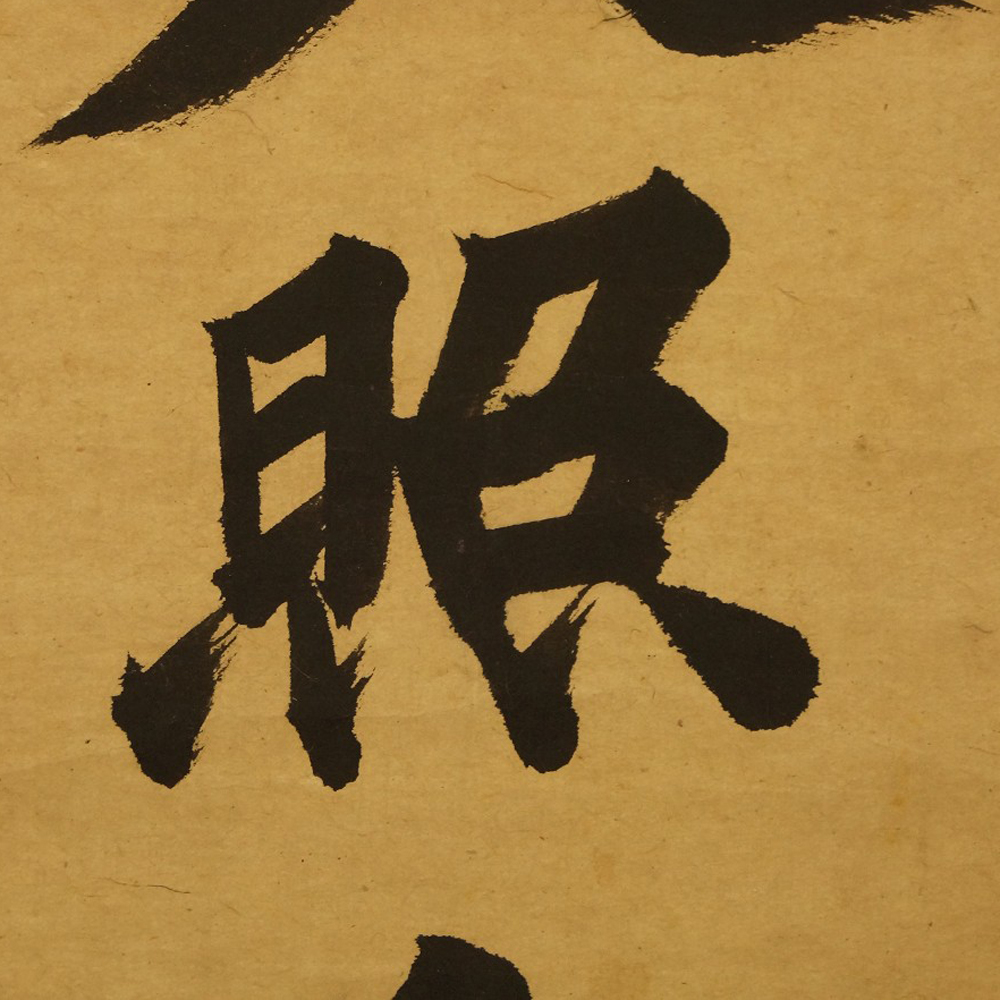
Calligraphy "Amaterasu"
Kakemono, unique work, with box, 165 x 39 cm
€140.00
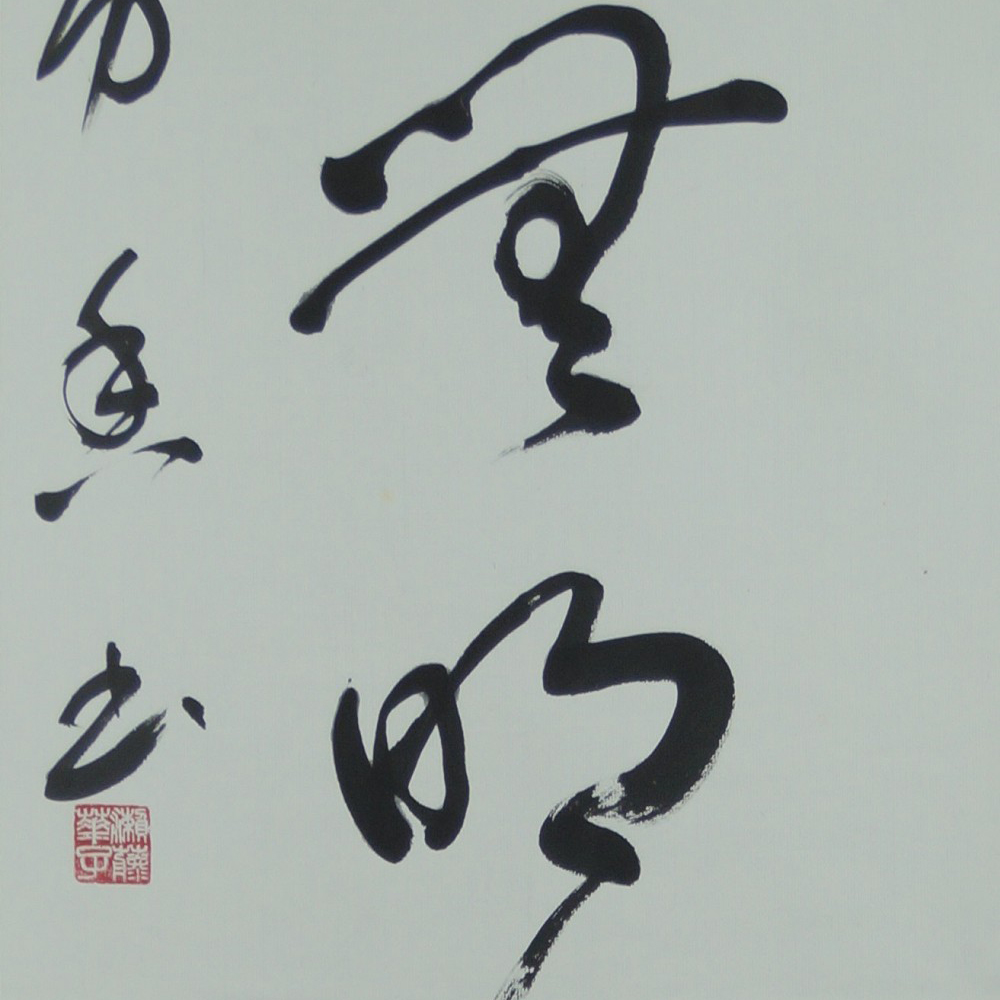
Calligraphy "Breeze in Moonlight"
Kakemono, unique work, 190 x 53 cm
€180.00
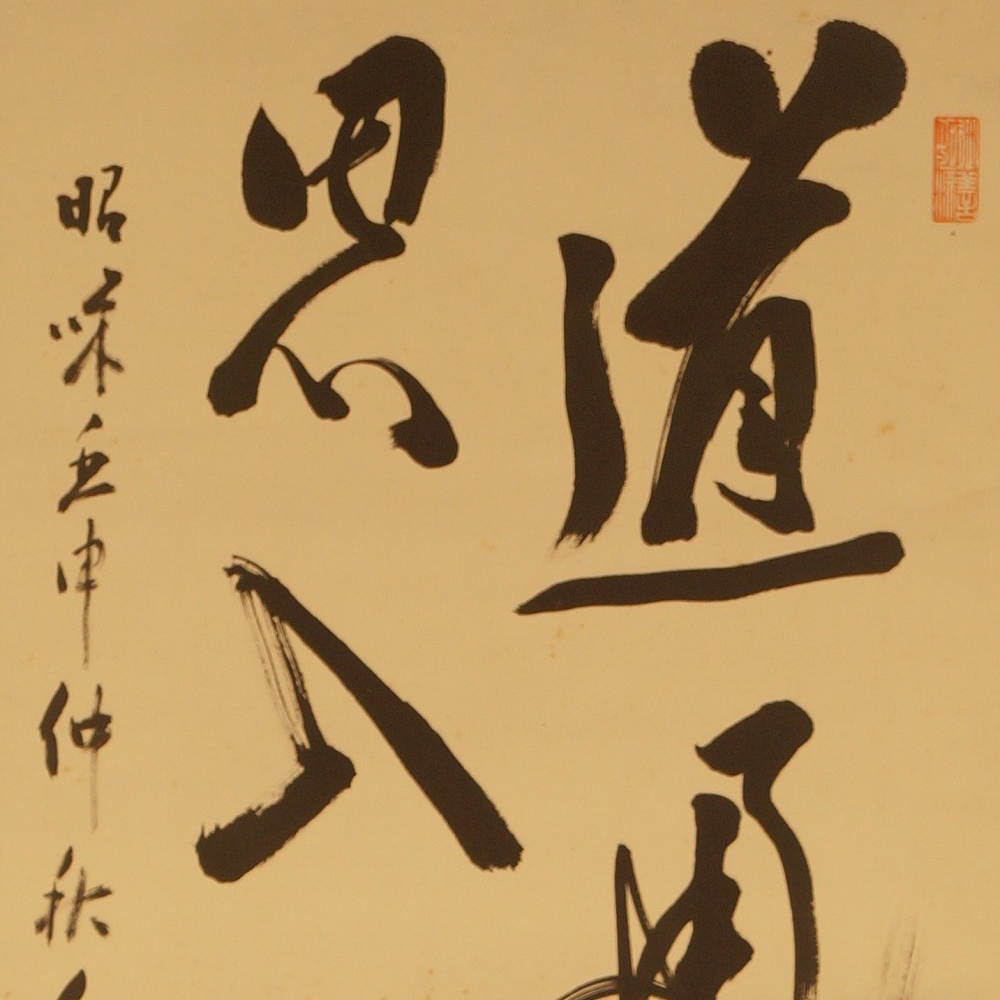
Calligraphy: Wind and Clouds
Kakemono, unique work, 190 x 50 cm
€220.00
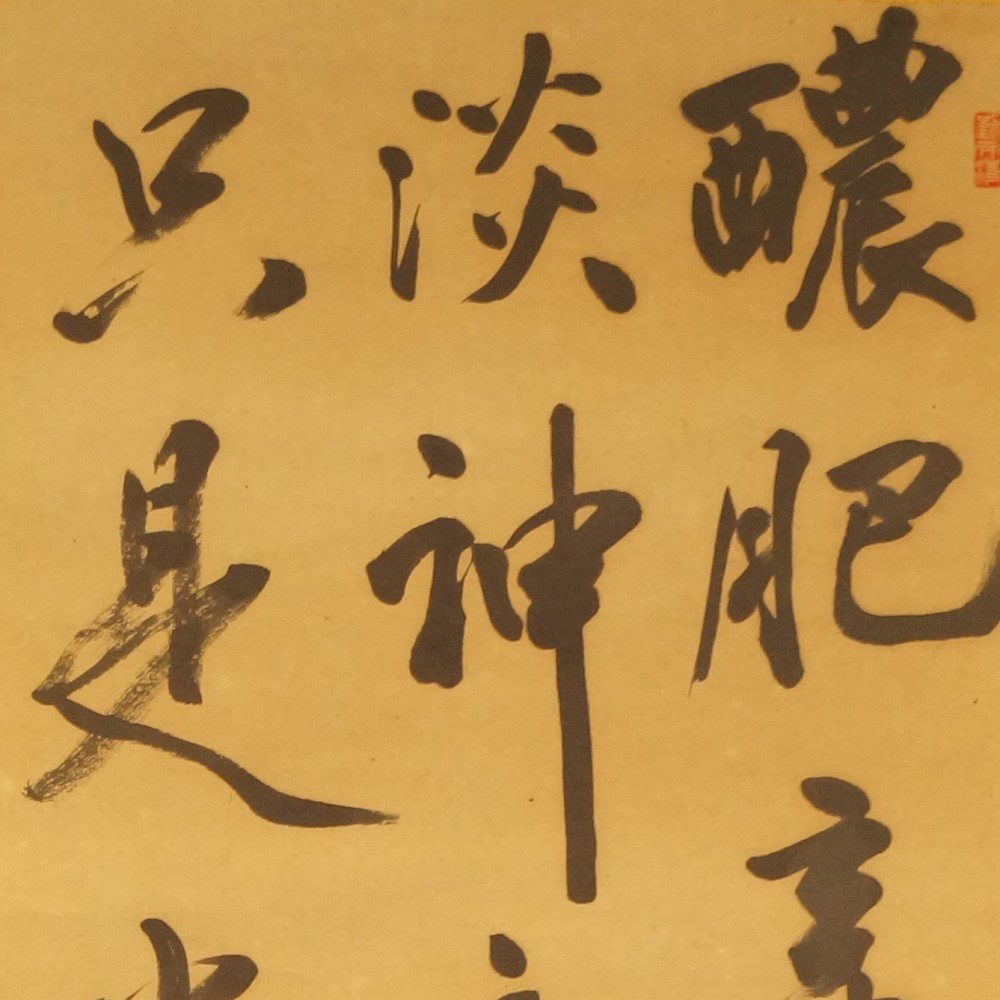
Calligraphy: True Sustenance
Kakemono, unique work, 205 x 58 cm
€260.00

Details about the sold piece
- JikusakiWood
- Material HonshiPaper
- MotifCalligraphy
- TechniqueHand-Painted
Description
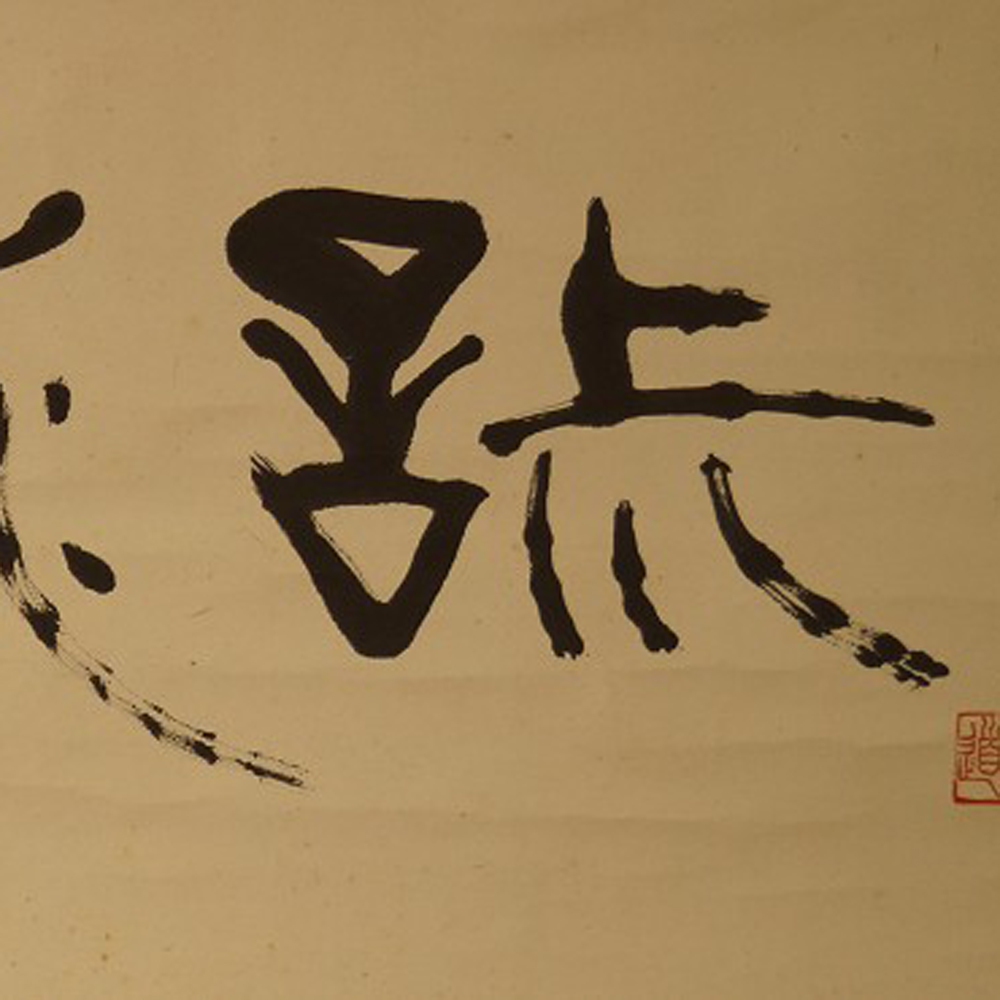
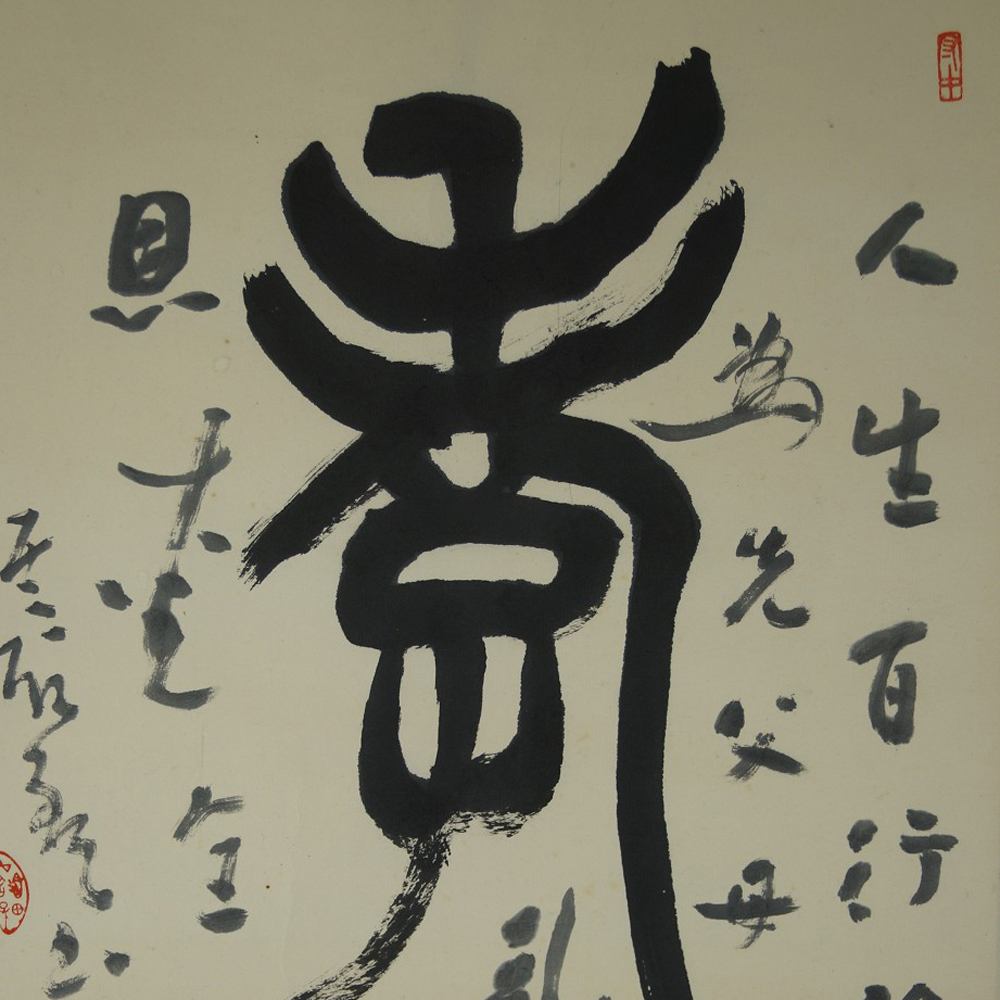
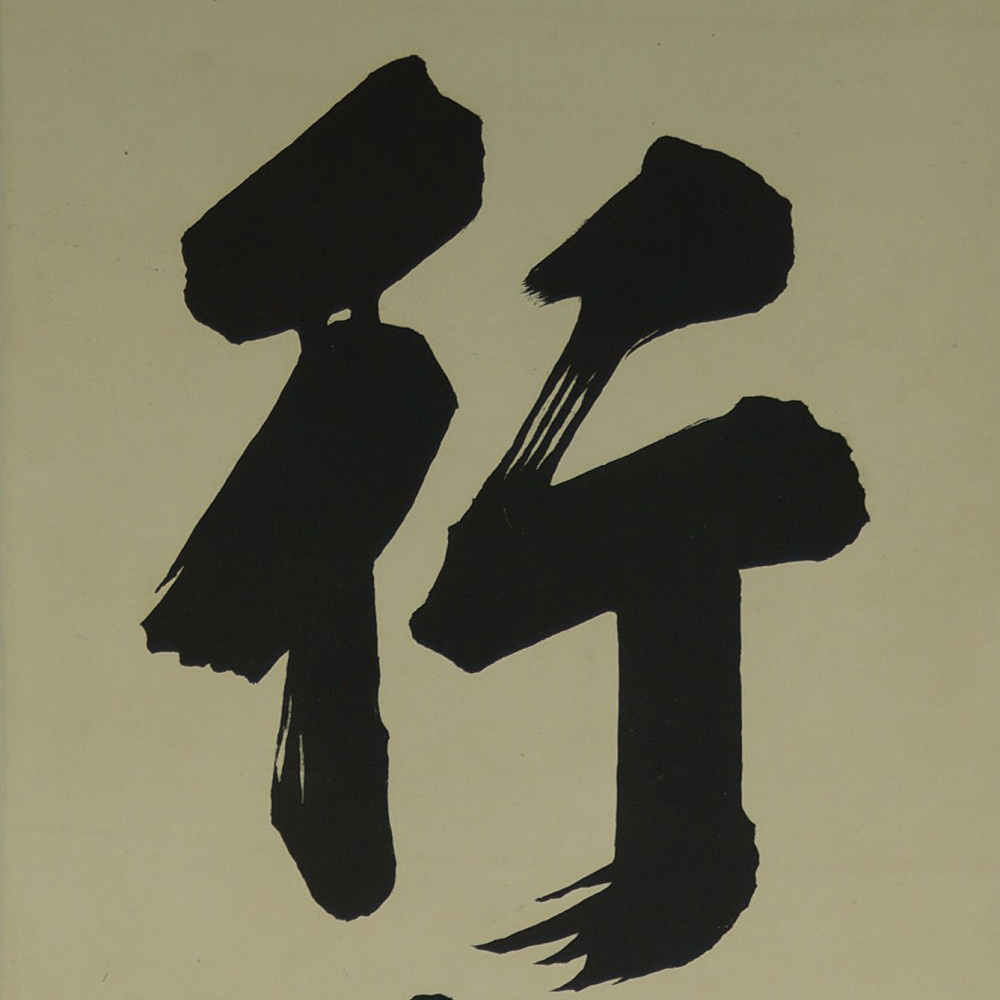
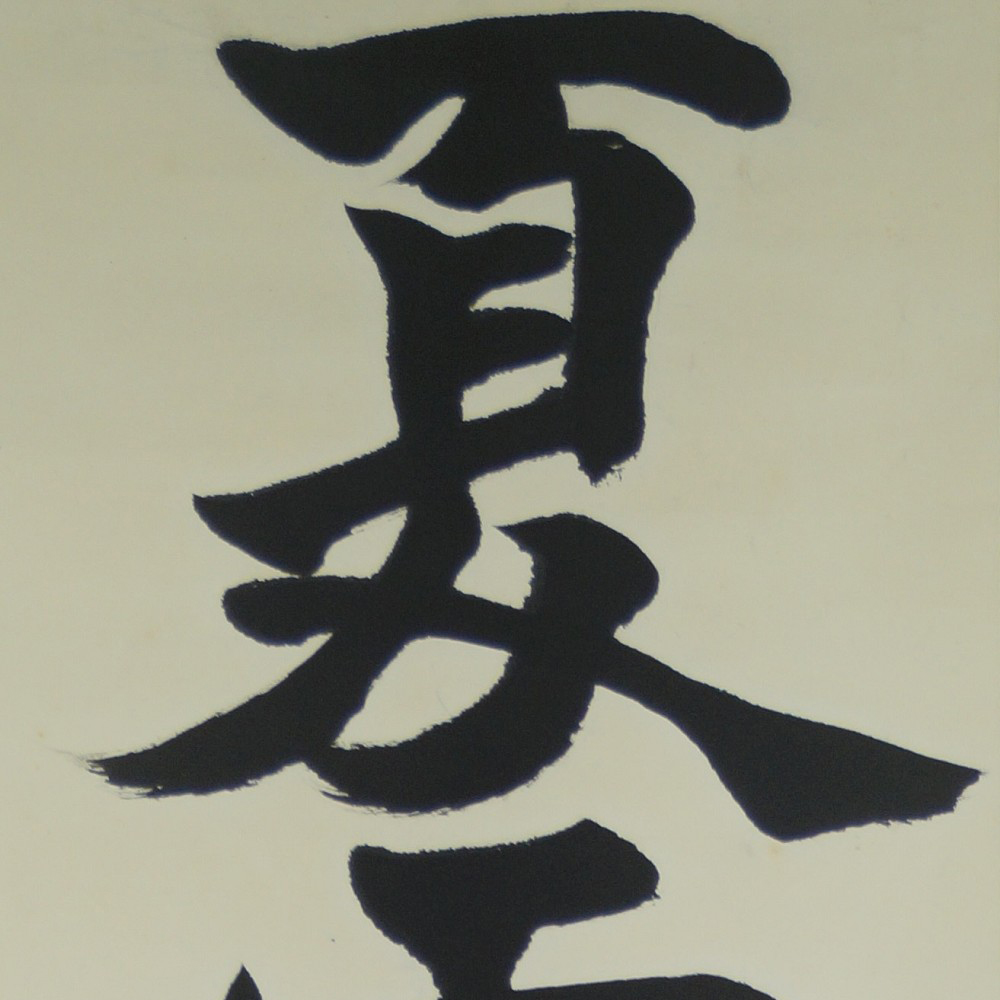
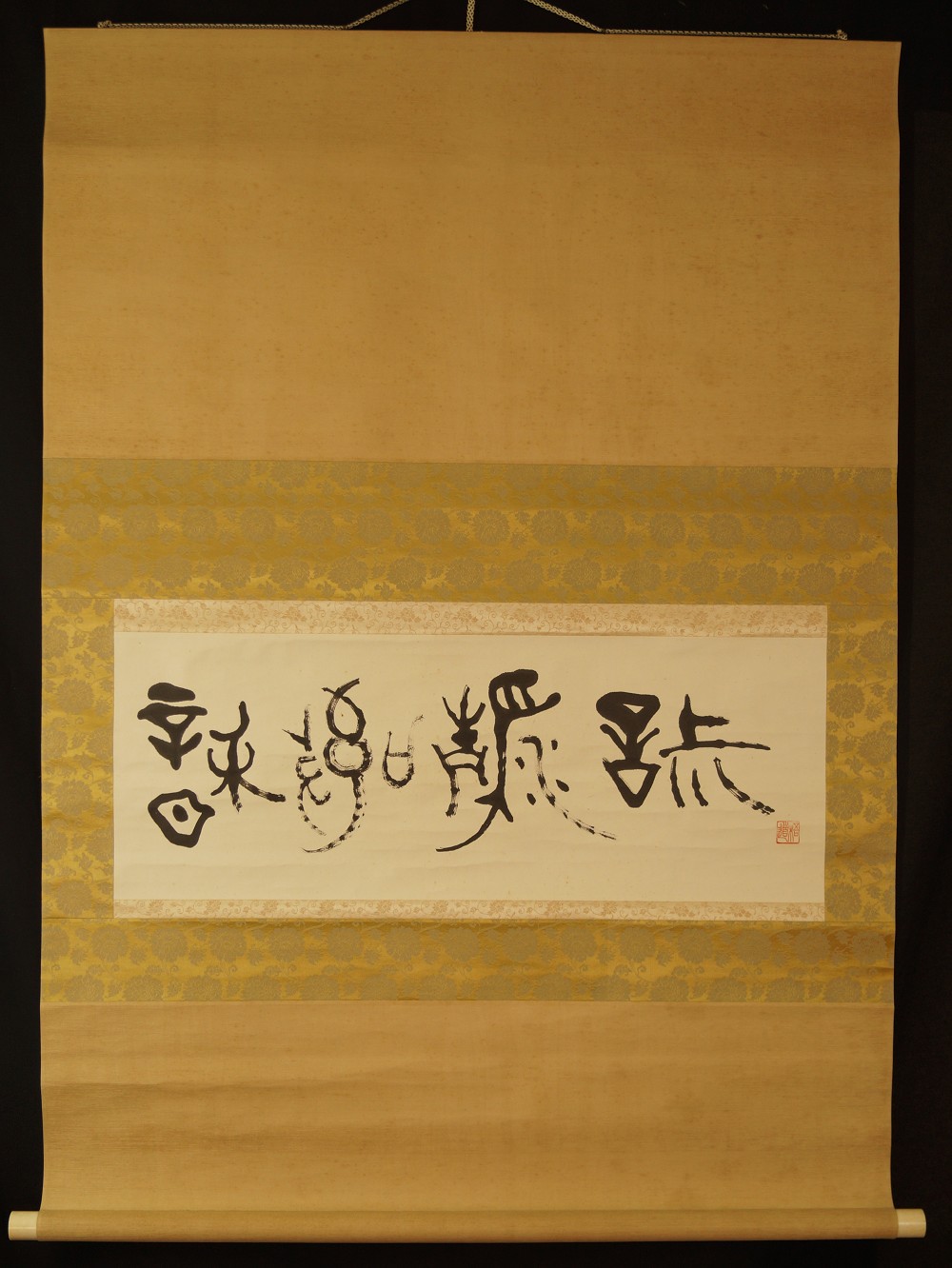
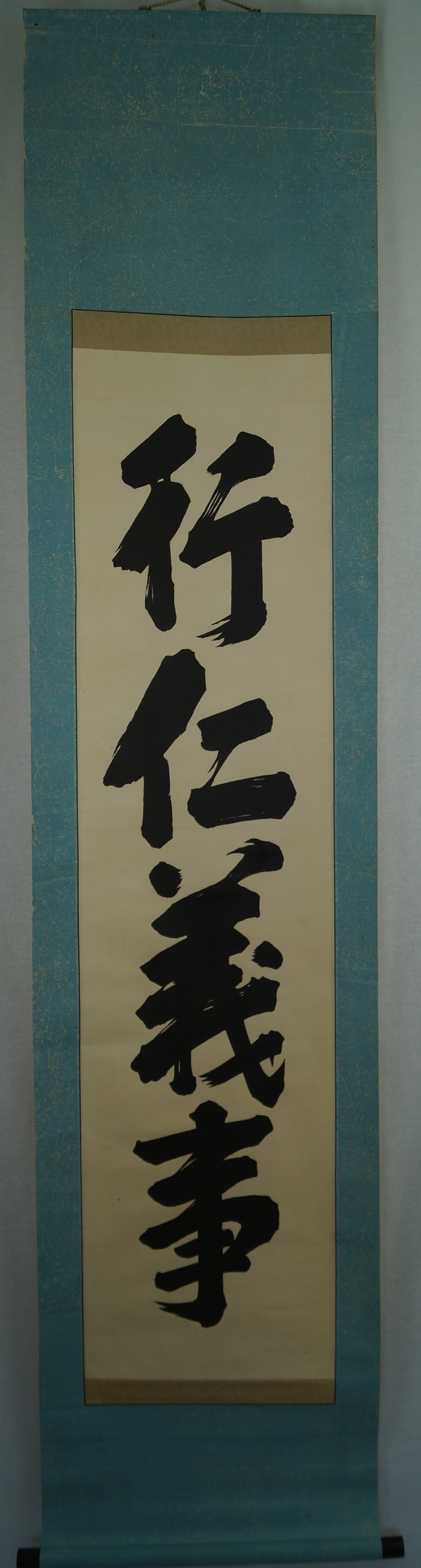
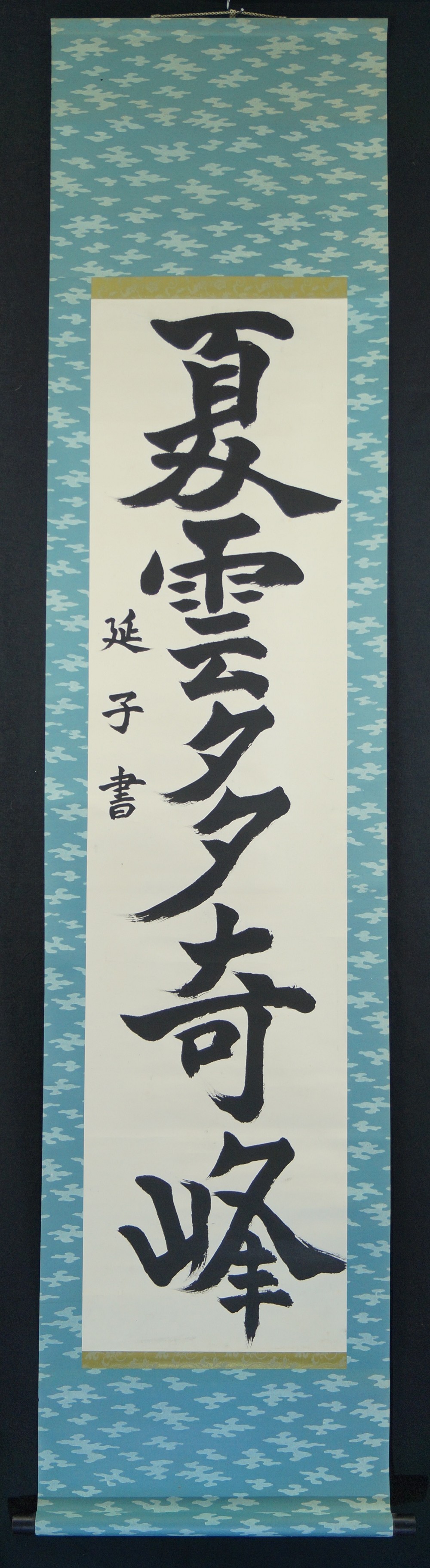
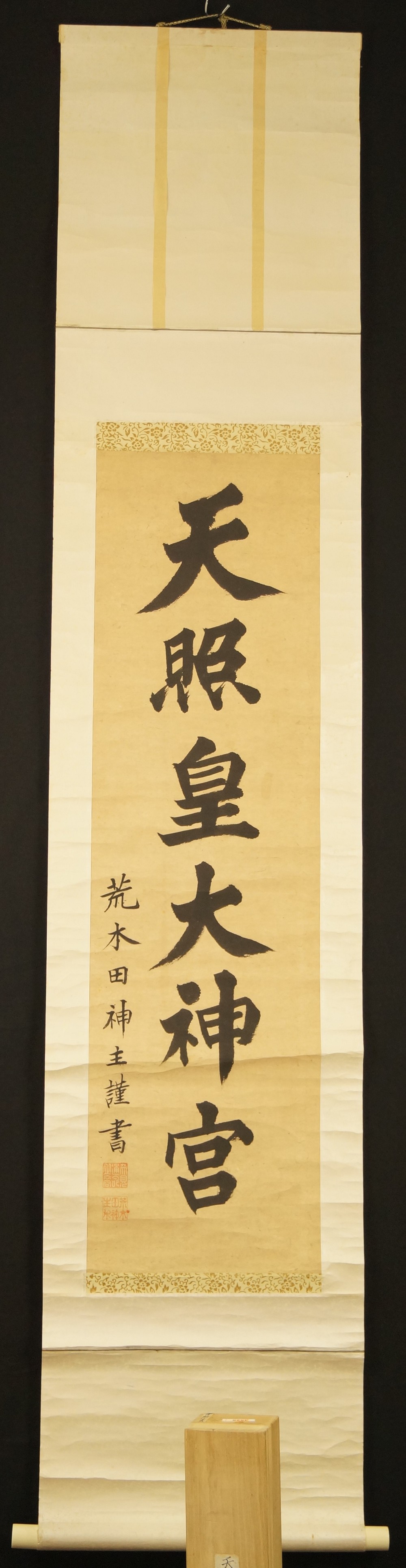
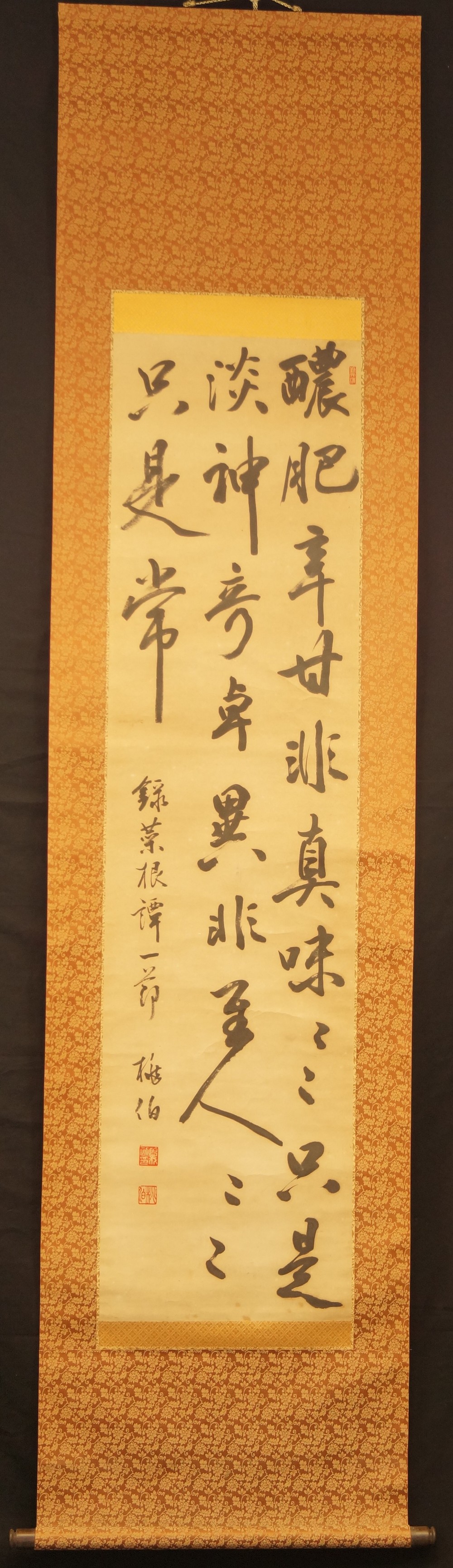
Wa, Kei, Sei, Jaku – harmony, respect, purity, and tranquility: these four characters form the central motif of the Japanese tea ceremony and were rendered here in a bold, flowing hand on light-colored paper. The brush moves with visible momentum from character to character, individual strokes flowing into one another and lending the entire composition a remarkable vitality.
The slightly frayed line endings and the varying ink intensity reveal the practiced hand of a calligrapher who has evidently written these four terms often, without losing any spontaneous force in the process. A small signature and two red seals at the left edge of the work complete the piece. Scattered fine traces of age in the paper underscore the authentic, time-worn character of this piece.
The calligraphy on paper is framed by a warm, gold-colored silk border with a delicate vine pattern and dates to the Shôwa period. As a maxim for the tea ceremony, this text is among the best-known formulas of Japanese aesthetics and is thus particularly suited to collectors interested in the quiet, focused world of chanoyu.

