Katsushika Hokusai (葛飾北斎): Draughtsman, Painter, Woodblock Master
Katsushika Hokusai (葛飾北斎, 1760–1849) was born in the Honjo district of Edo, today's Tokyo, and died in 1849 in the Asakusa quarter of the same city. In some seventy years of work he designed colour woodblock prints and Surimono, illustrated books and painted with the brush – an oeuvre whose scope and diversity have few parallels in Japanese art.
From Shunrō to Gakyō Rōjin Manji
In 1778 he entered the workshop of the woodblock master Katsukawa Shunshō; his first actor prints appeared under the name Shunrō the very next year. Around 1794 he broke away from the Katsukawa school. Over the course of his life he used more than thirty artist names, including Sōri, Hokusai, Taito, Iitsu and finally Gakyō Rōjin Manji, the “old man mad about painting”. His daughter Ōi worked alongside him as a painter.
Fuji, the Sketchbooks and the Waterfalls
Hokusai became world-famous through the woodblock series “36 Views of Mount Fuji” from the early 1830s, which includes the Great Wave off Kanagawa. From 1814 the volumes of the “Hokusai Manga” appeared, a treasure trove of people, animals, plants and everyday scenes. Series such as the waterfalls of the provinces show the same delight in close observation. His visual language had an impact far beyond Japan and influenced European painters such as Vincent van Gogh and Paul Gauguin.
The Late Years: The Brush Instead of the Woodblock
Paintings by hand, Nikuhitsu-ga in Japanese, predominate in his late work. In the 1840s he stayed in Obuse in Shinano Province and created ceiling paintings there; even in the year of his death he painted a tiger in the snow. His wish has come down to us that he might be granted five more years so that he could become a true painter.
Hokusai's Motifs in the Hanging Scroll
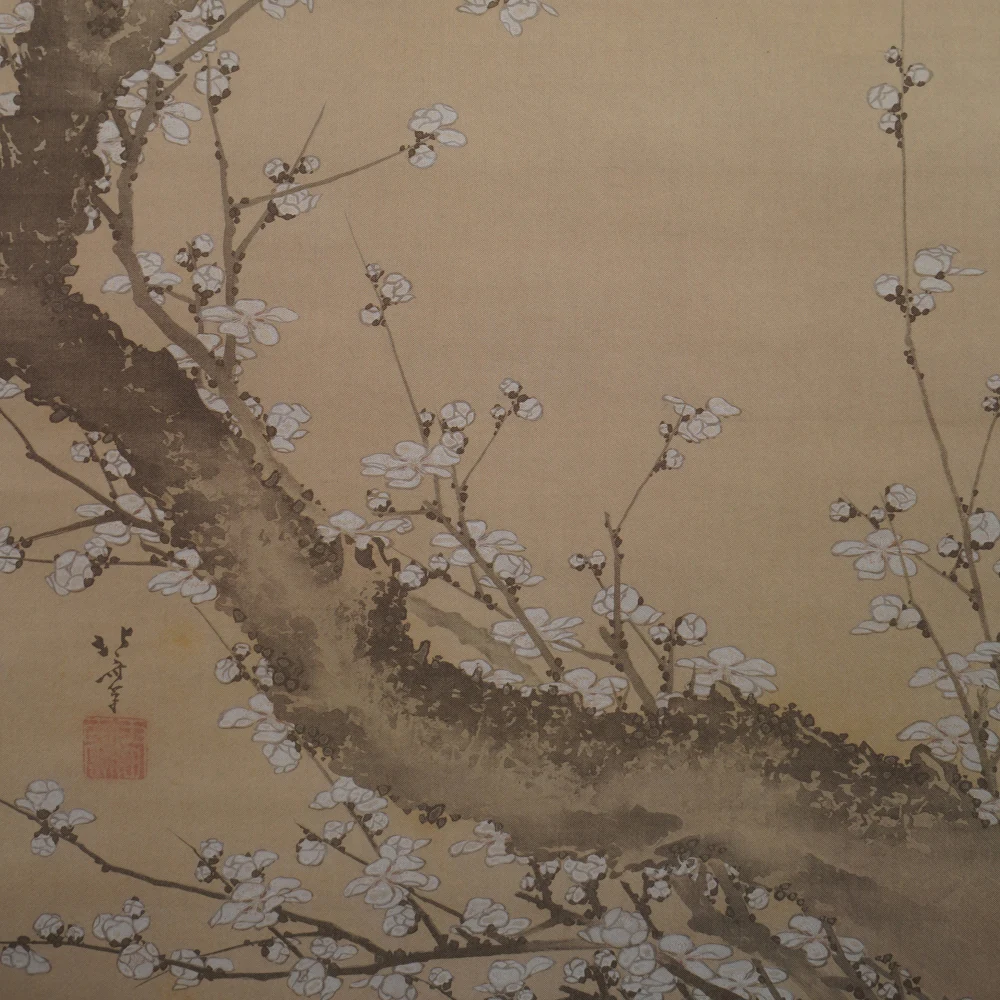
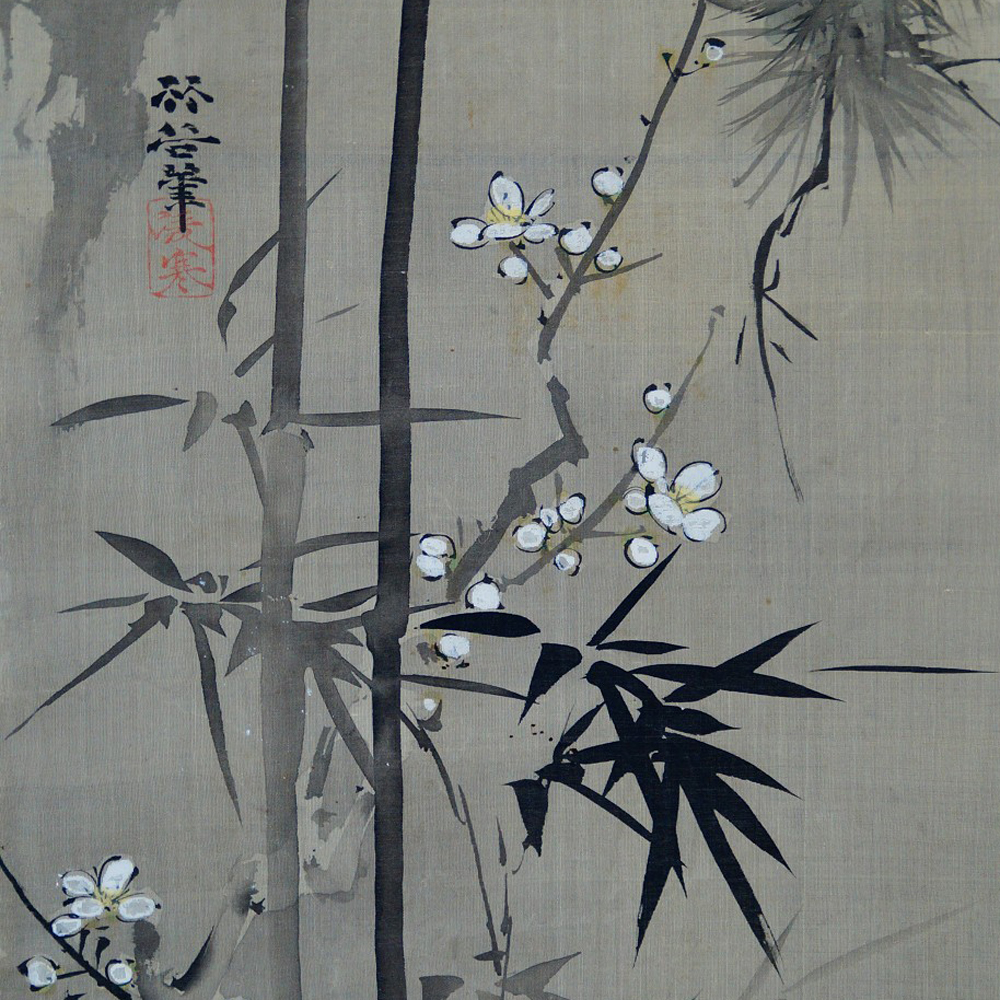
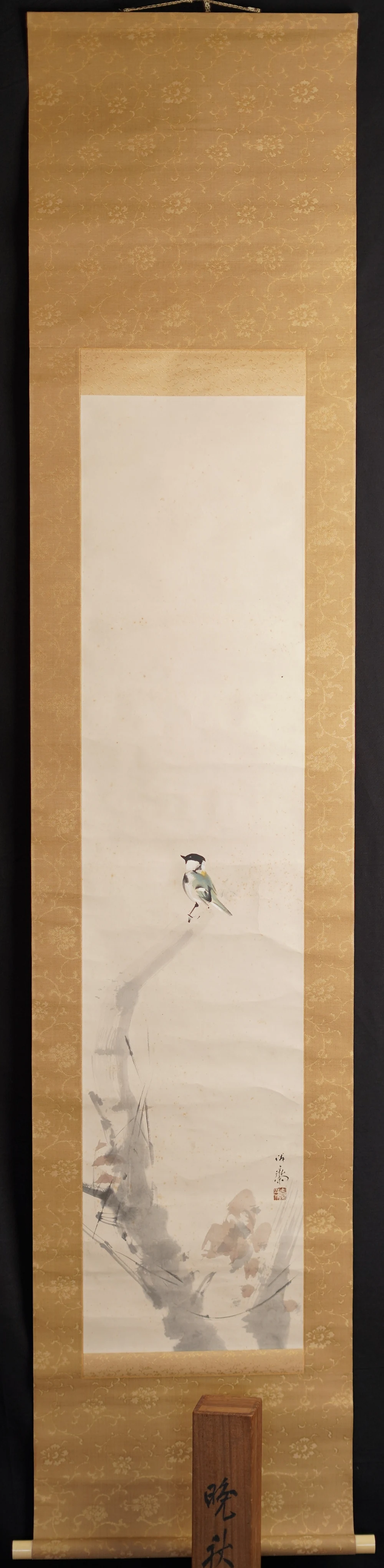
Blossoming plum trees are among the motifs Hokusai depicted in his Surimono, finely printed sheets with poems – the Metropolitan Museum of Art, for example, holds an old plum tree in blossom from around 1800. Because paintings by Hokusai's own hand are rare and precious, collectors today encounter his pictorial ideas mainly as reprints in hanging scroll format. Such a print makes no claim to the master's hand, but brings his composition into the Tokonoma.