Tokuda Rinsai (徳田隣斎): A Nihonga Painter from Kyōto
Tokuda Rinsai (徳田隣斎) was a Japanese painter of the Nihonga movement who was born in Kyōto and worked there. Kyōto City University of Arts gives 1880 as his year of birth, the National Museum of Modern Art, Tokyo, gives 1882; he died in 1947. His work spans the late Meiji period through to the Shōwa period.
With Maekawa Bunrei and Takeuchi Seihō
He received his first training from Maekawa Bunrei and then became a pupil of Takeuchi Seihō, the defining figure of Kyōto painting around 1900. Rinsai belonged to Seihō's painting school Chikujōkai, which produced many painters who shaped the Kyōto art world of the Taishō and Shōwa periods.
At the State Exhibitions
A work of his was accepted as early as the first state art exhibition, the Bunten, in 1907; in 1908 he received a third-class prize at the second Bunten, followed by honourable mentions in 1910 and 1915. From 1931 he exhibited at the Teiten, the successor to the Bunten, as a recommended artist, and from 1937 to 1943 at the Shin-Bunten without jury review. The National Museum of Modern Art, Tokyo, holds his painting 嶽麓春色, Spring at the Foot of the Mountain, from 1942.
Teacher at Kyōto's Art Schools
Alongside his own work, Rinsai taught: from 1910 he lectured at the Municipal Special School of Painting and at the School of Arts and Crafts in Kyōto; in 1922 he became a permanent teacher at the School of Arts and Crafts and remained so until 1930. He was thus one of the painters who not only practised the Kyōto tradition but also passed it on to the next generation.
Bird and Autumn Leaves
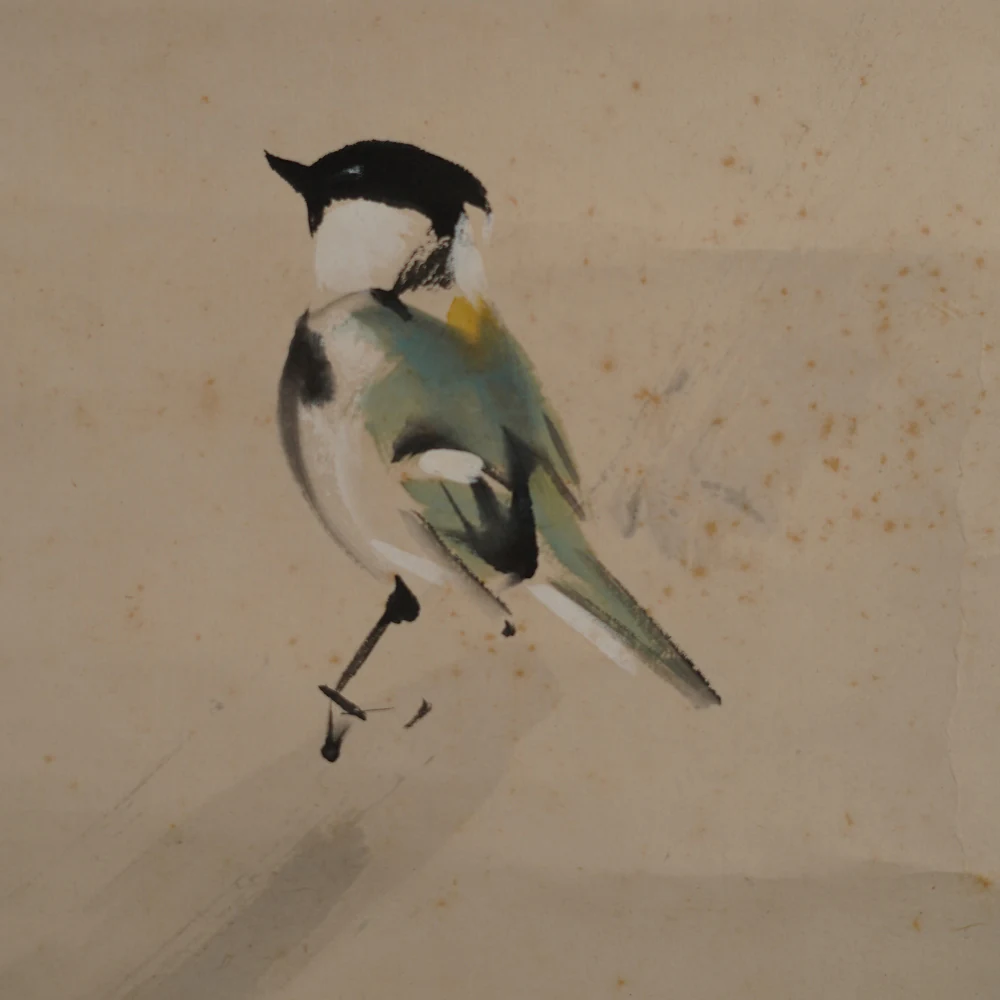
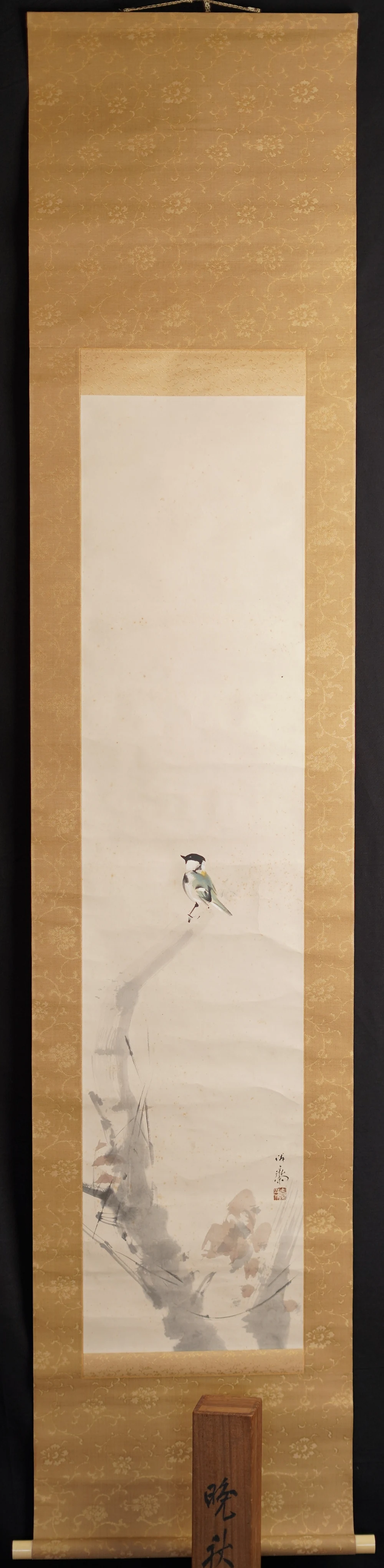
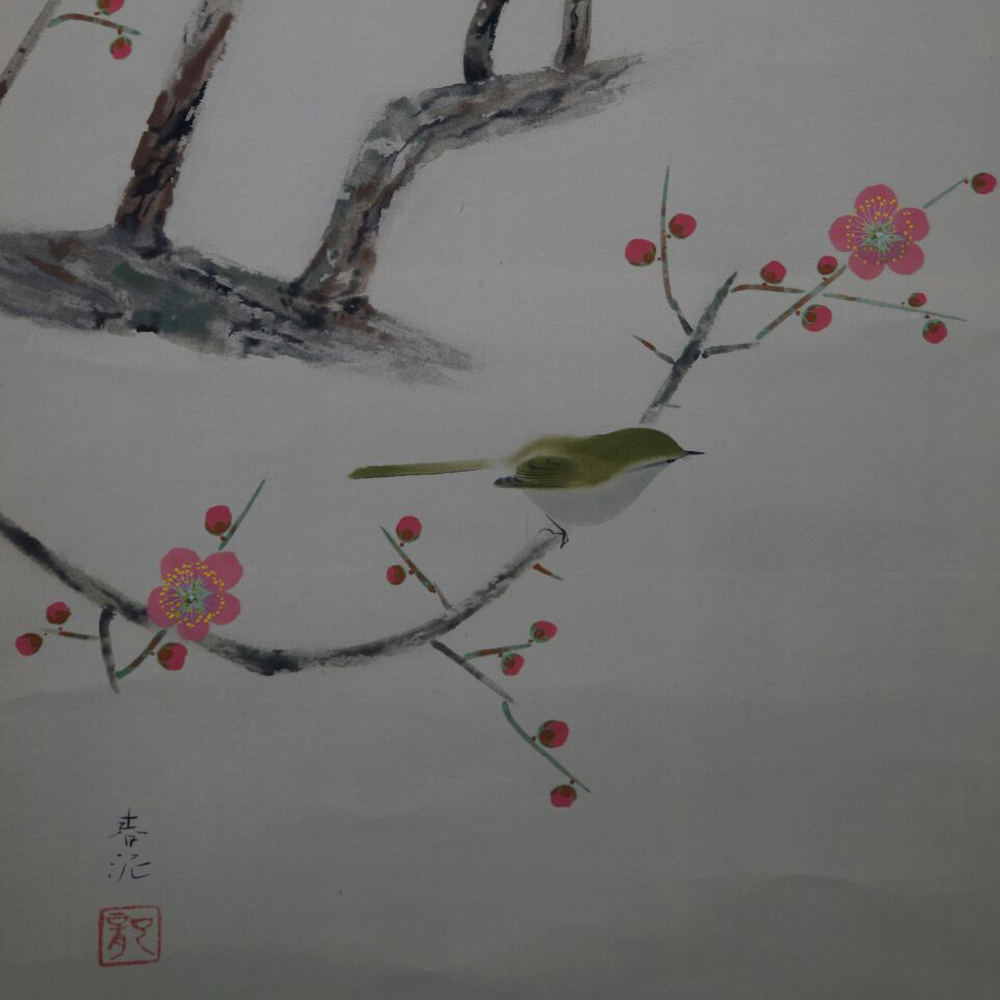
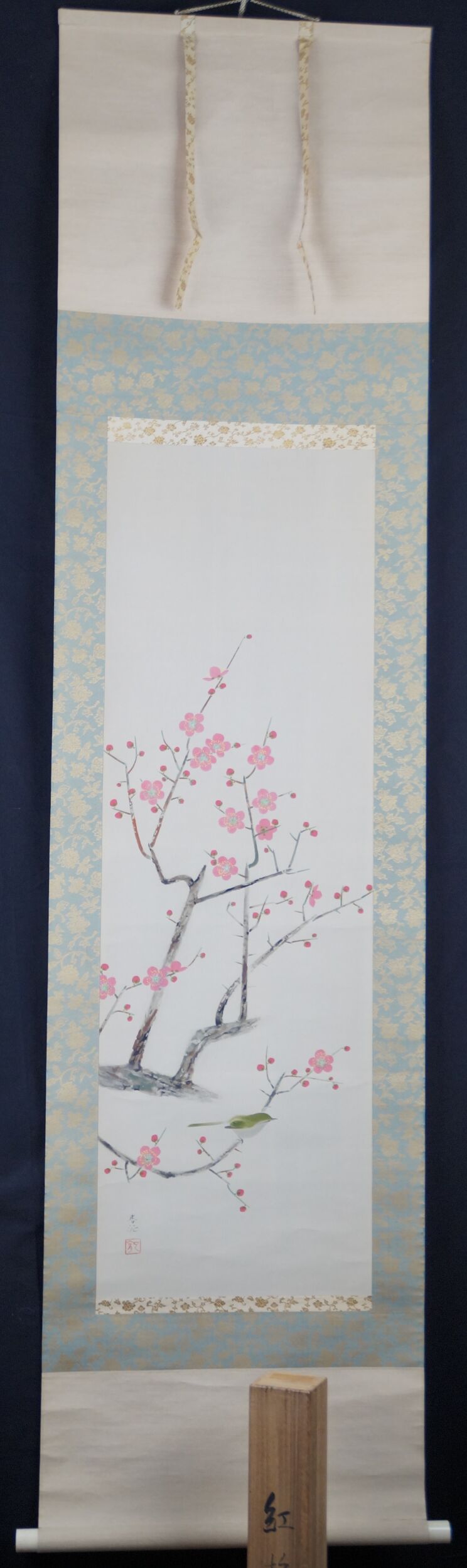
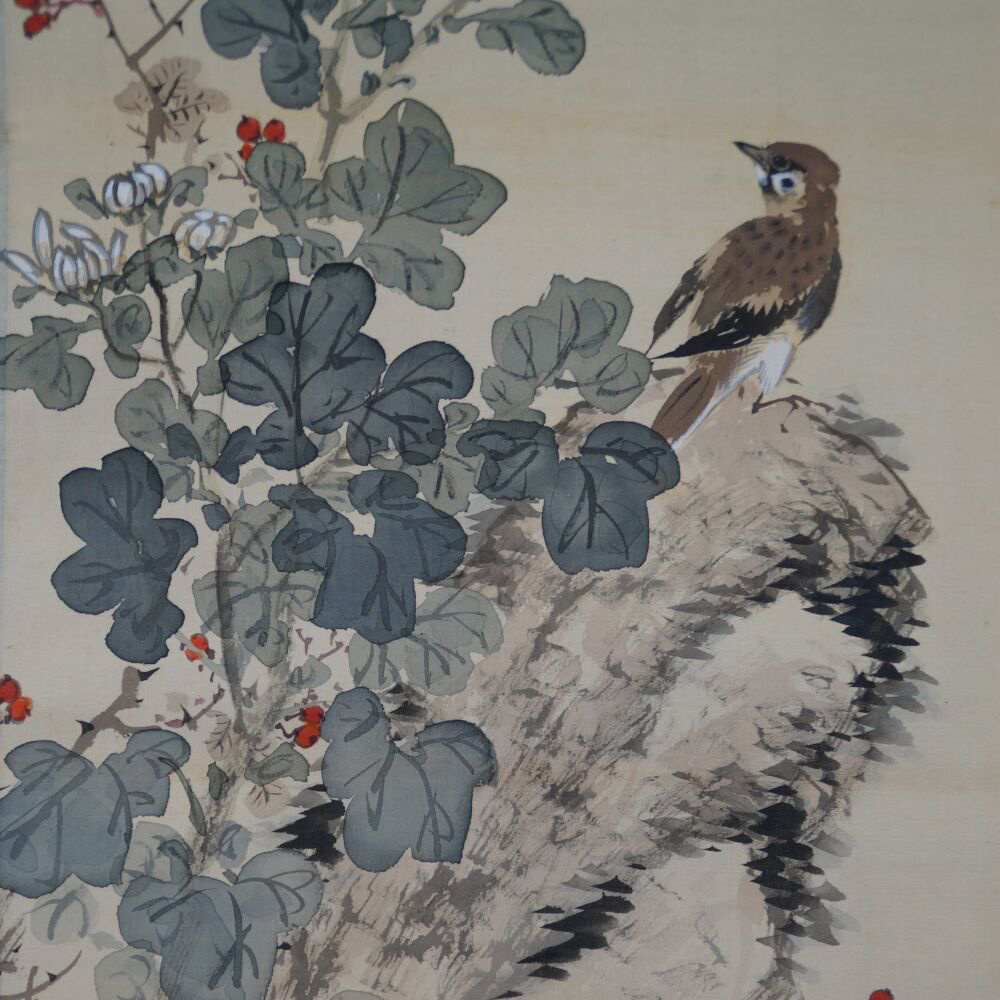
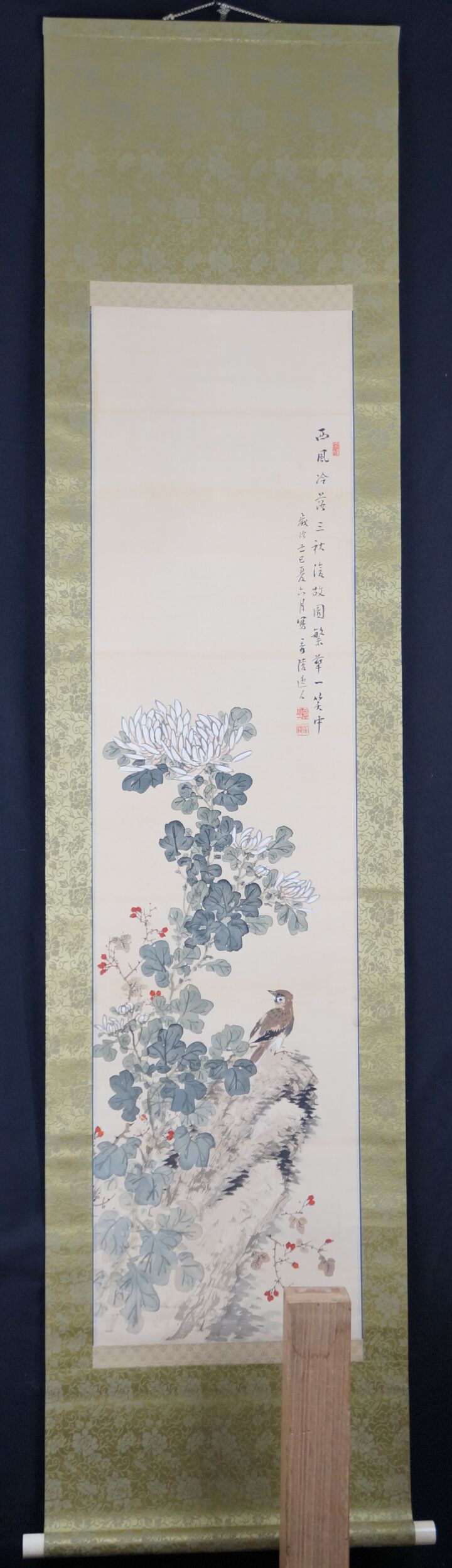
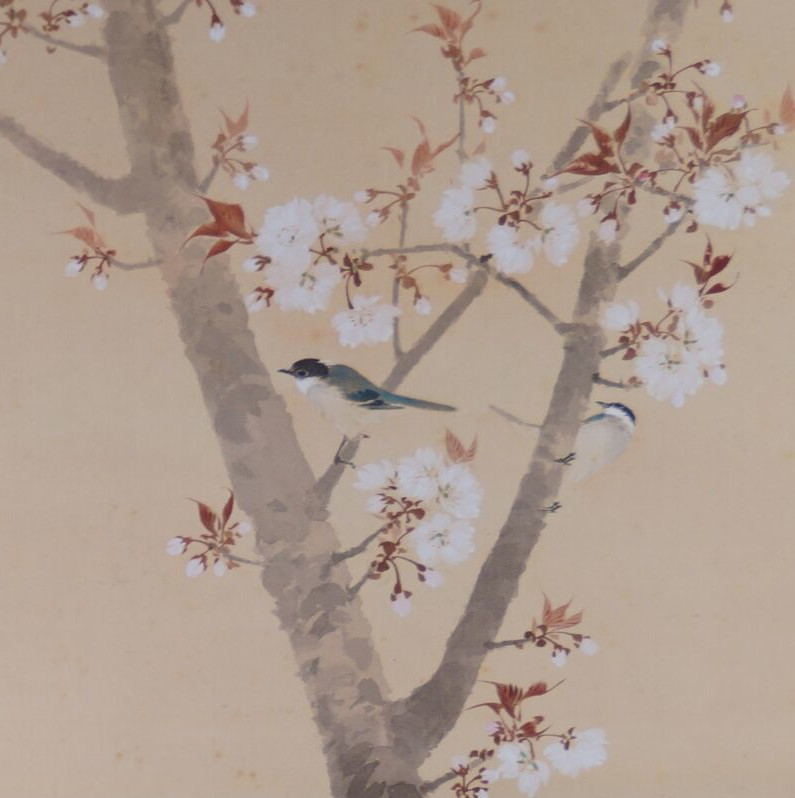
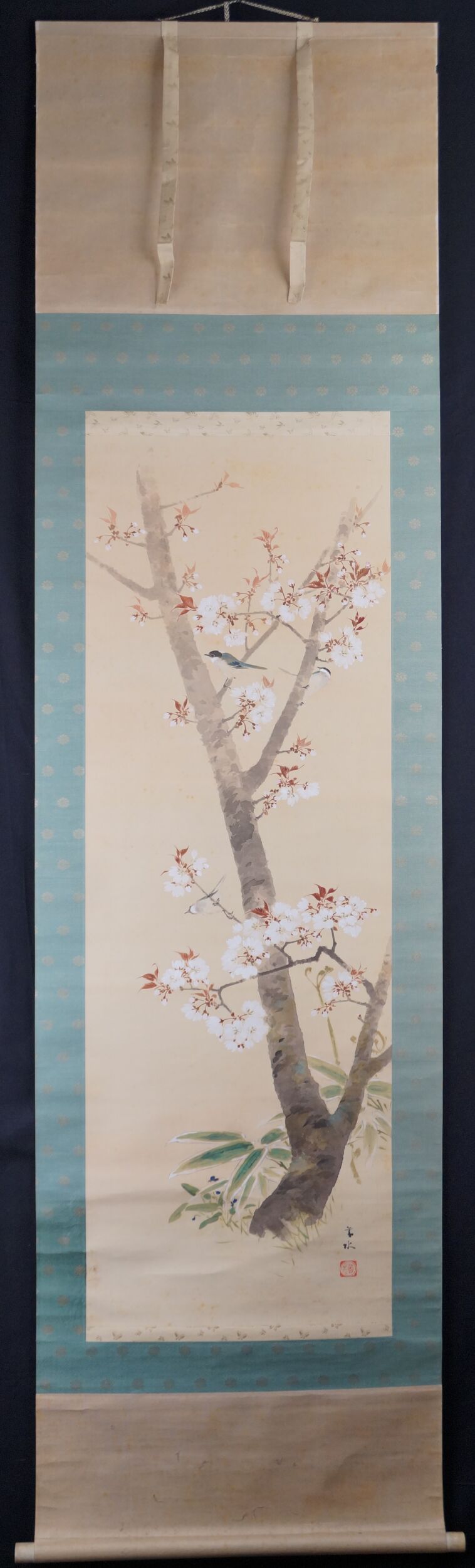
The Seihō school demanded close observation without merely reproducing what was seen. This approach shows particularly clearly in Kachō-ga, flower-and-bird paintings: a small bird is precisely captured, its surroundings merely suggested with a few areas of ink wash, and the season emerges from colour and foliage. Plenty of empty ground is part of the composition.