Kawachi Hidetoshi (河内英利): Oribe Ware from Seto
Kawachi Hidetoshi (河内英利) is a Japanese ceramic artist from Seto in Aichi Prefecture, born in 1960. His workshop is called Suiei-gama (翠英窯). His work stands in the tradition of Oribe ware, which he interprets in a very personal way: with bold forms, rough surfaces and glazes that run into one another in green, white and pink. The characters of his family name can also be read Kōchi; the gallery of Robert Yellin in Kyoto, for example, lists him as Kouchi Hidetoshi.
Training in Seto
Seto is one of the Rokkoyō, the six old kilns of Japan, and remains a center of glazed ceramics to this day. Kawachi began his training there in 1977 at a vocational school and was apprenticed to Katō Shuntei in the same year. The ceramics school in Seto followed in 1981, graduation from Osaka University of Arts in 1985, and a second apprenticeship under Shimada Kōichi in 1987. He has worked independently with his own kiln since 1991. His work has been shown, among other places, in the galleries of the Matsuzakaya, Takashimaya and Mitsukoshi department stores.
Oribe with Movement
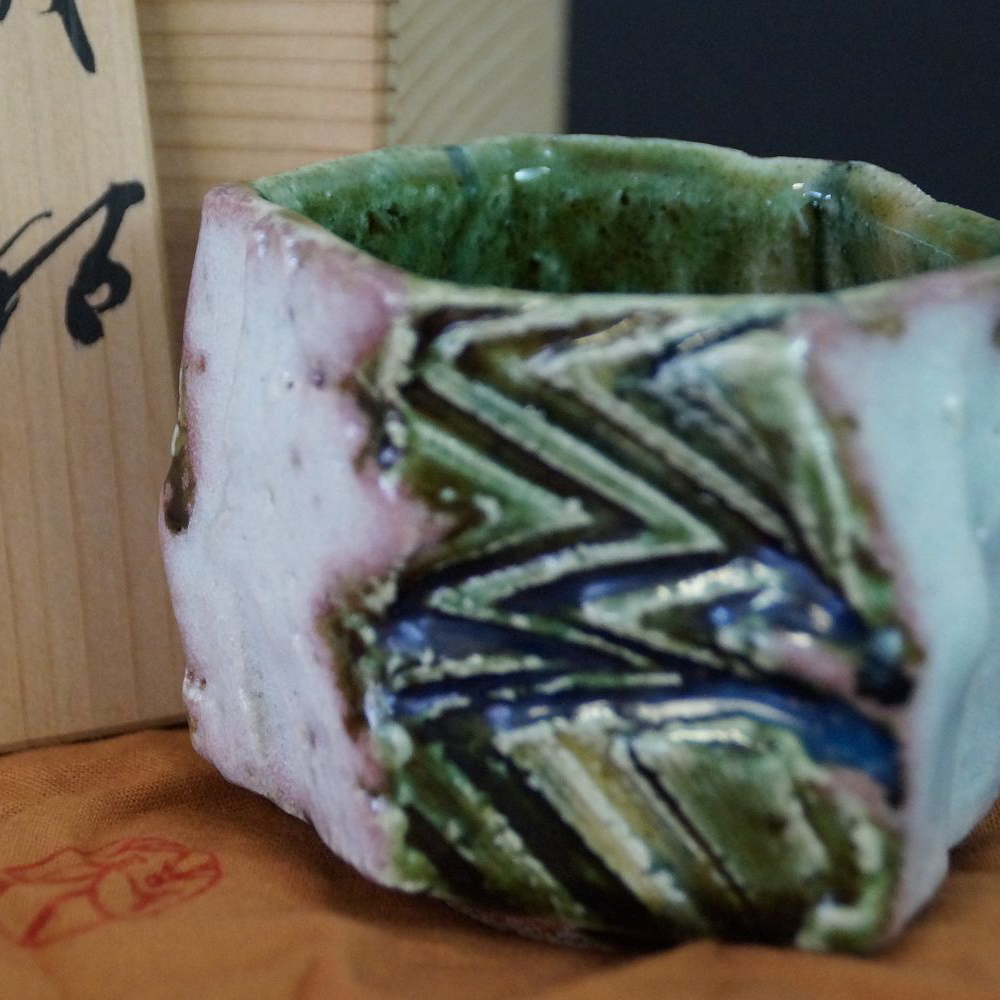
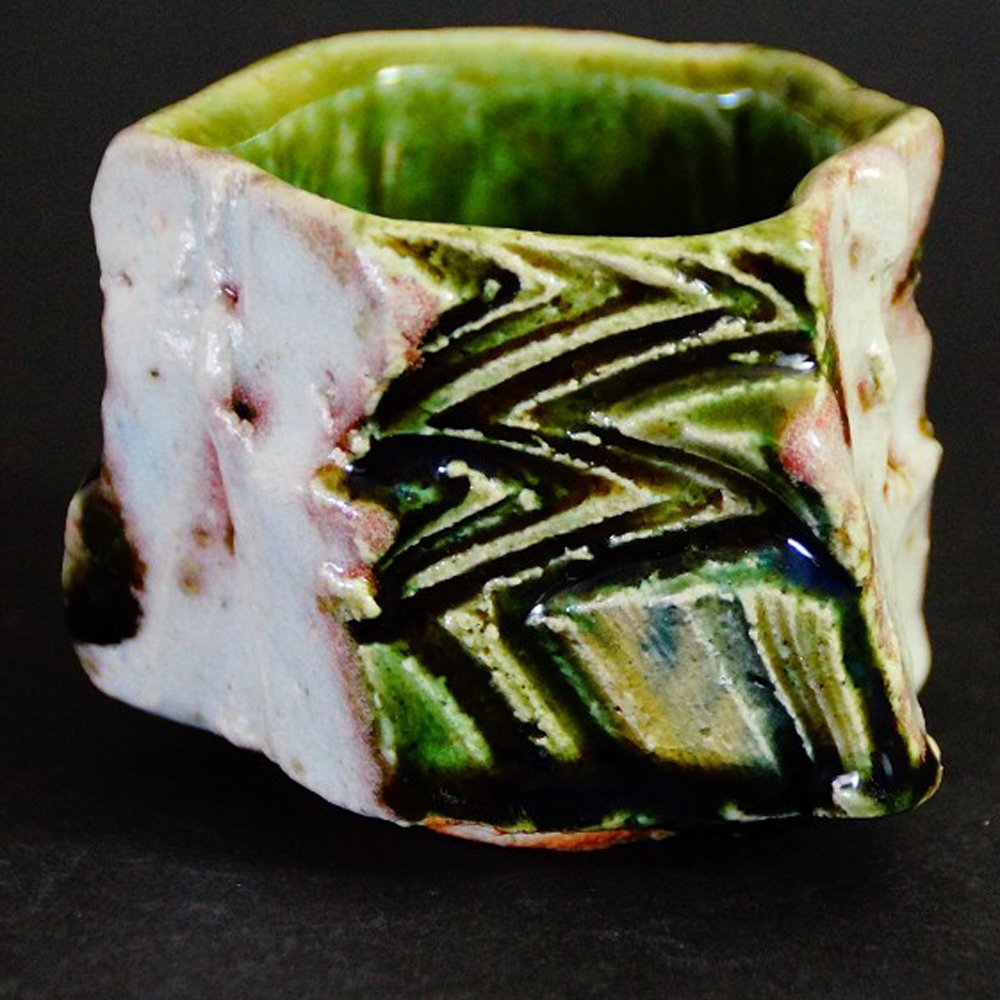
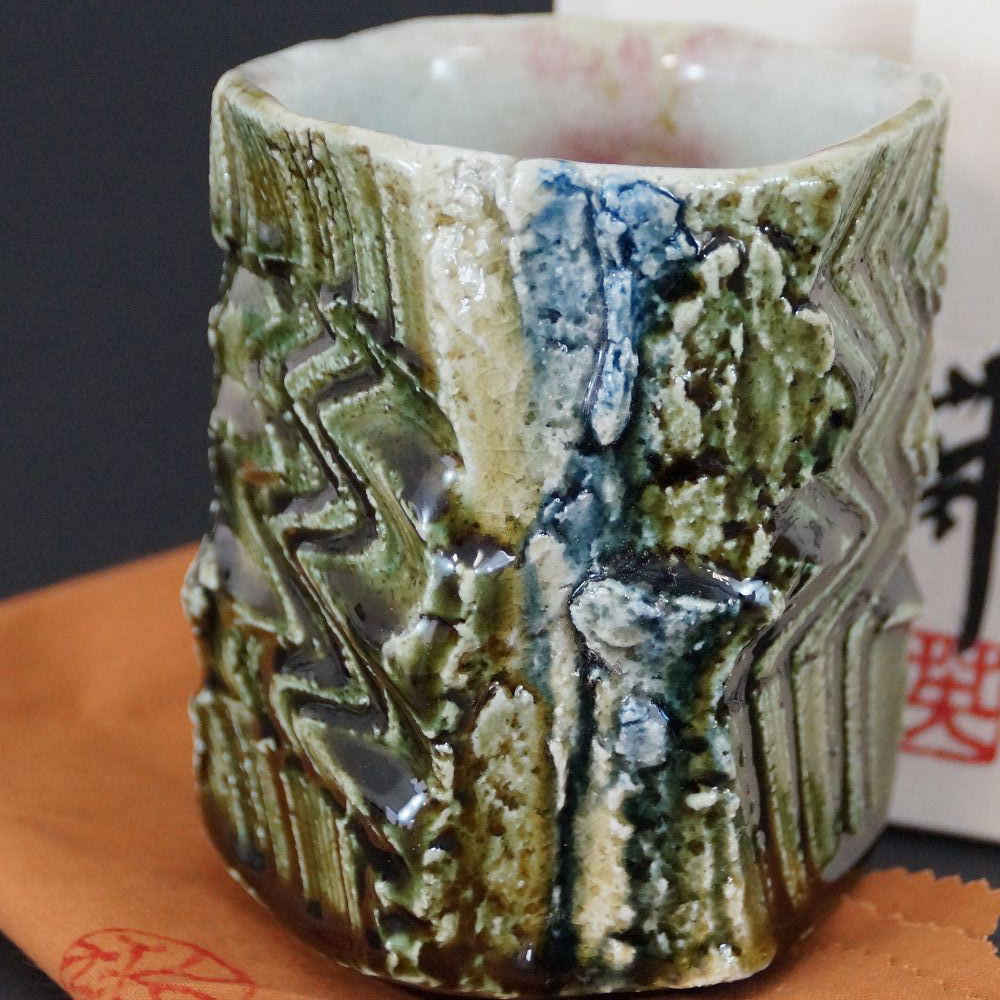
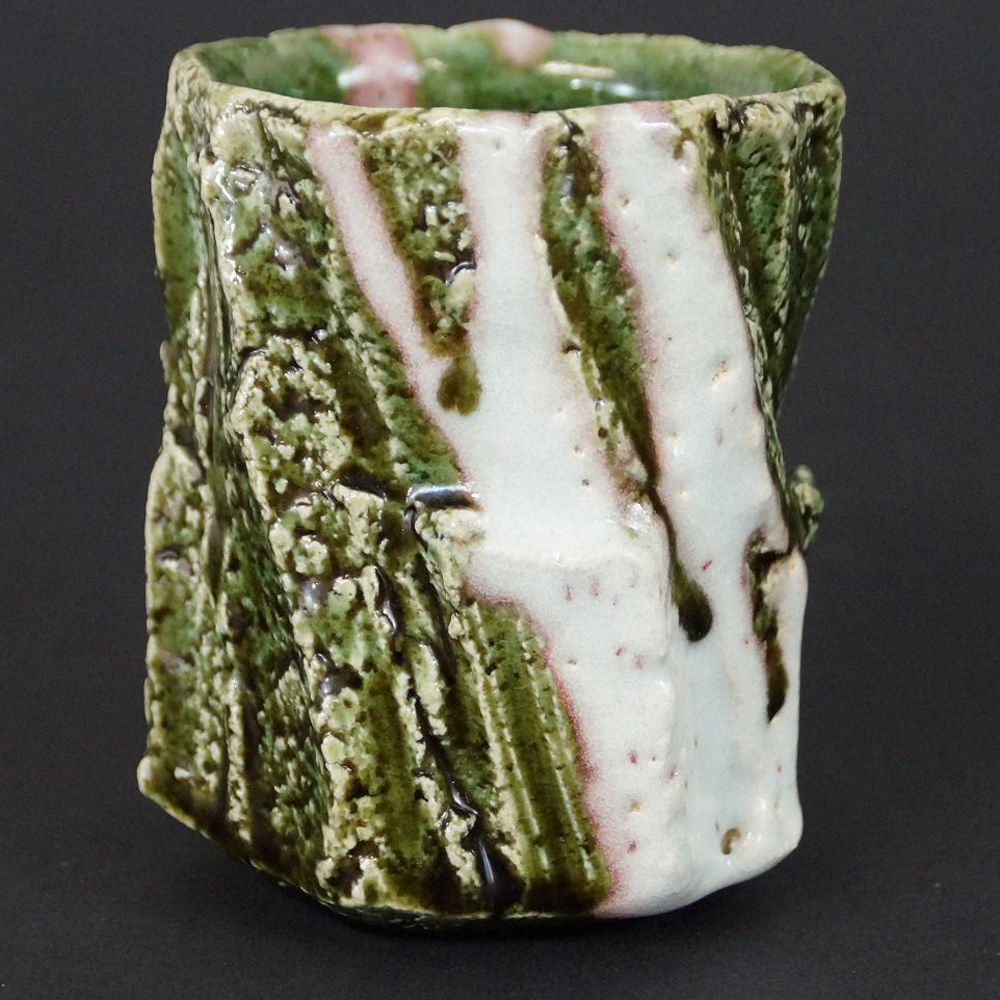
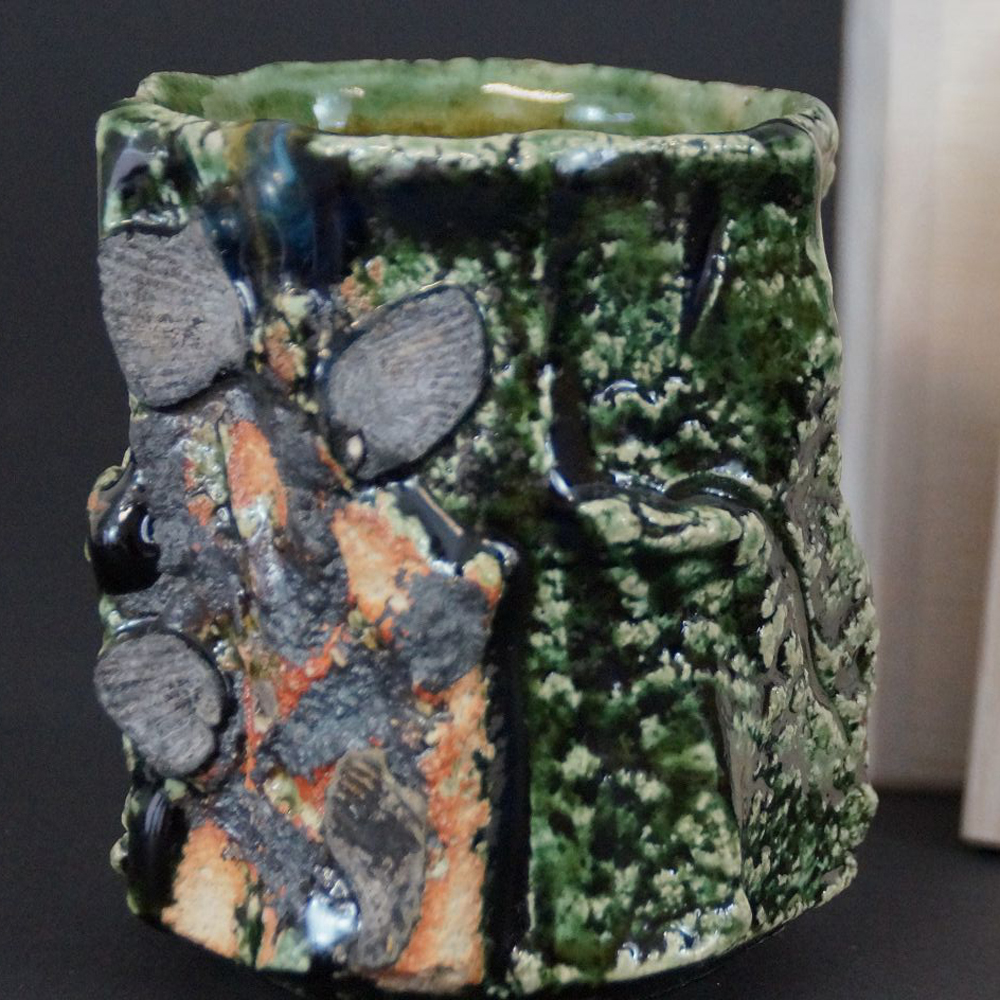
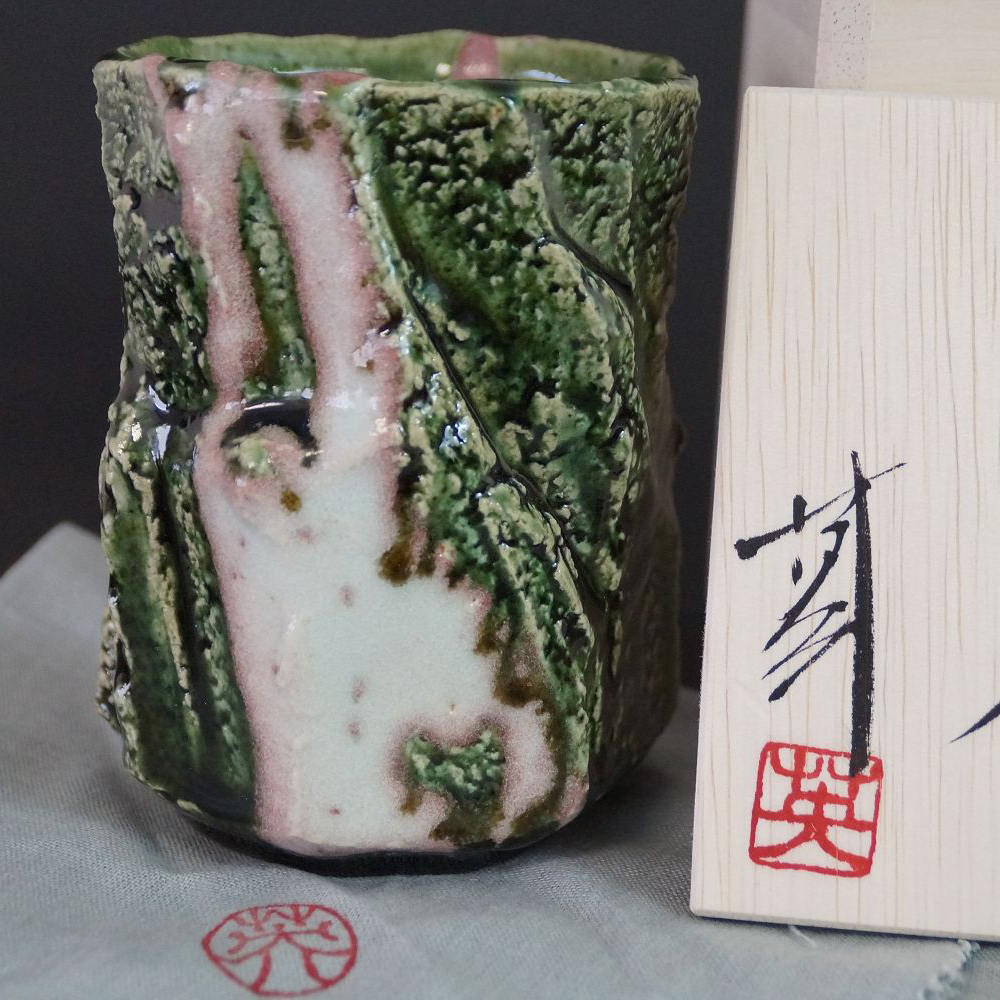
Oribe ware emerged around 1600 in the kilns of Mino and is named after the tea master Furuta Oribe; its hallmark is the copper-green glaze. According to the gallerist Robert Yellin, Kawachi deliberately set himself apart from the quiet Oribe of his teacher and his generation and sought an Oribe with movement. To this end he pours a Shino-like feldspar glaze over the green glaze. Where the two meet, white and pinkish runs appear beside the green – an effect that first arose from a mistake and became his signature. He creates the rugged textures by dragging a flat piece of wood over the unfired clay. The pieces are fired in a gas kiln.
Yunomi and Guinomi by Kawachi Hidetoshi
At Densho you will find tea cups and sake cups by Kawachi Hidetoshi, yunomi and guinomi, all in the Oribe style. No two pieces are alike: the run of the glazes, the relief and the often angular, hand-formed walls turn out differently on every cup. When choosing, it is best to look at the balance between the green and the lighter areas and at how the cup sits in the hand. Most pieces come in a signed wooden box.