Some hanging scrolls do not come alone. In their wooden box, two, three, or four scrolls lie side by side, mounted in the same fabric, signed by the same hand, and only together do they yield what the painter had in mind: spring and summer, day and night, a figure between two landscapes. Such kakemono sets are rarer than single scrolls and raise questions of their own. Do they have to be hung together? How much wall does a pair need? And how can one tell at all that two paintings belong together? This guide goes through the answers one by one.
What is a kakemono set?
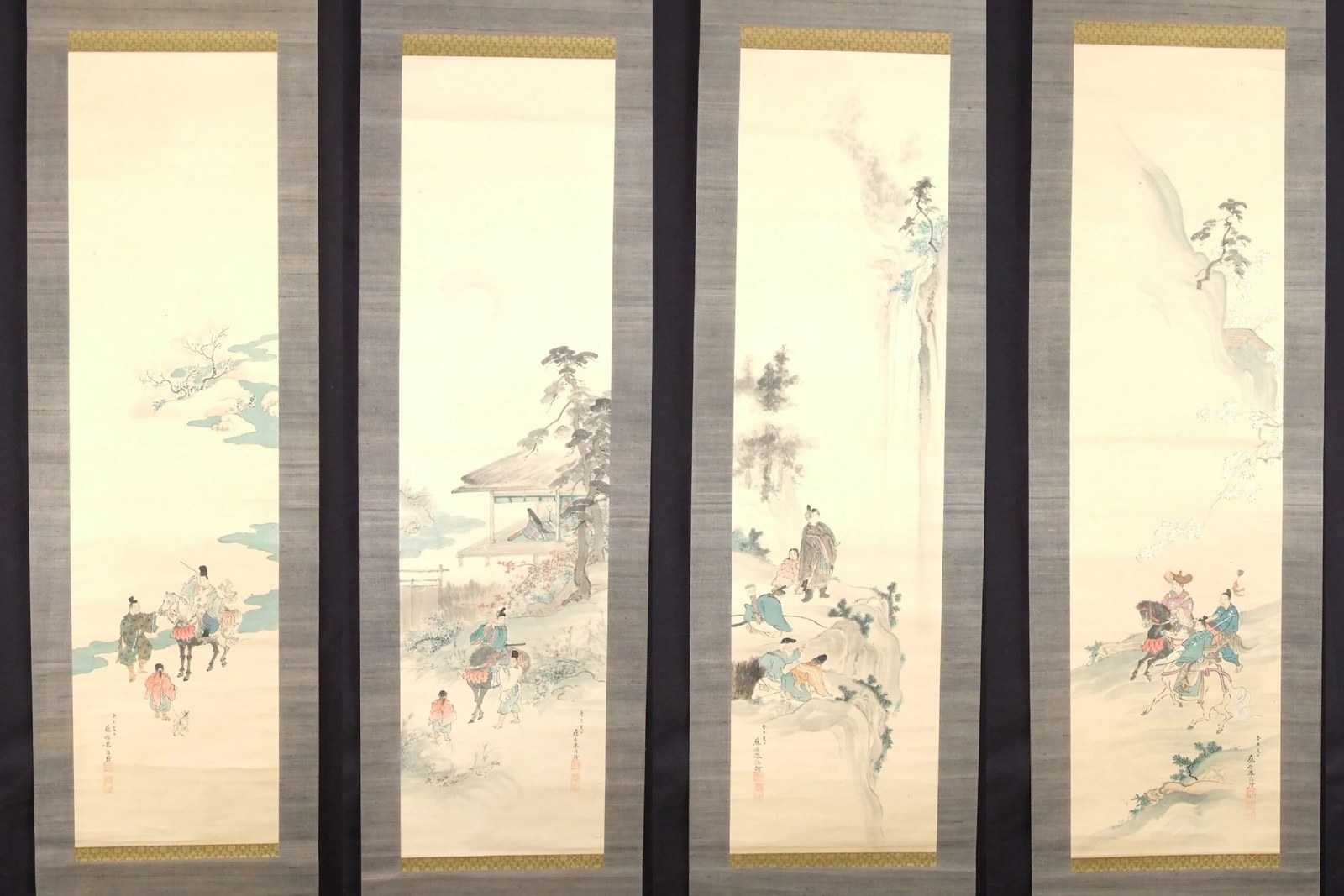
A kakemono set is a group of two or more hanging scrolls that were conceived, painted, and mounted as a unit. In Japanese, such a group is called tsuifuku (対幅). The second character, fuku (幅), is also the counter for hanging scrolls, and so the technical terms simply name the number: sōfuku (双幅) is the pair, sanpukutsui (三幅対) the triptych, yonpukutsui (四幅対) the series of four scrolls. Sets of six, eight, or twelve paintings also occur.
What matters is the inner connection. The paintings of a set share a theme that unfolds only across several scrolls: two seasons, an animal in two postures, a story in several scenes. A set is therefore something different from two hanging scrolls that happen to go well together. Anyone who wants to buy a Japanese hanging scroll and comes across a set acquires a composition that reaches beyond the single picture surface.
How to tell that hanging scrolls belong together
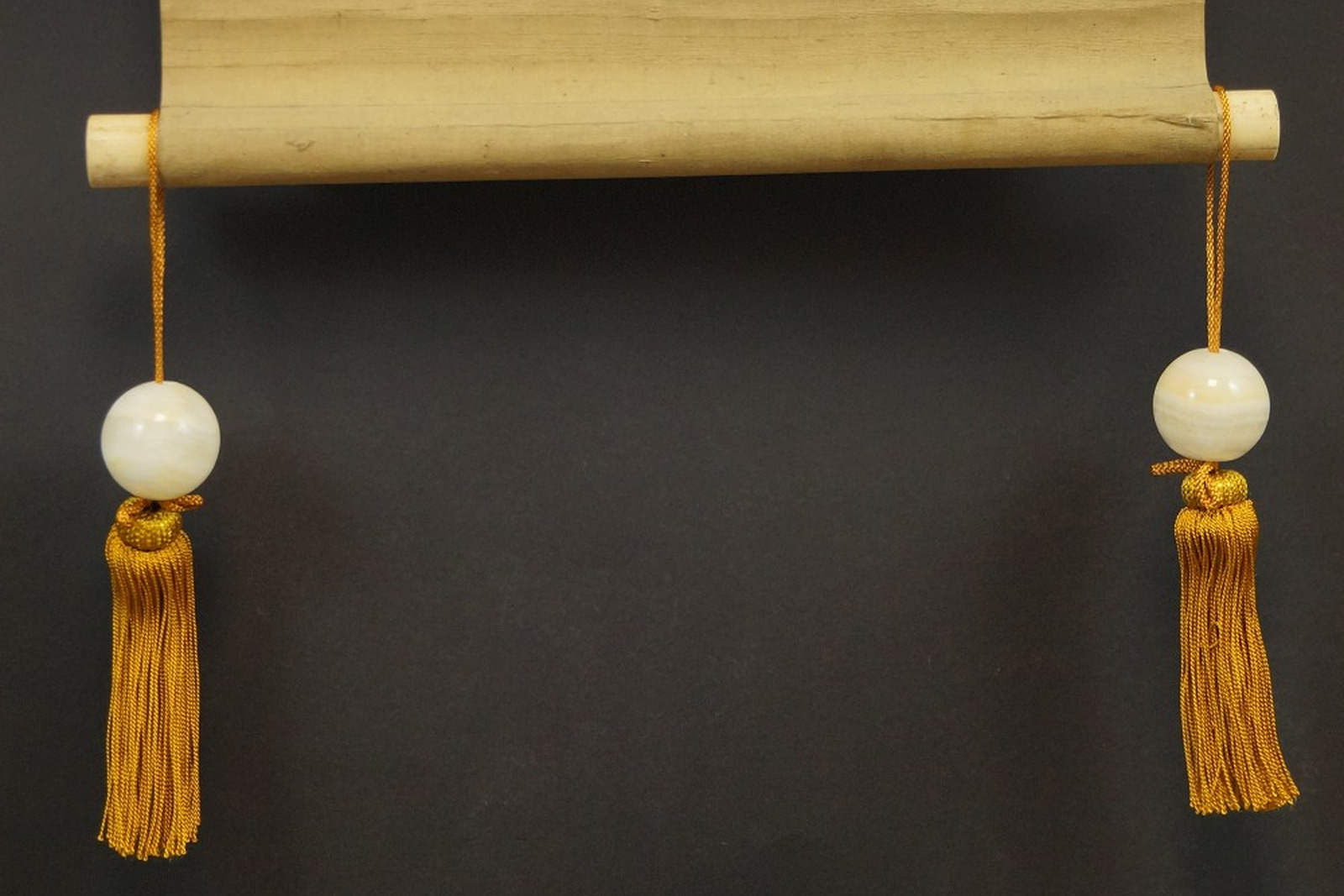
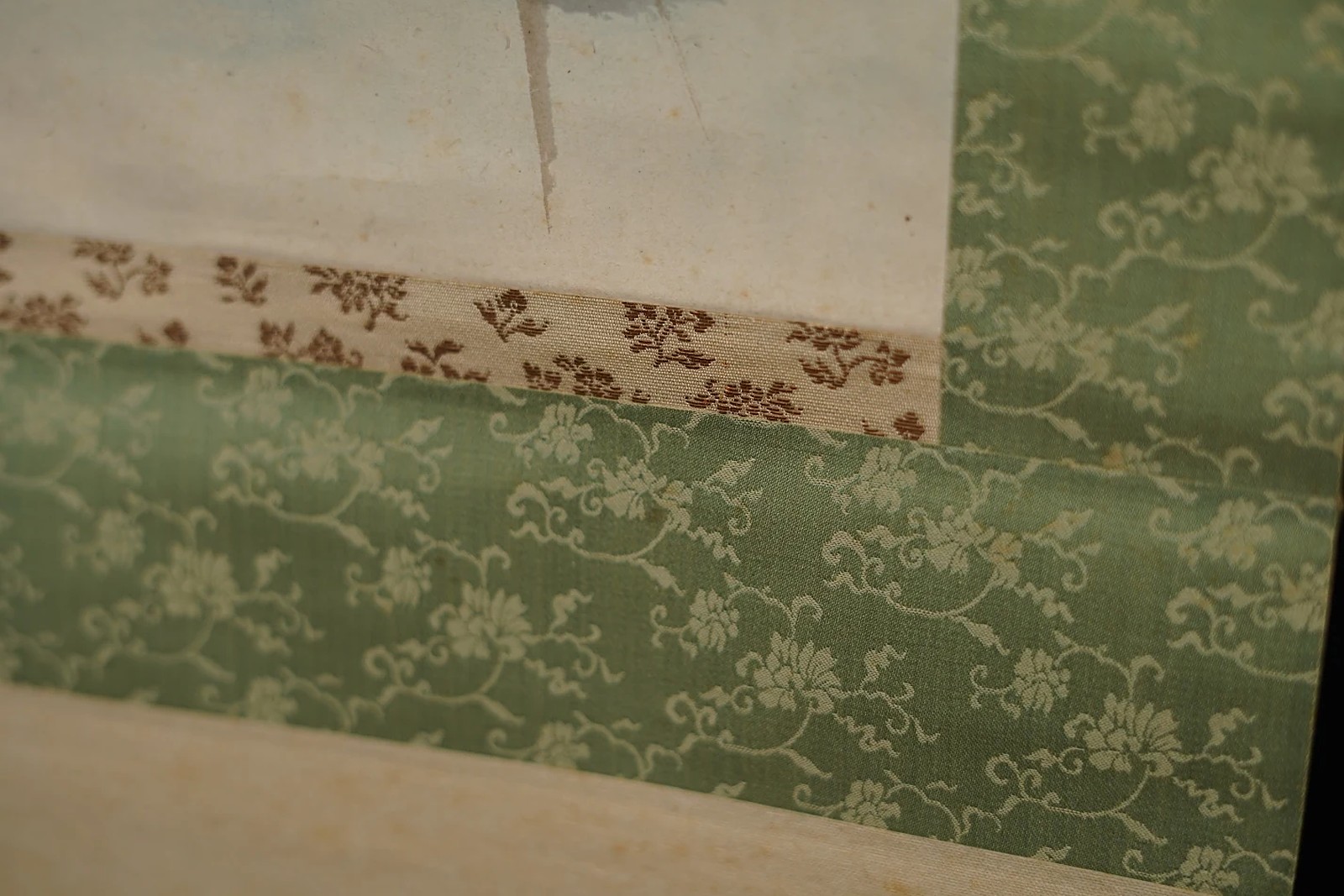
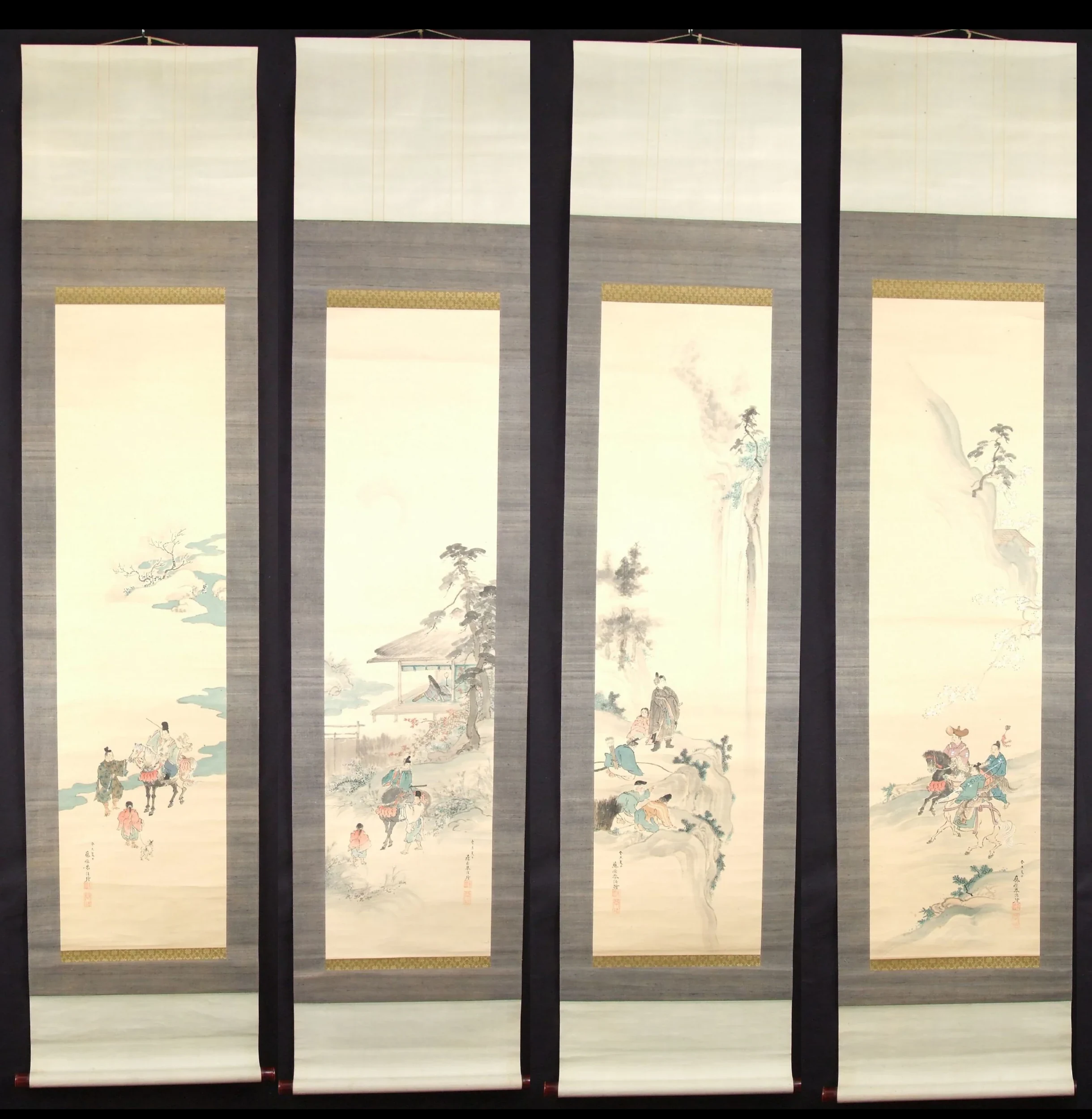
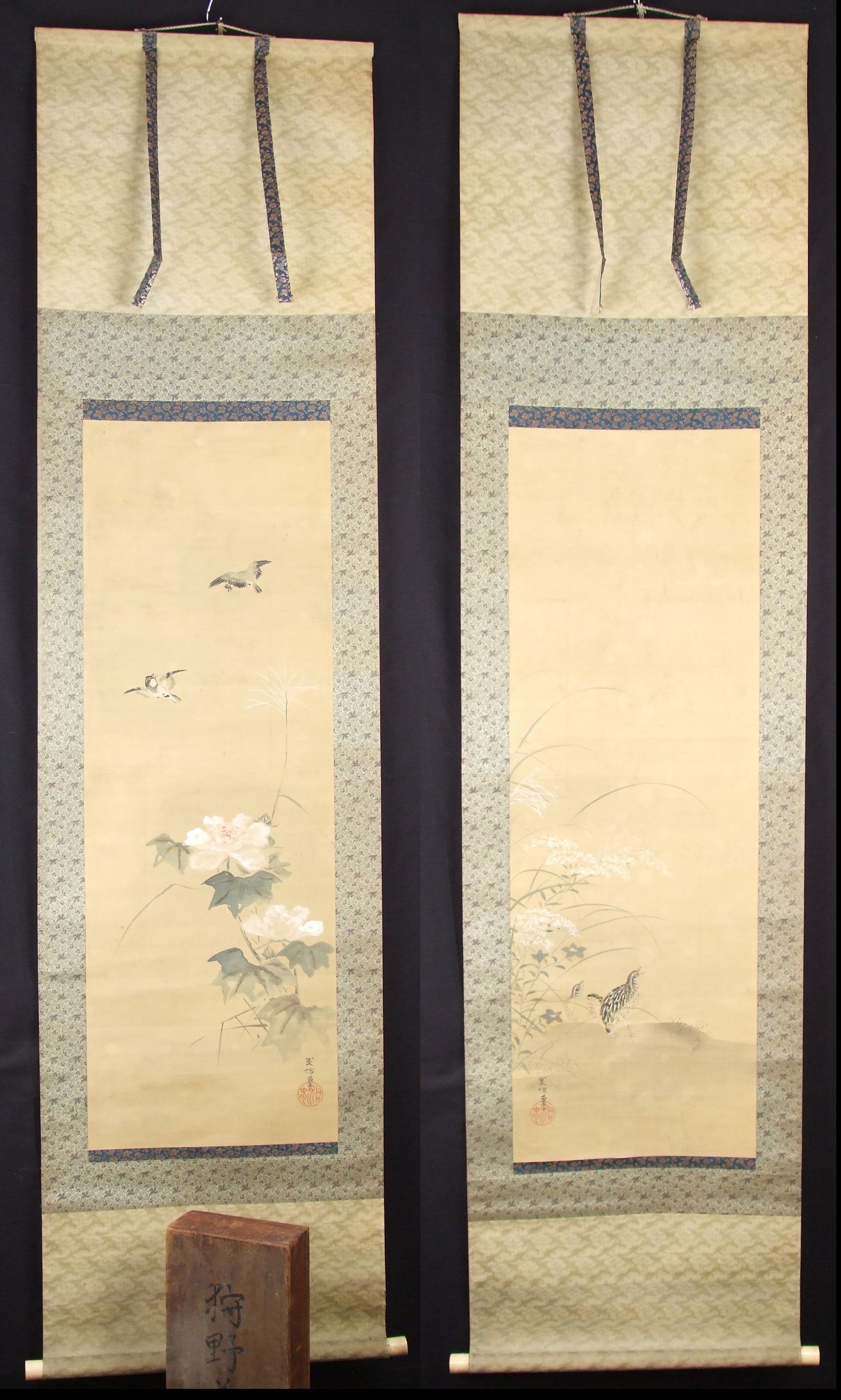
The surest sign is the mounting. Hanging scrolls of the same size that were made as a set are traditionally mounted in the same fabric: the same brocade, the same ichimonji strips, the same rod ends, the same overall length. If two scrolls hang side by side and their fabric edges run along one line, that is no coincidence. Then there are signature and seal: in a set, each scroll as a rule bears both, and by the same hand.
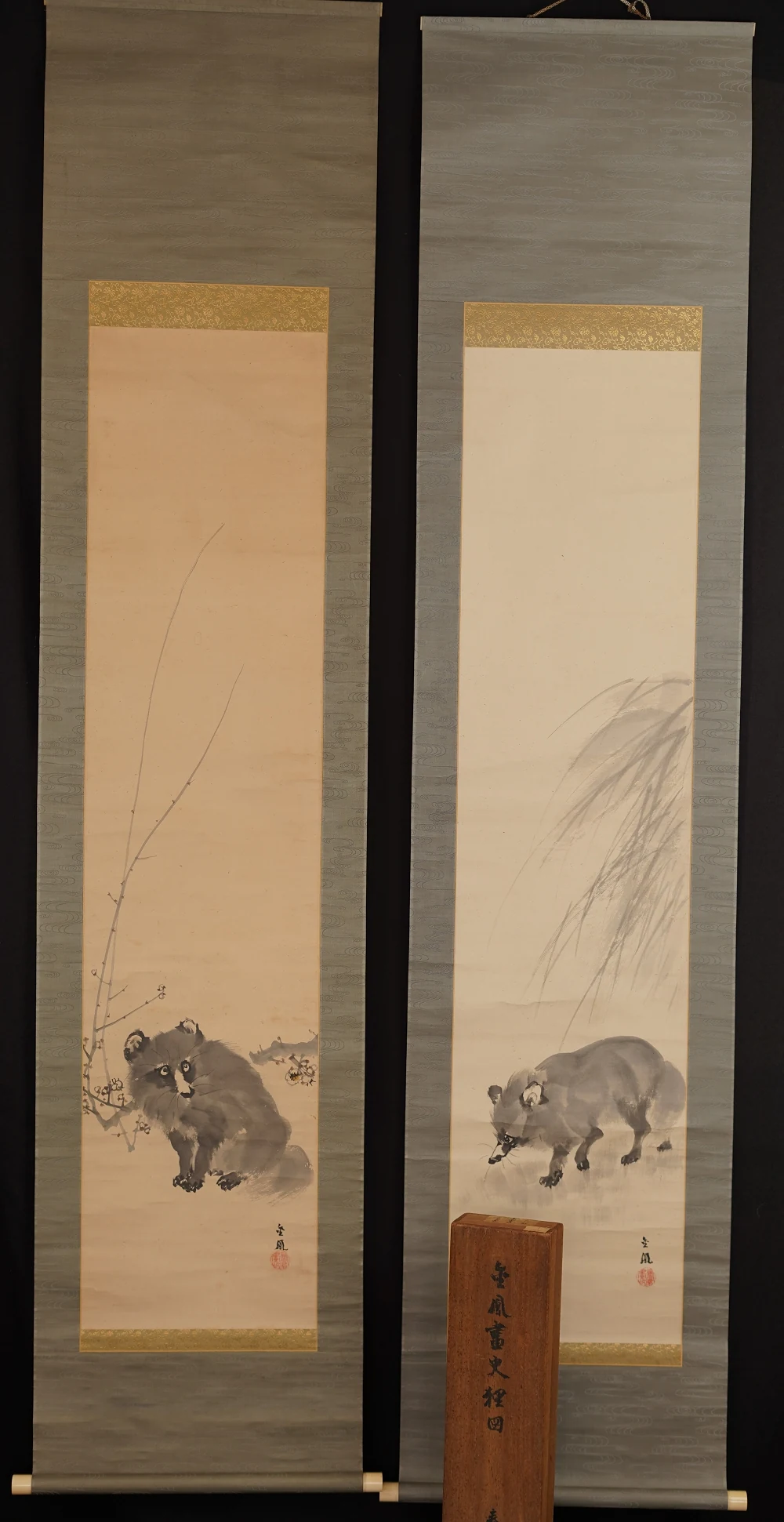
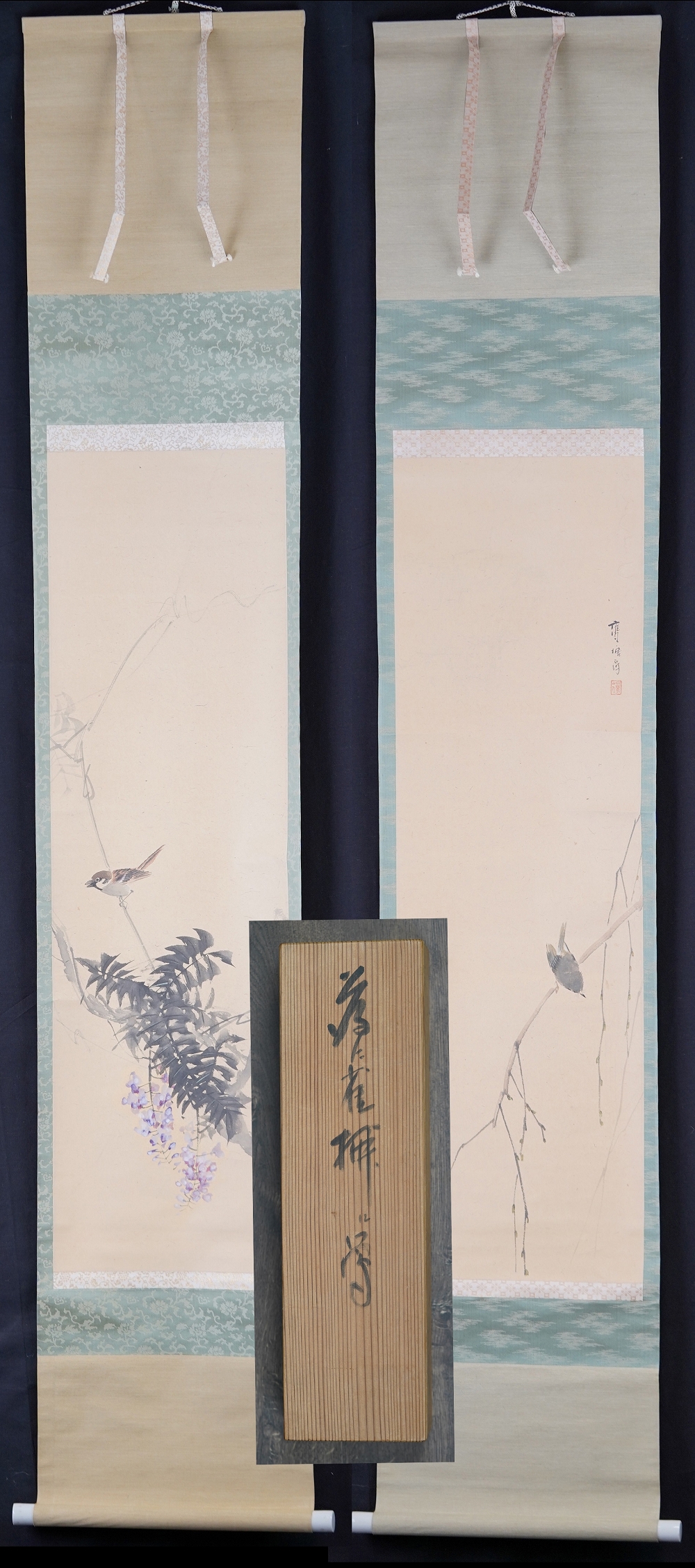
The second clue is the box. Sets are usually handed down in a shared wooden box built for exactly this number of scrolls. The inscription on the lid often names painter, subject, and number of pieces – a notation such as 二幅 means "two scrolls," 三幅 "three scrolls." Finally, the paintings themselves: in pairs, figures, animals, or branches often turn toward one another, so that the direction of their gaze shows which scroll hangs on the right and which on the left.
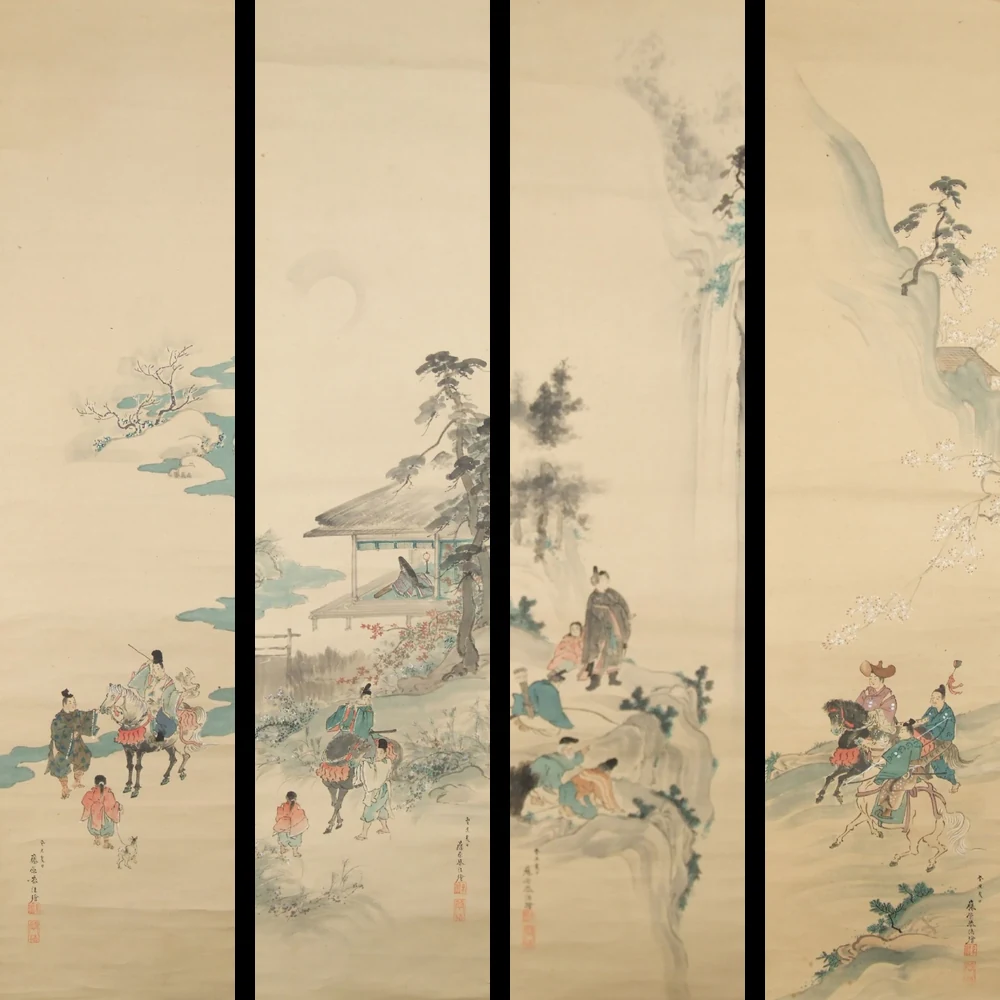
Okumura Kyōhō
Set of Four Paintings – Legends of the Four Seasons
Kakemono, unique work, with box, 192 x 48 cm
€1,210.00
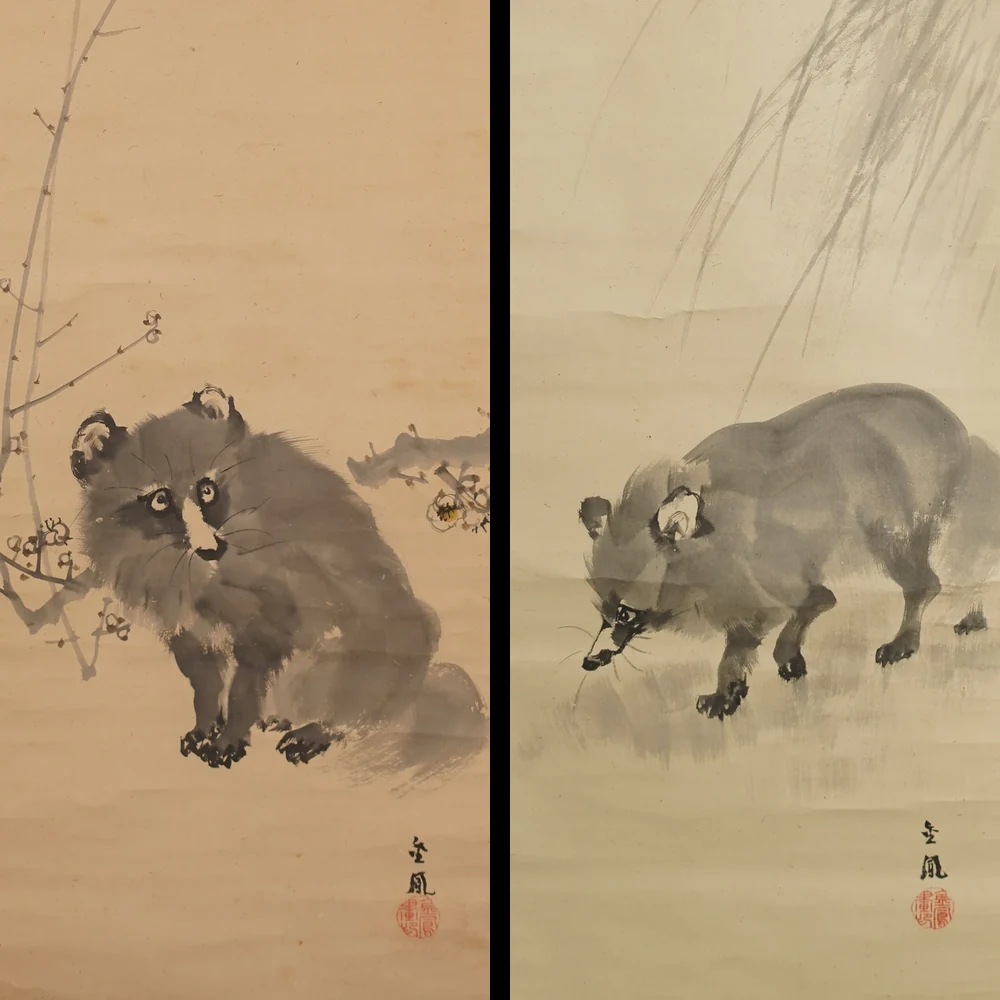
Mochizuki Kinpō
Set of Two Paintings – Tanuki Under Plum and Willow
Kakemono, unique work, with box, 195 x 48 cm
€3,590.00
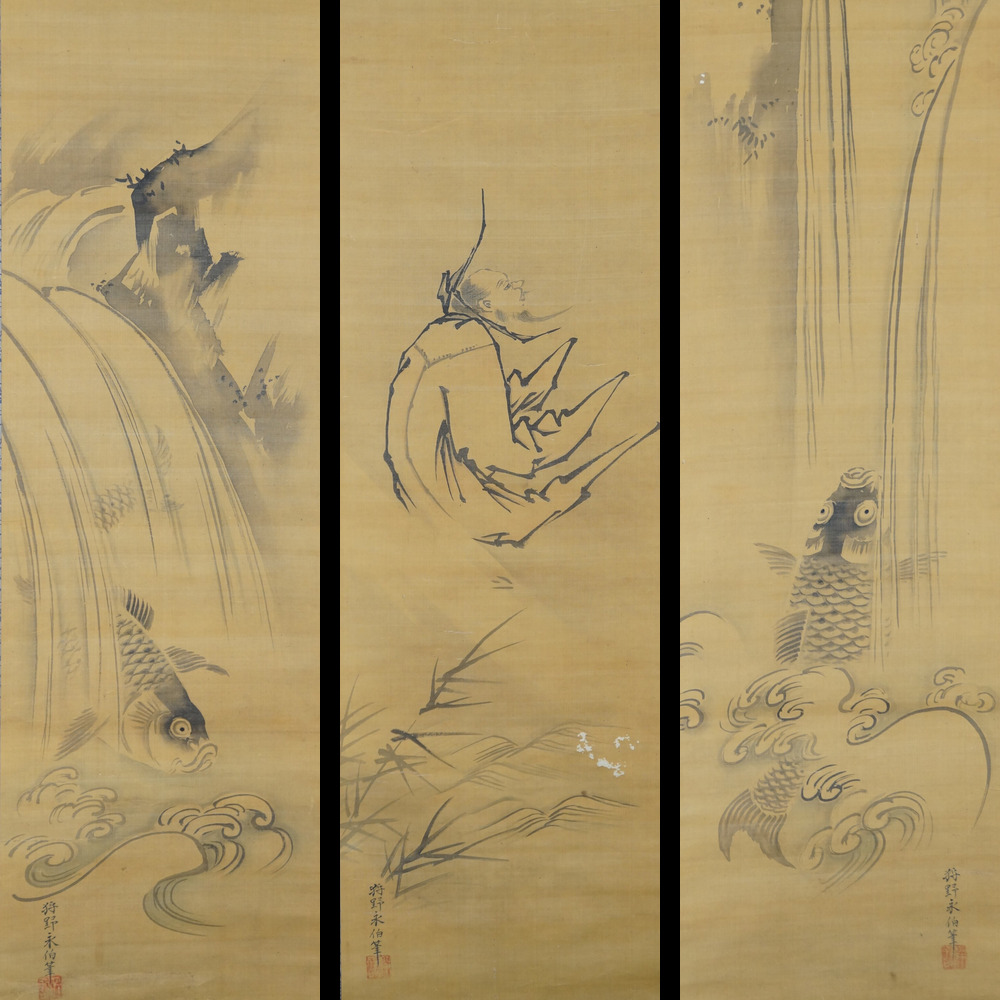
Kano Eihaku
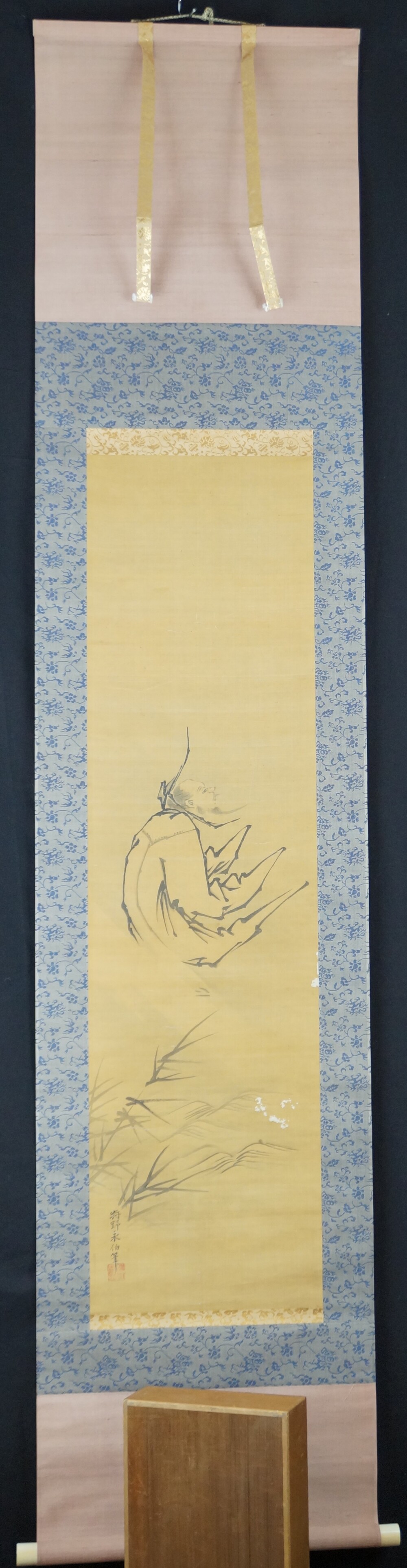
Water, Retreat and Ascent - Set of 3
Kakemono, unique work, with box, 188 x 45 cm
€630.00
Pairs: two paintings in dialogue
The pair is the most common form of set. It lives on opposition: spring and autumn, moon and sun, movement and stillness. An old example is the pair of dragon and tiger, in which two forces hold each other in balance. In bird-and-flower painting it is often two plants of different months, each with its bird; in landscape, two moods of the same river by day and by night.
For the home, the pair is the most rewarding variant. It can be shown as a whole without claiming an entire wall, and just as well in rotation: first one scroll, a few weeks later the other. Anyone looking for a Japanese work of art as a gift, for a wedding or a housewarming, say, will also find the pair an obvious form – two paintings that belong together and yet each stand on their own.
Triptychs: the center sets the tone
The triptych, sanpukutsui, follows a different order from the pair. It is built toward a center: a main painting flanked by two side paintings that respond to it. The classic model is the bodhisattva Kannon between monkey and crane, a combination that has been taken up again and again in Japan since the Middle Ages. Later the place of the sacred figure was often taken by a poet, a god of good fortune, or a landscape, while birds, blossoms, or carp carry the mood onward to the left and right.
That the center takes precedence is sometimes shown by the mounting as well: if the central painting is larger than the side paintings, it receives the finer fabric. Historically, the triptych was the representative form par excellence – in the reception rooms of the Muromachi period, hanging scrolls were usually hung in threes in the display alcove. In a home today, a triptych has the strongest effect when all three scrolls hang together, for the side paintings are composed toward the central one.
Four seasons and longer series
The series of the four seasons is the epitome of the multi-part set. Paintings of the seasons, shiki-e (四季絵), are among the oldest themes of Japanese painting, and the order from spring to winter early became a means of linking several paintings into a sequence. Spread over four scrolls, this yields a set that works like a calendar: cherry blossoms, waterfall, autumn moon, snow. Some series additionally tell legends or show famous places, each in its favored season.
More extensive still are sets of eight scrolls, as painted for the "eight views" of a landscape, and series of the twelve months. The same reading direction applies to all of them: in Japan one reads from right to left, so a seasonal series traditionally begins on the right with spring. Whether you keep to that in your own home is a matter of taste. What matters is only that the sequence is right and no summer ends up between autumn and winter.
Hang together or show individually?
Both are right, and both have tradition behind them. Hung together, a set unfolds its entire composition – but that takes wall space. As a rule of thumb, a mounted hanging scroll is 40 to 60 centimeters wide. With a little spacing, a pair therefore calls for a good meter and a half of calm surface, a triptych for more than two meters, a series of four for just under three. Hang all scrolls at the same height, so that the upper battens form one line, and leave a good hand's breadth of air between them. Too far apart, the set falls into single pictures; crowded too closely, the rod ends knock against each other.
The second possibility is rotation, and for seasonal sets it is the obvious one. Then only one scroll hangs at a time, the first in spring, the second in summer, and the set accompanies you through the year. This corresponds to everyday life in Japan, where the display alcove of a home usually holds only a single hanging scroll. Anyone who wants to set up a tokonoma at home is therefore well equipped with a seasonal set: the question of which painting comes next answers itself.
Nakahara Yōtō
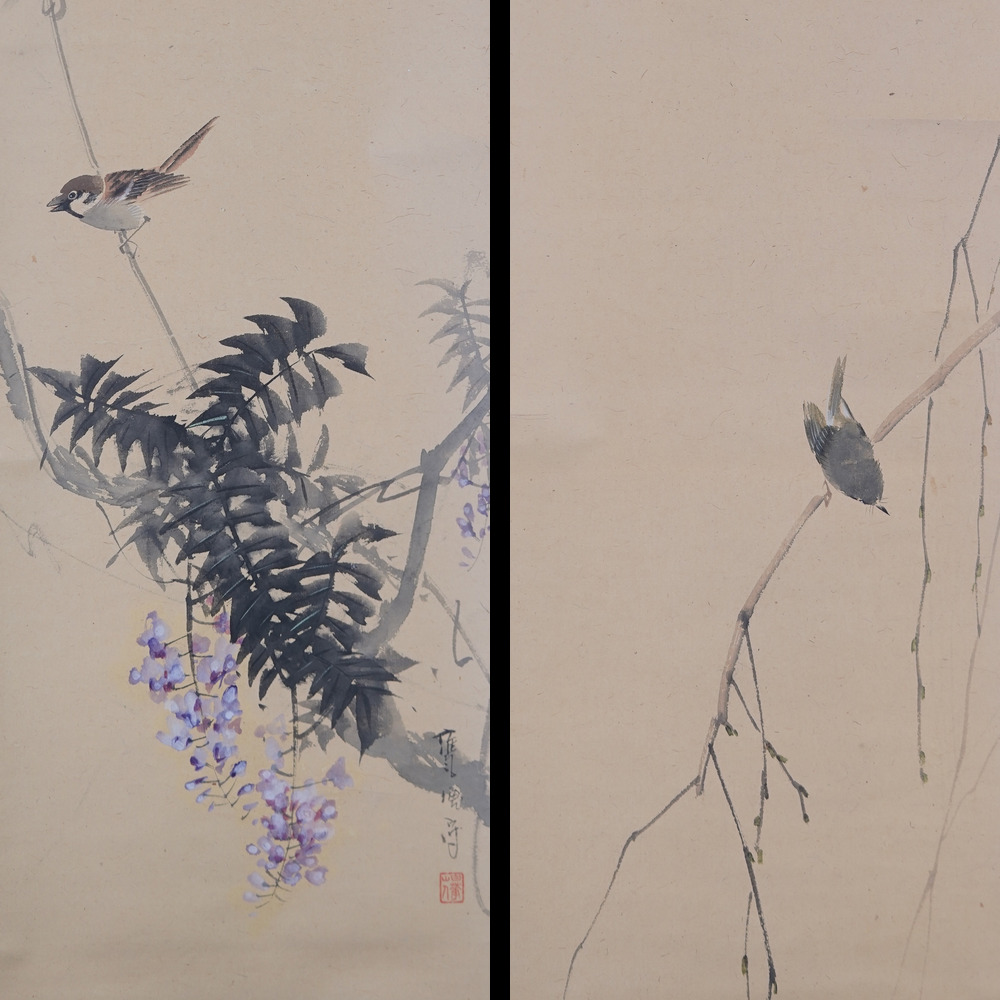
Set of Two Paintings – Sparrows on Wisteria and Willow Branch
Kakemono, unique work, with box, 175 x 38 cm
€690.00
Kanō Tōshun Yoshinobu
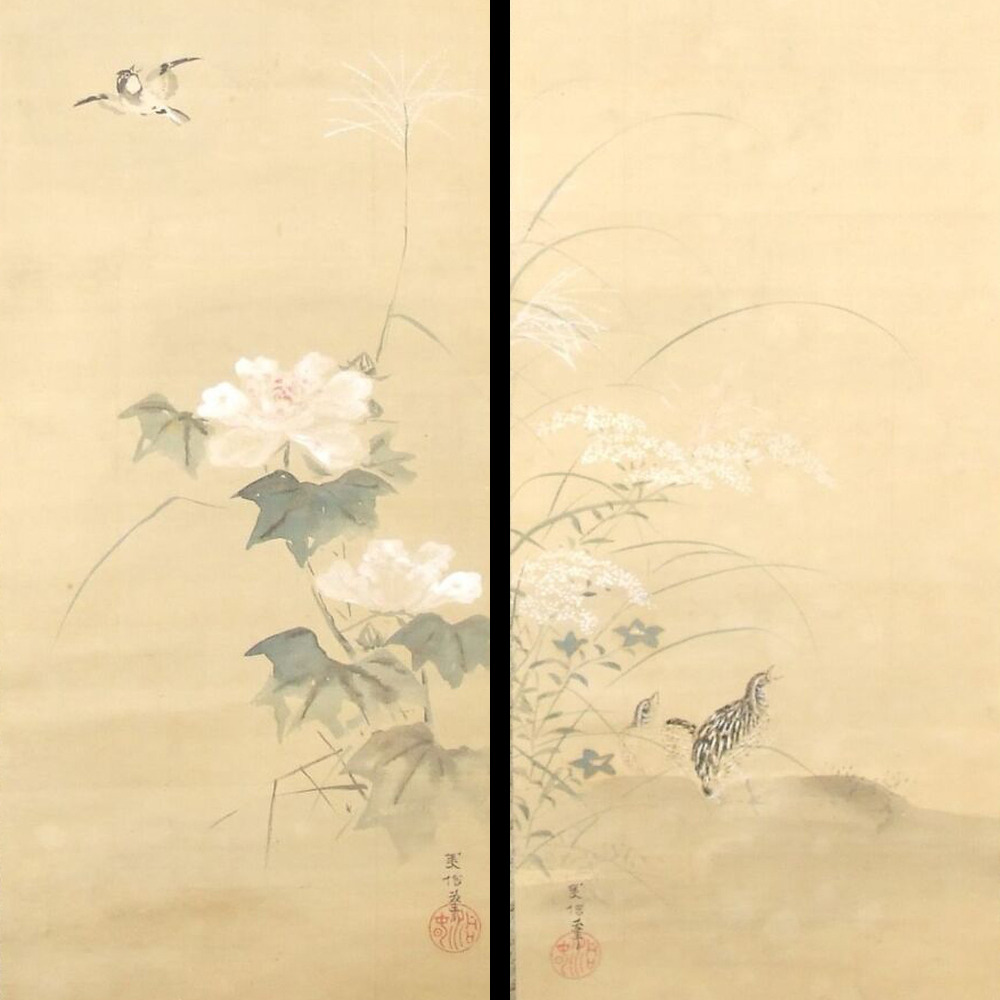
Set of Two Paintings – Birds and Autumn Flowers
Kakemono, unique work, with box, 200 x 56 cm
€770.00
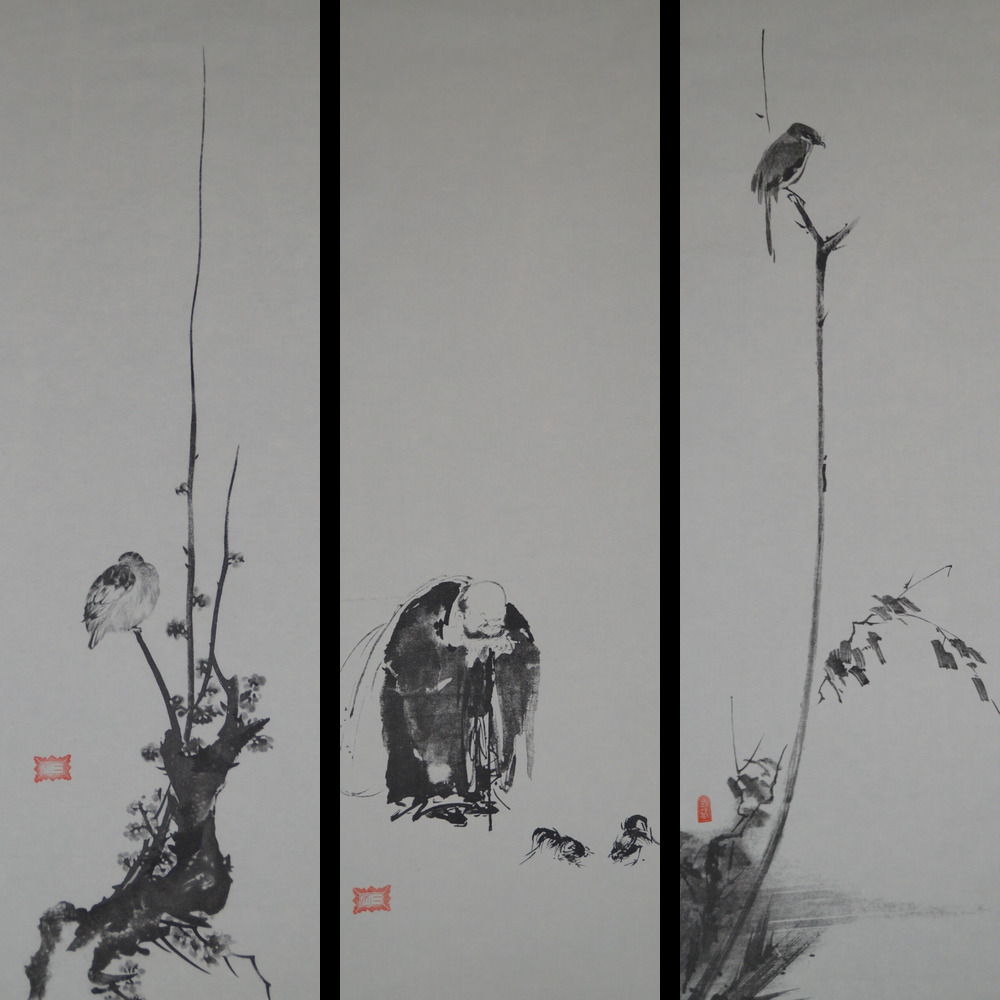
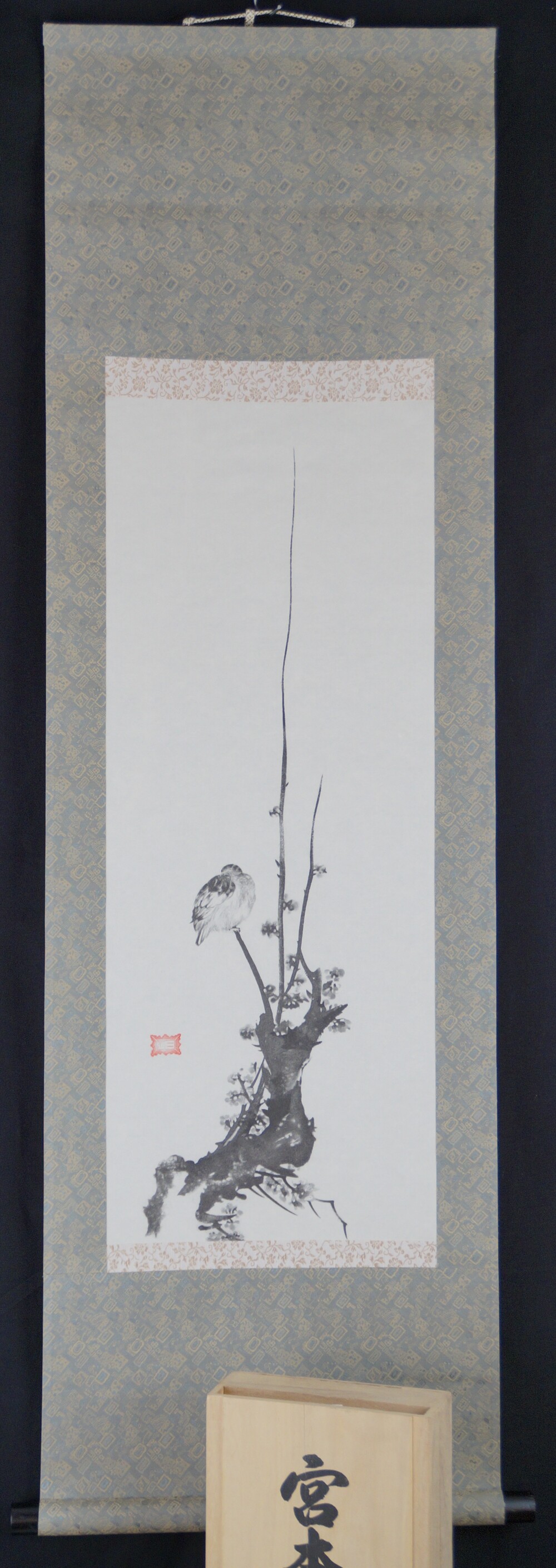
Miyamoto Musashi
Triptych Prints After Miyamoto Musashi
Kakemono, Print, with box, 135 x 47 cm
€270.00
Storage: a set stays together
The most important rule in handling a set is simple: do not separate it. The scrolls belong in their shared box, even if only one of them is hanging on the wall at the moment. The others remain rolled up inside, and the box waits for the return of the missing one. Giving away individual scrolls of a set or storing them separately is the surest way to break it up, and a set once separated practically never comes back together.
Also keep whatever accompanies the box: the inscribed lid, protective papers, occasionally a letter or a label from a previous owner. With sets, the inscription often names the subjects of the individual scrolls and their order, which makes it the best memory aid there is. Otherwise the same rules apply as for any hanging scroll: roll loosely, store lying flat, in the dark and at even humidity, and air each scroll for a few hours once or twice a year.
What to look for when buying a set
First check that it is complete. If the box names three scrolls, three should lie in it; a seasonal series must have four. Then look at each scroll individually, for the paintings of a set do not always age alike: the scroll that hung most often may have darkened more than the others. That is not a defect but the trace of its use, though you should be aware of it before buying. Also note whether the pieces are hand-painted unique works or prints after famous originals. Both exist as sets, and a reputable offer states clearly which it is.
Finally, measure your wall before you decide, and consider whether you want to show the set together or in rotation. And should you come across a single scroll that was recognizably once part of a pair: it is a painting in its own right. Many sets were divided over the generations, and a good scroll loses nothing because its counterpart now hangs elsewhere.
A painting waiting for its counterpart
The appeal of a set lies in what happens between the scrolls. A sparrow in one painting, a willow branch in the other, and between them a stretch of wall across which the eye wanders back and forth. Or a single scroll hanging on the wall in May, while the other three wait in the box for their time to come. A set demands a little more space and a little more care than a single hanging scroll – and in return gives back a coherence that no single painting can have.
At Densho you will find, alongside individual kakemono, hanging scrolls that belong together – hand-painted one-of-a-kind pieces that we purchase individually in Japan and pass on, where it has survived, with their shared wooden box. And if you prefer to combine them yourself: among our kakemono you will find motifs for every season from which a series of your own can gradually be assembled. Begin with the painting that suits the present month.