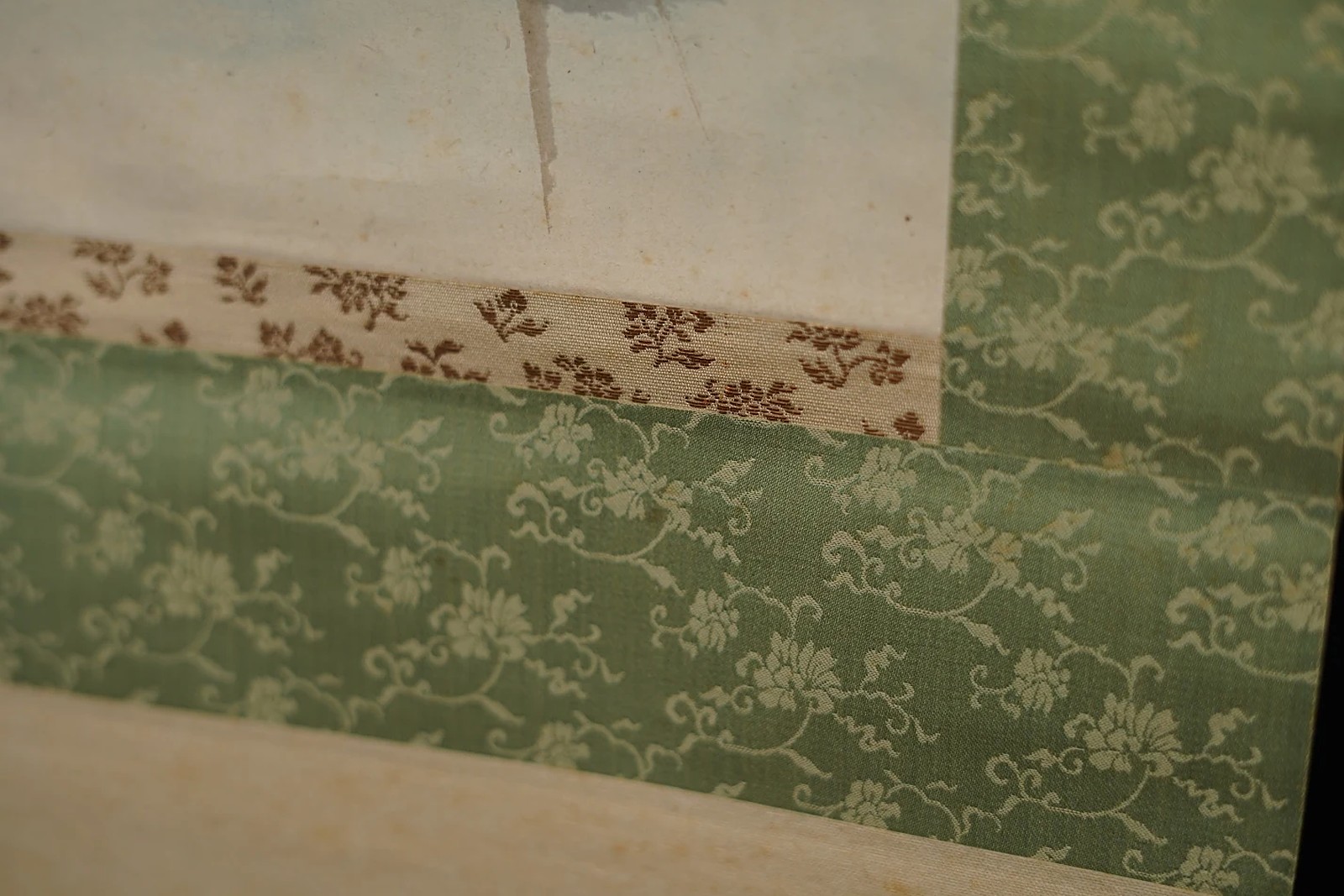
Kakemono Set of Two Paintings – Tanuki Under Plum and Willow
One of a kind — this work exists only once.
- Signature / Stamp:
- Mochizuki Kinpō
- Period:
- Meiji (1868–1912)
- Dimensions (height x width):
- 195 x 48 cm
- Item number:
- 6495
€3,590.00
incl. 19 % VAT, plus shipping
- JikusakiBone
- Material HonshiPaper
- MotifAnimals
- TechniqueHand-Painted
- Wooden BoxYes
Description
A matching pair of hanging scrolls by Mochizuki Kinpō, one of the best-known animal painters of the Meiji period. Even in his lifetime his tanuki were regarded as unsurpassed, and to this day they remain the most sought-after subject of his work. The two scrolls show the tanuki (Japanese raccoon dog) in two seasons. In spring a young, fluffy animal sits beneath a blossoming plum branch and looks attentively, almost curiously, at the viewer. The blossoms are delicately coloured. In summer a fully grown tanuki creeps, crouched and watchful, through tall, bending grass.
Kinpō works with wet, softly flowing ink that makes the dense fur almost tangible. Against this he sets a few precise, deep black accents on the eyes, snout and paws. This combination of spontaneity and close observation of nature is typical of the Shijō school, in which Kinpō was trained. The generous empty areas give the animals room and let the compositions appear calm and atmospheric. Both paintings are signed “金鳳” (Kinpō) and bear the round seal “金鳳畫印”.
The pair is kept in a shared wooden box. The lid bears the inscription “金鳳畫史狸圖 春夏二幅” (tanuki pictures by the painter Kinpō, spring and summer, two scrolls). The inside of the lid is inscribed and sealed. A special feature is an enclosed letter from Mochizuki Kinpō to a Mr Koike Ginjirō, signed in his own hand, together with its original envelope. The envelope bears Kinpō's stamped sender's address in Asakusa, Tokyo, where he had run his studio and painting school since 1890, as well as a 3-sen chrysanthemum stamp postmarked 6 July 1912 (Meiji 45), a few weeks before the end of the Meiji period. The letter paper shows a faintly pre-printed seal of the artist.
Frequently asked
You might like these pieces
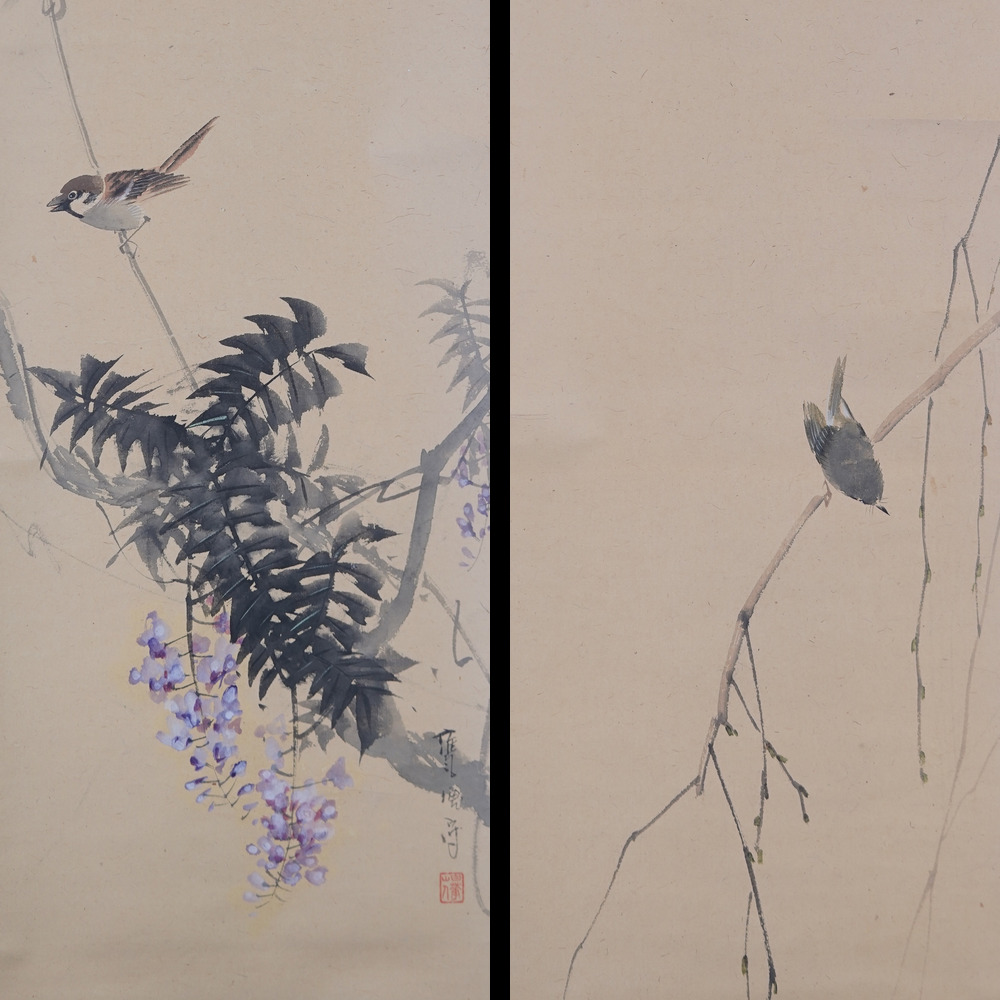
Nakahara Yōtō
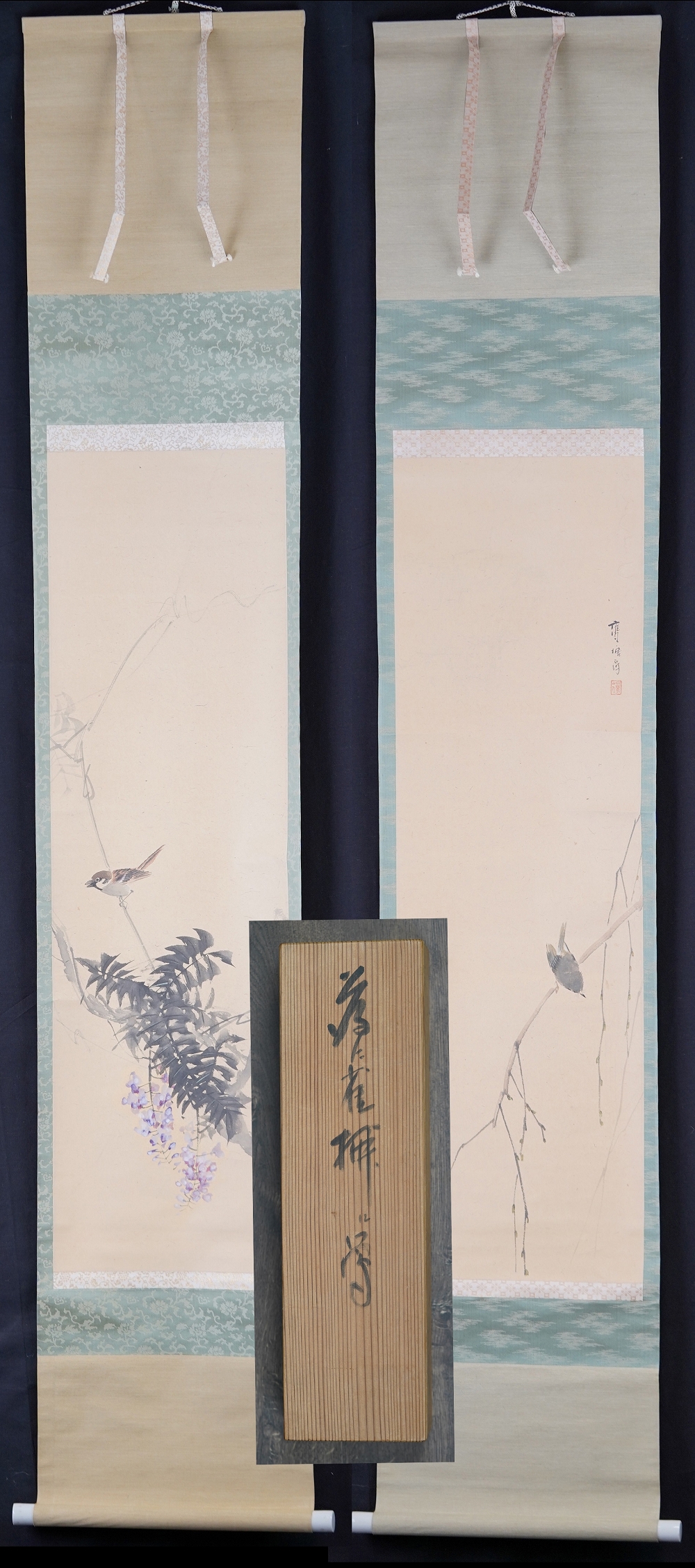
Set of Two Paintings – Sparrows on Wisteria and Willow Branch
Kakemono, unique work, with box, 175 x 38 cm
€690.00
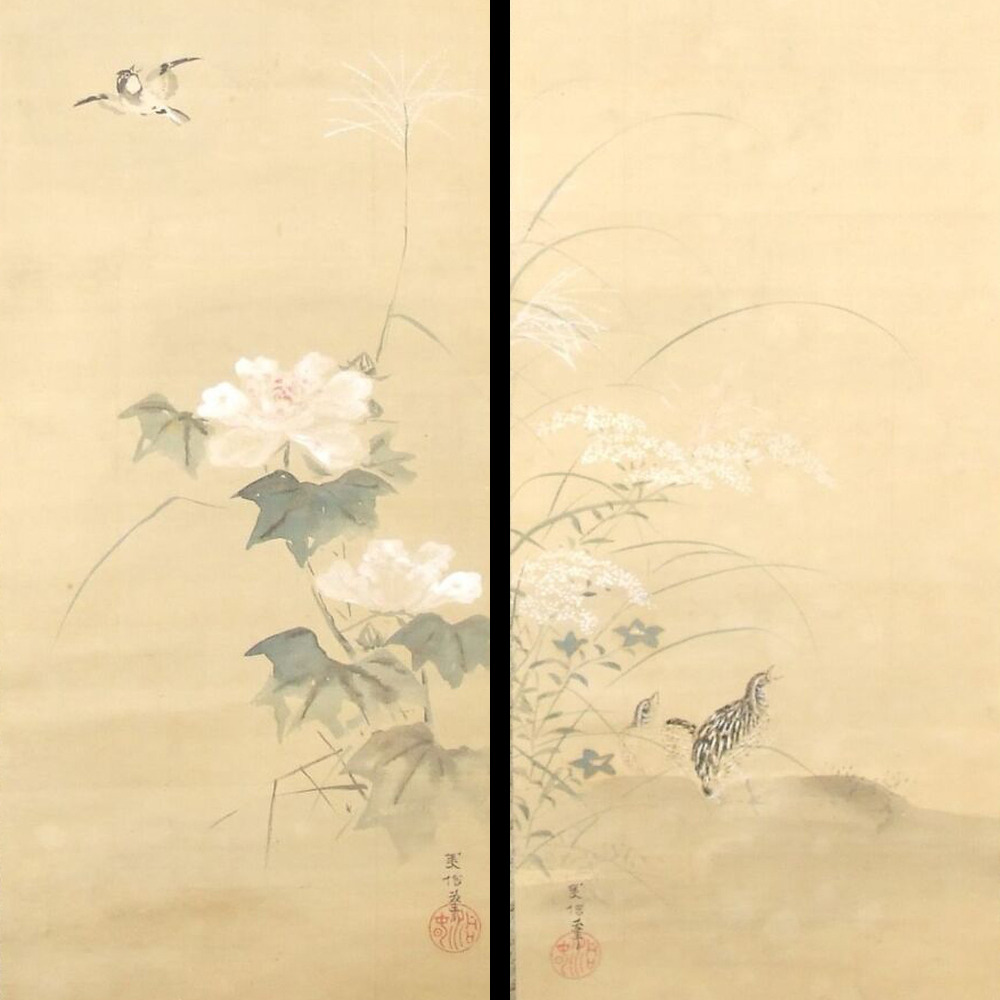
Kanō Tōshun Yoshinobu
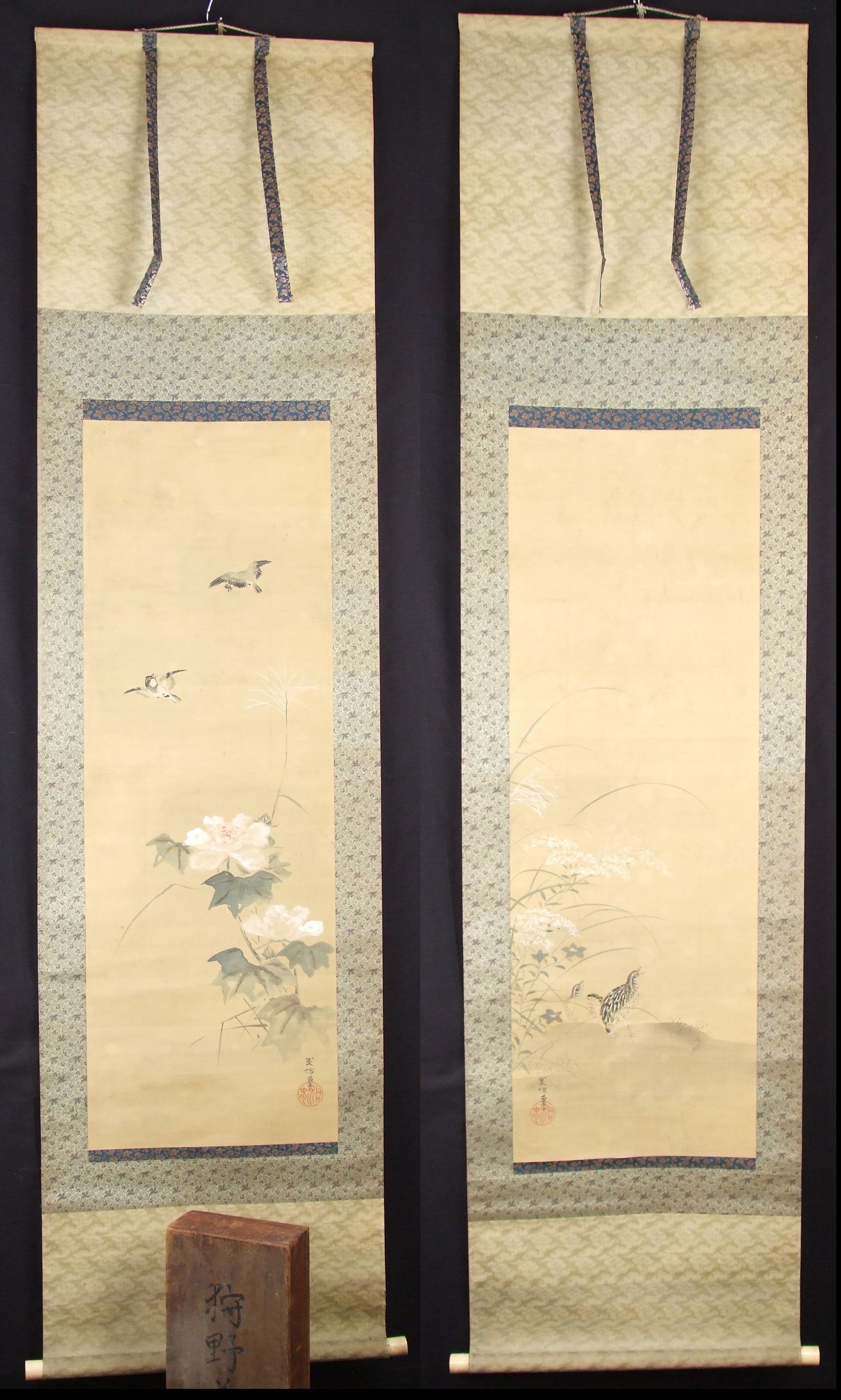
Set of Two Paintings – Birds and Autumn Flowers
Kakemono, unique work, with box, 200 x 56 cm
€770.00
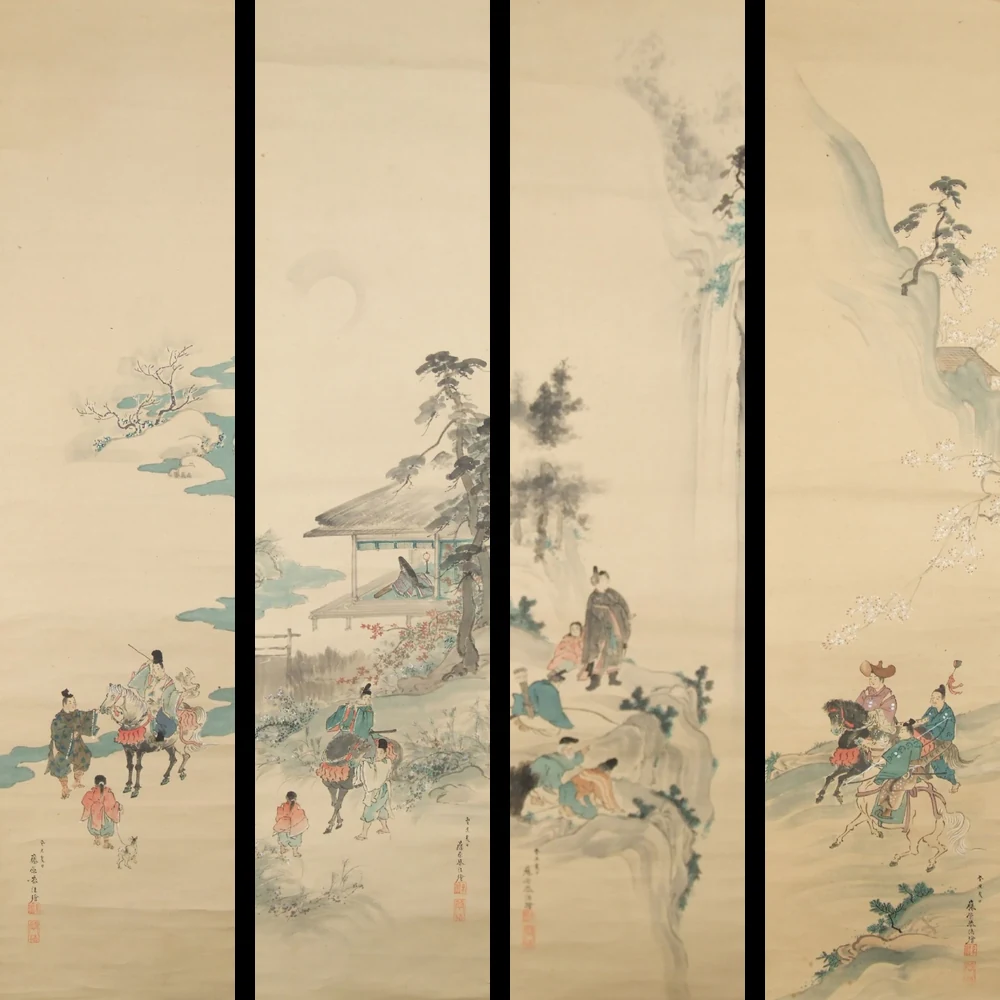
Okumura Kyōhō
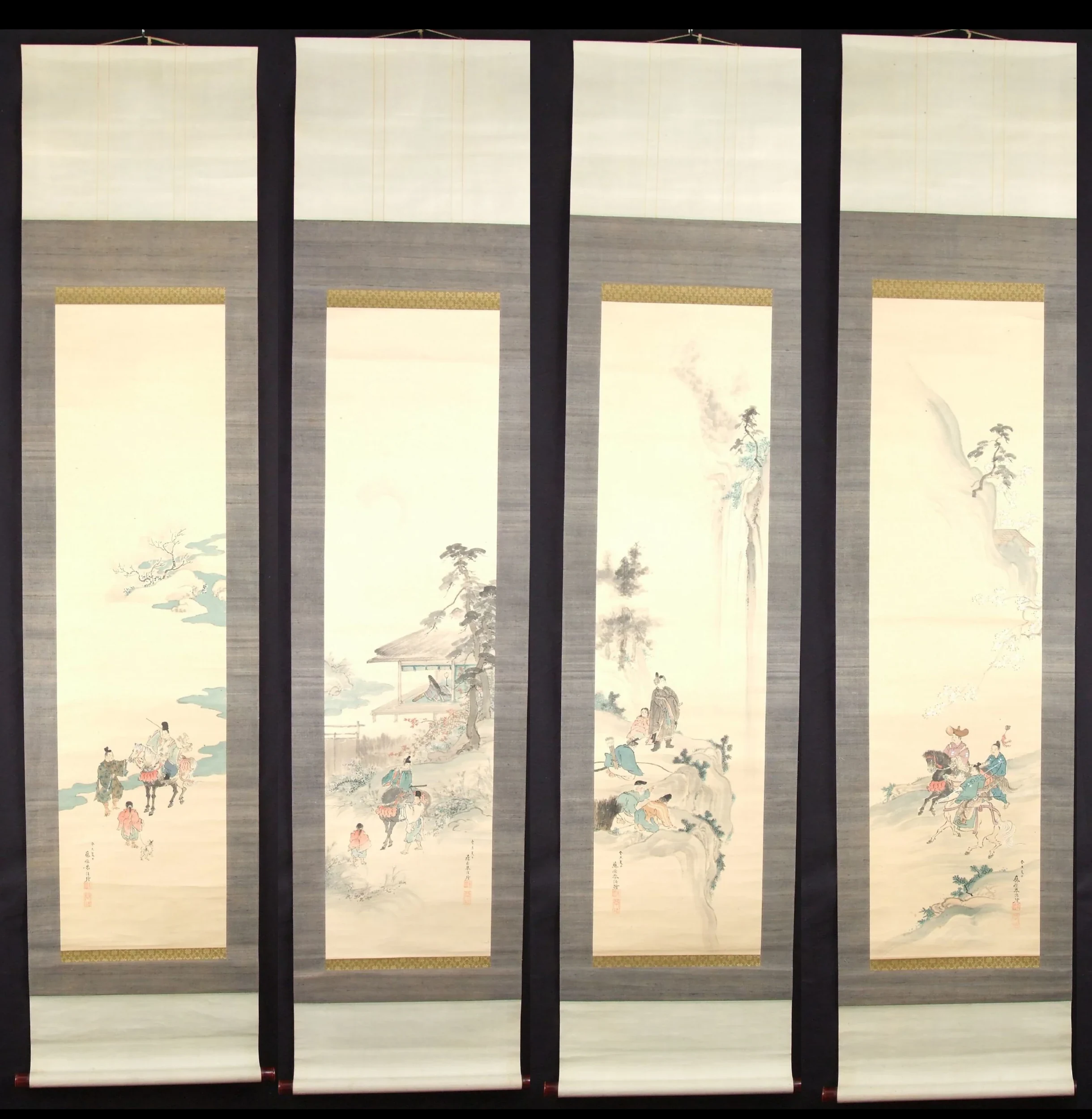
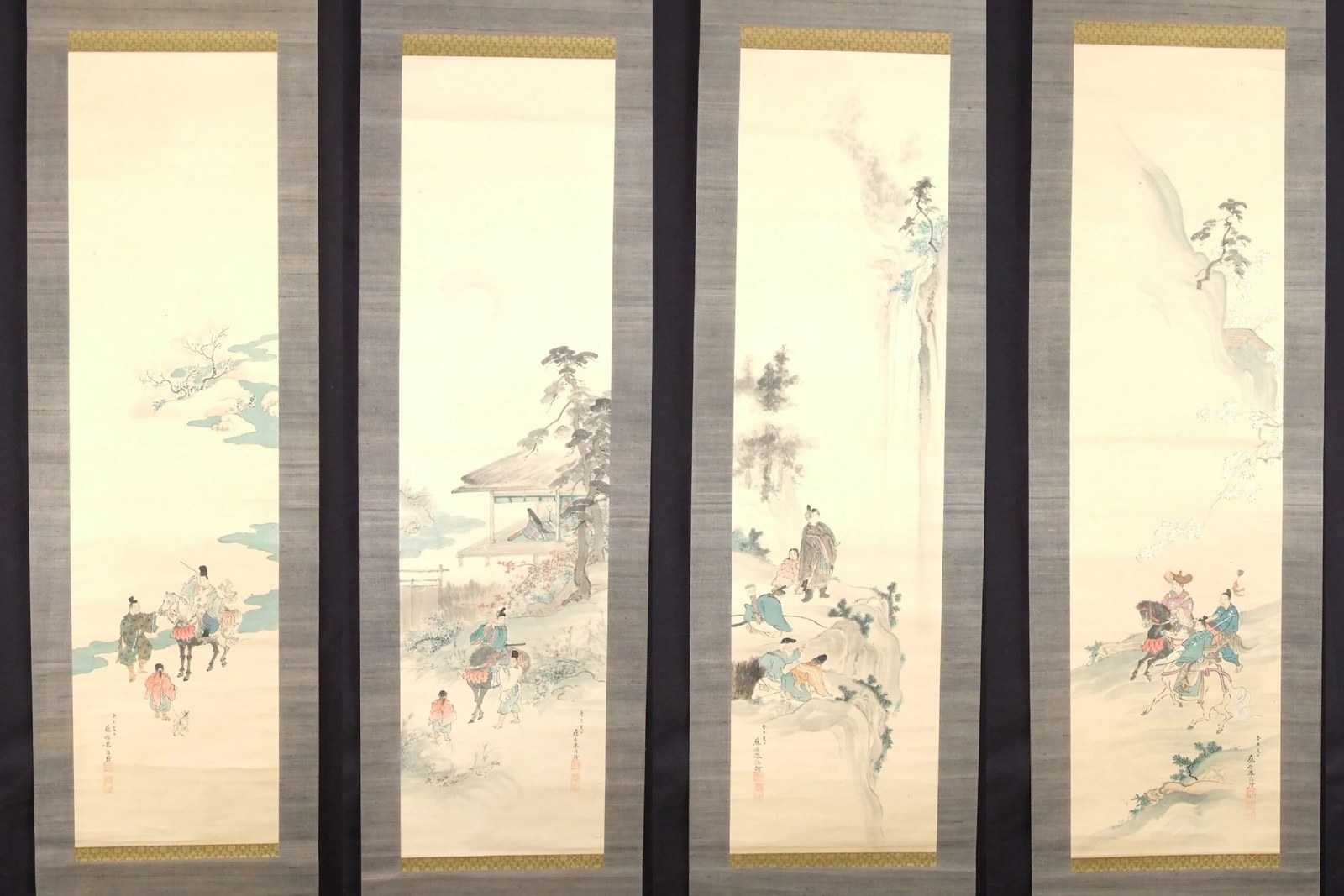
Set of Four Paintings – Legends of the Four Seasons
Kakemono, unique work, with box, 192 x 48 cm
€1,210.00
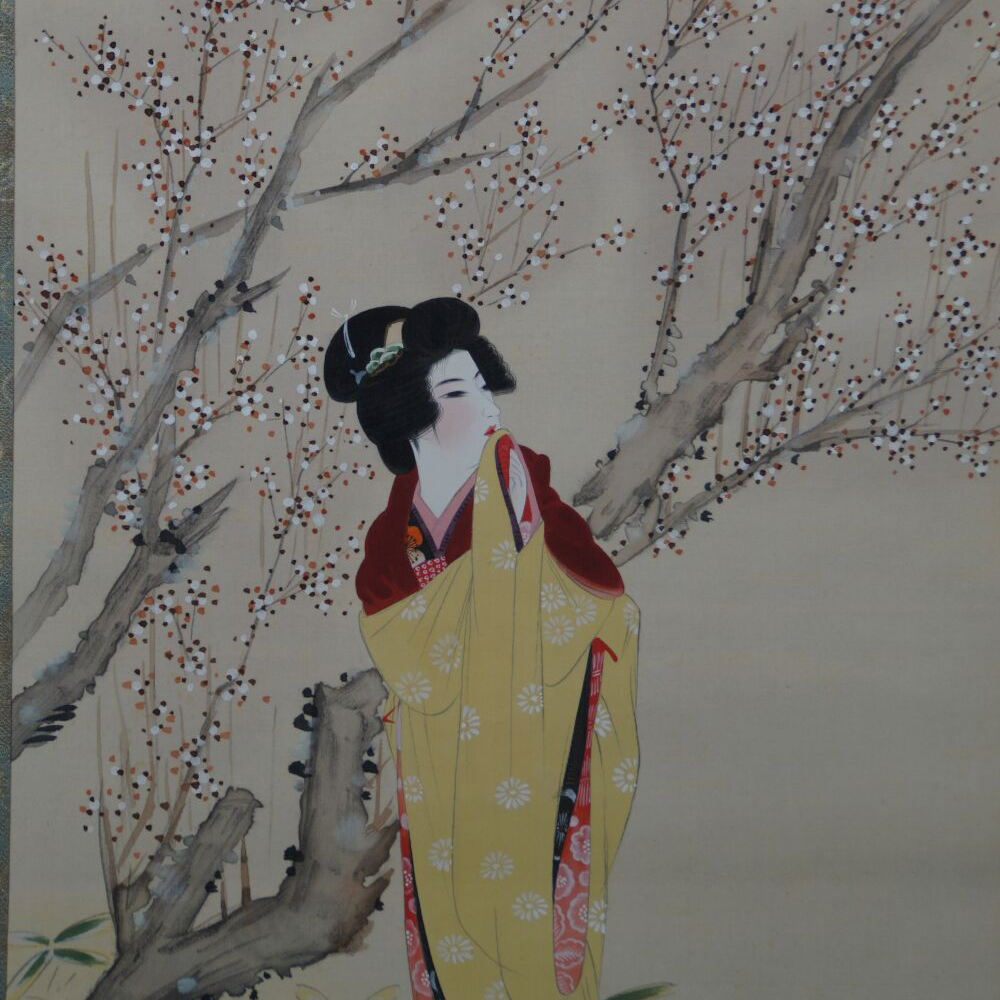
Itō Shinsui
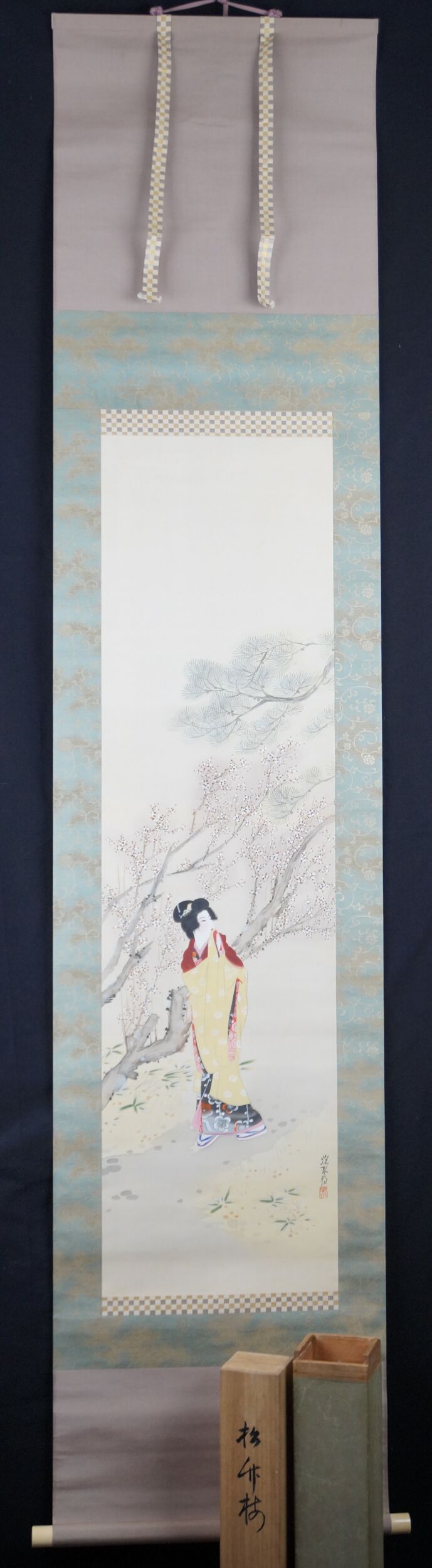
Lady in Kimono Under Blossoming Plum Tree
Kakemono, unique work, with box, 205 x 50 cm
€1,680.00
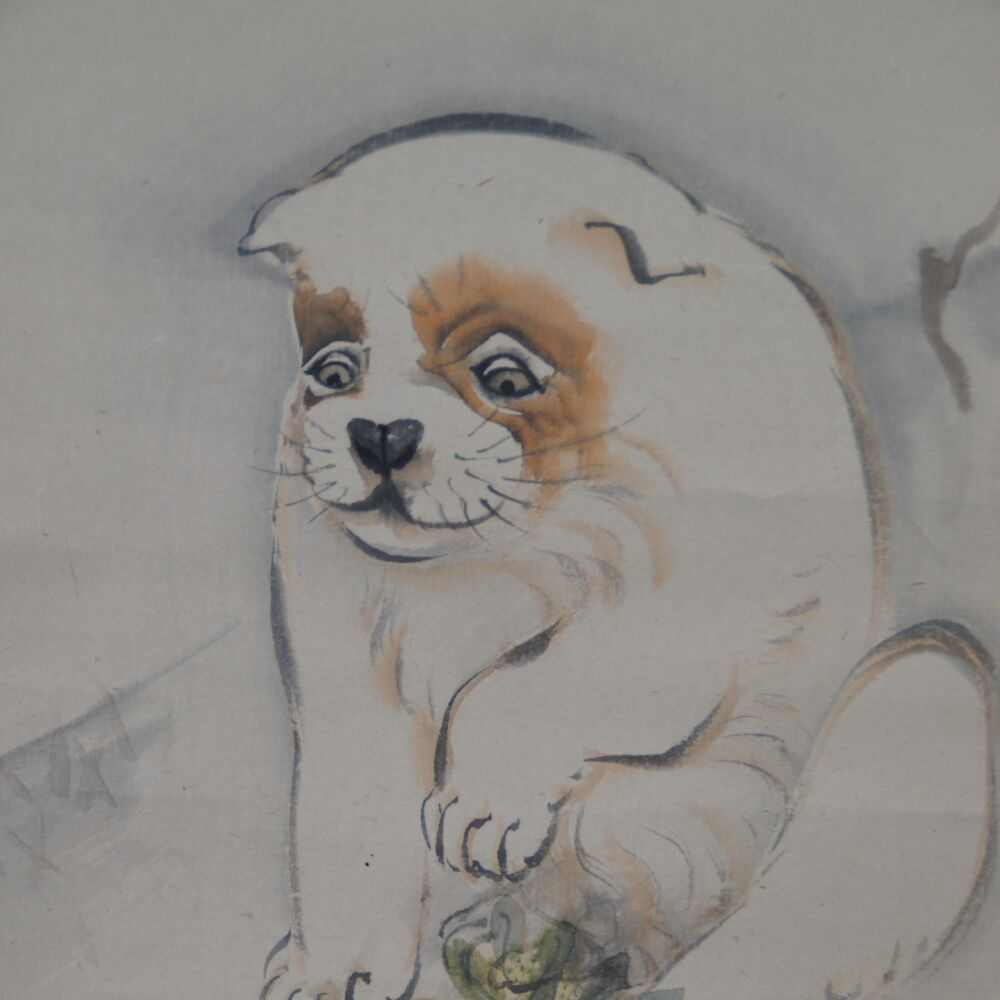
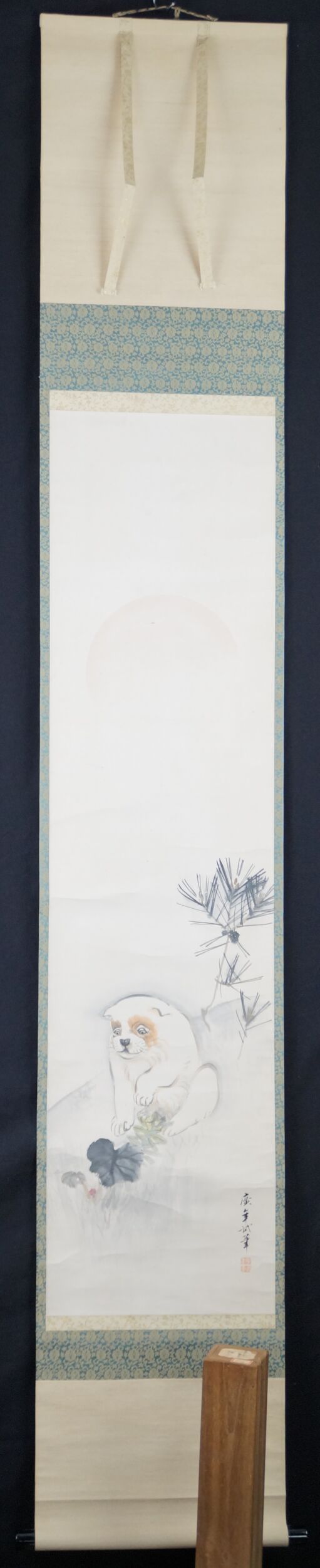
Puppy at Sunset Under Pine Trees
Kakemono, unique work, with box, 200 x 39 cm
€210.00
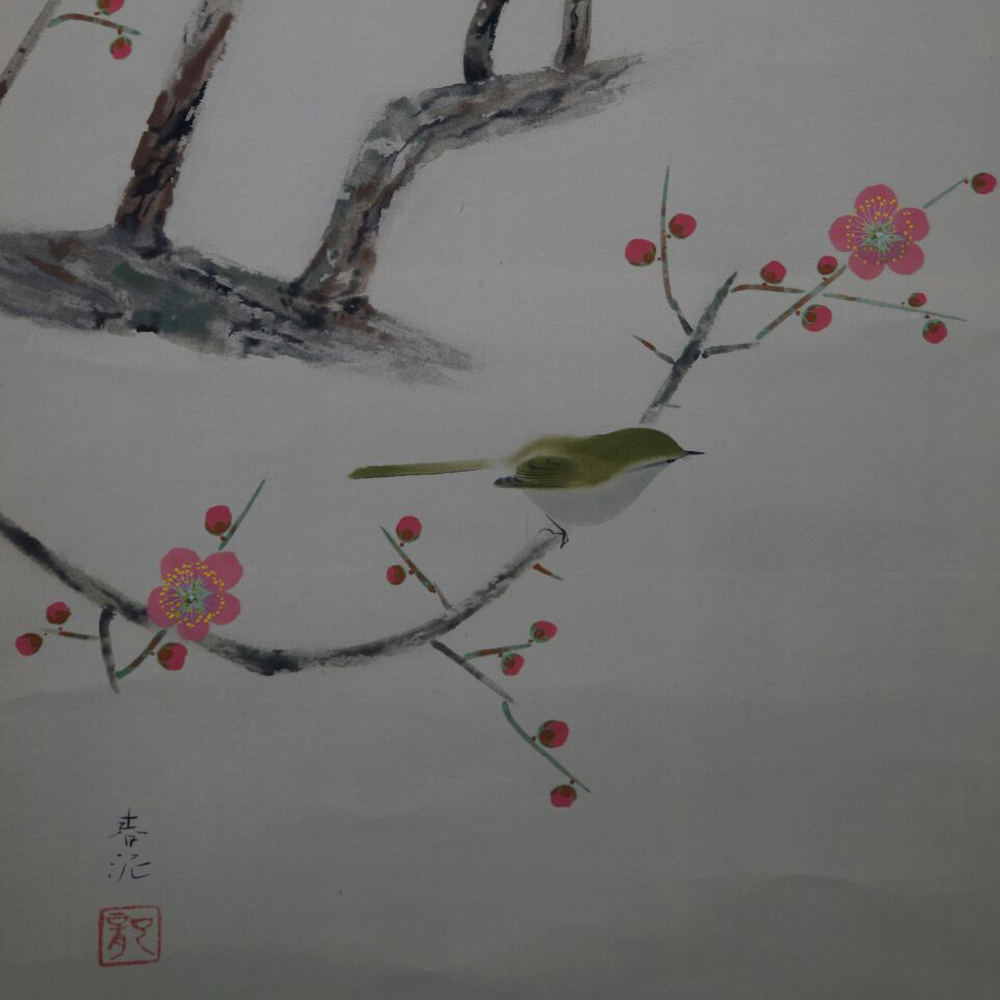
Nakamura Shunden
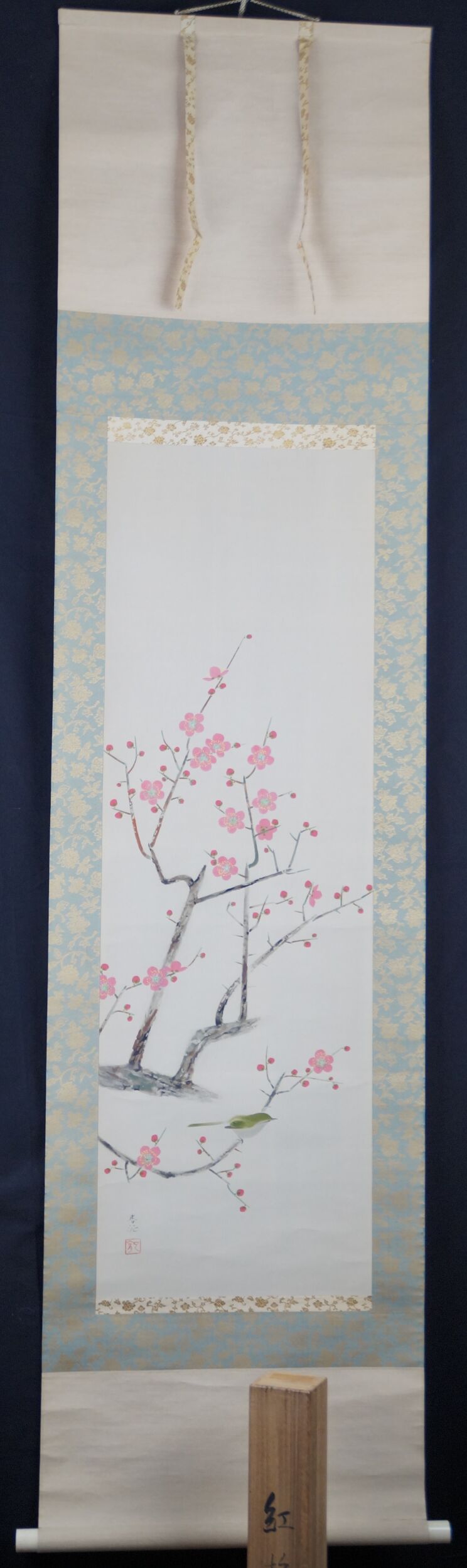
Uguisu on Blossoming Plum Tree
Kakemono, unique work, with box, 198 x 55 cm
€320.00
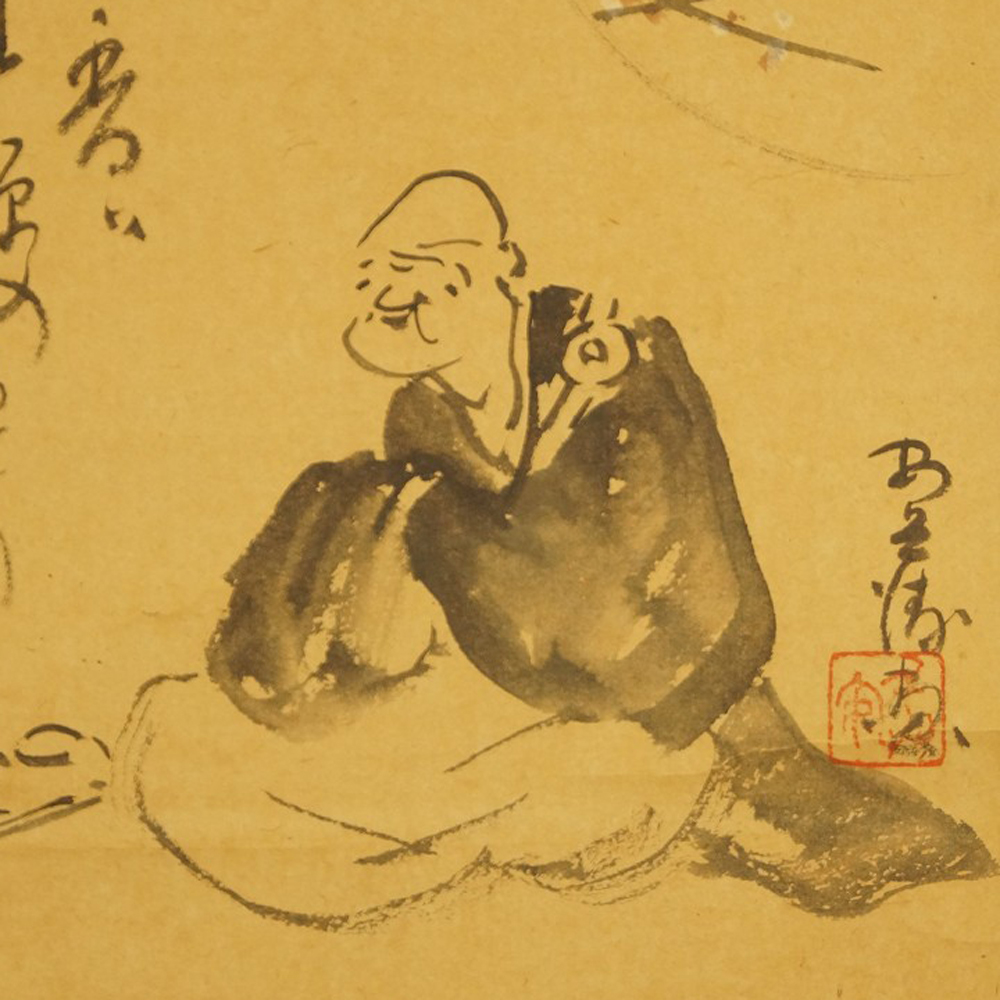
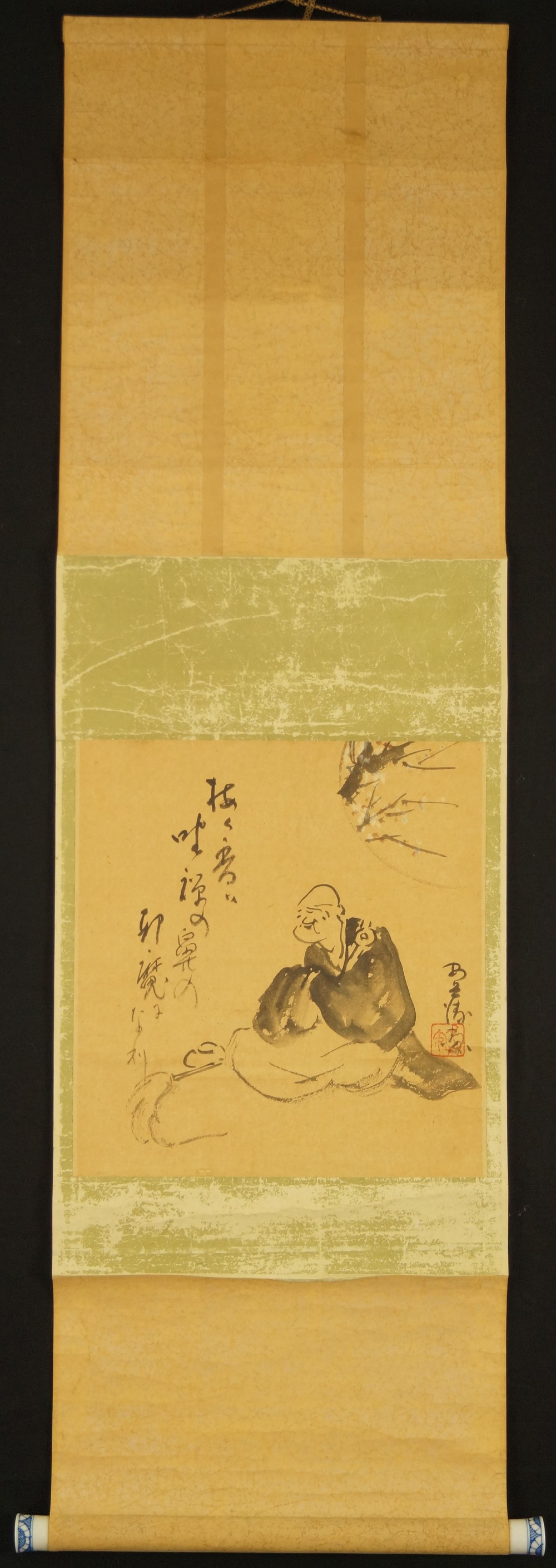
Old Zen Monk Under Cherry Blossoms
Kakemono, unique work, 115 x 40 cm
€980.00
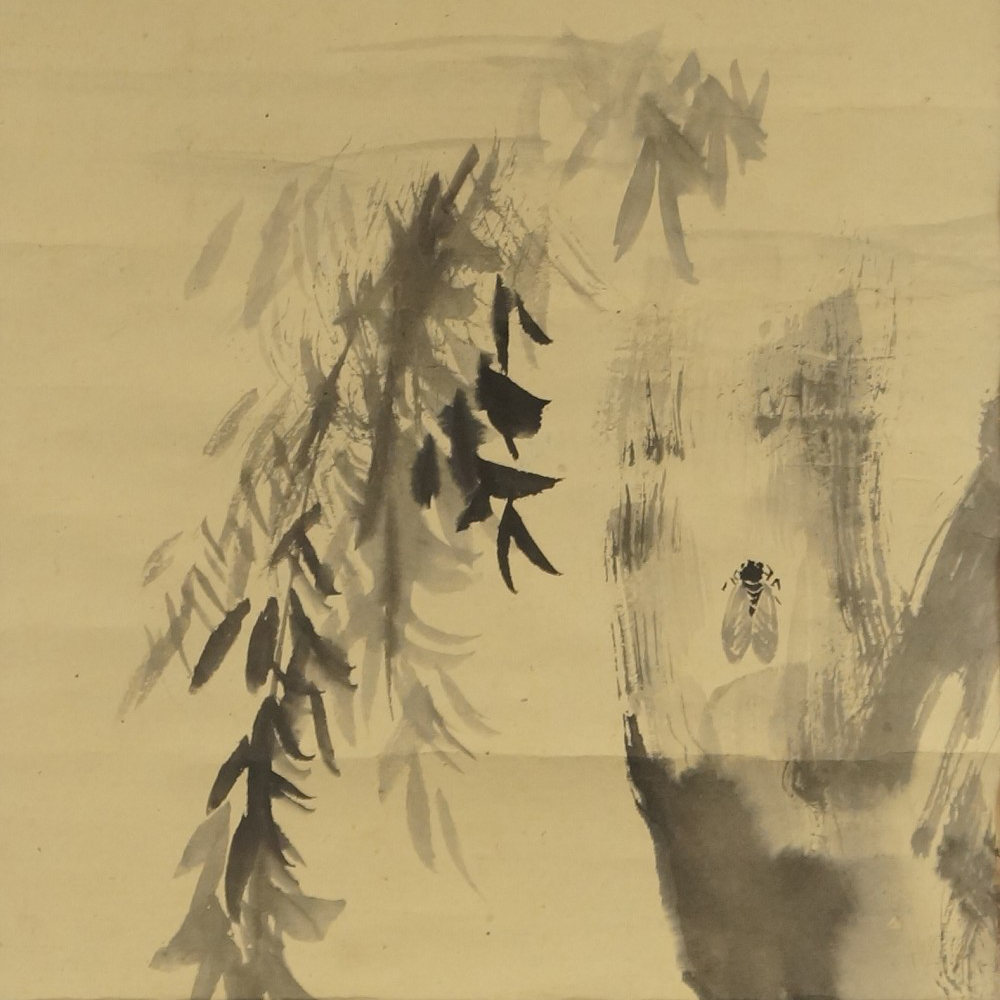
Kano Yoshinobu
Willow with Flying Insect
Kakemono, unique work, 180 x 44 cm
€460.00