
Japanese Art of the Edo Period
Go directly to the artworksIn brief
The Edo period (江戸時代, Edo jidai, 1603–1868), also called the Tokugawa period, was an era of some 250 years of peace during which Japan largely sealed itself off from the outside world. It was precisely in this seclusion that many of today's defining art traditions took shape – Kanō school painting, Rinpa and Nanga, the Ukiyo-e color woodblock print and ceramics from Hagi, Kutani and Arita. Works from this era are more than 150 years old and show their age. At Densho you will find Edo-period art – above all hand-painted kakemono – as one-of-a-kind pieces direct from Japan.
Kanō Tanyū
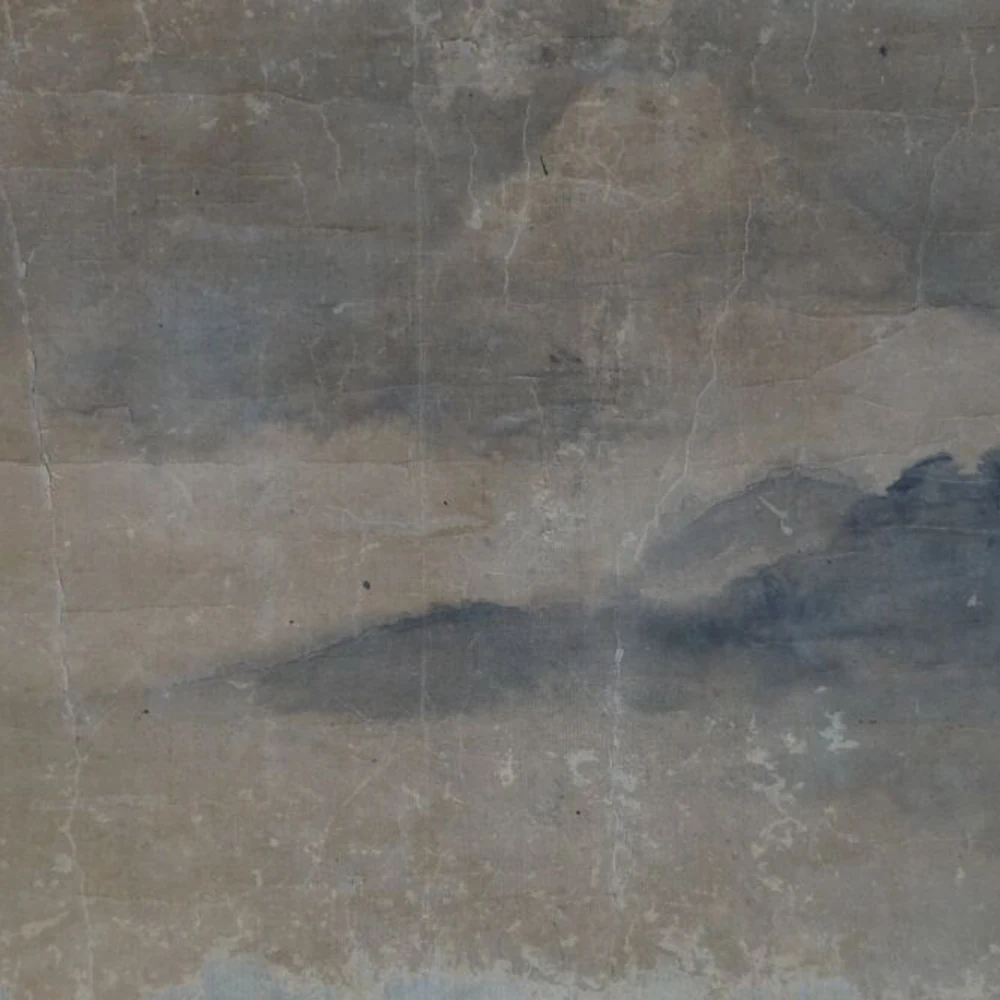
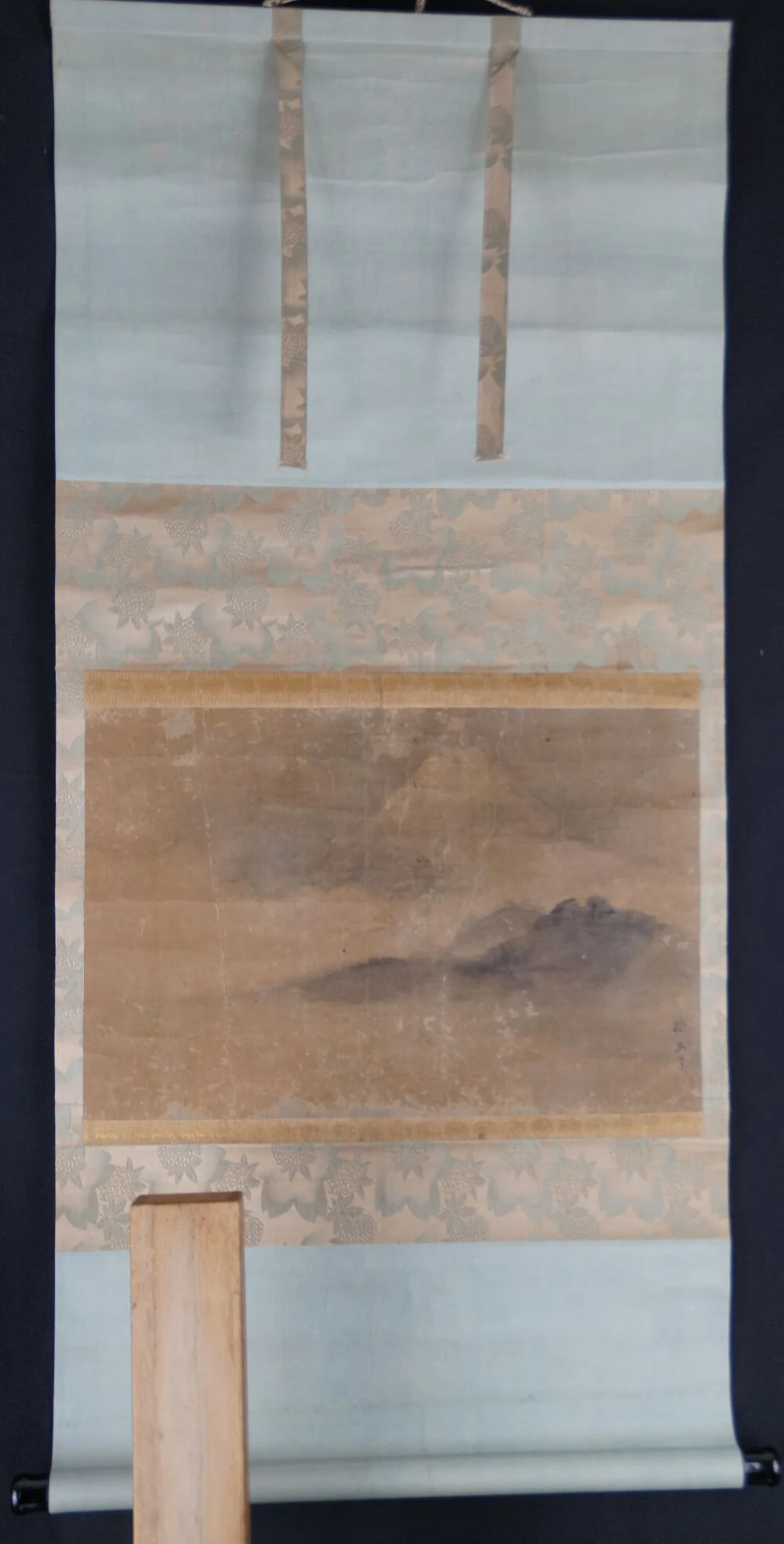
Fuji Above a Cloud Band and Misty Hills
Kakemono, unique work, with box, 103 x 52 cm
€660.00
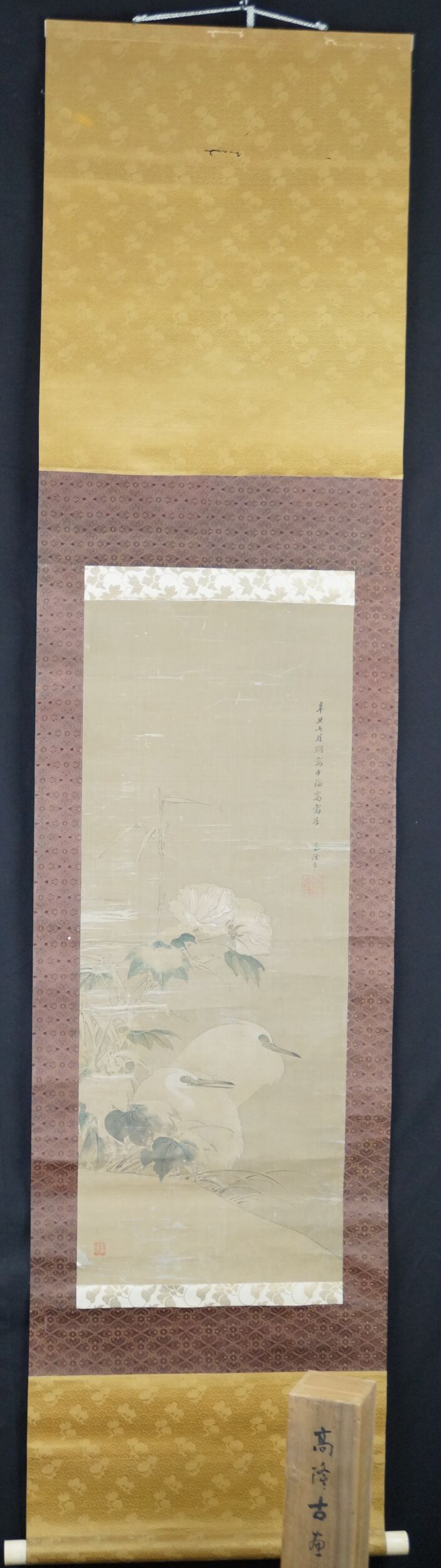
Takaku Ryūko
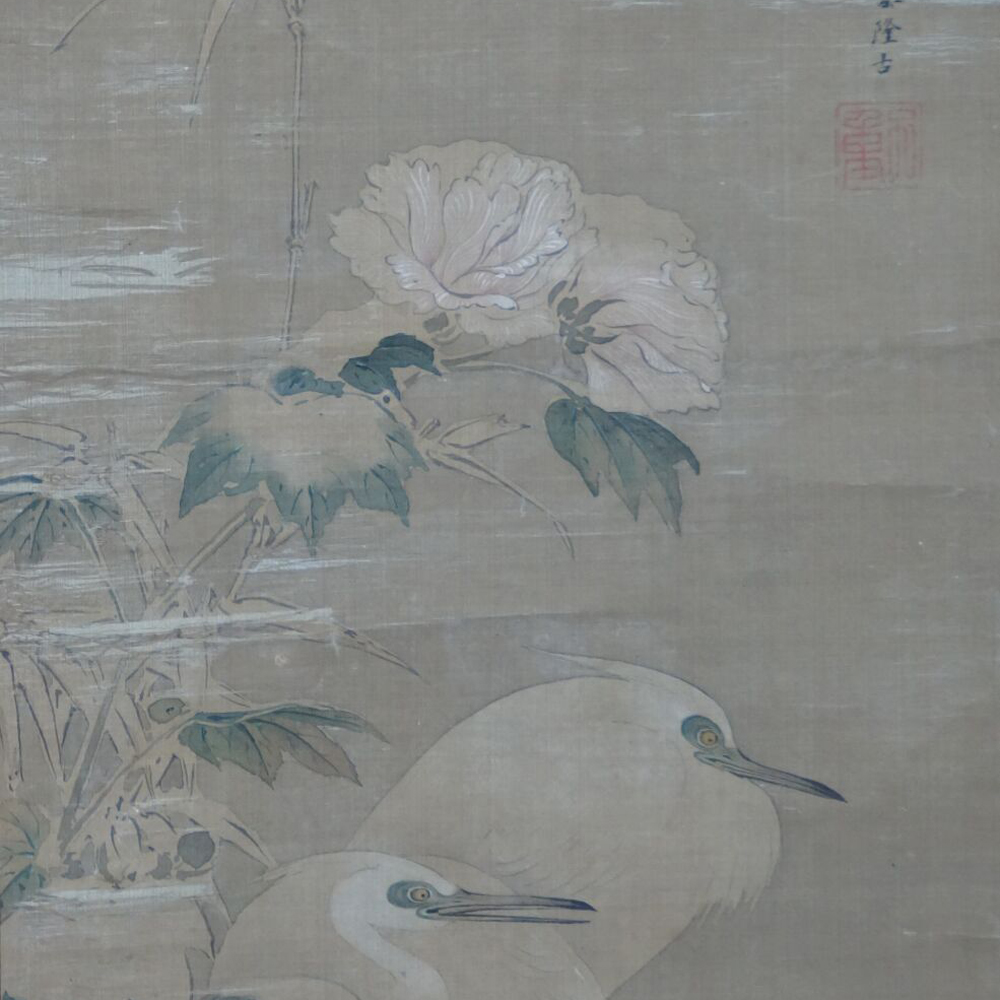
Heron in Silent Peony Splendor
Kakemono, unique work, with box, 186 x 50 cm
€1,300.00
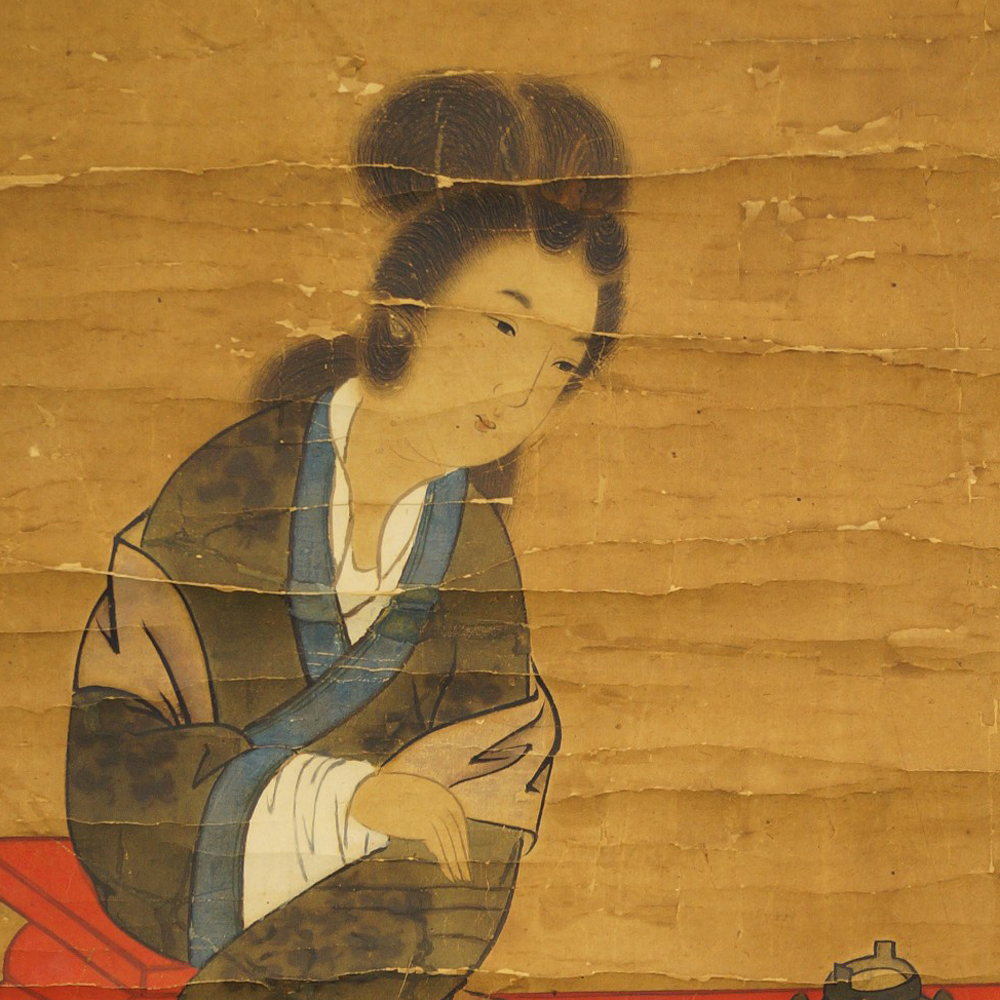

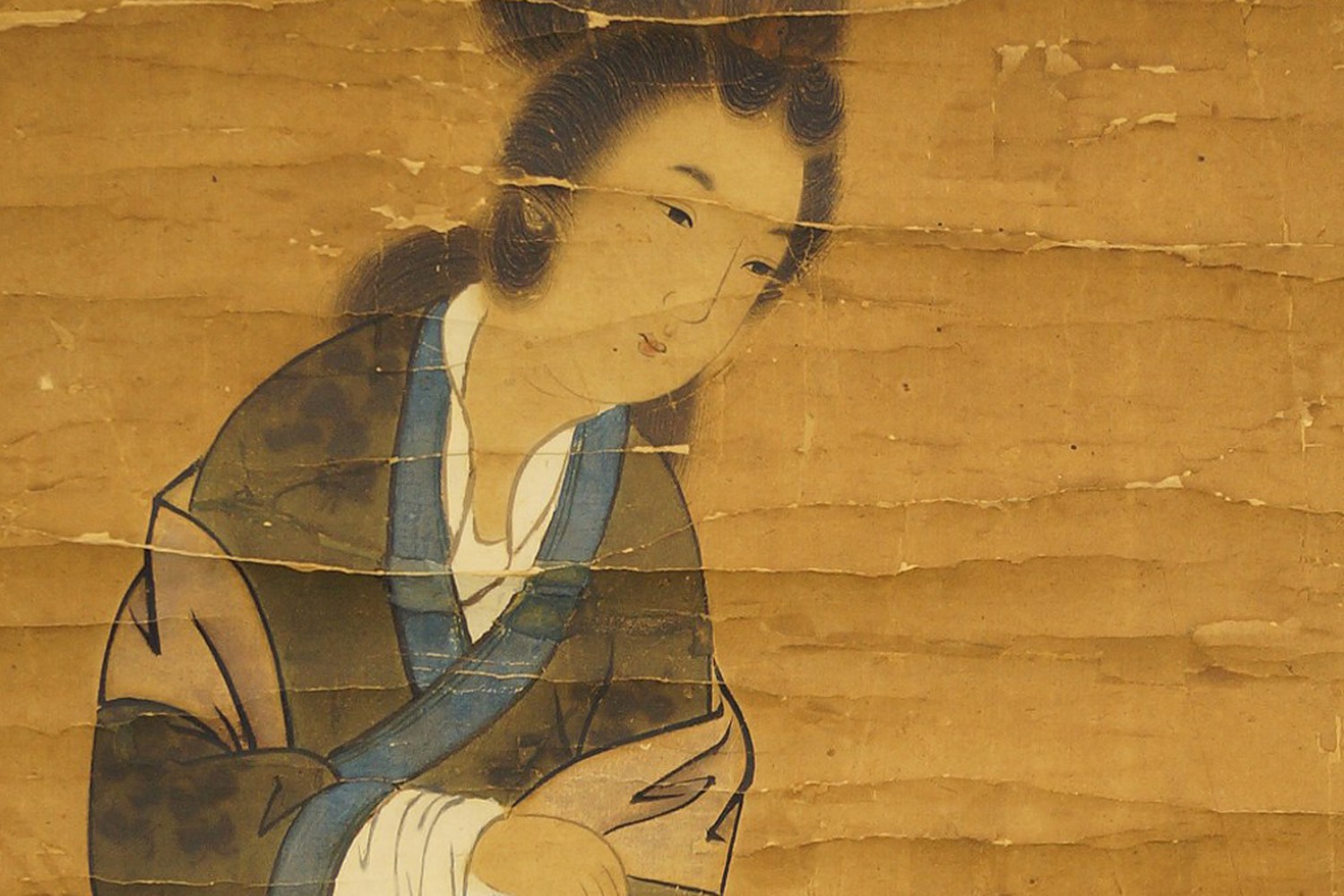
Chinese Beauty at Red Table
Kakemono, unique work, 174 x 44 cm
€750.00

Jikoji Sanenaka
Crane by Bamboo on Gold Background
Kakemono, unique work, 179 x 52 cm
Sold

Yoshihiko
Dragon in Light Contours on Dark Silk
Kakemono, unique work, 175 x 61 cm
Sold
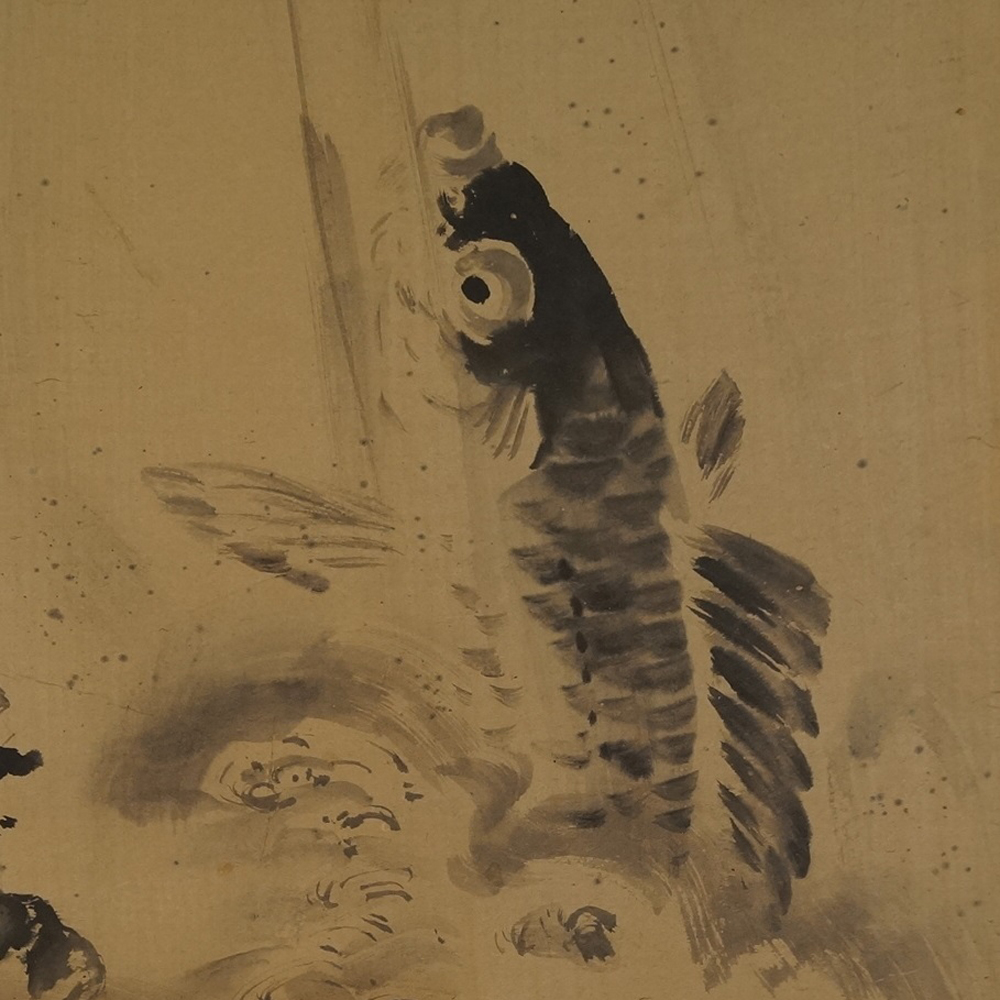
Kanō Sōshū
Two Koi in Plunging Water
Kakemono, unique work, 102 x 28 cm
Sold
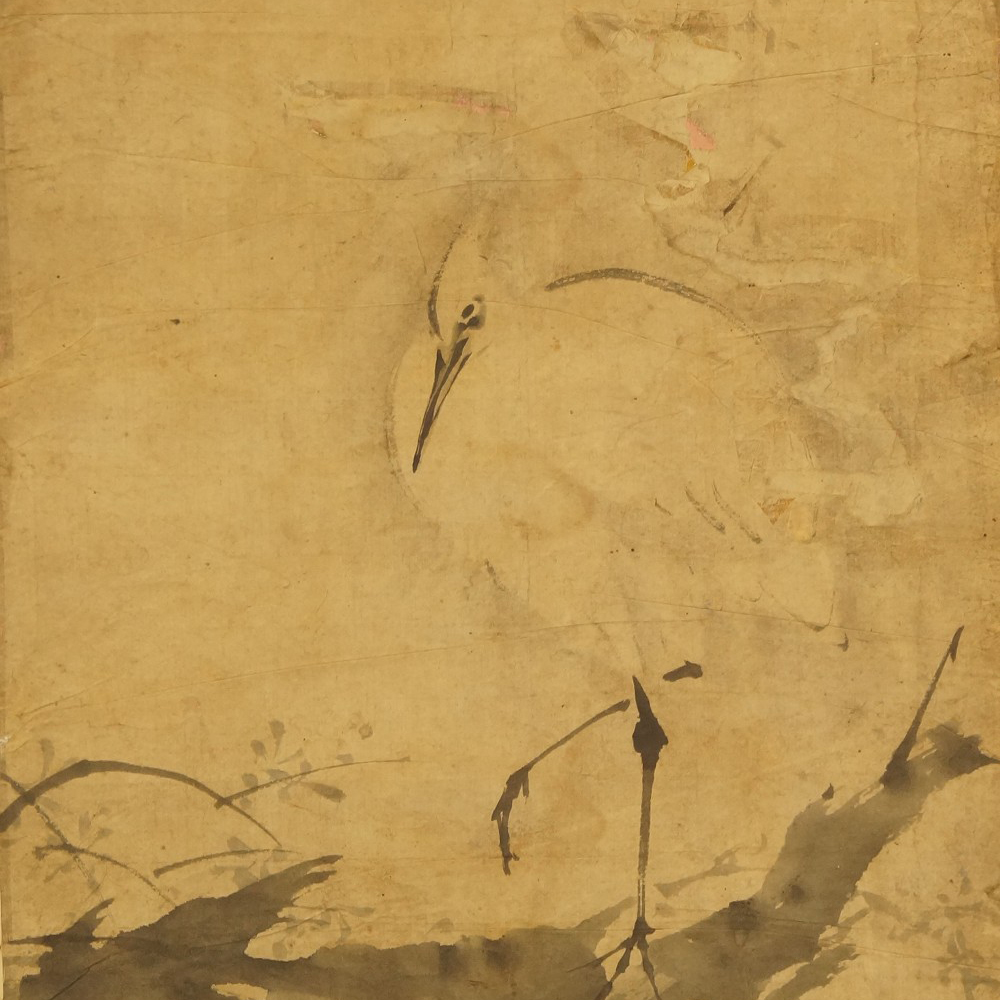
White Heron
Kakemono, unique work, 78 x 28 cm
Sold
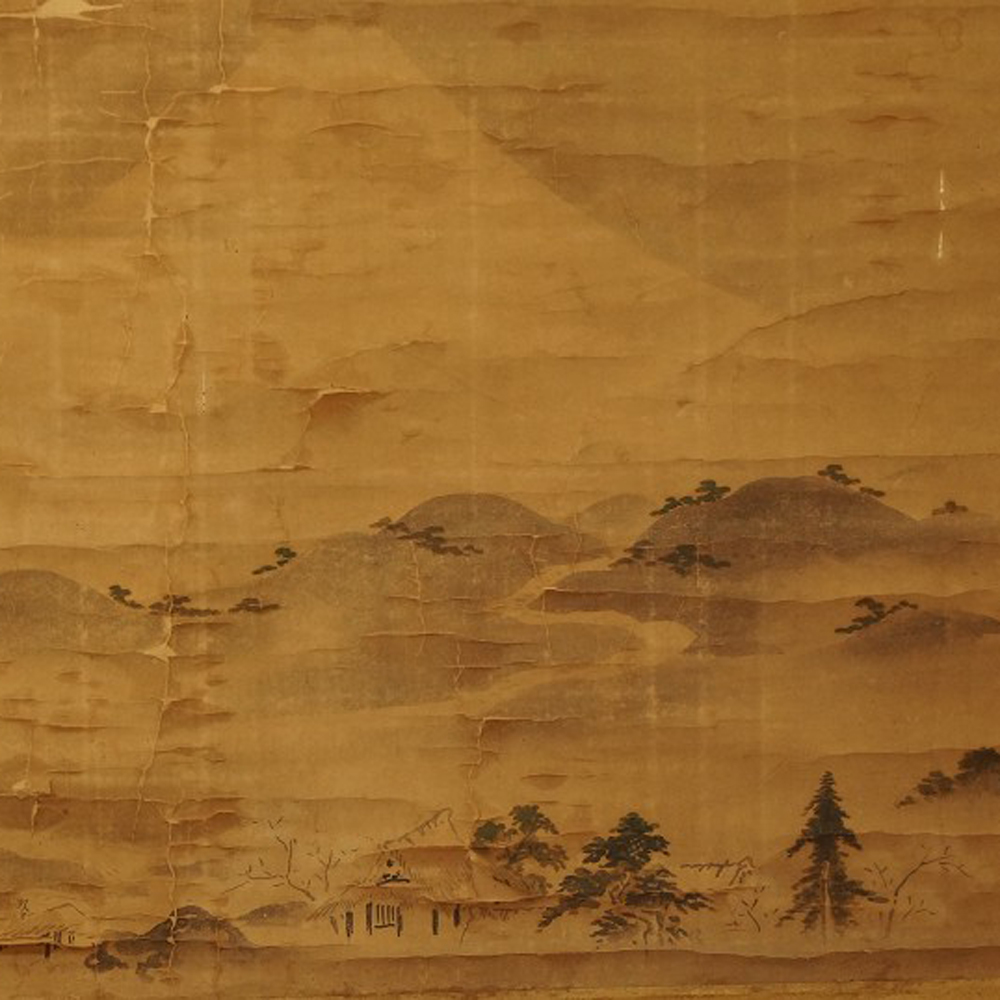
Mount Fuji Over Villages and Hills in the Mist
Kakemono, unique work, with box, 185 x 146 cm
Sold
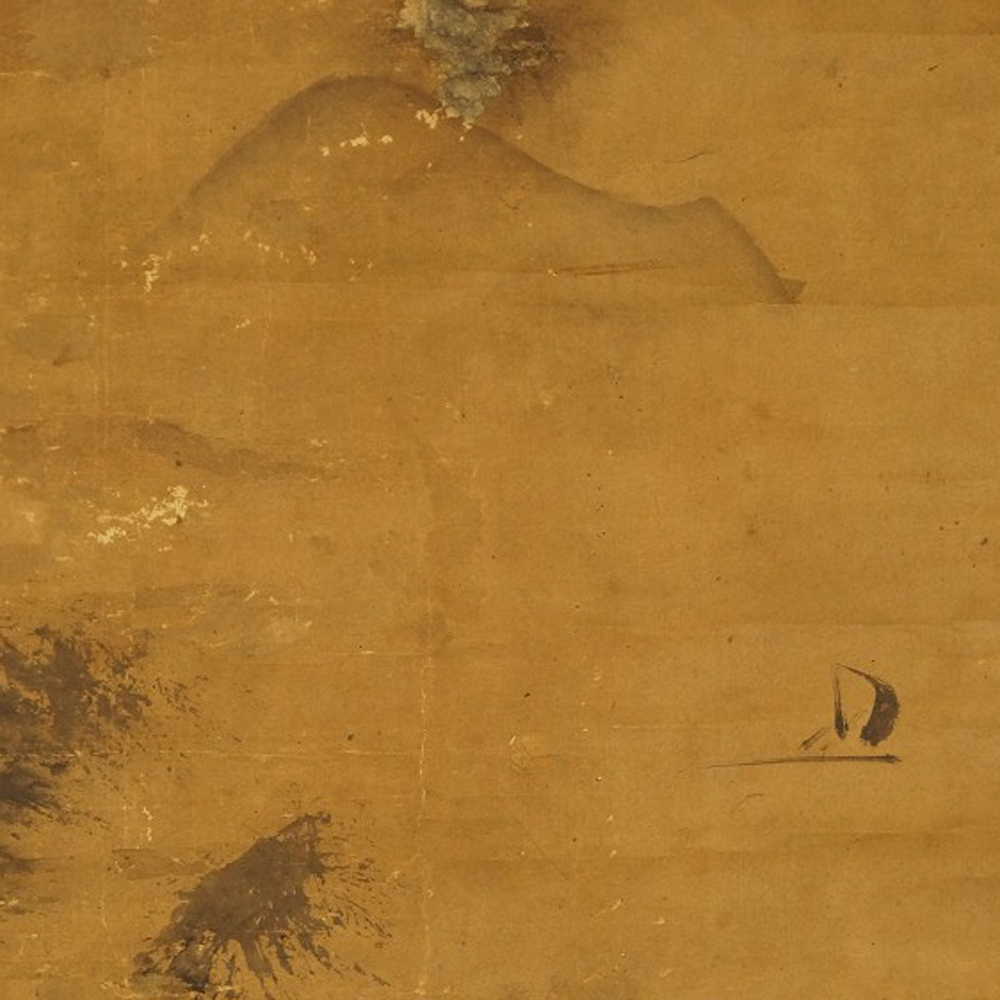
Antique Landscape with Sailboat
Kakemono, unique work, 98 x 67 cm
Sold

Two Ducks at the Pond's Edge
Kakemono, unique work, 194 x 61 cm
Sold

Large Koi with Small Fish in Landscape Format
Kakemono, unique work, 108 x 70 cm
Sold
11 of 11 items shown
Two hundred and fifty years of peace
After his victory at the Battle of Sekigahara in 1600, Tokugawa Ieyasu took power in 1603 and moved the seat of the shogunate from Kyōto to Edo, today's Tokyo. The emperor continued to reside in Kyōto, but without real power. Over 15 generations the Tokugawa family secured a long period of domestic peace – at the price of strict control and a fixed class order of samurai, farmers, artisans and merchants. Edo and Ōsaka grew into economic and cultural centers, and a prosperous urban class gained great cultural influence despite its formally low rank.
Sakoku: a culture of its own making
From 1624 the shogunate drastically restricted contact with the outside world. For long stretches Nagasaki remained the only port for limited trade, mainly with the Netherlands and China. This seclusion, known as sakoku, was meant above all to keep foreign colonial and religious influence out. At the same time it fostered an exceptionally independent culture: much of what is regarded today as "typically Japanese" – the tea ceremony in its present form, the color woodblock print, numerous ceramic traditions – took shape in this period.
Painting: Kanō, Rinpa, Nanga
The Kanō school set the course of official painting. Its court painter Kanō Tan'yū painted Mount Fuji repeatedly, with finely graded line and generous empty space, and shaped the visual language of the era. Training was by copying: workshop pupils studied their master's collection of model copies, the funpon, for years before designing anything of their own. Alongside this arose decorative Rinpa painting with flowers and landscapes on gold ground, and Nanga painting, oriented toward Chinese literati ideals. In the 18th century Maruyama Ōkyo introduced drawing from nature, and in the cities the Ukiyo-e woodblock print captured "life in the floating world". Typical motifs on scrolls include cranes and herons, bamboo and peonies, carp in the water, dragons in clouds, landscapes with Mount Fuji and figures after Chinese models.
Ceramics and the tea ceremony
For Japanese ceramics, too, the Edo period was a formative phase. The discovery of porcelain in Arita dates to 1616, Kutani and Hagi took on their defining character, and many feudal lords placed kilns under their protection as official purveyors. The tea ceremony, shaped by Sen no Rikyū in the 16th century, turned during this time from an exclusive ritual of the ruling class into a cultural practice of prosperous townspeople. Many of the kiln traditions founded then are still carried on today.
How to recognize an Edo-period scroll
The support reveals the most. Over the generations paper and silk take on a warmer tone, foxing appears, and the ink draws into the fibers and loses its sharp edge. At this age, fine hairline cracks and creases, stains and a darkened surface are often part of the picture. Pigments help date a work too: synthetic aniline dyes cannot be traced in Japan before the 1860s – a bright magenta on a supposedly early Edo painting is therefore a clear sign of a later origin. The mounting, on the other hand, says little, as it is traditionally renewed every one to two hundred years; fresh silk may simply mean that an old painting has been well cared for.
Signature, seal and workshop
A signature places a work within a lineage and a workshop – who actually held the brush it tells only approximately. In Edo-period workshop painting the master designed the composition, assistants executed details, and the work was signed with the master's name. Art names passed from teacher to pupil, and court ranks such as Hokkyō or Hōgen appearing in a signature narrow down when a work was made. Descriptions therefore carefully say that signature and seal refer to a painter.
Caring for an antique scroll
A kakemono is not hung permanently but shown for a few weeks and then stored loosely rolled in its wooden box. It needs indirect light, no wall above a radiator and steady humidity of around 50 to 60 percent. Remove dust only dry, with a soft brush, because moisture dissolves the starch paste of the mounting. If the edges of the mounting come loose or cracks run through the picture, remounting by a hyōgu-shi is the right course – this regular intervention is the very reason scrolls from the 17th century still exist at all.
What collectors look for
An Edo-period scroll is a witness of its time, and its condition is part of its story. Make sure signs of age are openly described, and read the dating and the artist's name as two separate statements. What matters is that it was painted by hand – brushstrokes start with pressure and trail off, and a genuinely stamped seal sits slightly raised. An accompanying wooden box stays with the painting. The Edo period ended in 1868 with the Meiji Restoration, after Japan's forced opening in 1853 had sharpened tensions within the country.
