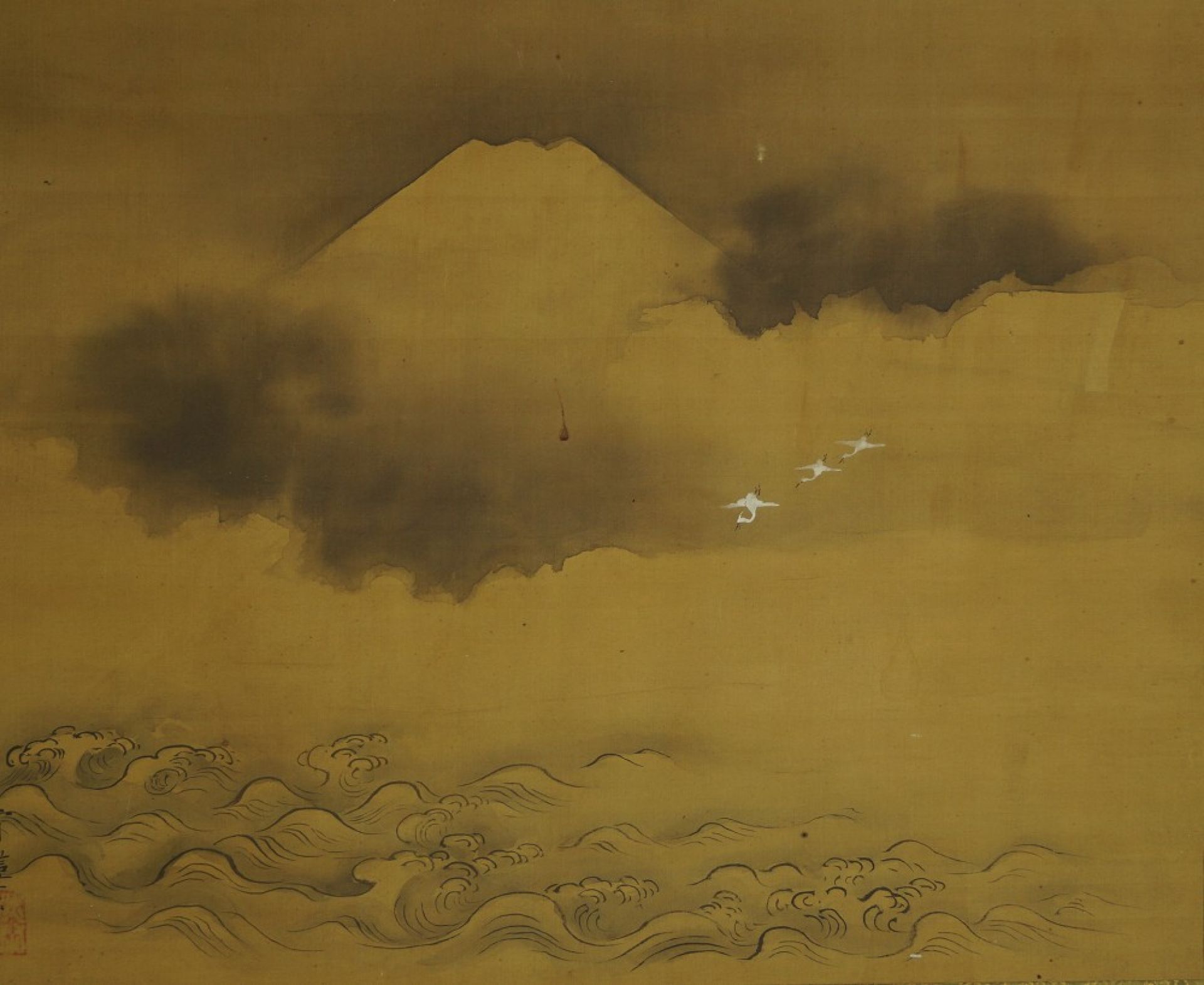
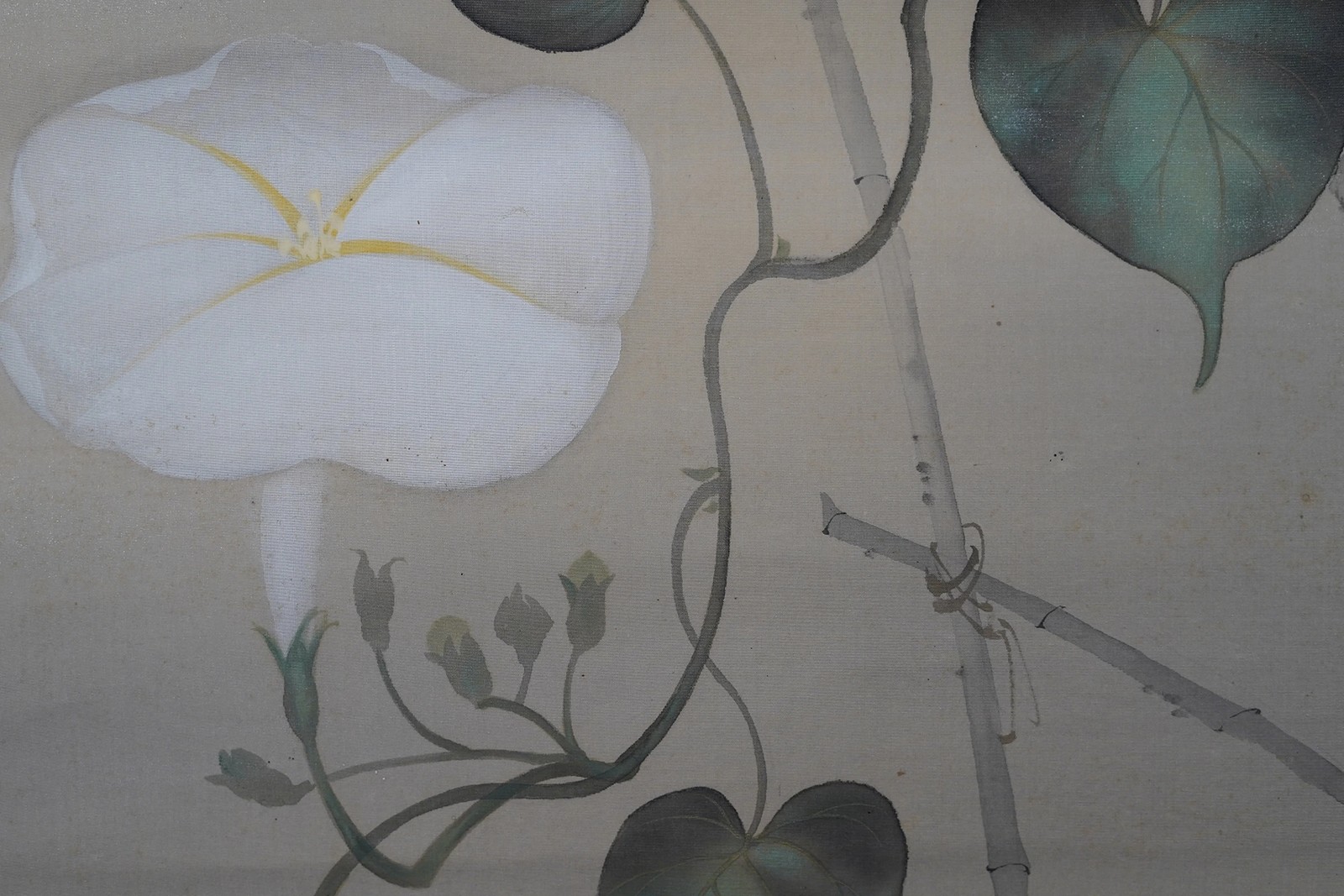
A branch with pale blossoms on a Japanese hanging scroll is rarely just a branch. Anyone who can read it knows in which month the picture should hang, which festival it recalls, and sometimes even which poem the painter had in mind. In Japan, flowers are a language, but a different one from the European kind: they speak less of feelings than of time.
This article introduces the flowers that recur again and again in Japanese art, from the plum that opens the year to the chrysanthemum of autumn. It explains what they mean, where these meanings come from, and how to recognize them in paintings, ceramics, and lacquer.
Flowers as a calendar
The most important meaning of a Japanese flower is its season. Whether a picture belongs on the wall in February, May, or October is revealed first by what is blooming on it. Poets and painters have cultivated this knowledge for centuries; already in the early modern period there were flower calendars that listed the blossoms of a year in order and named the best places to see them.
Anyone who hangs a scroll to suit the season follows this calendar. A cherry branch in October would not be a lapse of style born of ignorance but the wrong time of day. That is why Japanese viewers first ask of a flower picture not "What does it mean?" but "When is it?"
Ume, the plum blossom: the first bloom in the snow
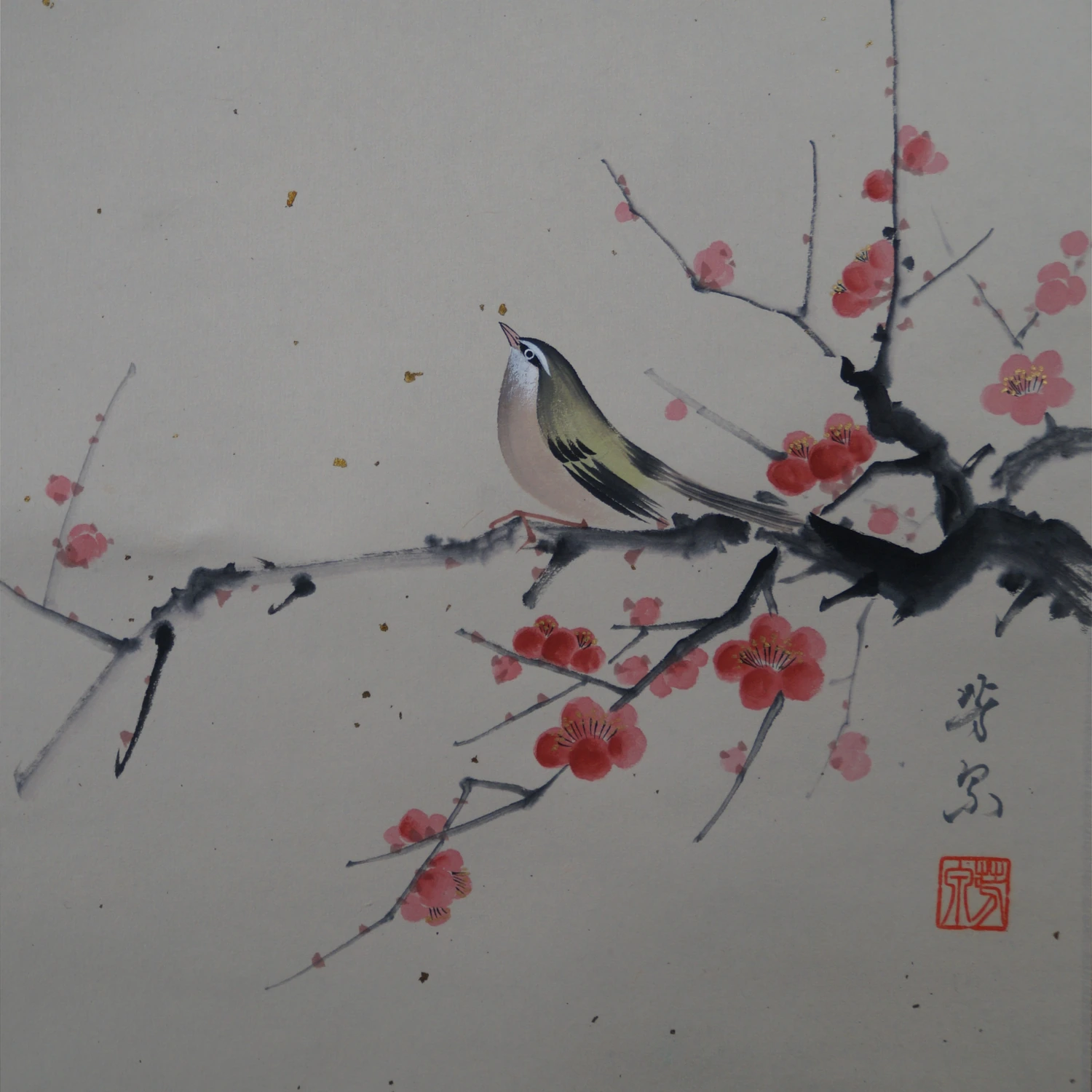
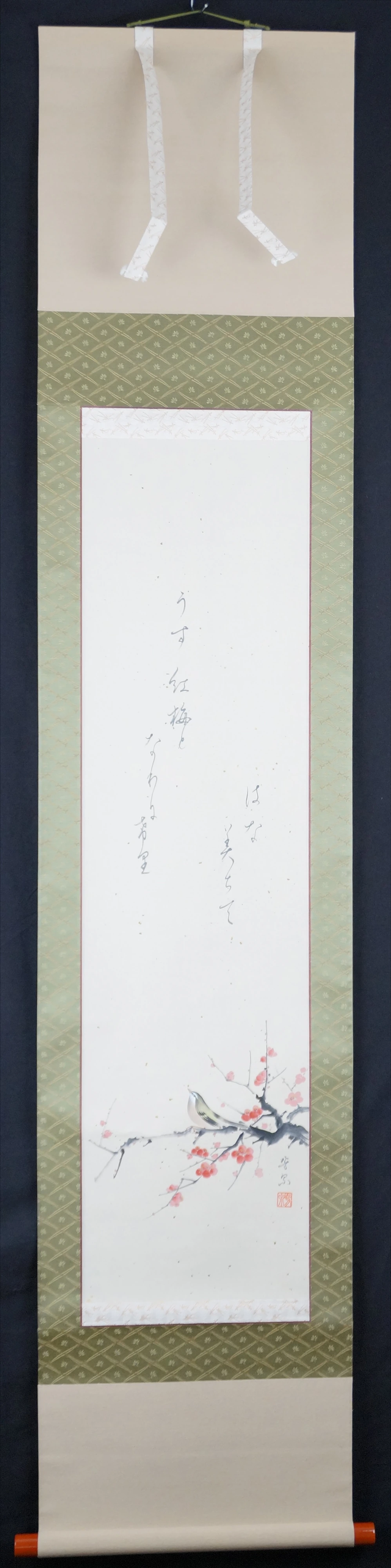
The plum, ume (梅) in Japanese, is the first to bloom, often as early as February while snow still lies on the ground. It comes from China and reached Japan before the Nara period. In the oldest Japanese poetry anthology, the Man'yōshū, it is surpassed among plants only by bush clover and is sung of more often than the cherry. Only later did the cherry take its place.
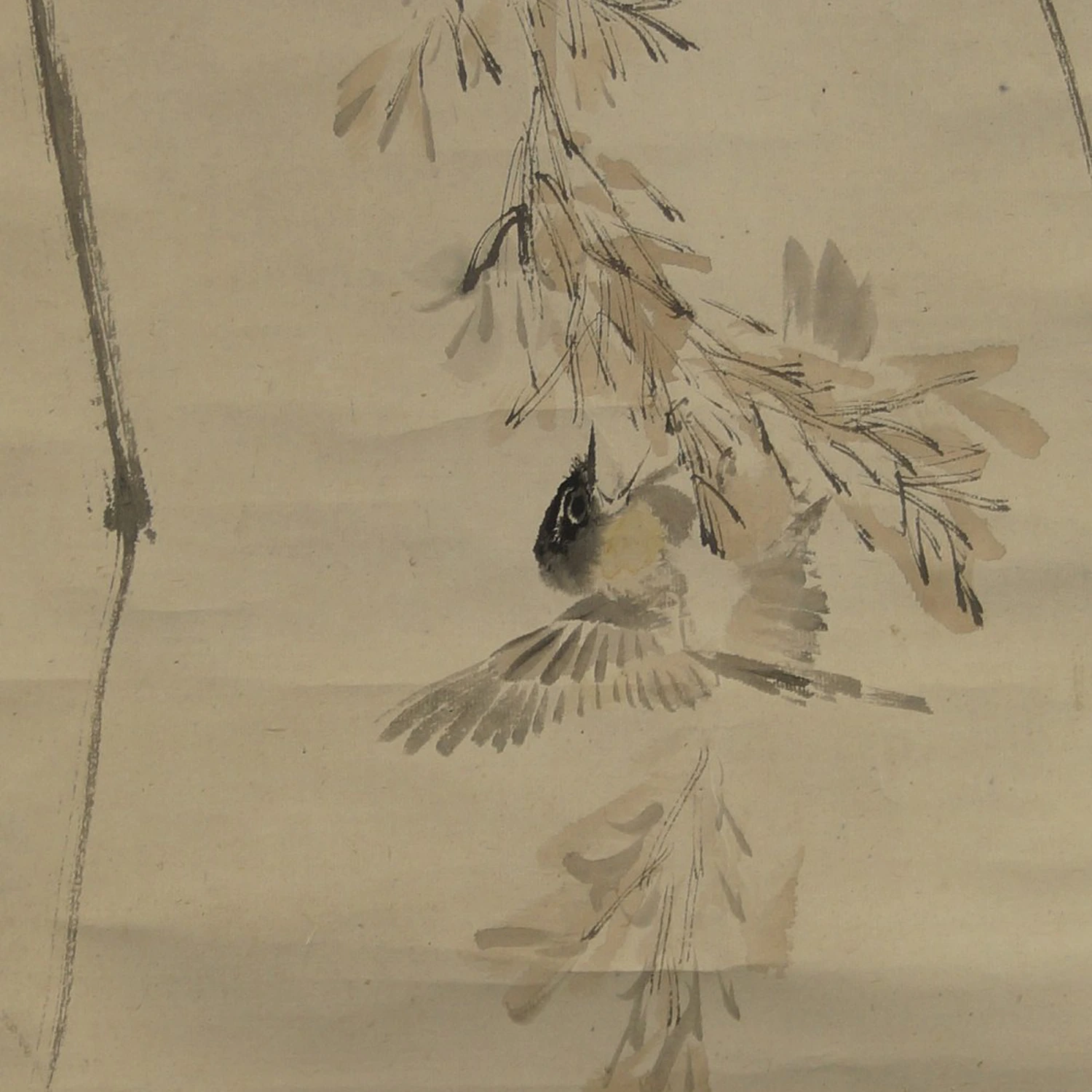
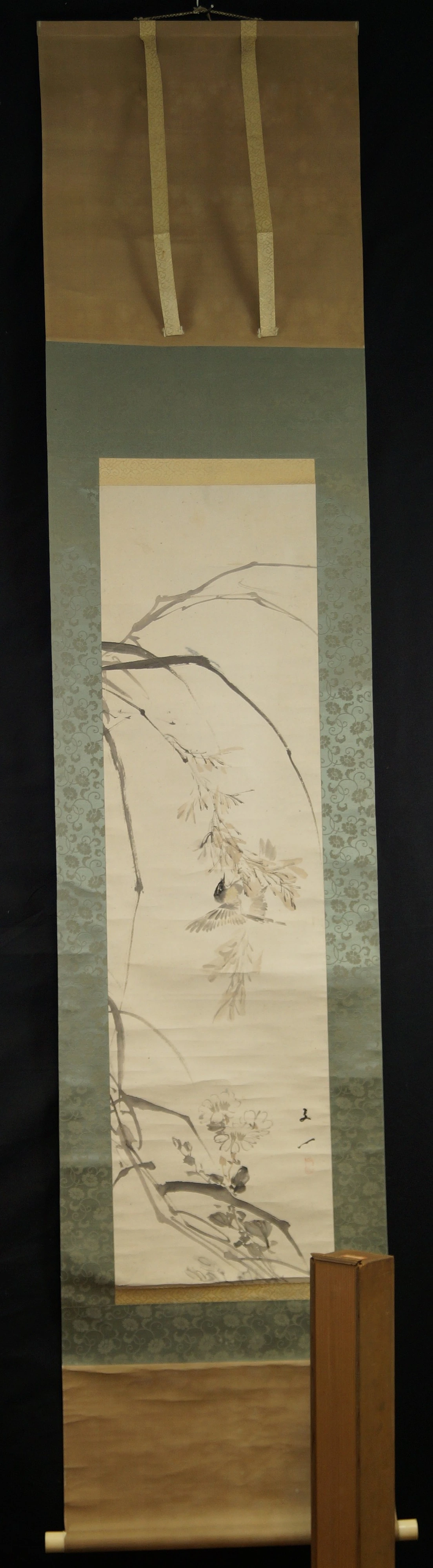
Its meaning is endurance: it blooms in the cold and gives off its fragrance before the year turns warm. Together with pine and bamboo it belongs to the auspicious plants of the New Year season, and with orchid, bamboo, and chrysanthemum it forms the "Four Gentlemen," a pictorial group from China that compares plants with the virtues of the cultivated person. On hanging scrolls, a small songbird, the uguisu, often sits in the plum branch and announces spring.
Sakura, the cherry blossom: festival and transience
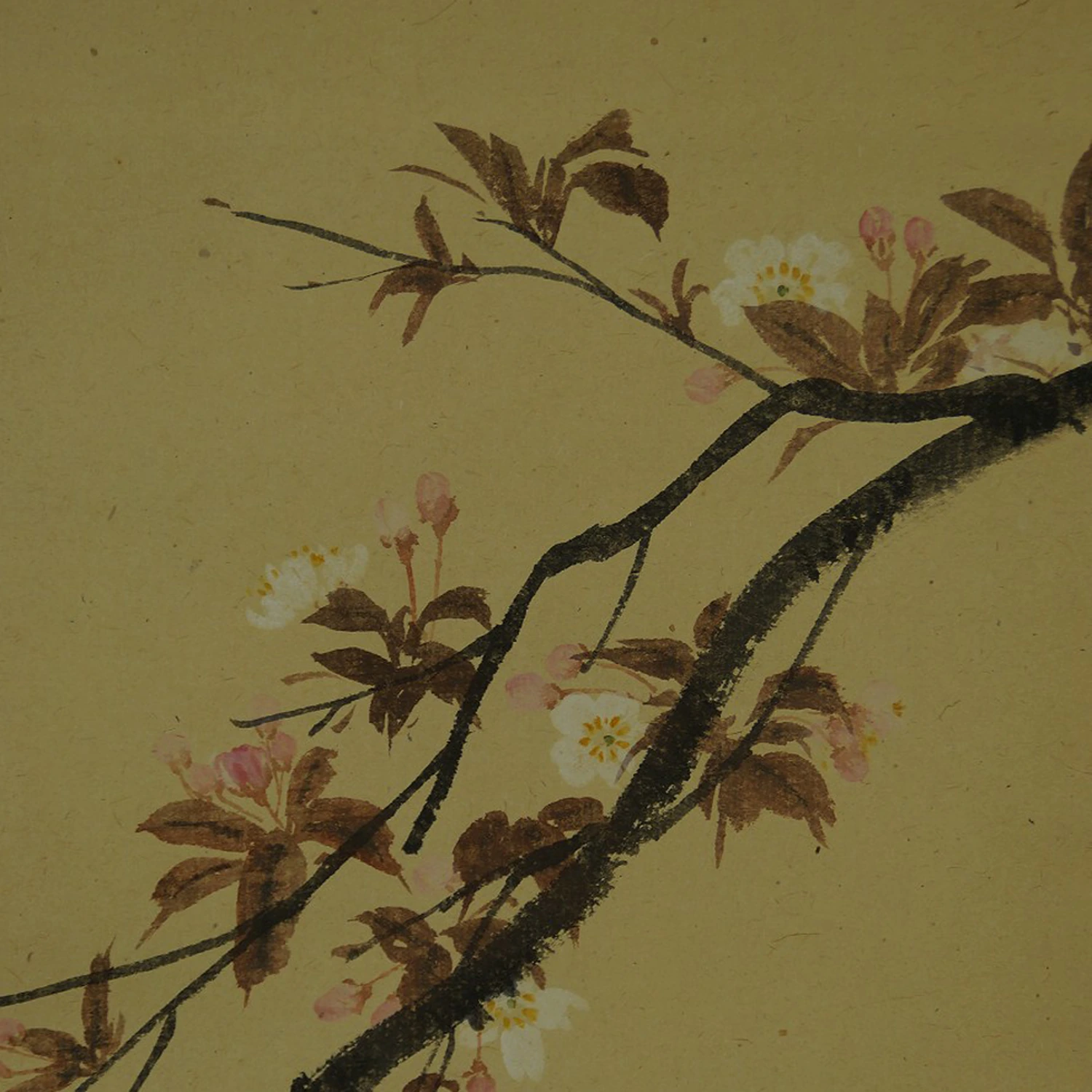
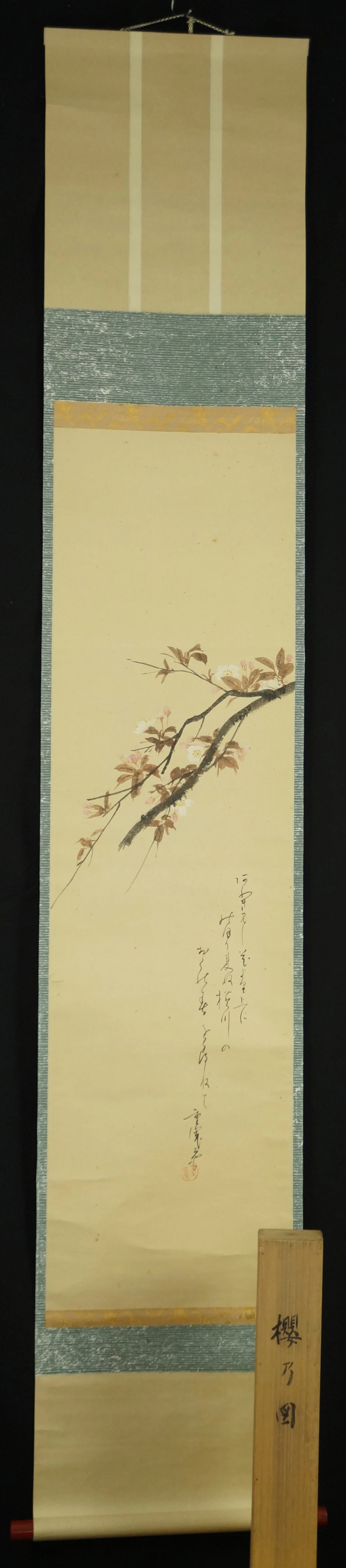
The cherry, sakura (桜), is the flower most people think of first when they think of Japan. Its festival is hanami, viewing the blossoms in the open air. Originally it was not a pleasure but a custom before the start of field work, in which people ate and drank outdoors; in the Edo period it became an outing for townspeople, and in Edo cherry-viewing spots were planted especially for the purpose.
The cherry blossom blooms briefly and falls while it is still beautiful. That is why it stands for delight in the moment and at the same time for transience. Incidentally, Japan has no national flower fixed by law; the cherry and the chrysanthemum are generally regarded as the flowers of Japan.
Kiku, the chrysanthemum: autumn and the imperial house
The chrysanthemum, kiku (菊), is the flower of autumn. Its festival is the ninth day of the ninth month, Chōyō, when chrysanthemum wine was drunk after the Chinese model; at the imperial court this became a fixed banquet in the Heian period. The sixteen-petaled blossom is the crest of the imperial house, and as such it still appears on the Japanese passport today.
As one of the "Four Gentlemen," the chrysanthemum stands for the person who still blooms late in the year when others have already withered: for dignity and a long life. On hanging scrolls it often appears together with rocks, birds, or a stream, and preferably in white and yellow.
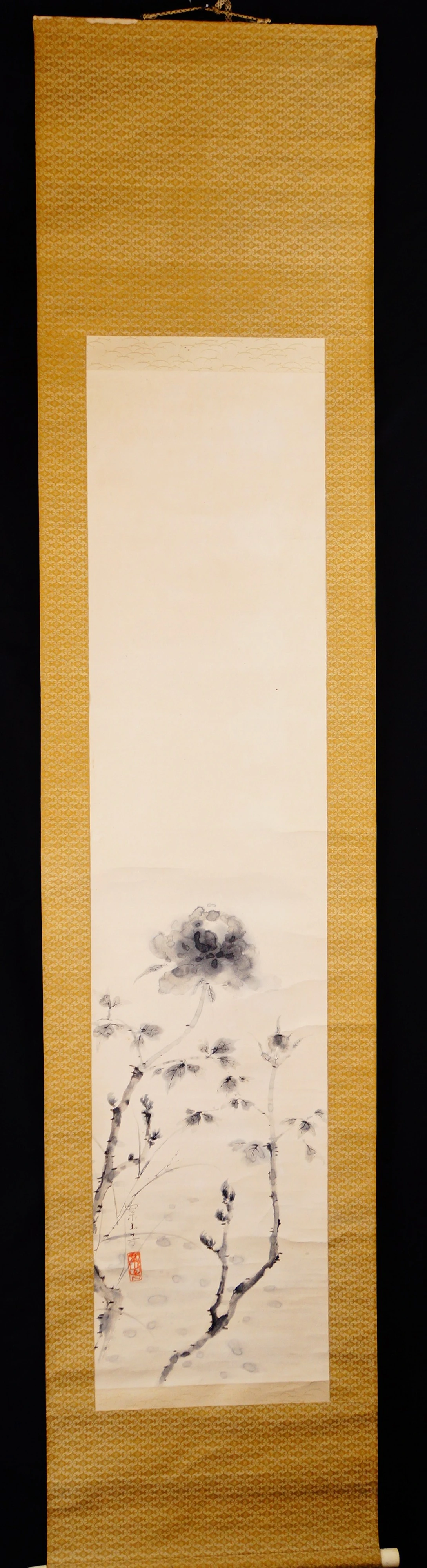
Botan, the tree peony: the king of flowers
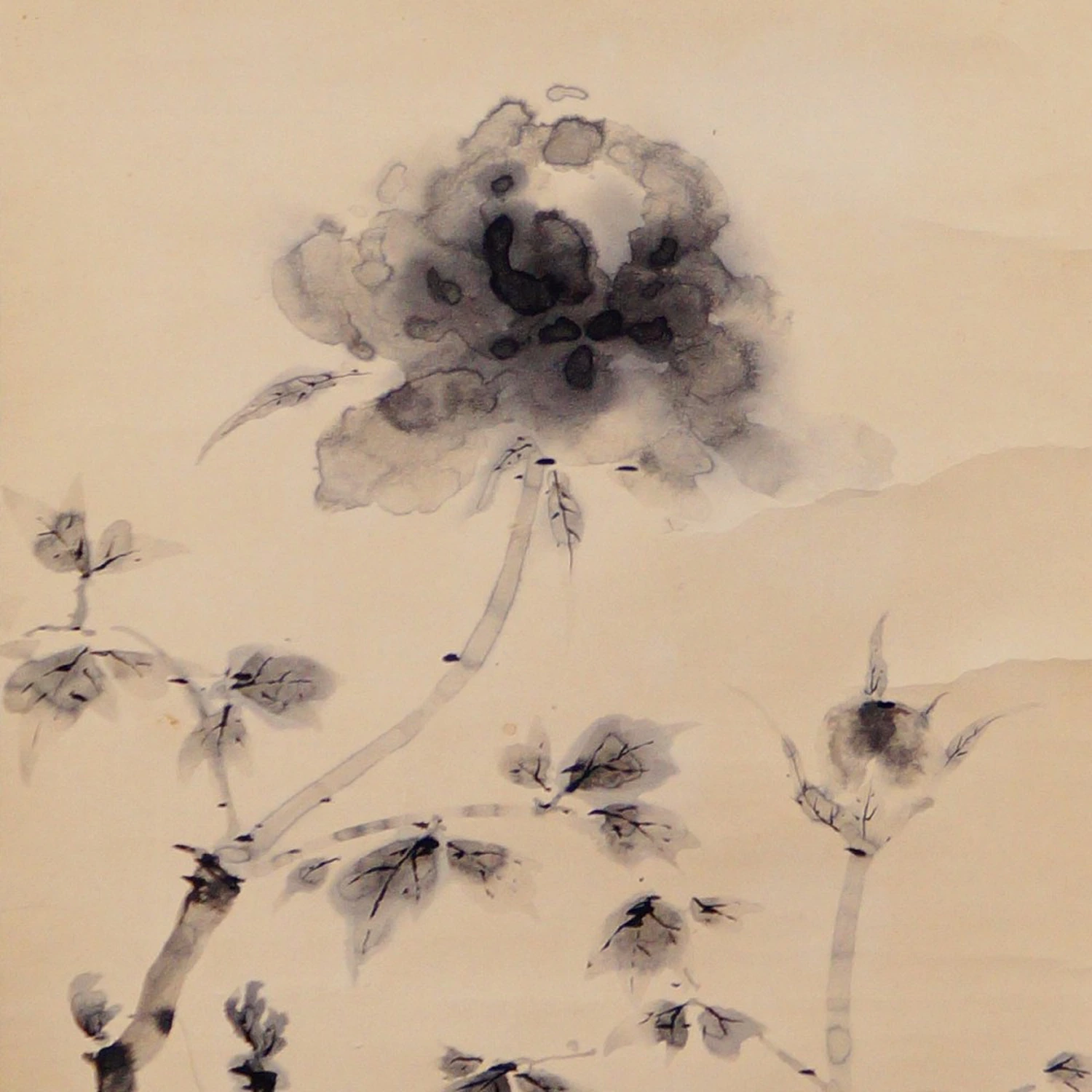
The peony, more precisely the tree peony botan (牡丹), came to Japan from China and bears the epithet "king of flowers." Its large, full blossoms stand for wealth, splendor, and good fortune. In art it often appears together with the lion: lion and peony are a fixed pair that unites strength and beauty and recurs on folding screens, lacquerwork, and textiles.
Because it blooms in early summer, the peony stands on the threshold of summer. In family crests it appears in many variations, and on vessels it often shines in gold, for instance in maki-e or engraved into red urushi lacquer.
Iris, morning glory, and autumn grasses: summer and autumn
In early summer, the stage belongs to the iris. Its name shōbu (菖蒲) also designates the sweet flag, a marsh plant whose sword-shaped, strongly scented leaves were meant to ward off misfortune at the Boys' Festival on the fifth day of the fifth month; people tucked them under the eaves or put them in the bath. Through the shared name, the iris hanashōbu is connected with this festival too. A related species, the kakitsubata, became a pictorial motif through a famous scene in the Tales of Ise: the poet Ariwara no Narihira rests at the "Eight Bridges" in an iris marsh and writes a poem about the wife he left behind in the capital.
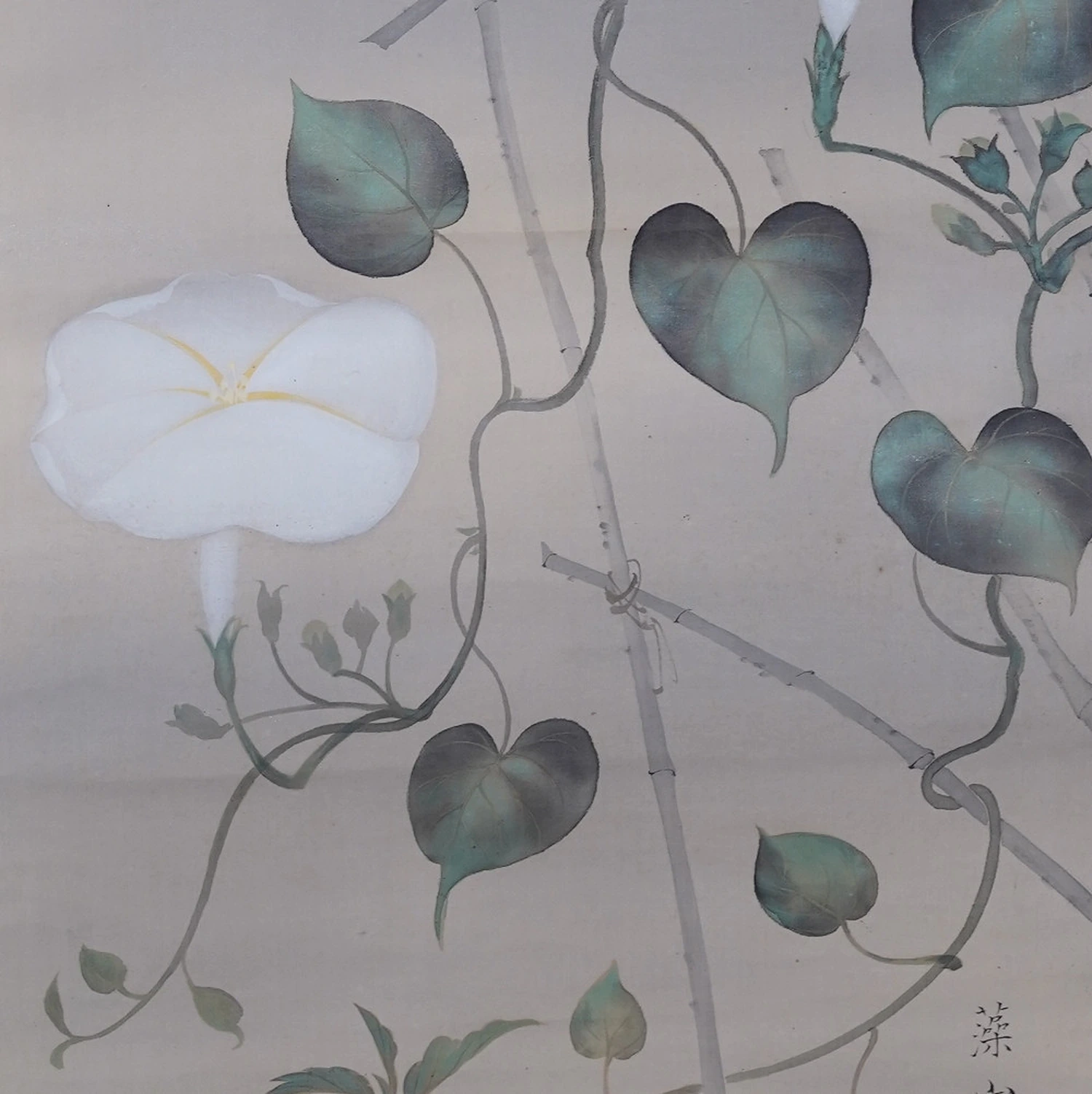
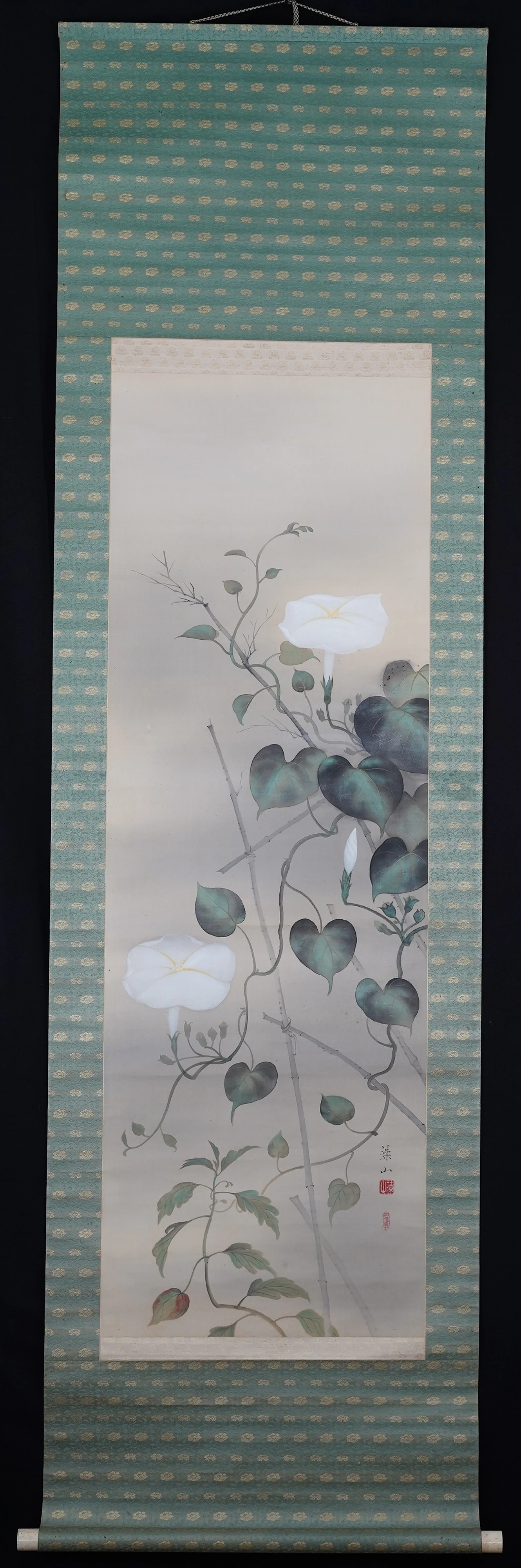
The morning glory, asagao (朝顔), literally "morning face," opens early in the morning and wilts by midday. It came from China as a medicinal plant in the Nara period; in the Edo period a veritable collecting passion developed around it, and between 1848 and 1860 an especially large number of new varieties were created. Since the Heian period it has stood for the fleeting.
Autumn is accompanied by the seven autumn grasses, aki no nanakusa (秋の七草): bush clover, pampas grass, kudzu, fringed pink, golden lace, boneset, and a flower called asagao in old texts that is usually interpreted as the balloon flower. The series goes back to a poem in the Man'yōshū and is still painted as an ensemble today.
Lotus: the flower of Buddhism
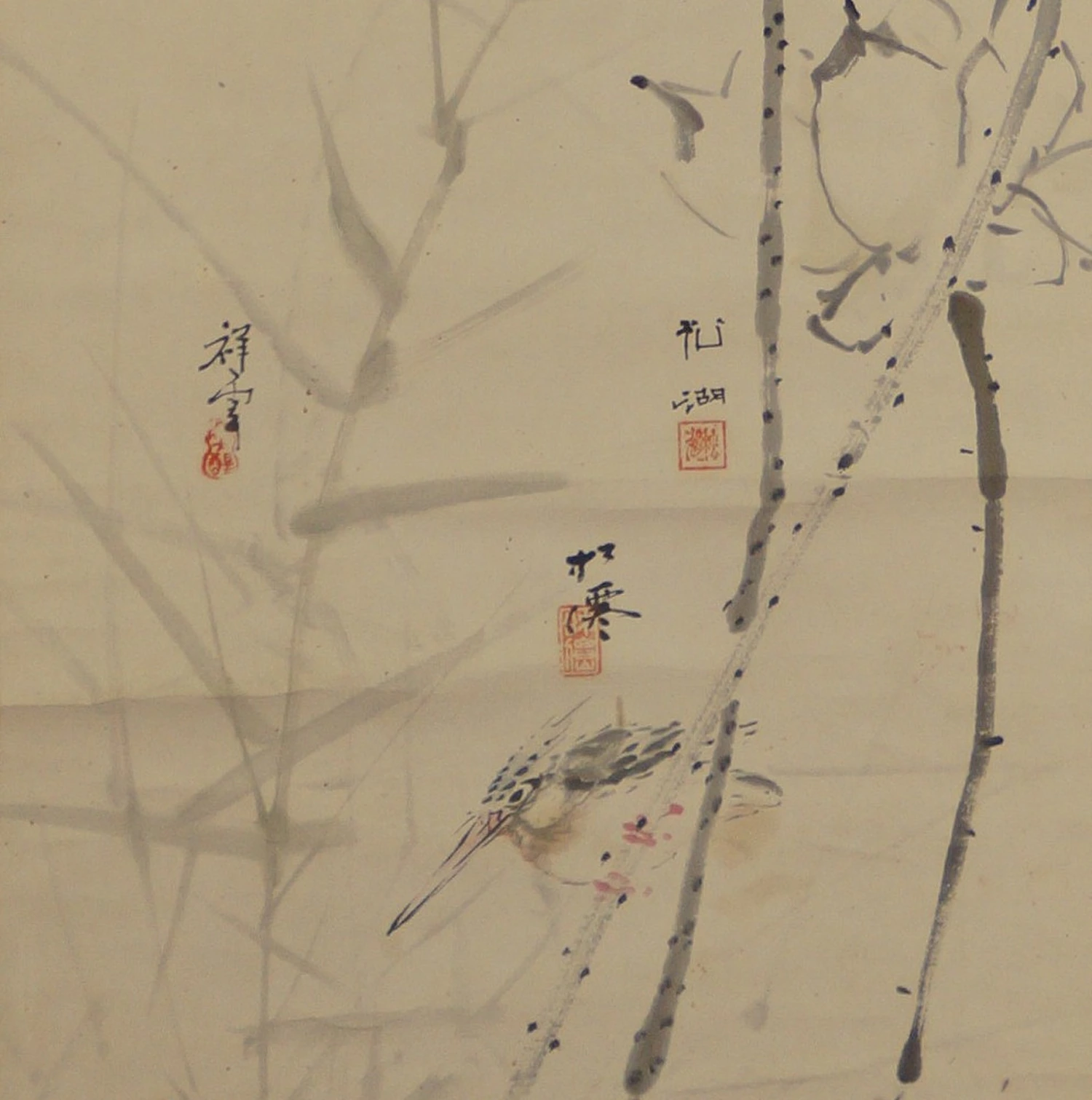
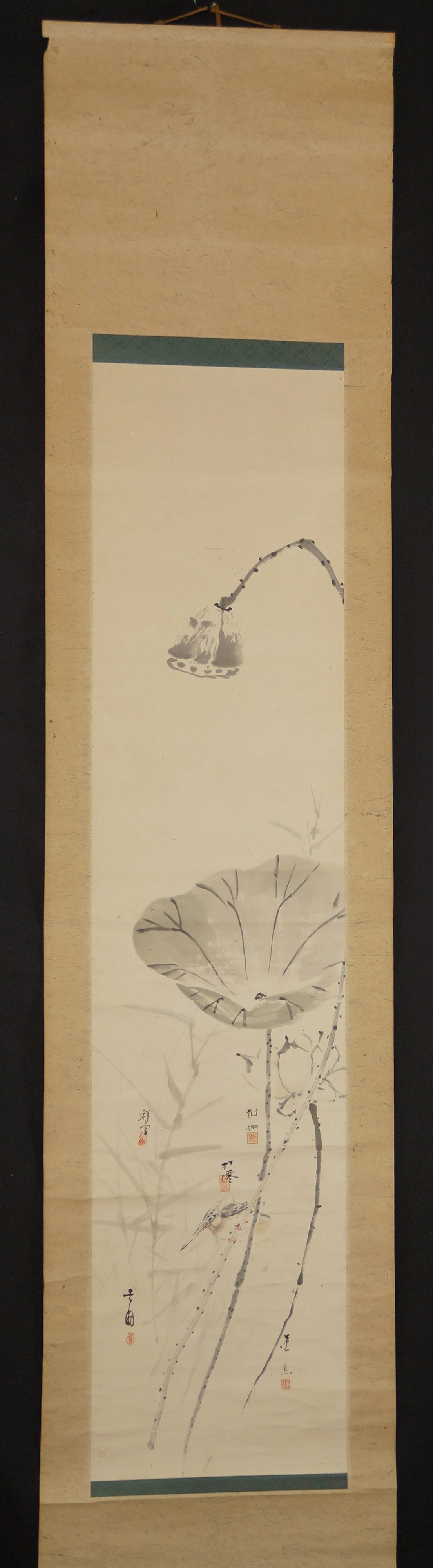
The lotus comes from India and reached Japan via China, where it is cultivated in ponds and blooms in summer. Its meaning comes from Buddhism: it grows out of muddy water and yet opens pure and unstained. That is why Buddhist figures sit on lotus pedestals, and why the lotus in pictures usually has a more serious, quieter tone than the flowers of the seasonal festivals. Some painters add a small guest, a snail or a kingfisher, and so bring it back into the world of nature.
Hanakotoba: the language of flowers came from Europe
Anyone looking up the meaning of Japanese flowers soon comes across hanakotoba (花言葉), literally "flower words." This language of flowers, which assigns a message to every blossom, is not an old Japanese tradition, however. It arrived in the country with Western culture in the early Meiji period and was at first adopted largely unchanged.
Over time, some plants acquired a meaning of their own in Japan because climate, customs, and pictorial tradition were different. The pine, for instance, stands for long life in Japan because it grows old and strong, and together with bamboo and plum it belongs to every joyful occasion. For the art of earlier times, then: its flowers are read not through hanakotoba but through season, poetry, and festival.
Reading flowers in Japanese art
The great genre in which flowers are at home in Japanese painting is kachō-ga, bird-and-flower painting. As an independent theme of Japanese painting it first appears in ink paintings by Zen monks of the Muromachi period; later the painters of the Kanō school combined Chinese brushwork with bright colors and abundant gold. On folding screens, the seasons often move from one side to the other, from plum to chrysanthemum.
For your own viewing, three questions are enough. Which flower is it, and when does it bloom? What stands beside it – a bird, an insect, a poem? And is it in color or in ink, as the painters of the "Four Gentlemen" loved? Asking this way, you soon see more in a picture of flowers and plants than a pretty motif: a month, a festival, and often a wish for the person who hangs it.
Sources and Literature
Kotobank: 花言葉, kotobank.jp.
Kotobank: 梅, kotobank.jp.
Kotobank: 国花, kotobank.jp.
Kotobank: 秋の七草, kotobank.jp.
JAANUS – Japanese Architecture and Art Net Users System: kachouga 花鳥画, aisf.or.jp.
JAANUS – Japanese Architecture and Art Net Users System: shikunshi 四君子, aisf.or.jp.