Spring Kakemono: Japanese Hanging Scrolls from Plum Blossom to Wisteria
Go directly to the artworksIn brief
Buy spring kakemono: hanging scrolls whose motif marks spring in Japan – plum blossom (ume) with the Japanese bush warbler, cherry blossom (sakura), willow and swallow, wisteria and tree peony. Japanese scroll dealers hang them from March to May, the early ume pictures as soon as February, because a seasonal scroll goes up a little ahead of the season. The group also includes Hina dolls for the Girls' Festival, warrior pictures for Boys' Day and calligraphy such as "Spring Wind". At Densho you will find kakemono, shikishi and makuri with spring motifs as one-of-a-kind pieces from Japan.
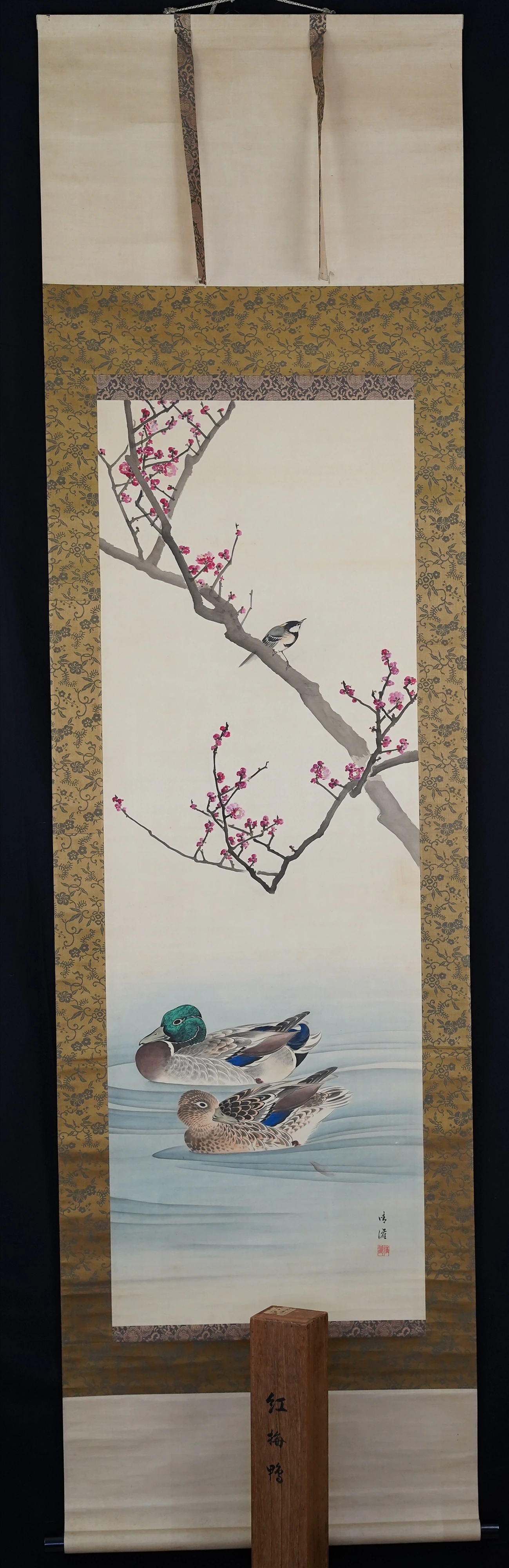
Seikan
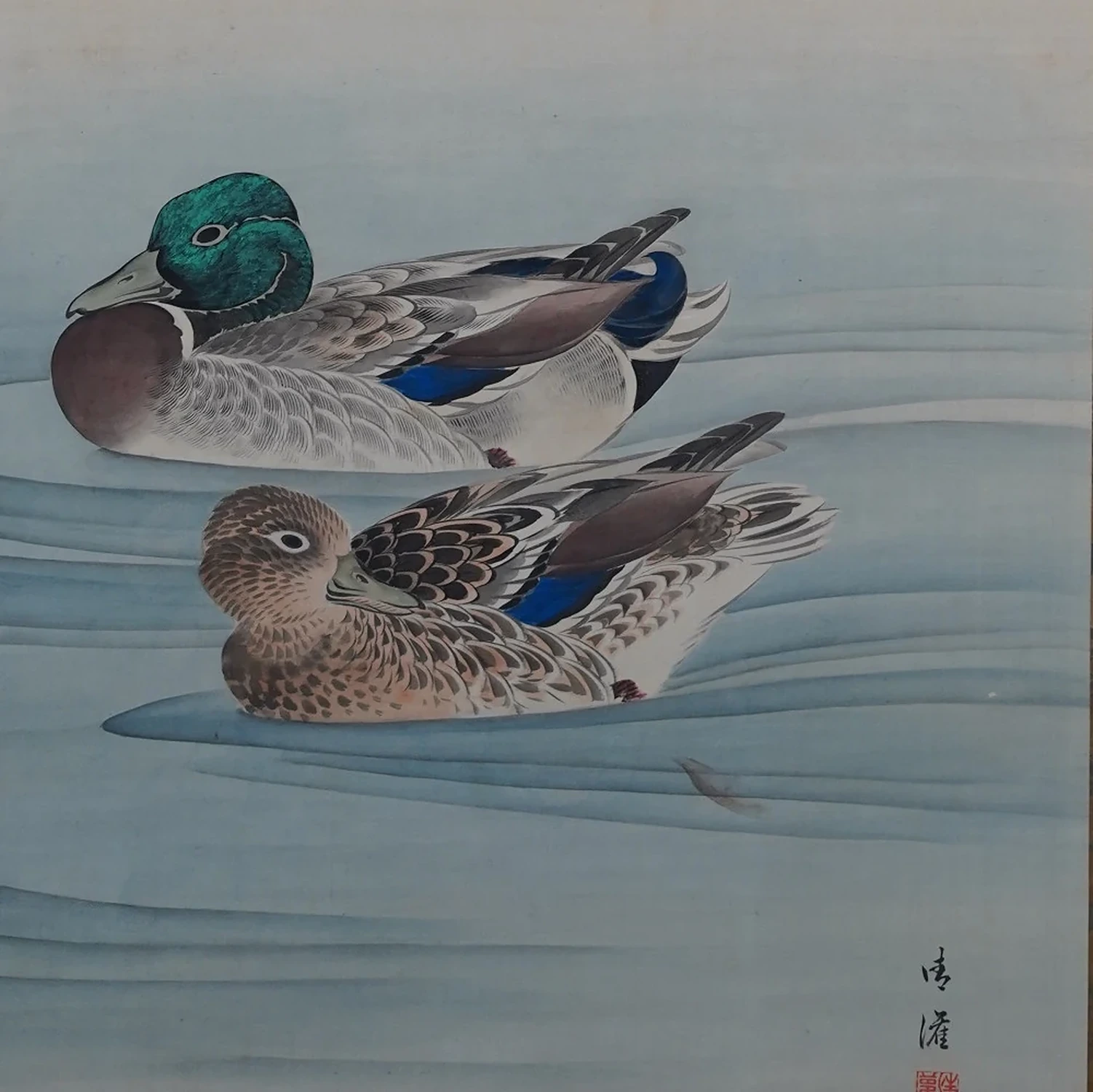
Mallards under Red Plum Blossoms
Kakemono, unique work, with box, 202 x 62 cm
€320.00
Watanabe Shikō
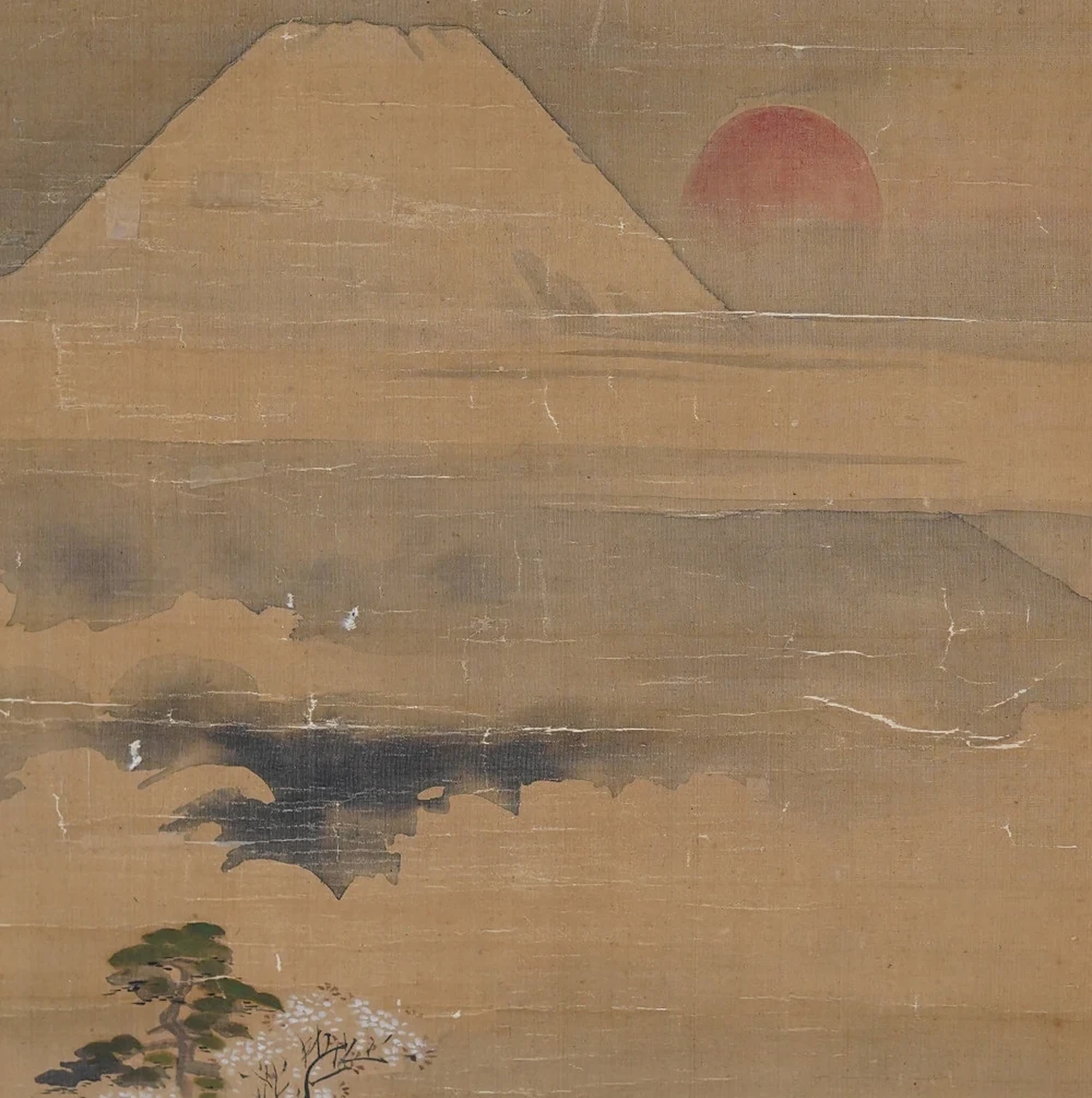
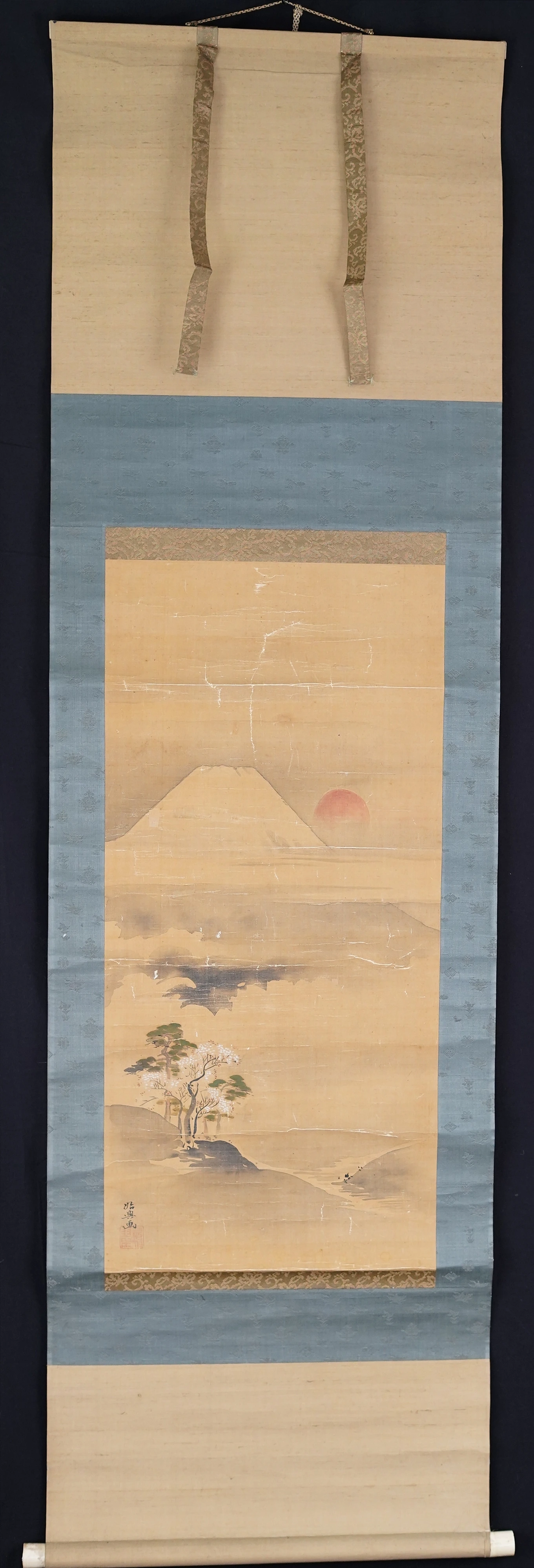
Fuji with Red Sun over Clouds and Cherry Blossoms
Kakemono, unique work, with box, 152 x 51 cm
€870.00
Okumura Kyōhō
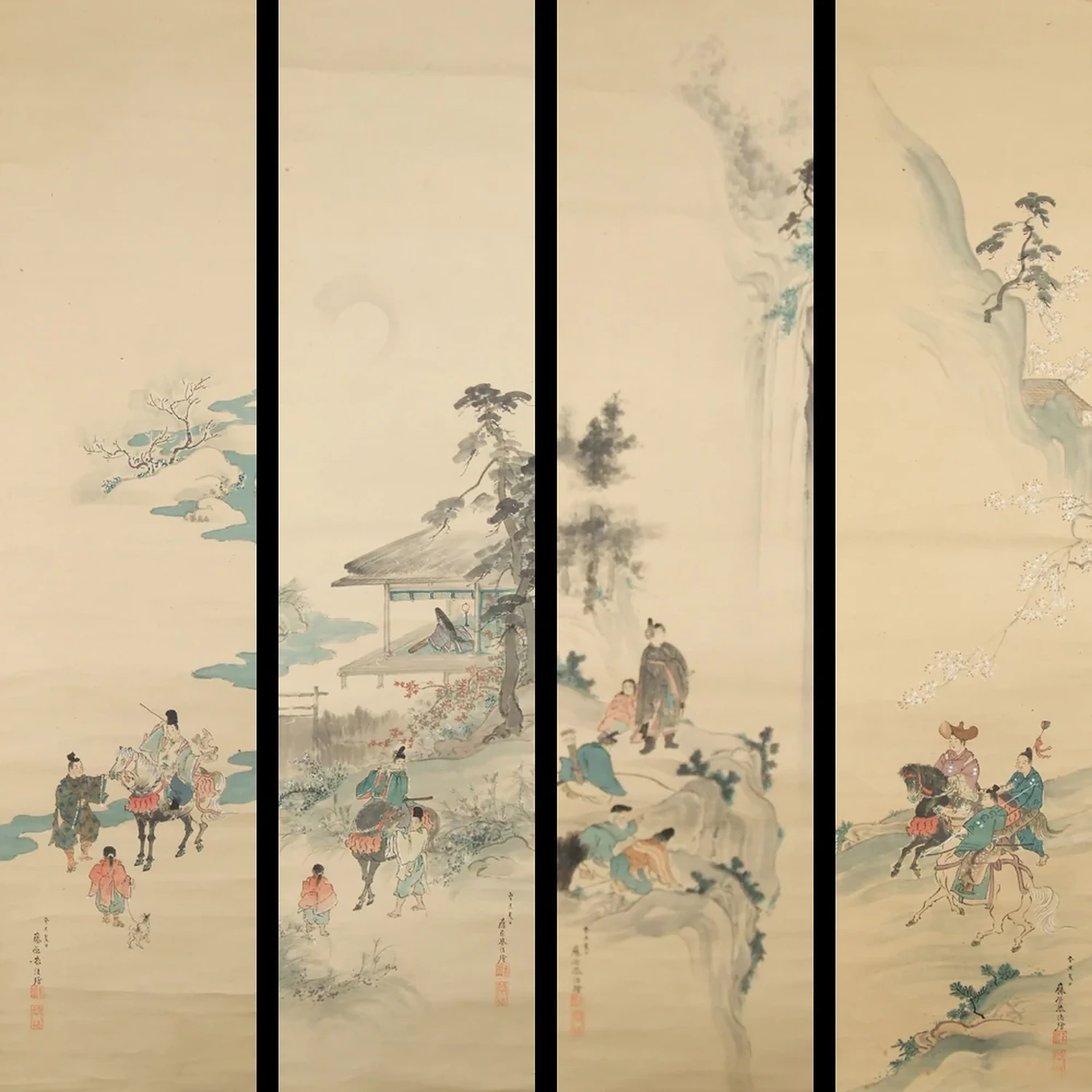
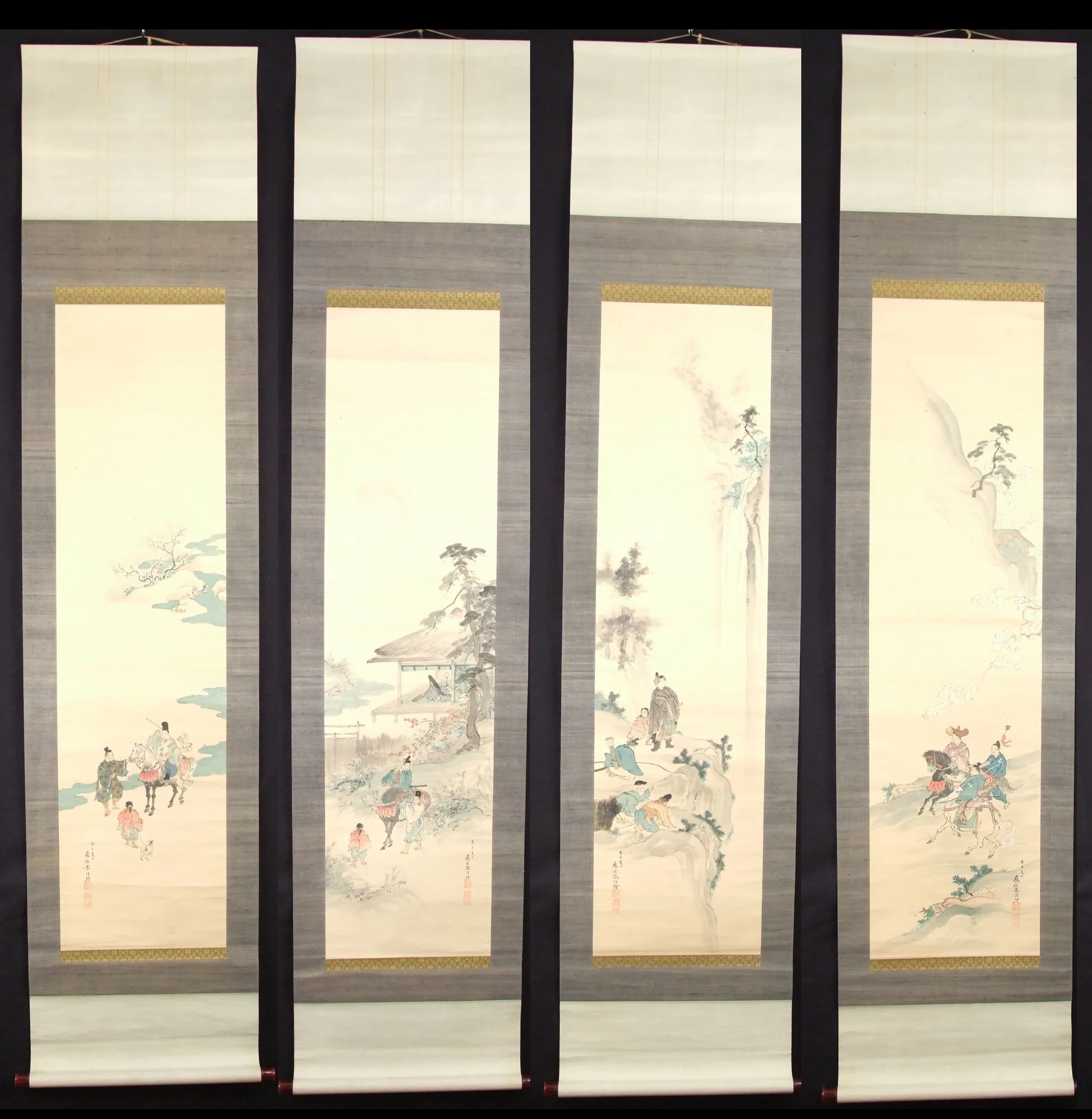
Set of Four Paintings – Legends of the Four Seasons
Kakemono, unique work, with box, 192 x 48 cm
€1,210.00
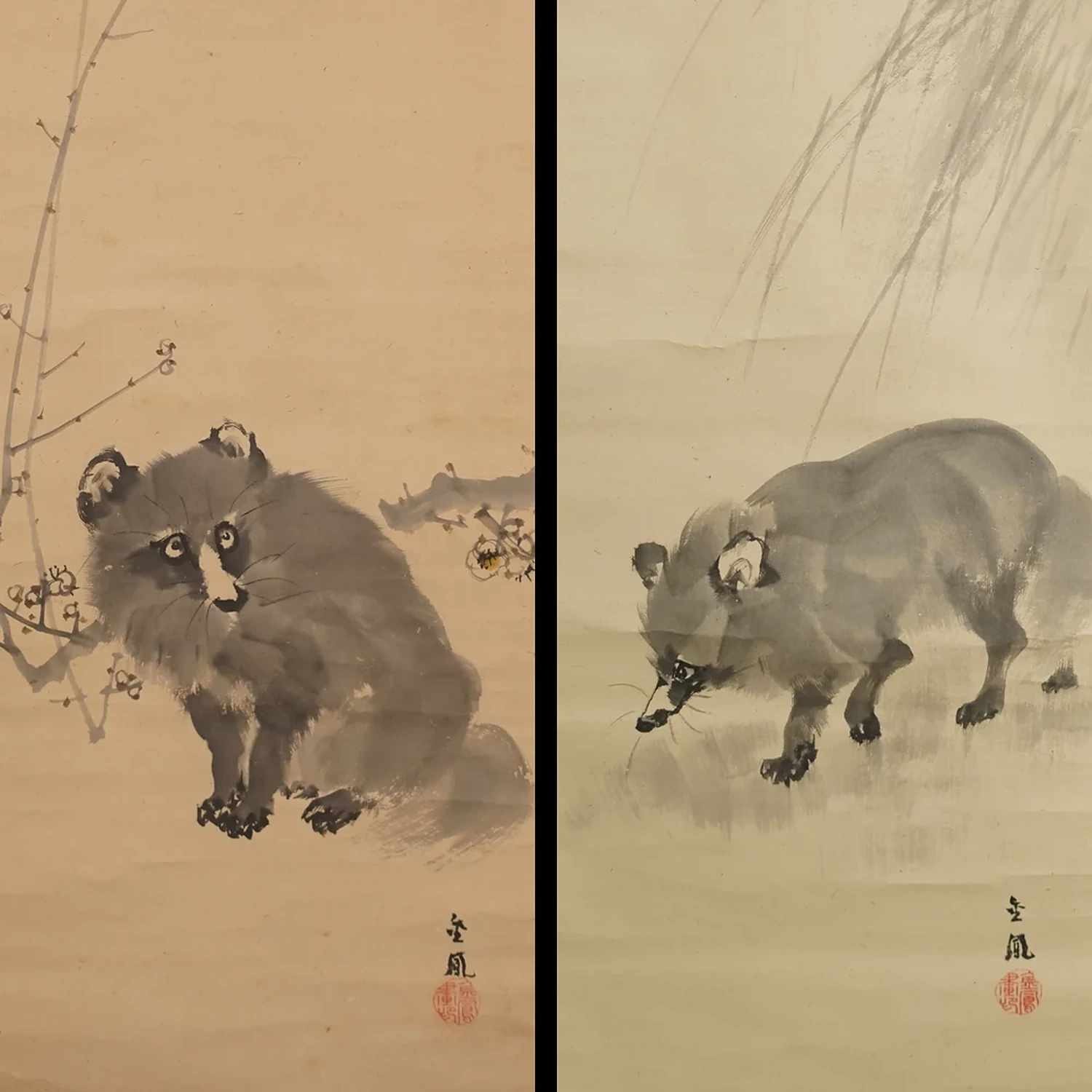
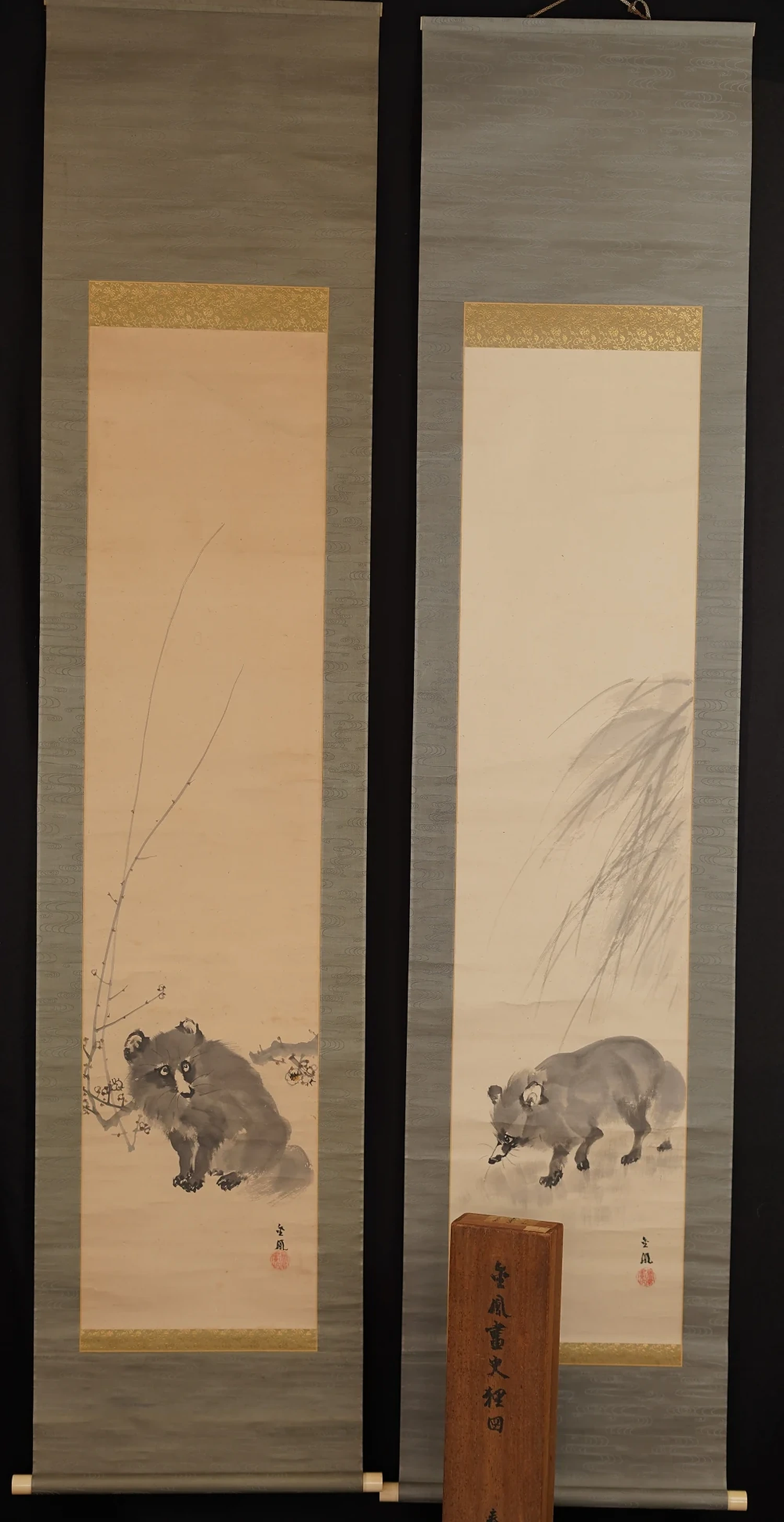
Mochizuki Kinpō
Set of Two Paintings – Tanuki Under Plum and Willow
Kakemono, unique work, with box, 195 x 48 cm
€3,590.00
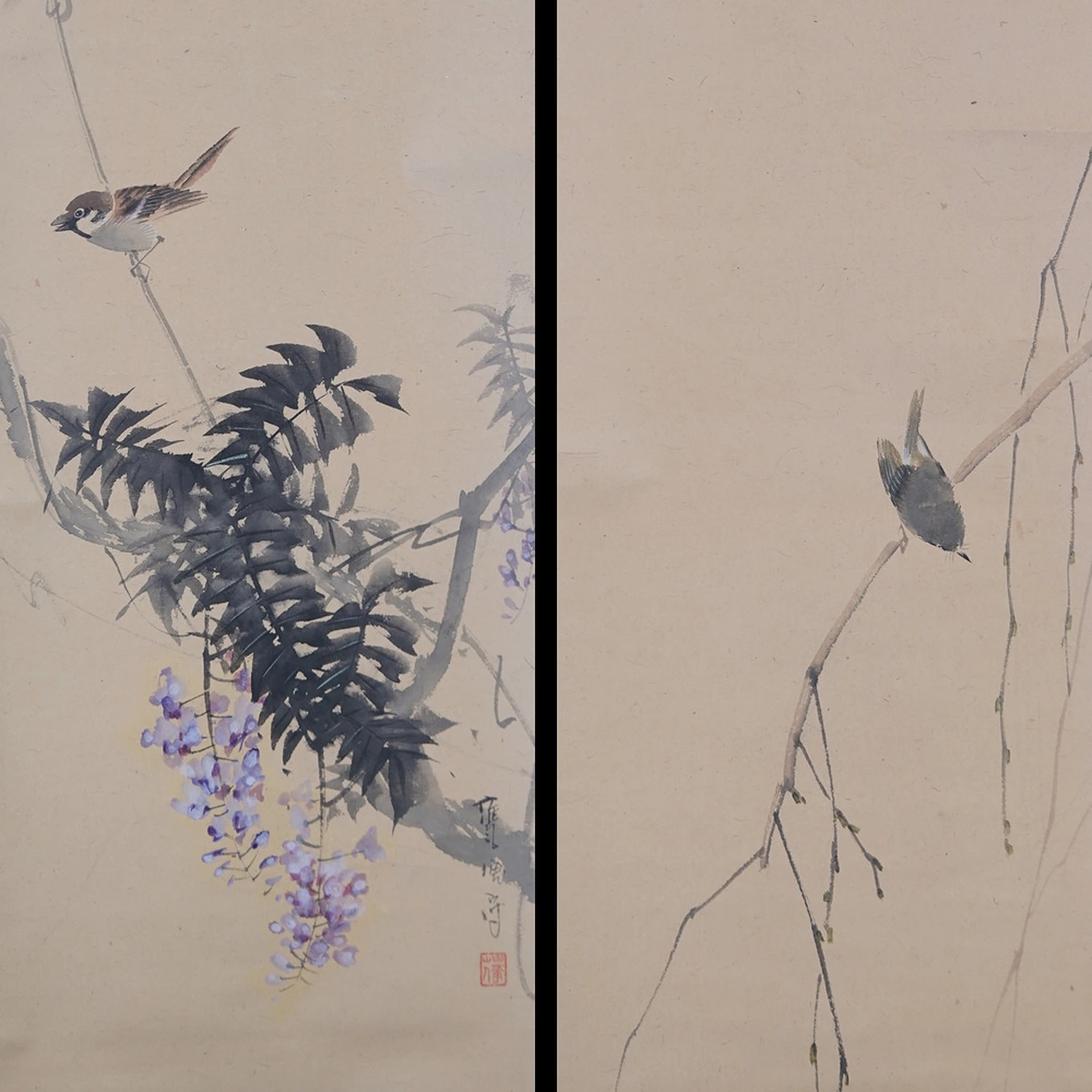
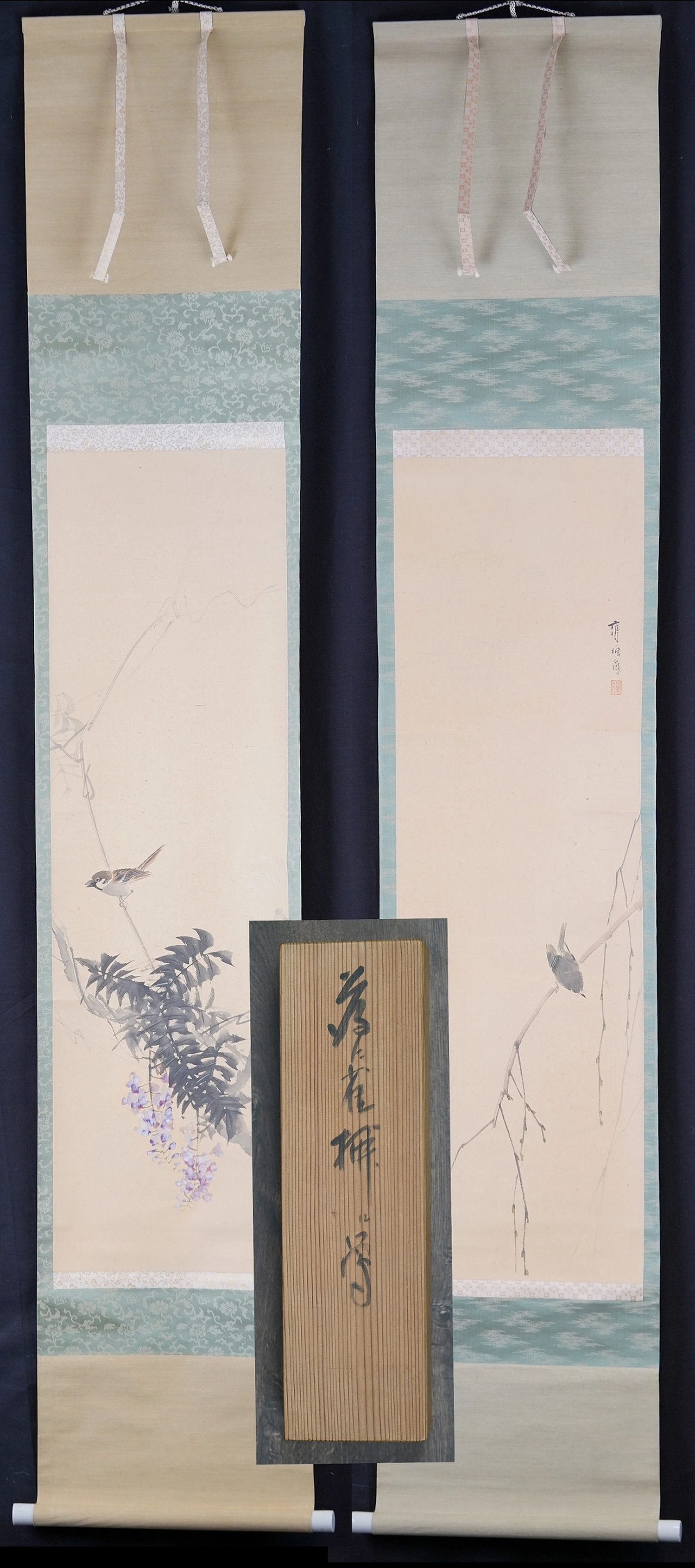
Nakahara Yōtō
Set of Two Paintings – Sparrows on Wisteria and Willow Branch
Kakemono, unique work, with box, 175 x 38 cm
€690.00
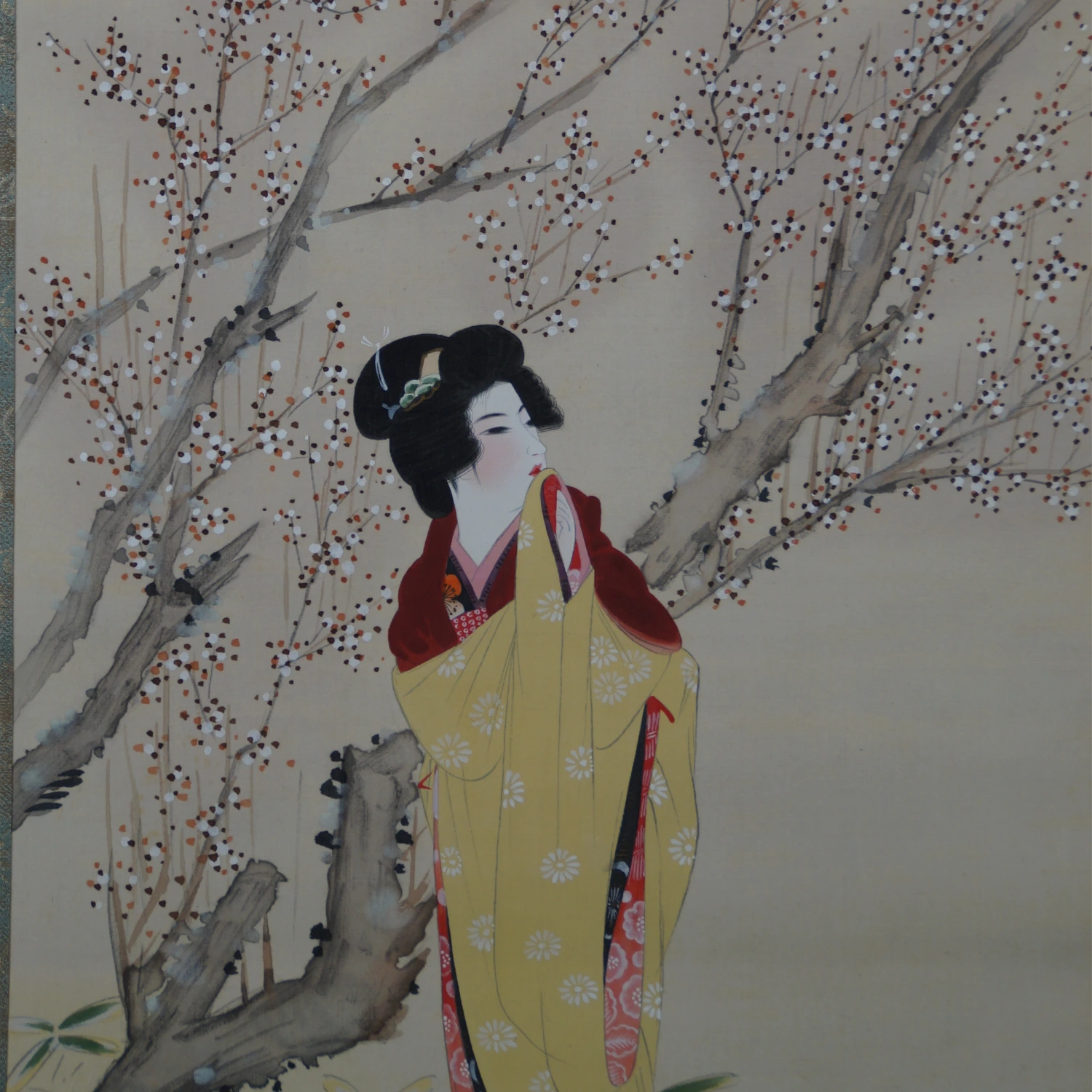
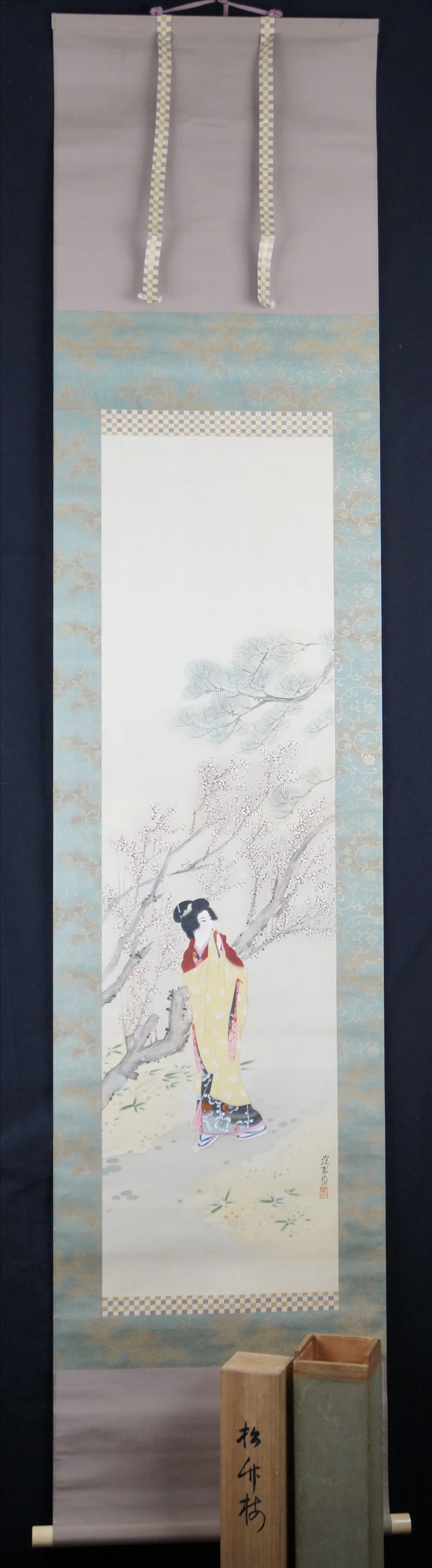
Itō Shinsui
Lady in Kimono Under Blossoming Plum Tree
Kakemono, unique work, with box, 205 x 50 cm
€1,680.00
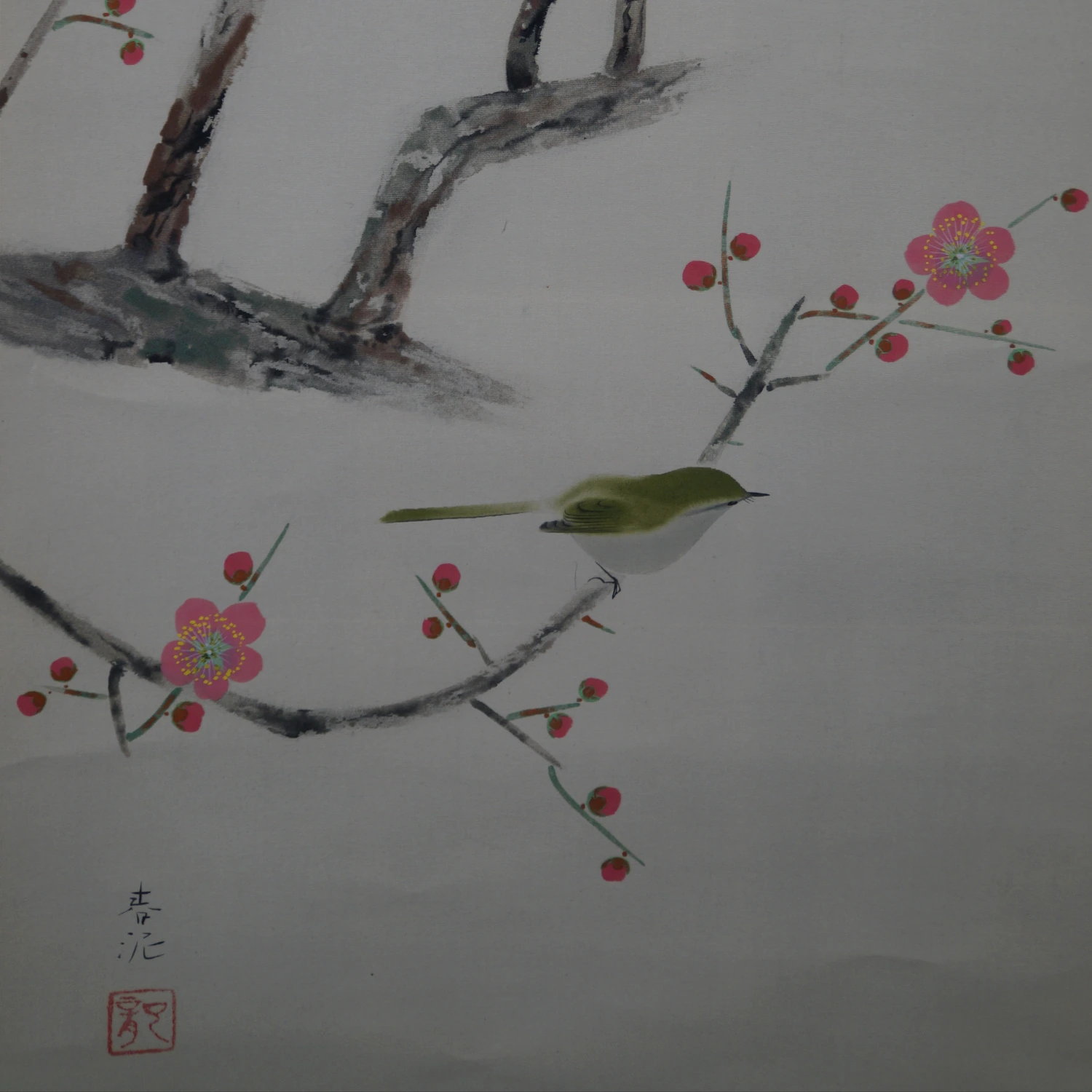
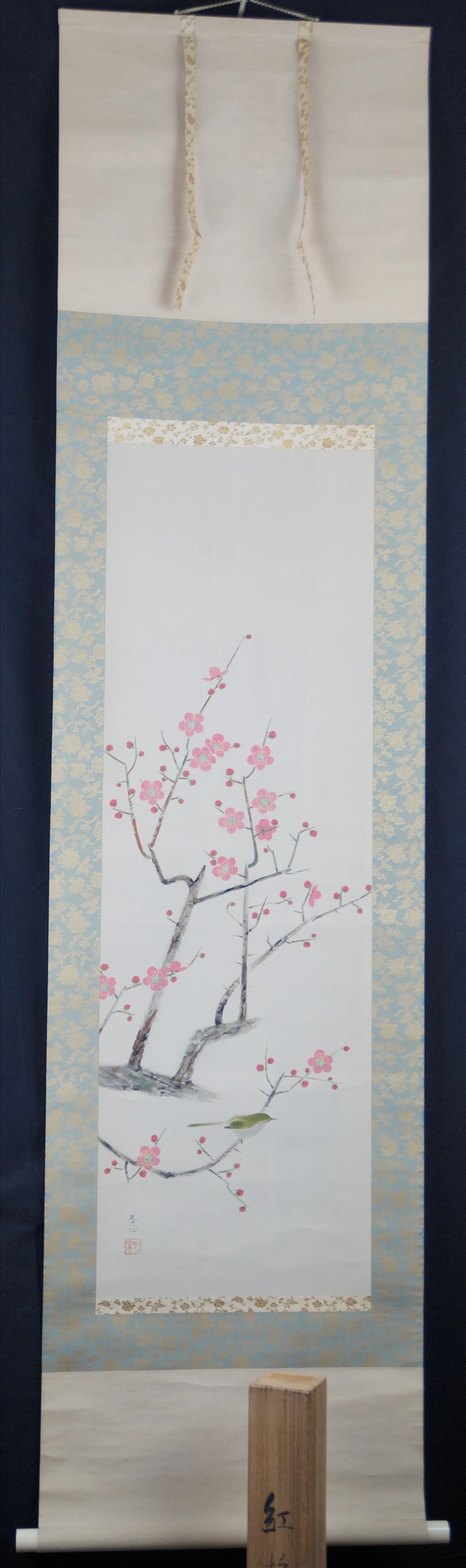
Nakamura Shunden
Uguisu on Blossoming Plum Tree
Kakemono, unique work, with box, 198 x 55 cm
€320.00
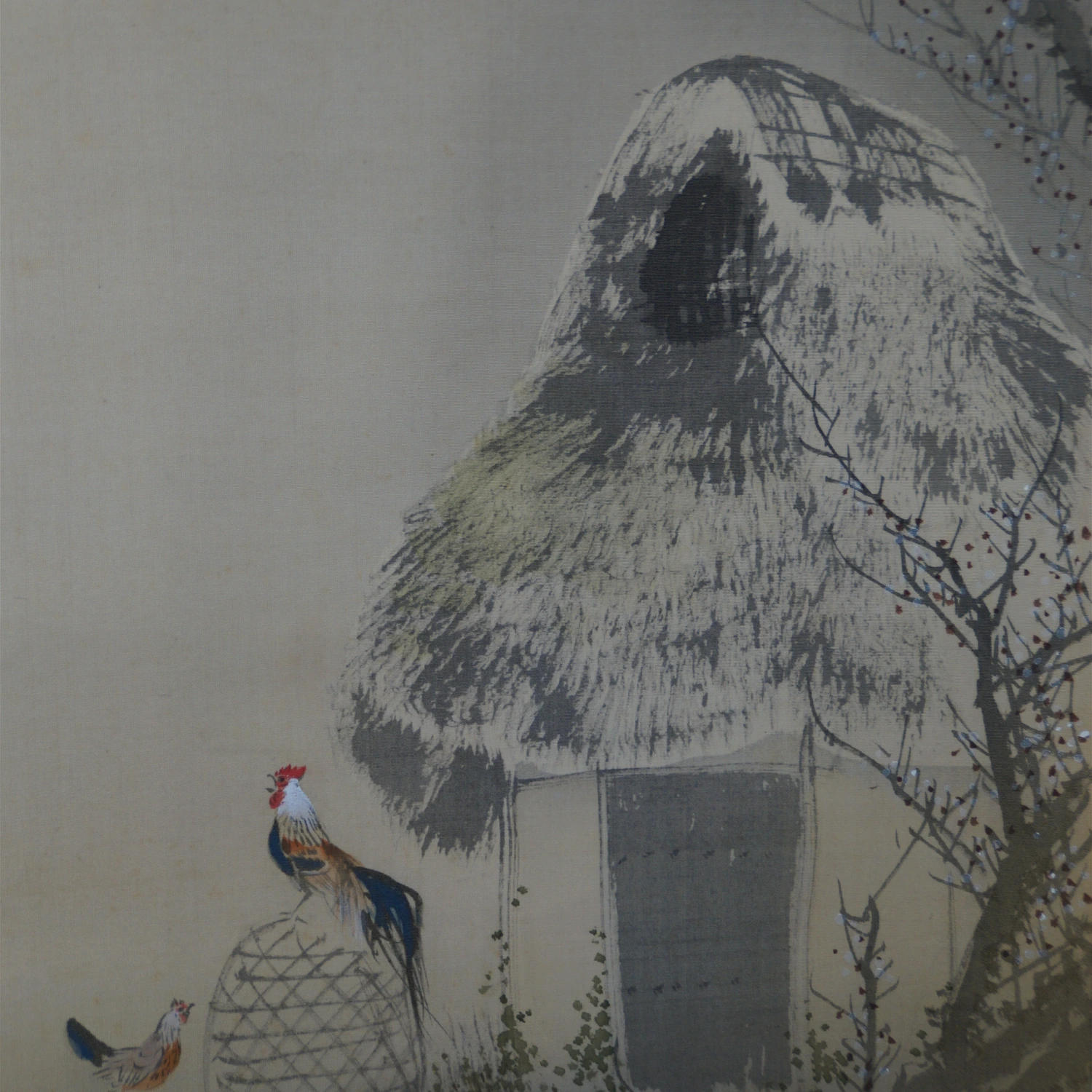
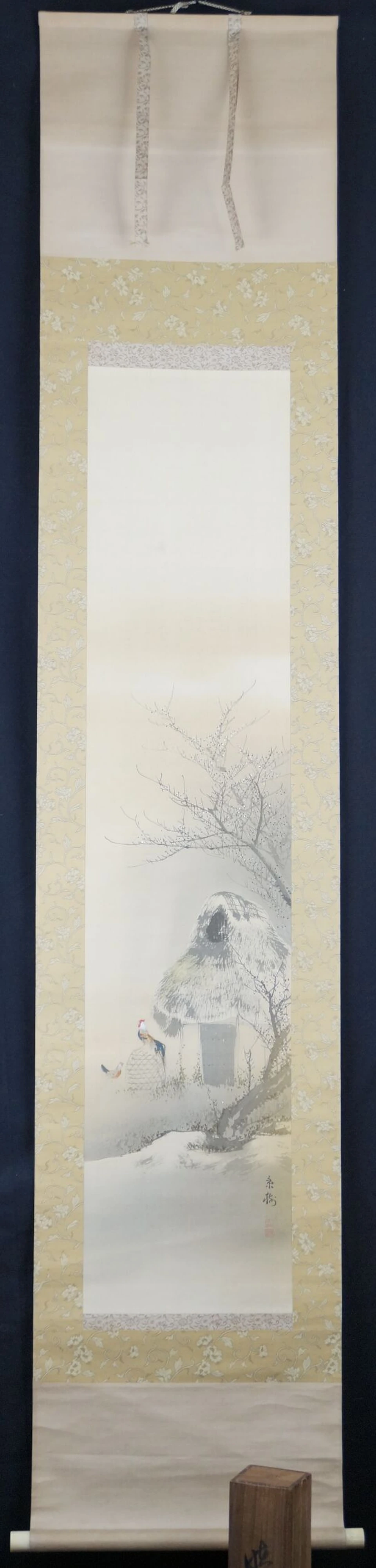
Imai Keiki
Rooster and Plum Blossoms
Kakemono, unique work, with box, 196 x 45 cm
€240.00
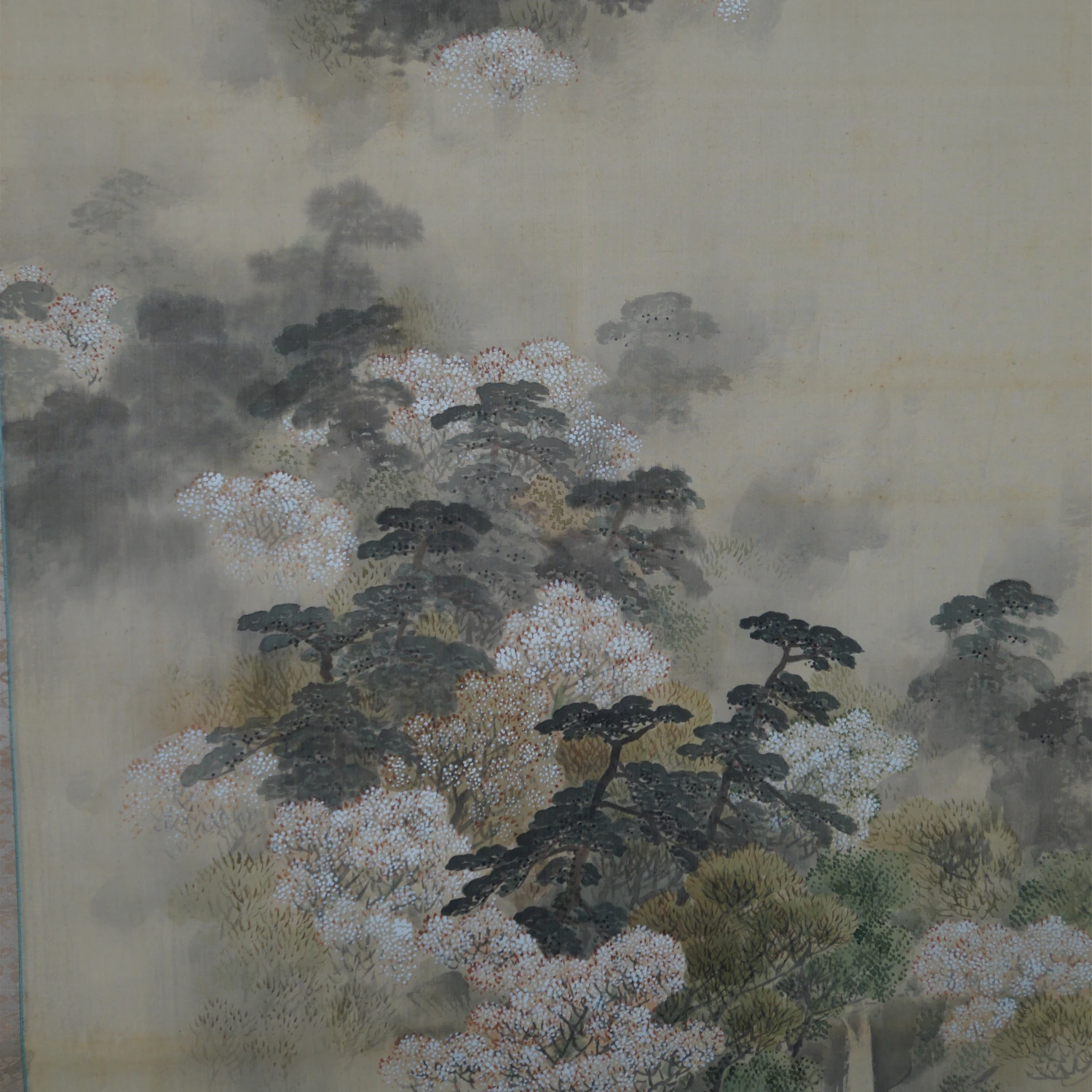
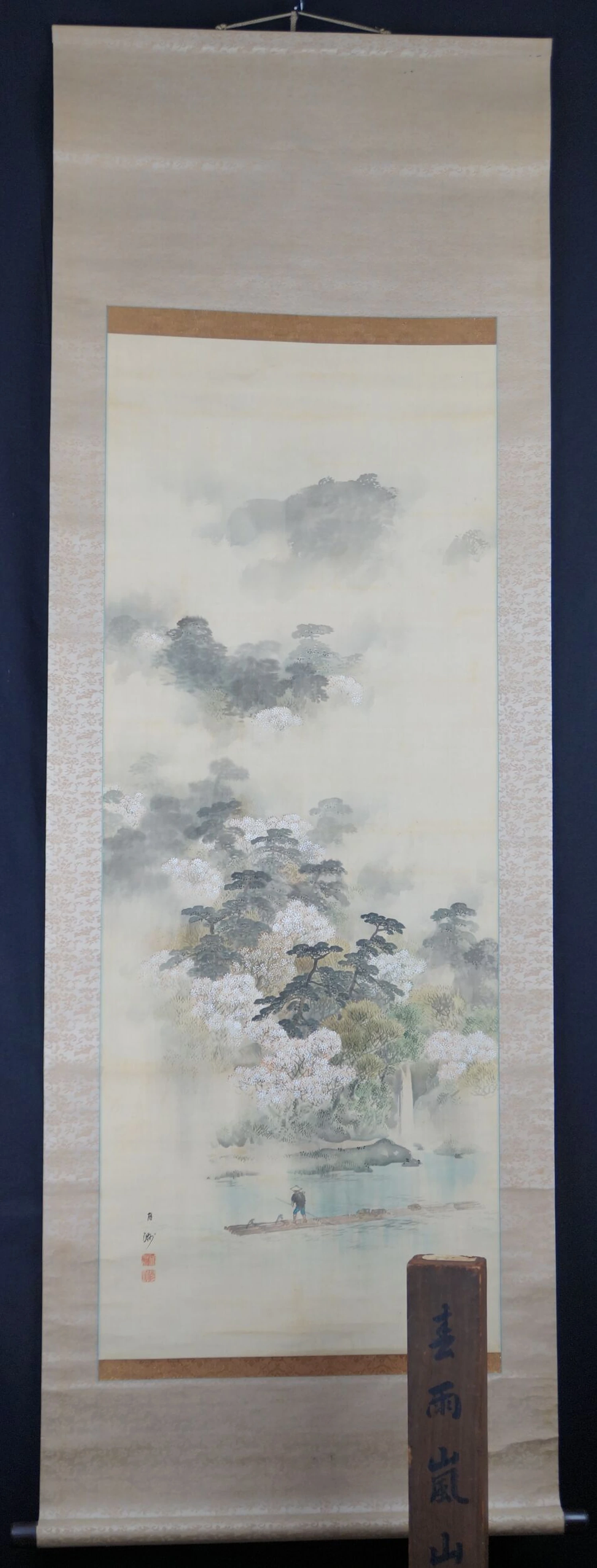
Haneda Getsushu
River in a Blooming Valley
Kakemono, unique work, with box, 192 x 72 cm
€250.00
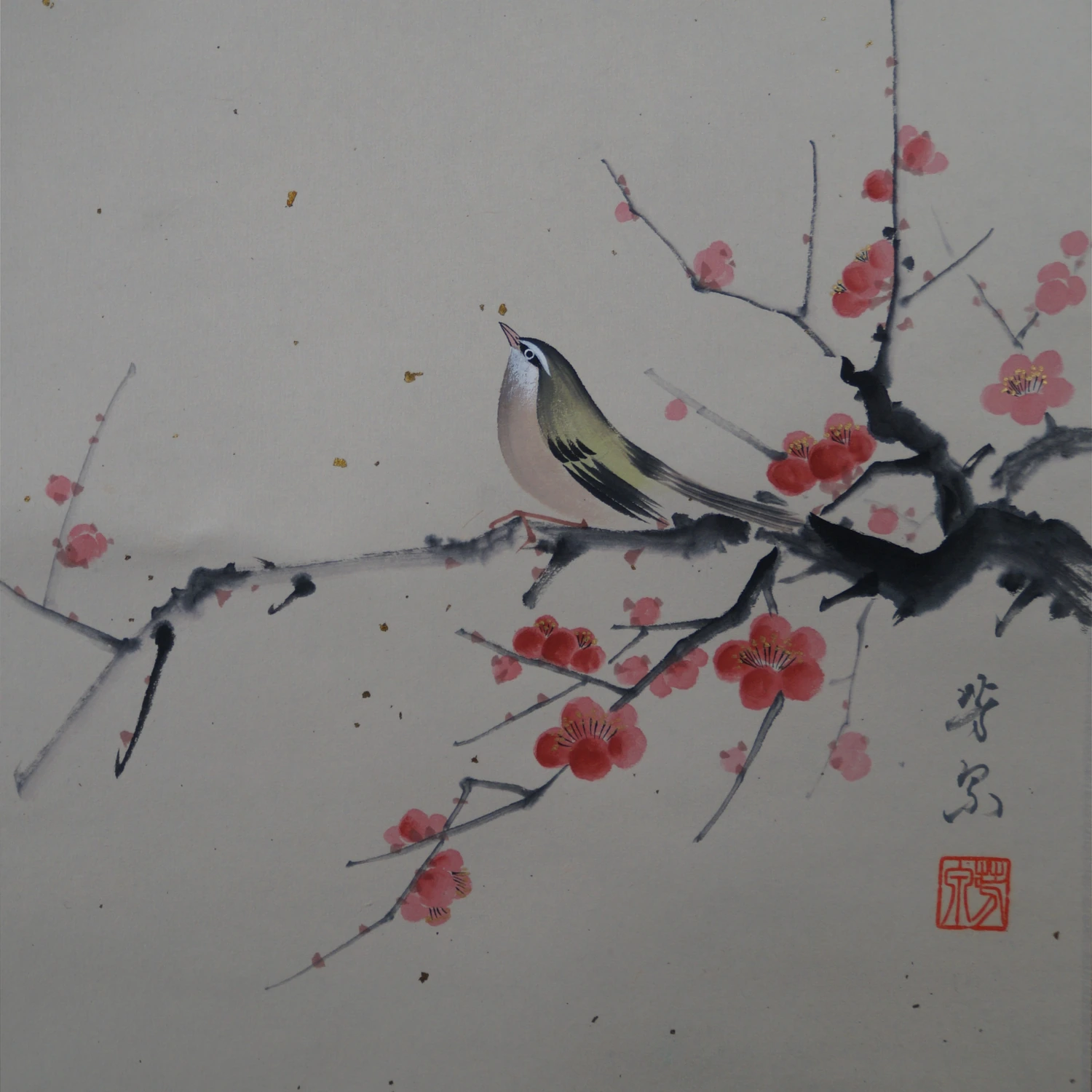
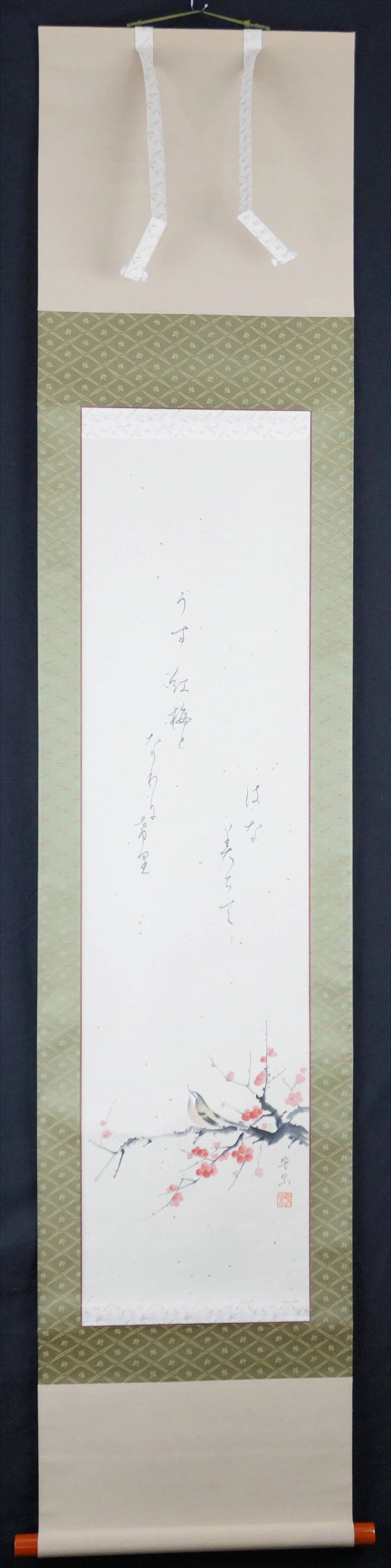
Sugaya Hosen
Pale Pink Plum Blossoms in Spring Light
Kakemono, unique work, with box, 193 x 46 cm
€490.00
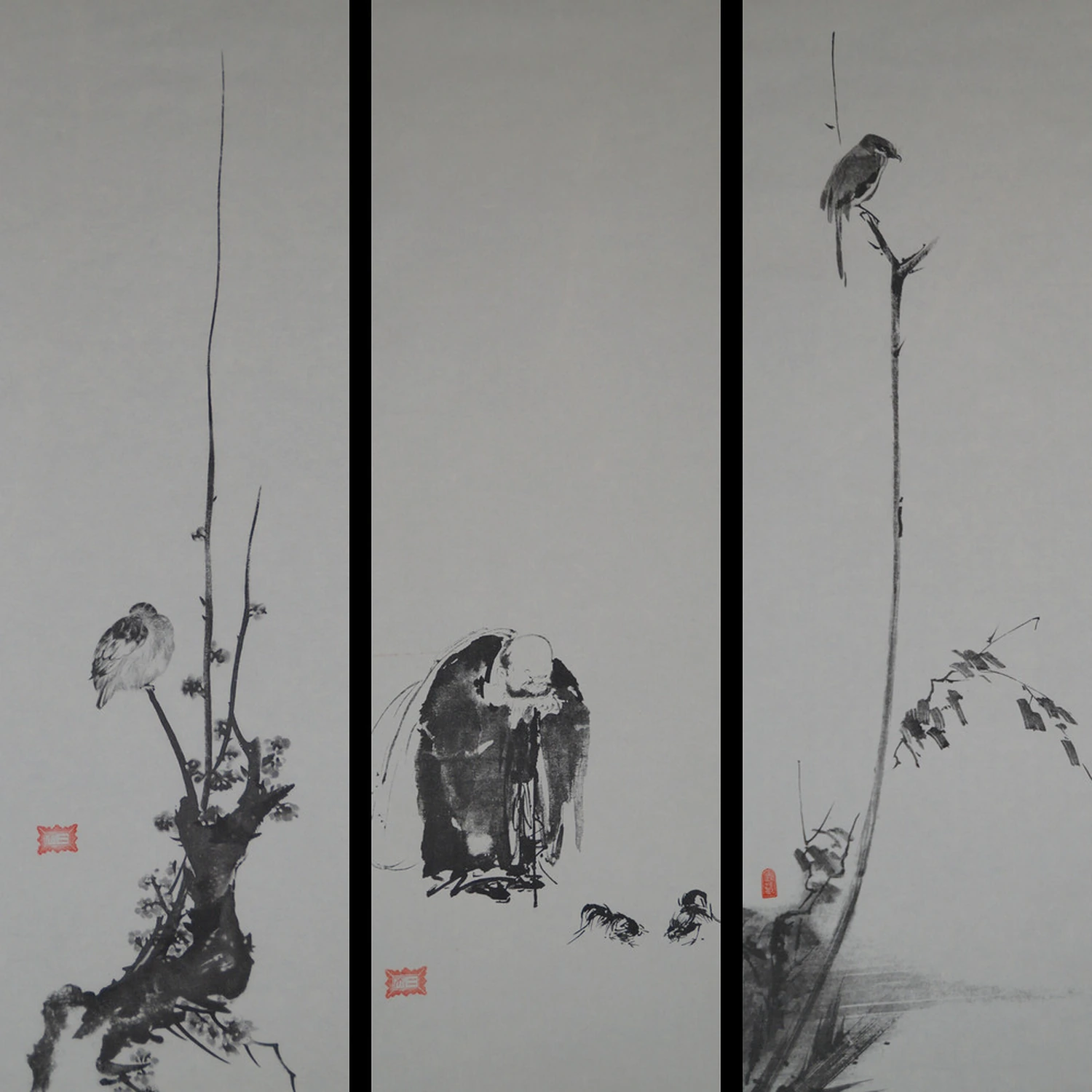
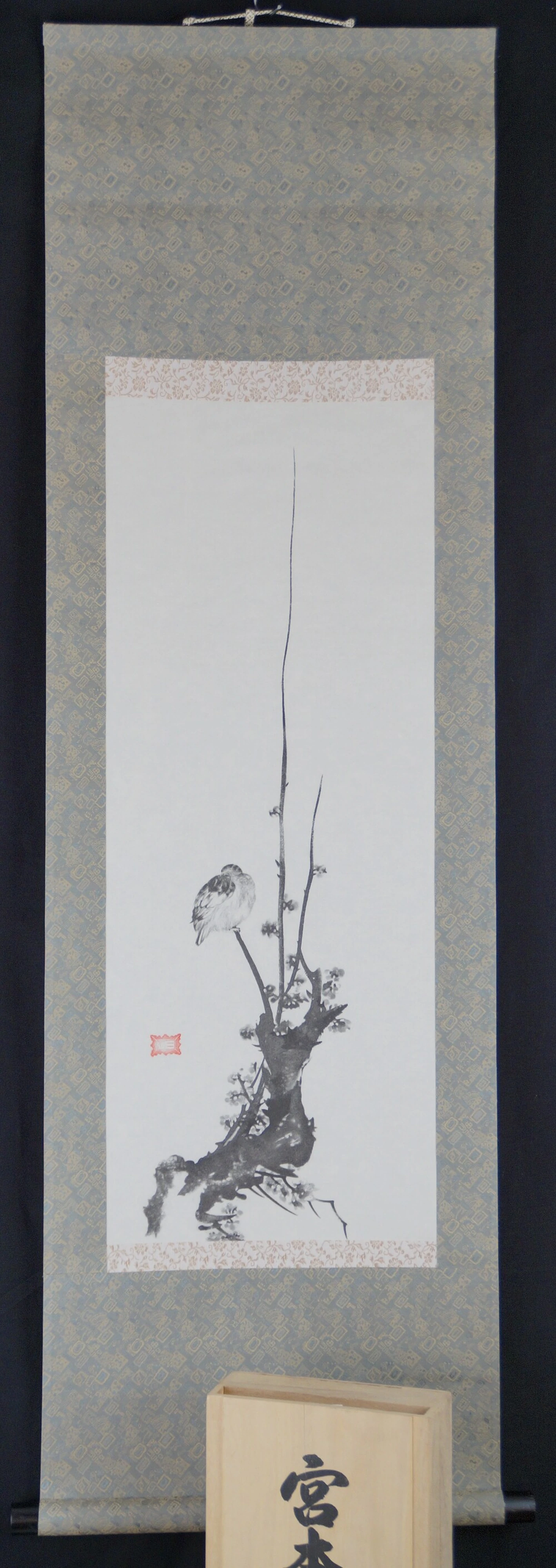
Miyamoto Musashi
Triptych Prints After Miyamoto Musashi
Kakemono, Print, with box, 185 x 47 cm
€270.00
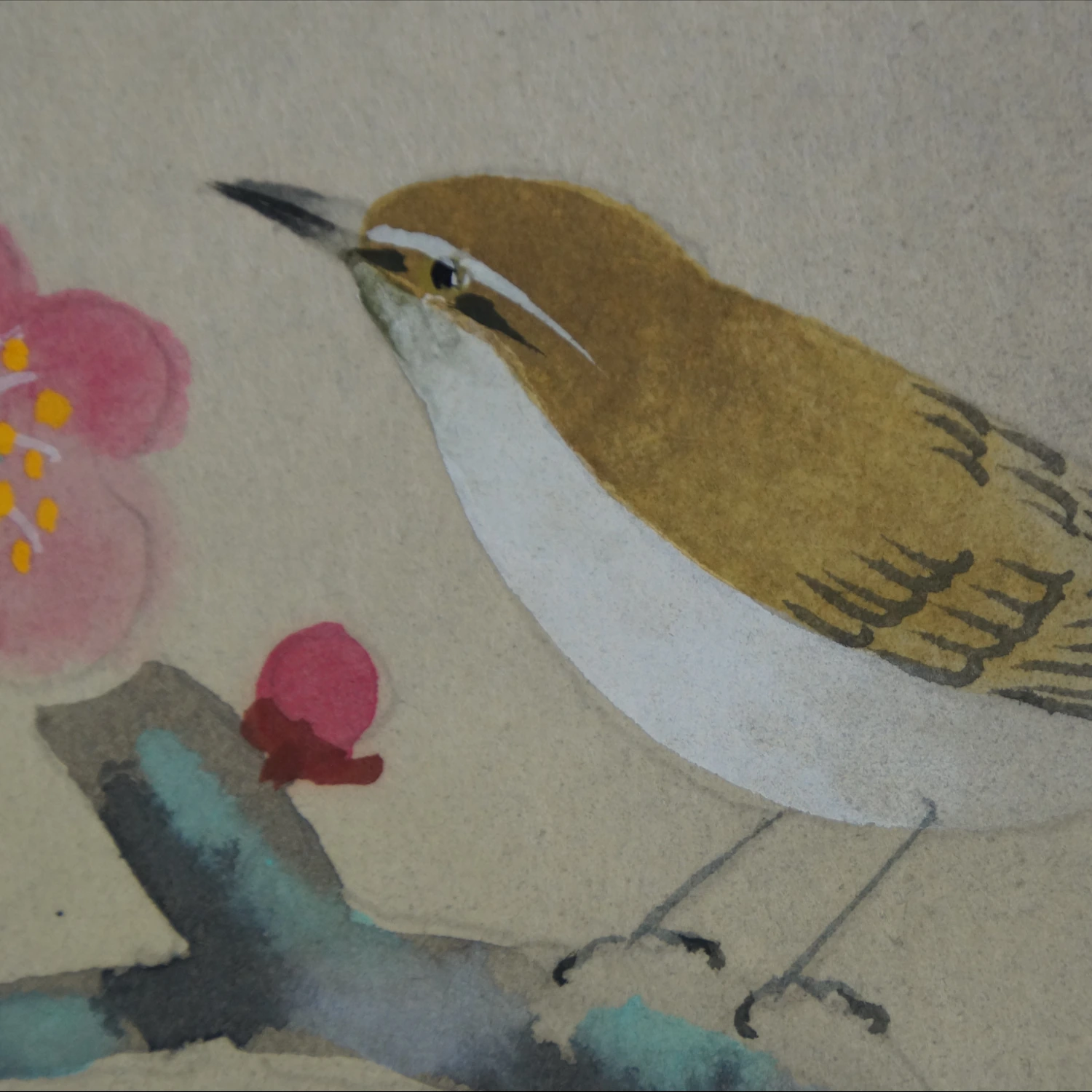
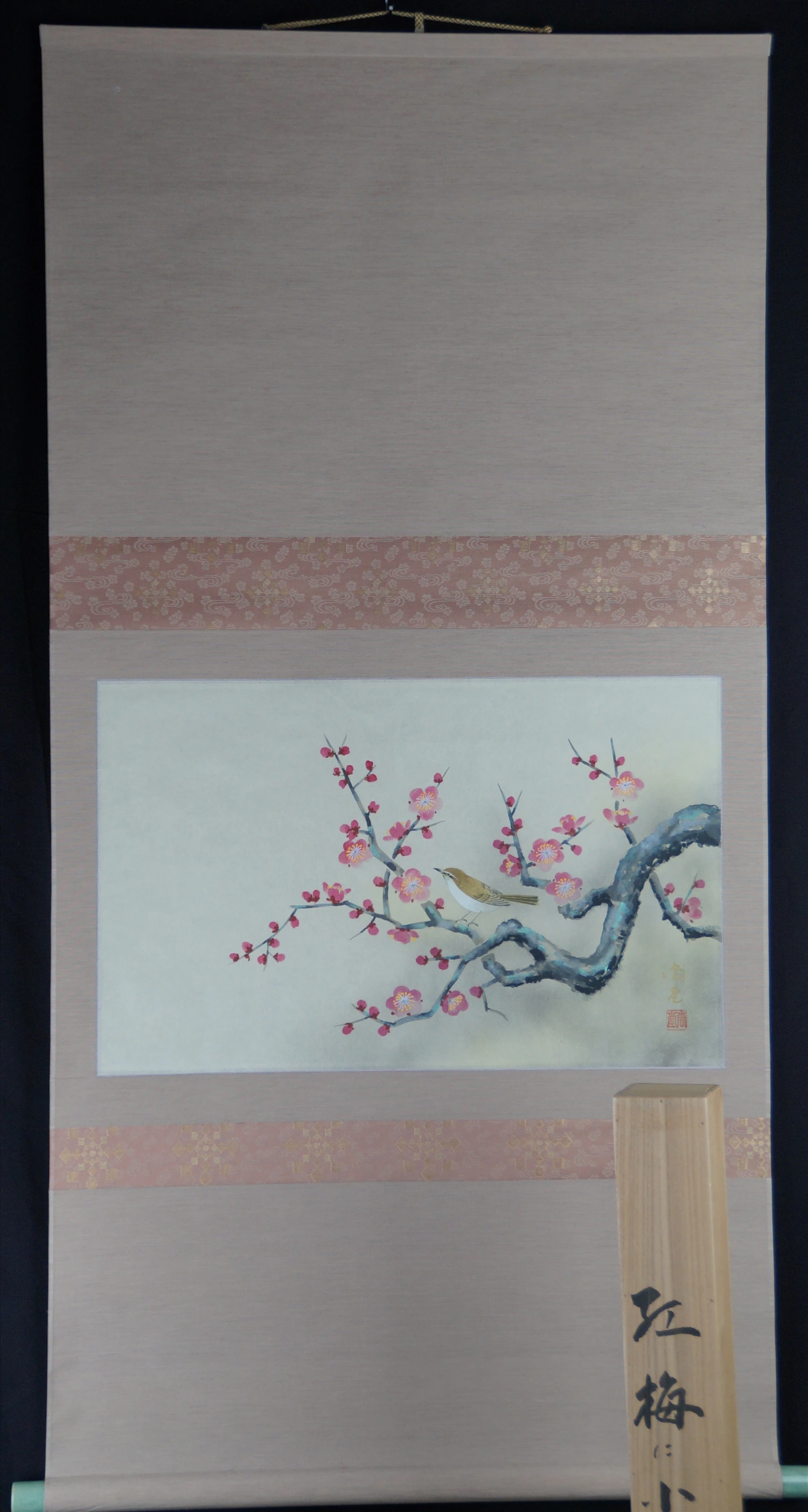
Ogawa Shodo
Songbird on Blooming Plum Tree
Kakemono, unique work, with box, 133 x 66 cm
€410.00
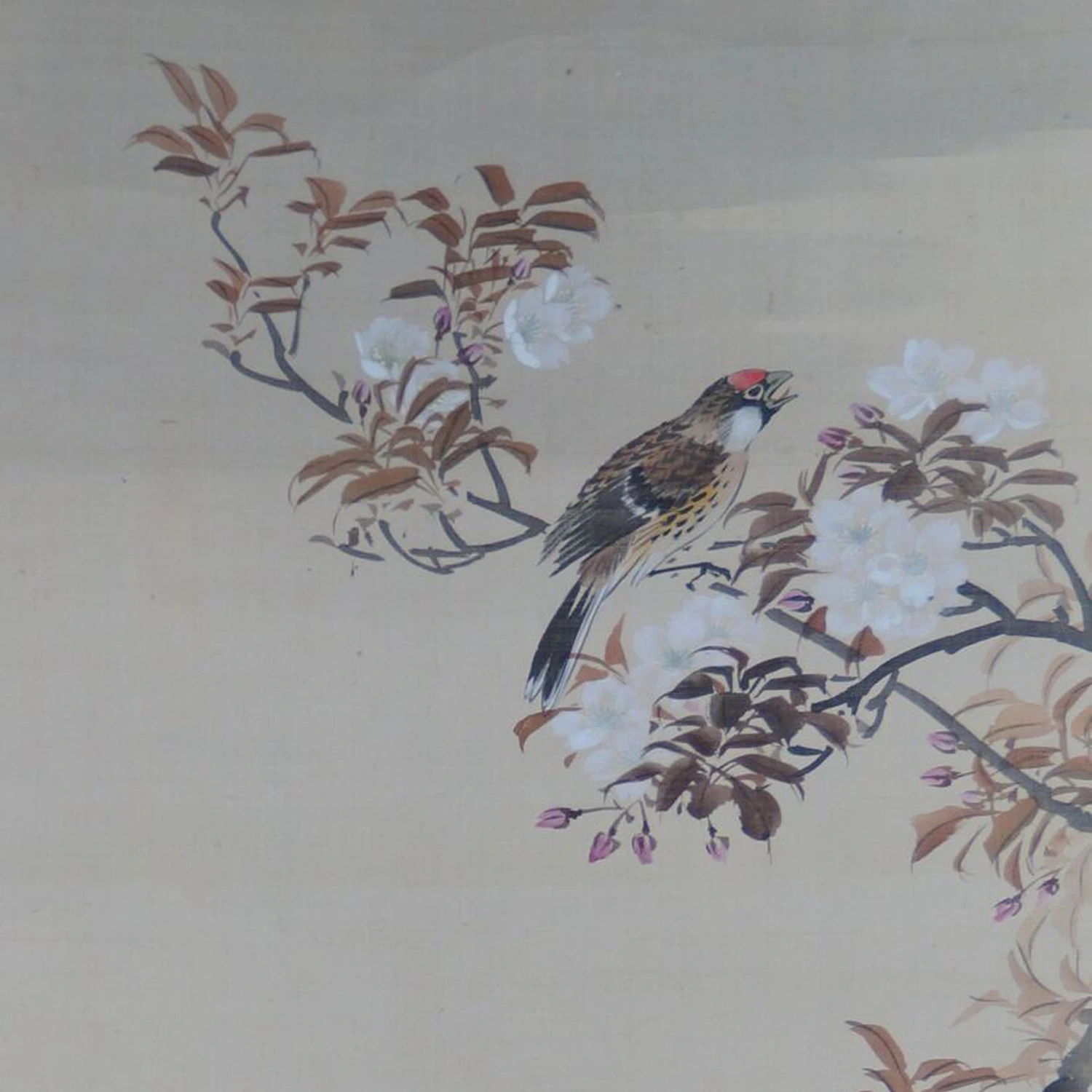
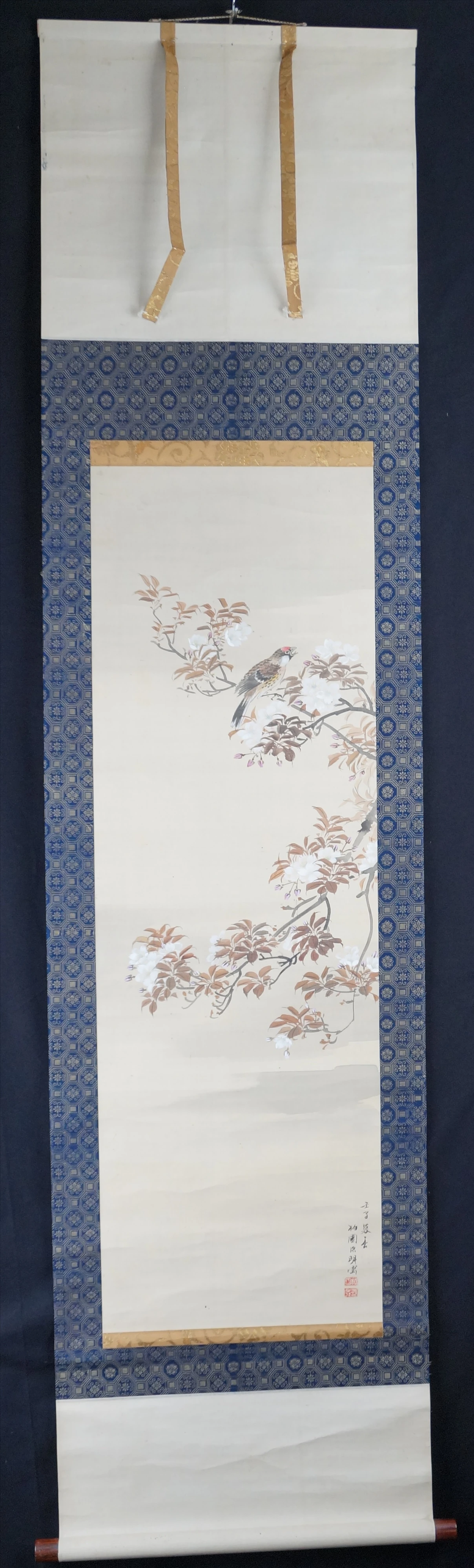
Hirose Hakuen
Singing Bird in Cherry Blossom Branch
Kakemono, unique work, 182 x 51 cm
€370.00
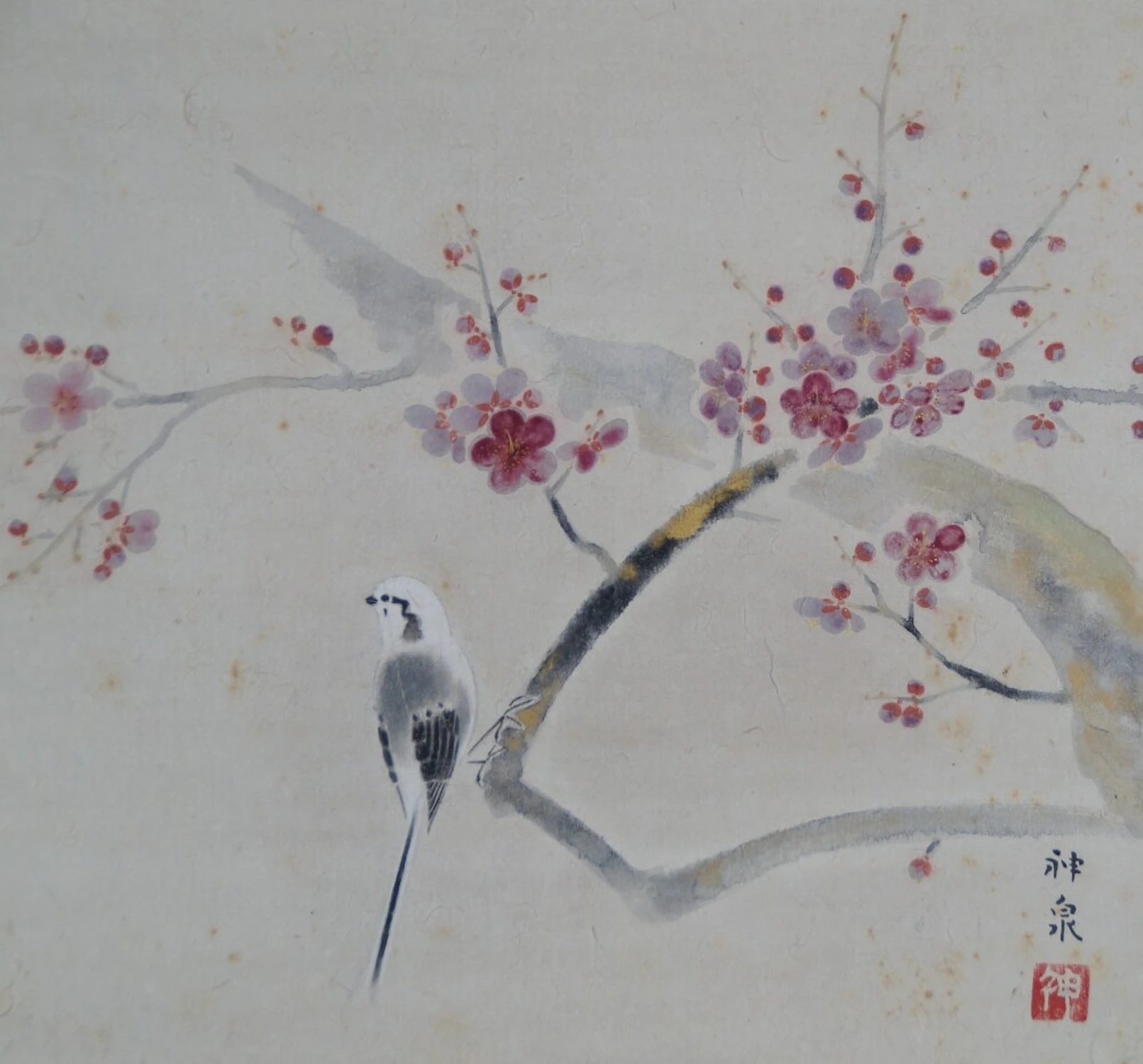
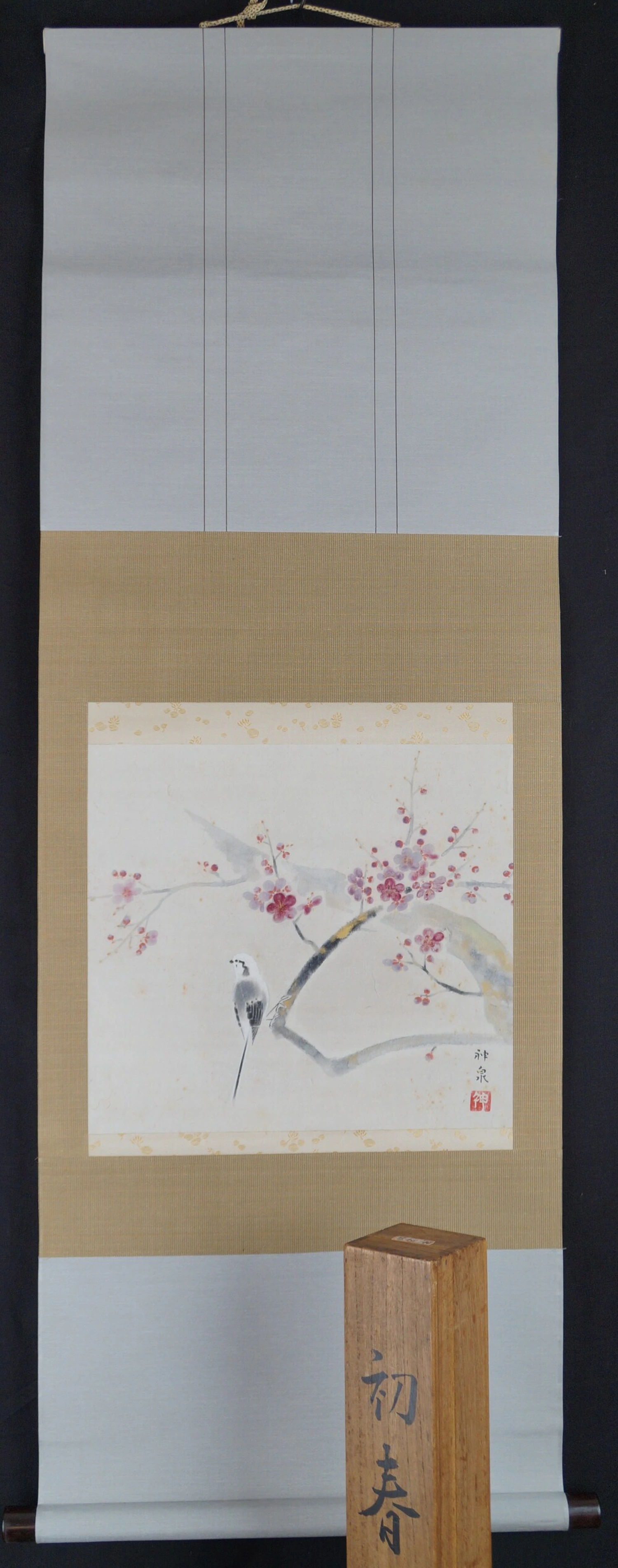
Tokuoka Shinsen
Plum Blossoms in Quiet Morning Light
Kakemono, unique work, with box, 124 x 49 cm
€280.00
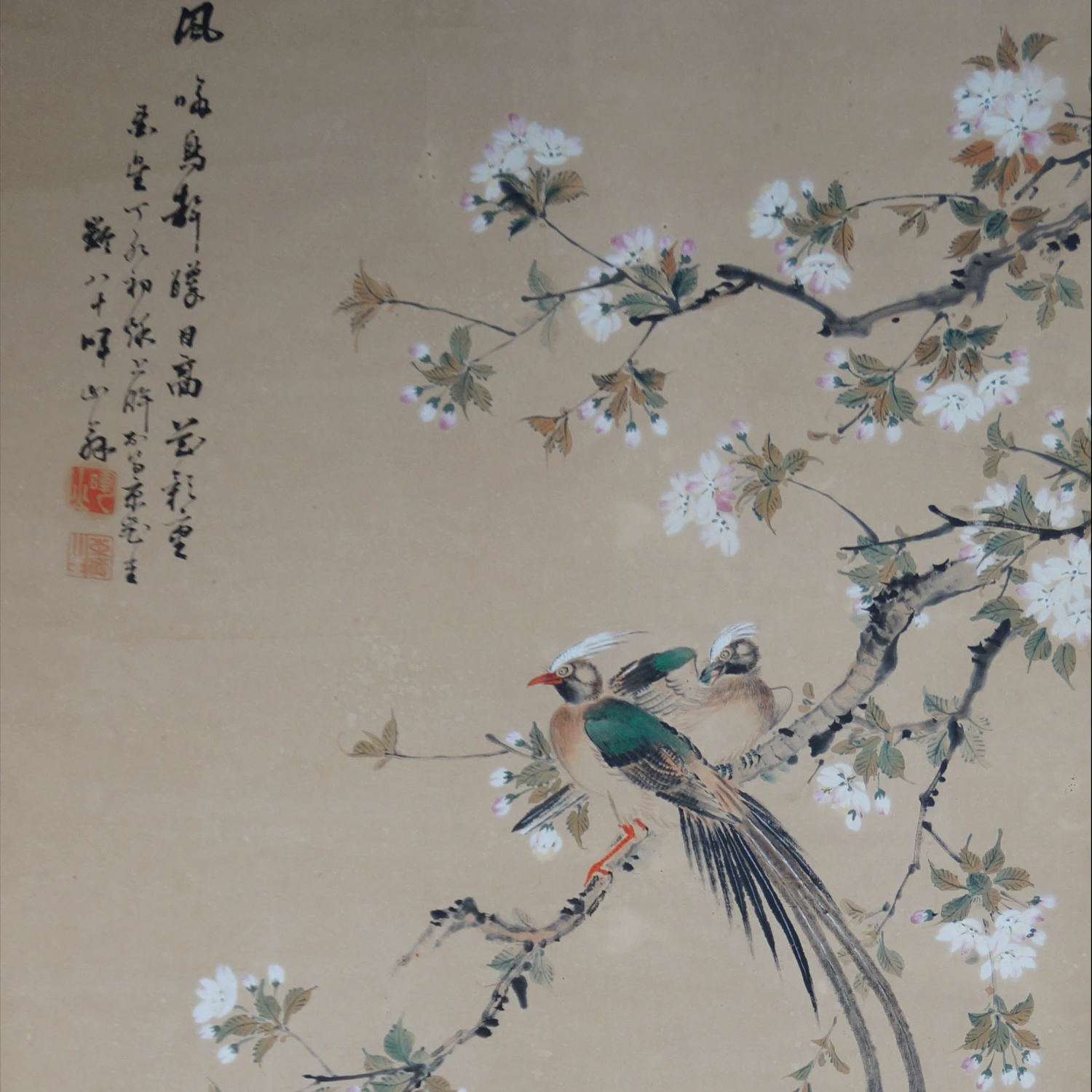
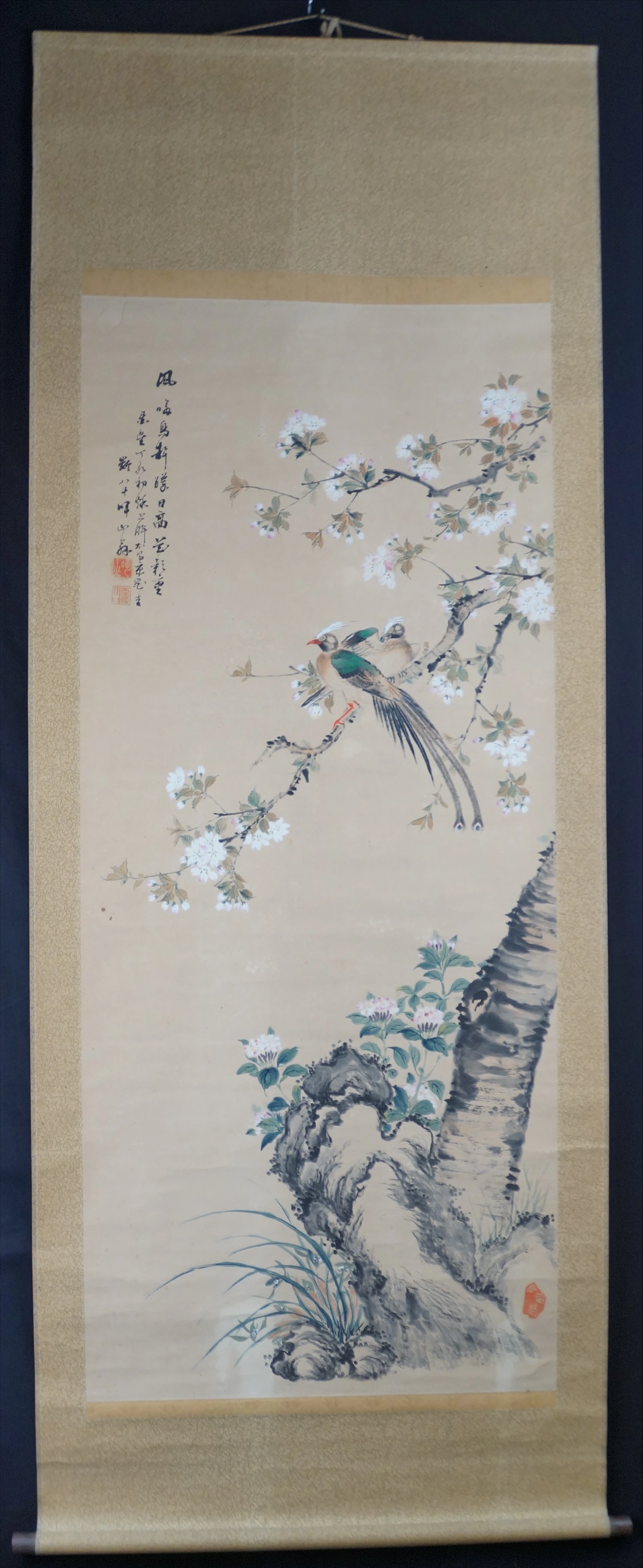
Takahashi Keizan
Spring Duet on Blooming Branch
Kakemono, unique work, 182 x 80 cm
€630.00
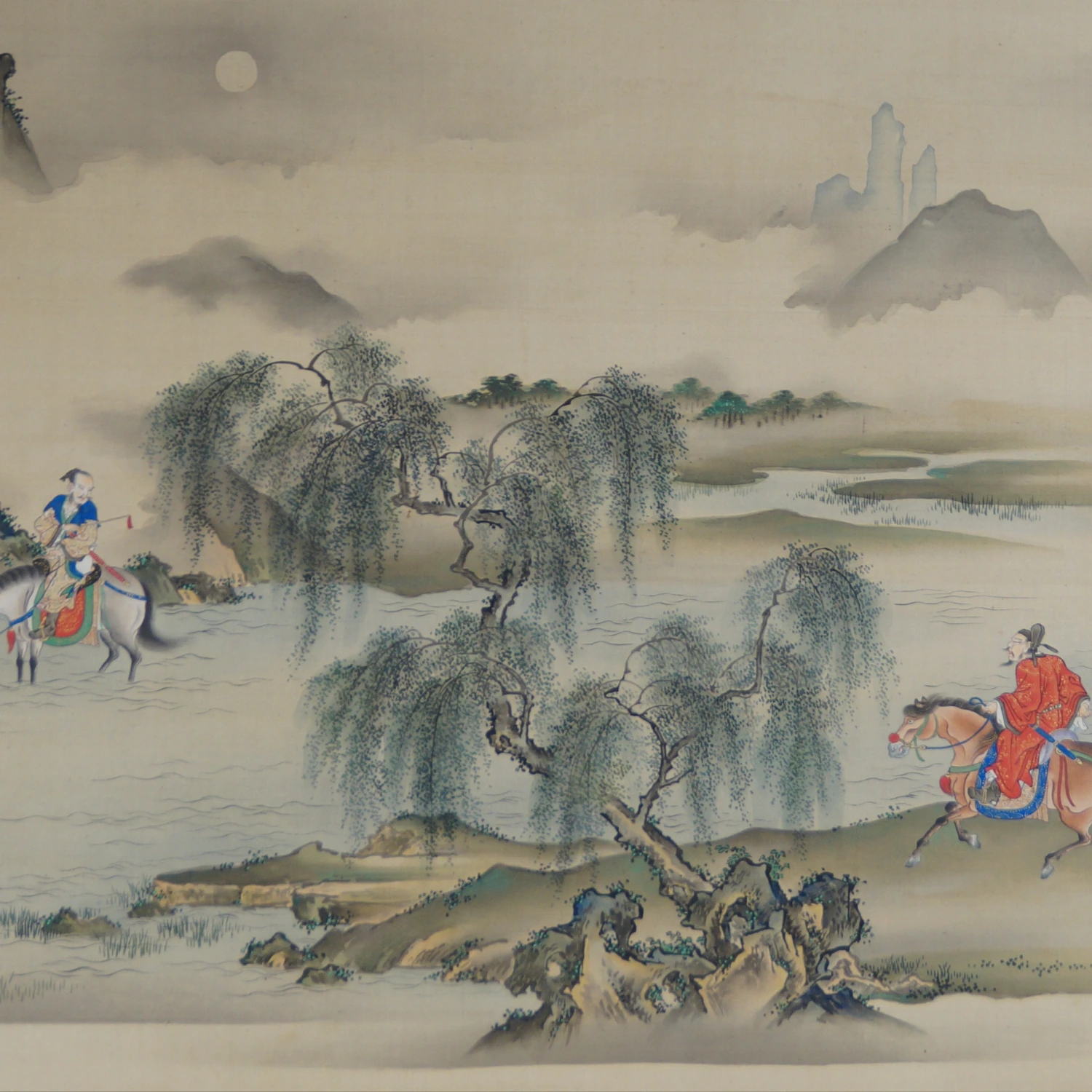
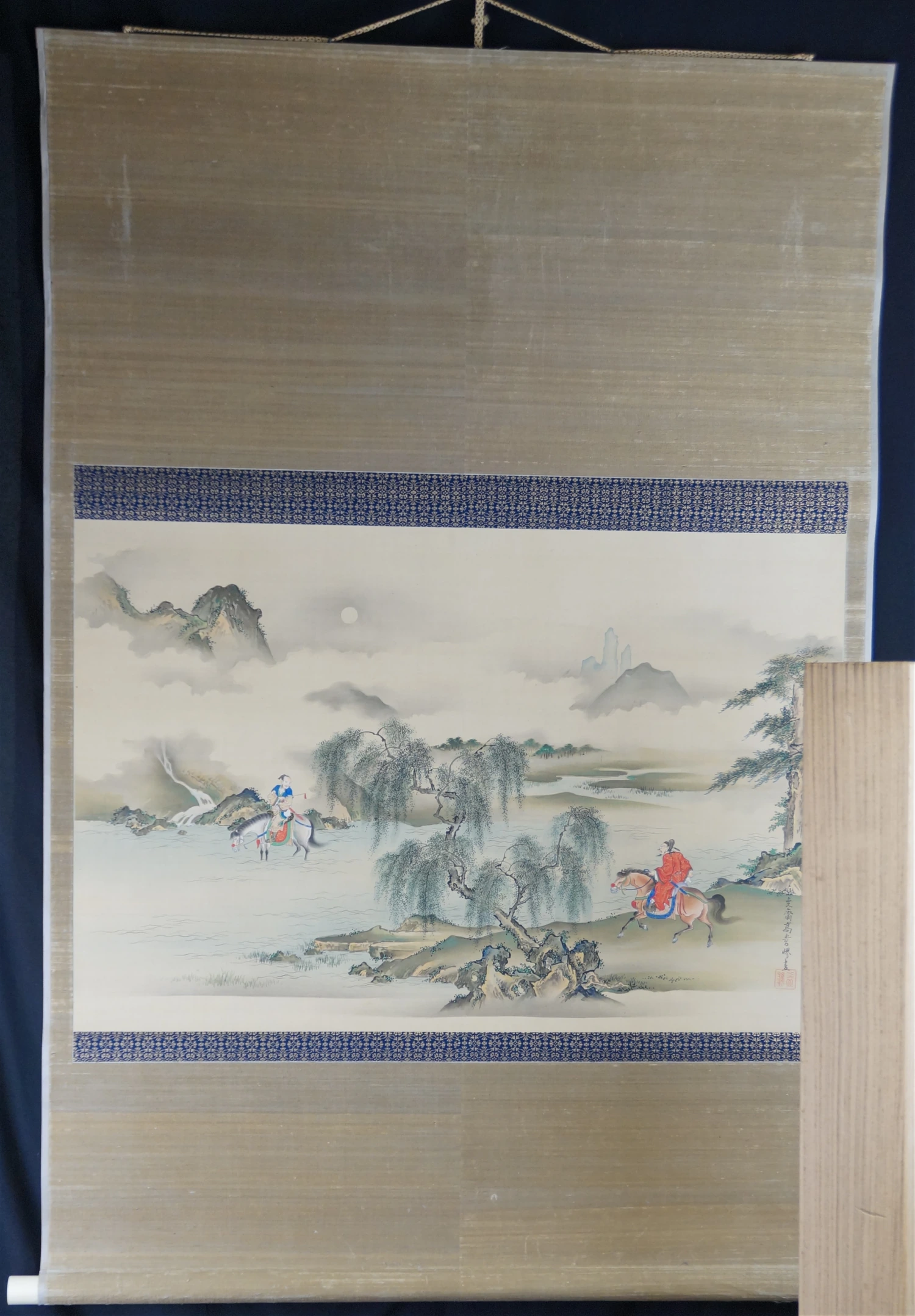
Kōsūkoku
Encounter by the River
Kakemono, unique work, with box, 136 x 97 cm
€1,290.00
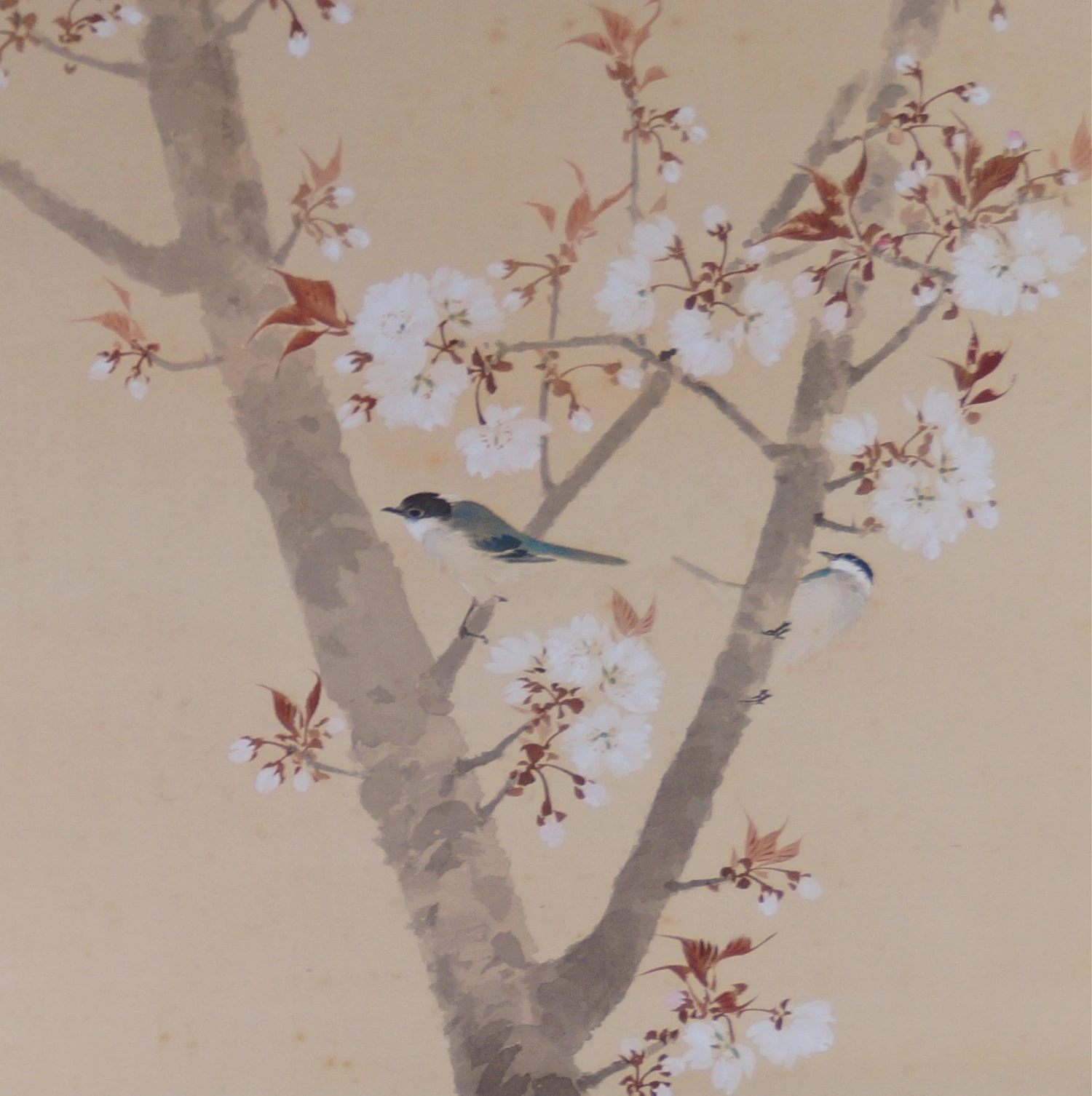
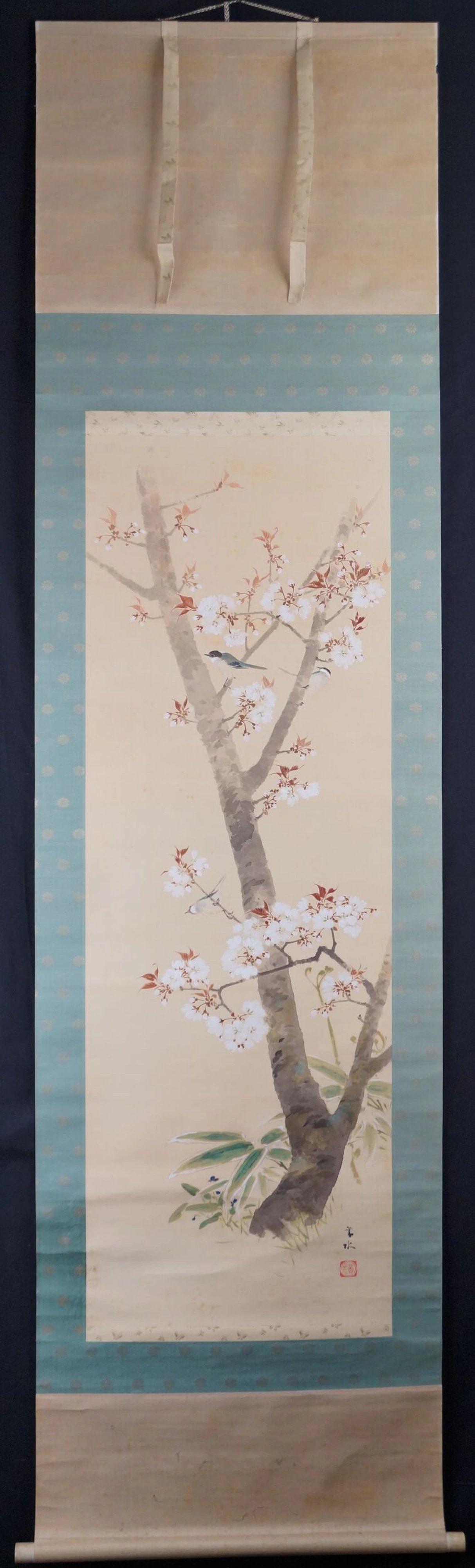
Suma Taisui
Spring at the Old Cherry Blossom
Kakemono, unique work, with box, 208 x 61 cm
€470.00
Tanaka Kakashi
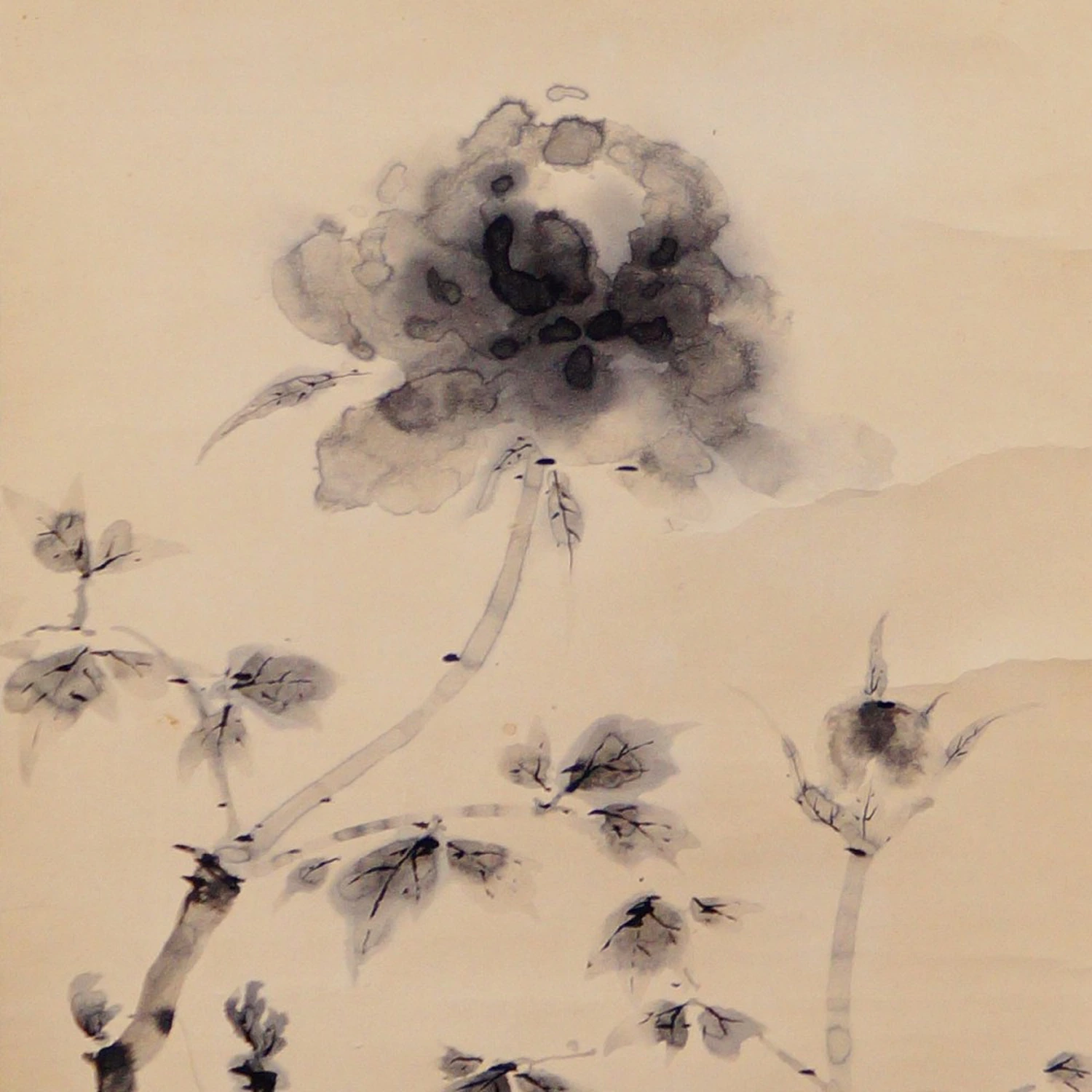
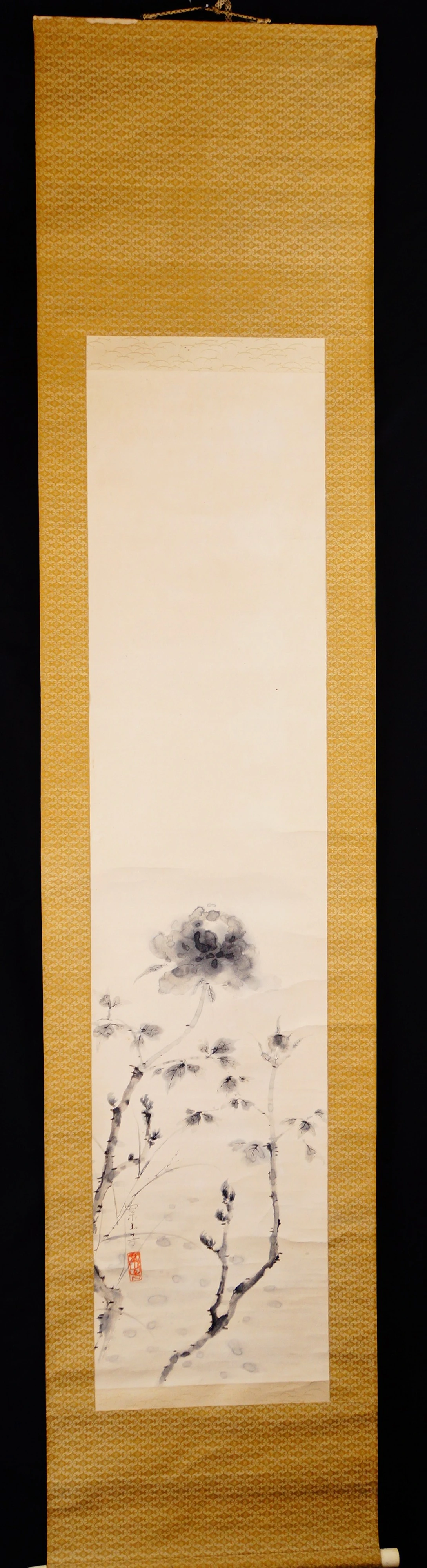
Delicate Peony in Quiet Light
Kakemono, unique work, 198 x 48 cm
€270.00
Nakamura Shunyō
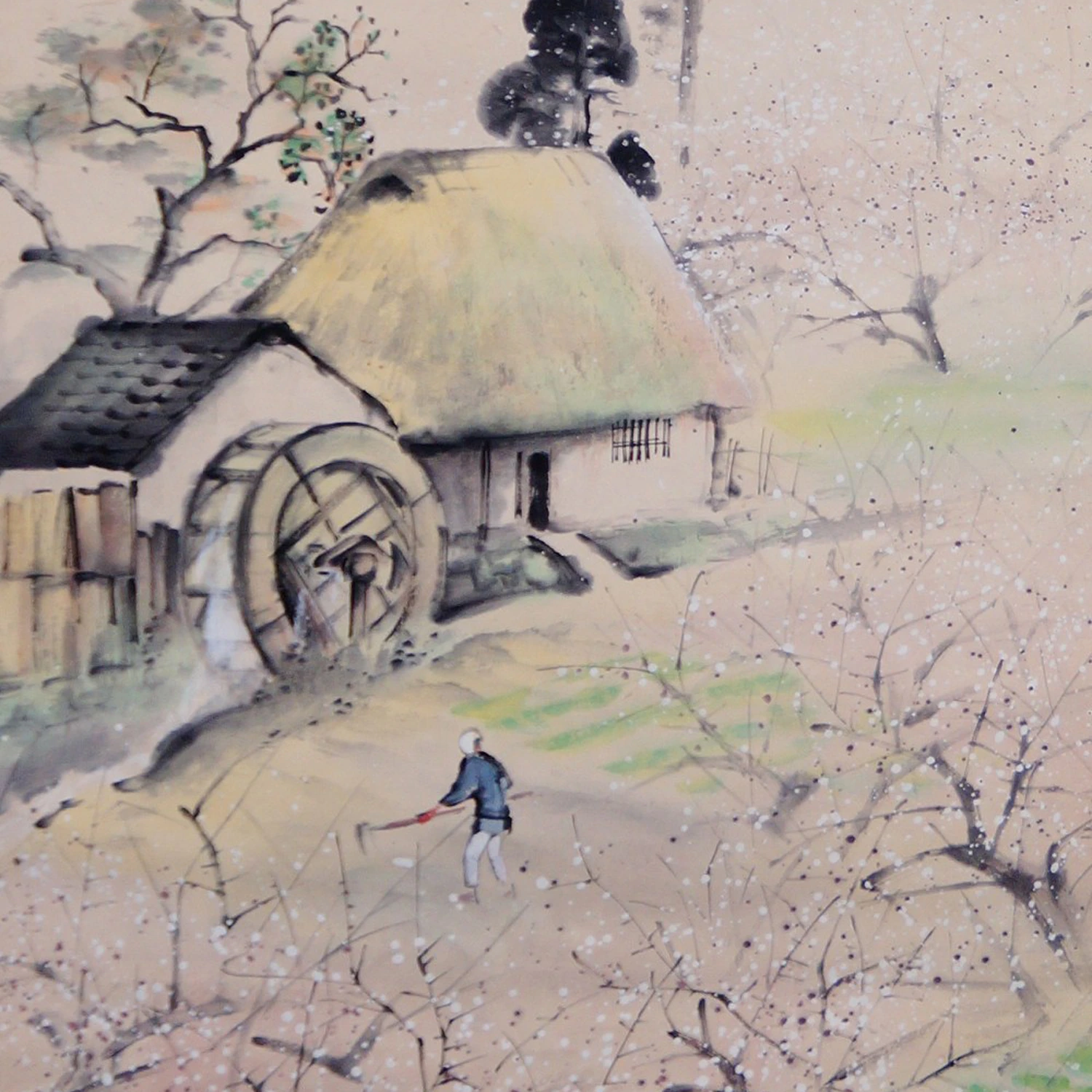
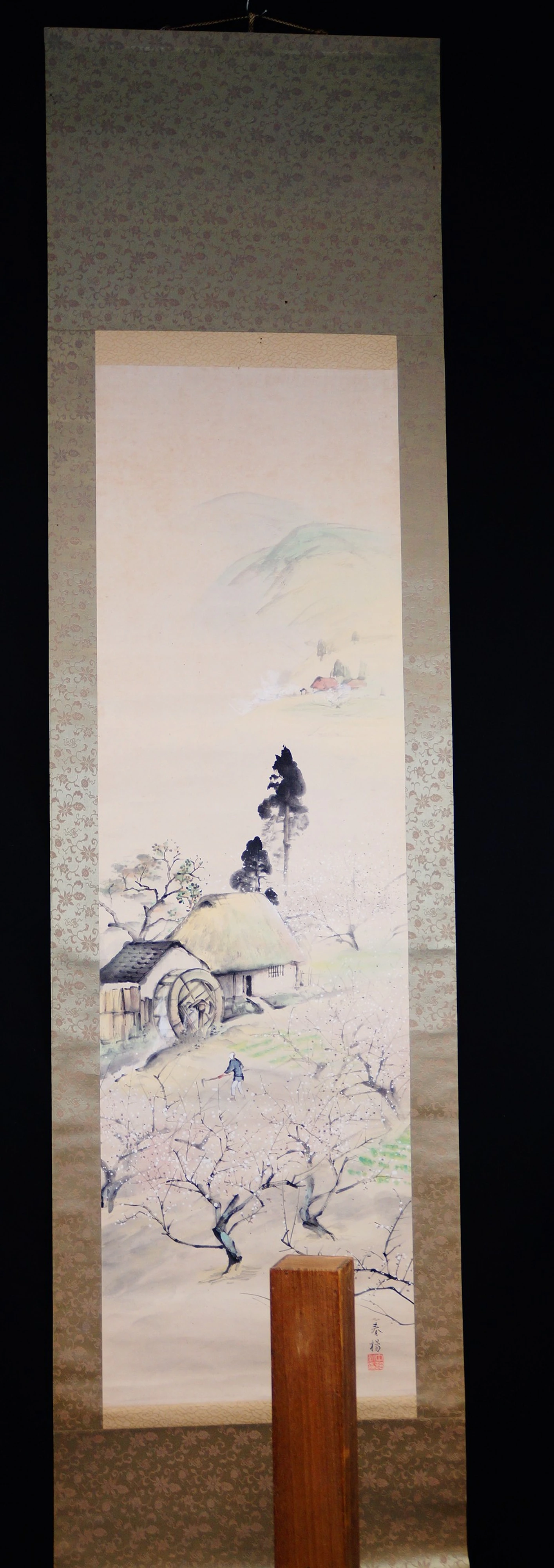
Village in Plum Blossom
Kakemono, unique work, 194 x 57 cm
€240.00
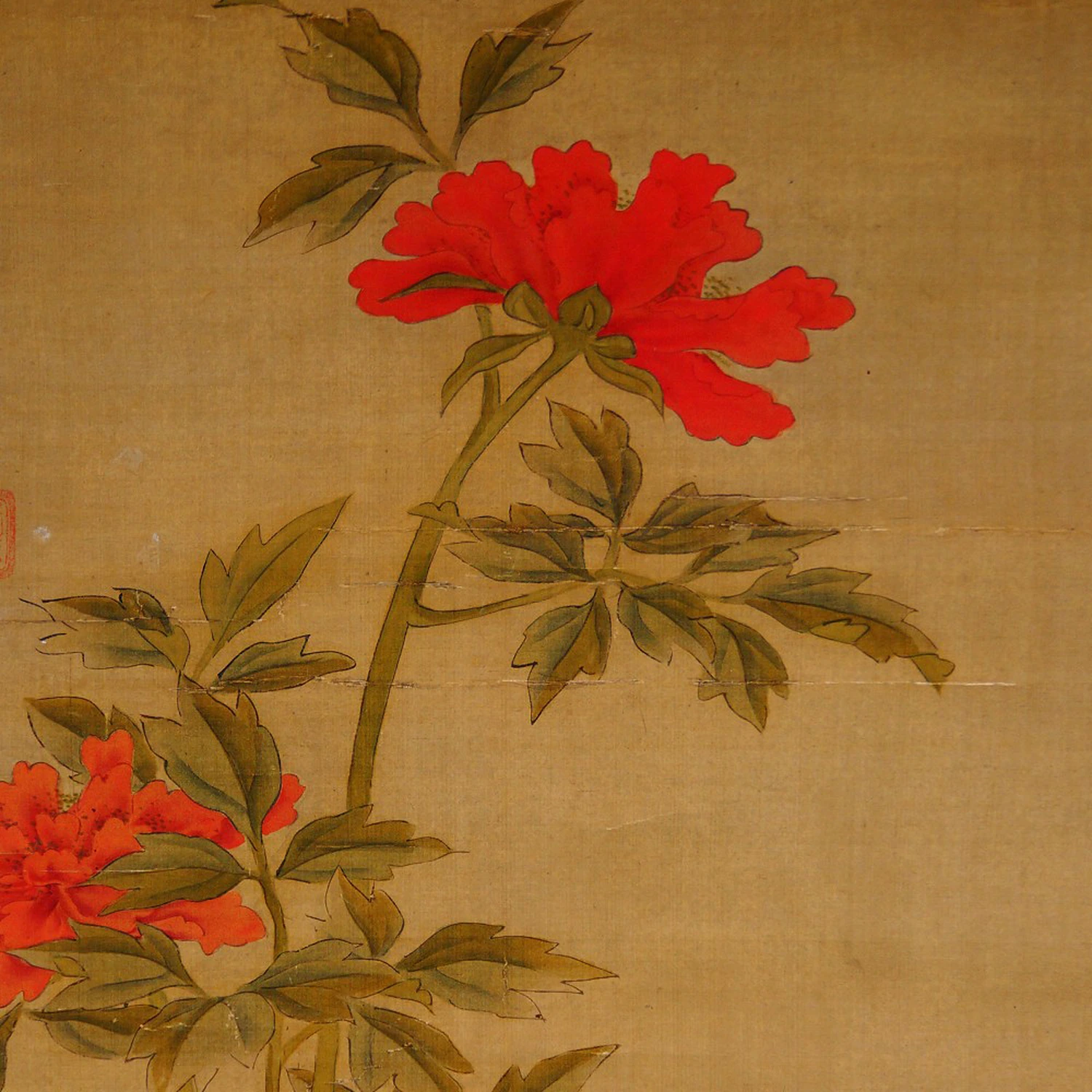
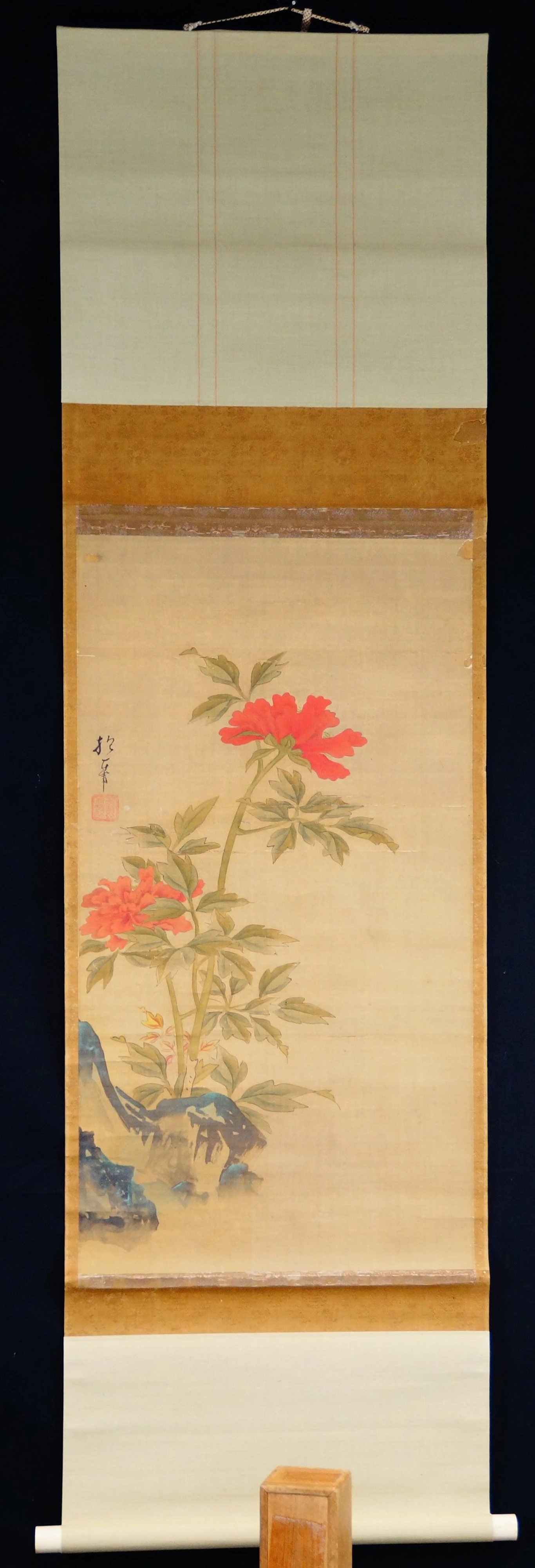
Sakai Hōitsu
Peonies Blooming on Rock
Kakemono, unique work, with box, 150 x 47 cm
€430.00
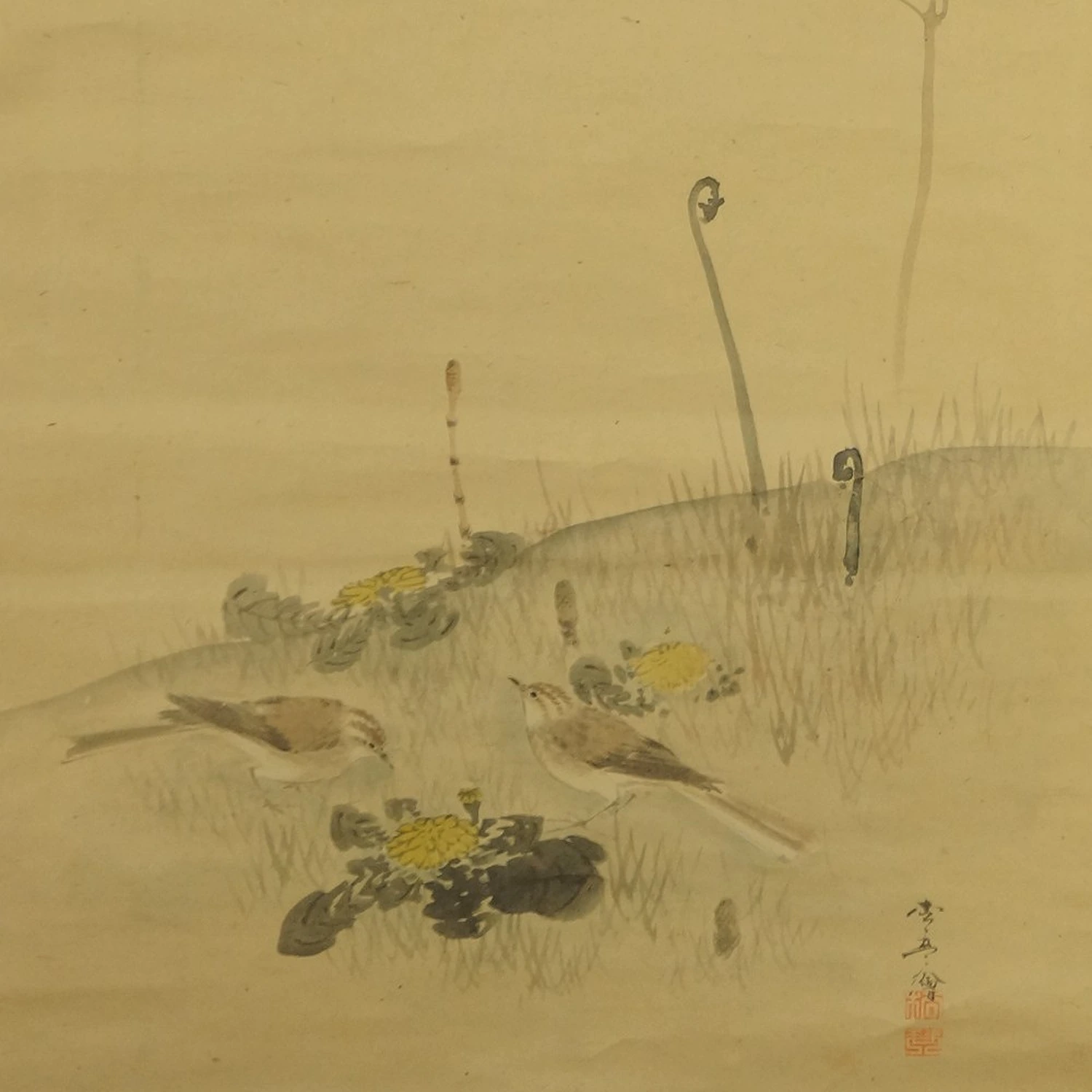
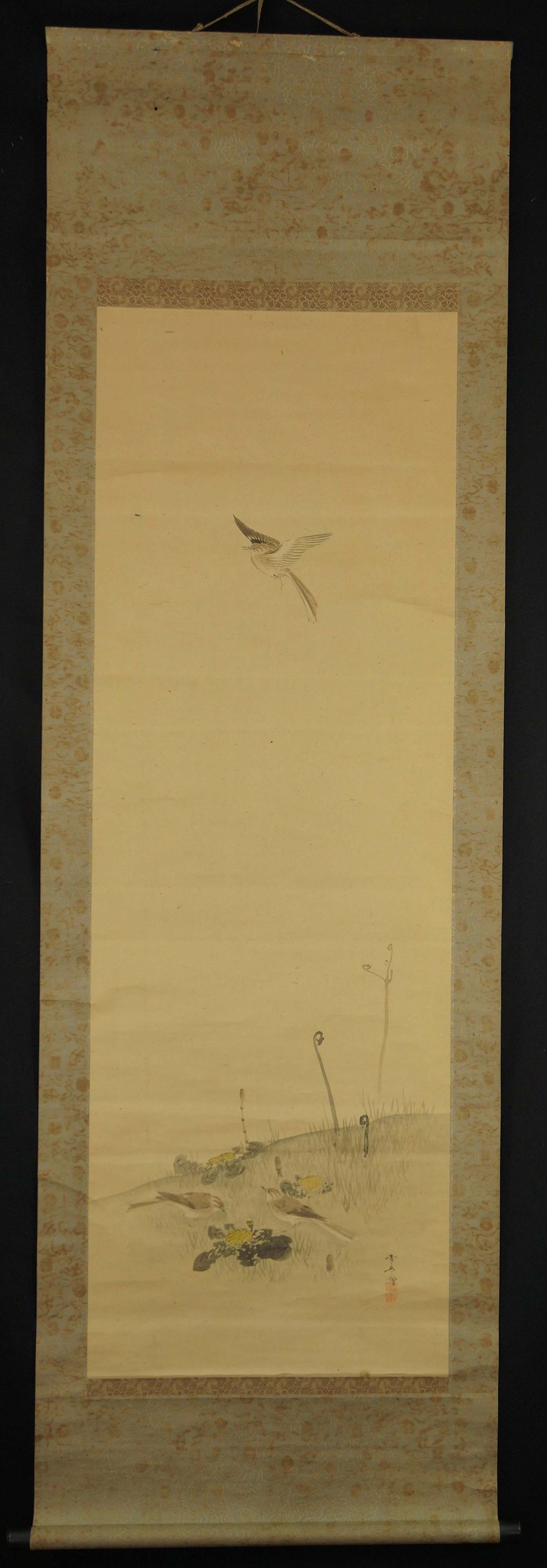
Birds on a Meadow
Kakemono, unique work, 180 x 60 cm
€280.00
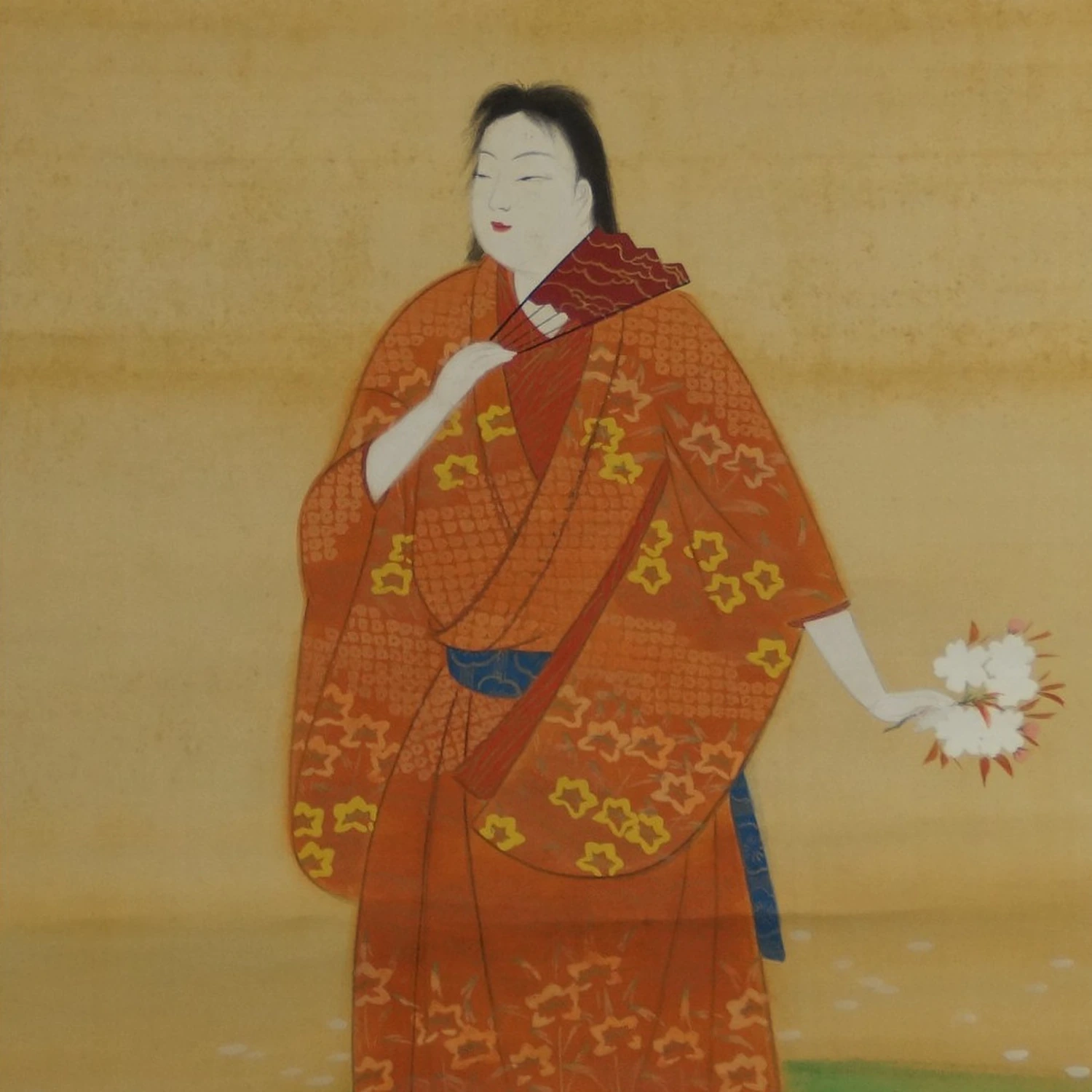
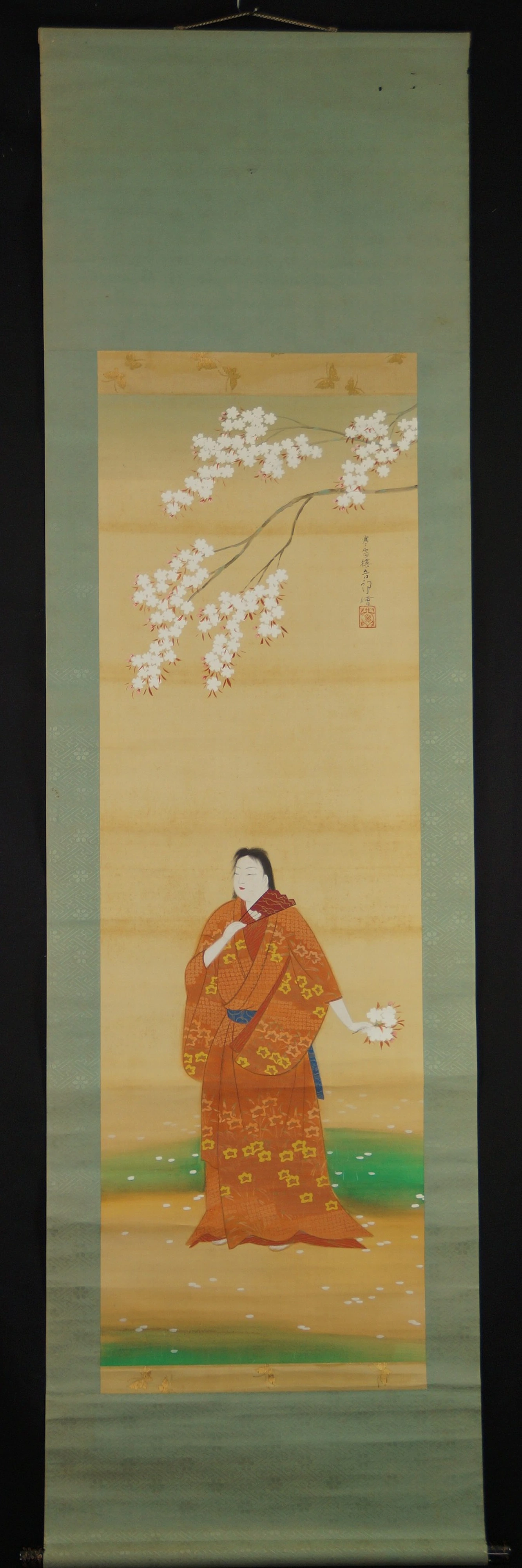
Kamenaga Goro
Woman Under a Sakura Branch
Kakemono, unique work, 190 x 60 cm
€320.00
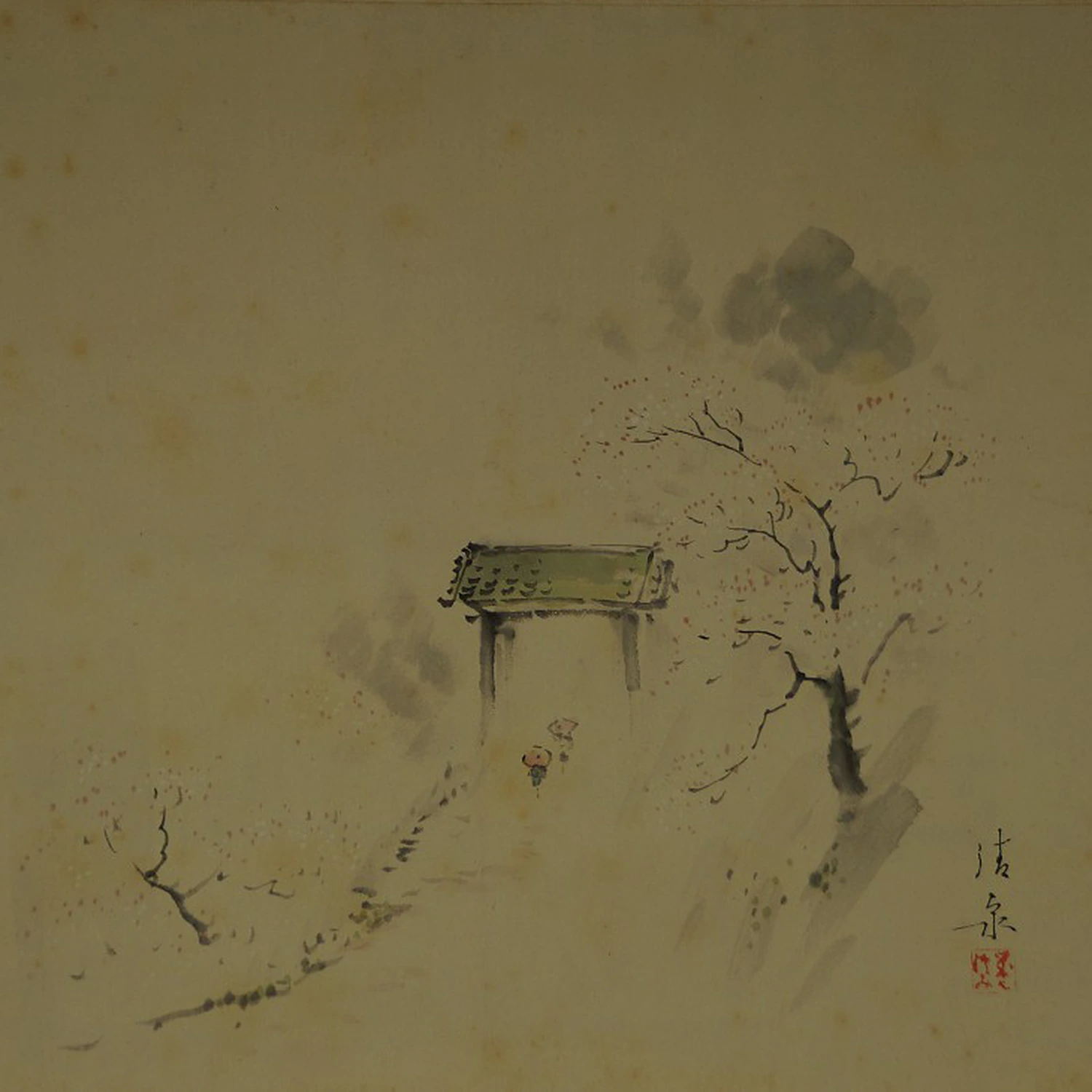
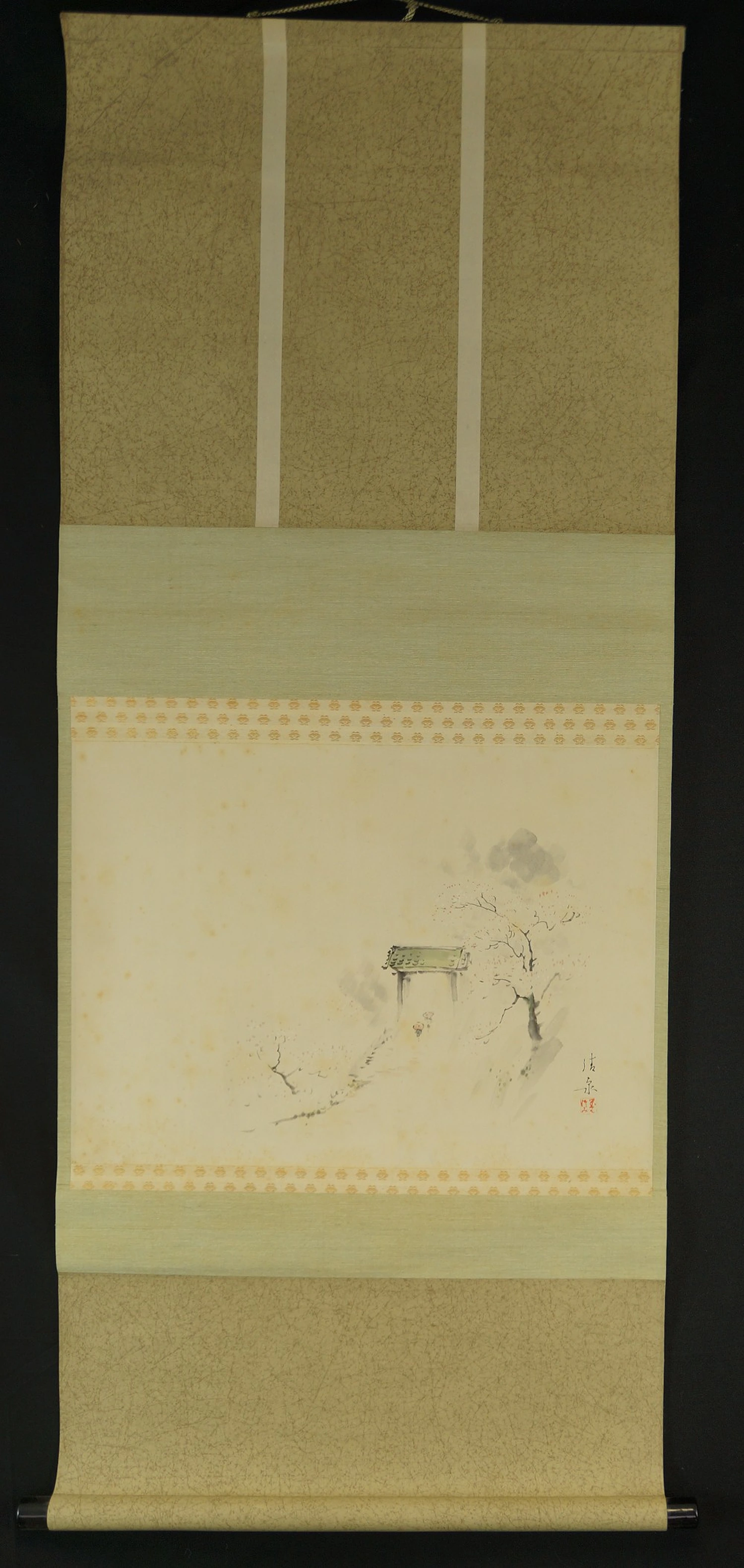
Seizumi
Small Wanderer Beneath Blossoming Trees at the Torii
Kakemono, unique work, 128 x 57 cm
€220.00
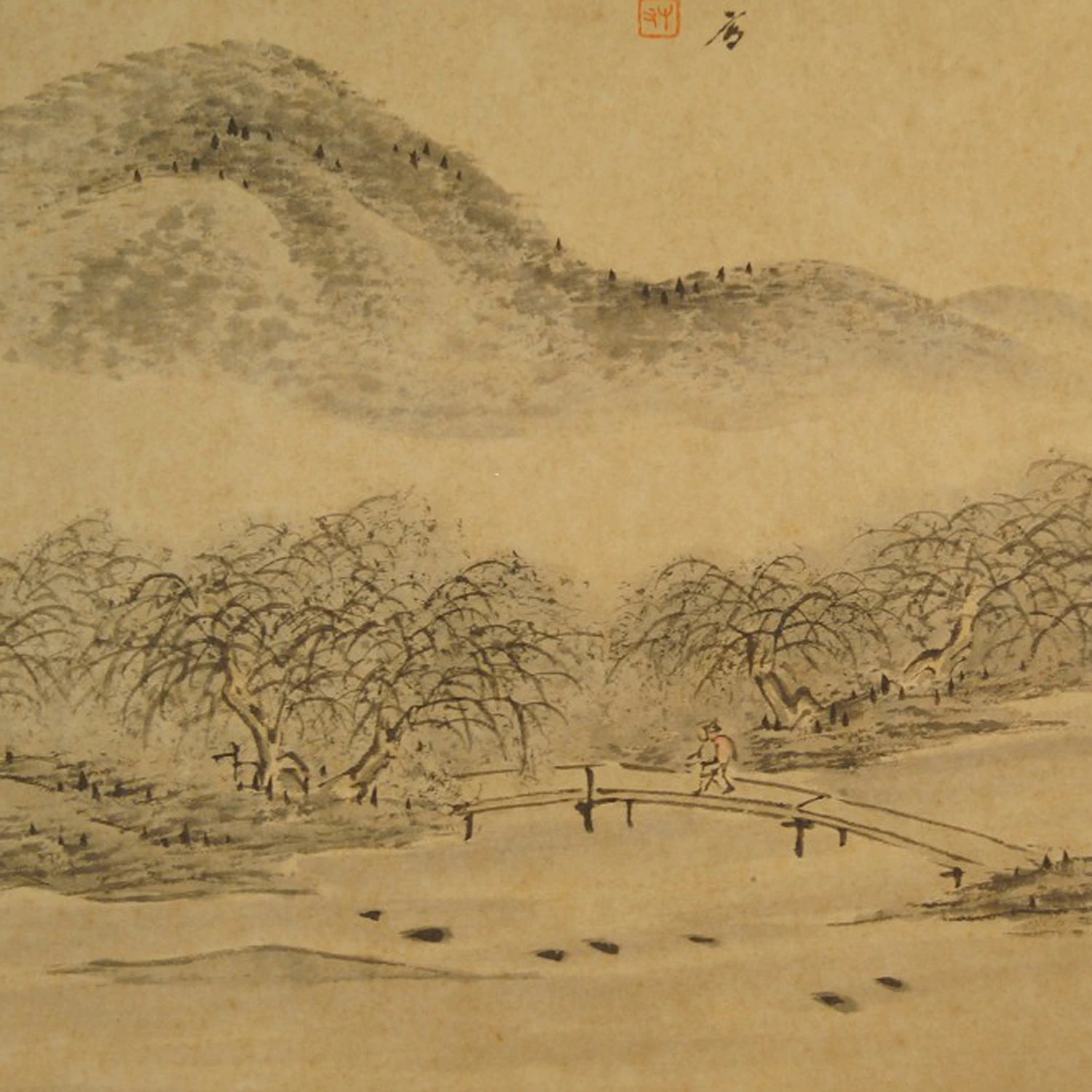
Landscape with Bridge
Shikishi, unique work, 27 x 24 cm
Sold
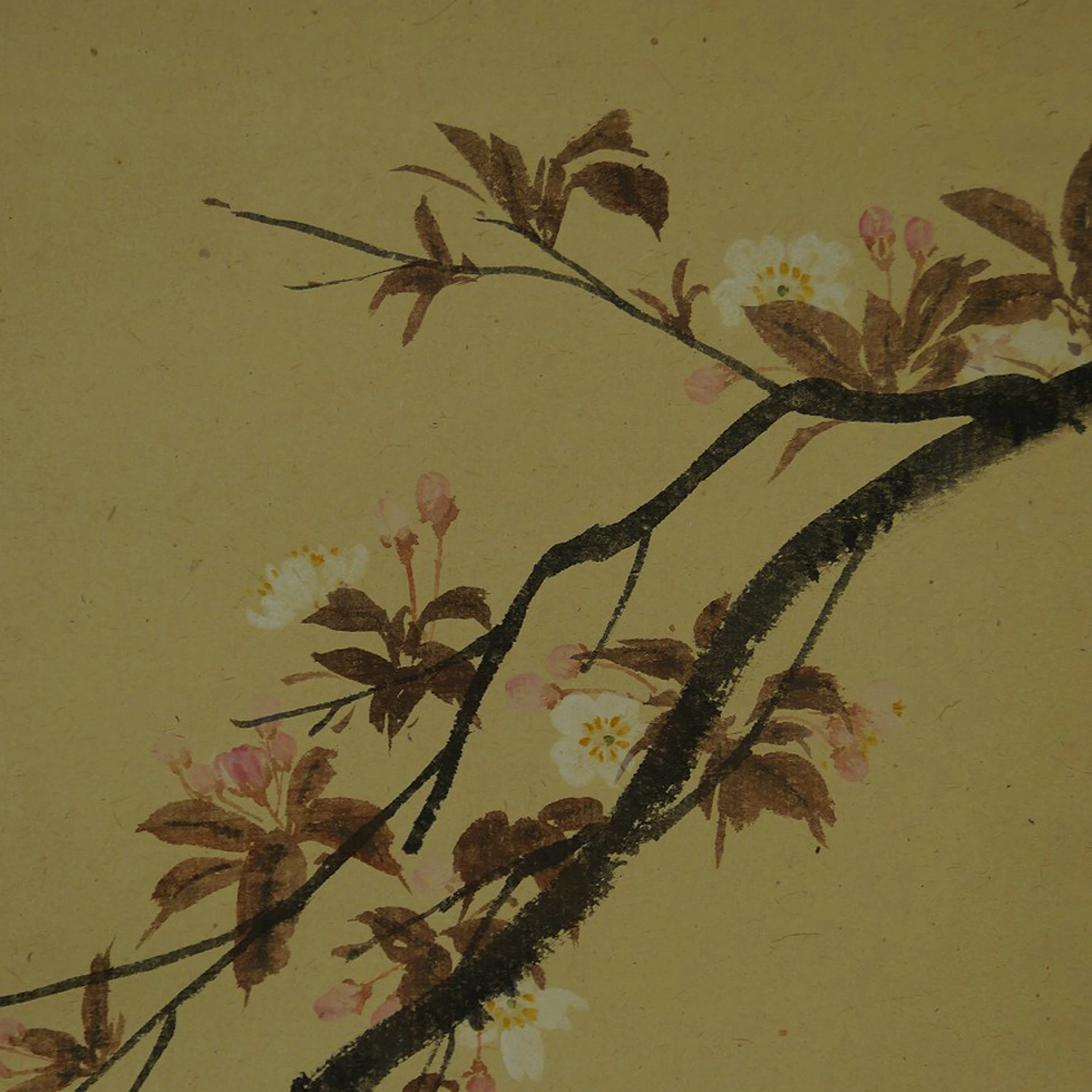
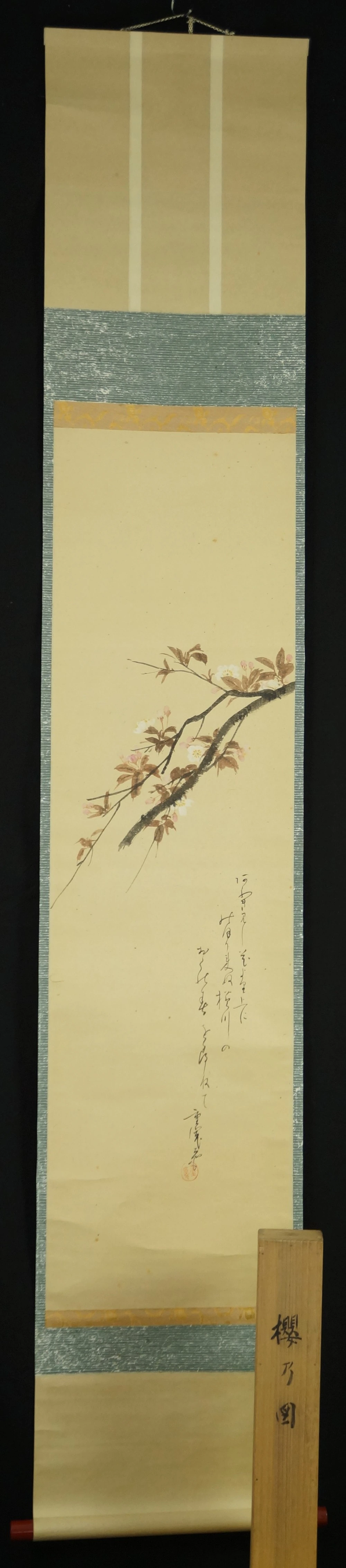
Hishida Shigehiru
Sakura Branch in Delicate Spring Light
Kakemono, unique work, with box, 187 x 40 cm
€420.00
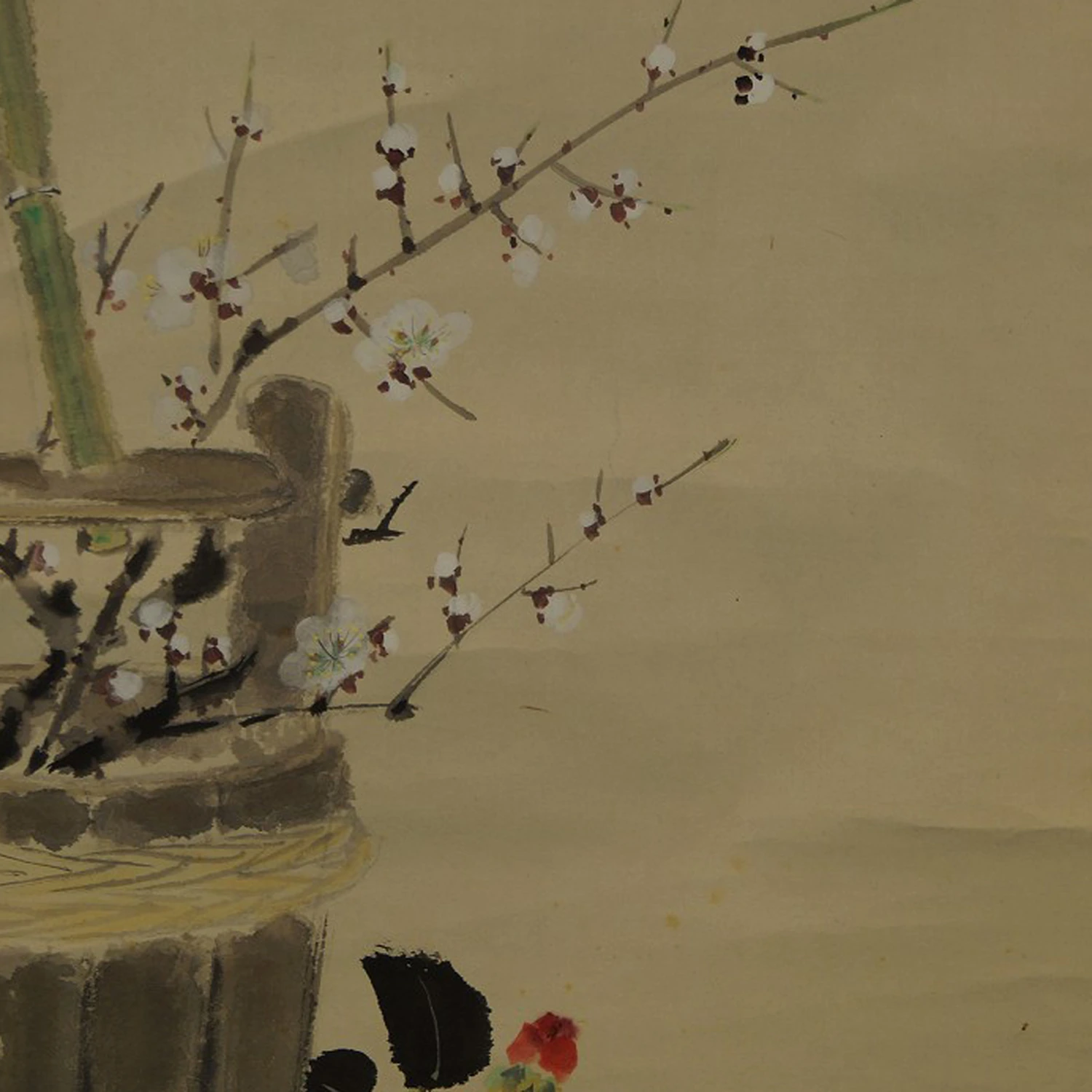
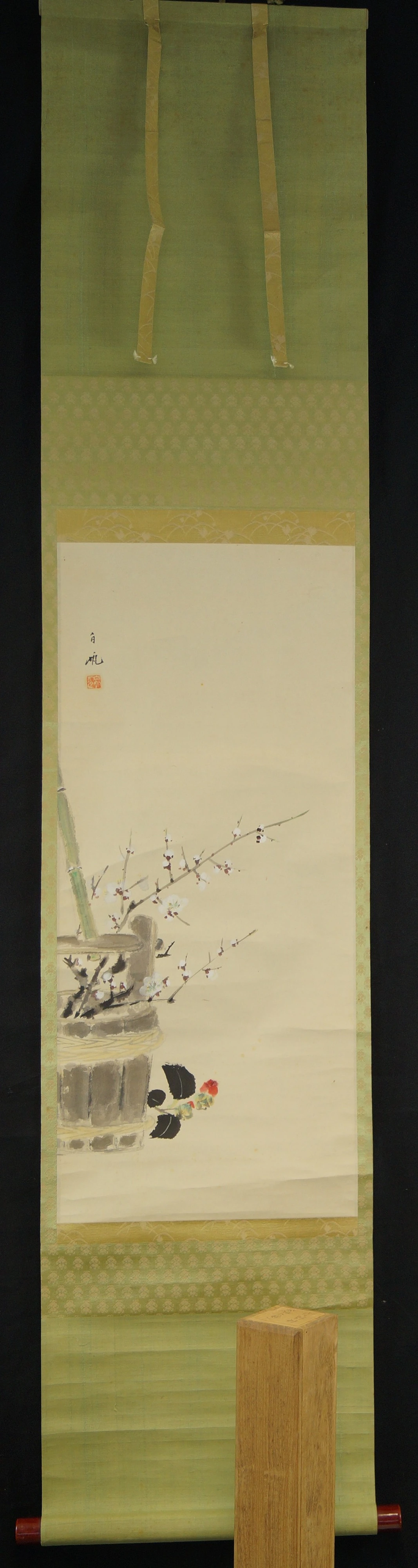
Yawata Hakuhan
Plum Blossoms in a Vase
Kakemono, unique work, with box, 154 x 38 cm
€280.00
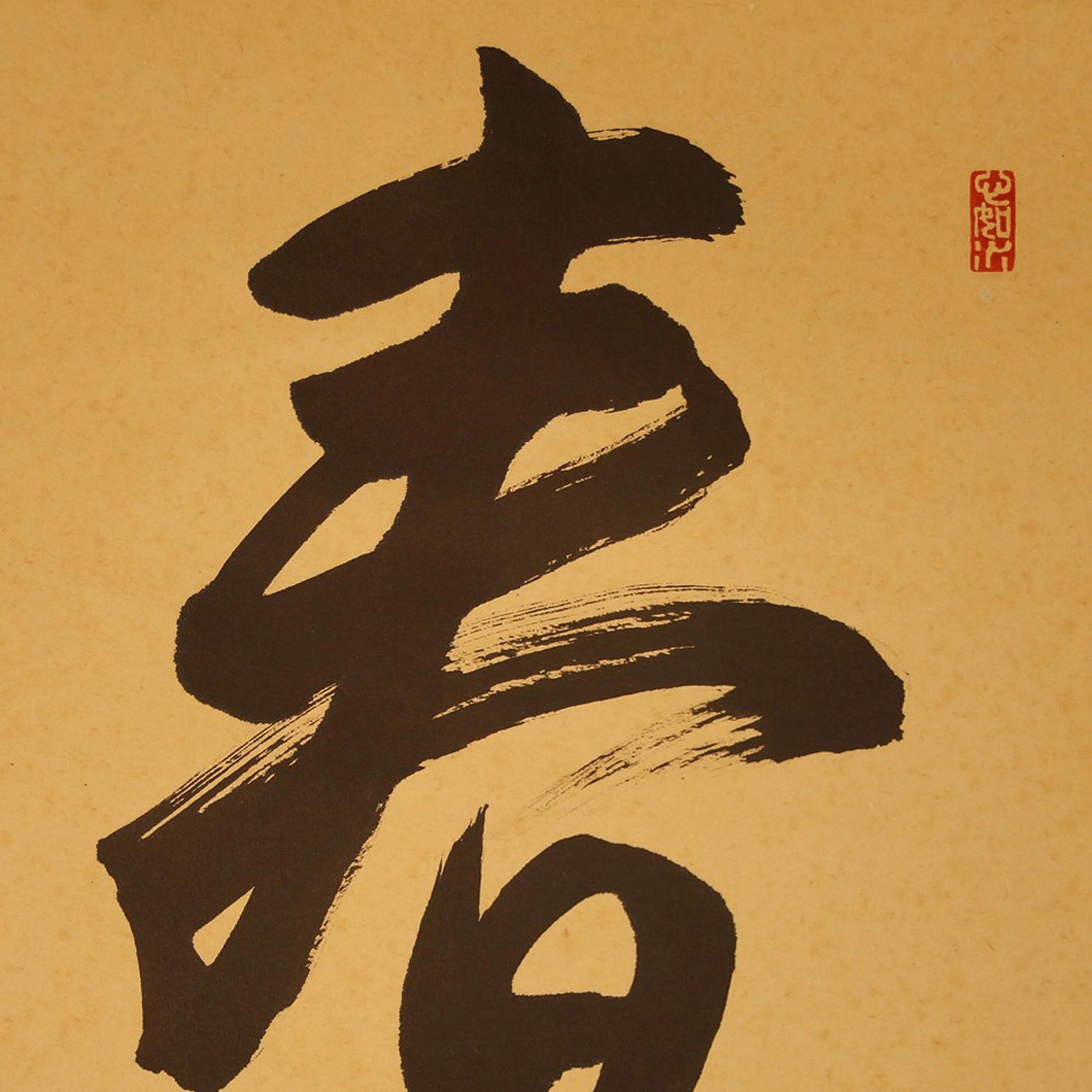
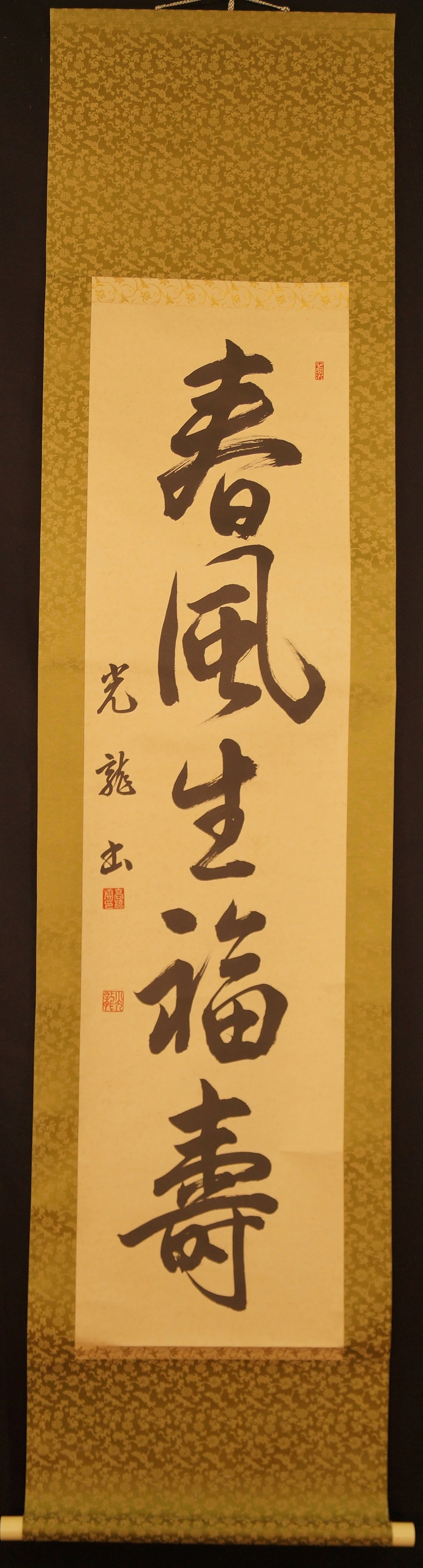
Calligraphy "Spring Wind"
Kakemono, unique work, 200 x 52 cm
€220.00
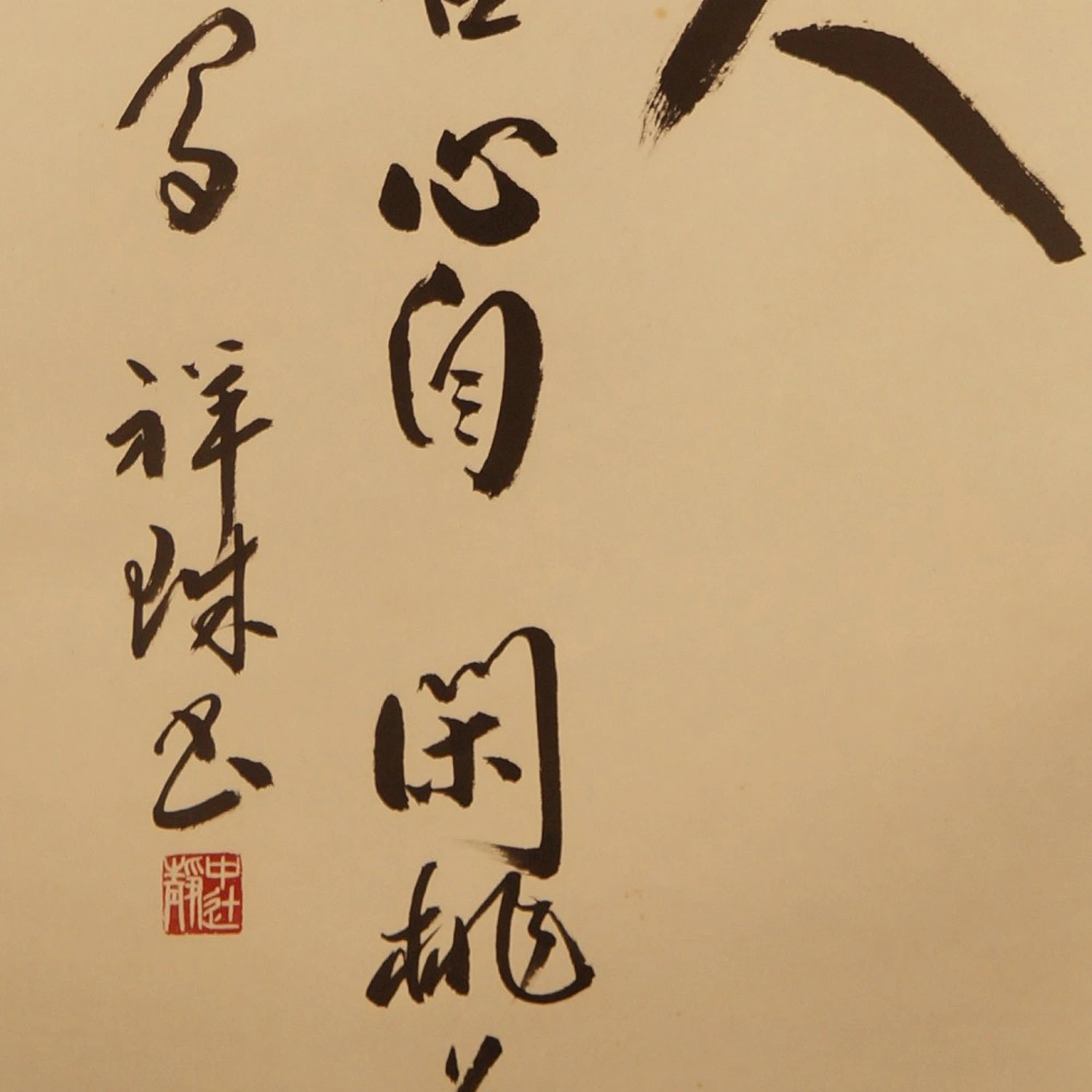
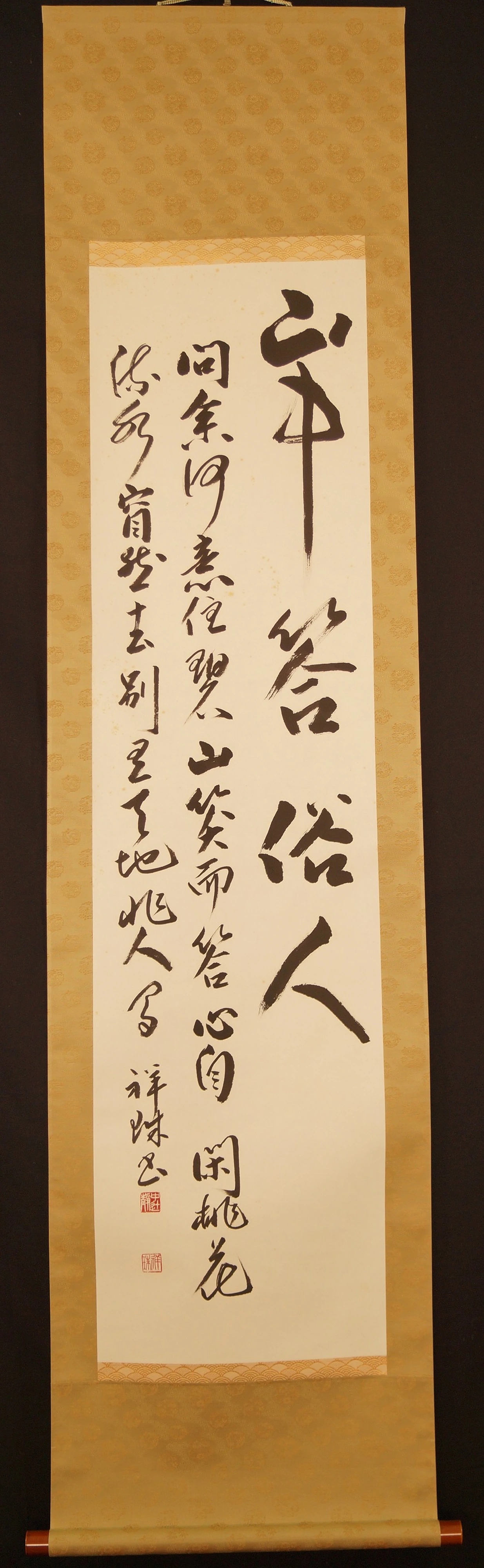
Calligraphy Poem by Ba Li
Kakemono, unique work, 185 x 51 cm
€340.00
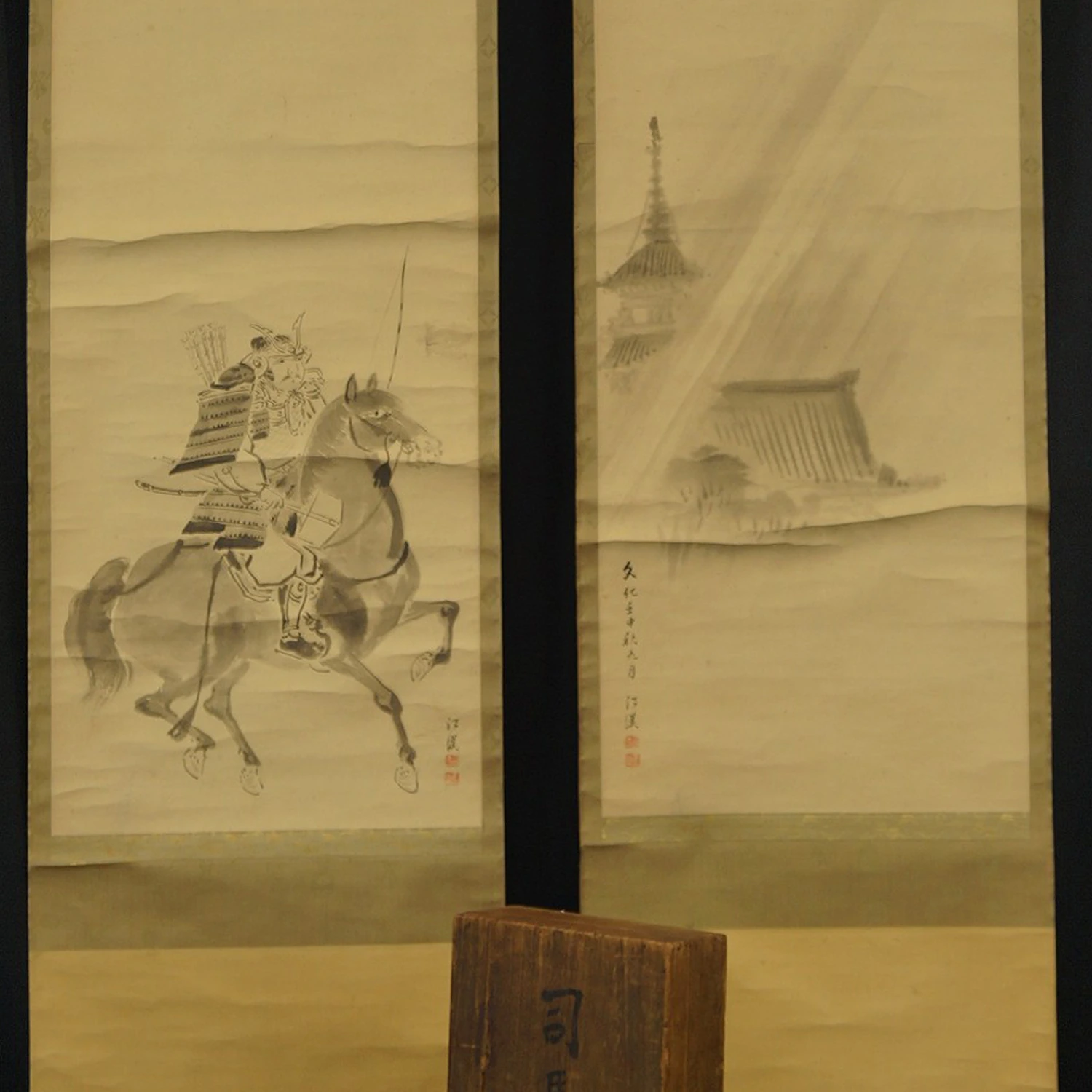
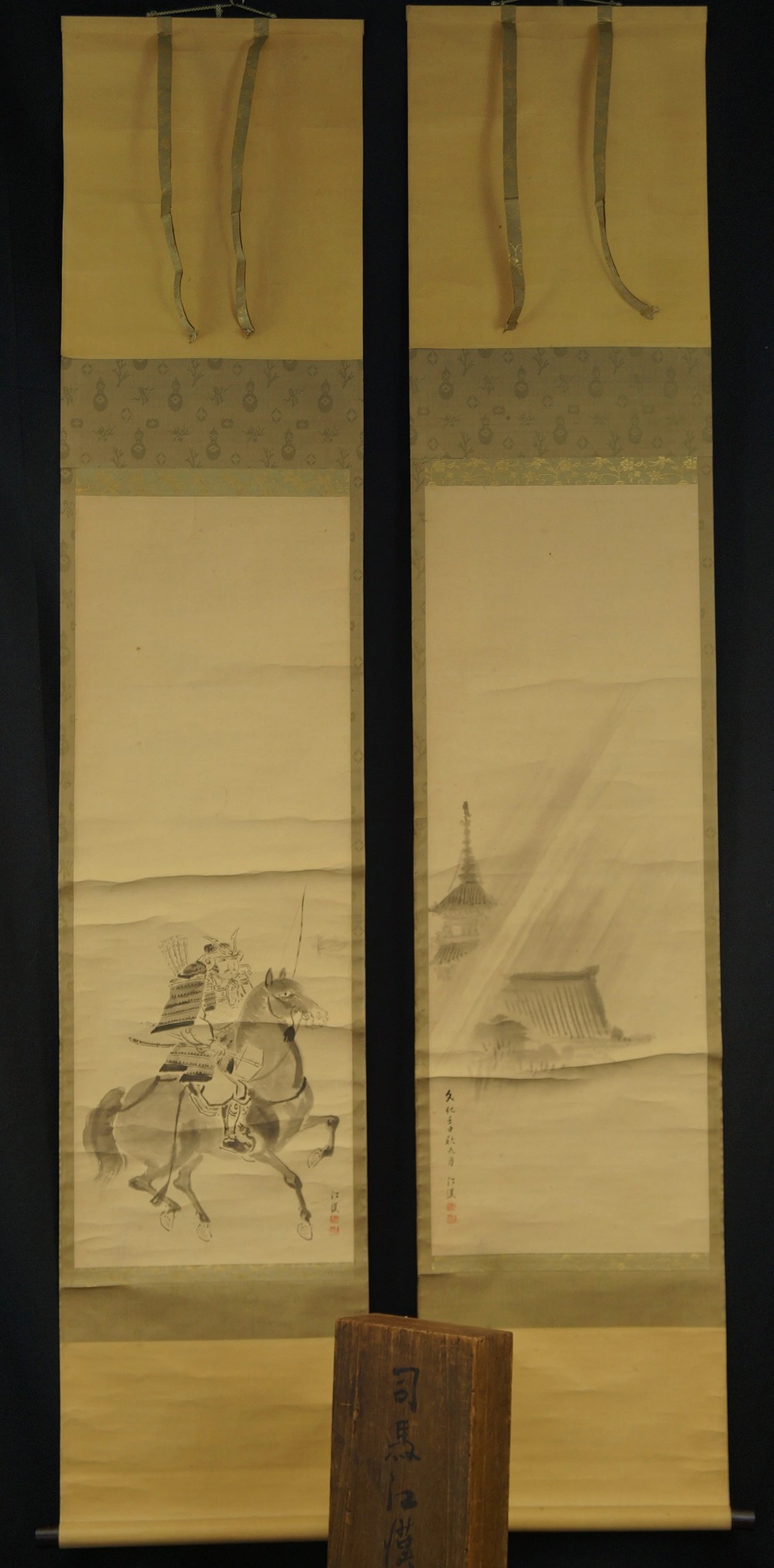
The Samurai Warrior
Kakemono, unique work, with box, 165 x 38 cm
€390.00
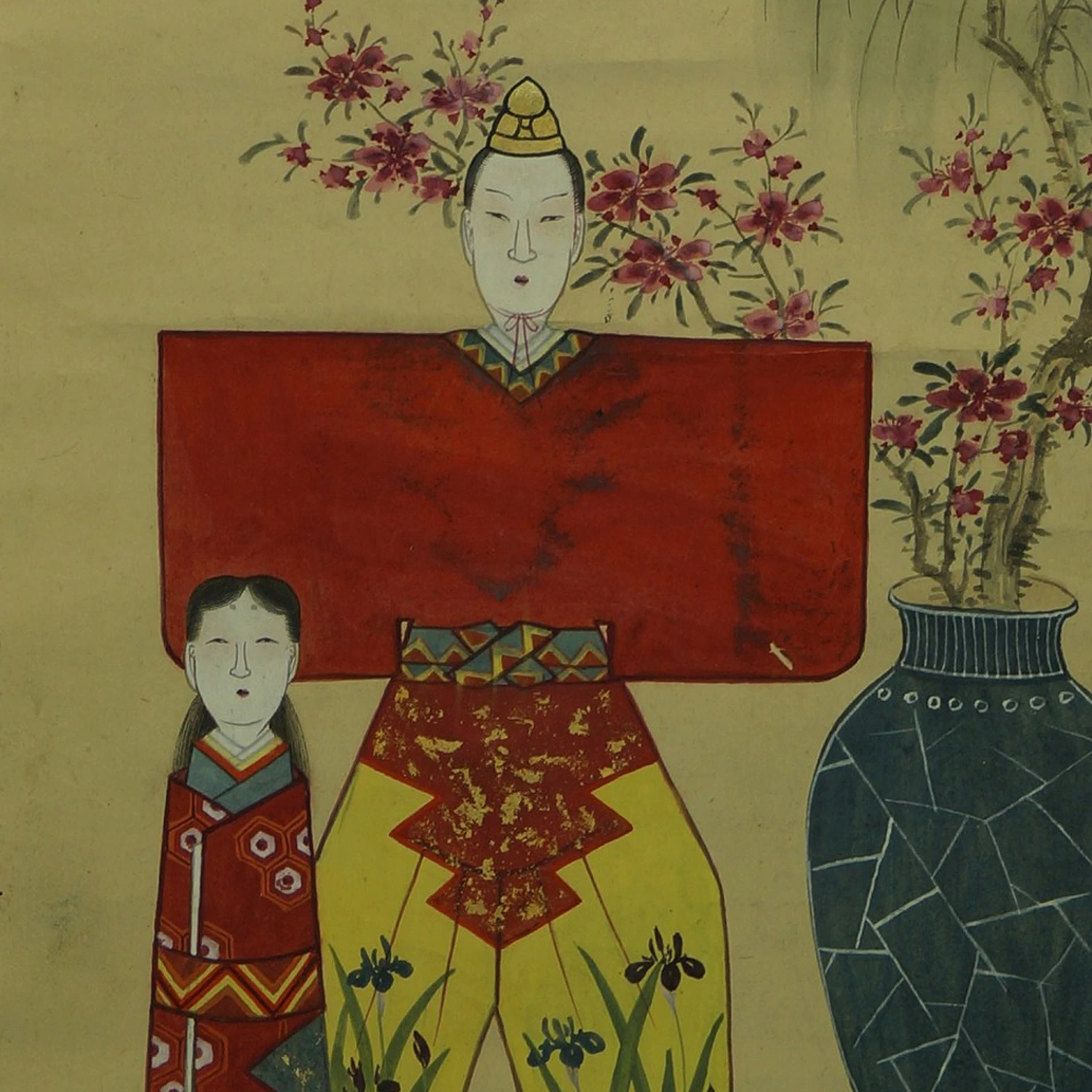
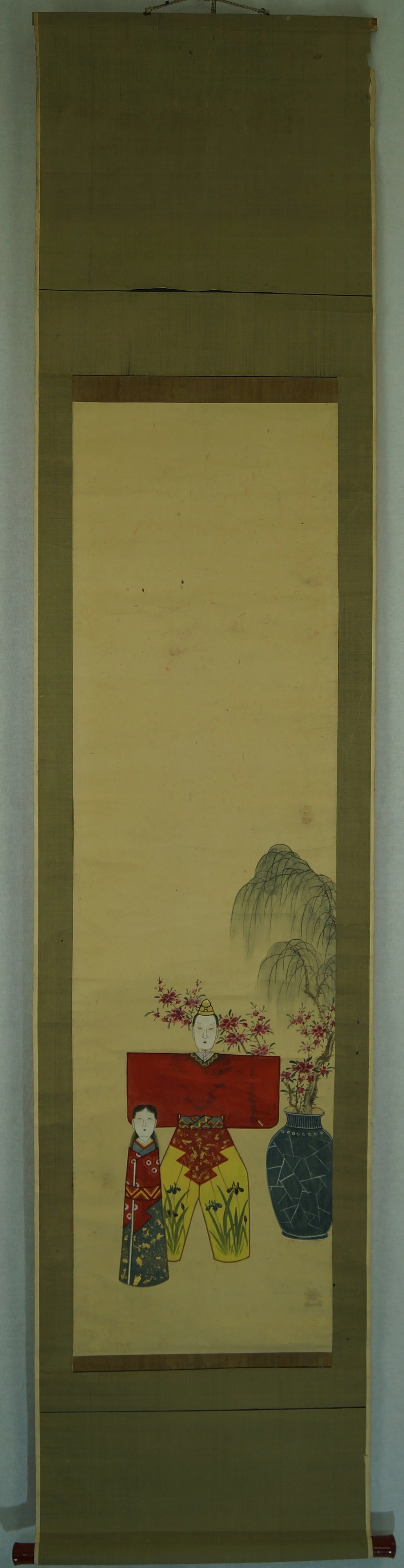
Hina Dolls with Plum Blossoms and Vase
Kakemono, unique work, 171 x 43 cm
€80.00
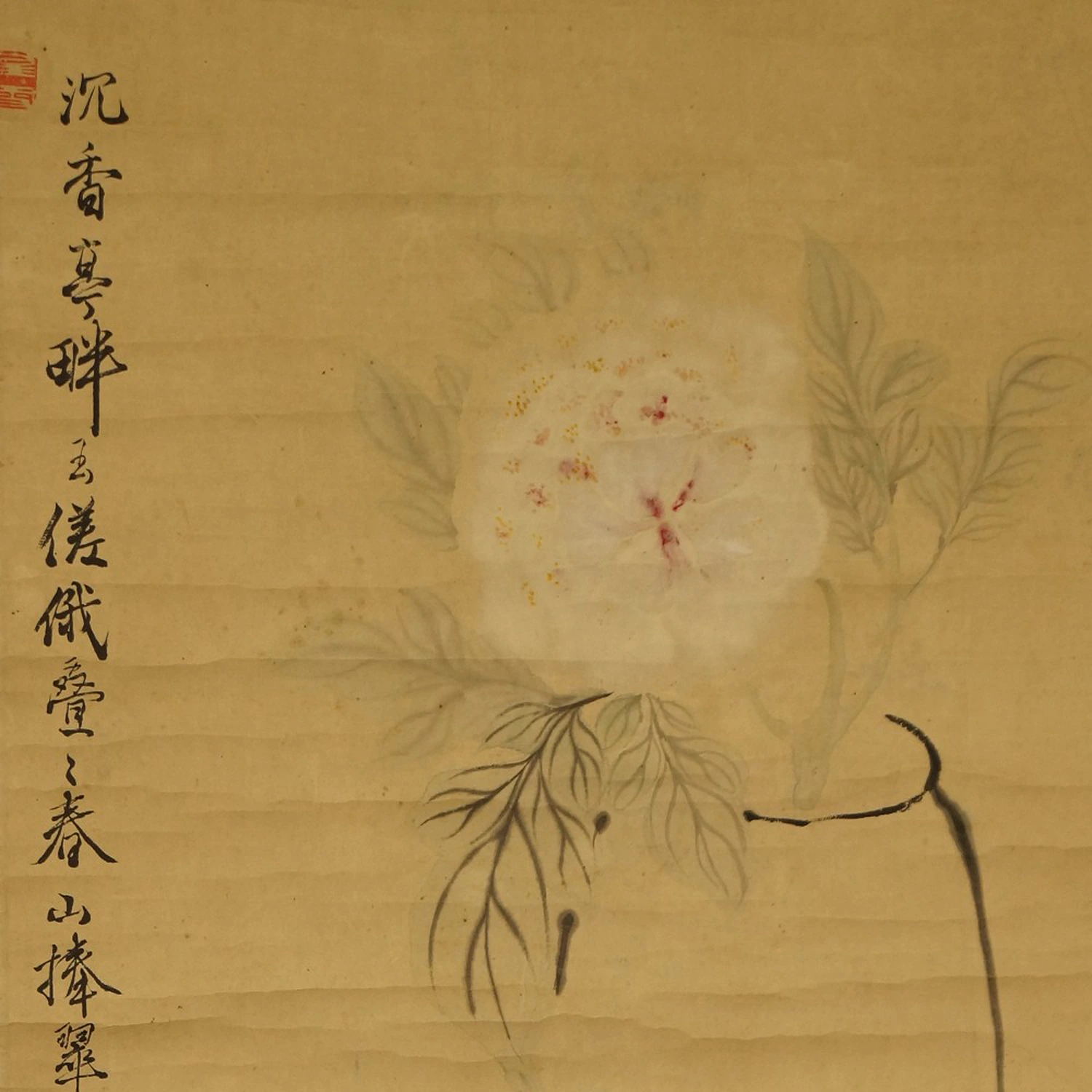
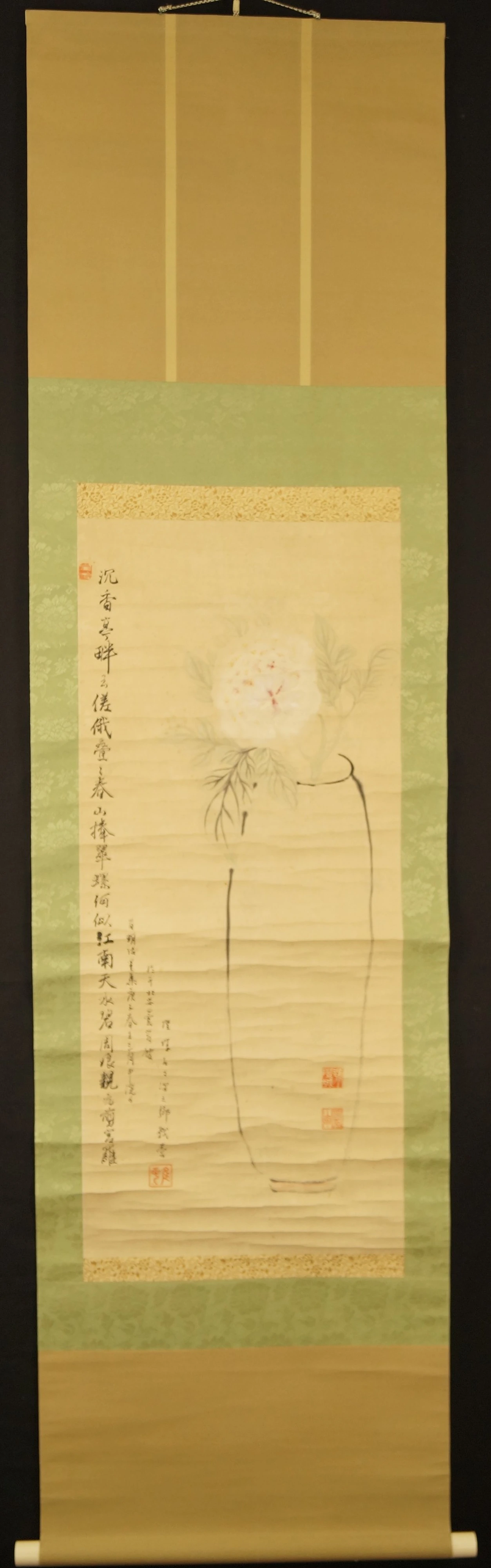
Peony with Calligraphy
Kakemono, unique work, 176 x 54 cm
€210.00
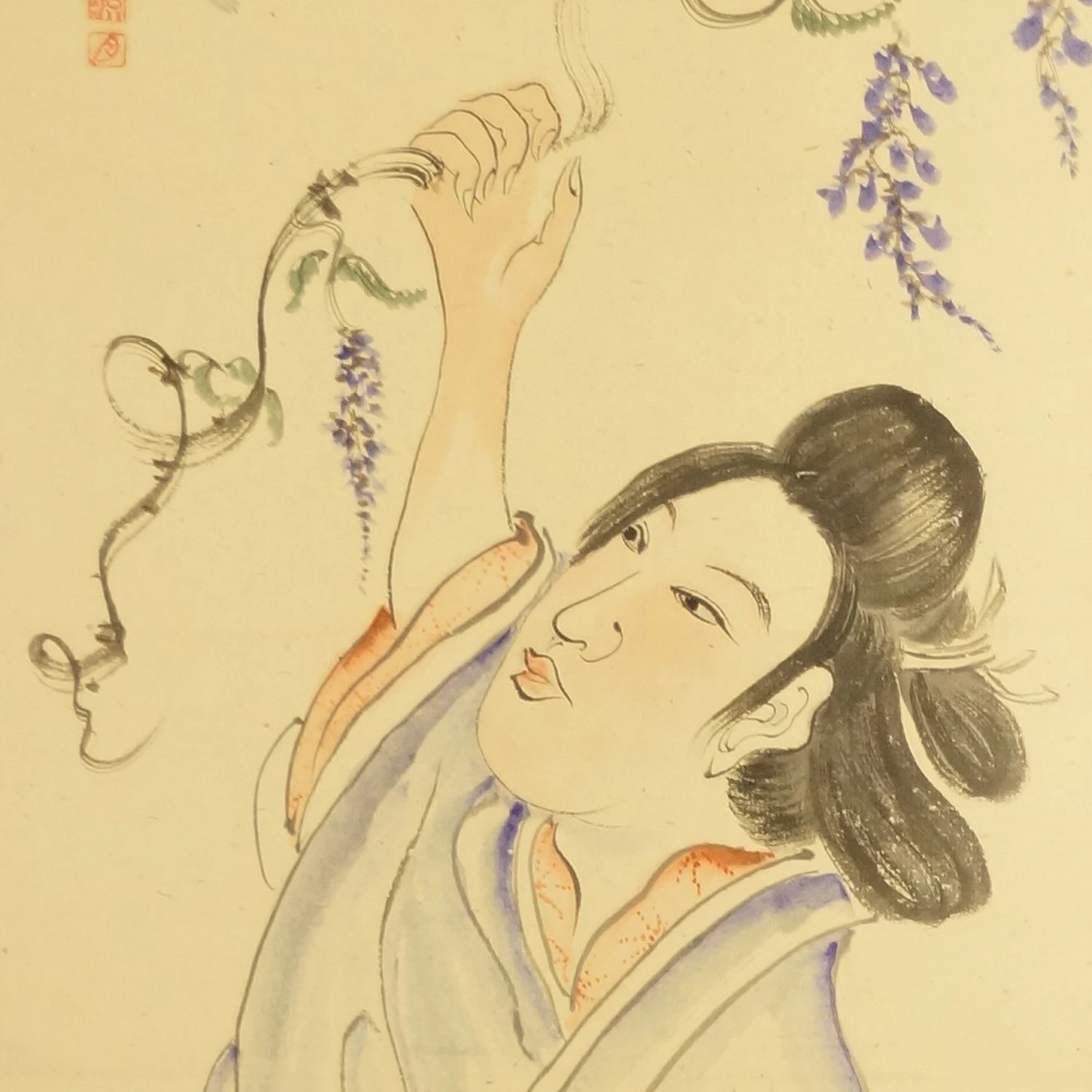
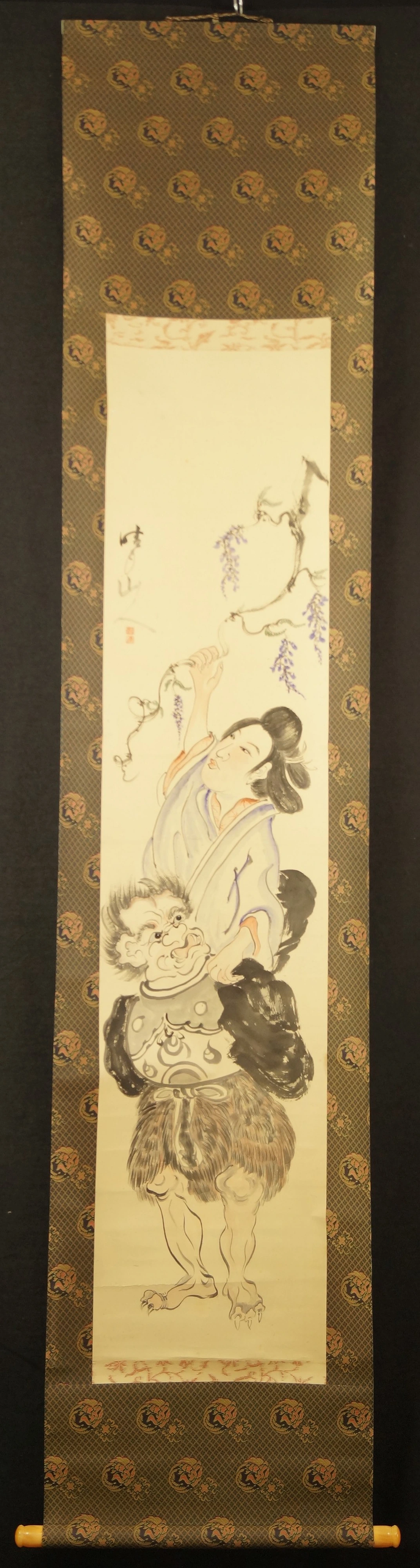
Lady Under Wisteria Blossoms
Kakemono, unique work, 200 x 50 cm
€210.00
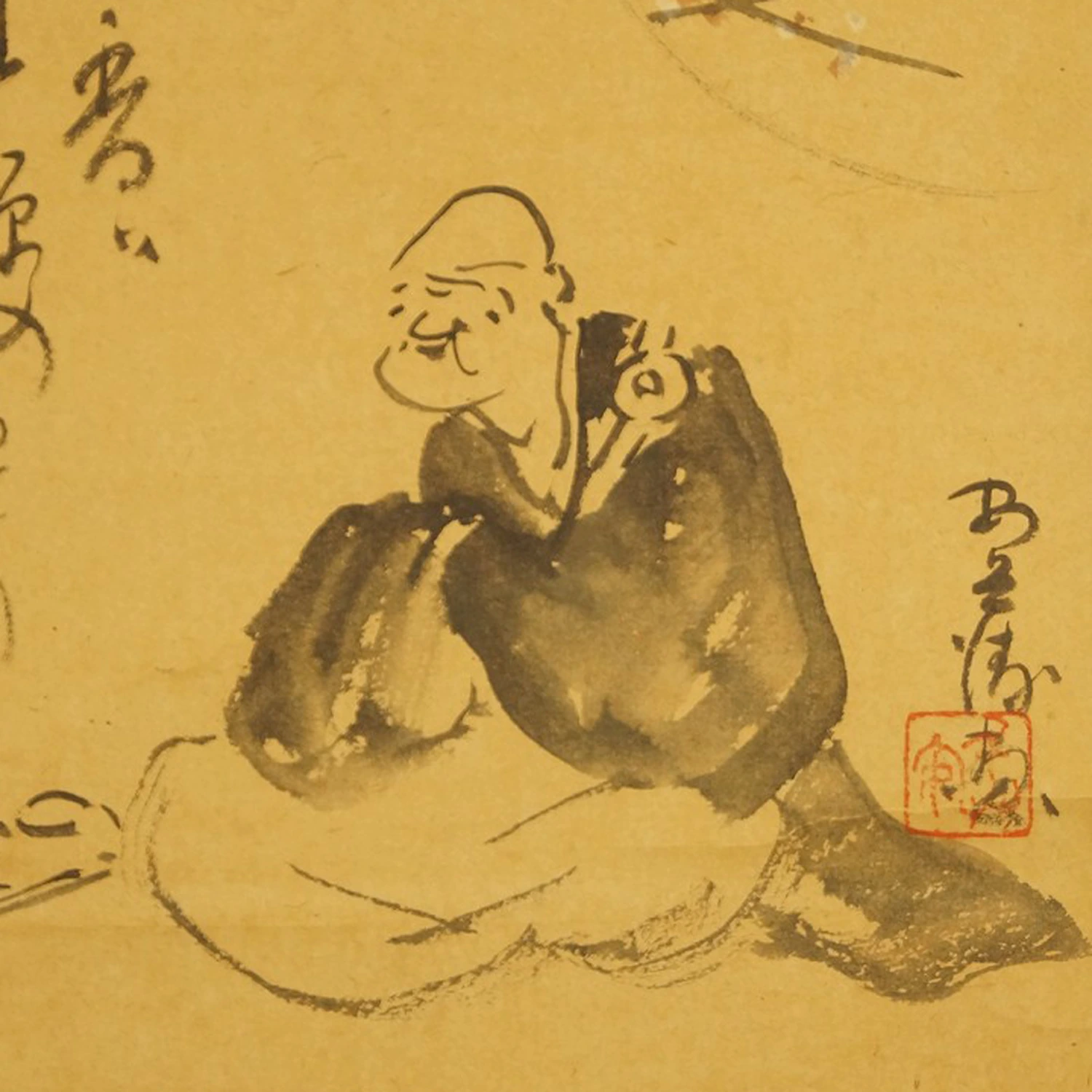
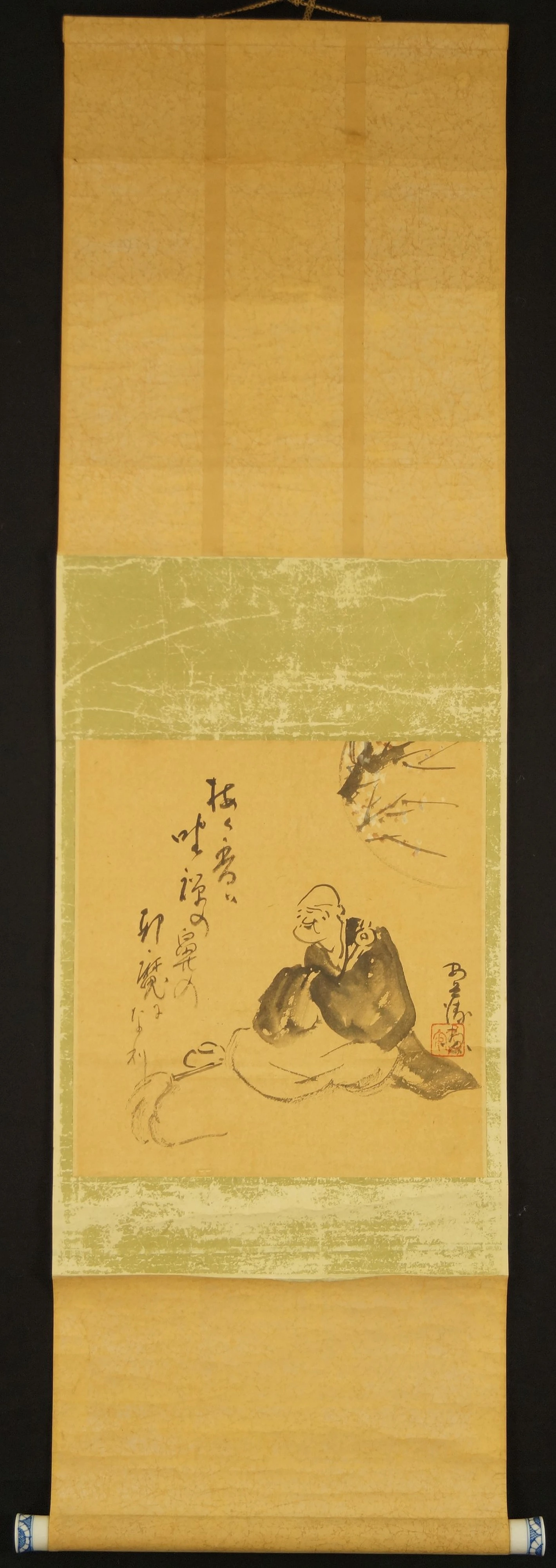
Old Zen Monk Under Cherry Blossoms
Kakemono, unique work, 115 x 40 cm
€980.00
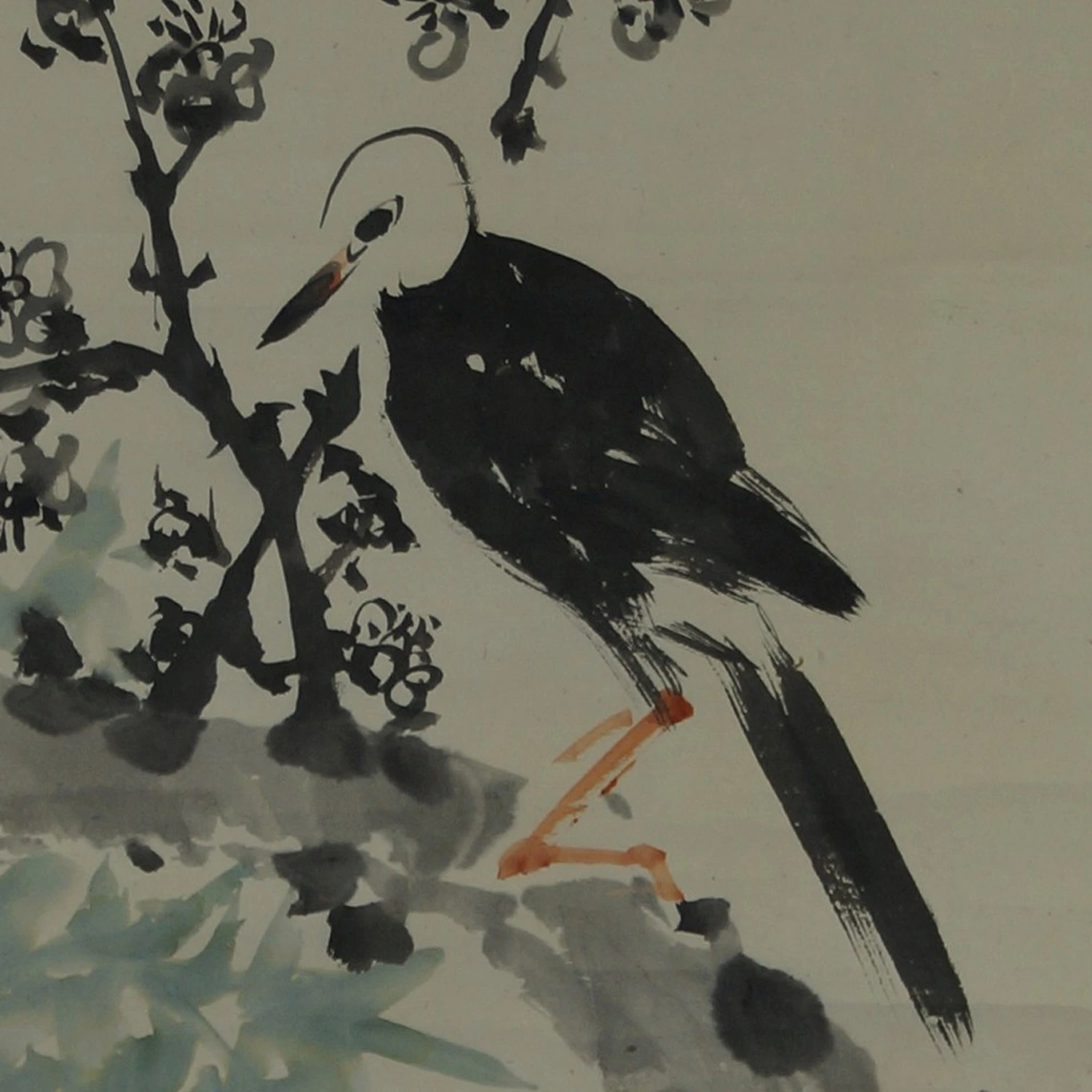
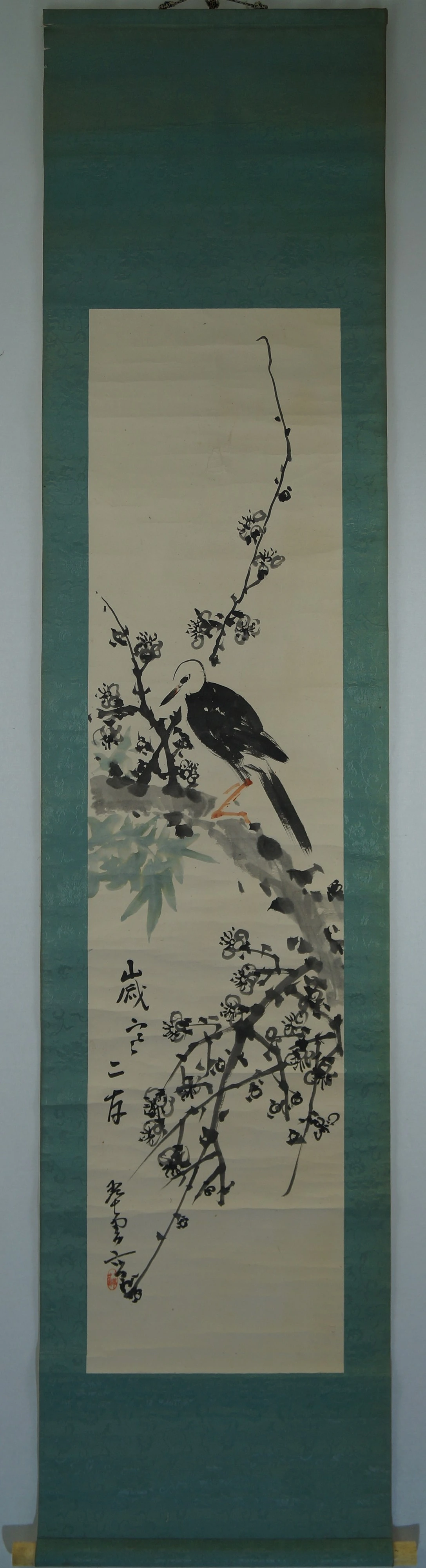
Heron Under Cherry Blossom Branch
Kakemono, unique work, 182 x 46 cm
€140.00
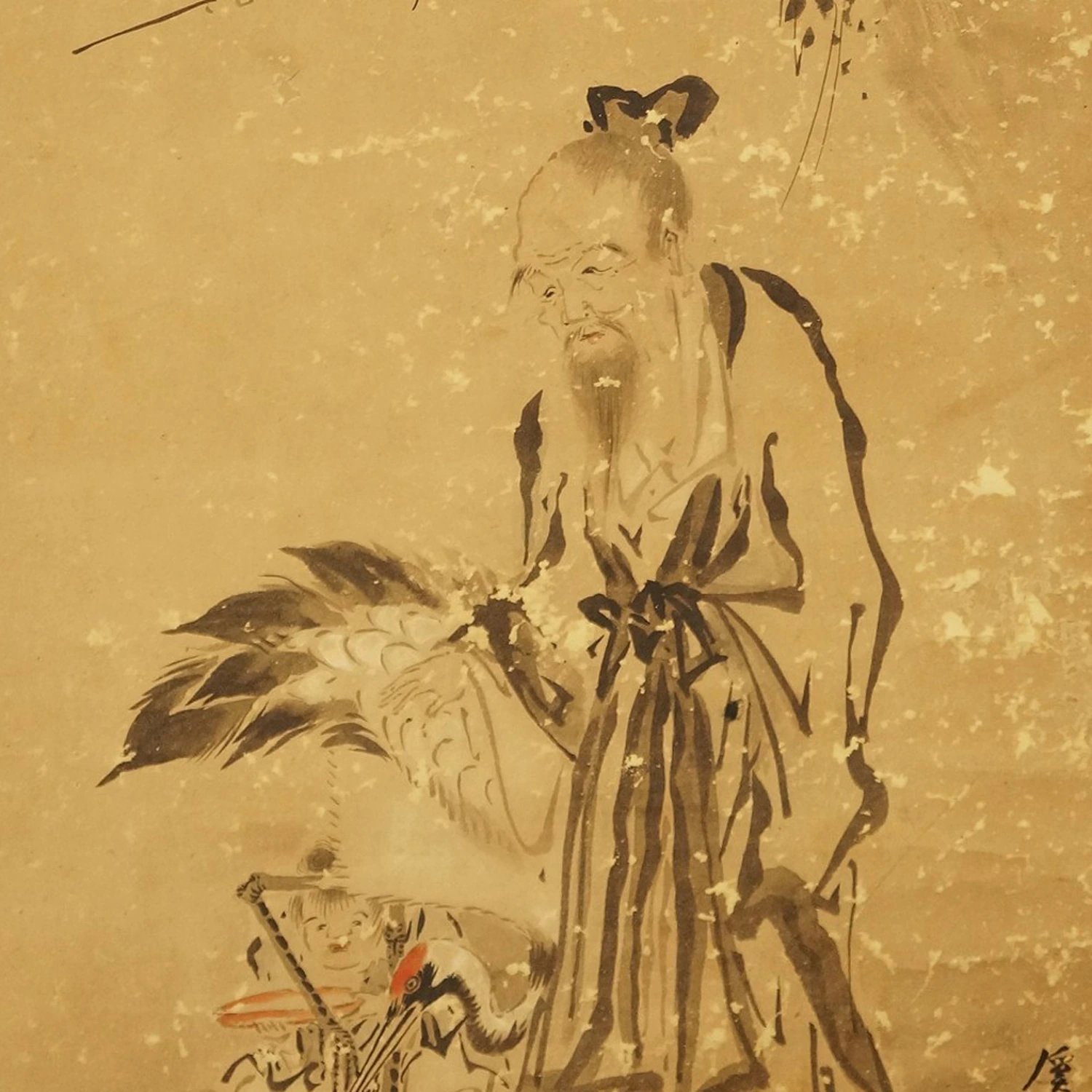
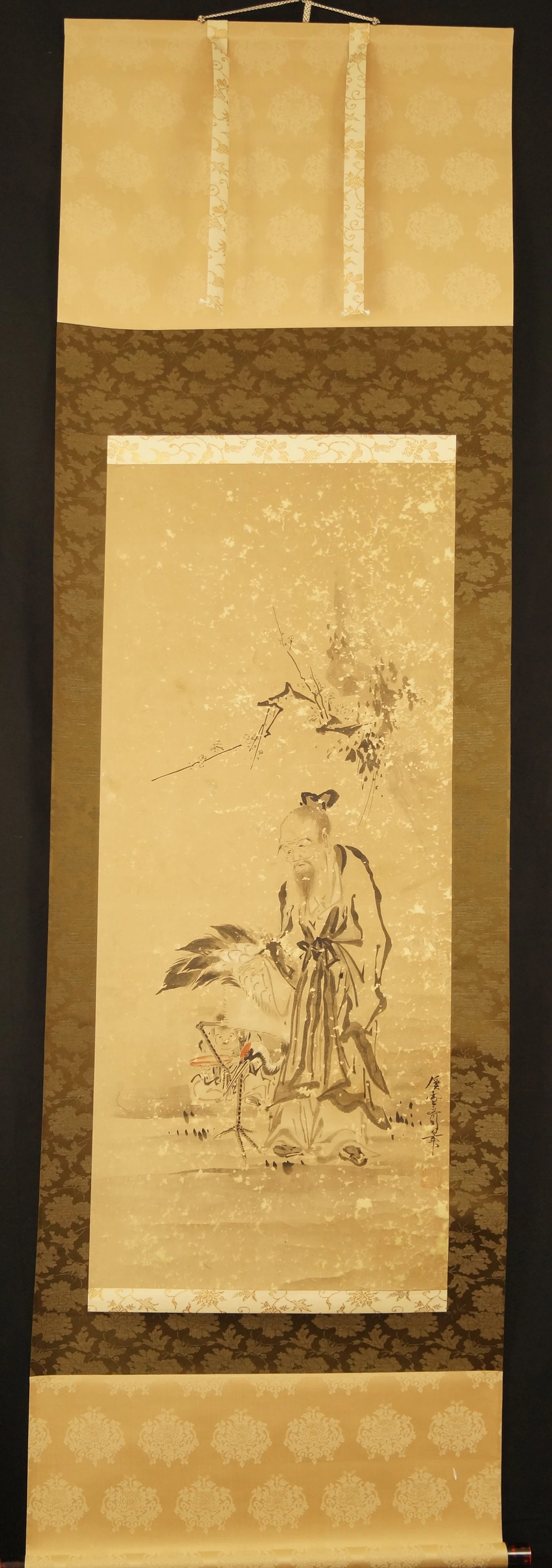
The Hermit and the Crane
Kakemono, unique work, 180 x 61 cm
€250.00
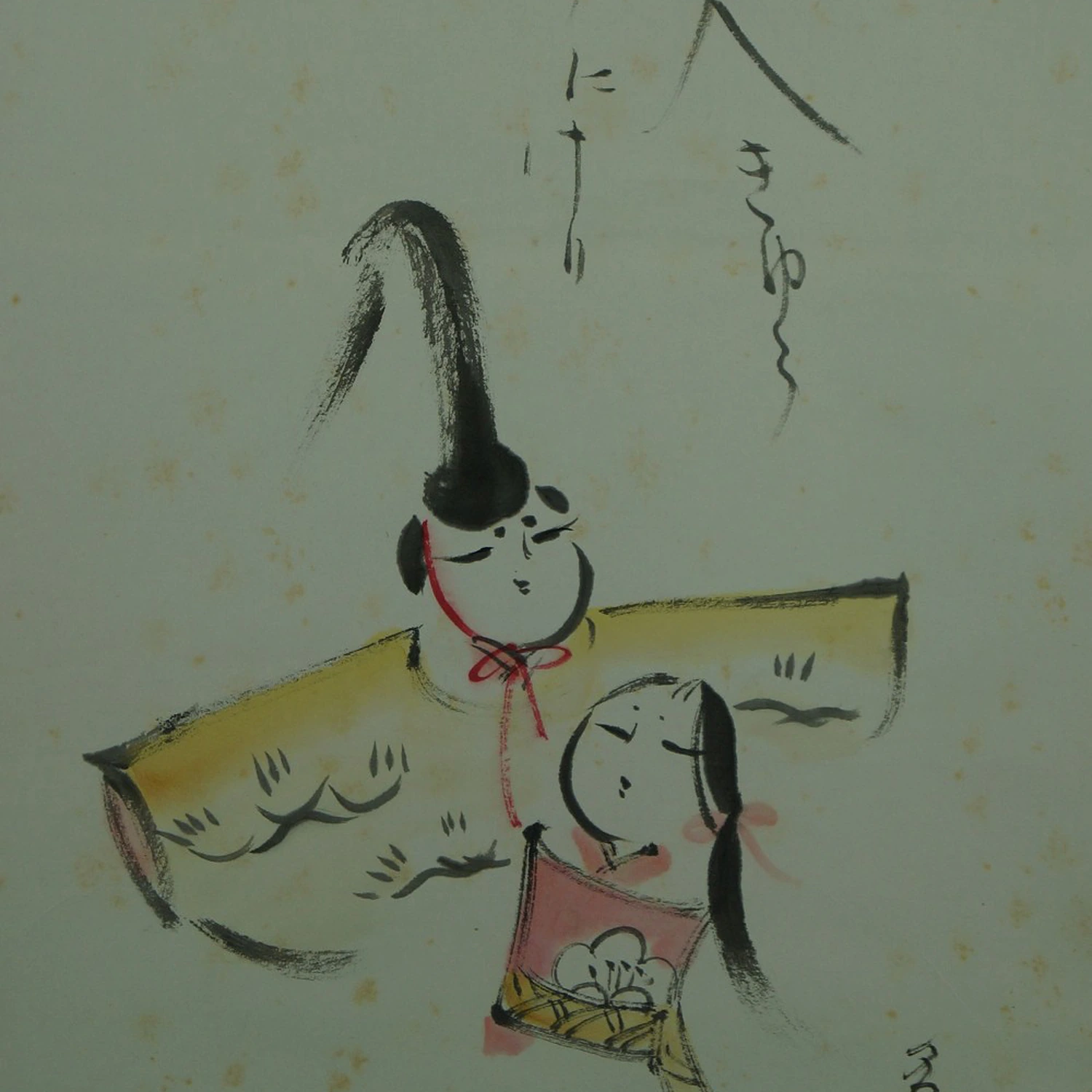
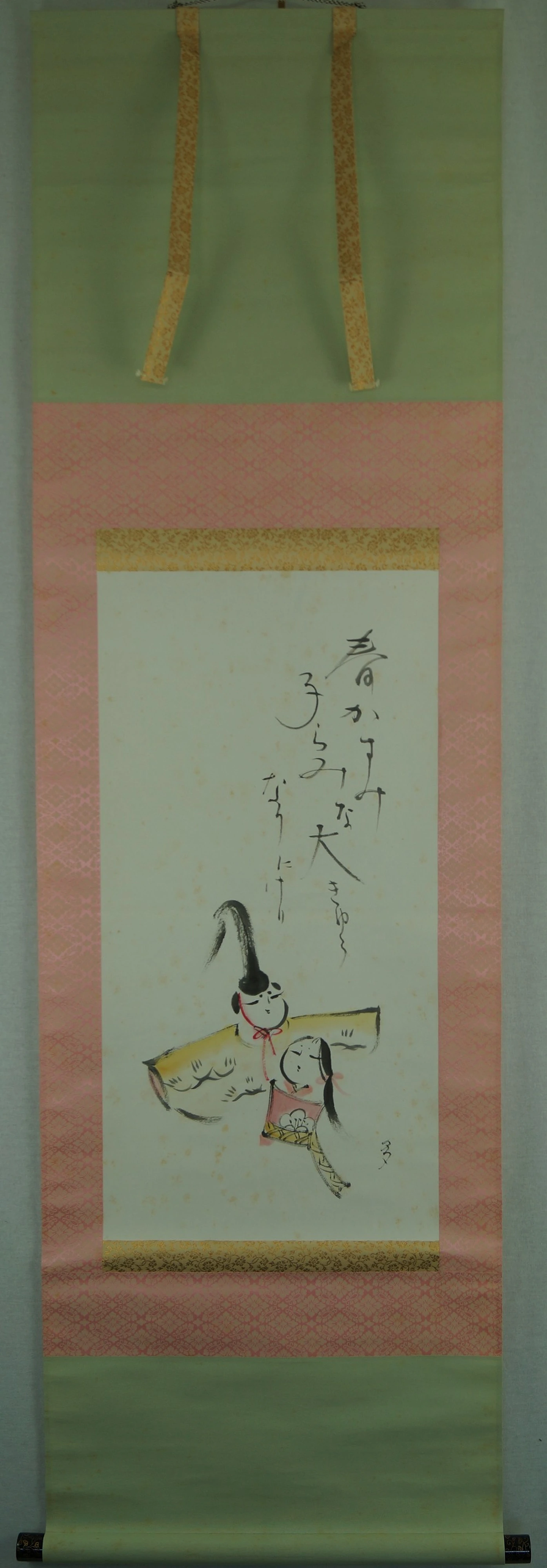
Hina Dolls with Poem
Kakemono, unique work, 151 x 51 cm
€90.00
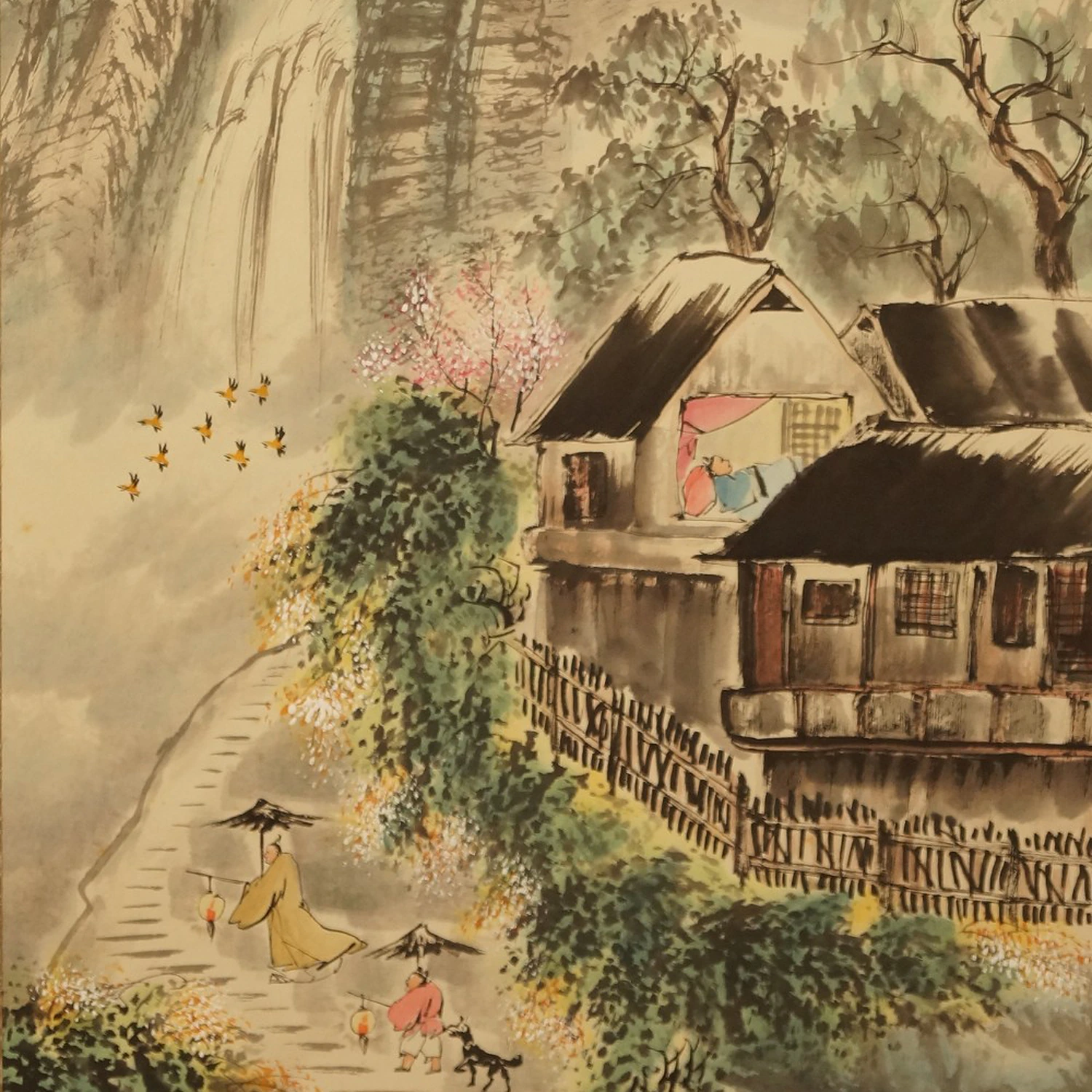
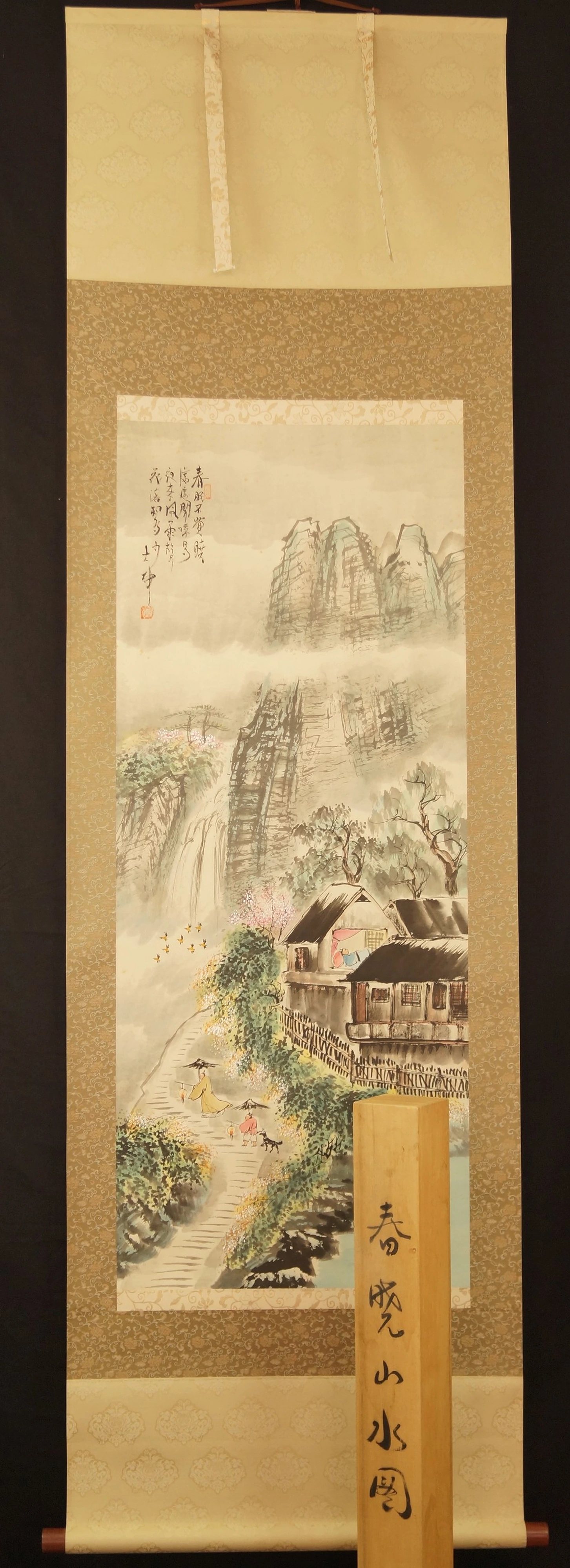
Two Scholars in the Mountains
Kakemono, unique work, with box, 180 x 60 cm
€220.00
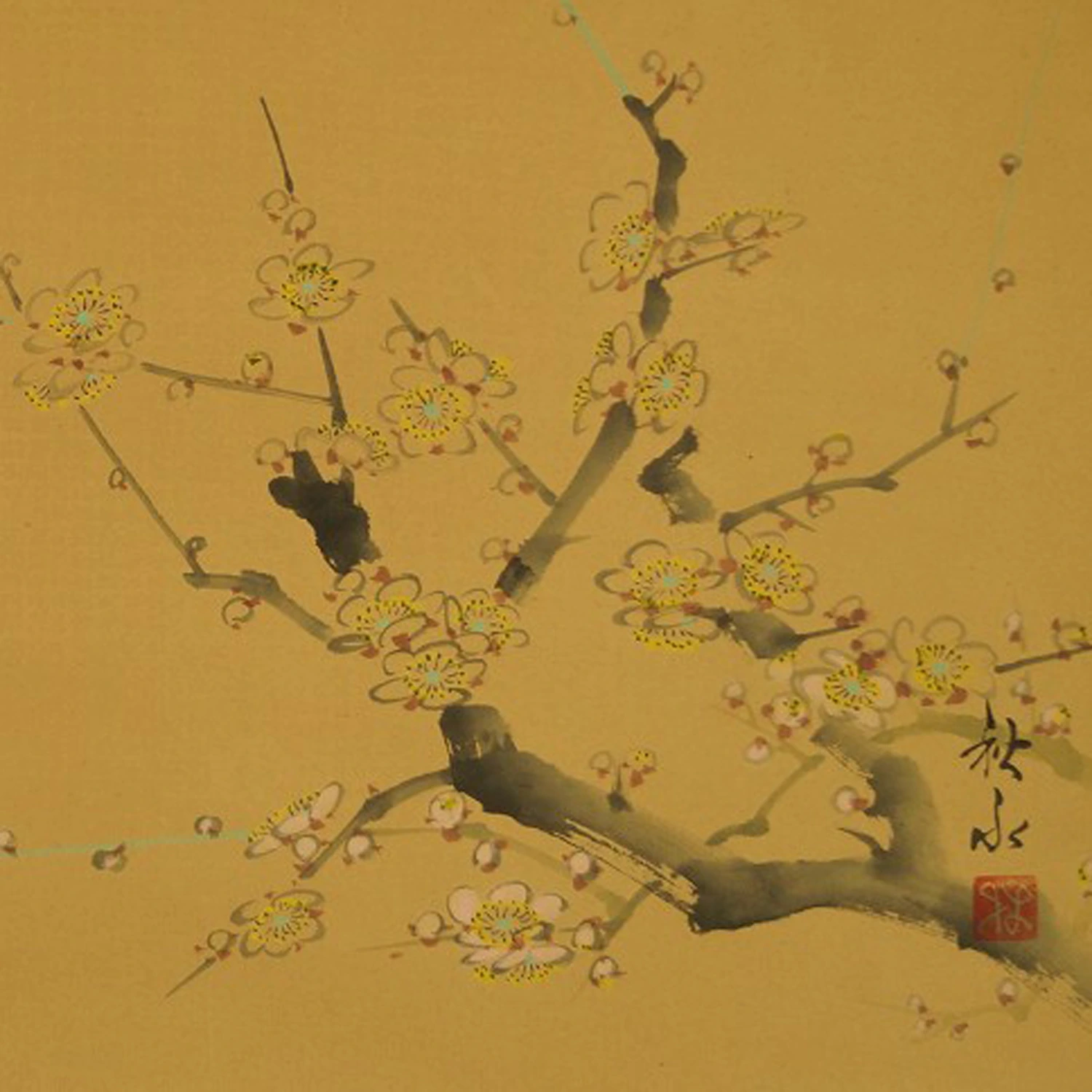
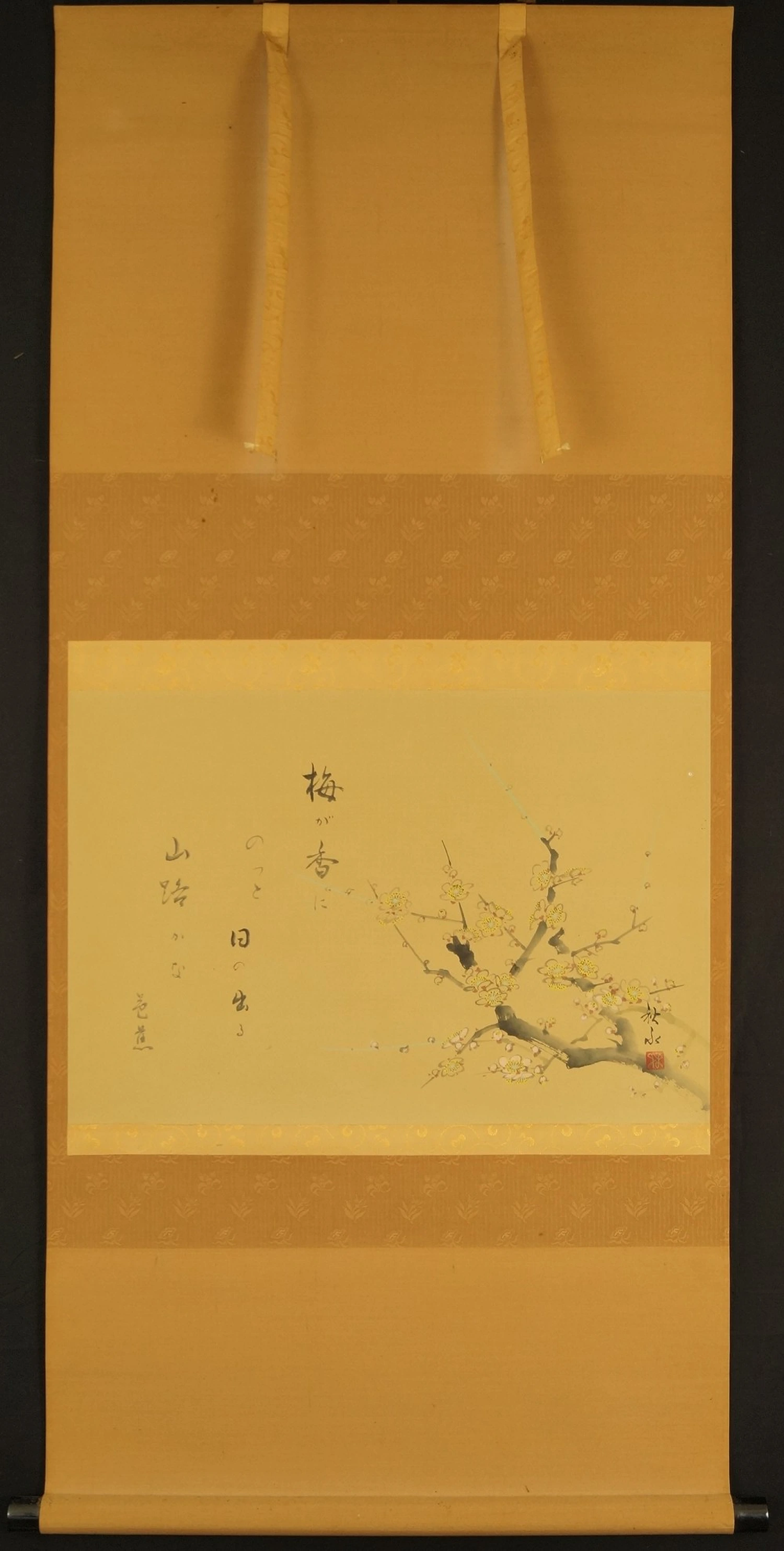
Branch Full of Sakura Blossoms
Kakemono, unique work, 120 x 60 cm
€190.00
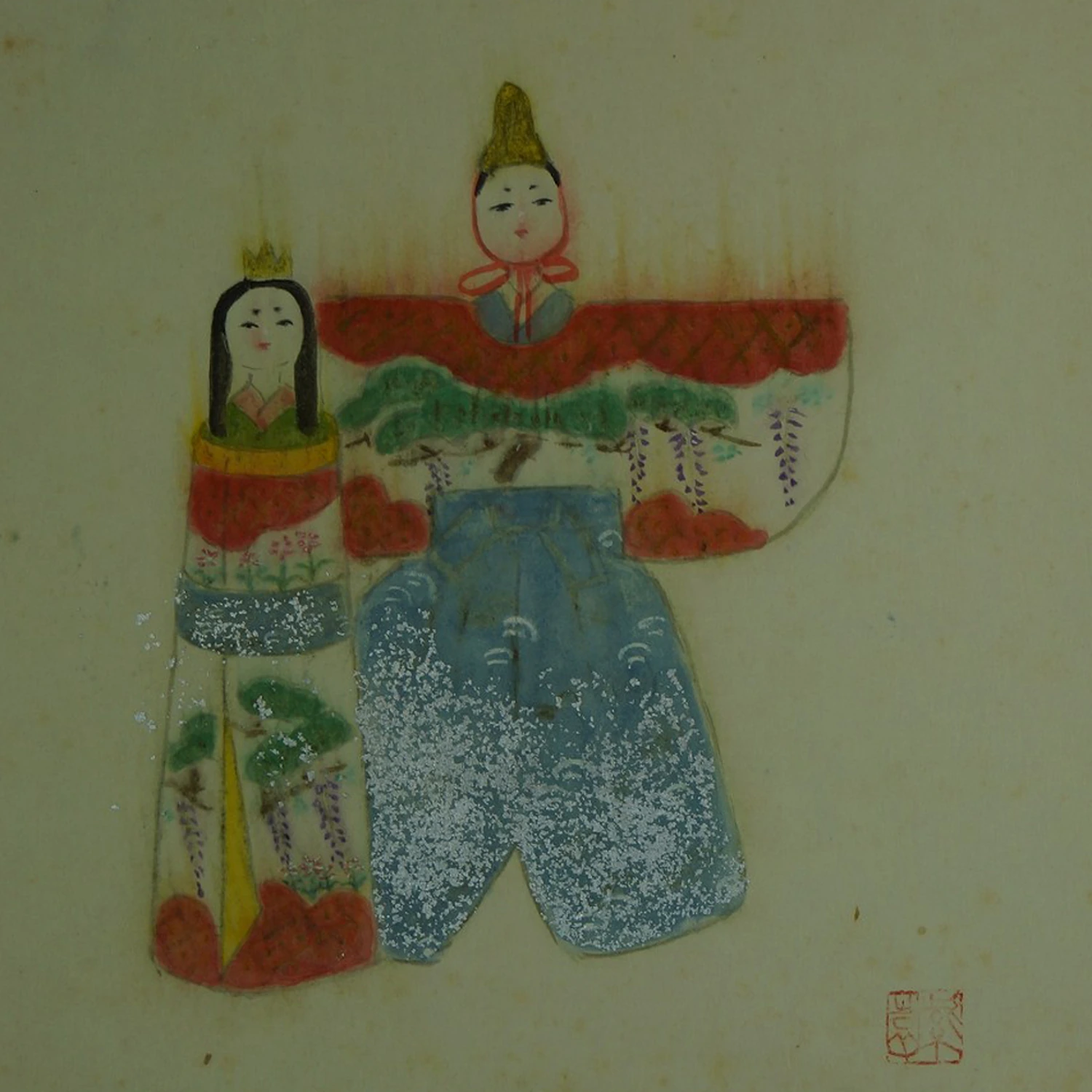
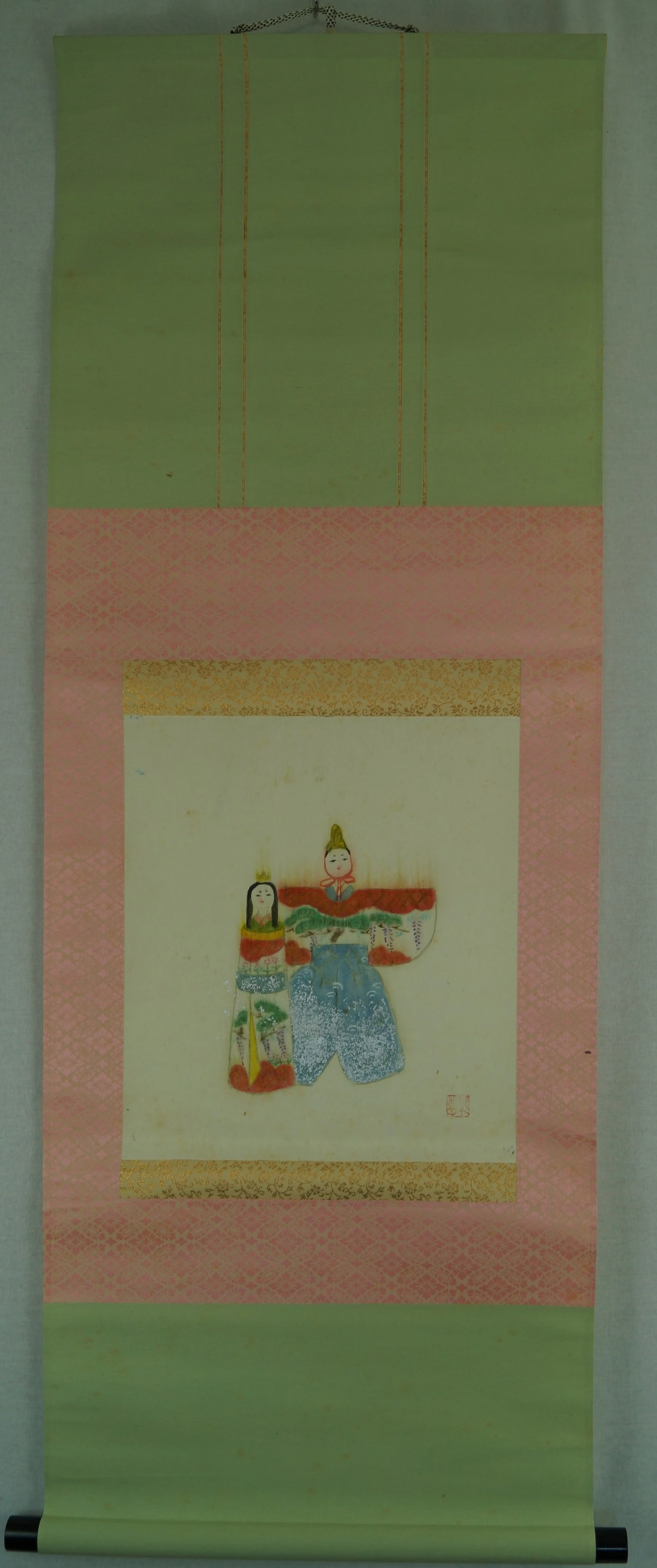
Hina Dolls
Kakemono, unique work, 121 x 50 cm
€70.00
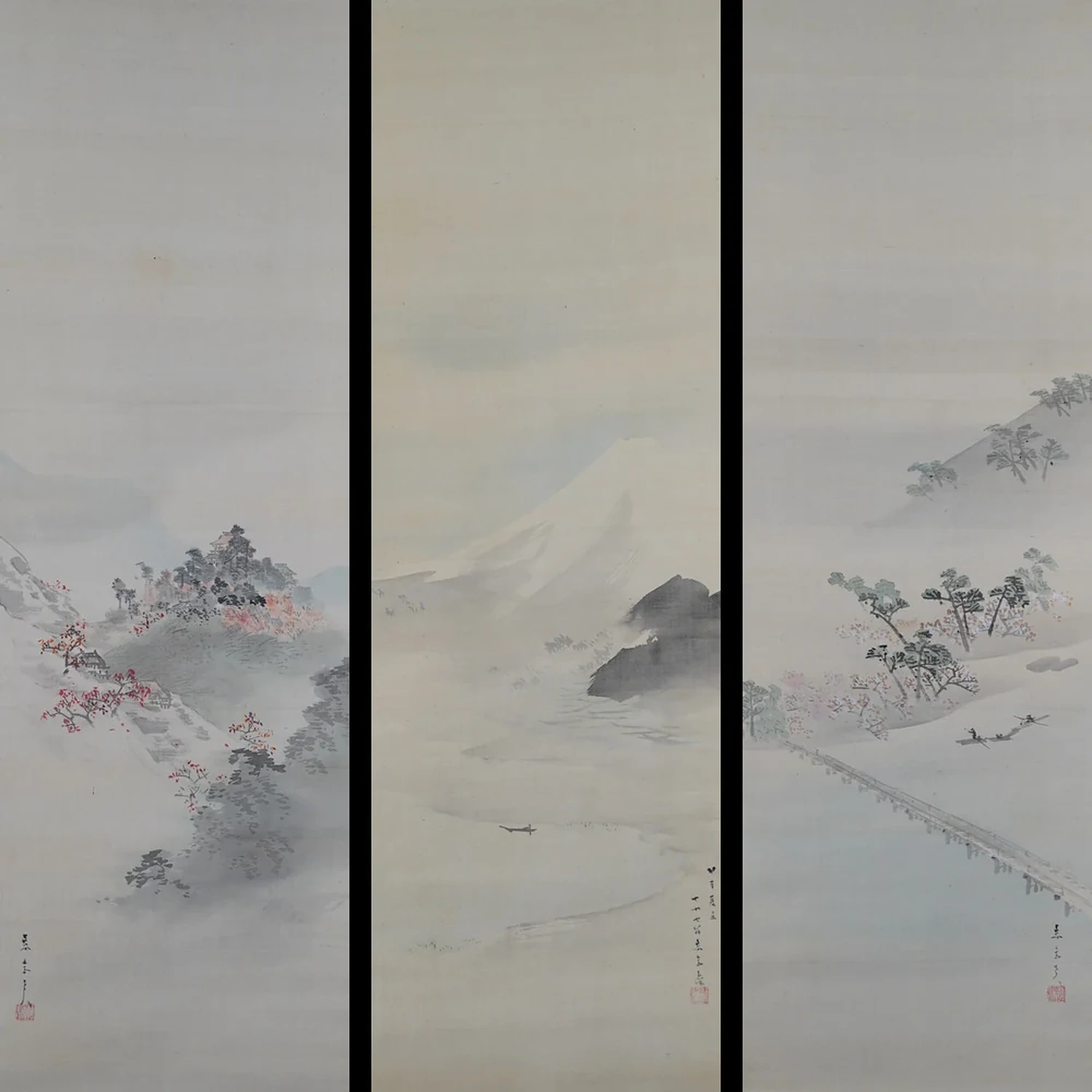
Kikuchi Yōsai
Set of Three Paintings – Fuji, Yoshino and Arashiyama
Kakemono, unique work, with box, 182 x 49 cm
Sold
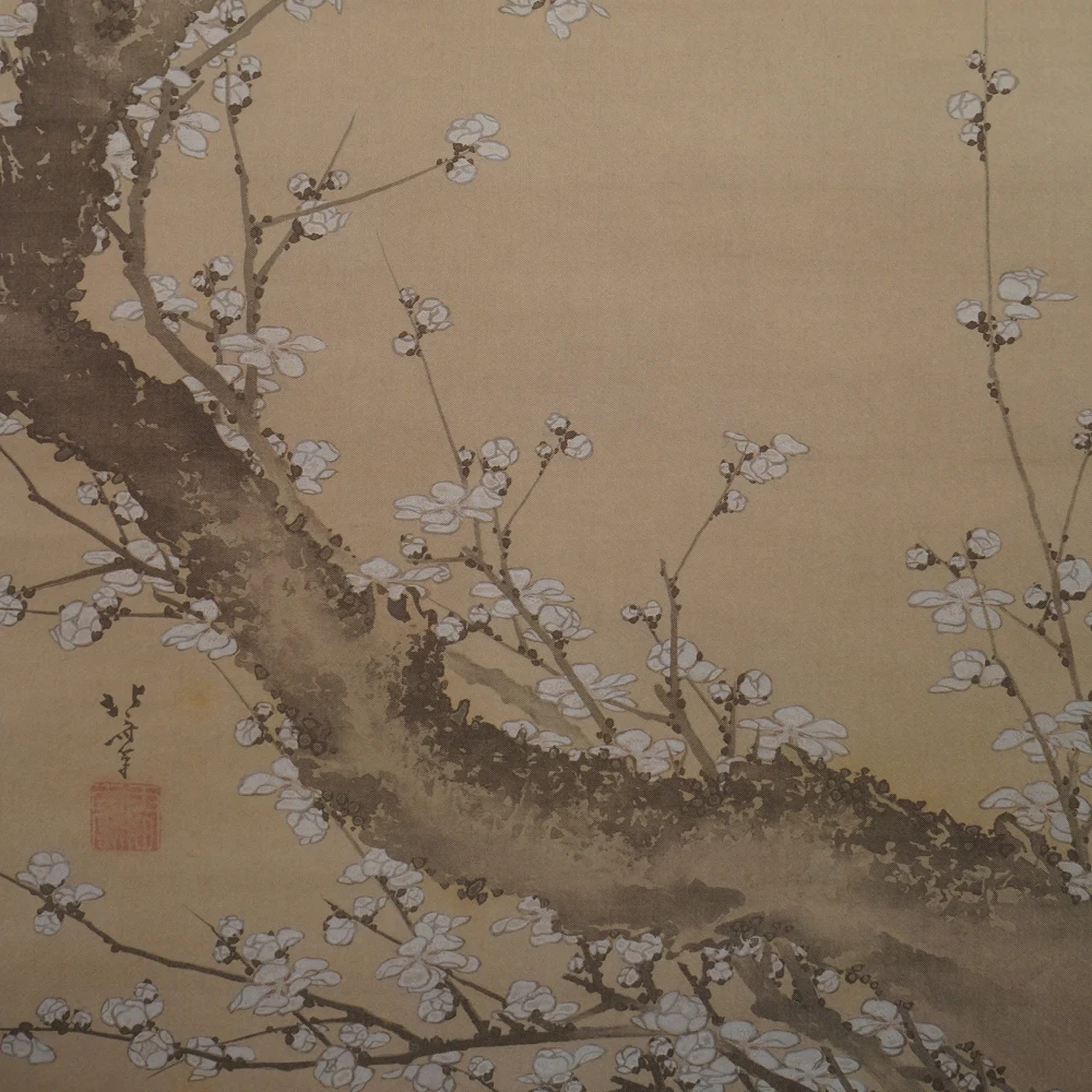
Katsushika Hokusai
White Plum Tree with Poem
Kakemono, Silkscreen, with box, 175 x 51 cm
Sold
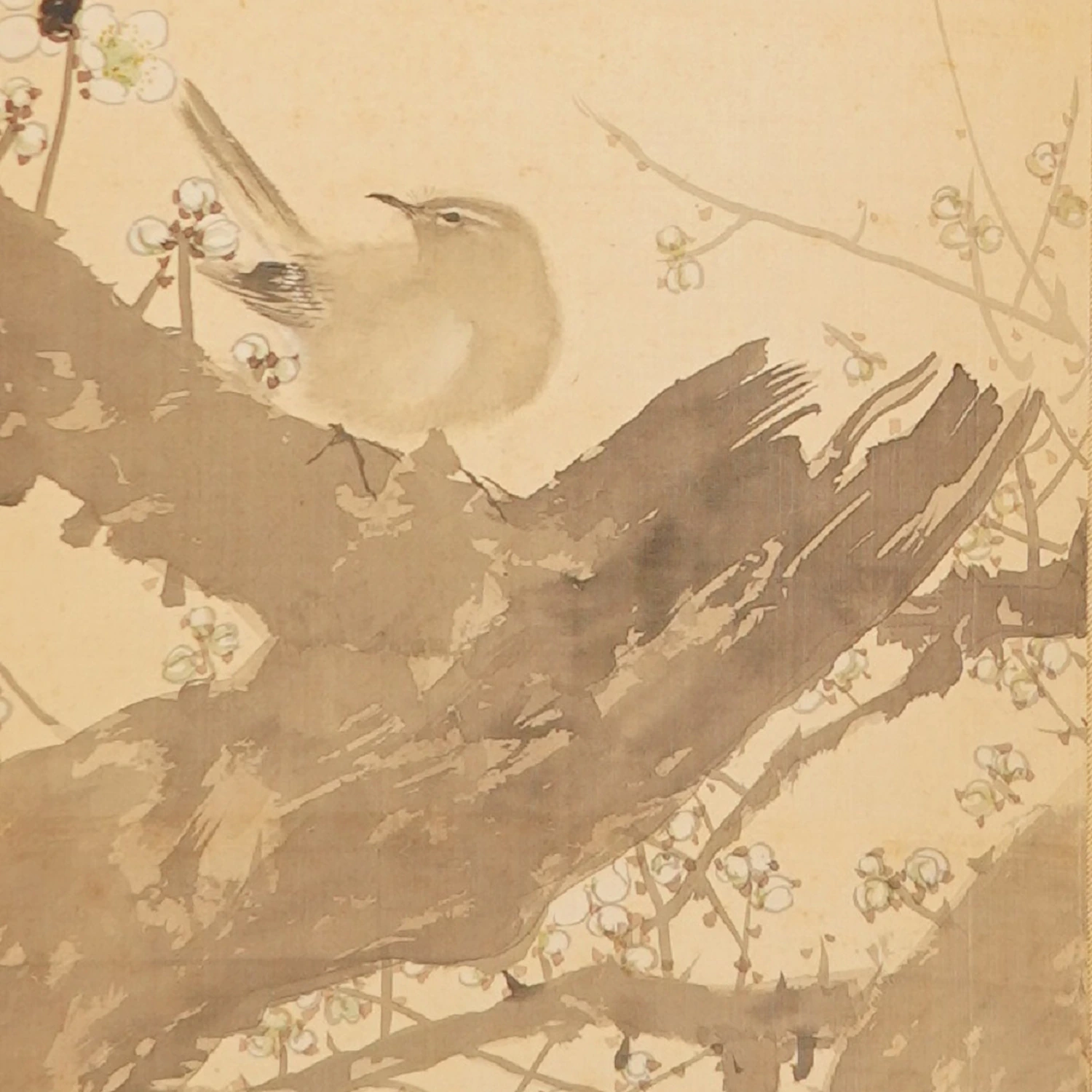
Songbird on Blossoming Plum Tree
Kakemono, unique work, 184 x 30 cm
Sold
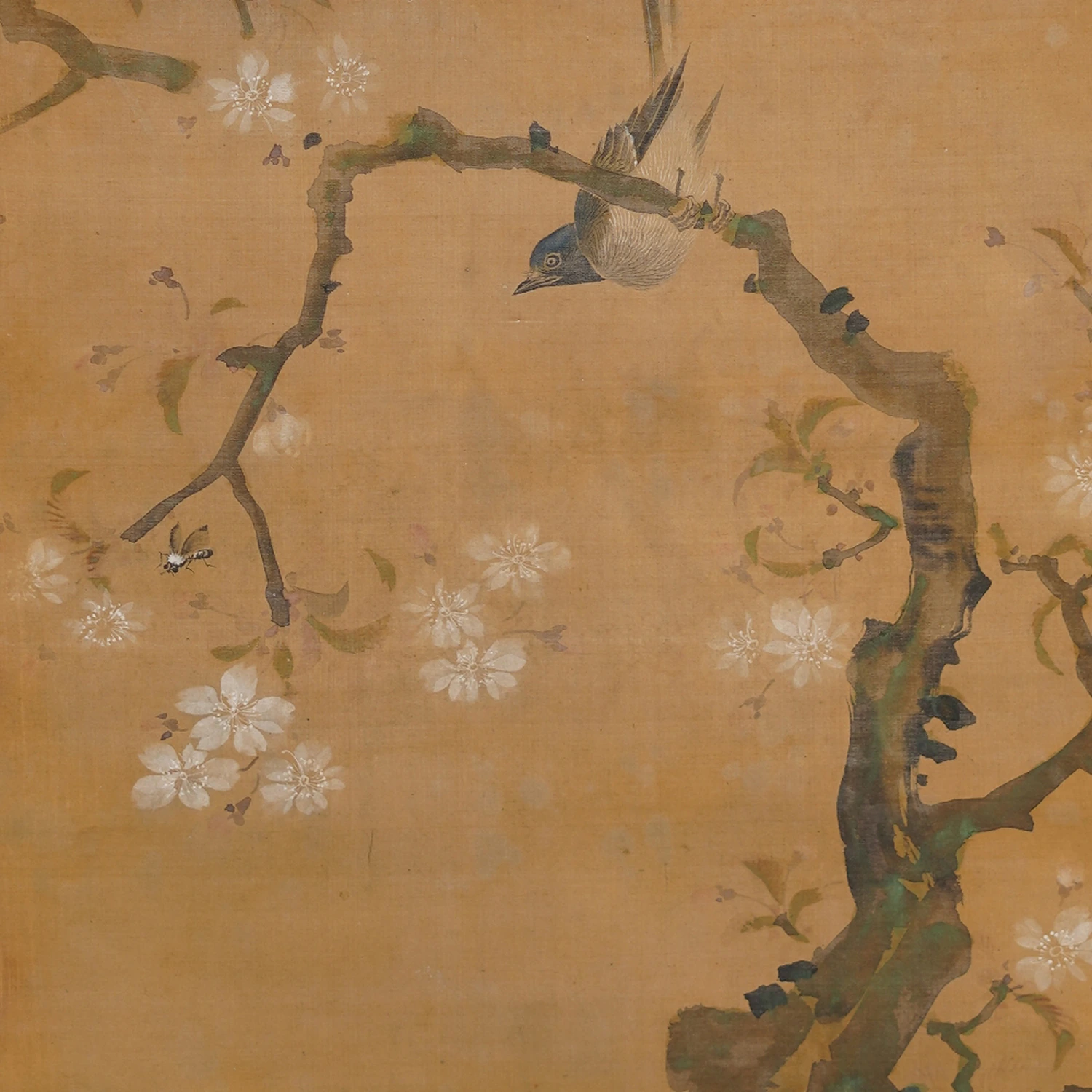
Satake Eikai
Songbird on Blossoming Cherry Branch
Kakemono, unique work, 190 x 53 cm
Sold
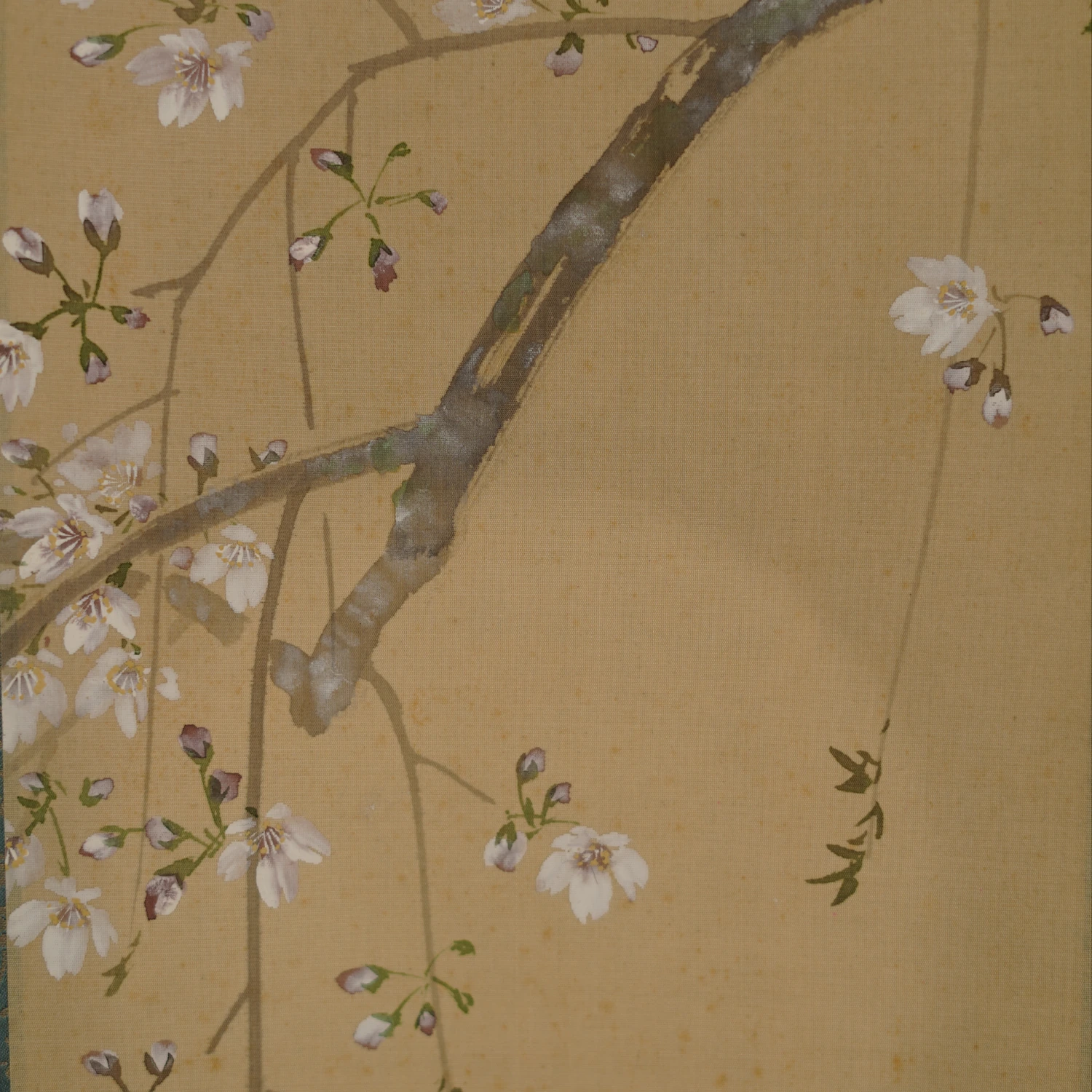
Kawachi Juzan
Hanging Cherry Blossoms
Kakemono, unique work, with box, 193 x 30 cm
Sold
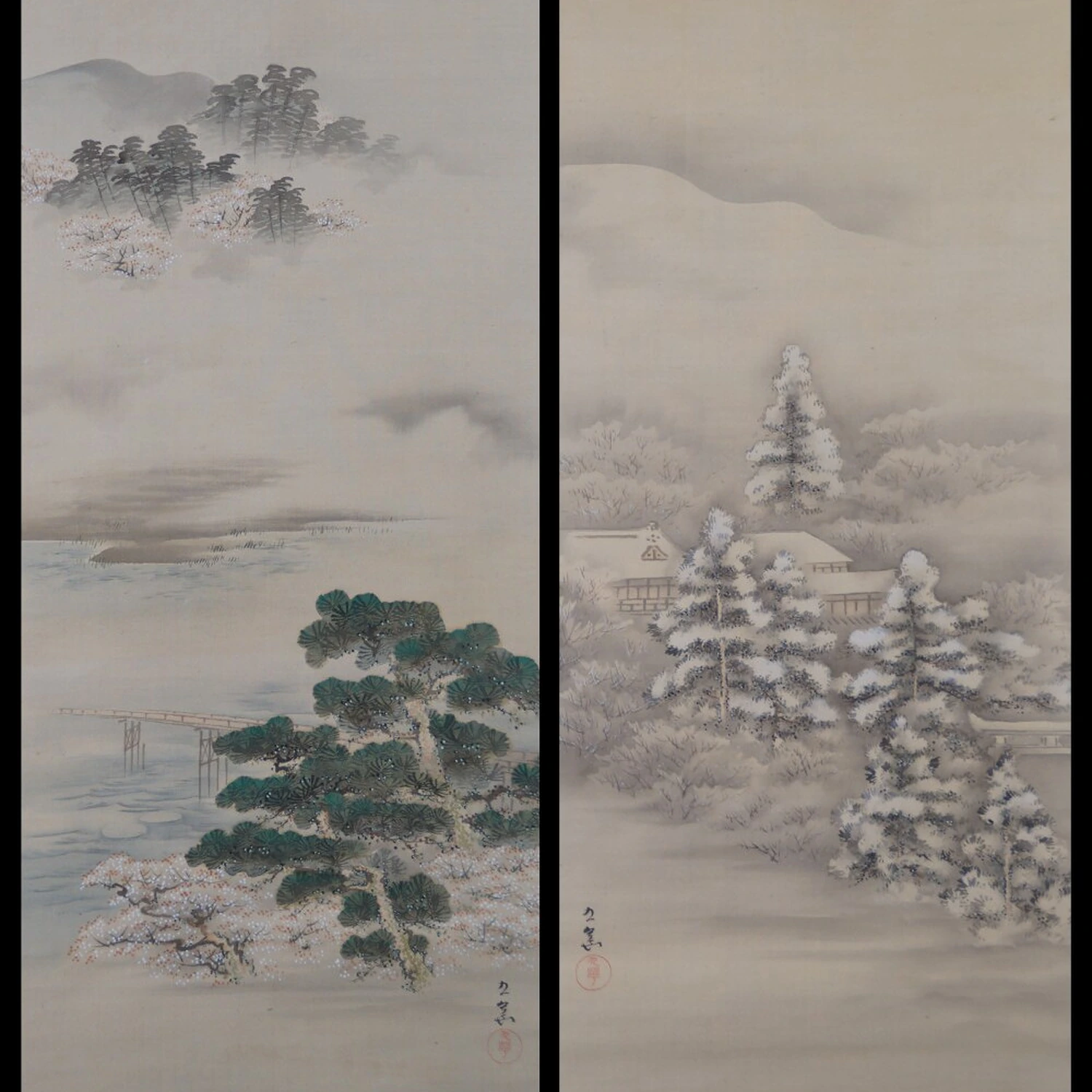
Ikeda Kyuka
Winter and Spring - Set of 2
Kakemono, unique work, 189 x 52 cm
Sold
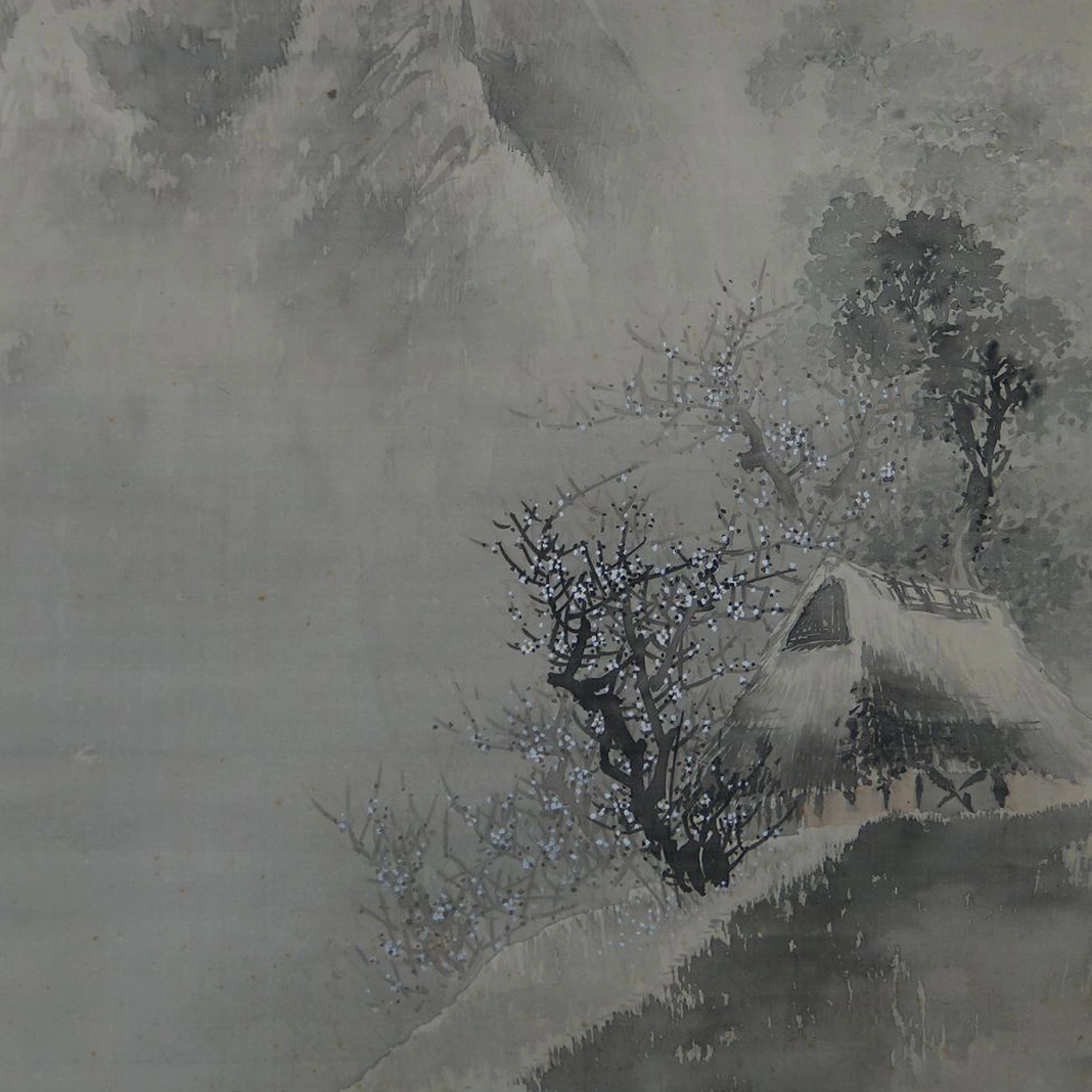
Shōun
Plum Blossoms in Moon Mist
Kakemono, unique work, 200 x 55 cm
Sold
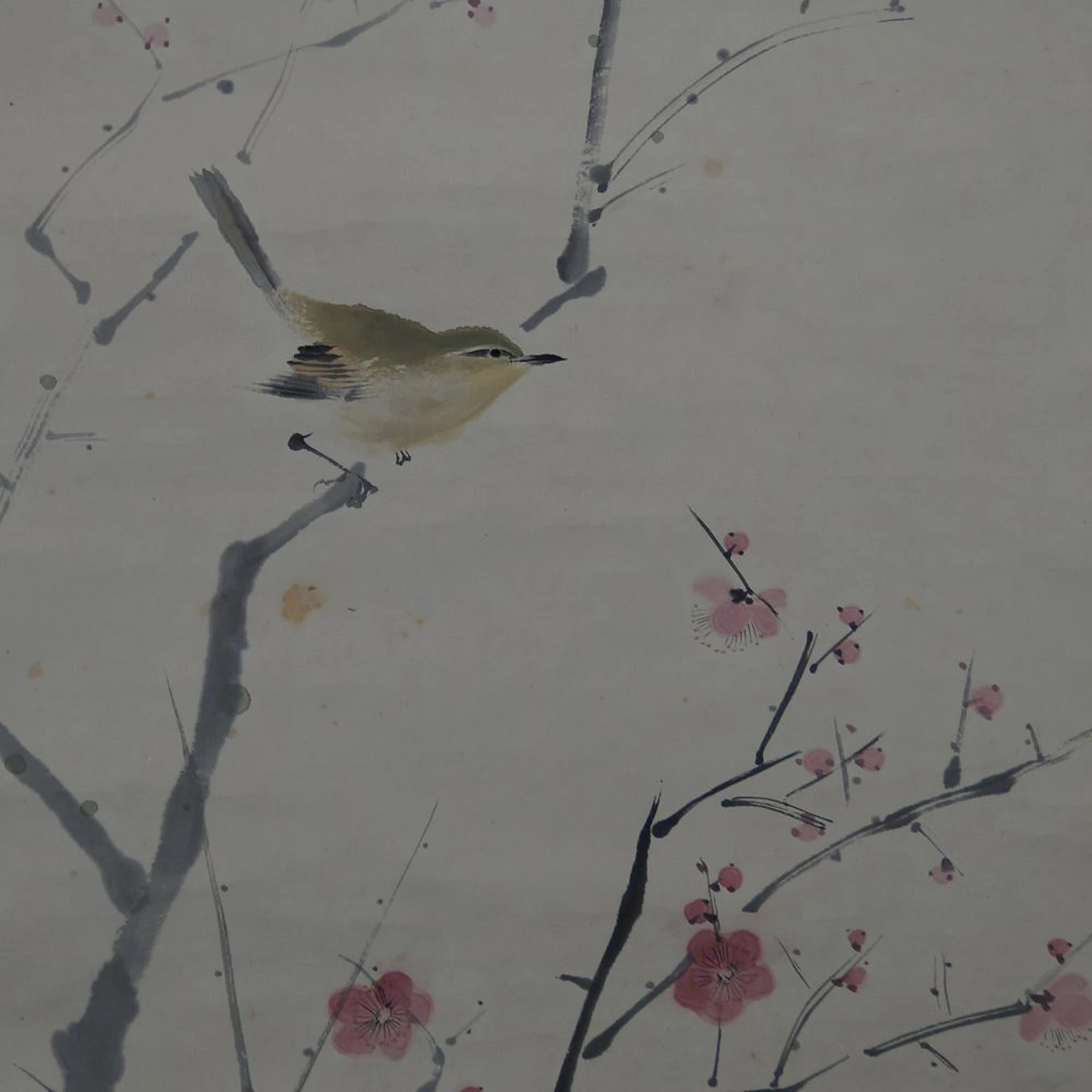
Yoshida Shuko
Nightingale on Blossoming Plum Branch
Kakemono, unique work, 208 x 44 cm
Sold
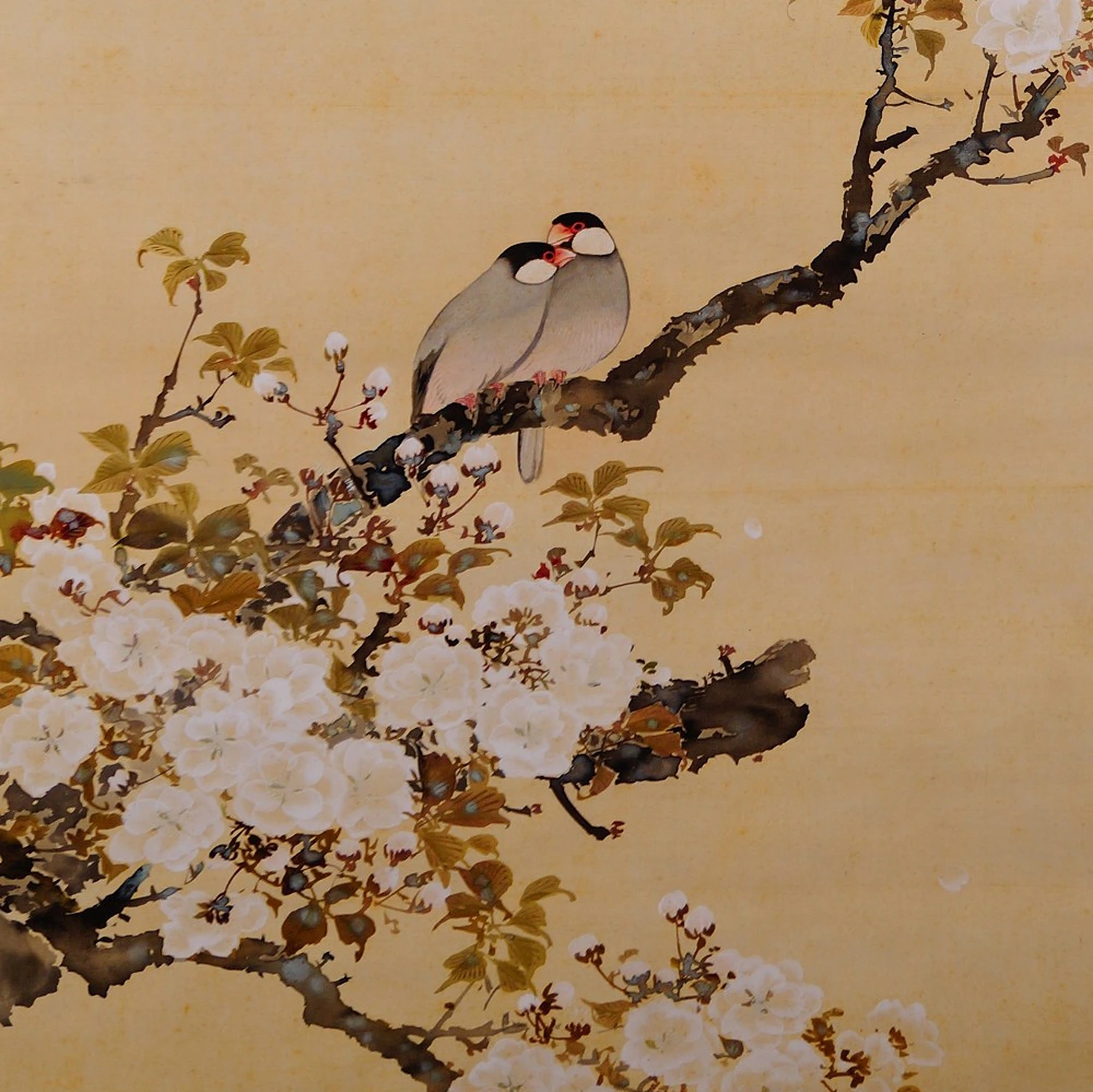
Spring Awakening - Two Birds on a Blossoming Cherry Branch
Kakemono, unique work, with box, 185 x 62 cm
Sold
48 of 155 items shown
Why Japanese Scrolls Change with the Season
In Japan a kakejiku (掛軸) rarely stays in place all year. In the tokonoma, the display alcove of the reception room, and above all in the tea room, it is changed as soon as the season turns – the scroll shows where in the year you stand. Japanese scroll dealers therefore sort their stock by hanging time: seasonal scrolls for the four seasons, year-round pictures, auspicious pictures and scrolls for New Year. This category gathers the spring pictures: kakemono, shikishi and makuri whose motif is assigned to spring in Japan.
Ume and Uguisu: The First Spring Picture
It begins with plum blossom, ume (梅). It opens on the bare, dark branch while it is still cold outside, and in hanging practice it is the picture of early spring for February and March. It has long been painted with the Japanese bush warbler, the uguisu (鶯), whose song announces spring in Japan; "ume ni uguisu" (梅に鶯) is a fixed pictorial formula. Plum also appears with sparrows, magpies or a rooster, as a branch in a vase, above a village or beside a lady in kimono.
Sakura, Willow and Swallow
Plum is followed by cherry blossom, sakura (桜), the motif of full spring. Japanese dealers hang cherry pictures from late February into April. Painters show a single branch with songbirds, a flowering tree by a river, a mountain village under clouds of blossom or a beauty beneath hanging branches – scenes that recall cherry-blossom viewing, hanami (花見). The young willow, yanagi (柳), with its pale green switches belongs to the same weeks, often together with the swallow, tsubame (燕).
Wisteria, Tree Peony and the Spring Meadow
Late spring is carried by wisteria, fuji (藤), whose flower clusters hang in April and May, and by the tree peony, botan (牡丹), the most lavish bloom in the painter's year. Smaller signs join them: butterflies above peonies, pheasants under the cherry tree, sparrows among horsetail shoots (土筆), dandelions and violets, peach blossom (桃) in a poem. Landscapes belong here when they show spring explicitly, with pink flowering trees or an inscription such as 湖山春暁, "Spring Morning over Lake and Mountains".
Festivals and Calligraphy in Spring
In Japanese hanging practice two annual festivals fall in spring. For the Girls' Festival on March 3, Hina dolls (雛) are shown from about a month before until the day itself. For Boys' Day on May 5, pictures of warriors in armor and helmet hang from early April until the festival. The calendar of haiku season words already places Boys' Day in early summer, but dealers count it as spring, and Densho follows them. Among calligraphy, works such as "Spring Wind" (春風) belong here, poems about spring rain and blossom, and the tea phrase "The fragrant breeze comes from the south" (薫風自南来), which the tea room shows in May.
When to Hang a Spring Scroll
Densho follows the monthly scheme of a major Japanese scroll dealer: spring is March to May, summer June to August. A seasonal picture, however, goes up a little earlier than the season begins outside – Japanese dealers recommend roughly a month's lead. For spring that means plum from February, cherry from March, wisteria and peony in April and May.
What Makes a Spring Picture – and What Does Not
What decides is the seasonal marker, not the main subject. Mount Fuji with flowering cherry in the foreground is a spring picture; Fuji without such a sign hangs all year. Cranes likewise become a spring picture when the first plum blossoms stand beside them, and so does a hawk swooping down over flowering peonies. This category deliberately leaves out motifs that Japan treats as year-round or as auspicious pictures: crane and tortoise, the pine on its own, bamboo with sparrow, tiger and dragon, Daruma and ink landscapes without a seasonal sign. The auspicious trio of pine, bamboo and plum, shōchikubai (松竹梅), and the Four Gentlemen are not included either, even though plum blossoms in both. A single picture that shows all four seasons at once belongs to none of them.
Transitions to Winter and Summer
Some dealers already list plum under winter; Densho assigns it to spring as long as there is no snow in the picture – plum in snow is a winter scroll, as is the winter peony under its straw shelter. Willow belongs to either side depending on its companion: with a swallow to spring, with a heron, rain or fireflies to summer. The collection also holds pairs and series whose scrolls belong to different seasons, such as flowering plum and red leaves as a spring-autumn pair or a four-seasons set. They appear under every season they cover.
Changing, Storing, Collecting
When the summer scroll's turn comes in May, the spring picture is dusted dry with a soft brush, rolled up loosely without tension and stored in its wooden box, away from sunlight, heating and cold outer walls. Collectors of spring pictures look for an unambiguous marker: whether a red blossom is plum or camellia decides between spring and winter. The inscription on the wooden box often names the motif or spring itself, for instance with the character 春. Such a box is part of the work and should stay with it.