Japanese New Year Paintings: Kakemono for the Start of the Year
Go directly to the artworksIn brief
New Year kakemono are hung in Japan for Shōgatsu, from the last days of December until about mid-January: hanging scrolls whose motif clearly marks the beginning of the year. The most common is the rising sun – over ocean waves, emerging from the morning mist or with a pair of cranes before it. Mount Hōrai, the Seven Lucky Gods as a group and the characters fukuju for good fortune and long life belong here too. Crane, pine or Mount Fuji on their own, by contrast, count as year-round celebratory pictures. At Densho you will find New Year paintings as hand-painted one-of-a-kind pieces from Japan, each with details on motif, support and period.
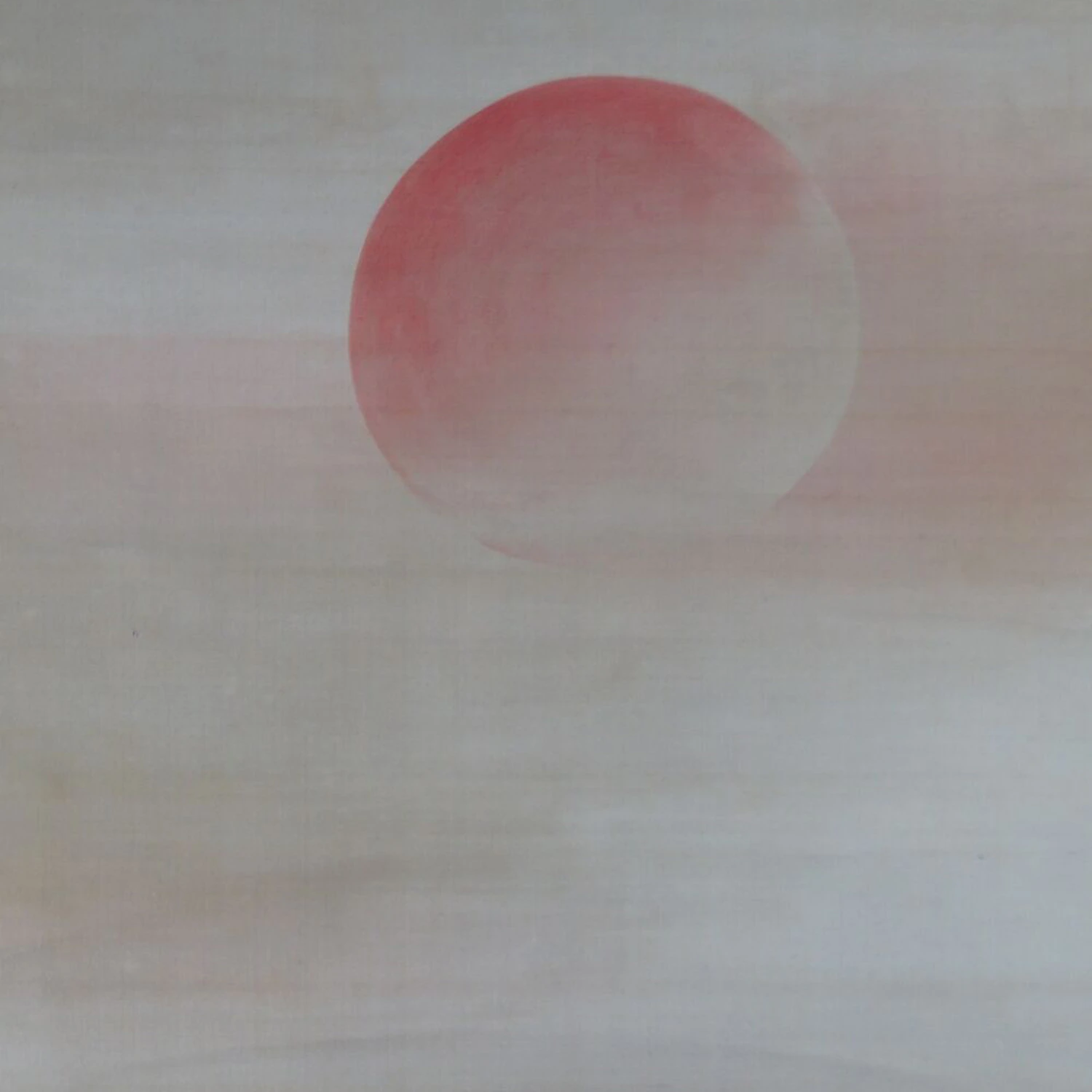
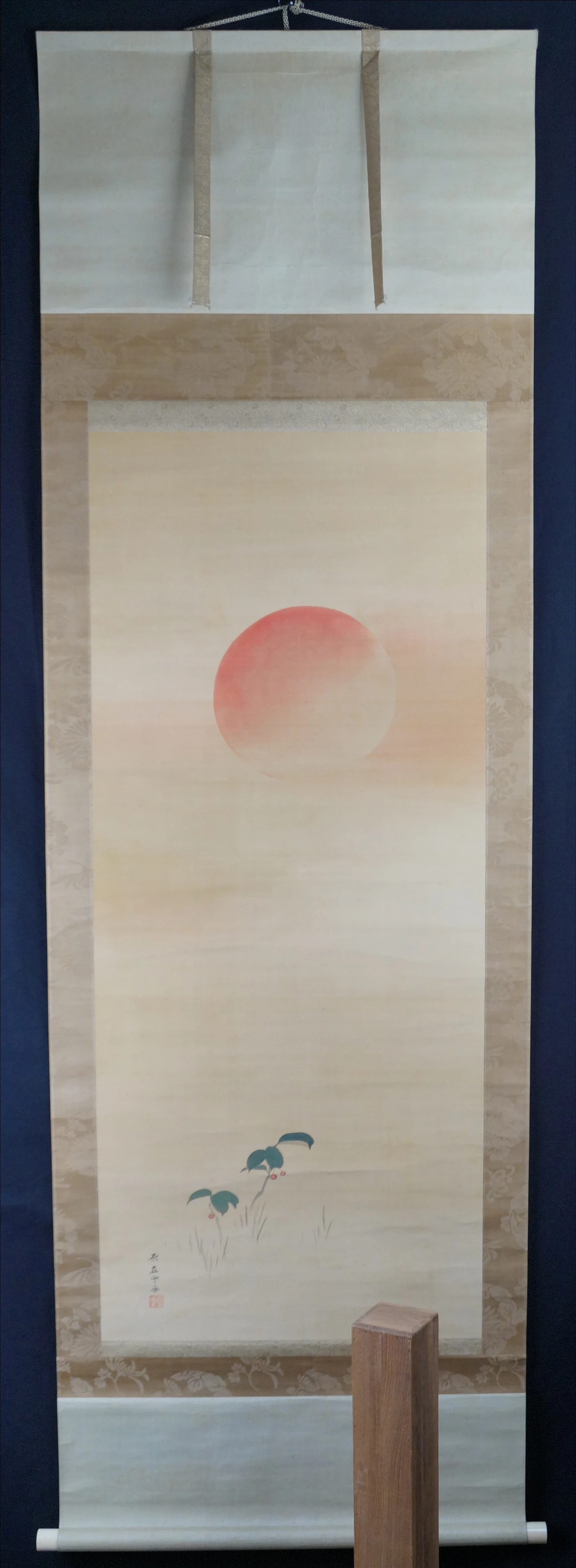
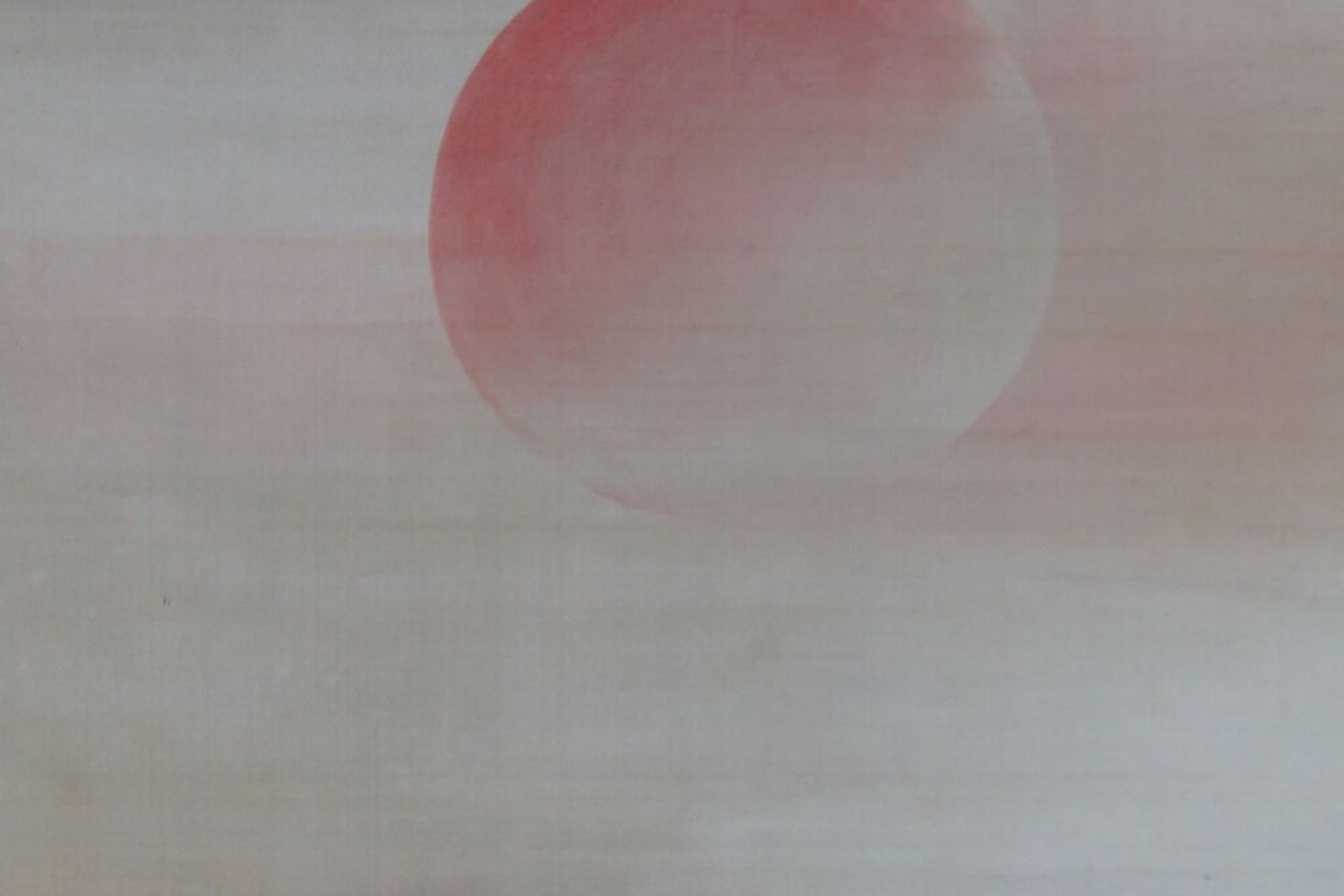
Hara Zaichu
Rising Sun over Misty Landscape
Kakemono, unique work, with box, 200 x 70 cm
€230.00
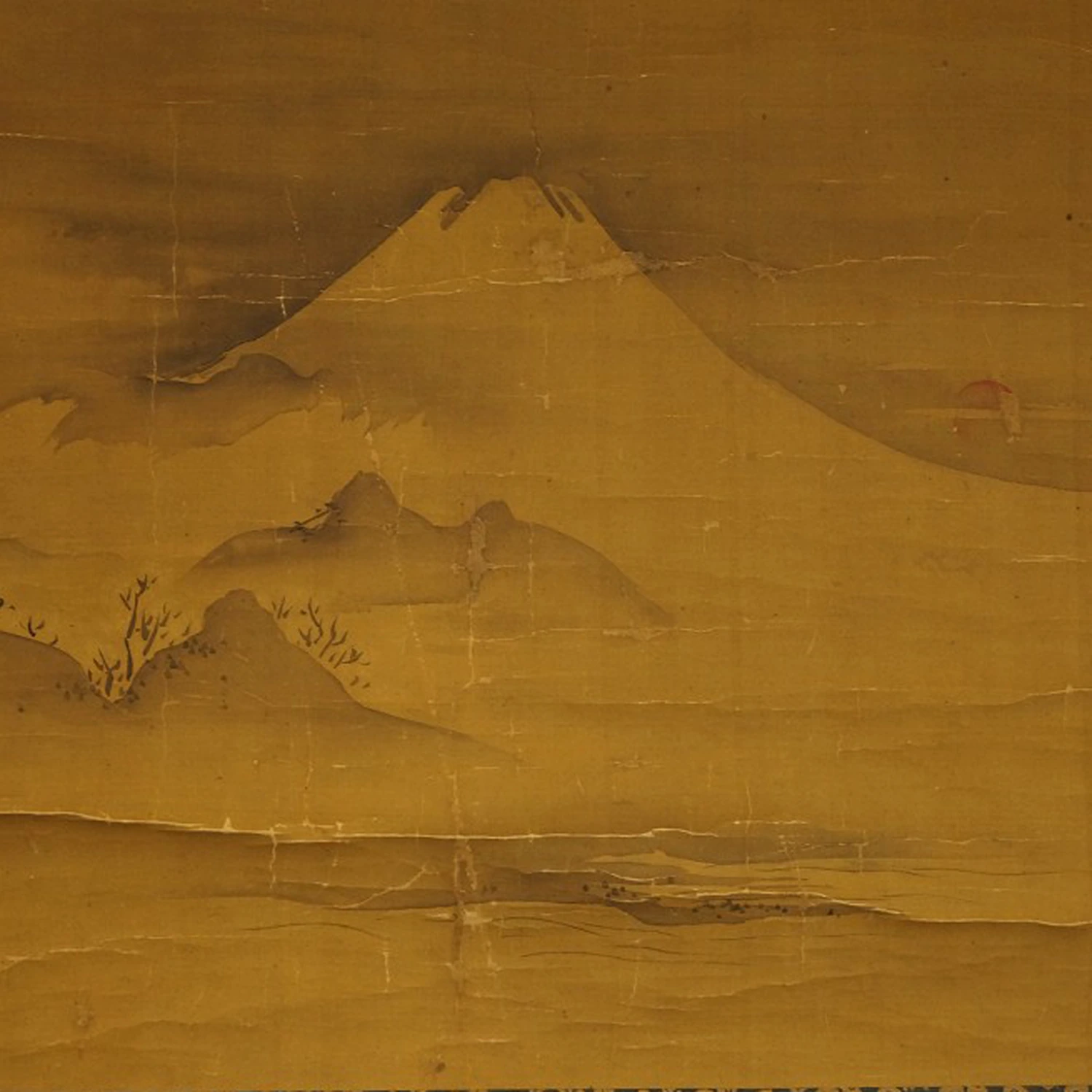
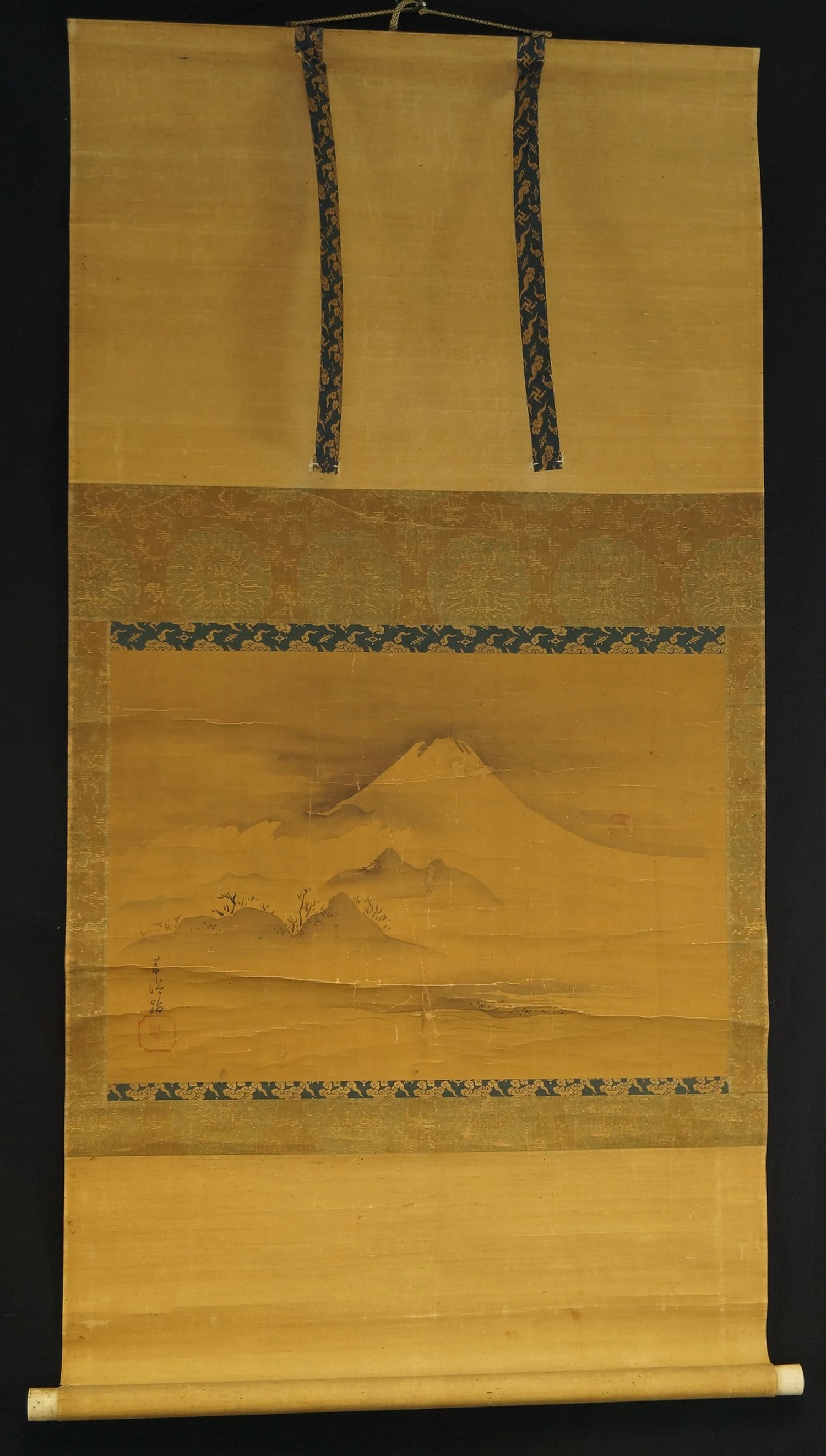
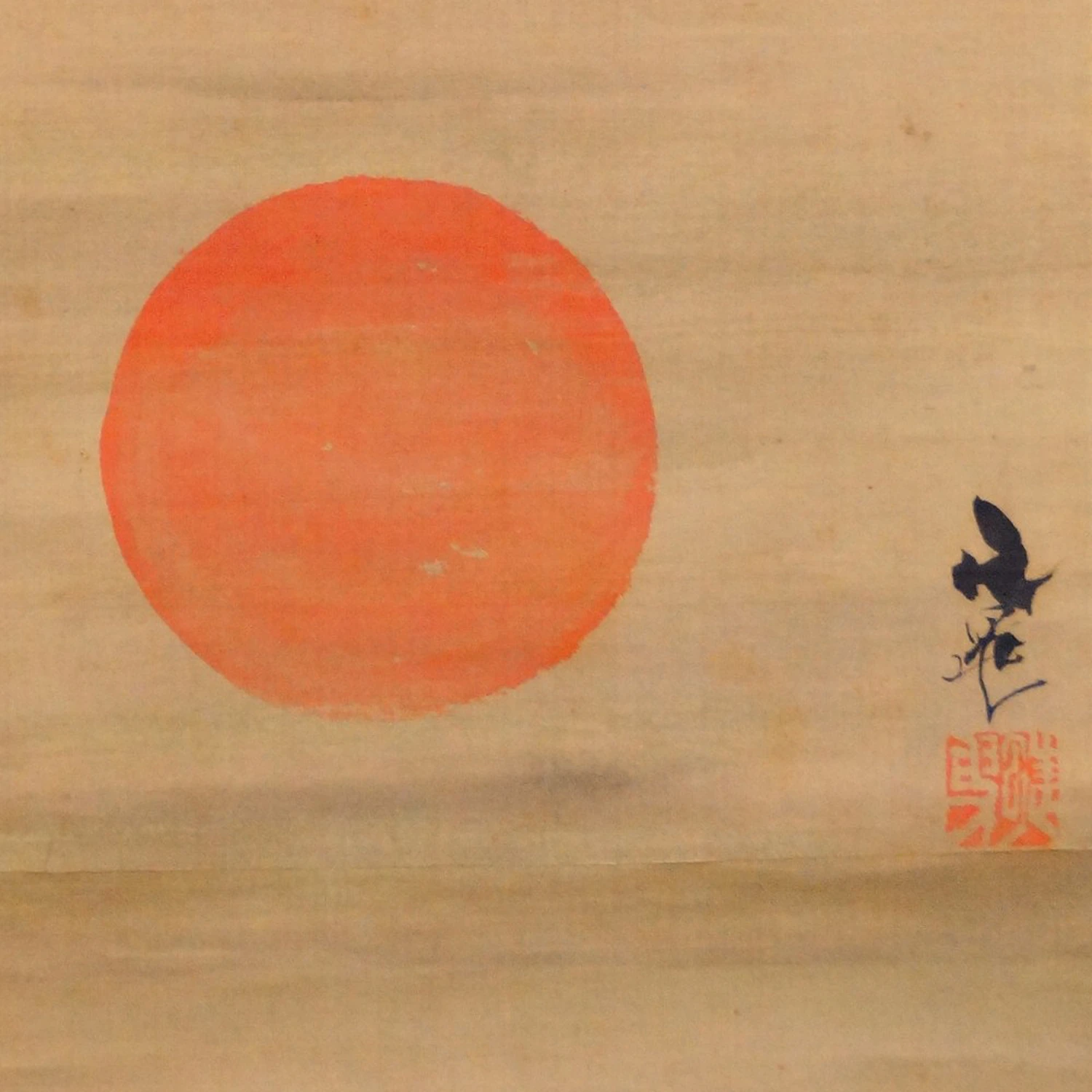
Kano Toun
Fuji-San in Morning Glow
Kakemono, unique work, 112 x 61 cm
€1,190.00
Tani Bunchō
Sonnenaufgang
Kakemono, unique work, 183 x 36 cm
Sold
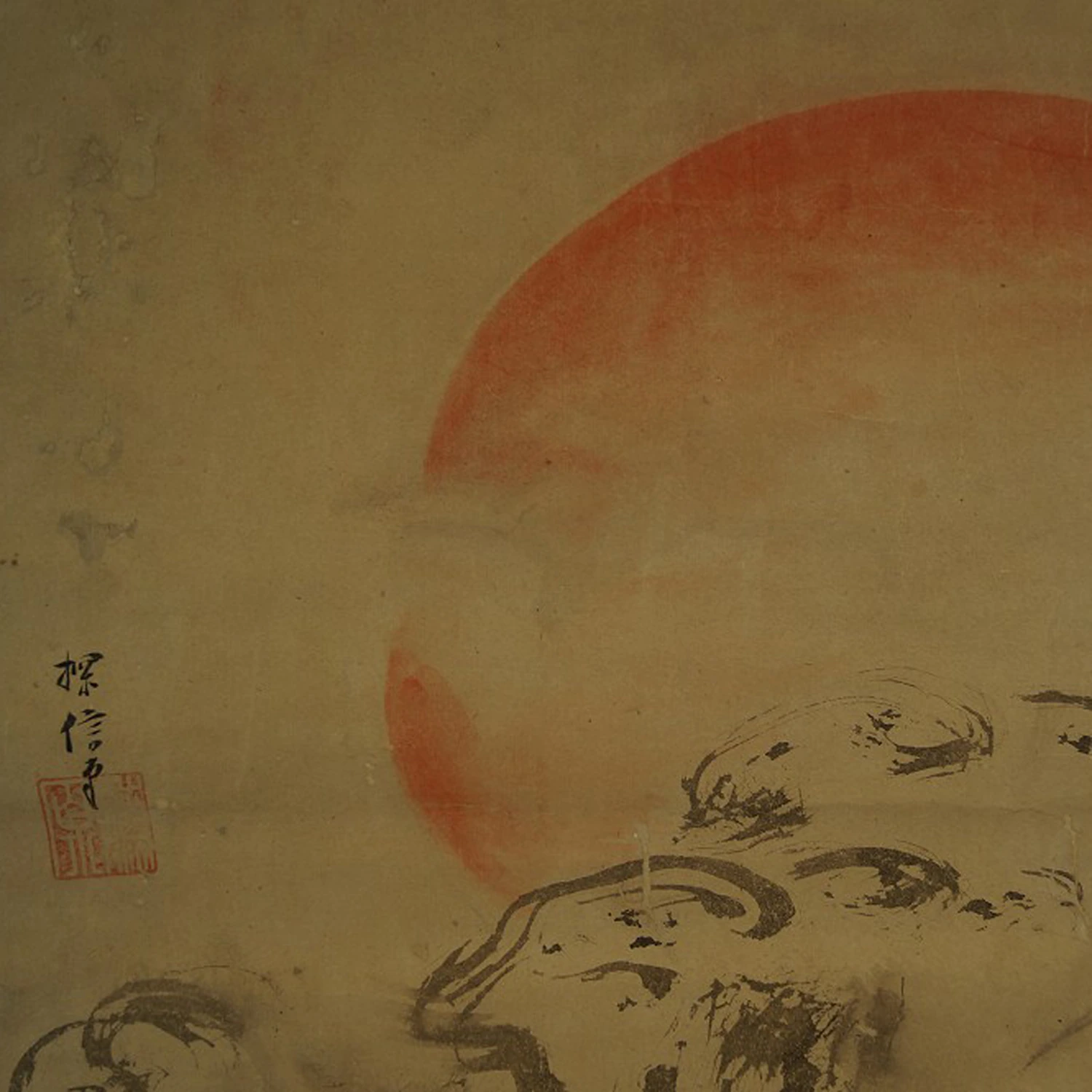
Kano Tanshin
Rising Sun over Waves in Horizontal Format
Kakemono, unique work, 113 x 69 cm
Sold
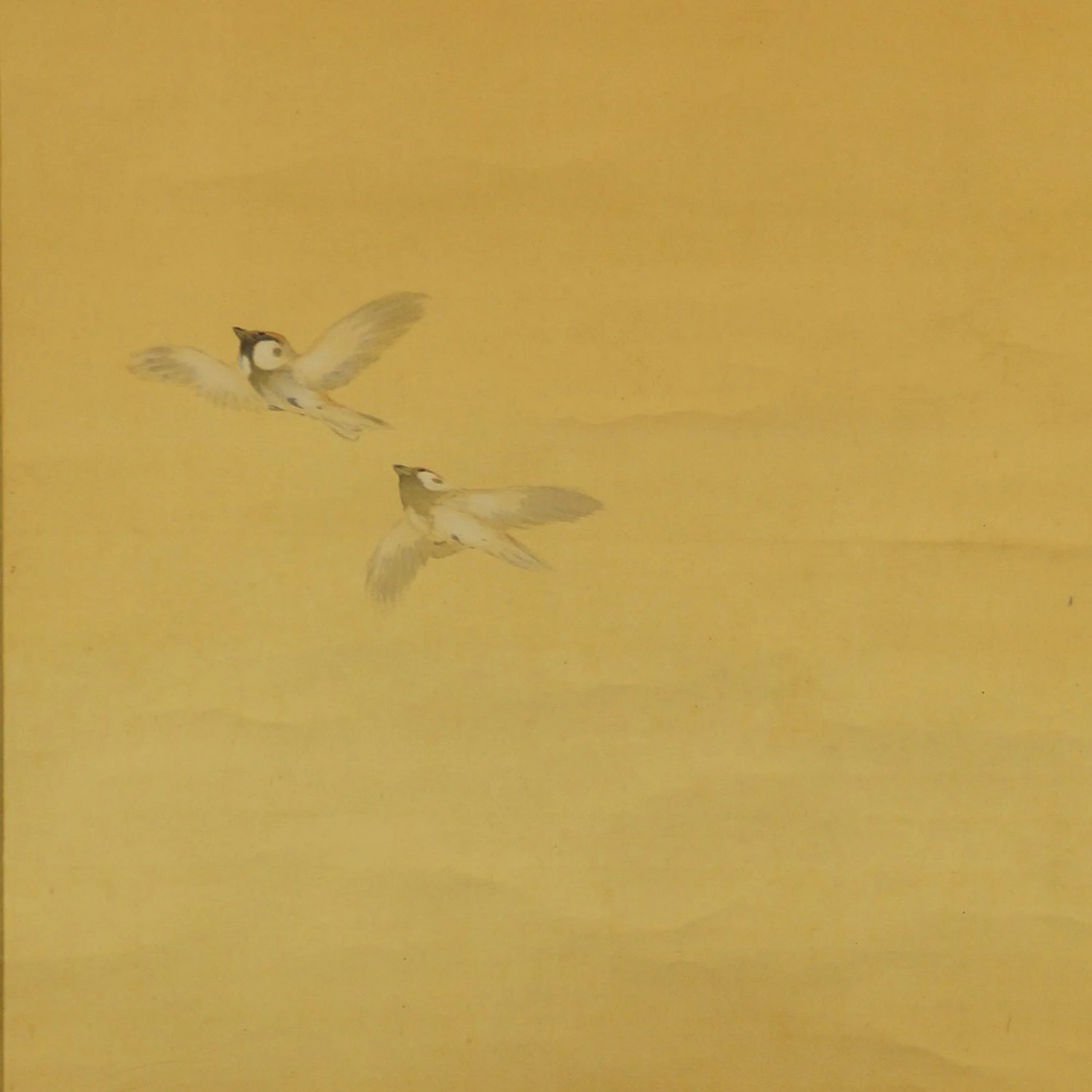
Otake Kunikan
Sparrows in the Rising Sun
Kakemono, unique work, 210 x 60 cm
Sold
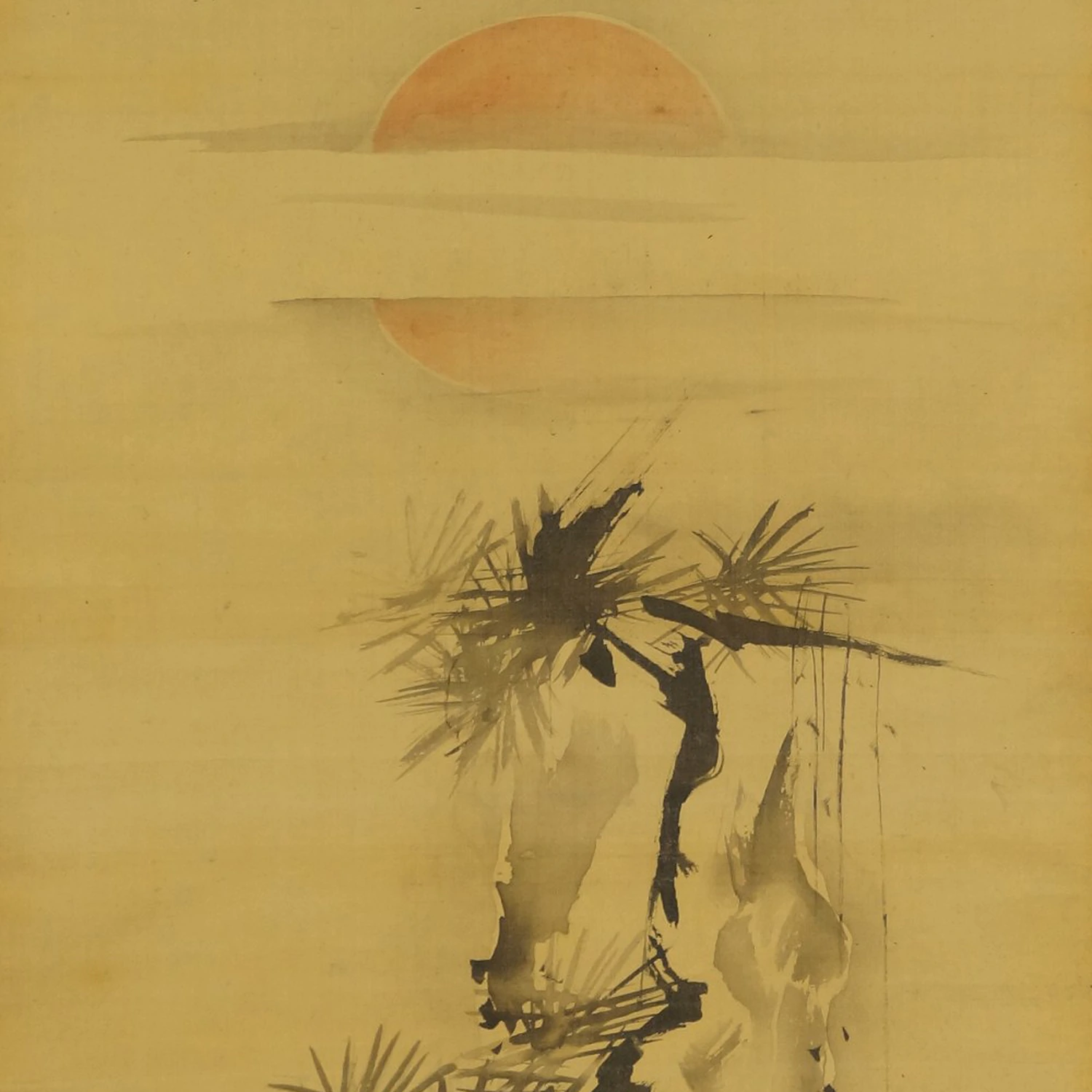
Kano Shunobu
Pine in the Rising Sun
Kakemono, unique work, 183 x 52 cm
Sold
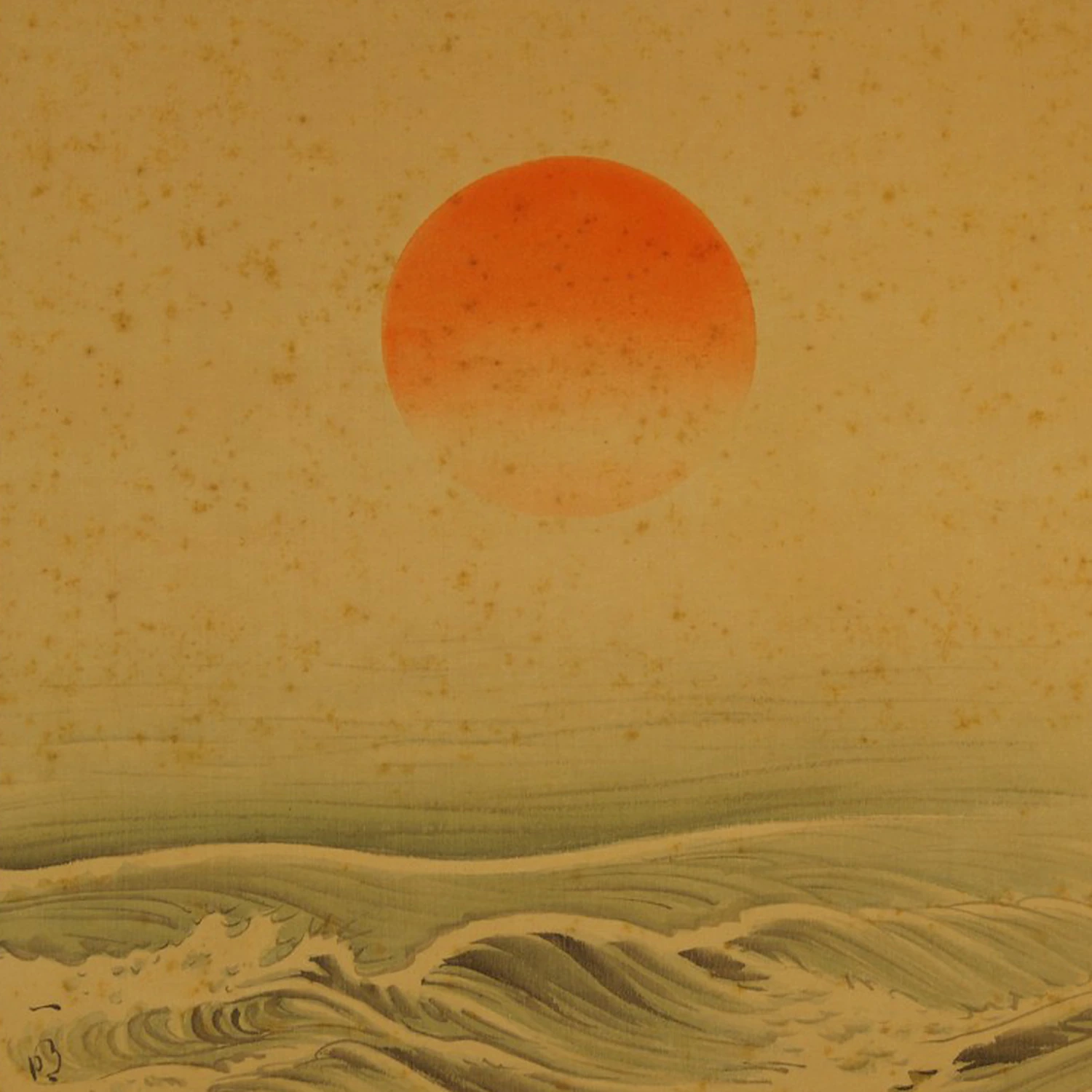
Rising Sun over Stylized Waves
Shikishi, unique work, 27 x 24 cm
Sold
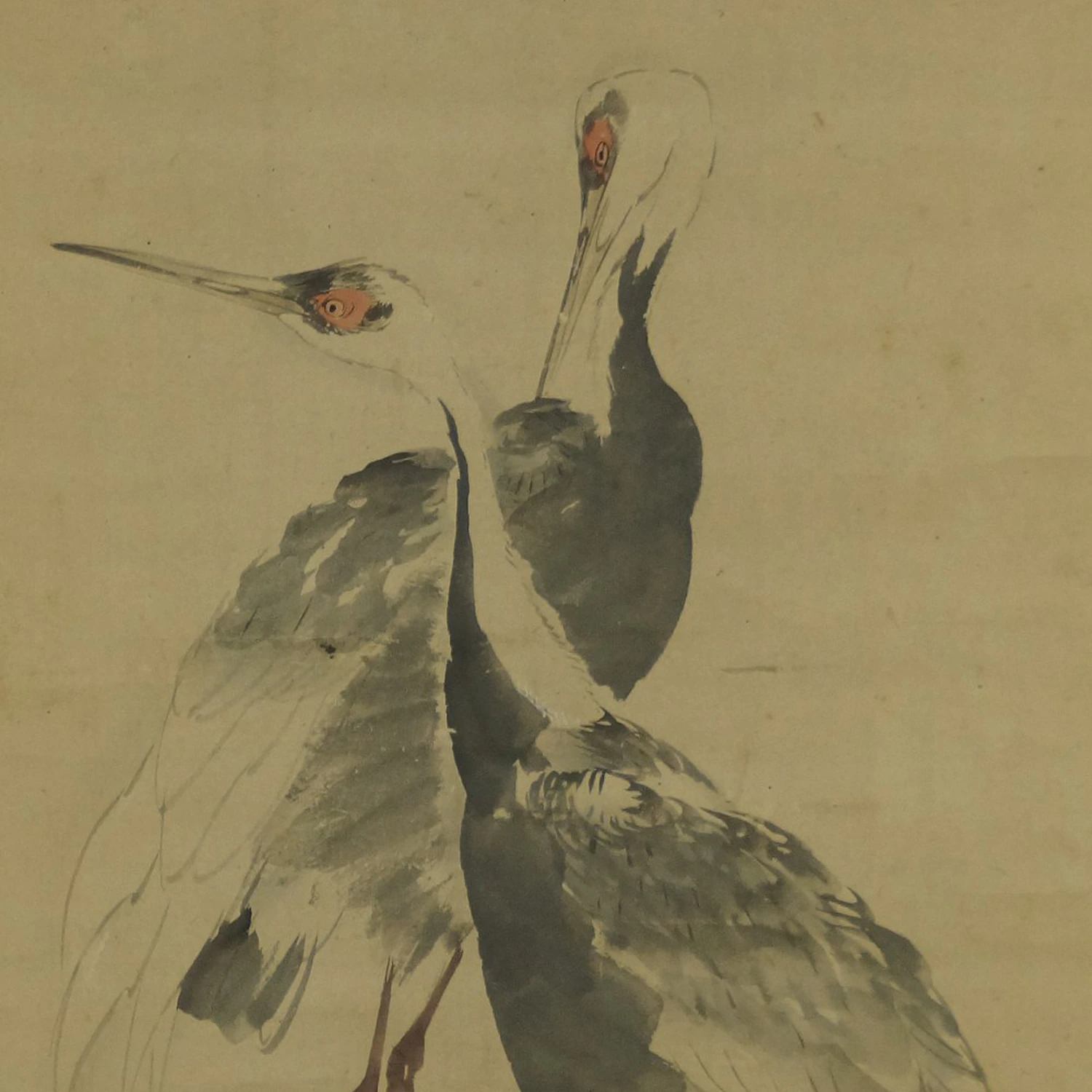
Kishi Takedo
Two Cranes in the Rising Sun
Kakemono, unique work, 195 x 55 cm
Sold
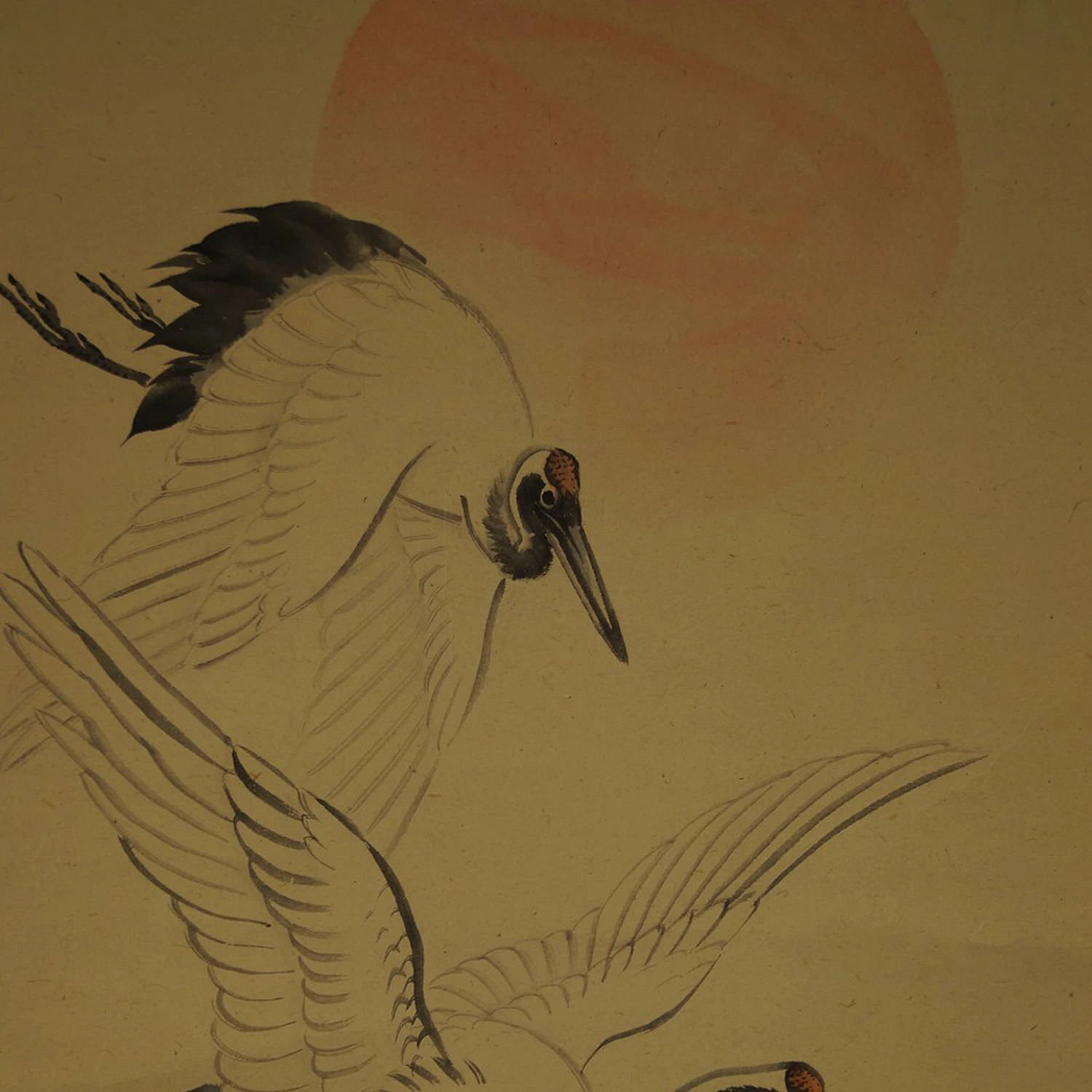
Nakajima Raisho
Cranes in Morning Light
Kakemono, unique work, with box, 203 x 39 cm
Sold
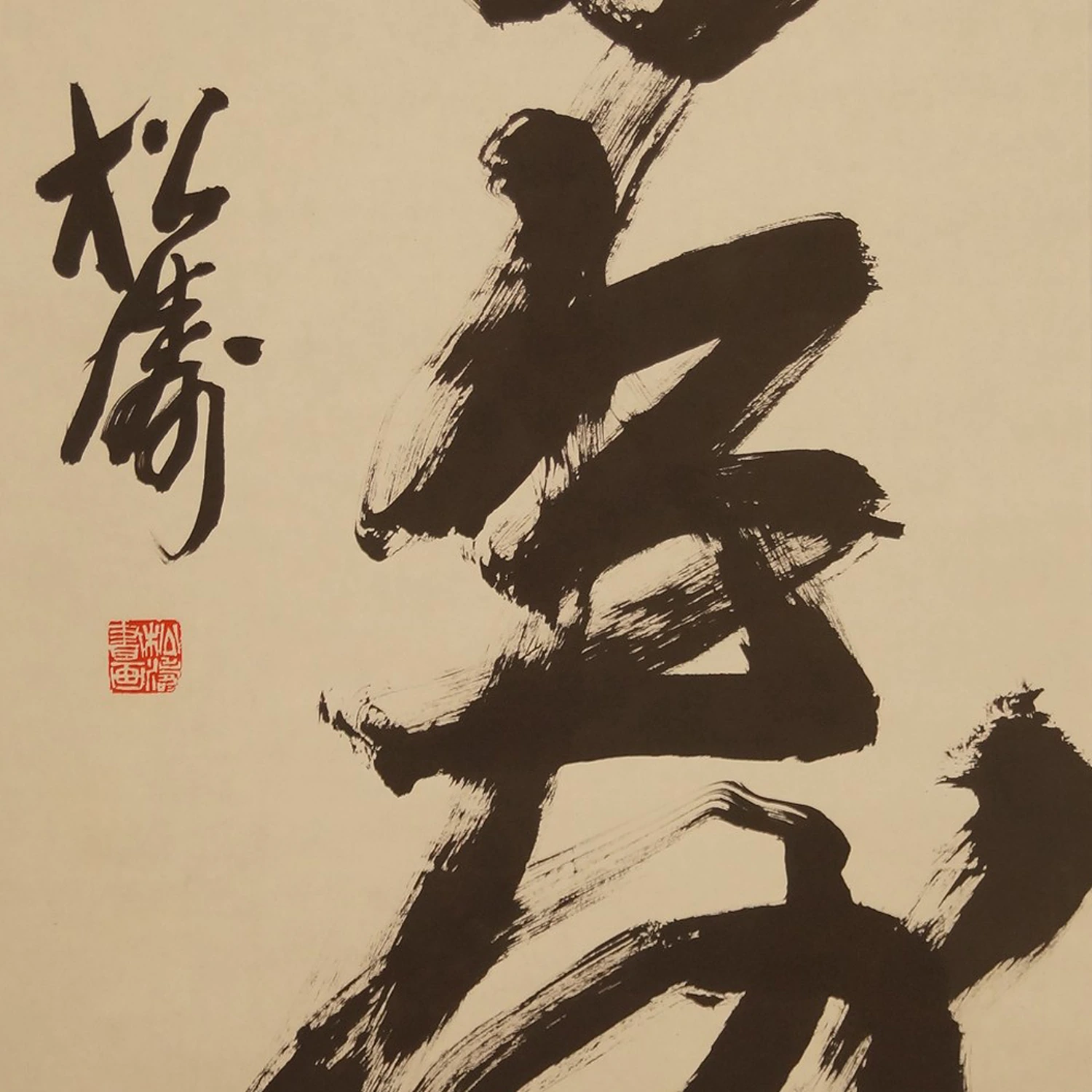
Calligraphy "Happiness and Long Life"
Kakemono, unique work, 195 x 56 cm
Sold
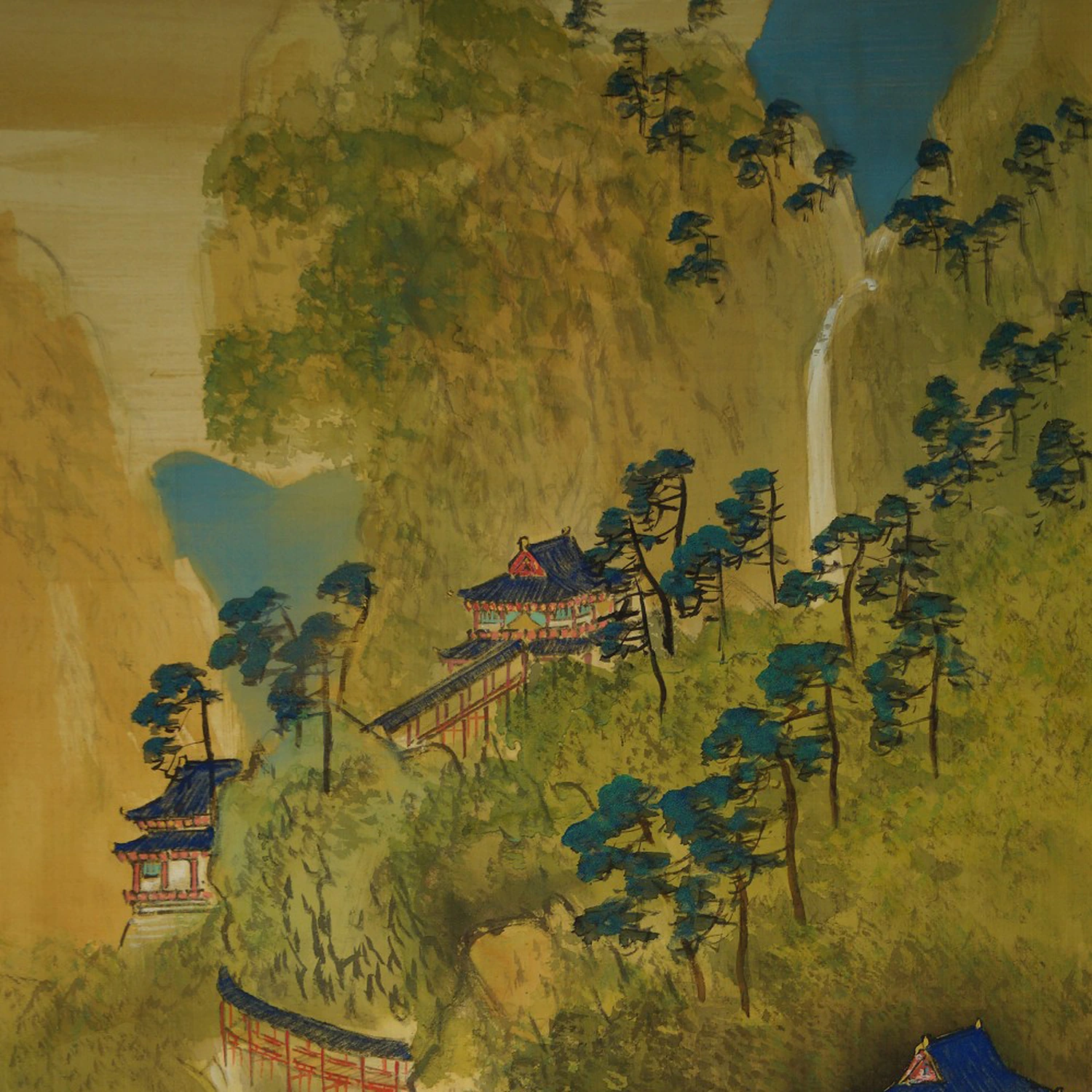
Hôraisan - Temple Complex by the Waterfall
Kakemono, unique work, with box, 192 x 62 cm
Sold
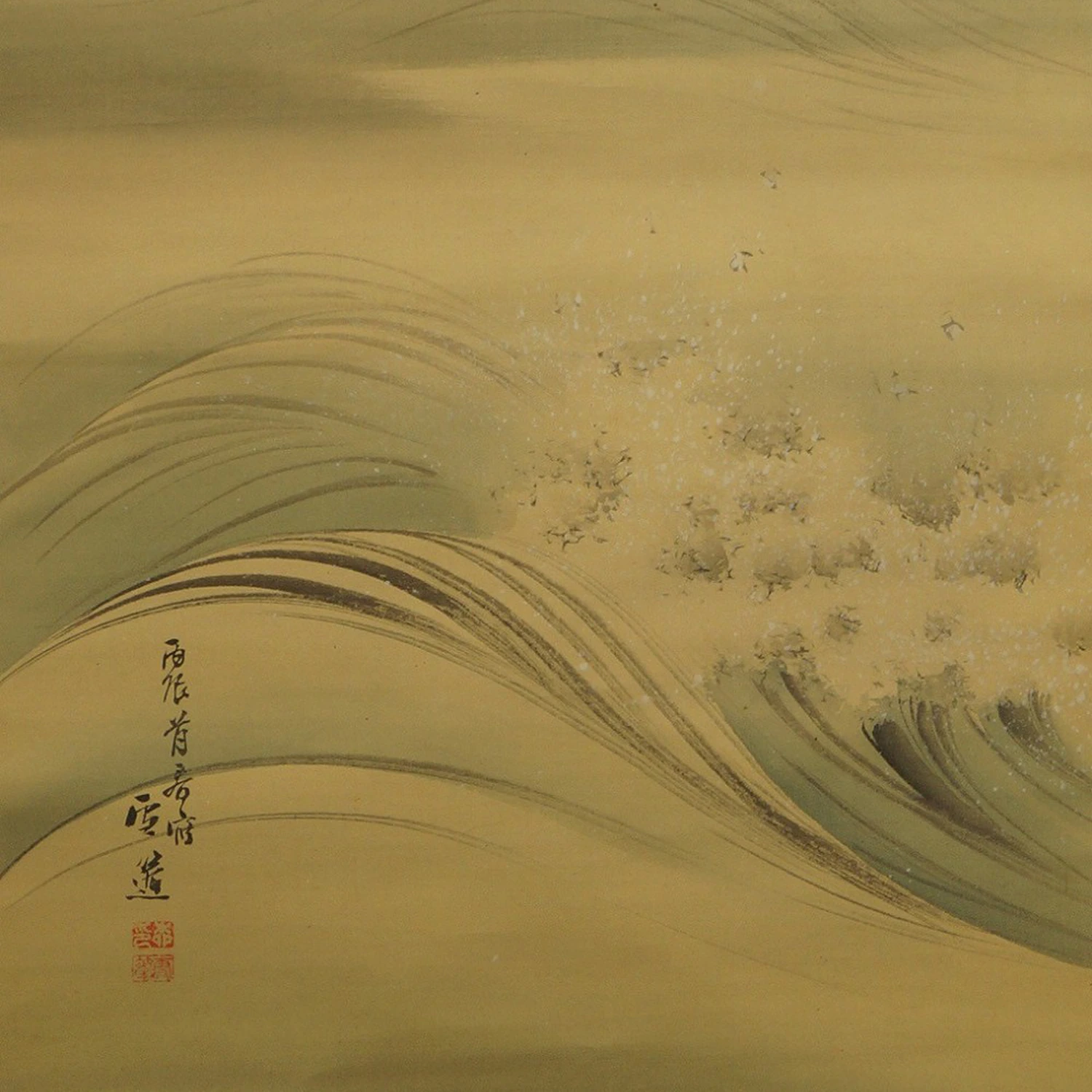
Rising Sun over Foaming Surf
Kakemono, unique work, 182 x 60 cm
Sold
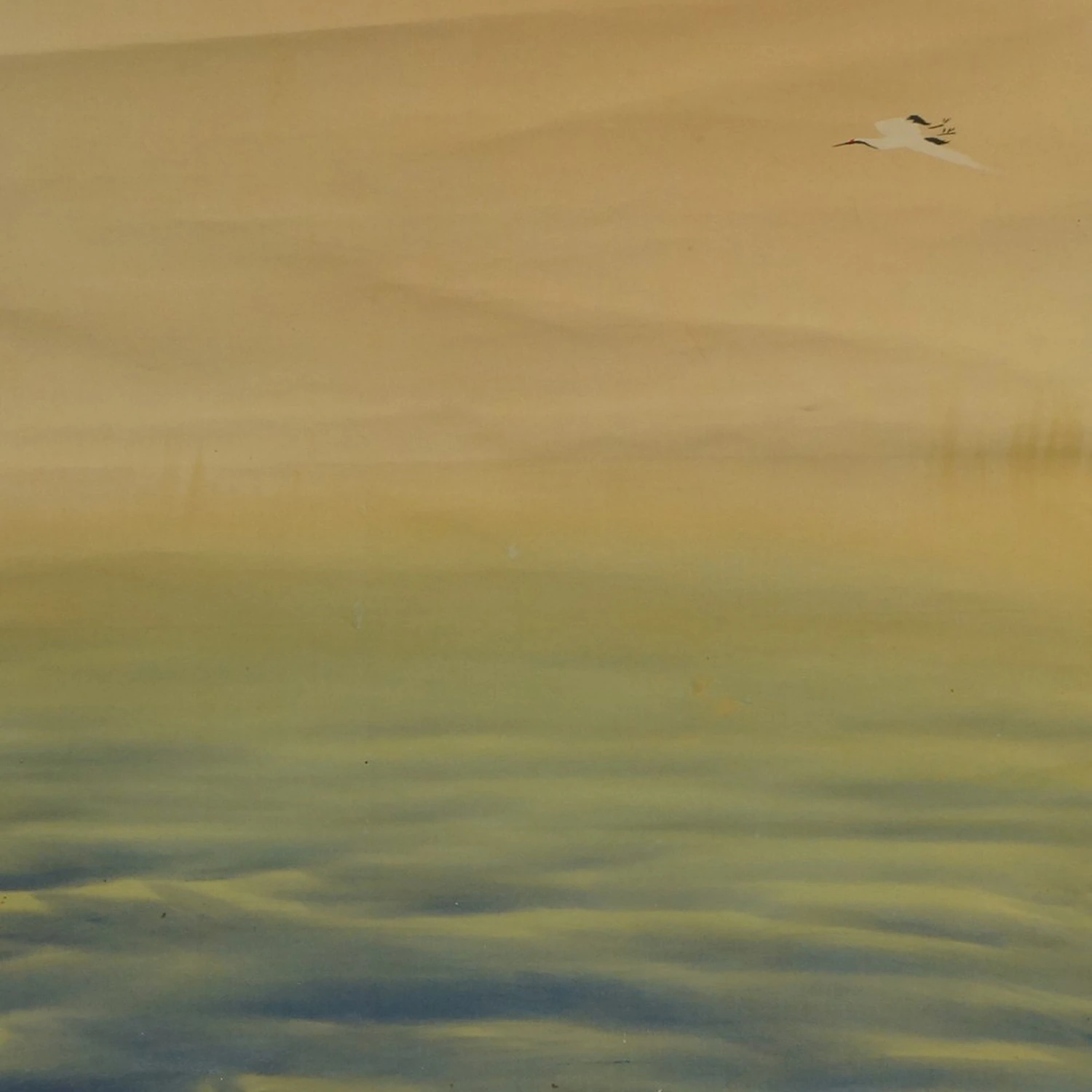
Sunrise with Cranes
Kakemono, unique work, with box, 184 x 60 cm
Sold
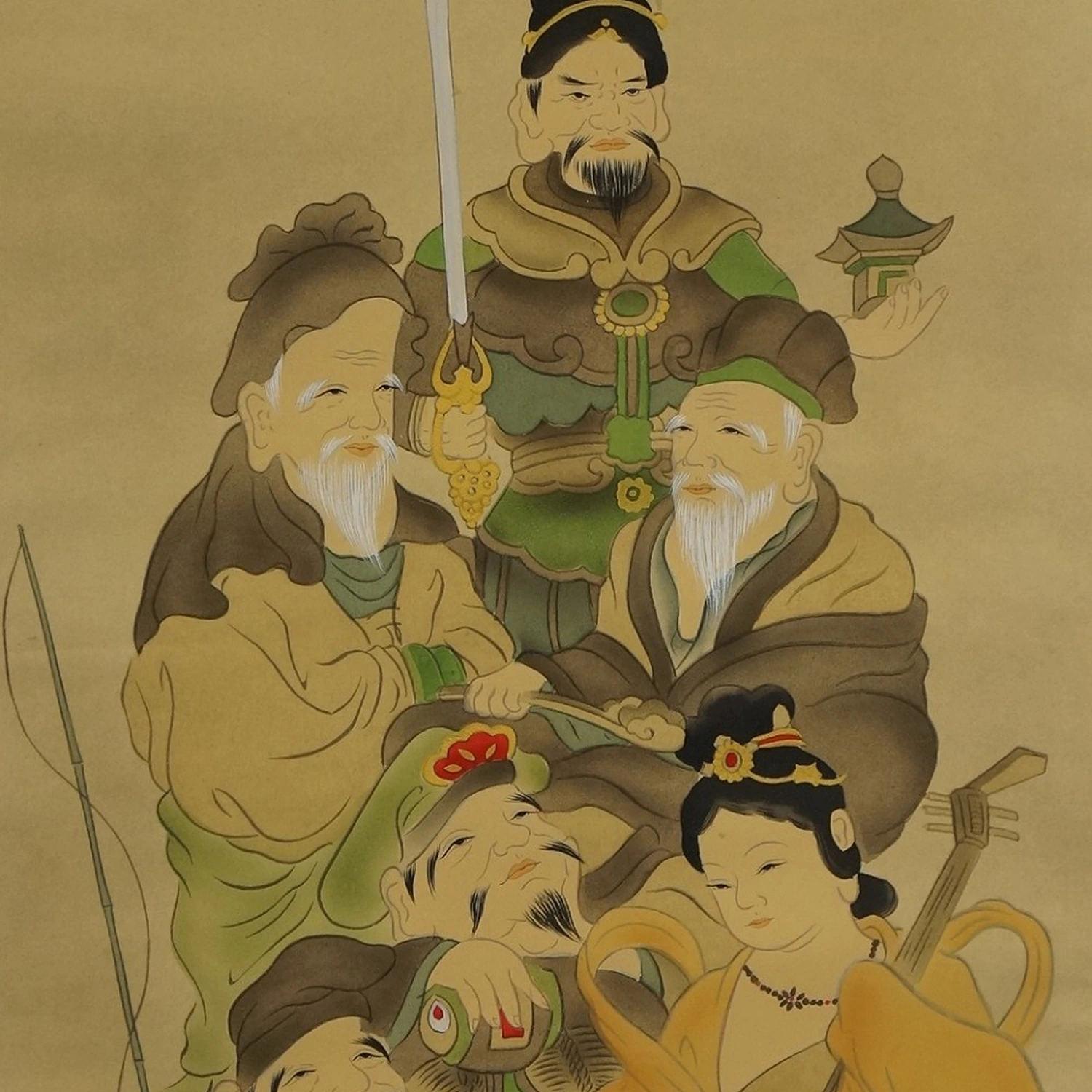
The 7 Lucky Gods
Kakemono, unique work, 184 x 58 cm
Sold
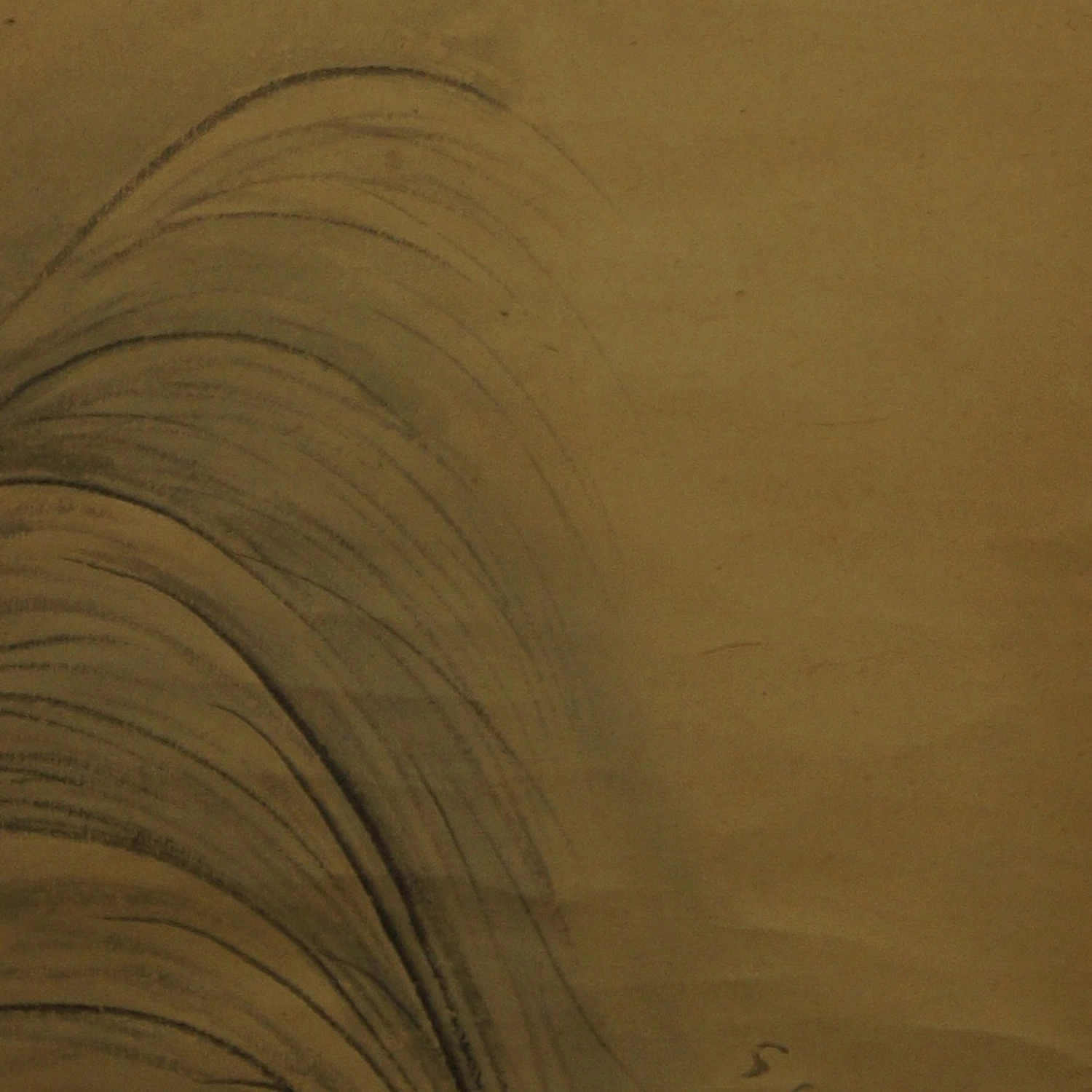
Rising Sun over High Wave
Kakemono, unique work, 177 x 42 cm
Sold
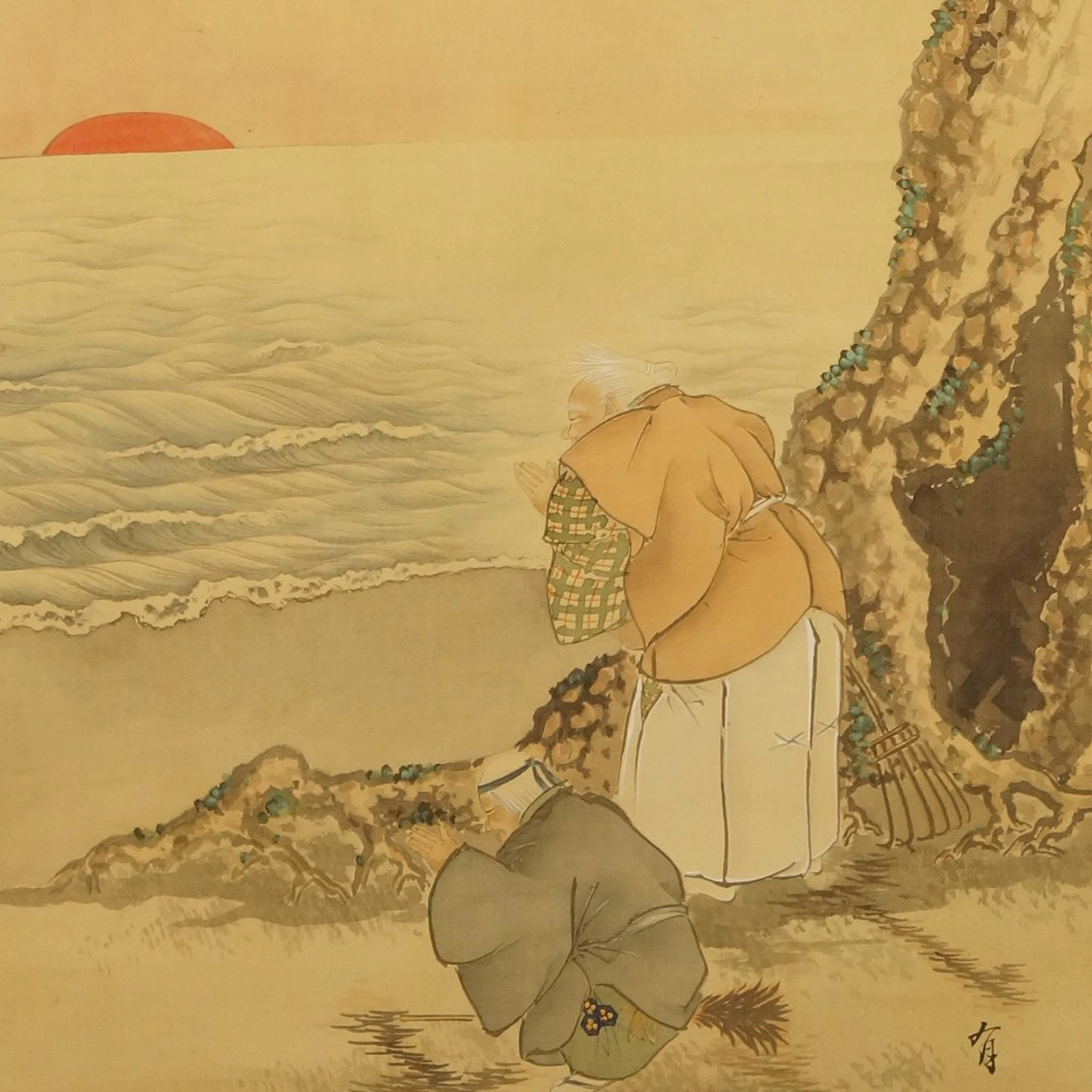
Yūkei
Takasago - The Old Couple Under the Pine
Kakemono, Silkscreen, 192 x 56 cm
Sold
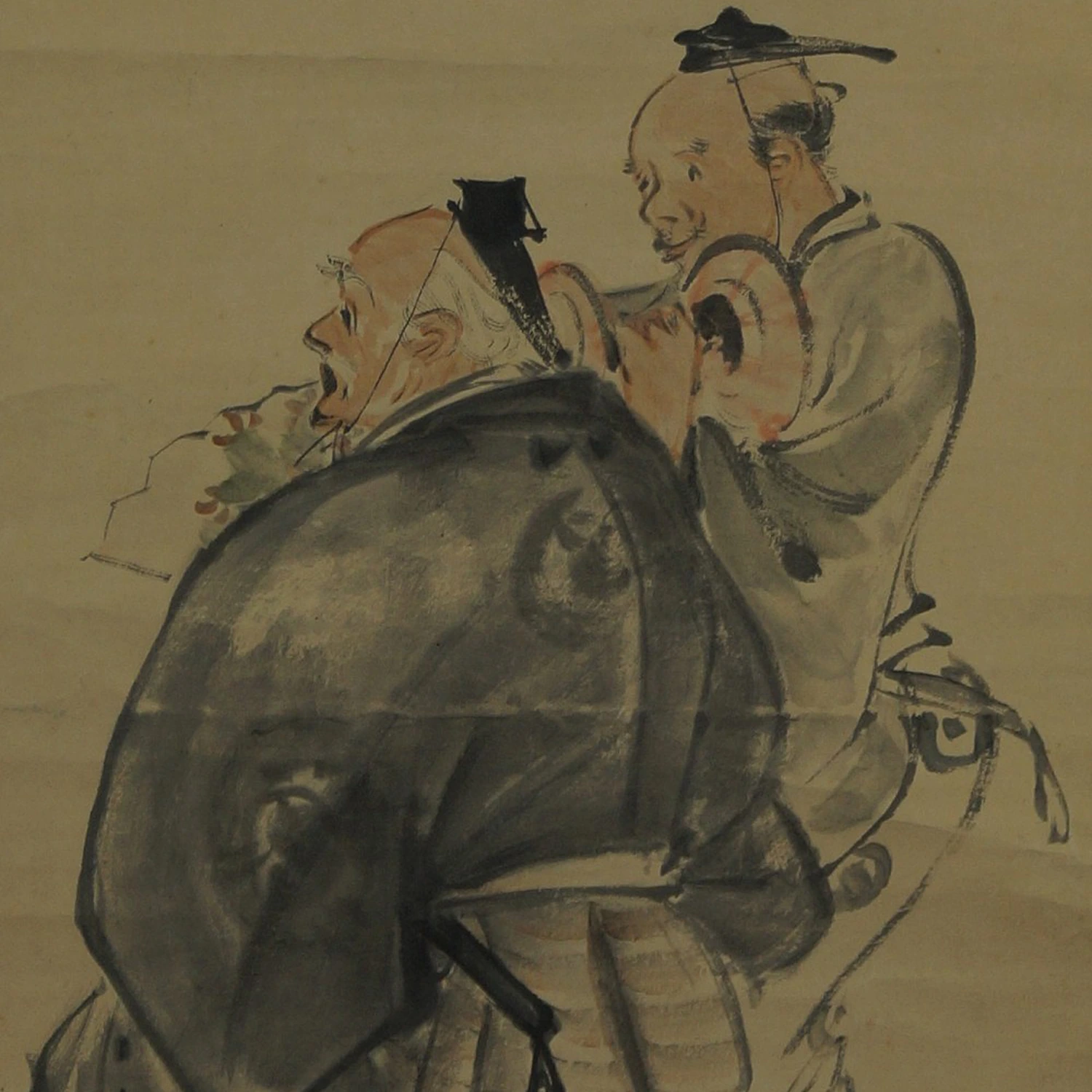
Two Elders Before the Rising Sun
Kakemono, unique work, 187 x 48 cm
Sold
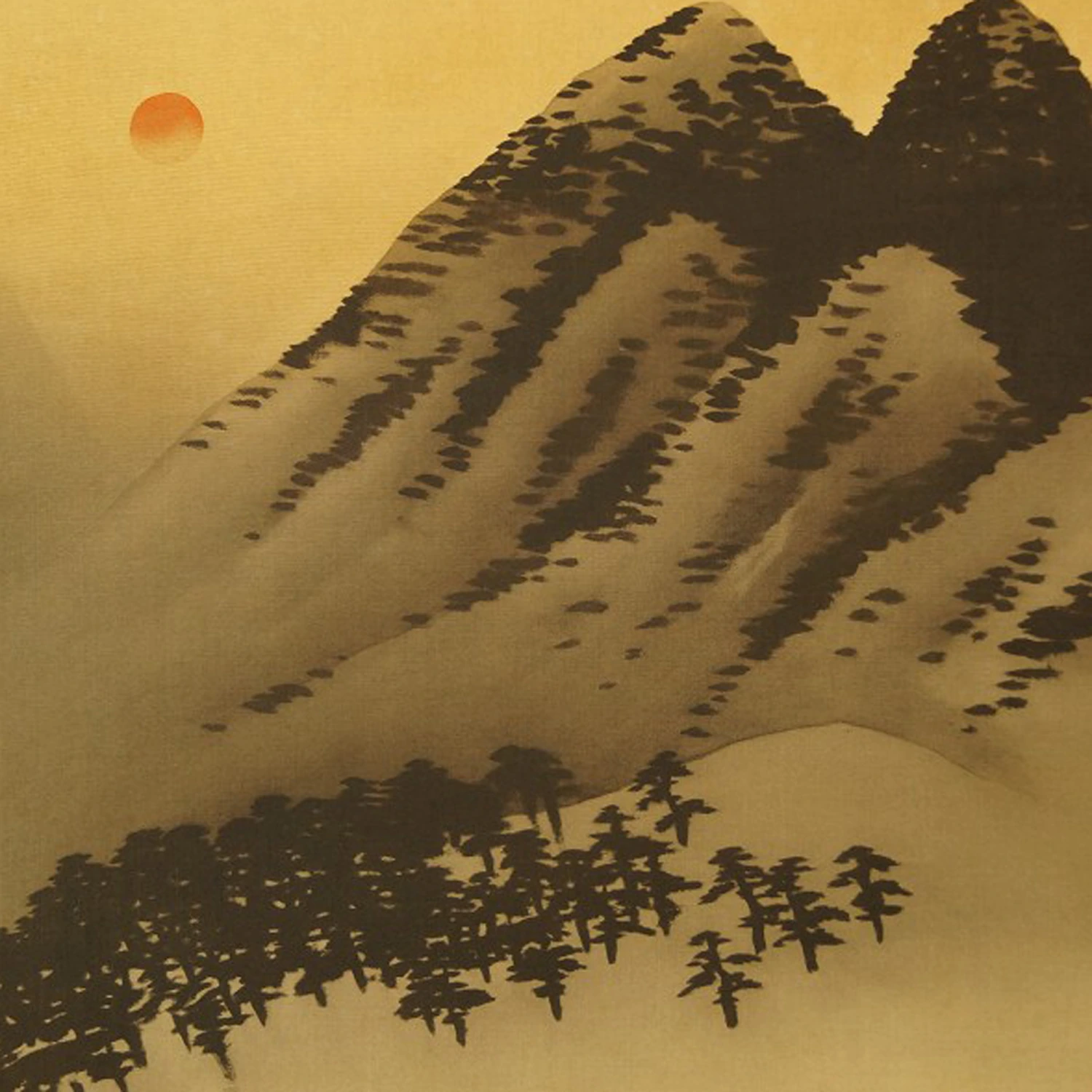
Mountain Range at Dawn
Kakemono, unique work, with box, 124 x 66 cm
Sold
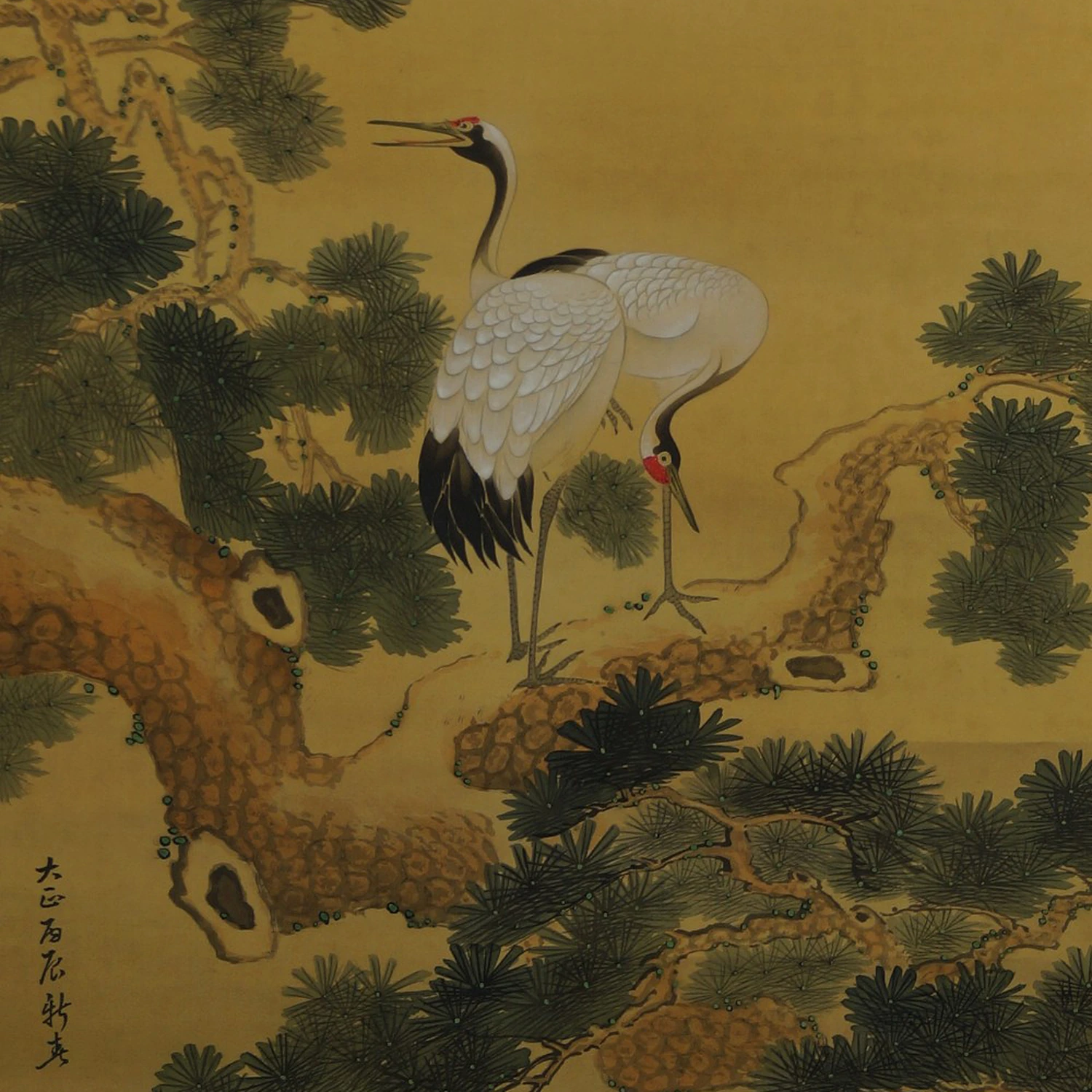
Cranes on the Pine
Kakemono, unique work, 190 x 60 cm
Sold
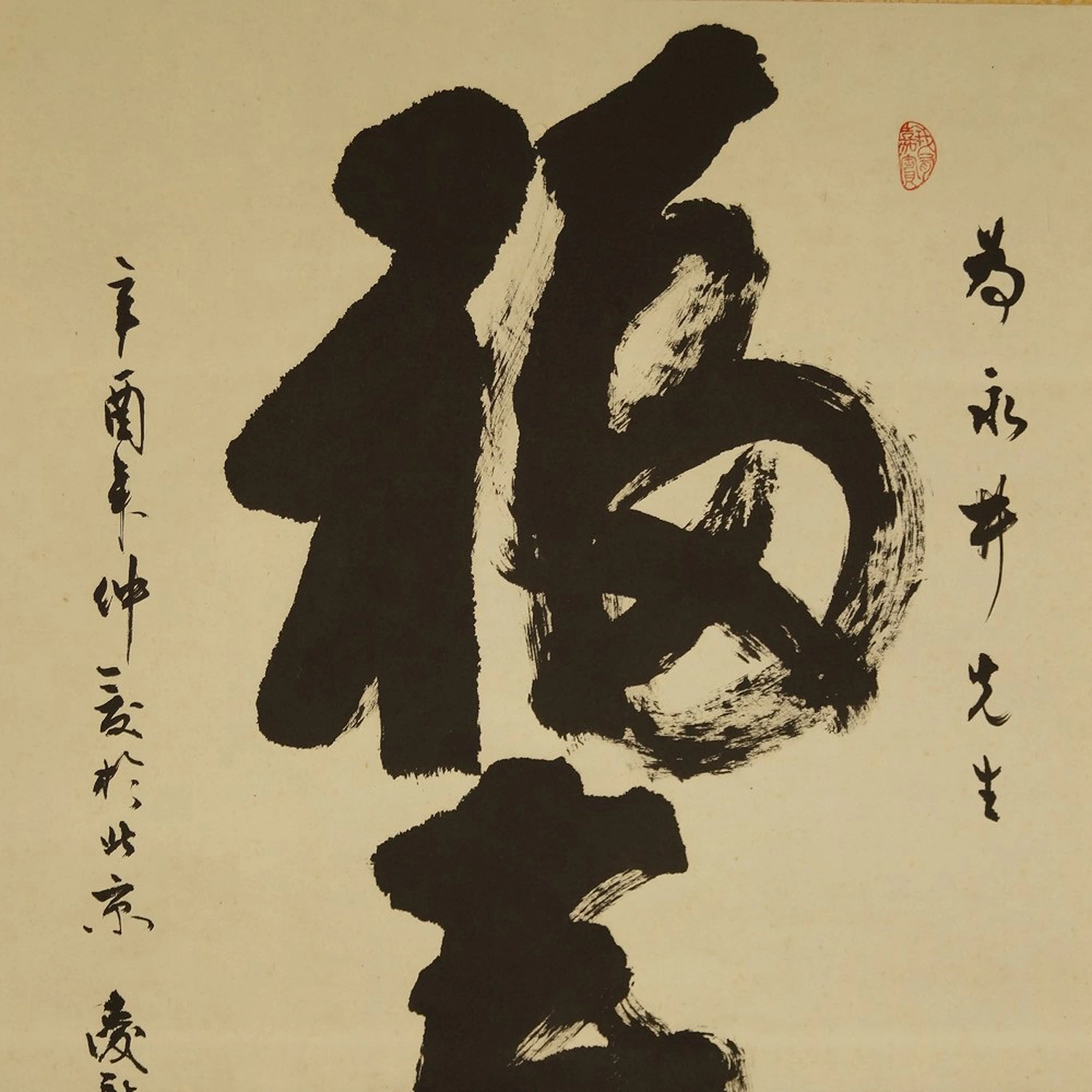
Calligraphy: Happiness and Long Life
Kakemono, unique work, 165 x 72 cm
Sold
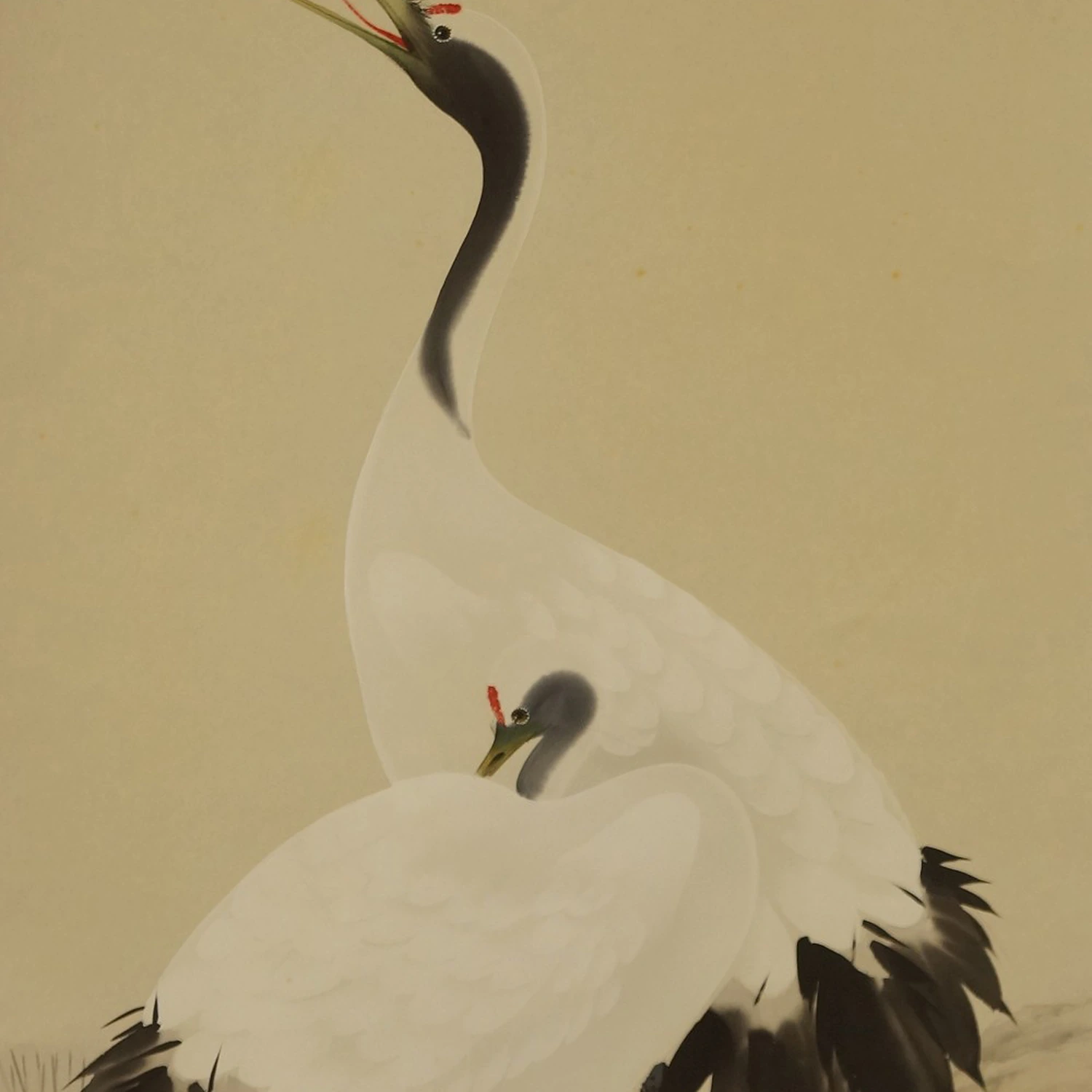
Pair of Cranes Before the Red Sun in Ink Tones
Kakemono, unique work, with box, 181 x 59 cm
Sold
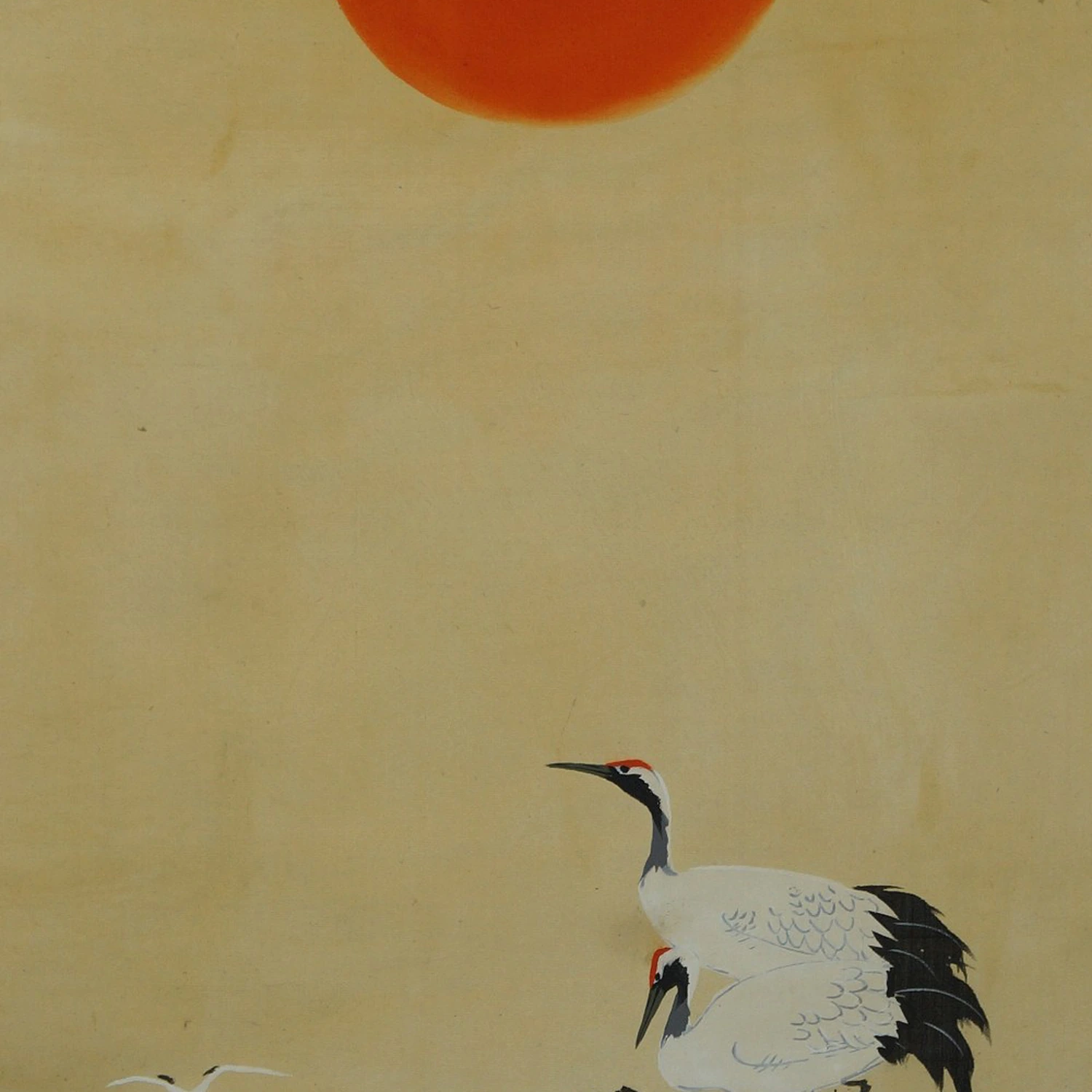
Cranes on the Rock Before the Red Sun
Kakemono, Silkscreen, 196 x 60 cm
Sold
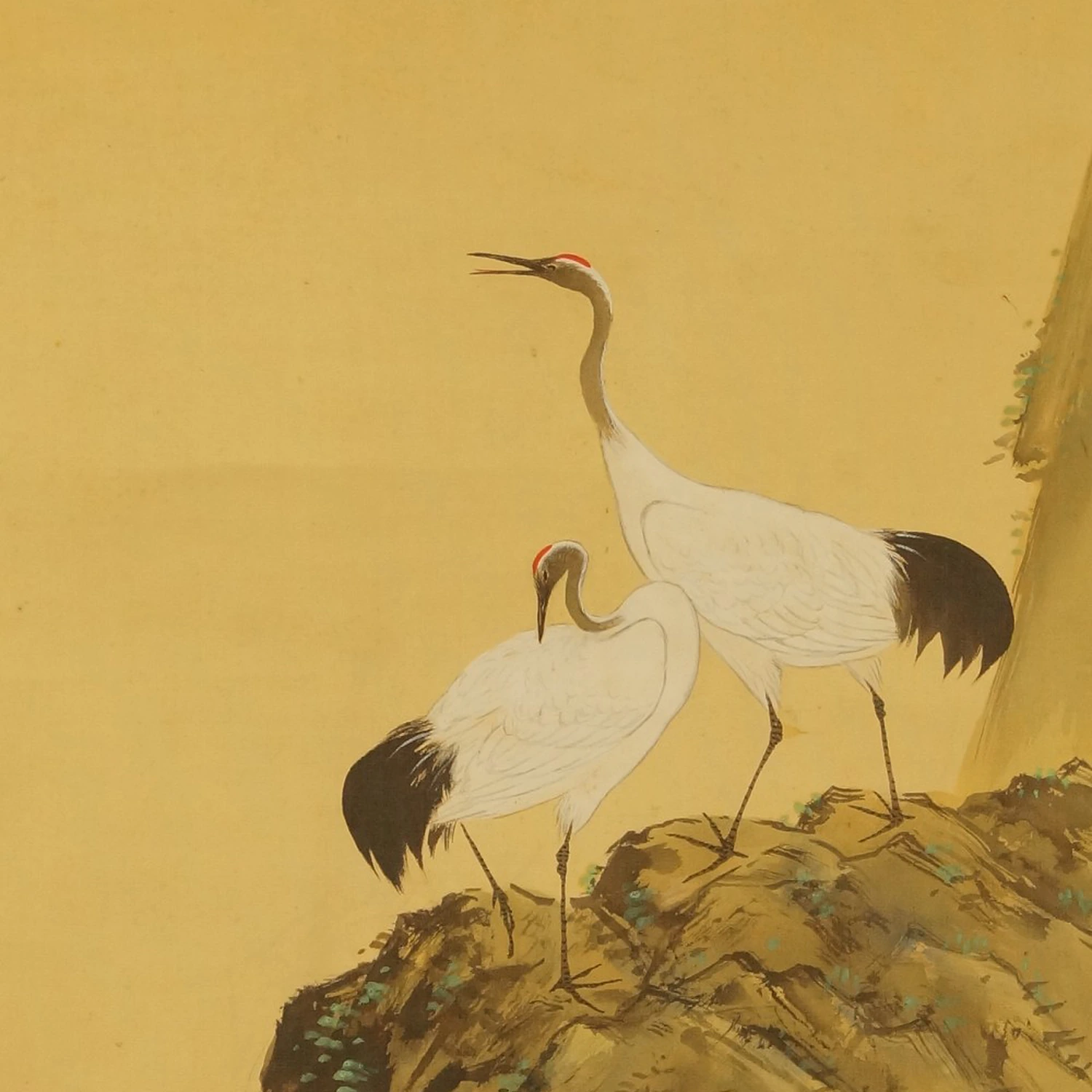
Cranes at Sunrise
Kakemono, unique work, 195 x 54 cm
Sold
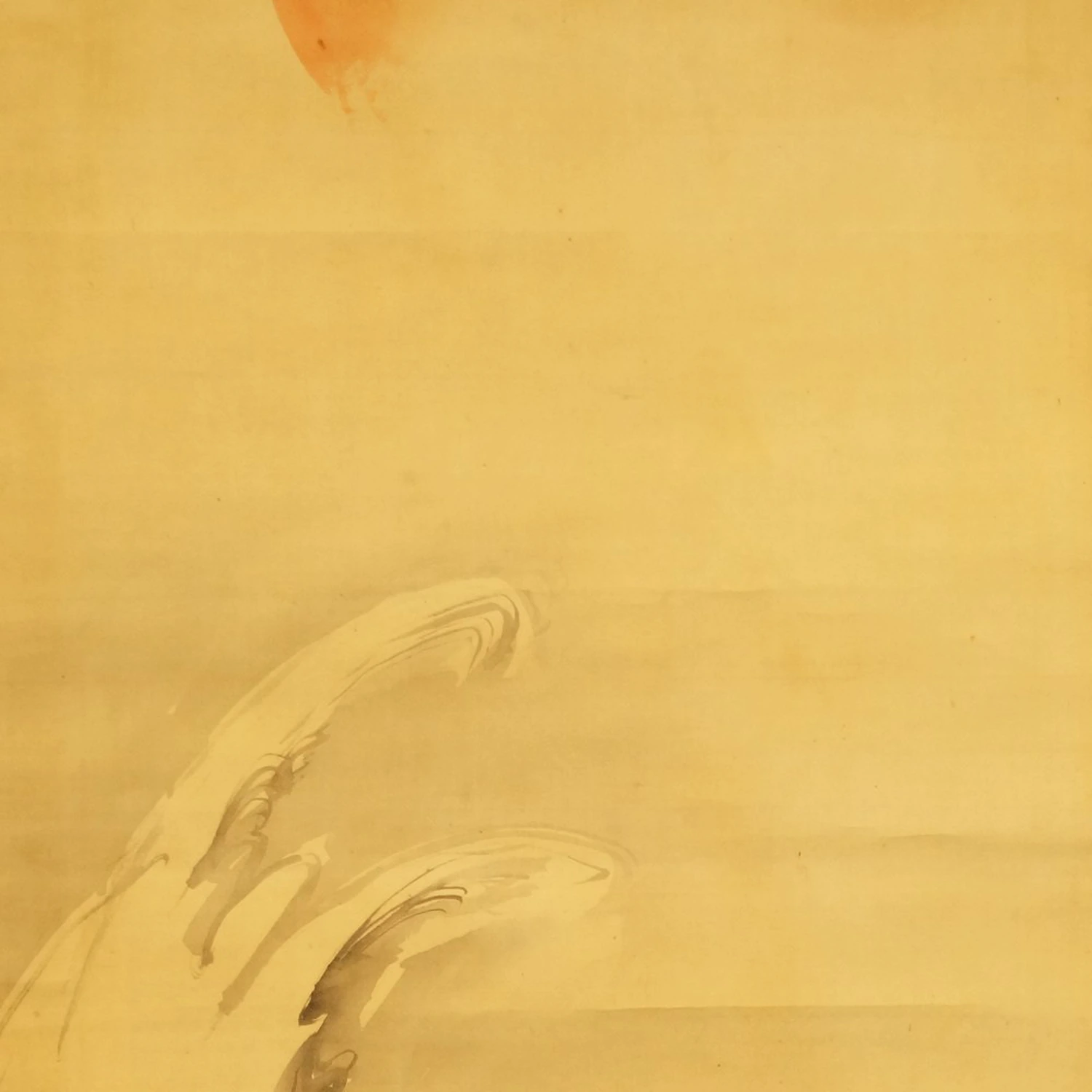
Ogata Gekkô
Rising Sun, Breaking Wave
Kakemono, unique work, 172 x 60 cm
Sold
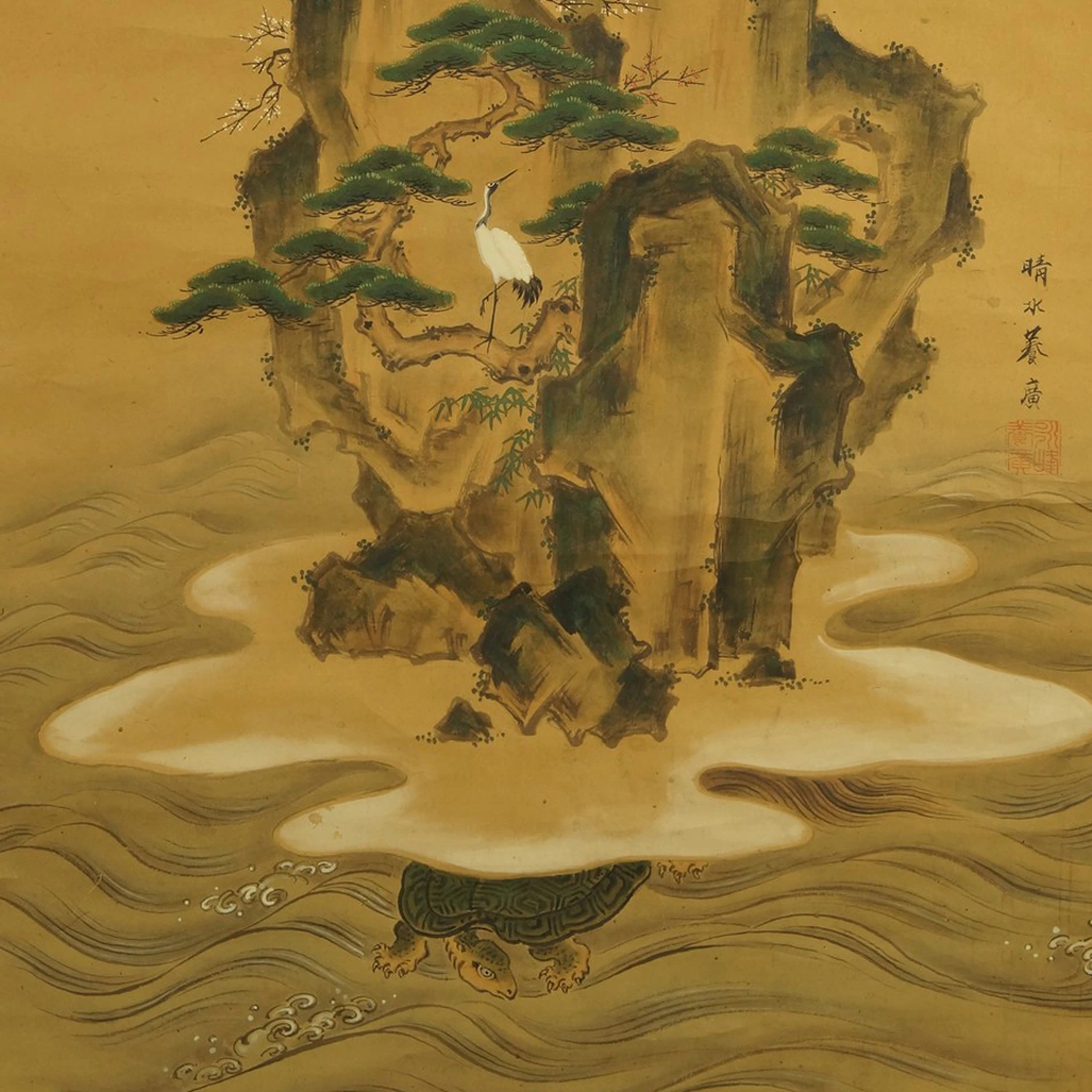
Mount Horai
Kakemono, unique work, 171 x 65 cm
Sold
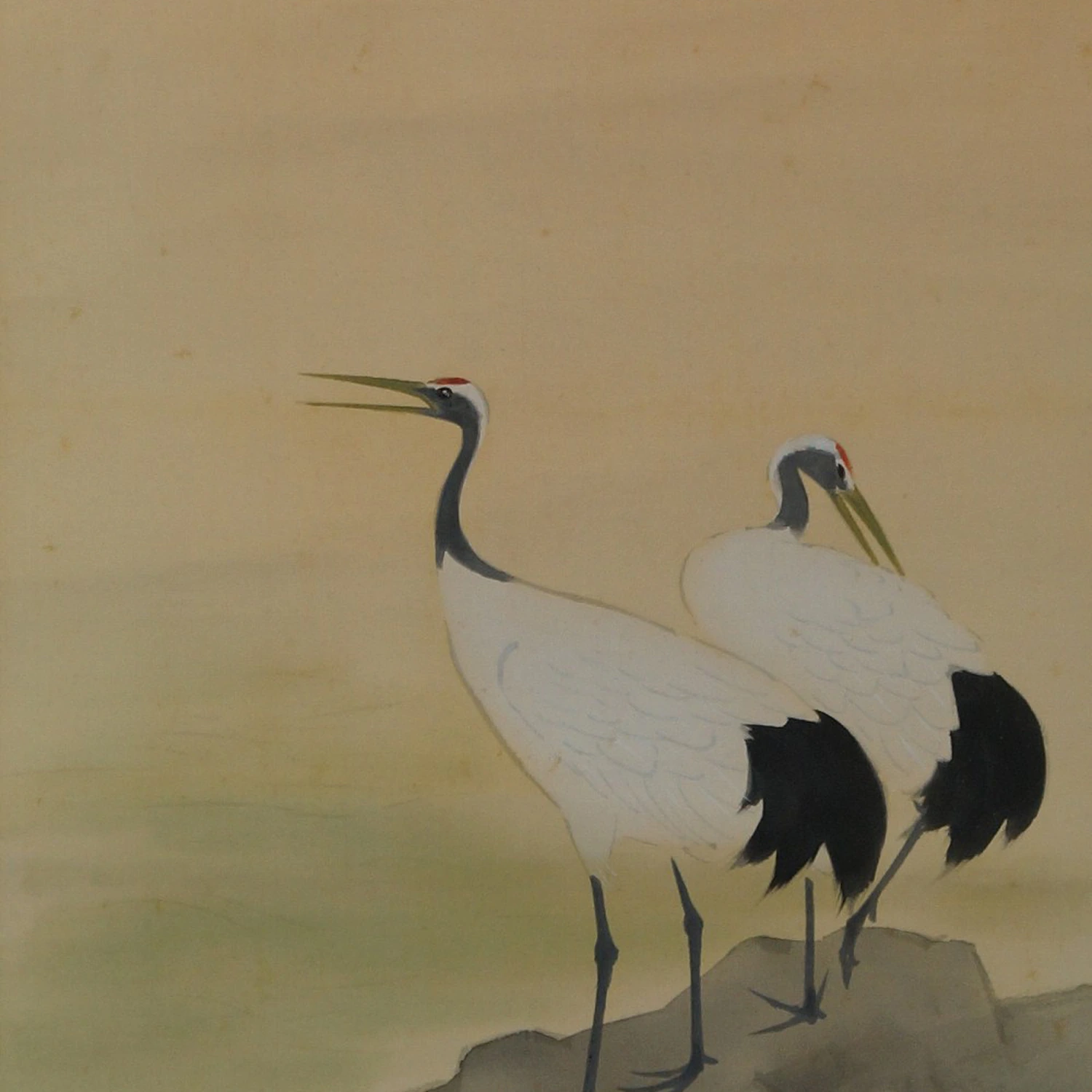
Pair of Cranes in Front of the Rising Sun
Kakemono, unique work, 220 x 56 cm
Sold
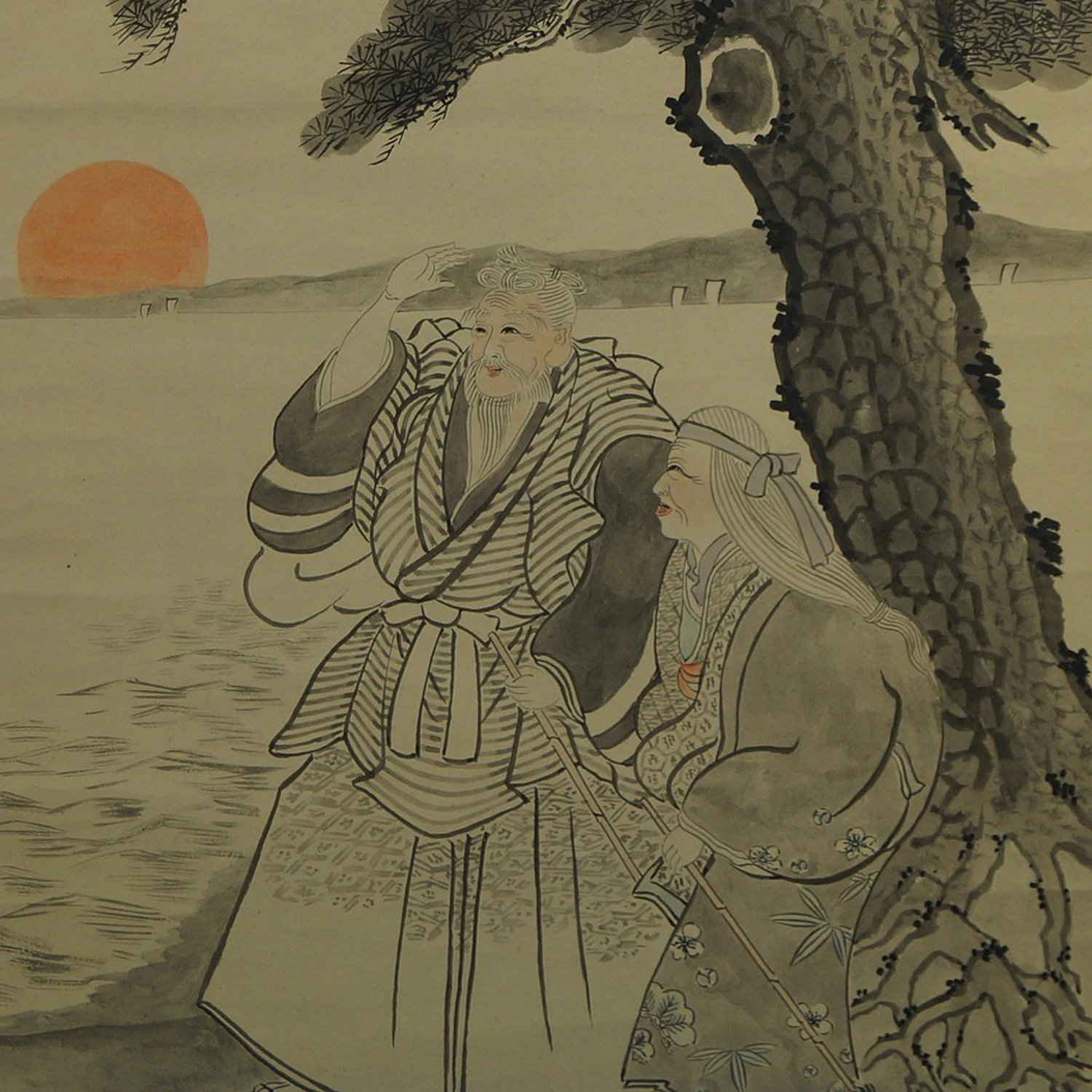
Shōnen
Takasago - Cranes in the Pine Above the Old Couple
Kakemono, unique work, 183 x 60 cm
Sold
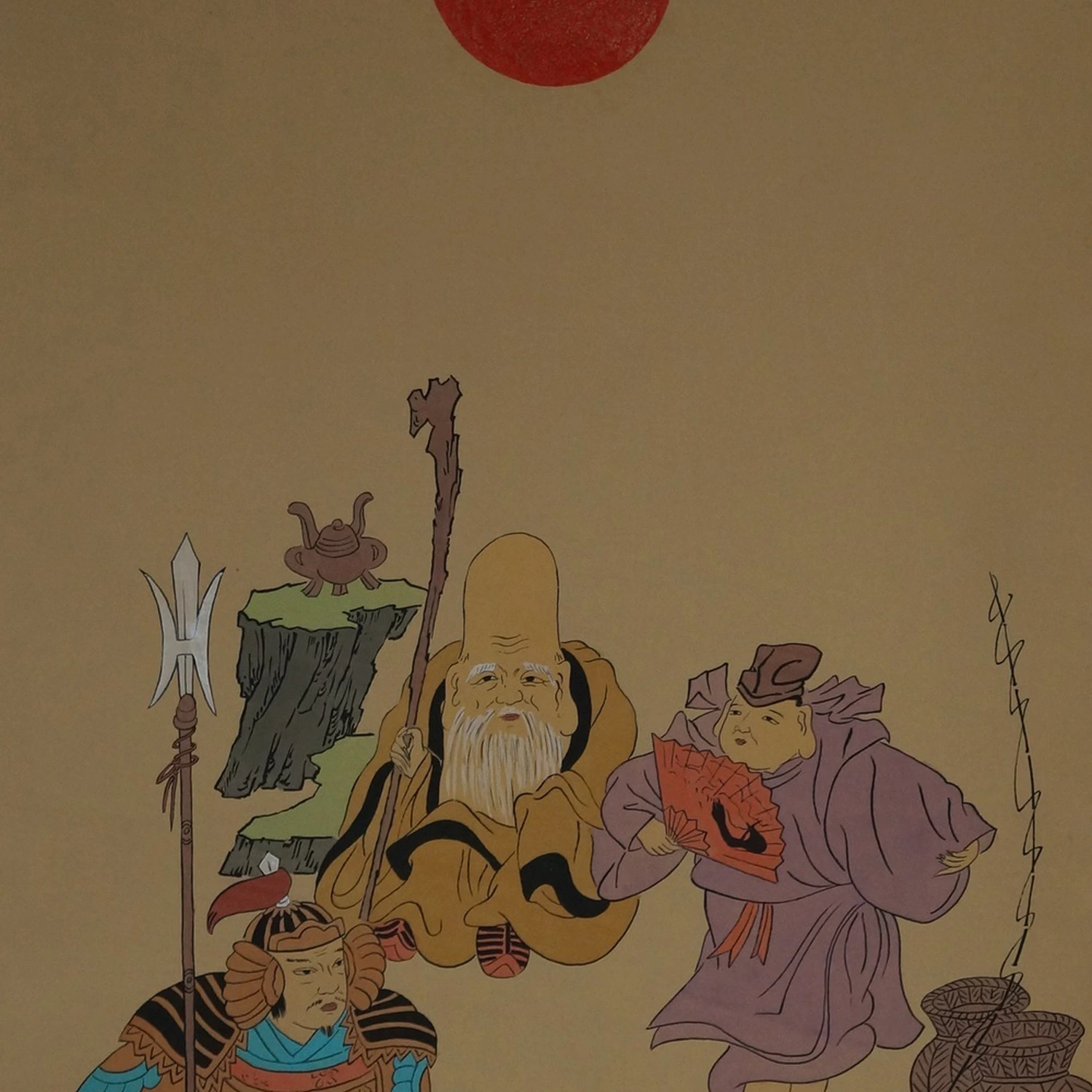
The Seven Lucky Gods Under the Red Sun
Kakemono, Silkscreen, 170 x 59 cm
Sold
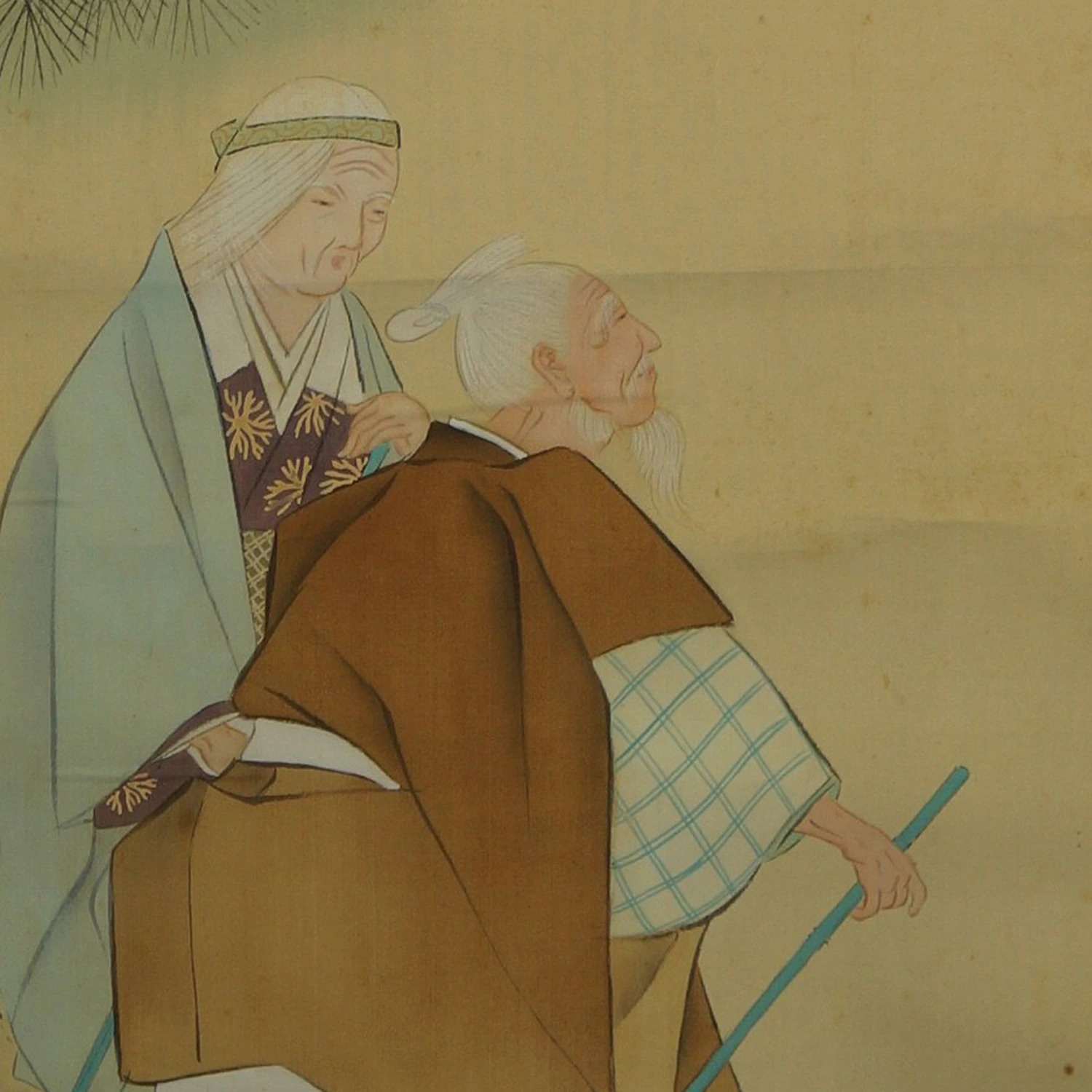
Hōgetsu
Takasago - Jō and Uba with Rake and Broom
Kakemono, unique work, 192 x 52 cm
Sold
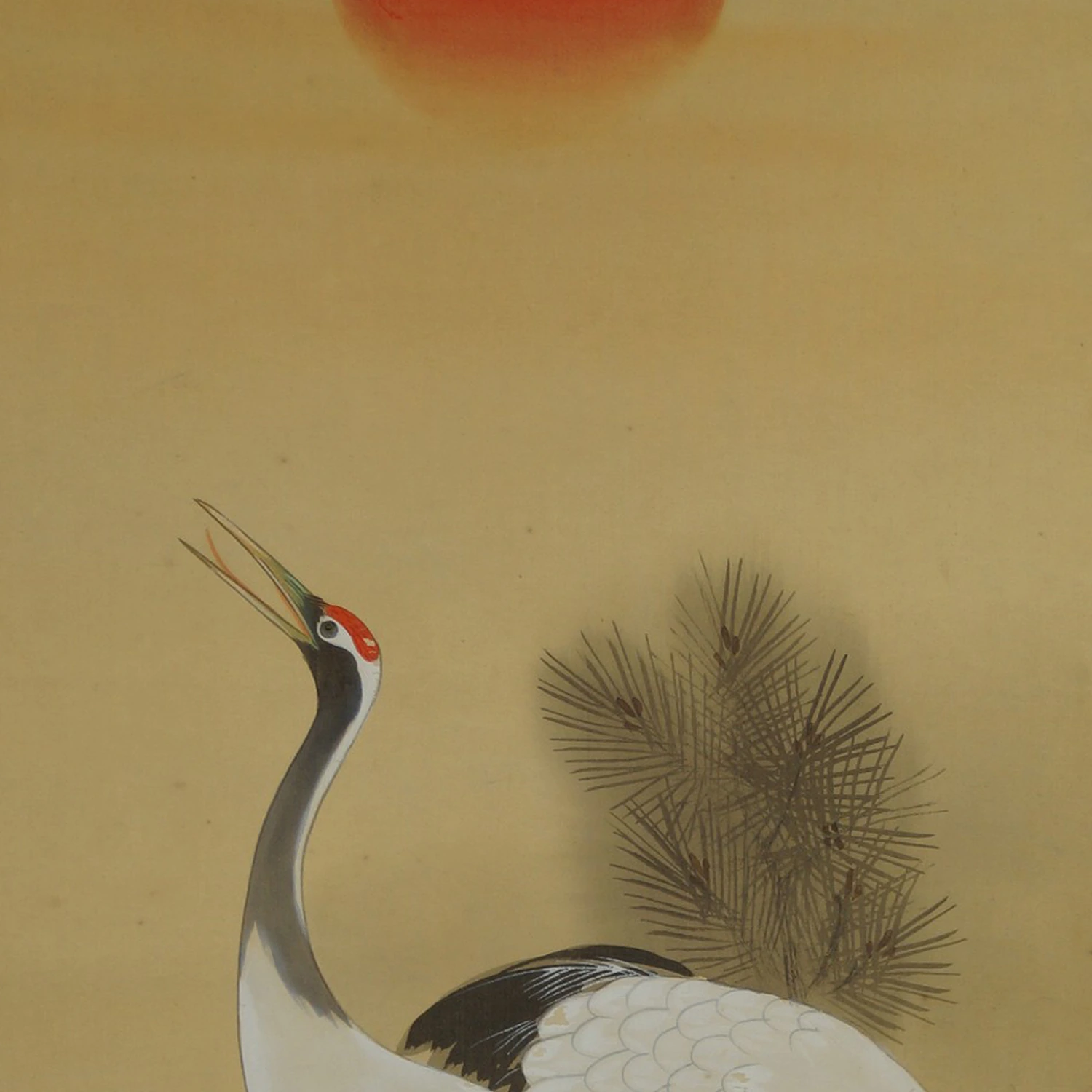
Pair of Cranes at Sunrise
Kakemono, unique work, 197 x 60 cm
Sold
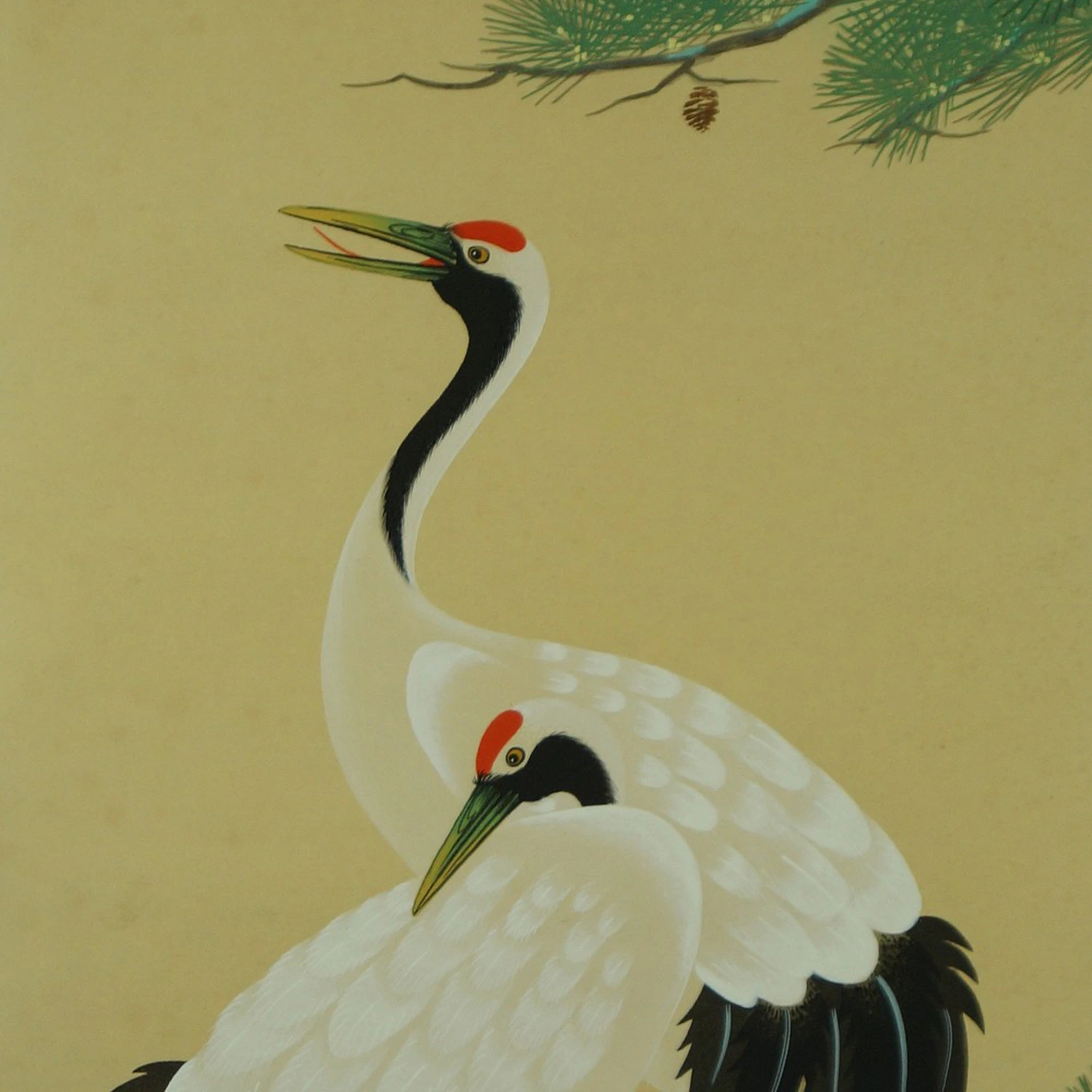
Kunihiro
Pair of Cranes in Front of the Red Sun in Bold Colors
Kakemono, unique work, 185 x 60 cm
Sold
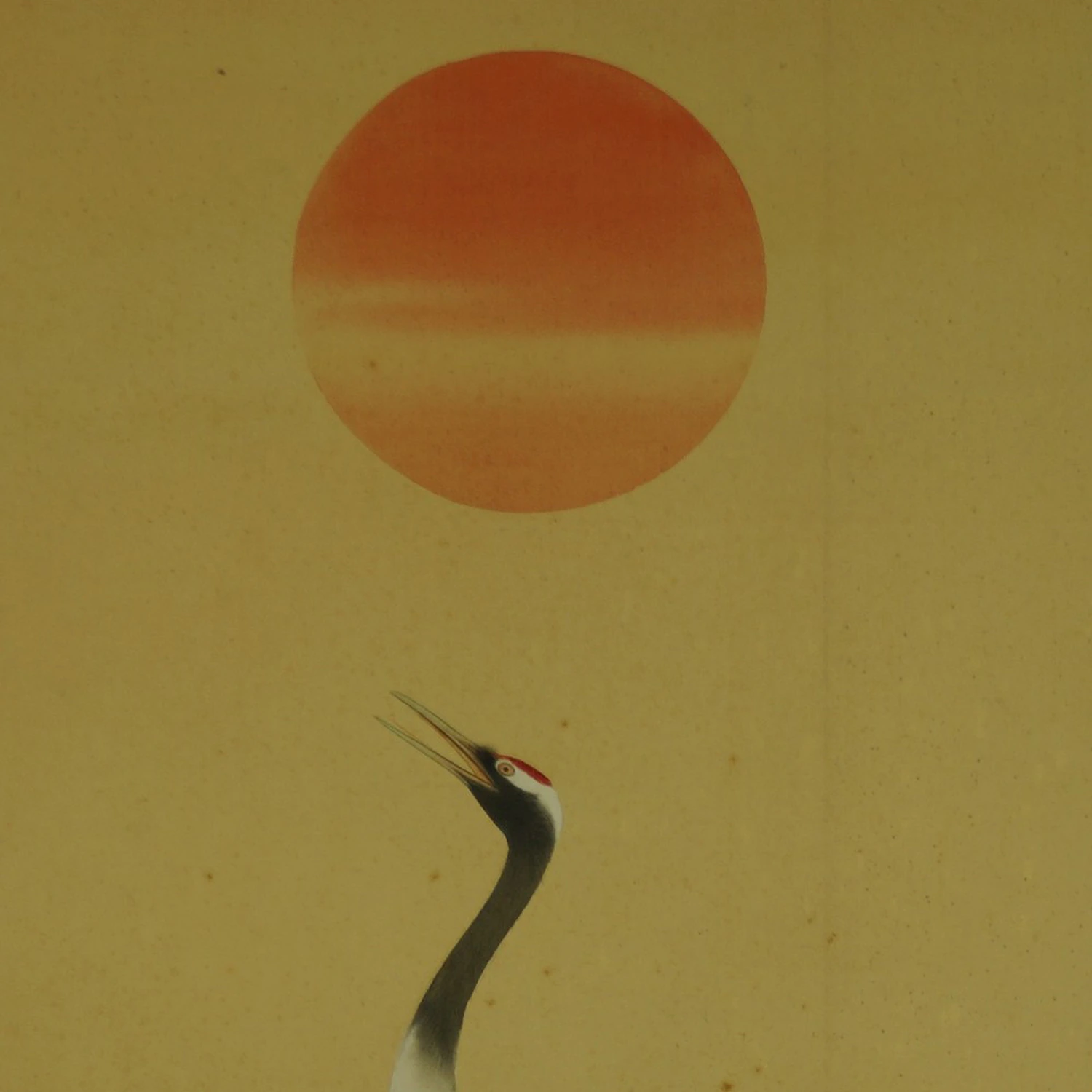
Crane Before the Rising Sun
Kakemono, unique work, 200 x 61 cm
Sold
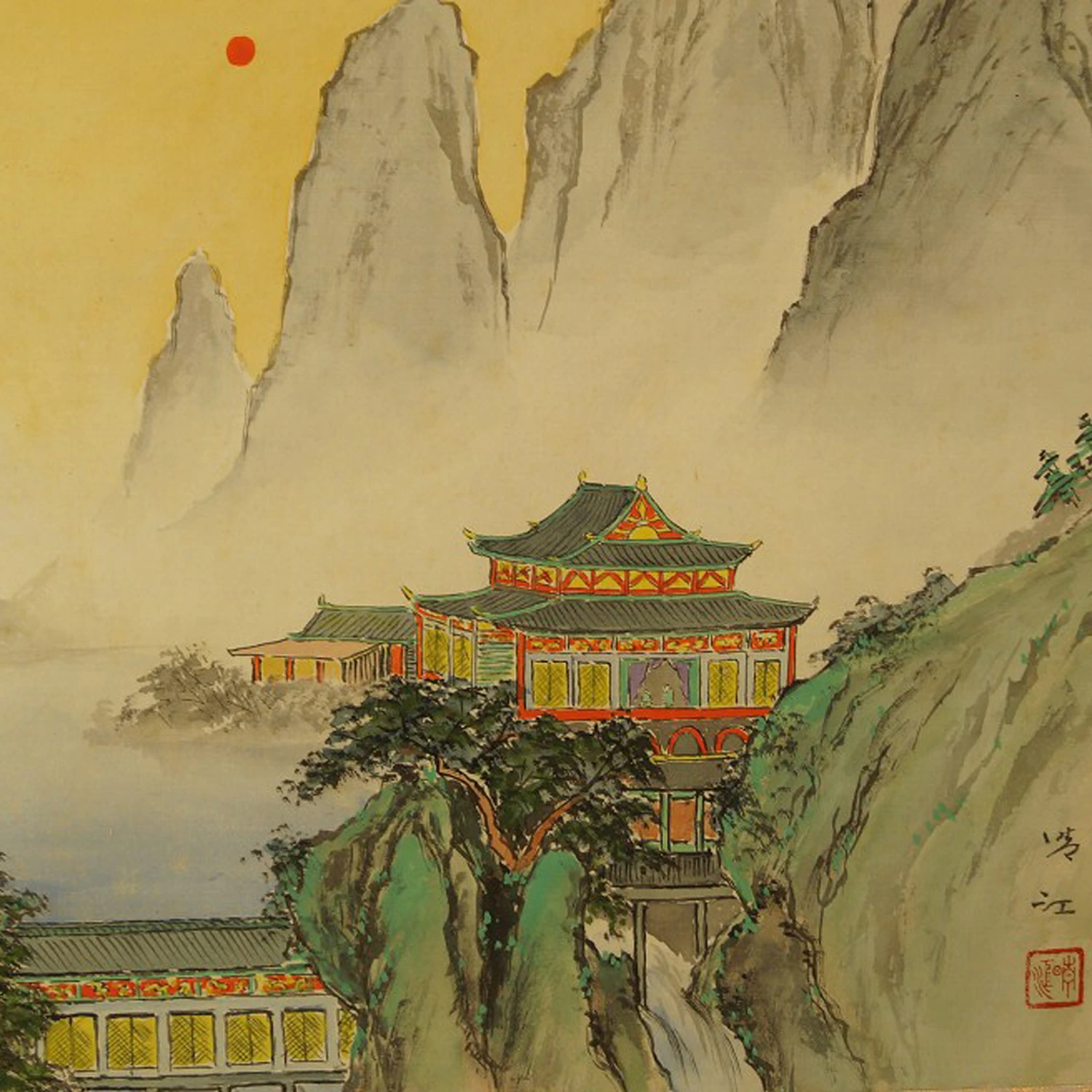
Mount Hōrai
Kakemono, unique work, with box, 132 x 70 cm
Sold
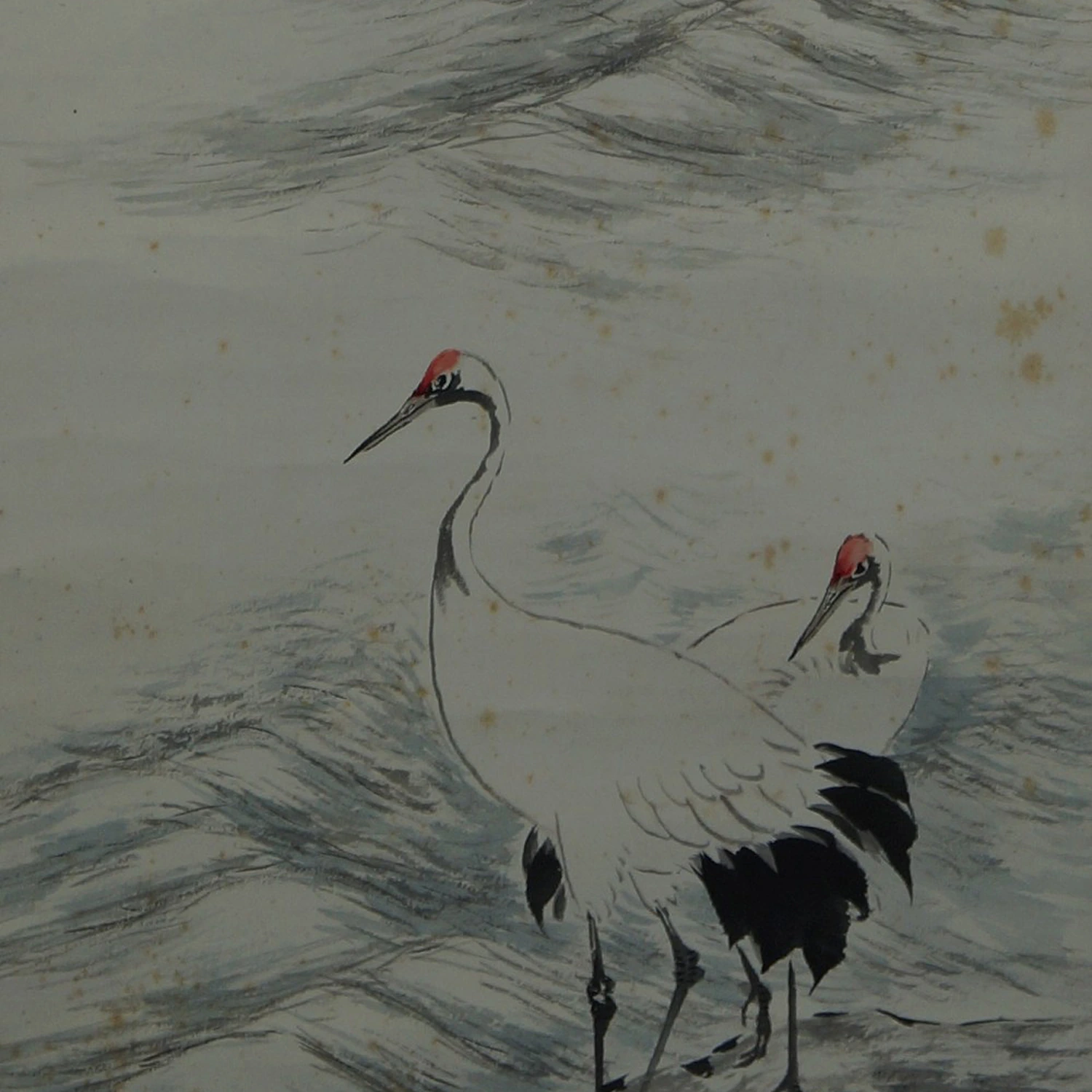
Unryō
Two Cranes in the Surf under a Red Sun
Kakemono, unique work, 200 x 50 cm
Sold
34 of 34 items shown
Shōgatsu: The Scroll That Opens the Year
In Japan a kakejiku is not a permanent wall decoration but a calendar made of silk and paper. In the tokonoma, the display alcove of the house, and in the tea room, the scroll changes with the season. Japanese kakejiku dealers therefore keep a separate section alongside spring, summer, autumn and winter: Shōgatsu (正月), the New Year. It covers the days from the end of the year to about mid-January. A New Year kakemono is thus the scroll with the shortest display time in the whole year – and the most festive one.
Kyokujitsu: The Rising Sun as the Leading Motif
The most important New Year sign is the rising sun, kyokujitsu (旭日) or hinode (日の出). It alludes to hatsuhinode (初日の出), the first sunrise of the year, which people in Japan still wait for on the coast or on a mountain. Painting shows it in a few recurring forms: as a red disc rising over foaming surf or stylized waves, as a sun breaking free of the morning mist above a quiet landscape, or as a red dawn over a mountain range. Mount Fuji with the rising sun belongs here as well; the view of the sunrise from the summit is called goraikō.
Cranes, Pine, Hōrai and the Lucky Gods
The sun rarely stands entirely alone. A pair of cranes flying across the sea before the red disc, or perched on a pine and stretching toward it, links the start of the year with the wish for a long life – the proverb grants the crane a thousand years. Just as common are the pine in the first light, sparrows in the morning sun and the old couple of Takasago (高砂) on the seashore with the sun rising above them. Mount Hōrai, Hōraisan (蓬莱山), the legendary isle of the immortals in the eastern sea, is a New Year motif in its own right. The Seven Lucky Gods, shichifukujin (七福神), appear at New Year as a group. In calligraphy, fukuju (福寿), good fortune and long life, stands as a wish for the coming year.
When to Hang the New Year Scroll
Japanese dealers assign the seasons to months: spring from March to May, summer from June to August, autumn from September to November, winter from December to February. Seasonal scrolls are usually hung about a month before the season itself, so that the picture runs ahead of the garden. The New Year scroll follows a tighter rhythm because it is tied to a date: it goes up in the last days of December and stays until about mid-January. If you want to feel the change clearly, show a winter picture in December first and replace it with the rising sun only at the turn of the year.
What Makes a Picture a New Year Picture
What counts is not the main subject but the sign that marks the beginning of the year. A crane before the rising sun is a New Year picture; a crane on its own is not. In the same way, only the sun on the horizon, the red of dawn or a title such as kyokujitsu on the box turns waves, pine or Mount Fuji into a New Year motif. A red disc standing freely in the sky is not enough; it has to be clear that the sun is rising. If a picture also carries a distinct seasonal marker such as snow, plum blossom or red maple leaves, that marker decides: a sun over a snowy landscape is a winter picture, not a New Year one.
Celebratory Pictures: Popular at New Year, but Bound to No Date
Many motifs associated with the Japanese New Year are listed by dealers as celebratory pictures, keiji-gake (慶事掛け), or as year-round pictures, nenjū-gake (年中掛け). These include crane and tortoise on their own, the pine without the sun, the Three Friends shōchikubai (松竹梅), the Takasago couple without a sunrise, Mount Fuji without any further sign and the Red Fuji as well. Individual lucky gods such as Ebisu, Daikoku or Jurōjin belong here too, along with Daruma, tiger and dragon, and Zen calligraphy without a seasonal word, such as the single character kotobuki (寿). These pictures may be hung at New Year and often are in Japan. They are not limited to it, however, and are therefore not listed here – on this page you will only find pictures with a New Year sign of their own.
Alternating with Winter and Spring
The New Year scroll sits in the middle of winter and interrupts it for a few weeks. One possible sequence on the same wall: a snowy landscape or nandina with red berries in December, the rising sun at the turn of the year, another winter picture from mid-January, such as narcissus or a bird on a snowy branch, and in February the first plum blossom as a herald of spring. If you own only a single New Year scroll, it makes all the stronger an impression because it rests in its box for eleven months of the year.
Storage and What Collectors Look For
Because the New Year scroll hangs only briefly, it spends most of the year rolled up. Roll it loosely and without tension and keep it in a box made of kiri (paulownia) wood, in a place without radiator air and without strong swings in humidity; as a rule of thumb, about 50 to 60 percent relative humidity is ideal. In January in particular, dry heating air is a scroll's worst enemy, so it does not belong above a radiator. When buying, it is worth checking whether the sun can really be read as rising: horizon, waves, morning mist or the title on the box will tell you.