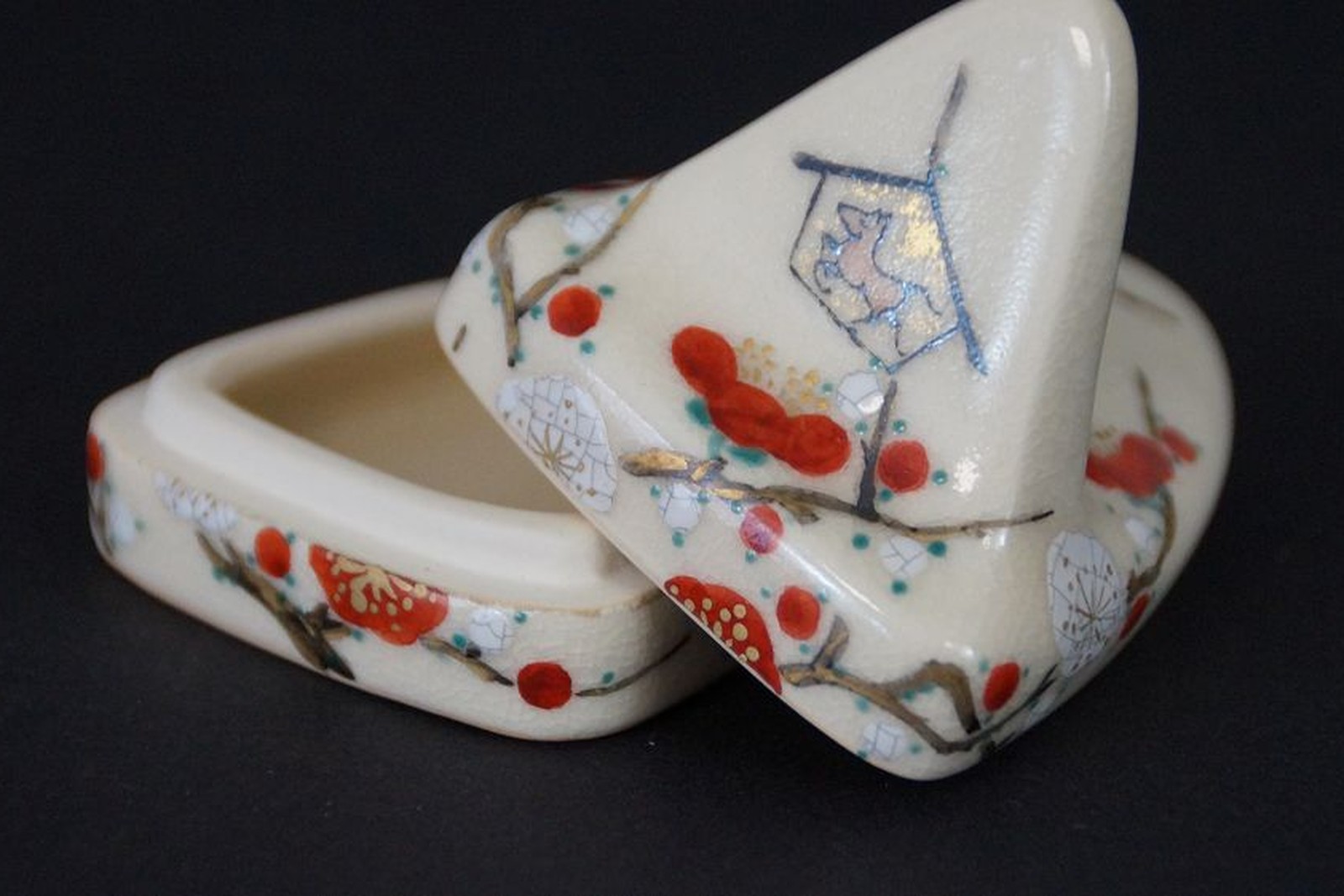
Of all the things used in a Japanese tea room, this one is the smallest: a container that fits in the palm of the hand and is often no bigger than a ripe plum. It holds only a few morsels of incense, and its use lasts barely a minute. Even so, guests ask to see it up close, and even so, enthusiasts in Japan once drew up rankings for it, as if for sumo wrestlers.
A kōgō is a practical object with a precise place in the course of a tea gathering, and at the same time a piece in which season, craftsmanship, and humor can be read. Once you understand when it appears, what it contains, and why it so often looks like a piece of fruit, you also understand why the smallest container in the tea room receives so much attention.
What is a kōgō?
A kōgō (香合), also called kōbako, is a small lidded container for incense. The characters mean roughly "fragrance" and "joined together," referring to two halves that close to form a vessel. Such incense containers are made of ceramic and lacquer, more rarely of wood, bamboo, metal, or shell. They count as tea utensils because incense is no mere accessory in Japanese tea culture: it goes to the charcoal that heats the kettle.
A kōgō has nothing to do with an incense stick holder, and nothing is burned in it. The container merely stores the incense. Many kōgō measure around five centimeters, and this very format appeals to potters and lacquer masters: on so small a surface, a single idea has to be enough.
The moment of the kōgō: laying the fire and viewing
At a formal tea gathering, the host lays the charcoal fire in front of the guests. This procedure is called sumi-temae. For it, the host carries in a container of charcoal along with fire chopsticks, a feather brush, kettle rings, a rest for the kettle, and the kōgō. Once the charcoal is in place, a little incense is added near the embers. The fragrance rises slowly while the water in the kettle heats, and so it is among the guests' first impressions, long before the first bowl of tea is served.
Then comes the moment that sets the kōgō apart from a mere receptacle: the guests ask to examine it. Often three pieces of incense lie inside, two of which go into the fire; the third stays in the container as it is passed around. The guests take the vessel in their hands, open it, look at its form, glaze, and interior, and ask where it comes from.
If the laying of the fire is omitted, as at a larger tea gathering, the kōgō is instead displayed in the waiting room or in the tea room itself, on a small silk cloth or a paper rest. It then signals that the host has left out the sumi-temae, while still giving the guests a chance to look at it. In this way it can stand in the alcove, the tokonoma, alongside the scroll and the flowers.
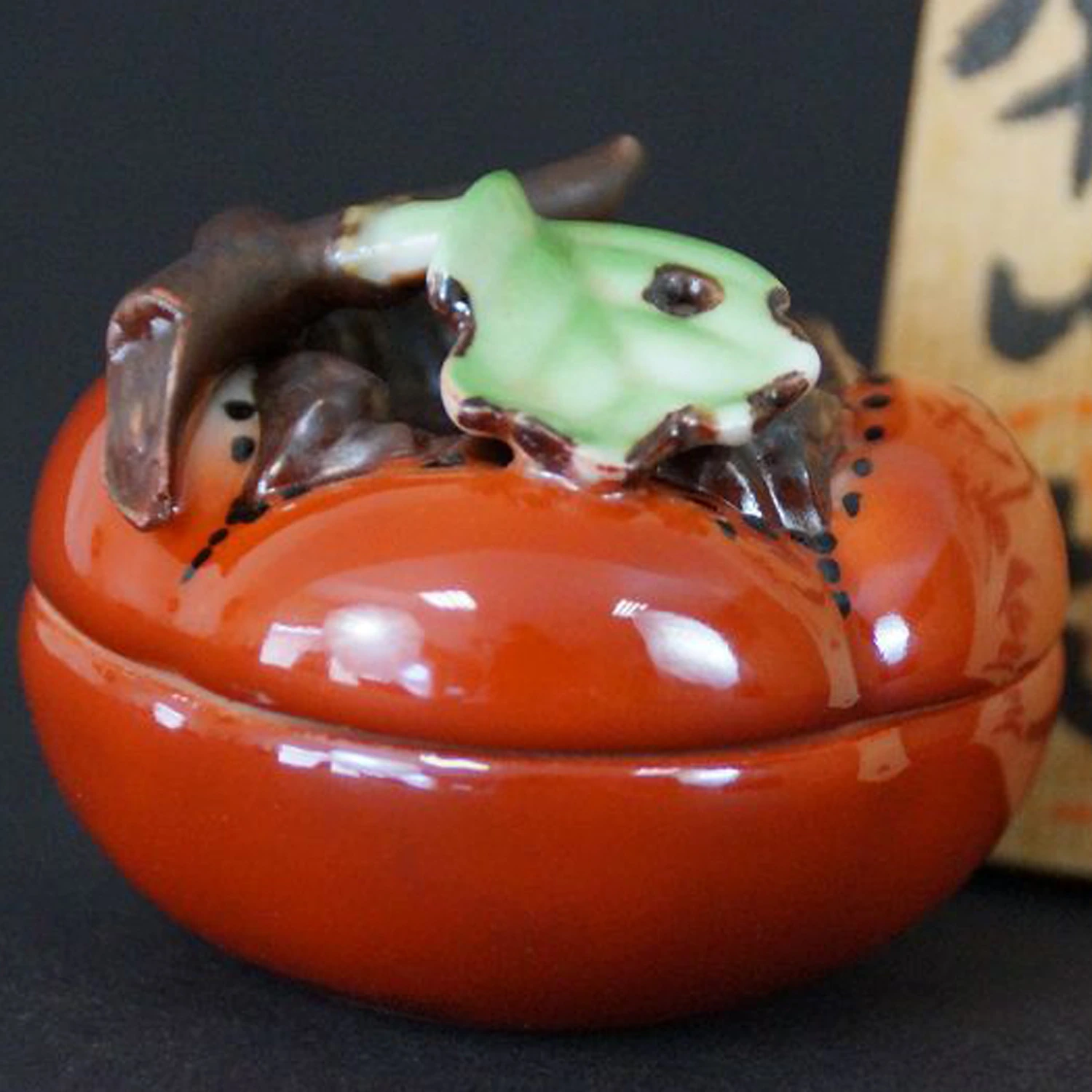
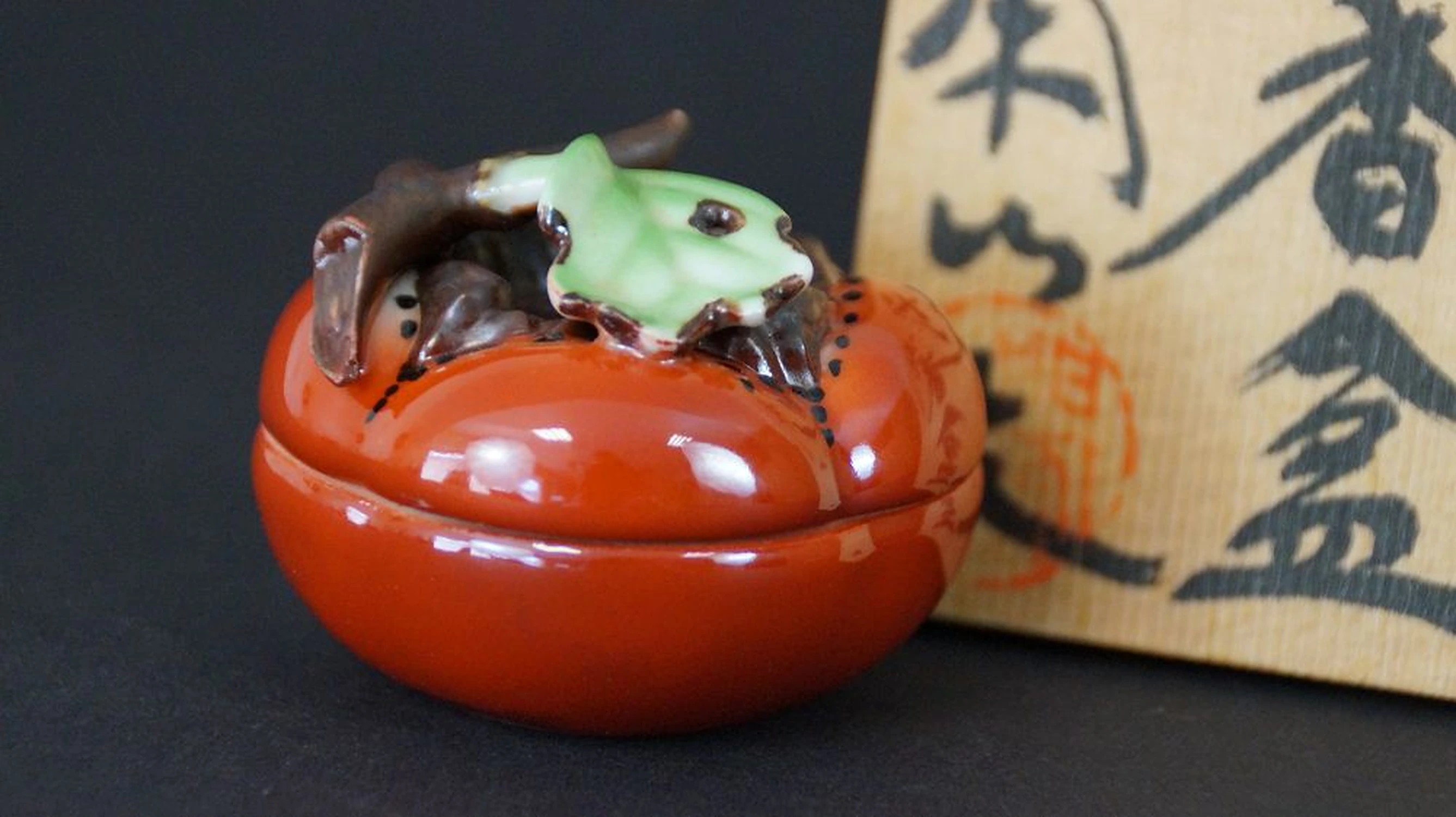
Ninomiya Kanzan
Persimmon Incense Container by Ninomiya Kanzan
Incense Container, unique work, with box, 4,5 x 5,5 cm
€260.00
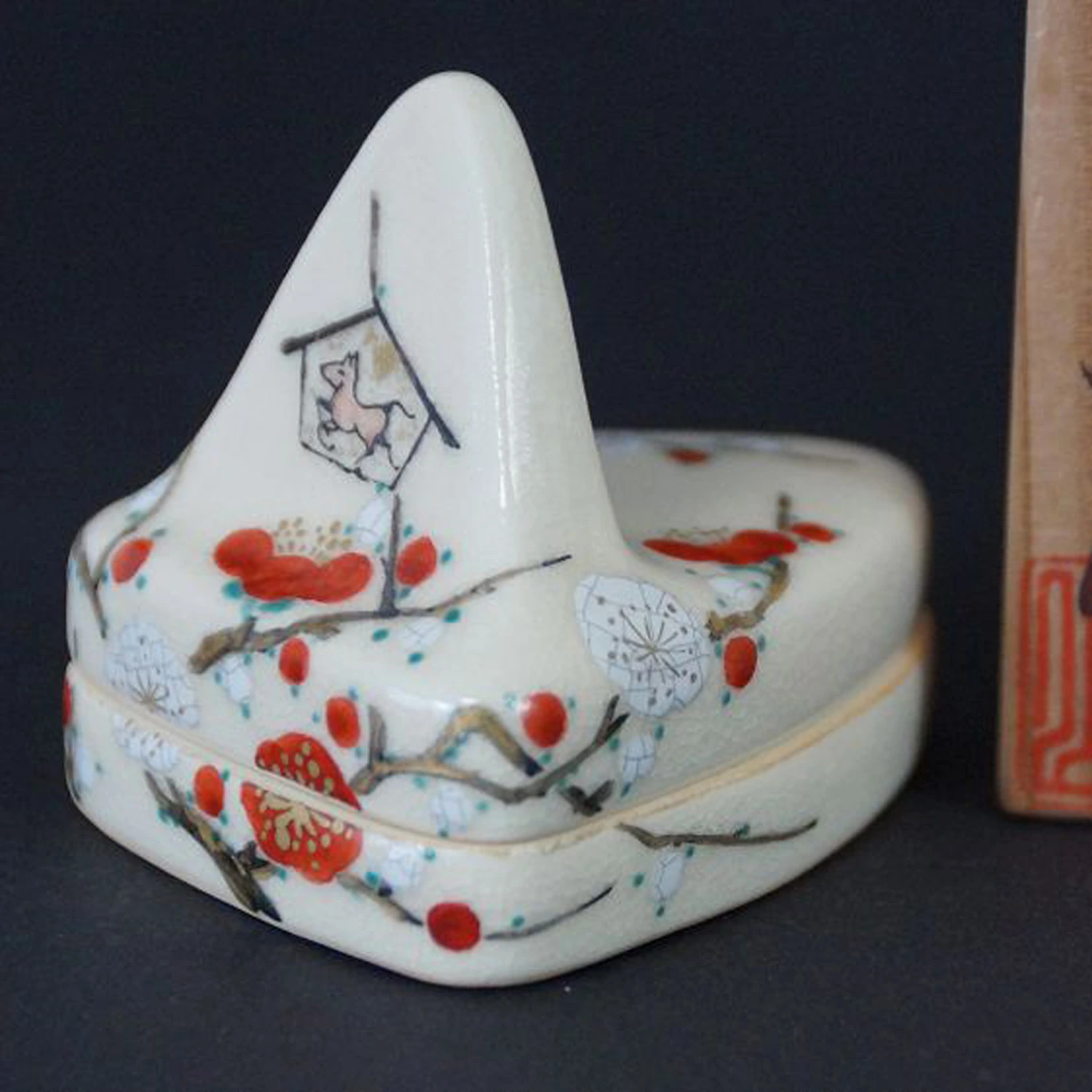
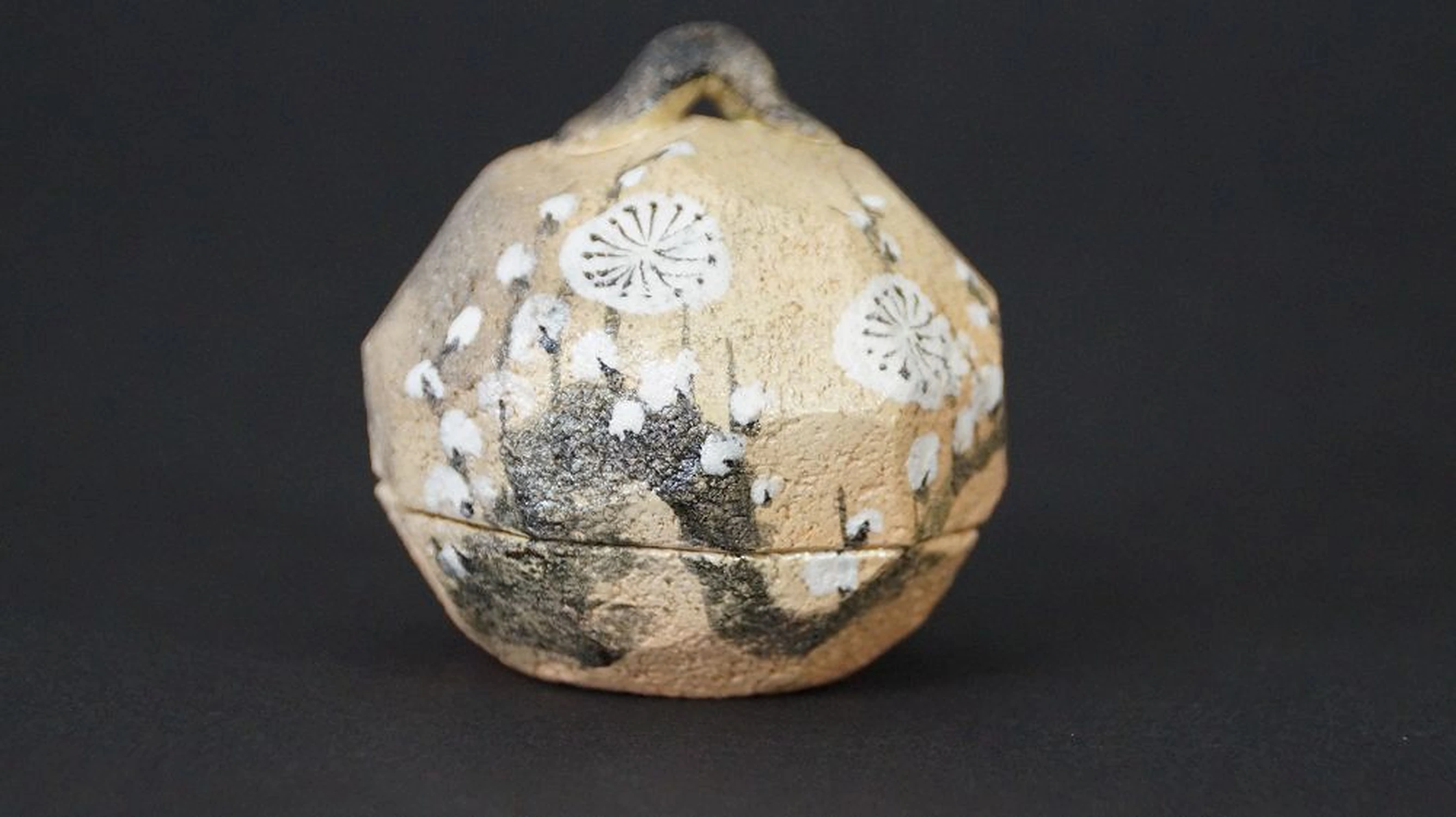
Okada Gyōzan
Incense Container with Plum Blossoms by Okada Gyōzan
Incense Container, unique work, with box, 6 x 5,5 cm
Sold
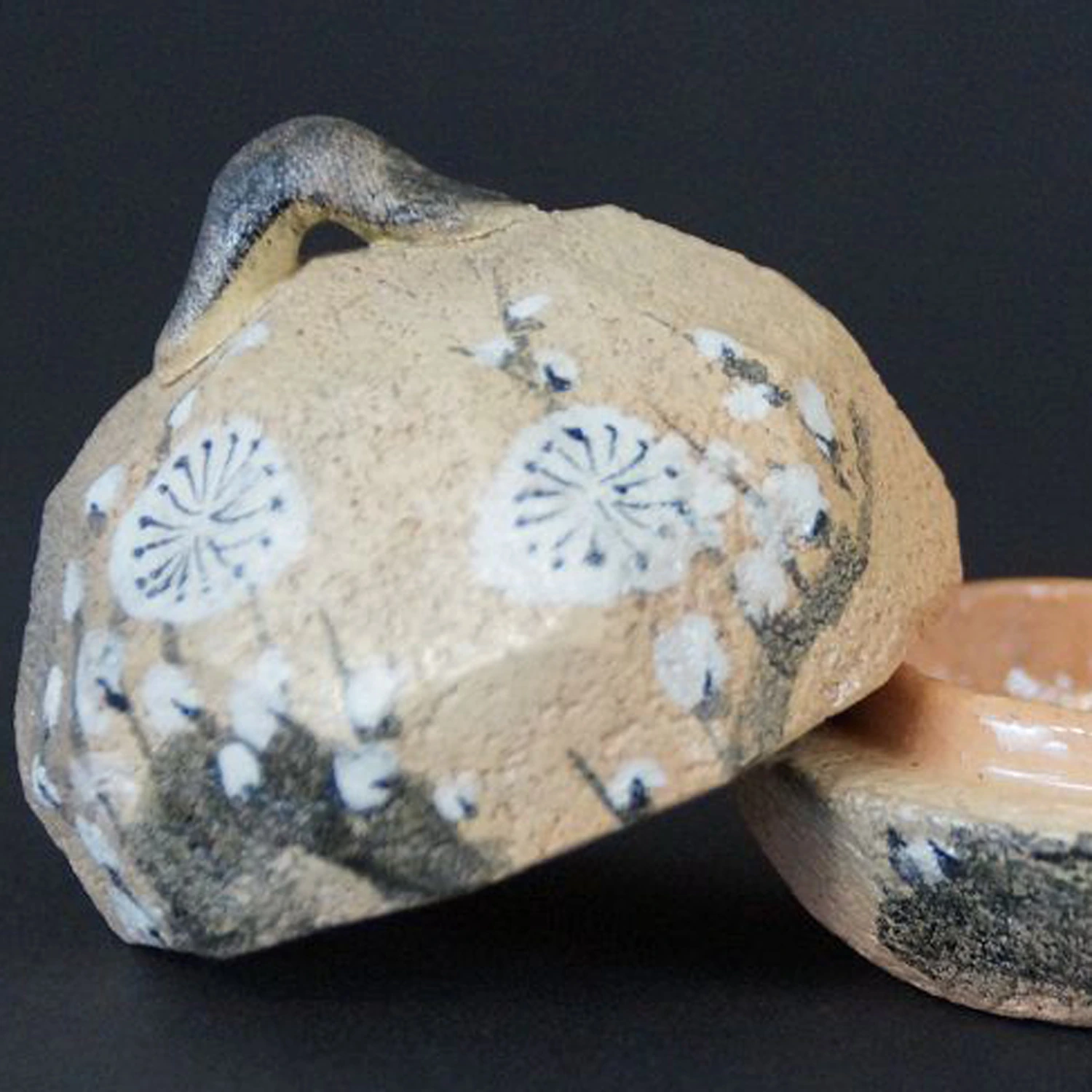
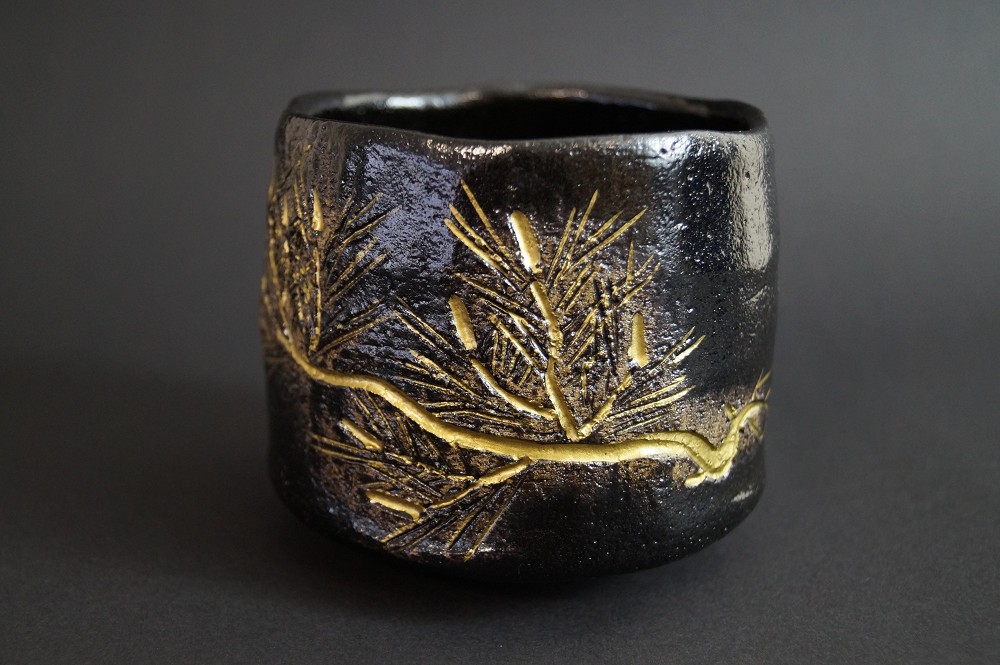
Sasaki Shōraku
Raku Ware Incense Container with Plum Blossoms by Sasaki Shōraku
Incense Container, unique work, with box, 6 x 6 cm
€230.00
Two seasons, two kinds of incense
The tea room divides the year into two halves, and the kōgō follows them. From November to April, the fire burns in the ro, the hearth sunken into the floor. In this season nerikō is used, a kneaded incense of several blended and bound fragrant materials, kept in containers of ceramic or porcelain. From May to October, the fire stands in the furo, the portable brazier. Then kōboku is used, small pieces of fragrant wood such as sandalwood or agarwood, in containers of lacquer or wood.
The reason given is that the moisture of nerikō would harm lacquer. There are also containers for the whole year, above all of shell, metal, or ivory. For the eye, the rule is simple: earthy or glazed means winter, gleaming lacquer with sprinkled gold means summer.
| Season | Fire | Incense | Typical container material |
|---|---|---|---|
| November to April | ro (in the floor) | nerikō, kneaded | ceramic, porcelain |
| May to October | furo (portable) | kōboku, fragrant wood | lacquer, wood |
| all year | both | both | shell, metal, ivory |
From sleeve box to tea utensil
Incense reached Japan around the 6th century and first served Buddhist ritual, for which larger vessels were also used. The forerunners of today's kōgō are smaller, however: sode-kōgō, containers of about five centimeters that people carried with them in daily life. The word itself is attested as early as the 15th century: temple records from 1436 list a kōgō among the gifts.
The first containers to enter the tea room were lacquer pieces from China, in keeping with the early taste for Chinese treasures. Over time, Korean and Japanese pieces joined them, and it was Japanese ceramics that truly opened up the world of forms. To this day a distinction is made between karamono, pieces from the continent, and wamono, pieces from Japan.
Turtles from southern China and the ranking of 1855
The ceramic kōgō received its strongest impulse in the 17th century. In the Kan'ei era (1624–1644), brightly glazed containers from southern China reached Japan, so-called Kochi-yaki, among them the famous large turtle. They remain among the most highly prized kōgō today. Blue-and-white pieces from Jingdezhen and celadon joined them. In the same century, Nonomura Ninsei set new standards for Kyoto ceramics with elegant courtly designs, and lacquer containers also gained new techniques in the Edo period.
In the 19th century, kōgō were made at kilns throughout the country, and enthusiasm reached a curious peak. In 1855 the Katamono Kōgō Ichiran appeared, a list of molded ceramic containers printed in the manner of a sumo ranking sheet. The containers are ordered in it by rank, like wrestlers. Listed were Chinese groups such as Kochi, blue-and-white porcelain, and celadon, as well as Japanese ones such as Raku, Ninsei, Shino, Oribe, Iga, and Shigaraki. That so small a vessel became the subject of a ranking says much about how seriously tea practitioners took it.
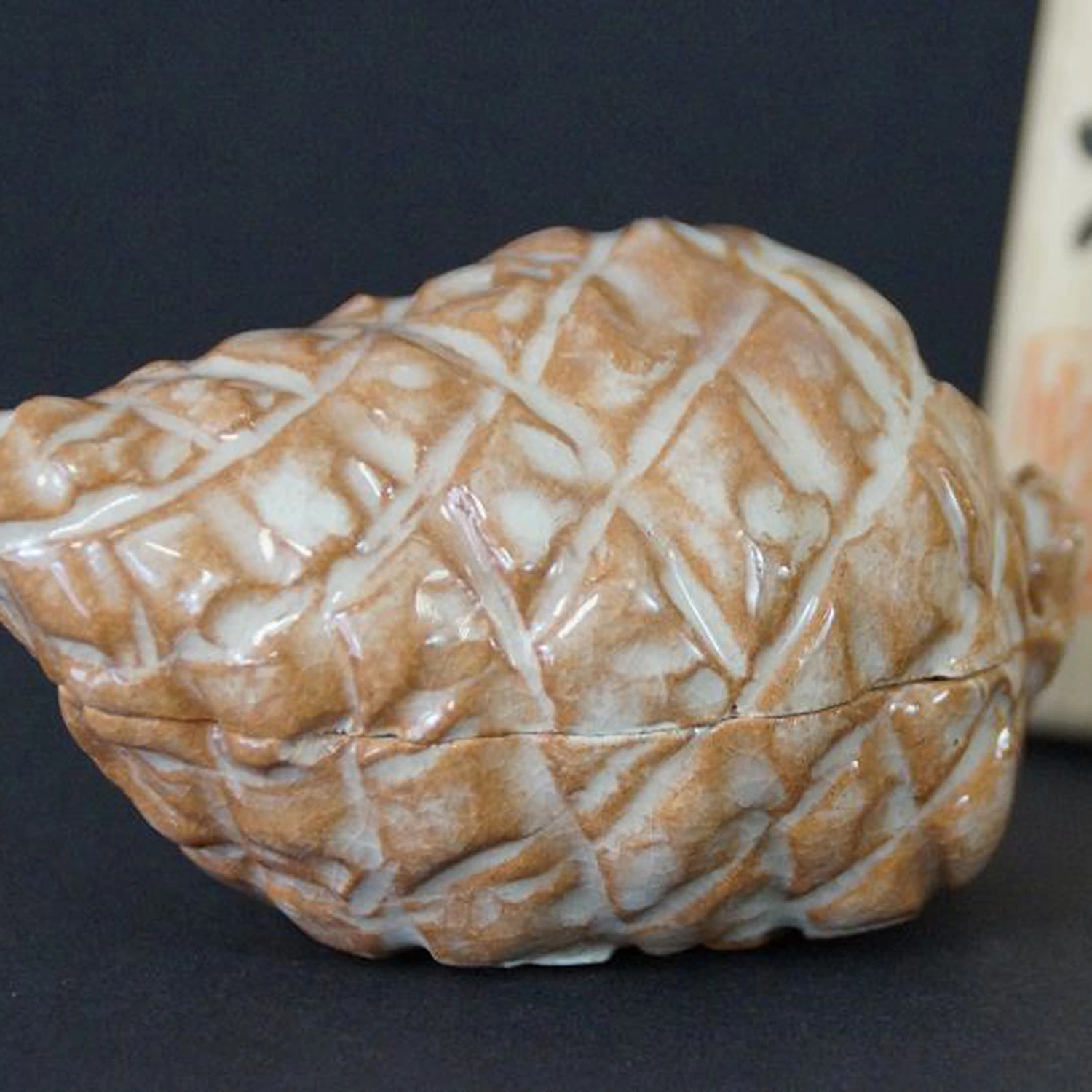
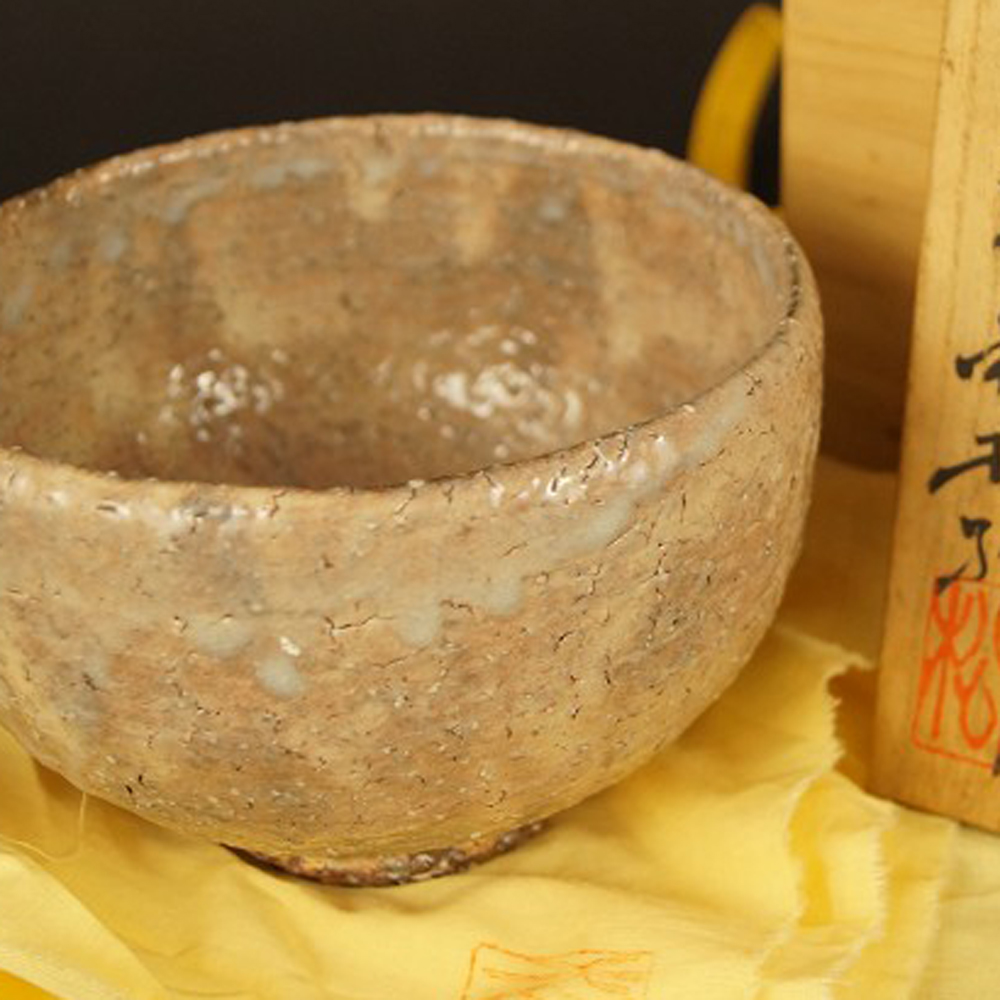
Yoshimura Tōen
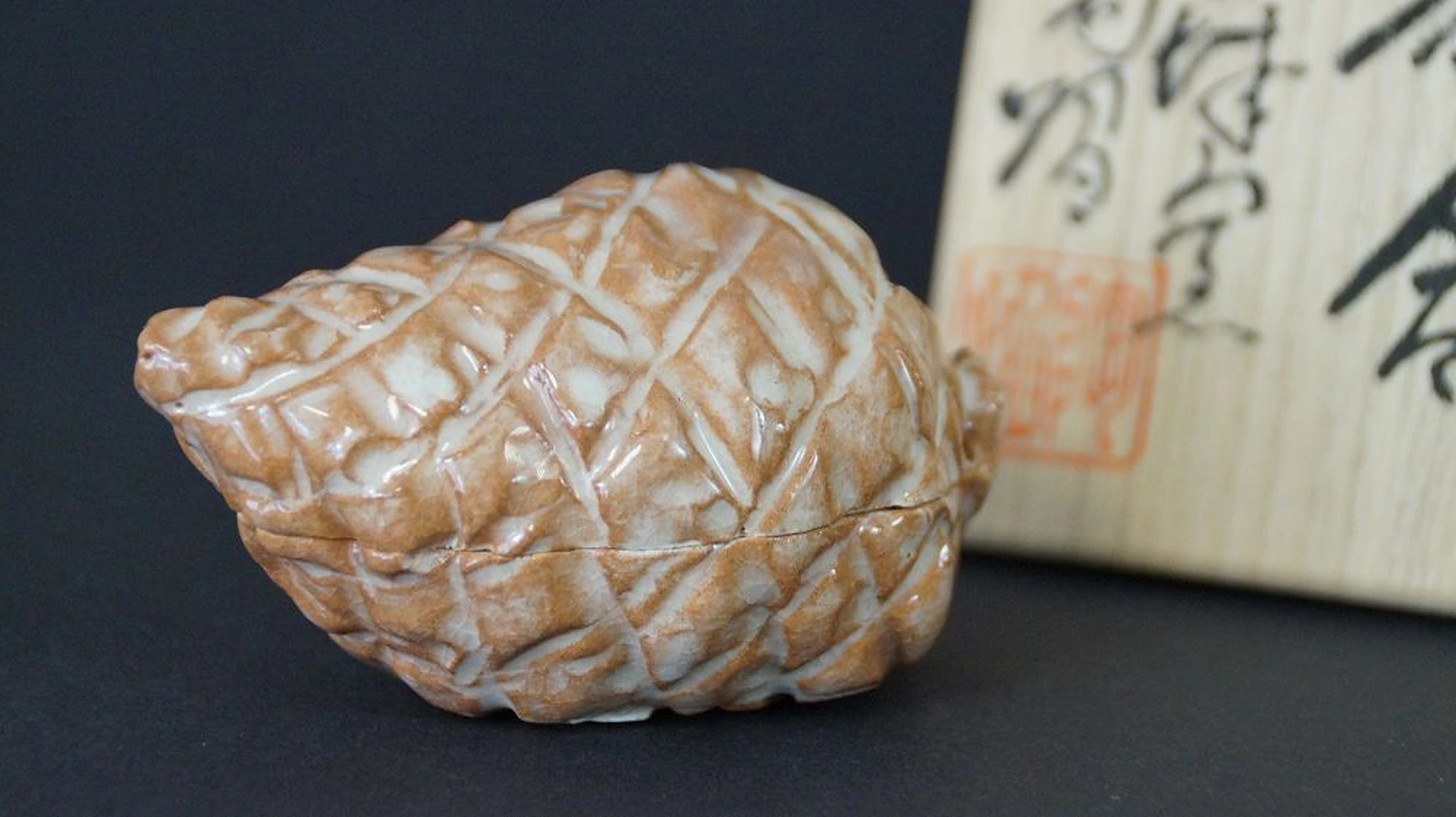
Hagi Ware Pine Cone Incense Container by Yoshimura Tōen
Incense Container, unique work, with box, 5 x 8,5 cm
€190.00
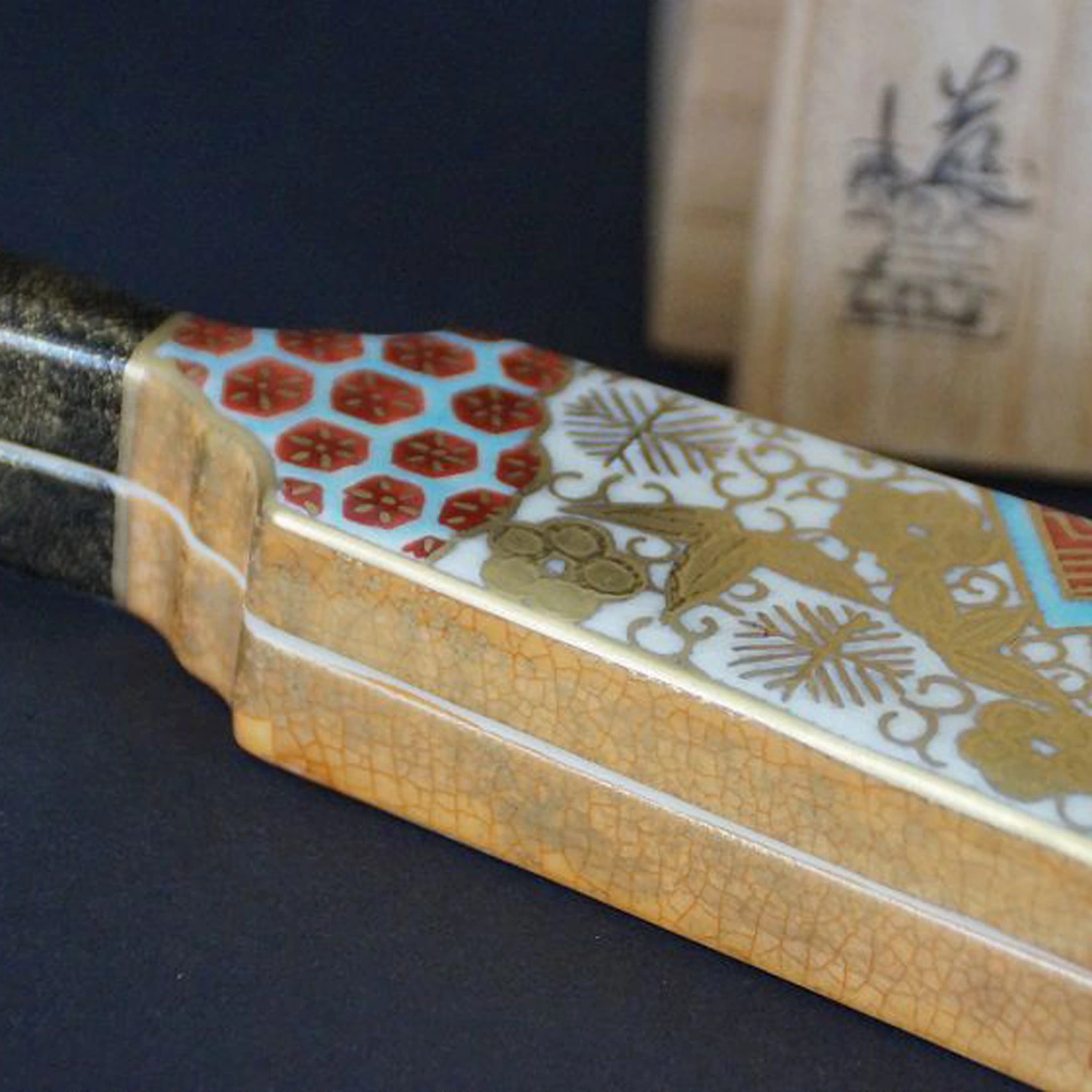
Hashimoto Jōgaku
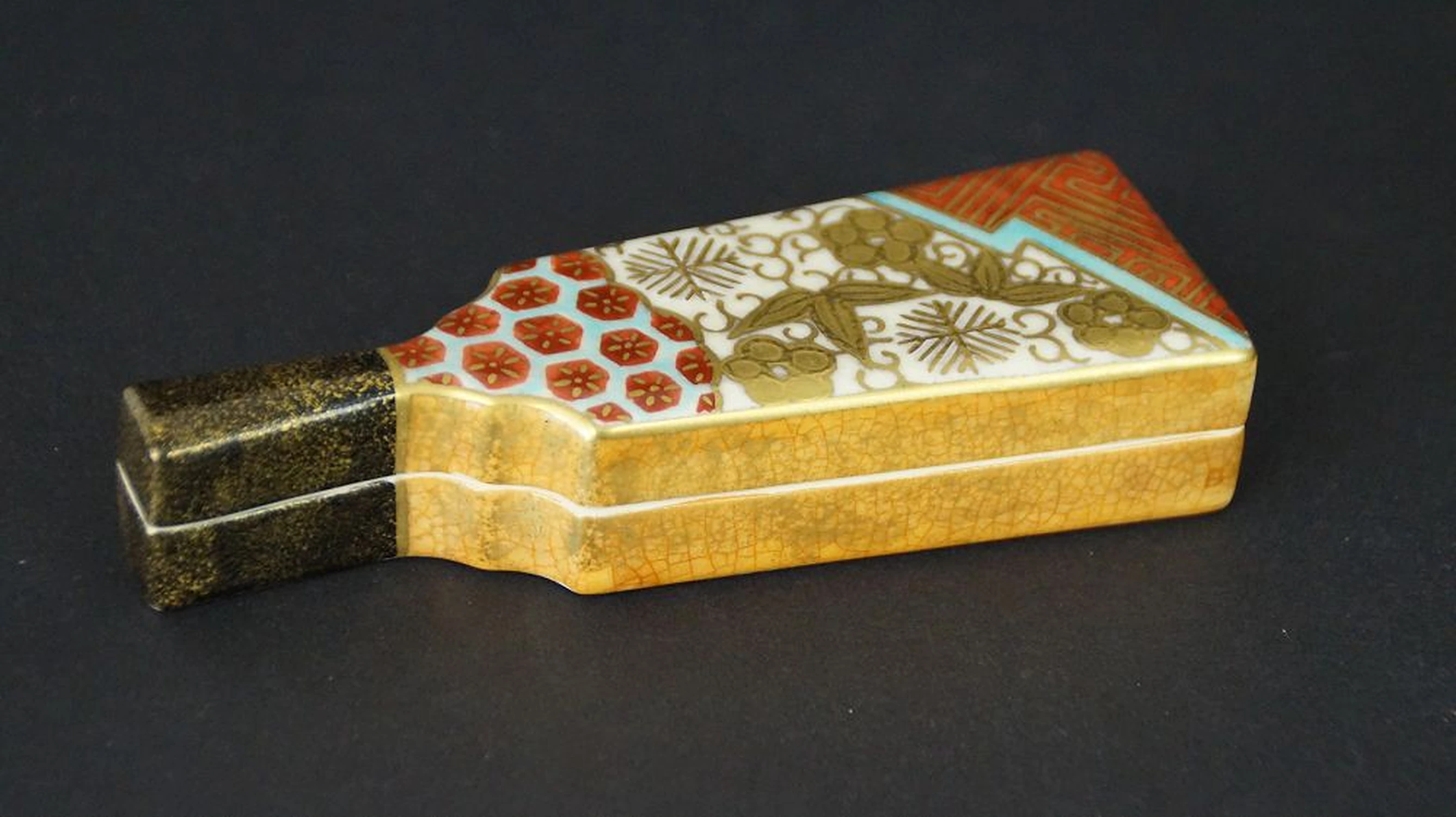
Kyoto Ware Hagoita Incense Container by Hashimoto Jōgaku
Incense Container, unique work, with box, 2,5 x 11,5 cm
€190.00
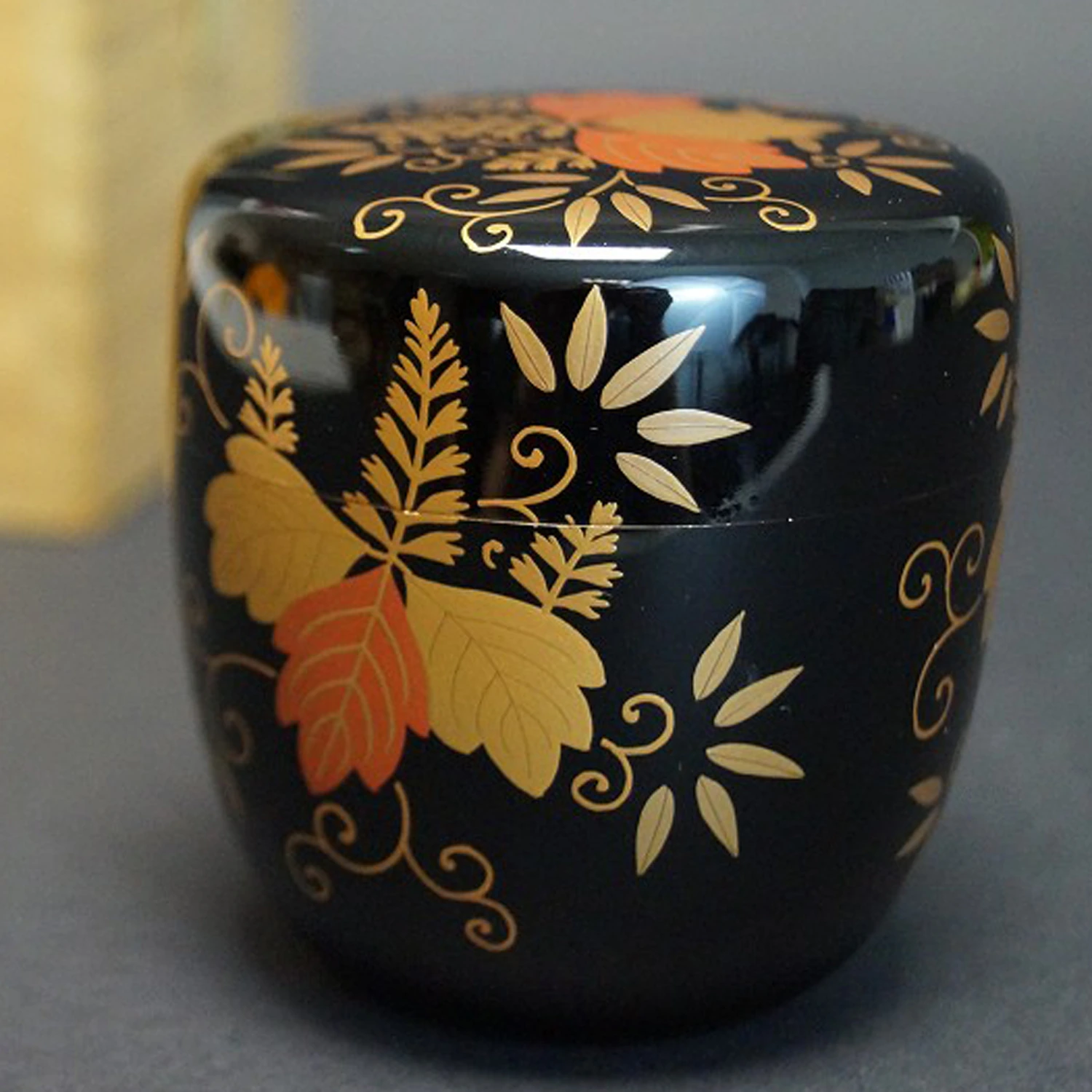
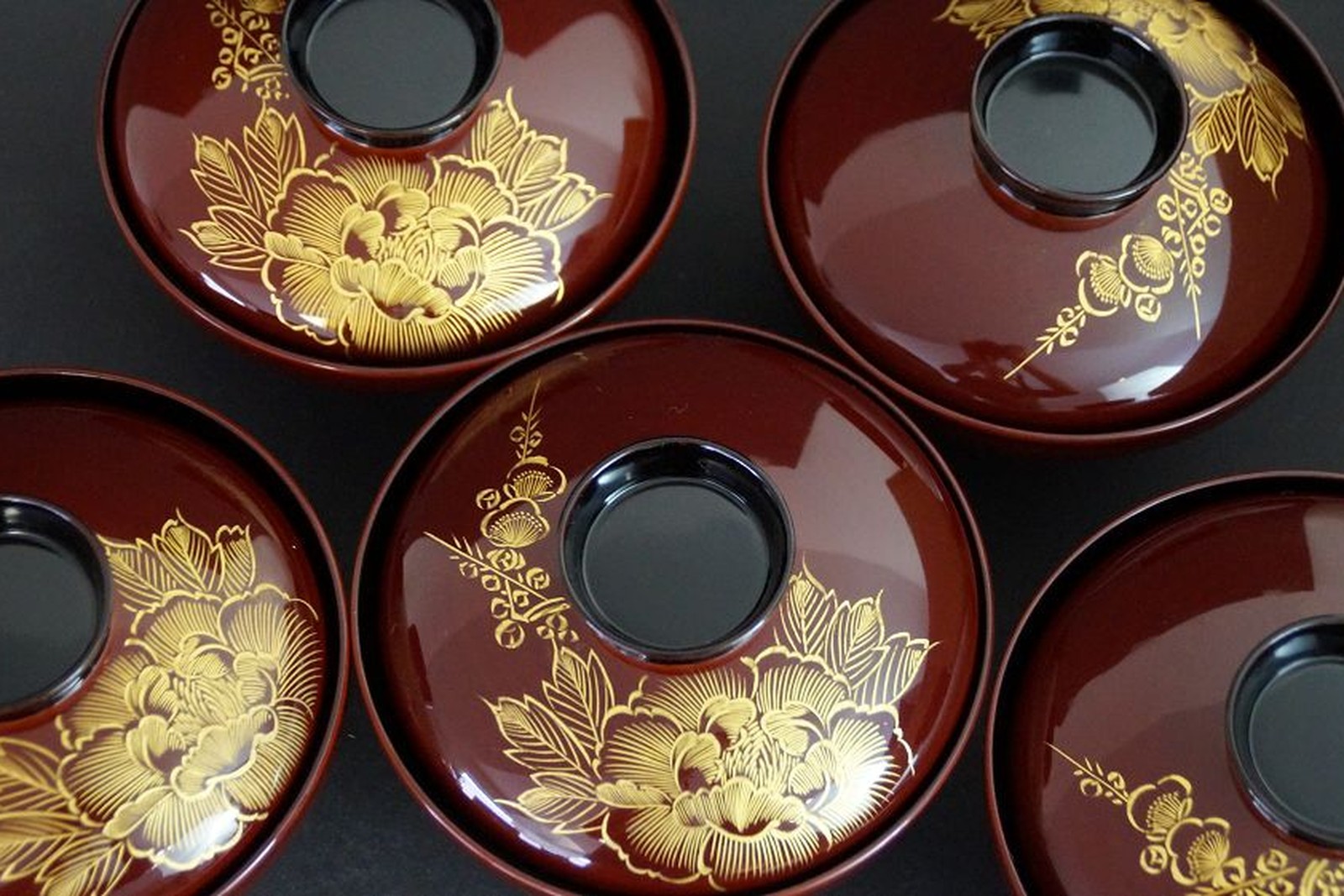
Heian Koshun
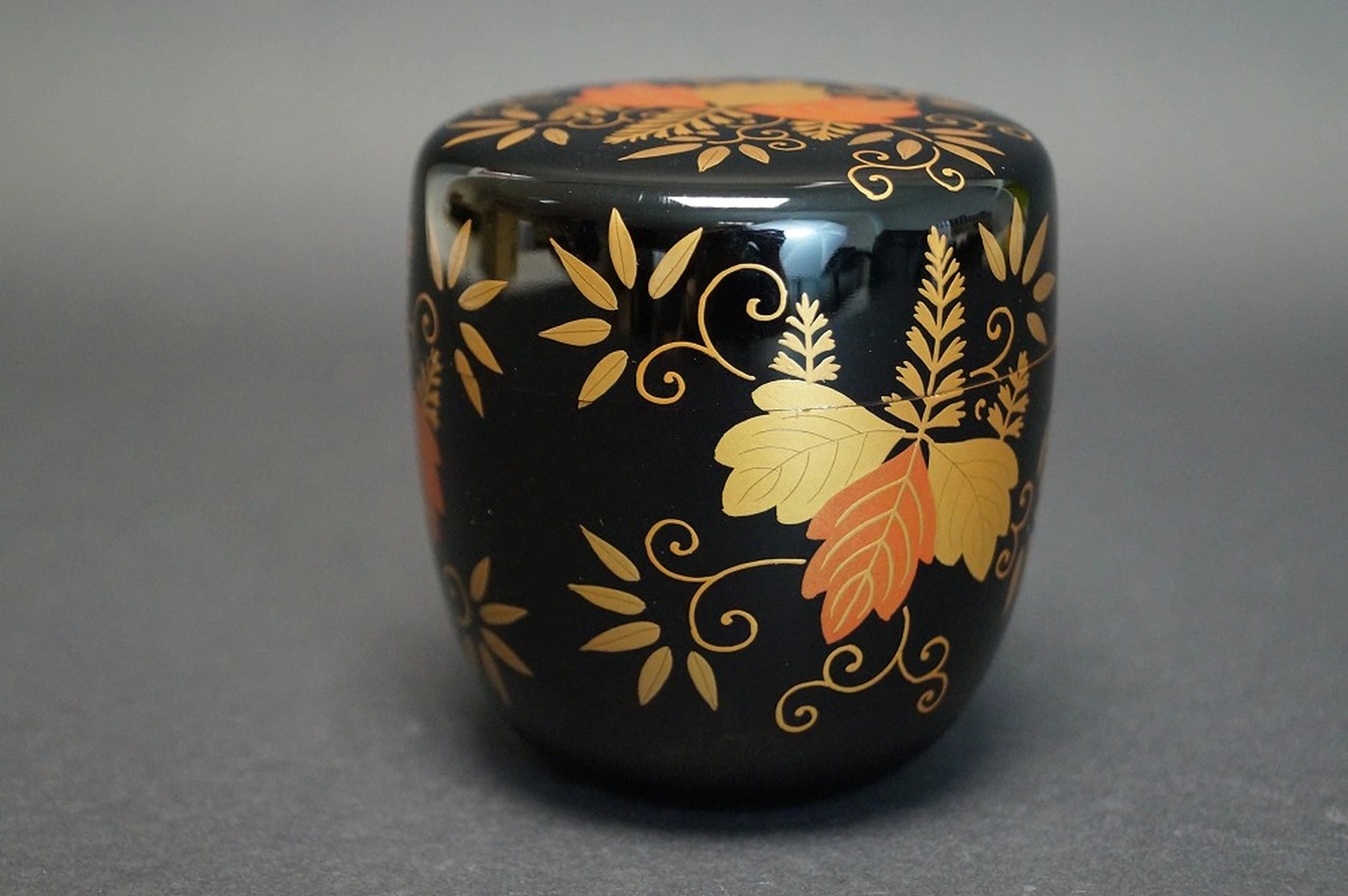
Makie Chu Natsume with Paulownia and Bamboo by Heian Koshun
Natsume, unique work, with box, 6,5 x 7 cm
€290.00
Fruit, animals, seasons: the forms
Hardly any other tea utensil is so playful. Turtles, lions, and tanuki, lotus blossoms and gourds are among the classic forms, and often only the fine seam reveals that the figure can be opened. Then there are persimmons for autumn, plum blossoms for the end of winter, pine cones, and New Year motifs such as the hagoita, the paddle of the Japanese shuttlecock game.
These motifs are not mere decoration. The host chooses the container to suit the season, the occasion, or the guests, and a kōgō can hint at the idea of a gathering with a single form. Because it is the utensil the guests actually hold in their hands, it may be more personal than much else in the room. Some of the fun even stays hidden: a glaze inside that differs completely from the outside shows itself only when the container is opened.
Kōgō, kōro, and natsume: what should not be confused
Two vessels are especially often mixed up with the kōgō. The kōro is the incense burner: it holds ash and embers, and in it the incense smolders. Kōro exist in metal, ceramic, and other materials, many of them in Buddhist use, and special forms serve kōdō, the way of incense, in which fragrances are recognized and distinguished. The natsume, by contrast, is a usually lacquered container for powdered tea. It belongs to the preparation of tea, not to the fire.
In English, the kōgō is sometimes loosely called an "incense burner" or "incense holder." That is inaccurate, since it neither burns nor holds burning incense. "Incense container" describes the object better.
What to look for in a kōgō
When you take a kōgō in your hand, you see the form first, but you should also open it. The lid should sit snugly without sticking; with handmade pieces, it often fits exactly in only one position. Inside and outside reveal much about the care taken over a piece, as does the foot, which often bears a stamp. The material indicates the use: a ceramic container belongs with nerikō and thus to the cold season.
A good piece often comes with an inscribed wooden box whose signature and seal identify the object and its maker. For storage, the same applies as for all small ceramics: dry, in its own box, and never in the dishwasher. A kōgō needs little room, but like every tea utensil it thrives on being taken in the hand from time to time.
Sources and Literature
JAANUS – Japanese Architecture and Art Net Users System: kougou 香合, aisf.or.jp.
JAANUS – Japanese Architecture and Art Net Users System: kouro 香炉, aisf.or.jp.
Kotobank, Nihon Daihyakka Zensho (Nipponica): 香合(こうごう), kotobank.jp.
Kotobank, Nihon Daihyakka Zensho (Nipponica): 茶道茶事用語, kotobank.jp.
Internet Museum (report on the Nezu Museum exhibition): 香合百花繚乱, museum.or.jp.
Edo-Tokyo Museum Digital Archives: 形物香合相撲, edohakuarchives.jp.