In Japan, sake is rarely poured straight from the bottle into a glass. Between cask and mouth stand two small vessels: a flask with a narrow neck from which it is poured, and a cup held in the hand. Both are usually made of clay, often thrown by hand, and both reveal how Japan has drunk over the centuries – ceremonially in a circle or comfortably for two.
This article introduces the vessels of Japanese sake ware: tokkuri, guinomi, ochoko, and sakazuki. It explains where they come from, how they differ, which customs belong to them, and what matters when you put together a set of your own.
From the shared cup to a cup of one's own
Japan's oldest sake cups were kawarake, unglazed, low-fired clay dishes. Writings of the Nara period also mention precious cups of gold, silver, or agate, and from the Heian period onward red-lacquered wooden cups appeared; in the Middle Ages a sakazuki almost always meant such a cup in urushi lacquer. Drinking took place in a circle: a large cup passed from hand to hand, and once it had gone all the way round, this was called an ikkon, a round. Three rounds were the customary form.
In the Edo period this changed. Instead of the large shared cup, each guest received a small one of their own, at the tavern just as much as with the evening drink at home. At the same time sake was drunk warm more and more often, and the small ceramic cup displaced the lacquered one; by the 19th century it had become an everyday vessel. The pairing of flask and small cup freed drinking from ceremony and made it what it mostly is today: a pleasure among a few.
Tokkuri: the flask with the narrow neck
The tokkuri (徳利) is the vessel from which sake is poured: tall, with a bulbous body and a narrow neck. The name appears in the Muromachi period; where it comes from is unclear. A common explanation hears in it the gurgling sound of pouring. At first such flasks were also filled with soy sauce or vinegar; today the tokkuri is reserved for sake.
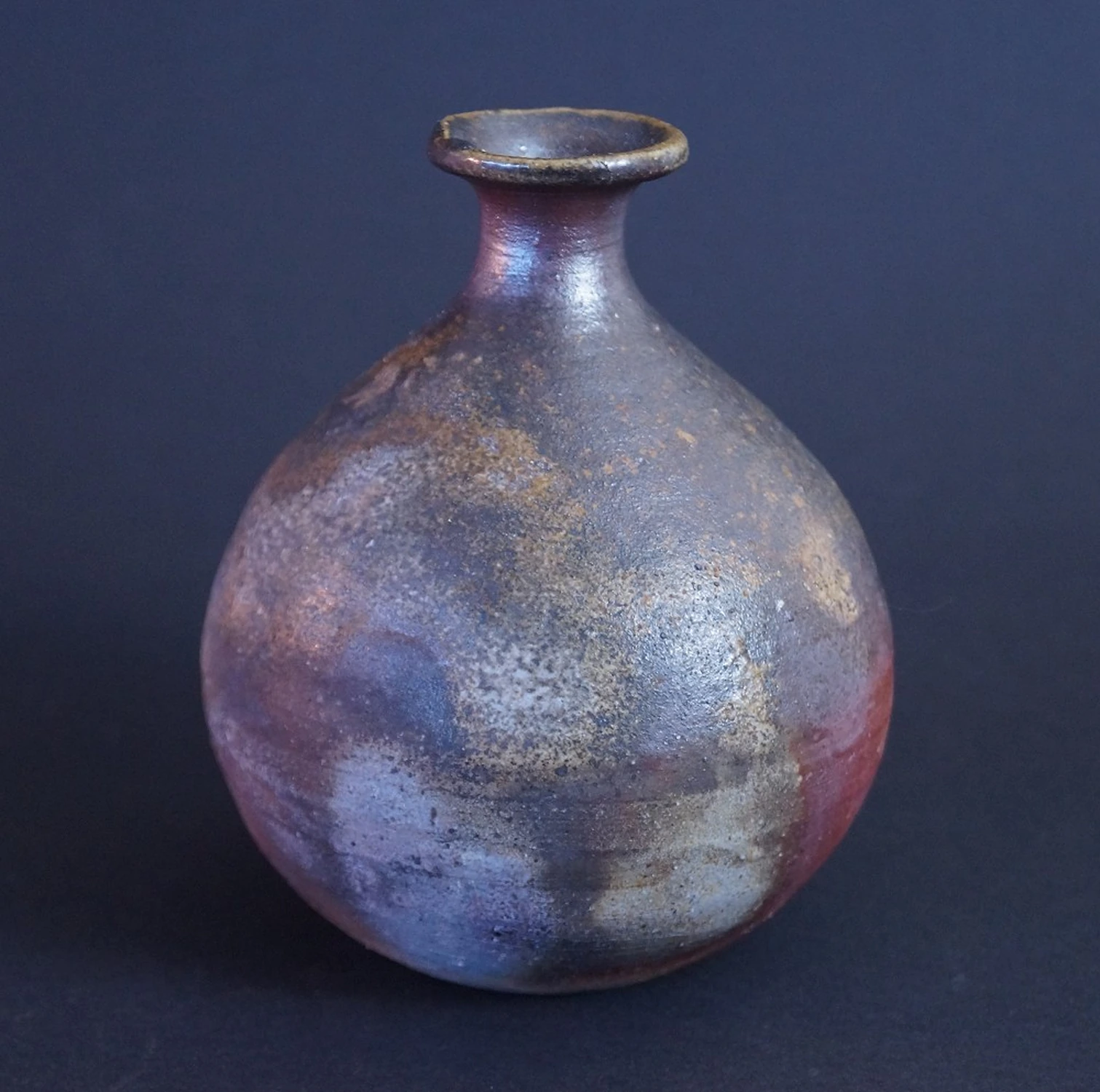
For the table, a tokkuri usually holds one to two gō, that is, about 180 to 360 milliliters. Larger flasks of five gō or one shō were once lent by sake merchants to customers who bought only small quantities. As early as the 17th century, tokkuri from Bizen were considered a specialty of the region, and the kiln town is still known for its unglazed flasks today. Older ewers with a spout and a long handle were called chōshi; because they were long the most important pouring vessel, their name passed to the tokkuri, and many Japanese still say chōshi when they mean the flask.
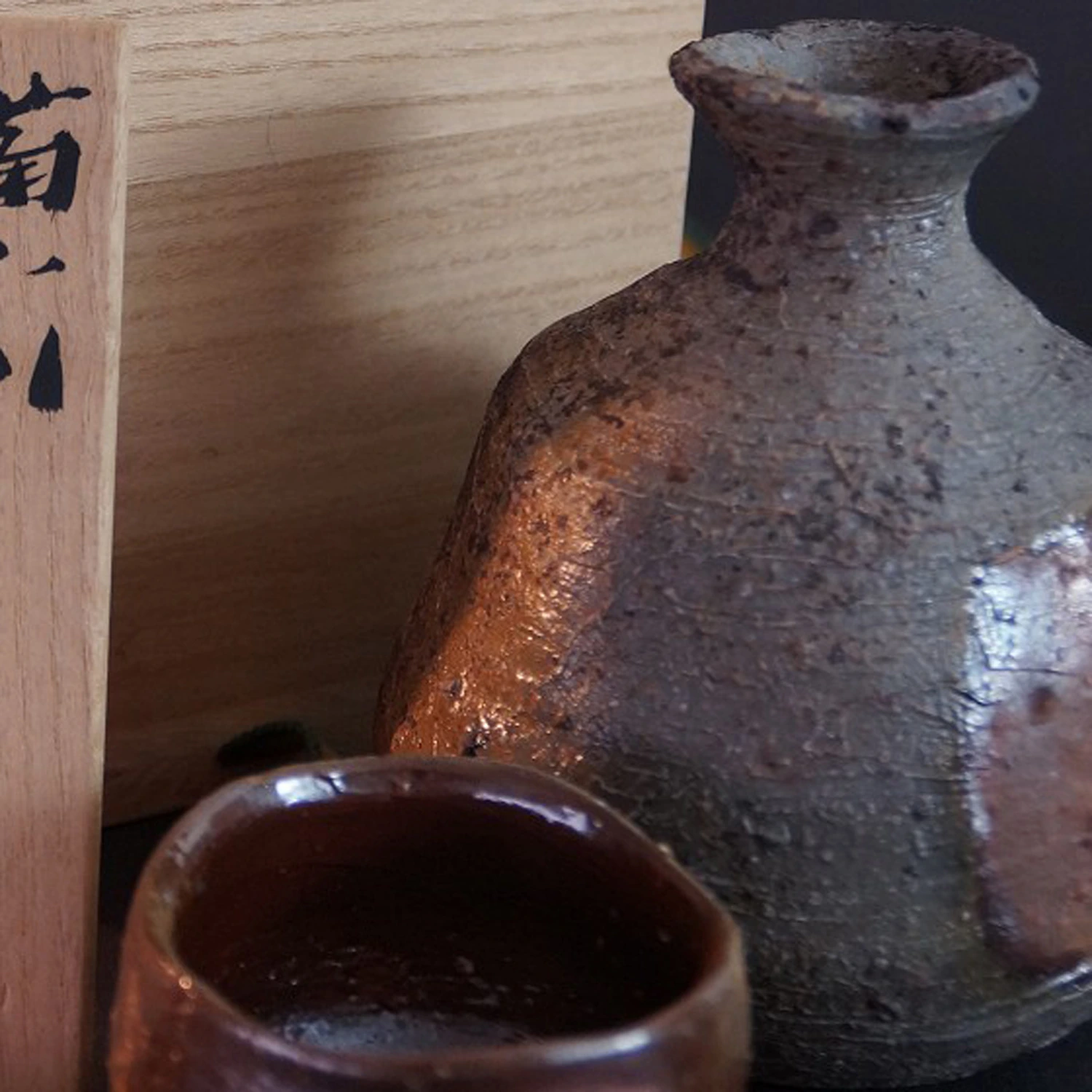
Morioka Hiroshi
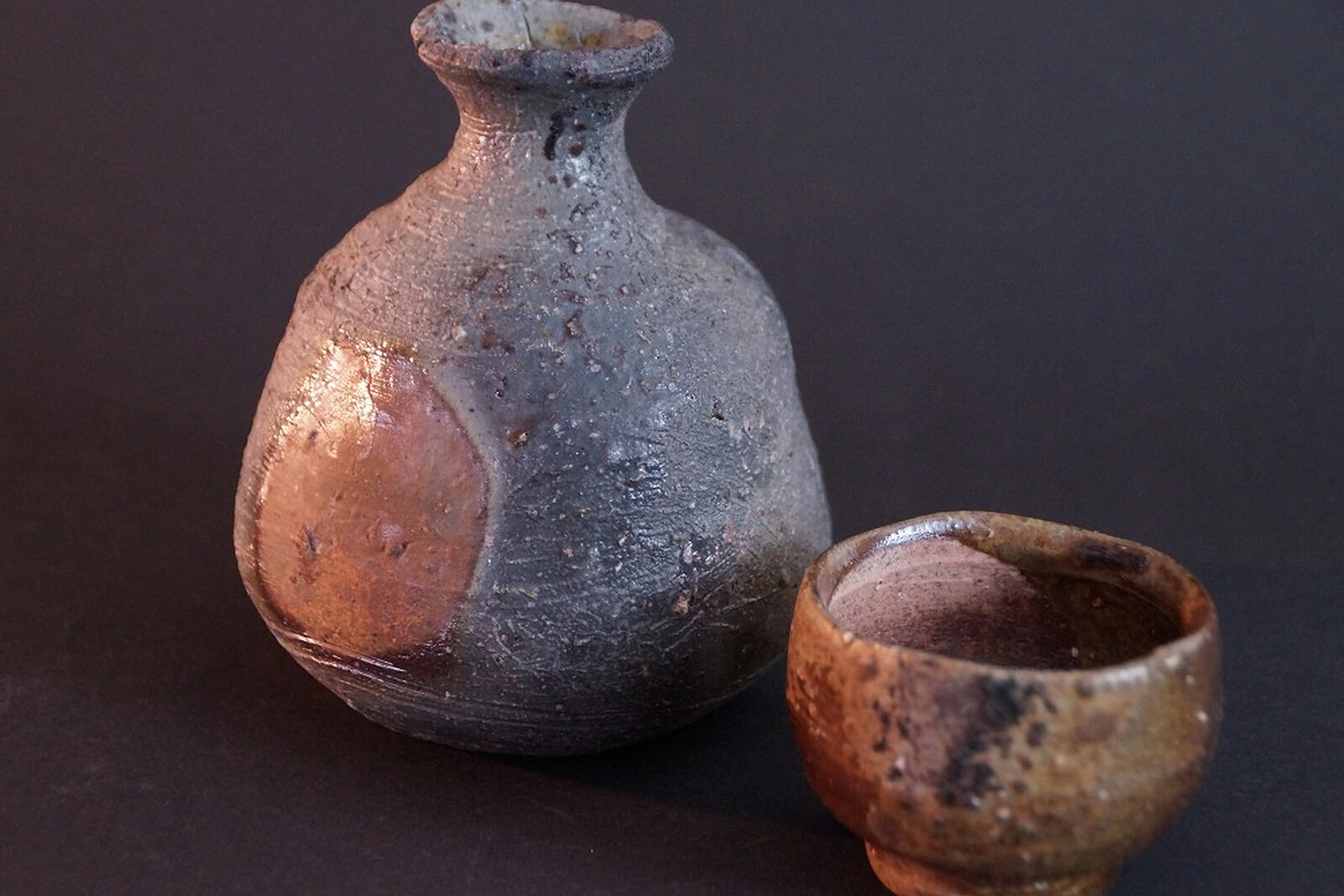
Sake Set Made of Bizen Ware by Hiroshi Morioka
Set of Guinomi and Tokkuri, unique work, with box, 12 x 10 cm
€586.50
instead of €690.00−15 %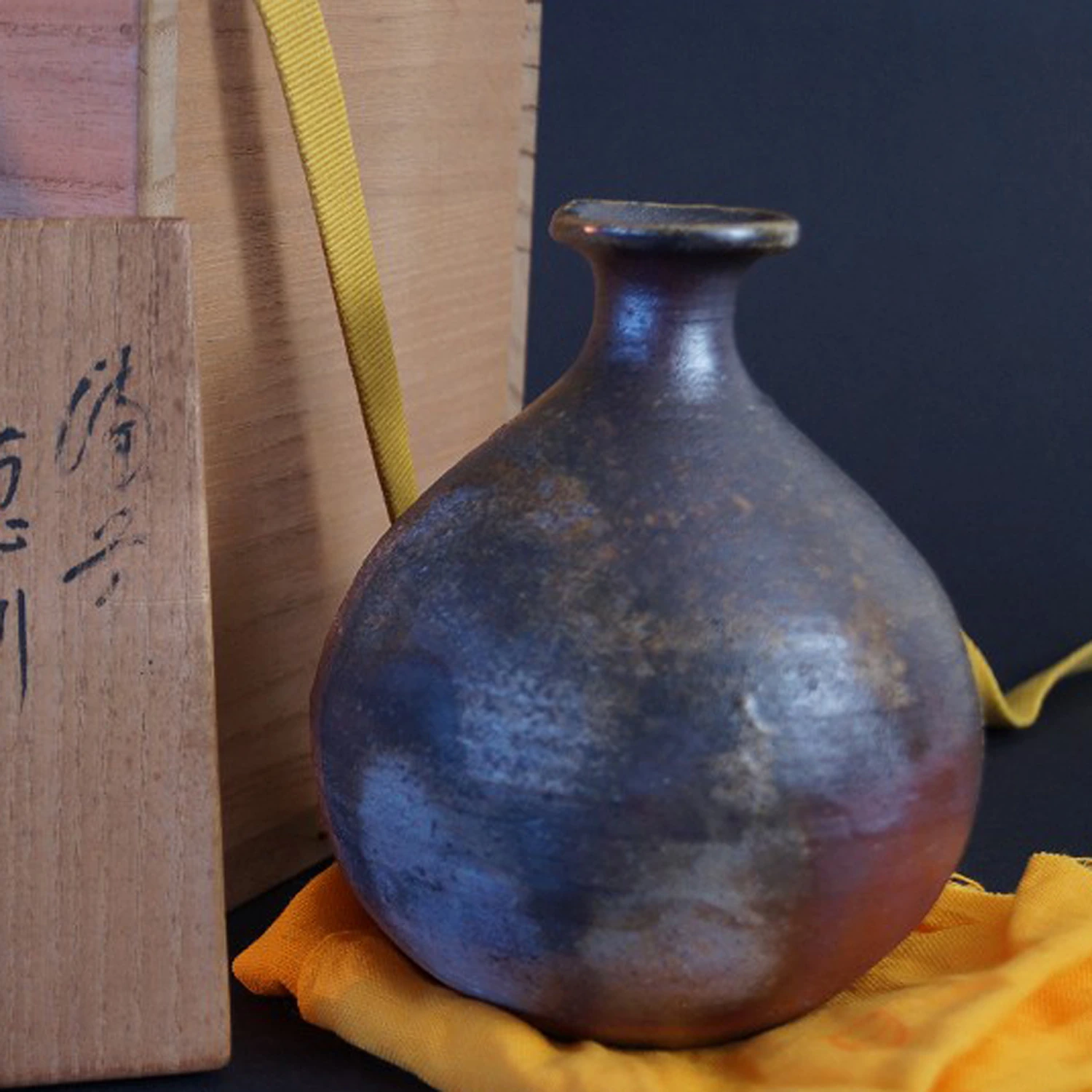
Hibata Koken
Tokkuri Made of Bizen Ware by Koken Hibata
Tokkuri, unique work, with box, 12,5 x 10 cm
€218.50
instead of €230.00−5 %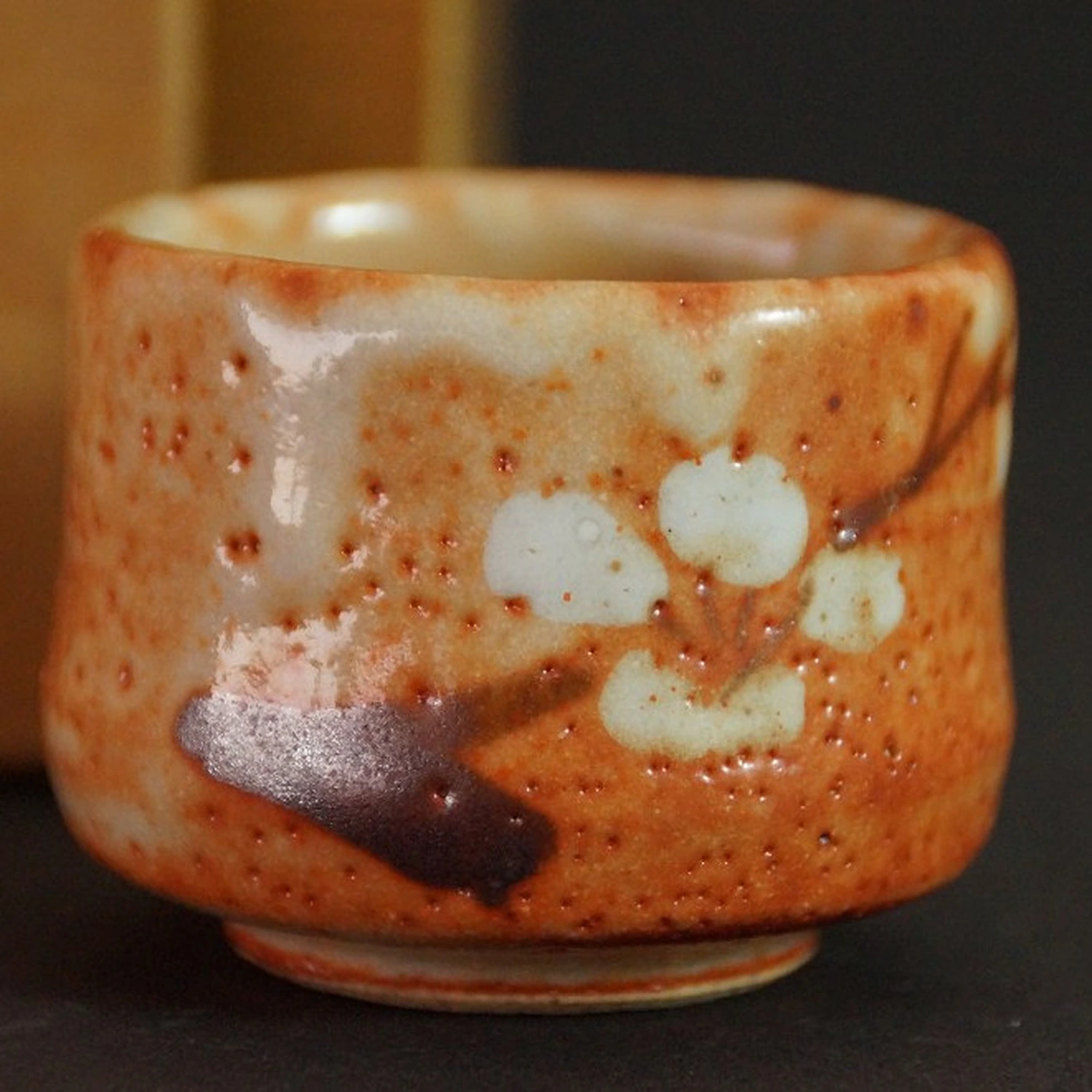
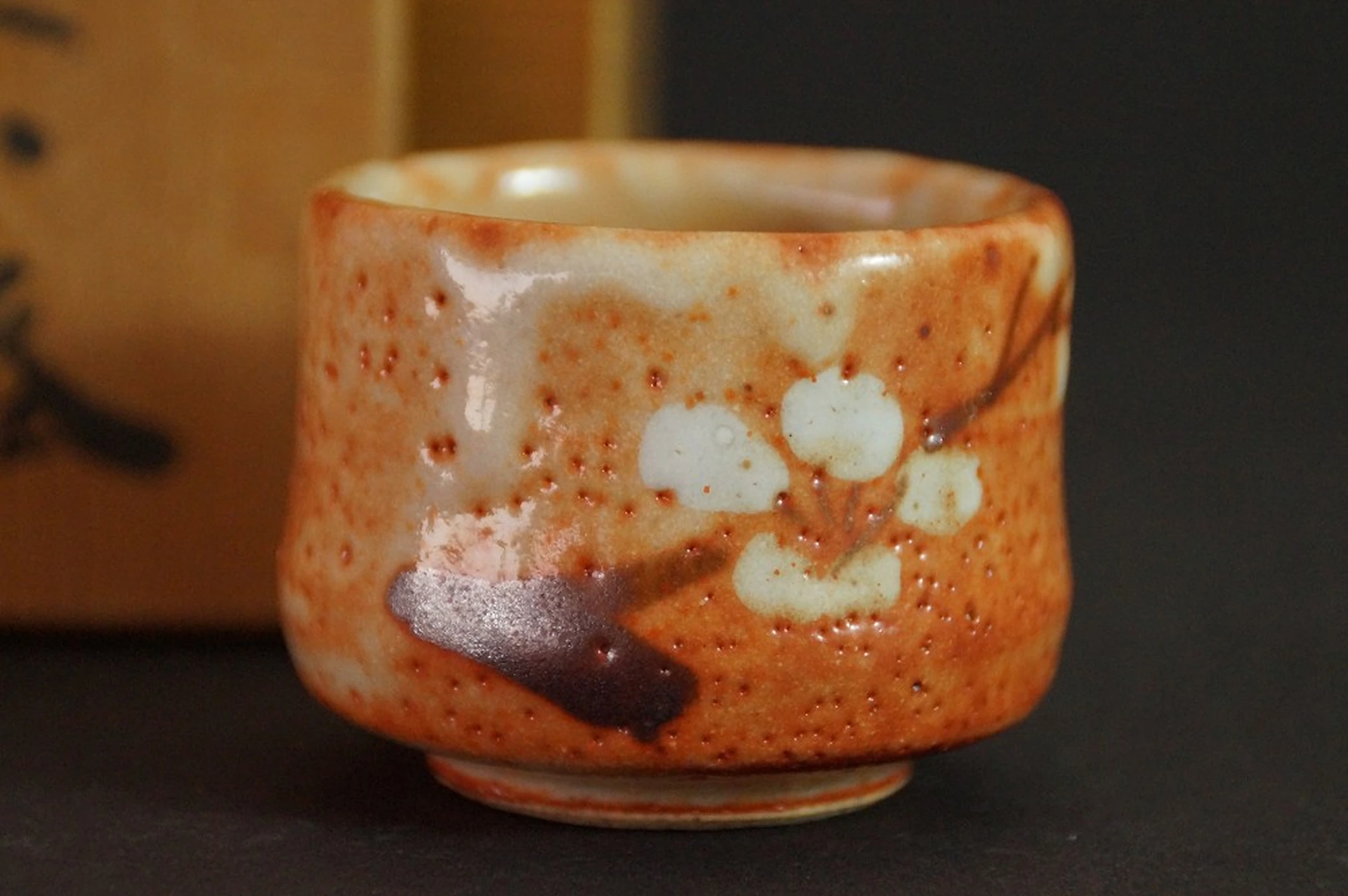
Sawada Shuichi
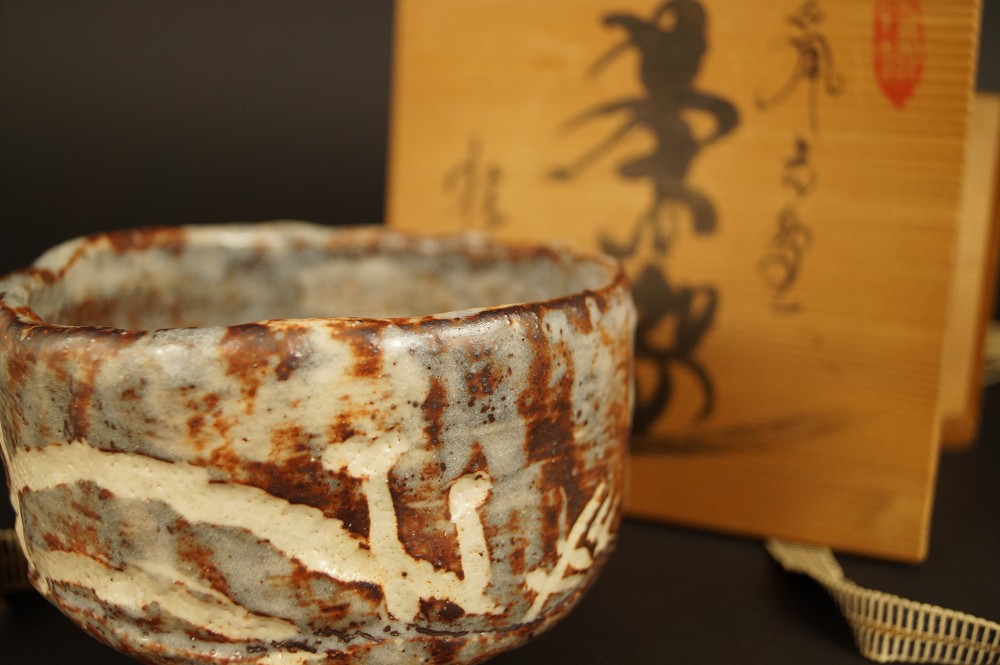
Guinomi Sake Cup Made of Shino Ware by Shuichi Sawada
Guinomi, unique work, with box, 5 x 6 cm
€199.50
instead of €210.00−5 %
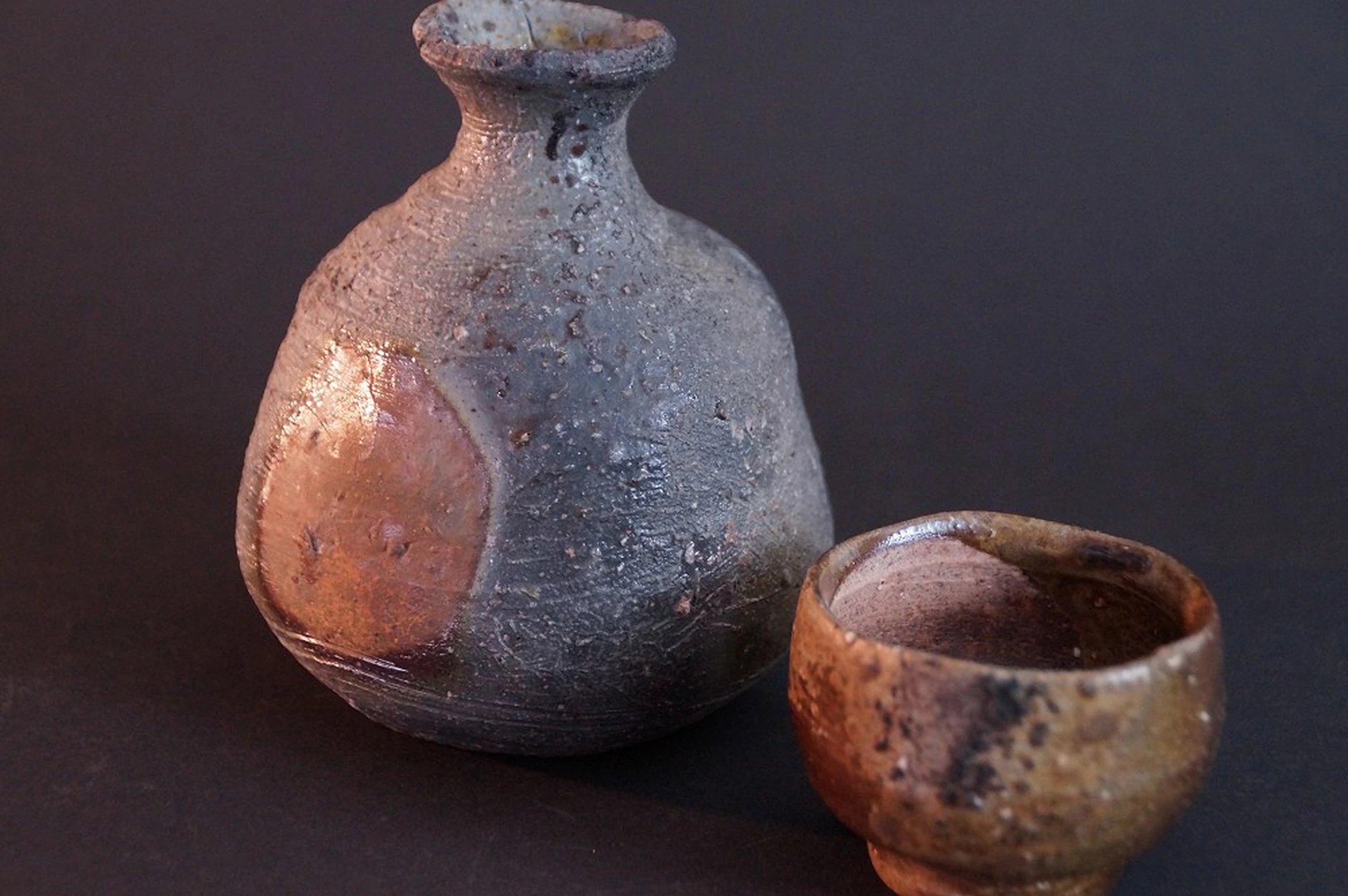
Ochoko, guinomi, and sakazuki: three cups
The smallest and best-known drinking cup is the ochoko (お猪口), also called choko: a low cup that opens upward and narrows toward the base. Its characters were chosen only for their sound, and the origin of the word is disputed. Since the Edo period the ochoko and the tokkuri have formed the classic pair for warm sake.
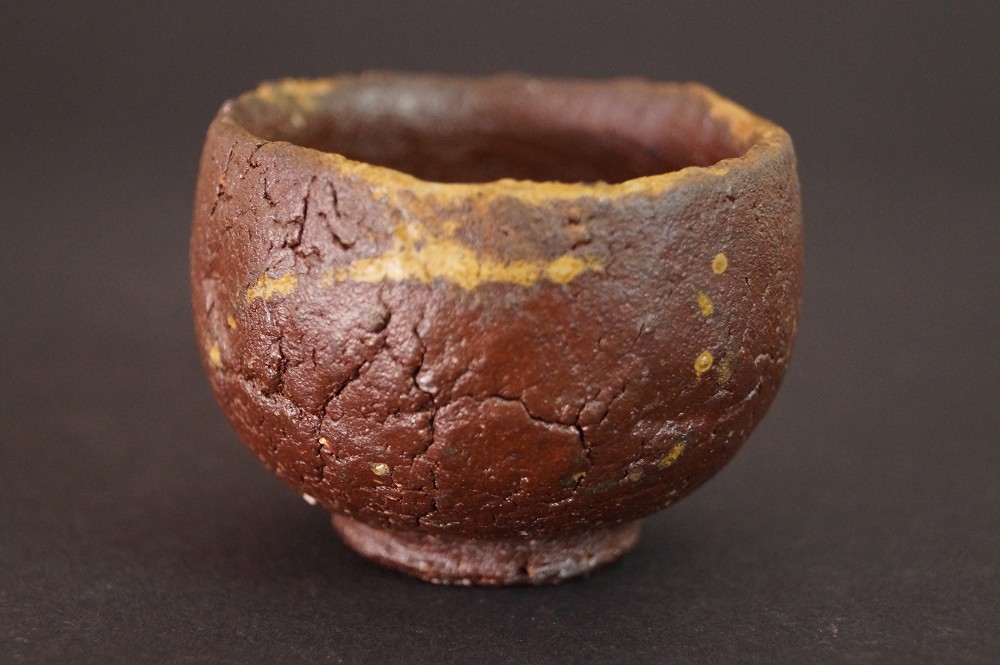
Larger and deeper is the guinomi (ぐい呑). In size it lies between the ochoko and a small teacup, and its name reveals what it is meant for: guinomi means something like "to drink in one hearty gulp." For potters, the guinomi is a small surface on which clay, glaze, and personal style show in a confined space. For collectors it is a good place to start, because it fits the hand and wants to be used every day.
The sakazuki (盃), finally, is the flat, wide-open cup. It has become rare in everyday life but has remained at festivities: ceremonies still use three nested, red-lacquered wooden cups, and Shintō rites the simple kawarake.
Why clay? Ceramics in the hand
Glass and porcelain exist in Japan too, yet many collectors' hearts beat for ceramics. A clay cup has weight, a rough or smooth skin, traces of the wheel and of the fire. You hold it differently from a glass: in the palm, fingers at the foot, and as you drink you feel the warmth of the sake through the wall.
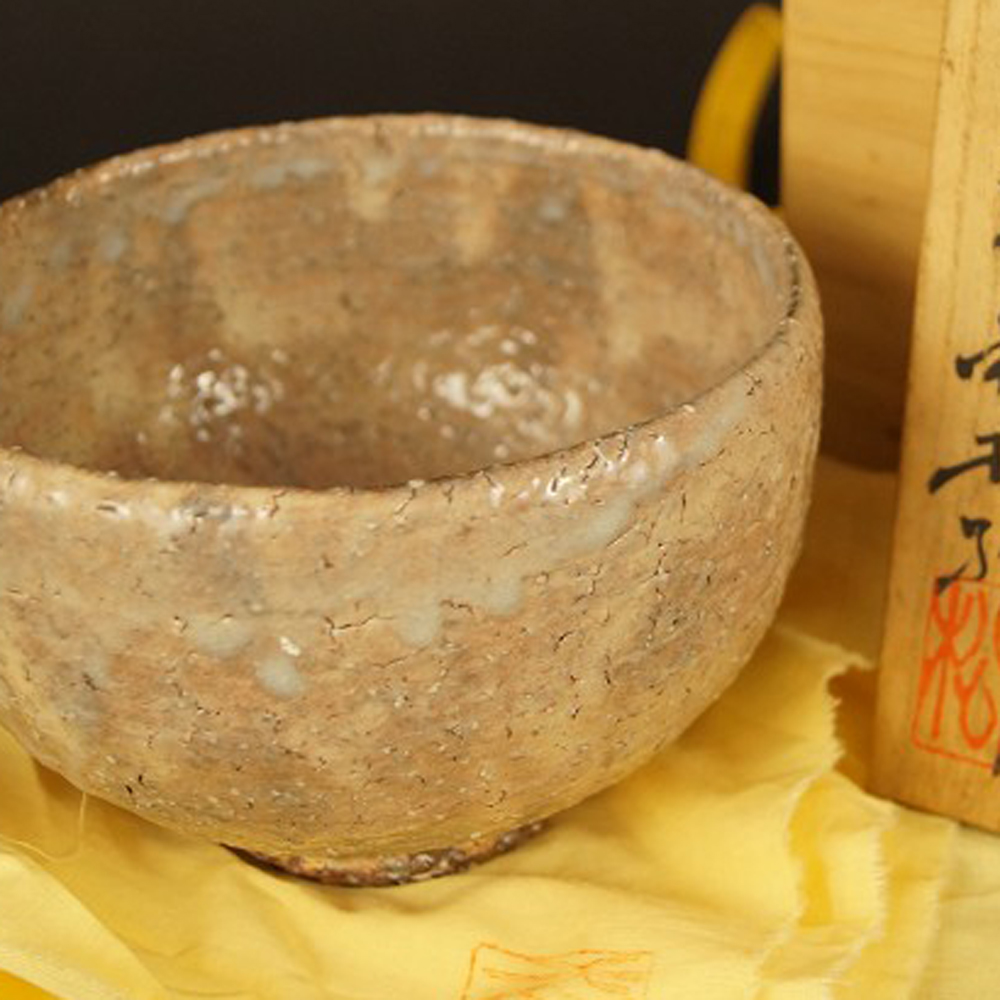
Each kiln town gives its ware a character of its own. Bizen fires unglazed, so that ash deposits and flame marks are the only decoration. Shino covers the clay with a thick white glaze through which reddish patches shimmer. Karatsu shows earthy tones and often a simple brush drawing in iron, Hagi a soft glaze that changes with use, and Oribe its copper green on idiosyncratic, often angular forms. Anyone who sets a few of these cups side by side has a small history of Japanese ceramics in front of them.
Warmed or unwarmed: kan and hiya
That tokkuri and small cups belong together has much to do with warming. Kan (燗) is the word for bringing sake to temperature in its vessel: you place the filled tokkuri in a water bath until the sake has the desired warmth, then pour it into the cups. There are separate words for the stages, from hinatakan, "sun-warm," through hitohadakan, "skin-warm," to atsukan, "hot."
Sake that is not warmed is called hiya and is drunk at room temperature. It too is poured from the tokkuri or from a katakuchi, an open bowl with a spout like a bird's beak. A set of one flask and two cups therefore covers both: warm sake in winter and unwarmed sake on mild evenings.
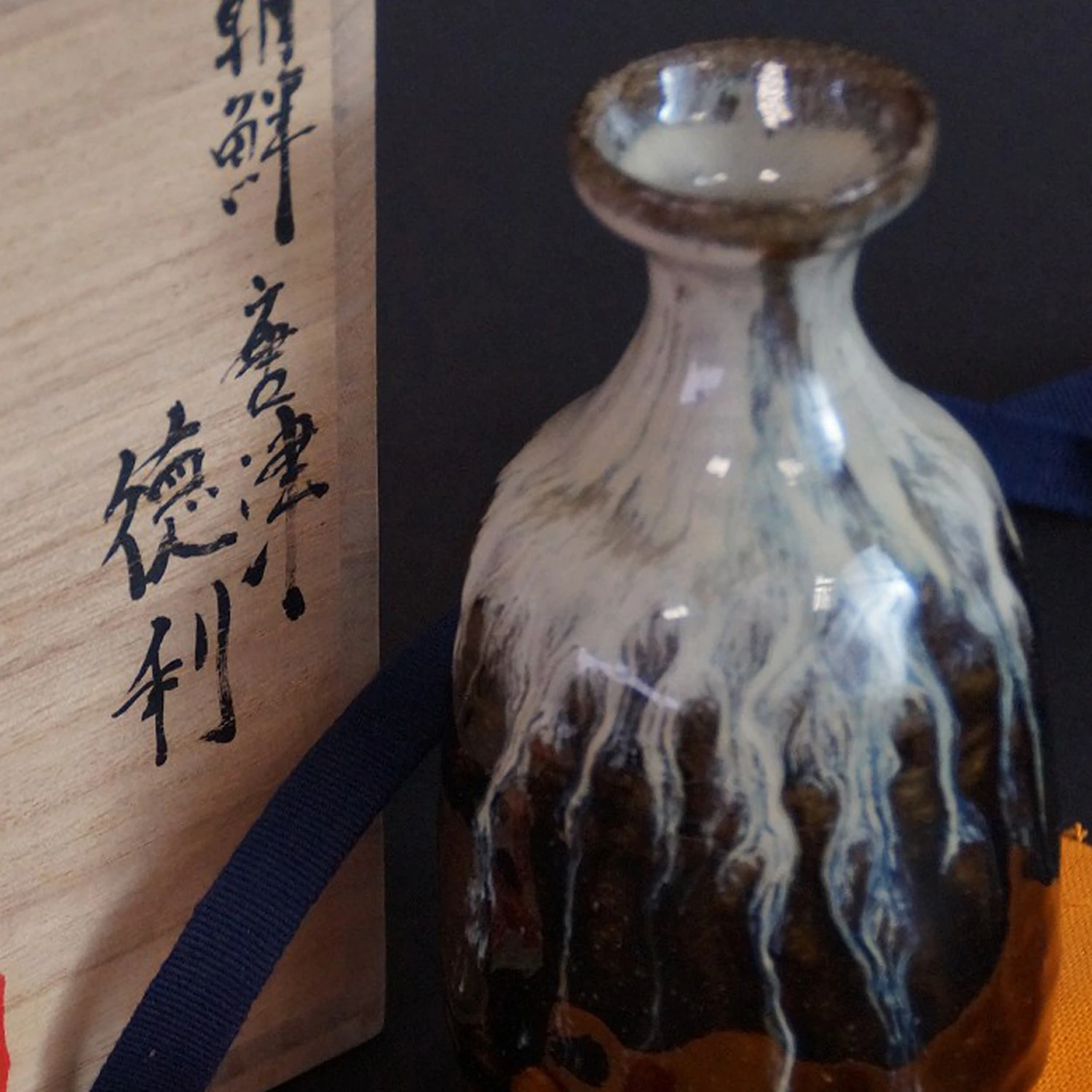
Michael Martino
Tokkuri Made of Chōsen-Karatsu Ware by Michael Martino
Tokkuri, unique work, with box, 16 x 9 cm
€382.50
instead of €450.00−15 %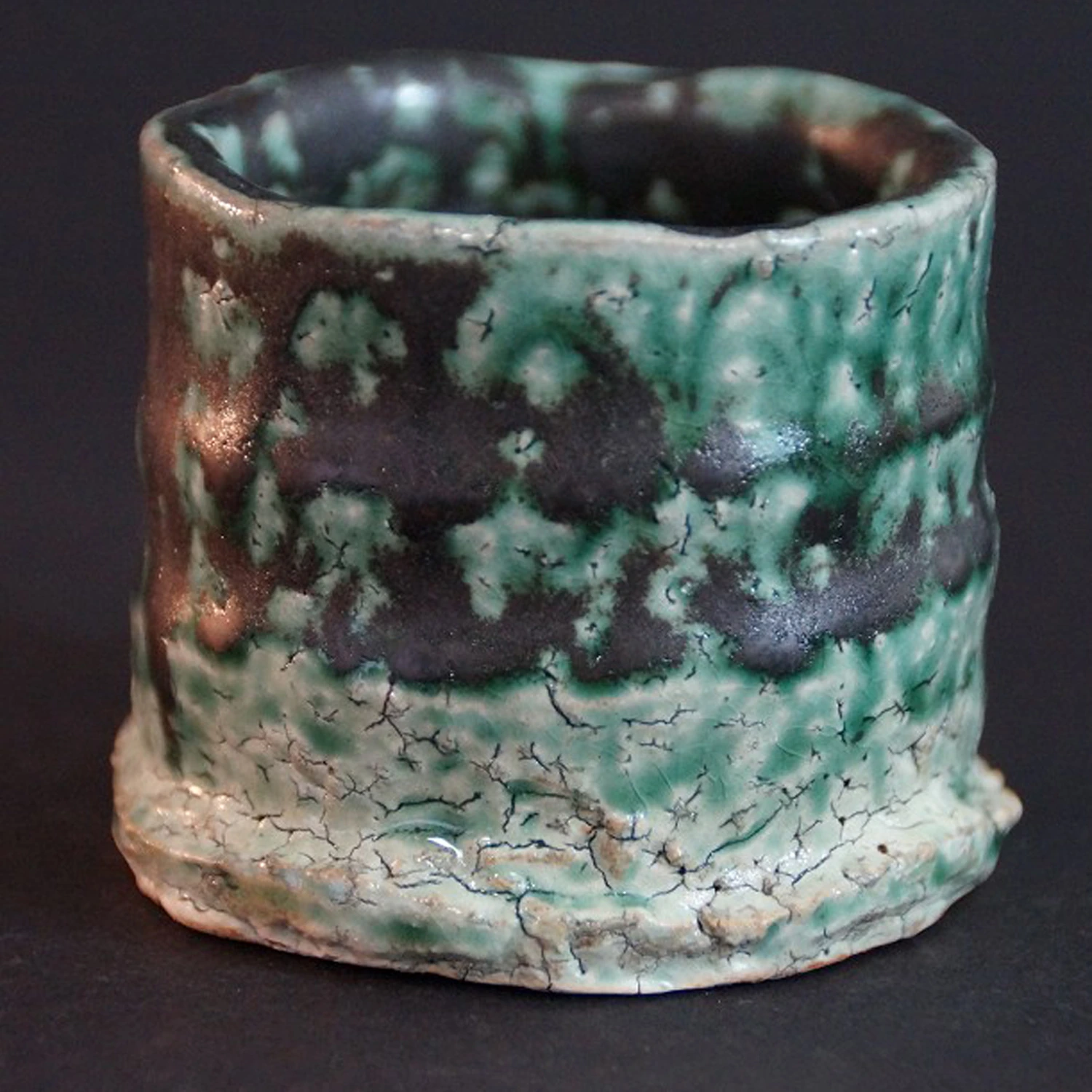
Sasaki Ken
Guinomi Made of Hagi Ware by Ken Sasaki
Guinomi, unique work, with box, 5,5 x 6 cm
€263.50
instead of €310.00−15 %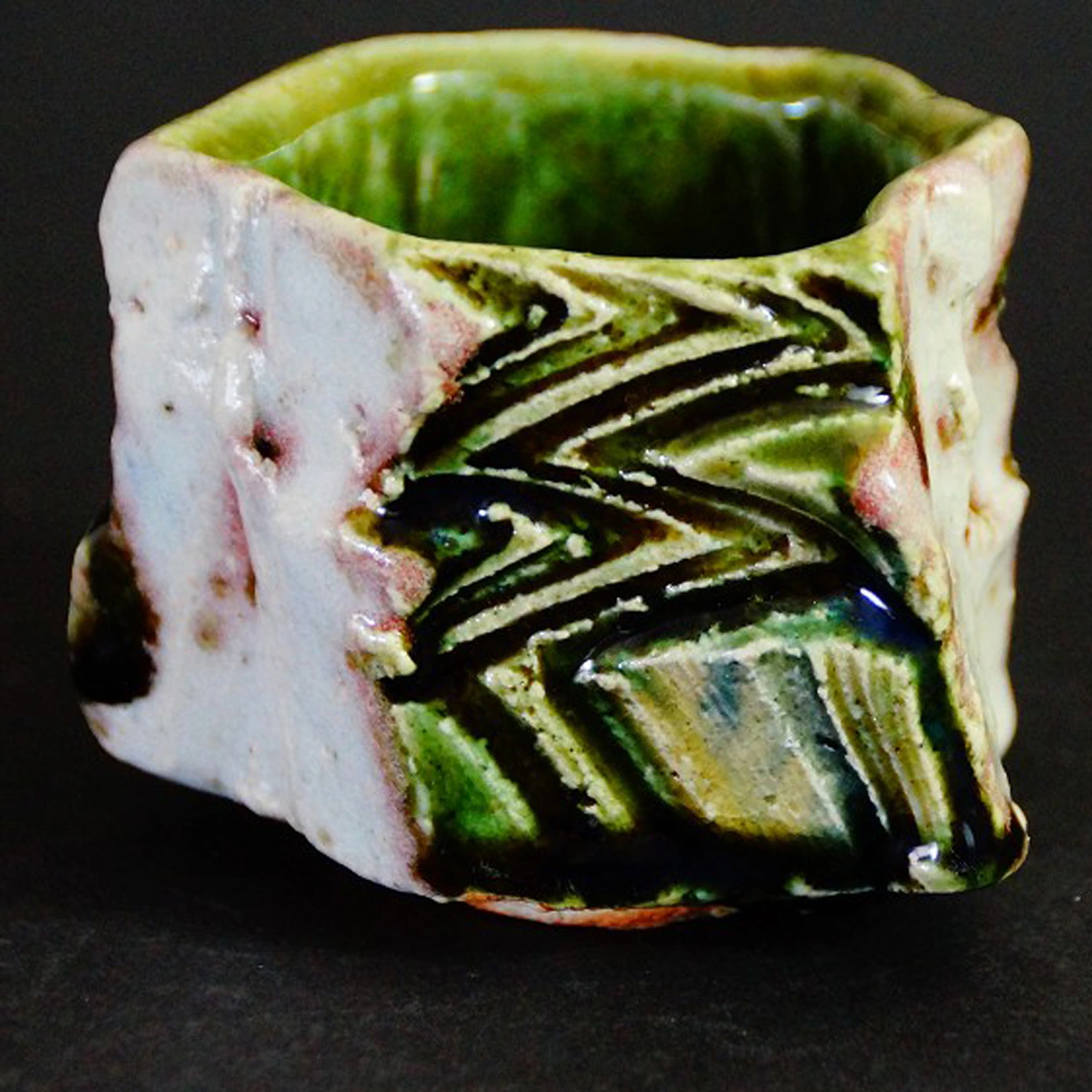
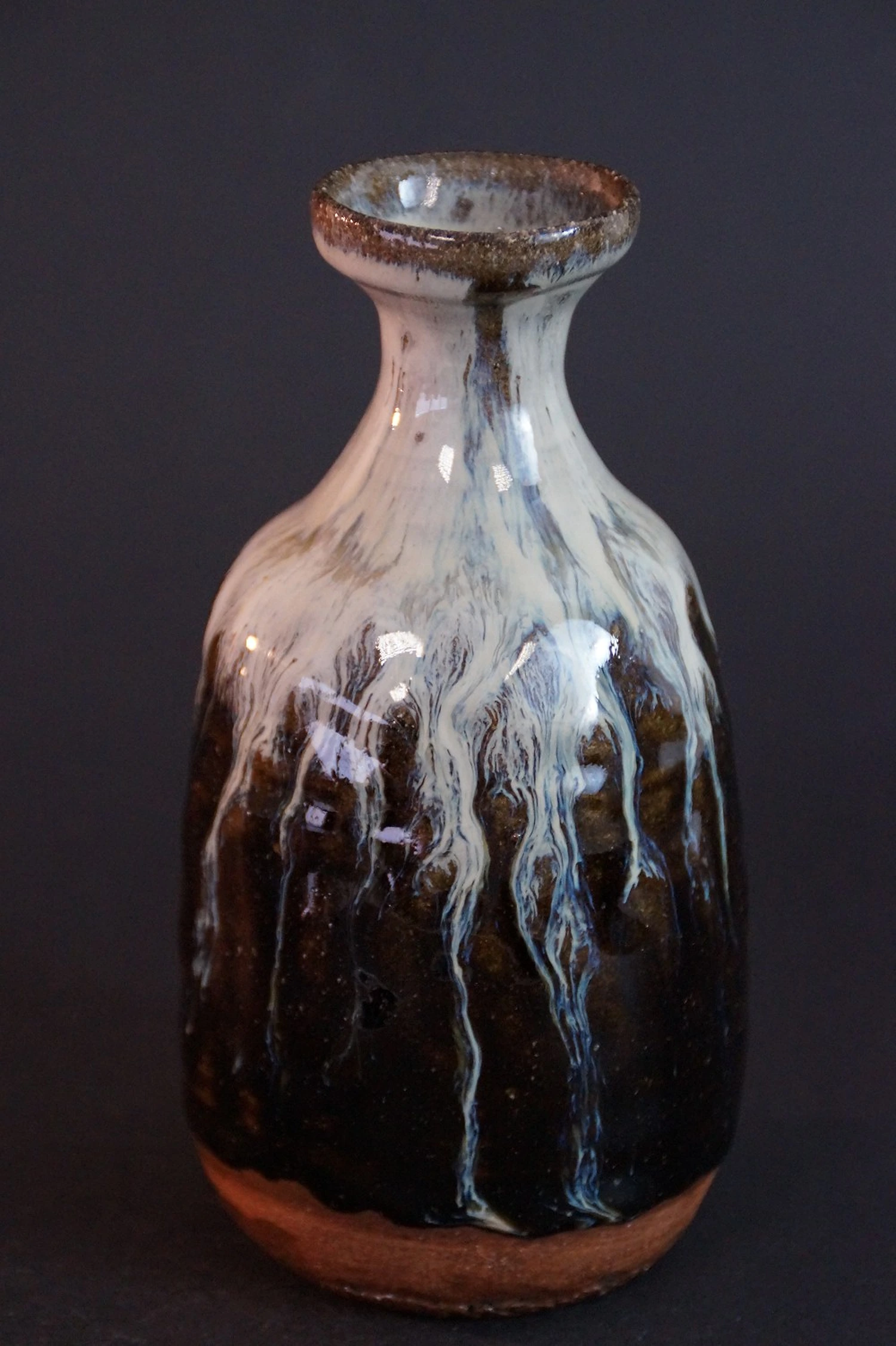
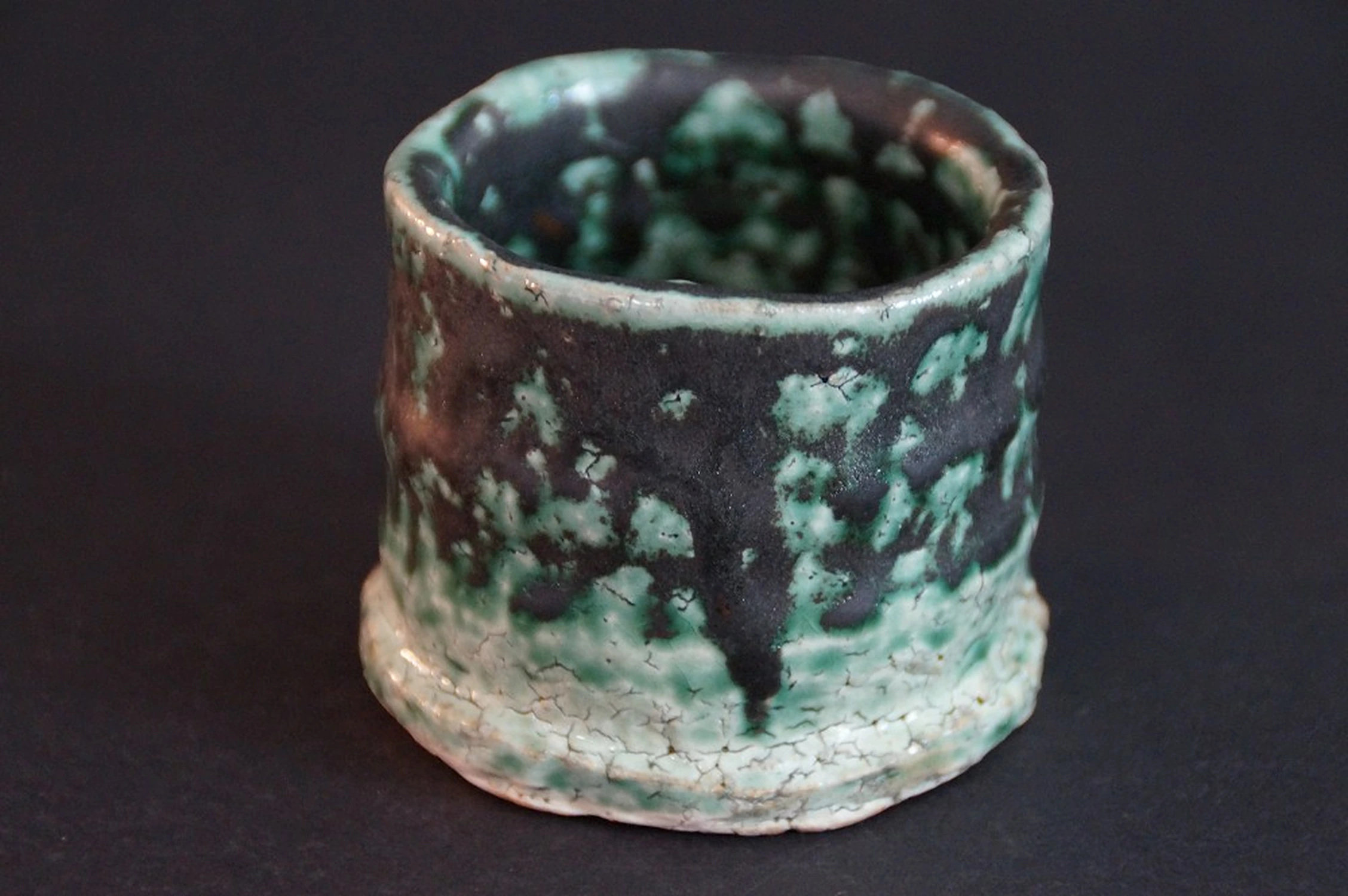
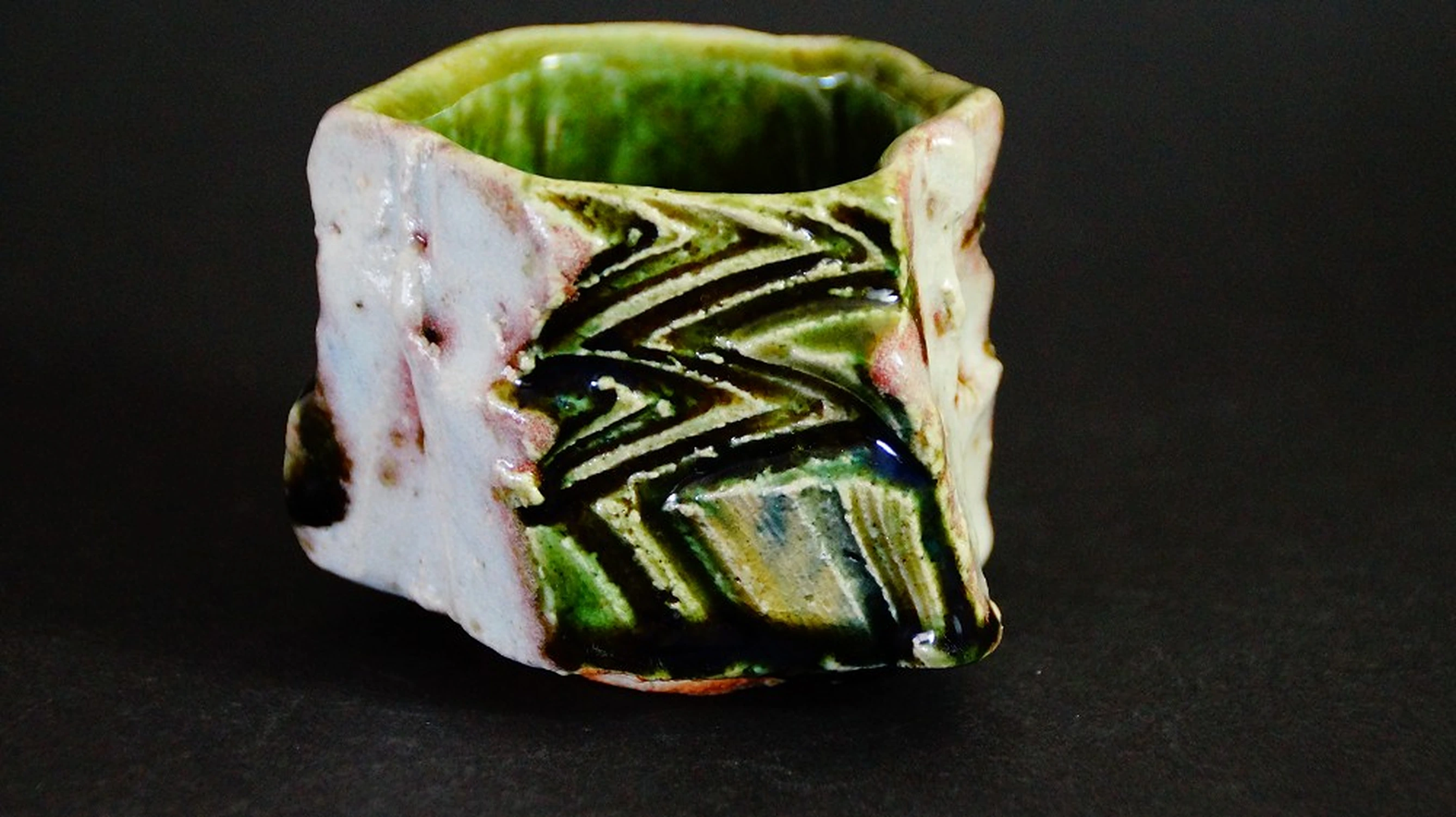
Kōchi Hidetoshi
Guinomi Made of Oribe Ware by Kōchi Hidetoshi, Angular
Guinomi, unique work, with box, 6,5 x 8 cm
€313.50
instead of €330.00−5 %
Pouring and receiving: customs at the table
At a Japanese table, people pour for one another. Pouring for someone else is called shaku; whoever refills their own cup drinks tejaku, "by one's own hand," and the word also stands for drinking alone. In company, therefore, you raise your cup when your companion takes up the flask, and pour for them in return.
Older still are the gestures with the cup itself. In kenpai you offer someone a cup as a sign of respect; the same word is used today when raising one's cup in memory of someone who has died. Whoever empties an offered cup and hands it back responds with a henpai. Most solemn of all is san-san-kudo, "three times three, nine times": at a wedding held according to Shintō rite, bride and groom drink from three stacked cups, each three times, and so seal their bond. Three counts as a lucky number, and its repetition doubles the good wish. An echo of this form can be found in toso, the New Year drink.
Choosing your own cup: sake in Japan's bars today
The pleasure of a cup of one's own is still very much alive in Japan today. In many traditional bars and izakaya, when you order sake, the staff do not simply set down a cup but bring a tray or basket full of guinomi and ochoko, and each guest picks the one they want to drink from. In Kyoto, for example, in the old lanes around Kiyomizu-dera temple, this choice is part of the evening in some establishments, just like the sake itself.
The tray rarely holds a matching set. A glazed piece stands next to an unglazed one, a white cup next to a dark one, a thin-walled cup next to a thick-walled one. You pick up several, feel their weight and surface and how the rim sits against your lip, and decide by mood, season, or sake. A cool, fragrant sake feels different in a pale, smooth cup than a warm, full-bodied one does in coarse clay. The choice also says something about the guest, and it often starts a conversation with the host or with the person next to you at the counter.
Putting together and caring for a sake set
Flask and cups need not come from the same hand. Many collectors combine deliberately: an unglazed Bizen tokkuri with a white Shino guinomi, or one flask with two different cups so that each guest can choose their own. Proportions matter: a heavy, robust tokkuri calls for cups that do not disappear in the hand, a delicate one for finer cups. Especially with individual pieces of guinomi and tokkuri, it pays to combine by feel rather than by matching set.
Sake ware is cared for like a good tea bowl. After use, rinse it with warm water without detergent and let it dry openly and completely before it goes back into the cupboard or its wooden box. This applies especially to unglazed and porous ceramics such as Hagi and Shino, which absorb moisture. The dishwasher is off limits, as are abrupt changes in temperature: to warm sake, place the tokkuri in the water before it gets hot and let both warm up together.