An empty wall above the sofa and the wish to hang something Japanese there: that is how many people start. Anyone who then searches for Japanese wall art meets a surprise that explains more than any question of style. In traditional Japan, wall art in the Western sense hardly existed. Walls were sliding doors, pictures stood on the floor, lay in the hand, or hung in an alcove for a few weeks and were then rolled up again.
The Western habit of "one picture, one nail, twenty years" is foreign to the Japanese hanging scroll. That is exactly what makes it interesting in a Western home. This article therefore starts not from the object but from your wall: what hung there in Japan and what did not, which formats suit it today, whether to frame or to roll, and why the search for Japanese wall art so often ends with the same wave.
The wall that wasn't there
A traditional Japanese house has few fixed walls. Rooms are divided by fusuma, opaque sliding doors made of a wooden frame covered with paper or fabric, and by shōji, the translucent paper sliding doors facing the light. Anyone who wanted pictures there painted them on these movable surfaces. Such room paintings have a term of their own, shōhekiga: painting on sliding doors, screens, doors, and ceilings. True wall painting on plaster, by contrast, is rare in Japanese architecture.
Then there was the byōbu, the folding screen of several panels. It was set up when needed – for festivities, against drafts, or as a backdrop – and folded away again afterwards. The only place that comes close to a picture wall is the tokonoma, the slightly raised alcove in the reception room. There, a hanging scroll has hung since the Middle Ages, with flowers or an incense burner in front of it. Yet even this picture stayed only for a while, until the next occasion or the next season.
Framed pictures for hanging indoors are comparatively young in Japan. For a long time, what was framed were mainly wooden tablets bearing the names of gates and halls. Only in the Edo period did it become customary to mount painting or calligraphy on paper or cloth and frame it for interiors. How to carry the idea of the alcove into a European home is described in our guide How Do I Set Up a Tokonoma in My Own Home?.
What hung on the wall in Japan – and what did not
If you want to give a wall a Japanese look today, you can choose among a handful of formats. They differ less in style than in use: some were made for the wall, others were only hung there in the West.
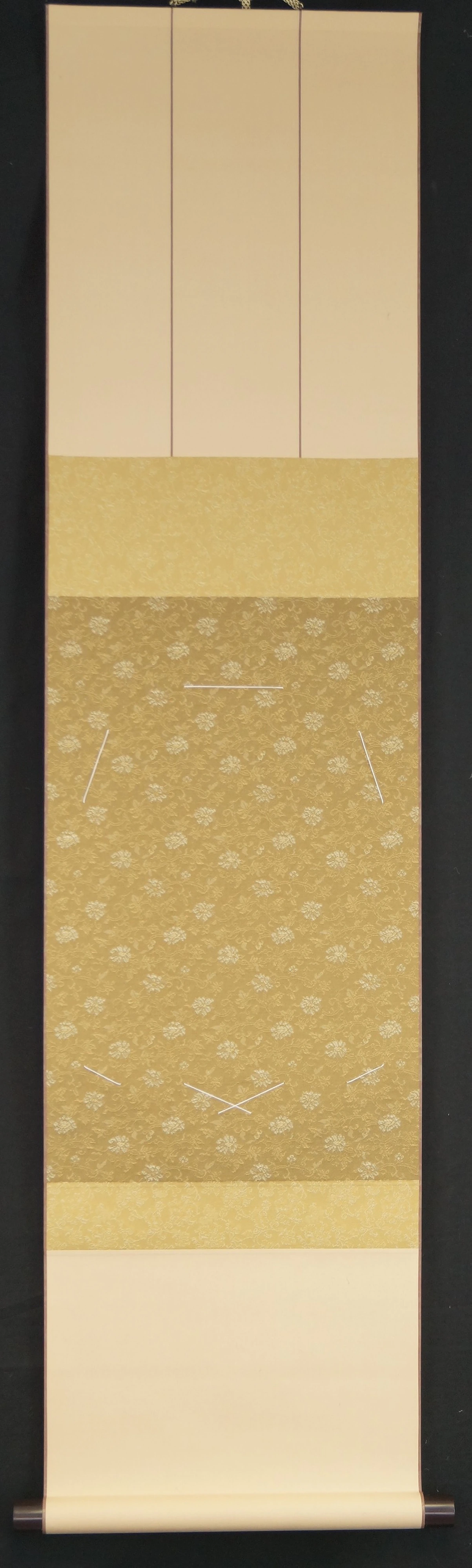
Kakemono, the hanging scroll
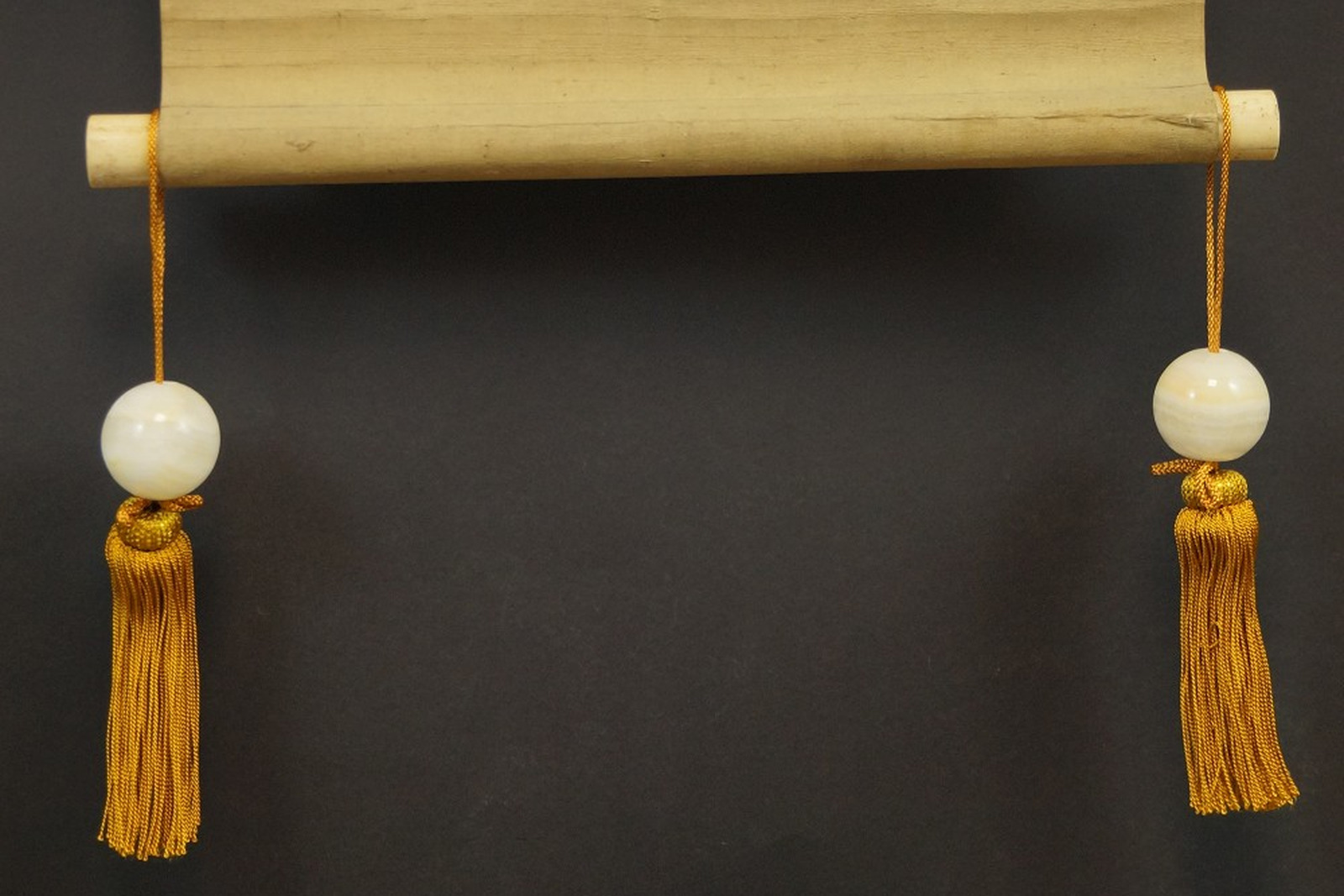
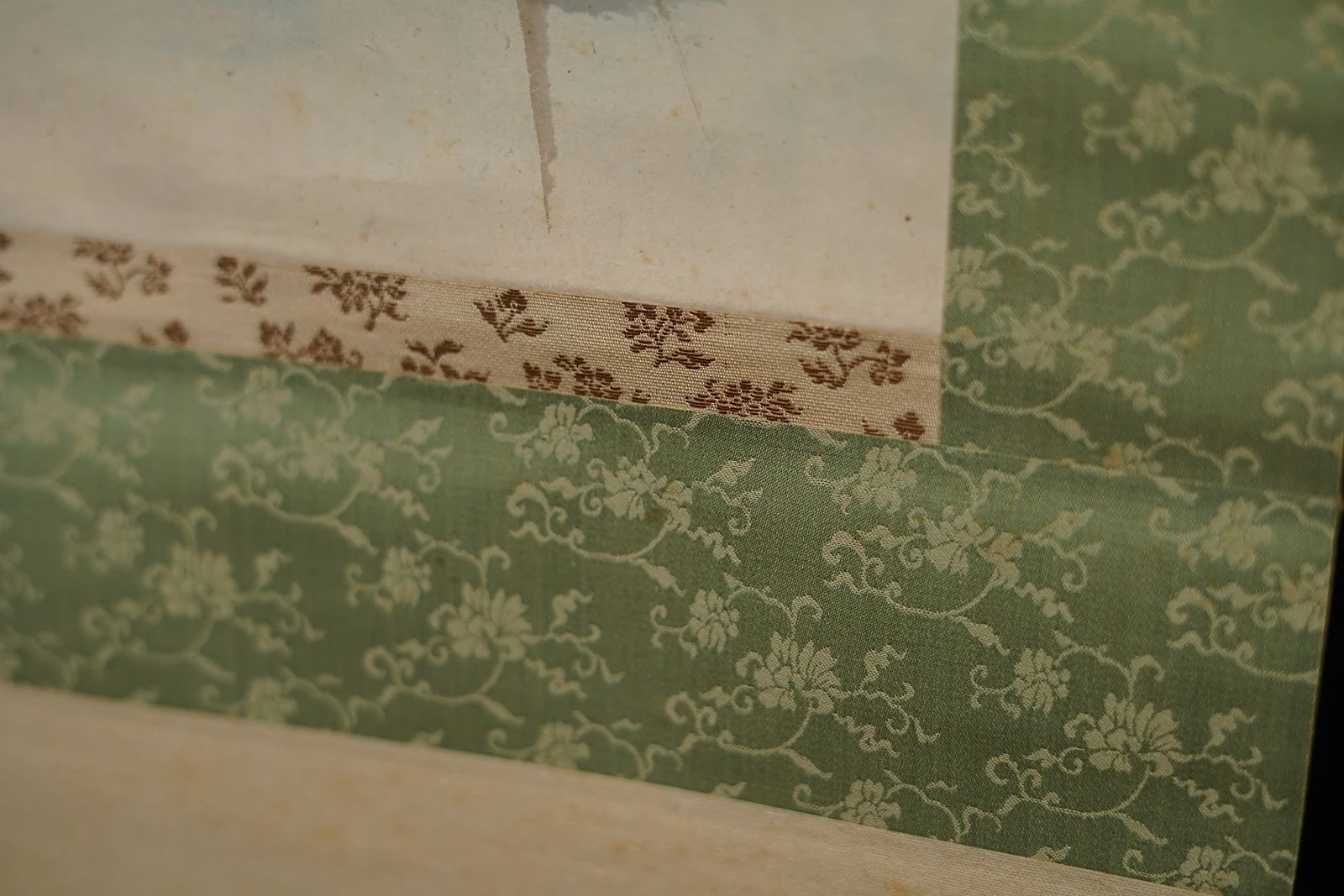
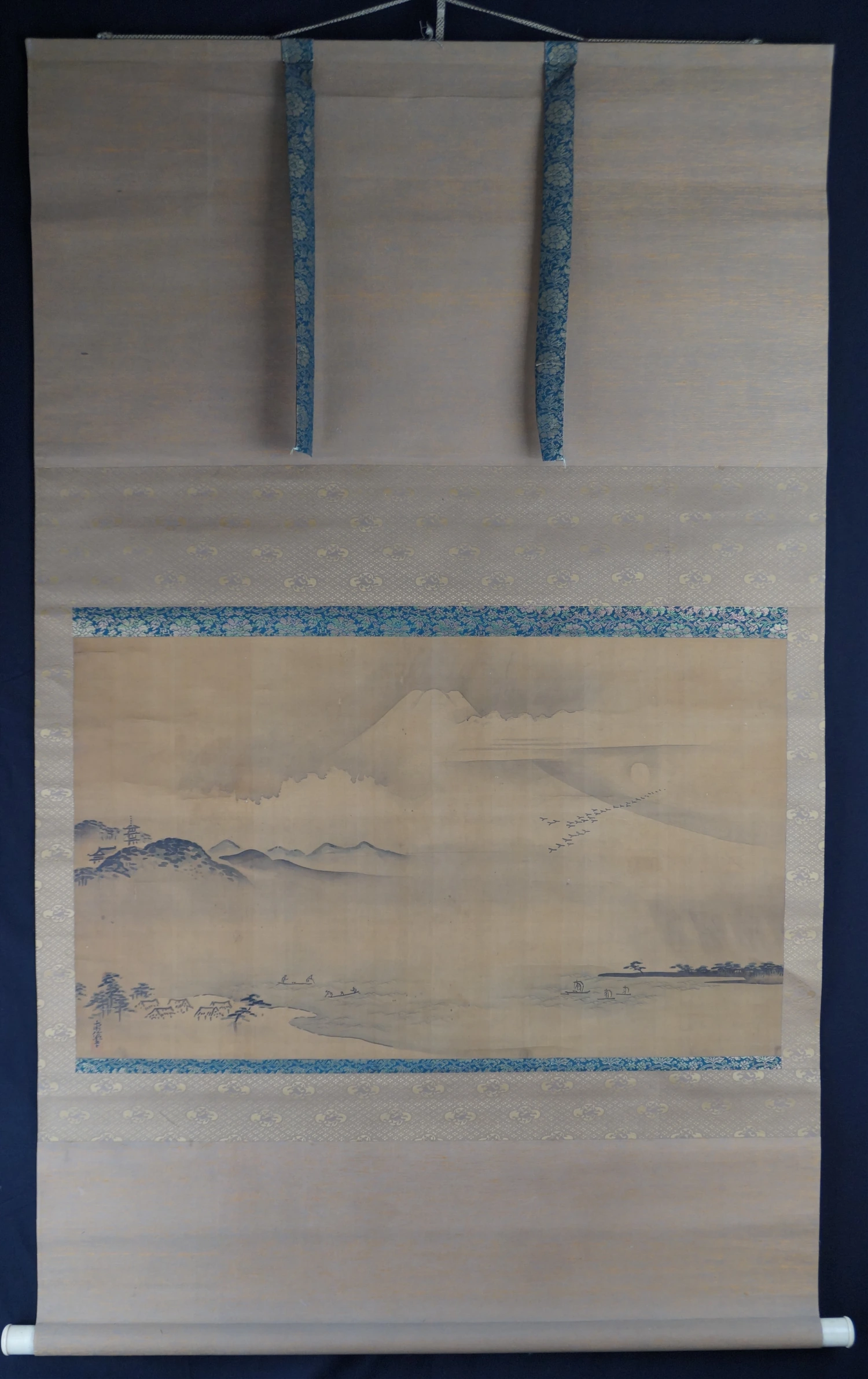
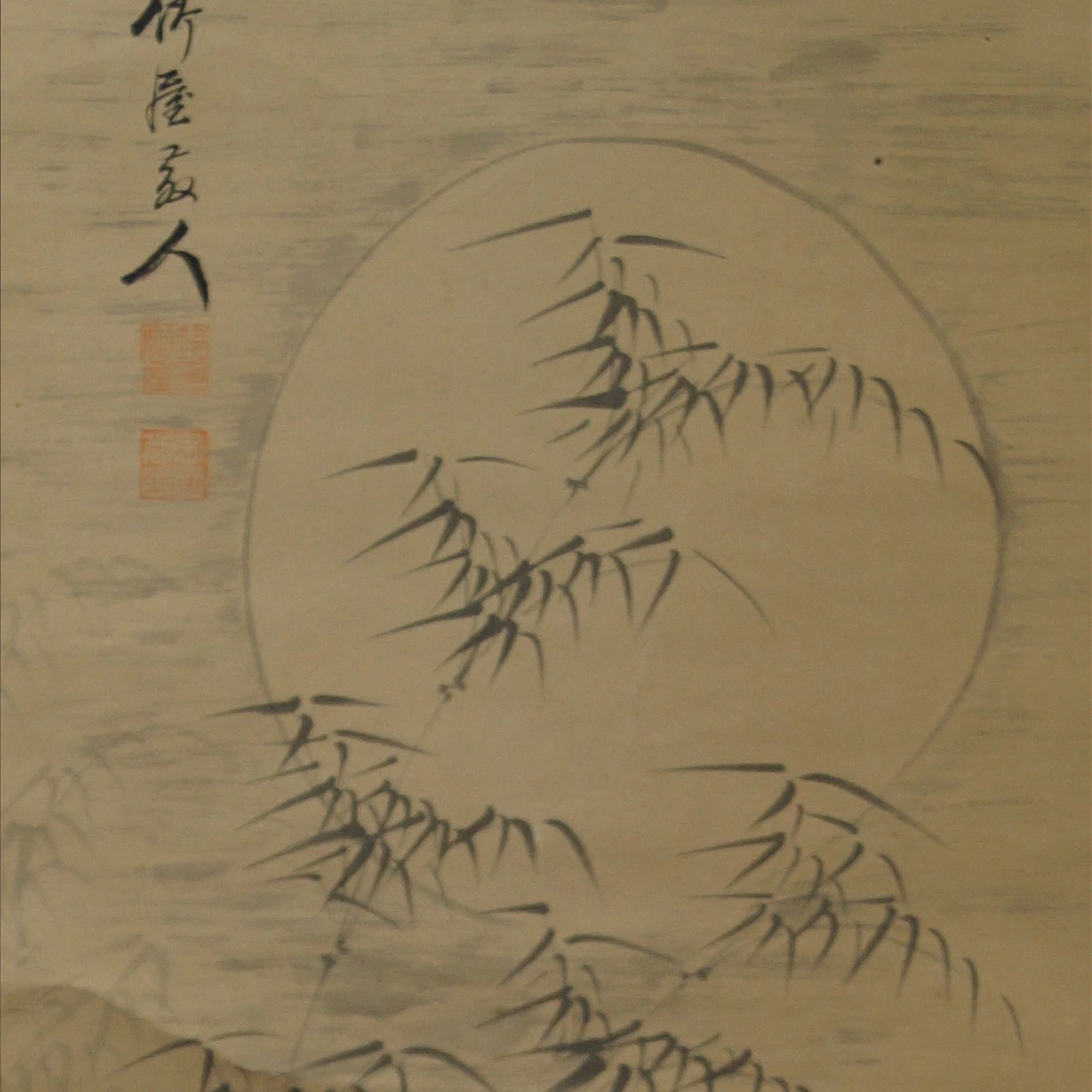
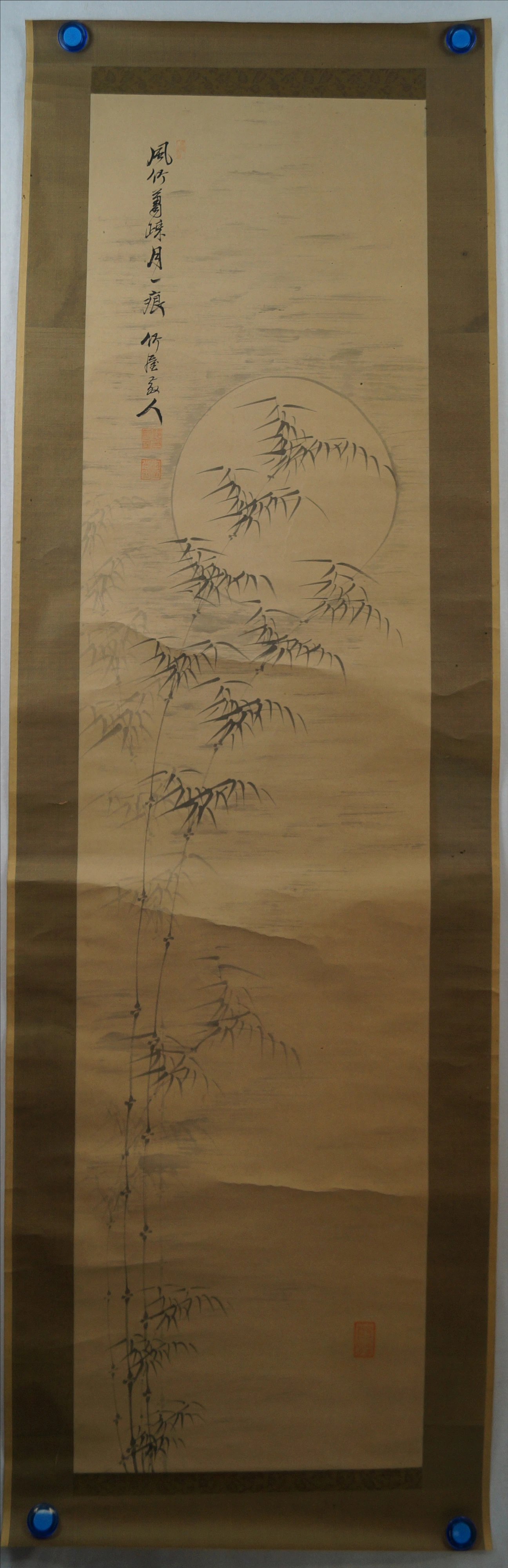
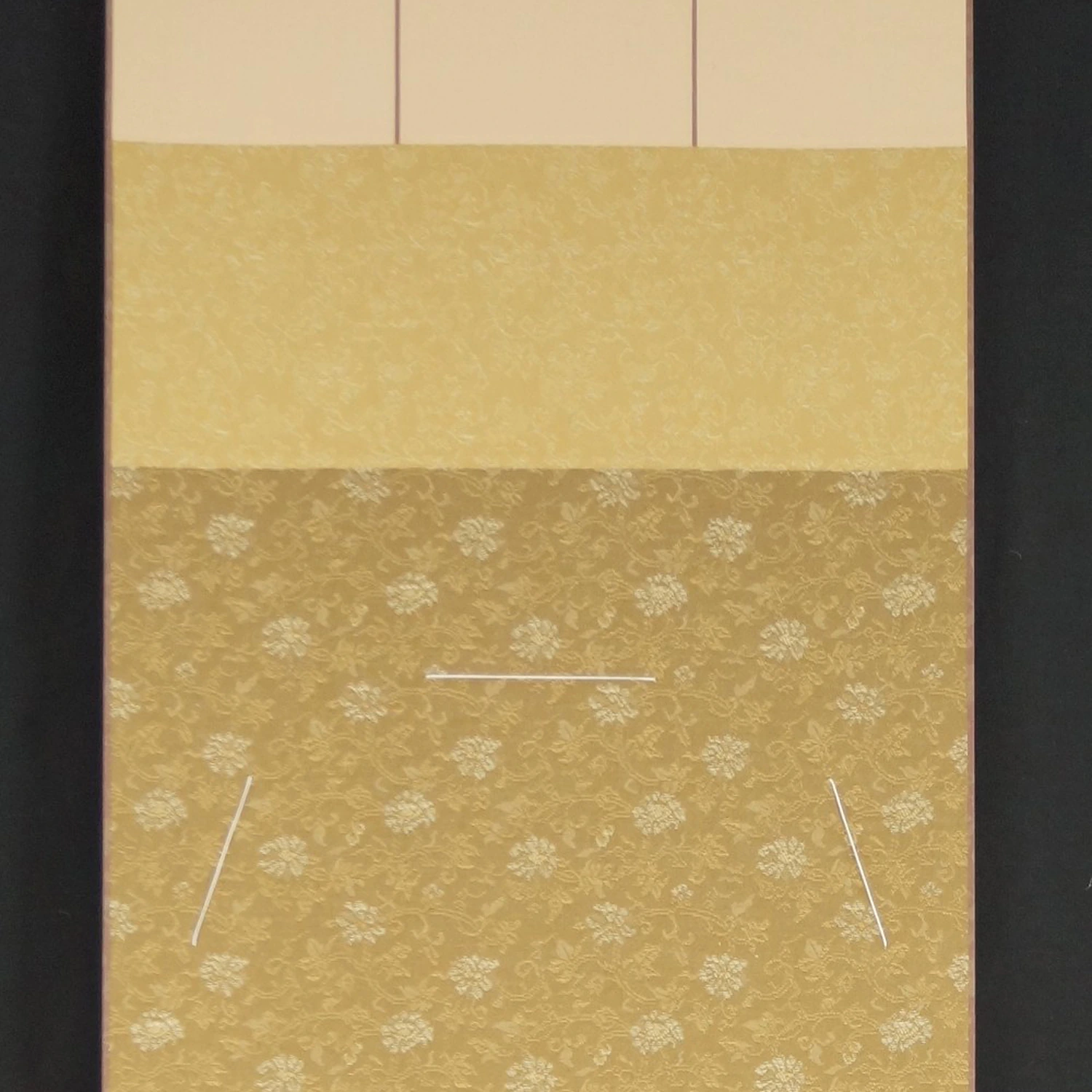
The kakemono is the Japanese wall picture par excellence: a painting or calligraphy on paper or silk, framed in strips of fabric, with a rod and a cord at the top and a roller at the bottom around which it is rolled for storage. It is almost always a hand-painted original, though printed scrolls exist as well. Mounted, a classic kakemono measures about 170 to 200 centimeters in length and 40 to 60 centimeters in width; shorter formats run around 130 to 150 centimeters. It hangs freely from a single hook. In price it sits in the middle range.
Makuri, the unmounted sheet
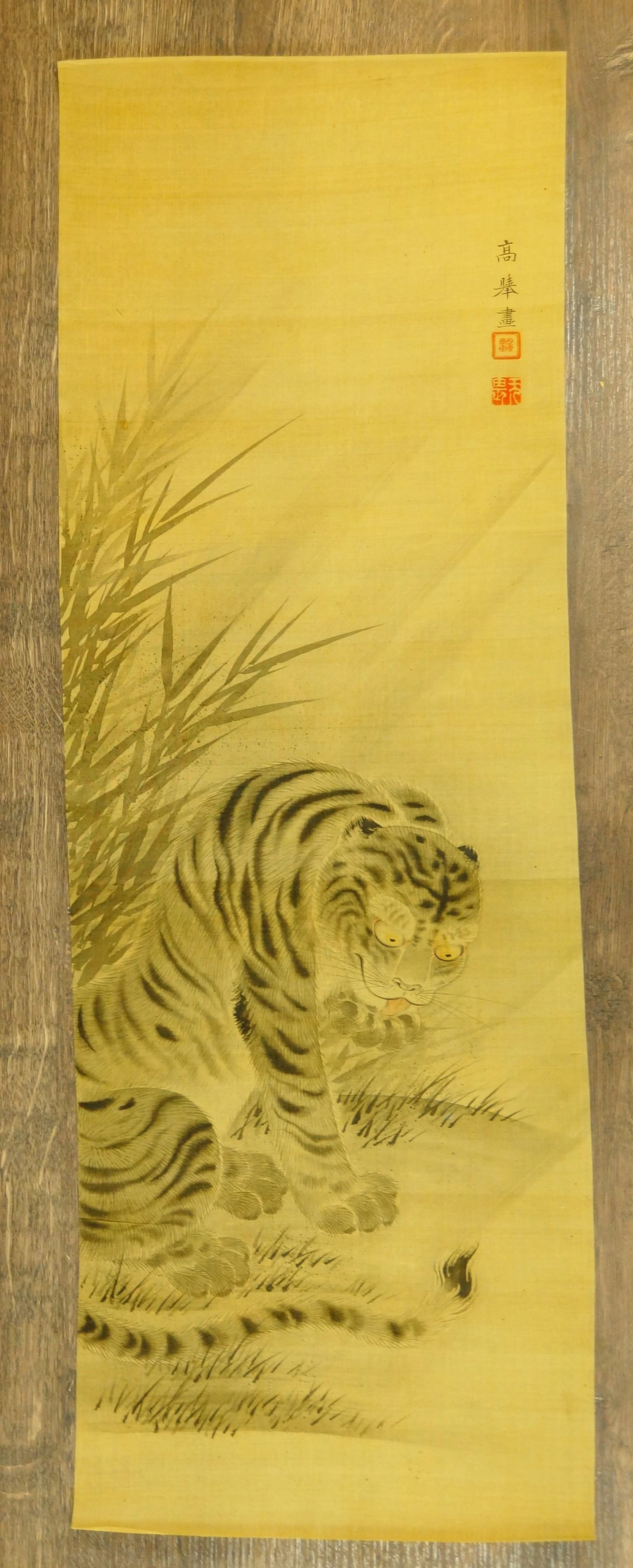
A makuri is the finished painting without mounting, rollers, or cord. It is an original, measures only as much as the picture itself, and can be hung only once it has been framed or mounted as a hanging scroll. A makuri is usually considerably less expensive than a mounted kakemono and therefore the easiest way in; you will find a selection under Makuri.
Shikishi, the small square
The shikishi is a stiff, almost square board for poems, calligraphy, and small paintings, today usually about 24 by 27 centimeters, often decorated with gold or silver dust. It stands on an easel, hangs in a frame, or is slipped into an empty scroll mounting that displays it like a kakemono and allows it to be changed. Shikishi are mostly originals and among the least expensive formats. More on this in the article Shikishi – The Small Stage for the Essential and in the category Shikishi.
Ukiyo-e, the color woodblock print
The color woodblock print of the Edo period was a print medium for a broad public from the start. The most common format, the ōban, measures about 39 by 26 centimeters. One exception deserves attention: hashira-e, extremely narrow sheets of about 70 by 13 centimeters, were explicitly intended to be hung as decoration on the interior pillars of the house. Here the print is an original if it dates from its own time; later reprints are reproductions. Prices range accordingly from low to very high.
Byōbu, the folding screen
A byōbu is an original and a piece of furniture. A six-panel screen measures about 1.5 by 3.5 meters, and it stands on the floor, folded in a zigzag. In the West, screens are sometimes hung flat on the wall; that works, but it takes away the folding on which their pictorial effect depends. In price, the byōbu is the most elaborate format.
Noren and tenugui, the textiles
Noren are split lengths of fabric that hang in an entrance or under the eaves and long served shops as a sign. Tenugui are narrow printed cotton cloths, originally hand towels. Both are everyday textiles, almost always printed or dyed, and in the West they are often displayed on a rod or in a frame as wall decoration. They are inexpensive and honest about what they are.
| Format | Original or print | Typical size | How it hangs | Price level |
|---|---|---|---|---|
| Kakemono | mostly hand-painted original | 170–200 × 40–60 cm | freely on cord and hook | medium |
| Makuri | original | as large as the picture itself | framed or mounted | low to medium |
| Shikishi | mostly original | about 24 × 27 cm | easel, frame, or mounting | low |
| Ukiyo-e | print; old = original, new = reprint | ōban about 39 × 26 cm | framed behind glass | low to very high |
| Byōbu | original | six panels about 150 × 350 cm | stands on the floor | high |
| Noren, tenugui | printed or dyed fabric | varies | on a rod or in a frame | low |
Frame it or roll it?
The most common question first: can you frame a kakemono? The answer is no, and the reason lies in the object itself. The fabric mounting of a hanging scroll already is its frame; it carries the picture, protects its edges, and gives it its proportions. A second frame around it only duplicates what is already there and takes from the scroll what it was built for: being rolled up, stored, and changed.
A makuri is different. You may frame an unmounted sheet, or have a mounter turn it into a hanging scroll, as described in the article Hyōgu – The Art of Mounting. If you frame it, set the sheet in a mat so that the paper does not touch the glass, and preferably choose UV-protective glass, which slows fading. The same applies to shikishi and woodblock prints.
That leaves proportion, and with Japanese art for the living room in particular it decides the effect. A hanging scroll of 190 by 50 centimeters is narrow and tall, a sofa wide and low. Above a long piece of furniture, a single kakemono therefore easily looks lost. It is better placed where the wall itself is narrow: beside a door, in a recess, at the end of a hallway, or above a low chest of drawers. Under a ceiling of 2.40 meters, shorter formats around 130 to 150 centimeters often sit better. If you want to fill a wide wall, hang two scrolls side by side or choose a landscape format.
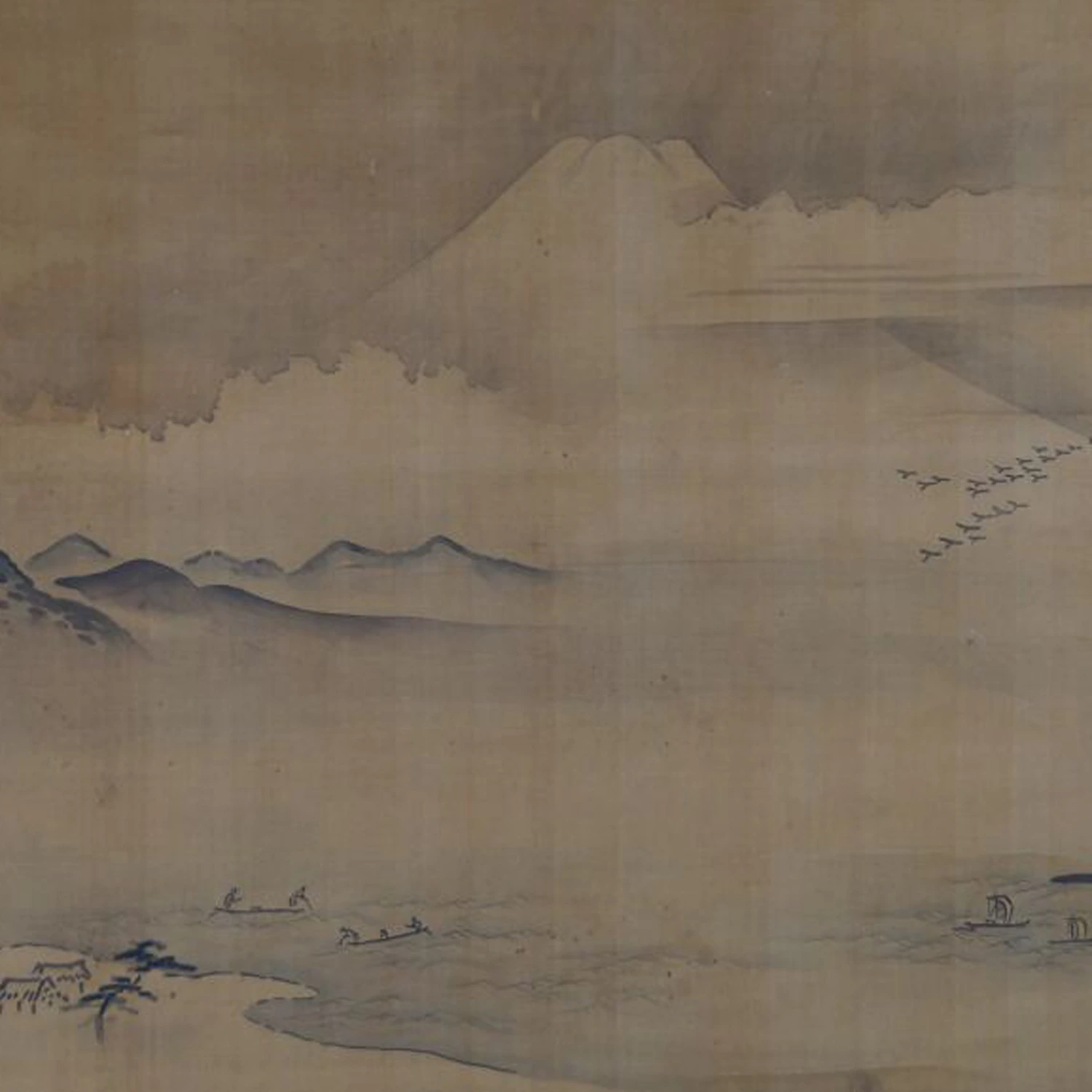
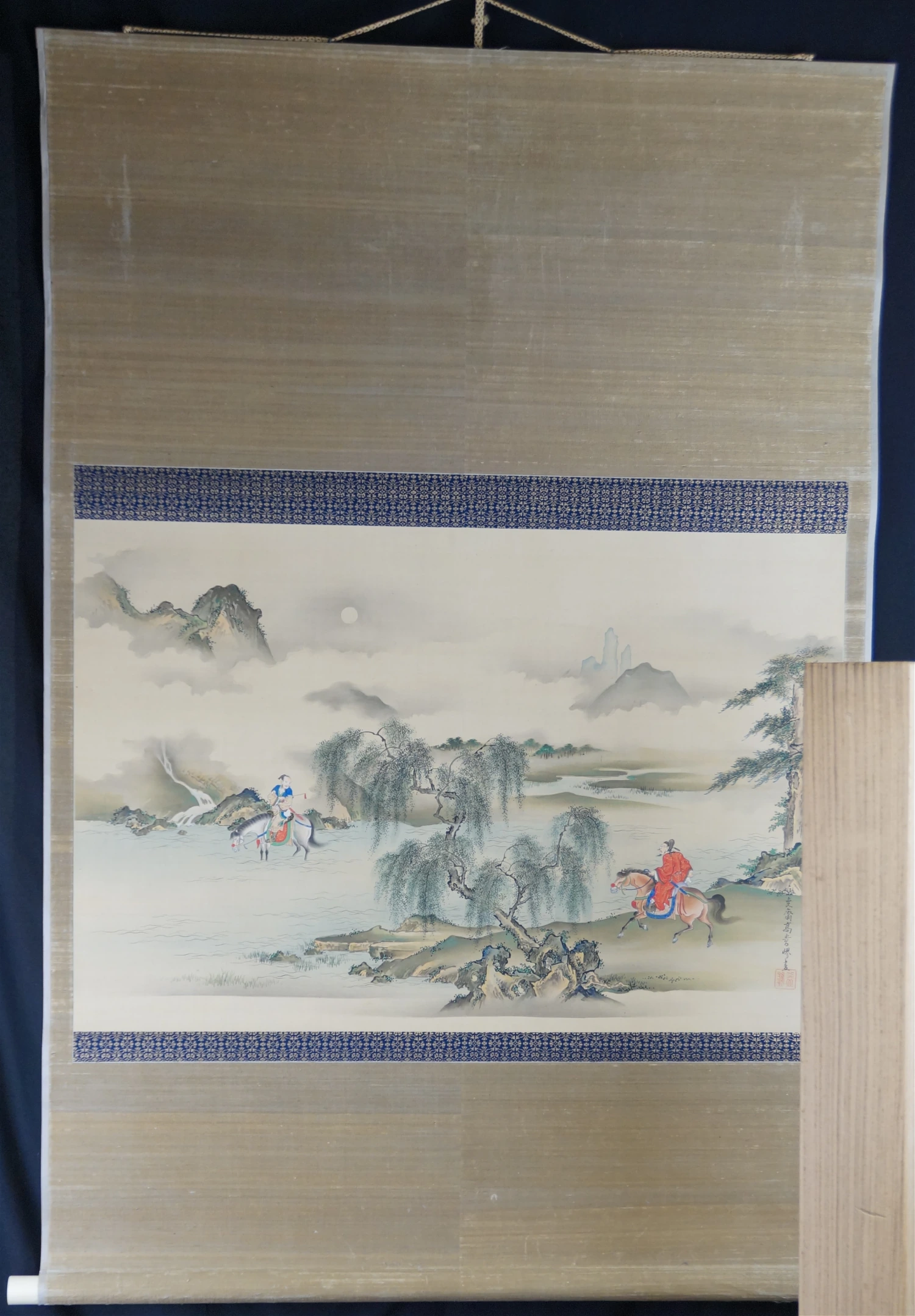
Because that exists too: hanging scrolls that are wider than they are tall. Japanese distinguishes the upright tatejiku from the horizontal yokofuku, also called yokomono. Such a landscape format fits above a sofa, a bed, or a desk without giving up its character as a hanging scroll.
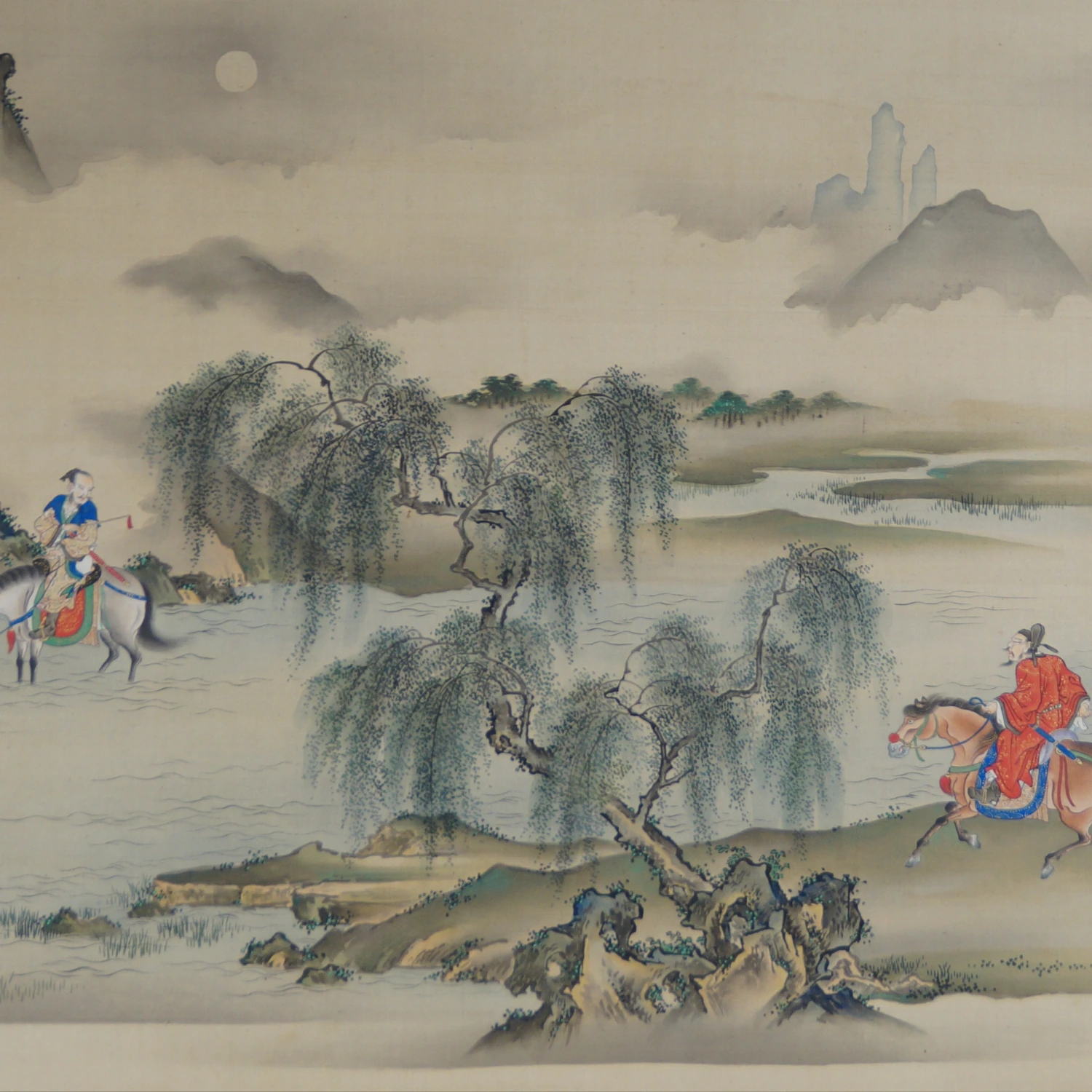
Kō Sūkoku
Encounter by the River
Kakemono, unique work, with box, 136 x 97 cm
€1,290.00
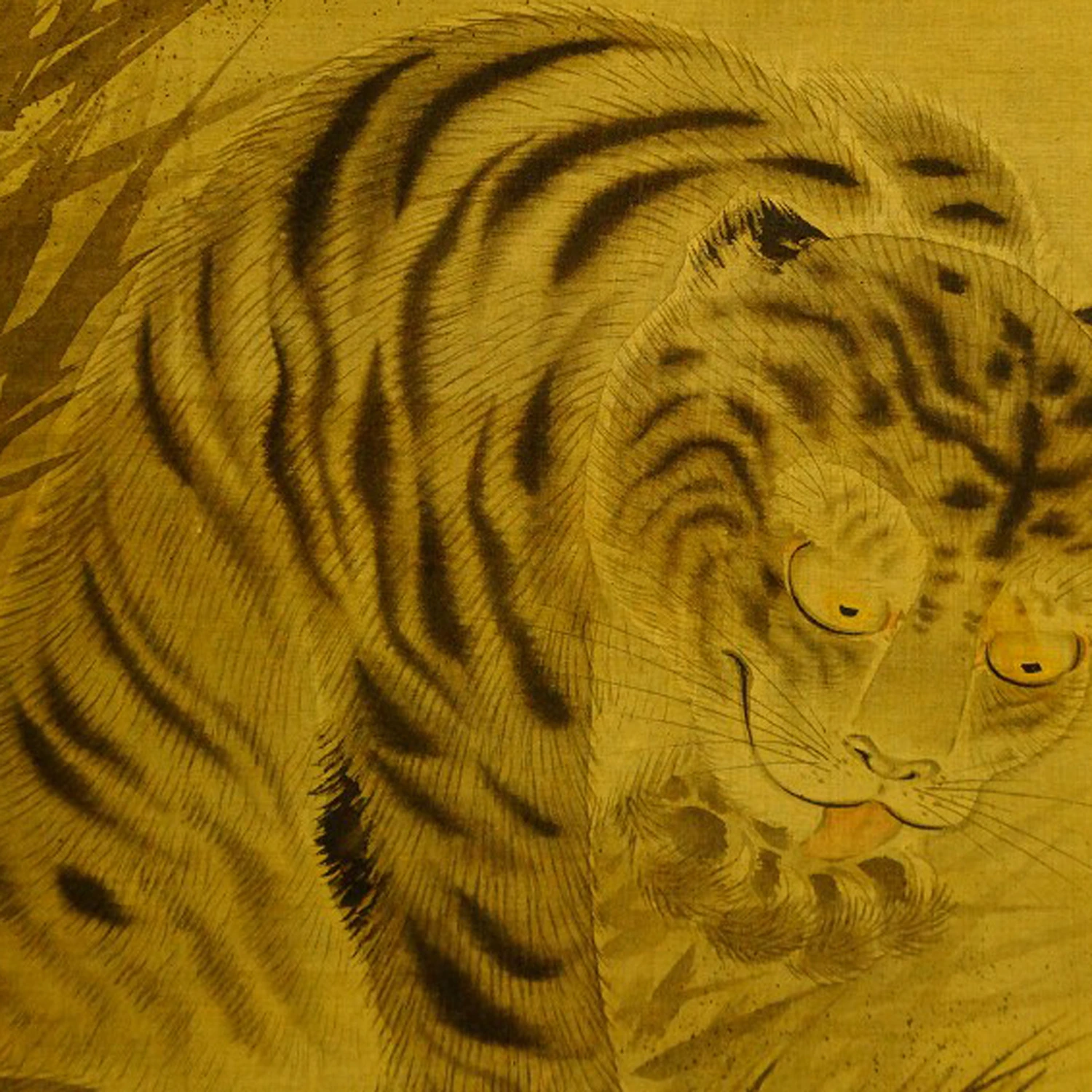
Kokyo
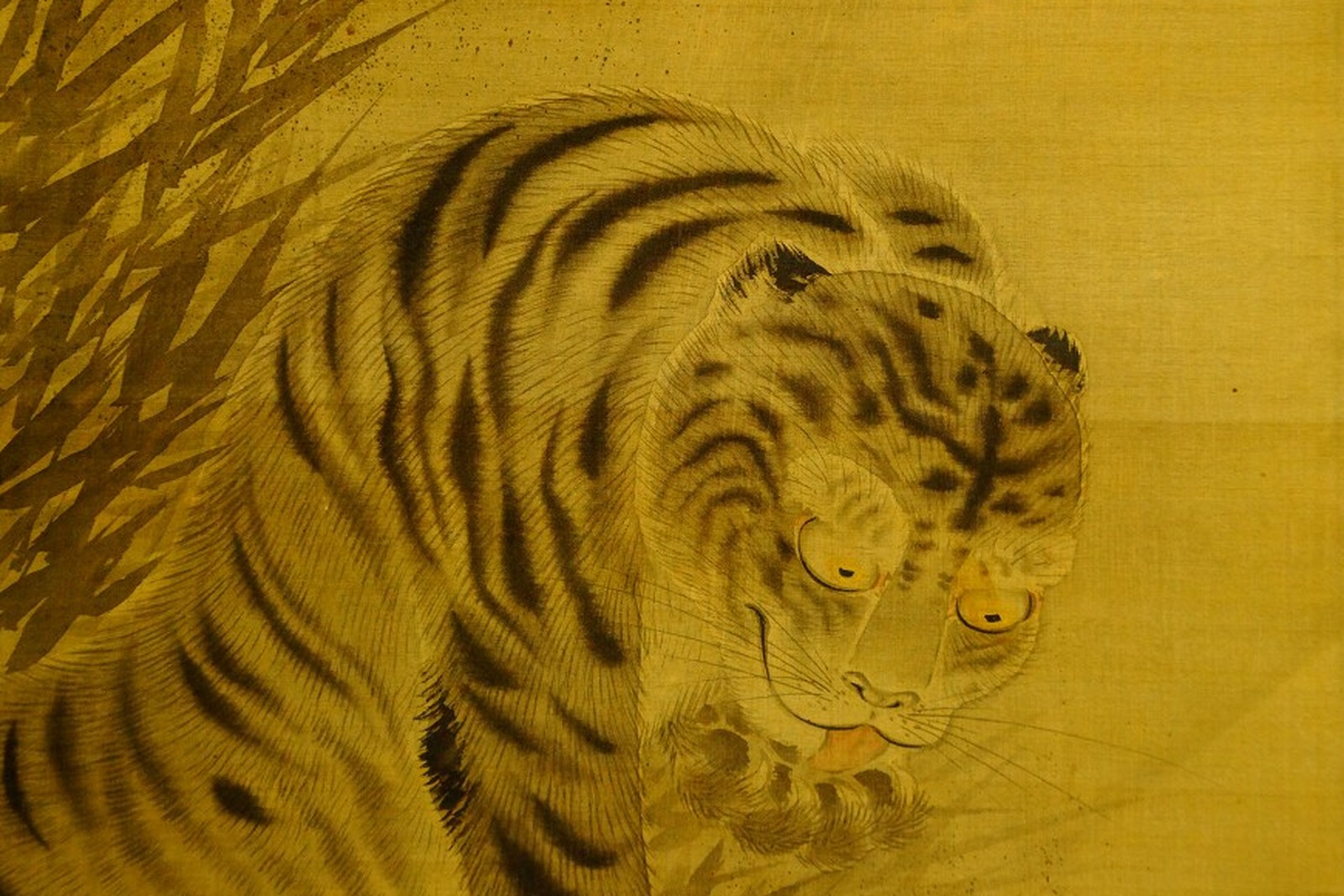
Gentle Elegance of the Tiger - Makuri without Mounting
Makuri, unique work, 94 x 32 cm
€890.00
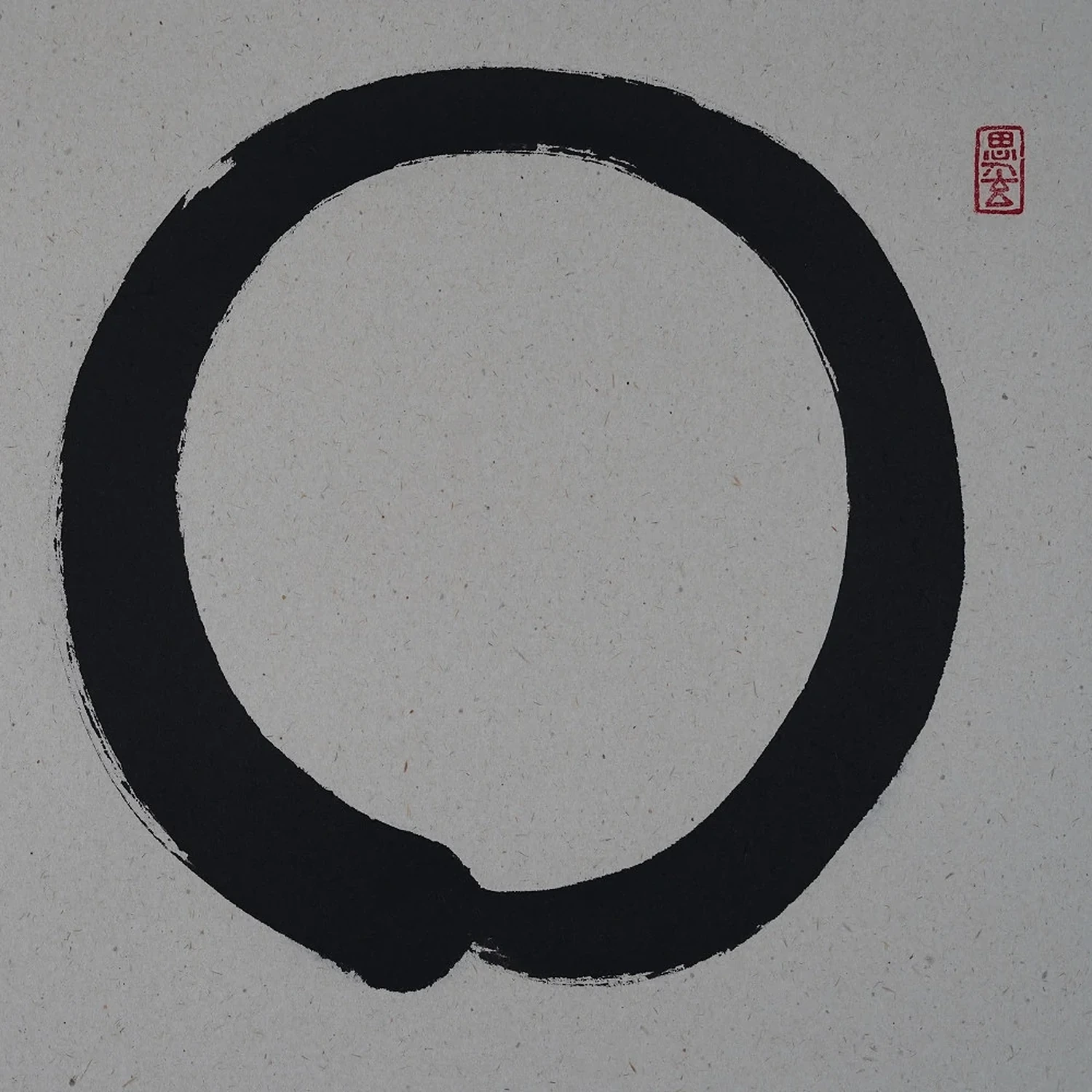
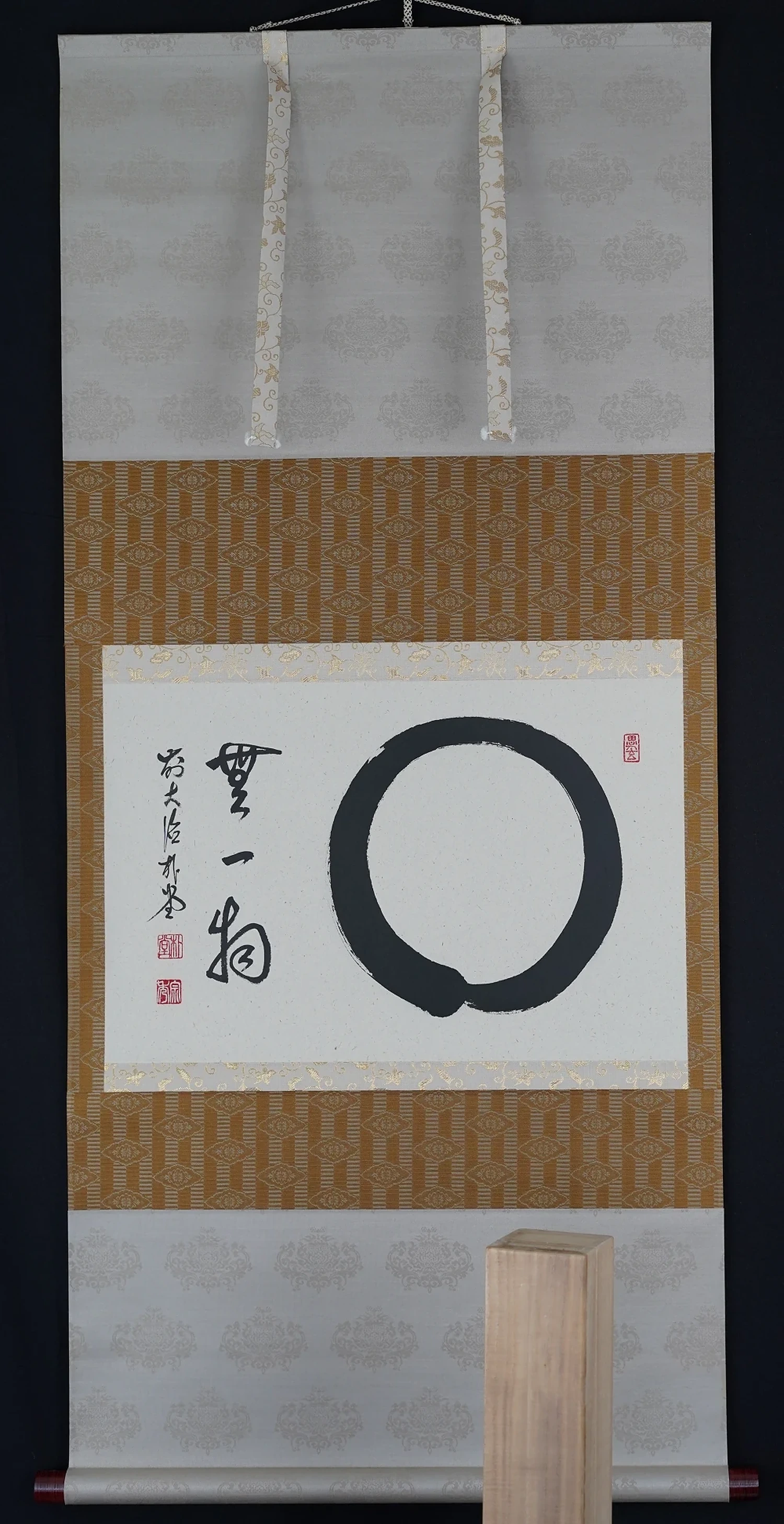
Satō Bokudō
Ensō and “Muichimotsu” – Horizontal Zen Calligraphy
Kakemono, unique work, with box, 130 x 63 cm
€459.00
instead of €540.00−15 %
The poster problem with Japanese wall art
Search online for Japanese wall art and you will almost always see the same thing: Hokusai's Great Wave, Hokusai's red Fuji, cherry blossoms in the style of a woodblock print, printed on canvas and stretched over a frame. There is a simple reason for this. Hokusai died in 1849, and in Germany copyright expires seventy years after the author's death. His pictures have long been in the public domain, anyone may print them, and so everyone does.
Still, it pays to look closely at what you have in front of you. A woodblock print from the Edo period is an original even though it was printed: it comes from the workshop that carved and printed it. A later reprint from newly carved blocks is a reproduction in the same technique. A canvas print made from a scan is a reproduction of that reproduction. This is not a value judgment – a good print can make a wall beautiful; it is simply good to know what you are paying for.
Many people are surprised that a hand-painted hanging scroll is often no more expensive than a framed gallery-quality art print. There are two reasons. For a large-format print, the frame, mat, and anti-reflective glass quickly cost more than the print itself, whereas the mounting of a hanging scroll is already included in its price. And because households with a tokonoma traditionally owned several scrolls to rotate, the supply of older, hand-painted hanging scrolls from Japan is large. If you are looking for an original rather than a reproduction, you will find hand-painted unique pieces under Japanese wall art.
Changing instead of hanging
In the end, each of these questions leads back to the beginning. A framed picture is hung up and stays; after a year you hardly see it anymore. A kakemono, by contrast, hangs for a few weeks, goes back into its wooden box, and makes way for another. Buying a kakemono therefore means buying not a decoration but a habit: a view of the wall that changes with the year.
Which motif suits which room and which season is explained in the guide Which Kakemono Motif Suits Which Room and Season. How to hang, air, and store a hanging scroll safely is covered under Hanging and Caring for a Kakemono.
Sources and Literature
JAANUS – Japanese Architecture and Art Net Users System: shouhekiga 障壁画, aisf.or.jp.
JAANUS – Japanese Architecture and Art Net Users System: tokonoma 床の間, aisf.or.jp.
JAANUS – Japanese Architecture and Art Net Users System: kakemono 掛物, aisf.or.jp.
JAANUS – Japanese Architecture and Art Net Users System: gaku 額, aisf.or.jp.
JAANUS – Japanese Architecture and Art Net Users System: hashira-e 柱絵, aisf.or.jp.
German Federal Ministry of Justice: § 64 UrhG – Allgemeines, gesetze-im-internet.de.